Blog Archives
Rebel Ridge (2024)
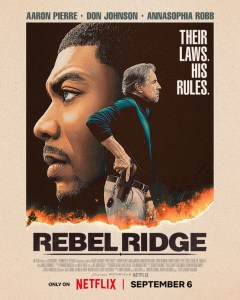 It only took minutes for me to be both engrossed and enraged by Rebel Ridge, the latest film from Jeremy Saulnier, a master of genre elevation. The scene begins with Terry Richmond (Aaron Pierce) riding his bike down a country road. A police cruiser appears behind him impatient to get around, and eventually the officer decides to use his vehicle to ram the bicyclist off the road. Afterwards, the officer tells Terry to stay on the ground and, upon a search of his belongings, discovers a stack of cash. Terry explains he cashed out his ownership in a restaurant and he’s on his way to do two things: buy a truck, and post bail for his cousin who was recently arrested for a minor drug possession. The police confiscate the money, accuse Terry of being involved with a drug conspiracy, and tell him that if he wants to fight for his money back, he’ll need to hire a lawyer and petition the court. Oh, and also the casual racism of the police officers is galling. With just his opening scene, Saulnier and his actors have made me feel vivid emotions and given me an underdog who I’m pulling for, a man who will come to serve as an honorable wrecking ball to this small-town police force who think they are above the law as it suits them. Saulnier’s movie tackles pertinent social topics with great care and detail, but it also delivers a masterful and satisfying action-thriller that knows how to entertain first and foremost rather than just incite.
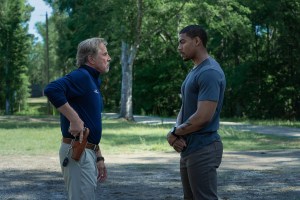 There are some serious criminal justice topics here dealt with unusually convincing clarity and accessibility, and that proves to be the ethos of Rebel Ridge, a message movie that knows it needs to be a movie first and a good one. Saulnier’s prior film work just oozes with dread and menace, though Blue Ruin and Green Room and even 2018’s Hold the Dark, by far the lesser work, dwell in bleak human outlooks. Very bad things will happen to people who stumbled into situations beyond their control, and usually by the end of the movie, there’s no recompense and we’re left to wonder about the empty cost of suffering. With Rebel Ridge, it feels like Saulnier has taken an assignment, like Netflix said to make one of your movies with your level of craft and thought, but also make it so the underdog is a badass and wins. I suppose one could argue that it’s turning a formula meant to defy convention back to convention, but by providing a crusader, we’re given a champion to root along that we can share confidence with. Terry isn’t invincible, some fearless behemoth who goes unopposed at every turn. He’s a formidable force but he’s also one man fighting against the forces of injustice and one black man fighting against racist white men in authority (superbly epitomized by Don Johnson’s good ole’ boy chief). Even with the power at his disposal, there are still limitations, which still makes the movie thrilling even if we ultimately suspect good might win out at the end. There’s nothing wrong with a triumphant ending as long as the work before establishes it as a fitting conclusion; tragedy and misery are not somehow more meaningful endings just because they are more serious or subversive. More people will learn valuable lessons about civil asset forfeiture and bail reform from this movie because it has a stirring and accessible story for a mass audience. The genuine thrills allow the messages to prosper.
And what thrills there are. There’s a staggeringly taut sequence where Terry is racing against time to get his cousin’s bail money deposited to prevent him from being transferred to prison. He’s checking the clock, looking down the small courthouse hallways, waiting for the officers he indisposed to come rushing back to arrest him. If only he can get this money deposited first. Saulnier does his own editing and creates a masterful sequence that left me nervously tapping my foot and awaiting the worst. The later confrontations with the police have a deeply satisfying turnabout, as these bullies come to realize far too late that they picked on the wrong man. Terry is an ex-Marine who taught martial arts and hand-to-hand combat to the Corps, but the most dangerous weapon he has is his mind. He’s constantly thinking about plans and implementation and adaptation. He’s intimidating already, but then when he starts to adapt, the sheer force of what this man is capable of makes him that much more incomparable. Even as a man on a mission, he’s still one black man fighting against a system of entrenched power that doesn’t like to bend when it comes to compromise or imposed oversight. He’s still got institutional power against him, and in one of Sauliner’s other movies, he probably would end with Terry winning a Pyrrhic victory but with the system ultimately standing, readjusting to maintain its dominance against further reforms. Here, that may still be true in a larger sense, but at least this one man can make a difference and bust a few racist bullies.
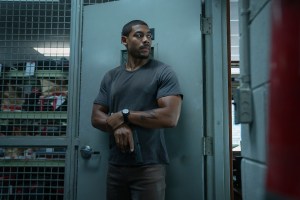 This experience wouldn’t be nearly as awesome without the commanding presence of its leading man. Pierce has had some noteworthy roles in Krypton and The Underground Railroad (he was also the amazingly named rapper “Mid-Sized Sedan” in M. Night Shyalaman’s Old). Originally, John Boyega (Star Wars: The Rise of Skywalker) was the lead role of Terry but Boyega bowed out weeks into filming in 2021 reportedly for “creative differences.” I cannot fathom any other actor in this role now that I have seen how thoroughly magnetic Pierce comes across. He’s a future star in the making and this should serve as a showcase for Hollywood. I like Boyega as an actor and have since 2011’s Attack the Block, but Pierce is a far more intimidating presence and likely candidate for action retribution. I cannot overstate how much better this movie is because it found the perfect leading man for its hero. Saulnier’s excellent command of the genre and tension is made even more compelling because of Pierce being our vehicle for comeuppance. His smooth intensity beautifully amplifies Saulnier’s percolating dialogue, finding the exact right tone and presence to make the challenges to power feel oh so combustible.
I wish the second half of Rebel Ridge was as perfectly structured and executed as that first scene. The second half gets a little lost in the details of its overarching small-town conspiracy. The momentum of the movie starts to slag a bit, and the clear connection of cause-effect plotting gets bogged down. There’s still important revelations and you get nice moments from the likes of James Cromwell as a judge and Steve Zissis as a courthouse clerk trying not to make waves within a system he acknowledges is unjust. The real significant supporting character is Summer (AnnaSophia Robb) as a lawyer with a past of drug addiction that she’s still trying to put behind her to earn back parental rights to her kids. She’s a good foil for our crusading hero, and her storyline also smartly allows for more social-political tangents to be hit about the difficulty of addicts and ex-cons to try and start over in the workforce. I wish she was more involved in the climax, as she’s relegated to being mostly a damsel needing to be saved after she proved so capable and cunning throughout the rest of the movie assisting Terry. The second half just isn’t as strong as the first half because the movie overextends with its conspiracy and history without the same tremendous clarity and urgency that drove the first hour of Rebel Ridge. The ultimate conclusion, while still satisfying, lacks the fireworks that we crave. It’s more a race against time and hoping that certain elements finally stand up against the corrupt police forces. It’s a solid ending, enough for a catharsis that Saulnier so rarely allows, but it’s not quite the release we might want, and maybe that’s the ultimate point.
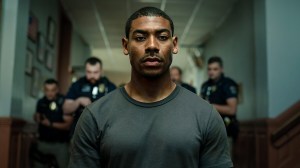 Rebel Ridge is a great genre movie that flirts with true excellence. It’s Jeremy Saulnier’s most accessible and crowd-pleasing movie, an action-thriller that executes its sequences of tension and retribution with as much care as it incorporates its Big Ideas for viewers to think over. Genre movies have long tackled relevant social and political topics, sometimes in ways that are far more meaningful and impactful than message movies that get bogged down in didactic dogma. But if you can link a relevant social issue to a story that grabs us and makes us want to inch closer to the screen, something that links a larger problem to a personal story, then you’ve found an accessible illustration that people will actually want to see. Rebel Ridge stands out among the Netflix house of action movies and proves that even a mainstream Saulnier can deliver the goods. Just because he’s working with a more conventional formula doesn’t mean that he hasn’t put thought and care into his characters and action. Rebel Ridge may leave you wanting a little more with its ending, but what it supplies is so engaging and entertaining that I’m happy to report Saulnier hasn’t lost his edge. Keep ‘em coming like this, Jeremy.
Nate’s Grade: B+
Share this:

Race to Witch Mountain (2009)
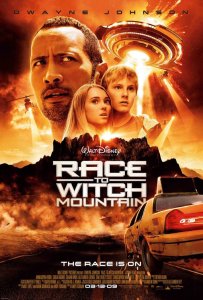 Does anyone ever fondly recall, let alone even recall, the 1975 original children’s film, Escape to Witch Mountain? This remake is Disney-fied in all places. It’s a lackluster kiddie adventure with more special effects, car crashes, and one-liners. Dwayne “The Rock” Johnson cements his tight grip on the family film genre; I really like this guy as an action hero and as a charismatic comedic actor, but being a wisecracking chauffeur to monotone yet strikingly Aryan-looking space aliens isn’t cutting it. The little green pre-teens need to get back to their ship and escape the clutches of government agents and an alien killer. This is one of those movies were everyone leaves their brain at home. This is the kind of movie where everybody is profoundly stupid and easily tricked. You’d think space aliens and intergalactic travel and psychic abilities would be met with more than incredulous jokes. Regardless, Race to Witch Mountain is devoid of fun, wonder, and excitement despite a decent effort by the assorted cast. This is lazy, by-the-numbers stuff masquerading as quality family entertainment. Families and children deserve coherent stories with actual characters and action sequences that feel like they matter. The only thing that really matters in Race to Witch Mountain is the fact that nobody will remember this movie in 35 years time, allowing Disney (or whatever alien/robot/alien robot overlords run the show at the time) to follow through with another thoughtless, mechanical remake.
Nate’s Grade: C
Share this:

Bridge to Terabithia (2007)
 Much less a Narnia knock-off and more of a coming-of-age tale. It’s a simple story with loads of familiar elements (the strict tough love father, the bully who just needs a friend, the free-spirit kid that goes against conventions) but it plays every moment with a satisfying level of integrity. When a late revelation occurs that shakes up everything, the impact stings and we realize all the steady groundwork that has stealthily been going on. Not everything works, particularly Zooey Deschanel as a music teacher that strums her guitar and does little else, but this is a family movie that has much more on its mind than most.
Nate’s Grade: B
Share this:

The Reaping (2007)
 Forgive me father for I have sinned… I think The Reaping is not a terrible movie. Now, that would be damning praise in most circles, but when it comes to the notoriously implausible and awful genre of religious-based horror, well then “not terrible” is worthy of being brandished in the film’s ad. All of my fellow critics need to take a step down from the pulpit and see The Reaping for what it is: mild harmless fun.
Katherine (Hilary Swank) is a professor at Louisiana State who specializes in debunking claims of religious miracles. “38 miracles and 38 scientific explanations,” she says matter-of-factly. Katherine has something of a grudge against the Big Guy, being that she used to be a minister before her husband and daughter were murdered on an overseas missionary trip. Doug (David Morrissey) has a case only that only Katherine can crack. In the sleepy town of Haven, along the Louisiana Bayou, is being beset by Old Testament style plagues. The river has turned to blood and the Bible-beating townsfolk are itching to blame a little blonde girl (AnnaSophia Robb) who they feel could be the spawn of Satan.
 The Reaping starts off with tiny amounts of promise and intrigue because of Swank’s character. She?s a globetrotting spiritual investigator and a skeptic that an audience can get behind. She has a checkered history and Swank uses glances and moments to make her seem convincing. The Reaping isn’t complicated when it comes to its spiritual message. It’s all about renewal of faith, and I?m not exactly certain how all the pieces add up but that’s the gist. The Reaping isn’t too deep when it comes to thoughts of any kind, but that doesn’t mean much from a genre that requires a healthy suspension of rationale thought.
As a horror movie The Reaping relies on routine jump scares and the occasionally jump cut to a dream or a flashback in Africa with a lot of loud, abrasive sound effects to jolt the viewer. The plagues themselves are kind of weak, especially when plagues of maggots and frogs are seen as being so contained and limited. For maggots, we see a grill loaded with fish now covered in maggots. We never get any other anecdotes of what may have been reaped by the maggot plague. The frogs fall for about ten seconds and only in one part of the swamp. These pathetically isolated incidents don’t do much to ratchet up any scares and they certainly belittle the powerful wrath of the Almighty. Then again, maybe God is trying to tell people in unorthodox ways to eat less meat, thus the ruined fish and diseased cows. The plagues lack some oomph when they just happen to a handful of people, especially when it comes to lice or boils. I think the small-scale plagues really say, “We blew our budget on that river of blood, but hey, that was pretty cool right?”
 I don’t think I’ll ever utter these exact words again but here goes. The Reaping is a rather so-so movie that is mostly redeemed by an implausible and foreseeable twist ending. Yes, as horror and supernatural thrillers are go, twist endings seem pretty common place and often times forced, like the studio is dictating that they need something just a little extra to fool the audience into thinking they got their money’s worth. We as a movie watching society are so attuned to twist endings now that we can sniff them out like bad CGI. Twists generally become worked into the advertising campaign. The Reaping has some last-second turns to it, and even though I had my suspicions, I was quite pleased the movie walked the path it did. In fact, I would even go as far to say that it turned a spiritually thin schlocky horror movie into a moderately enjoyable spiritually thin schlocky horror movie. This is far from a good movie, but as a dumbed down genre flick it will be like home cooking for the right audience. Now, I cannot defend the gaps in logic brought about by the twists in The Reaping, and you will be spending the rest of your day coming up with a new problem every minute (the line ?some people just don’t wanna go to heaven? takes new life). The film takes one step too far with trying to up the ante. Just know that the upcoming crisis in Katherine’s life has been solved by a little thing called Roe vs. Wade.
Director Stephen Hopkins has some stinkers to his resume, chief among them 1998’s abominable Lost in Space, so he will take kindly to having his latest film deemed “not terrible.” Swank struts around in a tank top in the balmy South, gets knee-deep in blood, and convincingly sells this nonsense as only a two-time Oscar winner can. The scares are clunky and the story is rife with lots of explaining for a 90-minute movie built around the simple concept that the devil is nasty. The Reaping will play best for fans of the religious horror genre as well as those willing to lower their expectations. This isn’t a good movie, but then again, it’s not terrible.
Nate’s Grade: C+
Share this:

Charlie and the Chocolate Factory (2005)
 The visuals by Tim Burton are suitably lavish but it’s missing the heart of the 1971 film. I never thought I’d say a movie worked despite Johnny Depp’s performance, but that’s the case here. It was far too off. Whereas Gene Wilder had the dichotomy of warmth and madness, Depp was just the kooky Michael Jackson-esque weirdo in a bobbed haircut (I thought Neverland had been found). Perhaps the added Michael Jackson vibe makes the premise a lot darker, what with luring children into a chocolate factory. Charlie is a really boring character lacking definition beyond his “goodness.” Once they get to the factory he?s basically wallpaper, watching his peers fall one by one to their vices. I’m not sold on a Wonka back-story. I don?t need to know why he is as he is; I need no tormented childhood and daddy issues. This new film has more polish but the old film has more togetherness and lasting power.
Nate’s Grade: B-


 nathanzoebl
You must be logged in to post a comment.