Category Archives: 2015 Movies
Pan (2015)
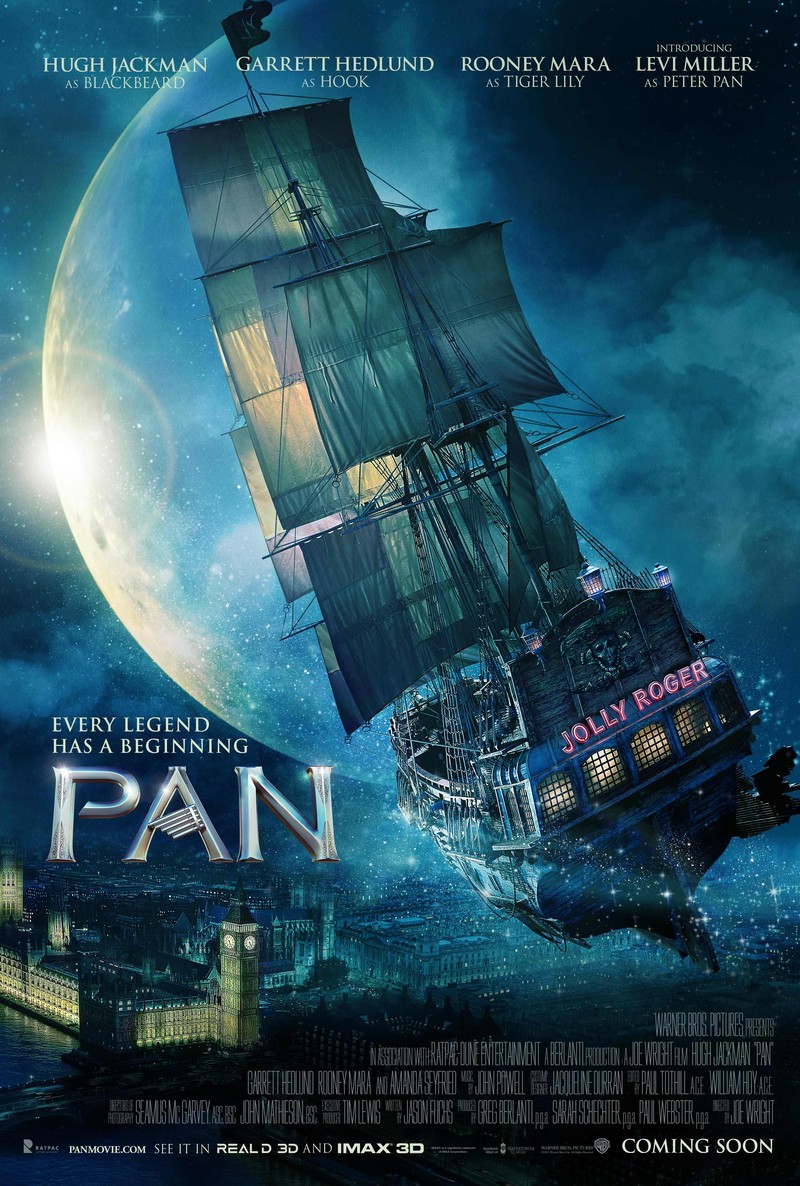 Reminiscent of the Patton Oswalt bit concerning The Phantom Menace, often fans rarely need the “before” when it concerns the characters they love; did anyone really need to know what Peter and Hook were up to before they became mortal enemies? Pan attempts to tell the story before we know it about how Peter Pan became the character we know. It was originally planned for a summer 2015 release and was pushed back until the fall, ostensibly for more time to finish visual effects. the studio, Warner Brothers, pulled a similar move with Jupiter Ascending, and we know how that turned out.
Peter (Levi Miller) is an orphan living in London during World War II. He and a few of his best parentless pals are abducted in the middle of the night by a group of pirates and their flying pirate ship. He’s taken to Neverland to work in the mines belonging to Blackbeard (Hugh Jackman), who has an addiction to fairy dust. During a scuffle, Peter discovers he has the ability to fly, though he can’t exactly master it. There has been a prophecy that The One would be able to fly and they would topple Blackbeard. Peter and another miner, James Hook (Garrett Hedlund), escape, finding their way into the land of the “natives,” which includes Tigerlily (a miscast Rooney Mara). The “Pan” has been prophecized to help lead their people and discover the bridge into the world of the fairies, and Blackbeard won’t stop until he finds the source of his pernicious pixie smack.
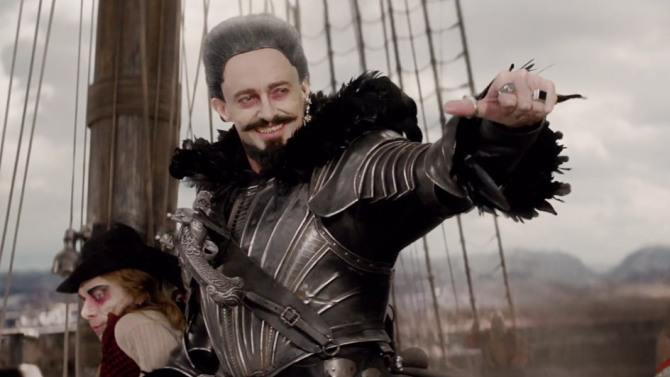 Who exactly is Pan intended for or what story needed to be told prior to our introduction to the world of Neverland? The first act sets the stage for the miscalculated tonal mishmash that never truly settles: we jump from a cruel orphanage, with Peter comically plucky, to the horrors of the London bombing during the Blitz, to a bunch of pirates kidnapping the orphans (tacitly with the approval of the evil head nun running the orphanage), and from there we’re whisked away across space to a mine of slave workers digging for pixie dust minerals who serenade their pirate slave lord with the lyrics to Nirvana’s “Smells Like Teen Spirit” for… some reason. Is this a movie intended for younger children and families? Is it intended for teenagers? The tone veers wildly, sometimes within the same scene, going from serious and gritty to colorful and ridiculous. It’s a campy experience that makes me wonder who exactly was supposed to enjoy an attempt to open the Peter Pan mythos, a world that is generally shallow.
At no point does Pan justify its existence beyond a flimsy corporate attempt to take a familiar world and expand upon it for sweet franchise money. When you get down to the world of Neverland, at least as represented on film, what exactly is there? There are pirates, “natives,” mermaids, and fairies, and that’s about it. They all kind of exist in their own individual movie that fails to blend together, making the new groups of characters feel like little more than a new theme park attraction before moving on to the next autonomous ride. The fantasy figures themselves just aren’t that interesting because there just isn’t much to them beyond superficial descriptions. I suppose then that this would allow plenty of opportunity at world building to take these familiar staples and give them greater depth, and that’s Pan’s biggest missed opportunity. Far too often, the movie feels on Fantasy autopilot and what we’re given is the old clichés of the Great Prophecy and the Chosen One meant to bridge worlds, etc. the events in the film do little to explain how Peter became Peter Pan, besides learn to fly. The problem with the prophecy trope is that it robs characters of agency in place of just accepting their capital-D destiny.
You learn nothing new about Peter or Hook as people, and the nods to the greater Pan lore are annoying at best with how unsubtle and clunky they are. The movie doesn’t even lay the groundwork to explain what conflicts will eventually drive Peter and Hook apart. Peter is a bland hero who is defined by the mystery of his absent mother and her own lineage. He’s special because his mom was special and if he just believes hard enough then perhaps he can be even more special. It’s pretty simplistic stuff. The references to the Pan lore always seem to stop the movie dead in its tracks. The relationship between Peter and Hook isn’t explored in any capacity other then they appear to have both escaped together and been running side-by-side. It’s a relationship not out of bonding but out of sheer proximity. The concluding lines are literally Peter saying, “We’re going to be friends forever,” and Hook replying, “What could possibly go wrong?” Oh my goodness is that one hacky groan-worthy wink to the future.
 Pan is made serviceably watchable from director Joe Wright and the campy performance of Jackman. Wright is a premier visual stylist in cinema though his artistic instincts can lead him to try and smash as many ill-fitting square pegs as he can into round holes, last evidenced by the 2012 Anna Karenina adaptation that made all the world a literal stage. The visuals are often splendid to behold and Wright has a wonderful feel for color hues. The final act feels climactic and visually alive in ways the movie doesn’t even deserve, and Wright’s vision, weird as it can be at points (Nirvana?) gives the movie an energy that keeps its worth an initial viewing. For a movie filed with fantasy realms, I enjoyed the scenes in the orphanage and with the wicked head nun the best (is she knowingly selling the boys into slavery on a magic pirate ship or is it just extreme negligence on her part?). The other aspect that at least held my attention was Jackman. In a movie filled with bland and the occasionally bizarre performance, Jackman offers an anchor to lean upon. It’s not a good performance by normal circumstances but it provides a sense of life and feels in place. Hedlund (On the Road) is amazing in just how strange his rakish Harrison Ford-esque performance persists. Why didn’t anyone tell him to stop? His speaking voice fascinated me and I spent the entire moving trying to figure what it sounded like and my best description is Heath Ledger’s impression of Al Pacino.
While not being a colossal disaster of artistic self-indulgence, Pan is a disappointing and mostly tedious experience because of its failure to capitalize on expanding upon the Neverland universe and exploring what should be formative experiences to central characters. If this was going to be a crazy artistic romp then it needed to be crazier. If you’re going to have two brief anachronistic songs, then do more or at least draw in more influences from other timelines. If you’re going to be a straight-laced pilot for a budding fantasy franchise, at least give us more flights of fancy and wonder. Make us fall in love with this world or at least some of the characters. Instead Pan uses the audience’s pre-existing association with the characters and the environment in place of doing anything meaningful with a story. Peter becomes Peter Pan, so he doesn’t have to be a character he just has to be the pre-Pan Peter. The same for Hook and Smee and Tigerlily and that’s really the only characters worth mentioning until those Darling children come visit. I thought I was going to ridicule Pan with the glee I had taking apart Jupiter Ascending but I couldn’t muster much effort. It didn’t feel like the Pan filmmakers did either.
Nate’s Grade: C
Share this:

The Martian (2015)
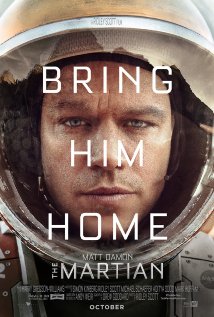 Based upon Andy Weir’s nuts-and-bolts scientific “what if” tale, The Martian is the movie equivalent of Apollo 13 crossed with Cast Away. Just far less personable volleyballs. But there are potatoes. Space potatoes.
After a powerful storm on Mars forces NASA’s crew to flee, astronaut Mark Watney (Matt Damon) is presumed dead and left behind. He wakes up hours later, shrapnel in his gut, and retreats back to the Mars mission base. He has to survive close to two years before he has any hope of being rescued on the hostile world. Before that, he has to establish some kind of communication with NASA, and even before that he has to somehow grow food in the arid Martian soil. Back at home, NASA is debating their limited options to bring back Watney and whether or not they should tell his crewmates that he survived.
In conversations with my friend and critical colleague Ben Bailey, he said that The Martian was the opposite of Gravity, a film he subsequently loathed, because it was smart people making smart decisions. There is an inherent enjoyment watching intelligent people tackle and persevere over daunting challenges, and this sets up The Martian for lots of payoffs and satisfaction. We see both sides of the problem and it provides even more opportunities for challenges and payoffs. Naturally the stuff on Mars is more compelling because of its extreme dangers and isolation, but the Earth scenes are also enjoyable as the NASA determines the soonest they might reach their lost astronaut. Just like the similarly themed Apollo 13, there are challenges to be overcome and the solutions are not without risk themselves. I enjoyed how the screenplay kept throwing out new obstacles; just when you think you can breath for a while the status quo is upset again. The slew of new obstacles doesn’t feel contrived either but rather realistic setbacks. It’s a wonderful storytelling structure that constantly keeps things moving forward and ramps up the urgency. As a result, we don’t ever feel safe right until the climax, and even then you’re still sweating it out because of all the complications and adjustments.
 It’s revitalizing to watch a movie that treats science with a sense of reverence. Mark Watney endures in the most hostile of environments through his ingenious use of the resources he has because of his understanding of science and math. Just as MacGyver proved there was something satisfying about watching a guy make a bomb out of a toilet paper tube, some chewing gum, and a bobby pin, it’s entirely enjoyable watching Watney think his way out of problems, and this starts early on. Watney’s first problem after he regains consciousness is to remove an embedded piece of shrapnel in his gut. The scene plays in a methodical fashion without any obtrusive edits, allowing the full task to settle in with the audience. The man has to perform surgery on himself and dig inside himself, and if he doesn’t get this done soon, sepsis might set in (no doctors without borders here). From there, the situation only gets more serious as Watney’s food supply, even when generously rationed, will only last a fraction of the time it would take NASA to send a rescue team. He has to grow food on an alien planet. That itself could be its own movie, a glossy crossover special from the SyFy Channel and the Home and Garden network. This is a survival story that doesn’t rely upon coincidence or some sort of divine intervention but on the understanding and admiration of science and its possibilities. Though America’s favorite astrophysicist Neil deGrasse Tyson says that in this movie universe, all the science decisions are being made by science professionals rather than, you know, politicians who adamantly open ignorant statements with, “I’m not a scientist.”
Another aspect I wasn’t quite expecting but took hold of me is how uplifting The Martian turns out to be. It’s a celebration of human endeavor and particularly cooperation, as the United States reaches out to other nations for assistance. Watching the determined souls risk their lives to retrieve one fallen man is the kind of thing that represents the best in us. Sure, there’s something to be said about the fact that it’s one prized American life that countries are spending billions of not trillions of dollars to rescue and perhaps that money would be better spent helping more lives on Earth. There’s also the curious fact that the world has spent a ton of money rescuing Matt Damon in movies. From Saving Private Ryan, to Interstellar, and now The Martian, we seem to value Damon above all else.
This isn’t exactly a one-man show with half of the running time flashing back to Earth but Damon’s star quality and acting chops makes it so you don’t mind being marooned with this man. Watney’s recorded messages are a slick way to deal with the internal thinking of its protagonist while giving the character more opportunities to charm thanks to a rich sense of gallows-level humor. At no point is Mark Watney flippant about his unique predicament but his sense of humor goes a long way to further engender the audience’s good will. He’s not moping and having existential crises; he’s getting to work, and it’s through the problem solving that we get to know this character, his ingenuity, his personality, his fears, and his distaste for disco music. Damon steers clear from playing the character too large and bearing his soul as the metaphorical representative for all of humanity and its place in the cosmos. He’s just one guy who happens to be lost millions of miles from his home planet, and he’s making the best of it.
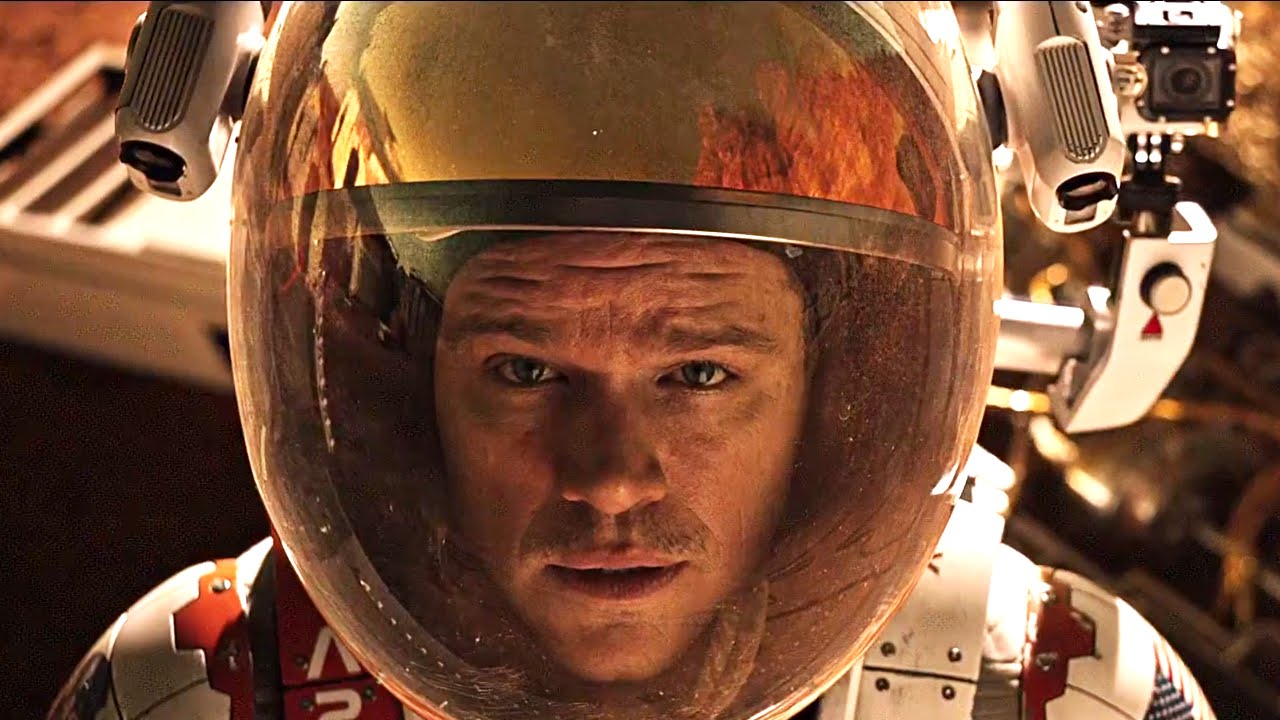 Being a Ridley Scott film, naturally the film is downright impeccable from a technical standpoint. The photography is great, communicating the frightening and awe-inspiring scope of the alien topography, especially when compared to maps for scale. The visuals find ways to further help communicate Watney’s dilemma and diminished resources. Scott’s visual sensibilities are so naturally attuned to developing tension. I was holding my breath at times from the suspense of certain sequences even though I long assumed that Watney would make it back home safe and sound. A scene with a desperate need for duct tape was a real nail-biter. There isn’t a bad performance among the star-studded cast of actors who must have been grateful for even a tiny morsel of screen time. I have no idea what Kirsten Wiig really does in this movie as the NASA PR person besides fold her arms in rooms, but hey, she’s there, along with Donald Glover as a socially awkward physicist. Jessica Chastain (Zero Dark Thirty) gets to pour over the regret of leaving a friend behind, Jeff Daniels gets to once more practice his skill of being an authoritarian blowhard he honed from The Newsroom, and I even was able to tolerate Kate Mara (Fantastic Four), so that’s something.
The Martian is a natural crowd-pleaser. It’s engineered from the start to engage an audience with its survival thrills, present a series of increasing payoffs with new challenges and solutions, and by the end of our journey we’re treated to a rousing finish that carries a poignancy and sense of inspiration about the best in all of us, what can be accomplished through grit and cooperation and sacrifice. It’s a movie that let’s the science of survival be the ultimate star, with Damon serving as a handsome host to guide us through the marvels of the universe and duct tape. When dealing with the vastness of space and the vulnerability of human life, it’s easy to feel insignificant in comparison, but that’s where the human will to endure and to work together comes in and reconfirms the possibilities of the collective inhabitants of this giant blue orb. The Martian is a sci-fi thriller, a potent human drama, and one of the best times you can have at the movies.
Nate’s Grade: A-
Share this:

The Maze Runner: The Scorch Trials (2015)
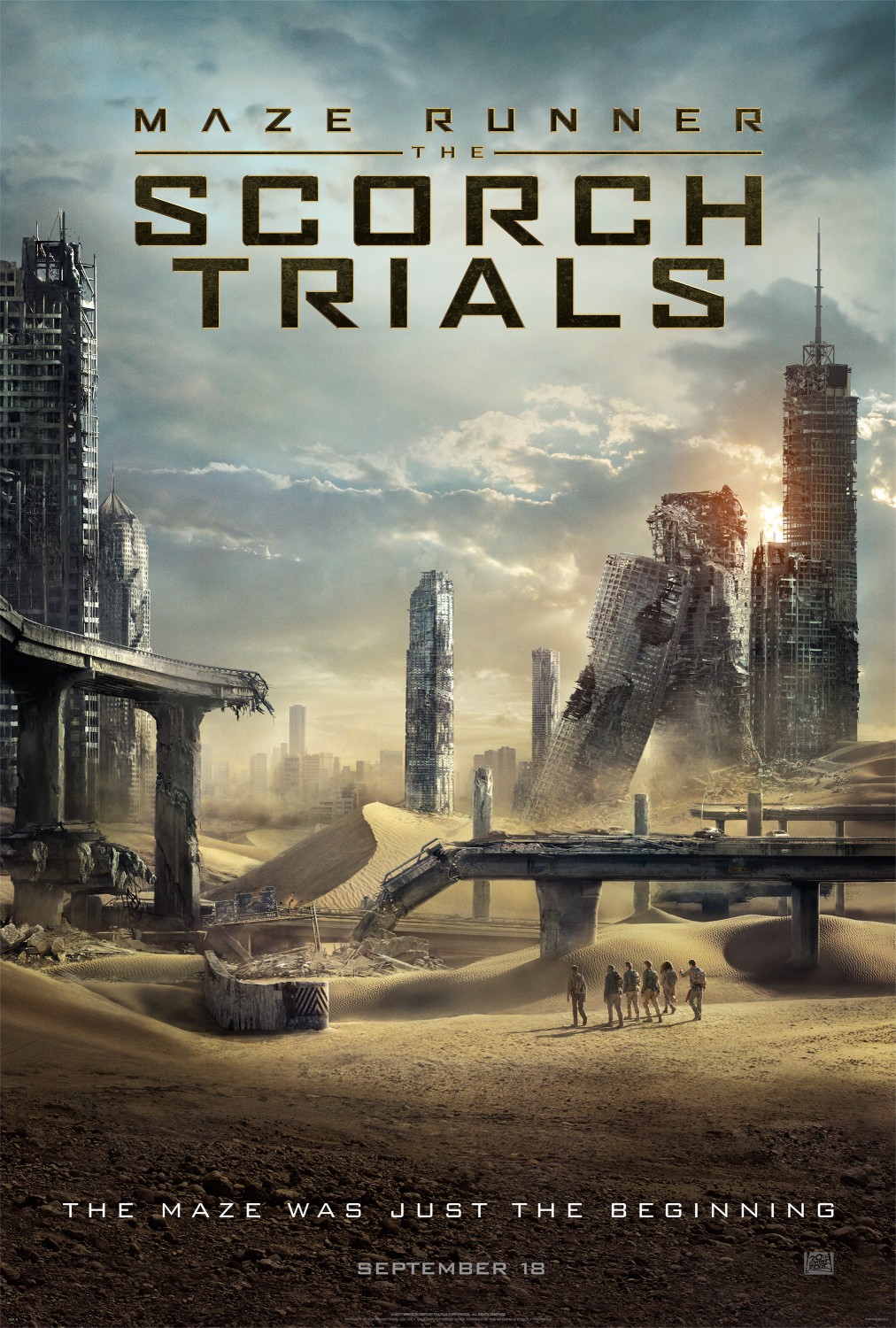 It’s called The Maze Runner: The Scorch Trials, though the trials appear more as “general struggles,” The Scorch appears as but a brief expanse of desert before the mountains, and then there’s the lack of any and all maze running (there is plenty of running, however). This sequel to the YA-inspired hit lives up to my biggest worry: the only thing interesting about this franchise was the maze, and now that’s gone. The mystery of the maze, and its cool factor, gave this story something memorable. Now it’s just generic YA pap. Beyond its boring protagonist, it would be a scorch trial for me to even assign description to these characters. They don’t even get one note to play; they have no notes. That’s because so much of this tedious and bloated sequel is our group of maze survivors running from one outpost to another, seemingly safe and then predictably not. It’s a plot routine that gets redundant quickly, and yet little else seems to occur. They go from stop to stop gaining characters but little else. The momentum feels stalled and there’s no sense of direction to guide the characters. It feels so aimless and dull and far too flimsy to justify even half of the movie’s 132 minutes. I just don’t care about these characters so I rooted for the bad guys. Weirdly enough, the bad guys use tasers and the good guys use bullets. There are some scant highpoints, namely the direction of Wes Ball, who finds ways to make the chase sequences visually stylish and fleetingly exciting, and a self-destruct sequence set to a Patsy Cline tune. There’s enough to get your hopes up before the grim reality of the overwhelming onslaught of YA tropes comes crashing down again. Can we stick these dumb kids back inside a maze already?
Nate’s Grade: C
Share this:

Sicario (2015)
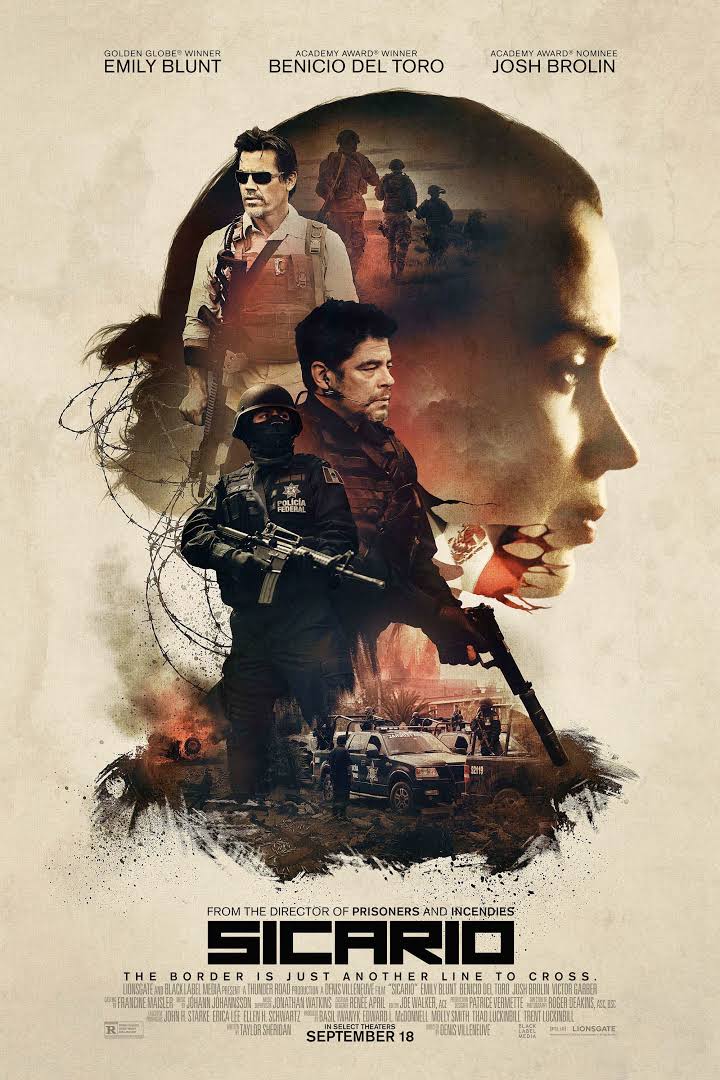 The word “sicario” is Spanish for hitman, we’re told in a helpful opening text. It’s a term that has greater meaning in the landscape of the war on drugs, a war that has ravaged Mexico and its citizens. Sicario, the film, is grim and gripping and director Denis Villeneuve doesn’t hold back from the brutality of its reality. Sicario is a flat-out tremendous film. It’s the most intense film I’ve sat through since 2012’s Zero Dark Thirty, so much so that for long stretches of the 121-minute film I was literally tearing my hair out with delicious anxiety.
Kate Mercer (Emily Blunt) is a Phoenix FBI Agent called in by her superiors with a very special offer. Matt (Josh Brolin), a government agent whose affiliation is classified, has a task force that he would like Kate to join. She’ll be taking it to the drug cartels by destabilizing their chain of power. Kate accepts the job. Alejandro (Benicio Del Toro) is a foreign agent in alliance with Matt, and he seems to be deeply knowledgeable of the cartel and their practices. As the chaos swirls and the team gets closer to the cartel bosses, Kate has to reckon with what she is part of.
Let Sicario be a blueprint for how to brilliantly develop suspense sequences in mainstream cinema. I’ve written about it before but the key to suspense and horror is simply characters we care about and the worry of what will happen next. Sicario places our characters in the middle of an ongoing battle and serves them up as the change agent, the proverbial stick rattling the hornet’s nest of deadly cartels. There’s a wonderful sequence when Kate joins up with the team for her first mission. She’s been told she’ll be based in El Paso but in reality she and a team of Army Rangers are venturing across the Mexican border into Juarez. They’re picking up a high-level cartel informant and transporting him back to American soil. The ride into the country sets the stage as the caravan of black SUVs tears through the streets of Jaurez, bracketed by Mexican state police vehicles. We’ve previously been told at what points a likely trap might be staged, and so we wait, taking in the terrain, the distance, the exits, the personnel. We’re already sizing up the Mexican state police cars; is that one on the take? It’s at the end that the scene coalesces into an even stronger whole, as we literally have a climax in traffic. The border entrance is backed up, and so Kate and our team wait, all the while identifying some suspicious armed men in traffic lanes parallel to their vehicles. They’re told they cannot fire until deadly force is used, and so they wait and we wait. It’s a top-notch sequence where you’re nervously waiting for the boil, waiting for the explosion.
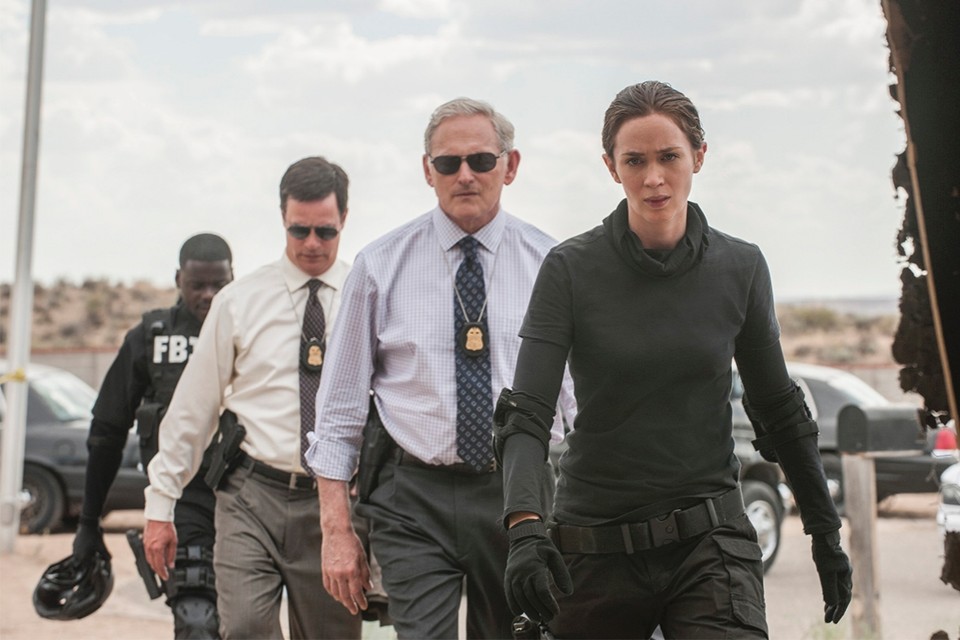 Writer Taylor Sheridan (best known as Deputy Chief Hale on Sons of Anarchy) has taken what could have been an empty Michael Bay-styled drug war thriller and given it a soul. Sheridan’s structure is ingeniously tied into his larger message about the moral futility of the escalating war on drugs. As Kate becomes more immersed into the costs of her new role, of the mounting ethical compromises and legal loopholes, she becomes a background player and Alejandro takes center stage. Rather than simply harden up and sacrifice her ideals for the sake of her mission, Kate holds true to her principles, even if she might be the only one continuing to stick to the rules and a need for oversight. It makes her a far more interesting character and it all comes to a terrific climactic scene that hinges upon two characters at a forceful crossroads, each with diametrically opposed viewpoints. For all the action, Sheridan has found a great way for his story to have a character-based climax that hits harder than simply killing the Worst Bad Guy. As we learn more about the reasons Kate was selected, her literal marginalization in the story makes thematic sense, especially as she’s unwilling to become a “wolf” in a “country of wolves.” Alejandro is that wolf, and in the last act he becomes the film’s focus as the pieces of their destabilization plan fall into place. There’s a scene with Alejandro that is so cold-blooded yet badass that it made my audience gasp. As the bodies drop and blood is shed, Sicario doesn’t lose sight of its characters even to the very end.
Sheridan’s script tackles its subject with a propensity for acknowledging the messy reality. There are no easy solutions and perhaps the best solution is really one that is at odds with conventional legality. The United States is losing the war on drugs, and innocents are suffering in droves. Matt’s cavalier attitude is in response to the overwhelming evidence that the war on drugs has done little except to enshrine certain violent elements into power. He’s trying to clear a path for Alejandro, but for what aim afterward is ethically questionable. When you’ve got nothing but bad solutions, perhaps the best option is still one that’s a step too far. Sicario tackles the harsh realities of the war on drugs without ever dragging out a soapbox. The messages and debates are suffused in every frame, every taut sequence, even pained expression. It’s a message movie where the morality and the escalating action go hand-in-hand.
With Prisoners and now Sicario, Villeneuve has proven to be one of our finest directors when it comes to making adult movies that get your palms sweaty. The execution of these suspense sequences left me breathless. Villeneuve uses long takes of aerial photography hovering over the topography of Mexico and the American southwest. It has the effect of feeling like you’re surveying an alien planet. Added with the ominous score by Johann Johannsson (The Theory of Everything), the tension can feel overwhelming at times. The menacing and percussion-heavy score makes it feel like an army is approaching. The movie also looks absolutely beautiful thanks to the cinematography from Roger Deakens. There are several lovely shots lit with the dying rays of sunlight, which I would admire further if my heart weren’t in my throat while watching. Villeneuve also knows when to pump the brakes, letting his film breathe, and letting his actors take center stage. There are several moments of restraint that allow the actors to flourish. From top to bottom, Sicario is a technical marvel that impresses as it continues to horrify.
Blunt as a badass is nothing new after her killer turn in last year’s vastly underrated Edge of Tomorrow, but there’s way more to her than being a superhero with a gun. She’s the moral conscience of the movie and you may discover, as she does, how irrelevant such a stance may be in this underground world. She’s trying to make sense of it all, trying to go along with what she thinks is right, or at least making a difference, and swallowing her frustrations. She saves the best for last in a finale scene that pushes her character to the breaking point of her ethics, and Blunt floors you. While Blunt is our entry point into this world, and Brolin is amusing as a cavalier rogue agent, this is very much Del Toro’s movie. Alejandro could easily be the slick movie-cool hitman, a soulless killing-machine, but he’s a haunted man who knows he’s damned and goes about his business with steely resolve. Benicio Del Toro can often be confused with doing little acting because he so naturally underplays his characters, but keep watch and you’ll see a man who inherently knows his character. There are subtle shifts and small reveals that open up Alejandro, who is so hardened that this will be all you get.

There have been some complaints citing the film’s lack of perspective from the Mexican side of the border, which is fair but also overlooking Sicario’s complexity. With its fear of cartel war violence spilling over into American neighborhoods, it’s not hard to see this film becoming supposed evidence in a xenophobic political campaign. Surely Donald Trump will be talking about Sicario. There is a small degree of representation with a minor character involved in the drug trade. The movie flashes back to him and his family a few times, setting us up to expect he’ll return at a pivotal moment later. He’s a completely unremarkable character and the brief scenes we spend with him made me anxious to get back to Kate and the main story. I didn’t care, and then he did reappear and I was quite surprised to find myself actively caring for this minor character’s well being. In a scenario where it seems like there’s a lack of vulnerability, this character provides it. He’s not a bad person per se as just another cog in a corrupt machine trying to provide for his loved ones. It’s a window into the larger ramifications of Kate and Matt’s actions. The very last bittersweet image doesn’t feel like victory, more like a warning of impending consequences that will befall innocents, and they aren’t Americans.
It’s rare to get a Hollywood thriller that excels at what it does and exceeds lofty expectations, but Sicario is that movie. Here is a thriller that excites, unnerves, provokes thought as well as terrible anxiety that you sweat in buckets over. The general feeling while watching Sicario is one of disquieting dread. The challenging and disturbing reality of the war on drugs blends with the brilliantly executed suspense sequences. The characters don’t get lost midst the clatter of violence, the direction enhances the actors and allows them to better inhabit their engaging characters, and the overall orchestration of all the many moving parts is so polished, so in tune, so electric that Sicario often does more than just entertain, it forces you to react. Leaving my theater was akin to coming down off an adrenaline high and I wanted to tell everyone I knew to see this movie. That’s the power of great cinema and Villeneuve has created a compelling feature that deserves to be soaked up and studied. This is exhilarating moviemaking, folks.
Nate’s Grade: A
Share this:

The Gift (2015)
 Reminiscent of adult thrillers that dominated the 1990s, Joel Edgerton’s The Gift is a slick and fiendishly enjoyable movie that unravels methodically and is comfortable dealing with moral ambiguity. Simon (Jason Bateman) and Robyn (Rebecca Hall) are transitioning to a new city and a new job when they meet an old high school acquaintance, Gordon (Edgerton). It seems at first like “Gordo” is going to be a scary stalker with boundary issues, but Edgerton, who also wrote and directed, keeps pushing his familiar narrative further, adding different shades to the trio of characters and allowing them to be flawed humans revealing their secrets. It’s a movie that’s not afraid to go dark and dwell in the unknown, especially with a note-perfect morally murky ending that leaves the viewer in the same wonderfully cruel sense of uncertainty and gnawing curiosity. Bateman pays against type as a rather strident character who definitely has issues with sticking to the full truth. Hall is more than a damsel in distress. She’s overcoming serious problems that she may or may not bear some culpability for, which makes her performance that much more interesting. Edgerton doesn’t overplay any off-kilter tics; his Gordo is a bit off, and always comes across like he’s holding back saying more, but his impression is a lot more wounded animal than psychopath. The screenplay is a model of efficiency and the secrets and reveals are evenly doled out. The Gift is an entertaining thriller with dark turns, deliberate pacing and structure, morally grey characters, comfort in ambiguity, and a healthy respect for its mature audience.
Nate’s Grade: B+
Share this:

The Diary of a Teenage Girl (2015)
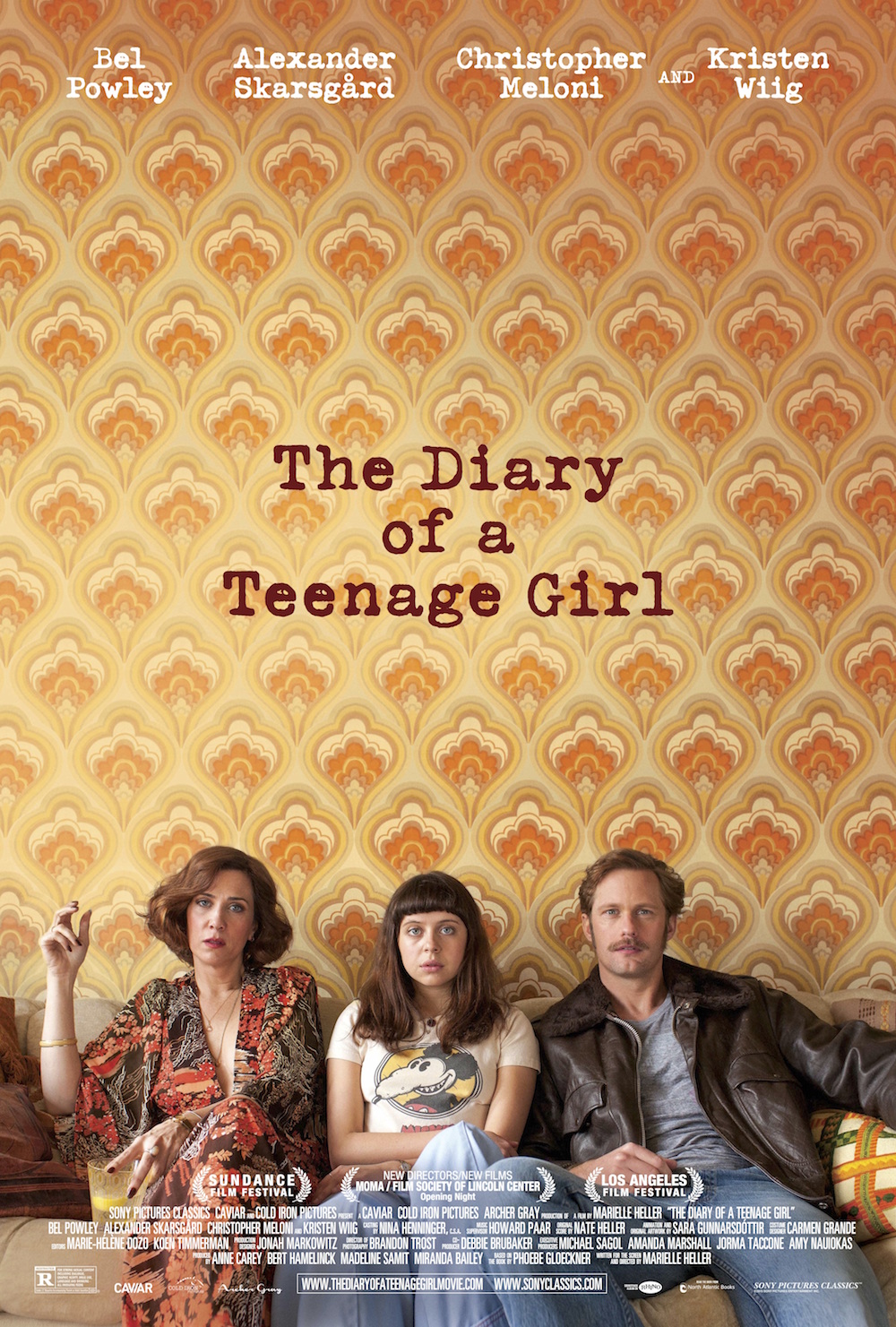 In 1976 San Francisco, Minnie (Bel Powley) is trying to navigate the world of boys and her teenage feelings. She’s 15 years old and wants to be an artist. She lives with her mother, Charlotte (Kristen Wiig), and her mother’s boyfriend, Monroe (Alexander Skarsgard), and her little sister. Minnie has always exhibited a desire to be touched, and the accidental touches of Monroe are exciting her mind. One night, their sense of play crosses a line and the two kiss, and from there Minnie and Monroe carry on a secret tryst.
Refreshingly, The Diary of a Teenage Girl may be one of the few coming-of-age films about a teen woman discovering her sense of sexuality without extolling an overpowering sense of moral judgment. The movie is frank and honest and allows its characters to make mistakes but also learn from them, and the kind of activities others might deem as mistakes or pitfalls might not be deemed as such by our characters, at least at their current point in time. Minnie is such a starkly interesting character, cheerfully independent and naively romantic. Her very first words in the film are, “I just had sex today.” Minnie is a character that enjoys sex and the movie does not punish her for her hormonal impulses. It’s encouraging to see a portrait of a woman who takes agency over her own sexuality. Once she’s discovered sex, it’s like a new world for Minnie. She feels like she’s discovered the secret handshake to being an adult. The world looks different to her. There’s a funny scene where she’s in a record shop and eyeing some of the varying male patrons, imagining what their respective penises might look like, which are depicted with colorful onscreen animation. It’s a nice change of pace to have a movie adopt a female point of view and the Female Gaze, if you will. We see the world as Minnie does, bursting with possibility, pleasure, and excitement. And yet, at the corners, we can sense the contours of doubt, the life lessons that will eventually present themselves to our restless heroine (the audio diary of her sexual escapades with Monroe is a time bomb waiting to happen). These lessons are not one of punishment but one of experience and understanding reminiscent of 2009’s An Education.
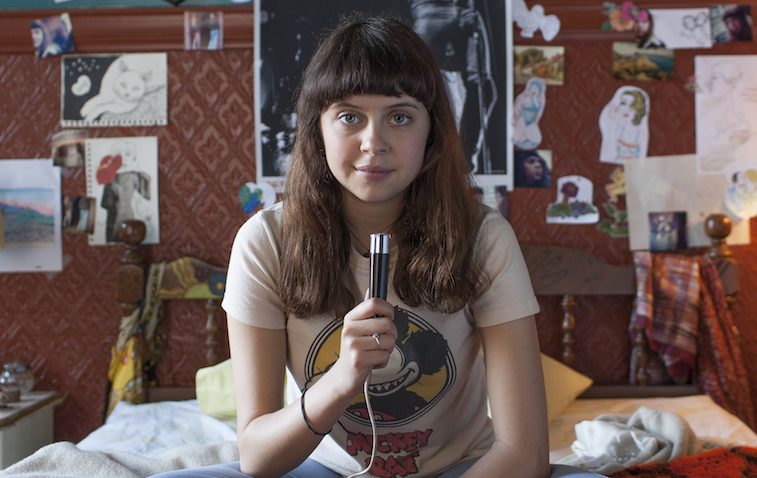 Its bracing sense of honesty and its finely attuned perspective also help elevate the film. Minnie’s voice is all over this movie, and not simply because she provides narration. She’s not over precocious or hyper literate; she speaks like an average teenager bursting with feelings and ideas that she has trouble putting into words. There is a sprightly sense of humor that runs throughout, a sense of comedy that get can get naughty while still feeling wonderfully immature. Minnie’s point of view and the way she processes the world, aided with often-animated fantasy and dream sequences, provides plenty of entertainment. Some of the humor is derived from her naiveté and how brashly straightforward she can be about her wishes, but even these moments are free of judgment. Minnie is allowed to be the funny, flawed, and complex creature she is.
Teenage Girl is also a remarkable spotlight for two artists, Powley and debut director Marielle Heller (wife to Lonely Island Boy Jorma Taccone). Powley is a terrific lead and gives Minnie an appealing mixture of curiosity, angst, attitude, and humor. She’s thrown into a different world and trying to adjust as she goes, which leads to plenty of vulnerability and honest reflection. She’s looking for more than sex but doesn’t quite know how to find the companion she desires yet in a culture that values her most as a figure of desire. Powley, it should also be noted, is British (though you’d never know) and 22 at the time of filming. There are several sex scenes and nude sequences for Minnie that can be uncomfortable to watch given the age of the character. I never felt the movie was being exploitative with its lead actress and character. There’s a moment when Minnie stands naked before a mirror, touching her body, and openly hoping for someone who will love her as a whole. These moments are meant to be awkward and raw and they achieve that power without feeling exploitative. Powley’s performance is such a natural and cutting teenage performance with touches of Maggie Gyllenhaal in her voice. This is the kind of character that a young actress desperately hopes for and luckily Powley was gifted the right director.
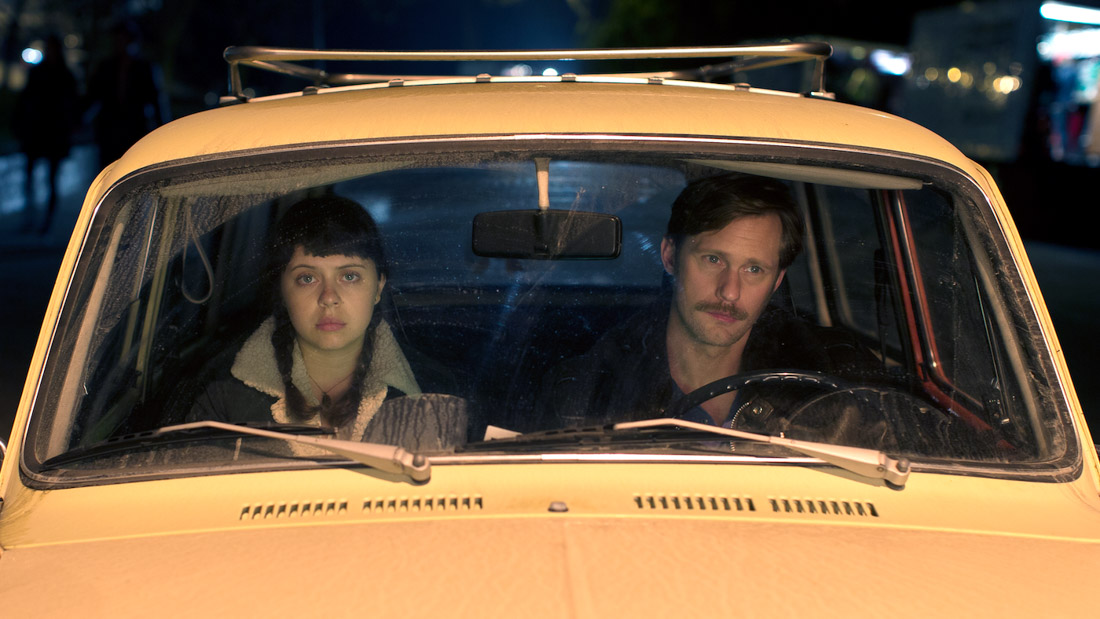 Heller, who also adapted the script based upon the semi-autobiographical graphic novel by Phoebe Gloeckner, has a definite feel for the material and keeps the tone controlled. It would be very easy for this story to veer into tawdry with its sensationalist elements, and yet it feels far more grounded in the reality of a teenage girl discovering how to interact with men and the power she has within her. There are some cringe-worthy moments between Minnie and Monroe but the movie doesn’t tell us how to feel and instead challenges the audience. Monroe isn’t presented as some leering and lascivious pederast. He is presented as yet another flawed individual who is wrestling with conflicted feelings; he knows what he’s doing with Minnie is wrong but he can’t quite quit her. There’s a level of sympathy toward his character that doesn’t excuse his actions and weaknesses. Charlotte, in contrast, is a character that speaks the language of the 1970s enlightened feminist but has shackled her subconsciously, setting up reoccurring failures for herself because she has difficulty taking responsibility for herself. When she gets a big check from her concerned ex-boyfriend (Christopher Meloni), she frivolously spends it on drugs. By the end of the movie, Minnie acknowledges that her mother will always think she needs a man, a provider, to simply get by in this life. Heller’s feel for these characters is sharp and the ambiguity she affixes is appreciated.
The Diary of a Teenage Girl is a coming-of-age drama that sits unique amongst the burgeoning subgenre of teen angst and broken hearts mostly because it is female-focused and free of judgment or moral castigation. Our heroine learns about the world, learns the power and pitfalls of sex and the potential enjoyment, and yet she still gets to be herself, free of long-term scarring punishment usually befit a Lifetime original movie on the sordid subject. Even better, Minnie is an intensely interesting and entertaining character that freely shares her frank perspective. The film adopts her perspective and Teenage Girl comes across and far more honest about its characters and about growing up. Powely is a standout and destined for further great things, and the supporting cast all perform ably. There isn’t a bad or misplaced actor in a beautiful looking film. The Diary of a Teenage Girl (man do my fingers really confuse this title with the name of that cheesy ABC Family TV show starring a young Shailene Woodley) is a smart, funny, provocative yet mature and welcomed slice-of-life story that feels painfully honest and praiseworthy. It’s a story that doesn’t excuse or condemn the actions of any of its characters. It’s a film that takes chances and reaps rewards from its risk-taking. It can feel like watching a slow-moving car slide into a ditch, but you’ll be glued to the screen throughout.
Nate’s Grade: A-
Share this:

The Visit (2015)
 For the past ten years, M. Night Shyamalan has been a figure of piñata-whacking derision, and yet the man has consistently been at work on films big and small. You would think a decade of duds would lead to Shyamalan being unable to direct more than a junior high theater production, and yet people like Will Smith were specifically seeking him out to direct inevitably terrible movies like After Earth (oh is that one bad). The association has been burned into our minds: Shyamalan and bad movies. Is it even possible for a man whose name has become a punchline to turn his career around? A low-budget lark like The Visit allows Shyamalan the freedom of risk. If he fails, he’s only made one more bad found footage horror movie in a near infinite sea of them, and the budget number isn’t one that will bankrupt his generous producers. Perhaps it’s through the benefit of low expectations cultivated over ten grievous years of filmmaking, but The Visit is a modest little thriller that has enough suspense and campy humor that it works, mostly. I walked out of the theater generally satisfied and entertained, which are two attributes that haven’t been associated with Shyamalan films since… Signs? Goodness, that was back when Mel Gibson was a box-office titan.
15-year-old Becca (Olivia DeJonge) and her 13-year-old brother Tyler (Ed Oxenbould) are visiting their grandparents for the first time. Becca is a budding documentary filmmaker and brings her camera along to make a movie about the five-day visit. Nana (Deanna Dunagan) and Pop Pop (Peter McRobbie) live deep in the woods of rural Pennsylvania (the local police force consists of one guy). Everything is warm and cozy until it’s nighttime and Pop Pop insists that, for their safety, the kids stay in their rooms after nine o’clock. The strict rules and forbidden areas of the home encourage the kids to go exploring. Their grandparents may just be more than weird and old.
 The premise is deceptively simple and yet perfectly relatable and dripping with potential. I heartily enjoyed the fact that for a solid two acts, The Visit is a horror film where the horror elements are old people. Nana and Pop Pop both display fraying mental states, and Nana has an unusual trance-like state that kicks in once the sun goes down. I was expecting something supernatural or vaguely related to fairy tales to emerge to explain the overall weirdness and creepy affectations, but it never does. For most of the movie, the ravages of aging provide the scary business, and I think that’s great. Telling the story from the perspective of Becca and her camera also reinforces the cross-generational peculiarities, where the elderly and their older system of rules and way of life seem even more alien and alarming. Shyamalan, to his credit, does a fine job of coming up with suspense sequences built around his premise. Watching Becca and Tyler debate opening their bedroom door at night, especially after a series of unsettling scratching noises, is a well developed moment that revs up the audience imagination. Of course they shouldn’t open that door but boy do we want them to and discover what is going on. The performances from Dunagan and McRobbie hint at something menacing lurking below the surface but in a casual way. Nana asking Becca to literally crawl inside the oven to clean it is the kind of memorable what-the-hell moment that makes a horror thriller.
The offhand comments from the grandparents and their occasional erratic behavior are also played for laughs thanks to the camp factor of the actors. There is a clear absurdity to the scares and tension, and Shyamalan smartly embraces this. The Visit encourages you to laugh. Apparently, Shyamalan delivered three different edits of the movie: one pure comedy, one pure horror, and one a mixture of the two. The horror/comedy edit was the one released to theaters, and the film is better because of the inclusion of its offbeat humor. Without it, the movie would risk being too serious. To be fair, the movie isn’t making fun of dementia or ridiculing the elderly just because they’re out of touch. When the kids first see signs of Nana and Pop Pop getting confused, they behave very compassionately, like when Pop Pop dresses for a costume party he doesn’t know anything else about. Strangely enough, my theater was mostly populated with people over the age of 50, which made me wonder if they were duped into what kind of movie they were seeing or relished the chance to be seen as the scary boogeyman to teenagers.
 Which leads me to the point of the review where I discuss the parts of The Visit that don’t work quite as well. I don’t think Shyamalan knows how to write for teenagers because Becca is far too precocious for her age (using terms like “elixir” and “mise-en-scene” as everyday vocabulary) and Tyler is just downright annoying. There are three separate incidents of Tyler free-style rapping and it’s about as successful as you would expect, though it provides me amusement thinking about Shyamalan writing free-style raps for a thirteen-year-old white kid from the suburbs. My engagement with The Visit was more tethered to a general sense of morbid curiosity than a concern for the teen characters. I would have been perfectly fine if the teens didn’t make it out alive. I knew that was never going to happen because of the PG-13 rating, which does put some limitations on just how far out there Shyamalan can go. Though it doesn’t limit a scant shot of elderly nudity used for comic purposes. There is a great reveal that leads into the third act that ups the stakes, but it also shifts the movie into a more definitive slasher territory, and a PG-13 rating is going to further limit that territory. There are plot holes (a disabled laptop Webcam; the fact that they don’t have cell phone service but can Skype with their mom) and several mysteries are short-lived and anticlimactic (What’s in the shed? Oh, it’s just soiled adult diapers – incontinence!). Like many found footage movies, the movie fails to justify or incorporate this forced narrative device. Becca is a teen with two cameras and yet she stages them so counter-intuitively. For her first meeting with her grandparents, she sets down the camera and then runs into the distance to hug them. Would it not make more sense to get a closer shot of this first meeting? The found footage structure also provides a coda that frustratingly undercuts the climax of tension and replaces it with a sentimental monologue. It makes sense as a movie-within-a-movie but it’s a poor choice to end a horror/comedy that just hit its peak with an unnecessary and tonally-unwarranted resolution meant to warm the heart.
Shyamalan has a long road ahead to atone for his cinematic sins, and while I wouldn’t call The Visit an outright success, the movie succeeds more often than it fails. I think more could have been done to subvert and push the premise further, but the limitations of the rating and the found footage structure keep the movie from getting too crazy. There are some well-drawn suspense sequences and the use of campy humor is a strong asset that allows the shortcomings to be more forgivable. It’s the best Shyamalan movie in over a decade, which is really saying everything you need to know. Who knows? Maybe the comeback starts here with a tiny horror movie with rapping kids and dirty Depends. Stranger things have happened in Hollywood.
Nate’s Grade: B-
Share this:

The Last Five Years (2015)
 It’s a musical about the beginning and end of a five-year relationship, and each partner is starting at a different point and meeting in the middle. If that sounds confusing, The Last Five Years will do little to better orient you, the audience, on its criss-crossing narrative-leaping timeline. Anna Kendrick is Cathy, who is traveling from the breakup of her marriage to the moment she met her eventual husband. Jeremy Jordan is Jamie, who is traveling the more linear path of infatuation to marriage to his divorce from Cathy. Neither character is particularly that involving though their eventual conflicts that lead to their parting of ways are more relatable than I was expecting since Jamie becomes a publishing phenom. I was looking for parallels with the song pairings, since we switch from a Cathy song to Jamie song, but the more I listened the more the narrative structure felt like an unjustified gimmick. Director Richard LaGravenese (Beautiful Creatures) feels like he was rushed to complete this film because much of the camerawork feels lacking, losing track of the characters in their long takes. Could he afford to do more than one take? There isn’t so much a sense of style or expanding into the medium of film. It feels like LaGravense was grabbing what he could. But that’s not the biggest problem. The biggest problem is that for an entirely sung musical (there may be like two lines of spoken dialogue) none of the songs are particularly memorable. Even minutes after finishing the film, I could not for the life of me hum one tune. To be fair the music isn’t offensive to the ears, but it falls within this vanilla middle ground that plays like it should be background noise rather than featured music. Kendrick and Jordan do a serviceable job singing these bland songs, but when your movie is wall-to-wall with music that doesn’t engage or register, it’s the equivalent of a comedy being unfunny. The Last Five Years is a movie musical that is decidedly pleasant and deadly bland.
Nate’s Grade: C+
Share this:

The Man from U.N.C.L.E. (2015)
 Guy Ritchie’s big screen reboot of the 1960s TV show is the right kind of fizzy summer escapist entry that goes down smooth and entertains with just enough swanky style to pass the time. The Man from U.N.C.L.E. is equal parts spy thriller and straight-laced genre satire, hewing closer, and more successfully, to a marriage between Ritchie early cockney gangster flicks and his big-budget Sherlock Holmes action franchise. It’s often fun and surprising at how well it holds its tone between comedy and action; it almost feels like a screwball romance with guns and bombs. The trio of leads, Henry Cavill as the American agent, Armie Hammer as the KGB agent, and Alicia Vikander (Ex Machina) as the German asset, make an engaging group with plenty of conflicts to explore. It’s surprisingly more character-based than driven by its action set-pieces. Cavill shows far more life and personality than I’ve ever seen from him on screen. Vikander and Hammer have an amusing chemistry together and the movie allows them to roughhouse without pushing either character in a direction that feels too safe. Their series of will-they-won’t-they near misses will drive certain portions of the audience mad. The movie gets into danger when Ritchie and his co-screenwriter Lionel Wigram get too cute, especially with a narrative technique where the movie doubles back or highlights action that was in the background at least four times. The world of this movie is also another asset, as the period costumes, soundtrack, Italian locations and production design are terrific and further elevate the swanky mood. It’s an ebullient throwback that serves up enough entertainment with its own cock-eyed sense of throwback charm.
Nate’s Grade: B
Share this:

Little Boy (2015)
 I was expecting to bury Little Boy in an avalanche of negativity once I found out a late plot point that made my jaw drop. This inspirational Christian independent film is set during World War II and features a pint-sized moppet, Pepper (Jakob Salvati), whose only real friend is his father (Michael Rapaport), who is now serving in the fight in the Pacific. He’s told that through the power of belief he can accomplish great things, and well, he really wants his dad to come home. So through the power of belief he causes… the dropping of the atomic bomb (WWII aficionados will recognize the nickname of the bomb). I was waiting for the moment and amping my sense of dread and moral outrage. A funny thing happened on the way to a nuclear bomb detonation, and that is that Little Boy is a fairly agreeable and effective family film that conveys a message with a welcomed degree of ambiguity and complexity and tolerance. This is a Christian-themed film about the power of belief but at no point does it make explicit whether it’s coincidence or the power of Pepper channeling God. Part of Pepper’s list of good deeds given to him by a priest (Tom Wilkinson) is to befriend a Japanese neighbor who returned home from an internment camp. The movie shows how casual these small-town folk indulge in racism and bullying. The Japanese man is also an atheist and I was legitimately astonished that the movie never makes a judgment about this. He’s treated as a complex man with his own system of thinking, and he’s not viewed as lesser or wayward because of his lack of belief in a higher power. Little Boy is no God’s Not Dead. The melodrama is well paced, the acting is solid if a bit heavy on long bouts of weeping, and the movie undercuts what normally would be the inspirational apexes with harsher reality. The bomb is dropped, and Pepper is initially celebrating until he discovers the total horror of Hiroshima. His “wish” may have even backfired with his father getting further punishment in a POW camp. While I still find the development tacky, I have to reluctantly credit the filmmakers for refusing to pander in a style that removes the complexity and ambiguity of real life. It’s still a movie and it still has a rather predictable albeit emotionally earned ending, but Little Boy might just be one of the biggest surprises of this year for me at the movies.
Nate’s Grade: C+


 nathanzoebl
You must be logged in to post a comment.