Category Archives: 2000 Movies

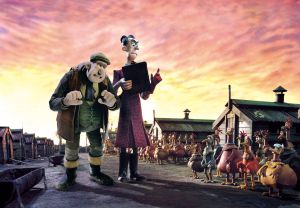
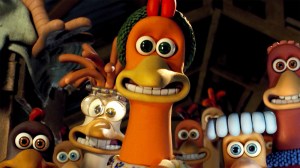
Chicken Run (2000) [Review Re-View]

Released June 23, 2000:

I strongly urge everyone out there if ever given the opportunity to see this movie. Do not confuse Chicken Run as a “kids only” affair while you yourself sneak into something “better.” This movie is easily the best movie of this lackluster summer of commercial perpetual bile, and possibly one of the better if not best films of the year. It’s no secret I have an affinity for animation and the claymation choices of directors Nick Park and Peter Lord, of Wallace and Gromit fame, give the characters real emotion. I can just look at one of the chickens in the eye and feel emotion that I couldn’t get seeing many Hollywood films. The cinematography and animation is lush, vibrant, and breathtakingly beautiful. The story is fresh, wonderfully hilarious, and even touching. The voice artists are terrific, with Miranda Richardson pulling out as my favorite for her delightfully vile Mrs. Tweedy. Treat yourself to one of the very few decent movies this summer and see the incredible fun of Chicken Run, and if you still feel conflicted it has Mel Gibson in it. And if you still feel bad you can say you got lost on your way to the restroom.

Nate’s Grade: A

——————————————————

WRITER REFLECTIONS 20 YEARS LATER

I’ve been a fan of animation since I was young, and stop-motion animation has its own unique and impressive charms. While it has been smoothed out with recent high-profile Laika entries (ParaNorman, Kubo and the Two Strings), there’s a distinct un-reality to stop-motion animation, a stutter-stop to the movements and its physical details that can place it in a beguiling middle-ground between fantasy and reality. I know thousands of hands toil many thousands of hours with every hand-drawn and CGI animated film, but seeing a literal canvas of three-dimensional physical proportions and knowing, with every second, that a person individually moved this figure bit by infinitesimal bit to provide movement, it gives me awe. It’s one of the reasons why 1993’s The Nightmare Before Christmas is one of my all-time favorite movies, plus its top-shelf soundtrack by Danny Elfman at the peak of his talents (I wore out my cassette tape listening to the soundtrack so often). The Aardman production team became famous from the success of their Creature Comforts and Wallace and Gromit shorts, but it wasn’t until 2000 that they tackled their first feature film. I saw Chicken Run in theaters three times that summer. I was so taken with the imagination, humor, storytelling, and efficiency of it, that I kept returning for more. Checking back in twenty years after that initial release, it’s still an effortlessly enjoyable comic caper.

This is an all-ages comedy that asks what if you remade The Great Escape but from the perspective of poultry. It’s a prison break movie that takes its stakes seriously but can still find room for goofy humor and a little romance. The screenplay by Karey Kirkpatrick, working off the story by directors Peter Lord and Nick Park, is minus any fat. Everything in the script sets up the characters, their distinct personalities, goals, stakes, and complications, especially once our main characters of Ginger (voiced by Julia Sawalha) and Rocky (Mel Gibson) are at cross-purposes; he only wants to think of himself and she can only think about saving everyone. He’s hiding the secret of his limitations; she sees him as the answer to their plight, and they’re both growing closer to one another as their time to escape dwindles. Every character is responsive to the action of the others, so the repercussions of the escape attempts lead to the villains escalating their plans. Instead of seeing the chickens as egg providers and meat when they can no longer produce eggs, now they are all expendable and meat is the top Tweedy Farm meal ticket. There’s a clear connection between all the plot beats that is deeply satisfying. Chicken Run is only 85 minutes long and it doesn’t waste a moment to make you smile and tell a good story.

I laughed several times, especially with the daffy Babs (“Are we going on holiday?”), and also the ingenuity of the slapstick. There’s a sequence going inside the machinations of a pie-making machine that is wonderfully developed with great obstacles leading to great slapstick. There’s one stretch where Ginger and Rocky find themselves inside a giant lit oven and they have to race out by leaping from pie to pie. Ginger is fleet and gets ahead, but Rocky tumbles into one pie after another, which is already good slapstick paired with an exciting scenario. Then it cuts to an overhead shot and you see that Rocky has somehow managed to trip and fall in every pie in the oven. It’s small comic touches like that where the Aardman team excel with their funny.

This is also a deceptively visually impressive movie. The Aardman design, the big eyes and buck teeth, seems underdeveloped to a layman but Chicken Run is a beautifully made movie. The stop-motion animation is professional and fluid, but it’s the degree of camera movement and visual enhancement that wowed me. There are long camera pans between human-sized characters and chicken-sized characters. There are visual gags that pop, especially during its thrilling finale when the chickens build their own flying contraption to escape. Mrs. Tweedy (an amazingly wicked Miranda Richardson) is hanging by a cord of lights, smashes through a billboard advertising her pies, and her face is replaced with the smiling billboard version a second before she rips it apart to reveal her frenzied homicidal expression. The use of montage in the opening to establish the many failed escape attempts by Ginger and her solitary confinement punishment is fantastic. Even just keeping the scale between the humans and dogs and chickens is an impressive feat as a physical production. The color palette can be, understandably, a bit muddy, but the imagination on display on a micro and macro level is thoroughly entertaining.

The vocal cast perform excellently. In my original review, I cited the inclusion of Gibson as a reason to encourage animation-wary moviegoers to see Chicken Run. In the ensuing twenty years, Gibson is definitely not seen in the same light thanks to his anti-Semitic and misogynist rantings. I can understand not wanting to watch this gem of a movie simply because you don’t want to listen to the man’s voice. I get it, but if you can overlook the man’s failings, his performance is lively, brash, and all the character requires. Sawalha (TV’s Absolutely Fabulous) is a plucky and expressive lead and gives a real heart to the movie. Ginger could easily escape but she’s determined to save all her peers even if they don’t appreciate her help. In 2020, Netflix announced they were producing a sequel to Chicken Run, and they also announced they are replacing Sawalha as the voice of Ginger. This deeply hurt her and the stated reason was that she sounded too old now. Sawalha recorded herself reading the same lines from twenty years ago, and she sounds identical to her 2000-circa self (listen for yourself), at least to my ears. Ginger just won’t be the same without her.

This was also one year before the Academy created the Best Animated Film Award, which would go onto 2001’s Shrek. I’m convinced if this award had been established one year earlier that Chicken Run would have been its very worthy inaugural recipient. Other animated films released in 2000 that might have contended: The Emperor’s New Groove, The Road to El Dorado, Titan A.E., Sinbad, and France’s Princes and Princesses. It seems bizarre today but there wasn’t a single wide-release CGI animated movie from Pixar, Disney, DreamWorks, or Nickelodeon. This was the last-year it was predominantly hand-drawn animation, which I do miss dearly.

Looking back on my brief review in 2000, I cannot recall why I had such antipathy for the major studio releases that summer. Gladiator was a success, though Mission: Impossible 2, Gone in 60 Seconds, Shaft, Titan A.E., Me, Myself & Irene, and The Perfect Storm disappointed me. Plus, there was the cataclysmic misfire Battlefield Earth. Whatever the case, Chicken Run was a breath of fresh air for my 18-year-old self that summer season. My younger self felt more compelled to argue that animation was not merely a medium for children, a stigma I believe has been significantly chipped away over the decades, especially with the publicity of Pixar. The Academy Award also gave the field a long-overdue honor and boost to the public. Aardman has released several movies after Chicken Run, including the absolutely delightful 2012 Pirates: Band of Misfits, which I highly recommend for all ages. I love animation and filmmakers that take advantage of the overwhelming possibilities the medium affords. My A grade stands. Chicken Run is just as enjoyable today. It might not be an all-timer of animation but it’s 85 minutes wonderfully spent.

Re-View Grade: A

Gladiator (2000) [Review Re-View]

Originally released May 5, 2000:

Director Ridley Scott has given the world of cinema some of its most unforgettable visual experiences. But can Scott breath new life into a genre whose heyday was when a badly dubbed Steve Reeves oiled his chest and wrestled loincloth-clad extras in the 1950s?

The year is roughly 180 AD and Rome is just finishing up its long-standing assault on anything that moves in the European continent. General Maximus (Russell Crowe) merely wants to retire back to his loving family and get away from the doom and war that has plagued his life. This is made all the more difficult when the ailing Emperor bypasses his treacherous son Commodus (Joaquin Phoenix) and decides to crown Maximus as the Defender of Rome. Because of this Commodus rises to power through bloody circumstances and has Maximus assigned to execution and his family crucified. You’d think crucifixion would be so passé by now. Maximus escapes only to be sold into slavery and bought by a dirt-run gladiator training school. As he advances up the chain and learns the tricks of the primal sport he seeks but vengeance for his fallen family.

Gladiator is an absorbing and sweeping spectacle of carnage and first-rate entertainment. The action is swift and ruthlessly visceral. The first movie in a long time to literally have me poised on the edge of my seat. The blood spills in the gallons and life and limb go flying enough your theater owner may consider setting down a tarp.

What Gladiator doesn’t sacrifice to the muscle of effects and action is storytelling. Are you listening George Lucas? Gladiator may unleash the beast when the rousing action is loose, but this is coupled with compelling drama and complex characters. Phoenix may at first seem like a snotty brat with an unhealthy eye for his sister (Connie Nielsen), but the further Gladiator continues the more you see in his eyes the troubled youth who just wants the love of his father that was never bestowed to him. Maximus is a devoted family man who regularly kisses clay statues of his family while away, and must ceremoniously dust himself with the earth before any battle.

The acting matches every sword blow and chariot race toe-for-toe. Russell Crowe marks a first-rate staple of heroism. Every calculating glare he exhibits shows the compassion and ferocity of this warrior. He becomes a rare breed – an action hero who can think and actually act. Oliver Reed, in what sadly was his last role, turns in a splendid and charismatic turn as the head of the gladiator school of Fine Arts and Carnage. Mysteriously everyone carries a British accent closer to them then a toga two sizes too small. Even Crowe who is nicknamed “The Spaniard” speaks like he walked out of Masterpiece Theater.

The effects and visuals are a sumptuous feast. The aerial shots of Rome and the Coliseum are simply breath taking. Gladiator rivals American Beauty for the most rose petals used in a movie, except in this one they don’t shoot out of Mena Suvari’s breasts.

Ridley Scott’s track record may be hit or miss but Gladiator is definitely one sorely not to be missed.

Nate’s Grade: A-

——————————————————

WRITER REFLECTIONS 20 YEARS LATER

As Russell Crowe famously barked, “Are you not entertained?’ It was hard to argue in 2000 and it still holds true to this day. Gladiator was a big-budget throwback to the swords-and-sandals epics of old Hollywood. It was a box-office hit, made Crowe a star, and won five Academy Awards including Best Picture. My own elderly grandmother loved it so much that she saw it three times in a theater that summer, which was practically unheard of in her later years (she also, inexplicably, loved the 1999 Mummy movie). It was a millennial DVD staple. I can recall everyone on my freshman dorm hall owning it and hearing it on regular rotation. As studio projects were getting bigger with more reliance on CGI, Gladiator felt like a refreshing reminder on how powerful old stories can be with some modern-day polish. Re-watching Gladiator twenty years later, it still resonates thanks to its tried-and-true formula of underdog vengeance.

We all love a good story where we follow a wronged party seek to right those wrongs, plus we all love a good underdog tale, and given the pomp and circumstance of the gladiatorial arena, it’s easy to see how this movie was engineered to be a success from the page. This isn’t a particularly new story. Stanley Kubrick’s Spartacus mined the same territory with an even bigger scope, both in politics and in war, and there have been many movies covering the same history around the rise of Commodus, like 1964’s The Fall of the Roman Empire and The Two Gladiators. We’ve seen this kind of story before even in this setting but that doesn’t matter. The familiarity with a story isn’t a hindrance if the filmmakers take their story seriously and make an audience care about its characters. It all comes down to execution. As long as the filmmakers don’t get complacent and take that formula familiarity for granted, old stories can have the same power they had for decades because, deep down, cooked in their structure, they just work.

Gladiator gives us everything we need to know by the conclusion of its first act, introducing us to Maximus, showing his leadership and loyalty, giving us the strained father-son relationship with Marcus Aurelius and Commodus, the expectations of the son of his ascendancy, the regrets of the father and hope for a return to a Republic, the reluctance of Maximus to be more than a general of Rome, and finally after the murder of the old emperor, a decisive choice for Maximus that challenges his morals and responsibility. From there, screenwriters David Franzoni (Amistad), John Logan (The Aviator), and William Nicholson (Les Miserables) put our hero and villain on parallel tracks heading for a collision. Maximus rises through the ranks of gladiators and builds a name for himself, getting called to the major leagues of bloodsport, and Commodus schemes to have his old enemy killed with increasingly dangerous trials in the Coliseum. It’s a natural progression and escalation, which makes the storytelling satisfying as it carries on. Gladiator never had a finished script when they began filming, which has become more common with big budget tentpoles with daunting release dates and rarely does this work out well. However, this is the exception (the screenplay was even nominated for an Oscar). It should be stated that the events of Gladiator pay very little to the actual history but fidelity is not necessary to telling a compelling story (the real-life Commodus rose to power after dear old dad died from plague). Use what you need, I say.

Ridley Scott was on an artistic hot streak during the start of the twenty-first century, directing three movies within one and a half years of release and earning two Oscar nominations. He wanted to veer Gladiator away from anything too cheesy of older swords-and-sandals epics, as reported. This isn’t about homoerotic wrestling with men in unitards (in Jerry Seinfeld voice: not that there’s anything wrong with that) and instead about the grit and superficial glory of Rome. The opening battle in Germania is meant to show Maximus in action but it also shows just how overpowering the Roman Empire was during this time period. They just massacre the remaining German tribe, and there’s a reason we don’t focus on battle strategy and instead on the chaos. The conclusion of the battle is a shaky camera mess of bodies and flames and dark shapes. It’s a bloody mess and not something to be glorified. Maximus is tired. His men are tired. Even Marcus Aurelius is tired of his decade-long conquering of a map, adding little inches to an already gargantuan territory. When is it all enough? When is war a self-perpetuating quagmire?

This same dismissive view over conquest and glory carries throughout. When Maximus becomes a slave, he must play the blood-thirsty appetites of the crowd to reach his goals. He disdains the theater of combat, the delaying of strikes simply to draw out the drama of two men fighting to the death. Later, these same venal interests of the mob form a protection for Maximus. He’s too popular to just be assassinated because the Roman people just love watching how he slays opponents. There’s an implicit condemnation of popular entertainment built around the suffering of others. Scott has a purpose for his depictions of violence, and you could even make the argument he is drawing parallels between the bloodthirsty crowds of the Coliseum and modern-day moviegoers screaming for violence. What are the human costs for this entertainment? It’s not explicitly stated, and some might even say this level of commentary for a movie awash in bloodshed makes any such condemnation hollow or hypocritical. Maybe. The violence feels like it has weight even when it can border on feeling like a video game stage with enemies to clear.

Crowe (The Nice Guys) was already making a name for himself as a rugged character actor in movies like L.A. Confidential and The Insider, but it was Gladiator that made him a Hollywood leading man, a title that he always seems to have felt uncomfortable with. Crowe wasn’t the first choice of Scott and the filmmakers (Mel Gibson turned Maximus down saying he was too old), but it’s hard to imagine another person in the role now. Crowe has a commanding presence in the film, an immediate magnetism, that you understand why men would follow him into hell. That flinty intensity plays into the action movie strengths, but there’s also a reflective side to the man, a sense of humor that can be surprising and rewarding. There’s more to Maximus than avenging his wife and child, and Crowe brings shades of complexity to an instantly iconic role. He finds the tired soul of Maximus when he could have simply been a kickass killing machine. Between Crowe’s three Best Actor nominations in a row from 1999-2001, I think he won for the wrong performance. It’s a shame Crowe hasn’t been nominated since, which seems downright absurd. People have forgotten what an amazing actor Crowe can be, singing voice notwithstanding (I need a sequel to Master and Commander please and thank you).

This was also a breakout role for Joaquin Phoenix (Her), who has risen to become one of the most celebrated and chameleon-like actors of his generation. The character of Commodus is your classic example of an entitled child who doesn’t understand why people don’t like him. He’s a sniveling villain prone to temper tantrums (“I am vexed. I am very vexed”). Much like his co-star, Phoenix finds layers to the character rather than resting on a stock villain characterization. He’s really the jealous son who envies the preference and love given to Maximus, first from his father, then from his widowed sister (Connie Nielsen), and then from the Roman people. He whines that they love Maximus in a way he will never deserve. It’s hard not to even see a Trumpian psychology to Commodus, a man not equipped for the position of power he occupies who longs for adulation he hasn’t earned. You can hate the man, but you might also feel sorry for him despite yourself. When he wants to be pompous, he can be hilarious (I adored his quick reaction shots to the theatrical combat). When he wants to be creepy, he can be terrifying. You can even see some of the broken pieces here that Phoenix would masterfully use to compose his Oscar-winning Joker performance.

The supporting cast was gifted with great old actors getting one last victory lap. Richard Harris was so stately and grandfatherly that it got him the role of Dumbledore in the Harry Potter franchise. It also served as a great sendoff for Oliver Reed (Oliver!) as Proximo, the selfish, trash-talking former gladiator turned gladiator trainer. Reed died months into the production and before he had wrapped his part, requiring extensive reworking from the screenwriters (Logan was on set for much of the production to cater to the immediate day-to-day story needs). Scott used a body double and parlayed visual effects to recreate Reed’s face, much like what 1994’s The Crow was forced to do after the unfortunate death of its star, Brandon Lee. I kept looking for what moments would be Reed and what moments would be the CGI-enabled Reed double, and it was harder to determine than I thought, so nice job visual effects team. Reed had a reputation of being a carousing reprobate, so having a final performance that allowed him to tap into those old impulses plus the regrets of older age was a wonderful final match.

The other big takeaway upon my twenty-year re-watch was how recognizable and stirring Hans Zimmer’s famous score was, which lost the Oscar that year to Crouching Tiger, Hidden Dragon, and that seems insane to me. Zimmer has been in a class all his own since the 90s with classic, instantly hum-able scores for True Romance, The Lion King, The Dark Knight, Inception, and The Pirates of the Caribbean, which borrows heavily from his theme for Gladiator. The score greatly adds to the excitement and majesty of the movie and can prove transporting by itself.

A truly bizarre post-script is the story of how the studio tried to develop a sequel. Gladiator was hugely successful but any sequel presented problems. Given the death of its star, following another character makes the most sense, and yet that’s not the direction the screenplay took. Eventually, the sequel to Gladiator was going to follow the ghost of Maximus as it travels through time including to modern-day. Just take a moment and dream of what could have been. Alas, we’ll likely never get time-traveling ghost Maximus now and we simply don’t deserve it as a society.

Reviewing my original film critique from 2000, I feel that my 18-year-old self was more entranced with making snappy, pithy blurbs than going into further detail on my analysis. My early reviews were far more declarative, saying something was good or bad and giving some detail but not dwelling on going deeper into the examination. This line, “The blood spills in the gallons and life and limb go flying enough your theater owner may consider setting down a tarp,” makes me cringe a little because it’s just trying too hard to be casually clever. I do enjoy the Mena Suvari rose petal joke. Still, I celebrated that a studio movie could emphasize its story first and foremost and my observations are still valid. I’m all but certain the only reason I knew who Steve Reeves was back then was because of his many appearances via Mystery Science Theater 3000 covering his cheesy swords-and-sandals films of old that Ridley Scott was so eager to avoid recreating (“Do you like films about gladiators?”)

Because the movie does so much so well, with some exceptional, it’s hard for me to rate Gladiator any lower than my initial grade of an A-, so that’s where I’m keeping it twenty years later. I think the national conversation has cooled on Gladiator, forgotten it because it wasn’t quite as audacious as other examples of early 2000s films, but it sets out to tell a familiar story on a big canvas and deserves its plaudits for somehow pulling it all off with style and gravity. It would be flippant to say Gladiator still slays the competition but it’s still mighty entertaining.

Re-View Grade: A-
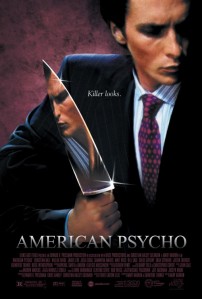
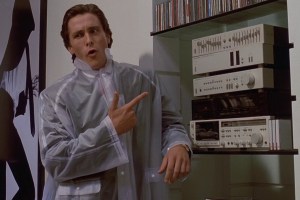
American Psycho (2000) [Review Re-View]

Originally released April 14, 2000:

American Psycho is based on the controversial 1991 best seller by Bret Easton Ellis though it got old fast. One can easily grasp how the lead connects with brand names on page one, but repeat it for 300 more and you’re tempted to add the book to your collection of firewood. Ellis’ novel was sadistically perverse, but director Mary Haron (I Shot Andy Warhol) has somehow managed to pull out an entertaining social satire from the pages of blood and name brands.

Christian Bale, mainly known as the boy-next-door in period piece films, plays Patrick Bateman with ferocious malevolence and vigorous life. Teen scream Leo was once considered for the part but after seeing Bale’s startling performance it should prove why he’s on screen and Leo’s swimming in The Beach. Bateman is an up-and-up Wall Street yuppie who glosses over appearance more than anything else. The only outlet it appears for our sinister shark from the soulless decade is by random acts of gruesome violence.

If Bateman blows off steam by blowing off companion’s heads than it only becomes more frustrating when no one believes his random confessions. Haron takes the grisly material of Ellis’ novel and mines it for pure 80s pulp. It only gets better the further it gets as you have so many points to discuss: Is Bateman acting out to prove his existence in a world that doesn’t humor him or others? Is he acting out deep-seeded rage from the actions of the decade on its people? Is he desensitized and so jaded that death does not even fracture him anymore? The questions are boundless.

The hit list of stars in Psycho includes Chloe Sevigny as a nailed home addition, Willem Dafoe as an investigative detective, Jared Leto as an axed co-worker, and sweet Reese Witherspoon as the apple of Bateman’s twisted eye. Everyone has fun in their tongue-in-cheek nostalgia romp through the absurd.

American Psychoshould not be confused with the successful teen sex farce American Pie. The only desserts in this film are just, and they’re usually left of the mayonnaise and behind the frozen head in the refrigerator. American Psycho is the thinking man’s slasher movie. A flick that slices, dices, and always entices. It only gets better after you’ve seen it. One of the best films of 2000 for now.

Nate’s Grade: A

——————————————————

WRITER REFLECTIONS 20 YEARS LATER

American Psycho was a literary sensation upon its initial publication in 1991 and was deemed shocking, grotesque, perverse, and all those splashy adjectives that made it guaranteed Hollywood would turn Bret Easton Ellis’ novel into a film. Every young actor in Hollywood in the 90s was rumored to play narcissistic serial killer Patrick Bateman. By the late 90s, director Mary Haron was attached with Christian Bale as the intended Bateman on the condition that other name actors could be brought on (Haron secured Willem Dafoe and Reese Witherspoon for supporting roles). The producers kept pushing for their number one target, Leonardo DiCaprio as Bateman, and Haron said she would walk if he was hired over Bale. The producers went ahead and DiCaprio was hired for several months, with the budget ballooning to over $40 million, half of which was slated just for DiCaprio’s payday. Months later, DiCaprio left to film Danny Boyle’s The Beach, and the producers went back to Haron and her top choice, Bale, who was so determined to play Bateman that he didn’t take any other acting gigs for nine months just in case (new total film budget: $7 million). Looking back again twenty years later, it’s difficult to imagine late 90s DiCaprio in the part that became the first of many star-making performances for Bale, one of the most chameleon-like actors of his generation. Haron’s tenacity and instincts proved correct and the film still stands tall as a dark comedy and a character study of a compulsive narcissist.

The novel was set in the 1980s and intended to satirize the soulless suits of Regan’s America that made their ill-gotten gains on Wall Street, and the satire has only become more relevant after the 2008 financial meltdown and numerous white-collar scandals. The perception of Wall Street as predatory and vampiric and roiling with sociopathic greed has only become more pronounced, which makes the intended satirical targets even more worthy of their take-downs.

I initially wondered in my original review in 2000 whether, among other interpretations, Bateman was lashing out in a world that didn’t care about him in order to make himself feel heard, and that is exactly the opposite response. Bateman is acting out because he can and because he no longer cares about following rules. It may be a metaphorically simplistic application to make a Wall Street trader a serial killer but that doesn’t make it any less appropriate and resonating. The iconic business card scene still sends me howling, as Bateman and his colleagues (Justin Theroux, Josh Lucas, Matt Ross) compete for supremacy with who has the most accomplished little square of cardboard with their name on it. The hushed and awed voices, the detailed micro-analysis, the slow motion and beauty shots of the cards, it’s played to such wonderful heights of absurdity. When Bateman hires two call girls for a threesome, he spends more time flexing and admiring his own image in the mirror. He spends more time on his daily beauty care rituals than he does on introspection. For these hollow men, status and appearance is the only thing that matters in a world of imposters and transitory pleasures.

Bateman is meant to serve as a character study for a man who declares there isn’t anything there underneath him. It’s an expose of vanity in an era of venal excess and it’s also an indictment on privilege. As depicted on film, and later revealed why with an ambiguous conclusion, Bateman gets away with his wild and increasingly murderous antics because of his position. He’s a rich white Yuppie during 1980s New York City. He can get away with anything, which is why he can run around screaming, flailing a live chainsaw, wearing nothing but socks and blood, and nobody seems to be the wiser. It’s why he can go back to his own crime scenes to leave even more of his evidence, and DNA, around the premises. It’s why he can pose as Paul Allen (Jared Leto) even after he has hacked Allen into tiny little Yuppie pieces. It’s why he can hilariously wax on like a Rolling Stone essayist about musical artists like Phil Collins and Whitney Houston as he prepares to slice and dice his victims. As his actions become more and more blatant, the satire rises with Bateman to blanket his reckless impulses (these crooks can get away with anything, Haron seems to be whispering in your ear while elbowing you in the ribs). After two more decades of Wall Street scandal without consequence or credible jail time, as well as a president who is convinced rules do not apply to him, the satire has approached an even darker laugh-because-otherwise-you-might-cry territory than it was back in 2000 (“This confession has meant nothing.”).

With no one able to tell him no, how far will Bateman go? Haron and her co-writer Guinevere Turner (who also appears in the film as Elizabeth, a drunk friend of Bateman’s who becomes another victim) smartly dialed into the themes they wanted to send up and dialed down the grisly gratuitous details. In the book, Bateman’s depravity is described in as much detail as he gives to his rampant consumerism. We don’t need pages upon pages of description to understand that Bateman is sick in the head, and we don’t need examples such as torturing a prostitute by trapping rats inside her vagina. The grisly overkill of the book is smartly pulled back to its essentials, and an oft-reviled work deemed misogynistic by many critics has been transformed from a deep dive into rape, dismemberment, and cruelty into a satire on the men who aspire to commit such awful acts. There’s a noticeable difference there that some will miss. One perspective focuses on the actions and the other focuses on the meaning. Bateman is a privileged, entitled, and alienated white man teeming with unprovoked rage, a figure we’ve seen more often in the news in the ensuing decades. The American Psycho movie takes aim at the fragile male egos of past and present. Haron would later go on to write and direct other indies (2006’s The Notorious Bettie Paige) but she never seemed to get that career boost after American Psycho. Ellis decried the movie adaptation and later said he felt female directors were unable to accurately translate the male gaze, which is dubious when the starting point for Hollywood filmmaking is preset at “male gaze.”

Bale is phenomenal in what proved to be his breakout role. It was only a few years later that he nabbed Batman for Christopher Nolan. According to interviews, Bale modeled his performance after what he saw during a Tom Cruise appearance on David Letterman’s talk show. Bale says he saw an “intense friendliness with nothing behind the eyes,” and he then knew how to play the part. It was also the beginning of Bale’s trademark method transformations, becoming the muscled figure of Bateman’s desire, the only thing that ever truly mattered to the man. Bale’s thinly veiled contempt for everyone and ironic detachment are constantly entertaining and provide great laughs (his go-to excuse for departing, “I have to return some video tapes,” made me laugh every time). There’s a late scene where Bateman calls his lawyer to confess to his litany of sins, feeling cornered, and it’s a spellbinding performance all in one take where he approaches mania as he finally unburdens himself (“Tonight I, uh, I just had to kill a LOT of people. And I’m not sure I’m gonna get away with it this time.”). It’s a tremendous moment in a tremendous performance. The movie is filled with familiar faces (Chloe Sevigny! Samantha Mathis! Reg E. Cathy!) that it becomes fun to realize just how many great actors and future stars contributed to the movie. For trivia buffs, it also features Batman (Bale) killing the Joker (Leto).

My original review attempts many turns of phrase, like “blowing off steam by blowing off others’ heads,” but the core points are still viable: the satire improves from the book, Bale delivers an amazing performance, and there are many ways to interpret the film. The ending isn’t quite as ambiguous as perceived but it makes sense with the outlandish escalation of events, a point where even Bateman looks at his own power with befuddled curiosity. Back in 2000, I called American Psycho the “thinking man’s slasher movie” and I think that title still applies. It’s a vicious movie but the satire is just as vicious. Weirdly, there was a direct-to-DVD sequel that just went the “non-thinking man’s slasher” route by featuring Mila Kunis (Black Swan) as a criminal justice coed who embarks on her own bloodbath, including killing William Shatner as a professor. It’s like unintended satire on Hollywood itself; follow a cerebral and daring artistic work with run-of-the-mill slop under the same name, co-opting the appeal of a “brand” to make a buck. Much like Wall Street, Hollywood doesn’t know when to stop.

Re-View Grade: A

The Ninth Gate (2000) [Review Re-View]

Originally released March 10, 2000:

The latest from old school horror pioneer Roman Polanski is a dark and brooding thriller that is… very long and brooding. What begins with noir charm and decadence grows thin by the movie’s over-bloated running time – giving new definition to the term “tedium.” The visuals are grim and noirish, but hang forever. Half of the movie is seeing Johnny Depp walk from Point A to Point B; and then the other half is watching him light up a cigarette usually already with drink safely in hand. Depp plays a librarian that doesn’t play by all the rules, or something or other. He’s set out to authenticate the last three books of a Satanic worshiper only to discover they lead to a path of devilish power. By the time Ninth Gate reaches its climax at an Eyes Wide Shut-style group gathering the audience has already hopelessly lost feeling in their ass. The vague ending is a cop-out after what the viewer is forced to go through to finally find out the secrets of these special 15th century books/doorstops. When it’s not carelessly lingering The Ninth Gate has some interest to it, but too often than not, it just rolls ahead forgetful of the audience that paid to come see it.

Nate’s Grade: C-

——————————————————

WRITER REFLECTIONS 20 YEARS LATER

Times sure have changed for famous director Roman Polanski. He’s been filming movies entirely in Europe for years since he fled the United States to escape prosecution for rape charges. He even won an Academy Award in 2002 for The Pianist, though he wasn’t present to accept naturally. However, in a post-Me Too realm of improved scrutiny over the bad habits of bad men with power and influence, Polanski hasn’t had a movie with notable names since 2012’s Carnage. He’s made a few foreign-language films since but his sphere seems notably smaller, more confined, and more shut off from the industry and actors and moneymen that want to work with the famous director. They’ve even attempted to get him extradited back to the U.S. again. All of this cannot help but color re-watching The Ninth Gate, especially when it already plays upon memories of Polanski’s own Rosemary’s Baby. I wondered if this movie might actually be better twenty years later, and for a while I was feeling like my young film critic self was perhaps a little too quick to judgment. However, upon recent viewing, this is still a long and boring misfire.

The premise is slightly intriguing until you realize what it exactly entails. Johnny Depp’s character, Dean Corso, is a rare book evaluator and unscrupulous profiteer. He’s been hired by wealthy magnate Boris Balkin (Frank Langella) to authenticate a book reportedly co-written by the Devil himself and, if real, has the ability to summon Old Scratch to boot. Hey, we got something there for an intriguing horror movie that delves into the occult. And for perhaps the first act, The Ninth Gate works well enough to establish its mood and its central conflict. Then it just kept going. And kept going. And that’s when you realize that much of this movie involves one man traveling to different chateaus and other European estates to simply look at books. There are three copies of this rare Devil-penned tome, so Dean Corso is traveling to at least two different locales simply to compare and contrast books. I don’t think I’m fully articulating just how boring this can get. Imagine a significant other sitting beside you and deep in thought with a dense textbook. Imagine watching them read and make the occasional verbal noise. That is The Ninth Gate. Watching people read is boring, especially when it’s done repeatedly. There are MULTIPLE scenes of simply watching Depp look over a book while music plays. Film is a visual medium, and reading is inherently an internal function unless adjusted in context. It’s not like he’s deliberating over whether to send a text to a special someone, what the personal correspondence means to his concept of his family, it’s a man compare old books for a job. It’s not like he’s obsessed over this book for years or is a true believer of its power.

Some of this might even be permissible if the stodgy 133-minute film wasn’t so tediously repetitive (spoilers to follow). Corso is paid to authenticate the book but every person he encounters that knows a little about this book ends up dead. The book dealer he has stash the book? Dead. The old man with the second copy who says he’ll never sell his book not even if his life depended on it? Dead. The old lady expert with the third copy who despises Boris Balkin? Dead. By the time that wheelchair-bound woman is found to be repeatedly running into a wall, and upon further inspection has her tongue hanging out her mouth in an unintentionally goofy sight, the plot structure of The Ninth Gate has entered farce. Dean Corso doesn’t seem terribly alarmed by any of this or observant of an obvious pattern of events. He has several run-ins with goons and a mysterious blonde woman (Emmanuelle Seigner) that follows his every move. He seems comically oblivious to the danger all around him. Part of this is the repetitive plot structure where over an hour of the movie follows Depp going to a place, discovering one minor addition of information, finding that person dead, being chased, then repeating. It takes over an hour simply to note that there are minute differences in the engravings in the three copies of the devilish book. Then it simply shifts into a game of who can capture all the copies, which it should have been from the start, and would have introduced a very necessary sense of urgency from a prosaic script. Another reason for that general turgid feeling is that Depp seems to be sleepwalking through this performance absent emotion. Even Polanski himself complained.

This is a movie about a special book that can unleash the powers of the Devil, so why is the finished film so boring and frustrating to sit through? It has rival cults and business tycoons fending for ownership over that power. At least it does in theory. The fact that there are competing interests should have been a substantially larger element of the movie. Once Lena Olin’s rich widow character sleeps with Dean Corso to get the first copy back, she disappears from the narrative until the very end, where she’s dispatched without any intervention from her assembled cult of would-be Satanists. Seriously they just stand by and watch a guy strangle her to death and jump at the word “Boo!” They were never a threat even if they were responsible for one part of the mysterious stalkers. The other stalker, our ever-present blonde, will literally float at times and come to kung-fu kicking rescue, which made me snort out loud. It just comes across so goofy. Her identity is clearly in a supernatural answer but the movie never fully explains who she is, what her real motivations are, her allegiances, and even what the ending is supposed to mean. After 133 minutes, it’s egregious that Polanski doesn’t provide a conclusion that feels even fleetingly conclusive. The whole movie is a mystery that moves with irritatingly incremental steps that leads to one big shrug.

I can see the appeal of the idea of this story but I don’t see the appeal of making The Ninth Gate as is, beside visiting some fabulous locations in Portugal and Spain. Why get an actor of Depp’s caliber if he’s going to read on camera and not worry about his encroaching danger? Why does this movie need 133 minutes to set up a plot that could have done it in 100? I think Polanski was eager to revisit the old school horror of his early works and didn’t sweat the details. Mysterious castles of old. Dangerous strangers. Cults. The Devil. Book authentication. Okay, maybe not that last part. I suppose one could charitably say Polanski is trying to establish an unsettling mood with patient-yet-paranoid camerawork and a story that feels unhurried. It feels to me like Polanski doesn’t know what movie he wants to make and is in no rush to get there. The most overtly horror moments fall into self-parody. That’s really where the movie errs for me. It takes great horror story elements and says instead of running with cults and the Devil, what if we focused more on the slow authentication of dusty old books? Not their power or meaning or value to devious men and women, but on whether they are real. That would be like finding a treasure map and then trying to make sure the ink was authentic for its era rather than, you know, hunting for treasure.

My original review twenty years ago is a bit harsh and angry, though I can understand why especially after such an anticlimactic ending. I would say the movie is more than watching Depp walk from Point A to point B, though to be sure that is heavily represented onscreen. I might even slightly raise my letter grade but the criticisms still stand as stated. Even twenty years later, with a fresh set of eyes, The Ninth Gate is a disappointing story that says too little and takes too long to do so.

Re-View Grade: C

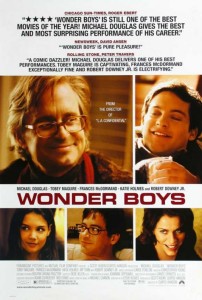
Wonder Boys (2000) [Review Re-View]

Originally released February 25, 2000:

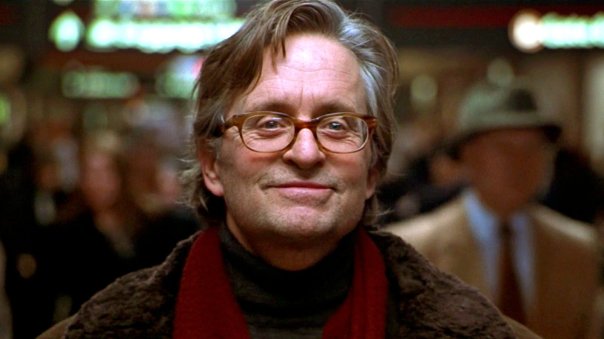
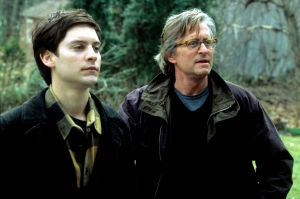
A rather warm but ultimately meandering tale of Michael Douglas as a college professor going through one crisis after another, Tobey Maguire as a creepy kid (again?!), and Robert Downey Jr. as an editor who seems to have a taste for transvestites. Though likable, Wonder Boys goes nowhere and nowhere slow. It carries the feel of a novel that was never intended to be brought onto the screen because of what it would lose in transition and it does. Douglas’ performance is sincere and syrupy but Wonder Boys is not a night out on the town.

Nate’s Grade: C+

——————————————————

WRITER REFLECTIONS 20 YEARS LATER

This was another film that I was curious to revisit because I was wondering whether or not I would find more of value than when I was 17-years-old and seeing Wonder Boys at a rare promotional screening with my good pals Kevin Lowe and Natalia Riviera (I recall none of us being particularly taken with the movie). It’s based upon an acclaimed book by Michael Chabon (The Amazing Adventures of Cavalier & Clay, The Yiddish Policeman’s Union), starring the eventual first big screen Spider-Man (Tobey Maguire), Iron Man (Robert Downey Jr.), Hank Pym (Michael Douglas), the first Rachel Dawes (Katie Holmes), and Oscar-winner Frances McDormand (Three Billboards Outside Ebbing, Missouri). It was director Curtis Hanson’s follow-up from his 1997 masterpiece, L.A. Confidential. The screenwriter, Steven Kloves, would go on to adapt every Harry Potter movie minus one. The studio even re-released the movie later in the fall of 2000 under new more ensemble-focused marketing to push for awards consideration (to my surprise, it was nominated for three Oscars: Editing, Adapted Screenplay, and winning Best Song for a craggy Bob Dylan tune). Maybe my indifferent review earlier was just a young man unable to connect with this brand of middle-class ennui. Now two decades later I can finally say… I still don’t connect with this ennui.

Wonder Boys is one of those shaggy dog stories where it’s not so much the destination but the journey, so you better enjoy the characters or else it will feel like a long ride. The problem with this story is that its protagonist feels so self-pitying and yet the universe seems designed to cheer him up. Grady Tripp (Douglas) is a celebrated creative writing professor just going through his days in a pot-fueled haze to dull the pressure of living up to his big breakout novel. It’s been over seven years and his next novel has no end in sight, already clocking over 2000 pages. Grady thinks he’s a has-been but every other character in this tiny bourgeois universe tells him how great he is. His publisher (Downey Jr.) is eager to peek at Grady’s next surefire literary hit. His students adore him and hang on his every word. He has multiple women throwing themselves at him, including McDormand, who wants to have his baby, and Holmes as his infatuated student/boarder. Everyone tells him how great he is as a writer. James Leer (Maguire) confesses that it was Grady’s book that inspired him to even be a writer, and he seems poised to become a great one. It’s exhausting for every other significant character to proclaim repeatedly how great our lead is and to have him repeatedly respond, “Yeah, but I just don’t know, you guys.”

Self-doubt is already relatable enough, on top of imposter syndrome for an artist or even just an adult, so the material is there for an introspective story about the struggles of creativity and responsibility, but that’s not what Wonder Boys presents as a movie. It’s filled with zany mishaps to fill up those meandering two hours. There’s Downey Jr. and his wandering eye, first with a trans women and then with James. There’s a man incorrectly labeled “Vernon” who stalks Grady demanding what he says is his car back. There’s also a dead dog that gets carried around for almost the entire movie, even though the plot covers days and it would seem like a very bad idea to continue hauling a decaying animal in one’s car. There’s no real reason why this dog’s corpse is even held onto. It belongs to Grady’s boss, the chair of the English department, and the husband to his mistress (McDormand). Why not dispose of the evidence especially with the personal connections? It’s yet one of several signs of the movie trying to be quirky and edgy over the consequences of character actions. Much of the plot beats follow retrieving a stolen coat once owned by Marilyn Monroe. Does the coat represent something of time gone by? A promise never fully able to be fulfilled? America’s innocence? Does it even matter? If Wonder Boys was going to explore the inner turpitude of Grady, why does the movie need so many dead ends and loping storylines as a means of distraction?

It’s not a terrible viewing experience but it feels like the movie is definitely missing material that made the book so effective. As I stated in my early and remarkably on-point review in 2000, it feels like a novel that would lose its appeal in translation and it has. The plot is treading water until Grady finally makes a big personal decision at the very end. He even gets a happy ending where his next great book is the recollections of the film’s events. The many supporting characters are not as interesting as the actors might make them appear. Even Maguire’s wonderkid writer, where the title is derived from, is a walking awkward quirk machine, an early representation of an autistic student before many of the characteristics were wider recognized. He provides a detached sense of comedy with his bluntly direct approach, like his encyclopedic knowledge of famous Hollywood suicides (fun fact: the home video versions edited out Alan Ladd’s name at request from his family estate). The problem with James as a character is he’s meant to represent promise to Grady, further compounding his sense of inadequacy. He’s the shiny new up-and-coming talent headed for great headlines, the kind Grady might have enjoyed but might now be too far in the rear view mirror. James has his own mini-arc of “cutting loose” but he wasn’t tightly wound from the start, just antisocial and aloof. He’s a symbol by design and an impenetrable autistic mumbly sidekick for offhand comedy observations, not so much a person.

Curtis Hanson’s direction is fine, the acting is fine, and even when relatively uninspired, the story is fine as it meanders and goes in self-defeating circles. It’s a movie that I think will be more remembered for weird little trivia, like a scene where future Iron Man and Spider-Man are in bed together. I don’t regret re-watching Wonder Boys but I didn’t get much more out of the experience than when I was 17. The main character is hard to fully embrace, especially his self-pitying problems of middle-class privilege, and the story is more a collection of chapter-based anecdotes and hasty character resolutions. Even if the two hours is amiable enough, it’s hard to connect with the characters and their conflicts, and it’s a prime example of an adaptation that can’t replicate its specific authorial charms. If I were 17 again, I’d make a pun on the word “wonder” but I’ll refrain. After all, I’ve grown.

Re-View Grade: C+

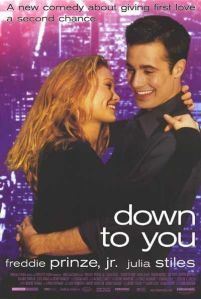
Down to You (2000) [Review Re-View]

Originally released January 8, 2000:

The latest sacrifice to almighty gods that are the teenage market with wide pockets arrives and proves not only is the teen comedy dying, it is having its grave danced upon. And with eight inch heels worn by the fiend known as Down To You.

Want an old-fashioned love story? Boy gets girl, boy loses girl, boy tries to get girl again, and boy gets girl. Pretty old and pretty much nothing more to Down to You, minus the addition of two porn stars and a nymphomaniac. The story is the same well-beaten path where they keep the leads as far away from each other and just let ’em loose at the end. Everyone hugs and we can all go home. Geez, I’ve seen more substance in a bag of fat-free potato chips.

The movie is very uninteresting and rather pointless as it drones on. Freddie Prinze Jr. can smile all he wants to but I’ll still never believe he’s a down on his luck college coed. At least he’s out of high school in this one. Everything in this movie has a recycled feel to it, so much so that some environmentalist group should confiscate this entire movie. People, it’s that bad. Imagine every cliché, expanded character stereotype, redundant joke, and you still have no idea how bad this script is. What the writer/director believes is quirky and cute falls closer to annoying and irresponsible.

The rest of the actors are faceless unknowns that you might as well search for on the back of a milk carton. Julia Stiles and Freddie Prinze Jr. have zero chemistry between them and are either bickering or blushing in embarrassment. Doesn’t sound like a good relationship worth a dozen flashbacks to me. Stiles at least puts forth an effort but Prinze just runs through the motions of another teen flick for his resume and comes off as nothing more than a mannequin with a goofy grin.

I stand and make a plea; please for the love of God end this Hollywood fascination with high school romantic comedies. It might have been cute to start out with but this trend has run its course. The only way the madness of teen romantic comedies will end is if the teens themselves stop supporting them. Wise up America. Take action! If this comedy is supposed to be about the school of life I’d say it overslept its class.

Nate’s Grade: C-

——————————————————

WRITER REFLECTIONS 20 YEARS LATER

I’ve been wondering for years if maybe, just maybe, I was too hard on the forgettable rom-com, Down to You. Not that it was a great movie but maybe the 17-year-old version of myself at that time in my senior year of high school had an axe to grind against blandly popular art. I can recall vividly how incensed I felt as a teenager growing up in the 90s with the rise of pop music like Britney Spears and Hanson and boy bands, the idea that these fleeting confections were somehow squeezing out the spaces for the bands and artists that I felt were more deserving of attention, alternative rock bands that were formidable for me, like Smashing Pumpkins and Radiohead. I can feel that intensity in my derogatory use of the term “teenybopper” to describe art that was made for mass appeal. Now, decades hence, I look back at my younger self and wonder why I got so upset about people liking art that didn’t appeal to me and why I felt such a passionate intensity to take down the art I personally disliked. Who cares? You don’t like Taylor Swift’s music? Fine, but what does it matter if others happen to like it? I can appreciate the pop stylings of Ms. Spears and the boy bands of yore. I’ve learned through time not to take offense that people just have different tastes (unless people enjoy the Friedberg-Seltzer “comedies,” because that is all the judgement I need).

That’s why I was wondering whether Down to You was a victim of my teenage animus and might, upon retrospect, perhaps be a better movie than I gave it fair credit for back in 2000, the dawn of a new century. Dear reader, I am here to inform you that, having recently re-watched this Freddie Prince Jr.-Julia Stiles romance, that Down to You is even worse than my teenage-self had warned.

For starters, this movie rings astoundingly inauthentic with every moment. It was written and directed by Kris Isacsson (Husband for Hire) who was close to thirty years old when Down to You was released but it feels like a 50-year-old was trying to replicate the speaking patterns of hip young twenty-somethings and flailing badly. Every word of dialogue just has that unshakable feeling of being off, or bring cringe-worthy, or failing to articulate the rhythms of youth. It’s not even in the Kevin Williamson-Dawson’s Creek style of hyper-verbal, overly clever youth that never existed except in television writers’ rooms. It’s not even entertaining in-authenticity.

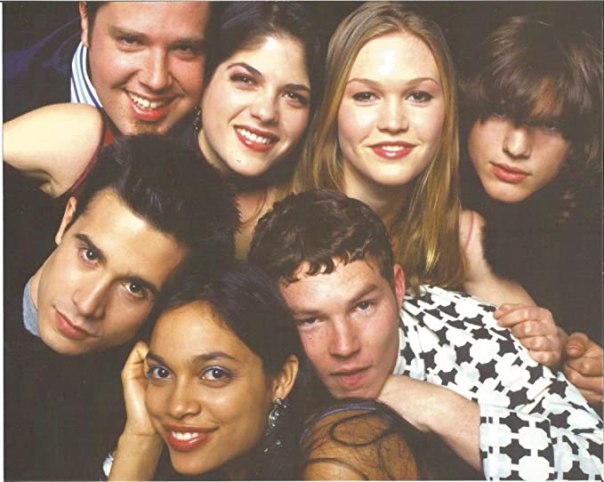
These college students sound interchangeable from their older parents; one pompous thespian friend (Zak Orth, channeling Orson Welles) feels completely transported from another movie. He has a test where he challenges Al to drink out of two cups, one representing true love and the other representing illusion. I did not understand the point of this game. I assume it was like Three Card Monty and he had to pick the right one after watching it be shuffled, but that’s just proving Al can follow a cup. This moment is played like some grave insight and it makes no sense. Even more than that, the behavior of the “kids being kids” can be downright cringe-inducing. Imogen will turn on music and walk around lip synching to the adoration of any crowd, but it just feels so awkward to watch, and it happens multiple times. Rosario Dawson (Men in Black II) is a one-note “hippie” friend who makes lame drug jokes. Selma Blair (Hellboy) is an active porn star and an active student at the school but is just a vampy attempt to tempt our male lead. He even keeps naughty pictures of Blair under his bed even after he’s dating Imogen. There’s also Ashton Kutcher (The Butterfly Effect) as an obtuse artist. Every character feels phony and bereft of charm and wit.

Romantic comedies live and die on two things: 1) your level of amusement in the characters, and 2) the chemistry of the lead characters. Down to You regrettably whiffs on both accounts. These are very boring characters and even by the end of the movie we know very little about them. Al says he wants to be a chef but we never see him do any cooking on his own, which seems like quite an oversight for a budding relationship. She’s an aspiring artist and we at least see her paint and describe why she likes art. Isacsson employs a Woody Allen-esque device where both participants break the fourth wall from the future to talk about their relationship ups and downs. You would think this framing device would allow for better insights and you’d be wrong. At one point, Imogen leaves for France for three or more months for an internship. You would think this would provide a difficult period for boyfriend and girlfriend to adjust and maintain intimacy, perhaps throwing some question over whether they’re fully invested. One minute later, she’s back and this entire excursion has meant nothing to their relationship. Why even include it?

Their coupledom feels as inorganic as everything else, and this is magnified by the powerful lack of chemistry between Prinze Jr. (She’s All That) and Stiles (The Bourne Identity). You don’t feel any urge compelling Al and Imogen to get together because they seem like chummy friends at best. When they have sex for the first time, three months into their collegiate relationship, the camera slowly lingers over their faces and uncomfortably frames their dispassionate and awkward kissing far too long. I defy anyone to watch that scene and argue that these two people have a spark of chemistry. I even hate their names. “Imogen” feels like it’s trying too hard and “Al” not hard enough. With the poor character writing, bad plotting and development, and no palpable chemistry, it makes Down to You feel like a painfully confounding experience lacking romance and comedy.

I was amazed at Isacsson’s sense of scene building and how wrong many of the endings come across. A scene, when well written, should serve as its own mini-movie with a beginning, middle, and end, and hopefully some conflict to explore. In a comedy, the conclusions of scenes would end on an upturn or a downturn but it’s also a good idea for there to be a discernible punchline the previous moment was leading up to. There’s one scene where Al’s roommate (Shawn Hatosy), a peculiar presence throughout that never knows what to do in any given moment, is drunk at a party and talking to an inflatable gorilla wearing a brassier. Al grabs the gorilla away and his inebriated roommate whimpers. That’s it. The generally off nature to all the writing is compounded in the comedy writing, which is compounded in its lazy or non-existent punchlines.

The worst example is when Al literally drinks a bottle of Imogen’s shampoo in a misguided suicide attempt. This is the thing I’ll always remember this absurd movie for. Al has his stomach pumped and undergoes a psychological review in the hospital, where he argues he was testing himself to see if he “needed the shampoo” and turns out he still did. This reckless act of self-destruction should provide more insights and changes to our male lead and those around him; he did, after all, attempt to end his life over being distraught from an ex-girlfriend. Al shrugs and it’s forgotten. What was the purpose of doing something this weird and harmful if it wasn’t going to matter in the bigger picture? Don’t transform a suicide attempt into a quirky anecdote for a non-dark comedy. This is what Down to You feels like as a whole, a series of contrived anecdotes crashing against one another.

There is one lone saving grace for this entire enterprise and that’s Henry Winkler (so brilliant on HBO’s Barry) as Al’s father, a famous TV chef who has an exciting idea for a reality TV show. He’s modeling it after Cops, that stalwart of 90s television, but it would be called Chefs. It would feature a traveling truck of chefs that would come to a stranger’s home, prepare a delicious meal, and teach the family how to do it themselves. Not only does that sound like a great idea for a TV show in 2000, I’m positive some show has run with this concept and had great success since. I would have rather watched the movie from Winkler’s point of view trying to get this show on the air and dealing with a son who drinks shampoo as a cry for help.

Looking back on my original review in 2000, I was wincing at how many joke-slams I was attempting at the film’s expense. Look, Down to You is still a bad movie but I didn’t need to add lines like, “I’ve seen more substance in a bag of fat-free potato chips,” and, “if this comedy is about the school of life I’d say it overslept its class.” This was still less than a year into my pursuit of critically reviewing movies, so I think I was forcing ready-made blurb-tendencies. My critical charges were on par but failed to go into more detail and seemed too general, which is why I wondered if my charges were colored by my teenage biases at the time. Given the time and distance, Down to You feels even more phony and confusing to watch as an adult. I was muttering to myself and my girlfriend while re-watching it and trying to understand the distaff storytelling choices. It’s flabbergasting and dated and even worse than I remembered. Down to You might be the nadir of the teen comedy movement from the early 2000s. I will never have to see this again. So, future me reading these words, heed this warning – stay away. Stay far away.

Re-Review Grade: D

Sanctimony (2000)

Sanctimony is the English-language introduction to the filmography of Dr. Uwe Boll and the very last movie I had yet to see for my first edition of my expansive column. Boll wrote and directed the movie about a clever serial killer that’s baffled law enforcement. It’s interesting coming into Sanctimony with all the Uwe Boll homework in the back of my head. I know what flaws I’m looking for, I pay attention to the retched line delivery from the actors, and I genuinely know what I’m getting into. It’s seems that Boll works somewhat in a bubble; almost all of his technical crew is the same from film to film, and Michael Paré, Jurgen Prochnow, Clint Howard, and Patrick Muldoon seem to be the stable Uwe Boll Players. Sanctimony is where it all began and where everything went so horribly awry for moviegoing audiences.

A killer is loose and terrorizing Seattle, cutting out the eyes, ears, and tongues of his victims. The media has dubbed him the “Monkey Maker killer” (think “speak no evil, hear no evil, etc.”). Detective Renart (Paré) and his partner Dorothy Smith (Jennifer Rubin) are assigned the case. After some investigation of a stabbed homeless girl, their initial suspect seems to be Tom (Casper Van Dien), a wealthy and cynical stockbroker. His lawyer balks at any charges and Tom goes free. Coincidentally, more bodies start piling up haphazardly. As Renart puts more pressure on Tom, he starts targeting those close to him, like his pregnant wife (Catherine Oxenberg, who seduced Van Dien in 1999’s The Omega Code). Tom has some master plan ready to shock the world, and only the dogged persistence of Renart can stop his wicked ways.

Sanctimony is really a crossbreeding of what Boll liked best about Seven and American Psycho. Like David Fincher’s masterpiece, Boll really wants his serial killer to be slicing and dicing with a message; this killer gets his kicks from cutting out different body parts. Tom eventually goes after his pursuer’s pregnant wife, just like Seven, and clumsily aims for some kind of myopic preaching. Tom sure does like to spit out a diatribe about the plague of humanity, even after he’s just dismembered a call girl. Boll seems very intent on crafting Tom into a Patrick Bateman-esque character, one whose soul has been lost to the bottom line of the business world (how many hotshot stockbrokers are based in Seattle?). But while American Psycho was complex, satirical, and deeply metaphorical, Sanctimony is stupid. Boll wants Tom’s speeches to have terrifying power to them, but instead they come across as theatrical and lifeless. Tom says, “Raping and pillaging have been the official government policy of any government that’s ever thrived.” If you’re impressed by this assertion, Sanctimony might just be the movie for you. If you yawn at this sub-standard Political Science 101 ejaculation, then you’re likely beyond the film’s short-armed reach. Boll’s writing has a vague inauthentic feel, like he learned everything about crime procedural from TV. In the year 2000, a character actually summarizes America with the words, “apple pie and baseball.” By now I think the only people that characterize America that way are conservative politicians and out-of-touch, disdainful foreigners.

Boll’s serial killer thriller plays all the genre clichés. First, naturally, there’s the clever serial killer who must torment his persecutors as a game. Then there’s the umpteenth example of a cop haunted by the lives he can’t save and his stalwart dedication to the case straining his marriage. When will these wives ever understand? Renart and Dorothy naturally get thrown off their case, thus finally allowing them to solve it as in every cops-and-robbers movie. Maybe movies should just begin with the cop thrown off their case; it would save everyone a hell of a lot of time as far as casework. Partners must always die to spurn our hero into action, though I’d have to assume Dorothy’s too young to be days away from a blissful retirement. Killing her seems ill advised too, especially since her last known whereabouts would be a dinner date with Tom. Way to be the number one suspect and give yourself borrowed time, dude.

I hate to admit it, but despite all its glaring simplicity and predictable bumps in the road, Sanctimony is passably entertaining, that is, until the ridiculous ending draws near. As with most serial killer films, the killer is practically a super being with an agenda. Except, in Sanctimony, Boll doesn’t even give his vengeful hand of God an agenda but just an inescapable rage. The film climaxes with Tom going on a shooting spree at his wedding party and then being gunned down by Renart. Boll uses lots of slow-mo and swelling dramatic music, but the scene had no set-up from earlier and makes little to no sense. What was his master plan? Was Tom trying to outlive his looming terminal illness and create a name that will long live on, likened to the horror he has wrought? He said he couldn’t stand the curse of people, so was his plan to just take out as many people as possible? If so, surely leaving the cops obvious tell-tale signs was not helpful, especially if he was just going to out himself on live TV as a murderer anyway. Sanctimony ends with far too many loose ends and unexplained motives that, in hindsight, seem to suggest Boll’s clever serial killer wasn’t so clever after all.

Since the heroes of Sanctimony are so rote and familiar, the only place for Boll to make artistic strides is in his depiction of his killer, Tom. This is where Sanctimony and Boll really drop the ball. Before we know anything about him, Boll has already introduced us to Tom’s office, which should more accurately be described as a lair. It’s gigantic, poorly lit, and surrounded by ominous rock faces. He even has an array of monitors at his super desk of villainy. The only thing missing is a desk full of files labeled, “Plan, Evil.” We never really understand what Tom’s motivations are, though Boll thinks he’s helping by lining up speeches about Tom’s views on people (hint: it’s not optimistic). Even his choices of murder have no lasting message; Tom just kills whoever is weak and available. If he’s an ordinary killer then what’s the point of even basing a flick around him?

Sanctimony presents a lot of Tom’s ire but never digs any deeper. He attends a laughable S&M club where they make snuff films in the back for your viewing pleasure. The leader of this demented boys club wants to harness male fury as motivation, for what I don’t know. So what does Tom do next? He goes home and chokes and attempts to rape his fiancé, clearly indicating that this unique support group is not working. She rejects him, so Tom walks the empty Seattle streets (!) with his knife openly drawn and stabs a homeless girl. Was he frustrated over his failed rape attempt? Is he reacting against a woman asserting power over him? We’ll never know, because Sanctimony is only interested in skirting the waters of characterization. In Boll’s movie, people fall into types and aren’t given anything else to work with. Tom is the killer. He kills. That’s all you’re going to get. Even though the movie is only 87 minutes long, Boll is disinterested in spending time with his characters. He’s rather just draw up a sketch from someone else’s work and move along.

The acting is somewhat better than most Boll movies and yet still a degree below typical straight-to-video blandness. Van Dein (Starship Troopers) is amusingly believable as a stone-faced serial killer. His limited acting range actually strengthens the character’s sense of frustration. He’s got a menacing stare to boot. Paré (Hope Floats) phones in his performance but gets some points for being in the film’s most weirdly awkward moment, when Renart has to step in as nude model for his wife and her giggly photographer peers. Bizarre doesn’t go far enough in describing the scene. Rubin (Little Witches, Amazons and Gladiators) is the hard-nosed female cop trying to make it in a man’s world, and gives a decent if unmemorable performance. I was more intrigued by her ever-present striped scarf, which seems to follow her everywhere from the shooting range to inside her home. Roberts has very little screen time and is still third billed.

Sanctimony is Uwe Boll’s stab at the serial killer genre, so it shouldn’t be surprising that it’s formulaic and bereft of suspense and imagination. This is a generic rip-off of far better serial killer flicks. The characters are all brief sketches and genre clichés, and Boll can’t even come up with a compelling agenda for his killer. I kept waiting for Sanctimony to fully explain itself, but once the wedding shoot-out is complete the film leaves you addled and perturbed. Boll has castrated his drama, rendering it unimportant, lazy, and sloppy. Boll may have several ideas floating around his head but he never brings them in for a clarification. Whatever intellectual goals he may have intended for Sanctimony will be lost on an audience grasping for meaning and entertainment. How dumb is this movie? Well, it defines what “sanctimony” means in the opening credits via dictionary. It should be very ominous when a movie is forced to define its own title. Ominous, indeed.

Nate’s Grade: C-

Panic (2000)

The story behind Panic goes something like this. The film was dropped by Artisan because they got test screening results back and apparently it wasn’t what they wanted. After this set-back it was going to be dumped to the wasteland of direct-to-cable like so many other troublesome pictures studios feel would not earn a buck if they were bleeding on the side of the road. After some fighting, particularly from critic Roger Ebert, a production house decided to distribute Panic in a very limited release. So what does this cinematic game of musical chairs mean? It means if you have a chance see this film.

Panic is a story about characters first and foremost. William H. Macy plays the son end of a father-son team of hitmen, with Donald Sutherland as the oppressive patriarch. Macy is a man who is never truly happy, almost like it is an impossibility for him at this point in his life. His wife (Tracey Ullman) is flaky and gives into her paranoia of her hubby having an affair with a younger chickadee. Macy meets an attractive and mysterious ingenue (Neve Campbell) while waiting for therapy. He begins on an obsession he can’t explain and fantasizes about her as the escape and ticket to happiness that is outside his reach.

The acting is as rich as the characters. Macy plays low-key but suits the subservient ghost that his character has become. Sutherland is haunting as the controlling father figure and the flashbacks between him and young Macy are disturbing as he plants his seed of control. Even at age six Macy’s character is referring to his father with “sir” tagged to the end of every sentence.

Neve’s character is the most in depth she’s ever been dealt, though her runner-up is a girl constantly chased by men in black robes with knives. Ullman is a nice presence and the audience really can sympathize with her. The child who plays the son of Macy and Ullman is one of the most adorable child actors I have ever seen. He lights up the screen every time he is present.

The story is brisk at a mere hour and a half. It is written and directed by a former writer of ‘Northern Exposure’ and ‘Homicide’ and the attention to characters shows. The film moves not through plot occurrences but through characters acting. When Macy discovers that the final hit he has to do is on his own therapist (John Ritter) his journey is one involving everyone around him in his life. The strains and pulls on this man are encompassing to watch.

Panic is a glimpse at a quiet movie told about the life of a man caught in his father’s grasp. Macy is a man conditioned to saying “he’s sorry” even if it is not deserved. His character is rich and Panic is a strongly acted gem if you can locate it.

Nate’s Grade: B+

Crouching Tiger Hidden Dragon (2000)

Ang Lee’s mythical tale of ancient… (Taiwan?) is full of visual marvels and plenty of moments of awe that make the audience believe in the power of cinema to transport once again. However, upon further viewings and more butt pain because of the large length, the film is not “one of the best ever made” as has been praised. When you get down to it and think the film really isn’t about anything but retrieving a sword and feminist roles. The visuals are striking poetry and the action is exciting and top-notch and that’s what really counts in the end.

Nate’s Grade: B

Shadow of the Vampire (2000)

Darkly comical with great stabs of satire at the film industry (bloodsuckers in the movies anyone? Hmmmmmm). Willem Dafoe retains his title as Creepiest Actor Alive and goes for broke with a tour de force performance that should have you checking under the bed. Shadow of the Vampire is alive, to use the term sparingly, with wit and a slow but maturely steadied pace. Dafoe deserves an Oscar and your fear.

Nate’s Grade: A