Author Archives: natezoebl
Layer Cake (2005)
 Layer Cake may be the least intimidating name ever for a crime movie. It conjures images of bridal showers, cooking shows, and birthday parties. It does not necessarily bring to mind thoughts of gangsters, assassins, drug trafficking, and the seamy underbelly of London’s criminal underground. Unless you’re watching some really awesome cooking show I don’t know about. The “layer cake” in question refers to the hierarchy of criminals. This isn’t unfamiliar territory for Matthew Vaughn, who produced Guy Ritchie’s Lock, Stock, and Two Smoking Barrels and Snatch. This time it’s Vaughn sitting in the director’s chair and the results are exceptionally entertaining. Layer Cake is a cinematic treat.
Daniel Craig (Road to Perdition) plays our untitled lead, referred to in the end credits as “XXXX.” He’s a cocaine dealer but not a gangster by any means. He wants to make his money, not step on any important toes, and then walk away on top and without any gaping holes in his body. Craig is summoned by his boss Jimmy (Kenneth Cranham) and given two missions, whether he wants to accept them or not. The first is to relocate the missing daughter of a very powerful friend of Jimmy’s. The second, and far more dangerous job, is to secure a package of millions of stolen ecstasy pills and make a profit. Complicating matters is the angry Serbian mob that the pills were stolen from. They’ve dispatched a deadly assassin known as Dragan to track down their stolen drugs and kill anyone involved. Craig is left to juggle the investigation, find a buyer, stay ahead of Serbian hitmen, get some time in with a hot new girl, and all the while keeping his higher-ups content enough not to kill him themselves.
 Layer Cake should be the film that makes Craig the star he so rightfully deserves to be. This man is a modern day Steve McQueen with those piercing blue eyes, cheekbones that could cut glass, and the casual swagger of coolness. Craig grabs the audience from his opening narration as he explains the ins and outs of his business. We may never see Craig sweat but he still expresses a remarkable slow burn of fear so effectively through those baby blues. He’s in over his head and the audience feels his frustrations. In an interesting character twist, when Craig does resort to killing, he’s actually tormented and haunted by his actions.
As with most British gangster flicks, there are a batch of colorful characters that leave their mark. Dragan (Dragan Micanovic) is a wonderfully enigmatic ghost of an assassin always one step ahead of Craig and the audience. Morty (George Harris) and Gene (Colm Meaney) add heart and bluster as Craig’s trusted right hand men. But the actor who steals the whole film with a malevolent glee is Michael Gambon (Harry Potter and the Prisoner of Azkaban). He plays Eddie Temple, the man behind the men behind the scenes. Gambon delivers the harshest of speeches with a velvety pragmatic calm. We don’t know what runs deeper with Eddie, his tan or his scheming.
Sienna Miller plays the thankless love interest to Craig. She’s pretty, sure, but there isn’t much acting ability on display in Layer Cake beside some smoldering glances. We never really know what Craig sees in her besides being another cute blonde to choose over. Miller isn’t alone in the “underwritten character department.” Layer Cake is crammed with secondary characters that pop in and out when it’s necessary. It’s not too annoying but it does mess around with an audience?s ability to follow along coherently.
Layer Cake is not one of the slick, whack-a-mole ventures Ritchie has given us (pre-Madonna). No sir, this is a brooding, serious and nearly terrifying look at the old adage “crime doesn’t pay.” Very few crime centered films express the day-to-day anxiety of just being a criminal. Jimmy reminds Craig that he’ll never be able to walk away because he?s too good an earner for his higher-ups. In Layer Cake, you can get killed for being too greedy, being too careless, being too good at your job, and even just being in the wrong place. Eddie sums it up best whilst describing Faust: “Man sells his soul to the devil. It all ends in tears. These things always do.”
 Vaughn has a polished visual sensibility that doesn’t overwhelm the viewer. He keeps the camera fluid and steady with a minimal amount of cuts. A nifty opening scene involves an imaginary drug store (stocked with pot, cocaine, and the like) melting into a real drug store (one hour photo, impulse items at the register). When the tension does mount Vaughn knows just how to turn the screws. A late sequence involving a chase between the SWAT team and our batch of criminals had me on the edge of my seat. For a first time director, Vaughn also has great patience. He doesn’t rush his storyline and he doesn’t suffocate his movie with visual flourishes. He also has a great deal of faith in his audience’s intelligence. This isn’t as lively as Snatch or Lock, Stock, but that’s because Vaughn’s film is also much more serious and dangerous.
This is an intricate and gripping film but it might be a little too complex for its own good. Twists and double-crosses are expected in this genre, but writer J.J. Connolly has so many characters running around and so many hidden agendas that it’s nearly impossible to keep track. Some of the subplots and back stories add very little like the inexplicable “Crazy Larry” flashbacks. I left the theater still confused about plot points but refreshingly satisfied nonetheless.
Layer Cake is the most thoroughly exhilarating time I’ve had at a theater this year. This pulpy daylight-noir caper is full of memorable hoods, plenty of twists and turns, and a star making performance by the steely-eyed wonder that is Daniel Craig (rumored to be the next 007, though in my heart I’ll always root for Clive Owen). Fans of Ritchie’s frenetic gangster flicks should be entertained. Anyone looking for a clever and exciting potboiler that treats violence and crime seriously should start lining up immediately. If you’re suffering from the cinematic wasteland that 2005 has shaped up to be so far, then have yourself a generous helping of Layer Cake and thank the Brits.
Nate’s Grade: A
Share this:

Star Wars: Revenge of the Sith (2005)
 I was in Dublin, Ireland of all places when I saw Star Wars Episode III: Revenge of the Sith. I was enticed to get off my sick bed and see George Lucas’ final Star Wars installment. As a kid I loved the original trilogy. My expectations were piqued by the promise that Revenge of the Sith would be bigger, badder, and suitably darker than any previous Star Wars installment. It did get the series’ first PG-13 rating and a stern warning to parents from Lucas for nothing. I had equal hopes for the other two prequels, 1999’s The Phantom Menace and 2002’s Attack of the Clones, but said hopes were dashed upon actually watching the movies. This was the last film and I had my fingers crossed ole George would finally get it right.
It’s now several years into the war between the Galactic Republic and the separatists led by General Grievous, leader of the droid army. Anakin (Hayden Christenson) and Obi-Wan (Ewan McGreggor) fight for the Republic and the chancellor of the Senate, Palpatine (Ian McDiarmid). Anakin is having nightmare that his secret wife Amidala (Natalie Portman) will die in childbirth. He seeks out a way to save her and is tempted by certain promises by shadowy figures that the dark side of the force can restore life. From there things are set into motion that turn the Republic into an evil Empire, the Jedi into a near extinct band of warriors, and Anakin into the iconic Darth Vader.
My friend Josh Browning brought up the idea that Star Wars would be so much cooler without George Lucas. I gave this idea some thought and have come to the same conclusion. Can anyone ever say “no” to the Jedi master in plaid? Directing flaws aside, where Lucas really needs assistance is his writing. The biggest qualms I’ve had with the new set of Star Wars, horrible acting aside, is how unforgivably boring they are and the tepid romance. The original Star Wars were about action, adventure, and things that mattered. The prequel set has been mostly about trade, taxation, Senatorial control, and separatists. The majority of the prequels have been sleep-inducing and riddled with pacing issues.
 In an Entertainment Weekly interview, Lucas said 60% of his prequel story was related to the final film. With some quick calculations, that means that there was 20% plot in The Phantom Menace and the remaining 20% in Attack of the Clones. No wonder nothing seemed to be going on! This also creates the problem of Sith having far too much plot to deal with in too short of a reasonable time frame. Things feel left out or not fully explained, like why the hell does General Grievous have a cold? I know I’m missing something but it’s lazy filmmaking to make an audience do extra homework to flesh out your storytelling.
As stated, my other main gripe was the half-baked romance Lucas had between Anakin and Amidala. In Attack of the Clones, the romance is spontaneous. He hasn’t seen her in like 10 years and now they’re instantly smitten? There is no beginning to this romance, no nurturing, no progress. The romantic troubles are worsened by Lucas’ disinterested writing. Lucas cannot write dialogue to save his life. Romantic bon mots like “Hold me like you did at the lake” and “I’ve been dying a little bit day by day, ever since you reentered my life” will not exactly stoke a fire in your loins. Plus Portman and Christenson have as absolutely no chemistry.
Now, the reason I’ve reviewed the romance from Attack of the Clones is because it serves as the linchpin for why Anakin goes bad and becomes Darth Vader. It’s a mighty big question about what turned Anakin from man into one bad mutha, and his quest to save his wife is a satisfyingly plausible answer. But the transition doesn’t have near the punch Lucas intends because of his weak romance he’s penned. Lucas’s shortcomings as a writer finally pull the rug out from Anakin’s big moment.
The acting is another weakness. True, the acting hasn’t always been the top priority with any Star Wars film, but these prequels have shown that Lucas would rather stand behind a computer than in front of an actor. Portman has generally seemed bored and lacks any interest in hiding it. In Attack of the Clones she seemed sedated. In Revenge of the Sith she gets to cry a bunch. In Lucas land, that’s seen as character development.
 I thought Anakin could not get any more annoying than Jake Lloyd’s awful “yippee”-filled run in Menace, but I’m starting to reconsider this. Anakin mopes around and when he gets upset he whines in a falsetto voice. I will say Christenson was rather good in Shattered Glass where his arrested development acting techniques expertly channeled the manipulative Stephen Glass (if you do have a choice, go rent Shattered Glass). But in the more operatic Star Wars world, Christenson routinely comes off like a kid playing dress-up. Even after he’s gone full evil and growls and screams and glares, he comes off like nothing more than a poodle trying to be a guard dog. Of course neither performer is helped any by Lucas’ absentee directing style with actors.
The only members of the Star Wars prequels that will walk away unblemished are Ewan McGreggor and Ian McDiarmid. McGreggor has got the Alec Guinness voice down and proves to be a capable and dignified leading hero. McDiarmid has a juicer role than Anakin and really relishes his villainy.
Sith is the best of the three Star Wars prequels but that isn’t saying a whole lot. Whereas Menace and Clones were boring, Sith is just kind of slow and okay. It’s an improvement but the bar wasn’t exactly set very high. The formula is about the same: the first two acts are again quite plodding and then Lucas unleashes a torrent of action to close out his film. Sith does break apart because, surprise, things actually happen and they actually matter. After about six hours of buildup, actions meet consequences, characters meet their demise, and our boy wonder becomes the dark Jedi. People have been waiting decades for these moments and when they arrive they hit like a thunder bolt. Most of the time at least.
 The special effects are uniformly fantastic, which has never been an issue for Lucas. Yoda moves and emotes fantastically, actually besting some of his flesh and blood thespians. The interaction of live elements and CGI seems improved. Planets are rendered beautifully and the lava world is simply visually stunning and just plain cool.
The action is exciting but a bit overly edited in light saber battles. As we march into Act Three, there’s a terrific sense of climax with Yoda going off to battle Palpatine and Obi-Wan knowing he must put down Anakin. At long last I felt jolts, shivers, and goose bumps at what was to come. The concluding half of Sith is great rollicking entertainment and visually luxurious to watch. See George, light saber duels and character deaths are far more entertaining than trade disputes and embargo talk. The excitement’s back in the Star Wars franchise but it’s a shame it had to only appear this close to the finish line.
The final chapter on the Star Wars universe is closed. Well, for now. The lure of mountains of cash will probably ensure we haven’t seen the last of some of these beloved characters. Revenge of the Sith is a moderately satisfying closing episode to the Star Wars saga. The film still is an exhibition of Lucas’ filmmaking flaws (writing, pacing, his handling of actors) but Sith finally reaches the excitement and grandeur the original Star Wars had. My Dublin theater was roaring, clapping, yelling and screaming throughout. And for the first time during the prequels, so was I for awhile. And you know what the absolute best part was? Not one single word from Jar-Jar Binks!
Nate’s Grade: B-
Share this:

The Sisterhood of the Traveling Pants (2005)
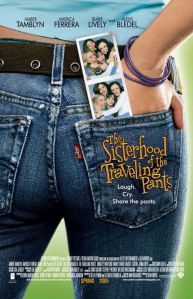 I had no real intention of ever seeing The Sisterhood of the Traveling Pants. It looked to be a competent movie, horrifically clunky title aside, but I really didn’t have any interest in seeing another movie where four young girls become four young women. Then my then-girlfriend says she wants to see it. I think we all know what happens next. Even though I was the only male in my theater (I kind of expected this), I found Sisterhood to be a sweet and heartfelt film I was glad I experienced. It had far more emotional truth to it than I ever would have expected.
Four very close friends are about to depart for the summer. Bridget (Blake Lively) is the confidant sports star and going off to soccer camp in Mexico. Lana (Alexis Bledel) is the demure artist and is going to visit her grandparents in Greece. Carmen (America Ferrera), a bigger girl with big ambitions, is traveling to South Carolina to spend time with her long-absent father (Bradley Whitford). It seems the only one staying put is Tibby (Amber Tamblyn), an angsty nonconformist stuck stocking shelves at a Wal-Mart-esque store and working on her documentary, which she has deemed a “suckumentary.”
Before they set off on their adventures the girls discover a magical pair of pants. It seems that this one pair of jeans fits each to a T, even the curvier Carmen. The girls form a sisterhood around these magically one-size-fits-all pants. They promise to send them back and forth to each other all summer and write down any luck the jeans have imbued them with.
 In Mexico, Bridget sets her sights on a hunky soccer coach (Mike Vogel). She’s brimming with confidence and flirts like a champ. Overseas in Greece, Lana meets Kostas (Michael Rady), a hunky fisherman attending university in Greece. Sparks fly but Lana’s grandmother forbids her to see Kostas. Carmen is shocked to discover that her father is planning on getting remarried to Wasp-y Lydia (Nancy Travis). It seems dear old dad has not told her everything. And Tibby is befriended by a dogged and precocious 12-year-old, Bailey (Jenna Boyd), who wants to be her assistant on the “suckumentary.”
The best part of Sisterhood is the excellence of the lead actresses. All four give well-rounded, warm, enlightened, and exquisitely affecting performances. They each get a good weepy scene and each actress nails it. Bledel has mastered the nervous stammer. She’s adorable as we witness her wallflower character coming out of her shell. Tamblyn mopes and sneers but grows the most thanks to the intervention of Bailey (Boyd is a scene-stealer if ever there were one). Ferrera was a terrific find in Real Women Have Curves, yet another intelligent and charming teen movie. In Sisterhood she gets to display tremendous anger and heartache and she sells every second of it. She is going to be a lovely actress to watch in the future. Lively is a newcomer to film even though she looks like Kate Hudson’s lankier cousin. She’s a girl that knows what she wants but doesn’t necessarily know why she wants it.
One of the smartest things director Ken Kwapis does is to keep the different story threads together. I first thought that Sisterhood would become a vignette movie, meaning that we’d get like a half hour of each girl’s adventure and then we’d travel to the next. It would have worked. But by keeping the girls’ stories intertwined we’re reminded of their bond and we can connect with them all. Kwapis even fits in some nifty scene transitions in his mostly unobtrusive direction. He lets the film’s focus rest on the characters and the performances, which are the strengths of Sisterhood.
The film seems to diverge into two storylines: the summer romances (Bridget and Lana) and the more dramatic (Carmen and Tibby). The summer romances are fun but the real meat of the movie is in Carmen and Tibby’s teary adventures. Carmen is devastated to feel that she’s been replaced and forgotten by her father. It all comes to head in a marvelous scene where Carmen cannot fit into a bridesmaid dress that fits Lydia’s rail thin daughter. She explodes in anger and pain against her father’s new family and runs off. Tibby, on the other hand, is your typical dour and rebellious teen (though in PG-land that means nose ring, colored hair, and thrift store attire). Her relationship with Bailey opens her up and the audience falls in love with both of them. The last half hour of Sisterhood hits an emotional crescendo with both storylines that will leave plenty reaching for the Kleenex.
 Sisterhood sure doesn’t lack melodrama but the film is played so earnestly that you really won’t mind. In other teen girl films, the inclusion of dramatic elements like suicide, abandonment, and even leukemia might cause the casual rolling of eyes. The difference is that Sisterhood respects both its characters and its audience. This is a sincere, unpretentious movie that has a genuine sweetness that won?t give you a toothache. In fact, the most unbelievable moment of the movie is that a pair of pants would fit them all. Again, pretty good for a flick rife with melodrama.
Sisterhood is unabashedly sentimental but it walks a fine line without ever getting truly sappy like some Nicholas Sparks tale (A Walk to Remember). Usually movies of this ilk whitewash over reality and oversimplify complex issues and emotions. Not so with Sisterhood, which deals with tough issues in an admittedly soap operish way but also forces its characters to endure tough resolutions. I am clearly not the intended audience for The Sisterhood of the Traveling Pants (I do by all accounts have a Y chromosome) but I enjoyed it all the same.
The Sisterhood of the Traveling Pants is an old fashioned, good-hearted family film that won?t make you cringe. It’s respectful of its audience and doesn’t take easy shortcuts with its story. It’s also respectful of teenagers and their experiences. The acting by our four leading ladies is uniformly outstanding. In a summer fueled by male-driven high-octane action flicks, something a little low key and sweet is always appealing when done right. This won’t exactly be a movie that will appeal to everyone, but Sisterhood is an above average and earnest take at all-too-familiar territory. Despite the clunky title, this teen-targeted weepie is a good fit for any audience wanting to feel good.
Nate’s Grade: B
Share this:

The Hitchhiker’s Guide to the Galaxy (2005)
 I’m a big fan of the late Douglas Adams’ series, so going in I had a slate of expectations but also a working knowledge of this kooky universe. I really don’t think this film will work for anyone but the fans. The movie isn’t even structured like a screenplay, it has more of the novel’s loose loopy feel. Some things work wonderful, like the Vogons, giant marvelous looking puppets made by Jim Henson’s studio. The cast is mostly excellent (Alan Rickman steals the show as the voice of Marvin, a very depressed robot). The animated guide entries in the Hitchhiker’s book are colorful, stylistic, and witty. Somethings, however, don’t work at all. The additions to the story, an increased romantic angle between our lead Arthur Dent (Martin Freeman) and Trillian (Zooey Descehanel) as well as a flat happy ending that rewrites all the opening danger. The Hitchhiker’s Guide to the Galaxy occasionally serves up some juicy bits of wacky humor or visual fantasy (John Malkovich’s bit part is weird) but unless you were a fan of the book series, you’re really not going to be able to follow along or have any interest in keeping up.
Nate’s Grade: C+
Share this:

The Interpreter (2005)
 This is a polished political thriller that hearkens back to the day of the 1970s, where Hollywood was willing to put out smart, complicated, involving political intrigue and have faith that adults would enjoy. The premise is sound and director Sydney Pollack sure knows how to add layers of complication and mystery as well as make you doubt everyone’s involvement. A scene where all the film’s major players somehow get on the same down town bus is a masterpiece of nuanced suspense. The ending, not so much. Nicole Kidman, as the white African U.N. interpreter that hears a planned assassination one night, is credible but a bit weightless in her part. It’s not enough the pretty girls are taking the ugly girl parts (Monster,The Hours), but now they’re taking African parts? Granted, the idea of a white African allows for a new insight into the struggle for ethnic and cultural identity. Sean Penn gives a nicely rattled performance, giving his character more edge then it even deserves. The Interpreter is a geo-political thriller that trusts its audience and mostly delivers a good time.
Nate’s Grade: B
Share this:

Hitch (2005)
 Isn’t it peculiar that most romantic comedies are written or directed by men? Sure you’ll have your occasional Nora Ephron or Nancy Myers, but it seems that the vast majority of people behind these popular, simplistic, romantic fantasies are men. Is it all a conspiracy? Is Hollywood keeping a nation of women docile with a slew of movies aimed at their soft, gooey middles (no, not the love handles)? We may never know. Hitch is written and directed by men too. Will it be any different from other rom-coms?
Alex “Hitch” Hitchens (Will Smith) is New York City’s most popular love guru. He’s got the methods and the advice to turn any zero to a hero in the dating world. His latest client is Albert (Kevin James), a mild-mannered attorney lacking the confidence to ask the beautiful Allegra (super model Amber Valletta) on a date. Hitch agrees to assist Albert in learning the fine art of impressing women, behavioral signs, and the proper steps to insure a fantastic first kiss (Hitch believes 80% of women can tell all they want from that first kiss). Meanwhile, Hitch is also trying to woo Sara (Eva Mendes), a prickly gossip columnist distrustful of most men, especially the ones that show interest in her. Hitch persists and sets up elaborate dates that seem to misfire one after the other. His sure-fire rules and methods aren’t working on Sara, so Hitch will have to dig deep to discover the true meaning of love.
 Will Smith the actor was put on Earth to do two things, save the world and woo the ladies. Hitch focuses more on the later. Smith oozes charisma and is a natural charmer. He’s all but tailor-maid for the romantic comedy genre as an affable, sly, and lovable lead. He’s an actor that can truly connect with an audience, for better or worse.
James (TV’s The King of Queens) gives the film its biggest laughs and its best moments of heart. His geek chic dance sequence (involving Q-tip wiping, spinning a pizza, and hiney shaking) is a gut-buster, and James plays it with bravado. He’s the doughy everyman and his courtship of Allegra provides some tender moments, like that first awkward kiss. James doesn’t overplay the nervous tics or the low self-esteem but lets Albert feel like a real schmo coming alive.
The lone sour note in this well-cast fable comes from Eva Mendes. I’ve never been impressed with Mendes as an actress so far. What almost kills Hitch is that Mendes is stuck playing a wholly unlikable character. Sara is whiny, mean-spirited, and short-sighted in her actions. When she tries to get revenge against Hitch she ends up rashly destroying innocent lives. She’s supposed to be guarded, the one nut Hitch can’t crack with his dating axioms, but instead she comes off as a rather terrible human being. After a while I started rooting for Hitch to lose because he’d be far happier without being saddled to this insufferable, egotistical, close-minded, bitter human being.
What saves Hitch is that the film wisely decides to put more time and energy on Albert dating Allegra. Albert serves as the underdog, the rooting point for the audience, and he’s true to what he believes. This is quite a contrast to a gossip columnist unafraid to rip people on unsubstantiated assumptions.
 Another element that can make a romantic comedy sink or swim is the chemistry of its stars. Here Hitch presents an intriguing dilemma. You see, Mendes and Smith have no connection whatsoever, which is fine because Hitch is just as much a buddy film as it is a rom-com. Smith and James have terrific chemistry and play off of each other with an excellent comedic give and take. This is where Hitch separates itself from the usual rom-com fluff. It’s a tale of three couples, Albert and Allegra, Hitch and Sara, and Albert and Hitch. The film’s about male relationships as much as male-female relations (and the pursuit of male-female relations), and there are hints of truth behind the comic desperation. There is something romantic to Hitch but it cannot be found whenever Mendes steps onscreen.
Hitch has appeal but it can’t help but get caught in the clichés of romantic comedies. As always, misunderstandings loom and push people away when one good level-headed conversation could clear everything up. The climax even involves people chasing after their loved one to stop them from getting on that bus/train/boat/plane/you name it. The climax to Hitch feels way too drawn out, like the film is stubborn to tie up its characters despite a horrendously long running time of two hours. And am I alone on this, or are the majority of romantic comedies now built around some premise of deceit? That doesn’t sound like a good way to start a relationship to me.
Romantic comedies play on our love of the familiar. What makes Hitch work are the characters and the performances. Smith and James make an excellent mismatched team and both men are charismatic, funny, and relatable. Hitch is sweet but not too sappy. This isn’t anything groundbreaking but it is pleasant and good-natured. Hitch is your typical rom-com, a fine buddy flick, and a showcase for the near irresistible charms of Smith. It’s hard not to fall under Hitch‘s spell despite Mendes’ character’s best efforts to sabotage your viewing pleasure. This is one date movie not to dread.
Nate’s Grade: B
Share this:

Hostage (2005)
 A tense thriller that turns the hostage genre on its ear with a brilliant personal twist. Not only must the sheriff (Bruce Willis) try and talk a group of disturbed kids (led by the freaky Ben Foster) out of holding a mob accountant and his family hostage, but he must also try and recover soemthing inside the barricaded house because HIS family is being held hostage by the mob. It makes for some gripping decisions, as every move has two to three intentions, and Willis looks like he’s being put through the wringer. The movie is a great modern turn on the genre, until, that is, it all goes to crap in a preposterously violent showdown. Still, Hostage is a nice turn for Willis and a smart turn for the thriller genre.
Nate’s Grade: B
Share this:

Sin City (2005)
 Like film noir on steroids. Director Robert Rodriguez has made the most faithful comics adaptation ever; giving life to Frank Miller’s striking black and white art. The visuals are sumptuous but the storytelling is just as involving, a perfect mix of noir/detective elements and subversive, highly memorable characters. Sin City may be the most violent studio film … ever, but the over-the-top tone keeps the proceedings from becoming too nauseating, even after limbs are lost, heads roll (and talk), and dogs pick away at living bodies. This is a very ball-unfriendly movie; lots of castrations. The blood even looks like fluorescent bird crap. The stories become somewhat repetitious (anti-hero saves distressed woman), but Miller and Rodriguez keep their tales tight, pulpy, comic, and unpredictable. My friend turned to me after it was done and said, “That was a great movie.” I could not argue.
Nate’s Grade: B+
Share this:

Miss Congeniality 2: Armed and Fabulous (2005)
 Sandra Bullock is the nation’s most famous tomboy. She began in action flicks but soon settled under the familiar road traveled by so many winsome, likeable young actresses: romantic comedies. She even turned down the role in Million Dollar Baby that Hilary Swank would later ride to Oscar gold. Bullock has now publicly stated that she wants to step away from romantic comedies and challenge herself as an actress. She of course must have felt this way before agreeing to Miss Congeniality 2: Armed and Fabulous.
Just weeks after foiling a beauty pageant tragedy, Gracie Hart (Bullock) is returning back to the FBI undercover field. Her newfound celebrity makes her stick out in a crowd of autograph-seekers. She cannot work undercover anymore so the FBI, in a stroke of public relations, wants Gracie to be the new face of the bureau. She gets a makeover (again) and a hot-tempered bodyguard (Regina King) to shadow her on talk show circuits, book signings, and other public appearances. Just when things are looking rosy, the reigning Miss United States, Cheryl, and the pageant host (William Shatner, gleefully hammy) are kidnapped. The kidnappers want millions or else they?ll kill them both. Gracie regroups from her makeover madness and jumps on the case to save her friend.
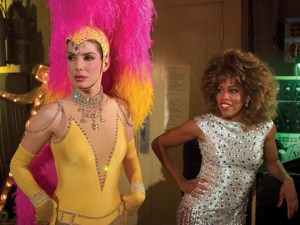 Bullock is a very likeable actress but seems prone to more pratfalls than Buster Keaton combined with two of the Three Stooges. The physical comedy comes off being tired this go-round. Watching Bullock be clumsy can be funny, but the comedy of Miss Congeniality 2 is too forced to crack a smile. The friction between Gracie and her bodyguard is one conversation away from evaporating. The girls have to pose as Vegas entertainers to get backstage, when they just could have used their “oh I don’t know?” FBI status. When Gracie goes undercover Bullock becomes unhinged and flounders around in rubbery ethnic stereotypes. Miss Congeniality 2 isn’t funny because the film doesn’t know what to do.
The finer moments of Miss Congeniality involved the dry wit of Michael Caine, and he is sorely missed in this sequel. The strangely necessary role of gay makeover artist is passed to Deidrech Bader (The Drew Carey Show). He amps up the sass but can’t really replace Caine. King is a greatly underrated actress (Jerry Maguire should have made her a star), but she suffers from the constraints of a rough-around-the-edges loner character. She mainly scowls and grumbles.
What made Miss Congeniality appealing was the fish-out-of-water conceit of an ugly ducking in a world of swans. Even though I didn’t like the film, it could at least muster up broad humor from its comic premise. Miss Congeniality 2 is a lot like Austin Powers 2, in that the sequel puts the fish back into the water. As a result the film loses whatever comic firepower it might have had. Miss Congeniality 2 attempts to be a female-buddy-cop caper, but the butting heads rarely produce any comedy. This film didn’t make me laugh until after 20 minutes in, and the ratio of screen time to laughs didn’t improve much afterwards (and that includes jokes about bad breath and tampons!).
 Miss Congeniality 2 has some of the dumbest police work ever. Characters go to extreme lengths for basic information, make wild assessments on little to go with, and key clues are tripped over with the subtlety of a jackhammer. The idiotic police work syncs up with the preposterous nature of the crooks? scheme. They are ex-employees of the Treasure Island casino, so to take revenge they?re going to trap their prey inside the pirate ship display, which is set to sink as part of the attraction’s script. Yes, death by casino attraction.
There are also some wildly brainless moments. Gracie is about to flee the sinking pirate ship, when her elaborate showgirl costume gets trapped under a heavy canon. Now, with time and air running out, any normal person would quickly strip out of the costume and swim away. Instead, Gracie tugs at her costume trying to yank it out, and she does this until she nearly drowns. I don’t care who you are, if you’re about to drown then modesty isn’t going to get in the way. Better to be alive and naked than dead and soggy. For that matter, when Gracie discovers that the pirate ship has her friends she runs to get inside. Wouldn’t it be infinitely easier to find someone at the casino that could stop the animatronic attraction? I’m sure something that organized doesn’t just run without safety controls.
Miss Congeniality 2: Armed and Fabulous is clumsy and riddled with contrivances and inanities. The jokes are forced and dead on arrival, and Bullock falls into what she does best, which is falling down. There is no reason for this film to exist other than that the original made money. Die-hard fans of Miss Congeniality may be the only ones to get some enjoyment out of this tepid sequel. Even casual fans of Bullock’s romantic comedies will likely be disappointed. You know you’re watching a tired comedy when they make Dolly Parton boob jokes in the year 2005. Miss Congeniality 2 is a film that doesn’t make the cut.
Nate’s Grade: C-
Share this:

The Ring Two (2005)
 I loved The Ring. Loved it. So I had some trepidation when I found out they were making a sequel. Surely it wouldn’t have the punch of the first film. To see Ring Two I went to a theater frequented by somewhat affluent teenagers and pre-teens. Big. Mistake. People were chattering away the entire time, laughing stupidly, and shouting ridiculously lame jokes: (on seeing a damp bed: “Oops, somebody wet the bed”). There were two managers that had to patrol the theater to keep order. Worst of all was a team of easily riled prepubescent girls that sat behind me, shrieking like banshees even during movie trailers. The same thing happened to me when I went to see The Village at the same theater. I must attract the most annoying people in the crowd. The sound quality in my theater was also very poor. Now, I can’t help but think that this was some divine act to warn me how bad Ring Two was going to be.
Rachel (Naomi Watts) has taken her son Aidan (the creepy David Dorfman) to a new town to start a new life. It’s been years since the incident with the videotape, and Rachel feels guilt about her role in spreading the killer tape. She’s got a new job at a small town newspaper but yet she can’t escape her past. A teen has been found with a contorted face, soggy floor, and a certain videotape. Rachel finds the tape and burns it. Samara, the evil young girl who started the evil tape, is none too pleased. Seems the evil tyke wants to be a real girl with a real mommy, and is slowly taking over Aidan. His temperature is dropping, he’s not sleeping, and bad things are happening. Rachel confronts more of Samara’s history to learn what it takes to stop her and get her son back.
 Everything that worked in the first film feels forced and meaningless when rehashed in Ring Two. In the previous film, there was context for the image of a tree on fire and Rachel yanking a fly right out of a TV screen. In Ring Two, these plot points are now reduced to being contrived signs of doom. There’s a scene where we’re supposed to be scared because a single fly comes out of a faucet. Huh? The fly and the tree made sense in The Ring, but in the sequel they are stripped of their context and seem alien. And dumb. After everything fit so tightly together in The Ring, it’s disappointing that little makes sense in the sequel.
Watts is such an enormously appealing actress that even in dreck like this she can come off as luminescent. With the two Ring films and Peter Jackson’s upcoming King Kong, Watts could establish herself as the scream queen of her generation. She’s a gifted actress and melts into whatever role she plays.
Ring Two‘s director, Hideo Nakata, knows a thing or two about the territory. He did direct the original Japanese Ringu films, which the American remakes are based upon. Nakata generates a fun sense of anticipatory dread. He also lucks into the occasional eye-opener like a bathtub whose water flows up and fills the ceiling. Nakata has a confidant touch but I miss the sheen of Gore Verbinsky’s direction.
What’s sorely missing is a killer premise like in The Ring. The premise was razor sharp, presenting a videotape as a virus and human nature’s willingness to taste forbidden fruit as the vehicle for its spreading. There was a sense of urgency because of the looming seven-day death deadline. In Ring Two there is no sense of urgency at all. In fact, the film takes an overly leisurely pace. It’s quite awfully boring. Samara wants a mommy and can?t really be stopped until a late revelation. This leads to a lot of impotent pacing and waiting. Except for a snappy opening, Ring Two completely ditches the videotape virus storyline that made its predecessor so compelling. As a result, it also ditches suspense and most of its intelligence.
 The Ring had a strong central mystery and a sense of urgency, which both blended to create tightly wound tension. Ring Two sputters around and relies on gimmicky jump scares as its main source of spooks. We see a character look into a mirror, look away, and then look back and something else is right there! Does this really work for anyone still? I just assume when a character ducks out of the way of a mirror that something’s coming. It’s these kinds of creaky, transparent tricks that Ring Two goes back to over and over to goose an audience. Because the story isn’t engaging the filmmakers have to resort to gimmicks. Since we’ve seen the results of Samara’s murders (the grotesque facial distortion) is it even scary to see it again when we know exactly what we’re about to see? The essence of horror is the unexpected. Finding the expected is about as scary as looking at leftovers in the fridge.
There’s a great moment early in Ring Two. Rachel and Aidan are driving through a forest and are followed and then attacked by a horde of deer. It’s the lone sequence in this sequel that feels different and exciting. It’s somewhat crazy, somewhat marvelous, and very weird. Too bad Ring Two relapses from there on into a turgid horror flick.
The Ring was a smart, tense, expertly crafted film that rose beyond genre conventions. Ring Two is nothing but genre conventions and repeatedly goes back to the well to drub up scares that aren’t there anymore (unless you’re the prepubescent girls that sat behind me). Watts is still in fine form and there are some visually striking moments. However, Ring Two is bereft of excitement and scares and has become just another tired, languished sequel. When I walk out of a horror moving saying, “I guess the best thing about that film was either Sissy Spaceck’s crazy cameo or deer,” then you are in a world of bad. Ring Two is meek, dumb, and boring. Let this one go straight to video.
Nate’s Grade: C-


 nathanzoebl
You must be logged in to post a comment.