Monthly Archives: June 2025
Drop (2025)
 It’s a bad sign when you forget seeing a movie mere weeks later, and thus is my state with the contained thriller Drop, a movie that never seems to take full advantage of its modern drawing room mystery-thriller premise. Director Christopher Landon (Freaky, Happy Death Day) finds all manner of visual artifice to make the best of this story of one woman’s worst fears re-entering the dating scene. Violet (Meghann Fahy) attends a first date in one of those high-rise skyscraper restaurants, and during the date she’s harassed digitally by an unseen stalker who is sending hostile text messages and increasingly intense demands. Who in the restaurant could be the culprit, and why? Also, can she salvage this first date with this cute guy becoming more alarmed as the night progresses? The fun of the scenario rests in how our protagonist can keep ahead of the suspicion of her date while also trying to stay ahead of the suspicions of her antagonist as she deduces who in the restaurant might be her creep. It’s entertaining enough but the problem lies in the escalation of demands from the antagonist, including murder, and the movie doesn’t have the interest or stomach to go wilder or more extreme. As a result, Drop feels like an under-developed nosy neighbor movie, trying to suss out details with an informal investigation that never really takes off. Landon does his best to jazz up the proceedings with very intrusive visual designs of the ominous texts and messages, filling the screen with literal threats. It reminded me of 2014’s Non-Stop where Liam Neeson was on an airplane and being harassed by an unknown caller who plots to take down the plane. That premise had elevated stakes because of its location and urgency. This movie is about a woman on a date. You can see there’s a bit of a difference in their execution and aims. I can’t work up too many negative criticisms about Drop because it sets out to achieve what it promised, it’s just by the time we get into the third act action heroics away from that central setting, you may be checking your phone too, having already checked out.
Nate’s Grade: C
Share this:

The Phoenician Scheme (2025)
 It’s so nice to connect with a Wes Anderson movie again. I’ve been mostly a fan from the beginning but his career has as many ups as downs for me, often getting lost in his distinct dollhouse style of artifice and losing the sense of wounded humanity that marks his best movies. I haven’t truly loved a Wes Anderson movie since 2014’s The Grand Budapest Hotel, which I consider one of his very best. It’s been a long ten years of feeling indifferent or distant to that signature Anderson twee whimsy. I took my wife to see 2021’s The French Dispatch in the theater, and this was her first Anderson movie, and it also happened to be his worst movie, plus with Timothee Chalamet, an actor she isn’t fond of. I feel like I ruined her impression of this indie auteur and the question over his enduring popularity. 2023’s Asteroid City had some interesting ideas and dramatic potential, but its multiple framing devices and layers of obfuscation smothered what I could have enjoyed about its drama buried underneath. It is with that accruing disappointment that I began to question whether new Wes Anderson movies just weren’t for me, and that’s why I find The Phoenician Scheme a welcomed return to form that makes me relieved. The idiosyncratic tactician that is Anderson can still make a movie that engages me on different levels, including an emotional one, which I’ve been missing for so long from his recent output.
So I’m going to do something a little different with this review. I’m going to specify and articulate why this movie works for me, namely why it resonates and succeeds where his other movies of late have not. I suppose you could argue every film critique is charged with explaining the nuts and bolts of an opinion, but I’m going to really try and crack open why The Phoenician Scheme is a better movie overall.
 1) Emotional investment. Primarily Anderson is known for his heavily mannered, expertly curated style, which is why he seems to be the go-to pastiche for A.I. film juxtaposition experiments (“What if Wes Anderson directed Star Wars?” etc.). Many of Anderson’s movies are populated with hurt people trying to reconnect, a subject that has great emotional appeal. However, if you cannot connect with the characters or their dynamic or the relationship stakes, then it can feel like an afterthought to all that fancy production design and camera placement. With The Phoenician Scheme, the movie is an adventure film but it’s really about a father (Benicio del Toro as Zsa-Zsa Korda) trying to reconnect with his estranged adult daughter (Mia Threapleton as Sister Liesel). The father is a billionaire robber baron set in a vaguely mid 19-century setting. The daughter is a newly enshrined nun who believes that her father had her mother killed. Right away, we have very different perspectives and exciting conflict between them. He’s an arms dealer and willing to have key parts of his scheme involve a famine and slave labor. Her very involvement in the convent is itself a reaction to her father, who sent her away to live there at age five. She doesn’t want to be like him, who she views as on the wrong side of morality, but she also wants to get to know this man better and get her own answers. Her convent needs her to proceed to get a significant donation from her father. He wants to hire her on a trial basis to see if she’s fit to be his sole heir. They’re stuck together on an adventure that forces them closer, and the ensuing relationship that begins to build, with old hurts melting away to new revelations and new aches of yearning, comes across as very involving and emotionally rewarding. I was actually quite taken by the father-daughter relationship and their bickering, which organically gives way to better understanding and personal growth from both parties. They make each other a little better than they could be, and they recognize that despite their differences and hurt, they do genuinely care about the other. Korda is such an unflappable dilettante and yet the very notion that his daughter thinks he might have killed her mother from rumors deeply upsets him. The rest of the movie is essentially both characters directly and indirectly trying to prove themself to the other and also acknowledge and accept the other person. The core of this movie works because the core relationship is given serious and deliberate development to be meaningful. It’s about a broken family recognizing their connection to one another and desire to be connected.
2) The vignettes do add up. The folly of The French Dispatch was that it was a collection of short films, meaning that every twenty-minutes or so it felt like having to start over again with character introductions and relationship development. It didn’t feel like it added up to much. With The Phoenician Scheme, the film is structured around the different investors that Korda has to convince to cover a higher percentage of a budget shortfall for the big plan. It might sound pretty lackluster on paper but it becomes a larger goal that each segment builds to, and each new investor and setting allows Anderson to explore a new aspect of his characters. One situation involves a literal game of basketball and another involves taking a bullet to save an investor. Each situation allows us to change things up without losing the momentum of building toward that larger goal, as well as continuing to build the progression of the character relationships. With a vignette movie, each segment is a beginning, middle, and end that starts over with the next. With this, we have those mini stories with each new investor, but the whole is still advancing. It allows Anderson to explore a variety of comedy and story options while still keeping his attention to the bigger picture, thus earning our continued investment and more payoffs.
 3) This is still a very funny movie. That droll yet whimsical tone we expect from Wes Anderson is very present, and I was smiling and laughing throughout. I particularly loved a running joke where Korda offers each new guest a hand grenade like a welcome present. Korda also has repeated assassination attempts, which is the impetus for him reaching out to his daughter because he knows he won’t outlive every assassination attempt. However, in the meantime, each new assassination attempt is presented as another predictable annoyance, and I enjoyed that with every one Korda admits, “I think that guy used to work for me.” The basketball game of horse is wonderfully absurd and dryly serious at the same time, elevated by Bryan Cranston’s considerable commitment to the bit. Another great source of comedy is Michael Cera as the third significant character to the adventure, Bjorn, an assistant to Korda and also an entomologist. He’s such a delightful nonplussed addition to the trio, providing an outsider perspective to the family drama and reminding us how not normal everything is. I heartily enjoyed how his nerdy passion for bugs keeps inserting itself in all sorts of unexpected situations. The excesses of Korba’s lifestyle, and his seeming history of amorality, allows for just about anything to be possible or referenced, opening the comedy even further into surreal asides still tethered to characterization.
4) The added religious elements provide a deeper introspection for the characters and the viewer. Every time Korba has a near-death experience from his latest assassination attempt, we have a black and white sequence of Korba interacting with the afterlife. In one sequence he’s being judged by St. Peter, then God, then his own deceased wives. Each opportunity with the afterlife is a reminder for Korba about his sins and mistakes and a motivator to do better. The stylized realm is mysterious without being overt in its directions, allowing Korba to stumble around looking for guidance, like when God is annoyed that He isn’t recognized as the Big Guy. I was amused by these little interludes but they also act like a moral intervention for our main character, and his growing interest is a sign that his daughter’s influence is affecting him. It adds a depth to the character as well as a weightier sense of celestial consequences for a life of misdeeds, and it helps to better realism the character’s arc as well as set him up for change. It allows an introspection over legacy. These are also the segments you’ll get the most blink-and-miss-them cameos, like Bill Murray, Willem Dafoe, Charlotte Gainsbourg, and F. Murray Abraham.
 5) Smaller ensemble to devote characterization. Everyone wants to work with Anderson, and he keeps an impressive list of actors who continuously reappear, even if it’s only for seconds, anything to just be back into the ornate world of a Wes Anderson fantasy. His last few films have been stuffed with characters but there wasn’t enough for everyone to do (go ahead, try and remember what Steve Carrell did in Asteroid City). The narrative gets fractured trying to provide enough moments and screen time for all these distaff characters. A larger cast is not inherently a doomed prospect, but it does mean more attention and development needs to be made, and with less time, to ensure those characters are meaningful and well developed. The French Dispatch and Asteroid City couldn’t do that for me. This time Anderson condenses his important characters down to a manageable trio. We have other supporting players but they typically come and go through the different vignettes, each getting their turn with the main players. This keeps the focus on the winning character dynamic of the father-daughter buddy comedy, and with Bjorn bumbling along and finding himself becoming more fond of Liesel. There are some fun twists and turns with the three characters but no matter the external obstacles or silliness, the emphasis remains on these three and their relationships. It all works so much better.
6) The acting by the Anderson newcomers is greatly enjoyable. It’s shocking that this is the first time Michael Cera (Scott Pilgrim Takes Off) has been in a Wes Anderson movie because his comic sensibilities are a natural fit for this universe. The direction his character goes lets Cera have even more ways to have fun, and each new turn made me love his character and the performance even more. I also love that, despite all the revelations, at his core, Bjorn really is a nerd who loves talking about insects. The real discovery is Threapleton (The Buccaneers), though maybe we shouldn’t have been so surprised considering she is the adult daughter of Kate Winslet (do you feel old now too?). She holds her own with her many scenes with del Toro and is able to hone her withering glare into a considerable weapon of disapproval. Watching her character blossom and test her boundaries, like when she says she’s only drank communion wine and is introduced to a new form of alcohol at every jaunt that she feels compelled to try. It’s a character that is slowly recognizing more about herself and the possibilities of this life.
 The Phoenician Scheme isn’t a deviation from the tried-and-true Wes Anderson formula; it’s a better calibration of what makes that style and formula continue to resonate for so many fans. I’m apparently in a small minority with my esteem for this picture, and that’s fine by me. I’ve outlined through this review the reasons why it was a much more enjoyable and worthwhile entertainment for me, and if you found yourself nodding along, then perhaps it could work its query magic on you as well. It’s nice to be charmed again by a Wes Anderson movie but to also feel something rather than distant appreciation for the carefully composed sets and photography. I actually cared about these characters and their journey. The end results mattered to me. Their plights mattered. If you’re like me and falling from the Wes Anderson bandwagon, then perhaps The Phoenician Scheme might pull you back aboard.
Nate’s Grade: A-
Share this:

Final Destination: Bloodlines (2025)
 A funny thing happens once you conclude a Final Destination movie. You start to see the world differently. After I finished watching Bloodlines, the first new film in the franchise since 2011, I found myself elevated by creative paranoia. I was holding onto an empty aluminum can and thought, “What if placing this on the counter will create a chain of events that leads to disaster?” Then I was washing our kitchen sink and looking at how close other electrical devices were to the faucet spray. Then I began thinking of all the dog toys that could position themselves underfoot and cause me to hit my head against our tile, perhaps then having that aluminum can fall on my head as a finishing move. If you’ve ever seen one of these movies, they are games of misdirection and dramatic irony, anxiously anticipating that any little item will contribute to a Rube Goldberg-esque wave of death. In many ways, the franchise brings an outlandish fear home and makes you just as crazy as the doomed characters. Final Destination: Bloodlines is a return to form for a franchise that never should have been on the brink of death. As long as people can come up with clever deaths and misdirects, there should be sequels.
Having watched and enjoyed every Final Destination movie, I will readily admit that while each of the five previous entries can be gory good fun they cannot be described as great movies, and that’s okay. They are delivery systems for amusement and absurd deaths, asking the audience to try and guess the ridiculous series of events that will contribute to the demise of whomever fills the screen. It’s a reliable formula that can be replicated again and again, where death itself is the main villain, or star, and where the appeal of the franchise is the winking game the movies are knowingly playing with the viewers. We’re here for the over-the-top machinations and dark humor of trying to guess what combination will succeed. The later sequels were populated with repellent or powerfully bland characters that we happily awaited their fateful demise, but the deaths were also getting stale, becoming more mean-spirited or more flimsier in design, giving to obvious obliteration options and then cheap shock alternative as mini-twists. If you’re going to have a game, it’s better to play by your rules. That’s where things began to go sour with me, but that doesn’t mean good writers who fully understand this franchise cannot revive it. I just thought it would have taken less time considering the inherent rebooting potential at play.
 This brings us to Bloodlines, by far the most ambitious of all Final Destination movies. It attempts to really explore the mythology and history of the franchise while also grounding the characters and their drama in a surprisingly emotionally resonant manner. I’m not saying anyone is going to confuse this movie with, say, Sophie’s Choice, but the filmmakers have put in the work to make us actually care about the doomed characters and their fledgling efforts for survival. Usually these movies follow a group of strangers along with a small friend group that becomes our core. This is the first movie where all of the characters in peril are family members across generations. Watching your mother or aunt or brother die horribly before your eyes and knowing that someone else in your family is next is just more impactful than if the relationships were based on high school friendships, work colleagues, or strangers. That kind of trauma just hits differently. Also, the ages of the family dynamic present a clear direction for the path that death is planning to take, going from oldest to youngest, although death seems to put this chronological pecking order on hold to wipe out a line of siblings. Excuse the math word problem setup of what will follow. Let’s say you have Oldest Child and Youngest Child and both have two kids but Oldest Child’s kids were both born after Youngest Child’s kids. Rather than killing the descendants in descending chronological order, death would wipe out Oldest Child’s offspring first even though they are younger than the children of Younger Child. As always, it appears death is a stickler with its rules.
The opening sequence is an all-timer for the franchise, and because it sets everything in motion I don’t feel like discussing it is particularly spoiler-y, but you may decide otherwise and can skip this paragraph. According to the new mythos, this is the event that sets the entire Final Destination universe into effect. It’s a spectacular disaster set in a high-rise restaurant 400 feet in the air atop one of those Sky Needle skyscrapers. The entire sequence is brilliantly executed and edited with extremely heightened periods of dread. These first ten minutes introduce us to a young romantic couple and get us invested enough to feel bad about what’s to eventually come. They also set up the stakes as well as the twisted gallows humor to follow. I loved tracing the different elements at play, from the cracking glass dance floor, to a loose chandelier shard (if one little chandelier piece could cause cracks then this must be the weakest floor in history), to a loose penny causing mayhem all because of a snotty little brat, the real villain of the franchise. The cross-cutting between the different incidents as things ratchet up is wonderful, and the clever cuts to the creme brule being broken as that glass dance floor is cracking is just superb. This is more than just a sequence in vertigo terror. There’s a gas explosion, a falling elevator, a Titanic-esque splitting of the restaurant, and the use of a grand piano as a slapstick coup de grace that left me cheering. This opener lets you know you’re in bloody good hands with Bloodlines and it also begins to emotionally ground the film too.
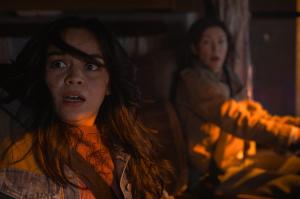 This is the most self-aware of the Final Destination movies but I think it works considering it’s the sixth entry, so having characters essentially be voices for the audience’s frantic clue-guessing is appropriate. One of the better sequences in the movie is when our protagonist, Stefanie (Kaitlyn Santa Juana), is walking through her neighborhood and trying to absently predict the everyday dangers on a garbage day. It begins as absurd and then it becomes even more absurd when everything she predicted lines up, though not as we might have expected. The whole thing plays out like a demented and extended joke setup with death as the punchline. Thankfully, it doesn’t take long for the family to get on board with this crazy idea that death is after them, so the second half of the movie is more their scrambling to plot how to cheat death established by the previous movies by either dying and being brought back or by taking a life and getting that person’s remaining time. There’s a gasp-inducing joke where characters, after discussing these rules, glance at a maternity ward and consider, “Could we actually kill a baby?” before shaking away the dark idea and going back to their original plan. It’s self-aware without being overly meta, working through the rules and expectations but without an ironic detachment that can cheapen the enjoyment of the drama and thrills. That’s important because this might be the Final Destination movie with the lowest amount of deaths after the big opener. Part of that is because we’re setting the story decades after that establishing catastrophe, where death has been busy chopping away the survivors before coming back around to our core family (there’s got to be a mathematical formula here how long it took death to catch up). You’ll have to wait longer for some kills, and a few are just haphazardly thrown together, but there’s still plenty of dreadful squirm and rueful chuckles to be had.
Considering its runaway success at the box-office, out-grossing all of the previous Final Destination movies, I doubt we’ll have to wait anywhere close to another 14 years for more franchise mayhem. These movies are perfect vehicles for twisted entertainment when they have the right people calibrating them. They may not always be great but they can be consistently great fun, and under the right mindset, exactly what you need to wash away the blahs and laugh at the absurdity of death and fate. It will also make you re-examine your home decorative plan for your own pre-emptive protection. Feng shui or die, ya’ll.
Nate’s Grade: B
Share this:

Thunderbolts (2025)
 I will tell you right now, dear reader, that I’m never going to include the asterisk when I type the title of the Marvel Cinematic Universe’s (MCU) newest epic entry, Thunderbolts. The reveal one week into its theatrical release that the team was rebranded “The New Avengers” seemed at best like a peculiar marketing gimmick to try and boost ticket sales after its opening weekend. “Oh, there’s an ‘Avengers’ in this movie title? Well I’ll go see that now,” said likely nobody ever. It just felt like a marketing ploy and the presence of the asterisk in the title, meant to symbolize and facilitate that identity transition, is just a symbol of trying to be too cute by half. Just be the Thunderbolts. Accept yourself as the Thunderbolts. Isn’t that part of the lesson of the movie, finding acceptance despite your misgivings and doubts? Refreshingly, while there are the occasional action sequence and general fisticuffs, Thunderbolts proves to be a much more probing and psychological MCU entry and entertaining beyond just the escapism.
Yelena (Florence Pugh) feels adrift as a secret black ops agent doing the government’s dirty work. Her handler, Valentina Allegra de Fontaine (Julia Louis-Dreyfus), has promised to let her retire after one last job. It just so happens that job is a scheme to have all of Valentina’s black ops killers to take each other out to spare her any embarrassing details coming out while she’s under Congressional investigation. That includes John Walker (Wyatt Russell), a disgraced Captain America place-holder, and Ghost (Hannah John-Kamen), the villain of Ant-Man and the Wasp who could phase through matter, and some mysterious man named Bob (Phillip Pullman) who suffers from amnesia and seems out of place. Along the way they’ll pick up other characters, like Bucky Barnes (Sebastian Stan), who is serving as a freshman Congressman, and Alexei a.k.a the Red Guardian (David Harbour), Yelena’s adopted father who is eager to support his daughter and bridge a divide that has grown between them recently. The constantly bickering group of malcontents, antiheroes, and misanthropes band together to survive as well as figure out Bob’s importance for a person as dangerous and manipulative as Valentina.
 Thunderbolts is about a group of screw-ups who know they’re screw-ups, who know the world sees them as screw-ups, trying to be something more, and it doesn’t take much to see larger themes surrounding depression, loneliness, and community. There’s long been a pleasure in watching oddballs, let alone an unorthodox team of them, find solace and camaraderie they have been missing. It’s satisfying under most circumstances. It also helps when we are given the understanding of why these characters feel so alone and so useless. I’ll freely admit, in the first months of 2025 with the current government doing everything in its power to make people feel scared and alone and useless, I connected with the themes and eventual uplift of Thunderbolts perhaps at a level I might not have had the movie been released in 2023 or, say, under a President Harris. Regardless, I found this movie engaging because it focused less on the literal and metaphorical strengths of its characters and more on their weaknesses and fragility and needs. There is no giant sky beam, nor any faceless easily disposable swarm of CGI robots or aliens, nor any real world-ending apocalypse they have to thwart in that final climax. It really all comes down to combating an epidemic of loneliness, and the only way to do so is to willingly open one’s self to the possibility of pain, of disappointment, of embarrassment, or rejection, and to do so anyway because the alternative is just too grim and self-defeating an option. It forces characters with very real pain and regrets to confront that pain and to still keep trying. The scary enemy is not resolved through a punch but through a genuine hug. You can’t punch out depression. For me, that’s far more engaging and emotionally resonant for the thirty-sixth movie in the MCU than just more punching and explosions amidst a CGI-laden morass.
This is proof that Florence Pugh (Dune: Part Two, Oppenheimer) can power anything with her acting chops and charisma. Her character was a breakout scene-stealer in 2021’s Black Widow, and I’ve been glad every time since she’s popped onscreen. I find Pugh to be such a compelling actor, but she’s driven by movies that tend to put her through an emotional wringer so much I’m worried her face will permanently lock into a sob. She’s great, but it’s also just nice to watch her cut loose and have fun playing a character too. Even though Yelena has a darkness to her, and I would argue qualifies as depressed, this is still a role that allows Pugh to play with lighter elements, giving her a sardonic bounce that makes her even more appealing. This is a character worthy of headlining the team, and Pugh shines once again given an even bigger Marvel spotlight. I also want to sing the praises of Dreyfus (HBO’s Veep) and Harbour (Stranger Things) as near-perfect encapsulations of their respective characters. She’s all blistering cynicism and he’s a blustery teddy bear.
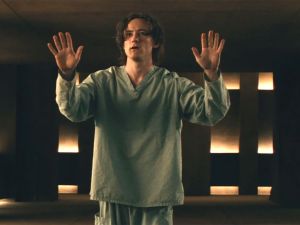 Another refreshing aspect for Thunderbolts is how it feels like a real movie. Obviously the other 35 MCU entries are movies by definition, but here is a movie that feels more authentic. It looks and sounds better in presentation. You can tell there are real locations. The cinematography is by Andrew Doz Polermo, the same man who photographed The Green Knight. The musical score is by Son Lux, the same composer responsible for the eclectic and sensational music for Everything Everywhere All at Once. The co-writers are from Netflix’s acclaimed miniseries Beef, as is the director, Jake Schreier, whose first film was the 2012 amiable indie dramedy Robot & Frank. There is a genuine effort to do something a little different from the factory setting of modern Marvel movies. It was just nice to actually take in real surroundings, real terrain, natural light, and composed by such a skillful director of photography. The technical elements are blockbuster level but also infused with a little indie sensibilities, bringing a different visual flavor to this studio tentpole. It might sound like a backhanded compliment (“Oh, a movie that is, gasp, made outside a giant green screen warehouse or LED screen”) but I am genuinely grateful. This is a Marvel movie whose Act Three chase takes more notes from Being John Malkovich and its jaunt through repressed memories than any standard superhero action climax. After so many MCU entries, you celebrate the ones that not only try something different but succeed, especially after the impulse to be more of the same is so strong.
That’s not to say that there still isn’t more that could have been done to better shape and develop Thunderbolts. Ultimately it feels like a more solid idea with some good characters and themes than a fully realized screenplay making the best use of its two hours. The movie isn’t quite the ensemble it may appear from the outside. One of the characters is removed so unceremoniously early that I question why this character was even brought back, especially since nobody would qualify this specific character as a favorite. I suppose it’s to present the appearance of elevated stakes, but it just reminds me of the 2016 Suicide Squad that introduced Adam Beach (Windtalkers) as Slipknot, the man “who could climb anything,” who just gets his head blown off so casually before their first mission even begins. However, with Thunderbolts, the movie really has a top tier of characters, primarily Yelena and John Walker and Bob. There’s another lower tier of characters that kind of come and go and provide moments, either levity or convenience, like Ghost and Red Guardian. Then there’s another lower tier of characters with even less time who pop in to scramble things or remind everyone of the exposition or stakes, like Bucky and Valentina. It doesn’t feel as fully integrated as an ensemble as the best Marvel team movies, like James Gunn’s Guardians films, so it can be a little frustrating when we’re celebrating the value of a community but not everyone is pulling their own narrative weight. I’m sure I could fall in love with Ghost as a character, but when she just poofs in and out and her whole arc is, “Hey, she came back,” that’s not going to do it. I also find the whole superhero science experiment a little late in the MCU to be introduced. We have characters talking about being in grade school when the Battle for New York, the centerpiece fight of 2012’s Avengers, took place, like Millennials today speak about where they were on 9/11, so it seems very late for the government to be trying to produce their own superheroes they can control. Weren’t they already making superheroes in the 1940s anyway with the likes of Captain America? This is old hat.
 The MCU has been in a bit of a slump since the conclusion of Endgame, though I would also maintain the “death of the MCU/superhero fatigue” storyline has been over-dramatized and beaten to death. Thunderbolts has some very appealing and refreshing elements, focusing more on its characters and their faults so that their eventual triumphs will feel even more emotionally resonant. It’s nice for the action to support the characters and their drama rather than the other way around, and especially refreshing for the climax to be one about acceptance and vulnerability rather than over-powering some physical menace. I liked the Thunderbolts characters and their combustible energy and banter and would have liked them even more if more of them felt more fully integrated into the movie and given richer arcs. Still, it’s hard to reinvent any franchise thirty-six movies deep, and Thunderbolts, or The New Avengers depending upon what Disney decides to do with its titling from here out ( a real Live, Die, Repeat situation), takes what works with quirky oddball team-ups and makes it work with refreshing artistic sensibility. It won’t be for everyone but it’s got enough going for it that, damn, these crazy kids might just make something of it.
Nate’s Grade: B+
Share this:

Layer Cake (2005) [Review Re-View]
 Originally released June 10, 2005:
Layer Cake may be the least intimidating name ever for a crime movie. It conjures images of bridal showers, cooking shows, and birthday parties. It does not necessarily bring to mind thoughts of gangsters, assassins, drug trafficking, and the seamy underbelly of London’s criminal underground. Unless you’re watching some really awesome cooking show I don’t know about. The “layer cake” in question refers to the hierarchy of criminals. This isn’t unfamiliar territory for Matthew Vaughn, who produced Guy Ritchie’s Lock, Stock, and Two Smoking Barrels and Snatch. This time it’s Vaughn sitting in the director’s chair and the results are exceptionally entertaining. Layer Cake is a cinematic treat.
Daniel Craig (Road to Perdition) plays our untitled lead, referred to in the end credits as “XXXX.” He’s a cocaine dealer but not a gangster by any means. He wants to make his money, not step on any important toes, and then walk away on top and without any gaping holes in his body. Craig is summoned by his boss Jimmy (Kenneth Cranham) and given two missions, whether he wants to accept them or not. The first is to relocate the missing daughter of a very powerful friend of Jimmy’s. The second, and far more dangerous job, is to secure a package of millions of stolen ecstasy pills and make a profit. Complicating matters is the angry Serbian mob that the pills were stolen from. They’ve dispatched a deadly assassin known as Dragan to track down their stolen drugs and kill anyone involved. Craig is left to juggle the investigation, find a buyer, stay ahead of Serbian hitmen, get some time in with a hot new girl, and all the while keeping his higher-ups content enough not to kill him themselves.
 Layer Cake should be the film that makes Craig the star he so rightfully deserves to be. This man is a modern day Steve McQueen with those piercing blue eyes, cheekbones that could cut glass, and the casual swagger of coolness. Craig grabs the audience from his opening narration as he explains the ins and outs of his business. We may never see Craig sweat but he still expresses a remarkable slow burn of fear so effectively through those baby blues. He’s in over his head and the audience feels his frustrations. In an interesting character twist, when Craig does resort to killing, he’s actually tormented and haunted by his actions.
As with most British gangster flicks, there are a batch of colorful characters that leave their mark. Dragan (Dragan Micanovic) is a wonderfully enigmatic ghost of an assassin always one step ahead of Craig and the audience. Morty (George Harris) and Gene (Colm Meaney) add heart and bluster as Craig’s trusted right hand men. But the actor who steals the whole film with a malevolent glee is Michael Gambon (Harry Potter and the Prisoner of Azkaban). He plays Eddie Temple, the man behind the men behind the scenes. Gambon delivers the harshest of speeches with a velvety pragmatic calm. We don’t know what runs deeper with Eddie, his tan or his scheming.
Sienna Miller plays the thankless love interest to Craig. She’s pretty, sure, but there isn’t much acting ability on display in Layer Cake beside some smoldering glances. We never really know what Craig sees in her besides being another cute blonde to choose over. Miller isn’t alone in the “underwritten character department.” Layer Cake is crammed with secondary characters that pop in and out when it’s necessary. It’s not too annoying but it does mess around with an audience?s ability to follow along coherently.
Layer Cake is not one of the slick, whack-a-mole ventures Ritchie has given us (pre-Madonna). No sir, this is a brooding, serious and nearly terrifying look at the old adage “crime doesn’t pay.” Very few crime centered films express the day-to-day anxiety of just being a criminal. Jimmy reminds Craig that he’ll never be able to walk away because he’s too good an earner for his higher-ups. In Layer Cake, you can get killed for being too greedy, being too careless, being too good at your job, and even just being in the wrong place. Eddie sums it up best whilst describing Faust: “Man sells his soul to the devil. It all ends in tears. These things always do.”
 Vaughn has a polished visual sensibility that doesn’t overwhelm the viewer. He keeps the camera fluid and steady with a minimal amount of cuts. A nifty opening scene involves an imaginary drug store (stocked with pot, cocaine, and the like) melting into a real drug store (one hour photo, impulse items at the register). When the tension does mount Vaughn knows just how to turn the screws. A late sequence involving a chase between the SWAT team and our batch of criminals had me on the edge of my seat. For a first time director, Vaughn also has great patience. He doesn’t rush his storyline and he doesn’t suffocate his movie with visual flourishes. He also has a great deal of faith in his audience’s intelligence. This isn’t as lively as Snatch or Lock, Stock, but that’s because Vaughn’s film is also much more serious and dangerous.
This is an intricate and gripping film but it might be a little too complex for its own good. Twists and double-crosses are expected in this genre, but writer J.J. Connolly has so many characters running around and so many hidden agendas that it’s nearly impossible to keep track. Some of the subplots and back stories add very little like the inexplicable “Crazy Larry” flashbacks. I left the theater still confused about plot points but refreshingly satisfied nonetheless.
Layer Cake is the most thoroughly exhilarating time I’ve had at a theater this year. This pulpy daylight-noir caper is full of memorable hoods, plenty of twists and turns, and a star making performance by the steely-eyed wonder that is Daniel Craig (rumored to be the next 007, though in my heart I’ll always root for Clive Owen). Fans of Ritchie’s frenetic gangster flicks should be entertained. Anyone looking for a clever and exciting potboiler that treats violence and crime seriously should start lining up immediately. If you’re suffering from the cinematic wasteland that 2005 has shaped up to be so far, then have yourself a generous helping of Layer Cake and thank the Brits.
Nate’s Grade: A
——————————————————
WRITER REFLECTIONS 20 YEARS LATER

Back in 2005, Layer Cake was really a proof of concept movie for many items. It was proof that someone could take a Guy Ritchie-style crime pot boiler with colorful Cockney criminals and plenty of twists and unexpected violence and play it straight and serious. It was proof of Matthew Vaughn as a director, who had previously served as a producer of those early Ritchie films. It was proof of Sienna Miller as the next It Girl, a proclamation that carried her for years despite mixed results with the movies. Most of all, it was proof of its lead, Daniel Craig, as being so suave he should be considered the next possible 007. James Bond producer Barbara Broccoli has gone on the record saying this movie is what officially put Craig on their radar and got him the gig that has defined his career trajectory. Twenty years later, Layer Cake is still a potent and smooth little thriller that glides right by on its intelligence, sex appeal, and Craig’s charisma
I find myself agreeing with so many of my original points from 2005 so I don’t want this re-examination to be merely a “ditto” without some additional critical analysis. Even though it’s based on a book by J.J. Connolly, who adapted his own novel, the movie feels very much in the company of those early Guy Ritchie movies that Vaughn began producing. Ritchie burst onto the international scene with 1998’s Lock, Stock, and Two Smoking Barrels, a brash and stylish crime comedy with outlandish characters, violence that alternated between visceral and slapstick, and twisty plots that often left your head spinning. It was like a mixture of Tarantino and a more lewd Looney Tunes cartoon. While the early Ritchie films, including my favorite, 2001’s Snatch, have their share of characters with grounded stakes, the reality is exaggerated, with the appeal being these grandiose personalities butting against one another. No one would confuse one of these Ritchie movies with a realistic portrayal of London criminals. They’re fun. What Layer Cake does so well is take a Ritchie-esque premise with plenty of low-life screw-ups and hardasses and plays it straight. It takes this middle-level drug distributor and makes his life less a comedy of errors and more a never-ending anxiety attack about how he can become undone from any angle. The movie sure doesn’t make a life of crime look appealing.
 Craig’s character, named XXXX, is a smart guy just trying to keep his head down and do his job. The problem for him is that he’s too good at earning money for bad men who like money. In this life, you can get killed for any number of reasons, some of them logical and pragmatic, and others rash and illogical: not being a good enough criminal, being too good of a criminal, thinking he’s too good of a criminal, someone else wanting to make a name for themself and establish cred by going after you, dumb luck, etc. XXXX has his rules and standards to live by to ensure he limits his risk, but when your profession is literally dealing with money and unscrupulous types, there is no absolute zero in that risk. He may be smart and measured but he’s also working with plenty of stupid people who don’t know they’re stupid, and then you mix in vice and avarice with that, and it can be a combustible cocktail of dangerous idiots intruding on whatever peace and distance XXXX has cultivated for himself. In the movie, XXXX is burdened with competing tasks. He’s been offered a stash of stolen ecstasy pills, and his slimy boss wants them sold no matter what, but the assassin hired to retrieve them definitely wants them back too. Either way, our lead character is endangering himself by making someone unhappy. He’s dropped into the sticky morass of power plays and competing interests that will challenge his intended neutrality.
I think the ending for Layer Cake is brilliant and very fitting. For almost two hours, we’ve followed XXXX through hell and back and it looks like he’s found a way out, siding with the right hoodlums and eliminating different risky angles needing to be resolved. He’s kept to his stated retirement of not going out on top and instead going out while comfortable and capable. He’ll leave the business to his associates because he’s tired of looking over his shoulder. And as he walks out with his pretty lady (Sienna Miller) around his arm, that’s when he abruptly gets shot by Sidney (Ben Whishaw – yes, the future James Bond is killed by his future Q). This isn’t some tough or some hotshot; he’s a lanky nephew to another gangster, and he hasn’t exactly shown anything close to a killer instinct. In his brief appearances beforehand, he’s seemed out of place, like a latchkey kid who wandered into a criminal enterprise and everyone has been humoring him for good measure. The only thing he has is… was… the blonde girlfriend (Miller) who’s clearly not interested in him. After playing it so cool and calculated, he’s taken out by this twerpy nobody because he had the audacity to try and steal “his girl.” Even if you are the smartest guy in the room and you’ve made all the right moves, all it takes is one twitchy trigger finger and one grumbling grievance to take you from living to dead. Our hero is denied his happy ending driving off into the sunset with his modest sums of money and his newly acquired pretty woman. Try as he might, XXXX, gunned down mid-sentence as he reveals his real name, becomes just another unfortunate corpse.
 Vaughn’s skilled direction immediately made him an attractive target for bigger studio fare. He was originally attached to direct 2006’s X-Men: The Last Stand but left weeks before filming for stated “family reasons.” In 2023, Vaughn revealed that he left because of the tight production timeline, going from pre-production to a complete movie in under a year, but it was really the shady behavior of Fox execs that pushed him out the door. Apparently one exec put together a fake script to lure Halle Berry back, including scenes of her character Storm saving vulnerable children in Africa to appease Berry, scenes that were never intended to ever be filmed. It was a ploy to trick her into signing onto the film. After two more geek-friendly adaptations, 2007’s Stardust and 2010’s Kick-Ass, Vaughn was courted yet again back to the X-Men franchise. Once again there was a tight one-year turnaround deadline but Vaughn stayed on board and delivered what I consider to be the best X-Men movie, 2011’s First Class. It revitalized the declining franchise, enough so to lure Bryan Singer back. Singer had departed in 2005 to make his Superman movie, opening the door for Vaughn’s first foray with the world of mutants. Now that Vaughn had reinvigorated the franchise with a new cast of younger actors, Singer was ready to take it back to helm 2014’s Days of Future Past. Vaughn was rumored as one of the potential names to make the first new Star Wars movie in ten years. Instead, he made his own action franchise with 2015’s Kingsman. Granted it was based upon the comic by Mark Millar, the same author behind Kick-Ass and Wanted, but it was Vaughn’s signature all over this new spy franchise. Vaughn had constructed a new Bond for a new age. At this point, I was dubbing Vaughn the best working director to use studio money. Each movie was different but made with style and panache with great structure and payoffs. And then…
I think he got so enraptured with the world of Kingsman that he’s now trapped himself creatively. In the ensuing years, he’s made one Kingsman sequel and one prequel, both of them varying degrees of underwhelming, and another action spy-thriller that might as well be called Kingsman-lite, 2024’s Argyle. For an artist that was dabbling with so many genres beforehand and finding sure footing and a way to make his stamp within each, he now feels stuck, finding diminished returns with each iteration of yet another swanky spy action movie with snark. I’m not even an Argyle hater, a movie that appeared on numerous Worst of the Year roundups but one I consider perfectly fine as a TNT Sunday-afternoon kind of chill entertainment. I loved Kingsman when it was originally released in 2015, but looking back, it appears like this was Vaughn building his own prison brick by brick. Maybe he was too preoccupied with turning it into a franchise with many tendrils stretching all over. I truly wish Vaughn would hop genres once again and leave the realm of spy action to others at this point. Maybe he needs a return to something straight akin to Layer Cake without its tongue already so firmly implanted in-cheek.
 But this movie will forever be known as the movie that secured Craig as the next James Bond. He had been working in movies for a while with some high-profile supporting roles like 1998’s Elizabeth and 2001’s Tomb Raider and 2002’s Road to Perdition, but this was a platform that showcased the suave presence of this actor like nothing before. He was so magnetic and a perfect choice for this character, and just listening to him try and talk his way out of jams with so many loose canons was as impressive and entertaining as any high-stakes chase or shootout. These sort of star-making roles are rare and even more rare when they do indeed prove to be star-making. It becomes an artifact to analyze what qualities people with money and influence were won over by. It’s interesting that Craig’s character is so anti-guns and wanting nothing to do with the more unsavory and violent aspects of his profession. When he does hold a gun for the first time, one he compliments as being “really pretty,” he holds it out and strikes a pose, dashing through a hallway like he was James Bond, and it’s just especially funny with hindsight.
The movie is also filled with familiar faces that would become even more familiar over the years, including Tom Hardy, Sally Hawkins, Whishaw, Burn Gorman, and some Vaughn regulars, alums from Snatch and Lock, Stock, Jason Flemyng and Dexter Fletcher. Flemyng became Vaughn’s lucky charm, appearing in his first four movies in some capacity, much like Greg Grumberg does for J.J. Abrams. There you go, an SAT-style relationship sentence I never thought I’d write: Jason Flemyng is to Matthew Vaughn as Greg Grumberg is to J.J. Abrams. My original review in 2005 highlighted Michael Gambon as the biggest honcho, the top tier of this criminal layer cake. I wrote: “He plays Eddie Temple, the man behind the men behind the scenes. Gambon delivers the harshest of speeches with a velvety pragmatic calm. We don’t know what runs deeper with Eddie, his tan or his scheming.” He’s so good at being so malevolent without ever having to raise his voice or anything outwardly hostile.
 This movie has a personal factor for me because I was so highly anticipating it that, during a trip through the British Isles with my father in May 2005, I bought it on VHS overseas. I naively thought that while DVDs had different regions to thwart piracy, that VHS tapes would be rather universal considering it’s just tape being read. I got home, popped it into my American machine, and the thing wouldn’t work. This was one of the biggest souvenirs I got for myself during that trip, which my father wanted to embark as something memorable we could share together, and now that he’s recently passed, I do think back on those experiences and part of me wishes my 23-year-old self would have been more actively appreciative. So now with Layer Cake, part of me will always think about that VHS tape, and that trip, and my father, and it will make me miss him more, but I am glad we got to share that experience.
Ever since I’ve been doing this re-review project, now going on five years, it’s a relief to see my twenty-year-younger self having written a smart and articulate review, especially when I mostly agree with it even so many years later. Again, I find myself nodding along to just about everything I had written with my past critique, from singing the praises of Craig and the general examination of day-to-day anxiety, to shaking my head at the underdeveloped Sienna Miller character served as little more than a trophy for our hero to take with him into retirement. It still is a movie overstuffed with characters and storylines and antics that probably could have been trimmed around the edges, but that same burdensome feeling connects with the emotional state of our lead, the anxious feeling of having too much to do and not enough time to achieve it, so in a way, it’s excusable. I don’t know if I think the movie is quite at the same level, calling it “thoroughly exhilarating” seems a bit much, but Layer Cake is still a movie that proves fresh even twenty years later, and one worth a second helping.
Re-View Grade: A-
Share this:

A Working Man (2025)
 You can see the reasoning behind a movie like A Working Man. It’s based on a series of popular novels by Chuck Dixon, and it looks like a spiritual sequel to 2024’s The Beekeeper, with the same director and star and roughly the same formula of bad man comes out of retirement to enact extreme vengeance on bad people. While The Beekeeper was entertaining mostly for its incredulity and becoming a self-parody of these kinds of loner action vehicles, A Working Man just feels like any other mediocre genre entry that populates the realm of lower-budget direct-to-streaming action. Jason Statham stars once again as a man of the people, a construction foreman, who also happens to be an ex-Royal Marine. The daughter of a friend is abducted for sex trafficking, or taken if you will, and Statham has to use his particular set of skills to crush some skulls and save the girl. I’m struggling to remember much of this movie because there’s nothing that truly stands out. It goes about its business with a pre-programmed utility, delivering Statham to a new bad guy every ten minutes or so as he works his way up the scuzzy ladder of bad men in bad suits. I guess that might be something memorable, one of the bad guys has an exquisitely bad suit, enough that others even question and comment. There aren’t any memorable villains or exchanges or even action sequences. It’s all so rote and mechanical and so easily forgettable. There’s nothing here worth spending almost two hours for, and there’s certainly little here to get anyone excited for a possible franchise of Statham being a faux working man striking back for the little guy.
Nate’s Grade: C
Share this:

Mountainhead (2025)
 Mountainhead is the first project from writer Jesse Armstrong after the award-winning run of HBO’s Succession. His latest excoriating black comedy takes aim at the tech bro billionaire class and their destructive narcissism during a weekend getaway that descends from petty dick-swinging to plotting a worldwide coup. We’re trapped in this glittering lodge with four selfish billionaires (Steve Carell, Jason Schwartzman, Ramy Youssef, Cory Michael Smith) turning on one another. We’re never meant to empathize with them, only disdain their grievances and slights and unchecked egos and oblivious nature to taking accountability. One of them has released a new generative A.I. that is creating chaos around the globe, with sectarian violence fomenting and the public having a difficult time telling reality from fakery meant to enrage and divide. There’s a lot of phone checking in the movie. Listening to their banter can be like being in a tailspin of self-important CEO tech jargon as they actively dismantle society. The problem is that the movie feels like its stewing in a lower gear for so long, waiting for some escalation or encroaching insight. Then there’s a significant jump for its final act that doesn’t feel set up, and the tone of the movie is too indifferent to expect serious blood by the end. It’s a movie that gets by in its cutting remarks and retorts, but I grew tired of all the peacocking and pomposity of these supposed friends because it felt like the same conversation on repeat without new details or insights. The foursome do well but the real acting standout is Smith (Gotham’s Edward Nygma) as the pathetically vain and insecure Venis. Here is a man you will want to punch in hs smug, grinning face. Mountainhead feels like an under-developed episode for Succession that needed more shaping and direction with its blizzard of down time with bad people.
Nate’s Grade: C+
Share this:

The Accountant 2 (2025)
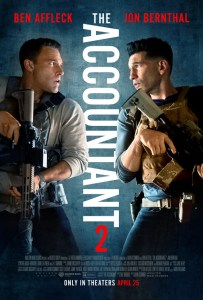 I’m going to start this review by doing what everyone loves to read, the author patting themself on the back. Back in 2016, I found The Accountant to be an enjoyable thriller with a compelling main character that answered the question, “What if Jason Bourne was actually interesting as a character?” I concluded my original review with this observation: “It’s rare that a movie leaves me wanting more, and it’s even more rare when a movie leaves me wanting to watch a weekly variation of Christian Wolff living as whiz kid accountant by day and enforcer of justice by night.” Over the years, The Accountant became one of the most popular streaming movies, a real word-of-mouth sensation that gave it life long after its theatrical release. It was enough that another studio, Amazon MGM, wanted to buy the rights to pay Ben Affleck to produce a sequel that hit theaters and now is available on streaming, thus ready to be the next great movie that dads fall asleep to. It took longer than expected but The Accountant 2 does fulfill my request, showcasing what a regular series could be, for better and worse.
Christian (Affleck) is like Batman if Batman had Autism and did his own taxes. He has a multi-million-dollar foundation that looks for wrongs to right, and this time he’s called back into the action by the sudden death of Ray King (J.K.Simmons), the retired agency head who was tracking the elusive accountant for years. Ray was obsessed with a family lost to human trafficking and hoped to find the missing child. Christian takes up the case and invites his once-again estranged brother Braxton (Jon Bernthal) to help.
 The positives from the original Accountant still shine through, namely the entertainment value of Christian as an outsider character trying to fit into the larger world. He’s an unexpected and often funny person but also a man with his own code of justice, and it’s a treat to watch him bomb through a marathon of speed dating one moment and punch guys in the throat the next moment. Affleck is still enjoyably dry as the lead, and the movie is at its best in the moments where Christian and Braxton are butting heads. It takes a longer than it should to reintroduce Braxton and bring him back into Christian’s orbit, but once the brothers are together, the movie coasts on a chummy buddy comedy dynamic that can reliably work no matter the setting. That’s one of the features that led me to apply the movie into a TV adaptation; the characters are what make ordinary encounters that much more entertaining, and TV is the premiere realm for characters. We tune in on a weekly basis because we want to discover what the characters we love will do next. While The Accountant 2 is certainly a few steps behind its predecessor, the core dynamic that made it enjoyable for so many should still prove appealing to those same legions of fans.
The movie also demonstrates some creaky choices and execution that manages to make it feel less like a full and vital sequel and more like an iffy showcase for turning the franchise into that weekly TV series. The central mystery feels lifted from any generic crime procedural about discovering a human trafficking network. The particulars aren’t that interesting or complicated or even that surprising given the general public’s understanding of human trafficking nowadays. I was waiting for this storyline to give us a little insight into the people most affected, the vulnerable families being exploited as they risk everything to search for a better life or more stable employment. I was waiting for something extra that felt like this storyline would be anything more than a ripped-from-the-headlines rescue mission, and it just doesn’t materialize. Much like 2023’s Sound of Freedom, the complex issue of human trafficking gets boiled down to whether or not our characters can save one unfortunate child. Hilariously, during the climax, the movie keeps cross-cutting between the brothers riding to liberate the kids from their imprisonment and an excavator digging a hole intended to be the kids’ mass grave. One inclusion is enough for us to understand the stakes, but the movie keeps cutting back repeatedly, as if anxiously asking, “Oh no, will the bad guys get the grave completely finished in time for the kids to be dumped inside?”
Already it feels like we’re sanding things down in order to fit a formula. Another indication is the relationship between the brothers. Apparently the brothers have not seen nor spoken with one another since the events from the first movie eight years ago. This is odd considering much of that movie’s story was divided with the Braxton character in parallel and finally recognizing his long-lost brother. After all their years apart it feels more likely that they would have stayed in touch or better. By not going that route, the sequel gets redundant reuniting the brothers again, but this time they’ll actually stick it out because they’ve gone line dancing together and killed even more dudes, the two most brotherly-bonding activities possible. It feels like setting up the team for more fun adventures.
 Although redundancy is part of what holds back the movie. Take for instance back-to-back introduction scenes for Braxton. Our first scene is him trying to psych himself up, and we may think it’s for a date or to talk to a woman he likes, but it’s actually to ask whether or not he can adopt his selected puppy even earlier. Funny, sure, and gets to his loneliness. The next scene he’s trying to have a conversation with a woman who is clearly not as interested and this perturbs him, and upon him leaving we see the trail of bodies he has left behind in the aftermath of some job. Both of these scenes are accomplishing the same thing: Braxton has difficulty connecting with others and is lonely. Why did we need the first scene when the second conveys the same information plus his formidable nature? Braxton even brings up his desire to get a dog later and Christian considers his brother more a “cat person” because he lacks the stable job and responsibility to care for a canine. This moment could have been the first time the film introduced Braxton’s desire for a pet. We don’t gain much from knowing this already. This may seem slight but it’s indicative of a movie that is filling time (hence the mass grave cutaways). For a movie over two hours, there is a surprising amount of fat that could’ve been reduced for narrative redundancy and pacing.
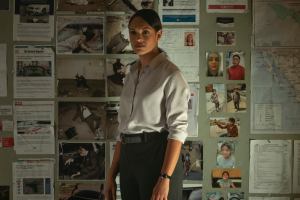
The most obvious sequel idea for a special-skilled accountant would be to meet his match, and The Accountant 2 does and doesn’t do this (some spoilers to follow in this paragraph). Much of the movie is about locating two people, the child stuck in human trafficking and a mysterious woman (Danielle Pineda) who the bad guys are after. She is linked to the missing child but she’s also a highly-skilled killer who is seeking vengeance of her own. It turns out this woman, who I won’t identify, had a traumatic experience and has now become a savant action superhero. This revelation is meant to explain how an ordinary woman could become this badass killing machine, but it awkwardly feels like a ret-con to try and apply Christian’s condition to anyone under unique circumstances (you too could transform, kids). Except the first Accountant made it abundantly clear that Christian was as skilled and methodical as he is because of being on the Autism spectrum, allowing him a unique dedication and attention to detail. Obviously, Autism is not some shortcut to super powers. If it were, RFK Jr. would actually try and read something relevant about medicine. But it was established that the same skills that Christian uses to be such an exacting accountant are the ones he taps into to become a crushing crusader. As someone who has worked with many on the Autism spectrum, I didn’t see this portrayal as insulting or insensitive, especially since much of the movie is about humanizing people with differences and showing how their capabilities can rise above the preconceived perception of others. It wasn’t saying Christian was like all people with Autism, but this is, again, only my nuer typical perspective. I don’t know if in the ensuing eight years that returning screenwriter Bill Dubuque (Ozark) decided that it was less problematic to have the secret formula be the brain’s response to trauma rather than being on the spectrum. It opens up the movie to other highly-powered super spy assassins, but it also takes away something from the premise.
 The actual bad guys are a rather uninspired gathering of goons and shadowy business types. At no point will you feel like our characters are genuinely under threat, and at no point will you remember anything about these villains except for their rote application in the plot. The main trafficker is an evil Boston crime boss (Robert Morgan) that could have been ported over from any other generic crime thriller. His one quirk is that he whistles “Pop Goes the Weasel,” even when he’s murdering migrants in the desert. So there’s that. His main muscle is just… some guy. Literally there is no even cursory attempt to provide any point of characterization for this guy, and he’s supposed to be one of our biggest threats? They could have given this guy, bare minimum, like an eye-patch or an affinity for pop songs, anything. As a result, we have two sets of antagonists, one of which is revealed as an avenging antihero while the others are so disposable to be laughable. At least the first Accountant film gave us a real opponent who, granted, ended up being the younger brother to our main character, but there was a real question what could happen when their paths crossed. Would they use their skills to eliminate the other?
The Accountant 2 might not add up to the same degree of entertainment and thrills that its first outing offered, and there are several missteps and redundancies that take away the edge and uniqueness of that original, but as long as Christian is still determined to help others, I’ll always find this possible franchise worth watching. Now look out for that eventual Amazon TV series to be scheduled right after Reacher.
Nate’s Grade: C+


 nathanzoebl
You must be logged in to post a comment.