Blog Archives
Transformers: Age of Extinction (2014)
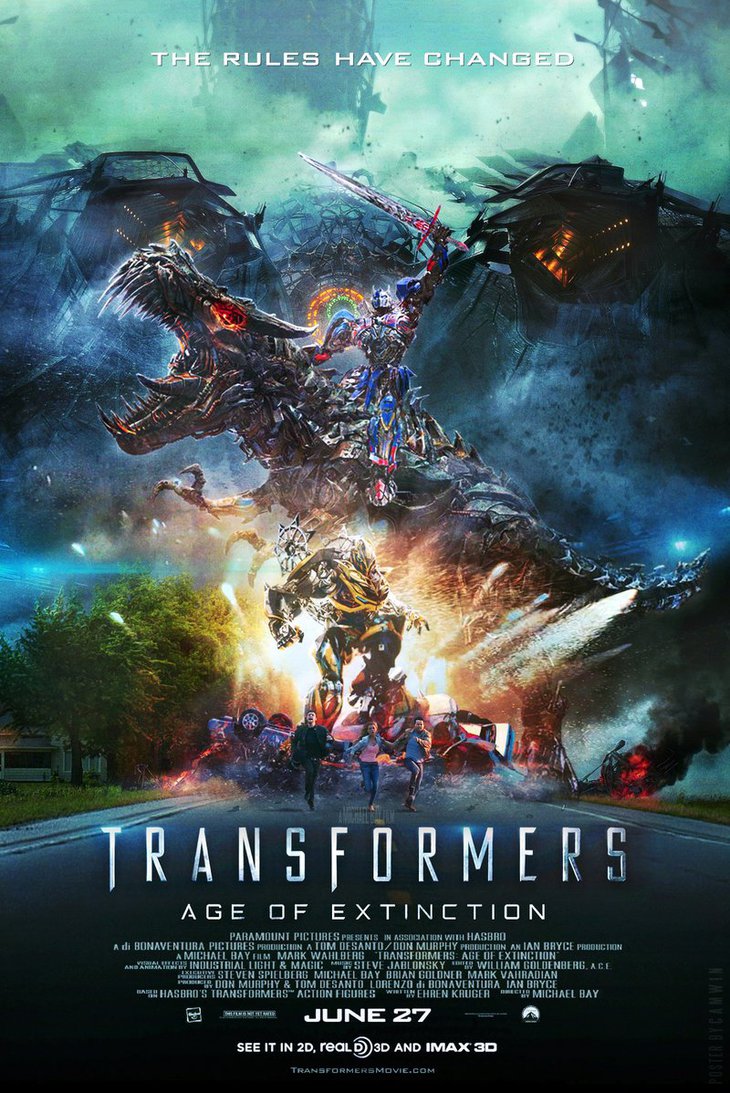 Four movies in, at this point you can either fall back on the old criticisms of Michael Bay as a filmmaker or simply let down your guard and look for any simple pleasures offered by the Transformers franchise, a series mostly known for chaotic plotting and action. Age of Extinction is probably the best Transformers film since the first one (take that for what you will) but it still has all the hallmarks of the obtuse and convoluted plotting, absurd and obnoxious characters, juvenile humor, intense product placement, and often incoherent action. Gone are the characters from the first three films and in their stead is Mark Wahlberg (upgrade) as a Texan inventor named, get this, Cade Yeager. He and his teen daughter come into contact with Optimus Prime and are on the run from multiple forces. Apparently a bounty hunter is looking to target Prime. The U.S. has a black ops team tracking down Transformers in hiding. And Stanley Tucci plays a business tycoon who wants to make his own Transformers via their magic substance “Transformium.” Reading all of that, you realize the pieces still don’t really make sense, and that’s before the robot dinosaurs come into play. And yet Bay and his team have fine-tuned the entertaining aspects of the franchise and better consolidated them in the fourth film. A badass alien bounty hunter/collector is a great addition, adding the government as an adversary, Titus Welliver (TV’s Lost) as a cocksure special agent, Tucci as a corporate blowhard, and robot dinosaurs, it all sort of works on its own terms. Again, if you try and logically connect the pieces, it won’t happen. By this point, if you’re not a fan of the series, there’s no real reason to continue watching, but if you’ve found any semblance of enjoyment then there should be enough to keep your attention with the fourth film, robot dinosaurs and all.
Nate’s Grade: C+
Share this:

The Hunger Games: Mockingjay Part 1 (2014)
 Taking place immediately after Katniss (Jennifer Lawrence) was rescued from the events of Catching Fire, we find ourselves locked away underground with the residents of District 13. Long believed annihilated by the Capital, and its tyrannical leader President Snow (Donald Sutherland), the people rebuilt their society as one large series of underground bunkers, preparing for a day of revolt. The leader of District 13, Coin (Julianne Moore, under a thick grey wig), is wary of Katniss as the symbol of the revolution. She would rather fight the Captiol without her, but the people love her, and it is the common people that Coin and her team must struggle to unite and inspire. Katniss is not exactly in the inspirational mood. Her family was saved from District 12 before it was bombed but the Capital holds Peeta (Josh Hutcherson) as a high-profile captive, ready to denounce the latest aggressive acts of the rebels as foolish and dangerous. Katniss desperately wants to rescue Peeta but before she can she has to accept her fate and become the Mockingjay, the figure to rally the districts in war.
 The very title The Hunger Games: Mockingjay Part 1 both tells you everything and nothing. Firstly, there are no Hunger Games anymore. This is a full-on war film, and we’re finally getting to all the good stuff, the revolutions stirring all throughout Panem we heard about and caught glimpses of before the plot required a redo of the games, repeating the structure of the first film. It felt overly redundant, especially when the stuff outside of the games was far more interesting. That structure has been cast aside and Mockingjay is a completely different film than the ones before it, focusing much more on character and the politics of propaganda. In many ways, this is a quieter film that allows the characters to deal with the trauma of their experience in the deadly arena. Even though war is fermenting and people are being bombed into oblivion, there is considerably less urgency, especially less contrived urgency. This allows the characters and the plot to breathe, the calm before the storm. Much has changed and a measured amount of time to process this is a good move. This is no longer the Hunger Games. This is war. The subterranean District 13 is the major setting of our film, which gives Katniss time to reflect on how damaged she is and her guilt over what exactly the Capitol is doing to their promotional lapdog, Peeta. The movie opens with her muttering to herself, hiding from others due to a disturbing nightmare. The psychological well being of our heroine is a ripe topic. While the world is on fire, much is once again expected of Katniss, and we get to watch her transform, awkwardly, into the revolutionary figure others require of her. The political and media critiques add another level of entertainment, as each side spins and contorts to position themselves for the news cycle. This expose of media manipulation makes Mockingjay feel in part like a post-apocalyptic Wag the Dog. Credit co-screenwriter Danny Strong, he of HBO’s Recount and Game Change fame. This welcomed change of pace and structure allows the film to finally feel like the story we want to watch. And while I’m tip-toeing around spoilers, I’ll just say that the split occurs exactly where you think, book readers.
And secondly, the “Part 1” of the title is also what defines this 125-minute prelude to the concluding movie, a fact that becomes inescapable as it seems all the good stuff is being reserved for later. While the reflective plotting allows more space to breathe, it also becomes abundantly clear that this wasn’t exactly a story that needed to be told in two parts. From a financial standpoint, I can’t argue with the decision from Lionsgate. This is their once-in-a-lifetime franchise and elongating the final film in YA franchises has become de rigueur and a box-office no-brainer. Still, the overwhelming feeling is that this is all setup and the best stuff is just ahead, a tease that the franchise also toyed with during Catching Fire, as we were stuck in the games instead of the revolution. Mockingjay Part 1 is mostly buildup; it’s entertaining and more politically adroit than expected, but in the end it’s still a story stretched out. The intriguing supporting characters from Catching Fire are still mostly put on hold. The inclusion of Gale (Liam Hemsworth) still feels relatively pointless in the scheme of things, except for prolonging the love triangle, the weakest element of the story by far, and one that even author Suzanne Collins seems half-hearted about. When the world is falling apart, who cares which boy Katniss decides to kiss? Old favorites like Haymitch (Woody Harrelson) and Effie (Elizabeth Banks) get brief appearances but little else. There is a stark decrease in action with this movie, only two real sequences of suspense, and one of them proves to be false. Strangely enough, there’s a high-stakes nighttime raid that plays out unironically like a dystopian Zero Dark Thirty finale. I await others to make a similar comparison. It’s no surprise that Mockingjay becomes more suspenseful, engaging, and meaningful just as it’s ending, leaving less on a cliffhanger and more on a latent promise. Instead, this particular movie features a lot of speeches and hushed discussions in dank quarters (the photography is rather dimly lit and hard to decipher at times). It’s not exactly rollicking.
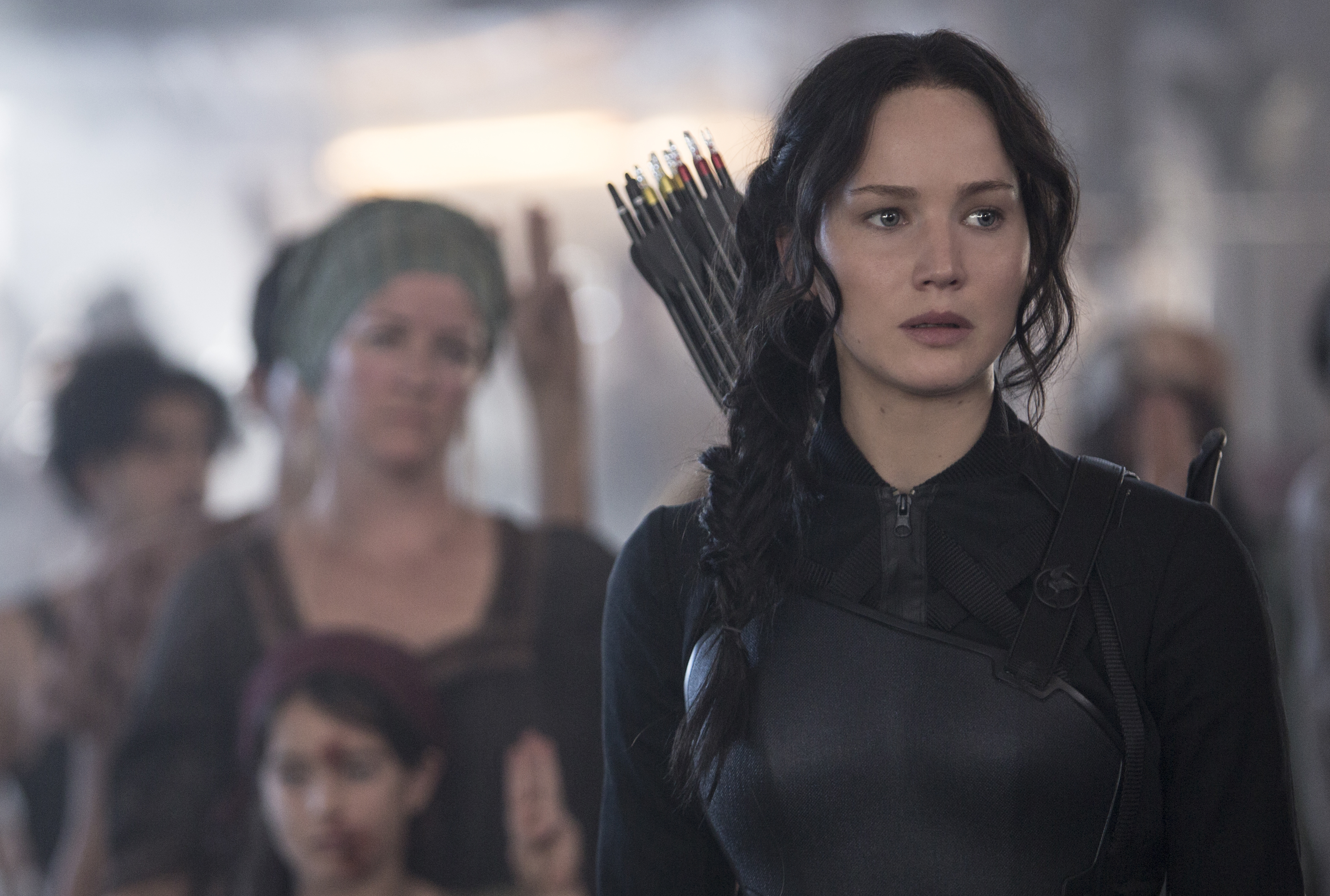 Being a war film, atrocities are commonplace and examined openly, especially when Katniss visits the ruins of her home in District 12. Not once but twice does the camera slowly zoom out to allow the graveyard of charred skeletons to gets its thematic due. There’s only so far a mandated PG-13 rating can take you when it comes to illustrating the horrors of war, but I give Mockingjay credit for neither glossing over the loss of innocent life or glorify the leaders of this revolution, namely District 13. President Coin is shown to be a calculating and pragmatic leader who is concerned more about the big picture. She’s thankful for Katniss but just as ready to move onward and forget her. By the end of the movie, you don’t exactly have warm feelings for the people of District 13, who laid in wait, sowing seeds of rebellion with the other districts, all the while relying on their bunker for ultimate safety. The other districts are more vulnerable and more likely to feel the Capital’s wrath. Just ask the smoldering citizens of District 12.
Director Francis Lawrence (I Am Legend, Constantine) is the Hunger Games’ version of David Yates, the director who steered the concluding four Harry Potter films. Chris Columbus put that world together, but a better, more visually adept director saw Potter through to its end. Likewise, Lawrence has taken the world that the original Games director Gary Ross cultivated and given it the mood and visual heft needed for the franchise to feel properly and triumphantly cinematic. If it weren’t for this man’s visual talents, the many conversations in the dark would be even harder to watch. Lawrence has been a helpful addition to the franchise, especially as the world was starting to get more fleshed out. While I bemoan the overly gloomy cinematography (which was also an issue with Catching Fire), Lawrence has brought a necessary sense of gravitas to the series. The emotional pain and psychological torment registers, and his handling of his actors will often be overlooked thanks to the natural talent of his lead actress, but Lawrence has found a way to strike the right tone to make us care.
Speaking of the woman in question, Jennifer Lawrence (American Hustle) is already an Oscar-winning Hollywood star in her mid twenties, and she elevates these films even more. Her character is a reluctant figurehead, never having asked for such prominence, nor having asked to trigger a revolution with countless casualties. Without as much physical activity and arrow slinging, Lawrence gets greater opportunities to emote and show the fractured, conflicted feelings of the woman in the middle of the revolt. She’s not a natural when it comes to being on-camera, she cannot fake sincerity (even though she played up the whole “star-crossed lovers” angle in the first film as a means of survival, but whatever), and it’s somewhat funny watching skilled actors pretend to be bad actors. The emotions are on a hair trigger here, as rage boils over to fear and shock. Lawrence anchors the series with another surefooted, strong performance.
The real standout is Sutherland (The Italian Job). This is as much President Snow’s movie as it is Katniss Everdeen’s. Rather than plotting from the shadows, Snow gets to become the worthy villain the franchise has been waiting for. Sutherland relishes his retorts with Katniss and preying upon her. His broadcasting of an ever-increasingly frail Peeta is more meant as a crushing psychological blow, a reminder that his prized hostage will be punished for Katniss’s and the rebellion’s mounting successes. When they’re finally face-to-face once more, it’s the film’s most invigorating moment.
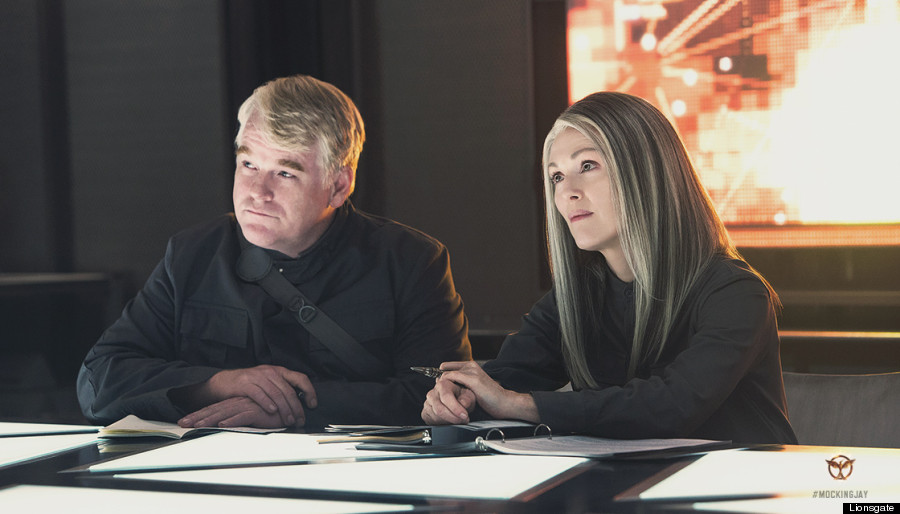 It’s also hard to watch the movie and not feel grief over the loss of actor Phillip Seymour Hoffman. Mockingjay Part 2 will officially be the actor’s last onscreen appearance. He’s good, though the part isn’t exactly challenging, but the real pang is the realization that we’ll never get another Hoffman performance. Once the final minute of Plutrarch Heavensbee is gone onscreen, so is the cinematic ghost of a ridiculously talented man who was taken from the world far too soon. In a nice gesture, Mockingjay Part 1 is dedicated to his memory.
Once more into the breach, dear friends, as Mockingjay Part 1 lays the way for the promise of an exciting and action-packed finale. The extra pause, the last breath before the melee, is both a blessing and a curse. It allows the film to break away from the plotting of the previous two entries and it provides a refreshingly reflective opportunity peppered with intelligent conversations about the political process and propaganda. It also stretches out a story that proves it did not have enough plot points to justify the expansion. No matter, the cash registers will ring loudly as the world’s hunger for the Hunger Games knows no limit. Lawrence and a team of great supporting actors help provide reasons to keep watching, as well as the increasingly dire circumstances of the war against the districts. This intermediary film serves as a bridge to the exciting conclusion, the assault on the Capitol. Let’s just hope that audiences don’t feel too stingy about paying to watch a two-hour trailer for another movie.
Nate’s Grade: B-
Share this:

Mr. Peabody & Sherman (2014)
 Surprisingly adroit, Mr. Peabody & Sherman might just be more fun for adults, especially fans of the original 1960s cartoon, than for little kids. It’s under the “family film” banner, a dubious one historically, but I was laughing consistently and good, snorting laughs, long chuckles; the whole gamut. With The LEGO Movie, the wide release of The Wind Rises, and now this, 2014 is shaping up to be a stellar year for animation aficionados. The movie between a genius dog and his adopted son is given the right amount of reverence before all the cheeky irreverence through history. The hops through time, notably the French Revolution, ancient Egypt, and the Trojan War, are fast-paced and clever without stooping to provide much context for the jokes; you either get them or you don’t. Even the necessary character building components between father and son are treated smartly, coming together for an ending that approaches poignancy. The plot can get a little complicated toward the end, what with opening a space-time paradox, but I respect the movie for being complex and tricky and scientific and trusting its audience to play along. The animation looks a little scruffy compared to other big screen efforts, but the script just flat-out works. The comedy, the drama, the relationships, but especially the comedy. If you’re on the fence, please, do yourself a favor, and go see Mr. Peabody & Sherman, especially if you appreciate history and those who love it. I saw it with my father and we both laughed ourselves silly. Needless to say, this blows 2000’s Adventures of Rocky and Bullwinkle out of the water.
Nate’s Grade: A-
Share this:

The Hunger Games: Catching Fire (2013)
 It’s been a year and a half since The Hunger Games broke box-office expectations, gifting Lionsgate studio with a formidable franchise. Based upon Suzanne Collins’ series of young adult novels, the first film was an agreeable adaptation that was occasionally hobbled by poor direction, rushed plotting, and budget limitations. Catching Fire, the second film, improves upon the established groundwork in almost everyway with the chief drawback being a terminal sense of dystopian déjà vu.
In the months after the events of the 74th Hunger Games, the two victors from District 12, Katniss Everdeen (Jennifer Lawrence) and Peeta Mellark (Josh Hutcherson), are traveling across the other districts of Panem as part of their victory tour. What better way to endear yourself than visiting other districts to remind people that their children are dead and you survived? On the tour, there is growing unrest throughout, and the people have turned Katniss as their symbol of defiance against the tyrannical Capitol. President Snow (Donald Sutherland) threatens Katniss to control her media image, to convince the people that she’s madly in love with Peeta and not a fledgling revolutionary. In order to check the power of the victors, Snow introduces a rule change for the 75th games, the Quarter Quell. This year the participants will be culled entirely from previous past victors, meaning that Katniss and Peeta will be plunged back into the deadly games and this time their competition aren’t children.
 What a difference a director with a sense of cinematic visual command can make. Early into pre-production, the original director Gary Ross (Seabiscuit, Pleasantville) decided to bow out for sequels, and so Francis Lawrence (Constantine, I Am Legend) was hired, and goodness does the movie benefit from this change at the helm. Lawrence has a much stronger visual authority, having cut his teeth in commercials and music videos (remember those, kids?) before feature films. The man couldn’t frame a lousy shot if he tried. With a stronger visual lens, the world of the Hunger Games is able to stretch, given a proper budget, and the visual grandeur unfolds around you, especially the largess of the Capitol. The movie doesn’t feel like they had to cut corners with their budget or special effects, and part of that is credited to the skill of Lawrence. And with this new visual stylist comes the demise of shaky cam. Dance and celebrate that Ross’ misapplied docu-drama approach has been abandoned; this time, when there is onscreen action, you can comprehend what is happening. I read the book years ago but even I was feeling twists of tension, notably the start of the Quarter Quell. The action isn’t terribly developed but it’s sufficient, though again the kill-or-be-killed extremity kept to PG-13 safety is starting to chafe. My only visual complaint is that much of the action within the games takes place at dawn/dusk and thus low-light environments. It feels like someone threw on a muddy filter, though perhaps this was just my theater’s light bulb-saving projection setting.
Now that the world of Panem is established, Catching Fire does a nice job of showing the various social conflicts coming to a head, bubbling into uprising. The pre-games victory tour opens up the world, allowing us into other districts and viewing the different strife befalling them. It’s jolting to watch the public defiance met with summary executions and yet the people will not be stopped. Now the class conflicts of the haves and have-nots get pushed to their breaking point. There’s a great contrast provided with a Capitol party so lavish, with food so sumptuous and plenty that the Capitol denizens have cocktails on hand to induce vomiting. That way you can continue eating (historical fact: vomitorium is actually not what you think but instead a passage below a tier of seats for easy exit, like in modern stadiums). The themes and the points aren’t subtle, that’s for sure, but they are effective and intriguing. Katniss, who only wanted to survive, has been thrust as the face of revolt, and now she has to walk a delicate line to again save her loved ones. The fascist politics and media manipulation hinted at in the first film are given more examination, providing a richer narrative. What works in the first Hunger Games is generally expanded upon and what faults the first film had have been, generally, nipped and tucked. There’s nothing as eye-rollingly awful as Peeta’s human rock sculpture camouflage. The burgeoning love story elements again are abbreviated the harshest, but when the world is coming apart, you have to spend more time on revolution than love triangles.
The film also benefits from a slew of new characters that have strong personalities. We’re introduced to other formers winners of Hunger Games past, and they make the most with their limited exposure. Joanna Mason (Jena Malone) is an axe-wielding woman given to speaking her mind with devil-may-care attitude. Her first scene in the film involves her stripping naked in an elevator with Peeta and Katniss. Malone (Sucker Punch) really has fun with the blithe approach of the character and manages to come across as comical while still being a credible badass. She’s a terrific character and you’ll be seeing more of her in the sequels to come. The other famous victor is Finnick (Sam Claflin) who bathes in the celebrity limelight, luxuriating in his media image as a suave playboy. Except there’s more under the surface and you’ll be given peaks throughout the film. I’m not as sold on Claflin (Snow White and the Huntsman) as I am on Malone; he’s got the requisite chiseled physique, but I don’t feel the charismatic pull the character demands. Also, when I close my eyes and listen to him speak I hear James Franco, and I don’t know what to make of that. Then there’s the new head game maker, Plutarch Heavensbee (Philip Seymour Hoffman), who is presented as an enigma. He leans on President Snow to spare Katniss rather than turning her into a martyr for the cause. However his alternatives are sinister and media savvy. Hoffman is one of our best working actors today but he seems to sleepwalk through the role, perhaps because he’s meant to be vague. However it’s played, it’s hard to get a read on Plutarch until the very end.
Strong as ever, Lawrence (Silver Linings Playbook) is the rock of this franchise. The Oscar-winning actress has been on a tear as of late and her acting and overall presence elevates the material. They struck gold when they hired her. There’s more fire to her and more devastation, as she’s going through the PTSD, plagued by nightmares. She’s haunted by the horror she’s escaped but also by the continuation of the threat from Snow, the ongoing charade that she will have to keep up for the rest of her life. There is no time out of the spotlight as a victor let alone a national celebrity like Katniss. Lawrence can convey so much wordlessly and she can convincingly play the different dimensions of her wounded warrior.
 Many of the criticisms one can hurl at Catching Fire are the same from Collins’ book. There is a repetitive plot structure, where the games themselves feel like too much of a retread. It feels forced to serve up what worked the first time. The problem with throwing Katniss and crew back into the Hunger Games is that all the real consequential action is taking place outside of them. We’ve been watching the stirrings of revolt all movie, watching the cracks take shape, and then the movie returns to its deadly TV competition when the audience just wants to leave to see if the revolution will be televised. Breaking free of Katniss’ first-person perspective from the book allows the filmmakers to add scenes fleshing out the world and the characters, with some nicely malevolent conversations between Snow and Plutarch. But that also means we don’t have to be locked into watching Katniss’ every move (I know this sounds like sacrilege). It’s not like the creatively torturous games are boring, but it’s hard to ignore an increasing sense of been-there-done-that. When there are so many larger, wider-reaching consequences happening outside throughout the various districts, you can’t help but feel a bit antsy. Another reason the film doesn’t break free from the games repeat is that it purposely keeps Katniss, and in turn the audience, in the dark about the larger outside machinations. The collective ignorance has a purpose but it also makes the plot frustrating.
Really, Catching Fire is more a setup for the series greater conflict rather than a complete film/story. Things are unraveling in the country of Panem, but if you want resolution you’ll have to wait until 2014 for the next movie, or more likely 2015 for its concluding half. What Catching Fire does is tease out the plot change and then transition to it, but only in the final minute. As my pal and colleague Ben Bailey notes, it ends in similar fashion to 2003’s Matrix Reloaded, and you’re left on a cliffhanger that doesn’t seem like a natural resting point for the story. Again, these critiques can be waged at the book as well as the film is a fairly close adaptation that will satisfy the die-hard fans.
From here on out, the Hunger Games movies are going to get more interesting. With two remaining films to cover the ground in one book, it should allow for greater development of characters, conflicts, dramatic themes, social commentary, or just larger kickass action sequences now that we’re in a larger arena, so to speak. Under the screenwriting expertise of Danny Strong (HBO’s Recount and Game Change) I’m anticipating a more politically astute and intellectual dystopian drama. Francis Lawrence has brought visual dynamism and stability to the franchise, just in time for when things are poised to get really interesting. As a film, Catching Fire is a step above the previous entry, ironing out some of the shortcomings and presenting more subtext when it comes to its social unrest. It introduces a bevy of intriguing new characters, escalates tensions throughout the realm, and promises greater suffering and strife ahead. However, the repetitive plot structure of throwing Katniss back into the games for an hour eats away at time that could be better spent watching the revolution ferment. It’s still a reliably entertaining film with a sharper visual gloss, so fans should go home happy and audiences should be suitably thrilled. The alterations from Collins’ book are all for the better. Catching Fire will slay the box-office with little trouble but I’m most thankful that we’ll be leaving the games behind for good.
Nate’s Grade: B
Share this:

The Hunger Games (2012)
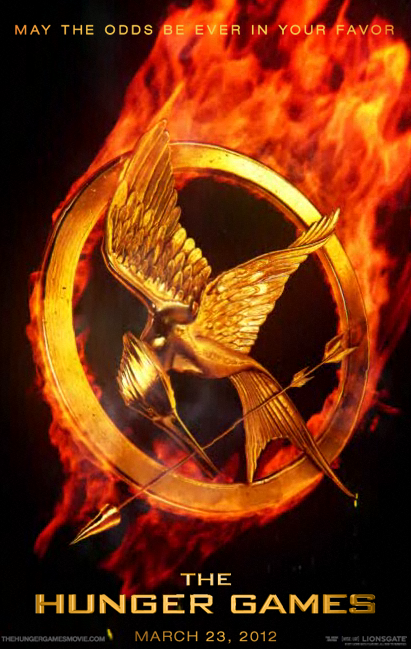 Suzanne Collins’ smash novel The Hunger Games isn’t your normal young adult reading material. Dystopian future, corrupt government, oppressive forces, twisted media culture, and then there’s the whole inhumane concept of children murdering each other for sport. The book trilogy has been consumed by millions of readers, young and old, and inspired rabid devotion reminiscent of other successful publishing franchises like Twilight and Harry Potter. Yes, Battle Royale fans, the premise is not original, but Collins’ book could just as well cite inspiration from The Most Dangerous Game, Lord of the Flies, The Running Man, or even an Outer Limits episode known as “Fun and Games.” Producers are hoping those legions of fans will turn up in droves and start a new lucrative film franchise. Reliably squishy filmmaker Gary Ross (Seabiscuit) was tapped to shepherd the book to the big screen. The Hunger Games movie doesn’t commit any major blunders to screw up a good story, which is good enough for many.
Set in a distant future, the ashes of North America have given way to the country of Panem. It is lead by a Capitol government and ringed by 12 mostly poor districts. Every year the Capitol commemorates the failed revolution of the districts by holding the nation’s favorite televised sport, the Hunger Games. Each district holds a reaping, which randomly draws one boy and one girl aged 12-18 years. These lucky chosen children, known as tributes, are then whisked to the Capitol where they will be placed into an arena and fight to the death. 24 tributes go in and there can be only one winner. In the outlying District 12, day-to-day life is a struggle, and Katniss Everdeen (Jennifer Lawrence) is burdened with providing for her family. She hunts illegally to provide food for her family and to trade for goods that they need. She’s excellent with a bow and arrow. Her hunting partner, Gale (Liam Hemsworth), suggests that they could run away. “We’d never make it more than five miles,” Katniss reasons. The two of them have too many responsibilities to ignore. Then Reaping Day comes, and Katniss’ 12-year-old younger sister Prim (Willow Shields) is chosen as the female tribute. Katniss volunteers to take her place, saving her sister, but throwing herself into a sport where the odds will not be in her favor. Joining Katniss as the male tribute is Peeta Melark (Josh Hutcherson), the baker’s son who has some history with Katniss.
 The tributes are paired with mentors, the oblivious Effie Trinket (Elizabeth Banks) and former District 12 Hunger Games winner Haymitch Abernathy (Woody Harrelson) whose helpfulness is tempered by the fact that he’s drunk often. He advises his newest tributes that they must make the audience like them to earn sponsors, people willing to pay big money to supply the tributes necessary supplies in the middle of the game. The Capitol is full of lush excess, the people donned in cartoonish and colorful garb. Katniss is dolled up and paraded around. She showcases her skills to the Game makers, who will give each tribute a rating that bettors will use. She’s interviewed by TV host Caesar Flickerman (Stanley Tucci) to make an impression. While with Caesar, Peeta reveals that there is a girl he’s had a crush on back home for the longest time – Katniss. The star-crossed lover angle hooks the audience and immediately transforms the dynamic of the games. Katniss is upset, but Haymitch rationalizes that Peeta’s confession has made them more marketable.
Then the dreaded day arrives and the 24 tributes are gathered up, injected with tracking devices, and launched into the outdoor arena to fight to the death. Katniss’ biggest threats will be the tributes from District 1, Glimmer (Leven Rambin) and Marvel (Jack Quaid), and District 2, Clove (Isabelle Fuhman) and Cato (Alexander Lutig). These tributes have trained their whole lives in the deadly arts so that they could volunteer to enter the games, hence why they are dubbed the Career tributes. And they usually win. Once the games begin, Katniss must survive the Careers, whatever surprises the Game makers have, the elements, and win over the affections of the TV audience. Let the games begin.
Firstly, fans can breathe a sigh of relief because The Hunger Games movie is a mostly successful venture brought to visual life. The legions of Collins’ fans celebrating the movie of their beloved book will mostly be satisfied. Collins’ story is still a good story no matter the medium. It establishes its alternative world and the stakes quickly and then it’s off to the killing fields. This is dark and disturbing stuff, far darker than even the darkest days of Harry Potter, and fans will be relived that the movie does not go soft. It’s not the exploitation-vehicle that Battle Royale was. This is trying to tell a story and not revel in the geysers of teenage bloodshed. This is a movie that satirizes reality TV and media culture as much class warfare. Katniss is primed and prepped to manufacture an impressionable image to TV audiences. It’s all about calculation, image control, and the manipulations of the media and audience to produce a star. Here’s a world where the 1% literally celebrate and toast the deaths of the 99%. Here’s a world that takes it cues from the Romans concerning spectator sports. I do wish the movie had channeled more of the book’s accusatory tone against the Capitol citizens, the silent majority complicit in villainy. And of course it was Collins’ point that we, too, the audience could be accountable in our own YA bloodlust.
 This is a story that grabs you and rarely lets go, centered on a heroine that is refreshingly a strong female role model for girls. Bella Swan has nothing on Katniss Everdeen. Here is a heroine that is proactive, resourceful, resolute, compassionate, and she doesn’t need a man to complete her. Sorry Ms. Swan, but Katniss has a lot more important things on her mind than getting a boyfriend. She’s got to provide for her impoverished family and shoulder plenty of responsibility, and that’s before she’s plucked into a death sport. In short, Bella Swan sucks. Katniss Everdeen rules 4-ever.
Since the book was written in first person, we were inside Katniss’ head the whole time. There are disadvantages of leaving that POV, namely that Katniss’ survival skills and cunning can be brushed over. She’s not just fighting the other tributes, she’s trying to think how best to play certain moments, how to appeal to the viewers at home. During the games, the movie jumps back and forth between the action and what I’d like to call Mission Control from Hell, the game makers HQ. This is a smart move that provides a greater antagonistic sense with the book’s unseen game makers. The exposition, mostly handled by Tucci as color commentary throughout the games, is presented in a way that doesn’t feel clunky. I also enjoyed the two sit-downs we get with President Snow (Donald Sutherland), the autocratic ruler of the Capitol, who sees early on the danger of Katniss. He explains that the games are meant to give hope to the poor citizens. “Hope is the only thing more powerful than fear. A little hope is good. A lot of hope is not,” he explains while pruning flowers. It’s nice to have a villain who understands the calculations needed for a proper oppression. It’s also nice to see Sutherland sink his teeth into a role that will only get more enjoyably evil as the films progress. I felt that the tracker jacker sequence, the interviews with Caesar, and the time in the caves were the best-adapted sequences.
Lawrence (X-Men: First Class) is a star, pure and simple. She was the perfect choice to play Katniss Everdeen. The Oscar-nominated young actress brings great steely determination and grit to the Girl on Fire. Katniss isn’t supposed to be a teenage warrior (that would be the Careers), even though she is thrust into that role. She doesn’t celebrate killing. This is not fun for her. Lawrence can play an array of emotions silently, deftly, like her hoarse, wild panic at Prim being chosen, her shell-shocked disorientation at going into the games, her quiet fury at her irresponsible mother and others like the game makers, her budding warmth for Peeta while he rubs a salve over her facial cut. Pages of description can be consolidated in just one pensive, conflicted expression on Lawrence’s lovely face. Lawrence is the heart of the movie and a tremendous presence to ground our sympathy and emotions.
Katniss is a dangerous competitor but she’s also vulnerable. She’s emotionally guarded and thrust into a situation where she has to “pretend” to be in love. Now the romance angle, and the self-awareness on Katniss’ part to give a good show, was a far bigger storyline in the book. In the book, she begins by playing a part and by the end doesn’t know if her feelings are false or genuine. It’s strange that in the movie their this-is-love kiss, meant to make the audience swoon on Katniss’ part, is followed up with nothing but hugs. Maybe the filmmakers thought a romantic angle was in poor taste given the kill-or-be-killed scenario, except that the romance angle is what keeps Katniss and Peeta alive. Want to know the best way to irk a Hunger Games fan? Start comparing the complicated romantic triangle of Peeta and Gale to dismissive terms like Team Jacob and Team Edward.
 The supporting cast performs ably, some better than others. Hutcherson (The Kids Are All Right) is given the most material to work with. He’s a nice kid, strong, but worried about his humanity, and the filmmakers never portray him as anything close to a badass or a helpless baby. Hutcherson shines in the moments where he comes clean with his emotions, like admitting that he has no chance of winning (his mom thinks so too). Peeta’s much easier at charm than bravado, and Hutcherson is a charming guy. I think Banks (Zack and Miri Make a Porno) actually gives the best performance, short of our lead heroine, as the maniacally bent Effie Trinket. Half the performance is the garish outfits, wigs, and makeup, but Banks nails the affluent insensitivity and ignorance of her character. Her forced enthusiasm is good for a few laughs. Harrelson (Zombieland) gives hints about the demons behind his character, a man who has to watch a pair of children under his tutelage die every year as his “prize” for winning. He’s a colorful character in a movie filled with colorful characters, but his sauced sarcasm can sting. Tucci (Easy A) hams it up with great pleasure as the smarmy, inauthentic, over-the-top TV host, Caesar Flickerman. They dolled up actor Toby Jones (Tinker, Tailor, Soldier, Spy) in a bouffant wig and sit him beside Caesar for commentary, but, and I literally counted, he has three lines where he speaks onscreen. Still, I love his oily voice as the games’ announcer.
The movie distills just about everything from the book, plot-wise, so the fans will be sure to see just about every plot event that they’ve developed a mental checklist for. However, this narrative approach, an attempt to satiate the fans that bristle when the movies of their favorite books deviate too much from the source material, blunts the impact of the material. I was astounded at how overwhelmingly rushed and hurried the movie is, spending little time on those variety of plot events, rarely allowing the movie enough room to breathe. With this brisk and brusque pacing, it stops the movie’s vitality. The context and history of important items and people feel clipped, becoming just set decoration. Ross has not done an adequate job of making his movie universe feel richly realized. The significance of the mockingjay, a symbol of perseverance under the oppression of the Capitol, is left unexplained. It just becomes a dinky pin that makes Katniss think about home. The ghoulish mutts have been turned into just a bunch of vicious dogs that eerily resemble the dog demons from Ghostbusters (actually, I’m relieved the mutts were toned down). The contrasts between the impoverished outer districts and the lavish Capitol denizens are nicely showcased thanks to luxurious and weird art direction and costume design; these people took fashion advice from Marie Antoinette and maybe their political outlooks as well (“Let them eat cake… or death”). There are also some passing moments of dark satire as far as the Capitol’s overall stance with the games, and their blasé attitude about the value of human life, though the movie could have and should have pushed harder with its class warfare.
The Hunger Games reminded me of the first two Harry Potter films where the producers crammed in all the plot points they felt fans wanted to see rather than just, you know, adapting it into a good movie. If they wanted to keep everything from the book, plot wise, then they should have followed their convictions and produced a three-hour movie. Imagine The Godfather being cut down to two hours and twenty minutes. Imagine rushing through all that drama. Now I’m not in any way comparing The Hunger Games to The Godfather in terms of quality, but movies need sufficient time to establish their worlds and develop characters. They need time to breathe. The fact that a 142-minute long movie doesn’t have time to breathe is plain inexcusable.
 The characterization, beyond Katniss and Peeta, is extremely limited, and so when he deaths do occur the impact is minimal; only one tribute’s death is given time for mourning, and even this character’s death is limited due to superficial characterization and about two minutes of screen time. I’m not saying that every one of these 24 tributes needs a detailed back-story, but they’ve got to have some personality to them and the movie has to devote some time to develop that; good writing can tell a lot with little. Otherwise they just become somewhat recognizable faces and not characters. Cinna (Lenny Kravitz), Katniss’ stylist for the pre-game publicity in the Capitol, is reduced to being a bland companion. Let me single out the villains, our group of Career tributes. The movies have a long tradition of villains who aren’t given much characterization but are given personality. I need my bad guys to be given an opportunity to make an impression, and no, weapon distinction is not enough. With The Hunger Games, the bad guys just become a series of sneering faces, and these kids (Ludig, Rambin, Quaid, Fuhman) have got some good sneer faces. True, the movie’s entire twisted premise lays enough overwrought tragedy to the entire setup, turning children into killers, and President Snow is the ultimate villain, but the movie should be agonizing, terrifying, devastating, upsetting, and not merely inferential and rushed. I want to feel the deaths. Instead, the movie can’t even be bothered to briefly show the faces of the dead kids during the game’s daily death montage. There are all sorts of kids who were hired to be tributes from districts and I question if they ever got a second onscreen.
I also feel that Ross is, at times, completely wrong for this material. The man behind Pleasantville and Seabiscuit is not the first name you’d think of to tackle a dystopian sci-fi survival thriller built upon the premise of dead children. I almost wish they had hired Paul Verhoeven (Robocop, Starship Troopers), an artist well versed in sci-fi spectacle and subversion. Ross’ misguided visual approach, borrowing a page from the Bourne franchise, can make it hard to enjoy the film. During the opening segment in District 12, as well as the games themselves, Ross will attempt to up the visceral ante with his bobbing handheld camera. Now I’m not one of the people who loudly decry the use of “shaky cam” during action sequences, but before the second minute was over, I turned to my friend and said, “I already hate the shaky cam.” There’s a difference between handheld camerawork, which has some jostle to it, and a deliberately inauthentic docu-drama approach that makes exaggerated and distracting camera bobbling. There are long segments of this movie that is nothing but shaky close-ups cut together. There’s a climactic battle atop a metal structure that is completely incomprehensible to follow. It’s all just a blur of flashes save for two wide shots to thankfully attempt to orient the viewer. When an audience can’t follow the action, it not only kills tension but it also kills investment. The docu-drama visual approach is completely wrong for this movie. When was the last time you saw a dystopian sci-fi movie that had a docu-drama aesthetic? Try never.
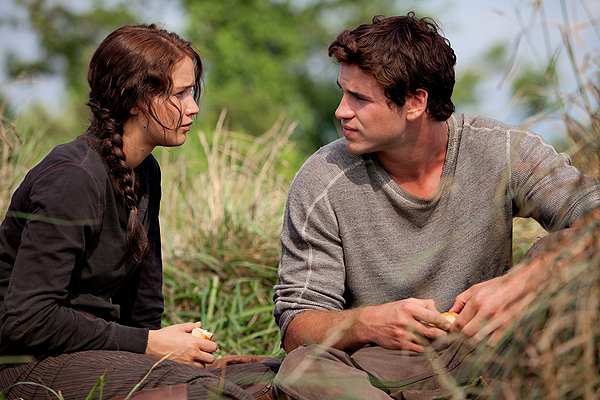 Likewise, to achieve the all-important PG-13 rating, Ross sanitizes the blood sport, utilizing lots of implied violence. The jangly aesthetic works for the duration of the race to the Cornucopia to start the games, as tributes turn a fight over supplies into a bloodbath, communicating the chaotic frenzy. I’m not clamoring for explicit carnage to get its message across, but just seeing children as far-off lifeless heaps is a disservice to the power of the story. Also, I don’t feel like Ross properly takes full advantage of the visual medium. Instead of being told, twice, about mines that will explode if any tribute steps off their platform before the conclusion of the countdown, let’s see it. Since half of these kids are about to become faceless corpses anyway, why can’t one of them lose their balance, fall out of the ring, and blow up? And then we cut to a nearby tribute dusted with pieces of dirt and blood, trying to keep their cool and failing. It would have kicked up the tension and shown the immediate danger that awaits. I don’t want the one-minute countdown to cut around the globe, seeing the different districts watching TV. I want that entire minute spent in the arena, hearing every second counted down, seeing every face of the tributes sick with anxiety and unease, gritting themselves for combat. I want to feel the same sense of doom that they do, not cut around the globe and then have the audio drop out. That’s a sorry way to start the games, even with a PG-13 mandate.
There are heavy expectations for The Hunger Games on all fronts, from studio execs to the millions of eager fans. I consider myself one of their legion. I voraciously read through the trilogy, getting hooked early, and have even helped teach the book as part of an American Literature curriculum. It’s a thrill to watch reluctant readers get excited about the book. The Hunger Games succeeds mostly as the pilot to an exciting film franchise. But having seen the Hunger Games movie twice in 14 hours, and being a huge fan of the book, here are my chief criticisms: the movie is far too rushed, speeding over so many plot points and characters, never getting time to breathe; nascent characterization for supporting characters; the context of so many things is missing; shaky cam overuse to the point of incomprehensible action sequences; dodgy CGI; not taking full advantage of visual medium; intensity a bit muted; and finally, a forgettable score. But, hey, good movie. It just frustrates me because it could have been a great movie, a searing, powerful, provocative, thrilling movie. Good movie will be good enough, especially when it makes more money opening weekend than the citizens of District 12 will ever see in their lifetimes. When you got a fan base as large as this series, the odds will usually be in your favor.
Nate’s Grade: B
Share this:

Margin Call (2011)
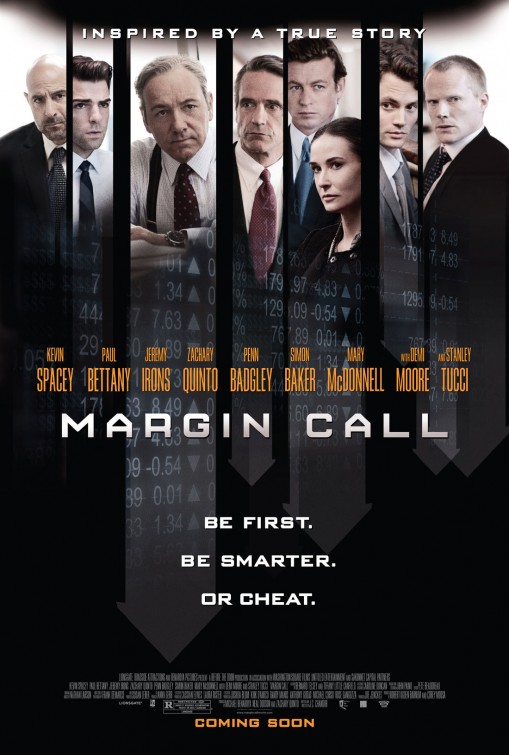 Set during the first twenty-four hours of the 2008 economic meltdown, Margin Call feels like David Mamet’s classic play Glengarry Glen Ross just set fifty floors higher. It’s a tense stew of ego and hubris and cunning and manipulation and self-preservation, peppered with some salty language. The corporate bigwigs of a fictional financial firm scramble to get out the door first before everyone else catches on to the looming market crash. “There are three ways to make a living in this business: be first, be smarter, or cheat,” says the CEO (Jeremy Irons). Debut writer/director J.C. Chandor brilliantly captures the rationalization of sociopathic greed; the CEO waxes about the historical inevitability of our own self-destructive influences, glibly recounting other market crashes and saying he will survive because the nation’s class systems are fixed. The behind-the-scenes scheming has a sick appeal, witnessing how Wall Street wriggled free of responsibility. This isn’t a far-reaching look into the financial meltdown; it’s more of an insular, thoughtful, occasionally meditative play about the moral questions at play. The prosaic pacing caused quite a slew of yawns in my audience. There does seem to be a never-ending cascade of scenes where two characters will just sit and talk. However, when the writing is this sharp and the actors are all at the top of their game (Kevin Spacey is emotionally spent in a test of loyalties; Irons is charmingly sleazy), then you can forgive some stagnate pacing. Margin Call has a few heavy-handed metaphors (Spacey putting his dog down = the economy!), but overall it’s astute, insightful, sophisticated, and compelling enough to forgive its overreaches.
Nate’s Grade: B+
Share this:

Easy A (2010)
 Usually when I think “teen comedy” I think lowest common denominator and a pitch straight down the middle of the plate. Will there be fart jokes? Probably. Will the climax taken place at the prom? Absolutely. Does Easy A do either? Not a chance. This is the sort of teen comedy that would have greatly appealed to me back in my own days of high school institutional education.
Olive (Emma Stone) is a high school senior that gets good grades, behaves well, and spends her weekends hopping around her bedroom and singing a song she can’t get out of her brain. She’s not into parties or idiots or anything remotely dangerous. Then her world turns upside down when she fibs about losing her virginity. Suddenly Olive is branded as the school’s hussy. Inspired by Nathaniel Hawthorne’s famous character, Olive decides to embrace the rumors, accessorizing her wardrobe with plenty of scarlet “A”s along the corseted bust line. Olive’s gay friend asks her for a huge favor: he wants to use her fake notoriety to lose his virginity. The two will attend a party, find a room, and dramatically interpret animated sex. It works like a charm. Her pal is given a free pass, some extra popularity, and it isn’t long before other downtrodden high school rejects seek a similar deal. Outraged at Olive’s lack of shame is Marianne (Amanda Bynes), the school?s busybody and leader of a vocal Christian abstinence program. She doesn’t know whether she wants to save Olive or banish her.
 All hail the coming of Emma Stone, comedy goddess and future heartbreaker. Easy A is a fantastic showcase of the many strengths of this irresistible actress. After several supporting roles in films like Superbad and The House Bunny, this is the first opportunity for Stone to have a film where she gets to be the lead, and trust me folks, this won?t be the last one. Stone has a great way of becoming instantly empathetic and, much like the film, being brainy and playfully risqué at the same time. Watching the success of Stone is like watching the road not taken by Lindsay Lohan (be careful whose advice you take, Emma). Stone makes her good times seem effortless, like she really is having a blast playing up her bad girl image. Her facial expressions and sarcastic, know-it-all line readings help push her comedic range even further, and yet she remains completely empathetic the entire time. Stone is the kind of girl that other girls would want to hang out with and guys would crush on. It is impossible to not love this actress, and she makes Easy A easily enjoyable and downright effervescent at times.
The rest of the cast is having just as much fun with the material as Stone. Chief among them are Stanley Tucci and Patricia Clarkson as Olive’s hyper-literate parents. They may seem like they stepped off the train from a Diablo Cody movie at first, but you will quickly get used to their glib rapid-fire repartee. Some might dismiss them as kooks. Thomas Haden Church (Sideways) tries to make the glamorous movie idea of the Hip Teacher into a droll square and succeeds admirably. There’s even Lisa Kudrow (TV’s Friends) as a guidance counselor and Malcolm McDowell (Halloween) as a blasé principal (“This is public school. If I can keep the girls off the pole and the boys off the pipe, I get a bonus”). Then there’s Bynes (Hairspray, She’s the Man) in what was billed as her final film performance before hastily retiring from acting, and then following in the footsteps of other famous retirees like Michael Jordan, Stephen King, Jay-Z, and Brett Farve, and hastily un-retired. She has her cutesy, dimple-faced shtick she cling to, but what happened to her? Her face looks very swollen, like she had an allergic reaction on every day of shooting. It looks like someone inflated her head with the plot to turn her into a Macy’s Day balloon. I started to get concerned for Bynes by the end.
 While Stone is the number one, two, and three reasons for seeing this movie, Easy A doesn’t let down her efforts. This is a teen comedy that might just be light years ahead of the pack. There are jokes guaranteed to go over the heads of a majority of audience members, from wisecracks about Sylvia Plath to French wordplay to the Kinsey scale. You’re not going to find any of that stuff in your typically brain-dead Freddie Prinze Jr. vehicle (is it just pathetic to keep holding onto a 10-year-old anti-FPJ grudge? The answer is, “No!”). Though I died a little inside when the movie resorts to explaining the plot of The Scarlet Letter to Joe Public; however, this intellectual Cliff Notes salve was saved by Stone bemoaning the idiotic 1995 Demi Moore film that takes some of the sharpest deviations I’ve ever seen from a classic literary adaptation (“If I have to grade one more paper talking about Hester Prynne taking baths all the time?”). The dialogue is routinely snappy and occasionally barbed, which is a bit of a surprise. It’s witty, a little cheeky, but it doesn’t go over the line or play for the easy gross-out gag. It?s a well-constructed, well-executed teen comedy that has a playful zing, a facetious tone that celebrates literature and makes being smart sexy.
While sex is at the forefront of the plot, the film does not treat the serious subject matter with flippancy. There’s some heavy stuff about what it means to sell out your ideals, prostituting yourself in more ways than the obvious. Olive begins her crusade as a means of taking ownership of her reputation and as an amusing character to play. But then as she dives ahead, accepting gift cards for her imaginary yet cred-boosting favors, the bloom of idealism dims and the meaning of her crusade become murky. What point is she trying to prove, exactly? In the end, is there a sharp difference between being a prostitute and being a “prostitute”? How big of a distance can irony give you? Easy A may have its fun when it comes time to doing the deed (I was howling with laughter about Olive chastising her first “client” about his comment on the aroma of sexual intercourse), but this is a teen movie ready to accept the consequences of its actions with a clear and level head.
 Not everything hums with precision. Easy A can be faulted for being too reverential and referential to 1980s teen comedies. Its ambition to be a modern-day member of this group is a bit too in-your-face. The abstinent Christian opposition feels too broadly drawn and setups for cheap shots and some downright mean punchlines. This movie is better than stooping to tin-eared caricature. The relationship between Olive and her best friend (Alyson Michalka) is vastly underdeveloped. The emergence of a Herpes outbreak also seems a little tacky, especially given its salacious carrier (trying hard not to spoil plot reveals). Then there are simply questions of believability. I?m not expecting a journalistic document of the American educational system, but since when was a high school student losing their virginity scandalous gossip? Why would Olive become the talk of the town by doing something that, according to the CDC, 80% of men and 75% of women have accomplished by age 19? Now, later in the film, the whiff of prostitution would definitely create a stir in the social gossip machine, and with technology, a rumor can spread at the speed of texting.
The film follows a well-worn path and owes a serious debt to the teen films of the 1980s, but Easy A is a winning teen comedy thanks to a snappy script, a playful sense of the taboo, and the courage to shoot for a higher level joke, also Stone’s charismatic comedic performance makes the grade. The entire movie has this bustling, quirky energy to it that feels un-labored. They make it all look so easy. Despite being a thorough genre flick, it is lifted thanks to its zesty writing and acting. In the most simplistically crass terms, Easy A scores.
Nate’s Grade: B
Share this:

The Lovely Bones (2009)
 The Lovely Bones, based upon Alice Sebold’s 2002 best-selling blockbuster, is about some heavy stuff. It’s told entirely from the point of view of a dead teenage girl. She was raped and murdered by a skeevy neighbor, and now she gets to watch her family get torn apart through grief. For most filmmakers, this material would not be considered a “breather,” but then most filmmakers are not Peter Jackson (to my knowledge, only one is). The man known for epic fantasy adventures and lavish special effects applies his skills to bringing Sebold?s beyond-the-grave drama to life. The Lovely Bones has enough skill and craft to its merit, but Jackson’s rep as a filmmaker cannot save this poor adaptation. Who would have thought that the lord behind those Rings pictures could be felled by a teenage girl?
“I was fourteen years old when I was murdered,” Susie Salmon (Saoirse Ronan) informs the audience. In 1973, young Susie Salmon (like the fish, we will be told many times) is walking home from school one night. Mr. Harvey (Stanley Tucci) approaches her and asks her to be the first kid in the neighborhood to see his underground clubhouse he built. She follows inside and will never make it back out alive. The police discover Susie’s knit hat and massive amounts of blood in the earth but no body. Susie’s family is a wreck. Jack Salmon (Mark Wahlberg) consumes himself with the mission of finding his daughter’s killer, alienating his wife, Abigail (Rachel Weisz). Mr. Harvey watches the stalled police investigation with growing pleasure, knowing he has gotten away with yet another child murder. As the years pass, he sets his sights on Susie’s younger sister, Lindsey (Rose McIver). But Susie is not completely absent during this period of time. She awakens in a magical, CGI-attuned spiritual realm known as the “in-between.” It is here that she spies on her family and her murderer and tries to pass time.
 Since most of this story is told after her death, and because Susie died when she was a blossoming teenager, apparently she’s doomed to live the rest of her quasi-afterlife in that awkward visage. Imagine being a 14-year-old for eternity, and the only clothes you have to wear are ugly mustard-colored corduroy pants? That sounds more like hell than heaven. So Susie gets to interact in an afterlife built upon the mind of a teenager, which means that the afterlife involves pretending to be on magazine covers and dancing to disco music (again, heaven or hell?). I know that Jackson was asking for trouble by even attempting to interpret the ethereal, but his candy-colored version of Susie’s afterlife comes across like a bright, shiny doctor’s waiting room (“God will be with you in just a few minutes. Please enjoy our magazine selection in the meantime.”). It’s like you have to find peace before going through them pearly gates. Heaven doesn’t want your negativity so you are forced to chill in a screensaver.
There’s going to be some natural disconnect in trying to showcase a realm beyond human comprehension. I accept that, but why does Susie even bother staying in this “in-between” world? She spies on her family in grief through the years but she has no power to change things; that is, until she does for some inexplicable reason. And what does she do with that inter-dimensional power? She inhabits some girl’s body so she can snag her first kiss that her murder denied her. She passed up heaven and chose not to tell people about her body being disposed of. That doesn’t sound like she really reached any sense of enlightenment. But I digress. Why would Susie stay in this “in-between” when it only makes her sad? She’s fairly powerless and, honestly, does anybody really want to delay entering into heaven? Why does Susie get to pal around with all the other Mr. Harvey murder victims like some celestial support group? None of this can be explained because we’re dealing with a topic that defies rationale explanations. However, this “in-between” spiritual land feels like a visual leftover from the 1998 film, What Dreams May Come. That was another movie where I could never explain why anything happened.
 Actually, the entire movie lacks any cause-effect continuity. The Lovely Bones feels bereft of any connective tissue. Characters will make huge decisions or be granted epiphanies because the plot demands it. I have no idea why Jack suddenly figures out that Mr. Harvey responsible for his daughter’s death. He thinks back to a memory and then all of a sudden everything makes sense, but only for his character. For me, none of it made sense. The entire investigation of Mr. Harvey doesn’t really hold up upon reflection. Jack personally looks into every shifty person in town but somehow overlooks the creepy loner across the street that builds meticulous dollhouses for fun? Mr. Harvey also likes to sketch out his murder pits, but just stop and think about Susie’s deathly hobbit hole. The man digs an entire underground lair in a cornfield. Wouldn’t it take hours if not days to refill the whole thing to cover his tracks? For a prolific serial killer, Mr. Harvey seems to be somewhat careless about leaving behind evidence (a safe filled with your victim’s remains?). I guess this is why Susie has to tell us at the onset that people were ignorant to all this unpleasantness in 1973 (I guess that means common sense was acquired in 1974). Why does Abigail all of a sudden desert her family? She can’t take the grief, so she ditches her two other younger children to live the life of a migrant worker. And why does she come back? How can two brown-eyed, brown-haired parents have three blue-eyed, blonde-haired kids? The entire movie lacks vital coherency and context.
From a tonal standpoint, The Lovely Bones never quite settles down and figures out what film it?s going to be. It veers from sentimental melodrama, to thriller, to headache-inducing camp (Sarandon’s boozy grandmother is terrible at housework — hilarious!). Jackson and crew jettison large amounts of Sebold’s text, leaving behind a New Age-y heaven and a fairly lame murder mystery where we already know the guilty party. The drama then pretty much boils down to whether or not Mr. Harvey will get caught.
You can tell that the serial killer segments grabbed Jackson’s interest the most because every sequence with Mr. Harvey feels more predicated and textured, like Jackson is applying more skill to showcase the twisted mind of a sick man. Jackson exerts far more energy into exploring the dark reaches of Mr. Harvey than he does the mourning of the Salmon family. We are denied the complexity of grief and remembrance. As presented, the Salmon family gets to weep and shout but nobody really tackles the issues or moving forward and acceptance of loss. Instead, we watch Mr. Harvey twitch and squirm and plot his next move. Tucci is appropriately scary, aided by an ominous comb-over. The segment when a ghostly Susie stumbles into Mr. Harvey’s bathroom is the best moment of dread. The bright white room is splattered in trails of dirt and streaks of hardened, dark blood, while Mr. Harvey rests in his bath with a washcloth covering his face. It seems like Jackson decided that what fans really wanted from a Lovely Bones movie was more serial killer screen time. If the family drama was going to be this boring, then I say devote the whole movie to the creep.
 The acting is another curious detraction. Ronan (Atonement) fits the part but Jackson forces her to speak in this annoying, pseudo-spiritual whisper, like once you?ve attained the knowledge of the afterlife you become very soft-spoken. She shows a decent range of emotions but even she can?t quite figure out her character. Wahlberg seems miscast in his role and pretty limited in his depiction of obsessive grief. Weisz gets to cry her eyes out the most but then her character sits out the second half of the flick. Sarandon is only playing the role she was given, so I’ll be fair in my criticism, but her brassy, alcohol-swilling grandmother is like an unwelcome party crasher. She’s broad and loud and mostly cartoonish. I understand Sarandon was serving as comic relief amidst all the heavy drama, but it doesn’t count as relief when you wince at her presence. Tucci gives the mot layered, nuanced performance. He tries to relive each kill but soon enough the memory fades, and he feels the unstoppable impulse to feed his demons. Tucci is deeply scary, though he kind of talks like the roof of his mouth is stuffed with peanut butter.
Heavenly Creatures showed the world that Jackson could do so much more than campy, splattery gore and crude humor. It beautifully dealt with the scary, bewildering world of fantasy and budding feminine sexuality. Now after four grandiose movies, The Lovely Bones was supposed to be a trip back to that smaller, character-driven territory that Jackson first charted in Heavenly Creatures. Now I wonder if Jackson has the ability to return to smaller scope pictures. He and his screenwriting brain trust, Philipa Boyens and Fran Walsh, have softened the harder elements from the novel, completely eliminating any sexual emphasis. This PG-13 take is heavy on ponderous acid trip visuals and light on coherence, and when you can?t understand why things are happening after a while you stop caring why. After a while, I just stopped caring about Susie Salmon (like the fish).
Nate’s Grade: C
Share this:

Julie & Julia (2009)
 Meryl Streep is as she always is, which means to say she’s terrific as famous jubilant chef Julia Child. She’s got the sing-songy voice down cold, and Julia comes across like a spigot of joy, yelping with delight like a child. It’s hard to not find it adorable, and her husband (Stanley Tucci) is a kind, caring man who complements her well. The scenes between the Childs can be heartwarming and delightfully comic. However, for some weird reason, the Julia Child section is only half of this movie. Writer/director Nora Ephron decided to frame the movie with the biography of Julie Powell (Amy Adams) writing a blog in 2002. Huh? Powell wants to prepare all 500 recipes from Child’s best-selling book on French cuisine in one year. As you might expect, this whole section turns into a lot of narration over food preparation and Powell becoming increasingly narcissistic about her blog fame. The only real purpose this modern storyline serves is to add perspective to the Julia Child storyline, giving historical context to what we see Streep and Tucci struggle over. The real resonance is with Streep as the larger-than-life cooking personality and her upward climb to be taken seriously as a chef and as an author. I don’t care about Julie Powell. She keeps interrupting a better storyline. Apparently the real Julia Child didn’t care for Powell either, because late in the movie Powell discovers that the real Child (who died in 2004) thinks the whole blog thing is a gimmick. And isn’t it? Then again, isn’t having Streep as Julia Child a gimmick of casting? Julie and Julia would have been better served if it had completely carved off the Julie section.
Nate’s Grade: B
Share this:

Lucky Number Slevin (2006)
 Probably too clever by half, this Tarantino knockoff is gloriously twisty and far more twisted than you may have thought from the surface. It’s a puzzle piece that winds up being vastly entertaining. Josh Hartnett does the best work of his career in an effervescent comedic performance, playing Slevin, a nobody mistaken for a somebody who owes different mobsters large sums of money. There are a lot of balls to keep juggling, but Lucky Number Slevin finds a way to keep the headstrong momentum constantly going. The neo-noir art direction is fabulous and eye-catching. Things get really dark in the last act, perhaps too dark for some, but for me, this was a crime caper that left me captivated by clever storytelling and flashy camerawork. Definitely for fans of the noir genre and for those with hard stomachs for violence.
Nate’s Grade: B


 nathanzoebl
You must be logged in to post a comment.