Blog Archives
Spectre (2015)
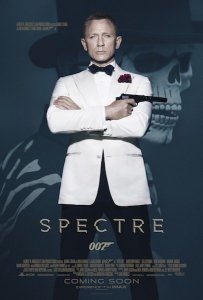 It’s hard to keep a franchise that can almost count its decades on one whole hand fresh and relevant, but Daniel Craig’s time as 007 has done just that. Starting with 2006’s magnificent Casino Royale, we got a grittier Bond, a man with a bruised psychology that was interested in more than just how many bad guys he could callously kill and sexy ladies he could securely seduce. It was a franchise that modeled itself more after the Jason Bourne films, and it worked tremendously, giving the 40-year-old franchise new relevancy for modern audiences that have grown up on the Bond canon. 2012’s Skyfall was the biggest bond hit of all time, grossing over a billion dollars worldwide. It was going to be a hard act to follow. Spectre, for all intents and purposes Craig’s franchise farewell, is a lousy swan song. It’s the weakest of the Daniel Craig Bond era but that claim would require me to rewatch 2008’s Quantum of Solace; however, just from memory, Solace had more engaging moments, stunts, and even a better theme song, so I’ll stick with my proclamation: Spectre is the most mediocre Craig Bond.
James Bond (Daniel Craig) is hunting the organization responsible for the deaths of those closest to him, namely Vesper (Eva Green) and the prior M (Judi Dench). His path has lead to the nefarious SPECTRE terrorist organization and its mysterious and feared leader (Christoph Waltz), who has his own personal reasons for causing Bond misery.
 The movie’s biggest mistake was its insistence that the audience will want to know how all the events tie together as a whole. Due to this position, it makes Spectre the awkward retcon exercise it is, trying to provide winks and nods to past Craig Bond outings while saying, “Oh yeah, all that evil stuff, well this guy is The Guy behind it all.” Adding an extra layer of a criminal conspiracy doesn’t somehow make those events more interesting or provide the need for conclusion; it piggybacks off the earlier movies and pretends it has shown its own work. Spectre thinks the accumulated plot events and deaths of three movies is the same as properly setting up a story and its villains, and that’s just not the case. The other problem with trying to connect the dots to three previous movies is that Spectre has even fewer chances to stand on its own merits, which are admittedly fewer. Lea Seydoux (Blue is the Warmest Color) is a bland addition as a Bond Girl, and oh does she pale in comparison to the capable and indispensable Rebecca Ferguson in the latest Mission: Impossible sequel. Their relationship is never as interesting or as properly developed as the film thinks. The stakes of the movie (surveillance abuse) feel too abstract and low-key, or at least poorly articulated, to feel important. If you’re going to turn the focus of the narrative on offering an apparent climax for multiple movies, it better deliver and feel like it was worth the effort, and Spectre just does not feel like that.
The other thing hat just doesn’t work is the bad guy, which is puzzling because Waltz was born to play a James Bond villain. The Craig Bonds have followed the more stripped down route even in their villains, once the parlance of the most colorful megalomaniacs that action cinema had to offer (and there’s also the eccentric henchmen). There’s a delayed buildup to revealing Waltz (Django Unchained) where other characters will talk in hushed whispers about just how dangerous and powerful the man in charge of Spectre is. A nagging problem is that we’re too often told these things without being shown them. A similar problem affected Skyfall where we spent half the film being told how dangerous and skillful its villain was, but at least Silva (Javier Bardem) lived up to the hype when he arrived, at least for a little while before degenerating into your standard psychopath. Waltz has exactly two sequences before the final showdown. That’s it, and for one of them he’s almost entirely in shadow at the end of a large table of shadowy figures. He’s not given a strong angle to play with his villain (spoilers) and his ultimate personal connection to our 007 agent feels far too forced and slight. Just like the rest of its hasty retconing, Waltz’s connection is meant to feel significant but its not dealt in any way like it should be significant. It’s almost a casual toss-off. It’s even worse when Waltz calls Bond his “cuckoo,” meant to be dark but is just really silly. Waltz is completely wasted in what is little more than a perturbed middle manager role. His climactic showdown with Bond feels impractical even for Bond movies. His downfall is even worse and made me laugh out loud how easily it all comes crashing down. If the emphasis of your movie is how the Big Bad is responsible for all the previous misfortune, then you better make sure the character was worth the wait.
 Sam Mendes (Skyfall, American Beauty) returned to the director’s chair and stages some nicely photographed sequences, but with the exception of a stirring opening sequence, the action of Spectre is quite tame and forgettable. The opening in Mexico City during the Day of the Dead celebrations has an interesting atmosphere and an ongoing tracking shot to pull us in from the start. From there, Bond has to take out a high-profile Spectre baddie and their struggle eventually carries over into a helicopter, both men punching wildly and trying to hold on for dear life as the copter whizzes upside down repeatedly. It’s a good set piece with some fun and unique aspects, like Bond escaping the crumbling wall of a building, but it’s the sheer thrill of watching the battle inside the helicopter that makes this opener a doozey. After that, I was sad to discover that nothing could measure up. Skyfall also peaked with its opening action caper but it still held my interest as it barreled toward its conclusion. I was resisting the urge to go to sleep with Spectre. An air chase over the trails of a mountain is interesting but doesn’t evolve, which is something vital to all exciting action sequences. If the action is static, it’s most often not going to be good after the initial rush wears off. There’s a decent car chase late at night in Rome but I got to think why Bond would be fleeing just one henchman even if that paid muscle were played by physical brute David Bautista (Guardians of the Galaxy). The film’s budget was reportedly $245 million and I just do not know where that money went.
The Craig era will be known for revitalizing the franchise, saving it from its self-parody excesses that were swallowing the series alive. We were watching Craig’s version of 007 become the hardened, quip-heavy, flippant killing machine and womanizer, except that he doesn’t feel like that character by the end of Spectre. If the course of four films was to bring the Bond we know into fruition, then it didn’t quite work, and that personally thrills me. Craig’s character is far more interesting, haunted by the people he couldn’t save, than the action hero Bond staple. However, while Craig’s character maintained a trajectory that staid true to its aim of bringing more depth to its central hero, the series was starting to hew closer to the classic Bond mode of empty bombast, and Spectre is the final proof of this. It’s getting closer to the crazy villains and spy hijinks of old territory. It’s a story that wants climax and resolution but cannot supply it without relying heavily upon the three previous movies to supply the weight this one lacks. It’s a rather lackluster farewell for Craig, an actor who deserved better. Judging by his interviews, I think he’s just happy to be out. He’ll be missed. Spectre will not. Now bring on Idris Elba please!
Nate’s Grade: C+
Share this:

The Man from U.N.C.L.E. (2015)
 Guy Ritchie’s big screen reboot of the 1960s TV show is the right kind of fizzy summer escapist entry that goes down smooth and entertains with just enough swanky style to pass the time. The Man from U.N.C.L.E. is equal parts spy thriller and straight-laced genre satire, hewing closer, and more successfully, to a marriage between Ritchie early cockney gangster flicks and his big-budget Sherlock Holmes action franchise. It’s often fun and surprising at how well it holds its tone between comedy and action; it almost feels like a screwball romance with guns and bombs. The trio of leads, Henry Cavill as the American agent, Armie Hammer as the KGB agent, and Alicia Vikander (Ex Machina) as the German asset, make an engaging group with plenty of conflicts to explore. It’s surprisingly more character-based than driven by its action set-pieces. Cavill shows far more life and personality than I’ve ever seen from him on screen. Vikander and Hammer have an amusing chemistry together and the movie allows them to roughhouse without pushing either character in a direction that feels too safe. Their series of will-they-won’t-they near misses will drive certain portions of the audience mad. The movie gets into danger when Ritchie and his co-screenwriter Lionel Wigram get too cute, especially with a narrative technique where the movie doubles back or highlights action that was in the background at least four times. The world of this movie is also another asset, as the period costumes, soundtrack, Italian locations and production design are terrific and further elevate the swanky mood. It’s an ebullient throwback that serves up enough entertainment with its own cock-eyed sense of throwback charm.
Nate’s Grade: B
Share this:

Argo (2012)
 The reinvention of Ben Affleck as movie director took a big step forward with the critical and commercial success of the 2010 Boston cops-and-robbers thriller, The Town. While I’d argue Affleck’s first outing as a director, 2007’s Gone Baby Gone, is still his best, The Town won over plenty of doubters. Here was an actor-turned-director who could deliver smart drama, intense suspense, and coax Oscar-caliber performances from his brilliantly assembled casts. Have you seen Blake Lively half as good in anything as she was as a tragic junkie single mom in The Town? She’ll be able to get work for years just from the demo reels of that performance. But with two sturdy, complex, taut genre movies under his belt, Affleck still had doubters. The political thriller Argo takes Affleck far out of his Bostonian comfort zone. The creative stretching proves fruitful because Argo is a stirring, fascinating, and engrossing true-life story that should at last silence the remainng doubters concerning Affleck’s talents behind the camera.
In 1979, The U.S. embassy in Tehran was overtaken by a storm of Iranian protestors. Fifty-two Americans were held hostage for an exasperating 444 days. During the takeover, six Americans escapes through a back alley and found asylum with the Canadian ambassador (Victor Garber). There they waited for months, trying to work out a plan to escape. If caught by the mob, it’s very likely they would be deemed spies and executed. Enter CIA agent Tony Mendez (Ben Affleck) and his scheme. His idea is to pretend the six American hostages are part of a Canadian film crew scouting locations in Iran for their sci-fi movie. His superiors seem dubious but Mendez gets the green light. He heads to Hollywood and puts together his team, a veteran makeup artist (John Goodman) and an established producer (Alan Arkin) on the outs with the industry. They settle on the screenplay “Argo” and have to build a credible cover story. From there, Mendez travels into Iran to meet with the hidden hostages to sell them his scheme. They were all coming out together or nobody was getting back home.
 Argo is a fascinating story that seems like it could only exist in the movies, and yet it’s a true story and one hell of a story. It’s a mission movie, so we know the familiar flow of the film even as the details seem fresh (unless you’re Canadian). The very idea is one of those “so crazy it might work” plans; one State department official asks, “You don’t have any better bad ideas than this?” Even though we know it was a success, that doesn’t stop the movie from being engrossing. Argo flies by like a caper film as the CIA gathers the resources and experts to try and put together a ramshackle rescue mission. There’s feeling out the Hollywood angle, gathering the pieces to create the illusion of an actual film production, and the urgency of the façade. Even though it’s a bit outlandish, the fake movie plot seems worlds better than the other possible plans being pitched by the government agencies (smuggling in bicycles and maps?). I thought it was genuinely interesting just to be granted access to a room where people where debating rescue options and picking them apart. The film is consistently intriguing watching smart people come up with smart solutions to challenging problems.
Argo really is three movies expertly rolled together into one; a Middle East thriller, a Hollywood satire, and a D.C. procedural. It’s a bonus that every one of these segments works but it’s even more surprising, and rewarding, that the different segments all snap together without breaking tone. Credit Affleck the director for making sure his movie parts don’t overpower one another. We can go from a tense Middle East sequence where the hostages might have just risked exposure, and then we’ll cut to Hollywood and laugh at the cantankerous Lester. It’s a delicate balancing act that Affleck superbly handles. The humor of Hollywood doesn’t detract or minimize the seriousness of the Middle East chapters; it allows room to breathe, to let off steam. The D.C. segments are the biggest expository moments but they give scope and meaning to the danger. Each of these segments is compelling and each one could have been a captivating movie all its own. We’re fortunate that Argo gives us all three.
Audience ignorance aside, we may know how this story ends but that doesn’t stop the film from being completely nerve-wracking. Affleck showed remarkable skill in The Town when it came to building exciting sequences that felt like they would explode with tension. When it came to Argo, there were moments that literally kept me on the edge of my seat, a rarity with action films. The beginning sequence of the American embassy is rapt with suspense, as the security system deteriorates and the people inside realize the inevitable. They start destroying classified state evidence but really they just have to sit and wait, hearing the footsteps, knowing what is near. The sharp screenplay from Chris Terrio (Heights) does a tremendous job of developing clear suspense sequences. There’s the tension of the precarious subterfuge, of the hostages hiding behind enemy lines, so to speak. If one wrong person were to discover their identity, it could quickly unravel. There’s a whole team of children being paid to piece together shredded documents and photos like they were jigsaw puzzles. Knowing this, it makes the scenes where the group ventures out of the embassy thrilling. The group has to visit a marketplace as part of their cover and it’s terrifying. We know the steps of escape, and each one could easily blow up and get everyone killed. Just when you think you can breathe a sigh of relief we’ve moved onto the next challenge and the tension washes over you again. The climax is so tense that your audience will likely erupt in applause when the hostages eventually escape, relieved and proud of the accomplishment.
The maturation of Affleck as a bonafide directing talent continues. There’s a growing confidence in his direction. The man doesn’t have to rely on flashy visual artifice nor does he seem to be hewing to one notable style. He’s directing each movie as its own beast, be it crime thrillers or true-life suspense story. The man knows where to put his camera in the thick of the action. Affleck also eschews the popular shakycam docu-drama approach that too many filmmakers automatically does all the work of establishing realism. Docu-drama visuals can work when properly utilized, but too often I find it to be self-consciously arty and an annoying distraction. Affleck’s camera remains steady but holds on his actors, giving them space to emote. Three movies into his directing career, Affleck has established himself as one of the best men to direct actors. He’s already lead two actors to Oscar nominations and might just earn a third for Arkin. Plus there’s the fact that Argo, top to bottom, is cast with great character actors. You have people the likes of Michael Parks (Red State) who are there for one line. It also helps Affleck the actor to have Affleck the director.
 The only nagging problem with Argo is that it’s rather light when it comes to character development. The caper is the star of the movie and sucks up most of the screen time. The film does an excellent job of recreating the anxiety that the hostages felt. I can’t say we get to know any of them well as people. I can’t say we get to know much about Tony Mendez either, beside the de rigueur parts of being a CIA agent like divorce, child custody, and long nights of loneliness. The best-developed character in the movie is Lester Siegel, and while he’s terrifically entertaining, it’s something of a misstep for the cranky Hollywood producer to win that title. He’s a man who knows his value in the ever-changing currency of Hollywood; bitter, crabby, but hopeful of making a difference. Arkin (Little Miss Sunshine) is a natural fit for the character and brings more dimensions to the role. I wish the same care were given for the other people in the story, particularly those in harm’s way. The nuanced approach to character with Gone Baby Gone and The Town is just absent. Thankfully, the story is so engrossing that it’s not a mortal wound, but you do wish there was a greater emotional involvement in the film rather than a generic empathy of rescuing those in danger. Also, the Canadian involvement seems curiously downplayed even though their ambassador was the one hiding them for months. His role in the movie plays like he’s Guy #8. I know we tackle the CIA’s involvement but Canada could use more recognition for their integral contributions.
Argo establishes Ben Affleck as a dependable, versatile, actor’s director; someone along the likes of a Sidney Lumet or Sydney Pollack (I swear I don’t have a “Sydney” key lock in my brain). Affleck has proven to be a director who immerses himself into his stories, and his fingerprints are on every frame, every performance. He just nails it. The pacing is tight, the suspense builds to near unsustainable levels, and the tones are expertly juggled to prove complimentary rather than distractions. Best of all, Affleck lets Terrio’s terrific script take center stage. The incredible true-story of Argo is the biggest selling point for the movie, and Affleck doesn’t try to gussy up a whopper of a tale. The film has even more unexpected resonance given the recent spur of violent protests in the Middle East, notably the deadly attack on the U.S. embassy in Benghazi. Argo doesn’t sensationalize the hostage crises for cheap popcorn entertainment. Nor does it glorify or denigrate the Iranian’s outrage over the U.S. giving sanctuary to the deposed Shah. For a very political subject, the movie takes a very muted political stance, relying on the facts of the situation. The movie finds a rare poignancy in its appeal to the power of international cooperation. By the end of the movie, you might even tear up when you hear the actual hostages and government officials recount their struggle and ultimate triumph. Argo is that rare breed of a movie that seems to have everything. While it’s not perfect, it’s clear that Affleck is here to stay as a top-level director.
Nate’s Grade: A-
Share this:

J. Edgar (2011)
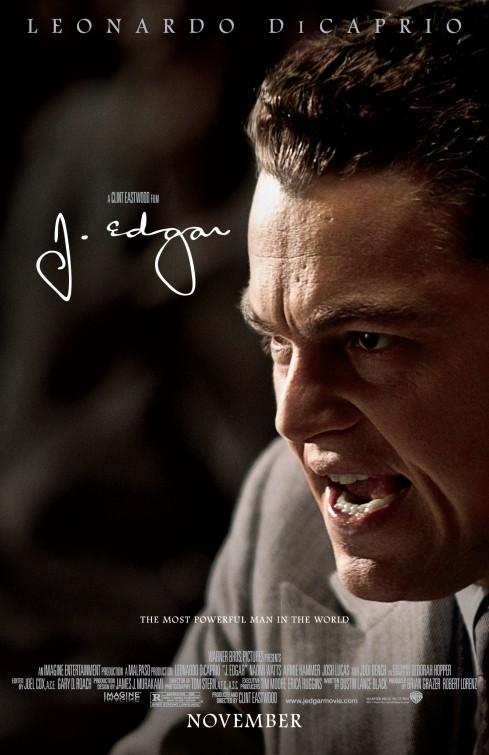 J. Edgar has all the qualities you’d want in a high profile, awards-friendly movie. It charts the life of legendary FBI head J. Edgar Hoover, it stars Leonardo DiCaprio in its title role, and it has Oscar-winner attached as screenwriter (Dustin Lance Black) and director (Clint Eastwood). The only way this movie could be bigger awards bait was if Hoover personally challenged Adolf Hitler to a duel. At a running time of 137 minutes, J. Edgar misses out on explaining why this complex man was who he was, a difficult prospect but I would have at least appreciated some effort.
J. Edgar Hoover (DiCaprio) was, at his height, said to be the second most powerful man in the United States. The first director of the Federal Bureau of Investigations served under eight presidents and for over 50 years. The man rose to power fighting against radicals and Bolshevik terrorists in 1919. Hoover successfully arranged for America to deport foreigners with “suspected radical leanings.” He was appointed to head the, then, Bureau of Investigations, where Hoover remade the agency in the image he desired. His agents were going to be clean-cut, college-educated, physically fit, and God help you if you had facial hair. Hoover also fought to bring modern forensic science into investigations and trials, proposing a centralized catalogue of fingerprints, which at the time was dismissed by many as a “speculative science.” Hoover also amassed an extensive system of confidential files on thousands of American citizens he felt were potential threats or if he just didn’t like them. Hoover wasn’t afraid to bully presidents with this secret catalogue. On a personal level, Hoover was admittedly without any friends or interests outside the agency he felt responsible for. His life was defined by three close personal relationships: his mother (Judi Dench), whom Hoover lived with until the day she died; Helen Gandy (Naomi Watts), his loyal secretary and confidant of 40 years; and Clyde Tolson (The Social Network’s Armie Hammer), an FBI agent that Hoover shared a decades-long unrequited romance with. Upon Hoover’s death in 1972, Tolson was given Hoover’s burial flag, and Tolson’s own grave is a mere couple plots away from J. Edgar’s.
 The movie feels trapped in a closet alongside Hoover. The guy was rather enigmatic and hard to nail down, but I would have appreciated Eastwood and Black at least trying to figure the guy out. They treat the subject with such fragility, such sympathetic stateliness about his more salient personality points. It feels like Eastwood doesn’t want to get his hands too dirty, so the provocative material, like the gay stuff, is kept to very period appropriate acts of discretion. A handholding in the backseat of a car is practically scandalous given the treatment on the gay material. The oft rumored cross-dressing aspect is hinted at but explained, in context of the scene, as Hoover’s way of mourning the loss of his mother. With Hoover, there was only his public persona of a moral crusader, a face that he never removed even in his private moments. The guy could never embrace happiness, only duty. It feels like Eastwood couldn’t decide on what stance to take, and thus the film settles on a bloodless examination that won’t upset any of the, presumably, delicate sensibilities of the older audience members. A towering figure of moral certainty, extreme paranoia, righteous conviction, a vindictive streak against his mounting collection of enemies, and a shaky hold on the truth, all in the name of protection against America’s many real and imagined enemies – I feel like the blueprint has been established for the eventual Dick Cheney biopic. It’ll just be slightly less gay.
Let’s talk more about the gay factor. It feels like this area is where Eastwood definitely could have pushed much further, but the old school director seems to be of the opinion that a biopic need not pry nor speculate. Excuse me, but you’re telling me about a man’s life, the least you could do is dig deeper. A domineering mother, who said she’d rather have a dead son than one of those “daffodils,” and the moral restraints of the time, are easy enough to identify why Hoover was a repressed homosexual. That doesn’t separate him from probably a far majority of homosexual men in the first half of the twenty-first century. What makes Hoover, a repressed homosexual, tick? This is no Brokeback Mountain style whirlwind of untamable emotion. Eastwood keeps things chaste, choosing to view Hoover as a celibate man. Hoover and Clyde becomes inseparable “companions,” eating every dinner together, going away on trips, and enjoying the pleasure of one another’s company – the life of the lifelong “bachelor.” But that’s as far as the movie is willing to go (remember the scandalous handholding?). There are hints about how socially awkward Hoover can be, a guy who seems downright asexual at times. He proposed to Helen on a first date where his attempts to charm included showing off his card catalogue system at the Library of Congress (“I bet you show this to all the girls…”). You get the impression he’s not comfortable with this necessary area of human biology. That’s fine room to start, but J. Edgar doesn’t do anything but start its characterization ideas. It gives you ideas to toy with and then moves along. The relationship with Clyde hits a breaking point when Hoover discusses, during one of their weekend getaways, the prospect of finally choosing a “Mrs. Hoover.” Naturally Clyde does not react well to this development, and the two engage in a brawl that ends in a shared bloody kiss. This is about as passionate as Eastwood’s movie ever dares to get.
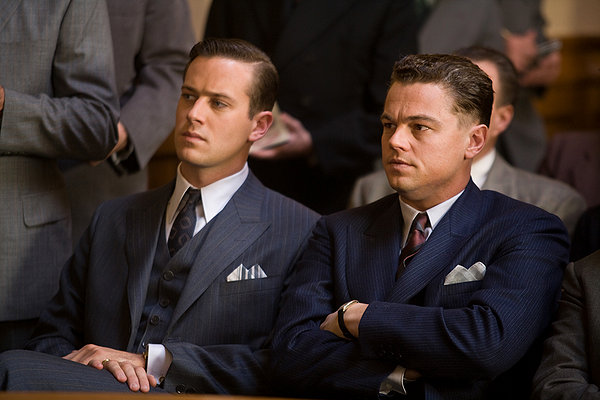 I expected more from the Oscar-winning writer of Milk. Black’s lumpy script can often be confusing, lacking a direct narrative through line. Some leaps in time can just be confusing, like when J. Edgar is asking his junior agent typist what figure was most important in the 20th century thus far. The agent answers, “Joe McCarthy,” and then we have a new agent sitting there, and Hoover asks again. Finally we have another agent who responds with Hoover’s desired answer, “Charles Lindbergh.” I suppose we’re left to assume that Hoover fired his typists until he found one who mirrored his own thoughts. There is also far too much time spent over the Lindbergh baby case. I understand it’s the so-called Crime of the Century and, as Black sets up, a situation for Hoover to prove his bureau’s value when it comes to modern criminal science. It just goes on for so long and rarely offers insight into Hoover. Sans Clyde, the majority of the supporting characters offer little insight as well. Hoover’s mother never goes beyond the domineering matrimonial figure. Helen seems like a cipher, rarely giving any explanation for her decades of loyalty despite clear objections to certain choices. She’s too often just a “secretary” there to move the plot along by introducing more characters of minimal impact. With Hoover being such an enigmatic and closeted figure, the supporting characters could have been the areas we found the most insight into the man. Nope.
The entire plot structure feels like a mistake. Hoover is dictating his memoirs so we primarily flash from the 1930s, when Hoover was making a name for himself, to the 1960s, when Hoover is fighting a secret war against, of all things, the Civil Rights movement and Martin Luther King Jr. (he was convinced King was tied to communists). The back-and-forth nature of the story can lead to some confusion over facts and timelines, but the concept of Hoover dictating his memoirs means that the movie becomes a greatest hits compilation, a showcase of Hoover’s finest hours in an attempt to win public support back. He can explain his obsessions and justify his overreaches. That’s why Hoover’s entire catalogue of secret files on thousands of American citizens, including presidents, is given such short shrift. Why would he want to discuss his own subversive tactics hunting subversive elements? The only time the screenplay discusses this secret catalogue is when Hoover and Clyde want to have a good laugh over Eleanor Roosevelt’s lesbian paramour (irony?). Richard Nixon covets these files, so Helen swears that upon the death of her boss that she will shred every page before Tricky Dick can get his hands on them (J. Edgar is rated R for “brief strong language,” and they are all provided by potty-mouthed Nixon). Black attempts something of an Atonement-styled ending with an unreliable narrator, but the effects are slight and only superficial and too late.
 At this point it’s probably going to be rare for DiCaprio (Inception, Revolutionary Road) to give a dud performance. The actor isn’t the first name you’d think of for a Hoover biography. Regardless, the guy does a great job especially with the emotional handicaps given to him by Black’s script and Eastwood’s direction. Given all the emotional reserve, it’s amazing that DiCaprio is able to make his character resonate as much as he can, finding small nuances to work with. Hoover’s clipped speaking style, likely the most readily recognizable feature of the man, is here but DiCaprio does not stoop to impression. He’s coated in what looks like 800 pounds of makeup to portray Hoover in the 1960s. The old age makeup looks good on DiCaprio, though the same cannot be said for his inner circle. Older Clyde looks like he is suffocating behind a gummy Halloween mask; the man looks like he is mummified in his own liver-spotted skin. Older Helen just looks like they powdered her face and added some gray to her hair.
The movie seems to take its emotional cues from its subject; far too much of J. Edgar is reserved, hands-off, and afraid to assert judgment on what was a highly judgmental man of history. What makes Hoover compelling is his array of contradictions. He’s defined by three personal relationships (mother, Clyde, Helen), all of whom he could never have. That’s got to mean something. Instead of exploring these contradictions in any meaningful psychological depth, Eastwood seems to take his hand off the wheel and the film just casually drifts along, steered by the self-aggrandizing of Hoover himself, given so much room to explain detestable behavior in the name of protecting America. J. Edgar is a handsomely mounted biopic with some strong acting, but from Eastwood’s impassive direction (his piano-trinkle score isn’t too good either) and Black’s lumpy script, the finished work feels too closed off and arid for such a controversial subject worthy of closer inspection.
Nate’s Grade: B-
Share this:

Hanna (2011)
 We all seem to love child prodigies. The concept of someone so small doing something well ahead of their years seems to fascinate our minds. I suppose the same holds true for professional killers. We all seem smitten with teenage depiction of super-powered killing machines. Last year presented Kick-Ass whose real star was the adolescent Hit Girl (Chloe Moretz-Grace), pint-sized reaper of carnage. Then there’s River from Serenity, Gogo from Kill Bill: Volume One, the ladies of Sucker Punch, the Heavenly Creatures girls (at least this one is based on a true story), and pretty much half the cast of Battle Royale. Just wait until The Hunger Games comes to screens in 2012, built upon the premise of 12-18-year-olds fighting to the death on national television (so the premise is almost exactly Battle Royale). We love our innocence mixed with ironic cynicism. Along comes Hanna, the tale of another teenage girl leaving a trail of bodies in her wake.
Hanna (Saoirse Ronan) is a sixteen-year-old girl living above the Arctic Circle with her father, Erik (Eric Bana). She’s been in survival mode all of her life, preparing for a day when she would finally break free and seek vengeance. CIA Agent Marissa Wiegler (Cate Blanchett) killed Hanna’s mother and has been lying in wait to finish the job, eliminating the rest of the family. Erik has taught his daughter well to think on her feet, master several languages, and become an excellent marksman/fighter. Hanna makes the choice to set their plan into motion. She triggers a device that signals to the CIA where they are. Marissa sends a crew to pick up Hanna and Erik, but only finding the girl. Once in an underground CIA compound, Hanna turns her focus on Marissa, killing her double (good call, lady), and breaking out of the compound. She finds that she’s been taken to Morocco. Fortunately, a family is traveling through the land and Hanna can catch a ride before she meets up with dear old dad in Berlin. Marissa sets out on a manhunt to find Erik. She hires a group of German criminals (led by Tom Hollander) to retrieve Hanna (“I need you to do things my agency will not let me do,” she reasons). Everyone is on a crash course to Berlin, where Hanna’s mysterious origin will be finally revealed.
 Director Joe Wright blew away all my expectations for him. The British director was mostly known for visually lavish period pieces like Pride and Prejudice and Atonement. This is a drastic change of pace and proof that the occasional art director can produce a great-looking, meditative action thriller that still delivers the goods. Wright’s camerawork is beautiful, making artful use of composition, lighting, and editing to deliberate purpose. There were several moments that I just got caught up in the look of the film, aided by the energetic if sadly too-often absent score by The Chemical Brothers (I love the chunky bass groove on “Container Park”). I was just impressed what could be produced under the guise of action cinema. This is an elevation of the genre. Wright’s color palette is awash in ominous reds, soft blues, and delicate yellows, which helps give the film this painterly approach to photography. Pay attention to the dream-like visual metaphors connected to fairy tales (Marissa seems to have a tooth cleaning fetish –“What big teeth you have…”). At the same time, Wright knows how to stage a terrific action sequence. His signature tracking shots allow the audience to become enveloped in the action, taking in the punches and kicks without the disorientation of the popular erratic editing style of modern action cinema. Bana taking down a bunch of goons in a subway level is made more thrilling because we see every second of activity, allowing the moment to build in tension as he is followed, then cornered, then strikes out.
17-year-old Ronan has left the awkward pubescence of The Lovely Bones far behind her. Like her Atonement director, she too steps far beyond our concept of what she is able to perform. Ronan is a five-foot-tall wrecking crew. She keeps her eyes intensely focused, tense blue orbs. At the same time that she convincingly kicks butt up and down the screen, Ronan successfully communicates the internal drama of her character. Hanna is an outsider trained her whole life for a single purpose. When she’s left in a Moroccan back room, Hanna is overwhelmed by the cacophony of noises by electronic appliances, at a loss to make the melange of sound cease. She’s a victim of her own upbringing and her father’s quest for vengeance. Ronan keeps her icy cool demeanor when she means business, but the Irish lass and her straw-blonde hair manage to find the girl inside the super girl. Bana (Star Trek) is suitably stoic and conflicted as the father, and all hail Blanchett (Robin Hood) as a good villain for once. With her Southern drawl, she presents an alluring sense of menace throughout without breaking down into over-the-top histrionics. Blanchett is so good as a slippery CIA agent that you wish she didn’t farm out her villainy to a group of German goons.
 What holds Hanna back from greatness is it uneven natures of its plot and the lack of sustainable action. The movie is just as much a strange coming-of-age saga for a girl who was raised in the woods. The lengthy travelogue with the British family from North Africa through Spain kills the film’s momentum routinely. Things will start picking up, the excitement builds, and then we cut back to the goofy caricature of a flighty liberal family (Olivia Williams and Jason Flemying as the parents). Despite the painful “do what you feel?” parenting cues, the family unit seems to have some level of functionality. These scenes are meant to contrast with Hanna’s own upbringing. It’s meant to show the life that Hanna has never been allowed to choose. But I got that rather quickly. Also, if you want to sell the “alternative path” contrast it would have more impact if this foil family were more appealing and less annoying. Even moment Hanna tags along as a stowaway with this family it disrupts the momentum. I understand that Hanna needed some narrative excuse to get from the rocky deserts of Northern Africa into central Europe, but when you’re dealing with a super kid, why rely on her just hitching a ride with a van full of hippies?
What really let me down was the lack of sustainable action that developed. While I’ve already credited Wright’s handling of the onscreen fisticuffs, I just wish there was more of it. The action occurs in spurts that fail to keep up. That tracking shot fight sequence is wonderful, but it’s too short. Hanna taking out men twice her size is undeniably enjoyable, but short of an excellent sequence of hide-and-pummel through a cargo ship yard, Hanna is never put in a position of risk. Sure she’s in danger but she’s never overmatched, which is part of the reason why the action sequences only happen in bursts. Her competition never seems to be truly threatening. Hollander (looking eerily, eerily like celebrity blogger Perez Hilton) in white bike shorts is not that intimidating. He’ll stand out, which might not be what a CIA agent wants when she hires goons to track and kill a super kid, but he’s never more threatening than Henchman #2 status, though he’s been irresponsibly promoted for the purposes of this movie. I realize that Wright and his screenwriters, Seth Lochhead and David Farr, wanted a character-based action thriller. Hanna is that film, but it could have been a more thriller vehicle if more attention was spent on the realities of their dramatic setup. The problem with making Hanna a super kid warrior is that she needs either BETTER competition or MORE competition. Pick one. But having a small number of inferior toughs seems like the worst outcome for people who want solid, sustainable action.
 The plot of Hanna is fairly conventional but the style and feel of the film are anything but. Wright has assembled a first-class art-thriller that would have been a work of true greatness if the plot could have gotten itself figured out. Splitting time between action set pieces and a family road trip is not an ideal use of running time. The action works fantastic, that is, when it does make its too-brief appearances. I’ve read several comparisons to Run Lola Run due to the stylized visuals, pace-setting electronica score, and likely general German setting, but I feel these comparisons are surface-level; Lola was a firecracker of style and energy rarely replicated in film (it’s my go-to film to show people who are self-described haters of foreign films). Hanna is no Lola, but Hanna is still a class ahead of her peers. Wright and company have produced a film that is moody, stylish, thrilling, and just a little bit ridiculous. As Hanna says to her prey, she just missed your heart. Whether that’s by design or accident, we’ll never know.
Nate’s Grade: B
Share this:

The Spy Next Door (2010)
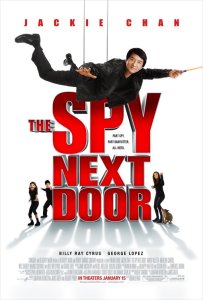 I have seen hundreds of movies go bad. I’ve seen plenty try and cram a ham-fisted saccharine, entirely phony message about family values or whatever hackneyed lesson needs to be delivered with the subtlety of a sledgehammer. Rarely have I seen a movie that tries to cram in EVERY banal family message possible into one exasperated running time. There was one point where I counted three clichéd platitudes in a row. Rarely have I seen a movie fail at comedy so badly, even the generous definition of comedy in family films, a subgenre that haunts all those who crossover into it. Rarely have I seen one single family film try to do so much and succeed so breathtakingly little. The Spy Next Door is that movie. Jackie Chan stars as a retired Chinese super spy who the American government wants to keep contracting. He’s also dating his neighbor (Amber Valetta) who has three rambunctious kids that fall into easy slots (surly teenager smarting from parent’s divorce, dweeby tech kid trying to learn to stand up to bullies, precocious little tyke who makes a mess). Chan agrees to watch over them for a weekend to convince those kids they should give him a shot, or else it’s splitsville between he and the mom. It’s the Vin Diesel Pacifier movie but done with even less finesse, if possible. The comedy is nonexistent, which is saying something for being as broad as it is, the physical action shows how badly Chan is aging, and the plot is painfully predictable. This is just a sad, uncomfortable viewing experience; it reeks of desperation and despondency. No one looks to be enjoying themselves for a single second. That’s probably because The Spy Next Door is a vacuum of fun; it’s lazy, incompetent, but worst of all, devoid of any effort to be something other than a mind-numbing, head-scratching waste of 90 minutes.
Nate’s Grade: D-
Share this:

Cats & Dogs 2: The Revenge of Kitty Galore (2010)
 Obviously this movie is bad. A sequel to a lukewarm family film from nine years ago, the chances were slim that Cats and Dogs 2: The Revenge of Kitty Galore would have ever worked. They don’t even have the temerity to have the subtitle read “Pussy Galore” for fear that repeating the most famous Bond girl name might cause parents discomfort. It’s a live-action talking-animal movie that posits that cats and dogs have been fighting an ages-old feud and they all have secret lairs and technology at their service despite lacking opposable thumbs. Really, premise alone you’re already lowering the standards, and with standards firmly and securely lowered, you may even laugh once or twice (that’s probably about it). It depends on how susceptible to puns you are because that is the primary joke vehicle. The film makes an attempt to throw animals into a Bond-styled action thriller with, pardon me, shaggy results. The character animation is poor, the dialogue feels like it was stitched from one groan-worthy pun after another, and yet Cats and Dogs 2 doesn’t offend with its sheer badness. Premise alone, you sort of watch the thing in a vegetative state.
Nate’s Grade: D+
Share this:

R.E.D. (2010)
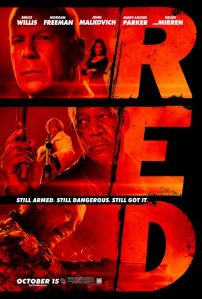 I can watch Helen Mirren fire high-powered weapons all day. RED is a jaunt throwaway that manages to be far more entertaining than it has any right to be. This isn’t excess on the level of The A-Team, nor is it all cynical and emotionless like Wanted. RED is the film that The Expendables could have been with a bit more polish and a little less muscle flexing. The premise almost seems worn out by this point in 2010: retired CIA agents are being hunted down and killed for some mysterious reason. Thus Bruce Willis must travel across the country and recruit his former spooks like Morgan Freeman, a daffy John Malkovich, and dame Mirren. He also gets a rather charming romance with Mary-Louise Parker (TV’s Weeds) as a pension customer service rep that Willis dials up for small talk. She gets whisked along this madcap adventure and enjoys it for the ride that it is. And I think that’s the best summation of the film. What other movie of this sort has actors of this caliber? Four Oscar winners, one nominee, plus solid work from Karl Urban (Star Trek) and beloved character actor Brian Cox to boot. The film definitely has a style, slick enough to please without being heavy-handed to rip you out of the film. The plot may be full of holes, the characters aren’t fully drawn, and certain action sequences are derivative, but thanks to the charms of its golden cast, RED is fun while it lasts.
Nate’s Grade: B
Share this:

Salt (2010)
 Congrats to the Columbia marketing team for what is by far the most imaginative advertising campaign ever. Weeks before Salt was going to open nationwide, the most bizarre story broke this summer. A dozen American citizens were revealed to be deep cover Russian agents. Apparently, their purpose, as given in the mid-to-late 1980s, was to infiltrate American society and get cozy with policy makers (and yet not one became a lobbyist). Instead they mostly raised families and lived in the suburbs of New Jersey. It’s unclear exactly what they accomplished. This hearkens back to a simpler age where we had clearly identifiable “enemies” that existed as nation states. Things are just too complicated in the post-9/11 age of the War on Terrorism. The dozen Russian spies were deported to Russian in an exchange for three American spies. I feel somewhat sad for these dozen Russian spies, especially Anna Chapman, the red-haired femme fatale that became the face of the scandal. These people grew up in the United States and for many that’s all that they know, and now they have to live in picturesque Russia. I wonder how long before they themselves defect back to the States.
Evelyn Salt (Angelina Jolie) is a CIA agent who?s just about to go home after a long night of CIA stuff. An old Russian agent has defected, and Salt is the best interrogator they have to separate the real from the nutso. As she?s about to leave, the Russian talks about a plot to assassinate the Russian president, and the killer will be a Russian spy posing as an American, Evelyn Salt. Her superior (Liev Schreiber) wants to clear things up with nervous government officials, but Salt bails. She’s concerned that her German national husband (August Diehl from Inglorious Basterds) has been abducted. She races to find her husband, outrun U.S. agencies on her trail, and maybe assassinate the Russian president as foretold.
 Believability is a fluid reality. When it comes to action thrillers, if they’re hitting the right numbers hen you give them a bit of a pass. What might normally kill a mortal can merely incur a flesh wound. Salt is packed with thriller absurdities, especially toward the end, but I posit that this movie is no less believable than most of what we see in the Bourne trilogy. The trick with Salt is that the pacing doesn’t ever let up; as soon as she?s slotted as a potential Ruskie spy, she goes on the run and the movie doesn’t slow down. It hops from action sequence to chase sequence to real-life Frogger sequence on a busy highway, all the while Evelyn performs miraculous feats of derring-do, impervious to normal rigors that would severely injure the rest of humanity. But you see, she’s a trained spy, and therefore can handle it all with aplomb. She can create her own missile thanks to an office desk and a fire extinguisher and some ordinary household chemicals (don’t try this at home, kids). In the opening seconds of the movie, Evelyn is being harshly tortured and interrogated in a North Korean prison (in her bra and panties for extra exploitation value). If she can survive that, surely this Superwoman Spy could survive escaping a batch of really lousy guards and National Security agents who seem bewildered by such art of deception like the masterful Putting on a Hat, or the more dangerous Dying One’s Hair a Darker Color (that can stain, you know).
Let?s briefly talk about the entire premise of Salt. Before this summer, naturally, this Cold War holdover plot device would seem ludicrous. Such deep cover Manchurian Candidate-like operations that take decades upon decades of time seem like a crapshoot. As proven by this summer’s most bizarre story, people who go deep under cover for extended periods of time are rarely able to snake their way into the corridors of power. It’s not like these people are planted to marry ambassadors or up-and-coming politicians. It’s essentially like a horse race, except you have to bet on which pony 25 years down the line will be the winner or spawn the winner. The odds of success seem remote at best and a waste of resources. This Cold War program also stipulates that these sleeper agents would still hold allegiance to Mother Russia nearly 20 years after the dissolution of the U.S.S.R. It’s this same mistaken idea of delayed national allegiance that surfaces when Chinese politicians try and justify how they will solve the guy/girl population disparity in their country. The Chinese politicians feel that the men of their country will come to America and find all those Chinese orphans that were adopted by American parents. Somehow these former Chinese orphans who have grown up in a different culture, in a different family, and with different gender rights and freedoms, will suddenly say, “Of course I will go back to the country that gave me up as valueless!” It’s this same basis at work for the Russian sleeper agent plan. But yet these super sleeper agents have miraculously found their ways in high positions of power. Maybe that’s the secret to educational reform. Students are more likely to be self-starters when they’re determined to bring down the infrastructure of another country.
What saves Salt is that the action sequences are good. Director Phillip Noyce has extensive experience in Hollywood and working with large stars. Noyce directed the stellar Jack Ryan thrillers Patriot Games and Clear and Present Danger; he even has experience with Jolie, having helmed 1999?s boring Bone Collector. Noyce has a great presence of mind and knows how to fill the frame up to please the senses. He knows how to compose a nice action sequence and, here?s the shocker given modern action cinema, allows the audience to fully understand what is going on. The chases have genuine excitement and the escapes come across as organic instead of contrived, which is something of a compliment for a spy film. Evelyn Salt hopping from car to car across a highway is cut together into one smooth sequence to rattle the nerves. There are some spectacular car crash images in the film, particularly when Salt escapes from police custody by driving off an overpass. Noyce finds a way to make the screen both frenetic and oddly pretty, without being self-conscious about its popcorn purposes.
 Jolie has proven herself to be more than capable when it comes to handling action. She doesn’t look as spookily thin as she did in 2008’s Wanted, which is good when you want to believe that she can be a world-class brawler. She’s tough as nails and plenty easy on the eyes. The role doesn’t require much of Jolie’s exceptional sex appeal. In fact, she’s rather maternal and her driving motivation is to rescue her husband. There are all sorts of needless flashbacks to her wedding day, little snippets to remind you that she loves her husband, in case you forgot. Jolie’s character is a bit of an enigma by design. Obviously given the star power and the fact that it?s a summer movie, you expect Jolie and her character to be in the right by the time the end credits roll. And yet the movie and screenwriter Kurt Wimmer (Thomas Crown Affair, Equilibrium) spends about half of its running time letting you fully believe that Evelyn is a turncoat (though if she was originally Russian, would she be a turncoat?). The most interesting aspect for me regarding Salt’s character was when we flashed back to the 11-year-old version (Cassidy Hinkle) of her after a car accident. Her head is bandaged, and because the girl is the younger version of Jolie, her lips look like those wax novelty lips to match Jolie’s signature pillowy pout.
Salt is a rather nuts-and-bolts thriller that balances absurdities with efficient action. With pacing so swift, you don?t have time to start nit-picking the small things, and the big things you just swallow as part of the overall package. Salt needs you to be caught up in the moment, in the chase, and not second-guessing all the plot fallacies. The film pretty much follows Jolie’s lead and is straight-faced nerve. It provides the thrills you’d want in a summer popcorn blockbuster without getting too serious. As a spy thriller it goes down like a shamelessly entertaining beach read. After all, what are the odds that your friends and neighbors of twenty years could actually be decades-in-the-making Russian sleeper agents? Well, do they look like Anna Chapman?
Nate’s Grade: B
Share this:

Knight & Day (2010)
 Imagine a James Bond movie from the point of view of the Bond girl. That’s the premise for the curiously titled Knight and Day, a mostly breezy action movie that really resembles a romantic comedy with guns. It works thanks to the chemistry between Cameron Diaz (Bond girl) and Tom Cruise (super agent). She’s engulfed in a sketchy international spy caper that is replete with typical stock characters (sleazy agents, kooky scientists, angry authority figures). The movie, under the direction of James Mangold (3:10 to Yuma), tried too hard to be lighthearted and can veer from confidant to indifferent. The film is told from Diaz’s point of view, which means there are chunks of the movie where the action occurs off screen, which will naturally disappoint people. There’s one montage where Diaz has been drugged and she keeps going in and out, waking up to a different dangerous situation. It’s meant to be satiric but it might also frustrate. The action sequences, on whole, are well paced and make use of their exotic locales. Knight and Day doesn’t fully work due to its leaps in tone from satire to sincere romance, the on/off switch for the law of physics, and introducing a secondary antagonist far too late in the film. Cruise lays out a full-on charm offensive. You’re reminded that this man is a movie star, and Cruise has fun tweaking that image as well as the public perception over his mental state. His character may be crazy after all, but Cruise is having serious fun and you might too watching the man with the million-dollar smile.
Nate’s Grade: B


 nathanzoebl
You must be logged in to post a comment.