Blog Archives
Year One (2009)
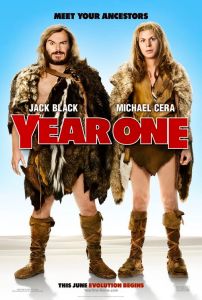 This is a slapdash comedy that?s too toothless to be satire and too dumb to be witty. Jack Black and Michael Cera play a pair of banished cavemen who stroll through various episodes from the Old Testament, like Cain and Abel and a circumcision-crazed Abraham, before settling in for a wild time at Sodom. This uninspired riff on the Bible rarely lands any laughs. The comedic aim of the film is extremely low; the scatological humor consists of farting peasants, bestiality, eating poop, urinating on your face, genital mutilation, and lots and lots of pedophilic jokes thanks to a grotesque, lispy Oliver Platt. Year One (of what exactly?) is a big step back for co-writer/director Harold Ramis and a general waste of everyone’s time and talent. Black and Cera do have an interesting and playful ying-yang chemistry but they have so little to do given the rambling, episodic nature of the plot. The characters make anachronistic pop culture references or talk in self-aware circles, the celebrity cameos do little, and the jokes lack any lasting momentum. Somewhere Ramis wants to make statements about religion and faith but the flick is too timid to do anything, so the movie limps to a finish with its lame “be your own chosen one” message. This is a prehistoric comedy with rocks in its head.
Nate’s Grade: C-
Share this:

The Ugly Truth (2009)
 Can’t a woman ever catch a break in romantic comedies? The genre occasionally just comes across as contemptible against women. On screen, female figures will fight against misogyny, but then how often do they usually just give in? How often do the female characters change to suit the male characters? Usually, the male romantic lead has some kind of boneheaded secret, but it’s really the women that do all the changing and the man is left off the hook. It’s somewhat appalling and amazing that the unappealing romantic comedy The Ugly Truth was written by three women and produced by Katherine Heigl. I guess they wanted to prove that women could be just as capable of self-sabotage.
Abby (Heigl) is a career-driven TV news producer who’s a bit unlucky when it comes to love. She has a steep checklist of qualifications for a prospective mate. She is aghast when her boss hires Mike (Gerard Butler), a rude public access host of the dating advice show “The Ugly Truth,” to shore up ratings. Mike is an uncivilized shock-jock who dispels pearls of wisdom like, “No man wants to date a fattie.” Abby and Mike bicker from an ideological divide. But when an attractive doctor (Eric Winter) movies in next door to Abby, she agrees to follow Mike’s dating advice. He coaches her on how to win over the doctor, and it generally seems to be working. Of course now Mike thinks he may have fallen in love with Abby as well. Oh what complications await.
 The humor of The Ugly Truth doesn’t even aspire to be sophomoric; it’s questionable whether the comedy even reaches juvenile levels. It’s tasteless and piggish, but the weird part is that it comes across as knowledgeable on the subject of sex as a ten-year-old kid who just discovered his dad’s secret stash of Playboys. It talks about the right stuff but does so in a clueless manner. It’s like an exaggerated randy cartoon that chiefly plays to a male fantasy. The movie feels that the height of comedy is when Abby wears a pair of vibrating panties to a business dinner, and oh no, some little kid is playing with the remote. So Abby is writhing and convulsing while trying to deliver a business speech. It’s the female orgasm turned into a cartoon. I won’t even get into the icky implications that Abby does not even get to control her orgasm, that she is held hostage by the whim of a child (a boy, no less). It just comes across as morally queasy if you think more about it, which may be why Heigl is practically rolling around on the table and chirping like a dolphin. Meg Ryan has nothing to worry about in the world of public displays of an O-face. At least in that movie, the joke was on the audience, and the man, and the woman was in a position of control. I even saw this routine already with a vibrating egg in the 2006 hard-core sex drama, Shortbus.
It doesn’t get much better. There’s a moment at the ballpark where Abby spills her drink onto her date’s lap, so she furiously tries to rub it out, which in crazy movie world means the man instantly attains pleasure. If that wasn’t enough, the movie then takes another step and displays this ordeal on the ballpark’s Jumbotron. And if even that isn’t enough, the movie takes yet another step to obscure what Abby is really doing, so all you see is her bobbing head by the crotch of her date. It’s not really funny because it’s so forceful to the point of being unpleasant. Abby is the butt of most jokes and after awhile it just seems cruel. The jokes recycle the same lousy observations about the differences between men and women. Men want sex. Women want relationships. Men are cretins. Women are crazy. Men like boobies. Blah, blah, blah. This time there’s just more bad language. There’s nothing truly adult here, either in wisdom or comedy. Just because you imply oral sex and throw out a few F-bombs doesn’t mean that your romantic comedy is any more sophisticated and relevant. The Ugly Truth just reeks of desperation.
 The central characters don’t even come across as believable for a romantic comedy. Abby is an intelligent professional woman who will stand up to rampant misogyny in the workplace. She resents Mike’s attitude that the only value women serve is to please men. So then it would only be natural that she follows Mike’s coaching to win the heart of the hunky doctor living next door. She clearly believes that she must become a sexed-up twit to win over a doctor. What? Excuse me, come again? The characters are at the mercy of whatever contrivances the plot requires. Predictably, this is yet another movie where two characters hate each other for two acts only to finally realize in the last act that, surprise, they’re really in love. Because we know the inevitable coupling, an audience likes to pick up on moments that might help explain how we got to our final romantic destination. Will the crude dude really have a mushy heart deep down? Will our icy businesswoman be able to let her hair down and enjoy the messiness of life? Have you ever seen a romantic comedy before and therefore know the answers to these questions? In The Ugly Truth, I could not explain why either of these people would fall in love with the other. I’m sure there are plenty of great backstories where people realized their true love in the basket of a hot air balloon. Seriously, the climax takes place in a hot air balloon and Abby asks, “Why do you love me?” to Mike. “Beats the shit out of me,” he replies. This is intended as a moment of romantic clarity. I view it as the screenwriters giving up, having failed to establish even a remotely credible relationship in a genre replete with easy choices.
I’m actually a fan of Heigl (27 Dresses) and think that she seems like a natural fit within the romantic comedy universe. She’s expressively comedic, has good timing, and she knows how to hit her jokes hard. She can wait until she’s older to do a family drama because right now there’s gold in them thar genre pictures (practice the finer points of singing into a hairbrush and dancing around a coffee table). But The Ugly Truth is a waste of her ability. Abby is a tightly wound control freak and Heigl plays her without an ounce of warmth. Butler (300) can still come across as likeable even if his character is cheerily boorish. He doesn’t hide his natural Scottish brogue too well, though. He’s got more comic firepower and he openly mocks himself, which makes him more appealing as a character. However, there isn’t much in the way of chemistry between Heigl and Butler, only combativeness. Their fighting is the only emotion that seems real.
 So what is the ugly truth of The Ugly Truth? I suppose if you’re a woman, you better not be successful, talented, smart, or slightly overweight. And your dating failures are completely your own fault. And you better be willing to put out or at least dress a little provocatively. And don’t expect your man to change any of his ways, simply lower your standards. That, ladies and gentlemen, is the concluding wisdom from our trio of female screenwriters. Heigl and Butler squander their talents in such a charmless battle of the sexes cartoon. There’s little in the way of wit or insight or even properly executed comedic payoffs. The Ugly Truth needs to be atoned for. It’s rarely funny and it’s insulting and unflattering to both sexes. It exists squarely in the world of exaggerated male fantasy, peculiar for a genre defined by female wish fulfillment. At my screening, there was a family who brought their adolescent kids with them. I could hear pre-teen giggling at the more slapstick-heavy jokes and heard lots of questions whenever something sexual was discussed. At one point, Heigl covers the eyes of a child and says, “This is not for kids,” and I guess that family finally got the message because they left shortly after. Except this movie isn’t intended for anybody. Everyone in the theater should have followed suit.
Nate’s Grade: D+
Share this:

The Love Guru (2008)
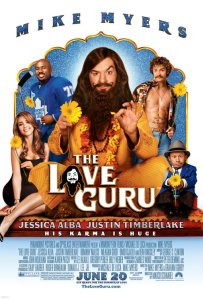 While never approaching the realm of good, I’ll admit that Mike Myers’ latest is not the cinematic abomination is has been hailed. I laughed a few times, though rare. Myers’ brand of comedy mixes puns, juvenile bathroom humor, slapstick, celebrity cameos (Ben Kingsley, why?!) and a certain level of self-aware absurdity (I don’t think Myers has found a penis joke that he didn’t enjoy). I feel that the comedy world has moved beyond Myers’ once popular brand of yuks. Thanks to Judd Apatow, we’ve transitioned to smart and tender character-based comedies. The threadbare plot relies takes too many self-indulgent and lazy detours. Why do we have to endure Guru Pitka (Myers) sing “More Than Words”? It’s not funny and just wastes time. Here’s an example of the lack of thought: Pitka wears a chastity belt but he can still get injured being hit in the groin. It’s a movie that doesn’t even remember its own gags. I’m always wary when a movie resorts to extended scenes of the characters cracking up and adding lines like, “I haven’t laughed this hard in a long time.” I have no qualms over crude comedy but it needs to be done with some planning to context and character. Watching someone get hit in the face with urine is not funny. Having pint-sized Verne Troyer get hit in the head is not funny the 80th time it happens. The movie never even satirizes the self-help industry. The Love Guru is too indulgent, too forced, too pun-heavy, too ill conceived, and far too stupid to succeed. I never thought I’d say this in a comedy that includes Myers, Stephen Colbert, Jim Gaffigan, John Oliver, Daniel Tosh, and Romany Malco, but Justin Timberlake is the funniest man on the screen as a daffy French-Canadian goalie, and that probably says enough.
Nate’s Grade: D+
Share this:

Zack and Miri Make a Porno (2008)
 It’s amazing how integrated pornography has become in our culture. Merely a few decades ago people had to wear disguises to venture out to a ratty theater to watch an adult movie alongside plenty of folks in raincoats helping to add to the sticky floors. Nowadays releasing a sex tape is considered a career boost. Porn stars have replaced supermodels as rock star arm candy, porn has become more socially acceptable, and a wealth of bizarre and explicit possibilities exist just a few keystrokes away. In the end, it’s all fantasy with bad acting.
And yet Kevin Smith’s newest comedy, Zack and Miri Make a Porno, got in trouble with advertisers because of people getting in a tizzy over the goofy word “porno.” Major League Baseball was told that a father was uncomfortably asked by his son what a “porno” was after seeing a commercial during a ball game. Heaven forbid our nation’s parents have to deal with an uncomfortable subject, so baseball banned any ads for the movie. Many newspapers nationwide have refused to list the full title. The original poster was deemed too inappropriate so Smith and crew devised a poster of stick figures. Poster version 2.0 then came under fire for being attractive to children because of the stick figure art. It seems Zack and Miri is getting it at both ends (no pun intended).
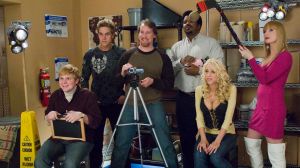
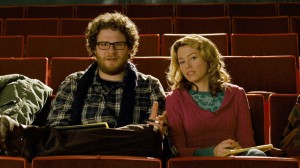 Times are tough for lifelong friends Zack (Seth Rogen) and Miri (Elizabeth Banks). They’re scrambling to pay their bills and keep the electricity in their apartment during a chilly winter in Pennsylvania. Inspired by a conversation with a chatty gay porn star (Justin Long) at their tenth year high school reunion, Zack believes amateur porn can solve their money woes. The two will make their own porn video and sell it to the alumni list from their graduating class, who, Zack rationalizes, would buy a porn if they knew someone involved. Zack convinces his coffee shop co-worker Delaney (Craig Robinson) to help fund the project. Delaney agrees as long as he can have a say in casting; after many years of marriage he is eager to see something new. The team also recruits a squeaky-voiced stripper (current porn starlet Katie Morgan), an old bachelor party performer (former porn starlet Traci Lords), a cameraman (Jeff Anderson), and a man free from any inhibition (Jason Mewes). But Zack and Miri must confront their unspoken feelings for one another as they approach their own sex scene. Can they go from platonic friends to lovers?
Being a Smith film, naturally Zack and Miri is outrageous and often hysterical. The film manages to become witty and dirty at the same time, often stringing together vulgarities in exciting and imaginative ways (the curious “Dutch Rudder” as a means of escaping being deemed gay). Smith has a love of the profane. The movie is vulgar like most Smith movies but the beauty of its filth is in the sparkling, rapid-fire dialogue that adds eloquence to the scatological. This is Smith’s comedic brand, the verbose dirty joke. As in other Smith comedies, the true humor is not found in set pieces and set-ups but in the everyday camaraderie of the cast and through casual conversations. Smith writes characters that you just want to listen to for hours. Zack and Miri does have some funny moments that are specific to the production of randy moviemaking, like an unforgettable de-clogging that “frosts” a cameraman. The joke is swift. However, akin to the Judd Apatow brand of comedy, this is a movie where the charm is watching the characters interact, regardless of setting. I do think the movie unfortunately missed plenty of other potential gags on the silly minutia of homemade pornography. How about the crazy duties for a sound design? Imagine a guy trying to recreate the many weird bodily sounds during sex. I’m mildly shocked that Smith didn’t even touch the vagaries of pubic hair style.
 What the movie does nicely is dwell upon the distinction between love and sex. Now I’m not conveniently forgetting the thousands of movies that have come before and dealt with the topic of intimacy and carnality, but Zack and Miri goes into the nuts and bolts (no pun intended) of an industry that has turned intimacy into a mass-market business model. Zack and Miri stress out about their Big Scene and try to convince themselves that it won’t mean anything, but of course their body language betrays them. The actual deed is an obvious turning point for the twosome and count this as one sex scene that is actually, well, emotionally climactic and, yes, sexy. Though the camera only stays at shoulder-length and alternates between two angles, the actors convincingly convey an array of genuine feelings, notably love. It’s not easy for an actor to display honest-to-goodness love, but Banks and Rogen achieve this feat. The aftermath of their onscreen coupling extends into a seemingly unnecessary third act that divides them apart in a contrived fashion. Seriously, the typical third act misunderstanding in standard romantic comedy fluff is alive and well in a Smith vehicle. The characters do not react to this misunderstanding in a realistic manner; one character would rather be sequestered than easily prove their innocence.
While Zack and Miri has plenty of laughs and a nice, mushy center, I cannot help but feel mixed about the results. The characters are not nearly as sharply drawn as they have been in other Apatow comedies, even other Kevin Smith movies. I can go back and remember the multiple dimensions of the funny people that populated Superbad, Sarah Marshall, 40-Year Old Virgin and others, but Kevin Smith’s latest comedy suffers in comparison. Zack and Miri are the only characters with moderate sums of characterization, and yet their unspoken love is essentially the bulk of that. Neither character is well defined or explored in a substantial way that doesn’t involve the other. I get that the movie is a romance. But I expect more from characters than to be defined by whom they desire. I just wanted more. Yes Zack is a slacker who says he’s just looking for a good time, though we know he has his sights set on more, and yes Miri is a gorgeous gal with a lot of patience, but these characters are staples of Kevin Smith movies. The assorted side characters have fun moments but are mostly insignificant. There’s the stripper with a heart of gold, the been-around-the-block type, the henpecked husband, the secret freak behind the button-down exterior, the loudmouth, and the sex-crazed dude. Zack and Miri establishes the idea of filmmaking as a community by introducing this lot, but the movie then forgets to incorporate the supporting characters in meaningful ways. They’re mostly used for jokes that fail to extend beyond the immediate. A late scene involving Delaney’s angry wife (Tisha Campbell-Martin) relies on too many grating “white boy” japes that I tuned out. I’m not intending to slam Smith’s film, but the lack of character work hampers the audience investment in the central romance.
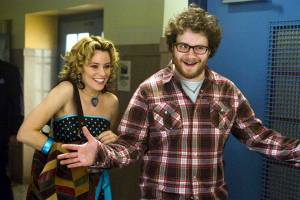 What is lacking on paper is nearly compensated by the great performances from Rogen and Banks. Both are on loan from the Apatow comedy company, and both are skilled at being raunchy one second and heartfelt the next. Rogen finds his comic groove easily and is an enjoyable schmo that taps hidden ambition in the most unlikely of scenarios. It really is Banks who comes across as the star of the flick. She can talk trash with the boys but she is radiant during the film’s dramatic moments, selling Miri’s emotional highs and lows with crinkling smiles and fluttering eyelashes. Banks has always been a solid actress underutilized by most of her marginal film roles. With Zack and Miri, Banks showcases a devilish comedic gleam. Of course yet again the audience must believe that a beautiful gal with a beaming smile would be down on her luck finding a good guy.
In the end (no pun intended), Zack and Miri Make a Porno is a crude romantic comedy that might have benefited by more attention spent on the romance or the comedy. The tone never breaks as sharply as with Chasing Amy, arguably still Smith’s finest accomplishment, but the dirty humor and the gooey romance have a hard time expanding because of the presence of each other. Too often the ribald humor doesn’t feel fully realized because the dirty jokes are just window dressing for the romance, and I had trouble fully engaging with the romance because the characters haven’t been rendered to have substantial depth. Smith may have been better served by making his movie longer; the film is barely an hour and 40 minutes long. Zack and Miri Make a Porno is a sweet movie with a dirty mind but it does not measure up to recent comedies like the best of Apatow’s brand. Smith is a talented wordsmith who certainly knows how to make an entertaining comedy, and Zack and Miri certainly entertains, but like pornography, it just made me want something more fleshed-out and real (no pun intended).
Nate’s Grade: B-
Share this:

Waiting… (2005)
 I have always respected restaurant workers; it’s just how I’ve been brought up. Short of elephant in vitro fertilization, being a waiter has got to be one of the hardest, most thankless jobs on the planet. The waiter (or server, the popularized non-gender specific term) is always the last responsible for food and the first to bear the brunt of a customer’s wrath. They’re easy targets. Their livelihood is also dependent on the idea of common decency in mankind. For these tortured, put upon, overlooked lot comes a new comedy aimed to ease the pain. Waiting… is a balls-out (pun very much intended) gross-out comedy that will make you a better, more sympathetic tipper (I generally start at 20 percent).
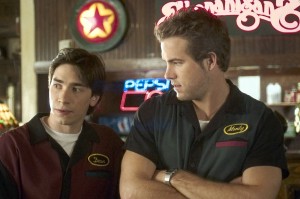
Welcome to the wonderful, family-friendly world of Shenaniganz. It’s another day of business for the restaurant staff and another day of enduring the slings and arrows of unruly customers. Monty (Ryan Reynolds), the leader of the pack, escorts a newbie (Freaks and Geeks‘ John Francis Daley) through the rules and customs of the Shenaniganz family. The cooks (Dane Cook, Luis Guzman) like to get randy at work, the bus boys (Max Kasch, MTV’s Andy Milonakis) like to hide in freezers and toke up, and the wait staff (Anna Faris, Justin Long) are all dating each other. Meanwhile, Dean (Long) is mulling over whether to take the manager’s job offered to him by his buffoonish boss (David Koechner). He feels his life is going nowhere and he’s stuck in a dead-end job. And there’s a store-wide game where workers try and get other people to inadvertently look at their genitals. God I hope this doesn’t go on when I order my food.
 Bishop (Chi McBride) tells two other characters, “You guys are so one-dimensional.” It’s like the movie’s doing my job for me. Waiting… is stocked with underdeveloped characters that don’t even seem used properly. They all have one characteristic of note, from the white wannabe rappers to the bitchy self-loathing server that’s been there longer than anyone else. There’s a lesbian bartender and by the end of the movie that’s still the only thing you know or feel about her. Dean’s girlfriend (Kaitlin Doubleday) has nothing to add to her character, nothing to really say, no personality, she’s just “the girlfriend.” Waiting… has so many lame, poorly developed characters that go nowhere and shed little purpose or personality. It’s a general waste of talent, especially Faris and Guzman.
Reynolds is a charming and gifted comedic actor. He’s got the rat-a-tat-tat delivery down cold and adds a great polish to dialogue that ordinarily wouldn’t seem funny. He can seem at once jerky, knowing, charming, distasteful, and funny. Consider Reynolds a Vince Vaughn Jr. in the making. Long is supposed to play a character dissatisfied with his bearings in life, yet he comes across as disinterested in being in the movie. You almost expect him to shrug his shoulders and just say, “Whatever.” Long too is a very capable comedic actor but he needs far broader roles (Dodgeball) than something where he has to shuffle his feet and mope a lot. As stated earlier, Waiting… really wastes most of its talent by stranding them in thankless roles that don’t give them much to do or add. Koechner is the bright spot as a clueless, leering buffoon of a manager who keeps trying to connect with “the kids” and score with some as well.
 The story feels the same way. For a 90 minute movie so much of this feels unbearably plodding. Waiting… sets up the life of a restaurant well but then can’t find much to do. The story feels formless and the characters can?t provide any direction because of their limitations. The plot seems like a group of anecdotes looking for structure. Even the comedy is rather uninspired and bland. Waiting… attempts gross-out guffaws but just ends up becoming, well, kind of gross. Dropping food and serving it doesn’t exactly register on the Ha-Ha meter no matter how many times the act is repeated. The gross-out apex comes when vengeance is heaped upon a very hostile customer with an assembly line of new “additions” to her order. In this one instance the gross-out is transcended because the audience cares about the situation. Most of the humor is juvenile and not even good at it; the penis-showing-game is inherently homophobic and a running gag with little payoff. The best joke in Waiting… is the film’s production design; Shenaniganz looks nearly identical to those homogenized chain restaurants dotting the landscape. If you stay throughout the entire end credits you’ll discover that all the crap on the walls is actually an elaborate, Rube Goldberg-esque device.
Waiting… is a very knowledgeable film about the food service industry, what with writer/director Rob McKittrick spending years and years in restaurants. I think the only way you could seriously enjoy this comedy, while sober, is if you have experience working in food service. My fiancée has spent years as a server and she identified more with the characters than I ever could. There are scenes in Waiting… that are a server’s fantasy, like when Dean returns his measly one-dollar tip back to his customer. The movie is a safe release for people in the field, much like Office Space. McKittrick even thanks Kevin Smith in the closing credits, but Waiting… doesn’t have an iota of the wit, intelligence, and comedic savvy of Clerks. This is a bargain basement comedy that will largely appeal to fellow restaurant slaves yearning to have their beaten voice heard.
Waiting… is an aimless comedy with no characters to feel for, little personality beyond its knowledge of the restaurant environment, and a cast done in by one-note roles and bland gross-out jokes. Reynolds walks away with his dignity and adds a comedic polish to some otherwise ordinary jokes. Mostly, the film feels like a waste of time, energy, and talent. Waiting… will definitely appeal to people who have felt the wrath of working in food service, but objectively this is one comedy that just doesn’t order up any laughs.
Nate’s Grade: C
Share this:

The 40-Year-Old Virgin (2005)
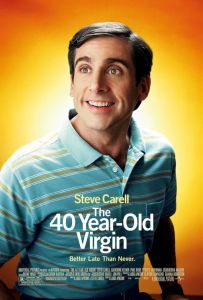 Yes it’s an uproarious sex farce, that’s a given from the ads, but this movie is also surprisingly sweet and genuinely moving. A lot of credit goes to star/co-writer Steve Carell and co-writer/director Judd Apatow, creator of some of the best, most honestly funny TV series unjustly cancelled. Apatow is a master at mining human comedy for pathos, where you get a great sense of character and really feel for those onscreen, and yet nothing feels cheap or unwarranted, all the while deriving comedy from the situations. We need more men like Apatow in the film industry. Carell can do it all whether it’s deflecting his insecurity, which we feel so bad when he comes up with outrageous things he’s overheard to make himself seem like one of the guys. The supporting cast is top-notch. They’re basically the stock roles in a sex comedy and yet they bring so much more to the table, with a true-to-life boys-will-be-boys camaraderie that you can identify with. The character relationships in The 40-Year-Old Virgin really elevate the story and the jokes and make the film something really special. It’s not merely a barrage of gross-out humor; it’s a nice story with some very tender moments. This is a movie that goes well beyond its gimmick premise, never feeling like a skit blown up into a feature film. It mixes in psychology, heartbreak, awkwardness, but also insights into loneliness and human connection. The best character-based comedy in years.
Nate’s Grade: A
Share this:

The Aristocrats (2005)
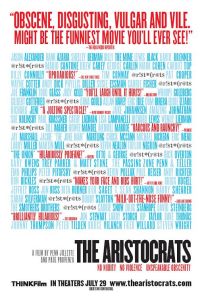 A man walks into a talent agency. He tells the agent he’s got a family act the likes of which no one has ever seen before. The agent tells the man to continue. The man’s wife, children, and pet come into the room and proceed to do the most vile, puerile, horrendously vulgar acts to themselves and each other. The agent is shocked. After a long moment of silence, the agent says, “What do you call this act?” The man replies, “The Aristocrats!” Ba-dum-dum.
It’s really not a good joke, but what makes it special is that the middle is entirely open for the comic to say whatever they want. Comedians will build and build in their obscenity so that the weak punchline is practically an afterthought. It’s a joke that goes all the way back to the days of vaudeville. Comics tell it to each other after shows like a secret handshake. The Aristocrats, an unrated documentary, gathers 100 comedians and lets them put their own crass spin on a classic dirty joke.
 The movie boasts plenty of well-known names getting down and dirty, like Robin Williams, Chris Rock, Whoopi Goldberg, George Carlin, the South Park creators, Jason Alexander, Eric Idle, Richard Lewis, Andy Dick, Fred Willard, Howie Mandel, Eddie Izzard, and Drew Carey (he insists the punchline should be accompanied by finger-snaps). Few comedians give a full rendition of the joke but the clips are just as potent. Judy Gold involves her unborn baby in the act and Carrie Fisher says her mother likes to sing in a very different kind of shower, but the filthiest mind of all belongs to Bob Saget, who can’t make it through without breaking up and saying, “What am I doing?” The Aristocrats also includes comics from different eras, including Larry Storch, the Smothers Brothers (one of which has never heard the joke before), and even Phyllis Diller, who pretty much just cackles at others. Dana Gould manages to pull together a very funny clean rendition involving the Amish version of the joke. The film opens on Carlin, closes on Gilbert Gottfried, and oh what a journey the film takes.
The Aristocrats is very very funny but also a rather incisive look at the nature of comedy. In between dishing the dirt, various comedians rhapsodize about the mechanics of comedy, the freedom in conquering taboos, and the intricacies of delivery (Paul Reiser stresses that any poo-related parts should be saved for the big finish). Penn Jilette says, “It’s the singer, not the song.” The Aristocrats displays comedy like it was jazz, each individual playing the same note a different way.
Things get a tad repetitious after awhile and the vulgarity starts to lose its impact once you’ve listened to countless unspeakable acts, mostly involving family members, the animal kingdom, and the loosening of bowels. As an example, my friend from college, Jason Davis, attended Mardi Gras in New Orleans one year, and as any viewer of late night TV will attest, the girls have gone wild. The ladies, it seems, will freely show you their bosoms in exchange for cheap plastic beads, and some don’t even want anything in return. Jason said the experience was amazing, at first, but after hours of non-stop frontal nudity, it all got a little tiring after awhile. The rampant nudity lost its effect and Jason started paying more attention to the women who actually kept their clothes on. So too is it with The Aristocrats, in a manner of speaking.
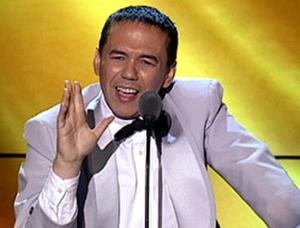 The film’s unabashed vulgarity will spur guffaws and titters, especially in an “Oh-my-God-did-he/she-just-say-that?” way. But after so many tellings, things that were funny because they were taboo don’t seem as funny in repetition. It’s at this point that an audience can really appreciate comics that take unconventional routes toward telling the joke. Eric Meade does a card trick, Kevin Pollack does the joke as Christopher Walken, Mario Cantone performs the joke as Liza Minnelli, Sarah Silverman actually puts herself in the joke’s family (for my money, she gives the best performance), Penn and Teller do a magic trick with a soda bottle, there are jugglers, a ventriloquist, and even a mime. The Aristocrats still has its straightforward dirty pleasures, but it’s much more satisfying when certain comics work outside the box.
It should be obvious at this point but The Aristocrats is not going to be a movie for most people. The incredibly course language and graphic accounts of lewd acts will not sit well with most of the American public. This is a movie strictly for people that have a strong stomach and like hearing a dirty joke. For that group, The Aristocrats will knock you silly with laughter. My three friends whom I saw the film with said they were in pain from laughing so hard. Perhaps that speaks volumes about the company I keep.
The Aristocrats is a bawdy, filthy, hilarious documentary that becomes more than a bunch of funnymen retelling a dirty joke. This is a film for a very select audience, to say the least, and it does lag at parts when the continual vulgarity loses its impact. The Aristocrats also seems to be erratically edited; scenes will rapidly jump from different angles for little reason. Every comedian has their own style and every audience member will find something different to strike their funny bone. At the very end, The Aristocrats invites viewers to submit their own form of the joke for the eventual DVD. I don’t know about you but I’ve already got a goldmine of ideas.
Nate’s Grade: B
Share this:

Wedding Crashers (2005)
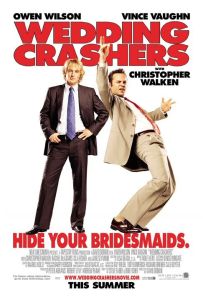 My friend Amanda Evans is quite possibly the biggest Vince Vaughn fan in the United States, nay, the planet Earth. She used to watch Dodgeball every day. Her brother-in-law even went so far as to stage an intervention for her Vaughn addiction. She has been talking about Wedding Crashers for months and months and counting down the days like a kid waiting for Christmas. It’s safe to say that Amanda loved the movie but how would your otherwise non-obsessed moviegoer feel?
Jeremy (Vaughn) and John (Owen Wilson) are divorce attorneys by day and ladies men come nightfall. Both men crash weddings they were not invited to with the strict purpose of getting laid by horny bridesmaids. They have got their honey hunting down to a science, from what relative they’re related to, to when to cry, to whom to slow dance with to convince those bridesmaids that they’re sweet gentlemen. Jeremy says that one day when they?re old men they’ll both look back on these days and smile. John retorts, “We’re not that young.”
The Super Bowl of all weddings is the daughter of the Secretary of the Treasury (Christopher Walken). John has his eye on his other daughter Claire (Rachel McAdams) while Jeremy sets his sights on the Secretary’s other daughter, the wild and vivacious Gloria (Isla Fisher). The only problem for John is that he’s actually falling in love with Claire, oh and she’s engaged to a real jackass (Alias‘ Bradley Cooper). Jeremy and John are such big hits at the wedding that the Secretary invites them both to vacation with his family at their summer home. Jeremy is hesitant and wants to stick to the love-em-and-leave-em lifestyle he and his buddy are so accustomed to, but John drags him along convinced he can win Claire over.
 Vaughn kills in every single scene. He hits punchline after punchline like some king of comedic prizefighter. His mile-a-minute delivery gels ever so nicely with Wilson’s homesy charm and drawl. These two have never been matched before as leading men but now their marriage seems like a match made in heaven. Their chemistry is off the chart. Wilson is essentially the straight man to Vaughn. In most comedies, “straight man” is just another term for boring. However, Wilson gets his shots in as well especially with his give and take with Vaughn, who is in a comedic zone all his own.
Not to be out done by the men, both McAdams and Fisher give great performances. McAdams (Mean Girls) is a rising star and it’s easy to see why. She’s a beautiful woman but also has some good teeth for comedy. In comedy terms, she’s the romantic interest, which means she’s an even straighter (read: boring) man than Wilson’s straight man. And handed with all this, McAdams still shines as a leading lady you can fall in love with. The true scene-stealer of Wedding Crashers is Fisher (Scooby-Doo), who goes hilariously tit-for-tat with Vaughn. You might walk away believing she’s truly out of her mind. Fisher has a physical gift for comedy that hasn’t been showcased before, but with Wedding Crashers she gets unleashed and we?re the better for it.
After the brilliant work of McAdams and Fisher, most of the supporting cast’s performances comes off as being too forced. Cooper is a wide-eyed grinning jackass that?s obvious from the get-go. He plays the role so big that his eyebrows seem permanently pressed to the top of his head. There’s also the weird introverted son who Typical Crazy Grandma berates as being “a homo.” But not only is he gay hes also a freak. The role seems quizzically garish and even a bit homophobic. Jane Seymore jumps at her role as mom in heat, but the film forgets about her fast after an awkward encounter with Wilson. Walken can make me laugh just by watching him stare (and he did), but even he isn’t given much more to work with besides the supportive dad role. It seems odd for a comedy with such huge belly laughs to have several supporting players grind the film’s funny down. All of this is excusable though because the far majority of the film’s attention and laughs are derived from our central quartet.
Wedding Crashers is a raunchy delight. You know you’re in good hands when, in one scene, Wilson and Vaughn are dipping bridesmaids on the dance floor and it cuts to these same bridesmaids now falling topless onto hotel beds. This is one R-rated comedy that proudly wears its rating on its sleeve. And for a sex comedy, there’s a surprising amount of laughs mined just out of an adult discussion on sex, which cannot be curtailed or couched with euphemisms and soft language. I don’t know whether to credit the screenwriters or the off-the-cuff improving of Wilson and Vaughn, but Wedding Crashers proves there’s still more under the sun to talk about and giggle.
Usually with movies revolving around hedonistic characters, they meet one of two ends: 1) they find that One True Girl that makes them want to go straight, or 2) they meet their hedonistic match and rethink their ways now that the shoe is on the other foot. Wedding Crashers doesn’t give you one of these options, oh no, it gives you both. Sure things gets awfully predictable after a great rush out of the gate, but the interplay between Wilson and Vaughn and some genuinely funny gags should keep most laughing until the surprise cameo at the end by the founder/guru of the wedding crashing rule book (it should be no surprise if you’ve seen any movie with Wilson and Vaughn the last three years). The climax is a bit drawn out and Wedding Crashers is still another comedy built around deception whose climax involves apologizing for said deception. It’d be tiresome if the movie weren’t so damn funny.

Despite the sleazy premise, Wedding Crashers has a sweet and gooey center. These are two men who know exactly what women want and they’re eager to give it to them. They just don’t know what they really want, but when they find it both Jeremy and John set their minds to romantic conquests outside of the bedroom. It’s this gooey center that makes the characters likeable despite any misgivings an audience may hold over their wedding crashing plot.
Two hours is a near eternity for most comedies and Wedding Crashers seems to lose its sprint in the last 20-30 minutes. The film starts getting repetitious and overly predictable with few laughs to cover up. Wilson and Vaughn still make it work but the setup seems to have been taken as far as it will go and then some.
Wedding Crashers is a loud, jovial, ribs-in-the-elbows funny return to the crass classics of the 1970s R-rated comedy. Vaughn and Wilson are perfectly matched and McAdams and Fisher shine like stars. Wedding Crashers is a bawdy good time that will leave you aching from laughing so hard. This movie is profane, simple, crude, and joyously so. It does run out of gas toward its protracted climax and some of the supporting performances feel forced, but Wedding Crashers is easily the funniest film of the year. Amanda was foiled in seeing the film three times the weekend it opened. She had to settle for only seeing it twice. I don’t think she has slept since (UPDATE: Amanda has since seen the movie five more times).
Nate’s Grade: B+
Share this:

Euro Trip (2004)/ Harold and Kumar Go to White Castle (2004)

 In 2004, there was a gold mine of smart but crude comedies. I cannot fathom why people have ignored both Euro Trip and Harold and Kumar Go to White Castle. Not only are both movies extremely funny, they serve as perfect examples of a great teen comedy. And both had characters that weren’t idiots or stoners. A trio of former Seinfeld writers penned Euro Trip and the fast-paced wit and love of the absurd is evident. The leads of Harold and Kumar are Asian-American and Indian-American, which gave and smart intriguing ethnic point of view to teen comedies. Harold and Kumar were studying to respectively become a doctor and an accountant. These characters aren’t dumb, just in over their heads as they hunt all night for those tiny White Castle burgers. Harold and Kumar has many laugh-out-loud moments that won’t make you ashamed for doing do. Neil Patrick Harris’ lurid cameo is a highpoint. Euro Trip and Harold and Kumar are intelligent, crude, and blisteringly funny. Rent them if you can.
Both Grades: B
Share this:

American Wedding (2003)
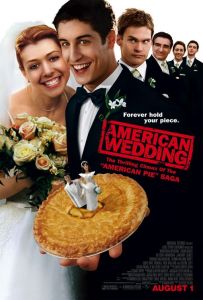 So it looks like Jim (Jason Biggs) and his bang-camp lovin’ girlfriend Michelle (Alyson Hannigan) are going to tie the knot. As the wedding approaches hilarious hijinks ensue. Thats really about it plot-wise. Steve Stifler (Seann William Scott) makes a return to goose every one up for a wedding, which also promises bridesmaids and a bachelor party. More hijinks ensue until the wedding.
The best thing the American Pie makers did was shaving down their overloaded cast. Gone are Chris Klein, Mena Suvari, Natascha Lyonne, Shannon Elizabeth, and Tara Reid. And good riddance I say. What made American Pie 2 an improvement, for me, was that they focused on the interesting characters (Jim, Michelle, Stifler, Finch) and then gave the others some scant storyline. The comedy worked better when it wasnt so divided among characters that weren’t equal in being compelling.
Scott is a whirling comic Tasmanian devil; with his twitchy weaselly grin, his drunken leer, and near spitfire delivery of such profanity-laden lines. The Stifler character has come a long way since having only 11 lines in 1999’s American Pie. He emerged as a strong supporting character in the 2001 sequel, igniting the screen whenever he entered. Now Scott has become the de facto star of the American Pie trilogy: it’s really all about the rise and evolution of Stifler. Hes gone from being the sneering jerk to becoming a lovable loudmouth. American Wedding is really the Steve Stifler show. He shouts, dances, and eats dog crap all for your enjoyment people. Scotts efforts and energy are so transcendent that he rightfully owns the film, much in the same way Johnny Depp entirely owned Pirates of the Caribbean.
 Biggs and Hannigan have a lovely charm to them and both are blessed with radiant smiles. Eugene Levy is still hilarious as the dad who has a problem with over sharing. The other actors serve out their roles from straight-guy (Thomas Ian Nicholas) to horrible-reaction-guy (Eddie Kaye Thomas).
Not everything works as smoothly the third slice around. Some jokes are inspired like the one-upsmanship of a bachelor party gone awry when Michelle’s parents interrupt (which, like the second film, provides the gratuitous nudity). Some jokes feel dull, especially some misbegotten pubic hair belonging to Jim. And then some jokes just lose their momentum as they seem to stretch. Stifler dancing in a gay bar just to prove he can make even gay men want him? Funny. Have it go on and on with substandard dancing for a dance-off? Loses the funny. But with any comedy, and especially ones following the gross-out expectations, everything is hit-or-miss.
I also noticed something quite odd about American Wedding: it’s badly directed. Many scenes are shot at oblique angles often with characters not even facing the camera. The cutting seems awkward as well as the framing. The film was directed by Jesse Dylan (How High), who is, no joke, a son of the legendary Bob.
American Wedding seems like a fitting end to these characters journeys. Its a comedy ripe with laugh-out-loud moments and groaners, mostly supplied by Scott. There’s also a degree of sweetness. In a summer drenched in sequels, at least one of them fulfilled some of its promise.
Nate’s Grade: B-


 nathanzoebl
You must be logged in to post a comment.