Blog Archives
Jonah Hex (2010)
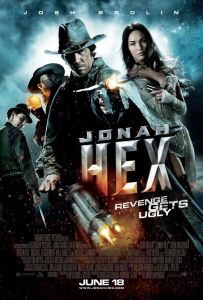 Clocking in at barely 73 fraught minutes, Jonah Hex is a bizarre Western sci-fi hybrid that never really stops to fully explain the rules of this universe. Josh Brolin, who does what he can with the disfigured badass, plays the Hex of title. Hex has a facial deformity along his mouth, which means it’s hard to understand whatever the man is saying as he slurs and mumbles the majority of his tough guy talk. It’s not smart to have your main character unintelligible. Watching Jonah Hex gives you the impression that nobody, cast and crew, knew what was happening. One minute Hex rides a horse with a, I kid you not, double gattling gun, and the next he’s fighting against a crazy John Malkovich who wants to build Eli Whitney’s doomsday machine. Did I also mention that Hex can bring people back to life for short periods of time via his magic touch? The look of the film is overly aggressive, with a rock guitar jackhammer score and plenty of souped-up special effects shots that try and ignite some flailing sense of excitement. It’s hard to get excited about a movie that feels so soulless. Jonah Hex feels like some studio shill thought they could buy a comic property and fill it with sure-fire elements that would please a teenage male base. Megan Fox (Transformers) in a bodice can only distract from the gaping void of a cohesive screenplay for so long. Then you stop and remember how much this movie sucks.
Nate’s Grade: D
Share this:

The Last Airbender (2010)
 Let The Last Airbender be a shining example of how NOT to adapt a children’s fantasy series into a standalone 90-minute movie. M. Night Shyamalan was hired to write and direct the popular Nickelodeon cartoon into a major movie with a major budget. It’s astounding how poorly made on every front this movie is. Seriously, people should be taking notes because Shyamalan has given a blueprint of blunders to avoid. The first blunder, and perhaps the source of all the others: hiring Shyamalan to begin with.
The film takes place in a fantasy realm where human beings are divided into four different nations based on the natural elements: earth, fire, wind, and water. Each nation has a special select group of people that can control that element. These people are known as benders. The one figure who can control all four elements is referred to as the Avatar, and this figure is reincarnated into a different nation each generation. In the absence of the last Avatar, the fie nation has invaded the other nations. Prince Zuko (Dev Patel) has dishonored his father, leader of the fire nation, and been banished. He seeks redemption by attacking the water nation, where siblings Katara (Nicola Peltz) and Sokka (Jackson Rathbone) live. They discover hidden among the ice a small bald child named Aang (Noah Ringer). This kid is the last of the airbenders and is believed to be the last reincarnation of the Avatar. For obvious reasons, Prince Zuko is after the Avatar to regain his father’s acceptance.
 At one point christened with the moniker of “the next Spielberg,” the writer/director has been slipping and sliding down into the pits of his self-deluded grandeur and stubbornness. After Lady in the Water and The Happening, who in their right minds would give this guy $150 million to direct a special effects-driven summer action movie AND let him adapt the show too? Even if you somehow managed to convince yourself that Shyamalan sitting in the director’s chair was a feasible solution, why on Earth would you let this man near the screenplay? I must repeat: did people see Lady in the Water and The Happening (this is a rhetorical question, because nobody wants to remember seeing them)? The Airbender series is a very well regarded television show that has appealed to audiences of all ages, including those old enough to buy their own beer, thank you very much. What purpose does it serve to ditch the show’s creators and longtime show runners in place of giving the responsibilities for coming up with plot, characterization, and God help us, dialogue, to the man that last gave the world The Happening? The Happening, people! What did you think was going to happen? Even with the lowest of expectations, The Last Airbender will still confound with its dead-on-arrival acting, zero character development, and overly serious spiritual mumbo jumbo. Who at the studio read Shyamaln’s adaptation and thought it was ready to move forward?
The Last Airbender begins with an opening scrawl informing the audience of the four different nations and the significance of the Avatar. Then it sprints forward without ever establishing context. Spending time to explain the rule and makeup of a new world is essential to the fantasy genre; we need to be able to know the rules of this universe and the dramatic stakes. Shyamalan establishes his villains via a lame text crawl. How hard would it have been to open the movie by showcasing the Fire Nation being big and bad? Most films open by establishing the bad guys in true villainous form. This movie would have started out so much better by establishing the villains, their mission, why they’re so bad, and introducing the general audience to the family of bad guys. That way our first introduction to them isn’t so perfunctory. In the film as it is, Shyamalan just sort of slides his characters into the plot in the most bumbling, awkward fashion. We don’t even learn about Prince Zuko’s banishment firsthand. In grand Shyamalan style, characters explain to the audience at every opportunity. Because why would you rather watch Zuko try to impress his father, fail and become scared, and have his father banish him from his nationality, promising to return and win back his father’s approval… when you could just listen to a character recite what took place? Isn’t that way better than watching something in a visual medium? There are a terrible amount of moments that feel clumsily strung together, like several important scenes were taken out at the last minute.
 This is emblematic of the entire movie because unless you’re well versed in the Airbender story, you will be as clueless as I was. I had no idea what was going on for most of the movie. Suddenly characters appear. Suddenly they can do some magical ability. Suddenly they can’t. Suddenly they’re gone. Suddenly we’re somewhere new. Suddenly this character’s dead/ Suddenly the Earthbenders are all kept together in a prison that lies atop plenty of bendable earth. Where’s the correctional planning on that one? I couldn’t explain why anything was all of a sudden happening, or what the exact rules were that helped or hindered characters, and I was left grasping for any sort of workable motivation among all the ridiculous and reflexive New Age spiritualism. Shyamalan and the film’s producers do not set up a damn thing. The film operates on a false assumption that the audience is already familiar with the source material, so it never stoops to setup plot or explain characters and events. That would be a waste of time when they have more substandard water effects to show. Because why would you want to spend $150 million on a movie that appeals to people outside a narrow margin of fans? And when you try and try and cannot understand what’s happening on screen, it’s only natural to lose interest. When the film is as dopey as The Last Airbender it only speeds up the process. I was deeply apathetic all the way through this ungainly mess.
I don’t think there’s anything that irritates me more in a fantasy film than when characters treat everything with such general indifference: “Ho hum, we just found a bald kid and his flying buffalo in a block of ice. Ho hum, he can master all the elements. Whatever. What’s on TV?” If the characters can’t be bothered to care then why should I?
I don’t know what this movie spent on special effects but whatever it was it clearly wasn’t enough. Last Airbender has some of the worst special effects I’ve ever seen in a major Hollywood summer release. Did the ILM gurus pass along their effects work to their interns? The green screen work, featured early with Katara and Sokka in some Icelandic realm, is ridiculously shoddy. People look like they have halos as they stand out against the all-too fake backdrops. The special effects in general are missing a polish and resonance that helps to disguise the illusion. I have to admit that it gets pretty boring watching one character hurl blue water orbs while another hurls red fire orbs. You would hope that a movie where people can control natural elements for combat they could do something more imaginative than fling different colored blobby orbs at each other. You have the power to control fire, the power to command the oceans or the wind, why must you low-ball it? I saw infinitely better choreographed elemental fighting on old episodes of Captain Planet and the Planeteers.
 Once again Shyamalan completely betrays the trust of his actors (don’t think Zooey Deschanel can give an awful performance? See The Happening). He gets lost in the whirlwind of special effects and fantasy worlds, so his actors get short shrift when it comes to direction. Ringer look the part and can perform the tricky martial arts moves with ease, but is that the best reason to hire an actor? Can’t makeup take care of perfecting a look? Can’t a stunt double fill in for the more challenging physical stunts? I’d rather have somebody who can act rather than just look like the human form of an animated character. Ringer is an annoying messianic figure to have at the center of your franchise. His counterparts don’t fare much better. Peltz (Deck the Halls) is impassive and routinely hits the wrong note for a scene, and Rathbone (Eclipse, New Moon) is fairly wooden and plays too many scenes like he was given one note (“bigger eyes”). Patel (Slumdog Millionaire) gets to glower and his voice kicks up in volume at weird intervals. It’s another example of unmoored actors struggling for direction. But the worst offender in the film is Aasif Mandvi, though through no real fault of his own. He is dreadfully miscast as the movie’s chief villain, and wickedness is not in Mandvi’s repertoire. He’s a cutup on TV’s The Daily Show but here Mandvi couldn’t seriously menace anyone. His tone, demeanor, and even very look lack intimidation. He has a glint of mischief that you can’t take seriously. I’m usually not one to point and shout “racism,” but the fact that Shyamlan and the producers have whitewashed the film’s casting is troublesome. Caucasian actors have filled in for the series’ predominantly Asian characters, and all the villains happen to be transformed into dark-skinned figures played by Indian actors.
I can’t explain most of M. Night Shyamalan’s thinking when it comes to the finished product. The Last Airbender seems intended solely for fans given how forgetful it is when it comes to plot setup and explanations and back-stories. Why should an audience be able to follow along? Comprehension is overrated (David Lynch being a lone exception). At the same time, Shyamalan gives nothing back to those fans who have looked forward to a big-budget realization of the popular TV fantasy series. Shyamalan even seems downright disdainful, again falling victim to his own ever-swelling hubris. Why shouldn’t he write the script? Why would the creators have any clue about how to condense their mythological dense show into a satisfying two-hour taste? If you’ve never watched the TV show, you’ll leave the theater wondering why the hell anybody would give a crap about all this junk. The movie presumptuously sets itself up for a series of sequels that I doubt we’ll ever see, certainly not with Shyamalan’s involvement at the least. Shyamlan once again defies his critics and lives on to make yet another artistic disaster. If three straight duds couldn’t detract somebody from throwing $150 million and artistic license his way, then I don’t know if this man and his ego will ever be humbled or tamed.
Nate’s Grade: D
Share this:

Never Let Me Go (2010)
 You’ll be excused for mistaking Never Let Me Go as one of those austere boardinghouse dramas the English are fond of cranking out. I mean it even has Keira Knightley in the thing for goodness sakes. Pretty lily-white British actors trying to find their place in a reserved society spanning the 1970s to the mid 1990s. You’d be forgiven for stifling a yawn. But then Never Let Me Go takes a sudden left turn into a realm of science fiction morality play. It becomes something much deeper and menacing. I am about to go into some major spoilers concerning the sinister premise of the movie, so if you’d prefer to stay pure then politely excuse yourself from the remainder of this review and come back at a later time. I won’t think less of you but only if you promise to come back.
Kathy (Carey Mulligan) and her pals Tommy (Andrew Garfield) and Ruth (Knightley) all grew up in the remote countryside school of Hailsham. It’s like any other school in most regards, except at Hailsham the children all wear monitoring bracelets, are afraid to leave the boundaries of school for fear of being murdered by outside forces, and are told that her physical fitness and internal health are of “paramount importance.” Figured it out yet? My then-partner leaned over and whispered, “Are these kids organ slaves?” Kathy and her friends find out their true identity when an outside third-grade teacher (Sally Hawkins) takes pity on them. She reveals that the students of Hailsham are clones whose sole purpose is to be raised into healthy adults who will then give “donations” to the ailing public at large. Most clones will go through one to four “donations” before “completing,” unless they so desire. You see Never Let Me Go exists in a realm where medical science has made momentous breakthroughs and now people can live to 100 years of age on average. Kathy and her friends are the dirty details.
 The rest of the movie flashes through our trio’s teen years. Kathy has always been kind and affectionate to Tommy, but before she could seal the deal Ruth swooped in and took Tommy for her own. Kathy has waited in vain for the two to break up, but that day just never comes. The trio ventures out to a small farmhouse in their teens to do some work and see the outside world. They’re living with a few other Hailsham alums that show them the knack for social interaction with outsiders. There are two rumors at play. One is that the Hailsham alums think they’ve found Ruth’s “original,” the person she’s been cloned from. The second rumor has greater significance: if two Hailsham students can prove that they’re in love, deep, honest love, then they can defer their donations for a few years. This idea takes hold of Tommy and consumes him. Except, we don’t really know whether Ruth or Kathy will be his partner in love.
So why don’t these people run away, or fight back, or do anything of defiance once they discover the horrible truth that will befall them? I have read several critics taking the film to task for being so painfully prosaic and passive, and Never Let Me Go can admittedly fall prey to those detractions at times. However, this is not the Hollywood version where the abused (clones) fight back for their survival and regain independence in a hostile world. That movie was called The Island, plus the several other films that Michael Bay sort of ripped off and then added extra loud explosions. Never Let Me Go has nary an explosion or moment of triumphant revolution. There is no revolt coming because the film doesn’t want to let anyone off the hook; these people are society’s collective collateral damage. They have been bred to be walking, talking, mostly demure, fleshy warehouses for spare parts. It’s only a matter of time before they leave everything on the operating room table, and these people benignly accept their doomed fate (“We all complete”). They march forward, trying to find some level of dignity and beauty before they get the call for “donations.” These people don’t know what it means to rebel; they have no real concept of liberty. They’ve been conditioned since childhood to obey, and that’s the whole point of the film. They have no self-preservation instincts. Likely any cloned child that was expressing strong feelings of boldness was removed, and destroyed, so as not to taint the rest of group. These people are like gown-up versions of veal. They’ve been cultivated since birth for the purpose of destruction, and their knowledge of the world is limited and cruelly self-serving. Watching innocent characters march off to a merciless fate can be very emotionally draining. It should also make you angry.
 These people are hopeless so that the movie’s full impact is absorbed. This isn’t some far off nightmarish scenario, because we as a society are already reaping the rewards of a lifestyle, a lifestyle that we’re loath to think about the mechanics of how we got so fat and happy. I can go to a Walmart and buy a T-shirt for a dollar. I am a happy consumer, but what did it take for me to get that product at such a discounted rate? Sure there are variables up the wazoo, but there are many negative factors that go into why that price stays low, invisible hand of the market be damned. Workers clock long hours in unsafe conditions in order to meet supply, earning a penance just enough to keep them alive and moving product. Environmental concerns are overlooked because that would mess with production. Long-term generational poverty can develop. The worker has ceased to be a person and is merely a dispenser of product, much like our clones in the film. This is not a definitive example of what goes on in the world, mind you. Never Let Me Go isn’t some far off scenario; we’re already there, albeit less explicitly. If the price of gas rose a dollar a gallon but it meant that people in other countries could have safe, uncontaminated water and enough food to stay healthy, what do you think would happen?
With all of that said, Never Let Me Go can’t fully fight the trappings of inert drama. For two hours we are watching somewhat nice, somewhat bland British kids gawk and smile their way toward the inevitable. The conceit calls for the breeding of rather milquetoast personalities. It simultaneously makes the characters more innocent and less emotionally involving. The screenplay relies on our sense of outrage and injustice to fill in the gaps of emotional connection. There are little molehills of characterization at best. You’re supposed to be choked up on indignation and sadness so as to not notice that the threesome of character are all rather good-natured but boring. That even may be an aim of the screenplay to accentuate the terrible fate that awaits, or maybe I’m just being overly analytical. Never Let Me Go reveals its awful truth fairly early at about the 40-minute mark, making sure that the audience is fully aware that we are definitely not headed for a happy ending. As it is, the actors are all lovely and talented but there’s only so much silent emoting and teary eyes can conjure.
 It’s credit to the talents of the actors that you do feel a storm of emotions from such otherwise frail characters. Mulligan (An Education) showcases her great gifts for communicating sadness. Her face just crinkles up, her eyes get glassy, and you want to hug her. She’s our dramatic linchpin. Her looks of conflict and yearning do well to communicate the inner struggle of her character’s abbreviated life. There’s a lot left to the imagination and Mulligan once again crushes it. Garfield (The Social Network) is stuck playing a wishy-washy character, which makes him seem a bit thick at times. He’s the most naïve and hopeful of the three, so when those hopes get crushed again and again his breakdowns have the most emotional heft. Knightley (Pride and Prejudice) has been in six period films since 2005, so she’s got this thing down pat. Ruth is a bit more assertive and angry than her friends, and it’s a pleasure seeing a more calculating side from the actress. It seems like the filmmakers had a troublesome time trying to downplay the attractive features of their cast. So it seems that they relied on the actors eating less. Knightley, and particularly Garfield, look rather gaunt and puckish, even before they begin “donations.”
I’ve gone this far without even mentioning director Mark Romanek’s (One Hour Photo) contributions, or the fact that the film is based off the 2005 novel by author Kazuo Ishiguru (Remains of the Day) and is adapted by Alex Garland (28 Days Later). Great artists that shaped the vision of this film. It’s a shame then that the impact of Never Let Me Go is blunted. It’s an intelligent, poetic, haunting, and emotionally wrenching film experience, and yet it could have been far more penetrating and devastating. The passive nature of the characters accentuates their doom and our sense of outrage. But that same passive nature makes them less than engaging characters. It’s been days since I saw the film and it still lingers in my memory, a testament to the moral quandaries and acting prowess. The existential drama of the film is better suited for the page where the questions of identity and morality can be given more careful and rewarding examination. The movie has an oddly detached feel to so much suffering. Never Let Me Go is a hard film to let go but also a hard film to truly embrace.
Nate’s Grade: B
Share this:

Scott Pilgrim vs. the World (2010)
 What happens when the millennial generation gets its own (attempted) seminal movie? It stays home and plays video games, letting the film, Scott Pilgrim vs. the World, languish at the box-office. I guess that’s what happens when you finance a movie whose target demographic will just as readily download the movie for free off the Internet.
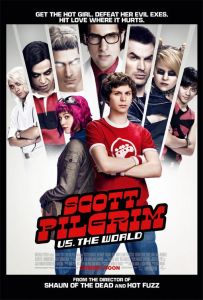
Scott Pilgrim (Michael Cera) is a 22-year-old Toronto slacker. He?s the bass player for the band Sex Bob-Omb, along with lead singer Stephen Stills (Mark Webber) and acerbic drummer Kim (Alison Pill), a former ex-girlfriend of Scott’s from high school. The band’s biggest fan is 17-year-old Knives Chau (Ellen Wong), who also happens to be Scott?s new girlfriend. The world of Scott Pilgrim is abuzz with this scandal, especially Scott’s gay roommate Wallace (Kieran Culkin) and Scott?s younger sister (Anna Kendrick). Scott insists it’s all on the level and he has no ulterior motives for dating a high schooler. Then he sees the mysterious and alluring Ramona Flowers (Mary Elizabeth Winstead) who?s new to the area and American. Scott rabidly pursues her in what could best be described as stalking, eventually getting her to agree to date him. Trouble is, he hasn’t broken up with Knives just yet before starting this new venture. Scott is then confronted at the Battle of the Bands concert by a man who comes bursting out from the ceiling. He is the first of Ramona’s seven evil exes and Scott must defeat them all in order to earn the right to the violet-haired beauty. “Everybody has baggage,” Ramona says. “Yeah, but my baggage doesn’t try and kill me,” Scott wearily replies.
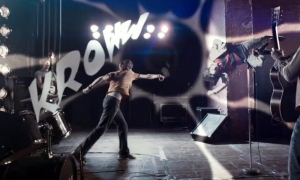
 Visually, this movie showcases director Edgar Wright (Hot Fuzz, Shaun of the Dead) using every crayon in the Crayola box. This is a visually resplendent film where every scene seems crammed with details to delight the eyes and light up the senses. It’s a rush to watch the kaleidoscope of colors and motions. The Scott Pilgrim universe clearly differs from our own. This is a realm that borrows heavily from old school video games, where people burst into coins when vanquished, where life-decisions are met with “leveling up,” where people have onscreen pee bars that will deplete after a trip to a urinal. Sound effects will routinely be verbalized on screen, everything from a “RIIIIIIIIIIING” of a telephone to the “Ding Dong” of a door. It’s amusing, though also easily overused. Jobs and stuff like that are for the real world, hence too square to be depicted. It’s this entire idiosyncratic comic book world treated like everyday reality.
The enormous display of style is impossible to ignore. Scott Pilgrim is a slick, flashy piece of entertainment that is riddled with nostalgic references for a select crowd. I appreciated how a nice walk was accompanied by the theme song from The Legend of Zelda, or that sound effects and onscreen graphics echoed the fights from Street Fighter II (don’t ask me which of the 800 versions). Scott Pilgrim is an excellent pop pastiche of a specific culture, namely a slacker, hipster, amiable, comics and gamer group. I myself was an avid Nintendo gamer back in my day, but I admit to waning interest when the games got too complicated and grisly (“Back in my day we had two buttons to push, one to jump and the other to shoot, and that’s how we liked it!”). The movie is an explosion of color, light, and (lo-fi garage rock) sound, which also might sound like the description of a seizure or a stroke to some. Like those ailments, Scott Pilgrim will be seen by some as an infliction. It’s hyperactivity and eagerness to please via nostalgic reference points will be what drives people to this film and what drives them away in equal measure.
The Scott Pilgrim graphic novels total six volumes and approximately 1200 pages, which means it?s not the easiest fit for a two-hour window. It also hurts that the Pilgrim books have a wide supporting cast of characters to tussle with, plus there?s the whole seven deadly exes thing which means the movie has to provide about a solid 20 minutes of set-up before finding enough time for seven antagonists (or boss battles, following gamer parlance) and a reasonable amount of resolution. Add on top of this the fact that Wright keeps the movie moving at an outrageous, ADD-addled pace, like the plot conveyor belt lever got broken and the scenes speed one after another. Everything about this movie feels fast and over caffeinated. The editing in particular has characters holding conversations where every line is in a new location, implying an added sense of movement. So you shouldn’t be too surprised when the Scott Pilgrim film feels like a whole lot of a little; it’s moving at the speed of light to entertain.
 Because of the plot mechanics and oversized cast of characters, Pilgrim can give off the impression of shallowness. It seems like all style and little substance and that’s because the movie attempts to cram an entire series of stories, back-stories, and conflict into two hours. The film version only has enough time to attempt to give Scott and Ramona characterization, though both come across as weak-willed, tentative, and less than charismatic, wondering if either party is worth the trouble. The movie tries to paint over these differences through distraction and force of will. The large cast of supporting players all elbows each other just to be mouthpieces for one-liners. Knives actually comes across as the most complete character, consumed by her infatuation, heartbreak, and then quest for misguided vengeance. She’s somewhat dismissed and yet she is the most developed person on screen thanks to Wong’s endearing and relatable performance. The entire experience of Scott Pilgrim vs. the World can be somewhat fatiguing when there’s little evidence presented for emotional investment. The books supplied the reasons for caring besides the whole underdog angle.
The movie aims to be a battle over love, but it’s not entirely convincing. Scott appreciates Knives because she’s simple, a relationship he doesn’t have to invest much within, something casual and enjoyable while it lasts or until it becomes too taxing. Then he goes ga-ga for Ramona and stalks her, wearing down her defenses. He’s purely smitten with her and willing to do whatever it takes to earn her affections, though he can?t explain why he feels this way. Here’s a note to screenwriters: when characters are asked why they love somebody, do not have them say, “I don’t know.” But for Ramona, Scott is her Knives. He’s something easy that won?t break her heart, an escape from the jerks she’s been dating before. He?s low maintenance. He’s something to pass the time. There’s an interesting dynamic here, made even more complicated by the fact that Scott’s time with Knives blended with his time with Ramona. There was not a clear end point. The movie takes a literal approach to the idea of love being a destructive force of nature. Scott is punished throughout because of his infatuation with Ramona, but he persists despite the bruises. And he doesn’t even really know much about her. There’s an interesting statement somewhere there about the punishment we endure, sometimes foolishly, over the affections of people we may love, or convince ourselves of, but not even like.
 It may sound peculiar but I’m paying Michael Cera a compliment by saying his performance in Scott Pilgrim is the least Michael Cera the actor has ever been on screen. Gone is his gawky, awkward, ironic shtick that has fast become the Cera persona in films like Superbad and Year One. Scott is unjustifiably confident in his life’s pursuits, and Cera gets to act cocky and quippy, even if it?s done with a wink. He?s an unlikely kung-fu star but then again he?s also an unlikely leading man. Winstead (Live Free or Die Hard) is cute but plays her part a bit too toned down, like Ramona’s still searching for the right medication combination. Culkin and Pill are both scene-stealers of the first order, doing so with unabashed and flippant sarcasm. Every scene is made better by their presence. Among the evil exes, Brandon Routh (Superman Returns) has plenty of fun as a dim-witted super-powered Vegan bassist (“Vegans are just better than other people”), and Jason Schwartzman epitomizes hipster snark with such relish. The film is exceedingly well cast from top to bottom.
I’ve read some reviews positing that Scott Pilgrim vs. the World is an elaborate fantasy taking place in the mind of its titular hero, that he blends his knowledge of comics and video games to help make sense of the troubled waters of relationships and lingering hurt from the demise of love. I think that’s a nice explanation but perhaps trying too hard to frame this film as some form of psychoanalytical commentary on modern youth’s interpersonal relationships and the value of love. Scott Pilgrim vs. the World is really just a spastic, hip, clever wank that, as presented, gives little room or emotional investment. It?s a blurry, messy, prankish good time at the cinema that doesn’t translate into much more than the equivalent of sensory button mashing (video game reference). It’s fun while it lasts but it doesn’t have much beyond those astounding visuals to make it feel lasting, and I say this as a genuine fan of the graphic novels by Bryan Lee O’Malley. Alas, heavier discussions about the thorny, maddening issues of love are better left to more dramatic, and romantic, movies like Brokeback Mountain, Eternal Sunshine of the Spotless Mind, and even WALL-E. This movie is more preoccupied with spinning as fast as it can and then vomiting.
Nate’s Grade: B
Share this:

Inception (2010)
 Without a doubt, no movie has piqued curiosity like Christopher Nolan’s Inception. After breaking all sorts of box-office records with The Dark Knight, Nolan earned some capital. He wanted to make an expensive, intellectually demanding, high-concept movie that takes place mostly in the realm of dreams. The studio said yes, anything to keep their golden goose happy before a third Batman can roll out. Nolan has been tinkering with the script for Inception for almost ten years, trying to scale it down but never being content. This is a story that called for the biggest stage, which required a heavy price tag, and could only be fulfilled once Nolan was an established hit-maker. Early images of shifting gravity and folding cityscapes got people buzzing but then the concern was whether Inception would be too smart for audiences to embrace. You know, the same public that made two Alvin and the Chipmunks films blockbusters. Two weeks running, Inception has made a sizeable portion of money and become the “must-see” movie of the summer. Score one for the public.
Dom Cobb (Leonardo DiCaprio) is an expert extractor. He can sneak into your dreams and discover whatever secret you’re hiding from your self, your wife, even your shrink. All for a tidy sum, of course. He’s on the run from U.S. authorities because they believe he killed his wife Mal (Marion Cotillard). A rich businessman, Seito (Ken Watanabe), promises to clear away the pending charges if Cobb can perform one important job. Instead of stealing an idea, Cobb will have to plant an idea, known as inception. A young upstart (Cillian Murphy) will inherit his dying father?s empire, and Seito wants the guy to break up that empire and sell it off. Cobb enlists the help of a skilled team to pull off what is believed to be impossible; Arthur (Joseph Gordon-Levitt) as the point man, Ariadne (Ellen Page), as the architect of the dream world, Eames (Tom Hardy), a forger who can convince the mark he?s other identities, and Yusuf (Dileep Rao), a chemist that creates a compound to put the team under a deep sleep. They’ll need it because Cobb plans to go three levels deep, a dream within a dream within a dream in order for inception to take root. The only way out is a “kick,” the sensation of falling that will awaken the dreamer. The team is under great risk not just from the dream world, but also from Cobb. He?s been secretly keeping memories of his dead wife alive and she keeps intruding into shared dreaming, causing havoc, relying on the same info that Cobb knows. The deeper they go into the dream the deeper they also go into Cobb’s memories.
 Inception can be many things to many people, as is the nature of dreams. I found the movie to be a master class mousetrap. Watching Nolan and his origami-like script fold and bend and connect is a true pleasure. However, the movie is not a great character piece. Cobb is the only person on the entire team allowed any sort of back-story or inner lives or even personality traits. What do we know about Arthur, Ariadne, Eames? Nothing. They are all members of the team, but it is Cobb who is the only one allowed to have supporting details. Despite Cobb’s tragic past with his wife, emotionally the movie can best be described as a bit distant (not cold, distant). Nor does Inception deal with the psychology of dreams or the interpretation of the subconscious and its links to our own reality; this movie does not have Freudian psychoanalysis in mind. What Inception does deliver is a brilliantly staged heist that takes place in the realm of dreams, and if that doesn’t sound like a fun concept then I don?t know what does. To get to that heist, the audience must slosh through about 90 minutes of solid set-up and exposition (Pages character is essentially an exposition device). There are a lot of rules to digest in order for the final hour to have the impact that it does. If you nod off for a portion of that time, like my father, you will be lost as to why anything is exactly happening. Having seen the film a second time, I can say that once the hyperactive “Oh my gosh, this is awesome!” haze of newness wears off you do realize that the pre-heist portion of the movie can be a bit slow. I think that for future DVD-viewings I will skip to the start of the heist and sit back and relax (much like skipping the first hour of King Kong).
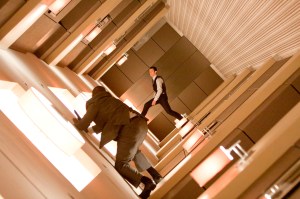
After talking about what Inception is not, let’s focus on what Inception is. It is a massively entertaining, brain-tickling thriller with eye-popping visuals that verge toward the iconic. Nolan isn’t the greatest orchestrator of action (a foot chase in Mombassa is pretty lackluster short of a narrow alleyway) but the man knows how to put together tremendously memorable set pieces. From Paris folding upon itself to a fistfight in a revolving hallway, Inception is packed with stimuli to ignite the senses. It’s the first movie in years that I walked out and thought, “How did they do that?” It renewed my sense of mystery and wonder with the movies. And the last hour is ridiculously fraught with tension as the movie descends level after level of subconscious, juggling four separate action set pieces with mounting climaxes. The revolving hallway fight is perhaps my favorite action scene in years. I still got goose bumps the second time. Gordon-Levitt hops from ceiling to floor like he’s Spiderman, or Gene Kelly, all while the camera remains fixed. Gordon-Levitt gets a lot of zero gravity experience in this movie. He might have qualified for a free ride on the space shuttle.
Like the alternate reality of The Matrix, people can manipulate the world of dreams, which allows for some imaginative visuals. Aside from the dreams-within-dreams impacting one another, there aren’t really playful distortions of reality. There?s a few M. C. Escher-inspired staircases but nothing too out of bounds. Nolan devises a reason for this since the dreamers do not want to call attention to altering the dream. They want to hide among the subconscious projections; get in and get out without being noticed. You do wish that Nolan played to the potential of his flexible reality, but on the other hand, it’s still fairly mind-bending to reach inside a magician?s hat into another magician?s hat and so on. I wonder if there was another story that could have succeeded in this setting, namely competing thieves that have to race against time within the world of dreams. Think about it next time, Nolan. That one?s on me.
 But the most exciting aspect of the movie is how intellectually stimulating it is. The movie is jam-packed with ideas like Nolan’s other works, so much that it’s hard to fully process everything the film offers in one sitting. The pieces do fit together and the movie follows its own internal logic, so if you didn’t skip out on any bathroom breaks, you should be able to follow along reasonably. On first viewing, Inception is bristling with intelligence and narrative complexity, and it rarely stops to pander to an audience. It expects you to keep up for the rewards that will follow, and they are indeed rewarding. The movie isn’t as complicated to follow but it can definitely get complicated when you try and explain action beyond a literal level. Nolan laces all sorts of narrative stops and peculiarities that can be targeted for an alternative thesis statement on the ending. The very ending shot is ambiguous perfection. It keeps the mystery of what constitutes reality while providing an out for people that want to formulate a happy ending. There’s plenty of room for interpretation and analysis but it doesn’t get in the way of telling a good story. Hollywood is pretty risk averse when it comes to anything that makes people think, let along anything expensive that requires active synapses. Nolan has long been a filmmaker of intellectual heft and non-linear narratives. His narratives are complex puzzles that snap together with airtight precision. The joy of a Nolan film is surrendering yourself to his narrative origami and waiting to see the Big Picture. There are new insights to discover with every viewing. Nolan may not be the second-coming of God, as those frothing at the mouth on Internet message boards proclaim, but I can think of no other director working today who harnesses Big Ideas on such a big stage.
Inception is a $160-million dollar studio film with substance, but it also looks like money well spent. The film looks amazing. The cinematography by Wall Pfister (Dark Knight) is gorgeous without being self-consciously arty, pleasing the senses without drawing too much attention away from the story. But with a screenplay that makes all kinds of leaps, you need the help of a good editor to guide the proceedings. Lee Smith (Truman Show, Master and Commander) is that man. While the repeated cutbacks to the van falling in slow motion can be giggle-inducing, Smith gamely holds everything together thanks to his skill in juggling all the parallel storylines/dreamscapes. Finally, the score by Hans Zimmer (The Lion King, Gladiator) is full of ominous, blaring horns that send shivers and get your blood pumping. Johnny Marr (The Smiths, Modest Mouse) even added an assist by strumming the guitar licks on the score. Apparently Zimmer’s key score themes are actually the tune “Non, Je Ne Regrette Rien,” the Edith Piaf signature song used to signal “kicks,” played at a slowed speed. At the risk of sounding like one of those frothing from the mouth on the Internet, that’s insanely cool.
 The acting is uniformly good with a few bumps. DiCaprio (Shutter Island) might need to do something light after continuous roles where he inhabits mean weighed down by guilt and dead wives (three in a row for those counting). He’s a good emotional anchor. Watching the star of 500 Days of Summer and Brick as a suave, cool-as-can-be action star is improbably awesome. Hardy (Bronson) is a scene-stealer mostly because he?s the only member of the team that has a sense of humor. Cotillard (Nine, Public Enemies) who won an Oscar playing Edith Piaf in 2007’s La vie en Rose, gets her best part since then. She gets to do many things as Mal, a projection of a character. This means that she must be limited in how she fills out the character because she is defined by Cobb’s fading memory. Yet she can be malicious, playful, spiteful, loving, vulnerable, and more. Cotillard and her big, glassy eyes do a great service in selling a romance we only see after the fact. Page (Juno) just feels out of place. She seems like the kid among a group of adults. And while the elfin actress will always look youthful until she applies for an AARP card, Page just seems in over her head. Her performance is fine if a bit mealy-mouthed but she still feels miscast.
Inception. Expect it to become a fanboy religion in a matter of weeks. It wears its influences on its sleeve, from The Matrix to Abre Los Ojos (or the American remake, Vanilla Sky). Thrilling, stimulating on different levels, and supremely engrossing, Inception is just about everything you could wish for in a summer blockbuster, except when it can also feel mechanical, distant, and free of emotion and character development save DiCaprio (perhaps this is further evidence that it was all a dream?). Regardless, Inception is easily the brainiest movie of the year, and usually those don?t get packaged as big-budget Hollywood spectacle. Just make sure to bring your totem the second time you watch the movie.
Nate’s Grade: A
Share this:

After Last Season (2009)
 After Last Season is a little movie that most people wrongly mistook for a joke. Writer/director Mark Region pulled off something rarely witnessed in modern movies: he put together a low budget movie all on his own and got it released nationally. The movie even has a Quicktime trailer on Apple’s website. It was released last summer in only four cities for a limited trial run, which explains why nobody has every heard of Region’s creative opus. It also might have to do with the fact that After Last Season is so appallingly terrible that the distributor reportedly called the theaters to advise burning the film prints rather than returning them. Naturally, given my cinematic tastes for the finest trash and my keen knowledge of the baddest of bads, I instantly had to see this film for myself. The website After Last Season boasts an Amazon.com customer review (nary a good sign of accomplishment) saying that the movie is unlike any you have ever seen. There’s a good reason for that. After Last Season approaches a near Manos level of ineptitude. That should speak volumes.
The plot, as can best be described, involves a university conducting scientific experiments. Sarah (Peggy McClellen) and Matthew (Jason Kulas) are interns conducting their own investigation into a recent string of murders. They have access to a device that allows the connection of minds, and so Sarah and Matthew link brains and get caught in the wavelengths of the campus killer, who now begins to target them. This plot synopsis is actually too kind and might mislead some into thinking the movie has drama or action or suspense. What really happens are characters who you don’t know doing things that aren’t fully explained followed by unexplained location changes where the whole process repeats itself. You haven’t lived until you’ve listened to Sarah’s roommates engage in senseless conversations about going to the North Market.
 When I say that this movie is awful, I really mean it with all sincerity. This movie is so awful, so off-the-charts painful to watch that there is not an ounce of derisive fun to be had. After Last Season does not fall into that coveted category of “so bad it’s good,” no, this movie is simply disastrously, regrettably, incomprehensibly bad. I would not recommend it to my friends or enemies. From a plot standpoint, there’s about 15 minutes of stuff stretched out to a short but far too long length of 93 minutes. The opening 10 minutes concern characters explaining how an MRI machine operates. It’s like Region once wrote a paper on an MRI machine and wanted everybody to know the work put into it. The characters just keep rehashing the ins and outs of this machine, and the machine is clearly made of cardboard and in the middle of somebody’s living room (is it unusual for a metallic ceiling fan to be placed directly above a Magnetic Resonating Imaging machine?). Then there’s a 30-minute stretch in the middle that is nothing more than two people sitting across a table and dreaming about geometric shapes. 30 minutes! I doubt that I even have the ability to adequately explain the amount of mind-numbing torture that this sequence was. My friend Eric and I just kept looking at one another with hopeful expressions, silently pleading, “Will our pain and suffering soon be over?” 30 freaking minutes! One third of the entire movie is like watching somebody’s annoying screensaver from 1987. I can’t wait for the sequel where it looks like a bunch of windows are flying.
The rest of the script isn’t filled with intriguing character dynamics or challenging drama. It’s almost completely built from non-related scenes with non-identified characters having frivolous conversations about nothing. Most of the dialogue is driven by linked non-sequitors, which prompted me to repeatedly yell at the screen, “Why the hell was that important?” Characters will drone on in useless babble, never once circling a subject that seems to be related to the plot at hand. The small group of actors (you will be amazed that the end credits lists over 15 characters) feels like people awaiting an execution. True, the pitiful direction leaves them unmoored, fighting to find meaning in anything they say, but these people just suck at acting. The general range of acting goes from impassive monotone to somewhat less impassive monotone. It’s the acting equivalent of rounding up random people at the bus station and hoping for a miracle.
 I have seen low budget productions before but this movie looks like it was made for the cost of a lottery ticket. For whatever reason, the current info has the budget at five million but there’s no way in hell that can be true (some producer must have ran off with like the whole sum minus twenty bucks). Reportedly the movie cost $40,000, which I can believe barely, and the special effects cost 4.95 million dollars, which I find baffling. The sets are all overly lit basements disguised by the clever decorative abilities of pegboards and sheets of paper. There are scenes where actual paper is taped to the walls like it was shingles, just like what a child might devise as a means of decoration. There’s even a supposed college class that takes place in this same low-rent location, which means that this particular university is really struggling for endowment funds. This utilitarian approach to locations is what I’d expect from a public access show or a student’s video project. These locations make it seem like every person is one moment away from being gutted by a serial killer just off screen. Did Region have only one abandoned office basement to work with? The visitations by the ghost/mind spirit/whatever are just as bad. We have the embarrassment of watching plastic tubs being pulled across the floor with fishing line. Having a low budget should force Region to be more creative with his use of resources, to work around his limitations. Instead, he just continually shines a bright light illuminating every possible limitation in the movie.
From a technical standpoint, After Last Season is an abysmal entry. It fails not just because of its lack of funds but it fails because Region lacks any filmmaking ability whatsoever. Sure, apparently the man was able to pose actors, have them recite lines, and keep the cameras running, but I expect more from my movies than the same criteria I have for family vacation videos. Region’s directorial style is, ostensibly, to have no discernible visual sensibility at all. Actors will routinely be cut out from the camera frame or the spatial relations will be completely out of whack, allowing for tremendous space above heads or showing the actor’s complete body except the upper half of the face. Characters will be bunched in one tiny section of the screen, or Region will suddenly cut back and forth between two different shots that conflict from a geographic standpoint; they don’t visually match up. There isn’t a single shot anywhere in After Last Season that couldn’t have been credited to a tripod for complete creative inspiration.
Here’s a terrific example of how creatively bankrupt this movie is, and no, I will restrain from making reference to the sheets of paper as decoration. The website for After Last Season actually touts its use of special effects. What special effects, you may very reasonably be asking yourself. Evidently, several scenes had less background coverage, so the special effects gurus took a sample background object and copied it to cover the space (like taking one sheet and making a wall out of them). Okay, fine, except that this special effects wizardry doesn’t always work. The website itself even showcases a scene where Sarah goes in for her job interview and on the right hand side we can see the special effect trick of covering up the empty space. However, the left side is completely untouched, leaving exposed all the set shortcomings and extension cords. Why cover one side but not the other? Too expensive? Here’s the best question of all. Why spend any money whatsoever on lame special effects when you could have simply zoomed in so that the two characters filled the screen? That’s a much more cost-effective option and wouldn’t break the perilous illusion of the movie. It is examples like this that condemn Region as an artist with zero creative ingenuity.
 Now it’s at this point where I have to call into question the integrity of After Last Season. Was this entire project created on purpose to be terrible, and if so, does it even make a difference? Is a bad movie more acceptable if it’s intentional or unintentional? From my perspective, you cannot intentionally make a campy movie. The derisive pleasure must come from the fact that the filmmakers thought they were making compelling cinema at some point. If After Last Season is fake (I hesitate to use that word given its connotation) then it’s an even bigger waste of time (Update: I just read online interviews with Region, and the movie is for real). As it stands, the movie is technically inept on every level of filmmaking with a bad script, bad actors, bad pacing, bad direction, bad sets, bad sound coverage, bad “special effects,” and really bad editing. If Region was dreaming of creating a midnight-movie sensation like The Room then he missed the mark. This movie isn’t any fun whatsoever to watch because there’s not enough going on to make laugh at. With The Room, every scene had like eight things wrong with it; that film was a 1000 brushstrokes of bad. With After Last Season, it’s the same forehead-smacking flaws repeated ad nauseam. There’s no derisive joy to be had here, folks.
I’m not shocked that something as unrepentantly bad as After Last Season exists. There is plenty of crap on the Internet and in this modern age of user media, there’s no shortage of poorly executed ideas finding a wider audience. It’s the same with the infamous 1979 blotch on cinema, Caligula. I’m not surprised that something so debased and wildly salacious exists, what shocks me is that a movie with incest, bestiality, necrophilia, hard-core sex scenes, and gallons of blood would star such a celebrated cast of thespians like John Gielgud, Peter O’Toole, Malcolm McDowell, and Helen Mirren (though if you’ve seen Zardoz you know that Mirren wasn’t too picky in those days). What shocks me is not that Caligula exists but the level of involvement and exposure. What truly shocks me is that After Last Season got a theatrical release over the likes of thousands of other movies fighting for a release. Yes, this only played on four screens in four different cities, but how does anybody justify After Last Season even being in the same consideration of cinematic art? I am faint to even refer to this as a movie. It almost seems like a social experiment with disturbing psychological implications. After Last Season isn’t a movie so much as an endurance test of how much pointless garbage a person can consume before they relentlessly cry, “Enough! You have officially destroyed my soul!” I never thought I’d say these words, but After Last Season makes The Room look competent. Your apology letter is in the mail, Tommy Wiseau.
Nate’s Grade: F
Share this:

Iron Man 2 (2010)
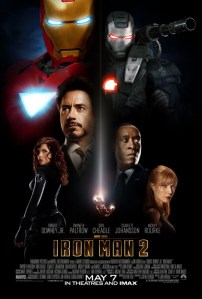 Iron Man was a fresh surprise in the summer of 2008, offering a superhero movie dominated by a middle-aged man’s personality and not the special effects. The story was not overwhelmed by all the demands of what we expect in a glorious summer popcorn experience. Marvel was smart to sign on the same team behind the first film, including director Jon Favreau, but setting a deadline exactly two years after the first film made me worry. There wasn’t much time to get everything together, and it should be no shock that Iron Man 2 feels rushes and absent the finesse of the first film. As much as it pains me to say it, Iron Man 2, while fun in spots, doesn’t come close to the original. You can trace much of it back to the sequel ethos that you take what worked in Part 1, make it much, much bigger and louder, and now you have Part Two. But what worked so exceptionally well in the first Iron Man movie was not the action sequences but the characters, so guess what happens when you pollute the narrative with more characters and disposable action sequences?
Tony Stark (Robert Downey Jr.) is a self-made superhero and now the world knows that he is indeed the metallic warrior, Iron Man. Stark refuses to hand over his technology to the government, saying he has “successfully privatized world peace.” He appoints his girlfriend/loyal assistant Pepper Potts (Gwyneth Paltrow) to CEO so he can devote his time to ridding the world of evil and lapping up the fame that goes with being Iron Man. Lt. Col. James Rhodes (Don Cheadle replacing Terrence Howard) is concerned for his buddy but also eager to help play around with that super suit. But not everybody loves Tony Stark, notably Justin Hammer (Sam Rockwell), a rival weapons dealer aiming for a Pentagon contract, and Ivan Vanko (Mickey Rourke), a Russian scientist who blames his father’s exile from America and Siberian internment on the Stark family. When Hammer sees Vanko’s attack at a Monaco speedway, he knows he has found an ally against Stark. Hammer whisks his newest Russian friend to New York and enlists his expertise in creating an army of super mechanical fighting suits.
 The screenplay by actor-turned-writer Justin Theroux (Tropic Thunder) is overstuffed with people and events all fighting for screen time and narrative dominance that it starts to become unintentionally comical after a while. There are too many storylines jostling for control when any one of them could have comprised a whole movie: military demands to have the suit, Tony deals with blowback from being the most famous man in the universe, and escalation (others trying to top Stark). Don’t even get me started on how Iron Man 2 bends over backwards to advertise that future Marvel Avengers movie lead by Nick Fury (Samuel L. Jackson). I mistakenly believed that the trailers ended before my movie started. There’s a storyline where Tony’s blood is becoming infected with a dangerous chemical every time he uses the Iron Man suit, so being a superhero is literally killing him. You can work with that for some pathos, debating the needs of one man vs. the needs of society and the greater good, personal sacrifice, mortality, legacy, but it all gets way too easily resolved in an absurd way (all I’ll say is, thanks Mad Men‘s Roger Sterling!). It tries to up the ante when less would have been considerably more.
Most of the new characters feel poorly integrated, further causing distraction to any attempts at narrative cohesion. Iron Man 2 also pushes Johansson into the mix so that she can shake up the Tony/Pepper relationship and, plus, she looks good in a skintight cat suit. But her third wheel/love triangle status is barely touched upon and Johansson gets one solid action sequence where she takes out a litany of goons in a hallway with the amazing power of her spinning thighs. Johansson is mostly just another assistant to take notes in the background, although she does it beautifully. The Rourke scenes are few and far between. They establish him as an intimidating force and then he pretty much sits in a room tinkering with stuff, garbling Russian, and feeding his cockatiel for the rest of the movie. He never feels like a real threat or a true match for Tony. Rockwell is the more appealing, slimy villain of the duo, aided by Rockwell’s exasperated bellowing and desperation for the spotlight. Hammer is more interesting to me than a Russian ex-con that rarely speaks, let alone speaks in English. He’s given so little opportunity to develop Vanko as a character. And yet Gary Shandling, as a smug senator trying to make Stark accountable to the U.S. military, might be the film’s best villain of the bunch (curious side note: Shandling and Rourke look oddly similar).
 The personal relationship between Tony Stark and Pepper Potts was the heart of Iron Man. They had that snappy, droll, screwball comedy-esque give-and-take, with hints of something more underneath. This time, the movie doesn’t even speak about their relationship at all, like it never happened in the first film. That scene where she kisses his Iron Man helmet, tosses it out the belly of a plane, and he dives off uttering, “You complete me”? Not in the film. You start to wonder why the movie is being purposely vague and it gets maddening. Their relationship lacks the frustration tinged with flirtation and replaces it with agitation. Both Tony and Pepper are harried and on each other’s last nerve, which doesn’t make for much romantic traction. Their chemistry seems to have dampened. I’m kind of with Pepper on this one because Tony Stark might be even too obnoxious in this movie. Following the sequel-it is code, Tony’s egotistical behavior is expanded and he becomes prone to self-destructive behavior, getting riskier and riskier, pushing others away including, perhaps, decent portions of the audience. He’s stopped being the cocky, likeable arrogant playboy and transformed into a bit of a rich douchebag. Part of this is related to the storyline about the suit literally killing Tony, and his character’s alcoholism featured heavily in the comic books, but it’s just another plot element that feels like it was put in for momentary conflict and then easily resolved or dropped. I understand Tony will be his biggest antagonist but that didn’t stop the first Iron Man film from flying high in entertainment.
The first Iron Man had an unexpected low level of action for a summer movie, but because of the characters you didn’t care. It was that rare comic book movie where you wanted more dialogue and fewer sound effects. To be fair, Favreau and crew saved a pretty nice Iron Mano y Iron Mano fight sequence at the end. Following that narrative lead, Iron Man 2 is structured pretty much like the first when it comes to action. There’s the attack at the Monaco raceway, which features an unrealistic, cartoonish tone that conflicts with the rest of the flick. But the film’s biggest moment of sustained action is the climax involves Tony Stark versus a bunch of silly killer robots. Soulless robot drones don’t get very compelling, plus haven’t we seen a thousand movies where people combat killer robots? What’s more disappointing is that Favreau incoherently stages the action. It’s not due to any sort of hyperactive editing, no, the culprit is that the onscreen action is just moving way too quickly. As a result, much of the action feels like whooshes of color. It’s hard to adjust your eyes to the rapid movement and process what exactly is going on. Because we can’t follow the action the whole thing lacks tension, danger, and drama. I wanted to be blown away by the action, which has several trailer-ready moments of awesome, but mostly I just wanted to be able to understand what I was watching.
 Despite all my complaints, Iron Man 2 still manages to be a fun time out at the movies. Downey is always immensely talented and brings great amounts of energy to the role, centering the movie on his witty charms. While his character is less engaging this go-round, Downey is still on top of his game. Rourke, Rockwell, Paltrow, and Johansson all contribute fine performances when they’re on screen. The low output of Iron Man in suit is compensated by having TWO Iron Men, thanks to Rhodes donning the metal gear and fighting alongside his pal. The opening of this movie captures your interest fairly well, though it loses it again thanks to slack pacing and an influx of new faces. The tone of the movie takes a cue from Downey and the movie as an agreeable, comedic feel without seeming overly glib. And hey, the special effects are pretty nice, too. Iron Man 2 is an adequate popcorn movie but the tragedy of the movie is that the first film was much more than adequate. I think the Iron Man film franchise is in need of a slight upgrade.
Nate’s Grade: C+
Share this:

Surrogates (2009)
 Surrogates feels either like an early first draft or maybe one half of a discarded final draft; this half-baked, shrift movie is not complete by any means. It’s too streamlined following the most obvious plot beats imaginable and adding nothing new to the sci-fi genre. In the future, people don’t go out, they just sit back and experience the world through the eyes of their surrogate robotic person. This plot device is ripe for social commentary but instead it just becomes the starting point for a snoozy detective story destined to climax in “My God, what have we done?” territory. There is too many interesting avenues the story could have gone but it doggedly sticks to the well-tread main road of sci-fi: technology will turn against us. The movie comes across like one long allegorical jab against people devoted to technology, namely the Internet, and the end might as well carry big flashing letters that spell, “Got outside and play, you nerds!” The action and special effects are listless, and director Jonathon Mostow (Terminator 3) waited so long to make this movie but you never feel his interest in a single frame. I suppose, in the end, there is no surrogate for good writing.
Nate’s Grade: C
Share this:

Repo Men (2010)
 It’s not unheard of for different writers to independently create similar projects. Remember back in 1998 when there were two animated bug movies and two apocalyptic asteroid flicks? Granted, those were big budget studio movies and the final films had little in common other than concept or premise. Repo Men takes place in a world where people open contracts on new organ transplants, but if the buyer is late on the payment then a repo man will come and take back the merchandise. This gory premise might sound familiar for fans of the Goth opera, Repo: the Genetic Opera, which was released a whole 18 months earlier. The makers of Repo Men and Repo have engaged in a he-said/she-said argument over who originated the idea. Repo Men‘s screenwriters claim they came up with the concept in 2003, though the book the film is based was only released in 2009. The Repo team point out that their funky little musical began as a theatrical show that was first performed in 2002. The songwriters behind Repo say that the idea itself goes back to 1999 and began as a 10-minute opera experiment. I suppose we’ll never know who really had the idea first, though I’m inclined to side with the Repo musical fellas because they can back up their claims with evidence. It seems like a whole lot of squabbling over so little, but hey, that’s Hollywood for you.
In the not-too-distant future, one corporation, The Union, seems to hold sway in the world of organ transplants. Remy (Jude Law) is an expert repossessions officer who will slice open anybody 90 days late on his or her payment. His wife wants him to transfer to sales; it’s less messy. Remy’s partner (Forest Whitaker) is an old childhood friend and doesn’t want to lose his butcher buddy. One night, Remy is sidelined by some malfunctioning equipment that fires his heart. He has no choice but to get his own organ transplant. Following the operation, Remy finds that he no longer has the stomach for his old line of work. Remy’s newfound moral compass comes at a cost. He quickly falls behind in his payments and his old bosses plead for Remy to refinance. Reluctantly, they sic the repo men, including Whitaker, on Remy to retrieve company property.
 Repo Men takes some nice commentary on predatory lending, pushing the hard sell knowing that the customer can never stay ahead of the mounting fees and payments. The allegory has some sharp moments. However, the movie would have benefited from being pushed further in pretty much every regard. The side characters are horribly shallow. I’m fairly certain that Carice van Houten (electrifying in Black Book), as Remy’s beleaguered wife, could have been replaced with a cardboard cutout boasting a disapproving look. She gets to glare and complain and talk about family issues and then she’s gone, replaced entirely by Beth, a mysterious organ replacement junkie. Beth could have an intriguing back story, and the concept of surgery addiction could dwell upon the human cost of beauty and “upgrading,” but alas, her real purpose is to become an oddly implacable love interest for Remy. She gets to hold his hand while they run. That’s her main contribution (except for one key scene detailed below).
The entire concept of a future world held hostage by a greedy health care corporation could use more contemplation. What is happening with society? No epidemic is ever mentioned, so why do people start contracts on million dollar organs? Do the heavy debts pass on to the next of kin? What is the legality of organ repossession? What level of competition is there out there in the market? What does the government have to say about all this? Does this mighty company supersede the U.S. government? How come Remy can’t even get an employee discount on the merchandise? Has anybody had enough surgeries to become the six million dollar man? There is a wealth of questions born from this premise, but the movie only scratches the intellectual surface and sets its standard change-of-perspective morality storyline into gear. I actually would have found the life of an organ salesman to be more dramatically appealing. What kind of ethical rationalizations take place in the mind of a man who makes his living signing saps into modern indentured servitude? I find that story direction to be more compelling than following the guys who bring back the company merchandise.
But then something weird happens. The movie gallops to a satisfying close, and then it somehow gets even better in its closing moments. I was certain that I was going to write off Repo Men but then 4 things happened to make me sit up straight in my chair (I’ll refrain from any large spoilers):
1) In a film relentlessly aping the visuals of other, superior dystopian films, there’s not much new to look at. You’ve seen this future society thing before, just with more flying cars or jet packs. I came to terms with this; it’s not every movie that reinvents how we interpret the future short of some calamity. Then when Remy breaks into the Company HQ, which is awfully easy by the way, he stumbles into the genetic organ hatchery, if you will. Rows and rows and rows of scientists tinker with organ replacements. The entire environment is a strikingly sterile white, including the scientists wrapped in bulky white biohazard suits. Then Remy and Beth make a run for it, and they are covered head to toe in black. It’s a fabulous visual image, watching the color contrasts. It’s debut director Miguel Sapochnik’s high point.
2) Once Remy and Beth move beyond this laboratory, they get caught in a hallway, and Remy proceeds to take out a mob of employees. The fight sequence is several minutes long and a clear nod to the memorable extended hallway fight in Oldboy (Remy takes out a hammer as his final weapon). Weirdly, Remy’s opponents are suit types, middlemen, office employees, numbers crunchers, but they all leap into battle to take out the corporate intruder. The fight sequence is bloody and stylish enough to please the senses, like when Remy swings a hacksaw and we get Swinging Hacksaw POV as characters duck out of the way lest their jugulars get sliced.
 3) Following this, Remmy and Beth must deposit their corporate-licensed organ replacements. This involves cutting each other open, taking a bar code scanner (think a grocery check-out), and digging inside each other to get those subcutaneous scans. What’s amusing is that the scene is blatantly juxtaposed as a sex scene; Remmy and Beth intimately penetrate each other, the editing cuts to close-ups of moaning, and the other tries to soothe the pain with physical assurances, and it’s all set to a slow jam. It’s something of a bizarre sequence, especially upon further review (how effective can scanning for bar codes be inside the gook-filled human body?), but man is it interesting.
4) Just as I had come to terms with the movie settling for a conventional conclusion, the movie pulls the rug out from under you. It offers up a last-minute ending that upends the conventional framework, and, actually, presents the easy coast to a conventional stop in a new light. This is one of those rare instances where a last-minute ending twist actually improved the film. More often than not, a last-second twist is forced and the nail in the coffin of lasting entertainment.
Repo Men is a competently looking, competently entertaining sci-fi thriller that miraculously stumbles into a final act that not only works, it elevates the rest of the movie. My mild boredom vanished and I started wondering why they made me wait so long for the good stuff. Repo Men is a mixed marriage of overall tone. One second it will be darkly humorous, the next it will be satirical, the next it will pine for serious drama, and occasionally it goes for Guy Richie-styled slapstick. A sequence where Remy describes the three occasions he’s been knocked out, with visual interludes, feels like a deleted scene from an entirely different movie. The movie never really settles, touching upon a lot of areas but mostly poorly. The script desperately needed to be fleshed out to make any lasting impact. Now that I’m living in a two-Repo world, I’ll probably stick with the campy musical fun of Repo: the Genetic Opera. At least that movie left you humming.
Nate’s Grade: C+
Share this:

Daybreakers (2010)
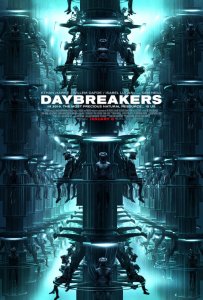 Taking a cue from zombie cinema, Daybreakers takes the idea of vampire-as-virus to an apocalyptic crescendo. The world is populated almost exclusively by vampires now. Human beings are farmed for blood but they are in such limited supplies. You see there is an extreme blood shortage because the vampires have lived beyond their means. That’s right, it’s a consumer consumption/environmental metaphor. The limited resources are dire because if vampires go without human blood they begin to devolve into senseless, winged mutating monsters known as “subsiders.” The poor cannot afford the skyrocketing blood prices so they are most fated to doom, while the rich argue that the blood supplies need to go to families first and not be wasted on the lesser dregs. The U.S. vampiric military, when not hunting humans, shackles the subsiders and marches them into the sunlight to be executed. Daybreakers has a lot more on its mind than most vampire movies, and it’s plainly fascinating to explore the realities of a world run by vampires (cars that drive during the day, the Subwalk, blood in your coffee). For most of its running length, Daybreakers is an intriguing setup that makes room for cool visceral action and social commentary. Then in the final act it sort of devolves itself into one big, dumb action movie. Ethan Hawke is a blood scientist trying to work on a synthetic substitute for a super vampire corporation that, of course, is evil. He stumbles upon an outlandish “cure” for vampirism and wants to resurrect humanity. This leads to a climax where Hawke and his human warriors wage battle inside the corporate HQ. For a promising concept, it’s depressing that Daybreakers had to end in such a typical manner. At least the vampires explode in the sun instead of sparkling.
Nate’s Grade: B-


 nathanzoebl
You must be logged in to post a comment.