Blog Archives
Kraven the Hunter (2024)
 Kraven the Hunter feels like a movie that was never meant to be seen. That seems paradoxical considering the efforts of many talented people over years took place to bring the Spider-Man villain solo movie to some form of creaking, wheezing life. Since 2017, Sony has decided to create their own Spider-Man universes minus, of course, Spider-Man. They’ve been making solo movies about Spider-Man villains and while the Venom movies have been inexplicably popular, the rest have been regarded as unmitigated disasters. In 2022, Morbius was bad enough that Sony thought they could re-release it to capitalize on the memes and derisive entertainment factor. To no avail and a total lack of morbin’ time. In 2024, Sony released three Spider-Man villain movies, though Madame Web was never really a villain per se, but then again nobody really wanted a Madame Web movie anyhow, though it once again gave us some memorable memes. Now Kraven is reportedly closing out this shared cinematic universe experiment, and the president of Sony is blaming those mean ole film critics for the failures of these would-be superhero classics (always a smart movie, assuming audiences are incapable of making up their own minds). Delayed almost two years from its original January 2023 release date, Kraven the Hunter is the death knell of this enterprise and it comes to a thoroughly mediocre conclusion, feeling even more disposable, poorly developed, and mechanical, and ultimately a footnote to a footnote of superhero cinema.
Kraven, nee Sergei Kravinoff (Aaron Taylor-Johnson, portraying his third superhero) is the son of a notorious Russian crime boss, Nikolai (Russell Crowe). One day on a hunting trip in Ghana, Sergei rescues his brother Dimitri (Fred Hechinger) from a lion. The lion injures Sergei and takes him for food, but thanks to a magic elixir from a tourist, Calypso (Ariana DeBose), who saves him. Now he has animal-like senses and speed and strength. As an adult, Kraven seeks out villains to bring to justice, but he’s also trying to square the legacy of his father and whether he is like dad. 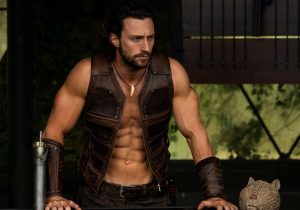
The problem with these Spider-Man-Minus-Spider-Man movies is making people get interested in the famous web-slinger’s rogues gallery. This usually means treating the character’s best known for trading punches with another hero as their own individual anti-hero, complete with a more villainous villain for our future villains to have to topple. Usually these villains (the actual individual movie antagonists, not the protagonists) are an imitation of our heroes (still referencing the future villains), the mirror version of them. So if your protagonist is going to be a vampire, then your antagonist is going to be a slightly more evil vampire. If your protagonist is an alien goo monster who likes to eat heads, then your antagonist is going to be a slightly more evil alien goo monster that likes to eat heads. You get the idea. However, you digest enough of these, and it all seems a bit too perfunctory, the main character having to defeat a version of themself. The main challenge is finding a way to make an audience care about these characters, and having them rescue a love interest or defeat a new-but-same villain with the implicit promise that maybe, if you’re patient enough, you might see them eventually try to murder Spider-Man, is not it. I’m not against the idea of giving these villains their origin tales, but it feels like in order to make them more palatable to a mass audience means they’re neutering the nature of these characters. The hypothetical future Sinister Six movie can’t all be six misunderstandings against Spider-Man.
Alas, Kraven is a real bore of an action movie even with its R-rating, the first for these Spider-Man villain movies. The added bloodshed and curse words don’t exactly make the movie feel more adult when we’re still dealing with plotlines like a super lion biting our hero and giving him super lion powers, much like the origin story of Spider-Man, or another villain suffering from a very silly and similar Amazing Spider-Man 2 Goblin-itus medical malady. This is not a serious movie in the slightest but that doesn’t mean it can’t be passably fun, but everyone is just so dour and passionless that it drains all entertainment. At least Madame Web was perplexingly interesting with its bad decisions. There’s such little energy to be had through the middling two hours. Kraven is gifted superhuman powers and he uses them to hunt down bad men and big game poachers, becoming let’s say Captain Planet if he watched nothing but Charles Bronson movies. There’s got to be an exciting movie there, or at least a more interesting one than what we eventually got here. It’s hijacked by some pretty rote family drama of a bad dad who was too hard on his kids and rescuing a kidnapped little brother who he feels guilty about leaving with the bad dad after Kraven got his new powers. The family drama is pretty rote and uninspired, with both of the other characters kept to the sidelines for most of the movie, which makes it hard to care that much about either of their impacts. The haphazard integration of a romantic subplot with Calypso is even more perfunctory when I would much rather see Kraven fall in love with a lion instead.
 I like J.C. Chandor as a director, and he’s someone who leaps at new challenges. His debut movie, 2011’s Margin Call, was an engrossing character piece about Wall Street traders and execs on the verge of the 2008 financial meltdown. It was so bare-bones that it was practically a play. His next film, 2013’s All is Lost, was the exact opposite: a movie completely told through visual storytelling and with a minimum of spoken words as Robert Redford tries to patch up his sinking boat. 2014’s A Most Violent Year was a slow-burn crime drama about the lengths people will go to escape their past and their nature. From there, Chandor has been circling larger studio projects, leaving 2016’s Deepwater Horizon and then replacing Kathryn Bigelow for Netflix’s action thriller, 2019 Triple Frontier. He’s a chameleon of a director and the only real point of interest I had with Kraven. What would he do in the superhero space? Well, the answer is not much. The visual flourishes we’ve seen before in other movies but without a sense of humor. Watching Kraven periodically run on all fours may make him more animal-like but it doesn’t look good. The movie gets lost in the convoluted mythology and rules of its characters and what they’re capable of, and so the action sequences feel cobbled together and short on imagination. The climax is during a stampede of buffalo but there’s no real danger here like dodging around the animals. They very conveniently allow space for our hero to fight his battle, thus becoming a thundering backdrop. Even if you’re overly generous, there’s not much here to excite the senses or even your morbid curiosity.
There is one line of dialogue that needs to be singled out for its absurdity. While Madame Web was ridiculed for its “researching spiders in the Amazon with my mother before she died” line, the filmmakers had the good sense to eliminate it from the final film, though not the good sense not to include it in their initial marketing. With Kraven the Hunter, there’s a character who talks about her mother and literally says, “She died and I never saw her again.” That’s usually how that works.
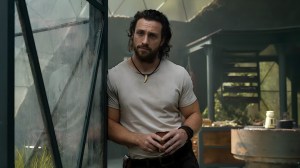 As the final piece of Sony’s Spider-Man villain spinoff universe, Kraven the Hunter brings this diversionary superhero franchise to a merciful end. The frustrating thing is that Kraven as a character can work, as recently demonstrated in the popular Spider-Man PlayStation video game sequel. He’s supposed to be the ultimate hunter, a force of nature, but that doesn’t mean he needs to carry his own movie, just like Morbius or Madame Web or any other Spidey villain. Launching these characters could have worked but needed much more imagination and care. Instead, it was Spider-Man movies without Spider-Man and, with the exception of the Venom movies with their goofy buddy movie appeal, audiences have responded with the indifference you would assume. It’s not enough for these movies to merely be adjacent to Spider-Man to be appealing. They need to be good, to be able to stand on their own, and to support an extended time with this character. It’s hard not to see the larger machinations for eager franchise-extension as the primary motivation. But if these are the impressions of the characters we’re getting, who would want any more? Turns out nobody was actively cravin’ another underdeveloped and mediocre superhero movie.
Nate’s Grade: C-
Share this:

Master and Commander: The Far Side of the World (2003) [Review Re-View]

Originally released November 14, 2003:
Without sounding easily amused, this movie really is glorious filmmaking. With Peter Weir’’s steady and skilled direction we get to really know the life of the early 19th century. We also get to know an armada of characters and genuinely feel for them. Russell Crowe is outstanding as Captain Jack Aubrey. His physicality and emotions are expertly showcased. When he gives a motivational speech you’’d understand why people would follow him to the ends of the Earth. Paul Bettany (again buddying up to Crowe after ‘A Beautiful Mind’) is Oscar-worthy for his performance as the ship’s’ doctor and confidant to the Captain. He’’s not afraid to question the Captain’’s motives, like following a dangerous French ship all around South America. ‘Master and Commander ’hums with life, and the battle sequences are heart-stopping and beautifully filmed. It took three studios to produce and release this and every dollar spent can be seen on the screen. ‘Master and Commander’ is fantastic, compelling entertainment with thrills, humanity, and wonder. It’’s grand old school Hollywood filmmaking.
Nate’s Grade: A
——————————————————
WRITER REFLECTIONS 20 YEARS LATER
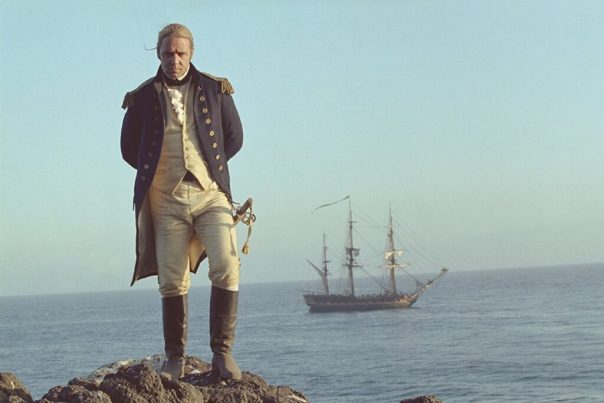
They really don’t make movies like Master and Commander anymore and that is a detriment to every facet of our society. It took three different studios to bankroll this expensive movie, made all the more expensive by being almost entirely set at sea, a very costly and volatile location. In a just world, this would have been the beginning of a cinematic universe to rival Marvel, and the dashing Captain Jack Aubrey (Russell Crowe) would be as beloved as Captain Jack Sparrow, and children would beg their parents to read the dozen naval adventure novels by Patrick O’Brian. Just imagine lines of children for Halloween eagerly dressed in little admiral outfits with long blonde ponytails. Unfortunately, we do not live in this utopian universe, and 2003’s Master and Commander was the one and only movie we ever got. It received ten Academy Award nominations including Best Picture and Best Director for Peter Weir, winning two Oscars for Cinematography and Sound Editing, two of the only categories where runaway champion Return of the King wasn’t nominated. This is a masterpiece and a prime example of Hollywood filmmaking at its best. It’s just as easy to be transported in 2023 as it was back in 2003.

This movie is still effortlessly engaging and enthralling, dropping you onto the HMS Surprise during the Napoleonic wars. Even the opening text starts to get your blood pumping: “Oceans have become battlefields.” The opening act is a tremendous introduction to life onboard an early nineteenth-century ship, giving us a sense of the many crewmen and their responsibilities, as well as the different pieces working in tandem while under attack from a French vessel. The movie is structured as an elongated cat-and-mouse chase between the two ships, with the English trying to outsmart the faster French ship with its heavy cannons that easily outnumber the Surprise. Each stage presents a new challenge. One sequence involves them setting up a ruse with a smaller ship attached with a lantern to trick the French vessel into following the decoy at night. The constant threat of this sleeker ship getting the drop on them and attacking is always present, turning the opposition into a mythic monster breaking forth through the fog. The tests of command and camaraderie lead to important questions over duty and sacrifice. There are several children manning the decks as well, cadets eager to be the next generation of English warriors. It’s a shocking reality to process through our modern perspective, and it’s made even harder when tragedy befalls these youngest sailors just like any of the other crew. The movie is steeped in authentic details and realism that makes you feel like you’ve dropped into living history.
In 2023, Gabriella Paiella wrote a GQ article titled “Why Are Guys So Obsessed with Master and Commander?” noting its enduring popularity with a certain selection of Millennial men (yours truly included). She theorized part of its ongoing appeal is how wholesome the movie comes across, with depictions of positive and healthy male friendships. Even the dedication to service is depicted in a way forgoing jingoism. This is a deeply empathetic movie about men who deeply love one another. The most toxic depiction on screen isn’t one born of masculinity run amok during wartime but more a division in class amplified by superstition. Pity poor midshipman Hollum (Lee Inglebee), a man who cannot make friends with the crew because they disdain his privilege and will never see him as a better or an equal. He becomes a scapegoat for the bad luck of the ship, as they feel he is a “Jonah,” a curse. Poor Hollum, who sees no way out of this dilemma and literally plunges overboard with cannonball in hand, ridding the crew of their reputed curse (the wind picks up the sails the next morning). Beyond this valuable and sad storyline, the men of the Surprise seem so grateful for one another’s company. It’s a guy movie that invites men to escape to the frontier as an inclusive summer camp (no girls allowed!).

By the end of this movie, as we’re utilizing every nautical trick we’ve learned and preparing to seize the elusive French boat, my body was shaking in anticipation. We’ve gone on this journey and gotten to know a dozen faces, and we feel part of the team to the point that we’re onboard too. Seeing any of these men close their eyes permanently is awful. It’s not just keen military strategy and theory being discussed; we feel the real human cost. A small moment at the end, where a young man asks for help to sew the death shroud of his mentor, just hits you in the guts. Even watching poor Hollum processing his final fateful decision is heartbreaking. I still gasp even today watching Doctor Maturin (Paul Bettany) accidentally shot and then have to perform his own surgery. You feel the highs and lows throughout this voyage because the movie has made you care. The sheer adventure of it all is terrific, but it’s the immersive details and the strong character writing for everyone that makes this movie so special. It’s not just a rousing high-seas tale of bravery but also a stirring and empathetic character piece and absorbing drama.
It’s astounding to me that Weir isn’t still one of the hottest working directors. The Australian has earned four Best Director nominations across three decades (1985’s Witness, 1989’s Dead Poets Society, 1998’s Truman Show) and proven he can handle any genre with any style. He’s only directed a single movie since Master and Commander, 2010’s Siberian prisoner of war movie, The Way Back. In twenty years, we’ve only been given one other Peter Weir movie, and that is a travesty. In a recent interview, Weir confirmed he’s essentially retired from directing. If only time had been kinder to this great director. For comparison’s sake, other famous artists that also have four Directing nominations include Clint Eastwood, Stanley Kubrick, and Francis Ford Coppola.

I assumed Master and Commander would still be good to re-watch in 2023, but I was amazed at how quickly I fell back under the movie’s sway so completely absorbed. It’s the kind of movie where everything just feels so natural, so authentic, and so compelling, where the hard work can be too easily undervalued because it all just feels like a documentary. This movie is so captivating and enthralling and every adjective you can devise. It earns them all. Why oh why did we never get a second of these? There were over a dozen novels as source material at the time of the first movie. According to that same 2023 GQ article, the studio head at Fox, Tom Rothman, explained that he was a lifelong fan of the O’Brian novels, having fallen in love with them as a boy. It took the studio chief using his position to get this kind of movie made in 2003, that’s the level of corporate power necessary to circumvent all the naysayers trying to kill this. I guess rather than mourn the lack of sequels I should count my blessings that we have even one. You were too good for this world, Master and Commander: The Far Side of the World.
Re-View Grade: A
Share this:

Thor: Love and Thunder (2022)
 Thor: Love and Thunder reminds me a lot of Guardians of the Galaxy vol. 2, admittedly a film I’ve come more around on since my initial viewing in 2017. When Ragnarok was released later that same year, it was an irreverent blast, a breath of fresh air for a franchise that didn’t really know what to do with its hero, and under director Taika Waititi’s sensibility, the character had new, witty life. A similar response occurred with the original Guardians of the Galaxy as the world fell in love with the offbeat characters and storytelling and style from writer/director James Gunn. Before 2014, we didn’t know what to expect with a Guardians movie. When the sequel was released, we had a template of expectations, and the follow-up didn’t feel quite so fresh, quite so lively, and falling back on repeating too many of the same moments or jokes because it’s what was expected. It felt a bit burdened with the creative shackles of upholding these expectations. The same feeling of same-ness permeates Love and Thunder, and to be fair that’s also because the success of Ragnarok raised our expectations for a Waititi MCU movie.
Thor (Chris Hemsworth) is trying to find his way after the events of 2019’s Endgame. He’s gotten in shape, spent some time palling around with the Guardians of the Galaxy (returning in 2023!), and reconnected with the love of his life, Jane Foster (Natalie Portman). She’s been chosen by Thor’s old broken hammer to be its new wielder, granting her superhero status. Except in her human status, she’s dying from stage four cancer. Just as Jane comes back into his life, Thor might have to come to terms with losing her all over again.
 This movie just doesn’t feel like it has the same natural prankish energy of Ragnarok, though part of this again might be myself acclimating to Waititi as a filmmaker and storyteller. Prior to Ragnarok I had only known him for the delightful vampire mockumentary What We Do in the Shadows, and since Ragnarok Waititi has become his own industry, winning a screenwriting Oscar, lending his name and acting to hit TV shows, including a version of What We Do in the Shadows, and even Disney wants his mark on Star Wars. In short, the man is everywhere. In 2022, we now have a much better idea of what to expect from a typical Waititi project. Love and Thunder is recognizable to the man’s omnipresent brand, and still a fun movie with some solid gags, but it also feels a bit sloppy and repetitive.
I kept thinking about all the powerful dramatic potential in the different storylines that are barely explored because the driving plot is a universe-hopping caper to save a bunch of kidnapped children (yes, the children represent something, the next generation, renewal, legacy, but let’s carry on). Tackle the pathos of Jane Foster, who in her normal human state has her body betraying her. She feels weak and incapable of the greatness she feels burdened to still accomplish with her declining time. With the power of Thor, she becomes a superhero, and with super swole arms. However, this power trip also has its own ironic downside. Every time she powers up, the magic hammer is actually draining more of her life force, meaning she’s actually speeding up her terminal illness. Here is a character given a dire situation and an escape and yet that escape only worsens the illness. There’s such powerful drama there to explore as she comes to terms with how to spend her final moments, among them reconnecting with her super ex-boyfriend. This could have sufficed as the entire movie and told from her perspective.
Then there’s Gorr the God Butcher, gloriously played by Christian Bale like he’s in a James Wan horror movie. Here is another example where the villain doesn’t just have a sympathetic back-story but where they are correct in their aims, though maybe not in their methods (think Killmonger arguing Wakanda should do more). Gorr is tired of the gods crushing the little guy with their general entitlement, indifference, and selfishness. These fancy deities aren’t worthy of worship. The power structure needs upending. It’s easy to get behind Gorr’s plight and see connections to our own imbalanced world. This too could have sufficed as the entire movie and told from his perspective. Now, things could have gotten even more interesting and complicated for Jane, because she’s not officially a god unless she’s yielding Thor’s hammer and joins those rarefied ranks. It would pose another question of whether wielding this power would be worth her remaining time, especially with a heat-seeking missile coming for her on a righteous quest of vengeance that is slowly eating him alive. Both are dying but can they fulfill their goals?
 If these storylines had been given careful development and the necessary time to breathe, Love and Thunder could have been one of the most interesting movies in the ever-expanding MCU cannon. Instead, it’s galloping to work so hard to stick to the Waititi brand expectations, to reignite our feelings of Ragnarok, and so these promising elements ultimately get shortchanged by hit-or-miss comedy bits. I liked several of them even despite myself. The set piece where Thor and Jane and friends travel to Omnipotence City has such imaginative heights. Russell Crowe is having a grand time as a hilarious Greek caricature of Zeus that is more concerned about the upcoming company orgy and brushing feta crumbles from his beard. I loved the almost Lego Movie-esque zany sight gags of the cohabitation of gods from different religions (Korg’s god sits on an iron throne of scissors, its own visual joke). It’s such a fascinating concept that I wish we could have spent even more time here. Let’s see the Egyptian gods mingling with the Sumerian gods while pranking some weird alien deity. The set piece serves two narrative purposes: gathering a powerful magic weapon, and learning the gods are sitting out the battle with Gorr for their own short-sighted self-preservation. It’s mostly a pit stop. Again, there was more pathos that could have been explored here as people meet gods, but this is my cross to bear. The general banter is amusing and has more hits than misses even if the hit percentage is lower. I laughed every time the magic axe would silently pop onscreen in jealous judgement. I even enjoyed the screaming goats even though from their first moment they are the exact same joke. Regardless, whenever Thor and company would travel to a new place and I heard that familiar goat scream, it would make me giggle despite my reservations.
I also had my qualms with the concept of Eternity, a magical place located at the center of the universe but destined to grant a wish to whomever gets there first. It’s too transparent as a plot device and its very existence this far into the MCU creates too many nagging questions. In the history of the universe, no other creature successfully reached this wish-granting locale? And if this existed at least to Thor’s understanding, then why didn’t the characters think about this as an option to thwart Thanos and his universe-halving finger snap? I know the answer, because it wasn’t written into a movie until now, but this is the drawback of throwing ultimate power plot devices without more careful context. Eternity could have been a secret just to the inner circle of the famous gods, unknown to all but a few, but even that strains some credulity. If Zeus is such a carousing hedonist of legendary status, I’m sure he would have either blabber-mouthed its existence or sought it ought for his own gain. I genuinely liked the set piece at Eternity, a small planet that sucks all color from existence, making the imagery even more striking like the inky panels of a comic. The same question happens when Thor shares his power late in the movie. Couldn’t the Avengers have used this too?
I fully acknowledge that my criticisms are butting against the movie Waititi wanted to tell. I’m pushing for its inherent dramatic potential while it wants to be a more comic and romantic adventure about the power of love. I think by the end it gets there, and the dramatic confrontations have some emotional weight to them, especially about the idea of what we leave behind for others after we’re gone. Although, even this is mitigated by the general stakes-lowering reality that death never seems so permanent in the world of comics and monetarily useful IP. It’s a joke how many times Loki has been brought back from the dead and Thor doesn’t even know that his trickster brother has been brought back from the dead again (again again). We’ve now established time travel and an emphasis on the multiverse of alternate universes, which means at a moment’s notice, any meaningful death or sacrifice has the possibility of being undone. This is also the reality of a moneymaking machine that has dominated the movies and pop-culture landscape for 14 years. No death is ever going to be for real in this environment so why should I put so much emphasis on the dramatic potential of what losing a loved one, or your sense of self, can have? I can sit back and enjoy the lesser, but still enjoyable, Waititi quirk on display for two hours of silly.
 Hemsworth (Spiderhead) is so sharply skilled at comedy that I feign to remember his previous existence as a dramatic actor. He’s still on the same sublime, charismatic yet blithely self-effacing vibe he was with Ragnarok. Portman (Annihilation) comes back after close to a decade for a clear reason to leave her mark on what had been an otherwise forgettable character and giving her a renewed sense of power and direction and agency. Bale (Ford v. Ferrari), as mentioned, is fantastic. I appreciate that his character isn’t physically huge and bulky. He looks quite the opposite, like he’s wasting away, like somebody slathered an ashy coat of paint from living-skeleton Bale after The Machinist (yes, also the obvious Voldermort comparison). He is relishing every teeth-stained syllable as a nightmare creature living from the shadows. The prologue with his character is heartbreaking and yet understated (and truth be told, having young children in my household, it hit me more personally), and I turned to my fiancé and said, “I’m supposed to not like this guy?” I wish the opening credits were then a montage of Gorr seeking and slaying wicked gods. Bale is playing his role like he’s definitely not in a Waititi movie about goofy screaming goats; he’s playing Gorr like a tragic hero of myth. This is why I would have been happy had the whole movie been told from his perspective. The new characters from Ragnarok suffer the most and become sidelined as “Others Along on the Quest.” For Korg, this is fine, but for Tessa Thompson’s Valkyrie, I mourn her absence. Also, both characters are definitively queer now, though Korg might be more a question, making Love and Thunder the gayest movie in the MCU, and just after Pride Month, so take that for what you will, folks.
As a fun matinee, Love and Thunder will amuse and brighten, even if its comedy highs don’t quite hit as high this time under the burden of franchise expectations. Love and Thunder is a movie that will be best known for Portman and Bale, both of whom elevate the scattershot material with their dedication and professionalism. It might even be known for Crowe’s hammy scene-stealing, or the super-powered cadre of cute kiddos, or even the screaming goats. It’s a movie more of moments and ideas, too many underdeveloped or lacking the gravitas they deserve, especially concerning Jane and Gorr. I feel like a grump bemoaning that the big superhero movie should have more time spent on a woman contemplating her own existential demise as well as man’s relationship and fealty to our gods. Still, it’s Waititi doing his signature brand of quirk with $200 million of house money from Disney. Thor: Love and Thunder is a lesson in diminished returns but when you have Ragnarok as your starting point, it’s at least guaranteed to still be worth your two hours once and deliver some chuckles and smiles.
Nate’s Grade: B-
Share this:

Unhinged (2020)
 Russell Crowe (The Nice Guys) plays a deranged motorist with a serious case of road rage in Unhinged, an otherwise forgettable if competent thriller only notable for Crowe’s unnerving performance and as the first widespread movie in theaters after the COVID spring shuttering. It boggles my mind that enough people would rush out and risk personal safety to see this movie but I guess people can be desperate for a return to normalcy. In Unhinged, young mother Rachel (Caren Pistorius) is late dropping off her teen son to his school. She enrages Crowe in a traffic altercation and from there he plots her abject suffering for his twisted vengeance. Crowe’s character, simply labeled “Man,” is the wrong person to anger. The opening sequence involves him popping pills and then murdering his ex-wife and setting her new home ablaze. He’s an unstable psychopath who feels wronged by women and looking to hurt them for these perceived slights. He’s irredeemable, though the movie thinks it’s making him more “complex” with its slapdash attempts at back-story. The problem here is that Crowe’s antagonist is too powerful and omnipresent and our protagonist keeps making stupid decision after stupid decision. Even after her friends and family are threatened, or worse, she doesn’t seem to be making smart decisions, like involving the police or reaching for help. There’s a contrived reason to rob her of her cell phone but then she just gets a different phone, so why even bother? Even as she’s being hunted down by a guy who is sweating toxic masculinity, it can be strangely hard to root for Rachel because of the annoying bad decision-making. Also, her own back-story is weak. She’s going through a divorce and also might be bad at meeting deadlines, which relates to what later? The thriller sequences are serviceable but uninspired. Crowe is the only real reason you should watch Unhinged. He could have gone on auto-pilot for a standard paycheck psycho villain role and instead becomes truly terrifying, settling into a twangy American accent and leaving you wondering when his anger will snap. He’s at his scariest when he’s trying to sound reasonable or thinks he’s sounding reasonable. There’s a strange coda where Rachel withholds honking her horn after she almost gets run into by a speeding driver. The movie treats the concluding moment like a learned lesson but it feels more like bizarre victim shaming. She should have honked her horn at this driver, who was in the wrong, and she deserved to honk her horn originally with “The Man” for his vehicular infraction. She shouldn’t have to withhold her response out of fear that he other driver might overreact and seek out her friends and family and murder them. What a strange lesson for Unhinged to be imparting for its audience.
Nate’s Grade: C+
Share this:

Gladiator (2000) [Review Re-View]
 Originally released May 5, 2000:
Director Ridley Scott has given the world of cinema some of its most unforgettable visual experiences. But can Scott breath new life into a genre whose heyday was when a badly dubbed Steve Reeves oiled his chest and wrestled loincloth-clad extras in the 1950s?
The year is roughly 180 AD and Rome is just finishing up its long-standing assault on anything that moves in the European continent. General Maximus (Russell Crowe) merely wants to retire back to his loving family and get away from the doom and war that has plagued his life. This is made all the more difficult when the ailing Emperor bypasses his treacherous son Commodus (Joaquin Phoenix) and decides to crown Maximus as the Defender of Rome. Because of this Commodus rises to power through bloody circumstances and has Maximus assigned to execution and his family crucified. You’d think crucifixion would be so passé by now. Maximus escapes only to be sold into slavery and bought by a dirt-run gladiator training school. As he advances up the chain and learns the tricks of the primal sport he seeks but vengeance for his fallen family.
Gladiator is an absorbing and sweeping spectacle of carnage and first-rate entertainment. The action is swift and ruthlessly visceral. The first movie in a long time to literally have me poised on the edge of my seat. The blood spills in the gallons and life and limb go flying enough your theater owner may consider setting down a tarp.
 What Gladiator doesn’t sacrifice to the muscle of effects and action is storytelling. Are you listening George Lucas? Gladiator may unleash the beast when the rousing action is loose, but this is coupled with compelling drama and complex characters. Phoenix may at first seem like a snotty brat with an unhealthy eye for his sister (Connie Nielsen), but the further Gladiator continues the more you see in his eyes the troubled youth who just wants the love of his father that was never bestowed to him. Maximus is a devoted family man who regularly kisses clay statues of his family while away, and must ceremoniously dust himself with the earth before any battle.
The acting matches every sword blow and chariot race toe-for-toe. Russell Crowe marks a first-rate staple of heroism. Every calculating glare he exhibits shows the compassion and ferocity of this warrior. He becomes a rare breed – an action hero who can think and actually act. Oliver Reed, in what sadly was his last role, turns in a splendid and charismatic turn as the head of the gladiator school of Fine Arts and Carnage. Mysteriously everyone carries a British accent closer to them then a toga two sizes too small. Even Crowe who is nicknamed “The Spaniard” speaks like he walked out of Masterpiece Theater.
The effects and visuals are a sumptuous feast. The aerial shots of Rome and the Coliseum are simply breath taking. Gladiator rivals American Beauty for the most rose petals used in a movie, except in this one they don’t shoot out of Mena Suvari’s breasts.
Ridley Scott’s track record may be hit or miss but Gladiator is definitely one sorely not to be missed.
Nate’s Grade: A-
——————————————————
WRITER REFLECTIONS 20 YEARS LATER
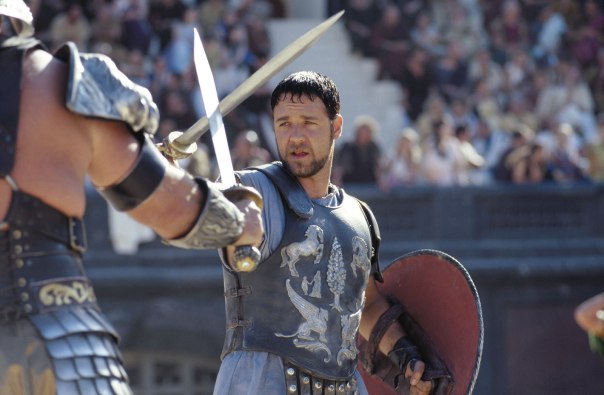
As Russell Crowe famously barked, “Are you not entertained?’ It was hard to argue in 2000 and it still holds true to this day. Gladiator was a big-budget throwback to the swords-and-sandals epics of old Hollywood. It was a box-office hit, made Crowe a star, and won five Academy Awards including Best Picture. My own elderly grandmother loved it so much that she saw it three times in a theater that summer, which was practically unheard of in her later years (she also, inexplicably, loved the 1999 Mummy movie). It was a millennial DVD staple. I can recall everyone on my freshman dorm hall owning it and hearing it on regular rotation. As studio projects were getting bigger with more reliance on CGI, Gladiator felt like a refreshing reminder on how powerful old stories can be with some modern-day polish. Re-watching Gladiator twenty years later, it still resonates thanks to its tried-and-true formula of underdog vengeance.
We all love a good story where we follow a wronged party seek to right those wrongs, plus we all love a good underdog tale, and given the pomp and circumstance of the gladiatorial arena, it’s easy to see how this movie was engineered to be a success from the page. This isn’t a particularly new story. Stanley Kubrick’s Spartacus mined the same territory with an even bigger scope, both in politics and in war, and there have been many movies covering the same history around the rise of Commodus, like 1964’s The Fall of the Roman Empire and The Two Gladiators. We’ve seen this kind of story before even in this setting but that doesn’t matter. The familiarity with a story isn’t a hindrance if the filmmakers take their story seriously and make an audience care about its characters. It all comes down to execution. As long as the filmmakers don’t get complacent and take that formula familiarity for granted, old stories can have the same power they had for decades because, deep down, cooked in their structure, they just work.
 Gladiator gives us everything we need to know by the conclusion of its first act, introducing us to Maximus, showing his leadership and loyalty, giving us the strained father-son relationship with Marcus Aurelius and Commodus, the expectations of the son of his ascendancy, the regrets of the father and hope for a return to a Republic, the reluctance of Maximus to be more than a general of Rome, and finally after the murder of the old emperor, a decisive choice for Maximus that challenges his morals and responsibility. From there, screenwriters David Franzoni (Amistad), John Logan (The Aviator), and William Nicholson (Les Miserables) put our hero and villain on parallel tracks heading for a collision. Maximus rises through the ranks of gladiators and builds a name for himself, getting called to the major leagues of bloodsport, and Commodus schemes to have his old enemy killed with increasingly dangerous trials in the Coliseum. It’s a natural progression and escalation, which makes the storytelling satisfying as it carries on. Gladiator never had a finished script when they began filming, which has become more common with big budget tentpoles with daunting release dates and rarely does this work out well. However, this is the exception (the screenplay was even nominated for an Oscar). It should be stated that the events of Gladiator pay very little to the actual history but fidelity is not necessary to telling a compelling story (the real-life Commodus rose to power after dear old dad died from plague). Use what you need, I say.
Ridley Scott was on an artistic hot streak during the start of the twenty-first century, directing three movies within one and a half years of release and earning two Oscar nominations. He wanted to veer Gladiator away from anything too cheesy of older swords-and-sandals epics, as reported. This isn’t about homoerotic wrestling with men in unitards (in Jerry Seinfeld voice: not that there’s anything wrong with that) and instead about the grit and superficial glory of Rome. The opening battle in Germania is meant to show Maximus in action but it also shows just how overpowering the Roman Empire was during this time period. They just massacre the remaining German tribe, and there’s a reason we don’t focus on battle strategy and instead on the chaos. The conclusion of the battle is a shaky camera mess of bodies and flames and dark shapes. It’s a bloody mess and not something to be glorified. Maximus is tired. His men are tired. Even Marcus Aurelius is tired of his decade-long conquering of a map, adding little inches to an already gargantuan territory. When is it all enough? When is war a self-perpetuating quagmire?
 This same dismissive view over conquest and glory carries throughout. When Maximus becomes a slave, he must play the blood-thirsty appetites of the crowd to reach his goals. He disdains the theater of combat, the delaying of strikes simply to draw out the drama of two men fighting to the death. Later, these same venal interests of the mob form a protection for Maximus. He’s too popular to just be assassinated because the Roman people just love watching how he slays opponents. There’s an implicit condemnation of popular entertainment built around the suffering of others. Scott has a purpose for his depictions of violence, and you could even make the argument he is drawing parallels between the bloodthirsty crowds of the Coliseum and modern-day moviegoers screaming for violence. What are the human costs for this entertainment? It’s not explicitly stated, and some might even say this level of commentary for a movie awash in bloodshed makes any such condemnation hollow or hypocritical. Maybe. The violence feels like it has weight even when it can border on feeling like a video game stage with enemies to clear.
Crowe (The Nice Guys) was already making a name for himself as a rugged character actor in movies like L.A. Confidential and The Insider, but it was Gladiator that made him a Hollywood leading man, a title that he always seems to have felt uncomfortable with. Crowe wasn’t the first choice of Scott and the filmmakers (Mel Gibson turned Maximus down saying he was too old), but it’s hard to imagine another person in the role now. Crowe has a commanding presence in the film, an immediate magnetism, that you understand why men would follow him into hell. That flinty intensity plays into the action movie strengths, but there’s also a reflective side to the man, a sense of humor that can be surprising and rewarding. There’s more to Maximus than avenging his wife and child, and Crowe brings shades of complexity to an instantly iconic role. He finds the tired soul of Maximus when he could have simply been a kickass killing machine. Between Crowe’s three Best Actor nominations in a row from 1999-2001, I think he won for the wrong performance. It’s a shame Crowe hasn’t been nominated since, which seems downright absurd. People have forgotten what an amazing actor Crowe can be, singing voice notwithstanding (I need a sequel to Master and Commander please and thank you).
 This was also a breakout role for Joaquin Phoenix (Her), who has risen to become one of the most celebrated and chameleon-like actors of his generation. The character of Commodus is your classic example of an entitled child who doesn’t understand why people don’t like him. He’s a sniveling villain prone to temper tantrums (“I am vexed. I am very vexed”). Much like his co-star, Phoenix finds layers to the character rather than resting on a stock villain characterization. He’s really the jealous son who envies the preference and love given to Maximus, first from his father, then from his widowed sister (Connie Nielsen), and then from the Roman people. He whines that they love Maximus in a way he will never deserve. It’s hard not to even see a Trumpian psychology to Commodus, a man not equipped for the position of power he occupies who longs for adulation he hasn’t earned. You can hate the man, but you might also feel sorry for him despite yourself. When he wants to be pompous, he can be hilarious (I adored his quick reaction shots to the theatrical combat). When he wants to be creepy, he can be terrifying. You can even see some of the broken pieces here that Phoenix would masterfully use to compose his Oscar-winning Joker performance.
The supporting cast was gifted with great old actors getting one last victory lap. Richard Harris was so stately and grandfatherly that it got him the role of Dumbledore in the Harry Potter franchise. It also served as a great sendoff for Oliver Reed (Oliver!) as Proximo, the selfish, trash-talking former gladiator turned gladiator trainer. Reed died months into the production and before he had wrapped his part, requiring extensive reworking from the screenwriters (Logan was on set for much of the production to cater to the immediate day-to-day story needs). Scott used a body double and parlayed visual effects to recreate Reed’s face, much like what 1994’s The Crow was forced to do after the unfortunate death of its star, Brandon Lee. I kept looking for what moments would be Reed and what moments would be the CGI-enabled Reed double, and it was harder to determine than I thought, so nice job visual effects team. Reed had a reputation of being a carousing reprobate, so having a final performance that allowed him to tap into those old impulses plus the regrets of older age was a wonderful final match.
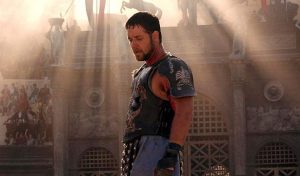 The other big takeaway upon my twenty-year re-watch was how recognizable and stirring Hans Zimmer’s famous score was, which lost the Oscar that year to Crouching Tiger, Hidden Dragon, and that seems insane to me. Zimmer has been in a class all his own since the 90s with classic, instantly hum-able scores for True Romance, The Lion King, The Dark Knight, Inception, and The Pirates of the Caribbean, which borrows heavily from his theme for Gladiator. The score greatly adds to the excitement and majesty of the movie and can prove transporting by itself.
A truly bizarre post-script is the story of how the studio tried to develop a sequel. Gladiator was hugely successful but any sequel presented problems. Given the death of its star, following another character makes the most sense, and yet that’s not the direction the screenplay took. Eventually, the sequel to Gladiator was going to follow the ghost of Maximus as it travels through time including to modern-day. Just take a moment and dream of what could have been. Alas, we’ll likely never get time-traveling ghost Maximus now and we simply don’t deserve it as a society.
Reviewing my original film critique from 2000, I feel that my 18-year-old self was more entranced with making snappy, pithy blurbs than going into further detail on my analysis. My early reviews were far more declarative, saying something was good or bad and giving some detail but not dwelling on going deeper into the examination. This line, “The blood spills in the gallons and life and limb go flying enough your theater owner may consider setting down a tarp,” makes me cringe a little because it’s just trying too hard to be casually clever. I do enjoy the Mena Suvari rose petal joke. Still, I celebrated that a studio movie could emphasize its story first and foremost and my observations are still valid. I’m all but certain the only reason I knew who Steve Reeves was back then was because of his many appearances via Mystery Science Theater 3000 covering his cheesy swords-and-sandals films of old that Ridley Scott was so eager to avoid recreating (“Do you like films about gladiators?”)
Because the movie does so much so well, with some exceptional, it’s hard for me to rate Gladiator any lower than my initial grade of an A-, so that’s where I’m keeping it twenty years later. I think the national conversation has cooled on Gladiator, forgotten it because it wasn’t quite as audacious as other examples of early 2000s films, but it sets out to tell a familiar story on a big canvas and deserves its plaudits for somehow pulling it all off with style and gravity. It would be flippant to say Gladiator still slays the competition but it’s still mighty entertaining.
Re-View Grade: A-
Share this:

The Mummy (2017)
 In my many years as a film critic, it’s always interesting to discover when I veer from the critical herd, whether liking a movie others do not or having issues with a movie that others lionize like La La Land. After seeing an avalanche of bad reviews, I was fully prepared to dismiss Tom Cruise’s The Mummy as another example of Hollywood hubris, but as the movie continued I found myself enjoying the proceedings. I left the theater completely dumbfounded why my critical brethren disliked it so vehemently. One critic even said this was Tom Cruise’s worst movie of his career. I can’t understand the hate for what is essentially a fun B-movie, so my review is going to be a little different. I’ve read through a bevy of bad reviews and lifted the major criticisms leveled at the film. I’ll be addressing them one-by-one and why I disagree or think the broadsides are overblown.
Here’s a quick plot synopsis for some general context. Thousands of years ago, Ahmanet (Sofia Boutella) was next in line for the Egyptian throne, and then her pharaoh father had a son. Rather than be sidelined, Ahmanet made a deal with the god Set to kill her family with a magic knife and become an all-powerful being. She was thwarted in the middle of the human-sacrifice ritual and she’s sentenced to being buried alive. She was buried thousands of miles away and the magic jewel, needed to complete the magic knife, was buried in England in a Crusader’s crypt. In present-day Iraq, Nick Morton (Tom Cruise), his sidekick (Jake Johnson), and his love interest (Annabelle Wallis) stumble upon the tomb of Ahmanet. They’re transporting her sarcophagus back to England when a cloud of crows attacks their Army plane. The plane crashes, with Nick on it, but he awakens unscathed on a morgue slab. Apparently Nick is marked by Ahmanet as her chosen vessel.
 1) “Cinematic universe fatigue.”
This is the number one indictment in all the critiques but it feels more like critics just used The Mummy as a jumping off point to add to a thesis statement on the dearth of originality in a franchise-obsessed Hollywood. I get it. In the wake of the Marvel Cinematic Universe’s unparalleled run of success, it’s not just about franchises now but also about a series of inter-connected franchises forming a universe of stories. There is also DC’s failed efforts to try their own universe, a possible Hasbro Universe (Transformers, G.I. Joe), the ongoing and morphing X-Men universe, and now the emergence of the Dark Universe, a studio’s attempt to repackage the classic monster properties of old. When done poorly, the cinematic universes reek of nakedly obvious crass commercialism. However, just being opposed to these cinematic universes on principle alone feels misguided. It’s presumptuous. It all depends on whether or not the stories can exist on their own. Batman vs. Superman and Suicide Squad didn’t crash and burn merely because they were overextended by tie-ins to other movies. They failed because they were bad stories and were terribly executed, and yes being overextended was a component but not the only one by far. Movies still need to be good.
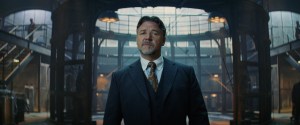
The Mummy only gives a sense of a larger universe through the appearances of Dr. Henry Jekyll (Russell Crowe) the leader of Prodigium, a S.H.I.E.L.D.-esque agency tasked with monitoring the world of “gods and monsters.” That’s about it, a preview of a larger world of monsters with some visual Easter eggs scattered here and there. The character of Jekyll is a learned scientist that can unload a larger picture, and his institution also provides a setup for false security. He is organically placed into the narrative and Prodigium actually supplies a credible reason why they don’t just smash the key crystal that Ahmanet needs for her resurrection purposes. Crowe (The Nice Guys) is one of the best parts of the movie, and when he gets to slip into Hyde mode the movie allows him to have a malicious sense of fun. I don’t think the visual element of Hyde quite works but it doesn’t sabotage the scenes. Not all of Crowe’s exposition is necessary, especially the opening sequence finding the buried Crusaders, but he provides a stable presence, until he also presents Prodigium as a pragmatic threat. This is why I think that the most critics are condemning the idea of the Dark Universe and what it stands for in broader terms and not on the actual merits of how it set up its larger universe.
 2) “Cruise is miscast as the lead.”
I’m a fan of Cruise as an actor and especially as the lead in action movies. The man is a natural movie star and he gives his all with every performance. As a paying moviegoer, I respect that work ethic. Having Cruise play a rakish surveyor of antiquities seems like a good fit for his abilities. He’s played charming, dangerous rogues before. Here’s the thing that critics don’t seem to be processing: Cruise’s character is meant to be a jerk. He’s self-centered and prone to making impulsive decisions, like shooting a rope keeping a sarcophagus suspended in liquid mercury. Plus if you don’t like Cruise as a person or an actor he’s routinely beaten up in the movie to fine comic results. His character arc is about him becoming the kind of person who’s willing to think about others and a greater good. It’s simple but it works. I do think The Mummy goes too far in trying to explain the signposts of his character arc. Occasionally they undercut the moment to great effect. There’s a scene where Wallis (Annabelle) tries to encourage Norton that she knows there’s a good man inside him. After all, he gave her the only parachute as the plane went down. He then sheepishly says, “I thought… there was another one.” I laughed out loud so hard. The movie does work a little too hard to announce Nick’s swaggering Lothario ways (“Me thinks the lady doth protest too much”), and there’s a 25-year age gap between Wallis and Cruise, but these aren’t faults invented by only this movie. Cruise was an enjoyable lead for me and his ease with comedy, action, and drama prevailed.
3) “Tone issues abound.”
Critics are lambasting the film for being too many things with too many tones, but much like cinematic universes, it all comes down to execution. The Mummy has elements of action, horror, especially its zombie-mummies, dark comedy, like Johnson showing back up as zombie comic relief a la An American Werewolf in London, and even some inspired slapstick. When Nick is fighting a batch of zombie-mummies, he thrusts his fist through one skull and hangs another sideways against a wall, and both keep on fighting. The different elements added to my entertainment rather than detracting from it. I enjoyed that the movie could be suspenseful or silly depending upon the scene. The action sequences are serviceable to good, the highlight being the zero gravity plummet within the body of the plane. Alex Kurtzman (a writer responsible for Star Trek, Transformers, and other big studio pictures) makes an adequate director without any distinguishing sense of style. I feel like the more memorable aspects of the action are from Kurtzman thinking as a writer. Take for instance a scene where Nick is swimming underwater and we watch subterranean tombs open. The zombie-mummy Crusaders then start swimming after Nick, providing a terrific visual. The action sequences vary and develop and make good use of their geography. I also appreciated that the third act does not fall into the superhero standard of CGI monster slugfest that loses perspective and scale (even Wonder Woman suffers from this). Also, apparently in the time since Stephen Sommers’ campy 1999 Mummy film, everyone championing that movie seems to have forgotten that it was a mess of tones as well. The Brendan Frasier mummy movies were a fun, spirited, winking big-budget B-movies with style and personality. I don’t think Cruise’s Mummy film reaches those same heights but there are enough positive similarities.
4) “Underwritten female characters.”
 This is a legitimate criticism when discussing Wallis’ character. She offers very little to the overall story except to verbally explain exposition or character beats. The fact that she needs rescuing is a given. It’s an underwritten role and clearly just an excuse for a good-looking actress to be at Cruise’s side during moments of peril and derring-do. However, this accusation overlooks Boutella’s character, Princess Ahmanet. Her very back-story involves a woman striking back against a patriarchy that wouldn’t value her unless it had no alternative. She’s a killer but she has her reasons, but more importantly she’s an interesting antagonist even if her overall goal is basic world conquering. Boutella (Star Trek Beyond) has a magnetic presence on screen and seems to enjoy stretching herself with different physicalities from an alien to a mummy to a blade-legged henchwoman. She enjoys playing kickass women who lead by example, and Ahmanet is no exception. I was pleased that Ahmanet was not going to be reserved as a strictly Act Three villain. She’s prominent throughout the narrative and burrowed inside her marked man’s head, leading to dessert flashbacks and a general repetition of Boutella’s partial nude scene. The filmmakers are getting the most out of one shadow-draped PG-13 nude scene.
Suffice to say, in my view The Mummy does not deserve its savaging by the critical community. I think too many critics are assailing larger points (Tom Cruise as a person, cinematic universes) and losing sight of the actual movie itself. The Mummy is not a perfect film by any stretch but it’s a movie that has a strong sense of its identity and how to meet its goals. The Mummy is a modest B-movie with a sense of fun that offers enough surprises, suspense and action sequences, and clever visuals to entertain. If this is the start to the Dark Universe then I feel optimistic about where else the newest creature features will lead. I recommend giving this one a chance once the dust settles. You may be just as surprised.
Nate’s Grade: B
Share this:

Noirvember: L.A. Confidential (1997)
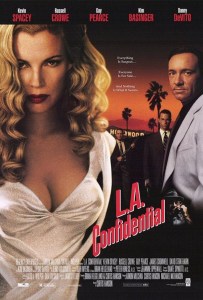 There was no stopping Titanic in 1997, iceberg be damned. James Cameron’s epic disaster movie had all the momentum of the times, and yet it’s a smaller movie that captured more of the critics and was far more deserving of the ultimate Oscar prizes that year. L.A. Confidential was based upon a James Ellroy novel that many argued was unfilmable. Enter journeyman director Curtis Hanson and novice screenwriter Brian Helgeland, and the pair stripped the book down from eight main characters to three, kept the spirit and essence of the book alive while rearranging the storylines for large-scale popcorn thrills. It’s been nearly twenty years since L.A. Confidential first seduced big screen audiences and its powers are still as alluring to this day. It’s a neo noir masterpiece.
In 1950s Los Angeles, not all is what it seems. The captain of the police, Dudley Smith (James Cromwell), is looking to keep the peace in the City of Angels as outside criminal elements are looking to fill the void from Mickey Cohen going to prison. Three police officers of very different stripes find themselves on the edges of a complicated murder case stemming from a massacre at the Nite Owl cafe. Ed Exley (Guy Pearce) is the son of a famous police captain and wants to rise up the ranks as quickly as possible. He’s a political animal and unafraid of ruffling feathers. Bud White (Russell Crowe) is a bruiser of a man who enforces his own level of justice when it comes to men who beat or harass women. Jack Vincennes (Kevin Spacey) is a happily shady officer who serves as a consultant for a hit TV police procedural. The Night Owl case takes them into many sordid corridors of sex, money, and power, including Lynn Bracken (Kim Basinger), part of Pierce Pratchett’s (David Strathairn) stable of prostitutes meant to look like movie stars, the mysterious self-serving sources to tabloid journalist Sid Hudgens (Danny DeVito), and good cops and bad cops on the controversial L.A. police force.
 This movie is a master class in plotting and structure, enough that it should be taught in film schools. By nature noir plots are meant to be busy and mysterious, and a guarantee for mystery is a Byzantine plot full of plenty of suspects, dispirit elements, and strange coincidences that eventually coalesce into a larger picture. The beauty of what Hanson and Helgeland have done is that they have made the script complex yet accessible, able to lose one’s self in the tangled web of intrigue but still able to see how all the myriad pieces fit perfectly together by the conclusion. There is an efficiency to the screenwriting that is mesmerizing. It all seems so effortless when you’re with storytellers this gifted or who have a divine connection to the source material. Forgoing the customary slow builds of recent film noir like the oft-cited Chinatown, L.A. Confidential just moves from the opening narration. Within the first 25 minutes, the movie has expertly set up all three of its main characters, what defines them, their separate goals, the obstacles in place, and previews how they will intersect into one another’s orbit, and then the Nite Owl case explodes. Every scene drives this narrative forward. Every scene reveals a little more depth to our characters or fleshes out a superb supporting cast. Every scene cements that contradictory theme of the glitzy allure and unseemly darkness of the post-war City of Angels. My only quibble is that before the truncated third act the movie resorts to a few easy shortcuts but by that point Hanson and Helgeland had more than earned their paces. This is one of the greatest modern screenplays, period (WGA listed it as #60 all-time).
There are so many remarkably assured sequences but I want to emphasize one in particular – Exley’s interrogation of the three Nite Owl suspects. “Oh I’ll break him,” Exley promises his superior before entering into the first interrogation room. At first you’re with the other officers and morbidly curious with his arrogance. By the end, your jaw hangs in amazement at the intuitive pressure this man is expertly applying. It’s a terrific moment that allows Exley to masterfully manipulate three different men, taking pieces and running toward accurate insinuations, building momentum and clarity. Each man is different and each man offers a new piece of the overall puzzle. A slight reference by one unlocks another’s confession. An overheard sound byte pushes another into self-defense. I’m convinced it was this scene that ensured robust and thorough interrogation was a crucial element of the gameplay for the 2011 video game L.A. Noire, a noble misfire that definitely looked to replicate Hanson’s film as a user experience.
 Noir is one film genre with a visual code that can get the best of directors, but Hanson played this to his advantage. Classic noir is filled with criminal activity and the allure of sex and violence, typified perhaps best in the position of the untrustworthy but oh-so-sexy femme fatale. Yet the majority of film noir was produced in an era of censorship thanks to the implementation of the notorious Hayes Code, making sure that audiences didn’t enjoy the sordid elements too far. Free of these restrictions, some modern filmmakers take the opportunity to revisit the noir landscape and fill in the blanks of old, furnishing an outpouring of unrestrained exploitation elements. Brian DePalma’s 2006 film The Black Dahlia (also based on an Ellroy novel) gets drunk on this mission, though “restrained” has never been a word I would associate with DePalma’s filmmaking anyway. My point, dear reader, is that it’s easy to get lost in the superficial trappings of the genre: sexy dames, corrupt lawmen, temptation, shootouts, schemes, and chiaroscuro lighting. It’s easy to dabble in these elements because they’re so nostalgic and celebrated.
Hanson did something different with his 1997 masterpiece. He builds upon the audience expectations with noir but he doesn’t let his complex story and characters come second to the visual spectacle of the famous genre. L.A. Confidential is in many ways a movie that straddles lines; old and new, indie and Hollywood classicism, and film noir and drama. It’s an adult film that doesn’t downplay its darkness, brutality, and moral ambiguity, yet when it comes to those exploitation elements, especially sex, it’s almost chaste. The relationship between Lynn and Bud seems refreshingly square, like it was pulled from Old Hollywood. The entire movie feels that way, an artifact that could exist any decade.
Hanson was something of a journeyman for most of his career, directing competent thrillers like The Hand That Rocks the Cradle and The River Wild. As Variety film critic Owen Gleiberman wrote in his eulogy for Hanson (he died in September 2016, a fact I shamefully didn’t know until writing this review), after 25 years in the industry the man became an earth-rattling auteur after the age of 50. That is a rarity. Who knew the guy had something this singularly brilliant within his grasp his entire career? The care he puts into the screen is evident from the opening montage onward. There’s an elusive magic to the filmmaking on display, a bracingly divine sense of how to move the camera for best effect, how to escalate and deescalate audience nerves. He knows his story structure and characters inside and out, but he also knows how to play an audience. His time making serviceable studio thrillers certainly helps him during the film’s climax, a bloody shootout that’s also a mini-siege thriller.
 Hanson also assembled an incredible crew to enable his vision. The technical elements recreate the early 1950s L.A. time period with beguiling immediacy; the cinematography by Dante Spinotti (Heat) gives a sense of the darker elements just under the surface without having to overly rely upon the film language of staid noir visuals. Peter Honess’ sharp editing provides a downright Thelma Schoonmaker-esque musical orchestration to the proceedings, especially as the multiple storylines and developments spill onto one another. Speaking of music, the score by Jerry Goldsmith (Star Trek) is thick with the jazzy overtones of the genre. It’s a score that simmers with sexual tension and malevolence. The casting director deserves a lifetime free pass. There are a whopping 80 speaking parts in the movie, and each person is a great hire that builds a richer film.
While the plot of L.A. Confidential sucks you in right away, its characters take hold the strongest. Film noir is one genre that has a codified cheat sheet of character archetypes, and this movie fulfills and subverts them, finding surprising and gratifying ways to further round out these figures into complex and nuanced human beings. The three main characters all provide a different approach to law enforcement and when we see them start to work together it’s a wholly wonderful turn of events. Bud is the muscle, Exley is the brain, and Vincennes is the charm, and each one attacks the Nite Owl case and its subsequent leads from different angles that best apply to their set of skills. Each of the three characters discovers new pieces of evidence, new contacts and suspects, and when they start to work together it not only provides a payoff with the combined evidence but with the satisfying nature of their teamwork. That’s because they become better people when they work together and each moves closer to some moral redemption.
Bud is the loyal cop with a hair trigger and a penchant for being a white knight to abused women. His personal history of abuse makes him seek justice, often by his own fists. He has a rigid moral code of right and wrong and isn’t afraid to cross lines to achieve it. He’s also tired of being a bully and wants to be more than just the muscle. Exley is a straight arrow with a strong sense of moral righteousness and a mind for politics. He knows how to play sides for his own gain. He’s not afraid of making enemies within the department, and his opportunistic choices create many. He’s trying to forge his own path outside the shadow of his father, a famous lawman who was gunned down by a random purse-snatcher (“Rollo Tamassi”). He has to learn that he can’t do everything on his own. Finally, Vincennes is in many ways the face of the department as an ambassador to the world of TV and film. He’s succumbed fully to the glamour of Hollywood but he’s also full of profound self-loathing, trying to count how many compromises he’s made in life and where it’s gotten him. The appeal of the old life is crumbling and his detective instincts are reawakened, spurring Vincennes into the fray and surprising even himself. It’s extremely rare for any movie to successfully develop more than one protagonist, let alone three, and yet L.A. Confidential achieves this milestone so that when we alternate perspectives there isn’t a drop in viewer interest. Each man brings something different and interesting, each man reveals new hidden depths, and each character is fascinating to watch in this setting.
 The gifted actors take the already excellent written material and elevate it even further, turning an already sterling movie into one of the all-time greats. Almost twenty years later, it’s fun to see these famous actors when they were young and, arguably, in their prime. Spacey (House of Cards) was on a tear at this point in his career, between his two well-deserved Oscar wins, and having the time of his life in every role. His character seemingly has the least complexity, a man who knows he’s sold out but believes himself to be enjoying the ride, but Spacey offers poignant glimpses of the man behind all that oily charm and sly glances. There’s a scene where he stumbles across a mistake of his making and the subtle, haunted expression playing across his face is amazing. The man was capable of expressing so much, and still is. Crowe was still a couple years from his big breakout in 2000’s Gladiator but he put himself on the Hollywood map as Bud White. He’s a coil of anger and pain looking for an outlet, and Crowe is magnetic as hell. His glowers could burn right through you. Pearce (Memento) was another knockout that solidified leading man status thanks to his performance as the rigidly self-righteous Exley. He’s a character that thinks he’s above moral reproach, and his humbling is a necessary part of solving the case. Exley is constantly surprising his peers and it feels like Pearce does the same, showing exciting new capabilities from scene to scene, from his stirring hire-wire act with the interrogation scene to his understated glimmer of fear through a poker face. These three performances are golden.
Nobody better represents sleaze than Danny DeVito’s character and the man brings a merry lechery to his tabloid journalist/exposition device. His unquenchable thirst for the worst in humanity to sell more papers feels even more sadly relevant given the media climate that contributed to the recent presidential election. Kim Basinger (Batman) won an Oscar for her somber performance, which reinvigorated her career. She’s good but I can’t help but feel that she won the Oscar in a weak field (my choice would be Julianne Moore for Boogie Nights). David Strathairn (Good Night, and Good Luck) is enjoyably nonplussed as a man who specializes in delivering vice. James Cromwell used every bit of audience warmth associated as the loveable farmer from Babe and used that to his advantage. His pragmatic police captain is a father figure for Exley and the audience and perfectly sets up a turn that leaves the audience spinning even twenty years later.
There are little details the could go unnoticed but confirm for me just how much thought was put into L.A. Confidential. Exley is chided by his superiors for wearing glasses as they think it makes him look weak. As the film develops and he gets more immersed in the Nite Owl case, his compulsions against violence and rash judgment start to waver about the same time he stops wearing his glasses, a subtle symbol of his difficulty to see things for what they truly are. I enjoyed that our introduction to Lynn is in a liquor store and she’s wearing a winter cloak that strongly resembles a nun’s habit. It’s a memorable costuming choice and also suggest Lynn’s penchant for straddling the line of devotion. The Patchett “whatever your heart desires” line of high-class prostitutes has allusions to our current media culture of celebrity worship and personalized sexual fantasies. It naturally ties into the exploitation of the dream factory of Hollywood that takes young ingénues with dreams in their head and squashes them pitilessly. It’s not the first film to explore the darker side of the film industry but that doesn’t make its themes lesser.
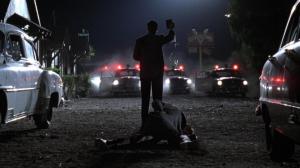 L.A. Confidential feels like the noir thrillers of old but stripped down to its essentials and given a new engine. It’s something that celebrates noir thrillers of old and Old Hollywood but it isn’t so lavish to either the genre or older time period that it loses sight of its own storytelling goals. The elaborate plot is complex and intensely engaging while still being accessible, populated with memorable and incredibly well developed characters, each given their own purpose and own insights that contribute to the larger whole. Hanson’s lasting accomplishment is a near-perfect masterpiece to the power of story structure and characterization. The three lead detectives are compelling on their own terms and the movie keeps them separate long enough that when they do come together it feels like a payoff all its own. Hanson recreates the world of classic film noir and makes it his own, using new Hollywood to lovingly recreate Old Hollywood. It’s the kind of movie I can watch again and again and discover new depths. It gave way to a wave of success for its participants. Hanson never quite delivered another movie on the level of L.A. Confidential, though I’ll posit that In Her Shoes is an underrated character piece. Helgeland has become a go-to screenwriter for many projects low (The Postman) and high (Mystic River) and became a director for A Knight’s Tale and 42. It’s a movie that plays just as strongly today as it did almost twenty years ago, and that’s the mesmerizing power of great storytelling and acting. L.A. Confidential is a lasting achievement that proves once more the power of our darker impulses. It’s stylish, seductive, smart, subversive, and everything you could ask for in a movie.
Nate’s Grade: A
Share this:

The Nice Guys (2016)
 Ever since I heard about its production, and especially after watching the first trailer, I have been intensely anticipating The Nice Guys, mostly because of my fervent and undying love for 2005’s Kiss Kiss Bang Bang. That gem was writer/director Shane Black’s manic and deliriously entertaining comedy noir that reinvigorated star Robert Downey Jr.’s career. The Nice Guys looked very much like a spiritual successor or predecessor given its swanky 1970s setting. While an enjoyable and funny caper, there is a significant gap between KKBB’s genius and the altogether amusing though lesser escapades of The Nice Guys. Perhaps it’s unfair of me to have had my expectations too high, to be hoping for another magical onscreen alchemy like KKBB. Whatever the case, I was slightly let down by The Nice Guys around the time I realized that the best jokes were in the trailer. They are admittedly great jokes but what was left too often hit lower registers of funny. Ryan Gosling and Russell Crowe have great chemistry together and Gosling especially showcases a talent for physical comedy that has been underutilized. When the movie finds ways to undercut detective movie tropes, like Gosling cutting his hand badly after a failed attempt to break into a locked window, that is when it feels most alive and fun. The action elements don’t feel as significantly connected, like a bunch of washout villains like a hitman named John Boy who has no memorable personality. The shaggy dog mystery has some entertaining detours but once again the real draw is the comic interplay of the two male leads and Black’s razor-sharp dialogue. The man perfected the buddy cop interplay at some point, and often the casual conversations and one-liners are more highlights than the set pieces. The Nice Guys is a funny, smart, and diverting detective action-comedy that is a solid effort from everyone involved. It’s just that I was hoping for a touch of the divine again and had to come back to Earth.
Nate’s Grade: B
Share this:

Noah (2014)
 Meticulous director Darren Aronofsky gained a lot of creative cache after Black Swan raked in over $200 million worldwide, a Best Actress Oscar, and heaps of critical acclaim, including from myself (not to imply I was a deciding factor). The man had what all artists dream of, a perfect moment to seize whatever creative project his heart desired. And what he chose was to remake the biblical story of Noah for the masses, with an artistic fury and idiosyncrasy the likes of which audiences have never witnessed. The decision left many scratching their heads, wondering why Aronofsky would waste his time with a story already well told, in an outdated genre (Biblical epic), that would likely turn off evangelical ticket-buyers with any deviations and turn off mainstream audiences with any devotion. It looked like a big budget folly with no way of winning. The box-office is still unwritten, though I suspect the effects will net a pretty penny in overseas grosses, but as far as a creative statement, Noah is far more triumph than folly.
Noah (Russell Crowe) is living his life in isolation from the communities of king Tubal-cain (Ray Winstone). Noah and his wife Naameh (Jennifer Connelly), their two older sons Shem (Douglas Booth) and Ham (Logan Lerman), youngest son Japheth (Leo Mchugh Carroll), and adopted daughter Ila (Emma Watson), are living on the outskirts of civilization, aided by a group of fallen angels. Then Noah is given apocalyptic visions of an oncoming flood and the mission to save the world’s animals. After speaking with his 900-year-old grandfather Methusselah (Anthony Hopkins), Noah is convinced what he must do, and it involves a lot of intensive manual labor.
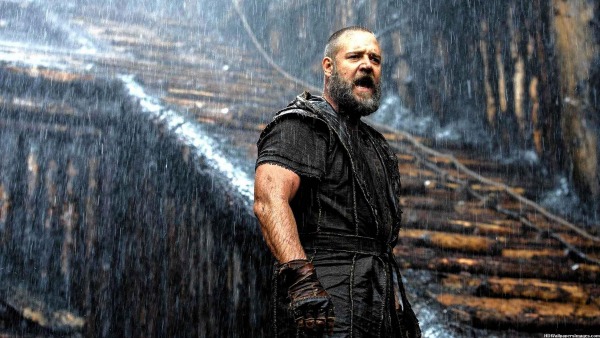 Aronofsky treats Noah and the beginnings like Greek mythology mixed with a Lord of the Rings-style fantasy epic, and it’s madly entertaining. The visuals are stirring, large-scale, and sumptuously memorable (the Earth covered in spiral weather patterns is a standout, along with Noah’s visions and a Tree of Life-style triptych narrating the birth of life). The film has come under fire from conservative critics for its creative deviations from the Bible, but sidestepping a larger conversation, why should a movie be punished because it wants to entertain a wider berth of people than the faithful? Does it truly matter that the people refer to the Big Guy as “The Creator” rather than “God”? Would these people even use the word “God”? This just seems like a petty battle of semantics. It seems like certain critics are looking for any nit to pick. Sure giant rock monsters that were fallen angels might make people snicker, but why should this aspect of the story be any more preposterous than a man and his family gathering two of every biological creature on the planet? I loved the rock creatures, I loved how Aronofsky introduces them, I love how they walk, I love that Aronofsky even finds a way to give them a redemptive storyline, offering an emotional payoff. Seriously, why should these be any harder to swallow for narrative stability?
There were fears that Aronofsky would be less than reverent to the source material with his additions and subtractions bringing it to the big screen; Noah is a Biblical epic for our modern age but also one fervently reverent to the lessons of the tale. First off, a literal version of the Genesis tale would be boring and short. There is going to be some additions and they should be welcomed. What Aronofsky and his co-writer Ari Handel (The Fountain) have done is taken a story filled with casual larger-than-life events and given it a smaller human perspective that is thought provoking. When Noah’s sons ask about wives, it’s personal planning but also a necessary part of, you know, repopulating the planet. They’re being anxious teen males but the small, relatable plot line also finds a way to relate to the larger picture, a tactic Aronofsky frequents. There’s a focus on family, fathers and sons, jealousy, but it really comes down to a personal level, differing perspectives about the overall purpose of man. The human-scale provides a richer context for the Biblical tale’s better-known aspects, like Noah turning to the bottle. As a result, we get the special effects spectacle without sacrificing the potent human drama at work. While the movie may never refer to “God” by name, it’s respectful and reverent.
 Another aspect about what makes Noah so daringly visionary is that it doesn’t blink when it comes to the darkness of the story. Over the years popular culture has neutered the tale of Noah into a cutesy tale about a guy on a boat with a bunch of happy animals. I think we’ve purposely ignored the lager picture, namely how truly horrifying the entire story is. It’s an apocalypse, humanity is wiped out; children and babies are drowning. Everybody dies. The later brilliance of Noah is that it doesn’t mitigate this horror. Once Noah and his family are inside, the floods having arrived, they painfully listen to the anguished wails of those struggling for life in the waters. The movie forces the characters, and the audience, to deal with the reality of a world-destroying cataclysm. Noah’s visions of the ensuing apocalypse are beautifully disturbing. The film takes place eight or nine generations removed from Adam, and God is already willing to take his ball and go home. After watching mankind’s wickedness, you might sympathize with The Creator. Aronofsky’s film has an unmistakable environmentalist stance (how does one tell this story without being pro-nature?), but he also shows you the brutality of mankind. The citizens of Tubal-cain have no respect for life, at one point kidnapping crying young girls and literally trading them for meat to eat. Resources are dwindling and people are pushed to the brink. There’s some sudden and bloody violence, as death is not treated in the abstract or with kid gloves. This is no cutesy story for the little ones. No stuffed animal tie-ins.
Of course once the flood occurs, the story seems like it’s at an end, Noah and his family having only to patiently wait out before starting over. It’s during this second half where the movie becomes even more personal, challenging, and philosophical. Noah believes that his family was spared to save all of those creatures born on Days 1-5, not so much Day 6 (a.k.a. mankind). He accepts this burden with solemn duty, declaring that his family will be the last of mankind to ever walk the Earth. However, spoilers, his own family pushes him to the test of this declaration. His adopted daughter is pregnant. There is hope that mankind can continue if the child is a girl. Noah sticks to his guns, saying that the child will live if a boy but killed if a girl. Now we’ve got a ticking clock, so to speak, while in the ark, and it manages to be a personal test of Noah’s own faith. How far will he go to enact what he believes to be God’s plan? He’s single-minded in this regard but he’s no zealot, more a flawed and troubled man of virtue trying to make sense of an improbably difficult conundrum. That’s the stuff of great drama, finding a foothold in a debate over the nature of man, whether man is inherently evil and shall lead, once again, to the ruination of God’s paradise. Can Noah place the personal above his burden? This looming conflict tears apart Noah and his family, forcing them into hard choices. Even assuming the film wouldn’t end with Noah butchering his grandchildren, I was riveted.
There’s an intellectual heft to go along with all the weird, vibrant spectacle. The film doesn’t exactly break new ground with its fundamental arguments and spiritual questions, but when was the last time you saw a Biblical movie even broach hard topics without zealous certainty? Definitely not Son of God. There’s an ambiguity here to be admired. Noah isn’t a spotless hero. The villain, Tubal-cain, actually makes some good points, though we all know they will be fleeting. Tubal-cain is actually given more texture as an antagonist than I anticipated. He’s a man who interprets man’s mission on Earth differently. Whereas Noah views man’s role as being stewards of the Earth, Tubal-cain views man as having been given dominion. They were meant to reap the pleasures of the Earth. Before marching off to take the ark, Tubal-cain pleads for The Creator to speak through him; he longs for a connection that he feels is missing, and so, perhaps a bit spiteful, he declares to act as the Creator would, laying waste to life. That’s far more interesting than just a slovenly king who wants to live to see another day.
 Aronofsky also benefits from a great cast that sells the drama, large and small. It’s been a long while since Crowe (Les Miserables, Man of Steel) gave a genuinely great performance; goodness it might have been since 2007’s 3:10 to Yuma remake. The man can do quiet strength in his sleep, but with Noah he gets to burrow into his obsession, which just so happens to be sticking to the edict that man does not deserve to spoil the Earth. It’s a decision that challenges him throughout, forcing his will, and Crowe achieves the full multidimensional force of his character. He can be scary, he can be heartbreaking, but he’s always rooted in an understandable perspective. Connelly (Winter’s Tale) overdoes her mannerisms and enunciation at times, like she’s practicing an acting warm-up, but the strength of her performance and its emotions win out. Watson (The Bling Ring) is winsome without overdoing it, Hopkins (R.E.D. 2) provides some comic relief without overdoing it, and Lerman (Percy Jackson) gets to thrive on angst without overdoing it. In short, you’ll want these people to live. Winstone (Snow White & the Huntsman) is always a fabulous choice for a dastardly villain.
Darren Aronofsky’s Noah is a labor of love that maintains its artistic integrity amidst special effects, threats of infanticide, and giant rock creatures. Aronofsky has forged a Biblical epic that reaches beyond the pew, providing added surprise and depth and suspense. The man takes the modern fantasy epic template and provides new life to one of mankind’s oldest tales, staying reverent while opening it up for broader meditation. It’s a weird movie, but the silliness is given a wider context and grounded by the emphasis on the human perspective. It’s a dark movie, but the darkness is tempered with powerful feelings and a sense of hope that feels justified by the end. It’s also a philosophical movie, but the questions are integral, the stakes relatable, and the answers hardly ever easy to decipher. This is a rare movie, let alone an example of a Biblical film, that succeeds by being all things to all people. It’s reverent, rousing, thought provoking, exciting, moving, and a glorious visual spectacle of cinema. Aronofsky’s epic is a passionate and thoughtful movie that deserves flocks of witnesses.
Nate’s Grade: A-
Share this:

Winter’s Tale (2014)
 Every now and then you get to witness a special movie that doesn’t so much offend as it inspires, and what it inspires is a question you grapple with during the entirety of its run time, mainly – How did this get made? At any point, did the producers or actors or anyone stop, take a moment to reflect on the movie they were participating in, and think, “Wait, what is going on here?” Bad movies made by hacks are easy to shrug off because, well, hacks don’t know any better but bad movies (see: InAPPropriate Comedy, or better yet, bleach your eyeballs first). With Winter’s Tale, there are people who should know better, people that have been awarded Oscars. These people should resolutely know a terrible movie while they’re making it. Maybe they did. Look deep into their eyes.
In 1918, Frank Lake (Colin Farrell) is an orphan long abandoned by his family so he could have a better life in America. He hasn’t taken this message to heart. Frank worked as an expert safecracker under the employ of local crime boss Pearly (Russell Crowe), and Pearly hasn’t taken kindly to Frank leaving. Frank is able to escape Pearly’s goons and finds love with Beverly Penn (Jessica Brown Findlay), a wealthy heiress afflicted with consumption. Pearly doesn’t want Frank to get away because Pearly is really a demon in the employ of the Devil (Will Smith, yes you read that right). In the battle of good versus evil, Frank and Beverly appear to be at the focal point.
 I have to give writer/director Akiva Goldsman some credit for making an unabashedly earnest movie in an era of irony and ready-made snark. His goopy romantic fantasy longs to exist in a simpler era, but even then Winter’s Tale would fall apart on many levels. Its sheer unbending corniness is both a blessing and a curse. Magic realism is one thing (check out 2001’s Amelie as a how-to guide), but what Goldsman seems to be going for is a modern fairy tale (our maiden locked away in her tower, true love’s kiss, etc.). The film wants the audience to fall under its spell but instead will likely elicit numerous unintentionally hilarious moments; I was laughing to myself throughout, trying to comprehend all of the hokum and poor decision-making (Will Smith as the devil?).
Let’s begin with the fact that the movie is an obtuse fantasy that feels like it makes up its plot and its rules as it goes along. Bleeding fantasy and fantastical creatures into the everyday world is a marvelous conceit but it needs finesse and careful rule building. Otherwise it doesn’t so much feel like a story with a sense of internal logic as it does a bedtime story that can always just create a new shortcut or extension. The very first few minutes of the film will already push your credulity to the test. We see an adult Peter on the run from Pearly and his goons and all of a sudden he runs into… a white horse. Ah, but this is no ordinary horse, this is a magic flying horse, and Peter flies away to live another day. Yep, within minutes, we’re given a magic flying horse. No groundwork. Worse, the horse just randomly appears when the plot demands, and I think the horse is supposed to represent the side of God in this cosmic battle between good and evil. Whatever, there is a magic flying horse. From there the film gets even cornier. It’s the type of movie that posits the stars are really human beings, and so, in the end, rather than having our hero ride off into the sunset he (spoilers be damned) flies off into space on his magic flying horse and he BECOMES a new star, resting beside the star meaning to represent his beloved (never mind that these stars would be millions of light years apart). If you can read that sentence without rolling your eyes then congratulations are due.
Another problem is this massive time leap that creates far more plot holes. After Beverly succumbs to her illness, which I might add happens literally SECONDS after she’s done having sex for the first time (Colin Farrell killed her with his penis), the film leaps forward to present-day. However, Peter was given immortality through Beverly’s miracle. I suppose you could view miracles as a byproduct of sex. At first glance, this almost seems like a cruel gift; your love is dead and now you have to live forever without her. For no discernible reason, Peter also suffers amnesia, because, really, why not? All he does day after day, presumably for… 90 years, is sketch the same image of a redheaded girl in public places. In the intertwining years, why hasn’t evil Pearly picked up on the fact that Peter is still alive? He’s only been sketching the exact same image. Also, how does Peter even support himself? How does he feed himself? Who are his friends? These are the questions that arise when you take this foolish route with the plot. It could have been avoided with a simply Rip Van Winkle-style hibernation or time jump. Another problem is that Peter grew up with the 90 years of history, meaning he should know what things like the Internet and library cards are. He’s not a man out of time. The solution to Peter being confirmed is to seek out the still-living Willa (Eva Marie Saint, nice to see you again). The problem with this is that Willa should at least be over a hundred years old if you do the math. If the purpose of the leap forward was to just save another character we hadn’t seen previously, why does it have to be 2014? Why couldn’t it just have been 1940 or any other earlier period?
And the central romance between Frank and Beverly is just so boring you wish Frank would move on to someone new. Presumably they fell in love at first sight, which just so happened to be when he was in the process of robbing her home. Ah, but you see, her love redeems him because that’s really the whole role of the sick love interest in movies, to make the other figure a better person through this shared experience of grief. So in this regard it’s no surprise that Beverly lacks defining characteristics outside of her ailment. She plays the piano and falls fast for Farrell’s bushy eyebrows, but that’s all we got here. The entire second act of the film follows their abbreviated courtship, but there’s no real moment where you buy into their romance. Like most of the film’s storytelling, we’re told something is and expected to buy into it 100 percent without flinching. They’re in love, what more do you need? Well, some interesting characters would be a start.
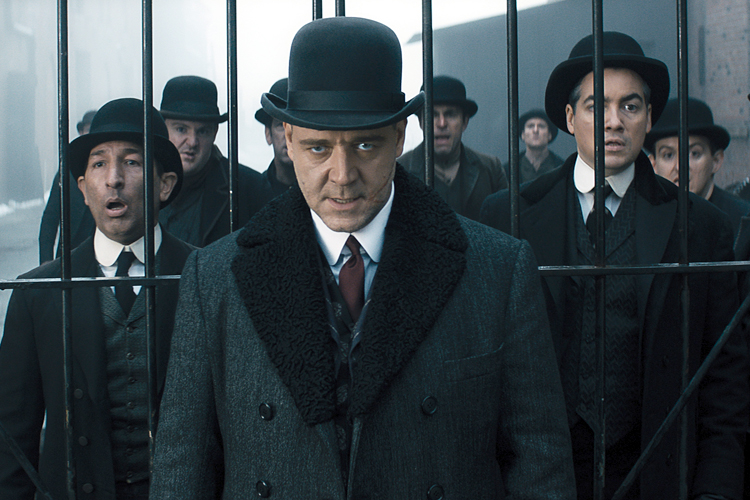 I’m fairly certain that all of these actors were doing Goldman a favor by appearing in this nonsense, but only Farrell (Saving Mr. Banks) walks away favorably. He is the best person onscreen who burrows into their character, ignoring the absurdity of every moment, yearning so hard that you almost want to give in. You won’t. Many will best remember Findlay as the Lady Sybill on TV’s Downton Abbey (she was also the reoccurring ghost on the BBC’s Misfits). Here she gets little else to do but smile and give those knowing looks that all afflicted characters give, as if their illness has opened up the secrets to the universe for them. Crowe’s performance will likely draw up comparisons to his maligned work in Les Miserables, a performance that wasn’t as bad as advertised theater snobs. This performance, however, is as bad, as his Irish brogue seems to overtake him and he comes across like a hotheaded big bad wolf. Jennifer Connelly’s appearance isn’t even worth mentioning as it is that slight beyond the fact that she’s the mother of a terminally ill child (you really thought the movie had any sense of restraint?). The film has numerous well known actors for flashes, like Kevin Corrigan, Kevin Durand, Graham Green, Matt Bomer as Frank’s immigrant father. One suspects their brief time was either a sign that the screenplay evolved as production went or that they were repaying a debt.
I will say the only saving grace in this entire blunder is the cinematography by Caleb Deschanel (The Passion of the Christ). Even when the cheesy special effects take flight, Deschanel makes sure the images are worth watching, having a special skill with the cool hues of the wintry color palette. I wanted to at least credit one redeeming aspect.
The inconsistent plotting and rules, the corny and overly wistful characterization, the overwhelming silliness of every single moment, Winter’s Tale will spark far more guffaws and derision than plaudits. It’s a movie that bludgeons you with its unrelenting maudlin nature disguised as romantic fantasy. The source material is beloved by some but it all comes across as nonsensical twaddle onscreen. Goldsman’s screenwriting credits run the gamut from award winning (A Beautiful Mind, Cinderella Man), to big budget to notorious stinkers (Batman & Robin, Lost in Space). It’s hard to judge the man’s talents with such a wide range of quality. However, I can question the finished results of Winter’s Tale and openly wonder what in the world convinced Goldsman to cash in all his Hollywood cache to direct this dreck. I’m almost tempted to encourage people to watch Winter’s Tale just to try and make sense of it themselves, to try and take in 118 minutes of earnest bad decisions. Whether it’s the magic flying horse, the 100-year-old news writer, or the fact that we’re dealing with a bad guy named Pearly, or Will Smith as Lucifer, but sometimes Hollywood unleashes a disaster that begs to be seen.
Nate’s Grade: D


 nathanzoebl
You must be logged in to post a comment.