Blog Archives
Million Dollar Baby (2004) [Review Re-View]

Originally released December 15, 2004:
Million Dollar Baby, much like its fledgling female boxing character, has come out of nowhere and made a considerable deal of noise. This little homespun film directed by Clint Eastwood didn’t have the glitz and sheen of other awards friendly movies, but now it seems that Eastwood?s own baby may clean up come Oscar time. Can Million Dollar Baby tackle the enormous hype surrounding it? Yes and no.
]Frankie (Eastwood) is a hardened boxing trainer too concerned for his fighters’ welfare to allow them to fight in championship bouts. He’s the kind of cynical old man that enjoys pestering a priest and causing him to unleash an F-bomb. Frankie and his longtime friend Scrap (Morgan Freeman) run a rundown gym and talk un-sentimentally about their older days as prize fighters. Then along comes Maggie (Hilary Swank), a 32-year old waitress who’s got nothing to believe in except her possibility as a boxer. She wants Frank to train her into the champ she knows she can be. He refuses saying he doesn’t train girls. She’s so determined she won’t take no for an answer. Frank finally agrees, especially after some help from Scrap, and starts to teach Maggie everything she needs to know to be a star pugilist. The two begin to open up to each other emotionally and Maggie seems destined to become a force in the ring.
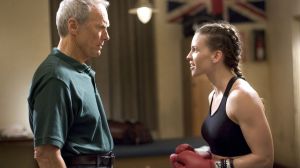
Million Dollar Baby‘s greasiest attribute is its trio of knockout performances. Swank owns every second of this movie. She’s unremittingly perky, conscientious but also dogged, stubborn, and irresistibly lovable. Swank embodies the role with a startling muscular physique and a million dollar smile. Her performance is equal parts charming and heartbreaking. Maggie’s the heart of Million Dollar Baby and Swank doesn’t let you forget it for a millisecond. Come Oscar time, I’m sure she will be walking onstage to grab her second Best Actress Oscar in five years.
No one does grizzled better than Eastwood, and maybe no other actor has made as much of an acting mark by squinting a lot. Million Dollar Baby is probably his best performance to date, though for a good while it sounds like Frank has something lodged in his throat (pride?). Frank has the greatest transformation, and Eastwood brilliantly understates each stop on the journey until landing in a vulnerable, emotionally needy place.
Freeman once again serves as a film’s gentle narrator. There isn’t a movie that can’t be made better by a Morgan Freeman performance. His give-and-take with Frank feels natural and casual to the point that it seems improvised on the spot. Freeman unloads some great monologues like he’s relishing every syllable, chief among them about how he lost his eye. It’s wonderful to watch such a great actor sink his teeth into ripe material and deliver a performance that may net him a long-awaited Oscar (I think he’s due, and likely so will the Academy).
For whatever reason, Eastwood is hitting a directing groove in his twilight years. First came Mystic River, an ordinary police whodunnit made exceptional by incredible acting. Now Eastwood follows up with Baby, an ordinary sports film made extraordinary by incredible acting. Hmmm, a pattern is forming. The cinematography is crisp and makes great use of light and shadow to convey emotion. Eastwood’s score is also appropriately delicate and somber. The boxing sequences are brief but efficient.
Million Dollar Baby is a very traditional story that is at times surprisingly ordinary. Maggie’s the scrappy underdog that just needs a chance, Frank’s the old timer that needs to find personal redemption, and Scrap’s the wise old black man. Once again, an old curmudgeon takes on a rookie and in the process has their tough facade melt away as the inevitable victories pile up. Million Dollar Baby is a very familiar story but then again most boxing tales are fairly the same in scope.
What eventually separates Million Dollar Baby from the pack is its third act twist. You think you know where Eastwood’s film is headed, especially given the well-worn terrain, but you have no clue where this story will wind up. The plot turn deepens the characters and their relationships to each other in very surprising ways. You may be flat-out shocked how much you’ve found yourself caring for the people onscreen. It almost seems like Eastwood and company have used the familiar rags-to-riches underdog drama to sucker punch an audience into Million Dollar Baby‘s final 30 minutes. We’re transported into an uncomfortable and challenging position, and Eastwood won’t let an audience turn away.

Million Dollar Baby is not the colossal masterpiece that critics have been drooling over. For one thing, the group of antagonists is not nearly as textured as our trio of leads. They’re actually more stock roles that further enforce the ordinary story of Million Dollar Baby. Maggie’s trailer trash family is lazy unsupportive batch of stereotypes. The evil female boxing champ just happens to be a German who doesn’t mind playing dirty. One of the boxers at Frank’s gym is an arrogant showboat just waiting to be nasty while the teacher’s back is turned. Million Dollar Baby excels at showing depth and humanity with its lead trio, yet it seems if you aren’t in that circle you’re doomed to wade in the shallow end.
Eastwood shows that great acting and great characters you love can elevate a common framework. The package may be similar to a lot of films before about scrappy underdogs, but Million Dollar Baby lacks comparison in its genre when it comes to its enthralling acting and characters. The father-daughter bond between Frank and Maggie is heartwarming. The final reveal of what her Gaelic boxing name means may just bring tears to your eyes. The results are a very fulfilling movie going experience, albeit one that regrettably may not live up to such hype.
Million Dollar Baby has been showered with heapings of praise and become a formidable Oscar contender. The story treads familiar waters but its outstanding acting and deep and humane characters elevate the material. The film can’t match the hyperbole of critics but Million Dollar Baby is an ordinary but greatly satisfying ride led by compelling acting. The film hums with professionalism and seems to just glide when everything comes together magnificently, particularly in that last 30 minutes. Eastwood is hitting an artistic stride and it’s actually exciting to see what Clint will do next. Million Dollar Baby may not be a first round knockout but it definitely wins by decision.
Nate’s Grade: B+
——————————————————
WRITER REFLECTIONS 20 YEARS LATER

Million Dollar Baby was its own underdog story that showed its strength when it mattered most, taking the 2004 Best Picture Oscar, as well as Best Actress for Hilary Swank and Best Supporting Actor for Morgan Freeman. It wasn’t even on many award prognosticators’ radar until the final month of the year. The odds-on favorite for most of 2004 had been Martin Scorsese’s Howard Hughes biopic The Aviator, a lavish recreation of Old Hollywood with the power of Harvey Weinstein behind it. After 2002’s Gangs of New York went 0-10 with its Oscar nominations, Weinstein vowed this would not happen again and that he would get Scorsese that first directing Academy Award, so no expense was spared with a $110 million-dollar budget, exceeding the previous highest Miramax budget from 2003’s Cold Mountain. The narrative was set, the power of Weinstein was behind it, and the context of Hollywood celebrating its own history has long been an appealing formula for an easy Oscar victory. Then came Clint Eastwood’s scrappy little boxing movie and it sucker-punched the established awards narrative, taking the top prize (Sorry Harvey, but if it was any consolation, The Aviator improved upon Gangs’ ratio, winning 5 of 11 noms).
Twenty years later it’s impossible to discuss the legacy of Million Dollar Baby without talking about the legacy of Eastwood as a director. He’s been directing movies ever since 1971’s Play Misty For Me. He initially stuck to what he knew, thrillers and Westerns, with the occasional passion project like 1988’s Charlie Parker biopic, Bird. It all changed for Eastwood with 1992’s Unforgiven, a searing deconstruction of the Western and masculinity and conveniently digested American myth-making that won Best Picture and Best Director for Eastwood. From there, the flinty-eyed, gravelly-voiced filmmaker was seen as an Oscar favorite, though he was only nominated for Best Director three other times out of the twenty-five films he directed after. Eastwood’s been regarded as some higher-minded adult director, but looking over his long list of directorial efforts, the man has always kept to his preferred milieu of thrillers and Westerns with the occasional somber biopic. The more assumed Academy-friendly projects typically gained minimal traction, usually acting nominations like with Richard Jewell, Invictus, and The Bridges of Madison County. Sometimes they’ve just been complete artistic whiffs, like J. Edgar, Jersey Boys, or Hereafter.
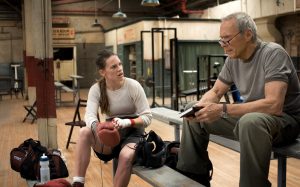
The movies that got the most acclaim from Eastwood as director were the elevated genre movies, be they crime thriller (Mystic River), Western (Unforgiven), or sports underdog drama (Million Dollar Baby). The man has an inherent interest in genre movies. He may make a WWII drama from the point of view of the Japanese, completely in Japanese, but then next he’ll make a movie about being a “Get off my lawn” grumpy grandfather taking on street gangs. He made a movie about sending geezers into space, a juror realizing he may actually be guilty of the crime he’s intended to judge, and a corrupt president covering up his crimes (that guy wasn’t even a convicted felon upon inauguration -ha). The man is at his best when he sticks to what he knows, and when he can collaborate with writers who can get the best out of his instincts, the results can be exceptional. He’s a man interested in telling genre stories, and I can respect that. He’s notoriously spartan in his directorial approach with actors, typically only allowing two or so takes before moving on, a.k.a. the anti-Kubrick. The photography is so stark is might be confused for being black and white. There is a stripped-down-to-its-studs quality to the best of Eastwood’s movies, which is why deconstructionist examinations over genres can be especially rewarding. It allows for a larger space for characters to expand and grow and challenge our expectations, which is where Million Dollar Baby still works so well twenty years after it unexpectedly KO’d the awards circuit.
This is a Cinderella sports story balanced by an invigorating surrogate father-daughter relationship. Maggie Fitzgerald (Swank) is so eager to prove herself as a boxer, and we’re so happy to see her gain success and dignity, helping to give her trainer Frankie Dunn (Eastwood) a new sense of purpose. Everything is going right for this pair and it feels like the Hollywood movie we would all know and love, and then it all gets violently torn away when Maggie is injured in the ring and becomes paralyzed from the neck down. From there, Million Dollar Baby transforms from its sports movie formula and becomes something so much more meaningful and interesting and emotionally affecting. We’re constantly playing a mental contrast from before and after the accident. She’s so optimistic and bouncy and full of life. To see the joyous Maggie using her body to give her confidence and identity and overcoming adversity and intimidating more professional opponents through force of will, and then to see her bedridden, wheezing through a ventilator, and so deeply lost in her slack eyes, it’s something awful. She survived the injury but her spirit has been obliterated. Now, this isn’t a commentary on how disabled people cannot live fulfilling lives and might as well be euthanized. Maggie is the one who makes the choice to be euthanized and she will not be swayed, and this decision puts it to her coach, a lifelong Catholic, to demonstrate his love for his pupil through assisted suicide. To me, all that is WAY more dramatically interesting than if she had simply won the big title fight and proven all her many doubters wrong.

Swank rightfully won her second Oscar for Best Actress with a performance of such vitality and despair. At the end, when she’s stuck in that hospital bed, and she’s trying to chew off her own tongue so she can bleed to death, it’s such a devastating change from the chipper, optimistic scrappy underdog. Eastwood is gruff and growly and nearly unintelligible at points, but his reactions and his generosity as an actor help Swank achieve even higher acting greatness. Strangely enough, while Freeman is perfectly good in his Oscar-winning role, you could have cut him completely from the movie and affected very little, besides needing a new outlet for Eastwood to unintelligibly grumble towards.
It can feel like Million Dollar Baby is two different movies smashed together, one without an ending and one without a beginning. If you felt like you were plugged into that rousing sports underdog movie, I can understand feeling cheated by the rug pull. I feel like the version of this movie, by its end, is the one it wanted to be all along, and it’s using your emotional investment in these characters to make the decisions all the more grueling and tragic. Twenty years later, I think I enjoyed the moments before the accident a little less and the moments after the accident much more, and considering the ending seems like the whole point for Million Dollar Baby, that seems like an endorsement for its staying power two decades hence. It still has enough power today from the performances and where it pushes those characters. Million Dollar Baby is still a winner because it fit so well as a vehicle that Eastwood could elevate. He’s 94 years old and not likely directing too many more movies, but if anyone can keep making movies into their triple digits, it’s this man.
Nate’s Grade: A-
Share this:

Third Person (2014)
 Paul Haggis is the Oscar-winning writer/director of Crash, so a man not known for subtlety. And that can be fine, but with his latest effort, Haggis wastes his time on a sluggish triptych that doesn’t come together in any satisfying or clever manner. Like Crash, we follow multiple storylines that we expect to intersect or crisscross. Liam Neeson plays an arrogant author checked into a French hotel trying to write his next novel. He engages in a series of cruel and flirty games with his mistress (Olivia Wilde). Adrien Brody plays a fashion spy in Italy who grows a conscience to help an immigrant regain her daughter. Mila Kunis is a New York actress struggling to get her life in order so she can regain some measure of custody for her son. Right away, the characters are rather bland and remote, refusing to provide much depth or development. Then there’s the fact that the plot requires so little of them, falling into a deadly lethargy that it can’t shake free from. You keep waiting for something more significant to take place but the characters just dawdle, spouting dialogue that never feels authentic. I kept waiting for the twist spoiled by the trailer for Third Person, and by the time two hours passed, I had to note that it was not a mid-movie twist spoiled by the trailer, it was the twist ending. Did the marketing department watch their own movie? I’ve never seen that before; late plot developments, yes, but never the twist ending. There is a reason why these characters are so poorly developed but it’s still not a satisfying reason to watch blasé people blunder around with little direction for over two hours, especially when they have no discernible connection to one another beyond heavy-handed linked themes. Hey, at least Third Person has a favorable amount of Olivia Wilde nudity to keep your interest. After that’s done, though, you can check out just like this array of substandard and morose characters.
Nate’s Grade: C
Share this:

In the Valley of Elah (2007)
 Is anyone more polarizing in the film world at this moment than writer/director Paul Haggis? He takes a far subtler approach to exploring difficult subject matter this time, and the lack of histrionics makes the message far more serviceable. The film begins as a mystery, with Tommy Lee Jones investigating the disappearance of his son who was supposed to return from Iraq. Then the film transforms into an examination on the hidden, psychological costs of a war that continues to backslide into incivility and chaos. Jones gives a terrific taciturn performance, expressing so much sorrow with his hangdog expressions and sad, soulful eyes. There isn’t a moment in the movie that feels trite or contrived, and its conclusion is surprising in how subdued it plays out, which makes it far more emotionally troublesome. The title is in reference to the location of the famous biblical battle between David and Goliath. Is America Goliath? Are we David? I can’t honestly decode all the metaphors in this solid slow burn anti-war flick. Haggis is bristling with things to say but effectively buries them below the surface so that the viewer is not beaten over the head but yet left with many significant questions. And what police investigation, even in a war away from home flick, would be complete without a visit to a strip club?
Nate’s Grade: B+
Share this:

Casino Royale (2006)
 This is very different James Bond and it’s about time. The Bond film franchise began all the way back in 1962, and it essentially became the blueprint for the modern action movie. Quips, alluring women, exotic locations, car chases, colorful villains, and spoiled plans for greed or world domination. But even if Bond got the ball rolling, the action movie became its own insatiable beast, thanks to the likes of studio bean counters and the ubiquitous uber-producer Jerry Bruckheimer. The 90s Bond revival followed suit. The movies became more about extravagant fireballs, throwaway characters, and preposterous scenarios. After 2002’s Die Another Day, where Pierce Brosnan’s Bond drives an invisible car through a melting ice palace caused by a solar laser from space run by a yuppie playboy who really had the DNA of a North Korean dictator… well, you don’t need to be an expert to figure out that something was rotten in that state of Bond.
The Bond films have great history to them, but let’s not get overly romantic here; a majority of the James Bond movies are outright crap, especially the ones with Roger Moore. There were jaunts into space, men with metal teeth, Timothy Dalton, a title called Octopussy, and Christopher Walken trying to have California fall into the ocean. Let’s face it, half the movies are rubbish. Someone, anyone try and tell me the redeeming qualities of Moonraker. The last good-to-great Bond movie was Brosnan’s debut, 1995’s Goldeneye. The Bond franchise has been in desperate need for a makeover. This is it.
 The producers went back to Bond basics. The long-time producers had the rights to every Ian Fleming novel, except for Casino Royale, which was turned into a cheesy comedy lampooning Bond instead of competing with the franchise. Several decades later, we’re given a serious adaptation of Royale, Fleming’s introductory book about the secret agent that rewrote movie rules. The new Bond has a splash of Jason Bourne in him and seems more tightly wound and hard-boiled. He doesn’t have time for trivial decisions like shaken or stirred. “Does it look like I give a damn?” he barks at the bartender.
Bond (Daniel Craig) is more thug with a badge than a suave secret agent. He’s just risen to double-O status and his boss, M (the incomparable Judi Dench), doesn’t feel that he’s ready or can be trusted. But then, he is the best poker player MI5 has. Le Chiffre (Mads Mikkelsen) is entering into a high stakes poker game worth millions of dollars. He’s playing with the money of African warlords and terrorists and has promised them a great return on their investment. Bond is assigned to gather information and stop Le Chiffre from financing terrorism. Vesper Lynd (Eva Green) is a representative of the bank that will be sponsoring Bond in the card game. It’s up to her to keep tabs on Bond and make sure her bank?s money is wisely invested.
Now this is what action movies should be like. Casino Royale is a terrific ride with great action sequences, great intrigue, strong acting, and some wonderfully exotic locations. The movie, like Bond to Vesper, sure feels the need to prove money was well spent. The story is smart and filled with sharp dialogue, perhaps thanks to co-writer Paul Haggis (Million Dollar Baby, Crash). This is Bond dialed back, stripped of fancy gimmicks and gadgets and left to battle with his wits and his brutality. This is a meat-and-potatoes action movie without irony or frills. It’s serious about its business and business, let me tell you, is good. Casino Royale is monstrously entertaining.
 There was a lot of grumbling when Craig was selected as the next actor to fill the 007 shoes. Some scoffed at the idea of a blonde Bond, as if hair color had shot to the top of the list of important qualifiers. I wrote this about Craig after seeing 2005’s Layer Cake: “This man is a modern day Steve McQueen with those piercing blue eyes, cheekbones that could cut glass, and the casual swagger of coolness. We may never see Craig sweat but he still expresses a remarkable slow burn of fear so effectively through those baby blues.” This man is the perfect candidate for a Bond reboot. He has a boxer’s face, those wonderful eyes, and a sculpted body that will take many a breath away. But even better, Craig is likely the best actor that has even been tapped for 007. Connery will always be the sentimental favorite, and rightfully so, but Craig imbues his Bond with startling amounts of emotion and vulnerability. In the dramatic black and white opening, his first kill isn’t clean and quick, it’s long, drawn out, messy, and leaves Bond shaken, not stirred. His relationship with Vesper gives him even more opportunities to feel and be tortured, sometimes literally (Note: a naked torture sequence is far too intense for children, especially those with their genitals on the outside). Craig gives a rich performance. When he’s chasing bad guys you see the determination of his running, the anguish on his face. When he’s flirting with women you can practically feel the smolder. This is a far more pragmatic Bond and Craig is the right actor for the job.
Green leaves her mark as one of the best Bond girls in the franchise. Usually the Bond women are either respites for fine-tuned lovemaking, or damsels wronged by the eminent domain of evil. She has a nice moment where she sits in the shower in shock after being witness to the reality of murder. She showed a lot of promise and gives a commanding performance on her biggest stage.
Director Martin Campbell has some history with the Bond franchise, restarting it with Goldeneye. He’s a pro at orchestrating action sequences, and there are some doozies in Casino Royale. The beginning sequence is a thrilling foot chase inside a construction zone. Bond’s target, a bomb maker, bounces off walls, swings along ledges, and motors around beams and ladders like he was a trained monkey. It’s an exciting French style of acrobatics called Parkour, and it was used to dizzying effect in this year?s District B13. The chase just goes from one level to another, and the stunts are brutal and of the death-defying variety. It’s a showstopper opening. An airport sequence is also quite memorable, as Bond races to stop a bomb from reaching an airplane. Campbell has taken a hint from the Jason Bourne spy movies and made Bond more reactionary to his surroundings. Many fight sequences feel tense and un-choreographed, even though we know that isn’t the case. When this Bond gets into scuffles you don’t know whether he’ll make it out unscathed. Campbell keeps the pace steady and the visuals crisp. Best of all, Campbell allows the audience to fully see what’s taking place. There’s no MTV-style edits. The film feels totally in control like the best action movies do. You’ll feel battered, bruised, but exhilarated all the same.
 However, Casino Royale is not a perfect action movie. It feels way too front-loaded; all the big action sequences seem to occur within the first hour. The film then settles in for a climactic game of… cards? I’m not one who fell into the spell over Poker on TV the last few years. It just doesn’t seem that thrilling to me to watch one guy turn over his cards and then wait for another to turn over their cards. There are only so many combinations to be had, and hoping for Bond to have a flush to beat out four of a kind is just not high drama. It’s luck. The poker scenes seem to last longer than they should, as does the film as a whole. This is on record the longest Bond movie ever, clocking in at 144 minutes. It’s a whole hell of a lot of fun, but the tacked on ending in Venice seems like an entirely different movie slapped together for closure. The villain is somewhat weak. He’s given a nifty visual item, weeping tears of blood, but it is meaningless. The plot also gets too convoluted for its own good, with double-crosses, triple-crosses, and finally a reveal as to who the Big Bad in Charge was and I could not for the life of me remember who he was. Seriously, there are so many characters and faces shoved in that the producers could throw us a bone. All I’m asking for is some clarity while I chow down on my popcorn.
Casino Royale is the Bond movie Ian Fleming would have paid to see. Craig and Campbell have given new life to a teetering franchise. This Bond is much scrappier and more cunning. The action sequences are slick and the movie is fun and engrossing, plain and simple. In the closing seconds, when the familiar notes of the James Bond musical theme come alive you will feel like the journey has been earned.
Nate’s Grade: A-
Share this:

The Last Kiss (2006)
 Zach Braff has exploded in such a short amount of time. He was underappreciated on the perennially underappreciated Scrubs, but then his breakthrough came in 2004 with Garden State, an aloof, charming love story about personal awakening. After just one movie Braff is now a name-above-the-title headliner. For his second film, The Last Kiss, Braff stars as another young man going through another personal crisis. He even selected the radio-friendly songs for the soundtrack just like he did with Garden State. This new movie is actually a remake of a 2001 Italian film, adapted by Oscar-winning screenwriter Paul Haggis (Crash). But there’s one big difference between Garden State and The Last Kiss? Garden State is actually good.
Michael (Braff) works as an architect in Wisconsin. He’s having a bit of a crisis with the state of his life close to his impending thirtieth birthday. His girlfriend, Jenna (Jacinda Barrett), is pregnant with his child and the two are planning for their future, but all around them relationships are falling apart. Chris (Casey Affleck) feels crushed by the demands of his newborn child and wife. Kenny (Eric Christian Olsen) is looking for guilt-free sex. Izzy (Michael Weston) is a wreck after having his heart broken by his ex. Jenna’s parents (Blythe Danner and Tom Wilkinson) may be splitting after 30 years of marriage, not all of them blissful.
With all this in mind, Michael worries that his life seems too scripted now and deficit in surprises. Then along comes Kim (The O.C.‘s Rachel Bilson), a young flirty college student that shows a strong interest in Michael. He must decide where his life is heading and whose hand he’ll be holding.
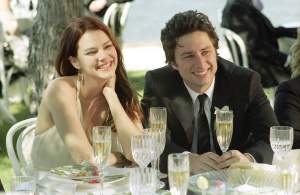 One of the reasons The Last Kiss is hard to get into is that the film never really elaborates why this foursome of guys have it so bad. Chris complains about a dead marriage but maybe his wife would nag him less if he spent more time trying to chip in around the house instead of avoiding his fatherly duties. Kenny is all gung-ho about a hot girl who’s interested in relationship-free sex, but then he runs the other way when, heaven forbid, the girl mentions the idea of commitment. Next thing you know, Kenny is not only running away from this girl but he’s joining Izzy on his cross-country road trip. He’s leaving the state because of the potential whiff of commitment. My friend, after we saw the movie, thought it was too stereotypical (woman: says one thing, wants other, man: scared of anything lasting). She suggested that Kenny slowly turns around his stance and wants to commit to this girl, who he obviously feels to be special. But that would mean The Last Kiss actually cares about the characters of Kenny and Izzy. These two serve more as a spare tire in a male relationship, and both their storylines are tied up with great time to spare.
Worst of all is Michael’s plight. He’s told by his buddies that he’s snagged the “perfect girl,” and from what we see she really is a lovely catch. Michael is freaking out because his life seems too tidy and empty of “surprises” now that a baby on the way. Boo hoo. So to jazz up his surprise-free life he has a fling with a college girl. Surprise! Isn’t your life better now, Michael? If it weren’t for the affable charm of Braff, who emits certain Dustin Hoffman Graduate vibes, the audience would feel no varying degree of sympathy for the dolt. Michael really bruises two innocent people just to needlessly reaffirm what he already knew. It’s hard to get behind all this. We don’t have to like characters, or their actions, but it hurts the drama when you’re simply watching one character hurt others for foolhardy reasons only evident to that character. In Unfaithful, we never really knew why Diane Lane had an affair but at least we saw complexity and strong repercussions.
There’s an element of maturity here and there with the screenplay, but twice as many moments of juvenile fantasies/fears (Look out, women will trap you and control you and expect equal work in return!). The movie has some adult material that works and hits its target but it also falls apart with idiotic musings. The best moments seem to come from the examination of the fading marriage between Jenna’s folks. It’s an interesting slice of life not commonly seen in youth-obsessed Hollywood, and Danner’s outbursts about what it takes to hold a 30-year union together ring true. But this moment falls victim, like many, to a tidy, simpleminded answer. Almost every storyline in The Last Kiss ends with a bow on it all wrapped up. Michael’s told not to give up and he essentially sleeps on his porch, wearing down the anger of his girlfriend through dogged persistence. In fact, the ending reminds me a bit of Secretary, another romance that ended with one lover proving their devotion by staying in one place a really long time. It’s almost insulting that the film presents Michael behaving badly and then excuses him as long as he just sticks it out. It’s not the idea that’s insulting; it’s the fact that The Last Kiss uses this ending as a cheap and easy out.
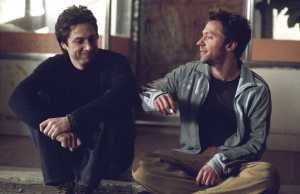 One of the benefits of movies directed by actors is that they tend to generate good performances. Director Tony Goldwyn (A Walk on the Moon) has assembled a nice cast that gives more than the material they get. The real find is Barrett, who may just be the greatest alum of a reality TV show (she was on the London edition of MTV’s The Real World). She showed promise in 2003’s The Human Stain and The Last Kiss is really her declarative ascent. She might start getting a lot of offers that would have normally gone to a Meg Ryan or a Julia Roberts. She shows a range of emotions and her breakdowns are hard to watch because of how well she sells her distress. She handles has a natural ease about her, which pairs nicely with Braff’s laid back, unorthodox charisma. Bilson is cute and crimples her doll face in a way that makes her character seem more naïve than seductress. Braff plays his role a bit subdued. He flashes enough life to not seem like he’s sleepwalking though the same steps he plowed in Garden State. Still, it’s not a very remarkable performance for someone people keep tabbing as a potential voice of a generation (a term nobody could feasibly live up to).
The Last Kiss is an unconvincing, simpleminded, disingenuous drama populated by whiny dolts afraid of the good things they have. It’s hard to sympathize with any of these flawed characters when we never really feel like their gripes hold water. Michael can’t believe his life seems planned out with a wonderful woman who’s having his baby. Solution: screw it up for variety. While it may be the spice of life, it’s also a heedless decision for someone who needs to wreck everything in order to realize what he has/had. This would all be easier to swallow if The Last Kiss didn’t tie everything up with a happy ending that lacked the groundwork. In the end, according to the film, all bad behavior can be wiped clean if you just wear down your significant other. The drama feels forced and the conclusions feel inappropriate. All human beings make mistakes and so do filmmakers.
Nate’s Grade: C
Share this:

Crash (2005)
 A searing look at race relations and a powerful human drama at that. This flick has some of the sharpest memories I’ve had from any movie all year, particularly the relationship between a Hispanic locksmith (Michael Pena) and his daughter and a special invisible cloak. Their first scene, where he talks her out of hiding under her bed, is one of the most beautifully written short scenes I have ever witnessed. A late scene involving the two of them knocked the wind out of me completely and is the most vivid moviegoing moment of all 2005 for me. Every character has at least one great moment, though time is not spaced equally amongst this large ensemble. Crash has the intriguing practice of introducing near every character spouting some kind of racist diatribe, and then the movie spend the rest of its running time opening you up to these characters and getting to like them. Writer/director Paul Haggis has such a natural ear for terse, realistic dialogue that can really define characters with such brevity. A fine movie, despite the overarching coincidences.
Nate’s Grade: B+
Share this:

Million Dollar Baby (2004)
Million Dollar Baby, much like its fledgling female boxing character, has come out of nowhere and made a considerable deal of noise. This little homespun film directed by Clint Eastwood didn’t have the glitz and sheen of other awards friendly movies, but now it seems that Eastwood?s own baby may clean up come Oscar time. Can Million Dollar Baby tackle the enormous hype surrounding it? Yes and no.
]Frankie (Eastwood) is a hardened boxing trainer too concerned for his fighters’ welfare to allow them to fight in championship bouts. He’s the kind of cynical old man that enjoys pestering a priest and causing him to unleash an F-bomb. Frankie and his longtime friend Scrap (Morgan Freeman) run a rundown gym and talk un-sentimentally about their older days as prize fighters. Then along comes Maggie (Hilary Swank), a 32-year old waitress who’s got nothing to believe in except her possibility as a boxer. She wants Frank to train her into the champ she knows she can be. He refuses saying he doesn’t train girls. She’s so determined she won’t take no for an answer. Frank finally agrees, especially after some help from Scrap, and starts to teach Maggie everything she needs to know to be a star pugilist. The two begin to open up to each other emotionally and Maggie seems destined to become a force in the ring.
Million Dollar Baby‘s greasiest attribute is its trio of knockout performances. Swank owns every second of this movie. She’s unremittingly perky, conscientious but also dogged, stubborn, and irresistibly lovable. Swank embodies the role with a startling muscular physique and a million dollar smile. Her performance is equal parts charming and heartbreaking. Maggie’s the heart of Million Dollar Baby and Swank doesn’t let you forget it for a millisecond. Come Oscar time, I’m sure she will be walking onstage to grab her second Best Actress Oscar in five years.
No one does grizzled better than Eastwood, and maybe no other actor has made as much of an acting mark by squinting a lot. Million Dollar Baby is probably his best performance to date, though for a good while it sounds like Frank has something lodged in his throat (pride?). Frank has the greatest transformation, and Eastwood brilliantly understates each stop on the journey until landing in a vulnerable, emotionally needy place.
Freeman once again serves as a film’s gentle narrator. There isn’t a movie that can’t be made better by a Morgan Freeman performance. His give-and-take with Frank feels natural and casual to the point that it seems improvised on the spot. Freeman unloads some great monologues like he’s relishing every syllable, chief among them about how he lost his eye. It’s wonderful to watch such a great actor sink his teeth into ripe material and deliver a performance that may net him a long-awaited Oscar (I think he’s due, and likely so will the Academy).
For whatever reason, Eastwood is hitting a directing groove in his twilight years. First came Mystic River, an ordinary police whodunnit made exceptional by incredible acting. Now Eastwood follows up with Baby, an ordinary sports film made extraordinary by incredible acting. Hmmm, a pattern is forming. The cinematography is crisp and makes great use of light and shadow to convey emotion. Eastwood’s score is also appropriately delicate and somber. The boxing sequences are brief but efficient.
Million Dollar Baby is a very traditional story that is at times surprisingly ordinary. Maggie’s the scrappy underdog that just needs a chance, Frank’s the old timer that needs to find personal redemption, and Scrap?s the wise old black man. Once again, an old curmudgeon takes on a rookie and in the process has their tough facade melt away as the inevitable victories pile up. Million Dollar Baby is a very familiar story but then again most boxing tales are fairly the same in scope.
What eventually separates Million Dollar Baby from the pack is its third act twist. You think you know where Eastwood’s film is headed, especially given the well-worn terrain, but you have no clue where this story will wind up. The plot turn deepens the characters and their relationships to each other in very surprising ways. You may be flat-out shocked how much you’ve found yourself caring for the people onscreen. It almost seems like Eastwood and company have used the familiar rags-to-riches underdog drama to sucker punch an audience into Million Dollar Baby‘s final 30 minutes. We’re transported into an uncomfortable and challenging position, and Eastwood won’t let an audience turn away.
Million Dollar Baby is not the colossal masterpiece that critics have been drooling over. For one thing, the group of antagonists is not nearly as textured as our trio of leads. They’re actually more stock roles that further enforce the ordinary story of Million Dollar Baby. Maggie’s trailer trash family is lazy unsupportive batch of stereotypes. The evil female boxing champ just happens to be a German who doesn’t mind playing dirty. One of the boxers at Frank’s gym is an arrogant showboat just waiting to be nasty while the teacher’s back is turned. Million Dollar Baby excels at showing depth and humanity with its lead trio, yet it seems if you aren’t in that circle you’re doomed to wade in the shallow end.
Eastwood shows that great acting and great characters you love can elevate a common framework. The package may be similar to a lot of films before about scrappy underdogs, but Million Dollar Baby lacks comparison in its genre when it comes to its enthralling acting and characters. The father-daughter bond between Frank and Maggie is heartwarming. The final reveal of what her Gaelic boxing name means may just bring tears to your eyes. The results are a very fulfilling movie going experience, albeit one that regrettably may not live up to such hype.
Million Dollar Baby has been showered with heapings of praise and become a formidable Oscar contender. The story treads familiar waters but its outstanding acting and deep and humane characters elevate the material. The film can’t match the hyperbole of critics but Million Dollar Baby is an ordinary but greatly satisfying ride led by compelling acting. The film hums with professionalism and seems to just glide when everything comes together magnificently, particularly in that last 30 minutes. Eastwood is hitting an artistic stride and it’s actually exciting to see what Clint will do next. Million Dollar Baby may not be a first round knockout but it definitely wins by decision.
Nate’s Grade: B+


 nathanzoebl
You must be logged in to post a comment.