Blog Archives
Dancer in the Dark (2000) [Review Re-View]
 Originally released October 6, 2000:
Lars von Trier’s latest shaky video opus is likely the most unique movie going experience you’ll have all year. Dancer in the Dark is a clever, heartfelt, and achingly beautiful tale of sorrow and redemption. Dancer stars Iceland’s version of Madonna in the elfin Bjork. She plays Selma, quite possibly the nicest but also most stubborn person in the world. She’s an immigrant in 1960s America working long and odd hours to ensure that she can raise enough money for her son. You see Selma is slowly going blind but continuing to work so she can make sure her son will not have to suffer the same inherited illness. So she works late on heavy industrial machinery causing accidents as her condition worsens all to stop her son’s genetic curse she will give to him. Selma’s escape has always been musicals. In life she hears music in unusual places and visualizes life stopping to burst out into a vibrant fully choreographed musical number. Selma’s life continues to degenerate along with her vision as events pile on worse and worse until they all come crashing together.
Dancer in the Dark is no picnic in the park. The movie is haunting but incredibly depressing. Lars von Trier’s previous film (Breaking the Waves) was another wrenching drama with good people going through rough times with no fraction of light at any end of a tunnel. His jerky handheld video work is back capturing the life of Selma and seemingly framing it in a more realistic sense. The video images are edited to look like a documentary and the whole feel is one of raw power. You aren’t merely watching a film, it’s like you are in it witnessing the actions from the sidelines. The escapist musical numbers are shot in glorious still film to contrast the drab realism of video. The colors are bright, the faces are happy, and the cinematography is a wonder to envision.
 Bjork soars and delivers what should be an Oscar-caliber performance. I never knew the queen of alt-rock had such emotive powers. Selma’s innocence is keenly expressed in Bjork and her glassy eyes. Her love for her son is no more evident then all the suffering and tragedy she goes through. All of the suffering and tragedy could be avoided – except her son would not be helped.
The ensemble around Bjork work fantastic magic as well. Peter Stormare is a sad figure trying to just get a glimpse of Selma’s attention. David Morse is a down-and-out policeman who is Selma’s landlord and in need of some cash. He’s afraid to tell his bourgeois wife they’ve run empty with money. Catherine Deneuve turns in the brightest supporting performance as Selma’s co-worker and friend Kathy. She’s torn between trying to stop Selma from continuing on her acts that could cause her harm and helping her along her determination. A great scene as example of her care for Selma is when the two of them are in a theater watching an old Hollywood musical. At this point Selma is completely blind and can’t see what’s going on, so Kathy takes Selma’s palm and dances her fingers in correlation with the actions on screen to Selma’s delight. A simple scene yet so elegant and beautiful.
Dancer in the Dark is a wonderful piece of original film making that gives us the escape of hope and the crush of despair. Selma’s love of musicals and their role in life is perfect symbolism for discussion. Dancer will leave you with a distinct feeling by the end credits. Whether it’s sorrow or bewilderment Dancer in the Dark is a film not to miss.
Nate’s Grade: A
——————————————————
WRITER REFLECTIONS 20 YEARS LATER

I knew going back to my first Lars von Trier film was not going to be a pleasant experience, and oh what an understatement that turned out to be. von Trier has compared himself to a Nazi, his intense methods have driven his actors to the brink, including Dancer in the Dark’s Bjork who swore off the entire profession of acting after her experiences working with him. I am not surprised by this response because his movies have famously followed a formula of a woman being tortured by men, by society, by forces outsider her control, and then she suffers for two hours and dies, a victim of the cruelty of the universe. Repeat. It’s a formula that I’ve since grown weary of and after 2018’s The House That Jack Built I contemplated not watching another von Trier movie again. He just can’t help himself and his nihilistic, heavy-handed impulses handicap his genuine artistic abilities and the merits of his storytelling. Back in 2000, it all felt relatively new. von Trier was the biggest name of the Dogme 95 movement, a Danish collective of filmmakers who swore to adhere to digital video and other aesthetic rules to better replicate reality as it was, ripping away the glossy artifice of Hollywood fantasy. von Trier was subversive, provocative, and exciting, and since then I’ve broken free from the von Trier spell. I was questioning whether I would share Requiem for a Dream or Dancer in the Dark with my girlfriend, who had seen neither, and in hindsight I’m glad I picked Requiem instead (think about that, yikes).
Dancer in the Dark is a powerful experience and one that is unfortunately smothered by von Trier’s heavy hand. It’s easy to root for Selma (Bjork), a Czech transplant in small-town 1960s America (the movie was filmed in Sweden because von Trier is afraid to fly). She already has so much going against her: 1) she’s a woman, 2) she’s an immigrant, 3) she’s poor, 4) she’s suffering from a degenerative disease that will rob her of her sight. Even worse, her son will suffer the same fate unless Selma raises enough money for an operation. She takes on extra work at her factory, even if she’s not exactly qualified, and she’s a hopeful yet stubborn woman who says what she means, earning friends who will champion her. She’s also a lover of old-fashioned Hollywood musicals, as they presented an escape to her as a little girl growing up in poverty. America was the land of opportunity, where everyone dances all the time, sings their hearts out, and gets the girl or the guy by the conclusion of the finale. That dichotomy, between reality and fantasy, and all the cultural and psychological commentary within, is the strongest aspect of the film and a peak of ambition that von Trier never really got close to again with his later punishing dramaturgy. The first musical number doesn’t come until 45 minutes into the movie, and by that time we have had our heroine, her plight, and the first markers of a looming tragedy efficiently established.
 Jeff (Peter Stormare), a lovesick co-worker who shows up every day to maybe drive Selma home, cannot understand musicals, saying people just burst out into song and how unrealistic this is, and Selma agrees, but for her it’s wonderful. She hears music in the world around her and it gives her life, especially as her vision deteriorates. As injustice after injustice falls upon her, Selma uses extravagant musicals as an escape, where everyone is a friend waiting to jump into the number and work together. A common refrain she sings is “there’s always someone to catch me,” referencing the choreography of musicals where the dancers frolic together but it’s also her request to the universe for a little help, for someone to catch her when she stumbles and provide that level support a woman of her means and background lacked in this landscape. The musical numbers staged by von Trier have a chaotic energy to them, assembled from dozens and dozens of sporadically placed cameras. They feel like a burst of imagination while keeping an improvisational feel; less drilled than managed. The first musical number “Cvalda” is a delirious daydream where Selma imagines the various sounds of the work machines creating a percussive symphony and she’s a Mary Poppins conductor. After Bill (David Morse) dies, she retreats to “Scatterheart” to make sense of her actions, with her son telling her she only did what she had to do and Bill rising from the dead to beg her forgiveness. When she’s in solitary confinement and can’t hear any sound, Selma goes into despair. She shouts the lyrics to selections from The Sound of Music to bring music back into her isolated world. Even on her march to execution, Selma copes by turning the “107 Steps” to the noose into a song. Her last words are her singing her final goodbyes to her off-screen son, so until the end musicals were how this woman chose to compensate for the rotten luck of her life. And oh boy was it ever rotten.
There’s one scene in the second half begging for symbolic unpacking where Selma is in the middle of her trial and the prosecution calls a famous Czech film actor and dancer to the stage. It’s none other than Oscar-winning theater legend Joel Grey (Cabaret) and his character doesn’t know who Selma is, even though she told the court she had been sending money to him (she listed her son’s account for his operation under a pseudonym to not risk it being derailed). This famous actor starred in movies in her native Czechoslovakia and crossed over to American cinema. He was an idol for young Selma and another figure to encapsulate the promise of America. Then as he’s testifying on the stand is when Selma drifts back into another rendition of “In the Musicals” and Grey joins her in tapping, and he confesses, “I didn’t mind it at all / That you were having a ball / at my musicals / And I was always there to catch you.” He understands and empathizes. This scene alone is just packed with so many layers of metaphor and projection and symbolic subtext and commentary and you could probably write an entire Master’s thesis on its myriad meanings. At its best, that’s Dancer in the Dark, when von Trier is using the language of musicals to subvert their form, to lay commentary on the un-reality is a rejection of the cruelty of real life, of finding order in disorder, finding community amid a nest of selfish vipers competing for dominance. It’s when von Trier uses our understanding of musicals to really make us think about the associations and contradictions that makes this movie a stirring and sometimes sensational experience.
 Alas, the artistry is seriously wounded by von Trier’s heavy-handed approach to all drama. This has become even more pronounced after where von Trier has obliterated the entire world (2011’s Melancholia) and ruined a four-hour movie with a last-second dumb joke of an ending (2014’s two-part Nymphomaniac). Subtlety is not one of the tools von Trier prefers to dabble with. It’s a shame because he’s a natural storyteller when it comes to establishing vulnerable characters in fraught scenarios and slowly raising the temperature, organically transforming allies into enemies and friends into abusers. This is done very well in 2004’s Dogville as well, a movie I would argue both plays into and succeeds his tortured-woman formula of drama and political allegory. I would say Dogville is his second-best film precisely because I was expecting another unrelentingly unjust ending for another anguished woman. However, where a lighter touch could accomplish his points, von Trier instead brings out a bazooka. Selma’s deadly encounter with Bill happens at the halfway point in the film. From there there’s still another 65 minutes of her suffering to drag out to preposterous proportions. We go through the trial, her cross-examination, her willfully keeping secrets that will only make her look guilty to maintain a promise to a dead man, and then there’s her visitations in jail, her appeal, her rejection of her appeal because the costs will empty the fund’s for her son’s operation, the realization of her impending execution, the march to the execution, her being bound to a board because she cannot stand straight because she’s so scared, her rejection of the hood, her last song while she waits for the governor’s call, and then her abrupt death. There were several points where I was just pleading, “Enough already,” because it was so thoroughly exhausting.
Selma is served to be a martyr of an unjust system that looked suspiciously on immigrants, and Selma elects to accept her fate because anything less would endanger losing what she has set up for her son’s well-being. This woman takes all this punishment and that’s the story, America. That’s the story of America, America. That’s what von Trier is getting at, but the 140-minute movie is so overdone and so drawn out to obsess over the wrongs inflicted on this poor woman that it unintentionally blunts the message. The second half becomes a passion play where we watch our poor Selma elect to accept tragedy and self-sacrifice and endure all the injustices. It’s harrowing and upsetting but would still be so if we didn’t spend half of the movie dwelling on a litany of examples of her fated misery. I’m sure others will argue the crushing nature of the injustice is meant to convey for the viewer the feeling of aggravation and outrage. I would agree that outrage is sought, but when von Trier doesn’t let up, it tilts into overwrought self-parody.
 Dancer in the Dark resonates as strongly as it does because Bjork gives every ounce of herself in this performance. She was originally just going to write songs but von Trier chased her for a year to convince her to also star as the lead. There are moments of awkwardness where it feels like maybe she’s confused in the scene with what her lines are supposed to be, but then her lack of polish is revealed for its true strength. It’s a deeply, deeply felt performance, stunning in how raw and empathetic she gets, subsuming herself into the character and her tribulations. You don’t see the craft so much here as you do sheer, undiluted passion and ferocious naturalism. She doesn’t hold anything back and gives the best performance in any von Trier movie. In my mind, she had been nominated for a Best Actress Oscar that year but this was not the case; she was only nominated for Best Original Song (“I’ve Seen It All”) where she wore her famous swan dress that became a go-to punchline. She was, and continues to be, an eclectic artist and a really weird person, but man could she be a tremendous actress given the right circumstances. It’s a shame that von Trier’s sadistic directing style lead her to quit the entire profession.
Looking back on my original review, I remember seeing Dancer in the Dark with my freshman pal Kat Lewis, who was just the biggest Bjork fan you could find in all of Ohio in 2000. We were both floored by the movie, and Bjork, and cited it as uniformly brilliant. With twenty years of distance, I can say some of the ironic commentary of undercutting musical escapism feels too easy now, seeking credit for daring to ask, “Hey, what if musicals weren’t so happy, huh?” It’s still a worthwhile subversion to explore but simply presenting it as a subversion isn’t enough for a satisfying thematic focus. It’s funny that the moments that stood out to me as an 18-year-old, like Catherine Deneuve dancing her fingers on Selma’s palm to communicate the onscreen dance routine she can no longer see, are the same ones that stood out to me as a 38-year-old. Good writing will still make itself known and felt. There’s plenty to admire and, paradoxically, enjoy about such a depressing movie, but von Trier’s inability to self-edit and hold back his condemnation of humanity is what truly oppresses his movie.
Re-View Grade: B
Share this:

Trial of the Chicago 7 (2020)/ Borat Subsequent Moviefilm (2020)
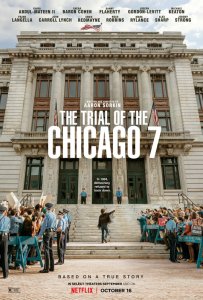 Two new movies have been released for streaming, both coincidentally starring Sacha Baron Cohen, and both are highly political, one by design and the other through fortuitous circumstances of history regrettably repeating itself, and both are simultaneously everything you would expect from their creative forces and worth watching in our tumultuous times.
The Trial of the Chicago 7 is a courtroom drama depicting the injustices applied to a dispirit group of anti-war activists who were charged with inciting a riot at the 1968 Democratic National Convention. The various men of different backgrounds and affiliations had their reasons for being there to protest, whether it was building public support to end the Vietnam War, to gain personal publicity, or to get laid, and tensions mounted inside and out the group as the police plan to send a message, harassed protesters, and in one amazingly prescient moment, remove their badges and name tags to then inflict state-sanctioned violence. This is an Aaron Sorkin movie through and through, and his second offering as a director after 2017’s Molly’s Game, and the best thing about the Oscar-winning wordsmith is that watching one of his movies feels like you’ve just downloaded a complete syllabus. The sheer audacious density of information can be overwhelming, but when Sorkin is able to get into his well-established rhythms, the actors feel like wonderful pieces in an orchestra playing to its peak. The real-life story of the activists has plenty of juicy drama and intriguing characters and intra-group conflicts breaking open, mostly between the divided poles of political leaders Tom Hayden (Eddie Redmayne) and counter-culture prankster Abbie Hoffman (Cohen). Bobby Seale (Yahya Abdul Mateen, HBO’s Watchmen) could have gotten his own movie and suffers many of the worst indignities as a member of the Black Panthers who was grafted onto the case in order to make the rest of the indicted men seem scarier by association. The consistent interference by the trial judge (Frank Langella) is shocking. It’s so transparently biased, racist, and unprofessional that I have to believe that many of these anecdotes actually happened because otherwise they seem so absurdly prejudicial that nobody would believe this happened. For a movie with such a sizeable cast of trial litigants, lawyers on both sides, friends and family, and maybe every police officer in Chicago, it’s impressive that Sorkin is able to provide so many with great Sorkin moments, meaning those grandstanding speeches, cutting one-liners, and intensive cross-examination. Not everyone is on the same level of importance. Several of the Chicago 7 are merely bodies on screen, two of the guys serve as little more than a quip-peddling Greek chorus. You sense there’s more being left out to fit into a crammed yet tidy narrative that plays to our demands for satisfying character arcs, reconciliation, and a morally stirring final stand. As a director, Sorkin doesn’t distinguish himself but he lets his meaty script and the performances of his actors get all the attention. The editing, like in Molly’s Game, can be a bit jumpy but it’s to serve the sheer size of information being downloaded during the 129 minutes. The political parallels for today are remarkable and a condemnation of our modern times. The Trial of the Chicago 7 is an invigorating and, at points, exhausting film going experience that can feel like a retro, overstuffed special episode of The West Wing. It’s everything you should expect and want in an Aaron Sorkin courtroom drama, so if you’re already in that anxious camp then this Netflix original will be preaching to the overly verbose choir.
 Secretly filmed over the past year, Sacha Baron Cohen reprises his outlandish Borat character to once again lampoon people’s not-so-hidden prejudices, anti-Semitism, xenophobia, and misogyny, which seem to have only gotten worse since the first Borat movie in 2006. The flimsy story follows international journalist Borat returning to America to help improve the standing of his home nation Kazakhstan by offering his daughter Tutar (Maria Bakalova) to the Trump administration. It’s really just a platform for Cohen to adopt a series of disguises (his Borat is too recognizable) and dupe some rubes while exploiting their ignorance and patience. Much of the entertainment comes from the cringe-inducing interactions of how far Cohen and Bakalova will go, marveling at their improvisational skills and also dreading what lines they might cross next. I was laughing fairly consistently, though the schitck naturally won’t be as funny the second time around, even with a 14-year gap in movies. I was really impressed by Bakalova and her own commitment and quick-thinking, keeping pace with a pro like Cohen and really stealing the show because Borat can’t go out in public as before. There are some outrageous moments that work, like Cohen imitating a country singer leading an anti-masking crowd into a singalong with ridiculous verses, and some that simply don’t, like an ongoing stretch where Bakalova explains the appeal of masturbation to a gaggle of deadly silent Republican ladies. Sometimes the comedy seems so broadly caricatured that it’s questionable whether its helpful or harmful, especially the anti-Semitic tropes that Cohen embraces as means of satire. Saying something outrageous to an outraged or shocked party isn’t quite enough. When compiling these hidden camera comedies, they thrive on the oxygen given to them by the targets of the prank. If they don’t really engage, it can feel a bit tired and desperate. I’d say the ratio of hits-to-misses is about half and half but the movie has enough big moments to keep fans happy. The most notorious moment has already been widely disseminated through social media and serves as the climax of the movie, strangely both as the high-point of pranks with big names but also as the emotional catharsis. Tutar poses as a foreign journalist and interviews Trump surrogate Rudy “America’s mayor” Giuliani, who drinks, goes into a hotel bedroom alone with Bakalova, and then lays on the bed while slipping his hand down his pants (like a gentleman does). Borat realizes he doesn’t want to offer his daughter to this creepy, sleazy man and rescues her because he truly does care about her. Borat 2, or Borat: Subsequent Moviefilm, takes a scattershot approach to satire and squarely aims at the science-denying MAGA crowd celebrating the excesses of their leader (who doesn’t sound that different from Borat, come to think of it). It might be more admirable in intent than execution but the new Borat can provide a few belly laughs and a more than a few groans as Cohen attempts to make American funny again.
Nate’s Grades:
Trial of the Chicago 7: B+
Borat: Subsequent Moviefilm: B-
Share this:

Requiem for a Dream (2000) [Review Re-View]
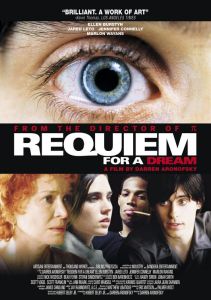
Released October 6, 2000:
Rarely does a movie today affect you that when the end credits roll you’re left silent and unable to speak. Requiem for a Dream is an unforgettable and intensely harrowing experience. You can’t take your eyes away from it. Afterwards you’re left in disarray and unable to think straight for most of the day.
Requiem chronicles the lives of four individuals and their spiraling addictions and missed choices. Harry (Jared Leto) is a small time coke dealer along with his friend Tyrone (Marlon Wayans) who can’t help to taste their merchandise and eventually end up broke again. Harry has gotten into the habit of routinely pawning his elderly mother’s TV set for some quick cash to score with. This happens so often that the pawn broker has a special folder for Sarah Goldfarb (Ellen Burstyn) and her televison. Harry is in love with his more positioned girlfriend Marion (Jennifer Connelly). She’s given an annual allowance of money from her wealthy folks to spend in her own fashion, but she’s denied love or attention. It’s between these four main characters that we will go through hell with.

Ellen Burstyn shows her grace with age and utterly blows your mind with her jaw-dropping performance as the lonely and strung out Sarah. Sarah has no husband anymore or a son to look after. She is alone and old, and those are two bad ingredients. She lives in an apartment complex overlooking the decaying ruins of Coney Island. Sarah has a different addiction than her child, she is addicted to food and is overweight. One day she mistakes a random junk phone call as her ticket to appear on television. She daydreams about gliding across the stage in her red dress that she doesn’t be able to properly fill anymore. With her elderly peers aflutter she tries her best to stick to a diet to fit into her slender dress. When the temptation becomes overwhelming she consults a friend’s doctor for some special “pills” to suppress her appetite.
Harry and Tyrone are embarking on their own dealing dreams to eventually move up the ladder and score some pure coke. Marion and Harry experience their love through simultaneous shoot-ups that space them out and turn them into romantic philosophers. Harry speaks of great dreams he has and the yearning to be something. Tyrone is haunted by thoughts of himself as a child and disappointing his sweetly loving mother who was proud of her son no matter what.

The film starts off in the summer and we are in the good times for all four characters. Harry and Tyrone are successful and racking up profits. Sarah has an unusual amount of energy through her prescribed pills and feels good about herself when she sees actual results as the pounds begin to melt away. Marion dances in her love of Harry and is ambitious with plans for her own design store. Things never are as good as they are again. Fall rolls along and Tyrone and Harry lose their money and lose their ability to secure drugs to sell. Sarah is noticing her pills are not having the same effect they were earlier and decides to ignore guidelines and take them like M&Ms. Marion starts to lash out at Harry’s ineptness at scoring and begins to tear at their relationship. She gets pushed to the brink to score that she resorts to the practice of using her body to secure what she needs. This isn’t even the beginning of how dour and horrible events will become for these four.
One of the strengths of Reqiuem is the treatment of these characters. The film shows sympathy for them and their situations but never condone them. Harry and Sarah are a family that have much love between them they just don’t know how to express it. When Harry discovers his mother is on essentially speed when he pays her a visit he’s left a shattered and crying mess. Only an injection into his veins in that cab ride saves him from his emotions. The relationship between Harry and Marion is initially seen as puppy love or people brought together through a love of drugs, but there are moments where you see the true beauty they have. In the end when Harry is out of state and dramatically in the need of hospitalization he calls Marion just as she’s doing her make-up for a “special” get-together. In a hushed tone she asks when he will be coming home, to which he responds in a mix of pain that it will be soon. She then so sincerely and beautifully asks if he can come back today – to which through an array of tears he agrees. Her sincerity and emotion in this sequence is a powerful glimpse at the love that does exist between the two of them. The second time I watched this film I started crying at this moment.

Burstyn is the stand-out star and if she doesn’t at LEAST get an Oscar nomination then that is the most unjust crime of them all. It’s been some time since her roles in The Exorcist and Alice Doesn’t Live Here Anymore but she still shines like a true gem. She magnificently portrays Sarah’s descent into madness and chemical dependency and leaves us with a chilling and haunting figure. Leto and Connelly show that they aren’t merely pretty faces and deliver their best performances of their lives. Both show incredible warmth and emotion.
Requiem was directed and adapted for the screen by Darren Aronofsky who gave us the head trip that was Pi. Here he uses camera trickery like speed up and slowed paces to show Sarah’s journey through her drugs. Other items include cameras mounted on the actors, split screens, and hyper edits to show the process of every drug shoot-up. His camera moves and tricks are never out of place though, as many gimmicky video director’s are. Each effect has a specific purpose. Aronofsky brilliantly uses a scene where Leto and Connelly are lying in bed besides one another but split screen to show the closeness they can strive but the distance that still exists. While each talks we see shots of the other’s hand carefully caress the other’s body. It’s a scene that’s as powerful as it it thematically romantic.
The tragedy of this is this film has been rated NC-17 by the MPAA and of course anyone who sees it knows the exact scene. The film is being released unrated by Artisan because NC-17 is a commercial kiss of death. The shame is this movie needs to be seen. Make it mandatory in schools. DARE isn’t working but this film will. No one with an urge to use drugs will have that same urge after seeing this harrowing film.
Nate’s Grade: A+
——————————————————
WRITER REFLECTIONS 20 YEARS LATER
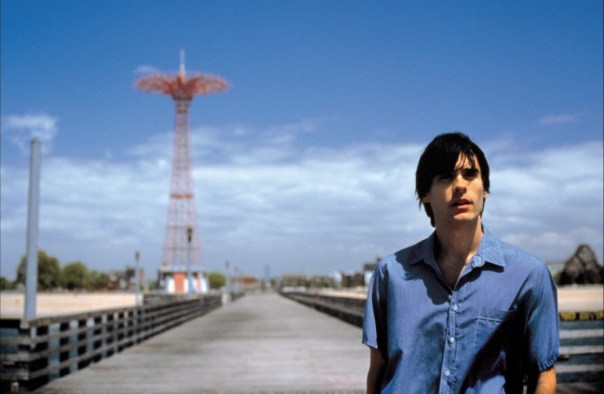
Requiem for a Dream was a seminal event for me. It floored me when I originally saw it during the fateful fall of 2000. I can still vividly recall wandering out into the daylight after the movie and feeling like a zombie, just left to walk aimlessly and mumble to myself. I remember my friend Kat Lewis and I were unable to even articulate sentences other than, “Wow,” and, “Ooof,” for like an hour as we processed the drug-fueled descent into madness and hell. It was a movie that struck me dumb and left a mark. I became a lifelong fan of writer/director Darren Aronofsky afterwards and haven’t been disappointed with his movies yet (his 2014 biblical epic Noah is criminally underrated). At the end of 2009, I declared it the second-best film of the decade. Requiem for a Dream is the kind of movie you can admire for its craft and crushing emotional impact but also one you may never want to watch a second time. I haven’t gone back to it for at least 15 years for that same reason, the hesitation to get back into the morass and experience the tumultuous tumble all over again. Except when I did sit and re-watch it for my twenty-year review, I was amazed how many moments felt strikingly familiar. I was anticipated specific actor inflections (“I’m lonely. I’m ollllld”), gestures, and even sound cues. It was a strange experience because it was like re-awakening dormant memories I had papered over. I thought I had forgotten the movie but, in reality, I must have watched it enough in those early 2000s days to commit so much to memory. I was afraid to dive back because of the depressing subject matter that I expected to rightfully wreck me. Instead I experienced a different sort of awakening, and that was my question whether the movie’s highs might be over inflated and whether the younger version of myself was dazzled by a movie with more evident problems.
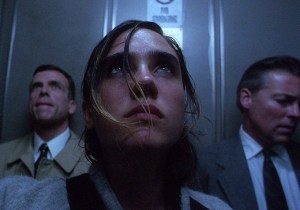
This is not a subtle movie in the slightest, not in subject matter, form, or style, and I’m sure that was part of what 18-year-old me so valued. It’s a movie dripping with style and wild imagination with how best to visualize the elation and instability of drug abuse. The editing by Jay Rabinowitz (8 Mile, The Tree of Life) is abundantly hyperactive, amassing over 2,000 cuts over the course of only 95 minutes (an average “non-Michael Bay” film running the same length has maybe 700 edits). It is all deliberately overwhelming to convey the frenetic energy of the junkie, and the repetition of edits and structures creates visual routines that Aronofsky then escalates or deconstructs brilliantly, using the language of film to immerse the viewer in this world and blend our senses together into a rapturous contact high. It’s not hard to see the inspiration for Edgar Wright’s own hyper-kinetic visual style here. The entire movie becomes a visceral reflection of the characters’ physiological state. The photography by Matthew Libatique (Black Swan, Iron Man) can be alienating, disquieting, but also vibrantly alive and excitedly inventive. This is the first feature film I can recall that used Steadycam cameras and attached them to the actors so that as they moved through their world they remained our stable focal point. It’s such a great and unsettling convergence of perspective. We are attached to the actor close-up. The musical score by Clint Mansell (Black Swan, Moon) is instantly iconic thanks to its sense of foreboding and the central haunting theme from the Kronos Quartet that was used in a thousand trailers afterwards because it’s that gob-smackingly, recognizably brilliant. These talented men were the essential wingmen for Aronofsky to achieve his beautifully horrible vision.
The 90s indie scene and well into the early 2000s was an audacious time that pushed the limits of film style, reshaping our sensibilities of what movies could accomplish, and Aronofsky is a world-caliber stylist. After two low-budget indie films, it’s clear why Hollywood came knocking and offered the man many high-profile titles like rebooting the inactive Batman franchise. There are entire complicated setups devoted to capturing single shots, and there are so many stylish choices that come flying that part of the appeal of the movie is simply lying in wait for what Aronofsky will deliver next, like a magician that keeps you asking for the next trick and the next trick. Some highlights include Sara (Ellen Burstyn) being taunted by her fridge and the hunger pangs she feels, including a delusion where the household appliance comes alive like a monster from an early Peter Jackson horror flick. The use of split-screen is stunning to convey coordination and also disconnect. There’s a lovely scene where Marion (Jennifer Connelly) and Harry (Jared Leto) stare at one another, their fingertips stroking different portions of their bodies, and the editing jumps around from close-up inserts to their slightly disjointed alignment face-to-face. It’s both sensual and romantic. They’re close but also far away. This is the kind of move that attaches a camera to a bungee cord and throws it off the rooftop just for a couple second shot of free fall. It’s the kind of movie that seems to test every visual and audio setting of cinema. I admire the sheer gusto of Aronofsky as a filmmaker and his drive to push himself and his story to the limit.

However, at a super-charged 95 minutes before end credits, Requiem for a Dream is just too much. Its sledgehammer approach to drama had an odd effect on me as a 38-year-old versus than as an 18-year-old. My younger self was dazzled and left profoundly affected and devastated. My current self felt empathy for the suffering of the characters but I wasn’t emotionally connecting with them in the same way I did back in 2000. After some reflection, I think this is because the movie is just trying so hard that it feels like it’s speaking in nothing but exclamation marks, all capital-D drama, that it has its own numbing effect. Things do get considerably worse for our quartet of characters as they go through hell, but because the pacing is so amped, speeding along to get to its next fix, it doesn’t ever let the movie breathe and linger before hitting you again. It’s so fast-paced that the tone becomes more overtly theatrical, and I found myself less able to connect with the characters on a deeper and meaningful level. The limits of characterization were really felt with my recent re-watch, and the love story of Harry and Marion, which felt tragic for me in the early 2000s, now feels empty. Maybe that was the point and it took me decades to see it through, that the two of them are caught under the spell of infatuation but cannot fully grow together from a co-dependent relationship built around self-destruction. Or maybe they’re just underwritten tragic bohemians. The only character that really gets worthy consideration and nuance is Sara. If the movie had slowed down, or even been 20-30 minutes longer, I think it would have more room to make its drama felt in a way that didn’t feel so anxious to the point of bordering on desperation. There are points where Requiem for a Dream feels like an overblown indie version of an after-school special on drugs.
The real heart of the movie is with Burstyn who delivers a career-best performance (she lost the Best Actress Oscar that year to Julia Roberts). Sara Goldfarb is the kind of person everyone might know, an older retiree who feels overlooked, afraid of pushing too hard against a son she can’t control, and someone who wants to feel special one more time in her life. She doesn’t see herself as an addict and the movie portrays her struggle as being analogous to the cocaine and heroin abuse of the other users. Sugar, caffeine, starch, red meat, all common items that can be just as addictive to the brain and body, and Sara’s struggles to lose weight are relatable and take on a horrifying transformation after she starts using prescription drugs as a quick solution. Burstyn is the definition of heartbreaking here and that’s even before she starts popping pills. She delivers one hell of a monologue about her sad state of needing something, anything to cling onto to give her life a glimmer of needed hope. It was the moment that made me instantly recognize the levels of sadness we’re working with. I enjoyed the little burst of happiness she felt when the other neighborhood ladies admired her for her chance of being on television. for her, this was everything. Burstyn goes through a physical transformation, from padded body suits to emaciated and sweat-stained (this is a very very sweaty movie; you can practically taste the grime coating the actors). She’s unrecognizable by the end. Burstyn is so devastatingly good as her character literally loses her mind, becoming one of those crazy people on the street. You feel such a reservoir of grief knowing what drugs have done to demolish this woman’s identity and transmute her into a living phantom.

The social commentary isn’t prevalent, beyond the universality of personal addiction, but it has one major critique and it’s the indifference of the system to those in need. Three of these characters are living through poverty and limited means of self-sufficiency. Marion has a trust fund but has to jump through hoops to maintain it, including at different points selling her body. When Sara visits her doctor to inquire about possible medicine, he never looks at her once and quickly writes her a prescription. When she’s admitted to a psychiatric ward, the orderlies barely even view her as a human being and threaten her with physical harm if she will not swallow her food. The ward doctor can clearly tell she’s not of sound mind but gets her to “sign” her permission for dangerous, experimental electroshock therapy. These are bureaucrats, professionals, and people of means that simply don’t care. The institutions of this country are geared to let people down, to slip between the cracks, and the supports are insufficient. In this regard, Requiem for a Dream is a condemnation for the system and its lack of real compassion.
The closing montage of degradation is so gut-punching, so expertly edited together for maximum symmetry, and so disturbing that I can completely understand if nobody would ever want to watch Requiem for a Dream again. Early on, while re-watching this movie alone, I thought, “My girlfriend would really be intrigued by this and appreciate the style and verve,” and then by the end I reconsidered whether or not it all might be too much to endure. You feel a little dirty by the time it’s all over. I think this time, in 2020 as opposed to 2000, it was too much for me because I was feeling less attachment to the characters and more removed from their drama because everything was so operatic and going by so fast. The movie still has so much technical and artistic ambition to drop my rating too low, but this is not the near-perfect A+ movie I highly regarded in my youth. This is not the second-best films of the 2000s. It’s still a good movie and one that will be felt and remembered long after. It’s hard to shake off its effect which are still felt even if you have difficulty engaging with the people beyond a general level of human empathy. My original review consisted of mostly reciting the plot, an aspect of my reviews I’ve tried to steer away from. I hate reviews that are 80 percent plot synopsis and then only a paragraph or two of critical analysis and deliberation. Requiem for a Dream is still a powerful and immersive movie that masterfully uses the full gamut of film tricks as its disposal. While it might not be a personally-defining movie for me any longer as an adult, it still was for years in my youth, and while it shattered me and left me a shambling mess, it also made me realize just what movies can do.
Re-View Grade: B+
Share this:

Almost Famous (2000) [Review Re-View]
 Released September 13, 2000:
Cameron Crowe’s semi-autobiographical 70s rock opus is like a gigantic hug. It’s warm, engrossing, feel good, and leaves you with a smile wishing for more. Almost Famous may be the best movie going experience of the year. You likely won’t have a better time from a movie.
Fresh-faced newcomer Patrick Fugit plays the 15-year-old version of Crowe who is a budding writer for Rolling Stone. He’s tapped to tour and send in a story on the fictional band Stillwater fronted by singer Jason Lee and guitarist Billy Crudup. Stillwater is everything the typical early 70s rock band was and should be: long hair, tight pants, and continuous inner turmoil and squabbling. Little Fugit captures all of this with wide-eyed exploration as he stretches away from his overprotective mother played by the lovely Frances McDormand. Phillip Seymour Hoffman also pops in to do a brilliant portrayal of music critic Lester Bangs. Kate Hudson shines in a break-out performance as a “band-aid” to Stillwater; which is an uncertain mix of naive groupie and musical muse. She’s together with fellow “band-aids” Anna Paquin and Faruiza Balk.
 The writing of Almost Famous is textured and fully satisfying. The turns it takes down the road are expert and you know you are in the hands of a true artist. Crowe’s direction again makes leaps and bounds in improvement with every new feature. He and his wife wrote all of the songs the fictional band performs and it sounds like, to my ears, he had a few more job offerings he could have easily been suited for.
The acting is phenomenal with every cast member contributing nicely to the fold. Crudup is the anchor, Hudson is the gleaming star, Fugit is the tender surprise, Lee is the emotional lightening rod, and Frances is the mother that we all would love to have deep down inside. She is at the level that is most difficult for a parent: she must begin to let go so they live their own life, yet she’s raised him from harm since he could spew mashed carrots. Surely, if the world had justice Frances will be winning her second Oscar.
Almost Famous is a breathing work that borderlines perfection. It’s a great time to be had just sitting and experiencing what the movie has to offer.
Nate’s Grade: A
——————————————————
WRITER REFLECTIONS 20 YEARS LATER

Cameron Crowe was a filmmaker on a hit streak from his debut as a screenwriter (Fast Times and Ridgemont High), to his debut as a writer/director (Say Anything) and throughout the 1990s, culminating in his greatest achievement, the Oscar-winning and semi-autobiographical Almost Famous in 2000. This is without question the pinnacle of Crowe’s career and he deservedly won an Oscar for Best Original Screenplay for a movie that feels so assuredly magical, textured, and lived-in, an authentic trip down one’s memory that doesn’t lose itself to empty nostalgia but reminds the viewer about the genuine appeal and connection of art, the ramshackle families it can build, and a shifting sense of self under construction that can provide armor and security. And strangely enough it was all dramatically downhill for there for the former hitmaker. Crowe followed up with 2001’s Vanilla Sky, a messy remake of a Spanish sci-fi head-scratcher, and then a slew of movies about bland, melancholy dudes going home to restart their cratering personal lives with the help of a good, patient woman, from 2005’s Elizabethtown, to 2011’s We Bought a Zoo, to 2015’s Aloha (infamously known as the film where Emma Stone plays a woman of Chinese descent). A “Cameron Crowe film” stopped becoming something you looked forward to, and then they stopped even happening. The man who made big studio comedies with big heart had seemed to lose his infallible touch. His last industry credit is creating the one-season Showtime TV series Roadies, following the lives of its subjects on a tour, and it felt clearly like he’s trying to tap back into his own past success. Still, if your career high point is Almost Famous, then it’s a mighty fine pinnacle that many would kill to have as their finest hurrah. It was even turned into a theatrical musical in Britain in 2019.
It’s been quite a while since I’ve revisited Almost Famous and in doing so for this twenty-year review I’ve now also watched the movie for the first time, so to speak. I didn’t realize I had found myself the 160-minute director’s cut (labeled “The Bootleg Cut”). I had always intended to watch this extended edition but never got around to it, and now having done so, I can’t imagine another version that better portrays the highs and lows of this story. The extra (approximately) 40 minutes are mostly extended scenes, conversations that carry on a little longer, pauses that feel more resonant, stories that have more shape, and an epic coming-of-age script set amidst the wonderful landscape of late 70s rock and roll music that now feels even more wonderfully alive. If you were a fan of the 122-minute theatrical version, I have to imagine you’ll be delighted by even more time spent in the company of these characters and inside this amiable world.
 Crowe’s screenplay pools from his own personal experiences as a young reporter for Rolling Stone who traveled with The Allman Brothers Band as well as several famous anecdotes with real-life rock bands. The turbulent airplane that motivates conscious-clearing confessions was from Alice Cooper’s band with Crowe onboard. The guitarist almost being electrocuted onstage was from KISS. The journalist being pulled into the offstage pre-show huddle happened to Crowe by Pearl Jam. The “I am a golden god” line is taken from Robert Plant yelling on a hotel balcony. Lead guitarist Russell Hammond (Billy Crudup) is based on Glenn Fry of The Eagles, and the illustrious Penny Lane (Kate Hudson) is an amalgamation of multiple women. But far from just feeling like a muddled recounting of hazy personal stories, Crowe has done something rare and has melded his own experiences, and the rumors and legends of rock and roll, and transformed them into a movie that is universal, accessible, and brimming with gentle wisdom and hard-won joy. It’s both optimistic and pessimistic, generously character-based but also clearly goal-oriented in William’s (Patrick Fugit) quest to get his long-delayed interview and to write his breakthrough article. It’s an easy movie to fall in love with because Crowe has so expertly put in all the care needed for you to simply immerse yourself in this world and become awash in feeling.
It’s a canvas of insecure people using one another for personal gain. Legendary music critic Lester Bangs (Phillip Seymour Hoffman) warns young William that rock stars are not to be trusted; they only want to make him feel special so they’ll get a good article in return. The Sweetwater band is wary of William and the power he wields, as well as his discretion with what he sees and experiences with them on the road. Russell may or may not be in love with Penny Lane and desires her comfort, but he’s also a perpetual one-foot-out-the-door kind of guy, striking up repeated threats to abandon the band and strike out on a solo career. Penny Lane is so obviously in love with Russell but committed relationships might run afoul of her free spirit sensibilities and her wish to be able to blow up her life and start over at a moment’s notice, channeling a new fantasy life. Lead singer Jeff Bebe (Jason Lee) is distrustful of anyone that might sabotage the band and his ascent. He feels inferior to Russell’s talent. Manager Dick Roswell (Noah Taylor) wants to prove himself capable in direct competition with the much more connected and professional manager, Dennis Hope (Jimmy Fallon). The “band-aid” ladies desire proximity to fame, as well as indirectly serving as muses for the music they love. The band just “wants to look cool.” There’s so much broiling interpersonal conflict colliding, and that’s not even accounting for William’s intense, tenacious overly protective mother (Frances McDormand) who has sheltered him for his life and worries herself sick. All of these people have vibrant interior lives and are trying to project a best-case version of themselves. The illusion of rock and roll, media, and objectivity, personal and professional, eventually fades.
 The performances were career-defining for many of the actors involved, two of whom were nominated for Oscars (McDormand and Hudson), but I want to first talk about Hoffman’s performance because, even though it is brief, I consider it one of his best in a storied career of great performances. Lester’s a cynic who believes rock and roll has long died from commercialization and is populated with phonies eager to taste the sweet life by any means. He’s dubious about William’s aims but becomes a trusted ally and pillar of support during his moments of doubt. He’s been where William has, swooned by interview subjects to diffuse his objectivity (“Friendship is the booze they feed you”). I think he sees himself in William and his desire to write about the industry he loves. Their final exchange is, quite simply, some of the finest writing that has ever existed in cinema. Lester connects with William over their shared “uncool” status, culminating in his greatest advice: “The only true currency in this bankrupt world is what you share with someone else when you’re uncool.” Hoffman starts his performance with breakneck cynicism and then by the end he’s become one of the most genuine believers in the power of human connection. The fact that Hoffman was deadly sick with the flu throughout his shooting days only makes his performance even more astonishing. While the rock and roll shenanigans prove fun, the realest relationship for me with Almost Famous was between these two “uncool” guys bonding.
Crudup (Watchmen) and Hudson (How to Lose a Guy in 10 Days) are so inexorably connected in their performances because their relationship forms one of the movie’s most heartfelt and heart-breaking storylines. Penny Lane is such an instantly transcendent character, drawing others into her orbit and lifting up the orphans of this world into a new family. She’s more than a Manic Pixie Dream Girl (a term first coined in response to Crowe’s film, Elizabethtown); in fact, she’s never really manic in behavior. She wears heavy fur coats, conducts herself like the ringleader of a circus, and ensnares hearts and minds. She envisions herself as a muse, a lover of music, a spiritual guide for musicians to reach new heights, and definitely not just some “groupie.” However, she can’t help but circlle Russell and go against all her better instincts of playing it safe. Her reaction to hearing the news that Russell and the band “sold her” in a card game for beer is a beautifully underplayed moment for Hudson. Penny takes in the hard news, not wanting her carefree veneer to crack, then slightly dabs at a tear rolling down her cheek, adding with a crack of bemusement, “What kind of beer?” It’s so crushing in how underplayed the moment comes across, but you can tell Penny has been deeply wounded, things have gotten too real, and inside she’s rolling (“I always tell the girls, never take it seriously, if ya never take it seriously, ya never get hurt, ya never get hurt, ya always have fun, and if you ever get lonely, just go to the record store and visit your friends.”). Hudson makes it inevitable that you will fall in love with Penny Lane just as rapidly as William. It’s a shame Hudson has been castigated to disposable rom-com junk for much of her career since breaking out.
 Likewise, Crudup’s performance has much more self-awareness than anyone else, even when he’s flailing. He senses he’s not meeting his potential and that can cover his love life as well. He’s married but doesn’t seem too committed to maintaining those boundaries. He enjoys the fame and adulation of being a rock musician but wants more. At the same time, he desires truth, real-ness, and after being called out for his selfish stances, Russell flees the confines of the hotel with William and mingles with the “real people” at a house party. It’s a great little aside for the movie and one of the funnier sequences especially as William is forced into playing keeper. The sequence is a fun escape but it’s also emblematic of the contradiction of Russell as a character. He desires truth but cannot be fully honest with himself, his desires, and his own failings. Crudup is laid back and disarming as he opens up to Russell while still admonishing himself for doing so. By the end, the movie isn’t about William getting the girl, as my friend I saw the film with had hoped, but it’s about William getting his long-elusive interview, and by the end they’re both a little wiser, a little more world-weary, and the ending comes down to these two men and their shared love, not for Penny Lane, but for music itself and what it means to them. Originally Brad Pitt and Sarah Polley were set to play the roles of Russell and Penny Lane, and I cannot imagine both actors being able to out-perform who eventually filled these roles.
Fugit (Gone Girl) was the avatar for the audience and is far more reactionary, taking in the rock and roll lifestyle with so many strange and amusing people. We’re meant to be seduced like he is, and when he hits a personal high, we feel the same elation, like his first night as a journalist when he’s practically dancing back to his mother’s car. That entire plight of William trying to get into the Black Sabbath concert is a supremely written scene how it unfolds. Crowe spends the first 15 minutes of the movie to establish key family drama for William, including the fact that his college professor mother has accelerated his academics and lied about his age. He’s really two years younger than his peers, and I wondered why even include this aspect into the movie. You could readily tell the same story with a 17-year-old William as you could a 15-year-old William. Then I realized that this opening establishes William as always feeling out of place, of trying to catch up to an adulthood he might not be prepared for, and for having to cover an insecurity over his own identity. He’s looking to remake himself just as much as Penny Lane and the Stillwater musicians. Fugit feels like a young discovery without ever getting big moments to steal attention. His performance anchors the film while also being able to be invisible, our eyes and ears into this rarefied realm. I’m a little surprised he didn’t have as big a career as he deserved after Almost Famous, mostly sticking with quirky indie ensembles (Saved!, Wristcutters). He did play as Owen in the deeply polarizing Last of Us Part II video game, a fact might just set off more than a few readers into rage spirals.
 Almost Famous is the kind of movie that has so much going on yet never strays far from its artistic aims, instead taking time to better flesh out re-creating this late 70s showbiz world and the supporting characters. Even a joke character like Fairuza Balk’s “band-aid #3” part gets to have a moment to shine, like when she answers a phone call from William’s mother. She of course blurts out something she shouldn’t, confirming the drug-fueled atmosphere of the mother’s alarmist fears, but then she realizes her miscue and corrects herself. Balk’s character (Sapphire) congratulates the mother on raising William to be a very respectful and good child, lamenting how rare such a thing is becoming, and relating some of her own family experiences. Then, as a comic capper, she ends the call by saying, “Oh, and this is the maid,” and hangs up. A small moment like that serves a plot purpose, amplifying the worry of William’s mother, but it can also be an opportunity for a small character to take the spotlight to make an impression. That is the gorgeous result of Crowe’s writing, that every scene has multiple levels going on, all connected to character and theme.
This is such a bounty of a movie ether at 122 minutes or 160 minutes. It’s an affectionate, humane tale that draws you in with its warmth and genial insights. In my original review, I compared Almost Famous to receiving a hug and, twenty years later, that’s exactly the same kind of feeling I got watching. I was smiling, I was laughing, and I felt nourished by Crowe’s creative opus. It’s a special movie and one that is exactly of its time but also timeless. You can pop this film on again and drift away, and that’s the transporting power of storytelling, acting, and directing all working harmoniously in sync to create a movie that feels just as satisfying as it did in 2000. My original review didn’t go into many specifics, and was a little too overblown about McDormand’s performance, but even at 18 years old, seeing this movie early as part of a college orientation with new friends in my life, I got the big things right. This movie sings.
Re-View Grade: A
Share this:

Gladiator (2000) [Review Re-View]
 Originally released May 5, 2000:
Director Ridley Scott has given the world of cinema some of its most unforgettable visual experiences. But can Scott breath new life into a genre whose heyday was when a badly dubbed Steve Reeves oiled his chest and wrestled loincloth-clad extras in the 1950s?
The year is roughly 180 AD and Rome is just finishing up its long-standing assault on anything that moves in the European continent. General Maximus (Russell Crowe) merely wants to retire back to his loving family and get away from the doom and war that has plagued his life. This is made all the more difficult when the ailing Emperor bypasses his treacherous son Commodus (Joaquin Phoenix) and decides to crown Maximus as the Defender of Rome. Because of this Commodus rises to power through bloody circumstances and has Maximus assigned to execution and his family crucified. You’d think crucifixion would be so passé by now. Maximus escapes only to be sold into slavery and bought by a dirt-run gladiator training school. As he advances up the chain and learns the tricks of the primal sport he seeks but vengeance for his fallen family.
Gladiator is an absorbing and sweeping spectacle of carnage and first-rate entertainment. The action is swift and ruthlessly visceral. The first movie in a long time to literally have me poised on the edge of my seat. The blood spills in the gallons and life and limb go flying enough your theater owner may consider setting down a tarp.
 What Gladiator doesn’t sacrifice to the muscle of effects and action is storytelling. Are you listening George Lucas? Gladiator may unleash the beast when the rousing action is loose, but this is coupled with compelling drama and complex characters. Phoenix may at first seem like a snotty brat with an unhealthy eye for his sister (Connie Nielsen), but the further Gladiator continues the more you see in his eyes the troubled youth who just wants the love of his father that was never bestowed to him. Maximus is a devoted family man who regularly kisses clay statues of his family while away, and must ceremoniously dust himself with the earth before any battle.
The acting matches every sword blow and chariot race toe-for-toe. Russell Crowe marks a first-rate staple of heroism. Every calculating glare he exhibits shows the compassion and ferocity of this warrior. He becomes a rare breed – an action hero who can think and actually act. Oliver Reed, in what sadly was his last role, turns in a splendid and charismatic turn as the head of the gladiator school of Fine Arts and Carnage. Mysteriously everyone carries a British accent closer to them then a toga two sizes too small. Even Crowe who is nicknamed “The Spaniard” speaks like he walked out of Masterpiece Theater.
The effects and visuals are a sumptuous feast. The aerial shots of Rome and the Coliseum are simply breath taking. Gladiator rivals American Beauty for the most rose petals used in a movie, except in this one they don’t shoot out of Mena Suvari’s breasts.
Ridley Scott’s track record may be hit or miss but Gladiator is definitely one sorely not to be missed.
Nate’s Grade: A-
——————————————————
WRITER REFLECTIONS 20 YEARS LATER

As Russell Crowe famously barked, “Are you not entertained?’ It was hard to argue in 2000 and it still holds true to this day. Gladiator was a big-budget throwback to the swords-and-sandals epics of old Hollywood. It was a box-office hit, made Crowe a star, and won five Academy Awards including Best Picture. My own elderly grandmother loved it so much that she saw it three times in a theater that summer, which was practically unheard of in her later years (she also, inexplicably, loved the 1999 Mummy movie). It was a millennial DVD staple. I can recall everyone on my freshman dorm hall owning it and hearing it on regular rotation. As studio projects were getting bigger with more reliance on CGI, Gladiator felt like a refreshing reminder on how powerful old stories can be with some modern-day polish. Re-watching Gladiator twenty years later, it still resonates thanks to its tried-and-true formula of underdog vengeance.
We all love a good story where we follow a wronged party seek to right those wrongs, plus we all love a good underdog tale, and given the pomp and circumstance of the gladiatorial arena, it’s easy to see how this movie was engineered to be a success from the page. This isn’t a particularly new story. Stanley Kubrick’s Spartacus mined the same territory with an even bigger scope, both in politics and in war, and there have been many movies covering the same history around the rise of Commodus, like 1964’s The Fall of the Roman Empire and The Two Gladiators. We’ve seen this kind of story before even in this setting but that doesn’t matter. The familiarity with a story isn’t a hindrance if the filmmakers take their story seriously and make an audience care about its characters. It all comes down to execution. As long as the filmmakers don’t get complacent and take that formula familiarity for granted, old stories can have the same power they had for decades because, deep down, cooked in their structure, they just work.
 Gladiator gives us everything we need to know by the conclusion of its first act, introducing us to Maximus, showing his leadership and loyalty, giving us the strained father-son relationship with Marcus Aurelius and Commodus, the expectations of the son of his ascendancy, the regrets of the father and hope for a return to a Republic, the reluctance of Maximus to be more than a general of Rome, and finally after the murder of the old emperor, a decisive choice for Maximus that challenges his morals and responsibility. From there, screenwriters David Franzoni (Amistad), John Logan (The Aviator), and William Nicholson (Les Miserables) put our hero and villain on parallel tracks heading for a collision. Maximus rises through the ranks of gladiators and builds a name for himself, getting called to the major leagues of bloodsport, and Commodus schemes to have his old enemy killed with increasingly dangerous trials in the Coliseum. It’s a natural progression and escalation, which makes the storytelling satisfying as it carries on. Gladiator never had a finished script when they began filming, which has become more common with big budget tentpoles with daunting release dates and rarely does this work out well. However, this is the exception (the screenplay was even nominated for an Oscar). It should be stated that the events of Gladiator pay very little to the actual history but fidelity is not necessary to telling a compelling story (the real-life Commodus rose to power after dear old dad died from plague). Use what you need, I say.
Ridley Scott was on an artistic hot streak during the start of the twenty-first century, directing three movies within one and a half years of release and earning two Oscar nominations. He wanted to veer Gladiator away from anything too cheesy of older swords-and-sandals epics, as reported. This isn’t about homoerotic wrestling with men in unitards (in Jerry Seinfeld voice: not that there’s anything wrong with that) and instead about the grit and superficial glory of Rome. The opening battle in Germania is meant to show Maximus in action but it also shows just how overpowering the Roman Empire was during this time period. They just massacre the remaining German tribe, and there’s a reason we don’t focus on battle strategy and instead on the chaos. The conclusion of the battle is a shaky camera mess of bodies and flames and dark shapes. It’s a bloody mess and not something to be glorified. Maximus is tired. His men are tired. Even Marcus Aurelius is tired of his decade-long conquering of a map, adding little inches to an already gargantuan territory. When is it all enough? When is war a self-perpetuating quagmire?
 This same dismissive view over conquest and glory carries throughout. When Maximus becomes a slave, he must play the blood-thirsty appetites of the crowd to reach his goals. He disdains the theater of combat, the delaying of strikes simply to draw out the drama of two men fighting to the death. Later, these same venal interests of the mob form a protection for Maximus. He’s too popular to just be assassinated because the Roman people just love watching how he slays opponents. There’s an implicit condemnation of popular entertainment built around the suffering of others. Scott has a purpose for his depictions of violence, and you could even make the argument he is drawing parallels between the bloodthirsty crowds of the Coliseum and modern-day moviegoers screaming for violence. What are the human costs for this entertainment? It’s not explicitly stated, and some might even say this level of commentary for a movie awash in bloodshed makes any such condemnation hollow or hypocritical. Maybe. The violence feels like it has weight even when it can border on feeling like a video game stage with enemies to clear.
Crowe (The Nice Guys) was already making a name for himself as a rugged character actor in movies like L.A. Confidential and The Insider, but it was Gladiator that made him a Hollywood leading man, a title that he always seems to have felt uncomfortable with. Crowe wasn’t the first choice of Scott and the filmmakers (Mel Gibson turned Maximus down saying he was too old), but it’s hard to imagine another person in the role now. Crowe has a commanding presence in the film, an immediate magnetism, that you understand why men would follow him into hell. That flinty intensity plays into the action movie strengths, but there’s also a reflective side to the man, a sense of humor that can be surprising and rewarding. There’s more to Maximus than avenging his wife and child, and Crowe brings shades of complexity to an instantly iconic role. He finds the tired soul of Maximus when he could have simply been a kickass killing machine. Between Crowe’s three Best Actor nominations in a row from 1999-2001, I think he won for the wrong performance. It’s a shame Crowe hasn’t been nominated since, which seems downright absurd. People have forgotten what an amazing actor Crowe can be, singing voice notwithstanding (I need a sequel to Master and Commander please and thank you).
 This was also a breakout role for Joaquin Phoenix (Her), who has risen to become one of the most celebrated and chameleon-like actors of his generation. The character of Commodus is your classic example of an entitled child who doesn’t understand why people don’t like him. He’s a sniveling villain prone to temper tantrums (“I am vexed. I am very vexed”). Much like his co-star, Phoenix finds layers to the character rather than resting on a stock villain characterization. He’s really the jealous son who envies the preference and love given to Maximus, first from his father, then from his widowed sister (Connie Nielsen), and then from the Roman people. He whines that they love Maximus in a way he will never deserve. It’s hard not to even see a Trumpian psychology to Commodus, a man not equipped for the position of power he occupies who longs for adulation he hasn’t earned. You can hate the man, but you might also feel sorry for him despite yourself. When he wants to be pompous, he can be hilarious (I adored his quick reaction shots to the theatrical combat). When he wants to be creepy, he can be terrifying. You can even see some of the broken pieces here that Phoenix would masterfully use to compose his Oscar-winning Joker performance.
The supporting cast was gifted with great old actors getting one last victory lap. Richard Harris was so stately and grandfatherly that it got him the role of Dumbledore in the Harry Potter franchise. It also served as a great sendoff for Oliver Reed (Oliver!) as Proximo, the selfish, trash-talking former gladiator turned gladiator trainer. Reed died months into the production and before he had wrapped his part, requiring extensive reworking from the screenwriters (Logan was on set for much of the production to cater to the immediate day-to-day story needs). Scott used a body double and parlayed visual effects to recreate Reed’s face, much like what 1994’s The Crow was forced to do after the unfortunate death of its star, Brandon Lee. I kept looking for what moments would be Reed and what moments would be the CGI-enabled Reed double, and it was harder to determine than I thought, so nice job visual effects team. Reed had a reputation of being a carousing reprobate, so having a final performance that allowed him to tap into those old impulses plus the regrets of older age was a wonderful final match.
 The other big takeaway upon my twenty-year re-watch was how recognizable and stirring Hans Zimmer’s famous score was, which lost the Oscar that year to Crouching Tiger, Hidden Dragon, and that seems insane to me. Zimmer has been in a class all his own since the 90s with classic, instantly hum-able scores for True Romance, The Lion King, The Dark Knight, Inception, and The Pirates of the Caribbean, which borrows heavily from his theme for Gladiator. The score greatly adds to the excitement and majesty of the movie and can prove transporting by itself.
A truly bizarre post-script is the story of how the studio tried to develop a sequel. Gladiator was hugely successful but any sequel presented problems. Given the death of its star, following another character makes the most sense, and yet that’s not the direction the screenplay took. Eventually, the sequel to Gladiator was going to follow the ghost of Maximus as it travels through time including to modern-day. Just take a moment and dream of what could have been. Alas, we’ll likely never get time-traveling ghost Maximus now and we simply don’t deserve it as a society.
Reviewing my original film critique from 2000, I feel that my 18-year-old self was more entranced with making snappy, pithy blurbs than going into further detail on my analysis. My early reviews were far more declarative, saying something was good or bad and giving some detail but not dwelling on going deeper into the examination. This line, “The blood spills in the gallons and life and limb go flying enough your theater owner may consider setting down a tarp,” makes me cringe a little because it’s just trying too hard to be casually clever. I do enjoy the Mena Suvari rose petal joke. Still, I celebrated that a studio movie could emphasize its story first and foremost and my observations are still valid. I’m all but certain the only reason I knew who Steve Reeves was back then was because of his many appearances via Mystery Science Theater 3000 covering his cheesy swords-and-sandals films of old that Ridley Scott was so eager to avoid recreating (“Do you like films about gladiators?”)
Because the movie does so much so well, with some exceptional, it’s hard for me to rate Gladiator any lower than my initial grade of an A-, so that’s where I’m keeping it twenty years later. I think the national conversation has cooled on Gladiator, forgotten it because it wasn’t quite as audacious as other examples of early 2000s films, but it sets out to tell a familiar story on a big canvas and deserves its plaudits for somehow pulling it all off with style and gravity. It would be flippant to say Gladiator still slays the competition but it’s still mighty entertaining.
Re-View Grade: A-
Share this:

Downhill (2020)/ Force Majeure (2014)
 I’ve been meaning to watch 2014’s Force Majeure for some time but it was one of those movies that just fell behind and got trapped by the ever-increasing backlog of “to see” films. Then I discovered that there was to be an American remake by the Oscar-winning writing team behind The Descendants and I decided now would be a good time to go back to Force Majeure. But I purposely chose not to watch the Swedish original until after having watched the American remake, Downhill, to delay prejudicing myself. Both movies have value as cringe comedies prodding fragile masculinity, though the Swedish import runs more with the cascading consequences and the English remake plays more broadly with its big stars.
Both movies follow families on skiing vacations where the father (Johannes Kuhnke as Tomas, Will Ferrell as Pete) abandon their wives (Lisa Loven Kongdli as Ebba, Julia Louis-Dreyfus as Billie) and children when an approaching avalanche looks to be imminently deadly. It proves to be harmless but the scare it created was very real, and the damage to this family is also very real. In their dire moment of need, as death looked increasingly possible, this family watched its patriarch run away to save himself (and not before grabbing his phone). The father denies running away, finding his own slippery slope of excuses to pretend and convince his family that everything is still the same.
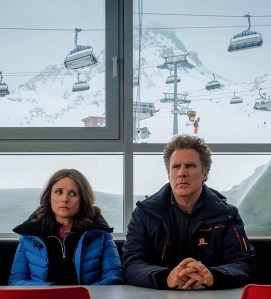 Downhill takes the very specific tone of the Swedish original by writer/director Ruben Ostlund (The Square) and plays it safer and more broadly. There’s an added context of the ski lodge being a couple’s resort with the idea of horny and available alternatives just a slope away for fun. The movie is practically throwing a more traditionally “manly” and virile romantic candidate at Billie and it’s so obvious and immediate that it reminded me of the sexy yoga instructor from 2009’s Couples Retreat, another movie that involved a holiday retreat with two camps, one more family-friendly and another more hedonistic. It feels too convenient and crass to immediately present our heroine with prime cheating options and have her question her own fidelity. In Force Majeure, one of the best and most awkward moments occurs when Tomas tries to portray himself as an equal victim to his own shortcomings as a man. He lists several faults, including infidelity, that don’t phase his wife, which implies she is well aware of this man’s flaws. It’s such a pathetic moment of emotional manipulation that incredulous laughter is the only natural response, and the movie makes the viewer stay in that uncomfortable squirm. Tomas lays on the floor wailing like a child, which then triggers his children to come out and lay upon their weeping father and then admonish their mother to follow their supportive lead. It’s a hilarious moment and borne from the organic developments tied to character relationships. In Downhill, by contrast, we get stuff like the sexy ski instructor and a really horny, handsy lodge lady (Miranda Otto, in thick accent).
That’s not to say the remake doesn’t find effective ways to make the most of its American infusion. There’s a scene where Pete and Billie are complaining to the ski lodge staff because someone must account for their perceived injury. The moment doesn’t go as they hoped and the security head (Game of Thrones’ Kristofer Hivju) refuses to apologize or admit any wrong. He points out all the warnings that the American couple somehow missed, and this only causes Billie to grow in her impotent agitation. It’s a moment that plays to the ugly American stereotype of self-absorption and the insistence to be heard. This scene would not have worked with the Force Majeure characters at all. Billie is a more interesting character and given more ambiguity and flaws than Ebba, who is often the perplexed voice of the audience. There are adaptation changes and new jokes that work for Downhill but more often it doesn’t explore the comic avenues open to it (hashtag jokes… really?). The best jokes are frequently holdovers.
Something I enjoyed exclusively about Force Majeure was how it widened its scope to include the contagious nature of questioning masculine assumptions. The supporting characters have more significance than in Downhill. Tomas’ friend, Mats (Game of Thrones’ Kristofer Hivju), begins as an awkward lifeline trying to offer meager supportive explanations to his beleaguered friend’s cowardice (“You ran away so that you could come back and dig everyone out, right?”) and then he too is negatively affected. His much younger girlfriend begins to look at him differently and with suspicion, wondering if he too would disappoint when under a similar life-threatening scenario. She questions whether it’s simply a generational divide and an older generation (Mats) just doesn’t feel as brave and selfless. This eats away at Mats and wreaks havoc with his relationship. You too might consider how well you really know your loved ones and how you might respond as well. It’s such a wonderful what-if scenario to apply to one’s self. This contagious nature of doubt makes the story feel that much more interesting when one man’s failings can spiral outward and ensnare others. This deepened the dark comedy and provided interesting and complimentary side characters. With Downhill, we don’t really get any other characters on the same level of consideration as our main couple, Pete and Billie.
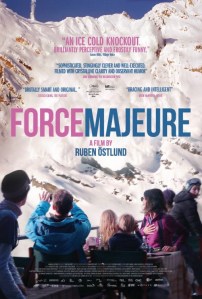 The children actually play a bigger role in Downhill as the relationship between the sons and their father is on the brink. They see him decidedly different and Pete spends time trying to regain their favor and trust and, naturally, failing. With Force Majeure, the children are kept on the sidelines and they’re more worried that mom and dad may be doomed to a divorce rather than being upset or disappointed with their father. Downhill clearly aligns the sons with their mother and has Billie call upon them to provide corroborating testimony to her account in one deliciously awkward extended moment. It’s one area where Downhill bests its source material but again that’s because it also dramatically scales down the importance of supporting adults.
Ferrell (Holmes & Watson) and Louis-Dreyfus (Veep) are such an enjoyable comedy pairing and work together smoothly for Downhill’s broader aims. The Swedish actors are far more subdued, understated, and dry, dissolving into playing mundane, regular folk. You’re not going to get that with Ferrell especially. His big screen buffoon tendencies play well for Pete’s blustery self-deluded narcissism, but he lacks the bite for the destructive self-pity that emboldened Kuhnke. Ferrell’s performance is more restrained than you might assume but he still doesn’t feel like the right fit for the character and where he needs to go. He never stops being seen as Ferrell. Louis-Dreyfus is such a pro and is able to navigate the bleaker comedy with great precision. Her shaken monologue retelling the avalanche incident and pausing on “… to die, I guess” had me rolling.
Downhill is over 30 minutes shorter and yet it feels stretched thin, circling the same comic points, which can make the film feel frustratingly smaller in scope and ambition. The endings are different and come across a similar message over never knowing how a person may respond in the middle of danger. Force Majeure concludes with a scenario that allows its wounded males to save some honor and the women to question their own responses, a paradigm shift of gender expectations. The triumphant recapturing of masculinity builds to its own satirical breaking point, ready to laugh at Tomas feeling like a ridiculous John Wane-style cowboy. In contrast, the American ending doesn’t feel as rich or as earned as its predecessor.
 Downhill is an accessible and funny remake that has some smart deviations from its source material to deliver its own version, and sometimes it feels like the filmmakers want to make a much more mainstream comedy. The tonal identity issues sap the comedic and dramatic momentum of the story, which can make the overall film frustrating and unsatisfying at times while you wait for it to settle. Then its 85 minutes are over and it’s done. Force Majeure, on the other hand, is the most confident, strident, and awkward viewing, not to mention longer viewing at two hours in length. It’s actually too long and with a few segments that could be trimmed or removed entirely (drone flying, the first set of friends, getting lost in a snowy fog). There’s even a running joke where the gag is simply that the ski lifts and moving sidewalks are just super slow. The movie takes its understated, dry comic sensibility even to its relaxed sense of pacing. Both movies are funny and emphasize different aspects of the premise of the consequences of cowardice. I likely would have enjoyed Downhill less had I seen Force Majeure first but it’s still a decent American remake for something that was so calculating and exact in tone, a laugh-out-loud comedy that doesn’t play like a comedy. Still, co-writers/directors Jim Rash and Nat Faxon (The Way Way Back) have enough skill and polished instinct that even a less sophisticated, more obvious version of Force Majeure is still entertaining enough. It might lack some of the edge of the original but Downhill is an agreeable comedy of disagreeable decisions.
Nate’s Grades:
Force Majeure: B+
Downhill: B-
Share this:

Les Miserables (2019)
 I can’t help but feel that France made a mistake when they selected their official entry for the 2019 Oscars. Les Miserables is a perfectly fine, if not good, cop thriller with a social urgency bubbling under the surface to provide added depth, but it’s no Portrait of a Lady on Fire, which was sumptuous and one of the best films of the year. Regardless, this movie follows a new officer on his first day transferred to his new unit in the ghettos of Paris where his experienced partners have harassed the mostly Muslim immigrants to the point of simmering community resentment. Then, in the middle of a pitched crowd of kids fighting the officers, an accident happens, the incident is recorded via a drone camera, and different factions are racing to get a hold of that footage and its inherent leverage. Les Miserables has a docu-drama cinema verite visual approach and plenty of authenticity in its details of beat cops, a minority community under surveillance and mistrust, and the corrupting influence of power. It’s an efficiently made thriller with some potent drama. However, it takes way too long to get going. That drone incident doesn’t happen until an hour into the running time, beyond the halfway point. Until then it’s setting up the various characters and grievances and starting to test our new transfer with how comfortable he will be accepting the borderline behavior of his fellow officers. I really felt like once the drone incident hit the rest of the movie would be off like a shot, a race to the finish, and it’s just not. It concludes too quickly and then introduces a revenge assault that made me yell loudly, and profanely, at my TV when it faded to black without any legitimate ending. I think writer/director Ladj Ly is going for the ambiguity of whether or not these characters are in their “corrupt” and “lost” boxes that society has forced them into, whether they will have their humanity stripped away to become another statistic in an ongoing struggle, but I don’t think a non-ending helps his cause. It makes the movie, already feeling misshapen in structure, feel incomplete. Ending on a quote by Victor Hugo is not the same. Les Miserables is a finely made thriller but at least Hugo’s version had an actual ending.
Nate’s Grade: B-
Share this:

Little Women (2019)
 By my count, this is approximately the 182nd version of Louisa May Alcott’s Civil War sisterhood. There must be something universal about the trials of the March sisters and their struggles for independence, agency, love, and happy endings on their own turns. Greta Gerwig, fresh off her Oscar nominations for Lady Bird, has given Little Women a decidedly modern spin. The story flashes back and forth between past and present, sometimes in consecutive shots, and feels full of authentic youthful energy. It’s also the first adaptation I’ve watched that has fixed the problem of Amy (Florence Pugh, affecting), widely regarded as the least liked sister. Through Gerwig’s telling, she becomes a self-determined woman, just like Jo (Saoirse Ronan), who recognizes the social trappings holding her back but chooses to do her best within this unfair system rather than rage against it. It’s like an empathetic reclamation for this often reviled character. The enjoyment of Little Women is how vibrant and different each of the March sisters is and how an audience can see degrees of one’s self in each little woman. Jo is by all accounts our lead and her struggle to be a successful writer pushes her against conventions of the era. There is an invented and very amusing bookend where Jo bickers with a blowhard male publisher (Tracy Letts) about “women’s melodrama.” It’s a meta commentary on Alcott’s book herself, especially with the helping of marriages and happy endings by story’s end. Ronan is a force of nature in the film and sweeps up everyone around her with charm. Meryl Streep is supremely amusing as an older rich aunt bemoaning the girls won’t get anywhere without marrying a wealthy man. The limited options for a working-class family are given great consideration, but it’s really a movie that seems to pulsate with the exciting feelings of being young, having the world stretch out before you, and chasing your dream, rain or shine. It’s also gorgeously shot and feels so assured from Gerwig as a solo director. There are a few detractions for this new 2019 Little Women, the biggest being how confusing it can get with its melded chronologies. If this is your first exposure to Alcott’s story, I fear you’ll get lost more than a few times trying to keep everything in order. The love story with lovesick pretty boy Laurie (Timothee Chalamet) feels tacked on even though it’s a feature of the novel. This newly structured, reinvigorated, charming remake of a literary classic feels definitely of the period and of today. It’s the first Little Women adaptation that made me realize how timeless this story really can feel in the right hands. It may be the 182nd version but it might be the best one yet.
Nate’s Grade: B+
Share this:

1917 (2019)
 We all know what the immediate appeal for 1917 is and that is its bravura gimmick of making the entire two hours appear as if it is one long, unbroken film take. Long tracking shots have famously been used in films before, like Goodfellas and Atonement, and entire movies have been filmed through the illusion of a single take, from Hitchcock’s Rope to Russian Ark to Best Picture-winner Birdman. The difference between those one-take movies and 1917 is that none of them were a war movie that takes place primarily outdoors in very real elements. The sheer technical audacity of the feat demands that it be see on the big screen when able. It’s like a cinematic magic trick, allowing you to sit in awe at the sheer ambition and technical wizardry of the filmmakers and continue muttering, “How did they do that?” When done right, it can reawaken that magical feel of watching something impressively new, but is there any more than a gimmick?
 It’s 1917 and two ordinary British soldiers, Lance Corporals Blake (Dean-Charles Chapman, a.k.a. “Tommen” from Game of Thrones) and Schofield (George MacKay), are tasked with a life-saving mission. A military unit is walking into a trap, and if they do not deliver this dire message in mere hours, hundreds of men will die, including Blake’s older brother. They have only hours before the fateful attack is launched and must traverse into enemy territory that may not be as deserted as they have been lead to believe.
Whatever else you think about 1917, it is worth watching simply to witness the awe-inspiring technical vision from director Sam Mendes (Skyfall, American Beauty). The sheer scope of this movie is overwhelming when it comes to the logistics of being able to keep the camera roaming, which will go from handheld to crane to swooping lines above. It feels alive with that vitality of theater, knowing that if something were to go wrong that everyone would just adjust and move onward. When you see someone tip-toeing along the edge of a bridge, that’s them doing so. When you watch someone diving for cover, it’s really happening, and Mendes wants you to know. It brings an interesting verité feel to something that must have been planned within an inch of its existence. But was it? Did the actors meet the exact same blocking marks every take? Were the clouds aligned just so each time? I’m willing to credit legendary cinematographer Roger Deakens (Blade Runner 2047) with extra plaudits not just for arranging all the logistics of the busy camerawork but for finding pleasing visual compositions on the spot, using what was available. He deserves all the awards because this movie is nothing but brilliant photography and production design. A segment where we run through the ruins of a French village at night, with German flares providing momentary bursts of visible light above, is astounding. I think about the meticulous precision of the camerawork, the timing of the lighting cues, the practice of the actors and story decision to run in darkness and hide for cover in light, the pursuers giving chase, and it just makes my head hurt from all the daunting coordination. It might be dismissively viewed as a WWII video game and the characters as the avatars we urge onward, and I don’t disagree. I found the entire enterprise to be deeply immersive, visceral, and thrilling in its stunning sense of verisimilitude.
 However, I’ll admit, dear reader, that I was growing bored by the first ten minutes or so, and I even admit that this was in some part by design. Given its proximity to being in real time (the trek we are told should take 6 hours) it means early on there is a lot of walking. Before we venture out into No Man’s Land, it feels like we’re just watching people walk and walk and walk through the lengthy English trenches. It can become a bit repetitive and your mind may wander, but there is a rationale for this from Mendes and company. It communicates what the geography of battle and day-to-day life was like for the soldiers, to go from one supposedly safe section, snaking round and round to the front lines, noting the distance but also, in practical terms, how close life and death were from one another. It’s also a recognition of the reality of trench warfare and you can stop and think, “Wow, the production actually built this entire miles-long trench,” but then you can just as easily transition to, “Wow, people really dug in and built these structures back in 1912.” The long walk serves as the confirmation not just of a top-notch film production but also of the hardened reality of a soldier bogged down in a trench for months. The First Act is essentially them walking to the front line, crossing over into No Man’s Land, and approaching the German trench on the other side. On paper, that doesn’t sound like too much in the way of story events, but it’s our introduction as an audience into the life that these soldiers experienced. Each crater, each corpse strewn on the battlefield, it helps paint a larger picture of the unseen stories leading to this moment. It’s a very real equivalent of “show, don’t tell” storytelling, and the long walk better cements in our minds just how daunting this trial will be, especially since every step after the trench is fraught with danger.
I figured that 1917 was going to be more about its gimmick and that the characters would suffer under the weight of this setup, and it’s true that they could be sharper, but 1917 succeeds in ways that I found Christopher Nolan’s Dunkirk lacking. By focusing primarily on two characters and hinging success or failure on them alone, the film does a better job of providing me a personal entry point into the larger conflict. I have someone I can follow from the start, and that’s not just because the camera is confined to their immediate orbit. About halfway through, the movie makes a turn that really ups the stakes as well as my emotional involvement in a way that I never felt during 2017’s Dunkirk, which felt too removed with its interchangeable, faceless characters. With Dunkirk, it was a race against time but this was muddled by its non-linear, time-hopping structure. It’s a race against time but you were given three different sets of time that would crash into one another. It was too clever to feel the urgency. With 1917, it’s streamlined to the essential (get to point A before X time) and the urgency is alive in every moment. Not only do our characters not know what they’ll discover past the German lines, if they deviate too long, they may well arrive too late to stop a doomed attack. I assumed our characters would persevere, but as the film carried on, and the setbacks mounted, I began to doubt. Would this be another Gallipoli scenario of pointless death at the behest of arrogance, stubbornness, and bad information? By the end I didn’t know and that gnawing uncertainty provided a tremendous spark of tension.
 It can be episodic, it can feel more like a gimmick than a movie, but 1917 is a prime example of why we go to the movies. We go to be dazzled and transported through the magic and marvels of expert craftsmen and to throw ourselves into the complicated, messy, intriguing world of strangers that we get to cheer for, laugh with, and possibly cry over. The technical accomplishments will be heralded for years and studied long after. It’s a technical feat but, thankfully, the movie is more than merely its magic act. The human drama becomes personalized, universal, and engaging. There are several moments meant to breathe, including one gorgeous moment in hiding with a Frenchwoman and a baby that is beautiful in its cross-language connection on a human level. The suspense can be overwhelming and I was rocking back and forth whether or not characters would be caught, seen, or make it out alive, always remembering the stakes of failure. Watching 1917 is like holding your breath for two hours and then exhaling at long last upon the end credits. I feel that there are enough resonating elements that provide substance for the movie to stand on its own merits but it will forever be known for its long, coordinated feature-length tracking shot. Even if that is its lasting legacy, 1917 is still a thrilling and immersive achievement in filmmaking ambition.
Nate’s Grade: A-
Share this:

Bombshell (2019)
 More an expose on toxic work environments than anything overtly political, Bombshell is an effective true-life drama about the many pitfalls, humiliations, traps, harassment, and compromises that women face in the workforce. We follow the downfall of news magnate Roger Ailes (John Lithgow), the imposing man who built the Fox News empire and who also bullied his employees and solicited sexual favors from the many women who were on his payroll. Margot Robbie plays an invented character meant to provide that entry point into Ailes the creep in creepy action. She’ll be harassed and pressured for sex by a man described as “Jabba the Hut,” and Robbie is terrific in her big dramatic moments portraying what the pressure and shame does for her ambitious anchor. The other two main characters wrestle with how far to go in a corporate culture of keeping secrets from very powerful, very dirty old men. Gretchen Carlson (Nicole Kidman) is consulting lawyers for a personal harassment lawsuit against Ailes the person, not Fox News, but she needs other women to come forward. Megyn Kelly (Charlize Theron) is struggling with the scrutiny she has endured after then-presidential candidate Donald Trump turns his small Twitter thumbs against her. The Fox bigwigs won’t go on record to defend her, and their journalists, because they need Trump to drive ratings. The movie uses several Big Short-style narrative tricks to help tell its sordid tale, including swapping narration and fourth-wall breaks; a run through of hearing from Ailes’ past victims in their own words is striking, especially a woman who says she was only 16 at the time. Part of the fun are the many many cameos and just watching actors portray different Fox News personalities (Richard Kind as Rudy Guiliani!). The makeup is also phenomenal and Theron looks unrecognizable as Kelly. The film itself doesn’t feel like it’s telling you anything you already don’t know about the subject; people will compromise their morals for personal gain, power leads to exploitation, women are unfairly treated, and it’s easier to fall in line than stand up to power. There’s still a thrill of watching the downfall of a serial abuser, and the acting is strong throughout, but Bombshell can’t shake the feeling of being a slicker, more star-studded TV movie version of recent history. Even with the urgency of the topic, it feels light, and not because of its use of incredulous humor. I could have used more behind-the-scenes details, and maybe that’s where Showtime’s miniseries The Loudest Voice comes in, retelling the same story with Russell Crowe as Ailes. It’s a solid movie on a very pertinent subject and worth seeing but it also makes me wish for a harder-hitting, more widely sourced expose on this very bad man who felt forever protected by the status quo of power.
Nate’s Grade: B


 nathanzoebl
You must be logged in to post a comment.