Blog Archives
Entourage (2015)
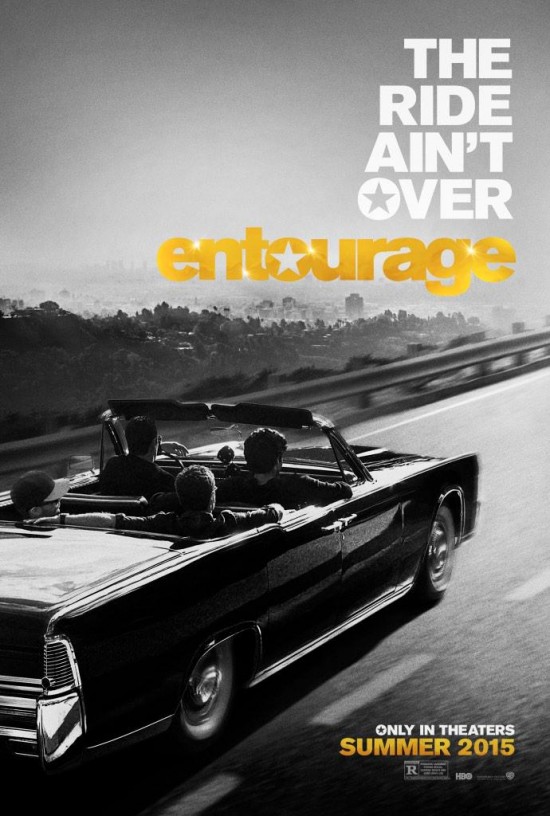 When Entourage first aired on HBO in 2004, it felt like a fun peak behind the glamorous world of Hollywood. A group of four friends were doing their best to navigate the land of dreams while staying true to themselves. For the first four seasons, Entourage felt fresh, fun, and engaging. And then it kept going for another four seasons, overstaying its welcome and proving to have worn out all credible story material several seasons before it went off the air in 2011. Creator Doug Ellin just didn’t want to leave the party, enough so that four years after finally leaving he’s back with his boys, co-writing and directing an Entourage feature film, answering all of the burning questions left unanswered. Does Ellin justify the move to the big screen, especially when you realize that the TV show already had gratuitous nudity and celebrity cameos?
Vincent Chase (Adrian Grenier) is nine days removed from his honeymoon where he and his wife decided they really weren’t meant to be, so they amicably split but not before having awesome sex one last time (oh yeah!). Back on the scene, Vinnie is hungry to direct and his debut is a $100 million adaptation of Jekyll and Hyde starring Vinnie and his older brother/desperate actor, Johnny Drama (Kevin Dillon). The problem is that Vinnie feels he needs more money to finish his masterpiece before he can show it to the studio. Ari Gold (Jeremy Piven), formerly Vinnie’s agent and now the head of the studio, has a lot on the line if this movie is a hit or a flop. He checks in with a financier for more money but the Texan moneyman insists his son Travis (Haley Joel Osment) go along to Hollywood and act as go-between. It’s not long before Travis is demanding drastic changes to Vince’s movie (oh no!). Here to help is Turtle (Jerry Ferrara), who works a business and a romantic angle with MMA fighter Ronda Rousey, and Eric (Kevin Connolly, who is weeks away from becoming a father with longtime girlfriend Sloan (Emmanuelle Chirqui). Can Vinni save his movie? Can Ari save his job? Can Turtle seal the deal with Ms. Rousey? Can these bros get any bro-ier (oh yeah)?
 The plot of the movie is almost insulting with how little conflict there is and when there is any how easily it all wraps up into lazy wish fulfillment. The main conflict of the film is that Vinnie wants more money for his directorial debut, even after blowing through $100 million. He needs just a pinch more for his movie to be able to be complete. Rather than having a disaster on their hands, which would be far more interesting and provide a wealth of conflicts with how to salvage what is there, the biggest perceived problem with Vinnie’s debut is whether it will be a box-office blockbuster and earn awards. Everyone sings the movie’s praises, though the concept sounds ridiculous and the little footage we see looks ridiculous as well. A Jekyll/Hyde DJ who fights “the system” and spreads his magic elixir at his club concerts… does that sound like the formula for Oscars? If Entourage were still functioning as an industry satire, there might be added commentary on how something so flatly terrible would be hailed as an awards darling, but entourage stopped being a satire midway through its television run. It’s just a consistent reward system for characters that stumble from one good thing to another. Even though Vinnie has never directed before everyone can’t help themselves but talk about what a superstar he is and how great the movie will be. Will he get tons of money, acclaim, and have sex with an attractive woman, or will he get tons of money, acclaim, and have to wait to have sex with another attractive woman? What a pressing conflict for a feature film. With that established, it’s no wonder then that Travis makes such an ineffectual antagonist. I was actually enjoying his hostility toward Vince and his dumb movie. Eric might have wanted to punch him in the face but I wanted to pat him on the back.
Another significant problem is that these guys are just too old to be going through these same tired arrested development routines. I think it says everything about Entourage the TV show that after eight seasons the characters were basically the same people except each had become more successful. Their shtick was already getting tiresome on TV. Flash forward four years, though the movie takes place months after the end of the TV show, so that means we’re in 2012 I think. Anyway, these guys should have accumulated some sort of personal growth as characters and they just haven’t. Except for Turtle’s weight loss, which becomes a running joke, it feels like they’re all the same. This is also featured in the Eric/Sloan relationship, which was an exhaustive subject on the TV show. As the series ended, they were together and having a baby, and as we pick up with the movie they’re, shocker, apart again just so they can get back together. The inevitability of this storyline offers a glimpse at what Ellin felt he had to squeeze in for Eric, which amounts to sleeping with two hot women and having a crazy mix-up. When it appears like there will be actual conflict here and Eric will be held accountable for his behavior, the movie instantly shrinks away and lets him off the hook. Every character’s interaction with women is regrettable, as women are served up as easy comforts. Ronda Rousey at least takes a stand but then retreats yet again under the supposed charm of these dolts.
The humor is low-grade and often missing, substituting references and celebrity cameos for well-developed comedic scenarios. There’s some humor in how self-deluded these guys are, especially the increasingly unhinged antics of Johnny, but they’re far too bland to generate consistent laughs. Except for Johnny, the other guys aren’t even given opportunities for comedy, which makes their storylines all the more painful. Do we really need to see Turtle’s courtship of Rousey, and what does she see in this guy? None of the cameo appearances are even used beyond just a ten-second-reference point with no greater impact than on the ten seconds of that very scene. Take for instance the cameo of Mark Wahlberg and his hometown buddies. He’s an executive producer on Entourage the TV show, based upon his own experiences coming to Hollywood. He’s shilling his own reality TV show he produces in the move based upon his old HBO show. That’s like product placement/plug inception. The problem is that Ellin has confused cameos as punch lines, which was also an issue with the original show. Just because I see someone famous doesn’t mean there’s a joke attached. Oh look, it’s Pharell and he’s wearing that big hat. Thanks for showing up, Pharell. Now go cash that check, you won’t be required for any other work on this set. Scene to scene, it feels like some sort of party that the filmmakers expect you to be grateful for attending. It’s not even a fun party.
 The most entertaining person is the movie is still Ari Gold and Jeremy Piven has always played him to the hilt, winning multiple Emmys in the process. I desperately wish this was more Ari’s movie, or told more from his studio perspective, because he’s the infinitely more interesting and entertaining character than the super relaxed and super boring Vince. Even though Ari’s vulgar outbursts have grown tiresome, he’s still the most exciting character because he’s transparent about his passion but also, more than any other character in this expanded TV universe, he works for his goals. Ari doesn’t just sit by and let good stuff fall into his lap, he’s working all angles to get the desired outcome, and that’s always more interesting than watching the life of a vacant actor go from great to even better. The subplot with Ari’s former assistant Lloyd getting married feels like setup for a comic set-piece that never materializes. It does, however, provide a cameo for George Takei to officiate the wedding. Hooray, more cameos.
If you were a fan through all eight bro-tastic seasons of the TV show, chances are you’ll probably find the movie easy-going and enjoyable. If you’re like me and grew tired of their boorish antics, the repetitive humor and plotting, and the casual misogyny, then a big-screen version where the boys get to continue their ways and get more rewards, where everything works out for everyone, will be highly fatiguing. Entourage the movie doesn’t aspire for much but its stunted ambitions and minor conflicts never allow the movie to be anything other than a particularly meandering and dull extended episode. Much like the main characters, it has confused mediocrity with success and being amiable with being interesting. Ellin said in interviews that he hoped this would be the start of an Entourage trilogy of movies. Thanks to the low box-office returns, at least I can credit America with stopping that plan. If this is indeed the last ride for Vince and the boys from Queens, well they went out pretty much like they did four years ago, and isn’t it great to still be a rich white guy in Hollywood? Oh yeeeeeah. Oh yeeeeeeah.
Nate’s Grade: C
Share this:

Me and Earl and the Dying Girl (2015)
 In many ways Me and Earl and the Dying Girl feels like the perfect specimen that was programmed and brought to life in some mad scientist Sundance film lab. It’s got a hip point of view, a meta commentary on its plot and the directions it doesn’t take, style to spare with lots of self-aware camera movements, and even Wes Anderson-styled intertitles and colorful visual inserts, including stop-motion animation. It’s about two amateur filmmaking teenagers, Greg (Thomas Mann) and Earl (R.J. Cyler), who befriend Rachel (Olivia Cooke) who happens to have terminal leukemia. The movie has a good heart and it deviates from convention with its storyline, though it has to stop and add narration to point out how it does this, like it demands a pat on the back for not being a “typical cancer weepie.” The big problem is that we’re stuck with the perspective of Greg, who is the least interesting character and just trying to stay invisible. He has a low opinion of himself and his friendship with Rachel will somehow make him a better person. Earl and Rachel are both tragically underwritten but valiantly played by their actors. The annoying aspect is that Greg makes everything about him and so does the movie. The supporting parts are broadly portrayed and fit awkwardly with the larger setting, like Greg’s overenthusiastic teacher, Rachel’s lush of a mother who seems one drink away from committing statutory rape, and Greg’s mom, who forces Greg to hang out with Rachel, even though they were acquaintances at best, because the plot demands it. The script by Jesse Andrews, based upon his YA book, sets up the completed tribute film as an emotional climax that cannot be met, and the abstract movie results prove it. This is a likeable, funny, and entertaining indie with a sense of style and wit. It’s good, but it could have been better. I wish the “Me” had been removed from its title.
Nate’s Grade: B-
Share this:

Life Itself (2014)
 I would not be a film critic or even as ardent a lover of movies if it weren’t for Roger Ebert and his towering influence on generations of curious cinephiles. Every film review is likely going to touch upon their own personal relationship with Siskel and Ebert and this one will be no different (full disclosure: I contributed online to make sure this documentary would reach completion. You can find my name last in the end credits “thanks” section. The perks of being a Z-kid). When I was young, I would sneak into my parents’ room and wake them up, eager to watch not cartoons but the latest episode of Siskel and Ebert’s take on new releases. For me, Roger and Gene opened an entire new world for me, and hearing their spirited discussions over the latest Hollywood blockbuster or indie experiment would stimulate my imagination. Therefore, Life Itself, a documentary chronicling the life and death of Roger, including those difficult final months of his fight against cancer, is a tremendously emotional and personal experience for me. Even now it’s hard for me to write this review as I have a wealth of feelings churning. It’s like watching one of your heroes ride off into the sunset; eternally grateful for those years they had on Earth to inspire. It’s fitting that Roger become a part of the movies himself with a documentary that’s one of the year’s best and most poignant films.
This was never meant to be a film about Roger’s death. It was intended to be an adaptation of his 2011 memoir, the titular Life Itself. Filmmaker Steve James, best known as the director of Hoop Dreams (Roger’s #1 film for 1994), tackles the essential biography bits we’d expect tracing the cradle-to-grave approach. What makes this film more interesting is that it too follows Ebert’s own perspective he utilized in his memoir. Rather than writing from the point of view of being in the moment, Ebert acknowledges his age and looks back on the past not as it’s happening but as an older man reflecting upon his life. The thoughts are not so linear, the consideration more meditative, thoughtful, and overall thankful. This is a man looking back and taking stock of his life, grateful for the people that have elevated his experiences. The framing device of the movie happens to be Roger’s last five months of life, going in and out of the hospital and adjusting to the ever-mounting hurdles of his deteriorating health. It can be downright shocking and horrifying to watch this Ebert, his jaw hanging loose like an ill-fitting Halloween mask. Never has the man looked more vulnerable and so mortal. It’s not how you wish to remember him, and Roger is without vanity as he wants the cameras to have access to his day-to-day reality no matter the hardships. As the months pass and Roger’s communication starts fading, everyone has to come to terms with the inevitable, and the viewer is right there too, bidding goodbye with Roger’s grieving family.
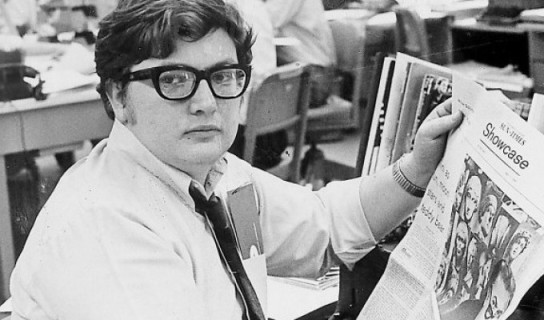 While tears will be shed, do not think of the movie as an elegiac tribute meant to fill your heart with dread for the demise of a great writer and a great man. As the title indicates, it’s a celebration of the man’s life, illuminating a figure that was much larger than his prolific publications (note: not a fat joke). Can you picture Ebert as a skirt-chasing Chicago Sun-Times reporter? How about as a guy who would get drunk and hang from the rafters, causing scenes? Many likely don’t know that Ebert has one screenwriting credit for Russ Meyer’s 1970 camp-tastic Beyond the Valley of the Dolls, a job Ebert likely took on so he could, in his words, “get laid.” There’s even a lengthy bit over their populist film critiques and whether the famous “Thumbs Up/Thumbs Down” model was helpful or harmful to film criticism. Life Itself does a fitting job tracing the roots of the man, with each chapter of his life given due development and consideration. I could have watched a four-hour documentary on the man’s life, but I’m not the general public.
The film is defined by two central relationships: Roger and Gene and Roger and his wife, Chaz. The first is the most famous. We track their initial growing pains taking the leap adapting their styles to the realm of TV. Gene was a natural, Roger less so, which only made Ebert more furious (photos of Gene “ladies man” Siskel gallivanting with Hugh Hefner are a hoot). The impact of their advocacy cannot be overstated. There are plenty of filmmakers that got their big break thanks to special consideration and publicity from these two. No matter the medium, these were the most famous critics of the twentieth century, opening up the world of movies to a new and hungry and appreciative audience. As enjoyable as it is to watch Siskel and Ebert in agreement, there was a special pleasure in watching them disagree because of the unleashed intensity. They really felt like they could convert the other person through sheer force of will. Their egos were both massive and Siskel knew exactly which buttons to push to set his cohort into aggravation. We see TV clips and unused rehearsal video and you feel like they might start a fistfight at any moment. And then that ire and ego forged into a deep admiration and love for one another, a love that Ebert reflects more tenderly of in the years since Siskel’s death in 1999. Gene didn’t want his loved ones to watch the clock, waiting for him to expire, and so he told nobody of his terminal brain tumor until the end. Roger was always wounded by this and vowed to be as open as possible if he suffered severe health setbacks.
The other relationship we get to witness come to a close right before our tear-stricken eyes. Roger met Chaz in AA, a fact she says she’s never publicly admitted before. He was over 50 when he married. He accepted her children as his own, whisking the family on faraway vacations and sharing his love of cinema with his stepchildren and grandchildren. Ebert credits Chaz with nothing less than saving his life, asserting he’d have drank himself to death without her. It’s a love story that forces us to watch the heartbreaking finale, namely Chaz coming to grips with the reality of losing her husband, of letting the love of her life go, something so profound. We’re right with her, wanting to fight on, try the next surgery, always hopeful, though in our circumstances we have the dread of foreknowledge. Then again perhaps Chaz and those close to the Eberts suspected as much as well, especially as his health faded so quickly in the spring of 2013. Just watching her talk about Roger in the past tense, you watch the ripples of pain reverberate through this woman. She’s the unexpected heart of the movie and one of many torchbearers when it comes to the legacy of Roger.
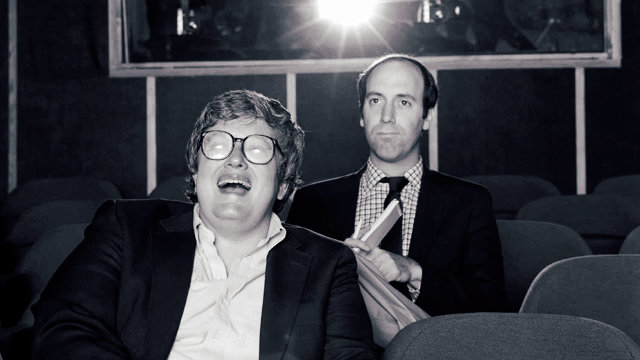 Ultimately, Life Itself is a love story. It’s a love story about two men who go from rivals to close friends. It’s a love story between a man and a woman. It’s also the love story of a man with the movies, a love that he felt eager to share with millions of his readers and television viewers, because in the end (danger: sentimentality approaching) it’s our love and passion that will ultimately outlast us all, and the people we touch are the living embodiment of our legacies. And Roger’s passing has touched many. As fans, those who grew up with him, I think we all felt like he was partly ours. Life Itself is a touching, engrossing, invigorating, and fitting tribute to a man larger than the movies.
Nate’s Grade: A
Share this:

Saving Mr. Banks (2013)
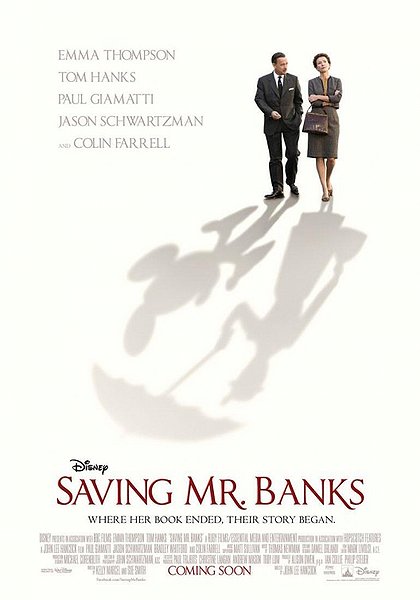 Seemingly sure-fire Oscar bait, Saving Mr. Banks left enough Academy voters cold and it’s easy to see why. First off, the behind-the-scenes sparring to adapt Mary Poppins is the movie we want to see, watching crotchety author P.L. Travers (Emma Thompson) butt heads with head honcho Walt Disney (Tom Hanks). The movie is at its best when these two share the screen, with Walt’s genial strong-arming finding little traction with Travers stern refusals (no Dick van Dyke, no animation, no mustaches). What I wasn’t expecting was a parallel storyline detailing Travers childhood in Australia dealing with an unstable home life thanks to a drunken father (Colin Farrell). It literally takes up half the movie, and while there are a few interesting juxtapositions, the screenplay just trades off scenes; one in 1961, then one in 1906, then back again, etc. The issue is that the flashbacks are never very revelatory and have no business dominating the running time. All of the information gleaned from these flashbacks could have been corralled into one late flashback, or even mentioned in a speech. Saving Mr. Banks gives you two movies running parallel, but most people will only be interested in the one. It’s a pleasant film, benefiting from strong performances by Thompson and Hanks (perfectly cast), but one can’t shake the feeling of Disney P.R. pervading the film’s retelling. It comes from the perspective that Disney is always right and that Travers was always wrong, having to work through her personal issues before relenting, even tearing up at the final product. In real life, Travers never forgave Disney and never allowed another of her Poppins books to be adapted into a film, though not for want of trying by the studios. It feels unfair to portray an author’s artistic integrity as an obstacle that needs to be defeated, but there it is, and Disney’s Mary Poppins, while beloved, resembles much of what Travers feared. Who defends the cranky authors of the world when they have a point? Saving Mr. Banks is an entertaining film, charming and likeable, until you begin to look beyond the fairy dust and realize the revisionism before your eyes.
Nate’s Grade: B-
Share this:

In a World… (2013)
 Actress Lake Bell’s writing/directing debut, In a World, is a comical look inside the world of voice acting, particular in the field of movie trailers. It’s an interesting world and told with enough comic acumen by Bell (TV’s Children’s Hospital), a serious student of vocal artists. She plays Carol, a woman who breaks into the trailer voice over biz, causing ripples in a field dominated by baritone-voiced men, like her legendary father (a perfectly unctuous Fred Melamed) who holds to sexist dictum. There’s a cute romance involved with Demetri Martin, an effective subplot about Carol’s sister having an affair, and an ongoing commentary about the uncomfortable infantilized voice many young women utilize. The story is threatened by a percolating mistaken identity rom-com convention, but thankfully regroups for a third act pitting father against daughter in vocal performance, as it should be. As a director, Bell has a steady feel for her scenes, following a subdued comic rhythm that also feels eccentric without going overboard. As a writer, she gives her characters space to grow, to make mistakes, and to triumph but not without complications. As an actress, Bell is charming and a terrific lead anchor for a film filled with likeable, quirky characters. In a World is a little movie but it’s effortlessly cute, winning and pleasant in the right places, and filled with a great cast of comic actors. Beware: upon exiting the film, it is unavoidable that you will do your own fake trailer “In a world…” impressions.
Nate’s Grade: B
Share this:

Hitchcock (2012)
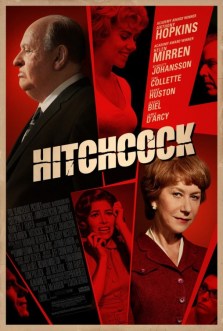 I think Alfred Hitchcock would be amused at his continued notoriety, not just from the quality of his films but also from the magnitude of his own presence. 2012 offers not one but two different movies about the master of suspense, both of which are oddly close in time period. HBO’s The Girl explored Tippi Hedren’s account of what it was like to film The Birds, with Hitchcock being a provocateur. The more straight-forwardly named Hitchcock looks at Alfred’s trials to make one of his seminal films, 1960’s Psycho. I only wish that the movie spent more time on Psycho and less time on the Hitchcock marriage.
Alfred Hitchcock (Anthony Hopkins) is starting to feel like he’s being left behind in Hollywood. He’s looking for his new project, something to rekindle his creative fervor, get those juices flowing once more. Then he comes across the book Psycho, based upon the murders of Ed Gein, a man who thought his dead mother was telling him to kill and make skin suits of his victims (Gein is also the inspiration for The Texas Chainsaw Massacre and Buffalo Bill in Silence of the Lambs; truly the gift that keeps on giving for horror). Murder, cross-dressing, incest. You can understand the hesitation from studio heads to bankroll the picture, even with the great Hitchcock name attached. With the sturdy support of his unflappable wife, Alma (Helen Mirren), Hitchcock puts his own money and clout on the line to see Psycho through. As the pressure mounts, Alfred is worried that his wife is spending a bit too much of her time with a certain screenwriter who wishes to woo her efforts away.
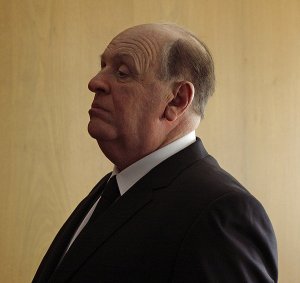 Sir Alfred was a blunt individual so I will follow suit and mince no words – this movie is terrible. How could it possibly be? It has tremendous acting talent and the rich angle of looking at the making of one of Hollywood’s most controversial and famous movies of all time the groundbreaking Psycho. Alas, it’s when the movie takes its many sidesteps away from the behind-the-scenes action of Psycho is where it goes astray. First off, I find the narrative framing around the marriage of the Hitchcocks to be superficial and hamstrung. We’re telling this vastly interesting story and grounding it in a very slight manner, gauging every creative struggle through the prism of whether or not Alfred and Alma will stick together. I assume it’s supposed to provide an emotional entry point for the movie, but I just didn’t care. I didn’t care about the jealous spasms Alfred felt as his wife spent more and more time with a caddish screenwriter, and boy did that storyline get tiresome. I want to know more about Psycho and not this dumb portrayal of martial woes told with such graceless handling. The whole portrayal seems so minute and clumsy and such a poor framing device when the making of Psycho is a juicy enough story. I didn’t need the focus to be on whether the Hitchcock marriage will persevere. Oh, and the resolution for this feels completely pulled from thin air, without any groundwork laid to explain the about-face into compassion in those final minutes.
Then there’s the portrayal of Alfred Hitchcock himself, which is so dubiously shallow when it comes to psychology. Oh, he’s obsessed with blonde leading ladies? Oh he’s a bit of a control freak? Oh he can be overbearing and demanding and standoffish? Wow, what powerful insights into arguably the most famous director in movie history. The movie, adapted by John J. McLaughlin (Black Swan), feels like it was made by someone who did the bare minimum of research on the man. There are no new insights or even mildly interesting ones to be found. It’s the standard boilerplate repeated with different actors. And then there are the nails-on-a-chalkboard scenes where Hitchcock imagines himself talking confessionally to none other than Ed Gein (Michael Wincott). Excuse me? Oh my goodness do these tacky sequences just grate. I don’t even understand their inclusion. Is this a manifestation of Hitchcock’s own sense of madness when it comes to moviemaking? Does he feel some connection to the horrible disturbed man who inspired his newest film? Does Hitchcock only feel like he can communicate to a figment of his own imagination? Whatever the reason, I wanted to smack myself in the head every time Hitch and Gein had a heart-to-heart. I should have known I’d be in for a bumpy ride when, in the movie’s opening minutes, a news reporter asks Hitchcock, after the premier of 1959’s North by Northwest, why he doesn’t just hang it up? Did this idiot even see North by Northwest? Would you ask Spielberg if he should retire after viewing Saving Private Ryan or Kubrick after A Clockwork Orange?
Then there’s the matter of Hopkins as Hitchcock. It never feels like the right fit. Turkey jowls aside, the man doesn’t look too similar to Hitchcock nor does he adopt a demeanor that proves convincing. Sure he goes for that highly imitable voice and cadence that Hitch is well remembered for, particularly his openings on his own TV show. You never feel like Hopkins has a real strong bead on the character, and surely the fault lies with the weak characterization relying on the collective knowledge of Hitchcock’s outsized public persona. Likewise, Mirren (The Debt) is fine but gets to play another of her steely strong-willed matriarchs. Mirren won’t let you done when it comes to performance but, given the lack of strong characterization, she goes on autopilot. The best actor in the movie is surprisingly Scarlett Johansson (The Avengers) who has a striking similarity to Janet Leigh, and not just in what you’re thinking. She’s instantly likeable and takes the Hitchcock peculiarities in stride, putting up a strong front but voicing her concerns when appropriate.
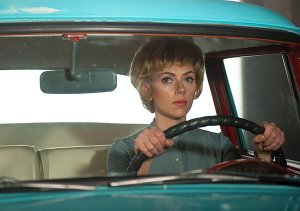 Director Sacha Gervasi (Anvil! The Story of Anvil!) gooses up his story with all sorts of horror genre techniques, including editing fake outs and violent edits. I’m also unsure why so many liberties needed to be taken with the retelling of this story. I’m not going to be a person decrying the use of fictionalized elements in a true-life story for dramatic effect (I loved Argo), but you have to do so in a way that tells a better story without getting too far away from the essential truth of the matter. Hitchcock, in raising the talents of Alma, attributes many of Psycho’s development achievements to her keen womanly insights when they came from others. That’s fine, except that the movie portrays her in such a rarefied state of genius that she quickly becomes the movie’s surefire narrative cheat. Having problem with the last act? Let’s have Alma fix it. Having problems with the editing? Let’s have Alma fix that. It’s not compelling of a story for one character to chiefly have all the answers instinctively and without any sense of struggle. I understand that Alma did a lot of unaccredited work on Hitchcock’s movies, though it wasn’t uncommon for women to be screenwriters at that time and you’d think the pull of being a Mrs. Hitchcock would get her well-deserved credit. Regardless, I wish that Gervasi and McLaughlin had given Alma more depth than being put upon wife/secret savant collaborator.
It’s a shame because there’s a genuinely interesting movie to be had somewhere in here. The making of Psycho was fraught with difficulties and the studios just didn’t get it. Watching Hitchcock work through that process and persevere would be far more interesting. I enjoyed the multitude of famous cameos, like Michael Stuhlbarg as Lew Wasserman, Hitchcock’s agent and eventual head of Universal Studios, and even Ralph Macchio as Psycho screenwriter Joseph Stefano. I suppose the ins and outs concerning one of the most famous movies of all time could be considered, erroneously I feel, to be too “inside baseball.” That’s why I think the filmmakers expanded the romantic drama angle and had it consume the majority of the running time. Often the stupid perils of the will-they-or-won’t-they romantic squabbles feel so petty and cheap considering the magnitude of the work going on. Hitchcock feels like a movie that found the least interesting and essential angle to tell the story of the making of Psycho. Diehard movie fans might find some fun to be had with the minutia of Hollywood and Hitchcock’s life, but I cannot fathom how anyone could view this portrayal as effective. It’s not insightful, it’s not challenging, it’s not relevant, and it’s certainly not entertaining. This movie is not deserving of the name it bears.
Nate’s Grade: C
Share this:

Argo (2012)
 The reinvention of Ben Affleck as movie director took a big step forward with the critical and commercial success of the 2010 Boston cops-and-robbers thriller, The Town. While I’d argue Affleck’s first outing as a director, 2007’s Gone Baby Gone, is still his best, The Town won over plenty of doubters. Here was an actor-turned-director who could deliver smart drama, intense suspense, and coax Oscar-caliber performances from his brilliantly assembled casts. Have you seen Blake Lively half as good in anything as she was as a tragic junkie single mom in The Town? She’ll be able to get work for years just from the demo reels of that performance. But with two sturdy, complex, taut genre movies under his belt, Affleck still had doubters. The political thriller Argo takes Affleck far out of his Bostonian comfort zone. The creative stretching proves fruitful because Argo is a stirring, fascinating, and engrossing true-life story that should at last silence the remainng doubters concerning Affleck’s talents behind the camera.
In 1979, The U.S. embassy in Tehran was overtaken by a storm of Iranian protestors. Fifty-two Americans were held hostage for an exasperating 444 days. During the takeover, six Americans escapes through a back alley and found asylum with the Canadian ambassador (Victor Garber). There they waited for months, trying to work out a plan to escape. If caught by the mob, it’s very likely they would be deemed spies and executed. Enter CIA agent Tony Mendez (Ben Affleck) and his scheme. His idea is to pretend the six American hostages are part of a Canadian film crew scouting locations in Iran for their sci-fi movie. His superiors seem dubious but Mendez gets the green light. He heads to Hollywood and puts together his team, a veteran makeup artist (John Goodman) and an established producer (Alan Arkin) on the outs with the industry. They settle on the screenplay “Argo” and have to build a credible cover story. From there, Mendez travels into Iran to meet with the hidden hostages to sell them his scheme. They were all coming out together or nobody was getting back home.
 Argo is a fascinating story that seems like it could only exist in the movies, and yet it’s a true story and one hell of a story. It’s a mission movie, so we know the familiar flow of the film even as the details seem fresh (unless you’re Canadian). The very idea is one of those “so crazy it might work” plans; one State department official asks, “You don’t have any better bad ideas than this?” Even though we know it was a success, that doesn’t stop the movie from being engrossing. Argo flies by like a caper film as the CIA gathers the resources and experts to try and put together a ramshackle rescue mission. There’s feeling out the Hollywood angle, gathering the pieces to create the illusion of an actual film production, and the urgency of the façade. Even though it’s a bit outlandish, the fake movie plot seems worlds better than the other possible plans being pitched by the government agencies (smuggling in bicycles and maps?). I thought it was genuinely interesting just to be granted access to a room where people where debating rescue options and picking them apart. The film is consistently intriguing watching smart people come up with smart solutions to challenging problems.
Argo really is three movies expertly rolled together into one; a Middle East thriller, a Hollywood satire, and a D.C. procedural. It’s a bonus that every one of these segments works but it’s even more surprising, and rewarding, that the different segments all snap together without breaking tone. Credit Affleck the director for making sure his movie parts don’t overpower one another. We can go from a tense Middle East sequence where the hostages might have just risked exposure, and then we’ll cut to Hollywood and laugh at the cantankerous Lester. It’s a delicate balancing act that Affleck superbly handles. The humor of Hollywood doesn’t detract or minimize the seriousness of the Middle East chapters; it allows room to breathe, to let off steam. The D.C. segments are the biggest expository moments but they give scope and meaning to the danger. Each of these segments is compelling and each one could have been a captivating movie all its own. We’re fortunate that Argo gives us all three.
Audience ignorance aside, we may know how this story ends but that doesn’t stop the film from being completely nerve-wracking. Affleck showed remarkable skill in The Town when it came to building exciting sequences that felt like they would explode with tension. When it came to Argo, there were moments that literally kept me on the edge of my seat, a rarity with action films. The beginning sequence of the American embassy is rapt with suspense, as the security system deteriorates and the people inside realize the inevitable. They start destroying classified state evidence but really they just have to sit and wait, hearing the footsteps, knowing what is near. The sharp screenplay from Chris Terrio (Heights) does a tremendous job of developing clear suspense sequences. There’s the tension of the precarious subterfuge, of the hostages hiding behind enemy lines, so to speak. If one wrong person were to discover their identity, it could quickly unravel. There’s a whole team of children being paid to piece together shredded documents and photos like they were jigsaw puzzles. Knowing this, it makes the scenes where the group ventures out of the embassy thrilling. The group has to visit a marketplace as part of their cover and it’s terrifying. We know the steps of escape, and each one could easily blow up and get everyone killed. Just when you think you can breathe a sigh of relief we’ve moved onto the next challenge and the tension washes over you again. The climax is so tense that your audience will likely erupt in applause when the hostages eventually escape, relieved and proud of the accomplishment.
The maturation of Affleck as a bonafide directing talent continues. There’s a growing confidence in his direction. The man doesn’t have to rely on flashy visual artifice nor does he seem to be hewing to one notable style. He’s directing each movie as its own beast, be it crime thrillers or true-life suspense story. The man knows where to put his camera in the thick of the action. Affleck also eschews the popular shakycam docu-drama approach that too many filmmakers automatically does all the work of establishing realism. Docu-drama visuals can work when properly utilized, but too often I find it to be self-consciously arty and an annoying distraction. Affleck’s camera remains steady but holds on his actors, giving them space to emote. Three movies into his directing career, Affleck has established himself as one of the best men to direct actors. He’s already lead two actors to Oscar nominations and might just earn a third for Arkin. Plus there’s the fact that Argo, top to bottom, is cast with great character actors. You have people the likes of Michael Parks (Red State) who are there for one line. It also helps Affleck the actor to have Affleck the director.
 The only nagging problem with Argo is that it’s rather light when it comes to character development. The caper is the star of the movie and sucks up most of the screen time. The film does an excellent job of recreating the anxiety that the hostages felt. I can’t say we get to know any of them well as people. I can’t say we get to know much about Tony Mendez either, beside the de rigueur parts of being a CIA agent like divorce, child custody, and long nights of loneliness. The best-developed character in the movie is Lester Siegel, and while he’s terrifically entertaining, it’s something of a misstep for the cranky Hollywood producer to win that title. He’s a man who knows his value in the ever-changing currency of Hollywood; bitter, crabby, but hopeful of making a difference. Arkin (Little Miss Sunshine) is a natural fit for the character and brings more dimensions to the role. I wish the same care were given for the other people in the story, particularly those in harm’s way. The nuanced approach to character with Gone Baby Gone and The Town is just absent. Thankfully, the story is so engrossing that it’s not a mortal wound, but you do wish there was a greater emotional involvement in the film rather than a generic empathy of rescuing those in danger. Also, the Canadian involvement seems curiously downplayed even though their ambassador was the one hiding them for months. His role in the movie plays like he’s Guy #8. I know we tackle the CIA’s involvement but Canada could use more recognition for their integral contributions.
Argo establishes Ben Affleck as a dependable, versatile, actor’s director; someone along the likes of a Sidney Lumet or Sydney Pollack (I swear I don’t have a “Sydney” key lock in my brain). Affleck has proven to be a director who immerses himself into his stories, and his fingerprints are on every frame, every performance. He just nails it. The pacing is tight, the suspense builds to near unsustainable levels, and the tones are expertly juggled to prove complimentary rather than distractions. Best of all, Affleck lets Terrio’s terrific script take center stage. The incredible true-story of Argo is the biggest selling point for the movie, and Affleck doesn’t try to gussy up a whopper of a tale. The film has even more unexpected resonance given the recent spur of violent protests in the Middle East, notably the deadly attack on the U.S. embassy in Benghazi. Argo doesn’t sensationalize the hostage crises for cheap popcorn entertainment. Nor does it glorify or denigrate the Iranian’s outrage over the U.S. giving sanctuary to the deposed Shah. For a very political subject, the movie takes a very muted political stance, relying on the facts of the situation. The movie finds a rare poignancy in its appeal to the power of international cooperation. By the end of the movie, you might even tear up when you hear the actual hostages and government officials recount their struggle and ultimate triumph. Argo is that rare breed of a movie that seems to have everything. While it’s not perfect, it’s clear that Affleck is here to stay as a top-level director.
Nate’s Grade: A-
Share this:

The Artist (2011)
 Ever since it charmed audiences at the Cannes Film Festival, The Artist has been one hot commodity. The Weinstein Company snapped up the film rights though they have a bit of a hard sell. The movie takes place in the era of silent movies and it also happens to be a silent movie itself. Ignoring Mel Brooks’ unsung efforts, asking paying customers to sit through 100 minutes of silence, albeit accompanied by a musical score, may be a risky financial bet. That’s where the appeal of being an award-winner comes into play. The Artist has been racking up awards since Cannes and has been tagged by many as the favorite to take home a Best Picture Oscar. This celebration of the Hollywood of old is a nostalgic trip through the ages, but I’m doubtful that the film is deserving of the gushing admiration. I think this would have been better had it been one of them new-fangled talkies.
In 1927, the biggest star in Hollywood is George Valentin (Jean Dujardin). His latest spy caper is knocking them dead. He’s prancing before a sea of photographers when he bumps into Peppy Miller (Berenice Bejo). He graciously brings her into the act and the two pose for pictures. “Who’s the new girl?” demands the newspaper headlines. Peppy is given her big break as George’s co-star in his spy series. Peppy is a natural and over the course of two years she becomes a bona fide star. Also over those two years Hollywood has undergone a drastic makeover. New “talkies” are all the rage with the public, who now demand to hear their favorite actors speak. George is adamant that talking pictures are only a fad and he plunks his personal fortune to bankroll his directorial debut. The movie is a flop. George is viewed as a has-been; yet Peppy has been keeping a watchful eye on her old friend and waiting for the time to reveal her love for the fallen star.
 The Artist is a completely silent movie except for two key sequences; one of them a nightmare where George hears objects make noise. The film is an unabashed love letter to old Hollywood, and writer/director Michel Hazanavicius makes witty use of the storytelling techniques of the silent era. Much relies on editing and reactions for shaping the narrative. The story, therefore, is broken down to its simplest incarnation. Peppy Miller’s star rises, as George’s grows fainter. Still, The Artist has many recognizable pieces for fans of the silent era. George even has a trusted Jack Russell Terrier at his side, a clever pooch with keen mimicking abilities. There’s a cute moment where Peppy slips her arm into George’s coat hanging on a coat rack and pretends to caress her self as him. It’s a small yet slyly tender moment. It’s not a prerequisite to be well versed on silent cinema, though it helps. While a French film (a foreign designation seems superfluous when it’s silent), the movie was shot in Los Angeles and is stocked with English stars like John Goodman (TV’s Treme) as a film director, James Cromwell (Babe) as George’s dutiful butler, Penelope Ann Miller (Flipped) as George’s unhappy wife, Missi Pyle (Big Fish) as a silent film co-star, Beth Grant (Donnie Darko) as a maid, Ken Davitian (Borat) as a pawnbroker, and Malcolm McDowell (Halloween II) as a dismissive old man in a chair (the role he was bon to play). It almost becomes a side game of cameos.
It’s a sprightly, charming, sometimes enchanting little experiment, but in the end an experiment is all the movie turns out to be. The Artist is no great story; in fact it’s pretty much the 80th rendition of A Star is Born. The transition between silent films and talkies is a subject rife with drama, and a lead character who sees his fame and fortune crumble by being left behind in a changing society, well that should be interesting. What’s surprising to me the most about this film is how little you invest with it. I don’t know if it’s the silent gimmick or just the idle characterization, but I found myself never really engaging with the movie, always a step removed. The characters were nice but I neither celebrated their triumphs nor bemoaned their hardships. The entire affair has such a slight feel to it; the movie is a confection, a sweet treat that melts away instantly after viewing. If you strip away all the old Hollywood nostalgia, there is very little substance here. Praise Hazanavicius for his dedication to silent filmmaking techniques, but let’s be reasonable here because The Artist is a pleasant experiment but nothing more. The characters and story do not bear scrutiny. This story would have been more interesting had the movie been a traditional talky. Alas, we are limited to a handful of title cards with single lines of dialogue and extreme amounts of pantomiming. If you took away the central gimmick, would anyone be interested in this movie? I wanted to be swept away by The Artist after reading all the fawning accolades, but I wasn’t. The commitment of the artists on screen is commendable but the finished product is little more than an amusing trifle of a movie.
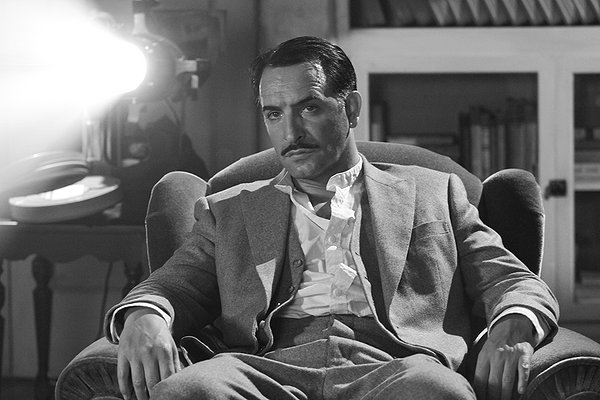 Dujardin (OSS: Lost in Rio) and Bejo (Modern Love) look like they stepped off the screen from an old Hollywood movie, al la Purple Rose of Cairo. Dujardin is a suave presence with great comedic physicality at his disposal. There’s a poignant moment where George, broken down and washed up, looks into a tuxedo store window, seeing his reflection appear above the neck of the tuxedo. He gingerly smiles, wistful of times gone by, and in that sad, face crinkling little moment, Dujardin reveals more about the man behind the flashbulbs than the script ever will. Even without a word spoken, you can tell that Dujardin and Bejo have great chemistry. Bejo, the wife of the director by the way, matches Dujardin note for note in terms of star wattage. She’s got a terrific smile and one of those classic faces for an Age When They Had Faces. It’s a shame that the characters don’t have more interaction.
The Artist is a fine film but ultimately disappointing given the hype. The saddest part about my reaction to The Artist is how little I find myself having to say about this much-ballyhooed silent film. It’s an exercise in nostalgic back-patting, but if you strip away the silent movie gimmick I feel like there’s so little at heart here. I walked away liking the movie, being charmed by the actors but feeling unengaged and mildly indifferent. The threadbare story is too familiar, the characterization is slight, and the movie ultimately becomes light, airy, and insubstantial. The novelty eventually does wear off and you may find yourself adding a mental commentary to the film to fill in the blanks. You’d have to be a Scrooge to resist the film’s whimsy and the talents of the charismatic performers, but I’m scratching my head at the adulation give to The Artist. In a year heavy with reminiscence, The Artist overdoses on feel-good Hollywood nostalgia, and in a down year at the movies, perhaps that’s enough when it comes time for awards.
Nate’s Grade: B
Share this:

Hugo (2011)
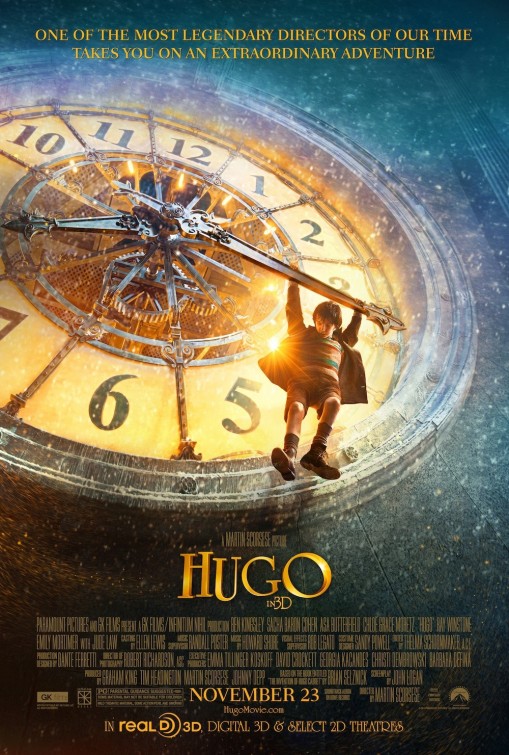 Martin Scorsese tackling a children’s film feels like an odd fit for the man responsible for classic gangster epics and symphonies of violence. But if David Lynch, Kevin Smith, Tim Burton, and Danny Boyle can all make family films that don’t make your brain rot, then why not the greatest living director? Maybe notorious sadist Lars von Trier will be next. Adapted from the award-winning children’s book, Hugo is, as my pal Eric Muller put it, a family film for film historians.
Hugo (Asa Butterfield) is an orphan boy living beneath the walls of the Paris train station. He’s secretly the one responsible for winding up all the clocks and keeping time. He has to stay one step ahead of the Station Inspector (Sacha Baron Cohen), who snatches wayward boys and sends them off to an orphanage. Hugo has been swiping clock pieces from the booth of a mysterious toy collector, George (Ben Kingsley). He needs the tiny pieces to fix a metallic man that Hugo and his late father (Jude Law) had been working on together. Hugo is convinced that if he fixes the metal man the automaton will write out one last message from his father. Hugo befriends George’s niece, Isabelle (Chloe Grace Moretz), and the two of them explore the various shops and shopkeepers of the station. As they uncover more clues, the kids realize that George is actually George Méliès, the filmmaking pioneer best known for the 1902 fantasy, A Trip to the Moon (the one where the moon gets a bullet in its eye).
 Scorsese’s first foray into 3D filmmaking is a rousing sensation for the eyes. The images pop without superfluous objects flying at the camera. The depth of field is nicely and creatively toyed with by Scorsese. Best of all, the 3D enhances the story rather than distracting you. Hugo is a celebration of the advances in moviemaking, and 3D is the latest advancement meant to make the theatergoing experience special. Of course the theatergoing experience has always been special, as the movie indicates. Where else but a theater can we collectively bond with a group of strangers, laughing collectively, feeling the pangs of emotion in unison? There’s a thematic rationale for Scorsese’s use of the third dimension. He masterfully fills the screen with wonderful images, like the massive inner working of clock towers. Scorsese’s signature tracking shots zoom in through the wintry 1930s Paris landscape and train station. A visual highlight is when a trunk of sketches busts open, the papers scattered all over the screen, some moving like flip books, creating the illusion of animation. I can honestly advise people to seek out a 3D showing of Hugo if given the option. For once, it’s worth the extra dough. I only anticipate making this same recommendation for the upcoming Piranha 3DD.
It’s the second half where the movie shows its true intentions, becoming a love letter to the power of cinema and the early pioneers of the art form. Scrosese has long been a historian of the movies, and Hugo is his celebration of the early cinematic dream makers, notably Méliès and his surreal theatrical landscapes. Arthur C. Clark famously said that “any sufficiently advanced technology is indistinguishable from magic.” That’s what early cinema was to a populace that had never seen the likes of moving pictures (we see an early audience fearing for their lives watching a film of a train arriving). It was like a new magic. The turn-of-the century filmmakers like Méliès were charting new terrain as visual storytellers, opening the public to new wonders of the imagination. Simple tricks of editing substitution, dissolves, and visual arrangement could help foster the ongoing illusion. It may be low-rent, like hand painting individual film frames, but it was the special effects of their day. D.W. Griffith once said of Méliès, “I owe him everything.” Scorsese is sharing his passion for the history of the movies and it’s hard not to feel the power of the movies.
But when Hugo gets swallowed whole by Scorsese’s nostalgia, the rest of the plot becomes incidental. The characters, which were not strong to begin with, are given pat resolutions that make you realize how flimsy the characterization is. The movie takes a sub-Amelie route, letting Hugo bring together disparate couples, but you don’t really know anything about these people. Emily Mortimer’s female florist has maybe two lines in the movie, so why should I root for her to get with the Station Inspector? There’s an older couple whose romance is sabotaged by an aggressive pooch. You can imagine the scintillating resolution that awaits. The film history section is honestly the best part of the movie, but it means that everything leading up to that point was just in service to prop up the academic nostalgia. It means that the characters and their mysteries were really unimportant, and they feel that way by film’s end. The movie just grinds to a halt. The mystery of the metal man is that he’s a MacGuffin, a means to discover Méliès’ past. The whole clockwork symbolism can be clumsy, instructing us time and again that people are broken and Hugo feels the need to fix things. Too bad he couldn’t fix the disjointed story.
 The actors manage to make favorable impressions when they can fight free of the movie’s educational pull. Butterfield (The Boy in the Striped Pajamas) is a strong lead actor who rises above the sniveling preface of his character. He makes you root for the kid even when we don’t really know much about him beyond his Dickensian conditions. The kid has some pretty piercing Paul Newman-esque blue eyes too. Moretz (Let Me In, Kick-Ass) is showing the poise and grace to make it long term in this business. Kinglsey (Shutter Island) is effectively curt with his poorly veiled pain and regret. Cohen (Borat) expands his dramatic range noticeably, adding touches of empathy for a character that could mostly have been arch and cartoonish. He’s still the film’s best source for comedy. Michael Stuhlbarg (A Serious Man) makes a welcomed appearance as an expert on early filmmaking, Méliès especially. He serves as the mouthpiece for Scorsese’s passion.
Hugo is a family film that ultimately gets swallowed whole by the filmmakers’ passion. It makes for an entertaining and informative essay on the skill and vision of turn-of-the-century filmmakers, but if people are anticipating a fun story about a scrappy kid and his mischievous adventures, then this is not that movie. Hugo benefits from terrific visuals, strong acting, and Scorsese’s blend of whimsy and innocence without stooping to anything crass or lowbrow. Hugo aspires for the rich, romantic experience of a Jean-Pierre Jeunet film (Amelie, A Very Long Engagement) but comes up short. Hugo is at turns charming and magical but as a narrative it is too often flimsy, a wispy thing meant to lead to Scorsese’s love letter. It’s a fine and fitting tribute but even the best and most powerful love letter can only go so far, never mind the hassle of special 3D glasses.
Nate’s Grade: B
Share this:

Rango (2011)
 It’s Chinatown remade with anthropomorphic desert creatures. It’s a Western by way of Hunter S. Thompson. It’s a loving parody of cinema’s wide canvas. It’s one of the most wild, anarchic, oddball animated films to ever be released by a major studio, and it is stupendous. Steeped in weirdness and bravado, Rango has a playful and occasionally macabre sense of humor that kept me in stitches. Director Gore Verbinski (the Pirates of the Caribbean flicks) translates his visual verve into a animated movie that dazzles the eyes with its magnificently drawn features as well as the pointed personality in every stroke. This is a movie with character, not to mention some pretty entertaining characters (including talking road kill). Johnny Depp delivers an idiosyncratic vocal performance for a household lizard that finds himself pretending to play sheriff for a town in need of a hero. When you think Rango will fade into familiar territory, or easy moral messages, the film keeps surprising, forging its own unique path. This is a lively, peculiar, and overall enchanting animated film that’s suitable for families but may well play better for adults with eccentric tastes. I’m still scratching my head, and celebrating, how something like this slipped through the system.
Nate’s Grade: A


 nathanzoebl
You must be logged in to post a comment.