Blog Archives
Hamnet (2025)
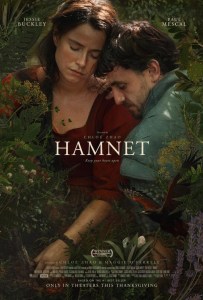 It’s the sad Shakespeare movie, and with Paul Mescal (Gladiator II) as Will, it could just as easily be dubbed the Sad Sexy Shakespeare movie. Hamnet is a fictionalized account of Will and his wife Agnes (Jessie Buckley) processing the death of their young son, Hamnet, which we’re told in opening text is a common name transference for Hamlet. Right away, even before co-writer/director Chloe Zhao (Nomadland, Eternals) brings her usual stately somberness, you know what kind of movie you’re in for. It’s pretty (and famous) people in pain. The entire time I was watching this kid Hamnet and just waiting for the worst. It doesn’t arrive until 75 minutes into the movie, and it’s thoroughly devastating, especially the circumstances surrounding the loss. This is less a Shakespeare movie and more a Mrs. Shakespeare movie, which is more illuminating since she’s typically overshadowed by her verbose husband. She’s an intriguing figure who shares some witchy aspects, communing with nature and even foretelling her future husband’s greatness and dying with only two living children, which presents a pall when she has three eventual children. Once Will finds success as a London playwright, he feels like an absentee father and husband, briefly coming in and out of his family’s life in Stratford. However, the final act is what really doesn’t seal the movie for me. I don’t think it’s really a spoiler to admit the final 15 minutes of the movie is basically watching Hamlet performed on stage, with Agnes as the worst audience member, frequently talking through the show and loudly harassing the actors before finally succumbing to the artistry of the play and finding it a fitting outlet for her grief. In short, the movie is meant to provide more personal insight and tragedy into this famous play, asking the viewer to intuit more meaning (“Oh, Hamlet is his dead son, Hamnet! I get it”), but ultimately the ending is just watching Hamlet. I don’t feel like we get any meaningful insight into William Shakespeare as a person besides his irritation at being a Latin teacher, and frustratingly, Agnes is constrained as well, held in a narrow definition of the grieving mother. This is a shame since she showed such fire and individuality in the first half. Buckley (The Lost Daughter) is terrific, ethereal, earthy, and heartbreaking and a shoo-in for an Oscar. I found her final moments, especially reaching out to her son, so to speak, especially poignant. Hamnet is a good-looking, well-acted movie about sad famous people who then rely upon the arts to help heal their gulf of sadness. There’s not much more to Hamnet than that, but with such exceptional professionals and artists at the ready, it might be more than enough for most.
Nate’s Grade: B-
Share this:

Nightbitch (2024)
 Motherhood can be a real bitch, right? That’s the lessons for Nightbitch, a bizarre movie that juggles high-concepts and tones like a struggling new mother juggling time. Based on the novel by Rachel Yoder, Amy Adams plays Mother (yes, that’s how she’s credited), an artist who chose to become a stay-at-home mother to her two-year-old son, and her life has become an endless stream of days appeasing a small tyrant who she also unconditionally loves. Early on, Adams uncorks an imaginary monologue about demystifying the glamour of motherhood and the guilt she feels about not finding every tantrum and bowel movement a thing of bronze-worthy beauty. She’s grappling with significant changes, and that’s even before she thinks she’s turning into a dog. I can find thematic connection with motherhood and body horror, as our protagonist feels that she no longer recognizes her body, that she feels a lack of direction and agency in a life that no longer feels hers. The added body horror of transformation makes sense, but this element seems so extraneous that I wished the movie had exorcised it and simply stuck with its unsparing examination of parenthood. You would think a woman believing she is becoming a dog would dominate her life. The ultimate life lessons of the movie are rather trite: assert yourself, establish a balance to have it all, and fellas, did you know that being a stay-at-home parent is actually hard work? There are too many half-formed elements and plot turns that don’t feel better integrated, like flashbacks interwoven with Mother’s mother, not credited as “Grandmother,” as a repressed Mennonite in a closed community who disappeared for stretches. There’s also a few curious reveals relating to Mother’s perception of others that are unnecessary and obtusely mysterious for no real added value (“Why that library book died forty years ago….”). Adams is blameless and impressively throws herself into the demanding roll, going full canine with gusto as she trots on all fours and eats out of bowls. The problem is that all the dog material feels a little too silly when realized in a visual medium rather than a symbol of freedom and rebellion. Nightbitch is more bark than bite, and I’d advise viewers looking for an unflinching portrayal of motherhood to watch Tully instead and, if desired, pet your household dog at home to replicate Nightbbitch but better.
Nate’s Grade: C
Share this:

The Idea of You/ Turtles All the Way Down (2024)

The Idea of You is the kind of movie that Hollywood used to crank out, a romantic drama star vehicle based upon a popular novel and with a skilled director, and now it forgoes any theatrical run and ends up as another option on a streaming channel. The Idea of You follows a 40-year-old divorced single mom played by Anne Hathaway who also happens to run an L.A. art gallery and has a meet-cute with a handsome boy band member (Nicholas Galitzine, Purple Hearts) at the Coachella music festival (oh the magic lives of people never having to worry about bills in rom-coms). they hit it off, and the rest of the movie is whether or not they can make a romance work. There’s a 15-year age gap that she feels very self-conscious about as an older woman (“older” by Hollywood standards). She’s this formerly normal woman who wants to date one of the most famous music stars in the world who isn’t always available, but most of the problems and conflicts stem from the perceived issues of the age gap. It’s a charming romance that’s more dramatic than it is comedic, and Hathaway is quite good as our lead plucked from obscurity. Though the many scenes of our smitten boy band member making googly eyes at Hathaway as he reminds her how attractive she is, and as she bashfully demurs, are a little much (it’s Anne Hathaway, notorious horrible-looking human specimen, right?). As a core romance, the movie works well under the guidance of director and co-writer Michael Showalter (The Big Sick), and it’s more adult than I was expecting. It’s rated R for language and it’s also more sensual, but it’s also more adult as in looking at the ramifications of this relationship in a mature perspective, from the terrors of paparazzi imposition to her daughter being harassed at school. The portrayal is thus more engaging and engrossing and feels above the more flippant and flimsy romances that would settle for far less. Though be warned: there are several sequences of singing and serenading which might cause you to shrink awkwardly inward on your couch. Surprisingly thoughtful, and relatively romantic, The Idea of You is a charming reminder of the appeal of comforting tales of love blossoming in unexpected places and pretty people allowing themselves the choice to be happy.
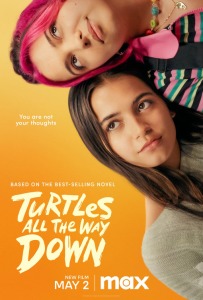
Based on best-selling YA author John Green’s 2017 novel, Turtles All the Way Down is a very accessible and very affecting glimpse at living with mental illness, obsessive compulsive disorder, and intrusive thoughts. Aza (Isabela Merced) has an overwhelming inner monologue that sabotages her daily life in high school and carries her along anxious thought diversions, constantly relating to some illness growing inside her that she needs to cleanse. This is the crux of the story, along with her relationship with her super eager best friend. There’s a romantic side plot where she helps out a rich classmate whose billionaire dad has gone missing, which feels like a plot device to necessitate the two characters spending time together. The standout aspect of this adaptation by writer/director Hannah Marks (Don’t Make Me Go) is its unsparing and honest yet hopeful depiction of mental health and intrusive thoughts. Merced (Dora and the Lost City of Gold, Madame Web) is excellent and deeply empathetic as this woman held hostage by her wayward thoughts and impulses. It’s a performance that goes beyond easy depictions of aloof detachment or exaggerated histrionics, shedding any acting techniques that are too mannered or attention-seeking. Marks’ direction helps reflect Aza’s troubled mind with rapid insert edits and voice over to communicate the intrusive thoughts and maelstrom of spiraling negative emotions. If you’re a fan of Green’s popular novels, or YA-themed literature, or even just honest attempts to empathize with teens in turmoil, then Turtles All the Way Down is worth battling through any negative thoughts to finish and relish the journey.
Nate’s Grades:
The Idea of You: B
Turtles All the Way Down: B+
Share this:

Barbie (2023)

Who would have guessed a movie based upon a ubiquitous doll that dates back to the 1950s would become not just a cultural force and reclamation project but also the biggest moviegoing event of the year, as well as the highest-grossing movie in Warner Brothers’ history, even outpacing The Boy Who Lived? In 2023, it turns out we are all, every one, a Barbie girl living in a Barbie world. I came to this experience late, wondering if writer/director Greta Gerwig’s movie could live up to the lavish hype, the fawning praise, the hilarious offenses that many fragile males have levied against it. It couldn’t possibly be that good, could it? I saw it with three generations of women in my family, something I will privilege, and I must say, it is that good. Barbie is one of the best movies of the year and a shining example of what vision and passion can do to elevate any story. There’s so many ways this movie could have just been cheap corporate slop and instead it becomes an existential yet deeply personal treatise on life and death.
In the world of Barbies, women rule and the men are just afterthoughts. In this creation myth, the Kens were meant to compliment the Barbies. We watch “Stereotypical Barbie” (Margot Robbie) go through her daily routine of fun, frivolity, and nightly dance parties with all her best gal pals (no boys, er Kens, allowed). Then one day, this blonde Barbie started walking differently, started seeing the world differently, and started wondering about dying. Was there something wrong? Her human owner, in the real world, was in trouble, so Barbie sets off on an adventure to find her human owner and save the day, with help from her boyfriend, Ken (Ryan Gosling). Except for these two, the real world is very different from what they were expecting.

It’s easy to see how this movie could have been a mediocre fish-out-of-water comedy, with Barbie clashing in our modern-day world with its modern-day views of fashion, body image, and what skinny, buxom dolls represent to generations of young impressionable children. It’s clear to see what the scrapped version could have been when Amy Schumer was attached to star. What really impressed me with Barbie, beyond its delightful and inspired production values, is how ambitious and well-realized this movie is at every turn. It could have settled for easy jokes about Barbie and Ken not fitting in, not understanding human relationships and sex, and that stuff is there and it’s quite funny, but Gerwig and co-writer Noah Baumbach want to do so much more. This is a studio blockbuster, based upon a decades-long popular toy, that wants to do more with its platform. It aims higher, and in just about every measure, Barbie admirably succeeds. As a comedy, it had me howling with laughter, enough so that my response was providing another level of entertainment for my wife. There are jokes that are so specific, so beautifully targeted, that when they detonated, I was in awe and appreciation, (a reference to the literal definition of fascism and a Snyder Cut throwaway reference were perfectly attuned to my comedy sensibilities, thank you, Greta). As a frothy and fun fantasy, the movie has excellently crafted sets and costumes and retro visual aesthetics, making the movie a pink-accentuated sensory bombardment. But as a satire is where Barbie really becomes special.
Again, it would be easy for Barbie to learn lessons about body diversity and positivity and likely be browbeaten into what a good feminist is supposed to be, that the real world is a harder place for women than she previously thought. All of that is there, along with a consistent and entertaining critique of the faults of patriarchal society, but Barbie isn’t some reductive, man-hating screed to indoctrinate women into thinking they don’t need men (men are already very good at convincing women they don’t need men). This is a treatise on the power of inclusion and how this benefits society, both for men and for women. In Barbie Land, it’s a matriarchal society where girls rule and boys drool, but it’s a fantasy world reminiscent of a caste system, where the Kens will always be lesser afterthoughts because, well, they’re not Barbies, they’re just Kens. They are excluded in their own world. That’s why Gosling’s Ken is so excited by the real world, where the status quo is flipped, where the world is run by men, as he now sees this as an opportunity that has been denied to him. He wants to recreate his own version of the patriarchy not because he thinks women are inferior but because he just wants to be in power and respected, so he’s replicating his misguided understanding of what men in power are like, which naturally involves lots of horses. In the real world, Ken admonishes a suit-wearing corporate executive that they aren’t doing patriarchy right, to which the man winks and says, “We’re just better about hiding it.” The final act isn’t about “bringing down the patriarchy,” it’s about making a more inclusive world where people don’t have to feel marginalized and stuck and resentful.

Besides its social satire, there are other areas where Barbie goes deeper in surprising and affecting ways. There are more than a few applause-worthy moments explaining the perspective of women, particularly a monologue that is destined to be an audition piece for the rest of time, and it all works and is cutting without being too didactic. Gerwig even gets in a few jabs about corporate culture (“Are there any actual women in this boardroom?” “I’m a man with no power, does that make me a woman?”) and Mattel as an organization becomes another force of antagonism spearheaded by hapless buffoonish men (of course you get Will Ferrell to play the Mattel CEO). The biggest surprise is how emotional and deep the movie can become. There will be plenty that tear up just having a big Hollywood movie recognize their day-to-day emotional toil of being a woman in modern society. For me, the questions over what to do with the life we have flirted with some surprising existential contemplation, as Barbie is reminded at several points that death is a reality and yet would she want to move to the human world? An emotional highlight occurs when Stereotypical Barbie is speaking with the equivalent of her creator, and Billie Eilish’s tender-to-the-point-of-breaking song “What Was I Made For” lilts onto the soundtrack, and the sincerity of this sequence, topped with insert home video footage from the production cast and crew, really hit home how much more this movie is going for then bringing different dolls to life. It’s not just jokes about crotch-less creatures and weird feet, it’s about how we can live and why we do so, what inspires us. It’s a big studio summer release that flirts with the profundity and brevity of life.
There is one actor who deserves their own special recognition and that is Gosling (The Nice Guys), who so rarely gets to showcase his sharp comedy skills with the dour, serious, insular roles he gravitates to. Gosling is so committed to his role that he is operating on another plane of excellence, hitting sly jokes within jokes and selling every wonderfully stupid moment with Ken. This man isn’t afraid to look silly, he fully courts it, embraces it at every opportunity, and yet his performance doesn’t detract from Robbie but only makes them both shine brighter. He reminded me of Tommy Wiseau at points. His hilarious ballad “I’m Just Ken,” which segues into a wild West Side Story-style dance battle that is peak peacocking, is a phenomenal run of inspired silliness (the storming of the Malibu beach had me rolling), yet also connected to the character’s co-dependent arc and dissatisfaction with himself (when feeling down, just quote: “I’m just Ken, and I’m enough, and I’m great at doing stuff”). Ken has to learn to think of himself outside his combined definition with Barbie, and they both need to spend time discovering who they really are rather than who they think they’re supposed to be before considering forming attachments. I would not be surprised if Gosling earns a Best Supporting Actor nomination. It was the role he was born to play: insecure accessory doofus.

Gerwig has launched to mega-stardom with just three directing efforts (four if you count her co-directing effort in 2008 with Nights and Weekends, back in her early mumblecore breakout days). Already this woman has been nominated for Best Director, one of only seven ever, and she now owns the highest grossing movie of the year as well as in studio history. She’s proven herself with her 2017 coming-of-age semi-autobiographical Lady Bird, richly realized and achingly felt, with an established literary classic that is a foundation to generations, and had been adapted a dozen ways for the cinema, and yet she found ways to make her 2019 Little Women modern and personal, and now, on her biggest stage, being handled corporate IP that would be perfectly fine with just selling more toys, she has made a movie for the moment, something that compelled audiences back to theaters in droves, that will become a staple for a generation of film lovers. With just three movies, Gerwig has established herself in a league of her own as a director. Anyone who can turn the Barbie movie into a hilarious, poignant, and meaningful meditation on our times, on the relationships between mothers and daughters, and on life itself is a talent that deserves every creative latitude to achieve her vision. The voice and vision behind this, even to the smallest detail, is so impressive and fully committed and well developed and fabulous. Barbie is one of the best movies of the year and proof that studio blockbusters can indeed be more.
Nate’s Grade: A
Share this:

Gray Matter (2023)

As a lifelong film fan, I’ve always been fascinated with the trials and tribulations of the many seasons of Project Greenlight. It began in 2001 as a contest shepherded by Matt Damon, Ben Affleck, and irritable producer Chris Moore to select the best submitted script and turn it into a movie. The process would also be documented at every stage by TV cameras for an HBO documentary series, but this is an organization defined by its chaos and mistakes, which make for spellbinding schadenfreude television and rather disappointing movies. Each season tried to retool. Season one winner Peter Jones was more a writer than a director and not fully ready when he was thrust to also direct his winning script, so season two had separate submissions to select a winning writer and a winning director to pair. Season three realized that the coming-of-age indies of the first two seasons (Stolen Summer, The Battle of Shaker Heights) didn’t exactly ignite the box-office, so the intent was a more commercial genre script, which ended up becoming the monster siege thriller, Feast. Season four, coming nearly ten years later, decided that the commercial script needed to come from a more trusted and studio-backed source rather than amateurs. That source: Pete Jones, now having become a co-writer to some Farrelly Brothers comedies. That season only sought to select a director, having now completely ditched the screenwriting aspect from the start of the contest, but the winning director ditched the approved script to make a middling comedy feature of his own short film (The Leisure Class). Now, many years later, HBO Max (or now just… Max, because somebody thinks “HBO” lacks brand value) has rebooted Project Greenlight, again, and has another more commercially-minded script to serve the eventual directing winner, this time among a team of ten female finalists. So after twenty years and five movies, what has Project Greenlight proven? Good TV doesn’t mean good movies.
Gray Matter will forever be known as “the Project Greenlight movie,” and if it wasn’t for that series, we wouldn’t be seeing this movie because it’s so generic and underwritten, which, having spent the day binging through the new Greenlight season, are the same problems that all the many producers were complaining about with the script. Well, you folks picked this script, right?

Aurora (Mia Isaac) is a 16-year-old who just wants to feel like a normal teenager. Her mom, Ayla (Jessica Frances Dukes), is afraid she won’t be able to defend herself in this scary world. They’re a mother-daughter psionic duo, exhibiting mind powers. After a tragedy away from home, Aurora finds herself in a weird complex run by Derek (Garret Dillahunt), a mysterious authority figure who says he’s trying to find all the psionics he can to help them better understand their unique abilities. Aurora suspects her captors don’t really have her best interest at heart.
That plot description above sounds like a hundred other YA-tinged stories, from The Darkest Minds to Firestarter to the X-Men TV show The Gifted, which also co-starred Dillahunt. It’s a fine starting point but the story and characters need to find ways to better personalize this formula, and that’s where Gray Matter falters. It’s all too surface-level, from the mother-daughter relationship, to the determination of Ayla, to the self-actualization of our teen. It’s not that you’ve seen it before, it’s that you’ve seen it before much better in so many other stories.
The story pieces are present that can be developed for a more engaging and character-centric sci-fi drama. There is potential here. I think more could be made about Ayla’s past connections to this psionic complex, but instead of being offered to co-chair it as an administrator, it would have been more interesting if she had been younger, a pregnant teen, and her unborn baby was the course of great speculation for the facility, especially being the child of two psionics. This would add an extra layer of urgency why Ayla felt she had to leave as well as why Aurora would be more coveted than other psionics. It could also easily explain why Aurora would be more powerful than any other psionic. It would also personalize the sacrifice of Ayla as well as her paranoia about the lengths they will be hunted. We needed more time with Ayla as a character because once the daughter gets kidnapped around the Act One break, she’s seen more in flashback and fantasy sequences than reality. If this is going to be the emotional core of the movie, then we need to flesh out the mother and the scenes between them. As demonstrated in the movie, Aurora is here to push her daughter, tell her she isn’t ready, then restrict her but also not really restrict her, as Aurora seems to sneak out every night to meet boys. If this woman is so paranoid, why is she alternating between being a strict gatekeeper and a free-range parent? It didn’t make sense. She’s keeping her child out of school and the public and constantly moving, but hey, go ahead and fraternize with these teenagers supposedly behind my back?
It’s also a shame that our protagonist is such a boring blank. The puberty/super power allegory has been prevalent for decades, but for a movie that literally spends so much of its time inside the mind of its main character, she’s unfortunately too underdeveloped and unexplored. She’s just kind of present for too many of her scenes rather than an active participant. This is partly from the nature of the script, where Aurora has to learn about her powers and the history of psionics, but why does the first act of the movie resort to repeating this exposition? We have one scene where mom is explaining powers and what’s at stake, and then twenty minutes later we have another scene of Derek explaining powers and what’s at stake. The biggest problem with Gray Matter is that its central character feels like an afterthought of a simple yet empty empowerment message. It’s about a young woman coming into her own power, externally and internally, but it’s also expressed under such generic terms. What do we know about Aurora? She wants a “normal life” but what does this constitute? Does she resent her mother’s rules? Has she rebelled in the past? What really animates her? What is her sense of purpose? I don’t know, which diminishes all the sequences of her running in terror, and that dominates the middle hour. I wish the script had started with her sneaking out, hanging out with these kids who consider her “that weird homeschool girl,” and then when things go wrong we have to learn with what we see rather than sitting through multiple people trying to explain the world and rules. It would be a better shock when things go wrong, and the added time would allow more breathing room to try and flesh out Aurora before she’s defined by her powers.

Another aspect that needed further re-examination was the nature of the psionic powers. The plot needed to better define the rules of these powers, which are quite varied. We begin with the powers mostly being telekinetic, the ability to move things with one’s mind. Then it jumps into telepathy, the ability to speak through one’s mind, then read the minds of others, then project mental structures, then working all the way to teleportation. There is a good scene where Derek is impressed by Aurora’s ability to hide her thoughts with a false setting construct, and I enjoyed him pointing out the giveaway details, like a character reading a book that is only ever the same page. That was a smart scene that better visualized the powers. However, the characters talk too broadly about the powers in sweeping proclamations. I think the movie could have improved had the story ditched more of the powers and settled down on one, with Aurora having the ability to manifest more than one power being a sign of her extraordinary identity.
As a low-budget genre movie, Gray Matter looks like a professional movie and has good actors doing their best. Debut director Meko Winbush has made a genre movie that looks practically indistinguishable from other disposable Hollywood genre thrillers, and maybe on a sliding scale, feeling and looking like a generic sci-fi thriller might be a success in the history of Project Greenlight. But I doubt all the many people who lent their labor and names to this project were hoping for it to be on par with a forgettable streaming entity eventually crushed by a library of content. Winbush presents enough visual polish that could lead her to future work, something that has also plagued many of the director winners from seasons past (Jason Mann, the season four winner, has one feature credit after The Leisure Class, serving as DP to a 2019 Slovenian movie). It’s hard to feel what exactly people could get passionate about with Gray Matter, and they just waited for a rewrite to supply all the missing emotional engagement and introspection and fun that was absent. Once again, the finished film ends up being a disappointing season finale to a train wreck of reality TV.
Nate’s Grade: C
Share this:

Women Talking (2022)
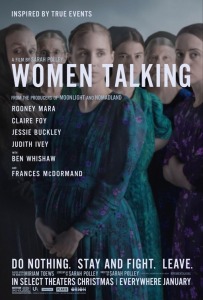 The hard-hitting Oscar-worthy drama Women Talking could have been titled Twelve Angry Women, but with the necessary subtitle: But They’re Very Justified in Their Rage. It is, as the title suggests, a movie almost entirely about women talking in one central location, enough so to feel like a stage play captured for the screen. However, the reason these women are assembled is heartbreaking, infuriating, and eminently engrossing. Women Talking demands to be heard.
The dozen women have gathered to debate the future of their participation in their community, a closed-off Mennonite coalition. They are victims of heinous sex crimes and general repression, debating between staying and fighting and abandoning their way of life. These women are talking about their own agency and what their collective response will be to the great wrongs that have prevailed upon them. It’s not just that the women of this community have been preyed upon by predators in their midst, their trauma has been dismissed as ghosts and devils until literal men were literally caught and apprehended. The next part is even more galling, as the guilty men will be returning back to the community and the women are expected to forgive the predators and go back to life as it has been. Except how exactly has life been for the women of this small community? The assaults have been going on for decades, enough that many of the children are the byproducts of their abusers. One grandmother is brought to tears that she should have done more to protect her adult daughter, herself married to an abusive man. The systematic nature of this abuse is the core of their deliberation. Can they stay and reform a broken society from inside, or is the best hope radically breaking away and starting anew without the men?
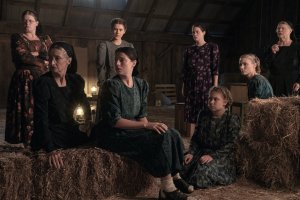 The movie also serves as a debate over the capacity for grace and forgiveness, reminding me in subject as well as the approach of last year’s equally hard-hitting and equally spellbinding indie, Mass. I found it especially insulting that these women are expected, by the male leaders, to simply forgive and forget, to shuffle back to subservience. It’s a larger philosophical discussion over the nature of grace and accountability. It would be showing grace to these men to forgive them when they do not deserve it, and surely the male leaders would underline this point in a comparison with their religious text, akin to Jesus forgiving those who crucified him. However, if forgiveness is not the catalyst for reform and reclamation, then it’s just another empty gesture that maintains the status quo of abuse going unpunished and the abusers being protected. It’s easy to make larger connections to larger societies protecting predators through conditioned silence. The entertainment industry has been rife with bad men, and yes it’s typically men, behaving criminally and being protected by their position, and it might be easy to make connections with Women Talking and She Said, the fact-based take-down of Harvey Weinstein. Are these people worthy of forgiveness or is the patriarchal system of power (women aren’t even allowed to learn to read and write in this community) beyond salvaging? Within minutes of watching, I was already shaking my head and saying they should burn it all to the ground.
Women Talking is powerful and somber without being overly grave to the detriment of the material. It’s never taken anything less than serious, but the subject matter is handled very sensitively and even rated PG-13. Under the careful guidance of writer/director Sarah Polley (Away From Her, Stories We Tell), the film doesn’t soft-pedal the abuse these women have suffered but it doesn’t wallow in it either, getting overloaded with sordid details. The screenplay unfolds key pieces of information over time, allowing the audience to piece together a fuller picture (I didn’t even realize the family connection of the dozen women until an hour in). It would be easy if the only response explored was one of unfathomable rage, best exemplified by a stirring monologue where Claire Foy (The Crown, First Man) rattles off what she will do to protect her young daughter including murder, including vying with the Almighty, and even including spending eternity in hell. It’s easy to be all teeth-gnashing vengeance and fury, and entirely deserved considering these women are already looked upon as second-class citizens. However, Polley aligns her movie as a debate between anguish and hope and the difference between false and real hope. Is it real to hope that these men will change? Is it real to hope that August (Ben Whishaw), a college-educated child of a former outcast, can break the cycle? By the end, the main feeling I had was catharsis, that these women can chart a new, better path.
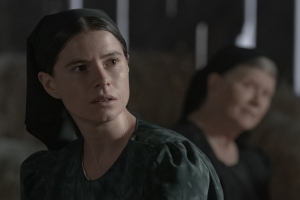 Given the heavy subject matter and the ensemble nature of the production, you would be right to assume that this is an actors’ showcase. The three biggest roles belong to Foy’s Salome, Rooney Mara’s Ona, and Jessie Buckley’s Mariche, each presenting a different perspective. Salome wants to stay but mostly as a means of collecting vengeance for her and her daughter. Mariche wants to forgive the men because, if they do exile themselves, they are told their immortal souls will be denied the kingdom of heaven. It also happens that Mariche’s alcoholic husband is one of the accused men returning. Ona is pregnant with her attacker’s child and questioning which setting would be best for her, staying with what she knows or risking a new life, for better or worse. Foy and Buckely (The Lost Daughter, Men) each have a signature monologue opening up their character perspective and each of them cinches it (call it their “Oscar clip moments”). Mara (Nightmare Alley) has the more contemplative and subdued role, which makes it less showy. Her character is the one who questions the most the value of forgiveness, and of course whether it counts when forgiveness is forced with the threat of eternal damnation. If Salome is the movie’s fury, then Ona is a reflection of begrudging hope, and Mara succeeds with a noble sense of grace.
There are two minor quibbles I have with Women Talking that hold it slightly back for me, and it’s not the locked-in setting making the proceedings feel like a staged play. Polley uses visual inserts and cutaways to devastating effect to highlight the women’s trauma, from awakening to the aftermath of assault to miscarriages, notions to heighten the visual storytelling potential of the medium without digging into exploitation and losing the tasteful tone. The directing even takes a few cues from Sydeny Lumet’s work from 12 Angry Men. One critical aspect that holds back the movie, again only slightly, is that the characters tend to feel a little more like various points of view rather than finely developed characters. Given the nature of the debate, there’s a lot of ground to cover, and it’s a smart storytelling move to coalesce. It just slightly limits some emotional engagement; it’s still there because of the skill of the actors and every drop of empathy they rightly earn, but the characters aren’t as well realized as they could have been. This can also be simply because we’re dealing with a dozen characters to try and supply enough material for. Even in 12 Angry Men, not every juror is going to be given equal importance (nobody cares about you, juror #7, so sit down). I reflect back to Mass, an excellent 2021 movie that you should seek out, and how personable and in-depth those characters came across over their feature-length sit-down. It also helps that it only had four characters to balance. The other minor criticism I have is the overemphasis the movie places on a long-in-the-works romance between Ona and August, who maybe has more screen time than maybe any woman. For a movie dealing with the sexual and emotional trauma of women and them taking account, I’m left uncertain about the amount of time we spend on an unrequited romance. It’s not like Polley is elbowing in wacky rom-com material, as it all likewise carries the same subdued tone. I just don’t know if this movie needs a romance elevated during its otherwise 100 plaintive minutes.
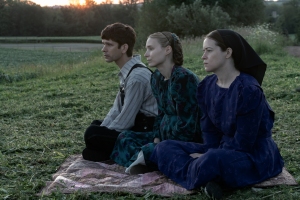 Women Talking is an urgent movie that every person should watch. The central dynamic is radiating with dramatic potential, and the actors are uniformly excellent, even the youngest actors handling some very touchy material. Polley’s direction is stately and subdued without removing any of the surging emotional power inherent in her drama. I’m overjoyed that Polley has returned back to filmmaking as she hasn’t made a movie in ten years. It’s a triumphant return for Polley, one that will likely have her vying on the biggest stages come awards season. Women Talking is timely and, unfortunately, also timeless. By the end, you’ll feel slightly exhausted but better for it, like the euphoria that comes after a good cry and you feel like, having pushed through, you’ll be better for it.
Nate’s Grade: B+
Share this:

Shut In (2022)
 It’s easy to see the appeal of contained thrillers from a production standpoint, but I’ve always found them to be a fun, crafty thought exercise that I’ve often enjoyed playing along. I’ll rename them “survival thrillers” because I think that’s truer to what they encounter, whether it’s in a small, contained environment or whether they are simply a victim of unique circumstances. I enjoy watching a character analyze and attack a problem and find workable solutions. There’s a natural vehicle for satisfaction there, whether it’s Matt Damon learning how to farm on Mars, or Ryan Reynolds being buried alive in a coffin, or a group of teenagers stuck on a ski lift. It’s a fun scenario to try and solve, especially in the relative comfort of your own home. Given their success and general low-cost nature, it was only a matter of time before these kinds of thrillers would dominate indie direct-to-streaming cinema. I guess then I shouldn’t be that surprised the Christian movie market would want in too. Shut In is the first original film distributed by The Daily Wire, the subscription run by conservative political wunderkind Ben “debate me!” Shapiro. Shut In began as a 2019 Black List script, the list of the most liked unproduced screenplays, and at one point Jason Bateman was going to direct. From there, it’s now Ben Shapiro’s Godsploitation thriller, and it has its own virtues and sins.
Jessica Nash (Rainey Qualley) is doing her best with some of the worst circumstances. She’s got two young children, one still an infant, and scraping by for money. She’s a recovering meth addict and has inherited her grandmother’s home that she’s looking to sell. As she’s cleaning up the premises, she accidentally locks herself inside a pantry. Making matters worse is that her meth-addict ex-boyfriend Rob (Jake Horrowitz) and his no-good pedophile pal Sammy (Vincent Gallo) come around looking for a score. Jessica must use her wits, strength, and fortitude to escape the pantry, keep the dangerous men away from her children, and also reject the temptation of indulging in drugs as an escape for her mounting troubles.
 From the vantage point of a survival thriller, Shut In makes more under its circumstances that I would have assumed but also, strangely, less with the personal stakes. Whenever developing a problem-solution story structure, you need to make sure the dots connect and there’s a natural progression of events. You’re stuck in a room, now what? Jessica benefits because she has a helper on the outside; however, that person is only a young child, and therefore unreliable and unable to firmly grasp multi-step instructions. This also allowed me to channel the main character’s frustrations as well, especially when she was asking her kid to find things like tools to better claw away at the door and floor. This gives her an outlet but another challenge as well because the child becomes a point of vulnerability. When Sammy comes back into the picture, his presence is immediately the priority, and Jessica needs to neutralize him or make sure he cannot reach her daughter on the other side of the door. Screenwriter Melanie Toast seems to understand that the predicament she devises runs into natural end points, so she throws in extra escalations, which then become the next challenge. It’s self-aware scripting, but it also runs the risk of the challenges feeling not as challenging and the movie feeling more episodic.
The most confounding plot point was how underplayed the drug addiction angle is. It’s part of her overall tragic past, and the movie hints about past sexual trauma as well to further haunt our lead’s dark “before time,” but we don’t ever really feel her trouble with staying clean. It’s more like the drugs represent her former life, the one with her ex who is still in the thrall of meth. We could have used maybe even a monologue of Jessica talking about the pull of drugs, how important they were to her before, and how she never liked the persons he was, perhaps the shame she feels for the things she had down previously for drugs, and her intent at redemption, all to the audience of the child she’s meaning to do better by. There’s an entire character arc worth of detail that can be unleashed to really provide better depth. When her ex tosses his three grams of meth into the pantry, it’s meant to be a significant temptation, but the movie never really plays this as a sufficient challenge. It would be as if the guy just tossed in a small packet of laundry powder for how much personal attention it’s given. There was a short moment where it looks like, with all hope lost, that Jessica might succumb, but for the far, far majority of the running time, this drug temptation is underplayed. If this Jessica wasn’t going to struggle over using drugs again, why not just have her toss them down the sink? It’s a curious mitigated plot point for something that seems more significant than presented.
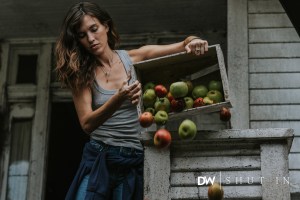 This is also directed by D.J. Caruso, a man who was making big-budget Hollywood action movies in the early 2010s like Eagle Eye and I Am Number Four. This is likely the lowest budget Caruso has ever worked with, but he doesn’t make the movie feel visually dull. There’s way too much imagery with apples though, including apples rotting at their core (you get it?) and eventually Jessica peeling the brown from an apple and saying the rest is still plenty good (you get it?). It feels like the apple was a lazy visual symbol meant to appeal to its, presumably, more Christian-affiliated target audience (“You see, the apple… means… temptation”). The tension can be finely attuned especially when we’re trapped in the pantry with Jessica and having to rely upon the sound design to understand the looming threats. I wish Caruso had pulled back at more points. Later, Sammy holds Jessica’s kid hostage with a knife to her little throat, promising to kill her, while everyone is screaming so loudly that it almost feels like we’ve landed in farce. The exploitation thriller elements feel in conflict with the lighter Christian elements. The God parts feel almost tacked on, especially when Jessica doesn’t reveal anything about her own faith. Looking at a hanging cross and deciding not to do drugs does not count as sufficient integration.
This is also Vincent Gallo’s first film role in ten years. for a period in the late 1990s, Gallo was the toast of the indie film scene and then he burnt through all that collective good will (also credit The Brown Bunny making people question those earlier accolades). I’ll credit Gallo acting like a believable creep and a snarling threat. He’s the best actor in the movie, and he delivers enough in this do-nothing part that makes me wish he would act more often. Qualley (sister to Margaret Qualley, also the daughter of Andie MacDowell) is fine, though her Southern accent seems to get the better of her at parts. Her performance is more physical than emotional.
 Shut In is a small movie likely intended for a small audience while it drafts off the genre formula of larger, more polished survival thrillers. It goes through stretches where it relatively works, stripped down to its bare genre essentials, and then moments where I wish more was going on viscerally and intellectually. That’s where the movie needed to open up its protagonist more substantially, give more consideration to her internal struggles rather than keeping everything strictly externalized. Her drug addiction and the immediate proximity of drugs needed to be much more a trial of will. If you’re stuck with characters in a confined space, you need to either use that time to make the character more intriguing and compelling or keep the obstacles coming. Shut In transitions with new obstacles to overcome, but it still doesn’t feel like enough for this 89-minute movie. It’s an acceptable genre entry but had more potential with its lead character and with its thrills. It settles too often, and there’s nothing godly about settling when you could have been an even mightier movie.
Nate’s Grade: C+
Share this:

Parallel Mothers (2021)
 There is little else like a Pedro Almodóvar movie. The famed Spanish writer/director has been making movies since the 1980s and across an eclectic array of tones and genres. He can make a sexual farce, an unsettling thriller, a moving character-based drama, or a movie with elements of all three in harmony. Almodóvar has found ways to take some of the strangest story elements and make them feel real. Watch a movie like 2002’s Talk to Her, which he won his only (!) Oscar for, or 2011’s The Skin I Live In, or 2006’s Volver, and marvel at how seamlessly Almodóvar can combine any element, any genre, any twist, and turn it into genuine emotional pathos. He’s a witty man but rarely is he flippant, especially as he matured throughout the 1990s. He genuinely cares about his characters and treats their dramas as serious business no matter the content. Parallel Mothers is another example of Almodóvar, even in his seventies, operating at the top of his unique artistic capabilities. This is definitely one of the best movies of 2021. Find it when you can, dear reader.
Janis (Penelope Cruz) and Ana (Milena Smit) are both recent mothers in Madrid; Janis is pushing 40 and planned on having her first child, and Ana is in her late teens and her pregnancy was an accident. They share a hospital room, bond over their ordeal, and exchange phone numbers to keep in touch. Months later, both women are acclimating to the growing demands of motherhood, except for a gnawing doubt that has taken hold of Janis. Her boyfriend and the reported father of her baby, Arturo (Israel Elejalde), believes he is not the baby’s father and wants a DNA test. Janis is outraged, but the more she begins to think about it, the more she cannot let this nagging doubt go.
 Parallel Mothers is an unpredictable drama that also has a surprising heft to it when it comes to emotional substance. When I read the premise of this movie, I erroneously thought it was going to be a two-hander of a story about two different mothers, one older and one younger, connecting over their new babies and sharing their experiences, hopes, and fears about raising a child at their respective ages. That is a fraction of the movie, but Almodóvar’s deft storytelling is refreshingly nuanced and unexpected. There were several turns in the movie where I audibly said, “Ohhhhh,” or, “Did not see that coming.” Instead of resting on his plot turns, Almodóvar makes sure that the aftermath is given its due time. I really appreciated that; here is a writer who knows throwing sensational elements or twists is not as important as focusing on how they affect the characters and narrative. When Janis begins to doubt whether her child is hers, that’s when Almodóvar is just getting started. There are several twists that are so well staged and developed, and each one brings added intensity and another chance to revise everything we know. I loved watching the movie because I genuinely could not anticipate where things would go next, and each additional turn was organic, meaningful, and would compound the guilt or fears of the main characters. It might seem like a soap opera when you distill all these outrageous elements to their essence, but Almodóvar has always excelled at taking the outrageous and making it sincere.
The movie explores motherhood but also generational connections and understanding the past to better understand the present. Janis and Ana have different though distant relationships to their mothers. For Janis, her mother died of a drug overdose at the age of 27 when she was only five years old. She was raised by her grandmother and has no picture of her biological father (the only thing she knows about him is that he was a Venezuelan drug dealer). By having a child, a goal she’s wanted to do for some time before 40, it allows her a chance of bringing her father’s genetics back into the world, to potentially see what he may look like, to bring back life that has been absent. It’s such a beautiful idea, and also articulated in 2009’s Away We Go to poignant effect. For Janis, having a child is a way for her to reconnect with her past, her parents she’s never known, and honor her grandmother. For Ana, her own mother left her when she was younger to purse her acting career, and now that she’s having a baby history is repeating as she’s once again leaving to tour with a theater show. Janis thought she knew who the father of her baby was, and insists she was only intimate with Arturo, but this ends up being another point of connection between the two mothers. Ana is unsure whom the father is of her child, though hopeful it’s a select person she had feelings for at the time. These babies mean different things for each woman but they both love them completely, no matter what devastation happens later. These beloved children are means of connecting to their past.
 Another aspect that Almodóvar includes strengthened this movie as great for me, and initially it seemed like an odd fit until the thematic richness becomes realized. Before she was pregnant, Janis was determined to secure an exhumation of what is believed to be a mass grave in a small rural village from the Spanish Civil War and Francisco Franco’s regime. Using modern technology and careful attendants, they can uncover this crime of the past and provide closure and dignity to generations of family members still left with unanswered questions. The movie returns to this storyline again late, as if Almodóvar is putting a fine point on bringing home his message of reckoning with our past and the importance of uncovering painful truths. Janis and Arturo return to this small village and interview descendants about what they can remember about their departed loved ones, the men whose remains may be found. It’s such a sincere expression of empathy and generosity, and the short snippets of interviews allow the movie to broaden its scope, adding different mothers and daughters to the sphere and creating even more spokes of human connection. What Janis is doing is a legitimate kindness, an act she hopes to better understand her own history and family ties to the worst that her country had to offer under Franco. One villager recounts how her grandfather had to dig his own grave, then was sent home for the night, only to be reclaimed and never return the next day. “Why didn’t he run if given the chance?” Janis asks. The descendant relates he couldn’t be without his wife and daughter, even for a night, even if it meant his certain doom.
Cruz has never been better than when she’s collaborated with Almodóvar (2006’s Volver was her first Oscar nomination). She goes through some emotional wringers here, the details of which I will not spoil, but it is an understatement to say that Janis is presented with a very complicated scenario. Each scene, especially in the second half once Almodóvar’s box of twists has been unpacked, has so much conflicted emotion for Cruz to cycle through on her face, swallowing guilt and hope and desire and dread. She’s fully deserving of another Oscar nomination for her heartbreaking work with the messiest of material. Smit (The Girl in the Mirror) is a screen partner equal to the challenge but her character is more in the dark by narrative necessity.
 I’m loath to reveal too much more when it comes to the potent central drama of Parallel Mothers, because it’s so well developed and so well performed that you should really experience it for yourself. Knowing ahead of time the added complexities won’t ruin the movie, but I had more appreciation for how Almodóvar was so nimbly able to keep upending my expectations and my sense of understanding as it pertained to the two mothers. It’s a delicate drama, nourishing with empathy and also heart-rending in the dread of what Janis may choose to do next. Thank you, filmmakers of the world, for lifting the 2021 year in cinema for me. Parallel Mothers is one of the best films you’ll see this year and an affecting examination on reconciliation.
Nate’s Grade: A
Share this:

The Lost Daughter (2021)
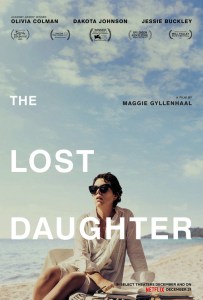 As a film critic part of a credited organization, I’m used to getting goodies in what I call “screener season,” the months of October to December when studios want to court critical favor for year-end consideration of their assorted movies for awards and titles. Netflix has sent me enough heavy coffee table books that I could, in Cosmo Kramer-style, fashion a literal coffee table made from them. For The Lost Daughter, Netflix sent me quite a bundle, including the film’s source material, a 110-page novella written by Italian author Elena Ferrante (My Brilliant Friend), which I read, and an actual bottle of sauvignon blanc wine. This was the first time a movie studio had sent me alcohol (my girlfriend drank a glass and did not like it, so thanks anyway, Netflix, but we dumped the bottle). I found the novella to be well written with plenty of poetic insights and turns of phrase, but I didn’t see the movie there. After sitting down and watching the two-hour feature film, I still don’t quite see the movie in this story.
Leda (Olivia Colman) is 48 years old, a literary professor, and vacationing on a small villa in Greece. Her time away is disrupted by a large, boisterous family sharing her resort. Leda is intrigued by a mother, Nina (Dakota Johnson), and her young daughter, Elena. It makes her reflective of her own time as a mother (played in flashback by Betty Buckley) to her two daughters, now both in their early twenties and having little to do with their mother. One day, Leda picks up Elena’s forgotten doll from the beach with the intention of returning her to the child, and then she simply does not do this. Leda grows closer to Nina, disapproving of her arrogant husband, her boorish relatives, and some of her risky personal choices, and we’re left to question whether she’s relating to this young, besieged mother or judging her from afar.
 This is one of those character study films that will ebb and flow on the level of the performers, and the actors elevate the material beyond what is present on the page. There are several intriguing conversations that shed light on characters and their view of parenthood, like Leda explaining how she feels that she gave the best of herself to her daughters when they were born, and now what she’s left with are the scraps. It’s not breaking new ground to view motherhood in non-glamorous terms. I thought 2018’s Tully did this with great observational detail, unsparing honesty, and great empathy. The Lost Daughter is not exactly Tully, which explored the hardships of motherhood with a put-upon woman who was valiantly struggling to keep her head above water, but it was a woman who wanted to be in the fight. With this movie, you never quite get a clear sense of Leda’s relationship with her two children, who are mostly kept to flashbacks when they are very young. Writer/director Maggie Gyllenhaal (yes, that Maggie Gyllenhaal) employs a non-linear plot to better inform the interior thinking of Leda, so we’ll have past and present juxtaposed for our ongoing evaluation. This is a smart way to follow the imprecise nature of hazy memory. There will be moments that will cause you discomfort, like when one of Leda’s young children is pleading through tears for her mother to kiss her wounded finger, and Leda withholds doing this as a power play, as an act of spite, as a knowing punishment for her wailing child. It’s also potentially relatable for others out there who too have, at the apex of their frustrations and exhaustion, lashed out at children and regretted it later, acknowledging that every parent will fail at some point over the long journey of time and to only attempt to minimize the inherent damage that will be left.
The Lost Daughter becomes an exercise in how long you want to spend with a pleasantly unpleasant woman. Leda is complicated, yes, but she’s also admittedly cruel and selfish, and the movie is trying to make her a case study, to shed our moral judgements and acknowledge that parenthood can be a draining experience. I understand the intention for embarking on empathy for unsympathetic characters; hundreds of movies have invited us into the minds of unlikable and downright psychopathic characters. I’ve always said that I need not like a character, I only need to find them interesting to keep me watching. Leda is an interesting woman because of where she veers from common practice. Most of us would return a missing doll to her rightful owner, especially as that child is grief-stricken and her wave of terror is affecting everyone in her family. Most of us would recognize others suffering and our ability to ease this, to absolve that suffering in an instant, and we would do so. Then the question becomes why isn’t Leda returning this doll to this child? The movie is an elusive attempt to answer, and each person’s interpretation will undoubtedly be different. I don’t know if this doll, perhaps the “lost daughter” of the film’s title, is Leda attempting to hold onto her own daughters, reclaim a version of motherhood that suits her, that doesn’t require of her. Or maybe she views the doll with derision. Whatever the case may be, have at it, dear reader, and enjoy not getting this question resolved.
 I completely understand viewers growing frustrated with watching two hours of a middle-aged woman holding onto a child’s doll and refusing to return it. It’s spiteful, and maybe that’s the point. Maybe Leda wants to impart the same lessons of hardship she endured as a struggling mother at her wits end. Maybe it’s her way of trying to shake Nina to re-examine whether being a mother is a role she is cut out for. Maybe it’s simply the continuation of a sadistic rationalization, “I had to suffer through this, so then you should have to suffer too” that props up whenever sociopolitical reforms and progress are met with generational push-back. By the end of the movie, I don’t know if Leda has seriously changed her outlook or sense of self. I don’t know if anything has really changed, and I don’t know if we’ve gotten to understanding her any better. Again, maybe that’s the point; people are complicated and possibly unknowable. But as a filmmaker showing us a character’s interior life and flashbacks, maybe you should try.
There is a late revelation in the movie that is going to be a deal-breaker for many. I won’t spoil it, though I will say that this reveal is covered in the first chapter of the novella, providing you this key piece of info as a prism for your early assessment. It explains why Leda has a strained relationship with her adult daughters and why thinking back about her perceived parenting failures causes her shivers of grief and guilt. At the same time, there are plenty of feminist stories about women shirking societal demands, so others could perceivablly view this revelation as an act of empowerment or self-determination, and others may just find it as the final straw in giving up in trying to sympathize with an already difficult person.
Fortunately, if you’re going to build a movie around a challenging character, Colman (The Father) and Buckley (I’m Thinking of Ending Things) are two of the most compelling actors for the cause. Much of their performances is naturally guarded, requiring each actress to hold back and utilize more subtle acting muscles. Colman’s middle-aged Leda is more set in her perception of self, more settled though not quite self-assured, so her performance seems more like cracking through a veneer and pushing back, trying to find the real Leda’s feelings about her life and the people she is socializing with. Colman is mesmerizing as always. Buckley’s young Leda is the version that is fraught with being an attentive mother as well as a burgeoning literary academic. Hers is the role of frustration, of shutting down, of desiring an escape hatch from the perils of motherhood. When young Leda is away on an academic retreat, she’s like a completely different person, and Buckley makes it clear that she covets this version of herself. Both women are gifted actresses and provide lifelines for the viewer to better analyze and unpack Leda as a puzzle.
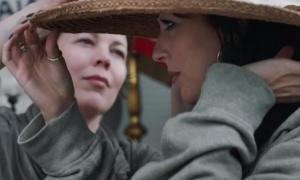 Gyllenhaal makes an impressively natural debut as a director. Her camera is usually very closely tied to her actors, bobbing to catch up and keep them in frame, afraid of leaving their sights. Her attention to detail is solid and her command of the actors is strong across the board. Her adaptation makes smart choices to better visualize the drama. After I read the novella, I genuinely wondered how the movie could even convey the material. It was so insular, so personal, and again, much of the onscreen drama was a woman hiding a doll from a child. I was worried the movie might become a ridiculous thriller of waiting for Leda to be caught, how she had to go to greater lengths to keep her secret, and thankfully that is not the case.
I can easily foresee The Last Daughter becoming a polarizing movie upon its Netflix streaming release at the end of the month. Some will hail it for being challenging and thorny, an indictment on the expectations of motherhood from a society that sets ambitious women up to fail. Some, and I predict the majority of viewers, will find the movie to be an insufferable character study of a misanthropic protagonist. I know the movie wasn’t trying to make an audience like its lead character, but I don’t know if by the end we are better at understanding her and her choices. It leads to a sort of, “That’s all there is?” ending that will frustrate many. The acting is strong to excellent overall and Gyllenhaal has a bright future ahead as a director, but The Lost Daughter might be too lost for too many to care. Just give the kid back her doll already, lady!
Nate’s Grade: B-
Share this:

Awake (2021)
 Every so often I’ll watch a movie and be really intrigued or hopeful with the premise, something that really grabs my imagination, and then that hope crashes and burns in disappointment of a story that never fully takes advantage of all the tantalizing possibilities of its start. In short, I say, “That movie didn’t deserve its premise.” That’s the first thing I thought about after watching Netflix’s new apocalyptic thriller, Awake, where humanity is suddenly incapable of going to sleep. There’s an engrossing drama about the psychological descent and a potent political thriller about the destabilizing of civilization once people are unable to get their forty winks. The premise peculates with such promise, and for it to become yet another end times road trip, hewing so closely to a solidifying formula, is like trapping everyone in a (bird) box.
Jill (Gina Rodriguez) is a former soldier, recovering addict, and current security guard who is also selling opioids on the side to make ends meet. One day, people are no longer able to sleep, everyone except her young daughter. Jill rescues her two children, gets into a car, and drives off for a far off scientific research base where a scientist (Jennifer Jason-Leigh) studying sleep might have the knowledge of how to solve this worldwide mystery.
 I think most people have dealt with the effects of sleep deprivation at some point in their life, especially if they have ever had a newborn child. The subject matter is very relatable. I had a bout of insomnia years ago where I was averaging less than two hours of sleep for weeks, and it was the worst physical endurance I’ve gone through in my, admittedly privileged, existence. I felt like a zombie, barely able to function, my head forever fuzzy, and I lost all desire to eat and had to compel my body to consume food I knew it needed for fuel. I even purchased the Ensure nutritional drinks. It was a miserable time and I was even getting a minimal amount of sleep rather than none whatsoever. I’ve had rough sleep certain nights and feel like I’m running on fumes for the rest of my workday. It takes far more time to bounce back from bad sleep, and I’m wondering if I’ll ever actually get consistently restful sleep again for the rest of my life. With all of that stated, Awake should be an easy movie to plug right into and relate to the deterioration. However, it’s so unclear and clumsy in its depictions of the world. It’s unclear until the very very end how long the world has gone without sleep, and so we run into examples that seem to paint two different pictures of our apocalyptic environment: overplaying and underplaying.
At times, Awake is overplaying the effects of the mental breakdown of society. At points, it feels like society has broken down so completely and over a confusing timeline. There are run-ins with a group of elderly naked people just standing around and acting serene, a prison where the inmates walk out for unspecified reasons involving the guards, and a church that has already gone full-borne cult crazy by thinking that sacrificing the little girl who can sleep means they’ll be able to share in her slumber. The movie didn’t establish these people as crazy religious fundamentalists, so this sudden bloodthirsty turn feels like a leap. Even in 2007’s The Mist, the trapped townspeople gave into the corrupting influence of the religious bigot over time and distress. It reminded me of another Netflix apocalyptic, parental road movie, 2019’s The Silence, where it seemed like it was mere hours before a select group of people started cutting their tongues out and declaring they needed to kidnap women for the purpose of re-population. I suppose some people are just looking for the first good excuse to indulge their baser impulses, but then explore more of this feature with meaningful characters that will matter when they break bad. I think the movie would have greatly benefited from a clear timeline, some helpful titles keeping up with the clock, things like “50 Hours In,” and the premise could have been revised to be a slow evaporation of sleep rather than a strict cut-off. Maybe people are only able to get two hours a night, then one hour, then 30 minutes, and people are freaking out because they know it’s getting less. Let society have some measure of reconciling with the totality of what is to come.
 At times, Awake is also paradoxically underplaying the effects of the mental breakdown of society. For the majority of the movie, our characters aren’t really acting differently even though they have been awake for multiple days. This is what also made me so confused. How much time has passed if nobody seems to be making a big deal about it? The slips in reaction time and awareness don’t really feel integrated until the chaotic conclusion. The family comes across the wreckage of an airplane and make no big deal of it. For that matter, if we’re establishing that sleep deprivation is causing planes to fall from the sky, I think there should be thousands of these crash sites dotting the landscape, unless the airlines have wised up and decided to ground their pilots because they’re afraid of potential post-post-apocalyptic class action lawsuits. Travels with Jill become too leisurely for everything that is going on (note to self: pitch an Anthony Bourdain-style travelogue during an apocalyptic social breakdown and tasting the new culinary delicacies). She senses that she will die and needs to train her children to survive in this new world without her. However, if only her daughter can sleep, then presumably only she will be left alive in due time and it’s less about fending for herself against other people and more how to live off the land. There’s an existential and more poetic, prosaic version of Awake where Jill is trying to cram years and years of parenting into a precious couple of days, where she also tries to secure a fortified hiding place for her daughter to wait out the rest of humanity dying off before she can come out like a hibernating animal. For Jill, its about securing her child’s survival rather than reversing this plague that is dooming humanity. There’s a stronger movie that could have been made had Awake been more personal and more serious rather than schlocky and muddled.
The movie does have a few moments of bizarre effect or risible tension, but these moments are few and far between and director/co-writer Mark Raso (Kodachrome) is very transparent about his genre influences. There’s a roadside checkpoint where a group of armed people try and break inside Jill’s vehicle and pull her and anyone else out the windows. The car is still driving as the assault goes on and the camera remains inside the vehicle while rotating around the interior as the attack plays out in a real-time long take. If you’ve seen the sci-fi masterpiece Children of Men, then this description should already be ringing a few bells of recognition. It’s not that Raso cannot pay homage to the sci-fi inspirations of his tale, but when you draw direct comparisons by emulating very specific artistic choices done by superior filmmakers, you’re inviting a negative impression. A standoff between Jill and an increasing exodus of prisoners had a queasy anxiousness to it because the movie lets the scene build with direct, immediate stakes. There’s a similar scene where Jill is hiding in a garage from voices, but the stakes don’t translate as well because our knowledge of who the other men are is limited. She could just sit in a corner and wait. The plane wreckage scene is impressively designed, and there are a few genuinely surprising moments, like the crowd of naked old people, to keep things curious, but Awake too often settles again and again for the most formulaic and least interesting creative path.
 If this all sounds a lot like Netflix’s Bird Box, then congrats, because you’ve likely caught onto the reason this movie exists. Both movies feature an unexplained worldwide phenomenon that results in the breakdown of society where mobs and cults have formed, and both movies feature a single mother trying to lead her two children, one boy and one girl, through the hazards of the road so they can reach a supposed secure place where authority figures will have answers, and both movies feature a normal facet of human existence that, once removed, is making people go crazy and mess with their perception. Both of the movies also provide plum roles for high-profile actresses. Rodriguez (Miss Bala) is a compelling actress who has shined in lighter, rom-com material (Jane the Virgin), in quirky character-driven indies (Kajillionaire), and in somber existential horror (Annihilation). She has the tools to be great. Awake did not give her enough. There are a couple of scenes, late, of her starting to lose her bearings, and it’s here that I wished the filmmakers had realized that showing the effects of this cataclysm would be best than underplaying or overplaying the deprivation. Awake is an apocalyptic road trip that will bore more than excite and frustrate more than engage. Who knew sleeplessness was such a snooze?
Nate’s Grade: C-


 nathanzoebl
You must be logged in to post a comment.