Blog Archives
Sound of Freedom (2023)
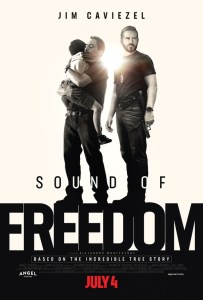 The surprise of an otherwise underwhelming summer at the box-office, so far, has been an indie movie made for only a fraction of the bigger studio fare. Sound of Freedom is an action drama originally filmed in 2018 and even resorted to crowdfunding for post-production assistance, so you’d be curious as to what about this movie is making it the hot commodity in 2023? Well, the answer is both uplifting and also dispiriting, with good intentions running against possible bad faith. However, as an action drama chronicling the ills of human trafficking, it’s pretty mediocre genre stuff and indulges too often in wallowing in the danger of these innocent children under the guise of raising awareness of a pertinent problem that too many may unfortunately misconstrue.
Reportedly based on the experiences of Tim Ballard (Jim Caviezel), a former Homeland Security agent who was tasked with breaking up child-trafficking rings. He even goes undercover to bust skeevy mustachioed pedophiles looking to meet up with buyers, which causes obvious physiological distress and a strain on his marriage, although his wife seems saintly (played by Mira Sorvino, who is only here briefly to urge her man on). A Honduran brother and sister are sold through the front of a child beauty pageant into sex slavery, and after rescuing the brother, he’s determined to reunite the siblings. His efforts lead to Ballard quitting his government job and going to Columbia to try and rescue the children being held as commodities by gangs.
 Allow me to be a little glib, dear reader, as I summarize what the plot of Sound of Freedom boils down to. Here goes: the movie quickly establishes sex trafficking as bad. Not hard. Got it. Our hero sees this and says, “This is very bad. I should do something.” The government says, “This is very bad. But what are you gonna do, you know?” Then our hero proclaims, “I can do something,” and the government brass says, “Well, we don’t know if you should,” and then our hero declares, “Well, I’m gonna!” Then he infiltrates the trafficking ring and reunites a little girl with her brother, and by the end we all learned a valuable lesson that human trafficking is very bad. The end. Now, yes, when you reduce any movie to its most essential plot points, it can feel reductive and like you’re missing something (Star Wars: farm boy leaves home, has adventure with hermit, saves princess), but there isn’t anything more to this Sound of Freedom than any of the Taken movies. It’s not exactly illuminating though it feels very sincere in its convictions.
As an action movie, there sure is a deficit of action to go on for a movie pushing two hours. There’s a climactic rescue but the majority of this movie is the overly simplified journey of trying to find one missing girl. Criminal procedures can be intriguing when there’s a real sense of continuity and progression, chasing down leads, connecting the dots, building the case. It can be invigorating when done well by smart people, like in 2012’s Zero Dark Thirty or the more recent true-life tale of exposing the murderous subject of 2022’s The Good Nurse. With Sound of Freedom, the problems are too easily overcome and the details are minimal. A lot of the breakthroughs are reliant upon chance.
Sound of Freedom feels like a professional action movie, with grimy cinematography and a mournful score, but there’s too little else going on here that is unknown to a general audience. It’s all pretty straightforward and yet sludgy with its overwrought pacing. This is a slow burn of a movie with an obvious end point manufactured for audience uplift, with Caviezel appearing as himself during the end credits to plead for others to donate to the cause and buy tickets for others for the “Uncle Tom’s Cabin of the twenty-first century,” which is what many are doing and donating them to others or passing them off to strangers.
 There is one moment that I thought was unexpected, where reliable character actor Bill Camp (The Queen’s Gambit) plays an ally to assist Ballard in putting together a fake sex trafficking palace for pedophiles (this is much of the last act). Camp plays a businessman who indulged in the illicit excess of power until one fateful sexual encounter with a prostitute that he believed to be in her mid twenties. He’s sickened by the revelation that she was only fifteen years old, and this causes him to have a moral shakeup of his behavior, his complicity, and the entire system of wealthy and powerful people indulging in vices that leave others trapped in cycles of violence and degradation. It’s a potent moment that I wished that Camp’s character was the actual protagonist, a character with flaws trying to overcome a shameful past and do some measures to rectify change. That’s a more interesting starting point than a stoic yet familiar action hero who is defined by his dedicated calling to save the lives of children.
Nobody needs much persuasion to believe that sex trafficking is a definite bad thing, and yet the movie spends so much time wallowing in the grotesque terror of its captive children. It’s one thing to highlight the harsh reality of real-world trauma, but it’s another thing to keep going back for dramatic weight not provided through the rest of the movie. It’s hard to watch young children, gasping and crying, knowing they are likely minutes away from being abused, but why go back to this repeatedly? Did they think the audiences forgot what was happening? Because there is so little else to this movie, plot and character-wise, the frequent stops to watch kids in horror right before being abused are galling, and not just for the intended artistic purpose. Too much of Sound of Freedom is watching a grief-stricken dead-eyed Caviezel gravely intoning, “How can we let this happen?” intermingled with prolonged scenes of terrorized children. It feels too exploitative and gross. I recognized it as a cheap emotional cudgel, and one I didn’t appreciate considering the film’s intended message about the well-being of children.
Here’s where I think the movie’s good intentions run up against the reality of trafficking. The far majority of people who are victims of sex trafficking are not being abducted in public by foreign strangers, they’re not being grabbed at Target stores or somehow hidden in Wayfair furniture (this specific and moronic conspiracy theory was propagated by Ballard as well, sigh); instead, the common perpetrators are friends and family. Often it’s low-income parents with significant substance abuse issues who, in desperation, resort to the most cruel outcome to resolve their addiction. The far majority of trafficking victims are in their teens, seventy percent between 15-17. Victims are also often members of the LGBTQ community who have been kicked out of their homes, and some of these victims resort to trading sex for their own survival. Victims are often those seeking out relationships because of abuse and neglect at home and those coercive relationships then transforming into trafficking. The reality of human trafficking is a lot more complex. It is a worthy topic of imminent concern, but it’s not scary brown-skinned foreigners coming to steal your unsupervised babies. It’s not a cabal of Democrats wanting to drink the blood of children for its power (this specific and moronic conspiracy theory was propagated by Caviezel as well, sigh). The problem with crusading against sex trafficking is when your concept of the topic does not match the reality of the problem. It’s this sensationalized boogeyman, and not knowing the actual reality of the problem will only lead to misapplied solutions for a different reality. Also, the far majority of human trafficking is with labor trafficking, which will be much easier to succeed by lowering the age of child labor in certain states, so there’s that too.
 By every objective measure, Sound of Freedom is a hit. The movie cost $14 million and has already grossed over $50 million at the U.S. box-office. While part of this is a campaign for people to buy tickets to then give away to others, the tickets are still purchased regardless of whether the seats are filled in their entirety. Many people have been inspired by the movie and its heroics, and far be it from me to deny them their uplift. I was let down by the deficiency of the find-and-rescue plot details and the sludgy pacing. I was especially put off by the excessive time spent exploiting the terror of abused children for unnecessary drama. Obviously the subject should make anyone feel uncomfortable, and sex trafficking is a very real evil that everyone should be able to condemn, but there needs to be more to this movie than reminding you that sex trafficking is very bad. I will credit Sound of Freedom with not depicting any specific pernicious QAnon conspiracies, but there’s significant overlap between that community and the audience for this. As a genre exercise, it’s kind of dull. As an expose on human trafficking, it has potential but skirts complexity for the finality of a feel-good mission with clear cut heroes and villains. There are obvious good intentions here wanting to highlight a worthy cause, and that might be enough for many viewers who can coast on the slick production values and overall stoicism.
Nate’s Grade: C
Share this:

Stuber (2019)
 The problem with the alchemy of action comedies is that once the action starts too often they forget to be comedies. Stuber (a portmanteau of our title character and “Uber”) follows the exploits of Stu (Kumail Nanjiani) as a passive, awkward, insecure retail employee and Uber driver and his newest fare, Vic (Dave Bautista), an aggressive police officer who just had Lasik eye surgery. The opposites-attract setup is a comedy staple and Nanjiani (The Big Sick) and Bautista (Guardians of the Galaxy) are well chosen for their roles. The problem with the movie is that only one of them gets to do or say anything funny. Nanjiani is entrusted with all the film’s humor, relegated to his riffing while under duress or sardonic detachment. I laughed here and there but Stuber is missing inspired set pieces and larger payoffs. Too many of the jokes seem obvious or lazy. There’s one genuine gut-busting gag involving a can of propane in a high-speed chase, but this seems like the only application of tweaking action movie cliches. There are some disposable storylines about finding a mole in the police department, tracking down a Very Bad Guy (one of The Raid actors, curiously kept from doing martial arts after the opening segment), Stu telling his unrequited love how he feels, and Vic making it on time to appear to his adult daughter’s art gallery show. It doesn’t matter. What matters is the enjoyable oil-water chemistry between the two male leads. The majority of the jokes occur just from their frantic interactions, enough so that I wish the exterior storylines had been shaved away. The film’s tone is too uneven, and when in doubt it falls upon action beats over comedy beats, and some times the violence is just a bit too harsh for the material. It can kill the good vibes quickly. This is more Pineapple Express to me than 21 Jump Street, and while I don’t regret having watched Stuber, it’s a movie that is hardly deserving of a five-star rating. Three stars, at best.
Nate’s Grade: C+
Share this:

Reservation Road (2007)
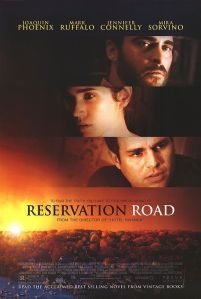 What happened here? Director Terry George was coming off of 2004’s stirring Hotel Rwanda, he had A-list talent like Mark Ruffalo, Joaquin Phoenix, Jennifer Connelly and the results end up feeling like a parody of awards-hungry prestige films steeped in grief and set in suburbia. To be fair, the acting is mostly respectable even if the characters start yelling a majority of their lines. The film moves at an absurdly swift pace that doesn’t allow much time for the actors to react reflectively about grief and guilt. The movie is kept afloat by some contrived coincidences, like Ruffalo’s lawyer being hired by Phoenix to find the culprit responsible for the hit and run that killed his son (surprise, it was Ruffalo behind the wheel!). Reservation Road doesn’t dwell too long on the plot setups it crafts and stumbles into a sudden and convenient epiphany by Phoenix. The conclusion is neither satisfying nor emotionally grueling, and the movie just kind of ends abruptly with little resolved, crushed under the weight of failed pretensions. This movie wants to dig deep and say Big Things about the human condition but it’s hard to do when you’re as emotionally inert and dramatically flaccid as Reservation Road. Seriously, what happened here?
Nate’s Grade: C


 nathanzoebl
You must be logged in to post a comment.