Blog Archives
Avengers: Age of Ultron (2015)
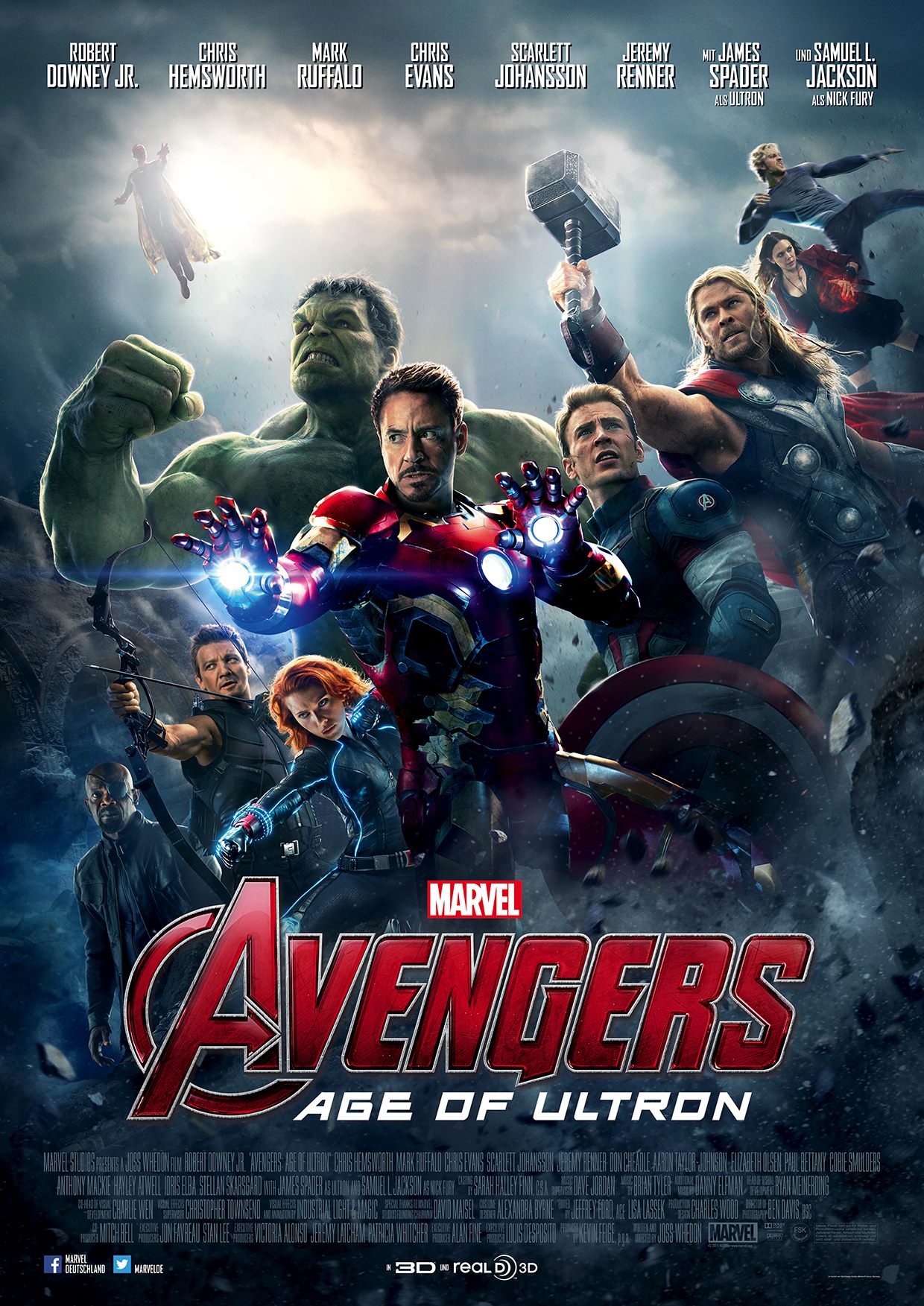 The Avengers wasn’t just a blockbuster it was a mega-blockbuster and rewrote the Hollywood playbook in the summer of 2012. It wasn’t just about powerful franchises anymore. Now it was about franchises that would link into a super franchise. Sony got anxious to expand their Spider-Man universe in a similar fashion as Marvel had done in buildup to The Avengers. After one poor movie, that plan was scuttled and now Spider-Man is being rebooted for the second time in five years, this time with active help from Marvel itself (look for Spidey to appear in Captain America 3). Writer/director Joss Whedon (TV’s Buffy the Vampire Slayer) was the mastermind behind the jaunty smash-em-up fun of The Avengers and was quickly signed on for a sequel after the billion-dollar mark was crossed. With great success comes great risk of upsetting that continued success. It feels like Whedon’s hands were tied to the greater forces at work. As a result, I shouldn’t be surprised but I’m still disappointed with how muddled and overstuffed as Age of Ultron comes across.
The Avengers are cleaning up the last remnants of HYDRA, taking them to a castle in a fictional Eastern European country. The HYDRA doctor has been genetically experimenting on volunteers, birthing Wanda “Scarlet Witch” (Elizabeth Olsen) and Pietro “Quicksilver” Maximoff (Aaron Taylor-Johnson). She can tap into people’s minds and he can run super fast. They’ve got a grudge against the Avengers, particularly industrialist Tony Stark/Iron Man (Robert Downey Jr.). Stark takes a piece of alien technology and plugs it into his home system to build a super fleet of automated robots to patrol the world. In no time, the A.I. has taken form in the shape of an insane robot named Ultron (James Spader) whose mission is to save the planet by eliminating mankind. He builds an army of robotic soldiers with the assistance of the Maximoff twins. Tony, along with Captain America (Chris Evans), Thor (Chris Hemsworth), Hawkeye (Jeremy Renner), Black Widow (Scarlett Johansson), and Bruce “The Hulk” Banner (Mark Ruffalo), must stop Ultron while not destroying much of the world themselves with their collateral damage.
 Eleven movies into the Marvel Cinematic Universe (MCU), a movie of the size of an Avengers sequel cannot simply be a movie. It’s too important to the overall vision of the MCU, and so it has to set up and establish other characters, franchises, and the many monetary tributaries that keep the world of superheroes going. It’s already got a slew of superheroes and it adds even more new faces into the mix (I guess we needed an Avengers B-Team). The development of Ultron is also far too rushed; it’s literally minutes from being plugged in that he’s already settled into kill-all-Avengers mode. The movie barely has any time to even contemplate the perils of artificial intelligence before Ultron is already proving their fears correct. While Ultron is a fun villain (more on that later) his plan feels quite haphazard. His biggest strategic advantage is his duplication, the fact that he can exist without a physical body and can inhabit many bodies at once. Except for a hasty escape via the Internet and a climax stuffed with CGI robot mayhem, this advantage isn’t really explored. Why does a self-replicating creature beyond the bounds of physicality need or even desire a physical body? If you’re made from a nigh indestructible metal and can control numerous beings at once with a hive-mind intelligence link, why would you want to be turned into flesh thanks to what amounts to a 3D printer? The introduction of The Vision (Paul Bettany, this time in the flesh) is quite muddled and confusing. The incorporation of the Maximoff twins is awkward and they feel more like accessories than needed additions. This Quicksilver doesn’t come anywhere close to the memorable prankish Quicksilver from Days of Future Past. The pacing of the film is so ramped that it feels like the movie is falling over itself to get to the next large-scale action set piece. At 140 minutes, they could have removed one or two action pieces and devoted more time to streamlining and cleaning up the narrative.
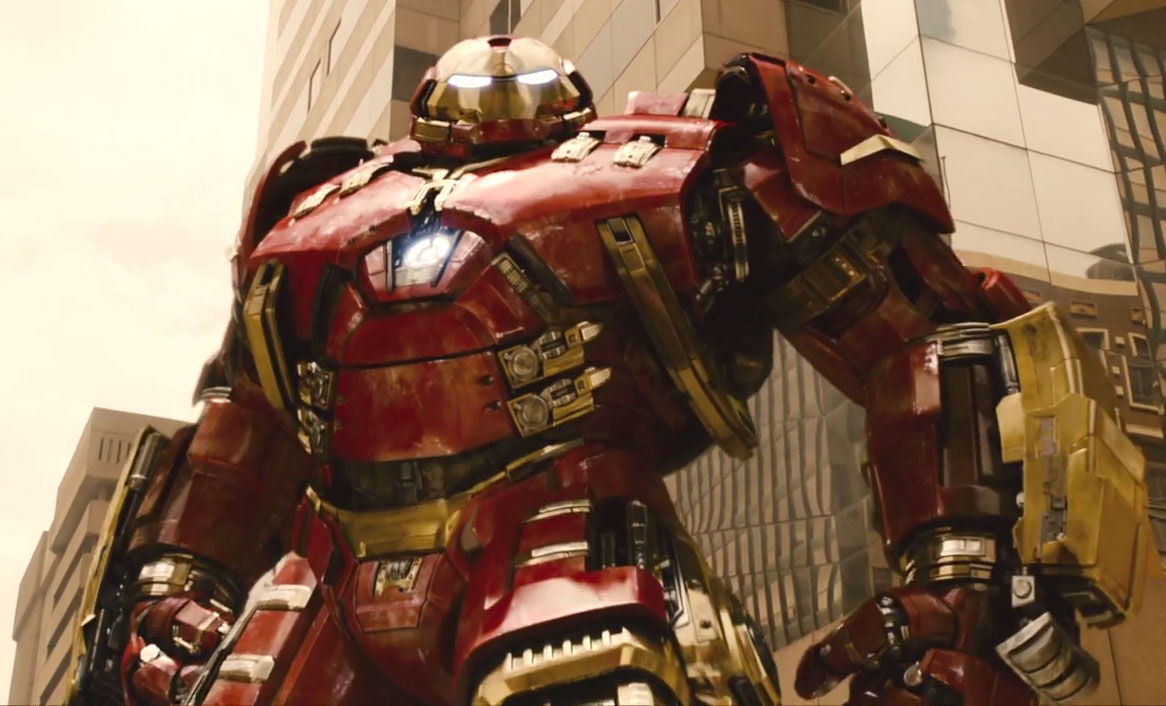
And the action sequences start off with a bang but they invariably fizzle out. The opening sequence begins with a Birdman-styled tracking shot to connect all our fighters, and it’s a fun way to kick things off while visually tying together the team. The Hulk vs. Iron Man brawl is fun for a while, partly because it harkens back to the pleasures of the first film, namely watching our heroes battle each other as much as the villains. After a while, the CGI onslaught becomes overwhelming and just dulls the senses. You’re watching CGI smash into other CGI and then keep smashing, with little variation. The disappointment with the action is that it too often feels weightless and hollow. It has glimmers of fun but it can’t hold onto these glimmers because the action doesn’t change. It gets bigger and more chaotic, yes, but it doesn’t develop with organic complications and real attention to setting. These big battles could happen anywhere because they almost all descend into simply fighting amidst rubble. Even Iron Man 3 found ways to spice up its action set pieces through complications, limitations, and clear differentiation. Perhaps this is a larger outcry of fatigue with the overall state of CGI overkill in effects-driven films. The concluding fight versus Ultron and his many copies just feels like the same scene on repeat but in slightly different locations. Whedon has shown an affinity to coordinate exciting and satisfying action sequences, but you just feel like the pressure and demands get the better of him.
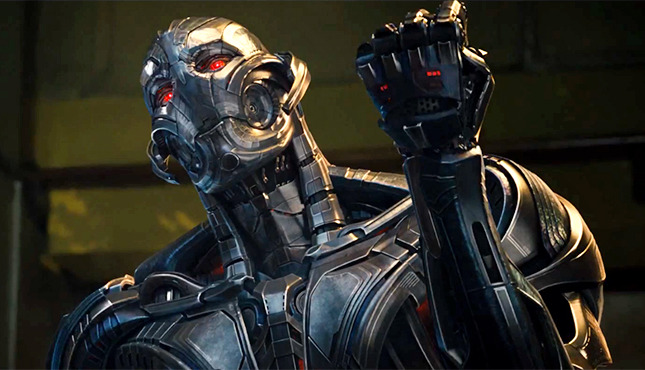
However, every moment with Ultron onscreen is a highpoint because of the malicious cattiness of Spader (TV’s The Blacklist). He’s a perfect fit for a character who is at turns childish and petty, bonkers, and condescending. In some ways he’s like a giant robotic teenager who thinks he’s just above the rest of these so-called adults. It’s such an enjoyable villain, an area of real need in most MCU films (Loki can’t be everywhere for every movie), that I wanted more and more of him. My friend and critical colleague Ben Bailey describes Ultron as the villainous alternative Tony Stark, and Whedon does a fine job of laying out the parallels, especially with regards to ego. It’s a weird reunion for the stars of 1987’s Less Than Zero.
The most boring characters, i.e. the humans, are the ones that get the biggest expansion for character development, with mixed results. Let’s face it, Hawkeye is never going to be anyone’s favorite Avenger. I think even he acknowledges this in a moment that almost breaks down the fourth wall (“None of this makes sense. I’m fighting with a bow and arrow.”). Hawkeye’s personal life is given a spotlight and it sets up an obvious worry that he’s going to bite it by film’s end. If there was an expendable member of this team, it would have to be Hawkeye. The added attention and personal attachments seem like a dead giveaway that he’s going to be dead. I don’t think I was any more invested in his character knowing about his hidden life outside the Avengers, but I certainly played a game of, “Is this gonna be it?” as the film continued. Black Widow started as an interesting character, a spy trying to make amends for her bloody past, or the “red in [her] ledger,” as they referred in the previous film. Her budding romance with Banner makes some sense but it still feels like the character is being forced into Romantic mode not because of her character but mostly because she has a vagina. Any romance with a guy who turns green and monstrous seems like it might be best as unrequited. She’s also defined by a past trauma that, while upsetting and cruel, is also a bit too tied into her identity as Woman/Mother. It’s an unfortunate positioning for what is an inherently interesting character (the slut shaming of the character in promotional interviews by certain Avengers cast members is also highly unfortunate). Can’t we get a Black Widow movie yet, Marvel?
 An aspect of Age of Ultron I did enjoy was how conscious the heroes are about mitigating collateral damage and especially human casualties. At every turn, the Avengers are thinking about saving those caught in the cross-hairs first. They go out of their way to save those left behind. I think, and I’m not alone in this conclusion, that Whedon is directly responding to the disaster porn that was Zack Snyder’s miserly Man of Steel. The latest Superman movie bothered me with how callous it was with human life, treating devastating city-wide 9/11-style destruction as mere entertainment. As Superman and Zod were colliding through every damn building in Metropolis, you knew thousands if not millions of unseen people were perishing in this rather pointless melee. Whedon’s band of heroes places a priority on human life regardless of region.
It would be disingenuous of me to say Age of Ultron is not entertaining. Whedon is still a terrific storyteller and that still shines through the troubled areas and spotty plotting. The action makes good use of the various heroes and their abilities, providing fun combos like Cap hurling his super shield so Thor can redirect it further with his hammer. The use of humor was one of the bigger enjoyments of the first Avengers, and while it’s still abundant and enjoyable here as well I’d say it’s overdone. When every character is cracking quips every fourth line of dialogue, it pulls you out of the movie and the stakes feel lesser. The running joke where the Avengers make fun of Captain America for his prudish sensibilities on profanity is a joke that works at first but then loses all sense of fun as it’s pounded into the ground on repetition. The larger set pieces each have their moments to delight, especially the opening and the Hulk vs. Iron Man battle. Age of Ultron isn’t a bad movie and it has some truly great moments and great character moments and payoffs, but it’s only moments. The plot meant to connect the dots is too labored with the burden of setting up several Marvel franchises. In the MCU pecking order, I’d place Age of Ultron right around Iron Man 2 quality (another movie compromised by the extra burden of setting up other movies, namely The Avengers).
It’s sure to set box-office records and I imagine fans of the original will happily lap up another super team-up, but Avengers: Age of Ultron is something of a disappointment for me. The more I think about it the fun parts become a little duller and I find more areas of criticism. It’s just not as fun a movie experience, and that’s due to the rushed and muddled story and too many characters. After the critical and commercial success of the first film, I doubt that Whedon could have produced a film that would live up to the sky-high expectations, but that doesn’t excuse the finished product. It feels like Whedon had to struggle to pull this one off, especially with the added demands, and I can’t blame him for wanting a break from the MCU. The Russo brothers who so dazzled audiences with their direction of Captain America: The Winter Soldier will be stepping in to direct the next Avengers sequel(s). I hope they’re up to the task because the burden of carrying a billion-dollar franchise with its tendrils connected to other franchises appears to have been overwhelming for one of the greatest storytellers of a generation. Enjoy Age of Ultron but be wary of what the future holds for the larger MCU.
Nate’s Grade: B-
Share this:

Foxcatcher (2014)
 Haunting and engaging with great performances, Foxcatcher is a dark drama based upon real events that lead to tragedy with the United Stated Olympic wrestling team. Steve Carell immerses himself in the role of eccentric wealthy scion John du Pont, a man eager to carve out validation for himself. He bankrolls the U.S. team to train at his onsite facilities, notably assisting Mark Schultz (Channing Tatum) who is eager to get out of the shadow of his older brother (Mark Rufallo). This is a bleak drama that goes to some dark avenues but it’s not as applicable as the Cannes raves would have you believe. I was never bored but I did find the movie to be somewhat limited in scope. It’s really the life and times of a rich weirdo with a manufactured world around him thanks to his privilege. Du Pont sees himself as a mentor and a teacher, but really he’s just the guy writing the checks, and when his constructed view of reality is challenged, that’s when things get dangerous. He’s not as psychologically complex as advertised. Director Bennet Miller (Moneyball, Capote) ensures the film is overrun in dread so you anticipate that something very bad will happen, and as a result it can be something of a murky slow burn that isn’t necessarily worth the 130 minutes of wait. Foxcatcher is another example in the 2014 trend of the performances being better than the film itself. It’s an intriguing film with great performances, just don’t expect exceptional commentary.
Nate’s Grade: B
Share this:

Thanks for Sharing (2013)
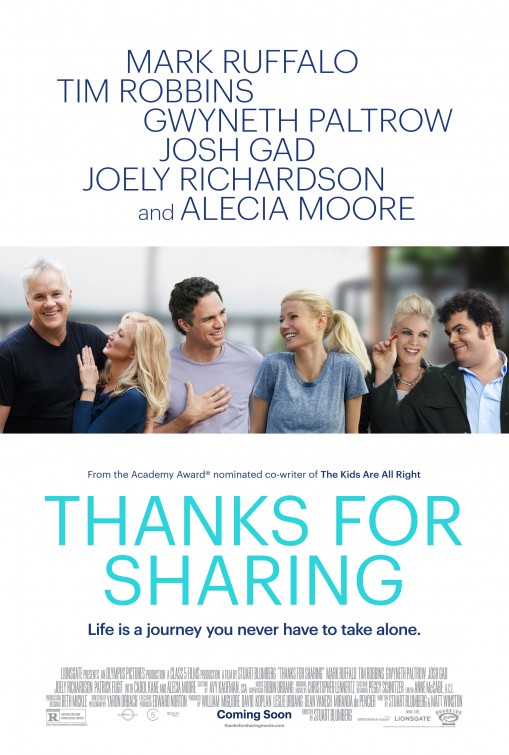 “Isn’t sex addiction one of those things guys make up when they’re caught cheating?” asks a character in Thanks for Sharing. This movie treats the topic of sex addiction very seriously, rattling off plenty of adverse side effects rather than just a wandering eye. Director and co-writer Stuart Blumberg (The Kids Are All Right) is certainly empathetic to his characters on screen. I just wish the movie knew what it wanted to be.
We follow three sex addicts in one therapy group, all at different points of recovery. Mike (Tim Robbins) is the paternal figure of the group. He’s long been married to his high school sweetheart. Adam (Mark Ruffalo) is five years sober and being prodded by Mike to start seriously dating again. He meets Phoebe (Gwyneth Paltrow), a cancer survivor, and hides his addiction from her. Worst of all is Neil (Josh Gad), a doctor who has been mandated to attend sex addict group therapy after “bumping” into people on the subway and recording an upskirt video of his boss. He doesn’t believe he has a problem, but, under the guidance of Adam and Mike, comes to the conclusion that the only person who can fix his impulses is himself.
 Thanks for Sharing is an admittedly entertaining movie, at turns, but it’s a movie with one debilitating identity crises. What kind of movie does it want to be tonally? We get raunchy sex gags, and then the film transitions into rom-com fluff, and then the film transitions into hard-hitting addict drama, and then it’s all back again. All of these elements could have been carefully threaded into one movie, but Blumberg and co-writer Matt Winston cannot nail down a consistent tone. In fact many of the changes can be quite jarring. One minute people are engaged in wacky sex hijinks, and the next they’re lamenting all the horrible life choices they’ve made in tears. When there isn’t a clear tone, or clear transitions, then the comedy undercuts the drama and vice versa. Therefore, certain elements can be appreciated or be found engaging, but the movie cannot become more than the sum of its parts. And let me get into whether sex addiction is really a topic that can work in the realm of romantic comedy. With the right finesse anything can be presented in a comedic light that still maintains the humanity and dignity of its flawed characters. However, is something as easily misunderstood as sex addiction, whose particulars can be quite appalling to many, the right fit for a genre that is predicated on whimsical coupling? I don’t think so. Thanks for Sharing doesn’t change my mind.
About that rom-com part, notably the relationship between Adam and Phoebe, it’s easily the least interesting part of the film. Both of these characters are fairly bland. Adam’s the sober guy trying to keep things going, except that we never really feel like he’s challenged. We don’t feel the threat that he’s going to relapse. And we don’t really get to know much else about the guy. He vaguely works for some sort of environmental firm. As a character, he is defined by Phoebe, herself a collection of quirks that doesn’t coalesce to form a human being. The film weirdly keeps harping on the fact that Phoebe likes her food to not touch, as if this minor peculiarity is some harbinger of a greater OCD complex (she’s into physical fitness!). The fact that other characters have to jump in on this makes it even more transparently reaching. Worse than all this, the couple’s interactions, and much of their budding relationship, feels overwhelmingly artificial. The dialogue should be sparking, charming, but you get no real sense of why either of these people would fall for the other, excluding the obvious physical attributes of each. The rom-com convention of the Big Secret (Adam’s addiction) is left dangling until, surprise, it’s defused early. I’d expect the movie to push further since there is a wealth of drama to be had about the trust levels of dating a sex addict, but instead it just forces them apart all too easy. Then there’s the fact that the movie covers perhaps a month of time and their relationship seems to move ridiculously fast, mostly because Blumberg is impatient for his couple to get to a more physically intimate stage.
Thanks for Sharing works far better as a darker drama, and as a movie, when it focuses on the roles of Mike and Neil. The film smartly connects sex addiction with other impulse control issues; for Mike he’s been sober from booze for 15 years, and for Neill he has weight control issues. These are the characters we see struggle, these are the characters at the more interesting points. Neill especially is a doctor whose hit rock bottom and can’t get away from the felonious things his addiction tempts him to do. Mike has a surrogate family with his support group. Now that his prodigal son (Patrick Fugit) returns, that adds tension to his family dynamic, both at home and in group. I would have preferred Thanks for Sharing to be told chiefly from the perspective of these characters, eliminating Adam and Phoebe altogether. But even these good storylines find themselves wading into all-too familiar plot devices. Mike’s arc involves reconnecting with his son, which will lead to a misunderstanding, a conflict, and ultimately forgiveness, and you see every step coming. Neill’s journey gets an unexpected boost when he takes initiative to help Dede (Pink a.k.a. Alecia Moore), one of the only ladies in group. Of course it takes a pretty girl to push Neill out of his selfishness and self-loathing, but he does progress, and it’s the most emotionally rewarding moment in the film. The problem is that Neill’s storyline is tied up in a platonic head-scratcher. Dede takes Neill to a dance hall where they are just there to… dance, but the kind of dancing that hipsters do. It all seems like something for people on drugs, but whatever reason, Neill shaking his groove thing, and coming to an understanding that he will not be touching Dede, makes his character better. I was surprised that Blumberg was able to end the movie on something of a downbeat, falling back to the central message of one day at a time, vigilance.
 There is one standout scene that really gets to the scariness of sex addiction succinctly. Once Adam falls off the wagon, which shouldn’t be much of a spoiler people, he regroups with Becky (Emily Meade) a gal he had a one-night stand with. Their flirtation is quick, settling into their attraction, and then she engages in behavior that, meant to be alluring, is rather insightful. She has a daddy fixation and wants to be punished as a “bad girl” with Adam pretending to be her stern father. That could be a red flag, but Adam carries on. Then she asks him to slap her. Adam refuses. So she does it herself, beating herself, eventually descending into a mess of tears, screaming. Adam tries to console her, stupidly deciding to try and make contact with her after she keeps screaming, “Don’t touch me!” She locks herself in the bathroom and threatens to harm herself. This one moment in the film gets at the damage of sex addiction like nothing else. It points to possible abuse, but really it all falls apart so rapidly that your head is spinning. The conclusion is pat and anticlimactic, but the lead-up is fantastic. If the rest of the movie had been thematically closer to this scene, Thanks for Sharing would be worth sharing.
From an acting standpoint, the cast does a fine job portraying their characters and his or her respective foibles. Ruffalo (The Avengers) is a bit too even keeled for his character. Gad (Jobs, The Internship) is the film’s comedic spark but also its greatest source of internal drama, which Gad handles well, showcasing the desperation of Neill. The real surprise is actually pop singer Pink in her first real acting performance (Charlie’s Angels: Full Throttle counts under no circumstances). Her introductory monologue, which she nails, makes you take notice that Pink has some genuine acting muscles.
Thanks for Sharing is an uneven mishmash of genres and ideas, rarely settling down into something worthy of the talent at work here. The comedy works against the drama, the drama works against the comedy, the clichéd character developments don’t serve anyone, and the overall artificial nature of the central rom-com coupling drags the enjoyment level further down. There is good work here, good acting and some memorable scenes and offhand laughs, but all Thanks for Sharing can amount to is a series of scant moments, passing encounters of entertainment. I didn’t find many of the characters to be as nearly compelling as the filmmakers did, and some of their hasty resolutions and developments feel far too simple for an addiction this complicated. The potential of the film is never fully realized. While I’m doubtful rom-com is a good fit for a serious exploration on sex addiction (wasn’t Shame hilarious?), it does lend itself to a bevy of juicy setups and possibilities. We get little of these. It’s as if the film wanted to present a case for the legitimacy of sex addiction, front-loaded with stats and horror stories and characters to open our eyes, and the notion of telling a laudable story was secondary to the educational efforts. Congrats. Now give me a story to care about.
Nate’s Grade: C+
Share this:

Now You See Me (2013)
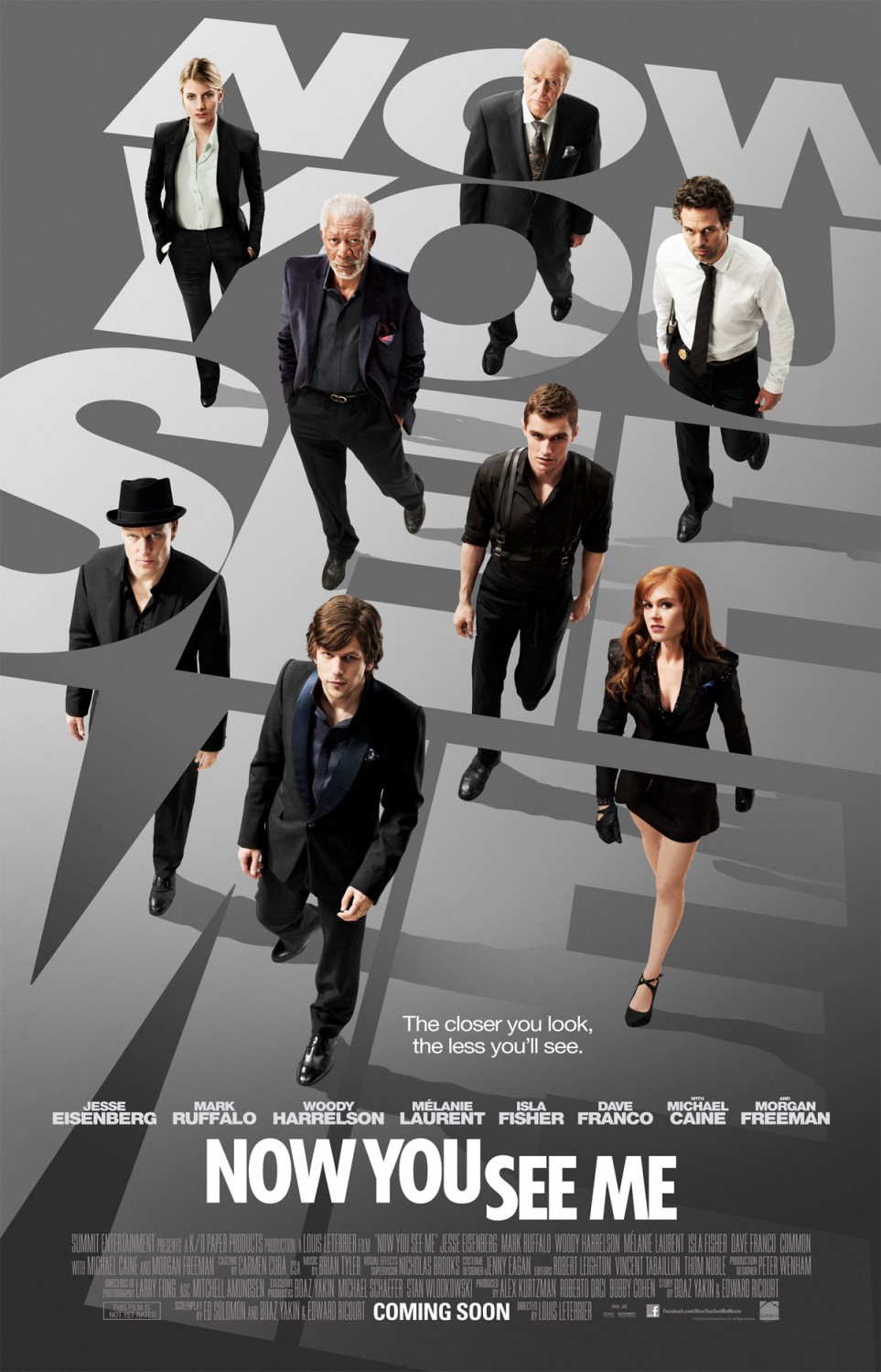 Everybody loves magic, right? At least the prospect of being surprised and delighted. Now You See Me takes something everybody loves (magic) and mixes it with a genre everybody loves (heist movie) and has already profited from the results at the box-office. Mix an ensemble of actors, though all of them white, and look over in this direction for a diverting, entertaining, and ultimately frustrating film that is too breezy to hate.
Four different magicians (Jesse Eisenberg, Woody Harrelson, Isla Fisher, Dave Franco) have teamed up to form a super team, The Horsemen, and they’ve taken Vegas by storm. A year into their reign, the insurance magnet and casino owner, Arthur Tressler (Michael Caine), is sitting pretty with his investment until the Horsemen turn their targets on him. With each new fantastic trick, the quartet fleeces the shady businessman of his money, returning it to wronged parties and the public at large. FBI Agent Dylan Rhodes (Mark Ruffalo) and Interpol Agent Alma Dray (Melanie Laurent) are tasked with finding the magical fugitives and figuring out their greater scheme. Just as one of the magicians notes, every time they think they’re one step ahead, they’re actually three behind.
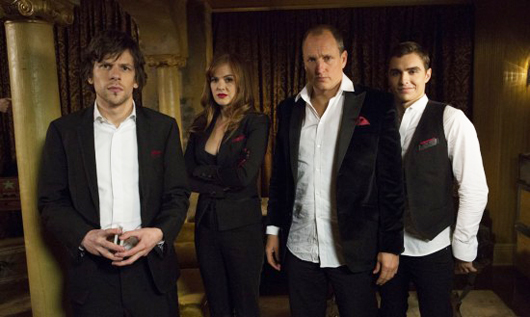 Let’s begin by admitting that the premise of a group of magicians performing heists is excellent. Seriously, on that alone I’d be hooked. Wouldn’t an Ocean’s 11-style movie about a group of magicians working a big score just be awesome? There’s so much fun to be had with such a breezy premise and for the most part Now You See Me lives up to its breezy potential. It works in segments, presenting a magical set piece, watching it unfold, and then unpacking it, sort of like a reverse heist sequence. It provides a bite-size moment of satisfaction, and then the movie goes off and repeats the process. The Horsemen elude the police and we start to get a broader sense of their aims, namely a slice of class warfare vigilante justice. There’s a genuine thrill to watching smart, talented types outfox their antagonists, and Now You See Me is no different. Under Louis Leterrier’s (Clash of the Titans) direction, the results are fast-paced, constantly shifting and surprising, and so cheery in tone that it’s hard to fault the movie for its lack of substance. Here is an example of a summer movie that’s just fun to watch. It taps into the desire we all have to be fooled, the same willful disbelief we process when watching magic or movies themselves, the modern artistic equivalent of magic. For a solid hour-plus, Now You See Me is a diverting and entertaining action thriller.
There are only a handful of traditional action sequences in the movie as most of the thrills are comprised of the illusions and some foot chases. I do want to single out a great moment, namely a magic fight where Jack Wilder (Franco) runs al over an apartment subduing police officers with magic. At first he relies on stealth to get the drop on them, but then the guy resorts to what is practically magic kung fu, using his sleight-of-hand to disarm his attackers. He then uses playing cards and flash paper at his disposal. I only wish that Rhodes, Wilder’s main adversary in the scene, tried to fight fire with fire, so to speak, and make use of the magical accessories in comical matters. The scene’s imagination reminded me of the final confrontation in Who Framed Roger Rabbit? where a selection of toon-specific tools were brought back for a unique showdown.
But with most magic acts, the good times start to fade once you find out how the trick is done. What hampers Now You See Me from being a stronger movie is a convoluted third act that goes to great preposterous lengths to explain the source behind the Horsemen. It’s pretty much who you’d assume it would be but I’ll still refrain from spoilers. Suffice to say, it’s an ending that doesn’t really work especially since it’s one of those reveals that makes you think back and question ordinary scenes. The movie muffs the landing, relying on twists to satisfy what was really just a high-concept heist movie. Another issue I had with the film is how quickly it marginalizes our would-be Robin Hoods of magic. After about the 45-minute mark, the Horsemen get sidelined as supporting characters and the movie is almost entirely told from the perspective of Rhodes. I understand there’s got to be some narrative discipline so that we don’t know the protagonists’ tricks before they perform them, but if I’m going to stuck with the dogged cop then make it his movie from the start. Compounding this problem is that the Horsemen, through no fault of the actors, barely register as characters. The actors are given one-note, and in the case of Fisher (The Great Gatsby) it was Woman, and that’s it. We see them as they perform their tricks and their daring escapes, but that doesn’t count as character development. In this regard, it’s less bothersome that these poorly conceived people get sidelined but then you stop and think that the only character you actually feel some interest in is Laurent’s Interpol agent.
 My suggestion for any possible future installments (Now You See Me Again? Now You Don’t?) is to focus more on our core team of magicians rather than their mysterious benefactor. I would also stress less time spent talking about The Eye of Horus or whatever through-the-centuries secret club of magicians the film was hinting at. I liked that, while completely elaborate and with endless fortune in preparation, that the illusions still had some tenuous foot in reality, that the magic tricks could be done in a somewhat recognizable world of ours (ignore the hologram junk). I strongly feel that even hinting about secret magical orders is just a step too far, breaking the film’s credulity, and taking what was fun and making it silly. I was worried before seeing the movie that the magic, as advertised, was going to be too supernatural. I was relieved that there wasn’t going to be a late reveal where some character rolls their eyes, probably Eisenberg, sand says, “Well, yeah, magic is real. Stupid.” When you’re playing around with larger-than-life figures that deal in theatricality and misdirection, I think it’s paramount not to get too carried away, failing to ground your movie for the audience.
If you’re looking for a fun time out at the movies, Now You See Me will serve its purpose well enough until it begins to fall apart by the end. You may find yourself looking back and the earlier mystery and thrill of the unknown will dissipate upon reflection, leaving you with little. It’s fun while it lasts but when it’s all over you’re left with substandard characters and an overly convoluted plot that doesn’t satisfy in the clinch. Magicians-plan-heist is such a juicy premise that I hope someone else makes better use of it. I would still love to see that movie, only well developed and giving me characters to actually care about. Now You See Me is as substantial as a magic trick itself but it’s an inoffensive, carefree, and mostly fun ride at the movies, though I think so much more could have been done with this concept and this budget. For a $75 million dollar magic trick, I want a better result.
Nate’s Grade: B-
Share this:

The Avengers (2012)
 For the past four years, Marvel has been seeding its all-star super hero collective in the storylines of its summer blockbusters. And with six super heroes, The Avengers carries some super expectations. The creative mind behind the film is none other than Joss Whedon, best known for creating and shepherding cult TV shows like Buffy the Vampire Slayer, Angel, and Firefly. Not exactly the first name you’d think Marvel would assemble to front a $200 million movie. For geeks, Whedon has become a reliable standard of quality (the patchy TV show Dollhouse notwithstanding). Here is a man who can marry big ideas with sharp characterization and delightfully skewed dialogue. In Whedon, geek nation has a savior, and Marvel knew this. The Avengers is 142 minutes of geek arousal stretched to orgasmic heights.
Nick Fury (Samuel L. Jackson), head of the agency S.H.I.E.L.D., has a dire need for Earth’s mightiest heroes. Loki (Tom Hiddleston) has traveled through a portal and plans on conquering Earth thanks to an approaching alien army. Fury has tasked Tony Stark (Robert Downey Jr.) a.k.a. Iron Man, Steve Rogers (Chris Evans) a.k.a. Captain America, and special agent Natasha “Black Widow” Romanof (Scarlett Johansson) with stopping Loki and rescuing one of S.H.I.E.L.D.’s own agents, the skilled marksman Clint “Hawkeye” Barton (Jeremy Renner), who is under Loki’s devious mind control. Loki’s brother, Thor (Chris Hemsworth), would like to cite jurisdiction and bring his wicked brother back to his home world. The only person who may be able to locate Loki’s path is Dr. Bruce Banner (Mark Ruffalo), a guy with his own anger issues. With this many egos, it’s bound to get dicey. As Banner puts it, “We’re not a team. We’re a time bomb.” Can they put aside their differences to unite to save the Earth? Does a Hulk smash?
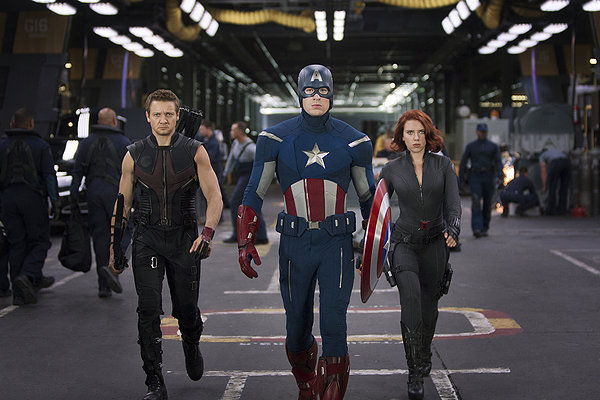 Whedon, the king of clever genre deconstruction last seen in the excellent meta-horror film Cabin in the Woods, plays it relatively straight, giving his big, effects-driven film a straight-laced sense of sincerity. It’s not making fun of these sort of big-budget, effects-driven smash-em-ups, it just wants to deliver the biggest smash-em-up yet. To that end, The Avengers achieves maximum smashitude (trademark pending). By its rousing finish, the movie has become so massively entertaining that you forget the draggy first half. The scope of this thing is just massive. The last thirty minutes is solid action across miles of crumbling, just-asking-to-be-exploded city landscape. But the trick that Whedon pulls off is how to orchestrate action on a monumental scale without losing sight of scale, pacing, and character. You’d think with a full deck of superheroes that somebody would be shortchanged when it came time for the rough and tumble stuff. Not so. Instead of fighting one another, the prospective Avengers work together in all sorts of combinations. The characters are well integrated into the fracas, making particular use of their abilities, and finding new locations of focus every few minutes. This expert hero shuffling keeps things feeling fresh amidst the constant din of chaos.
In fact, the movie finds time to give every hero his or her due, finding a small moment to reveal some characterization. I thought Whedon’s biggest challenge was going to be the juggling act of balancing so many heroes and so much screen time, but the man found a way, like he regularly does, to squeeze in character with ensemble action. The Hulk fares the best. After two movies, it feels like Whedon has finally nailed the character; granted, this success may be credited to the fact that Bruce Banner (all hail Ruffalo) is kept as a supporting character. The struggle of the character being likened to a recovering addict is a smart way to present the character without getting too morose (I enjoyed the revelation that the “Hulk” half prevented Banner from killing himself). When he’s told his mission is to smash, you can feel the exuberant joy of an unleashed Hulk id. The Hulk had two great audience-applause moments that made my theater go berserk. I also really liked the attention given to Black Widow and her lonely back-story. Hawkeye was a complete badass, though he only gets to do fun stuff in the madcap finale. The trouble with the hero team-up franchises is that not everyone’s on the same level of power. Thor is a god for crying out loud, Iron Man has super weapons, Hulk is Hulk, Captain America at least has superhuman strength but what do Hawkeye and Black Widow bring to the team? When you’re competing with all that power, being good with guns or a bow seems pretty puny. And with Hawkeye, there’s going to be a limit to his effectiveness unless he has a magic bag of replenishing arrows. Still, Whedon finds ways to make the heroes badass and humane in equal measure, and surprisingly funny, which is welcomed.
It’s hard to believe that Whedon had only directed one feature film before (2005’s Serenity, based upon Whedon’s canceled Firefly show) being given the keys to the Marvel universe. He’s directed several TV episodes of his signature shows but the man has never produced anything on this scale before. Given a gigantic canvas, Whedon delivers the goods. His action sequences are rollicking and fun and, best of all, shot and edited in a fashion where you can understand what is happening (take some notes, Hunger Games franchise). The action is well choreographed and elevated with organic complications and particular attention paid to location, like the Nicky Fury airship. Whedon is a master of the plot payoff, setting up his elements and then piloting the narrative to satisfying conclusions and integrations (Cabin in the Woods is also a pristine example of this gift). If you’re going to introduce an airship, you better believe that sucker is going to threaten to crash. I’m glad that Loki was brought back as he was the best Marvel big screen baddie yet, though I’m disappointed they essentially put him on ice for an hour.
 The technical elements are ably polished even for this kind of film. The cinematography by Seamus McGarvey (Atonement) is terrific, utilizing bright color in a way that the visuals pop. The special effects are top-notch and you just feel immersed into the action. The destruction is cataclysmic but rarely does the movie feel phony. I was impressed by the Hulk designs and the sequences in inky space with our alien adversaries. For that matter, are these aliens robots? It’s unclear whether the giant flying centipede-like ships are creatures. The 3D conversion is one of the better outings due to the fact that it doesn’t keep throwing stuff in your face. Plus, viewing Johansson’s leather-clad assets in 3D certainly has its own appeal, as does Gwyneth Paltrow in jean shorts. Hey How I Met Your Mother fans, Cobie Smulders looks practically smoldering in her S.H.I.E.L.D. agent outfit too. Okay, I swear I’m done with the female objectification.
I hesitate calling The Avengers the greatest super hero/comic book movie of all time, as the teaming hordes of Internet fanboys foaming at the mouth are wont to do. If your definition of a comic book movie is a giant sandbox with all the coolest toys, then this is your film. This is a comic book turned flesh. The Hulk and Thor fight and prove who is the strongest Marvel man, that’s got to be a geek’s wish come true. Many of the infighting sequences felt like, servicing the tastes of the fanboys, and after a while the constant hero on hero action felt tiresome. I get that we have a clash of egos going on here, but the movie suffers from a lack of narrative cohesion, by which I mean that the first hour of the movie feels like a series of guest appearances by heroes on loan. The movie doesn’t fully come together until the point where the team comes together; I doubt Whedon intended that symbiotic relationship. The movie feels more like a patchwork of standout scenes and memorable moments that a fully formed and cohesive story. If you haven’t seen the previous four Marvel movies (Iron Man, Iron Man 2, Thor, Captain America), you’ll be pretty hard-pressed to follow the story. Loki’s motivation and plan seems rather sketchy other than causing discord amongst the heroic ranks. His powers seem inconsistent and vague. Also I found the musical score by Alan Silvestri to be bland and unworthy.
The Avengers is sure to be geek nirvana for many of the comic book faithful. It’s an audience pleaser of mass scale, and I’m sure that your theater will be cheering in abundance. Whedon has pulled off the near impossible. The movie is a thoroughly entertaining, exciting, and witty popcorn spectacle of the first order. But where the movie hits the ceiling, at least for me, is that it ONLY wants to be the best super hero movie and this seems like limited ambitions. It’s like making the very best possible women in prison movie (great, but is this really all you set your sights on?). I had a great time watching Whedon’s handiwork but I wish it mined the outsized territory for bigger themes, a little more than audience-satisfying pyrotechnics, something I feel that X-Men: First Class did a better job of handling. Don’t get me wrong, I greatly enjoyed The Avengers and it’s a fantastic start to the summer movie season, but by no means is it The Dark Knight or even aspiring to be, and that’s okay. Enjoy the busy escapades of Marvel’s next smash franchise. Who knows when they’ll be able to wrangle everyone together for another adventure, but judging by the sounds of ringing cash registers, the answer is sooner than we think.
Nate’s Grade: B+
Share this:

Shutter Island (2010)
 This was a pulpy B-movie put together with A-movie artistry. In a year that had some artistically polished genre movies, Shutter Island was Martin Scorsese’s return to genre filmmaking and he brought with him an entire team of experts and professionals. The movie is playful and intriguing, engaging the mind enough for a crime thriller that appears to be a straight-forward mystery but then shows flashes of being about something more, something darker. And when you’re dealing with a movie with Holocaust flashbacks, dead kids, Nazi doctors, mental asylums, well you know you’re not going to be reaching subtlety even with a stick. But the way Scorsese orchestrates all these foreboding elements, tying together various plotlines, and working at different levels to satisfy the informed and uninformed, right before delivering a dynamite twist that calls for further investigation and rewatching, well it’s nothing short of masterful. Shutter Island may not be anything more than a souped-up B-movie, but with this level of artistry, it’s also one of the most entertaining films of the year.
Nate’s Grade: A-
Share this:

The Brothers Bloom (2009)
 Con movies work thanks to P.T. Barnum’s belief that the audience wants to be fooled. We all enjoy being conned to some degree. The excitement of con movies is being outsmarted and figuring out how it was accomplished. The Brothers Bloom, by writer/director Rian Johnson, one of the more exciting new filmmakers in Hollywood, is a con artist caper that understands the rules of the game and then aspires to transcend the game. Whether or not it succeeds depends on how much whimsy you can stomach in a two-hour duration.
Stephen (Mark Ruffalo) and Bloom (Adrien Brody) are a pair of con artist brothers. Stephen has been drawing up elaborate schemes ever since childhood, and he always uses his brother as the face of the operations. The brothers have a third member to their team, the mysterious and mute Bang Bang (Rinko Kikuchi), who, we’re told, just appeared out of thin air one day and they expect she’ll leave in the same style. Bloom is tired of playing characters and roles and wants out, but his big bro comes back with one last con in the works. Penelope Stamp (Rachel Weisz) is rich, peculiar, and lonely, ripe for the taking. Bloom snares her with the exciting prospect of being apart of an adventure. There’s a globetrotting plot to profit from selling a book to some shady characters (Robbie Coltrane, Maximilian Schell), and it’s just what Penelope needs to feel alive and leave the confines of her large cage-like home. Naturally, Bloom falls for the “mark” and feels conflicted, but was this part of Stephen’s plan all along? Is he setting up some form of a happy ending for his little brother? Is Penelope in on the con? Who’s conning whom?
 The Brothers Bloom is steeped in whimsy and at times runs dangerously close to falling into the inescapable gravitational pull of “cutsey.” Some have compared the film’s quirky, precocious style to Wes Anderson, but the movie reminds me more of the style of Barry Sonnenfeld, a filmmaker who made outsized whimsy seem like everyday reality; Anderson’s movies seem to exist in their own impeccably handcrafted worlds. I loved the opening 10-minute prologue which explores the childhood history of Stephen and Bloom, examining their first con on local rich kids. It’s quick-witted, snappy, and even has Ricky Jay provide narration, reminiscent of Magnolia or the David Mamet con movies. The Brothers Bloom has a sunny disposition that doesn’t come across as smug. Stylistically, the movie never crosses the line into feeling overly mannered. The Brothers Bloom exists in some unknown time period. The cars are modern, the clothes are from the 1930s (everyone wears a bowler hat with such flourish), and the sets look like they’re from the 1960s. There is no dependence on technology, just good old-fashioned brains and charm.
And yet this is more than an exercise in style. Just as he did with the adroit, neo-noir movie Brick, Johnson takes a genre and subverts its expectations. The Brothers Bloom treats cons more as storytelling, and it positions the film and its characters in an interesting new light. Bloom yearns for an “unwritten life” because all he’s known have been roles in his older brother’s games and cons, and the poor sap doesn’t even know if he has an identity beyond fabrication. Stephen has also begun to blur the lines between reality and his cons, and his life’s ambition is to stage the perfect con where “everybody gets what they want.” Get that? The Brothers Bloom aims for deception that gives everyone, including the deceived, a happy ending. It almost sounds like a charitable goal. Johnson has injected the con artist genre with some pathos and self-reflection. Too many con artist movies are only good for one viewing; once you know the particulars of the con, do you feel invested in watching it play out again? Johnson puts some melancholy into the mix and it gives the film more weight than being the sum of its many quirky parts.
 The acting across the board is superb. Ruffalo is his typically low-key yet engaging self, and he seems sincere even when you know he isn’t. His love and concern for his little brother is touching. His schemes are all for his brother to get out of his shell and experience some level of happiness. Brody embraces the weariness of his character. He is confused and tired and feels like he cannot trust human connections; he’s paranoid that all roads lead back to some machination from his brother. His affection for Penelope is like an awakening for his character, and yet he cannot fully give into it because is it genuine? This incredible level of uncertainty with every aspect of life casts a heavy toll, and Brody convinces you of that toll. Kikuchi (Babel) makes great use of physical comedy and has a lot of fun with her mysterious character. She’s mute for practically the entire film yet manages to communicate plenty. But it is Weisz (The Fountain) that steals the movie and steals your heart. Her screwy eccentric is deeply lonely but radiates a ditzy glow. She fully embraces the prospects of adventure and bounces in glee. This woman is powerfully adorable.
There are a handful of missteps in the narrative. The movie likely lasts twenty minutes longer than it needs to, with false endings and even a false third act. Audiences are used to con movies revealing the larger scope by the end after a bevy of last-minute twists. This is not the case with Bloom. The movie gets more muddled and introduces new conflict that isn’t ever really resolved. Audiences expect clarity by the end of the third act, not confusion. I feel like I’m missing something with the duplicitous Diamond Dog character (Schell), and maybe that’s the point; perhaps I’m supposed to be in the dark about his connection to the brothers Bloom. I won’t get into spoilers, but I was expecting more reveals at the end of the movie, perhaps Stephen showing one last final box, and the movie gives you nothing. I suppose the purpose is to play against con movie conventions and the surprise is that there is no real surprise by the end, no “I was in on it” or “It was all part of the plan” a-ha moments of ironic revelation. That’s nice but it doesn’t always make a movie more satisfying. The ending would be more moving if the audience didn’t already feel spent by the time they have to process something more emotional.
Johnson’s follow-up to his immensely entertaining debut is a solid winner, though it leaves you hanging and wanting at the end. The movie is quirky and heavy on the whimsy, and yet it also squeezes in some pathos. Yet the movie falls short of its ambitions and the talent of Johnson. The Brothers Bloom will seem enchanting to some and insufferable to others; it defies expectations and genre conventions, and sometimes would be better off adhering to them. It’s an amusing caper comedy but it could have been something even more special. It just needed a little less narrative sleight-of-hand.
Nate’s Grade: B+
Share this:

Reservation Road (2007)
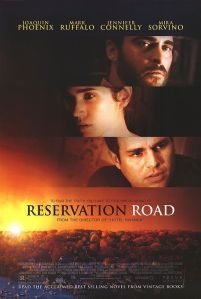 What happened here? Director Terry George was coming off of 2004’s stirring Hotel Rwanda, he had A-list talent like Mark Ruffalo, Joaquin Phoenix, Jennifer Connelly and the results end up feeling like a parody of awards-hungry prestige films steeped in grief and set in suburbia. To be fair, the acting is mostly respectable even if the characters start yelling a majority of their lines. The film moves at an absurdly swift pace that doesn’t allow much time for the actors to react reflectively about grief and guilt. The movie is kept afloat by some contrived coincidences, like Ruffalo’s lawyer being hired by Phoenix to find the culprit responsible for the hit and run that killed his son (surprise, it was Ruffalo behind the wheel!). Reservation Road doesn’t dwell too long on the plot setups it crafts and stumbles into a sudden and convenient epiphany by Phoenix. The conclusion is neither satisfying nor emotionally grueling, and the movie just kind of ends abruptly with little resolved, crushed under the weight of failed pretensions. This movie wants to dig deep and say Big Things about the human condition but it’s hard to do when you’re as emotionally inert and dramatically flaccid as Reservation Road. Seriously, what happened here?
Nate’s Grade: C
Share this:

Zodiac (2007)
 Zodiac is something altogether different from a genre best known for cannibalism, skin suits, and express shipping of human heads. It has more in common with All the President’s Men than director David Fincher’s 1995 masterpiece, Seven. This is a serial killer thriller steeped in police procedural, closed door deliberations, and the slow drip of a decades long investigation into the Zodiac killings that terrorized California from the 1960s and 70s. Watching close to 3 hours of procedure with nary a car chase or a shoot-out may not sit right for fans of the genre, but I enjoyed the film for the same reasons people will decry it — the details. I loved how methodical this film is, how dogged and stubborn it is, and I found myself being enveloped into the minutia of the case.
It all began with a young couple looking for a bit of privacy in 1968. They park at a lover’s lane and nervously engage in a bit of the old “neckin.” A passing car interrupts them, and then that car returns with its headlights blasting into the couple’s faces. This man then takes out a gun and starts firing, killing the woman and badly injuring the young man. Robert Graysmith (Jake Gyllenhaal) is a political cartoonist for the San Francisco Chronicle when a curious letter has stirred up a lot of discussion. It’s a cryptic message with a puzzle attached made up of symbols and codes. The author demands his puzzle run in the newspaper, and if not, more will suffer at his hands. There are further attacks along the California coast and the mysterious figure finally gives himself a name at the end of one of his letters: Zodiac.
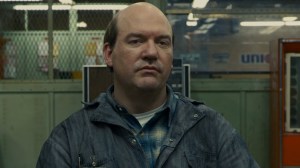
 San Francisco detectives David Toschi (a great, raspy Mark Ruffalo) and William Armstrong (Anthony Edwards) are called in after Zodiac executes a cab driver in the city. The Chronicle‘s star crime reporter, Paul Avery (Robert Downey Jr.), pesters the police for details and eventually gets under Zodiac?s skin. Graysmith becomes obsessed with the case through a life-long love of puzzles and the case eventually consumes him, dooming his marriage to a pretty girl (Chloe Sevigny). Thanks to the tutelage of Avery, Graymsith becomes an amateur detective of his own, and his zeal to solve the case outlasts the actual police.
The Zodiac killer was really the first mass media serial killer. As the news of brutal attacks spreads, the media ate it all up and enlarged the figure of Zodiac to grand heights. And he was eager to help inflate his image, taking credit for crimes and slayings that were not his doing. The killer used the media age to terrorize the populace and increase his notoriety, similar tactics used by today’s stream of terrorists. The detectives didn’t just have to navigate all the shifting evidence but the formation of an urban legend.
This is before the day of DNA and super computers, so all progress comes from good old-fashioned police work. Long hours are spent pouring over mounting evidence while coordinating around bureaucracy; because Zodiac has struck in several different small communities it can take a saint’s patience to figure out the correct jurisdiction and compile the various parts in various offices. The film packs a lot in its running time introducing scores of information, suspects, witnesses, and varying theories, but the film cannot be faulted for pace; nearly every scene takes place weeks, months, even years after the last.
 Zodiac is Fincher’s most restrained work even at a gargantuan running length. Fincher is a master tactician with slick visuals but has a penchant for getting too dazzled by needless visual flourishes (did the camera really need to zoom through the handle of a coffee pot in Panic Room?). He tones down the excess but still maintains a refined visual palate that makes the film feel fluid. The period detail is incredibly reconstructed, giving an authentic feel for a very serious story. But Fincher knows that with Zodiac the impetus lies with the story, and he devotes his considerable style to the service of the story. The mood balances nicely with intrigue, humor (after Zodiac singles out Avery fellow journalists start wearing “I’m Not Avery” buttons), and some truly terrifying moments involving the Zodiac attacks. The violence is sparse but when it does occur it is shocking, particularly watching a knife plunge repeatedly into the writhing body of a woman at a lake. One key element of sustaining such an ominous mood is fabulous song selection. Very often pop songs can be counter-productive to a movie, coming across as a lazy attempt to cobble together a soundtrack to shill. With Zodiac, “Hurdy Gurdy Man” becomes a powerfully haunting medley for the killer and the sonic linchpin for the film.
Fincher does an excellent job of transporting us back in time and recreating the sense of paranoia that grappled many. There is a great scene late in the film where Graysmith comes to the sudden realization that he may have walked right into the spider’s parlor. The scene plays out to an agonizingly uncomfortable length, and you too feel like running out the door as fast as your legs can take you. By not knowing definitively who the Zodiac may be, the film gets a boost of suspense from a multitude of creepy suspects. In an interesting decision, Fincher uses different actors of different shape during the Zodiac attacks, playing against the varying reports from witnesses and survivors.
There?s a sizeable danger trying to find a climax to a case that remains open to this day and where no one has been officially charged. Zodiac does as good a job as possible to present a fitting, mostly satisfying conclusion. The movie presents the best theory and points a convincing finger at who Zodiac perhaps really was.
 Zodiac is expertly crafted but has a handful of minor flaws that hold it back. The overall script is rather nimble with how it dishes new information to digest, however the intricacies can amass and become too great, and some scenes congest too much without needed forward momentum which causes the flow to get caught up in an expository pile-up. Still, the film is demanding but not overwhelming and not without reward. The film follows the ups and downs of the Zodiac investigation, and that means characterization runs short and simple. I fear the only false note amongst a vastly talented cast is Gyllenhaal, an actor I adore. He works fine in the portrayal of a young kid in the newsroom trying his hand at crime solving, but it’s the film’s second half where the actor falters. He fails to sell the obsession and desperation that dominates his life, instead looking wiped out but no worse for wear, like the temporary results of an all-nighter before a big test.
It was five years since Fincher’s last film, and he wasn’t sitting on his laurels when he crafted Zodiac, an exceptionally intelligent and demanding movie. Decades pass, suspects weave in and out, evidence and testimony contradict one another, it’s all a lot to keep track of but I found myself absorbed in the case just like Graysmith. This is a serial killer movie that could bring the smarts back and redefine the genre, that is, if fans are willing to sit through 3 hours of police work. If not, well they might get their kicks out of the more genre loyal The Zodiac, released in 2006. And that movie’s only 97 minutes long.
Nate’s Grade: A-
Share this:

Eternal Sunshine of the Spotless Mind (2004)
 No other movie this year captured the possibility of film like Michel Gondry and Charlie Kaufman’s enigmatic collaboration. Eternal Sunshine was a mind-bending philosophical excursion that also ended up being one of the most nakedly realistic romances of all time. Joel (Jim Carrey restrained) embarks on having his memories erased involving the painful breakup of Clemintine (Kate Winslet, wonderful), an impulsive woman whose vibrant hair changes as much as her moods. As Joel revisits his memories, they fade and die. He starts to fall in love with her all over again and tries to have the process stop. This labyrinth of a movie gets so many details right, from the weird physics of dreams to the small, tender moments of love and relationships. I see something new and marvelous every time I watch Eternal Sunshine, and the fact that it’s caught on with audiences (it was nominated for Favorite Movie by the People’s friggin’ Choice Awards) reaffirms its insights into memory and love. I never would have thought we’d get the perfect romance for the new millennium from Kaufman. This is a beautiful, dizzingly complex, elegant romance caked in visual grandeur, and it will be just as special in 5 years as it will be in 50, that is if monkeys don’t evolve and take over by then (it will happen).
Nate’s Grade: A


 nathanzoebl
You must be logged in to post a comment.