Blog Archives
Deadpool (2016)
 Deadpool is easily the most fan service of comic characters, so it makes sense that his big screen spotlight is a movie that feels a fan service movie. The “merc with a mouth” is a character that doesn’t take himself seriously and neither does his big screen adventure, which is the biggest appeal of an otherwise standard super hero formula hiding under waves of winking irony, crass humor, and gleefully bloody violent mayhem. Ryan Reynolds plays Wade Wilson, a hired gun that undergoes a risky experimental treatment by a shady black ops organization to cure his terminal illness. It makes him generally indestructible with a rapid healing ability but his flesh is also horribly scarred and Wade is afraid his girlfriend Vanessa (Morena Baccarin), a hooker with a heart of gold, will reject him. Even in the opening credits, you know this isn’t going to be a typical super hero movie. The time is ripe for a film that knowingly ridicules the tropes of the super hero film industry, and Deadpool scores some big laughs when its making fun of itself and its super peers. The dark humor can often surprise with how go-for-broke it can get, like Wade and his Vanessa’s flirty one-upsmanship of hypothetical sexual trauma. There’s a clever montage of Wade and Vanessa’s romantic history told through sexually-specific holiday celebrations, and the inclusion of a couple of low-rent X-Men provides a comic foil for Deadpool to bounce off from. The action is fun and the movie is entertaining from its opening credits to the now-mandatory post-credits bonus. Reynolds is spiritually attuned with the irreverence of the anti-hero, finally plugging into a part that makes full use of his charm, motor mouth, and physicality. Deadpool’s runaway box-office success (grossing more than any X-Men film and on at least half the budget) will hopefully allow Hollywood to feel comfortable allowing their less than family-friendly comic titles to stay true to their intentions. Then again maybe they’ll just take all the wrong messages and think that audiences just want to hear more swearing from people in spandex. Deadpool is a super hero movie that prioritizes fun over everything else, and while it may not be for everyone, at least it’s trying to be for someone different.
Nate’s Grade: B
Share this:

The Hateful Eight (2015)
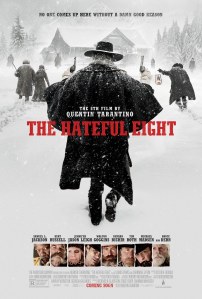 The Hateful Eight almost didn’t happen thanks to our modern-day views on copyright and privacy. Writer/director Quentin Tarantino sent the first draft of his newest script to three trusted actors, and within days it had spread to the outer reaches of the Internet. Tarantino was so incensed that he swore to shelve Hateful Eight and never film it. After a staged reading in L.A. with many of the eventual actors for the film, he changed his mind, to the relief of his sizable fanbase and actors everywhere. The Hateful Eight is a drawing room mystery with plenty of Tarantino’s signature propulsive language and bloody violence, but it’s also the director’s least substantial film to date.
In post-Civil War Wyoming, famous bounty hunter John “The Hangman” Ruth (Kurt Russell) is taking the outlaw Daisy Domergue (Jennifer Jason Leigh) to hang for her crimes. Along the way, he meets up with Major Marquis Warren (Samuel L. Jackson), a bounty hunter who served in the North and carries a letter written to him from none other than Abraham Lincoln. They’re both heading to Red Rock to extract their bounty earnings. Due to an oncoming blizzard, they’re forced to make a stay at Minnie’s haberdashery, except Minnie isn’t anywhere to be found. There’s Bob the Mexican (Demian Bichir) who says Minnie left him in charge, a foppish hangman Oswaldo Moblay (Tim Roth), a quiet cattle driver Joe Gage (Michael Madsen), a Confederate general, Sandy Smithers (Bruce Dern), and Chris Mannix (Walton Goggins), the son of a Confederate rebel who claims to be the newly designated sheriff of Red Rock. Over the course of one long night, everyone’s true identity will be learned, because someone is not who they seem to be and is secretly waiting to free Daisy and kill the rest.
 Even as lesser Tarantino, The Hateful Eight is still an entertaining and talky stage play put to film. The setup is strong and invites the audience to play along, to scrutinize the assorted characters and determine who is telling the truth. There are plenty of twists and turns and some violent surprises to keep things interesting. The conversations of the characters are such a pleasure to listen to; I want to luxuriate in Tarantino’s language. His wordsmith abilities are unparalleled in Hollywood. There’s a reason every star is dying to snag a part in a Tarantino movie, especially now that they’ve caught Oscar fire as of late. That’s somewhat crazy to think about. Cinema’s ultimate indie voice with his encyclopedic knowledge of the medium, high and low art, has become an institution within the system and his violent period films are now looked at as year-end prestige pictures. Tarantino’s M.O. has been to take B-movies and to transform them into A-movie level talent and intelligence. Never has a Tarantino flick felt more B-movie than The Hateful Eight. It was inspired from episodes of TV and it’s easy to see that genesis in its execution. It’s a self-contained mystery that comes to a head. It’s a limited story that’s likely taken as far as it could possible go, pushing three hours. I’m a tad befuddled why this was the movie Tarantino insisted on filming in “glorious Panavision 70 millimeter.” It’s almost entirely set in that one-room interior location. The extra depth that 70 millimeter affords would appear to be wasted, unless you enjoy looking at general store items on shelves in the background. Still, The Hateful Eight is a movie that doesn’t feel like three hours and harbors enough intrigue and payoffs to hook.
I tried to diagnose why this felt like lesser Tarantino, and it’s because over the course of almost three hours we don’t have much at stake because the people inhabiting the movie aren’t really characters but tough-talking facades. Tarantino is often cited for his uniquely florid dialogue, and nobody writes dialogue like Tarantino and his naturally stylized cadences, but another of the man’s skills is how great he can write a coterie of colorful characters that pop from the big screen. You might not be able to remember many lines from Hans Landa or Vincent Vega or Django, but you remember the vivid characters. Tarantino is preternaturally skilled at building characters that feel fully realized with their own viewpoints and flaws and prior experiences. He can make characters stand out but he also has the great ability to make the larger-than-life characters feel real, which is truly genius screenwriting for characters so flamboyant. The older romance in Jackie Brown is perfectly captured and felt. It’s downright mature. This is the first time I would say Tarantino has disappointed when it comes to his characters.
There are broadly drawn folk aplenty onscreen and they still talk in that wonderfully florid language of Tarantino’s that actors must savor like a fine steak, something they can sink themselves in for and enjoy every morsel. However, the characters onscreen have never felt this empty before. They are what they are and the only real change that occurs is that many will be dead before the end credits. They don’t have arcs per se but end points. It’s all about unmasking and identifying the rogues in a room full of rogues. Beyond Warren and Mannix, we’re left with precious little for characterization beyond bravado and nihilism. The effect of how empty they are would be felt less if we weren’t stranded with them for near three hours. Trapped in a room with a group of suspicious characters can only go so far, and ultimately it’s a parlor game that cannot sustain longer staying power. I doubt I’ll ever watch this with the frequency of other Tarantino flicks.
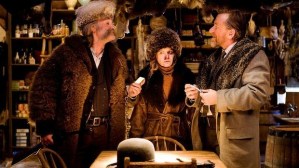 “You keep talkin’. You’re gonna talk yourself to death,” says one of those hateful numbers to another member. I’d pay to listen to Tarantino rewrite the phone book, that’s how excellent the man is with his dialogue. The man likes to hear his words and I like listening to them too. The problem is that The Hateful Eight has no reason for its gargantuan running time. As stated above, the characters we’re getting are nowhere near as complex or interesting as previous Tarantino escapades, so the talking can grow weary. Tarantino has patented a new formula from 2009’s Inglorious Basterds that involves characters playing a game of I-know-you-know-I-know while they suss out the truth, all the while the tension finely simmers until it blows. It’s a long fuse of suspense that can pay off rich rewards, like the near-perfect tavern scene in Basterds. The dinner table scene with Candie and the skull of his favorite house slave is another good example. Once our titular eight have gathered at Minnie’s, the entire movie is this sort of scene. It may be broken up into chapters and flashbacks but it feels like one long scene.
There’s also far less at stake than there was with Basterds or Django Unchained, even Reservoir Dogs, and that’s because the protagonists had goals and we had built up far more allegiance and time with them. When they were in danger, it mattered. The danger doesn’t feel as immediate because so little else is happening. There are plenty of comparisons to Dogs, which also utilized a hidden identity and a confined location. I think the difference was that, besides it being Tarantino’s first foray as a director, the tension was felt more because the danger was immediate from the start and we cared about character relationships. I cared about Mr. Orange and Mr. White and their bond. I can’t say I cared about any of the characters in Hateful Eight. I found them interesting at points, sure, but they were all a bunch of rotten bastards with little variation short of a burgeoning understanding between Mannix and Warren. The wait at Minnie’s feels like the Basterds tavern scene on steroids, pushed to the breaking point, and yet absent the urgency.
The acting is yet another tasty dish served up by Tarantino, and it feels like the actors are having the time of their lives playing their lively scoundrels. Jackson (Kingsmen: the Secret Service) settles in nicely and always seems to elevate his game when he’s reciting Tarantino’s words. He’s icy cool in scenes where the other characters are trying to do whatever they can to fire him up. He’s less bombastic than we’ve come to expect from Jackson. For bombast, there’s Russell (Furious 7) who cranks his performance to the broad heights of his bellicose lawman. Goggins gives a sly and extra caffeinated performance that answered the question of what it would sound like if you dropped his character from TV’s Justified into a Tarantino movie. Roth (Selma) feels like he’s doing his best manic Christoph Waltz impression. Dern (Nebraska) is a racist codger with a soft spot for his kin. Madsen (Kill Bill vol. 2) seems somewhat wasted as a taciturn “cow puncher.” Bichir (The Heat) gets some laughs as a seemingly aloof caretaker. It’s Leigh (Anomalisa) who steals the show, especially in the film’s second half. Daisy is a character that relishes being bad, and Leigh takes every opportunity to enjoy the fun. Her character plays a bit of possum during the first half but it’s the second half where she lets loose and becomes unhinged, and her exasperated and grotesque responses are often played for great sputtering comic effect. It’s a boys movie but it’s the lone woman who will prove most memorable. Tarantino’s last two movies have won acting awards and Leigh just might make it three-in-a-row.
 There are also some uncomfortable elements that can deter your viewing enjoyment, which isn’t exactly a foreign charge against Tarantino’s career. At this point you can probably repeat the oft-cited accusations: flagrant use of the N-word and exploitative violence. At least the historical background provides a context for the other characters unleashing the N-word, and I’d argue it tells us something about the characters as well. The characters that use the N-word when referring to Warren are the ones with allegiances to the Confederacy and those viewpoints don’t vanish even after you lost a war. They’re dismissive and intolerant and view Warren as sub-human. It also doesn’t approach Django Unchained-levels of excess, so I let it slide (I know my perspective as a white male makes my opinion on this effectively meaningless). It was the violence that got to me, specifically the violence directed at Daisy. Tarantino’s penchant for violence goes all the way back to his ear-slicing debut, so it’s nothing unexpected. He often tells stories about violent men and women fighting their way in a world governed by violence. I accept that these characters are bad to their core. That doesn’t excuse behavior. Violence on screen can be tempered with authorial commentary, but it’s the association that bothered me with Hateful Eight. For the entire movie, Daisy is put through the physical wringer. Our very first image of her is with a black eye. She’s a nasty woman and Ruth often expresses his distaste of her by punching her in the face, which is played as dark comedy. This happens repeatedly. We’re meant to recoil from much of the bloody violence on screen but repeatedly we’re meant to laugh at the violent suffering of Daisy. Tarantino has often used over-the-top violence as dark humor, and I’ve laughed along with it. This was one instance though where I stopped laughing and starting shifting uncomfortably in my seat.
Even lesser Tarantino can still be plenty entertaining and superior to most of what Hollywood usually cranks out as product. The Hateful Eight can be exciting, funny, surprising, and plenty of things, but what it can’t be is more than a lark. Tarantino has taken stories that would seem like larks, particularly the Kill Bill series, and infused them with pathos and meditation and soul to go along with all that snazzy genre stuff. It’s disappointing that Hateful Eight isn’t more than what’s on screen, but what’s on screen is still worth watching, though I don’t know whether it’s worth watching a second time.
Nate’s Grade: B
Share this:

Macbeth (2015)
 It’s a mighty task to boil the Bard’s classics down to a tight yet meaningful running time and maintain a degree of cinematic quality. You don’t just want to film a stage play with the mighty parameters of film, and yet giving in to the visual majesty means less time for Shakespeare’s stirring words and complex characterization. Woe unto thee who attempt an adaptation. It requires more skill than thou would believe. I had hopes for the latest version of Macbeth from its top-shelf cast, Michael Fassbender as the titular ambitious murderer-turned king and Marion Cotillard as his wife and co-conspirator. It didn’t take long for my hopes to be dashed. First, the good: the rolling hills of Scotland are lushly photographed, and the concluding battle is set amid a roaring hellish fire and flying embers that makes for a stunning backdrop. The actors are fairly fine. If you couldn’t tell from this faint praise, there’s not much to credit as an achievement with this Macbeth. It’s strangely narcotized and often listless. It doesn’t help that the actors speak 80% of their dialogue in whispers or mumbles, even when they discover the former king has been murdered. Director Justin Kurzel (the upcoming Assassin’s Creed movie, also with Fassbender) falls back on monotony, whether it’s an overabundance of mist, similar and low-rent locations, and a plodding score that feels like scorpions are in your mind. Some of the changes are also for the worse, especially making Lady Macbeth more “sympathetic” and neutering one of Shakespeare’s great characters. She no longer sleepwalks and instead confesses her unshakable guilt to a cross. Also Macbeth is haunted by the ghost of his dead son with the witches. And there’s some brief inclusion of awkward sex amidst monologues. The final showdown comes at the 90-minute mark and the entire proceedings feel rushed and yet miraculously boring. Even the bloody violence is pretty tame considering its R-rating. If you’re looking for a truly cinematic Macbeth that enlivens Shakespeare, check out the Masterpiece Theater version with Patrick Stewart adapted into a 1930s Stalinist era. Now that was brilliant. Kurzel’s version of the “Scottish play” is one that only signifies disappointment.
Nate’s Grade: C
Share this:

Sicario (2015)
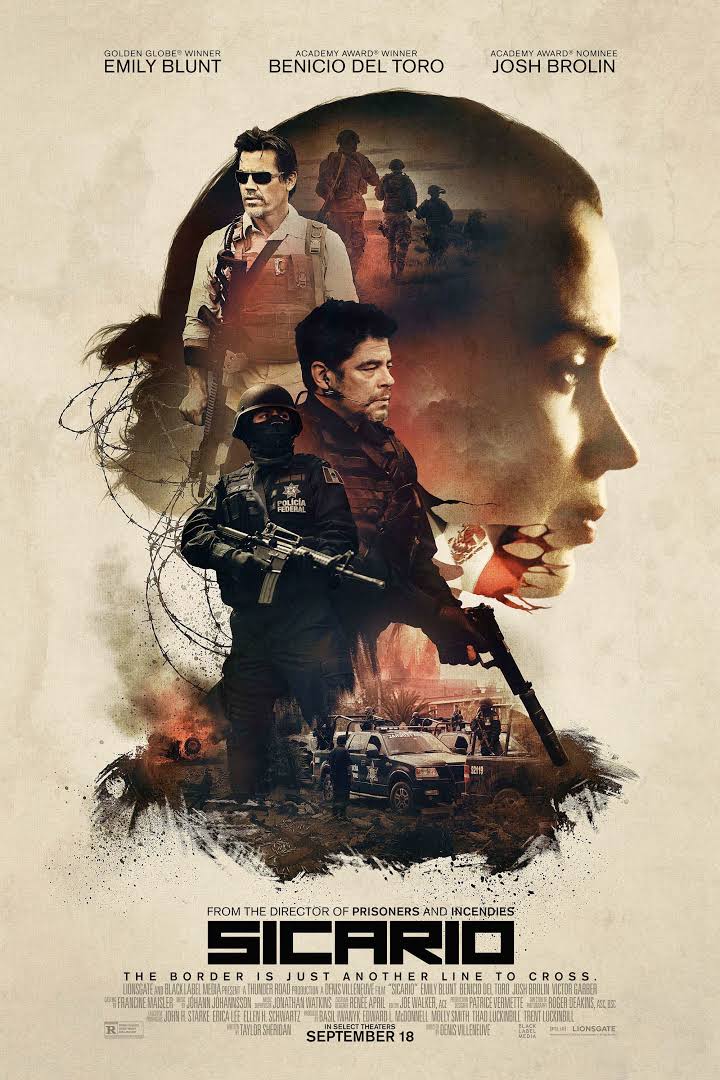 The word “sicario” is Spanish for hitman, we’re told in a helpful opening text. It’s a term that has greater meaning in the landscape of the war on drugs, a war that has ravaged Mexico and its citizens. Sicario, the film, is grim and gripping and director Denis Villeneuve doesn’t hold back from the brutality of its reality. Sicario is a flat-out tremendous film. It’s the most intense film I’ve sat through since 2012’s Zero Dark Thirty, so much so that for long stretches of the 121-minute film I was literally tearing my hair out with delicious anxiety.
Kate Mercer (Emily Blunt) is a Phoenix FBI Agent called in by her superiors with a very special offer. Matt (Josh Brolin), a government agent whose affiliation is classified, has a task force that he would like Kate to join. She’ll be taking it to the drug cartels by destabilizing their chain of power. Kate accepts the job. Alejandro (Benicio Del Toro) is a foreign agent in alliance with Matt, and he seems to be deeply knowledgeable of the cartel and their practices. As the chaos swirls and the team gets closer to the cartel bosses, Kate has to reckon with what she is part of.
Let Sicario be a blueprint for how to brilliantly develop suspense sequences in mainstream cinema. I’ve written about it before but the key to suspense and horror is simply characters we care about and the worry of what will happen next. Sicario places our characters in the middle of an ongoing battle and serves them up as the change agent, the proverbial stick rattling the hornet’s nest of deadly cartels. There’s a wonderful sequence when Kate joins up with the team for her first mission. She’s been told she’ll be based in El Paso but in reality she and a team of Army Rangers are venturing across the Mexican border into Juarez. They’re picking up a high-level cartel informant and transporting him back to American soil. The ride into the country sets the stage as the caravan of black SUVs tears through the streets of Jaurez, bracketed by Mexican state police vehicles. We’ve previously been told at what points a likely trap might be staged, and so we wait, taking in the terrain, the distance, the exits, the personnel. We’re already sizing up the Mexican state police cars; is that one on the take? It’s at the end that the scene coalesces into an even stronger whole, as we literally have a climax in traffic. The border entrance is backed up, and so Kate and our team wait, all the while identifying some suspicious armed men in traffic lanes parallel to their vehicles. They’re told they cannot fire until deadly force is used, and so they wait and we wait. It’s a top-notch sequence where you’re nervously waiting for the boil, waiting for the explosion.
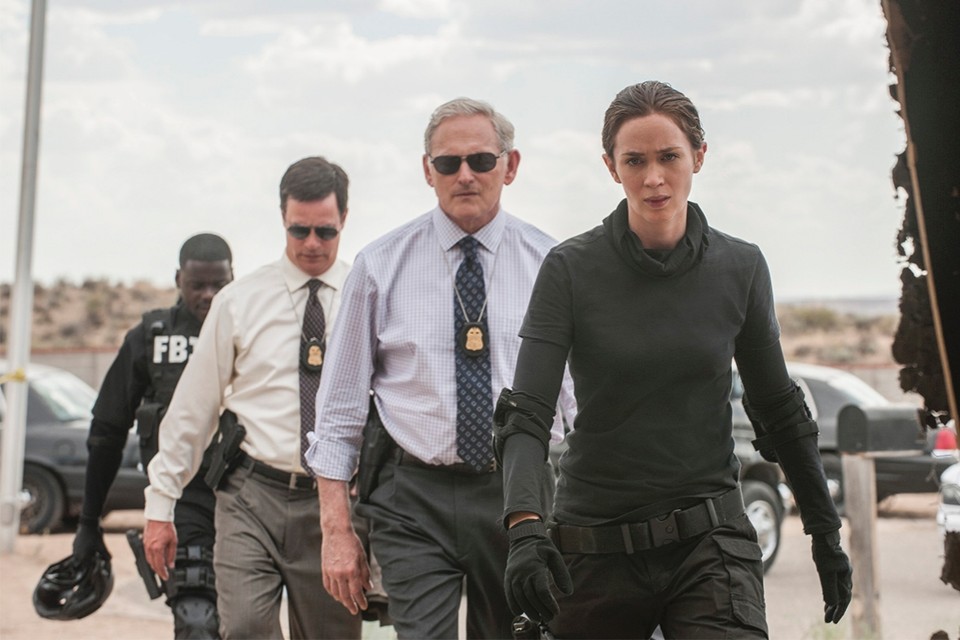 Writer Taylor Sheridan (best known as Deputy Chief Hale on Sons of Anarchy) has taken what could have been an empty Michael Bay-styled drug war thriller and given it a soul. Sheridan’s structure is ingeniously tied into his larger message about the moral futility of the escalating war on drugs. As Kate becomes more immersed into the costs of her new role, of the mounting ethical compromises and legal loopholes, she becomes a background player and Alejandro takes center stage. Rather than simply harden up and sacrifice her ideals for the sake of her mission, Kate holds true to her principles, even if she might be the only one continuing to stick to the rules and a need for oversight. It makes her a far more interesting character and it all comes to a terrific climactic scene that hinges upon two characters at a forceful crossroads, each with diametrically opposed viewpoints. For all the action, Sheridan has found a great way for his story to have a character-based climax that hits harder than simply killing the Worst Bad Guy. As we learn more about the reasons Kate was selected, her literal marginalization in the story makes thematic sense, especially as she’s unwilling to become a “wolf” in a “country of wolves.” Alejandro is that wolf, and in the last act he becomes the film’s focus as the pieces of their destabilization plan fall into place. There’s a scene with Alejandro that is so cold-blooded yet badass that it made my audience gasp. As the bodies drop and blood is shed, Sicario doesn’t lose sight of its characters even to the very end.
Sheridan’s script tackles its subject with a propensity for acknowledging the messy reality. There are no easy solutions and perhaps the best solution is really one that is at odds with conventional legality. The United States is losing the war on drugs, and innocents are suffering in droves. Matt’s cavalier attitude is in response to the overwhelming evidence that the war on drugs has done little except to enshrine certain violent elements into power. He’s trying to clear a path for Alejandro, but for what aim afterward is ethically questionable. When you’ve got nothing but bad solutions, perhaps the best option is still one that’s a step too far. Sicario tackles the harsh realities of the war on drugs without ever dragging out a soapbox. The messages and debates are suffused in every frame, every taut sequence, even pained expression. It’s a message movie where the morality and the escalating action go hand-in-hand.
With Prisoners and now Sicario, Villeneuve has proven to be one of our finest directors when it comes to making adult movies that get your palms sweaty. The execution of these suspense sequences left me breathless. Villeneuve uses long takes of aerial photography hovering over the topography of Mexico and the American southwest. It has the effect of feeling like you’re surveying an alien planet. Added with the ominous score by Johann Johannsson (The Theory of Everything), the tension can feel overwhelming at times. The menacing and percussion-heavy score makes it feel like an army is approaching. The movie also looks absolutely beautiful thanks to the cinematography from Roger Deakens. There are several lovely shots lit with the dying rays of sunlight, which I would admire further if my heart weren’t in my throat while watching. Villeneuve also knows when to pump the brakes, letting his film breathe, and letting his actors take center stage. There are several moments of restraint that allow the actors to flourish. From top to bottom, Sicario is a technical marvel that impresses as it continues to horrify.
Blunt as a badass is nothing new after her killer turn in last year’s vastly underrated Edge of Tomorrow, but there’s way more to her than being a superhero with a gun. She’s the moral conscience of the movie and you may discover, as she does, how irrelevant such a stance may be in this underground world. She’s trying to make sense of it all, trying to go along with what she thinks is right, or at least making a difference, and swallowing her frustrations. She saves the best for last in a finale scene that pushes her character to the breaking point of her ethics, and Blunt floors you. While Blunt is our entry point into this world, and Brolin is amusing as a cavalier rogue agent, this is very much Del Toro’s movie. Alejandro could easily be the slick movie-cool hitman, a soulless killing-machine, but he’s a haunted man who knows he’s damned and goes about his business with steely resolve. Benicio Del Toro can often be confused with doing little acting because he so naturally underplays his characters, but keep watch and you’ll see a man who inherently knows his character. There are subtle shifts and small reveals that open up Alejandro, who is so hardened that this will be all you get.
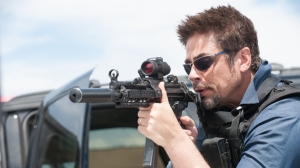
There have been some complaints citing the film’s lack of perspective from the Mexican side of the border, which is fair but also overlooking Sicario’s complexity. With its fear of cartel war violence spilling over into American neighborhoods, it’s not hard to see this film becoming supposed evidence in a xenophobic political campaign. Surely Donald Trump will be talking about Sicario. There is a small degree of representation with a minor character involved in the drug trade. The movie flashes back to him and his family a few times, setting us up to expect he’ll return at a pivotal moment later. He’s a completely unremarkable character and the brief scenes we spend with him made me anxious to get back to Kate and the main story. I didn’t care, and then he did reappear and I was quite surprised to find myself actively caring for this minor character’s well being. In a scenario where it seems like there’s a lack of vulnerability, this character provides it. He’s not a bad person per se as just another cog in a corrupt machine trying to provide for his loved ones. It’s a window into the larger ramifications of Kate and Matt’s actions. The very last bittersweet image doesn’t feel like victory, more like a warning of impending consequences that will befall innocents, and they aren’t Americans.
It’s rare to get a Hollywood thriller that excels at what it does and exceeds lofty expectations, but Sicario is that movie. Here is a thriller that excites, unnerves, provokes thought as well as terrible anxiety that you sweat in buckets over. The general feeling while watching Sicario is one of disquieting dread. The challenging and disturbing reality of the war on drugs blends with the brilliantly executed suspense sequences. The characters don’t get lost midst the clatter of violence, the direction enhances the actors and allows them to better inhabit their engaging characters, and the overall orchestration of all the many moving parts is so polished, so in tune, so electric that Sicario often does more than just entertain, it forces you to react. Leaving my theater was akin to coming down off an adrenaline high and I wanted to tell everyone I knew to see this movie. That’s the power of great cinema and Villeneuve has created a compelling feature that deserves to be soaked up and studied. This is exhilarating moviemaking, folks.
Nate’s Grade: A
Share this:

The Interview (2014)
 Well, so maybe you’ve heard something about this little movie, The Interview? Seth Rogen and his writing partner Evan Goldberg (This is the End) weren’t intending to spark an international incident with their comedy about a pair of idiots trying to assassinate North Korea’s glorious leader, but after a few crazy turn of events, this little movie became a quixotic symbol of American patriotism. How dare North Korea get to dictate what Americans can and cannot see! Well, now The Interview is widely available in digital markets and we can agree that the fervor was for naught. The film is most shaky in the beginning, setting up Rogen as a TV producer and James Franco as the obnoxious talk show host. Once the boys get tangled up with the CIA, and especially once Kim Jong-Un comes into the picture (played by a much better looking actor, might I add, North Korean readers) the movie starts to even out and find its comic rhythms. While the ending is a little ho-hum, there are nice payoffs for several jokes and a poison strip has a wild and very funny comic development. I also enjoyed the emerging bromance between Franco and Kim Jong-Un that danced around with being subversive. However, there are two problems with the film. It doesn’t get risky enough (too many penis jokes) and James Franco. He’s been a capable comic actor but always in supporting or as a foil. Franco is not a comic lead, and his performance is much too amped and broad, needing to be dialed down to feel less desperate in overexcitement. It’ll be more a footnote in history than comedy, but The Interview is a fairly innocuous comedy that does get better as it chugs along, though clearly hits a ceiling. It’s certainly not anything worth going to war over.
Nate’s Grade: B-
Share this:

John Wick (2014)
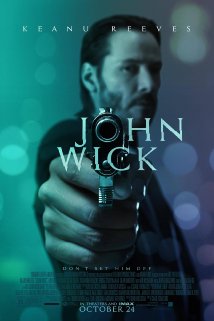 John Wick hits you like a breath of fresh air. The plot isn’t anything new. Once again a semi-retired hitman (Keanu Reeves) is pulled back into the fray. Once again Russian mobsters are the primary villains, a popular adversarial force in the fall of 2014. What makes Wick an enjoyable throwback is its dedication to action staging that is crisp, balletic, but most importantly, clear and engrossing action. Reeves may not be as agile as he once was when he first learned kung-fu, but the man still has some serious moves, and the action choreography and stuntwork of Wick allows him to display them in long takes with lots of decisive movement. It’s no Raid 2, but it’s well ahead of most American action films of late. There’s a nice variety of action along with lots of casual headshots, which seems only natural for a trained hitman. Then there are the small touches that add intrigue and help it stand from the pack, notably a hotel with an exclusive clientele of hitmen and women who must abide by a set of rules while on “safe ground.” It’s just enough to make a well-worn genre start to feel different again. The problem with John Wick, however, is that it runs out of steam too quickly, peaking right at the beginning of Act Three. There’s a whole other twenty minutes where the film has to establish a new antagonist to get us to the finish line. It just feels like John Wick accomplishes his goal too quickly and the movie doesn’t know exactly what to do after. The conclusion of several storylines feel clumsy, drawn out, and anticlimactic. But when it’s working, John Wick is a stylish and bloody action thriller that is fun and with the right sense of macabre humor to halt it from ever getting too laboriously serious.
Nate’s Grade: B
Share this:

Nightcrawler (2014)
 The surprise of Nightcrawler is that it works well on different levels: as a psychological descent with a deranged lead, as a media critique on sensationalism, and as a genre thriller. Jake Gyllenhaal (Prisoners) gives a truly transfixing performance as Leo Bloom, an ambitious sociopath who will stop at nothing to become the best at what he does. It so happens he films accident and crime footage to sell to the local news stations, and he’s not beyond getting his hands dirty if it means a better camera angle or a better payday. The actor reportedly lost 30 pounds and he appears otherworldly, his lanky frame and gaunt face making his bulging eyes pop. There’s a hypnotic intensity to his performance and a darkly comic irony that he speaks almost entirely in business buzzwords and jargon. The film chronicles his rise to power and how he uses his leverage to manipulate the people around him. The media satire is a little heavy-handed but still makes its points, especially in an age of scandal and hysteria. Rene Russo is also great as the desperate and bloodthirsty news producer who is charmed by Bloom but then gets too far in. Writer/director Dan Gilroy (brother of Tony) has crafted a haunting central figure that is morally repulsive yet entirely engaging, especially with a career-best performance from Gyllenhaal. He’s a fascinating psychological case, even if he remains relatively the same character from the start. He makes every moment an opportunity in suspense. Gilroy has a natural sense for visuals and especially how to pace his tension, drawing it out with precision in the final act as Bloom’s arrangements cause disaster. The nighttime Los Angeles setting and swirling tension remind me of Michael Mann’s Collateral. This is a movie that sticks with you long after thanks especially to the power of Gyllenhaal.
Nate’s Grade: B+
Share this:

Rampage: Capital Punishment (2014)
 Rampage was one of the better-received films from director Uwe Boll, with several critics and members of the public declaring it his best work, something that could actually be qualified as “good.” Despite tracking Boll from the beginning, I could not count myself amongst their numbers. I found Rampage to be a rather empty exercise in shock violence that grew tedious and misguided as it continued. A sequel to an intellectually empty and violent film minus meaningful subtext or commentary was not exactly what I would have requested.
Years after his murderous spree in a small town, Bill (Brendan Fletcher) is back with another “important” message to deliver to the masses. He storms a TV news station, rounds u a number of hostages after murdered an equal number, and appoints egotistical anchor Chip (Lochlyn Munro) as his go-between with the police. He insists his message must be heard. You can guess already whether it’s worth the fuss.
 Rampage 2: Capital Punishment is an exercise in testing your patience with its aimless nihilism. It’s a formless diatribe against all the world’s evils. Topics include the NSA and spying, the war in Iraq, Bush’s status as a war criminal, oil companies, drone strikes, Edward Snowden, Obamacare, the media, reality TV, global warming, Wall Street, and just about every other political target you can think of from an angry reactionary with a healthy sense of outrage. It’s not that these topics are beyond scrutinizing or that Bill might have some legitimate points as he’s skipping around from subject to subject, but he’s too scatterbrained, inarticulate, and just a poor mouthpiece for the revolution he wants to inspire. Bill is no different than your garden-variety college freshman that thinks they have suddenly come across amazing psychic insights into the rotten core of humanity after one political science class. I do find Bill’s moral championing of stricter gun control laws to be somewhat comically disingenuous. This is the problem with Bill as a character and his ongoing rampages. He’s all sputtering outrage without a filter and direction, without honing his fury. It’s easy to tune this guy out because he sounds no more particularly articulate than any other person who legitimately uses the word “manifesto” in daily life. Chances are if anyone in your life refers to something they wrote, un-ironically, as a “manifesto,” get a new friend pronto.
Here’s an example of the overall aimlessness of Bill’s indignation. One of his hostages is quivering in yoga pants. He asks if she does yoga and she nods her head. He demands she perform some yoga poses at gunpoint. “Yoga is not good for the world. It is gymnastics for the egocentric,” he argues. Then he shoots her. He shoots this woman just because she does yoga. Huh? It’s not like this character was going to have any semblance of a moral high ground considering he’s coming off a spree killing with over 100 victims in his wake, but it makes any political points he may attempt null and void. Want one more example of just how incoherently rambling Bill’s diatribes are? Amongst his targets is the 2012 film Lincoln and Steven Spielberg himself (really!). He declares that, “You think the Civil War happened to free the slaves and billionaire Spielberg makes you dumber. The reality is every war is about money, and the stupid people must die because the elite decided it.” I cannot believe this guy has the number of online devotee he has because he’s not charismatic, he’s not articulate, and he’s definitely not insightful. I got bored listening to him. Sadly, that’s what a good majority of the film ends up being: listening to this guy endlessly complain. It’s like the guy who yells on the street corner just got a bigger stage but his act is the same.
One of my major criticisms with Boll’s first Rampage was that it was too limited and without providing any relevant commentary to go with its violence. The sequel doesn’t make much progress. Every victim that Ben shoots has to be given a tighter slow-mo shot so we can better soak up the squib hit of his or her chest exploding with blood. At least Ben’s violence is channeled to a single source rather than unleashing it against the denizens of an entire town, but his message is a messy shotgun blast of social ills. It’s angry and nihilistic but without anything to add. If there is a cogent message it flies completely under the radar and gets lost in all the rambling rhetoric and macho posturing.
Let’s talk about the bait and switch nature of the movie’s title as well as the DVD cover advertising. When you see a masked gunman standing next to a burning Capital building and the title proclaims “Capital Punishment,” I think 99 out of 100 people would correctly assume the majority of the action takes place in D.C. and would be directed at elected officials. Oh how wrong those 99 people would be (the 100th was just dumb luck, so don’t get too smug). The entire plot revolves around Bill holding a TV station hostage. That’s it. No government building, no government officials, nothing even remotely related to Washington D.C., especially when the local gas stations are for “Canada Petrol.” Before viewing, I assumed that Rampage 2 was going to be a combination of the first film and Boll’s nearly good Assault on Wall Street, bringing a populist fury to the lawmakers in Washington. It seems like the next step on Boll’s populist journey. Instead, most of the film is a series of ugly vignettes of Bill terrorizing the frightened station employees by gunpoint, demanding his interview and an airing of his nihilistic rhetoric. Even at a little over 85 minutes, the film feels laboriously padded out and stretched thin. At one point, Chip accidentally breaks the DVD Bill demanded be broadcast. The movie literally spends almost eight minutes on this subject, like it’s a great uptick in suspense. “I’m sure he’s got another one,” a SWAT officer says. “He will not shoot you, trust me,” he says, unhelpfully. Lo and behold, he does have an additional DVD copy. “Always have a duplicate,” he says. Wasn’t that worth spending valuable time on?
 Fletcher (Freddy vs. Jason) returns to the completely underwritten role of Bill, more uncontrollable mouthpiece than anything resembling a person. He’s effectively peeved but he still doesn’t come across as that threatening a screen presence, which is saying something considered he’s carrying high-powered assault weapons. Munro (Scary Movie) feels like he just got the call minutes before filming. He seems like he’s constantly judging what he should be doing in every scene; perhaps that’s a beneficial sign of his performance since his man is playing it on the fly in a hostage situation. His long speech to the camera as a news anchor is tiresome, circuitous philosophical vomit, which also summarizes most of the dialogue. The one amusing aspect from casting is that Boll himself plays Chip’s advantageous and morally unscrupulous news director. He’s thrilled with the ratings and attention the station is getting. You decide if this is some sort of meta commentary on Boll and his penchant for rolling with the punches.
I fear Boll thinks that there is a level of audience attachment to his spree killer that simply doesn’t exist. He’s not an anti-hero, he’s not a revolutionary, he’s not even an engaging character by any generous metric and that’s because he’s just a stand-in for tedious ideology. He’s a mouth and a trigger finger, and that’s all Bill is, in no compelling manner. I worry that Boll will continue to insert Bill into new settings, have him round up some innocent people, and then we’ll watch him sputter for an hour about whatever cultural and political misdeeds are currently bugging Boll. I worry that the promise of “Capital Punishment” inherent in the title will really just lead to a third Rampage film with this promise actually, finally, followed through. Generally, I just worry that the world will have to suffer more abuse from further appearances by Bill, the world’s most irritating psychopath who loves to hear himself talk. The scariest part is that some people will actually think this is good. You might want to reconsider your friendship with these people too, especially if they also use the word “manifesto.”
Nate’s Grade: D
Share this:

Assault on Wall Street (2013)
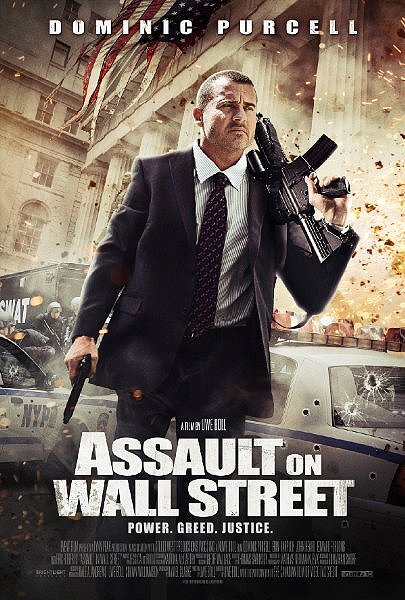 When it comes to notorious German director Uwe Boll, many are still waiting for what could be the man’s first genuinely good movie. The man has been prolific over the past ten years but sure-fire candidates for First Good Film, like Max Schmeling or Attack on Darfur, inevitably have some tragic flaw or approach that places them back in mediocrity, the company of many of Boll’s other movies. After reviewing more Boll films than a human should be allowed to willingly, I feel like I’ve been beaten down enough that when I find something that genuinely works, be it an actor or a sequence or plot turn, that I should be just as vocal as with the contingent of failure. So allow me to refreshingly applaud Boll for Assault on Wall Street, on coming up with a topic and a story structure that… actually… works. It not just works, it succeeds, and if a more polished professional screenwriter got a hold of this, I think it could actually impress the masses. If it weren’t for the surprisingly effective war drama, Tunnel Rats, I’d say without a doubt that Assault on Wall Street is the best work of Boll’s much-maligned career. And yet… it has just enough minor faults that hold it back.
Jim (Dominic Purcell) is a regular guy working as an armored security transport. His wife Rosie (Erin Karpluk) suffers from a rare tumor that requires an expensive series of injections to keep it at bay. Their insurance company won’t pay, and so they have to rely on Jim’s savings. Except those are gone as well. Jeremy Stancroft (John Heard) has ordered all his brokers to dump toxic assets, eliminating most investor savings but profiting the shareholders. Jim and Rosie are broke. Vowing vengeance, especially after some drastic decision-making by Rosie, Jim sets off to make the high-priced traders and corporate raiders on Wall Street feel the pain of what they have wrought.
 The setup is concise and Boll does a nifty job of compounding Jim’s problems and showing how all the industries are interconnected to put the squeeze on. Because of unscrupulous health insurers, his wife’s medical treatment, deemed experimental, is quite expensive and they’ve reached a cap. With the brokers pushing their clients assets into junk stocks, at the behest of the betters and for commissions, Jim loses his entire financial cushion. He hires a lawyer (Eric Roberts) but has to pay $10,000 just to retain him to fight the $60,000 penalty his broker says is owed. He goes into debt and refinances his skyrocketing mortgage (variable rate) to pay for his wife’s treatments. His employer takes notice of his perilous situation and is uncomfortable with enlisting someone in deep financial woes with guarding money. He loses his job. The bank is poised to foreclose on the house. His wife won’t get her treatments to save her life. All of this leads to a drastic and completely understood decision of desperation and sacrifice. Admittedly, Boll does a compelling job of connecting all the dots, making each new pitfall a result of the previous, each compounding the misery of Jim. It takes a little long to go through all these points, and I think Boll could have trimmed it down so that a key event happens at the Act One break point, but I was flabbergasted that the man found a story structure that succeeds.
The second half of the film is Jim planning his vengeance, and after all of the callous movers and shakers have bled him dry, you’re onboard for some sort of righteous payback. Boll takes on Wall Street and the healthcare industry (double the populist outrage). Jim as a character could be made much more compelling, but he’s really serving as a symbol for how the forces are ganged up against the little guy, how the fix is in. When confronted, the big CEO of the brokerage firm barks that it’s always the same old story, that the titans of industry were all crooks and manipulated the system to their advantage, and he’s no different. In short, the little guy always loses.
What holds back Assault on Wall Street, beside the fact that the titular assault is reserved for the last fifteen minutes of the film, is its too slick ending and Boll’s obvious transparency when it comes to his political message. After Jim suffers loss after loss, he puts together a plan pretty quickly, utilizing that Army training we’ve heard about. It’s actually too easy with little complications that can’t be solved in a David Fincher-style montage of death. It’s a full 70 minutes before he takes out his first Wall Street fat cat, and that’s just way too much dawdling. And then from there the climax involves Jim just going on a rampage in an office building, shooting several faceless employees who could very well be innocent for all we know. I think Boll is satisfied with a guilt-by-association catch-all for Jim’s fury, but it would be more satisfying just from a payoff standpoint if we saw these people in villainous lights prior, kind of like what Saw 6 did with its insurance characters before turning the tables on them. The last thing we need in our populist screed is to worry that the wrong people were dispatched. And what kind of office building fails to evacuate after a confirmed shooter has attacked?
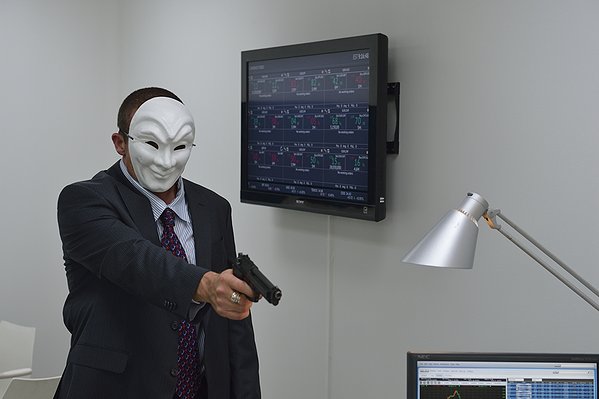 This storyline could have also worked in a Falling Down turn, where a man consumed with evening the scales of a system broken loses his moral bearing and lumps all guilty parties together and condemns them all. Perhaps it was meant to examine the slippery slope of vigilante justice and how this too can decay one’s sense of self, sort of like what Jodie Foster went through in 2007’s The Brave One. However, I don’t think Boll was intending this direction because he’s not very subtle about anything in the movie. Oftentimes the characters just become mouthpieces for ideological talking points: “We’re busy busting some homeless guy when the real criminals are on Wall Street.” The bad guys actually say, with no hint of self-awareness, “We all took a loss. When I told my wife we couldn’t vacation in Barbados any longer…” It’s all just a little too on-the-nose to remind you of the overall intent rather than the story. Therefore, I think Boll is just going for a sense of (misplaced?) justice in the end, in a ludicrous plan that somehow invalidates witnesses, forensic evidence, and security footage to pin the blame on someone else. It’s too clever by half that it undercuts the final payoff. It gets even worse with the Batman-esque voice over to close out the film with a promise to all evildoers.
With such a tight focus on the plot, the acting is a marked step up from previous Boll outings. Purcell (TV’s Prison Break, Killer Elite) doesn’t exactly come across as a regular Joe but he has enough onscreen presence to pull off his character’s anguish as well as the requisite badass stuff. And apparently Boll has become fond of him because Purcell is scheduled to appear in future Boll films. Karpluk, a Canadian actress best known for the TV show Being Erica, has a natural grace to her, forgoing big moments to concentrate on the gnawing guilt and concern her character feels. While she’s a bit too willfully ignorant early on, Karpluk makes you care and provides whatever depth can be applied to Jim. I’m actually curious to see her comic skills since she has a face tailor-made for romantic comedies. Heard (Sharknado, Home Alone) doesn’t seem to embrace his duplicitous CEO role with enough gusto, appearing to be annoyed when he should be menacing. This is not the kind of movie to hold back.
There are plenty of other Boll Players, including Edward Furlong (3 appearances), Lochlyn Munro (2 appearances), Tyron Leitso (5 appearances, also stars in Being Erica), Michael Eklund (8 appearances), Natassia Malthe (4 appearances), and the stalwarts of Clint Howard (6 appearances) and Michael Pare (13 appearances). It’s been 13 years since Eric Roberts (The Dark Knight) last appearance in a Boll film. Most of these are blink-and-you’ll-miss-them, but then there’s Keith David (The Thing, Cloud Atlas) in a thankless role that didn’t need to exist. But hey, I’ll take Keith David in anything.
A welcome surprise, for the most part, Assault on Wall Street is a finely structured revenge tale with clear and precise plot points and a natural buildup. It’s Boll on a soapbox and the naked transparency of his ire and populist messages limits the effectiveness of his storytelling, but you might not mind, especially if you are a person who has slogged through far less competent Boll ventures. There is a marked improvement in just about every facet of filming. It genuinely works, that is, until the pacing becomes lopsided and the end just reverts to celebratory action mode. A more professional writer could take this film and whip it into a crowd-pleasing populist thriller. It’s got so much that works, and genuinely works well, that I feel like a buzzkill to keep harping on the elements that do not succeed. But if Boll wants to earn an undisputed victory, he’s got to earn it without lowered standards. Assault on Wall Street is so tantalizingly close to being Boll’s First Good Film but it doesn’t capitalize enough.
Nate’s Grade: C+
Share this:

Violet & Daisy (2013)
 It’s not often that I say this but… what the hell did I just watch? I know it’s a movie called Violet & Daisy, written and directed by Geoffrey Fletcher, the man who won a screenwriting Oscar for adapting Precious. But what is this? It is some meta commentary on film violence? A twisted fairy tale? A dark comedy? Whatever it is, I know for certain that it was not very good or entertaining.
Violet (Alexis Bledel) and Daisy (Saoirse Ronan) are teenagers who also work as hired assassins by their boss, Russ (Danny Trejo). Their next assignment has a personal angle: Michael (James Gandolfini) stole a large sum of money from Russ. The gals hide out in Michael’s apartment only to fall asleep. When they wake up, Michael is sitting there, accepting his fate, begging the girls to complete their job. He’s dying from terminal cancer, estranged from his daughter, and hoping to exit this world on his own terms. Over the course of one long afternoon, the gals run into rival gangs, a trained sniper, police, neighbors, and all sorts of other plot contrivances to delay the death of Michael.
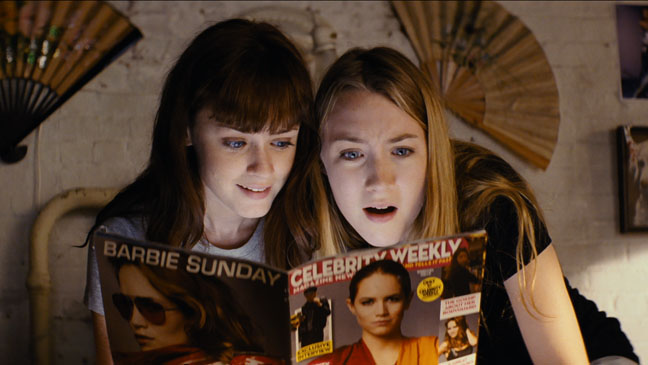 If you’re like me, with similar expectations when it comes to your moviegoing experiences, you’ll be left scratching your head and fumbling for some kind of rationale why people decided to make a film like Violet & Daisy. It feels instantly dated, relying upon the hook of young teen girls with big guns, you know, the same model that has translated to many a successful video game. More so than that, the aspiration, or at least direct inspiration, appears to be a Tarantino-knock-off. Not ripping off Tarantino, as many did in the mid-to-late 90s, but ripping off a poor Tarantino knock-off, like Two Days in the Valley or, the more adept comparison, The Big Hit. There is so much crap in this movie that exists merely because somebody thought it would look cool. Violet and Daisy open the movie dressed as pizza-delivering nuns (is this a fetish I am unaware of?) and open fire on a gang of criminals. But before their fateful gunfight, you better believe it, they have an innocuous conversation about something small, you know, like Jules and Vincent. Why are they dressed as nuns, let alone nuns delivering pizza? It doesn’t matter. This is a movie that doesn’t exist in a universe minutely close to our own. Everything about this film feels painfully and artificial. You know what previous job Violet and Daisy had? They worked at the “doll hospital,” a literal ward for dolls. The decisions of this movie are driven purely by a stylized self-indulgent whimsy. Once you realize this, and you will, the movie becomes even more of a chore to finish.
Then there’s the bizarre and sometimes uncomfortable infantilization of the female lead characters. These ladies do not act like adults; they don’t even act like teenagers. Even though they’re both over 18 years old, their behavior more closely resembles that of a flighty seven-year-old. Their speaking patterns are often in an annoying and partially creepy baby coo. They play paddy cake after successful hits. They ride tricycles. They chew bubblegum and blow bubbles during hits. They get excited about new Barbie Sunday dresses, and this is their real motivation for taking assassination jobs. Yes, to buy dresses. Then there’s their game, the Internal Bleeding Dance, where they hop up and down on the chests of their dying victims, blood spurting out of their mouths, the girls giggling, as if they were bouncing on a bed at a slumber party. These women aren’t remotely actual characters; they are masturbatory quirky hipster fodder, the ironically detached, sexy baby doll killer approximation. Except there is never any commentary at work. The depiction of Violet and Daisy as petite killers never approaches anything meaningful. They are killers because it’s cool. They talk like lobotomized film noir archetypes because it’s cool. This is quirk run amok, quirk with a gun and no purpose. I’m trying hard to ignore the obvious sexual kink undercurrents of the whole enterprise.
 Even with all these flaws, perhaps Violet & Daisy could have been morbidly interesting, except that the circuitous plot twiddles its thumbs, padding out a half-baked story. This is a movie that takes its time and seems to go nowhere. Once the girls meet Michael, the plot has to come up with numerously lame excuses to delay Michael’s execution. I kid you not, there are THREE instances where the girls run out of bullets and have to stop and walk back to the hardware store to go buy ammo. This happens. This is a thing that keeps the plot moving. It’s like as soon as the main characters get into a room together, Fletcher has to struggle to come up with reasons why his narrative should still exist. So we get a second group that Michael stole from because this guy has an even bigger death wish. This second group of spurned bad guys is on their way. If Fletcher was going this route, he might as well gone whole-hog imitating Smokin’ Aces and just had numerous crews all fighting over taking out this schlub first. It feels like Fletcher is making up the story as he goes, taking us on relatively pointless nonlinear interludes to pad the running time. The film, like Tarantino, breaks up the story into a series on onscreen chapters, though one of these only lasts like a minute. Then there’s a loopy dream sequence. The narrative is so stagnant that whatever interest you may have had will long be gone. By the time the movie actually does end, at about 80 minutes, it has long felt creatively exhausted, totally gassed. Fletcher throws out all the stops to get across that finish line.
Even though it was filmed way back in 2010, it’s hard to escape the morbid irony of Gandolfini (Enough Said) playing a character discussing his own inevitable death. He’s the best actor in the film, offering a paternal warmth that goes wasted amidst all the stylistic nonsense. Our other two featured players, Bledel (TV’s Gilmore Girls) and Ronan (The Host), have a sprightly chemistry together that works. I just wish all three actors had something to do rather than strike artificial poses and quip.
After enduring The Paperboy, and “enduring” is indeed the correct term, I was certain that the messy, tonally uneven, sometimes garish flights of fancy in Precious were due to director Lee Daniels. After enduring, and again “enduring” is the correct term, Violet & Daisy, I’m starting to think that Fletcher is deserves equal credit. Violet & Daisy is a curious exercise in twee indie hipness, suffused with quirk standing in place for characters, story, meaning, etc. It feels like the development stopped once the core concept of teen girl assassins was concocted. The off-putting childish nature of the adult girls, juxtaposed with the baby doll sexuality of the film, makes for an uncomfortable watch. To call the film bad taste is too easy. Whether this is a bizarre dark comedy, a whacko modern fairy tale, or whatever term you want to apply to justify the artificial excesses and emptiness, Violet & Daisy is a contrived mess that labors to fill out a basic feature running time, often doubling back and delaying. There isn’t a story here, more just an incongruent, irregular style. If you’re content with a knockoff of a Tarantino knockoff, with an extra dose of whimsy, then enjoy Violet & Daisy and you can dance your cares away atop bleeding bodies.
Nate’s Grade: D+


 nathanzoebl
You must be logged in to post a comment.