Blog Archives
Funny People (2009)
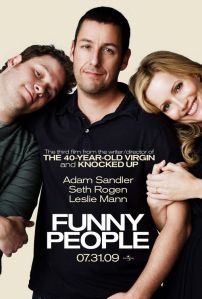 In two short years, Judd Apatow has become the king of comedy. He’s co-written and directed two bona fide hits that will go down as comedy classics (40-Year-Old Virgin, Knocked Up), and produced gut-busters with heart, like Superbad and Forgetting Sarah Marshall. The Apatow brand of comedy centers on characters and less on contrived set pieces. He’s built up enough comedy capital in Hollywood that he felt he could write and direct a project less ideally commercial, something tagged as being more personal and serious like in the James L. Brooks mold. Funny People is the mixed results. I applaud Apatow for trying to grow as an artist, but as the saying goes, if it ain’t broke don’t fix it. Funny People is a broken movie that isn’t funny enough to be fully redeemed.
George Simmons (Adam Sandler) is a famous comedy actor that has made several hit Hollywood comedies. He may live in a giant mansion but his life is extremely isolated and lonely. He has no real close friends and years ago he drove away the love of his life, Laura (Leslie Mann). He has no one to comfort him in his time of need. This prickly man has been informed that he has a terminal blood disease. Simmons decides to go back to his comedy roots, to stand-up, and it is there that he meets the young comedian Ira Wright (Seth Rogen). Ira has grown up with the comedy of George Simmons, so he is flabbergasted when the man himself asks Ira to write jokes for him. Ira’s roommates, fellow stand-up comic Leo (Jonah Hill) and crappy sitcom actor Mark Taylor Jackson (Jason Schwartzman), can’t believe his dumb luck. Ira and Simmons build an unorthodox friendship, and Ira is the only person George has confided in about his disease and his fear of dying. And then something amazing happens. George Simmons gets better. He’s got a new lease on life and he aims his attentions on the girl that got away. Laura is married to Clarke (Eric Bana), a handsome Australian businessman, and she has two adorable kids (Apatow’s own girls), which makes it a very poor time to restart her romance with George.
 Funny People is the first Apatow-helmed film that feels sadly incomplete, even at two and a half hours. The movie is staggeringly sloppy when it comes to plot structure and character work. First off, when a character is informed that he has a terminal illness at minute three, it doesn’t have the impact that it would if the audience got to know and feel for that individual. In fact, the first half of this movie feels like, and this may get confusing, the second half of another movie. It centers on a selfish character coming to grips with his choices in life, mostly wrong, and beginning to reconnect with people once more, building a mentor friendship and finding the “one that got away.” But there are segments during this first half of Funny People where the impact just cannot be felt because the dramatic legwork has not been achieved. Watching Simmons’ estranged family berate him through tears doesn’t have much of an impact when they discover the news. Seeing George Simmons spend his potential last days jamming with Jack White and other musicians is cool, but it doesn’t come across as anything but another indication that the fake George Simmons is famous in this alternative Los Angeles. It doesn’t have setup, like Simmons talking about one of his life’s pleasures is strumming the guitar or playing before things got complicated. So it’s basically just another celebrity cameo snapshot. While I’m on the topic, the multitudes of celebrity cameos are strangely unfunny, save for a bit where Sarah Silverman describes her lady parts.
This is also the first Apatow comedy where it feels like twenty percent of what I saw promised from TV spots, trailers, making-of specials (there was a good one on Comedy Central to check), the advertising unit if you will, was not in the movie. This gave me the distinct impression that even at a lengthy 150 minutes that Funny People feels misshapen, that there are swaths of material on the cutting room floor that would have assisted the narrative and sad amount of underwritten supporting characters. I’m not saying Funny People would necessarily be a better movie at three hours length, but it would at least feel more fully formed and satisfying.
 The main problem with the film, outside of the reverse plot structure, is that everything just goes slack during the uneven second half. George and Ira spend about an hour of the movie with Laura and her family, and it feels like one long uncomfortable detour. Part of the squirmy feeling is intentional, as the audience is supposed to be in Ira’s shoes and see George’s homewrecking as the bad decision train wreck it is. But I also felt uncomfortable because George kept extending his stay day after day and I was getting impatient. I wanted these characters to head back to L.A. and deal more with the Ira/George relationship. During this second half, Ira becomes a background figure that is good for nervous reaction shots. This stalls all the character work that had been done up to this point and Ira goes to pause mode for an hour. This second half section isn’t particularly funny, it isn’t romantic, and it gives little insights into the past between George and Laura. She has established a nice living for herself, with two cute kids and a hunky husband who seems to be a good father when he’s around. In fact, despite the movie’s insistence that Clarke is a cheater (thus ensuring the movie law that it is then acceptable to cheat on him), I found myself liking the hyperactive and sensitive lout. Every plot movement in this second half feels wrong, some of it intentional, but it makes Funny People feel like it has been hijacked and taken hostage. Where did the movie I was kinda liking go? What happened here? This hour feels like a separate movie and one that Funny People would have benefited from simply being dropped entirely.
Perhaps I’ve been watching too much Mad Men in anticipation of its third season, but this movie also disappoints by failing to delve into the creative process of comedians. Despite its running time and subject matter, there isn’t that much standup witnessed. Usually the movie will display about one line or one bit and then cut back to the characters offstage again. We don’t get to see the evolution of comedy or the professionals talking shop about what makes a good joke. There isn’t even much collaboration, so we don’t get to see multiple minds banging out jokes together. There’s a comedian named Randy (Aziz Ansari) who is popular with audiences because he’s loud and spastic, and all the other comedians hate him, but then the movie doesn’t return to this. Go back to this topic. I want to hear more about the divisions within the comedy world, the people that feel like they are more pure or textured in their funny compared to the people that play to the crowd and lap up the easy yuks. Ira’s character work is mostly explored through his changing standup persona, where he seems to gain more confidence and a voice. But there’s this whole other storyline where Ira is a “joke thief” and takes other people’s material and repackages it as his own. This is an interesting story and provides conflict and glimpses into the character of Ira as an insecure and ethically challenged opportunist in a competitive field. It makes him a more dynamic character. I saw more of this storyline in the making-of special for Funny People, and sadly it is only hinted at in the final product. The other comedy players, like Ira’s roommates and his quasi-love interest (Aubrey Plaza), are barely explored as people and professionals.
Apatow comedies are notable for being character-based, but Funny People doesn’t seem too concerned with establishing characters that you want to be around. I found little reason to care. I found most of the characters to not be engaging; some were unlikable but most were simply flat. George Simmons is supposed to be a selfish man, though there’s something inherently selfish about being famous in Hollywood. Comedy itself is inherently selfish, where individuals guard their observations and exploit personal stories for the endorphin highs of audience approval. Is successful comedy linked to selling out? Funny People occasionally visits the dark recesses that comedians utilize for material, like self-lacerating humiliation and family trauma that gets aired out as a means of therapy. Simmons is a selfish and lonely guy and the point of the whole movie is that even after a near-death experience, he’s still selfish and lonely. He’s said he’s changed but has he really? That seems to be the movie’s cosmic joke. This is clearly a personal movie for Apatow, which might explain why it has less resonance for an audience that isn’t as steeped in the history of comedy or the rigors of fame. I just don’t have the same point of interest.
 Sandler revealed his acting talent in 2002’s beguiling Punch-Drunk Love, and in Funny People he plays a completely different character than his other adolescent roles. He doesn’t pander to be likable at any point, and he’s generally standoffish from beginning to end. He hasn’t done a lewd, crude movie in over ten years, and this return to raunch rekindles the Sandler I remember listening to constantly in the mid 1990s. This role isn’t as taxing for him as an actor, nor is he given too many chances to reveal deeper layers to George Simmons. I think this is by design from Apatow. Rogen is less his charming self and during the second half of the movie he pretty much shifts his eyes and makes pained faces. He feels at ease in the stand-up sequences, probably because Rogen performed stand-up comedy when he was 13. Mann gets her biggest acting role in years and cries enough, but it made me realize that she works best as an actress that can steal scenes rather than an actress who has scenes built around her. I think Bana (Star Trek) actually comes off the best. He showcases an exuberance for comedy not seen before, and when his character gets emotional it still manages to be funny and believable.
In the end, Funny People just isn’t that funny. There aren’t any particularly clever comedic setups, the characters don’t get many chances to be humorous even as comedians, and the movie just goes slack during its uncomfortable and uneven second half. The Hollywood satire lacks bite, and the best bits are saved for the scathingly unhip and formulaic “Yo, Teach!” sitcom of Schwartzman’s. Apatow is more interested in purging a personal tale onto the screen rather than fashioning a relatable mainstream comedy. I feel that the salutations that Funny People is “more challenging” and “serious” are unwarranted. This is certainly a different movie but is it any more serious than navigating the uncertainty and awkwardness of an unplanned pregnancy or beginning sexuality at middle age? I don’t think so. Beyond this, the movie doesn’t establish its plot well and spends far too much time in side diversions, failing to round out characters and ignoring intriguing premises and storylines. Even the camaraderie, usually a hallmark of Apatow productions, feels lost as the characters have much more friction. On a personal note, I saw this movie while I was on vacation in the Outer Banks. On our car ride back to our beach house, my then-partner and I got into a car accident. We were both physically fine but her little Ford Focus was totaled. I will now forever associate Funny People with a car accident. If that isn’t enough of an on-the-nose metaphor, while we waited along the hot road for police and tow trucks, I thought to myself, “I just wish the movie was worth this.” It wasn’t.
Nate’s Grade: C
Share this:

Pineapple Express (2008)
 There’s something to be said about a comedy that requires an audience to puff illegal substances in order to fully be entertained. Somewhere along the line the Judd Apatow comedy unit went down a wayward track with the stoner comedy, Pineapple Express, an amiable goof of a comedy at best. The premise is solid, two stoners (Seth Rogen and James Franco) witnessing a murder and on the run. Rogen and Franco have a great rapport with one another that translates to plenty of good vibes and humor (Danny McBride steals the show as a seemingly indestructible low-rent drug dealer). But the movie veers off into action territory with bloody violence that really harshes your mellow, man. Pineapple Express never really settles on a consistent tone, so when the movie fully transforms into a strained guns-a-blazin’ action caper, the comedy has totally vanished. The realistic violence is intended to get the laughs. When people get shot, it’s ugly, and when ear lobes get blown off it’s just plain gross. There’s no room for humor in the third act and the action is lazy and uninspired. If Rogen and his writing partner Evan Goldberg (who scripted the much funnier Superbad) were aiming to create an action parody, then they didn’t push nearly hard enough. After the movie ended, I thought back to last year’s superior action parody, Hot Fuzz, which had a consistent tone and packed jokes as hard as punches. As a sober moviegoer who has never inhaled any such wacky tobaccy, Pineapple Express just kept eluding me. The movie is too slipshod, too misshapen, and it completely goes up in smoke by the end.
Nate’s Grade: C+
Share this:

Forgetting Sarah Marshall (2008)
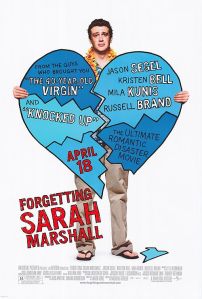 So much ink has been spilled on Jason Segel’s full-frontal nudity that you would think the public has never known that penises have appeared on film before. It seems that female nudity is used to titillate and male nudity is used for awkward laughs, and this is the case with Forgetting Sarah Marshall, which Segel stars in and wrote. His character Peter is humiliated by a breakup, even more so because the man is breaking down while in the buff. He even states at one point the naive belief that as long as he doesn’t put clothes on reality cannot hit. It’s funny and sad and he’s completely vulnerable, but Forgetting Sarah Marshall is much more than the story of one slightly doughy man and his penis. This is a story from producer Judd Apatow (The 40-Year-Old Virgin, Knocked Up) about heartache and mending and the struggle it takes to keep a relationship healthy. But it is also about a man and his penis.
Peter (Segel) is dating TV actress Sarah Marshall (Kristen Bell), star of the brilliantly reflexive title Crime Scene: Scene of the Crime. Peter provides the music for the TV show, which he laments is nothing more than “ominous tones.” Then one day she has some bad news. She’s breaking up with him (this is where Segel loses it, both emotionally and from a clothes perspective). Peter mopes and cries for days, goes out to clubs with his step-brother (Bill Hader), and tries to engage in meaningless sex but that too leads to crying and moping. Peter takes a vacation to Hawaii in order to forget his ex, but as chance would have it Sarah is already there with her new man, British rocker Aldous Snow (Russell Brand). Peter is stuck in the same hotel as his ex and her new lover. The hotel staff takes pity on Peter and they all seem to look out for him, setting him up in a $6,000 suite, involving him in hotel activities, and feeding him drinks. Rachel Jansen (Mila Kunis) works at the front desk and takes a special interest in Peter and his woes. She helps Peter get over Sarah and fin
 Forgetting Sarah Marshall is another hit from the Apatow brand. It features another leading man with an unorthodox physique and a healthy interest in geek culture. However, Peter doesn’t need to learn to be responsible, or outgoing, or to transition from boy to man. He’s actually fairly well adjusted and even has a job that suits his composing talents. His dilemma is heartbreak, a universal affliction if ever there was one. He’s a little frumpy and has a thing for puppets, but Peter is really a sweet guy who is working through the pain of a breakup. He was together with Sarah for over five years, so it feels strange when the characters keep harping on him to get over it in the span of a few weeks. He is awash in self-pity and wails so loudly that other guests complain about a woman crying in his room. He makes for a capable lead and his budding romance with Rachel allows him to heal. The romance is strongly felt and I was completely absorbed by wanting Peter and Rachel to have a happily ever after.
Segel is a charitable screenwriter. The could have easily become a vanity wish-fulfillment project, but instead he rounds out the main characters and builds a deep supporting cast that add delightful additions that enrich the narrative. I admire Segel’s decision making when it came to fleshing out his characters instead of writing them off as stock types. In an ordinary romantic comedy, the beautiful girl that dumps the lead is a bitch. It would have been extremely easy for Segel to demonize Sarah and keep her as an established antagonist, but instead he makes her feel real. She has real, solid reasons for her breakup with Peter, and she has several revealing moments that open her character up and humanize her. Aldous is another pristine example of Segel’s screenwriting skill. In an ordinary romantic comedy, the girl always dumps the nice guy for the douchebag, and Aldous starts in that territory. But a magical thing happens and as the film continues Aldous becomes very charming; he’s unpretentious and is the same transparent and genial man to everybody. He appreciates Peter’s music and gets him and Peter’s passions. Peter says at one point, “This would be so much easier if you weren’t so cool.” It would have been easy and even expected for Segel to cast both the ex-girlfriend and her new boyfriend as evil cretins. Instead, he broadens and rounds out all the central characters to the point that they feel like real people and not just comedy types.
 The movie is resolutely pleasant and amiable, lacking gut-busting laughs but offering plenty of cringe comedy. It’s not as outrageous as other Apatow comedies, or as good, but it is completely entertaining. There is one terrific sequence that stands out in my memory. It involves the two couples sitting at an awkward dinner. Then they comment on how awkward it is, then they comment on commenting how awkward it is. The dinner bathes in unease but then as it carries on you see the different tensions. Aldous and Peter hit it off discussing their dislike for a terrible horror script offered to Sarah that involved a killer cell phone (sounds like One Missed Call). They are genuinely bonding. Sarah hides her growing dissatisfaction with the decisions she’s made, but Rachel catches on. She kisses Peter long and hard and shoots Sarah a very knowing glance that all women know as “back off.” This dinner packs all of the different tensions of the movie into one well-written, expertly performed scene. The characters aren’t shouting their feelings point-blank but you can follow along to the conversations that are unsaid.
I love comedies that involve deep supporting casts, where a supporting player can enter at the right moment and deliver a perfect in-character addition. I was delighted at how wide Segel cast his net of characters and yet how well incorporated they are. There’s a newlywed couple (30 Rock‘s Jack McBrayer, Maria Thayler) that haven’t mastered the art of sexual intercourse. They’ve waited until marriage and know are wondering what all the fuss is about. Hearing McBrayer’s amped-up frustration is funny, but it’s even better when he solicits advice from Aldous on pleasing a woman. The tutorial between the two left me in stiches and made me like Aldous even more. I enjoyed spending time with all of these characters. Apatow regulars Jonah Hill and Paul Rudd pop up in hilarious cameos. Rudd is a super stoned surf instructor and Hill is an obsessed Aldous Snow fan who creepily doesn’t abide touching boundaries. The supporting players never outstay their welcome and add great splashes of variety to the story.
Forgetting Sarah Marhsall continues the Apatow tradition of mixing raunch with sentimentality. There’s plenty of dirty humor but it’s the little touches that won me over. I loved the title of Sarah Marshall’s TV show, perfect references to movies like The Buena Vista Social Club, Rachel reflecting Peter’s romantic advances only to initiate the first kiss, the brilliant music video for Aldous Snow where he carries an earnest sign that reads, “Sodomize Intolerance,” the flashbacks to Peter and Sarah’s relationship, the helpful advice of Dwayne the bartender and his great knowledge of fish native to Hawaii, and a vocally competitive dual of sexual intercourse. This is a comedy that works because even they details have been looked after with care.
 Segel easily conveys his character’s sweetness; the man can’t help but be sweet even in anger. Bell is given complexity with her role and nails bitchiness and tearful regret with the same skill she radiated on her defunct TV show, Veronica Mars. I never thought Kunis was capable of playing more than a shrill ditherhead thanks to her role on TV’s That 70s Show but she nicely handles the drama. She makes the romance more than believable but desirable. The actors all do a great job but it is Brand that steals every single scene he is in. His carefree demeanor and hysterical physical gyrations cast him early as one type of character, but his charisma rules the day and will win over audiences.
This is all familiar romantic ground covered by countless other movies. Boy loses girl, boy meets new girl, boy gets new girl, but Forgetting Sarah Marshall adds the Apatow touch. Another Freaks and Geeks alum writes another male-centric but hilarious comedy that deals with mature themes in untidy ways. The movie takes place in a world that resembles ours, where people are not cast in black and white, good or bad, victim and victimizer. Segel’s screenplay lets the audience empathize with a wealth of characters, and the humor is bittersweet but mostly on the sweet side. Any film that ends with a puppet musical about Dracula has to be seen as special.
Nate’s Grade: B+
Share this:

Superbad (2007)
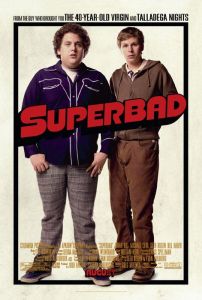 Seth Rogen makes me feel like a slacker. I’m two months older than him, but already he’s broken out as a comic actor on great-but-cancelled shows like Freaks and Geeks and Undeclared, and now he has risen to headlining star thanks to the runaway success of Knocked Up. Now here comes Superbad, a comedy he’s co-written with his friend Evan Goldberg, and I haven’t even gotten one movie off the ground or, for that matter, a starring role in any TV series, canceled or on the air. Oh well. At least Rogen’s consistent attachment to quality projects makes me a happy, if marginally envious, moviegoer.
Seth (Jonah Hill) and Evan (Michael Cera) are high school seniors looking to score with the ladies. Their nerdy friend Fogell (Chistopher Mintz-Plasse) has a scheme to get himself a fake ID, and the trio seizes upon this opportunity to become important figures in the teen circuit. With the promise of the fake ID, Jules (Emma Stone) has asked Seth to provide all the alcohol for a house part that she’s throwing that night. Not only that, Evan’s unrequited crush Becca (Martha MacIsaac) is going to be there. Seth and Evan figure that this party will be the best chance they have ever had to get lucky thanks to the miracles of what some would call, “liquid panty remover.” They just have to get the booze first. Fogell’s ID lists him as simply as McLovin. He is set back when his attempt to purchase alcohol is interrupted by a robber. He’s interviewed by Officers Michaels (Rogen) and Slater (Bill Hader) who take a shine to McLovin (“It sounds like a sexy hamburger”). The threesome spend a madcap night drinking, busting crime, sharing worldly wisdom, and running away at the faintest sign of other police officers.
 First off, Superbad is raucously funny. It’s plenty profane and has several memorable moments, like Seth’s imaginative scenarios for buying alcohol and a dance that goes in a very unexpected direction. The humor is timeless and built around the nervous interaction between the sexes; there are very few jokes that reference pop culture or dependent on a specific context. I imagine what makes Superbad hilarious will still make it hilarious in 20 years to a new audience that can relate to the same trials and tribulations of teen life, though perhaps at that point we will be replaced by robots.
What separates Superbad from other offensive sex comedies is that it’s really a story about male friendship. I don’t mean in the tacky, Hollywood vein of working together for a common goal, which is commonly to lose one’s virginity. Superbad is another entry into the Judd Apatow (40-Year Old Virgin, Knocked Up) school of comedy that professes that a comedy should be character-based and that those characters should be painfully human. This is no mere genre movie. Underneath all the boobs and booze discussion is the pain and worry of a long-standing friendship being able to survive. Seth and Evan have been close friends all of their lives, but many good friends have grown apart in time thanks to their lives moving in different places. There’s unspoken tension between the two of them and Seth is concerned he’s about to be abandoned by the person that means the most to him. Many films touch upon the indelible companionship between men but few can accurately articulate the authentic love that can foster bonds of friendship. Superbad explores the exploits of real friendship, and while it’s chock full of funny the film also has its fair share of moderately touching moments. You really do care about the characters and want them to triumph. Fogell’s ascension to becoming a confidant, cool lady’s man is one of the summer’s true pleasures. Apatow’s fingerprints are all over this, and that is a glorious thing.
But this isn’t some phony Porky’s-style high school sex comedy with male fantasy set pieces and lots of dunderheaded beauties prone to bouts of frequent nakedness. Superbad is a relatively realistic portrayal of high school life in the world of movies. This isn’t a school ordered by cliques of entrenched stereotypes like the jocks, the Goths, etc. In fact, I don’t think Superbad makes any social distinction between the students.
 Superbad is a celebration of the glories and anxieties of the male members’ member. Even for a teen sex comedy, the film is very phallus-centric, complete with a hilarious anecdote about a “treasure chest of dick drawings.” It seems Seth, at a young age, was stricken with the unique compulsion to draw a phalanx of penises. The anecdote is quite unexpected and funny and underscores how often the penis prevails in the minds of young men. The boys discuss at length the life and times of the penis, especially how women can compliment this. The constant dick-chat may get old after a while for most of the female audience in attendance (a.k.a. those without), and I can’t exactly blame them, but Superbad does convey, in a convincing manner, how much teenagers think about sex (“You know how many foods are shaped like dicks? The best kind”). Some have argued that there’s an undercurrent of misogyny with Superbad, but I feel like those detractors are missing the deeper point. These guys are totally terrified of women and go through one wild night just to avoid actually confessing their feelings to the objects of their affection. These guys don’t hate women, they’re just frightened and utterly bewildered by them, and so they rely on what pop culture and their peers have taught them is the way to a woman’s heart: booze.
The movie is taken to an extra level of excellence thanks primarily to the outstanding comedic performances by its cast. Cera was a star of brilliant understatement on TV’s Arrested Development, and when it comes to portraying awkwardness, Cera is king. The gangly teen is a textbook example on high school awkwardness; he feels uncomfortable in his own skin. He seems antsy to leave most scenes. His self-effacing smile, wide-eyed gawk, and nattering stutter are spot-on signals of clumsy, confused, and embarrassed teen life. Cera is a master with impeccably punctuated line deliveries. The kid could make any line funny by flawlessly placing a pause in the right place. Arrested Development was a great showcase for Cera’s comedic chops, and now Superbad is a juicy platform for the funniest straight man on the planet (and he’s only 18 years old).
 Hill has been a supporting player in previous Apatow productions, but this is his first major role. Hill is the loud, boorish, vulgar, and more outlandish half of the duo. When he gets worked into a frothy rage you can practically feel his indignant teen spittle. What makes Hill special is that, in an instant, he can go from foul-mouthed cretin to a vulnerable buffoon. In the end, when the police bust a party, Seth runs on instinct and his instinct is to save his friend. It’s the versatility of Hill that allows Superbad to channel the sweet, gooey center behind all the sex-obsessed hijinks.
Not all the different elements of Superbad seem to fit together. The cops subplot is played very broad and relies on a lot of physical comedy; it feels at odds with the genuine teen comedy that is the heart and soul of the movie. The subplot is indeed full of laughs and it turns McLovin into a legendary teen character, but it feels like a separate movie, albeit an interesting one. For a male-dominated comedy, the female roles are pretty sparse but even those take heed not to slip into empty stereotypes. Becca and Jules are portrayed as sensible and approachable.
In short, Superbad is super good, and it’s thanks to relatable characters, a sweet sensibility, plenty of raunch, and some excellent performances. Apatow has opened the 2007 summer with a winner and now he closes it with another one.
Nate’s Grade: B+
Share this:

Knocked Up (2007)
 Judd Apatow scores again. The man has a long history of creating memorable and heartwarming character-based comedy, and Knocked Up is another winner. This man creates thoroughly human and engaging stories that focus on our own foibles and triumphs. Apatow wrote and directed yet another poignant, clever, and uproarious comedy that has so much more below the surface and becomes universally appealing.
Alison (Katherine Heigl) is out on the town celebrating her promotion at the E! Entertainment Channel. She’s going to go from behind the camera to in front of the camera. It’s at this Los Angeles club where she meets Ben Stone (Seth Rogen), a doughy Jewish slob of a man content to drift through life penniless and high. Their night of partying leads to a drunken one-night stand. Eight weeks later Alison is going through extreme nausea and can’t figure out what kind of flu bug she has, that is, until she remembers her one night out. She locates Ben and informs him that she is pregnant and, yes, he is the father. The two decide to try and make it work, forging a relationship as they plan on becoming parents. Alison’s sister Debbie (Leslie Mann) and her husband Pete (Paul Rudd) and their two kids are a potential glimpse into the future. Pete and Ben hit it off real well, to the point that Alison feels like her mate might not be the one for her even if his DNA is growing inside.
 Naturally, this is a comedy where sex is at its very inception. The humor is ribald and playfully profane. I believe one of the greatest compliments you can give a comedy is when you cannot single out a single set piece or moment as an instant standout. Knocked Up is packed with many wildly funny scenes but it also has killer one-liners from start to finish and sharp pop-culture references (Ben on an exercise bike: “Matthew Fox? From Lost? You know what’s interesting about that guy? Absolutely nothing.”). Ben credits the flick Munich for the ability to get Jews laid. Ben watches the 2003 version of Cheaper by the Dozen with horror, saying that 12 kids is no laughing matter. The roommates are plotting a flesh-friendly website that notes the time and location of celebrity nudity in films. This commercial venture plays right into the frat house lifestyle for this band of stoners that bet their friend not to shave his beard for a year for free rent.
Knocked Up is bawdy and hilarious, sure, but it’s also far more realistic and a lot more emotionally involving than any romantic comedy Hollywood has offered in years. Apatow seems to have mined his personal parental experiences for a lot of hard-earned truths. The film is most natural when it showcases the male perspective of prolonged adolescence and an unplanned pregnancy, but Knocked Up also has a mature and thoughtful view on marriage and feminism. We see the array of personal challenges a woman would go through but the movie still manage to slip in humor amidst the uncertainty. There’s a montage looking for the right gynecologist. The gauntlet of sexual positions is explored while pregnant, with Ben afraid that his child’s first impression will be daddy’s manhood constantly poking it. When Alison and Debbie go shopping for pregnancy tests we see them fill their cart with every kind of tests, and then test after test comes back positive. “Hey this one has a smiley face,” says Debbie, before realizing, “Oh, that’s not a good thing.” Debbie then tests the reliability of the tests herself and for a brief moment panics when she thinks she may be pregnant for a third time. She then calms down and says, sarcasm-free, “Whoa, that would have sucked.” The inclusion of Debbie and Pete offers a whole other relationship viewpoint, something that Alison and Ben can learn from. She’s paranoid and blunt, and he’s apathetic and passive-aggressive, and Alison is terrified that she and Ben are doomed to a similar fate. The insights into marriage and secrecy are realistic and give the film so much more meat to its bones. This isn’t just a movie about what to do with an unplanned pregnancy; it’s fully about male-female dynamics and what it takes to make a family work.
 In the end, you really care about these characters because Knocked Up is a raunch-fest that has a sweet gooey center of sentiment. Ben is pushed into adulthood by this unexpected development and, as they say, puts away childish things after a lot of trial and error. There’s an undercurrent of emotional vexation under most of the comedy, like when Pete confesses that he doesn’t know if he can accept love, and Ben cannot pity this because he sees his love being rejected. Alison doesn’t quite have as big of an arc, but she never gets callously cast to the side and forgotten. She too has a lot of growing up to do very quickly, and when both characters welcome their newborn into this world it’s rather moving and exciting to experience it alongside them. Ben’s confesses to his child that not putting a condom on was the best decision he ever made. In any other movie this ending conversation might seem trite or hokey, but Apatow has paid so close attention to his characters that the emotional payoff is earned and rewarding.
Another hallmark of an Apatow production is how perfect the cast seems with one another. There’s a real camaraderie with the actors and it produces natural onscreen chemistry and amusing improvisation. Rogen and Rudd, teaming again after 40-Year Old Virgin, can riff off one another for a whole movie and I would gladly pay to watch. I loved when the two boys go to Vegas, take mushrooms, see Cirque Solei, and then freak out in their hotel room (“There are five different kinds of chairs in this room”). I was laughing so hard I had tears in my eyes, and I’m sure the crux of this moment was born from the freestyle exchange between the actors. Ben’s roommates have a believable kinship to them as a collection of amicable oddballs and stoners. Mann and Heigl also seem believable as sisters, much more so than would Anne Hathaway, who was originally cast as Alison but left due to creative differences (I guess the difference was she didn’t wish to be apart of a good movie). The Knocked Up cast work together like a truly wonderful team that appreciates the material and each other.
Rogen is destined for stardom after this movie. He can make anything funny with exceptional comic timing and line delivery that never feels forced. Hearing his unique giggle at the end of jokes, you can sense that this sweet and amiable guy would crack himself up and for good reason. Rogen was great in 40-Year Old Virgin and is even better in a bigger dose. Heigl gets to play more familiar notes, from stressing that work will discover her little bun in the oven to the expected birthing scream session. She has a good rapport with Rogen and brings a lot of warmth to her role. Rudd is so effortlessly charming and easy going. Mann plays a perfect bitch, but she also has a nice scene where she explodes at the realization that her days of youth are finally behind her. Special mention must go out to Kristen Wiig. She steals every scene she’s in as an E! Channel employee that makes plenty off-the-cuff passive insults against Alison during two staffer meetings.
 I’ve read online that several leftist bloggers are angry and flabbergasted that Alison does not get an abortion. They argue Ben is a fat and unappealing slob, she’s an attractive career woman, and not having an abortion in this situation is, as one put it, “stupid.” Excuse me, but this may be the first mainstream comedy that actually discusses the prospects of an abortion (or as one character deems it, a “smashortion,” as not to offend the delicate sensibilities of his roommate). I also take umbrage to anyone saying 1) choosing not to have an abortion is a bad decision, and 2) that these critics would be so daft to miss the point that if Alison had an abortion there would be NO MOVIE.
Knocked Up is a very funny and very wonderful sex comedy for adults, but it also happens to be an endearing and heartfelt romance. The cast is excellent, the comedy rarely misses a beat, and Apatow is a instant classic hitmaker. Just like The 40-Year Old Virgin, Apatow has explored a deeply personal topic for all the comedy and pathos he could wring from the material. Knocked Up is nothing short of a knockout. I hope you’re happy with your decision Anne Hathaway. I know I am.
Nate’s Grade: A
Share this:

The 40-Year-Old Virgin (2005)
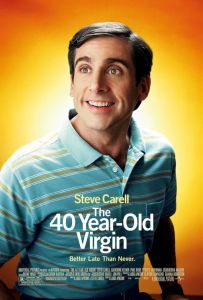 Yes it’s an uproarious sex farce, that’s a given from the ads, but this movie is also surprisingly sweet and genuinely moving. A lot of credit goes to star/co-writer Steve Carell and co-writer/director Judd Apatow, creator of some of the best, most honestly funny TV series unjustly cancelled. Apatow is a master at mining human comedy for pathos, where you get a great sense of character and really feel for those onscreen, and yet nothing feels cheap or unwarranted, all the while deriving comedy from the situations. We need more men like Apatow in the film industry. Carell can do it all whether it’s deflecting his insecurity, which we feel so bad when he comes up with outrageous things he’s overheard to make himself seem like one of the guys. The supporting cast is top-notch. They’re basically the stock roles in a sex comedy and yet they bring so much more to the table, with a true-to-life boys-will-be-boys camaraderie that you can identify with. The character relationships in The 40-Year-Old Virgin really elevate the story and the jokes and make the film something really special. It’s not merely a barrage of gross-out humor; it’s a nice story with some very tender moments. This is a movie that goes well beyond its gimmick premise, never feeling like a skit blown up into a feature film. It mixes in psychology, heartbreak, awkwardness, but also insights into loneliness and human connection. The best character-based comedy in years.
Nate’s Grade: A


 nathanzoebl
You must be logged in to post a comment.