Blog Archives
The Artist (2011)
 Ever since it charmed audiences at the Cannes Film Festival, The Artist has been one hot commodity. The Weinstein Company snapped up the film rights though they have a bit of a hard sell. The movie takes place in the era of silent movies and it also happens to be a silent movie itself. Ignoring Mel Brooks’ unsung efforts, asking paying customers to sit through 100 minutes of silence, albeit accompanied by a musical score, may be a risky financial bet. That’s where the appeal of being an award-winner comes into play. The Artist has been racking up awards since Cannes and has been tagged by many as the favorite to take home a Best Picture Oscar. This celebration of the Hollywood of old is a nostalgic trip through the ages, but I’m doubtful that the film is deserving of the gushing admiration. I think this would have been better had it been one of them new-fangled talkies.
In 1927, the biggest star in Hollywood is George Valentin (Jean Dujardin). His latest spy caper is knocking them dead. He’s prancing before a sea of photographers when he bumps into Peppy Miller (Berenice Bejo). He graciously brings her into the act and the two pose for pictures. “Who’s the new girl?” demands the newspaper headlines. Peppy is given her big break as George’s co-star in his spy series. Peppy is a natural and over the course of two years she becomes a bona fide star. Also over those two years Hollywood has undergone a drastic makeover. New “talkies” are all the rage with the public, who now demand to hear their favorite actors speak. George is adamant that talking pictures are only a fad and he plunks his personal fortune to bankroll his directorial debut. The movie is a flop. George is viewed as a has-been; yet Peppy has been keeping a watchful eye on her old friend and waiting for the time to reveal her love for the fallen star.
 The Artist is a completely silent movie except for two key sequences; one of them a nightmare where George hears objects make noise. The film is an unabashed love letter to old Hollywood, and writer/director Michel Hazanavicius makes witty use of the storytelling techniques of the silent era. Much relies on editing and reactions for shaping the narrative. The story, therefore, is broken down to its simplest incarnation. Peppy Miller’s star rises, as George’s grows fainter. Still, The Artist has many recognizable pieces for fans of the silent era. George even has a trusted Jack Russell Terrier at his side, a clever pooch with keen mimicking abilities. There’s a cute moment where Peppy slips her arm into George’s coat hanging on a coat rack and pretends to caress her self as him. It’s a small yet slyly tender moment. It’s not a prerequisite to be well versed on silent cinema, though it helps. While a French film (a foreign designation seems superfluous when it’s silent), the movie was shot in Los Angeles and is stocked with English stars like John Goodman (TV’s Treme) as a film director, James Cromwell (Babe) as George’s dutiful butler, Penelope Ann Miller (Flipped) as George’s unhappy wife, Missi Pyle (Big Fish) as a silent film co-star, Beth Grant (Donnie Darko) as a maid, Ken Davitian (Borat) as a pawnbroker, and Malcolm McDowell (Halloween II) as a dismissive old man in a chair (the role he was bon to play). It almost becomes a side game of cameos.
It’s a sprightly, charming, sometimes enchanting little experiment, but in the end an experiment is all the movie turns out to be. The Artist is no great story; in fact it’s pretty much the 80th rendition of A Star is Born. The transition between silent films and talkies is a subject rife with drama, and a lead character who sees his fame and fortune crumble by being left behind in a changing society, well that should be interesting. What’s surprising to me the most about this film is how little you invest with it. I don’t know if it’s the silent gimmick or just the idle characterization, but I found myself never really engaging with the movie, always a step removed. The characters were nice but I neither celebrated their triumphs nor bemoaned their hardships. The entire affair has such a slight feel to it; the movie is a confection, a sweet treat that melts away instantly after viewing. If you strip away all the old Hollywood nostalgia, there is very little substance here. Praise Hazanavicius for his dedication to silent filmmaking techniques, but let’s be reasonable here because The Artist is a pleasant experiment but nothing more. The characters and story do not bear scrutiny. This story would have been more interesting had the movie been a traditional talky. Alas, we are limited to a handful of title cards with single lines of dialogue and extreme amounts of pantomiming. If you took away the central gimmick, would anyone be interested in this movie? I wanted to be swept away by The Artist after reading all the fawning accolades, but I wasn’t. The commitment of the artists on screen is commendable but the finished product is little more than an amusing trifle of a movie.
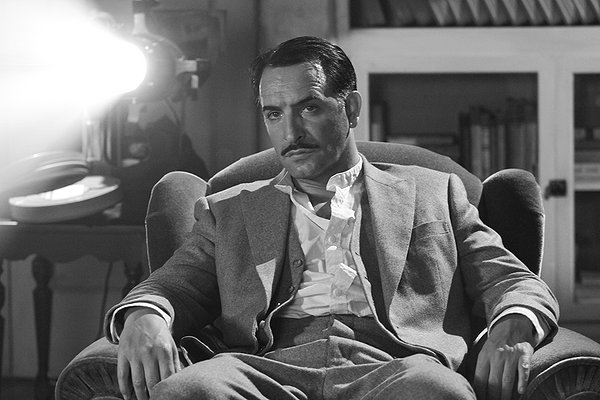 Dujardin (OSS: Lost in Rio) and Bejo (Modern Love) look like they stepped off the screen from an old Hollywood movie, al la Purple Rose of Cairo. Dujardin is a suave presence with great comedic physicality at his disposal. There’s a poignant moment where George, broken down and washed up, looks into a tuxedo store window, seeing his reflection appear above the neck of the tuxedo. He gingerly smiles, wistful of times gone by, and in that sad, face crinkling little moment, Dujardin reveals more about the man behind the flashbulbs than the script ever will. Even without a word spoken, you can tell that Dujardin and Bejo have great chemistry. Bejo, the wife of the director by the way, matches Dujardin note for note in terms of star wattage. She’s got a terrific smile and one of those classic faces for an Age When They Had Faces. It’s a shame that the characters don’t have more interaction.
The Artist is a fine film but ultimately disappointing given the hype. The saddest part about my reaction to The Artist is how little I find myself having to say about this much-ballyhooed silent film. It’s an exercise in nostalgic back-patting, but if you strip away the silent movie gimmick I feel like there’s so little at heart here. I walked away liking the movie, being charmed by the actors but feeling unengaged and mildly indifferent. The threadbare story is too familiar, the characterization is slight, and the movie ultimately becomes light, airy, and insubstantial. The novelty eventually does wear off and you may find yourself adding a mental commentary to the film to fill in the blanks. You’d have to be a Scrooge to resist the film’s whimsy and the talents of the charismatic performers, but I’m scratching my head at the adulation give to The Artist. In a year heavy with reminiscence, The Artist overdoses on feel-good Hollywood nostalgia, and in a down year at the movies, perhaps that’s enough when it comes time for awards.
Nate’s Grade: B
Share this:

Red State (2011)
 Kevin Smith, love him or hate him, you can’t deny the man is a natural promoter. Earlier in the year, the indie filmmaker self-distributed his first foray into horror films, Red State, on a nationwide tour of screenings. I first saw Red State way back in March when Smith visited Springfield, Ohio to screen the film and then answer questions afterwards. I’ve been trying to wrestle with my critical opinion in the ensuing months. Fortunately for me, Smith has made it extremely easy to revisit my thoughts. Red State eschewed the traditional theatrical release pattern for a new digital-age model. It was available on demand through cable systems, available for download, and even broadcast in special theaters for a one-night only event. A month later the film hit DVD. In its better moments, Red State is the unholy union of Quentin Tarantino’s love of language, and penchant for jolting violence, and the Coen brothers’ nihilistic, cock-eyed sensibilities. This is strange new territory for the man. I wish I could say Red State is worthy of all the attention, though this sinister, messy, gritty little movie can work its wicked mojo, at least for a while.
The Five Points Church is a notorious family-operated cult. Under the guidance of their shepherd, Abin Cooper (Michael Parks), this fundamentalist Christian group pickets the funerals of dead soldiers, haranguing the grieved that their loved ones are dead because “God hates fags” (excuse me for failing to put two and two together). A group of teenage boys (Michael Angarano, Kyle Gallner, Nicholas Braun) is lured to Sara’s (Melissa Leo) trailer with the promise of sex. The middle-aged woman plies her young bucks with drinks and they are knocked out. The boys awaken to find they are inside the Five Points compound and witness to Abin Cooper’s solution to sinners. Rather than railing with signs, the family has decided to take a more hands-on approach and execute them. While this is going on, a sheriff’s deputy alerts the authorities and the ATF rolls up to the compound. Lead by Agent Keenan (John Goodman), the government agency engages in a firefight with the rightwing cult. Ordered to take down the compound, and all witnesses, the various characters will try and escape with their lives, never knowing when that fateful moment of atonement may drop.
 What Smith does well for a genre novice is to keep his audience constantly upended. Just when we think we’ve settled on a protagonist and a plotline, suddenly Smith switches gears. The surprises are sudden and often merciless, leaving the audience little room to adjust. In a genre usually beholden to formula, the consistency of Smith’s surprises makes for a darkly satisfying viewing. Watching Red State demands due attention. Naturally, not all of these tonal shifts work to the movie’s best interest. The final shift, to all-out action thriller, is the most leaden. The Ruby Ridge/Waco-style standoff allows for a lot of gunfire but very little action. We mostly just cut back and forth between the two sides firing and, inexplicably high numbers, being shot in the face. It can get repetitive and seem like all the mounting tension gets squandered. There is a nice storyline within of one family member, Cheyenne (Kerry Bische), forming a plan to save the compound’s children and escape. Bische (the lead on the last season of TV’s Scrubs) makes fantastic use of her limited screen time to render the anxiety and fear of her character. She’s second only to Parks in the performance department as far as I’m concerned. Then the climax comes along and Smith teases being audacious, going in a fire-and-brimstone angle that would completely obliterate audience expectations. And just when it seems like we’re about to get something radical… Smith falls back to what he knows – dialogue. For the final five minutes, Smith concludes his narrative with two government officials explaining what happened in florid detail. It’s a fairly big letdown.
The setup of luring teens to their doom is an old horror staple, though usually the ones doing the sacrifices are card-carrying Satanists. And when exactly would a Satanist be in a situation needing to prove their validity with a membership card (“I’m sorry Mr. Darkseed, but we can’t give you the ten percent discount on all those goat skulls unless we see some valid photo ID.”)? Smith flips the switch religious allegiance. Instead of Satanists or some other misunderstood fringe religion, the cult is a group of pious Christians. There’s plenty of room to work here and Smith refrains from making easy associations; the Five Points nutjobs aren’t meant to represent Christians as a whole or Christianity. They are extremists, and they will go to extreme measures. Ostensibly based upon the Westboro Baptist Church and Fred Phelps, you keep waiting for Smith to satirically carve up the clan, but this never really occurs beyond the superficial. Smith’s writerly instincts give Abin Cooper a ten-minute sermon/platform where the guy just unloads a hate-filled diatribe against homosexuals and progressives. For many, this will be the make it or break it point of the film. There are some genuinely tense moments to the first half of Red State. There’s one scene where the camera holds on Gallner (The Haunting in Connecticut) inside a wired cage. He rattles and screams and generally comes unglued, and we too piece together what he hears, dreading what is to come. The many escapes and narrow calls are also harrowing and finely edited to ratchet up suspense.
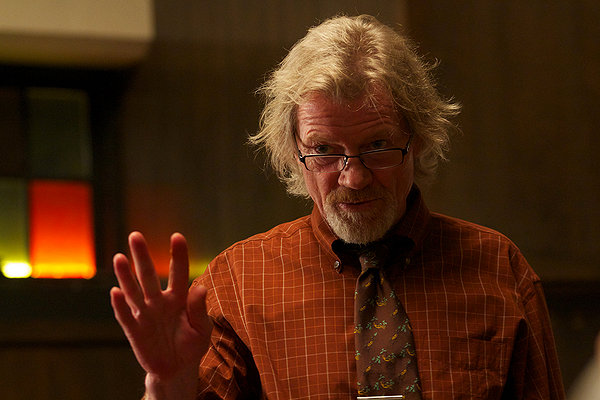 It seems, though, that Smith’s bleak screenplay does not present any characters we can truly root for. Horror has been shifting this way for the past twenty years. Thanks to the rise of the slasher flick, audience empathy has shifted from being with the running/screaming victims to being with the gruesome yet personable killers. Red State has a high body count but you won’t feel much when those bodies hit the floor. You’ll feel a jolt of shock, but from an empathy standpoint the needle barely registers. Sure, we don’t want people to be tortured and we want the abused to escape torment, but that’s not the same as characterization. The closeted sheriff (Stephen Root) feels like the start of an idea more than anything else. The trio of teen boys is presented with as little care as any other throwaway slasher flick. They are but meat for the grinder, our entryway into this hidden and spooky fundamental world. These aren’t so much characters as bodies waiting to be slain. The people are set up so they can be knocked down. This issue can become troubling when Smith wants us to rethink our loyalties, especially once the siege has begun. He wants us, dares us, to start feeling empathy for members of the Five Points Church. The problem is that the plot’s adherence to shock value and the underbelly of human nature has desensitized our empathy. When the ATF starts firing most in the audience will probably just cheer, not reflectively question the moral relativism. I doubt anyone will be switching allegiances midway through.
Cults are usually held together with a charismatic leader, and Red State has that in spades with Parks. The man just dissolves into his twisted character, a preacher that uses the Word of God to indoctrinate and arm for his own holy war. Parks has done fine supporting work before in the stable of Tarantino and Robert Rodriguez movies, but Red State is the actor’s biggest modern showcase yet. The man makes your skin crawl the way he can wrap hate into a honeyed, easily digestible product. Abin holds sway over his flock and likewise Parks commands the screen. He provides grandeur and menace to Smith’s words. It’s not a scenery-chewing performance; Parks doesn’t go for the obvious notes when he can hit something deeper and more unsettling. You get a sense that this man fully believes the dogma he teaches, and that makes him all the more terrifying. The other actors peopling Red State are fine, though Leo (Oscar-winner for The Fighter) seems a bit unrestrained especially in contrast with Parks. Goodman (TV’s Treme) gets to talk on the phone a lot to his unseen superiors. The end of the film just descends into frenzied yelling on everyone’s part.
Credited as a horror movie, though I view it more of a survivalist thriller but I suppose genre specifications are subjective, regardless, Red State is miles away from Smith’s usual output. The movie has its share of creeping dread and menace, thanks to Parks’ transfixing performance. The screenplay is unrepentantly dark, cruelly cutting down lives with shocking acuity. The constant surprises and upheavals are a way to keep the audience guessing, though the shock value starts to wear off by the noisy, repetitive gun battle climax. It’s hard to nail down exactly what kind of commentary Smith is presenting. Obviously he doesn’t side with the hateful fundamentalists (this is probably why he pulls back at the end), but he also shows the government’s reaction to religious zealots to be morally queasy at best. It’s hard to get a read what the commentary is, and with horror, if you don’t take a stab at commentary then you’re just watching high-gloss snuff films. Red State resembles a snuff film in several ways and not just in its grimy aesthetics. You feel a little dirty after it’s over, and you can’t help but question your motives for watching it. Plus you can’t help but think it could have been better done (note: I have never watched an actual snuff film, you sickos, but the point remains).
Nate’s Grade: B-
Share this:

The Princess and the Frog (2009)
 It’s taken this long to get an African-American leading lady/princess in a Disney animated film, and she gets to spend the majority of the flick as a slimy frog? This return to traditional 2-D animation for Disney is less than a triumph due to a pretty dull storyline. All the familiar elements are there, but the characters just fill voids rather than tell a story. There’s the downtrodden heroine with her dream, the arrogant prince who learns to value others, the comical talking animal sidekicks, and get ready for a slew of songs you will instantly forget despite the added gumbo flavor. Set in 1920s New Orleans, the film has plenty of ravishing visuals to get you through the formulaic plot. It’s a nice return to Disney’s bread and butter before the 3-D animation craze took off, and I pray that there will be plenty more traditional 2-D animation on the horizon from the Mouse House, but this isn’t the best film to reestablish the glory of traditional animation, racial politics aside.
Nate’s Grade: B-
Share this:

Speed Racer (2008)
 I was wary of this film from the first frame. I think the original Speed Racer cartoon is dopey and insipid. I didn’t really want to pay to have my retinas destroyed by the candy-coated color scheme of the big-budget movie. But I must say, I didn’t hate this movie and that’s a major accomplishment. That’s not to say Speed Racer is a good movie; its script is cheesy, the dialogue is silly, the comedy is dead on arrival, and many of the races end up becoming incoherent flashes of color and noise. But God help me, the Wachowskis have produced a unique movie experience that will likely induce epileptic seizures. Speed Racer has way too much plot going on for a cartoon about a kid who races a fast car. The movie reminds me in a lot of ways of the Wacky Races cartoon where the various teams have theme-driven cars. This provides for plenty of outlandish action sequences that manage to tickle the senses, that is, when the images are somewhat stable. The movie aspires to be a “family film” and with that comes the half-hearted moral message (corporations are evil) and a reminder that family is important. Did I mention there’s also a monkey that gets treated like a member of the family? The movie sometimes feels like the cinematic equivalent of an ice cream headache, but you’re unlikely to see anything like it again in the near future. That may be both a good and a bad thing.
Nate’s Grade: C+
Share this:

Evan Almighty (2007)
 This big-budget sequel goes heavier on slapstick and poop jokes but also crams in environmental messages. I was wondering how the filmmakers were going to angle the whole Noah flood thing without it being world destroying, because nothing says funny like everyone drowning to their deaths. Steve Carell tries hard to make the material work and I give him points for trying. This sentimental comedy has some moments of lively levity, mostly from Carell being bewildered at what is happening, but the film eventually succumbs to some weak, half-hearted messages about treasuring family and producing acts of kindness (I won’t bother spoiling the regrettably inane acronym of ARK). The supporting cast is wasted, none more than Lauren Graham as Carell’s underwritten wife. The Lord works in mysterious ways and so too do movie executives. Upping the budget doesn’t mean the laughs have been super-sized as well. Evan Almighty is passable entertainment thanks to Carell. It’s hard to be preachy when you have so many jokes about poop.
Nate’s Grade: C+
Share this:

Beyond the Sea (2004)
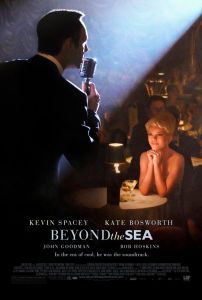 I really don’t think a lot of people know Bobby Darren. It seems that today most people would recognize him from singing “Beyond the Sea” over the closing credits of Finding Nemo. He wasn’t supposed to live past 17 but went on and wrote 400 plus songs including “Mack the Knife,” “Splish Splash,” and “Dream Lover.” Seems like there could be some interesting ground for a biopic. Kevin Spacey is one of our most celebrated actors and earned two very well deserved Oscars. Spacey has a strong passion for Darren and has been dreaming of portraying his life story for years. Passion is good for a role, right? Sam Raimi had passion for Spider-Man and look how those movies turned out. Well, with Beyond the Sea it seems that Spacey is less passionate about Bobby Darren and more passionate about his love of Kevin Spacey.
The film opens with the 37-year-old Darren (Spacey) reliving his life via a biographical movie he’s filming (yes, it’s a movie-within-a-movie). With the help of a younger movie self as a guide, Darren traces his rise from the streets of Brooklyn to headlining the Cococabana club. As a young child, doctors feared that Darren wouldn’t outlive his teens with his weak heart. Bedridden often, he found inspiration in music with his flamboyant yet supportive mother (Brenda Blethyn). Darren is driven to succeed and soon lands on top of the charts with a string of hits. Next he?s starring in movies with Rock Hudson and Sandra Dee (Kate Bosworth), a chickadee that Darren is just as determined to succeed with. They marry, have a child, but Darren doesn’t feel fulfilled. He needs to push his music further whether or not it alienates everyone around him.
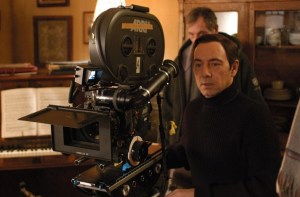 If you thought Beyond the Sea was the story of Bobby Darren, you’d be pitifully wrong. It’s really the story of Kevin Spacey, actor/writer/director/singer/dancer. That’s why we get to see flashy, superfluous dance numbers, that’s why we get to watch Spacey sing 12-15 times, and that’s why Spacey went to the trouble of re-recording all of Darren’s songs so that?s it?s Spacey belting out the tunes. Because, remember, this is a film about Spacey, not Bobby Darren.
Spacey is also much too old to be playing Darren, who died suddenly at age 37. He comes off lechery, especially during his courtship with the young Sandra Dee. Spacey isn’t unaware of this problem because in the opening minutes of Beyond the Sea someone accuses Bobby Darren of being to old to play himself in his movie. The response: “He was born to play this part!” There you go folks, case closed.
The acting in Beyond the Sea isn’t really an issue. Spacey has a genuine bounce to his song renditions and proves to be a capable dancer. John Goodman plays yet another gruff but lovable sidekick. It’s always good to see Bob Hoskins onscreen, no matter what the role may be. Bosworth comes away the best as she shifts from stars-in-the-eyes naiveté to a harder edge (you may rethink that whole song from Grease).
The dialogue is played so straight that it’s often hilarious: “Memories are like moonbeams, we do with them what we like.” With all due respect, what the hell does that mean?! I think I get the idea but what can anyone really do with moonbeams? If this line isn’t bad enough it becomes a central idea for Beyond the Sea which Spacey/Darren uses to excuse his flagrant gaps in time and fact.
Beyond the Sea gets so caught up in the Kevin Spacey Variety Hour that it fails to tell its audience why they should even care about Darren. Was he an inspiration because he outlived doctor expectations? Did he liven up old songs? Was he a remarkably versatile talent? Who knows? You’re on your own. Spacey’s too busy singing and dancing to explain the relevancy of Bobby Darren or why this movie should even exist.
There must be some interesting facts about Darren. I did not know that he wrote “Splish Splash” let alone that he wrote the whole song in 20 minutes. I didn’t know Darren required a toupee at such a young age. That stuff is interesting. It’s too bad it all takes a back seat because Spacey wants to emphasize his singing. Seriously, I get it; you can sing, Kevin Spacey. Can I see more of Bobby Darren and less of Spacey now?
 Beyond the Sea portrays Darren so single-mindedly. He’s always focused on his music and nothing else, whether that be a budding acting career (he was nominated for an Oscar), the advice of his friends, or the love of his family. Darren kind of comes across as a self-centered jerk a lot of the time in Beyond the Sea.
I don’t know which is worse, Spacey the director or Spacey the writer. It’s not that he’s inept at either end but he just makes decisions that kill the material. There has to be a better framing device than having Darren star in a movie about his life. There have to be better transitional ideas than having New York City explode into choreographed dances. To top it off, when the movie reaches its very protracted climax, we see the adult Bobby Darren in a tap duet with his younger self. Beyond the Sea loses whatever earnest intentions it had and melts away into one strange metaphysical song and dance revue.
Beyond the Sea has been a pet project for Kevin Spacey for so long that the focus has shifted from Bobby Darren to Spacey himself. This movie exists so that Spacey can celebrate himself. To say Beyond the Sea is a showcase of megalomania would be an understatement. Many scenes exist for no reason other than to give Spacey another opportunity to dance or sing. Re-dubbing all of Darrens songs seems a tad unnecessary and a whole lot about ego. Die-hard fans of Darren or Spacey may enjoy Beyond the Sea, but most people will grow tired of seeing Spacey congratulate himself for being an autuer. This is a self-indulgent nightclub act posing as a film. Memories are like moonbeams, and I’m forgetting this movie as fast as possible.
Nate’s Grade: D
Share this:

Monster’s Inc. (2001)
 Pixar are the animation titans who have been delivering first-rate pictures under the Disney banner for the last five/six years. The placement of their name is like a seal of quality, unlike the placement of the Disney name. Monsters Inc. is the latest and it’s crammed full of humorous jokes and lively imagination that can propel it forward despite the bad score by Randy Newman.
Monsters Inc. is a corporation in a monster universe that trains its workers to enter the bedrooms of sleeping children and derive scares for resources. Their monster world is powered by the screams of children and it seems times are getting tougher. Children are becoming harder to scare (blame CNN) and it seems an energy crisis is looming. The pressure is on for the big blue bear that is James P. “Sully” Sullivan (John Goodman). Sully is close to achieving the all-time scare record with the aid of his assistant Mike (Billy Crystal), a small one-eyed green guy. But their scare colleague Randall (Steve Buscemi), a bad tempered purple reptile, is nipping at Sully’s heels.
 The clever twist of Monsters Inc. is that these frightful creatures, some with spikes and some as many eyes as Elizabeth Taylor ex-husbands, are as afraid of children as they are of them. Reportedly their touch is toxic and possibly fatal. A single sock getting stuck to one unfortunate monster on his return causes an entire decontamination unit to spring forward. The joke is both alarmingly timely but also a great visual gag as all the different shaped monsters fit into their suits.
One night Sully accidentally lets a small toddler enter their world. He fears what the ramifications of this outbreak might be and struggles to keep her presence under wraps with the help of Mike, but Boo (as Sully dubs her later) is more than an adorable handful. The pair get into a mess of trouble and constantly trying to keep Boo clear of contact.
John Goodman provides a great performance as the sweet and cuddly Sully. His demeanor is one that warms him to the audience. Crystal provides some good laughs and walks a very fine line of going overboard into his usual borsch belt humor. Buscemi has the menacing voice that gives Randall life. The real star is Boo, whose actual voice was provided by one of the animator’s own kids. Every coo, every laugh, every word she says is full of such glee that it’s uncontrollably cute. She’s almost an overpowering force of cuteness.
Late into the story it tries to go for something below the surface by having Sully see the consequences of his profession. His attachment to Boo is a bit far-fetched in the great speed it occurs and the groan-worthy happy ending is a miscue that could have been ripe with possibilities.
 The animation of Monsters Inc. is nothing short of flawless. Something Pixar does better than any studio is fluidity of movement. At times during Shrek the characters are a tad stiff or blocky in their movements, but with ‘Monsters Inc.’ every gesture, every wavering hair on Sully, it’s all wonderfully fluid. Pixar are marvels at what they can do with computers and Monsters Inc. is another impressive chink on their already impressive belt.
The film lacks the heart of a Toy Story but doesn’t lack in imagination. The whole concept is very inventive and reconfirming of the suspicion we all had as kids. A sequence late into the film where Randall chases Sully and Mike through a vast area with thousands of doors on rails is the true highlight. This scene is awe inspiring and a head rush by the majestic care put into it and the comic payoffs it has. It’s a chase scene that’s worth following.
Monsters Inc. is funny enough and creative enough to be well worth a viewing. It lacks the subtext and human emotion of the two Toy Storys, but is still entertaining in its own right. My grandma described it as the movie “with the talking M&M.”
Nate’s Grade: B+
Share this:

O Brother, Where Art Thou? (2000)
 Loosely based on Homer’s The Odyssey comes the latest from two of the most talented and imaginative minds working in the business. ‘O Brother’ has all the things that go into making a good Coen brother film. It’s full of Coen regular like John Turturro, John Goodman, and Holly Hunter among others. It includes elements of wackiness like a KKK color Guard rally where they march into spelling KKK. It even has the great wit with dialogue being handed over to the overly verbose leader of the gang on the run Ulysses Everett McGill (George Clooney looking and sounding like Clark Gable). On top of this you get a wonderful blue grass soundtrack that is selling surprisingly phenomenal, and cinematography that is astonishingly beautiful. Yet, with all these positives, O Brother Where Art Thou? is a mid-level Coen movie. The comedy of the film is missing a lot when it should be there, replaced with pretty images or very pretty songs. Still, a mid-level Coen brother’s movie is much better than most anything out there today. It seems to aim to be a pleasant movie, and it achieves that finely. O Brother is a fun experience with the right person but not necessarily something that has a lot of rewatchability. Especially if you have bought the soundtrack.
Nate’s Grade: B
Share this:

The Emperor’s New Groove (2000)
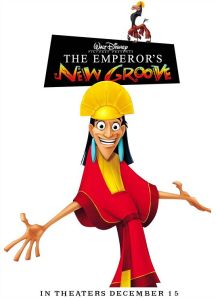 Originally The Emperor’s New Groove was a grand Disney formula flick known as The People of the Sun concerning the Aztecs and included six Sting songs. We would have had this “same old same old” if it weren’t for someone who courageously raised their hand and said “Isn’t this stupid?” God bless that person. The original theme was scrapped as well as all the songs excluding one. The patented Disney formula was ditched for a fast pace and zany antics that haven’t been seen from Disney hands since Aladdin.
The central message of Emp’s Groove is still a moral lesson – this one over vanity and self-centeredness. David Spade voices a young prince named Kuzco with no regard for any of his followers. He plans on building a special waterslide by destroying the village of Pancha (John Goodman). Spade’s scheming high priestess Yzma (Eartha Kitt) concocts a potion to kill the Emperor with the aid of her dim-witted but loyal assistant Kronk (Patrick Warbutton). Through a mix-up the potion doesn’t end up killing Kuzco but turning him into a llama. So now alive and trying to regain his throne Kuzco can only find help with Pancha, the one he had wronged earlier.
The vocal talents of the four leads are particularly inspired with Warbutton on a different plane of comedy. Warbutton provides the film’s biggest laughs and is a genuine master of timing and vocal inflections. When Disney sequelizes this straight to video (as they do everything now) I hope it centers on Warbutton’s Kronk character. Kitt is fun in an over-the-top parody and Spade provides delicious sarcasm so simply.
What’s being advertised as hilarity is more or less spotty. Some jokes work but others are full of tedium. There are stretches of tedium that shouldn’t be there for something with “zany antics.” Yet, the 15 minute ending is the best piece of the film with multiple comic payoffs.
The anti-Disney Disney movie is anti enough. the jokes need to come more often and it takes a while to truly get into. It has its moments but The Emperor’s New Groove is not new enough. Although, I’m thankful that we got what we did instead of what we could have.
Nate’s Grade: B-


 nathanzoebl
You must be logged in to post a comment.