Blog Archives
Sentimental Value (2025)
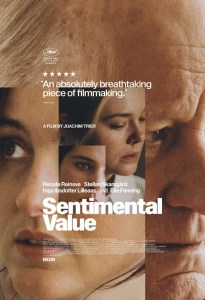
It’s an old cliche to say “they don’t make movies like this anymore,” but with our current media environment, there’s a reluctant truth to the fact that many genres, particularly adult dramas, romantic comedies, and non-action comedies, have declined steadily from their studio heyday. And yet Sentimental Value is also proof against this adage, as this wonderful movie is the kind of engrossing, mature, and thoroughly artistic original adult drama that Hollywood would have positioned decades ago to prominent award glory, like your Terms of Endearment or Rain Mans. I guess the caveat is that Sentimental Value comes from Norway, so outside the Hollywood system, and it’s reminding every movie lover not just of what we’ve lost in recent times with studio output of rich adult dramas, but it reminds us why we love the movies. Sentimental Value is easily one of the best movies of the year and a triumph all around of acting, writing, directing, and editing. It’s so thoroughly well-realized that it feels like we’ve been dropped into the realm of a classic novel brought to stunning life with a level of care, insight, and artistry that is rare to experience in any medium. I knew right away I was in for something truly special.
We begin by tracing the history of a house in Oslo, particularly the Borg family that has lived there for generations going back to pre-World War II. The father, Gustav (Stellan Skarsgard), is a famous film director who divorces his wife when their two daughters are young. The oldest daughter, Nora (Renate Reinsve), grows into a talented but neurotic theater actress, one beholden to stage fright even after all her accolades. Her younger sister, Agnes (Inga Ibsdotter Lilleaas), has married, has a young son, Erik, and she works as a historian researching specifically her grandmother who was tortured by the Nazis. After the death of their mother, Gustav resurfaces in their lives after a long absence working in Hollywood. He has plans. He has written a semi-autobiographical screenplay about the life of his mother, and he wants to film it in their family house, and he wants Nora to play the starring role. The sisters are resentful and wary of their father, but could this entire artistic enterprise be a push for reconciliation and better understanding for everyone?
I’m talking mere seconds into the movie, director/co-writer Joachim Trier (The Worst Person in the World) had already grabbed me with his deft storytelling. A narrator provides the complicated history of this house, treating it like a living vessel that itself has been an observer to the many generations residing within. The details are so precise and telling, like a novel giving you a larger sense of the world that exists beyond the margins of what we can see and hear. To say the movie is a complex family drama is only scratching the surface. Let’s just unpack some of the layers inherent from its premise. Gustav’s world is cinema and he wants to make what might be his last movie his greatest and most personal. He’s telling his story, asking his own daughter to play his own mother. When Gustav was a child, he was the last person to speak to his mother before she decided to take her own life by hanging herself. Think about the psychology at work here, a father trying to reconnect with his estranged daughter through the means of her playing his own mother and possibly better understanding his loss that has haunted him since childhood. Then Gustav also wants Erik, his grandson, to play the younger version of himself in the movie, though Agnes is against the idea. There are so many intriguing layers at play with all of this, the use of art to process grief and trauma, the mirrors of family members portraying other members as engines of empathy, and the act of filmmaking as recovery. I’ll slightly spoil the movie to say that Nora turns down the role. The rest of the movie is about how she gets to “yes.”
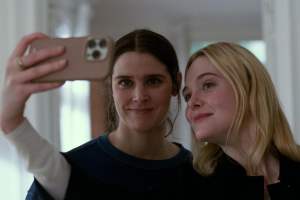
In the wake of Nora’s rejection, Gustav offers the role to an American actress, Rachel Kemp (Elle Fanning), a hot commodity that convinces Netflix to get involved. However, with the streaming giant attached, there are several compromises that Gustav must endure. He intended the project to be in his native tongue but now it’s in English. He isn’t allowed to bring back older members of his crew he’s worked with for decades, like a retired cinematographer who is infirm to the point where he needs to walk around with a cane. With each compromise, you can see Gustav making a mental cost-benefit equation. He envisions this movie as his most important, and possibly his last, and it becomes a gauntlet of what shape it might eventually take to get made and if that shape is too malformed and unrecognizable from his original artistic vision. When you consider this movie could also be his vehicle to better understand his own mother, as well as an amends to his daughters, then every new compromise bears even more significance. Rachel is eager to please a director as well-regarded and as famous as Gustav, but she also recognizes her vulnerabilities and shortcomings. She can’t shake the feeling that she’s not right for the part, that Nora is the rightful pick, and she’s struggling to get a better grip, plus there’s the whole Norwegian accent that she has to master as well. Fanning (Predator Badlands, A Complete Unknown) has a few standout scenes but even she recognizes she’s the interloper to this family.
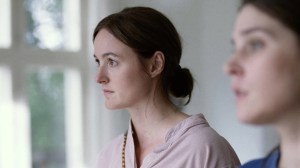
Reinsve has been a collaborator of Trier’s all the way back to 2011’s Oslo, August 31st, but it was her starring role in 2022’s The Worst Person in the World that cemented her international stardom. She’s a wonderfully intuitive and expressive actress, inviting us in with every scene to study her character’s guarded emotional responses and occasional outbursts, like her stage fright hysteria. As the older sister, Nora has built more resentment against their father, whom she blames for everything that her family lacked back in Norway while her father was off in Hollywood making movies with celebrities. Nora is wary about filmmaking, viewing the theater as more of a pure artistic and worthy medium for acting, though you could even view this designation as a division she has drawn: “this is my territory, and that is my father’s territory.” Now he wants to bring her into his world, and she can’t help but be skeptical after all their time apart. Why now? Why this? While this is a splendid ensemble drama with great attention paid to many characters, for all intents and purposes, Nora is our protagonist, and Reinsve keeps us compelled to examine every internal development of this character.
Every actor is at the top of their game, contributing to a marvelous ensemble that makes this family so richly felt. Skarsgard (Dune) is used to playing heavies, stooges, and bad dads, and the role of Gustav allows him to tap into all of those mercurial skills to bring to life a man who is trying to take stock of his life late in its run and make some changes, notably who is allowed inside his cherished circle. Skargsard is mournful but still egotistical, reaching for reconciliation but not begging for it, using the enterprise of the movie and particularly the leading role offer as the unspoken apology. However, Gustav is more than just an absent father, as in the screenplay, by Trier and longtime collaborator Eskil Vogt, he’s also still suffering from his own trauma with the loss of his mother. This movie is an attempt to better understand her and perhaps her psychology that would lead her to make such a heartbreaking decision to end her life. It’s an honest attempt to bring back to life a woman he dearly misses while also discovering a path of forgiveness, while he seeks his own act of forgiveness with his own adult daughters. I told you, there are layers all over this movie.

As the younger sister, Agnes has a more charitable view of her father, and she even acted for him in one of his earlier movies and fondly recalls how warm his attention and affection felt. She’s wary about his desire to have her son, who has professed an affinity for filmmaking but not acting, play the role of young Gustav. She’s worried about her child going through the same level of attachment and disenchantment that she experienced when she was younger and wanting to grow closer to a man who had kept his distance from his family. Agnes’ story is one of uncovering the history of her grandmother, a member of the Norwegian resistance who was taken into custody during Nazi occupation and endured all kinds of torture. Her grandmother is indicative of an entire generation of resistance, and by re-examining one person it provides a larger statement about the sacrifices of those who deserve not to be forgotten, whose memories persist even after the horrors they survived. The movie makes an implicit line between her suffering and eventual suicide but making it a direct line of cause and delayed effect is not so simple. People are complicated by nature, and Agnes fits this bill as well, as demonstrated by Lilleaas’s commanding supporting performance. I think she has what may be the most affecting scene in the movie, a sisterly heart-to-heart that strikes you right in your own heart.
Reminiscent of Ingmar Bergman and Francois Truffaut, Sentimental Value is a richly realized drama with such engrossing and complex characters told in a richly entertaining fashion. There are stylistic touches, like the recurring omniscient narrator, but the movie is more grounded in the simple pleasures of transporting us into the lives of other people and to embrace their flaws and hopes and desires. The actors are incredible and bring such startling life to these characters and their nuances. I could have endured an entire series in this world but at a little over two hours, Sentimental Value feels complete and satisfying. It’s the kind of movie “they don’t make anymore,” to our detriment, so when you discover a film as beautifully executed as this one about the relatable issues that drive many families apart and can bring them back together, then you thank your lucky stars that we still have filmmakers dedicated to making complex adult dramas without any high-concept gimmick to couch their real intentions. This is a marvelous movie about life. Full stop. See it, reader.
Nate’s Grade: A
Share this:

The Worst Person in the World (2021)
 Joachim Trier is a filmmaker that dazzled me with his debut feature Reprise, which I placed as my number three film of 2008. The Norwegian filmmaker has amassed a small collection of quirky, introspective, bohemian dramas exploring the growing pains of being young in Oslo. His movies tend to be deeply empathetic and refreshingly free of judgment, which then allows the audience to empathize with the characters even when they are failing or floundering in life and in love. In some ways, Trier’s open approach to building character over time reminds me of Richard Linklater, and it’s easy to find a loose thematic connection between Reprise, 2011’s Oslo, August 31st, and now this new movie, besides the same actors he returns to again and again. It’s more a humanist spirit that pervades the films, capturing life’s moments, big and small, that formatively alter who we are. The Worst Person in the World is a pretty straightforward character study of an impulsive, indecisive woman trying to live her life and having a challenging time of things.
Julie (Renate Reninsve) is a conundrum of a character. She’s far from the titular worst person in the world but she’s certainly flawed, a young woman in Oslo turning thirty without a clue about what she wants from life. She drifts from one job to another, one academic pursuit to another, and one man to another, growing restless whenever stability seems to be materializing. She’s the kind of person who is always looking ahead but unsure of where ahead even lies. At first her boyfriend Aksel (Anders Danielsen Lie) seems alluring, a successful underground cartoonist known for his boundary-pushing work. But the man is fifteen years her senior and more eager to start a family than Julie is. Then one night she crashes a wedding and meets Eivind (Herbert Nordrum), a carefree barista, and they hit it off while trying not to cheat on their respective others. Julie keeps thinking about this other man, her other possibilities, and wonders what if.
 Each of the twelve segments feels like a new version of herself Julie is trying on, feeling out the edges to see if it fits well. With each segment, we can learn a little bit more about her in different contexts. The format makes the moments feel like formative memories more than just scenes driving the story forward to the next. Often there are great leaps of time in between, and some segments are relatively short, like a few minutes. Some of them are comical, some of them are heavily sexual and/or sensual, and many of them are unrepentant for Julie. Then as the movie continues the chapters get longer, becoming more reflective and remorseful. Every now and then, Trier’s sense of style, something more explicitly pronounced in his earlier films, will seize the moment to better illustrate the internal life of Julie. When she’s making a significant choice to leave her current boyfriend, time literally stands still as she runs through streets and frozen pedestrians to leap into the arms of her new lover. When Julie is tripping on magic mushrooms, the depths of the world dip, and she’s in rapid free fall away from that same lover. My favorite stylistic flourish is when Julie is reflecting upon what she has accomplished by age 30 and how this compares to her mother, grandmother, and so on, going back to her deceased great-great-great grandmother, who died before getting to thirty as the average life expectancy of her era was tragically only 35 years old.
I think Julie represents a certain generational “buyer’s remorse/FOMO,” a restless spirit that is always thinking about what she doesn’t have as opposed to what she does have. This is evident in what we see in her romantic relationships. Each of the two suitors that Julie bounces between offers different experiences, one more akin to her carefree and aimless sensibility, and the other more focused, certain, and forward-looking. As she settles into a routine with one man, her restless nature kicks back in, and she starts thinking about what the other has to offer. It’s a constant push-and-pull that will sabotage any potential long-term romantic relationship. This leads to Julie making rash decisions, never really allowing herself to get comfortable, and hurting the people she cares about, even professes to love, and yet she’s far from hateable. She may even be relatable for some.
 During the more morose final act, this is where the movie slows down and Julie perhaps realizes that settling down is not the same thing as settling. I say “perhaps” because I don’t know by the end if Julie has really changed as a person through these dozen chapters. I’d like to think so, hopeful that our experiences and challenges reset our nascent thinking and broaden our perception. By the end, Aksel has had some very dramatic and negative turns, forcing him to re-evaluate his limited time on this planet and his personal actions, always looking ahead when he wishes he had more appreciated the moment. He says he doesn’t want to live on through his art and would rather simply live in his apartment. It’s all too little by the time it comes to a finite end. He wishes he and Julie had never broken up, that they had raised children, and he simply had more time with the person he knew was the love of his life.
For Julie, this somber final stretch allows her to contemplate her own naivete and what drives her away from others, that no matter what career path she takes, what man she chooses to shack up with, what goal she prioritizes, that little will change unless she focuses on resolving her own internal issues and hangups first (if you guessed emotionally distant father, congrats and collect your prize). She’s so scared of missing out on something better, of being denied her true self, but in pursuing this aim at all costs, she’s missing out on other experiences that can be just as rewarding and fulfilling. Making a choice does not mean you are burdened with the unmet possibilities of the myriad of choices you did not make. It’s about committing to a person, a vision, a possible version of yourself, and giving it a real chance.
Much of this hinges on the shoulders of the lead actress, and Reinsve shows why she earned a Best Actress award at the Cannes Film Festival. Reinsve had a small supporting part in Trier’s Oslo, August 31st but is best known as a Norwegian theater star, and here she makes quite a lead film debut for herself. Looking like a dead ringer for a Nordic Dakota Johnson, Reinsve gets to showcase an impressive variety of emotions as a constantly evolving, self-sabotaging individual. At every point, she feels like a genuine human being, even as she’s losing interest in her current situation or lover, and even when she’s struggling you can appreciate how committed Reinsve is to being as honest and messy as Julie turns out to be. Another standout is Danielsen Lie (a constant in Trier’s films) who gets the biggest emotional arc and has the saddest moments. Aksel’s late epiphanies will hit but the character’s troublesome nature might blunt the depth.
 I’m undecided whether the twelve-chapter (plus prologue and epilogue) structure of the narrative actually helps or hinders the impression of Julie. Some of these moments feel far less important than others, or examine a hobby or side-step that Julie takes before abandoning again. There’s a certain frustration that’s going to be inherent in watching a serial quitter. You might even yell at the screen to pick something, taking on the silent yet exhausted expression of Julie’s mother whenever she mentions her next life direction. The addition of an off-screen narrator that drops in and out for some wry commentary seems like something Trier should have committed to more to provide some observational distance with the on-screen antics or ditched entirely. The concluding epilogue is open-ended enough to allow the viewer to be pessimistic or optimistic; has Julie learned about herself enough to settle on a career and allow herself to be happy? Can she ever be happy? It’s enough to keep the viewer guessing, which is appropriate for the ambiguity of the characterization, but it misses out on feeling like an ending. It’s more a pause at this juncture of Julie’s life, and maybe that was the design all along. It’s not a journey of one continuous climb to self-actualization but a series of starts and stops and unfortunate missteps.
Julie is far from what The Worst Person in the World might lead you to believe. She’s confused and struggling and searching for what will eventually click, some sense of herself that rings true that finally gets her to stop and enjoy her present rather than fretting about what she may be missing. Ultimately, only focusing on what you do not have will never allow you to appreciate what you do, but life and learning is a process and everyone comes to these realizations from a different path, if they ever come to it. Trier’s movie is a little meandering, a little lopsided in structure, and I don’t quite know if the pathos is earned by the overly somber conclusion. It is another observational, funny, and occasionally melancholy tale from Trier, a filmmaker who still has deep feelings for his characters and their all-too human foibles.
Nate’s Grade: B
Share this:

Reprise (2008)
 This very New Wave-styled Norwegian film manages to be thoughtful and intelligent, stylish without being vapid, touching, and it brilliantly captures the exuberance of youth on the cusp of adapting into maturity. Reprise follows two best friends and aspiring writers; Phillip finds success immediately but cannot handle it, and Erik must fight through rejections. Director/co-writer Joachim Trier (cousin to Lars) has given the film a hypnotic triptych narrative structure, meaning there are flashbacks, flash forwards, flashbacks within flashbacks, and the viewer is best advised to just succumb to the thrills of the narrative and sort it all out later. The structure made me feel totally immersed in the lives of this small unit of 20-somethings. You get a lifetime of detail thanks to the tangential narrative structure and the help of an occasional narrator. The film has a remarkably deft touch when it comes to crafting realistic characters; the pangs of uncertainty, jealousy, and insecurity all ring true without being trite or obvious. But the movie never gets dour or pretentious as it covers weighty topics. The movie also has an indelible energy that is hard to ignore. Reprise is playfully edited and constantly moving, sometimes forward, sometimes backwards, sometimes telling us a possible scenario that sounds better than reality. I found several small moments to be provocative, like Phillip trying to replicate the happy memories of time and place by trying to re-stage a photo of his girlfriend with his girlfriend (a lovely Viktoria Winge). Reprise is full of small tender moments that speak volumes. This is a terrific film brimming with life and verve and clearly targets Trier as an inspiring filmmaker to watch.
Nate’s Grade: A


 nathanzoebl
You must be logged in to post a comment.