Blog Archives
The Passion of the Christ (2004) [Review Re-View]

Originally released February 25, 2004:
The Passion of the Christ is a retelling of the last 12 hours of Jesus Christ’s life (perhaps you’ve heard of him?). In these final hours we witness his betrayal at the hands of Judas, his trial by Jewish leaders, his sentencing by Pontius Pilate, his subsequent whippings and torture and finally his crucifixion. Throughout the film Jesus is tempted by Satan, who is pictured as a pasty figure in a black hood (kind of resembling Jeremy Irons from The Time Machine if anyone can remember). The Passion spares no expense to stage the most authentic portrayal of what Jesus of Nazareth endured in his final 12 hours of life.
For all the hullabaloo about being the most controversial film in years (and forgive me for even using the term “hullabaloo”), I can’t help but feel a smidgen of disappointment about the final product. The Passion is aptly passionate and full of striking images, beautiful photography and production values, and stirring performances all set to a rousing score. But what makes The Passion disappointing to me is the characters. You see, Mel Gibson’s epic does not devote any time to fleshing out the central characters. They are merely ciphers and the audience is expected to plug their feelings and opinions into these walking, bleeding symbols to give them life. Now, you could argue this is what religion is all about, but as far as a movie’s story goes it is weak. The Passion turns into a well-meaning and slick spectacle where character is not an issue. And as a spectacle The Passion is first-rate; the production is amazing and the violence is graphic and gasp-inducing. Do I think the majority of people will leave the theater moved and satisfied? Yes I do. But I can’t stop this nagging concern that The Passion was devoid of character and tried covering it up with enough violence to possibly twist its message into a Sunday school snuff film.

For my money, the best Biblical film is Martin Scorsese’s 1987 The Last Temptation of Christ (also a film mired in controversy). Last Temptation, unlike Gibson’s spectacle, was all about Jesus as a character and not simply as a physical martyr. Scorsese’s film dealt with a Christ consumed by doubt and fear and the frailties of being human. But the best part is the final 20 minutes when Jesus is tempted, by Satan, to step down from the cross and live out a normal life. Jesus walks away from the cross, marries Mary Magdalene, fathers children (this is where the controversy stemmed from but they were married) and dies at an old age. Jesus is then confronted by his aging apostles who chastise him for not living up to what he was supposed to do to save mankind. Jesus wakes up from the illusion and fulfills his mission and dies on the cross. Now, with the story of Last Temptation an audience has a greater appreciation for the sacrifice of Jesus because they witness his fears and they witness the normal life he forgoes to die for man’s sins. There is a sense of gravity about what Jesus is sacrificing.
With The Passion Gibson figures if he can build a sense of grand sacrifice by gruesomely portraying the tortures Jesus endured. Even if it is Jesus, and this may sound blasphemous, torturing a character to create sympathy and likeability is the weakest writing trick you can do. Yes Jesus suffered a lot, yes we should all be horrified and grateful, and yes people will likely be moved at the unrelenting violence he endured, but in regards to telling a story, I cannot feel as much for characters whose only characterization is their suffering. Sure, The Passion flashes back to some happier moments of Jesus’ life, which I like to call the Jesus Greatest Hits collection, but the movie does not show us who Jesus was, what he felt (beyond agonizing pain) or the turmoil he went through in finally deciding to give up his own life for people that despised him. The Passion is not about character but about spectacle.
So let’s talk about the violence now, shall we? Gibson’s camera lovingly lingers on the gut-churning, harrowing, merciless level of violence. But this is his only message. It’s like Gibson is standing behind the camera and saying to the audience, “You see what Jesus suffered? Do you feel bad now? FLAY HIM MORE! How about now?” What was only three sentences of description in the Gospels takes up ten minutes of flogging screen time. Mad Mel has the urge to scourge. After an insane amount of time spent watching Jesus get flayed and beaten the violence starts to not just kill whatever spiritual message Gibson may have had in mind, but the violence becomes the message. The Passion does give an audience a fair understanding of the physical torture Jesus was subjected to, but the movie does not display Christ as fully human, enjoying life and love, or fully divine. The only thing The Passion shows us about Jesus is that the son of God sure knew how to take a whuppin’. For Gibson, the violence is the message and the point is to witness what Jesus endured. Some would call that sadistic.

The actors all do a fine job and it’s impressive that everyones’ lines is in two dead languages (Latin and Aramaic, though for the life of me I can’t tell them apart). But the acting is limited because of the nature of the film. Had there been more moments of character the acting would come across better. As it stands, the acting in The Passion is relegated to looks of anguish or looks of horror, interspersed with weeping. Monica Bellucci (The Matrix sequels) really has nothing to do as Mary Magdalene but run around in the background a lot. Jim Caviezel (Frequency, Angel Eyes) gives everything he has in the mighty big shoes he tries to fill. It’s too bad that his Jesus spends most of the screen time being beaten, which kind of hampers his acting range.
Now let’s address the anti-Semitic concerns. The Passion does portray a handful of Jewish religious leaders as instigators for Jesus’ eventual crucifixion, but there are also Jewish leaders who denounce their actions and just as many people bemoaning the torture of Jesus as there are calling for it. Who really comes off looking bad are the Romans. Excluding the efforts to make Pilate look apprehensive, the Roman soldiers are always seen kicking, punching, whipping, spitting on Jesus and laughing manically with their yellow teeth.
And like I said before, most people will be extremely satisfied with the film because it’s hard to find a person who doesn’t have an opinion on Jesus. Gibson is counting on audiences to walk in and fill in the holes of the character so that The Passion is more affecting. Gibson’s film is worthy spectacle, and despite the vacuum of character I did get choked up four separate times, mostly involving Jesus and his mother. The Passion is a well-made and well-intentioned film that will hit the right notes for many. I just wish there were more to it than spectacle. I really do.
Nate’s Grade: C
——————————————————
WRITER REFLECTIONS 20 YEARS LATER

In 2004, Mel Gibson made an R-rated foreign film that was two hours of savage brutality against Jesus, and it wound up being one of the biggest box-office hits of the decade and forged a trail for other Hollywood execs to chase after a “faith-based audience.” It could be said that this grisly movie gave the people what they wanted, and apparently what they wanted was to watch their messiah suffer physical feats that should have killed any mortal five times over. Twenty years later, The Passion of the Christ is still a curiosity, a movie with so much technical quality and devotion to a specific purpose, but that purpose is so narrow: make people feel bad. If you were being charitable, you could argue that the sacrifice of Jesus is felt stronger when every whipping, beating, scourging, and blood-letting is endured from the audience. Except I don’t believe this, because that assumes that more time spent on visual carnage equals more appreciation earned, as if our empathy has an equation. The emphasis on the death of Jesus feels like a telling insight into certain elements within mainstream American religious culture, where the focus is on violence and loss and less so the resurrection of Jesus, wherein the man conquers death and preaches forgiveness of sin for all mankind. It’s the preoccupation with grievance and brutish power over the helping of others different and less fortunate from ourselves. I’m not going to say the hard-core fans of The Passion of the Christ are valuing the wrong spiritual ideals, but it was this Jesus guy who did say everyone should love thy neighbor as thyself.

This is going to be a rarity for my twenty-year re-review series, but I agree almost one hundred percent with everything I wrote in 2004. I can’t really improve upon that analysis and my explanation for the faults of the movie and its spiritual shortcomings. Some of these lines are still terrific: “…Twist its message into a Sunday school snuff film,” “The only thing The Passion shows us about the Son of God is that he sure knew how to take a whippin’,” and, “Mad Mel has the urge to scourge.” More time is spent obsessing over the blood of Jesus than any of his words. I’m still debating the exact legacy of this movie besides as a harbinger of a wider Christian marketplace as well as Jim Caviezel’s own god complex. Gibson only directed two other movies after, 2006’s Apocalypto and 2016’s Hacksaw Ridge. His personal failings also became hard for many to ignore after his anti-semetic drunken ramblings and allegations of abuse, relegating him chiefly to direct-to-streaming (13 films from 2020-2023). In many ways, The Passion of the Christ represents Gibson at his height of powers within Hollywood, and it was accomplished outside the studio system who thought he was crazy, though he proved them right for different reasons.
Some strange Passion facts lost to history. 1) This movie actually killed a viewer. During the crucifixion scene, a man suffered a fatal heart attack and later died. Sure, the man’s genetics and life-style choices are more likely at fault here, but had this man not seen Gibson’s movie he might have survived or at least been in a better capacity to deal with his eventual heart attack symptoms. 2) Gibson attempted to re-edit the movie for a PG-13 theatrical re-release in 2005, trimming five minutes of some of the more gruesome violence, yet the MPAA still said the movie was keeping its R-rating. 3) During filming, Caviezel was literally struck by lightning. 4) A sequel has been in development for almost twenty years, confirmed by Gibson’s Braveheart screenwriter Randall Wallace in 2016. In 2023, Gibson revealed he has multiple versions of the sequel script in the works, including one that visits hell. Caveizel has predicted the possible sequel would be the “biggest film in history,” but this is the same guy who declared Donald Trump as the modern-day Noah, so maybe let’s not regard this guy too credibly with his opinions.

The challenge with any on-screen depiction of Jesus is fleshing him out as man and god. Only focusing on one obscures the complexity of characterization, denying filmgoers a more engaging examination of the key figure of Christianity. I’d still advise everyone to watch Martin Scorsese’s The Last Temptation of Christ for all the important elements that The Passion of the Christ lacks. This is a movie designed only for brutal spectacle and nothing more, and it’s just as tedious and empty now as it was twenty years ago. Apparently, Scorsese feels like he still has more to say on the subject and is planning another Jesus movie based on a 2016 book by Shūsaku Endō, the same author of the source material for Silence. While I would maintain that Scorsese has already made the greatest movie about Jesus, as well as the greatest movie about the exploration and challenge of reckoning with faith (2016’s Silence), who am I to deny one of our living legends another bite from the apple? It’ll certainly be more spiritually meaningful than watching an execution of Jesus for two miserable hours designed as enlightenment.
Re-Review Grade: C-
Share this:

Sound of Freedom (2023)
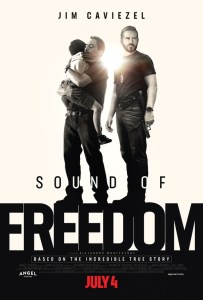 The surprise of an otherwise underwhelming summer at the box-office, so far, has been an indie movie made for only a fraction of the bigger studio fare. Sound of Freedom is an action drama originally filmed in 2018 and even resorted to crowdfunding for post-production assistance, so you’d be curious as to what about this movie is making it the hot commodity in 2023? Well, the answer is both uplifting and also dispiriting, with good intentions running against possible bad faith. However, as an action drama chronicling the ills of human trafficking, it’s pretty mediocre genre stuff and indulges too often in wallowing in the danger of these innocent children under the guise of raising awareness of a pertinent problem that too many may unfortunately misconstrue.
Reportedly based on the experiences of Tim Ballard (Jim Caviezel), a former Homeland Security agent who was tasked with breaking up child-trafficking rings. He even goes undercover to bust skeevy mustachioed pedophiles looking to meet up with buyers, which causes obvious physiological distress and a strain on his marriage, although his wife seems saintly (played by Mira Sorvino, who is only here briefly to urge her man on). A Honduran brother and sister are sold through the front of a child beauty pageant into sex slavery, and after rescuing the brother, he’s determined to reunite the siblings. His efforts lead to Ballard quitting his government job and going to Columbia to try and rescue the children being held as commodities by gangs.
 Allow me to be a little glib, dear reader, as I summarize what the plot of Sound of Freedom boils down to. Here goes: the movie quickly establishes sex trafficking as bad. Not hard. Got it. Our hero sees this and says, “This is very bad. I should do something.” The government says, “This is very bad. But what are you gonna do, you know?” Then our hero proclaims, “I can do something,” and the government brass says, “Well, we don’t know if you should,” and then our hero declares, “Well, I’m gonna!” Then he infiltrates the trafficking ring and reunites a little girl with her brother, and by the end we all learned a valuable lesson that human trafficking is very bad. The end. Now, yes, when you reduce any movie to its most essential plot points, it can feel reductive and like you’re missing something (Star Wars: farm boy leaves home, has adventure with hermit, saves princess), but there isn’t anything more to this Sound of Freedom than any of the Taken movies. It’s not exactly illuminating though it feels very sincere in its convictions.
As an action movie, there sure is a deficit of action to go on for a movie pushing two hours. There’s a climactic rescue but the majority of this movie is the overly simplified journey of trying to find one missing girl. Criminal procedures can be intriguing when there’s a real sense of continuity and progression, chasing down leads, connecting the dots, building the case. It can be invigorating when done well by smart people, like in 2012’s Zero Dark Thirty or the more recent true-life tale of exposing the murderous subject of 2022’s The Good Nurse. With Sound of Freedom, the problems are too easily overcome and the details are minimal. A lot of the breakthroughs are reliant upon chance.
Sound of Freedom feels like a professional action movie, with grimy cinematography and a mournful score, but there’s too little else going on here that is unknown to a general audience. It’s all pretty straightforward and yet sludgy with its overwrought pacing. This is a slow burn of a movie with an obvious end point manufactured for audience uplift, with Caviezel appearing as himself during the end credits to plead for others to donate to the cause and buy tickets for others for the “Uncle Tom’s Cabin of the twenty-first century,” which is what many are doing and donating them to others or passing them off to strangers.
 There is one moment that I thought was unexpected, where reliable character actor Bill Camp (The Queen’s Gambit) plays an ally to assist Ballard in putting together a fake sex trafficking palace for pedophiles (this is much of the last act). Camp plays a businessman who indulged in the illicit excess of power until one fateful sexual encounter with a prostitute that he believed to be in her mid twenties. He’s sickened by the revelation that she was only fifteen years old, and this causes him to have a moral shakeup of his behavior, his complicity, and the entire system of wealthy and powerful people indulging in vices that leave others trapped in cycles of violence and degradation. It’s a potent moment that I wished that Camp’s character was the actual protagonist, a character with flaws trying to overcome a shameful past and do some measures to rectify change. That’s a more interesting starting point than a stoic yet familiar action hero who is defined by his dedicated calling to save the lives of children.
Nobody needs much persuasion to believe that sex trafficking is a definite bad thing, and yet the movie spends so much time wallowing in the grotesque terror of its captive children. It’s one thing to highlight the harsh reality of real-world trauma, but it’s another thing to keep going back for dramatic weight not provided through the rest of the movie. It’s hard to watch young children, gasping and crying, knowing they are likely minutes away from being abused, but why go back to this repeatedly? Did they think the audiences forgot what was happening? Because there is so little else to this movie, plot and character-wise, the frequent stops to watch kids in horror right before being abused are galling, and not just for the intended artistic purpose. Too much of Sound of Freedom is watching a grief-stricken dead-eyed Caviezel gravely intoning, “How can we let this happen?” intermingled with prolonged scenes of terrorized children. It feels too exploitative and gross. I recognized it as a cheap emotional cudgel, and one I didn’t appreciate considering the film’s intended message about the well-being of children.
Here’s where I think the movie’s good intentions run up against the reality of trafficking. The far majority of people who are victims of sex trafficking are not being abducted in public by foreign strangers, they’re not being grabbed at Target stores or somehow hidden in Wayfair furniture (this specific and moronic conspiracy theory was propagated by Ballard as well, sigh); instead, the common perpetrators are friends and family. Often it’s low-income parents with significant substance abuse issues who, in desperation, resort to the most cruel outcome to resolve their addiction. The far majority of trafficking victims are in their teens, seventy percent between 15-17. Victims are also often members of the LGBTQ community who have been kicked out of their homes, and some of these victims resort to trading sex for their own survival. Victims are often those seeking out relationships because of abuse and neglect at home and those coercive relationships then transforming into trafficking. The reality of human trafficking is a lot more complex. It is a worthy topic of imminent concern, but it’s not scary brown-skinned foreigners coming to steal your unsupervised babies. It’s not a cabal of Democrats wanting to drink the blood of children for its power (this specific and moronic conspiracy theory was propagated by Caviezel as well, sigh). The problem with crusading against sex trafficking is when your concept of the topic does not match the reality of the problem. It’s this sensationalized boogeyman, and not knowing the actual reality of the problem will only lead to misapplied solutions for a different reality. Also, the far majority of human trafficking is with labor trafficking, which will be much easier to succeed by lowering the age of child labor in certain states, so there’s that too.
 By every objective measure, Sound of Freedom is a hit. The movie cost $14 million and has already grossed over $50 million at the U.S. box-office. While part of this is a campaign for people to buy tickets to then give away to others, the tickets are still purchased regardless of whether the seats are filled in their entirety. Many people have been inspired by the movie and its heroics, and far be it from me to deny them their uplift. I was let down by the deficiency of the find-and-rescue plot details and the sludgy pacing. I was especially put off by the excessive time spent exploiting the terror of abused children for unnecessary drama. Obviously the subject should make anyone feel uncomfortable, and sex trafficking is a very real evil that everyone should be able to condemn, but there needs to be more to this movie than reminding you that sex trafficking is very bad. I will credit Sound of Freedom with not depicting any specific pernicious QAnon conspiracies, but there’s significant overlap between that community and the audience for this. As a genre exercise, it’s kind of dull. As an expose on human trafficking, it has potential but skirts complexity for the finality of a feel-good mission with clear cut heroes and villains. There are obvious good intentions here wanting to highlight a worthy cause, and that might be enough for many viewers who can coast on the slick production values and overall stoicism.
Nate’s Grade: C
Share this:

The Count of Monte Cristo (2002) [Review Re-View]
 Originally released January 25, 2002:
Call it swash without the buckle. While The Count of Monte Cristo does an adequate job of telling the Alexander Dumas story (heavily editing chapters and making the leads friends in this version) the whole experience feels very rote. The sword fighting scenes are nowhere what they were billed as and the direction is surprisingly lackluster. Only the actors allow this film to arise mediocrity particularly with a devious turn from Guy Pierce (Memento). Kevin Reynolds (Robin Hood: Prince of Thieves) directed this film and proves he doesn’t need Kevin Costner to screw something up. Somewhere Costner is laughing. Actually, somewhere Costner is likely crying in his beer wondering what happened to him. “I was the king of the cinema…”
Nate’s Grade: C+
——————————————————
WRITER REFLECTIONS 20 YEARS LATER

I think 2002 is going to be my potential apology tour year when it comes to reviewing my initial film criticism of twenty years hence. The Count of Monte Cristo is my first entry for the new year and I already cringe re-reading my initial review. I think some of my early film reviews went overboard on snark, trying to establish a cool, chipper-than-thou attitude, but this was the early 2000s writing default for many. It was better to make quips, take some cheap shots, and sprinkle in some actual film criticism on top, and it’s a style of writing I’ve tried to grow out of as I’ve aged. I began writing film criticism back in 1999 as a means of expressing myself and showcasing my cinephile knowledge, and in many ways it was like learning to crack a puzzle, why a movie worked or didn’t work and what decisions lead to this eventual outcome. In some ways, early on, it was showing off and exploring my evolving writerly abilities, and sometimes that meant prioritizing cleverness over sincerity. I know I’m going to be reliving this with Crossroads but I’m reminded already with my first movie re-examination for the year 2002. So, to the filmmakers of The Count of Monte Cristo, on behalf of my then-19-year-old self, I apologize. Your movie is actually pretty good and, strangely, even makes some deviations from the book for the better.
Based upon the famous novel by Alexander Dumas (1802-1870), it’s a classic tale of vengeance and it’s plenty fun to watch because it feels like a movie that is giving you so many different turns at once. It’s almost structured like 30-minute episodes, and while being deemed “episodic” is usually regarded as a negative for a film story, I think this is an improvement. The beginning segment establishes how Edmond Dantes (Jim Caviezel) gets into trouble, and he might just be the biggest idiot in the world. The opening features him and his best pal, Fernand Mondego (Guy Pearce), seeking assistance for their ailing ship captain on the island of Elba during the time of Napoleon’s exile. Edmond agrees to deliver a letter from the deposed emperor to “an old friend” of his and then Edmond gets charged with treason in France. His shocked, incredulous response is absolutely hilarious (“What? Napoleon… USED me? I’m starting to rethink my whole appraisal of this man who tried to conquer the European continent.”). There’s a conspiracy by a government official to cover up his father being a Napoleon loyalist, the intended recipient of the letter, but it almost feels like Edmond deserves to be in jail for being this naively stupid. The first half hour sets up the villains, Edmond’s BFF betraying him to covet Edmond’s attractive wife, and the starting point for vengeance to be had. It’s economical storytelling and works well, and each thirty minutes feels like they are defined by a “very special guest star” who comes and goes.

The next thirty minutes explores Edmond’s life and routines in prison, lorded over by a cruel warden (Michael Wincott), and where he finds his mentor and salvation with an old priest, Abbe Faria (Richard Harris). Again, screenwriter Jay Wolpet efficiently establishes the routine, the passage of time, the means of how Edmond might escape, and his growing relationship and tutelage under a new unexpected friend. It’s kind of funny to watch old man Richard Harris (Gladiator) teach the considerably younger Caviezel how to sword fight, especially knowing that Harris would pass away later in 2002 at the age of 72. He needs the training because our first impression of this man is not favorable. Once Fernand betrays him, Edmond engages in what might be the most pathetic excuse for sword fighting I have ever seen. I know the classic character arc of starting inexperienced and weak and coming into experience and strength needs to be laid out, but man this guy just sucks. He runs around like a lame animal, crashing into furniture, meekly pushing glasses off a table and flopping like a soccer player trying to score a penalty card. However, the crucible of vengeance will temper this man into a dashing fighting machine. The prison segment establishes rules, develops a central antagonistic and mentor relationship, develops a prison break, and then provides Edmond with his first victory, first villain to topple, and shows his new cunning.
The next thirty minutes is almost a buddy movie between Edmond and Jacopo (Luis Guzman), the “best knife fighter in the world,” a smuggler whose life Edmond saves before joining the gang. Together they seek out the island of Monte Cristo, find a bountiful fortune thanks to Faria’s confiscated treasure map, and then Edmond reinvents himself as a mysterious count. He makes quite a flamboyant entrance, almost like a dapper nineteenth-century Great Gatsby, flaunting his extravagance and theatricality to make his mark with the upper social classes. His calculated social graces reminded me of any number of costume drama series that are predicated on operating within a rigid system of social manners and expectations. It’s about establishing his new reputation and working his way back into a position that he can tear apart whatever advantages Fernand has gotten used to. His former friend has married his wife, though he flaunts his infidelity, and he also is raising a son, Albert (Henry Cavill), that may or may not belong to Edmond. It’s through this son that Edmond sees his way back into the good graces of this family, staging a kidnapping and his rescue that gives him the standing he needs. Naturally, Edmond’s wife recognizes her former husband instantly, though he tries to deny her claims. This segment establishes the new normal, Edmond’s traps being set, and then it heads into its fitting climax.

Much of these plot points are from Dumas’ original novel, which is so tailor-made to make for an engaging adventure with a thirst for blood. It’s such a sturdy structure that provides satisfaction, as revenge stories often will; they are so easy to root for because it’s so utterly primal. There’s a reason there is an entire sub-genre of exploitation films is nothing but revenge (and yes, sadly, too often including rape as the inciting wrong to be avenged). It’s an easy hook for an audience to get onboard and root for. Wolpert’s adaptation makes some smart changes to better transform the story for the visual medium. By making Edmond and Fernand friends, it does make the betrayal feel even more bitter. Also, the means of vengeance is simply more engaging here. In the novel, Fernand’s bad deeds are exposed publicly and he’s humiliated and kills himself. He’s not even the final villain that Edmond gets vengeance upon. The 2002 movie improves a classic novel and makes the ending feel even more climactic. Watching a villain like Fernand just slink away would not be as satisfying as a finale (that’s not even the story’s finale). Wolpert, who is also credited with the screen story for the Pirates of the Caribbean franchise, died very recently as of this writing, on January 3, 2022.
Director Kevin Reynolds was two movies removed from 1995’s Waterworld, an expensive post-apocalyptic action movie set mainly at sea, and a movie that does not deserve its disastrous reputation. It’s a pretty fun sci-fi action movie with a great Denis Hopper villain and plenty of splashy, big screen spectacle. It was turned into a longstanding and well-received Universal Studios stunt show if it’s any consolation. Reynolds hasn’t really made much of a career after the long shadow of a supposed costly flop (only two movies since Monte Cristo), but if Renny Harlin, he of the also super expensive, studio-killing flop Cutthroat Island, can continue churning out genre dreck, why can’t Reynolds? The man has a natural feel for big screen spectacle, and with 1991’s Robin Hood: Prince of Thieves, he’s proven that he can capture traditional settings and make them feel in keeping with modern tastes, and he can capture futuristic settings while making them feel grounded.
I’m sorry, Mr. Reynolds, because you did not “screw something up” with this movie (fun fact: Reynolds was the screenwriter for Red Dawn). However fair or unfair, the man is defined by his relationship to Kevin Costner, most recently with the 2012 Hatfield and McCoys miniseries and beginning with 1985’s Fandango, which began as a student film that Costner lost out on a role for. None other than Steven Spielberg recruited Reynolds to make a feature version of his short.

It’s strange to go back to The Count of Monte Cristo because of Caviezel’s god and martyr complex. I’m speaking of his 2004 portrayal of Jesus in Mel Gibson’s biblically successful Passion of the Christ, but he’s gone even further now, fully adopting the QAnon conspiracy of a cabal of liberal elites harvesting the blood of children, possibly while trafficked in Wayfair furniture, for Satanic rituals. His persecution complex was already alive years ago, saying he was made a “pariah” in Hollywood after Passion of the Christ, despite its international success, and ignoring the fact he starred in a TV series on CBS that ran for five seasons. I guess that’s what he means when he stars in QAnon-related biopics that nobody wants to release (Sound of Freedom is slated to have been released in January 2022, but I cannot find any evidence this has happened). It’s just sad to recall an actor before they so thoroughly declared themselves to be dangerous and/or crazy, but I’m sure to those who knew him, these uncomfortable impulses and proclivities and conspiracy leanings were already there.
The best reason to watch The Count of Monte Cristo is the supporting cast. Pearce is delightfully wicked and enjoying himself. Harris has such weathered gravitas to him. Guzman is hilarious and his modern acting approach just does not fit with the overall vibe of the movie, but that disconnect is part of his amusement. Even Cavill is fun to watch, especially since he was only 18 years old at the time (Dagmara Dominczyk, who plays his mother, is only seven years older). You’ll see the early indications of the swagger and presence that will define him as a square-jawed leading man. The Count of Monte Cristo is a well made, exciting, and satisfying revenge thriller, as well as a smart adaptation of a classic work of literature that actively finds ways to improve upon it, insofar as a big screen movie. I’m sorry I was so snide twenty years ago (the Costner jab was an unnecessary cheap shot). It’s certainly swash, with the buckle, and deserves a better grade and better appraisal after all these years apart.
Re-View Grade: B
Share this:

The Passion of the Christ (2004)
The Passion of the Christ is a retelling of the last 12 hours of Jesus Christ’s life (perhaps you’ve heard of him?). In these final hours we witness his betrayal at the hands of Judas, his trial by Jewish leaders, his sentencing by Pontius Pilate, his subsequent whippings and torture and finally his crucifixion. Throughout the film Jesus is tempted by Satan, who is pictured as a pasty figure in a black hood (kind of resembling Jeremy Irons from The Time Machine if anyone can remember). The Passion spares no expense to stage the most authentic portrayal of what Jesus of Nazareth endured in his final 12 hours of life.
For all the hullabaloo about being the most controversial film in years (and forgive me for even using the term “hullabaloo”), I can’t help but feel a smidgen of disappointment about the final product. The Passion is aptly passionate and full of striking images, beautiful photography and production values, and stirring performances all set to a rousing score. But what makes The Passion disappointing to me is the characters. You see, Mel Gibson’s epic does not devote any time to fleshing out the central characters. They are merely ciphers and the audience is expected to plug their feelings and opinions into these walking, bleeding symbols to give them life. Now, you could argue this is what religion is all about, but as far as a movie’s story goes it is weak. The Passion turns into a well-meaning and slick spectacle where character is not an issue. And as a spectacle The Passion is first-rate; the production is amazing and the violence is graphic and gasp-inducing. Do I think the majority of people will leave the theater moved and satisfied? Yes I do. But I can’t stop this nagging concern that The Passion was devoid of character and tried covering it up with enough violence to possibly twist its message into a Sunday school snuff film.
For my money, the best Biblical film is Martin Scorsese’s 1987 The Last Temptation of Christ (also a film mired in controversy). Last Temptation, unlike Gibson’s spectacle, was all about Jesus as a character and not simply as a physical martyr. Scorsese’s film dealt with a Christ consumed by doubt and fear and the frailties of being human. But the best part is the final 20 minutes when Jesus is tempted, by Satan, to step down from the cross and live out a normal life. Jesus walks away from the cross, marries Mary Magdalene, fathers children (this is where the controversy stemmed from but they were married) and dies at an old age. Jesus is then confronted by his aging apostles who chastise him for not living up to what he was supposed to do to save mankind. Jesus wakes up from the illusion and fulfills his mission and dies on the cross. Now, with the story of Last Temptation an audience has a greater appreciation for the sacrifice of Jesus because they witness his fears and they witness the normal life he forgoes to die for man’s sins. There is a sense of gravity about what Jesus is sacrificing.
With The Passion Gibson figures if he can build a sense of grand sacrifice by gruesomely portraying the tortures Jesus endured. Even if it is Jesus, and this may sound blasphemous, torturing a character to create sympathy and likeability is the weakest writing trick you can do. Yes Jesus suffered a lot, yes we should all be horrified and grateful, and yes people will likely be moved at the unrelenting violence he endured, but in regards to telling a story, I cannot feel as much for characters whose only characterization is their suffering. Sure, The Passion flashes back to some happier moments of Jesus’ life, which I like to call the Jesus Greatest Hits collection, but the movie does not show us who Jesus was, what he felt (beyond agonizing pain) or the turmoil he went through in finally deciding to give up his own life for people that despised him. The Passion is not about character but about spectacle.
So let’s talk about the violence now, shall we? Gibson’s camera lovingly lingers on the gut-churning, harrowing, merciless level of violence. But this is his only message. It’s like Gibson is standing behind the camera and saying to the audience, “You see what Jesus suffered? Do you feel bad now? FLAY HIM MORE! How about now?” What was only three sentences of description in the Gospels takes up ten minutes of flogging screen time. Mad Mel has the urge to scourge. After an insane amount of time spent watching Jesus get flayed and beaten the violence starts to not just kill whatever spiritual message Gibson may have had in mind, but the violence becomes the message. The Passion does give an audience a fair understanding of the physical torture Jesus was subjected to, but the movie does not display Christ as fully human, enjoying life and love, or fully divine. The only thing The Passion shows us about Jesus is that the son of God sure knew how to take a whuppin’. For Gibson, the violence is the message and the point is to witness what Jesus endured. Some would call that sadistic.
The actors all do a fine job and it’s impressive that everyones’ lines is in two dead languages (Latin and Aramaic, though for the life of me I can’t tell them apart). But the acting is limited because of the nature of the film. Had there been more moments of character the acting would come across better. As it stands, the acting in The Passion is relegated to looks of aguish or looks of horror, interspersed with weeping. Monica Bellucci (The Matrix sequels) really has nothing to do as Mary Magdalene but run around in the background a lot. Jim Caviezel (Frequency, Angel Eyes) gives everything he has in the mighty big shoes he tries to fill. It’s too bad that his Jesus spends most of the screen time being beaten, which kind of hampers his acting range.
Now let’s address the anti-Semitic concerns. Let’s face facts; you are not going to have a film about the crucifixion of Jesus and have some Jews coming off in a good light. Just as you would not have a film about the Holocaust and have some Germans coming off in a good light. It is unavoidable. The Passion does portray a handful of Jewish religious leaders as instigators for Jesus’ eventual crucifixion, but there are also Jewish leaders who denounce their actions and just as many people bemoaning the torture of Jesus as there are calling for it. Who really comes off looking bad are the Romans. Excluding the efforts to make Pilate look apprehensive, the Roman soldiers are always seen kicking, punching, whipping, spitting on Jesus and laughing manically with their yellow teeth. How anyone could watch The Passion and come away anti-Semitic and not anti-Italian is beyond me.
And like I said before, most people will be extremely satisfied with the film because it’s hard to find a person who doesn’t have an opinion on Jesus. Gibson is counting on audiences to walk in and fill in the holes of the character so that The Passion is more affecting. Gibson’s film is worthy spectacle, and despite the vacuum of character I did get choked up four separate times, mostly involving Jesus and his mother. The Passion is a well-made and well-intentioned film that will hit the right notes for many. I just wish there were more to it than spectacle. I really do.
Nate’s Grade: C
Share this:

Frequency (2000)
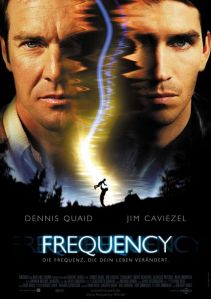 I’ll make a confession here. I could’ve been at the national premier for this but decided not to because the premise and especially the trailer put me off so much, I was being very prejudiced. Now that I bit the bullet and ponied up to see the thing I’m so ashamed for those same prejudices. Frequency is a very creative film with some rather touching father-son moments of its own. Director Gregory Hoblit has swiftly directed the film and rescues it when it has the idea of a father/son team up in two different times to track down a serial killer. What you think should veer into cheap melodrama or gimmick stays true through the course. Frequency is a light-hearted, sentimental, yet engaging and worthwhile film I’m very glad to have seen.
Nate’s Grade: B+


 nathanzoebl
You must be logged in to post a comment.