Blog Archives
Eternal Sunshine of the Spotless Mind (2004) [Review Re-View]

Originally released March 19, 2004:
No other movie this year captured the possibility of film like Michel Gondry and Charlie Kaufman’s enigmatic collaboration. Eternal Sunshine was a mind-bending philosophical excursion that also ended up being one of the most nakedly realistic romances of all time. Joel (Jim Carrey restrained) embarks on having his memories erased involving the painful breakup of Clementine (Kate Winslet, wonderful), an impulsive woman whose vibrant hair changes as much as her moods. As Joel revisits his memories, they fade and die. He starts to fall in love with her all over again and tries to have the process stop. This labyrinth of a movie gets so many details right, from the weird physics of dreams to the small, tender moments of love and relationships. I see something new and marvelous every time I watch Eternal Sunshine, and the fact that it’s caught on with audiences (it was nominated for Favorite Movie by the People’s friggin’ Choice Awards) reaffirms its insights into memory and love. I never would have thought we’d get the perfect romance for the new millennium from Kaufman. This is a beautiful, dizzingly complex, elegant romance caked in visual grandeur, and it will be just as special in 5 years as it will be in 50, that is if monkeys don’t evolve and take over by then (it will happen).
Nate’s Grade: A
——————————————————
WRITER REFLECTIONS 20 YEARS LATER

“How happy is the blameless vestal’s lot!
The world forgetting, by the world forgot:
Eternal sunshine of the spotless mind!
Each prayer accepted, and each wish resigned;”
-Alexander Pope, Eloisa to Abelard (1717)
“Go ahead and break my heart, that’s fine
So unkind
Eternal sunshine of the spotless mind
Oh, love is blind
Why am I missin’ you tonight?
Was it all a lie?”
-Kelly Clarkson, Mine (2023)
This one was always going to be special. Eternal Sunshine of the Spotless Mind is not just one of my favorite movies, it’s one of those movies that occupies the place of Important Formative Art. It’s a movie that connected with me but it’s also one that profoundly affected me and changed me, that inspired me in my own creative ventures. With its elevated place in my memory, I’ll also admit that there was some mild trepidation about returning to it and having it not measure up to the impact it had all those twenty years ago. It’s impossible to recreate that first experience or to chase after it, but you hope that the art we consider great still has resonance over time. This happened before when I revisited 2000’s Requiem for a Dream, a movie that gobsmacked me in my youth, had such innate power and fascination, and had lessened over the decades. It was still good art but it wasn’t quite the same, and there’s a little tinge of disappointment that lingers.

When I saw the movie for the first time it was at a promotional screening. I was a senior in college and had dyed my hair bright red for the second time. After marveling over my first encounter with 1999’s Run Lola Run, I was determined to have hair like the titular Lola. My parents were hesitant and set parameters, like certain grade achievements, and I met them all. Afterwards they had nothing left to quibble so I dyed my hair red, as well as other colors, my sophomore year and then again my senior year. At the screening, a publicist for the studio asked if I wanted to compete for a prize. I demurred but then she came back and asked again, and sensing something to my advantage, I accepted. It turns out the pre-show contest was a Clementine (Kate Winslet) look alike contest and my only competition was a teen girl with one light swath of blue hair. The audience voted and I won in a landslide and was given a gift basket of official Eternal Sunshine merchandise that included the CD soundtrack and a bright orange hooded sweatshirt modeled after the one Clem wears in the movie. That sweatshirt quickly became one of my favorite items of clothing, something special that nobody else had from a movie I adored. I wore it everywhere and it became a comfort and a confidence builder. Back during my initial courtship with my wife, in the winter months of 2020, she held onto the orange hoodie as a memento to wear and think of me during our time apart. She said it even smelled like me, which was a comfort. It had meaning for us, and we cherished it. I had to marry her, of course, to ensure I’d eventually get the sweatshirt back in my possession (I kid).
The lessons of Eternal Sunshine run deep for me. On the surface it’s a breakup movie about an impulsive woman, Clem, deciding to erase her memories of her now ex-boyfriend Joel (Jim Carrey). Out of spite, he elects to have the same procedure, and from there we jump in and out of Joel’s head as a subconscious avatar experiences their relationship but in reverse. It’s the bad memories, the hurt and ache of a relationship nearing or past its end, but as each memory degrades and Joel goes further into the past, he discovers that there are actually plenty of enjoyable memories through those good times, the elation and discovery, the connections and development of love, that he doesn’t want to lose. He tries to fight against the procedure but it becomes a losing battle, and so he gets to ride shotgun in his cerebellum as this woman vanishes from his life. What began out of spite and heartache ends in mourning and self-reflection.
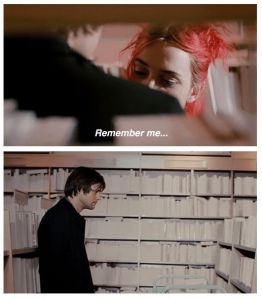
At its heart, the movie is asking us to reflect upon the importance of our personal experiences and how they shape us into the people that we are. This includes the ones that cause us pain and regret. The human experience is not one wholly given to happiness, unfortunately, but there are lessons to be had in the scars and pain of our individual pasts. I’m not saying that every point of discomfort or pain is worthwhile, as there are many victims who would say otherwise, but we are the sum total of our experiences, good and bad. With enough distance, wisdom can be gained, and perhaps those events that felt so raw and unending and terrible eventually put us on the path of becoming the person you are today. Now, of course, maybe you don’t like the person you are now, but that doesn’t mean you’re also a prisoner to your past and doomed to dwell in misery.
After my divorce from my previous wife in 2012, I wrote a sci-fi screenplay following some of the same themes from Eternal Sunshine. It was about two dueling time travelers trying to outsmart one another, one hired to ensure a romantic couple never got together and one hired to make sure that they had. The characters represented different viewpoints, one arguing that people are the total of their experiences and the other arguing people should be capable of choosing what experiences they want ultimately as formative. Naturally, through twists and turns, the one time traveler learns a lesson about “living in the now,” to stop literally living in the past and trying to correct other people’s perceived mistakes, and that our experiences, and our heartache, can be valuable in putting us into position to being the people we want or living the lives we seek. It shouldn’t be too hard to see that I was working through my own feelings with this creative venture. It got some attention within the industry and I dearly hope one day it can be made into a real movie. It’s one of my favorite stories I’ve ever written and I’m quite proud of it. It wouldn’t exist without Eternal Sunshine making its mark on me all those years ago.
It’s an amazing collaboration between director Michel Gondry and the brilliant mind of Charlie Kaufman. The whimsical, hardscrabble DIY-style of Gondry’s visuals masterfully keeps the viewer on our toes, as Joel’s memories begin vanishing and collapsing upon one another in visually inventive and memorable ways. There’s moments like Joel, after finding Clem once she’s erased her memory of him, and he storms off while row after row of lights shuts off, dooming this memory to the inky void. There’s one moment where he’s walking through a street and with every camera pan more details from the store exteriors vanish. A similar moment occurs through a store aisle where all the paperbacks become blank covers. It’s a consistent visual inventiveness to communicate the fraying memories and mind of Joel, which becomes its own playground that allows us to better understand him. The score by Jon Brion (Magnolia) is also a significant addition, constantly finding unique and chirpy sounds to provide a sense of earned melancholy. By experiencing their relationship backwards, it allows us to have a sense of discovery about the relationship. This is also aided by Kaufman’s sleight-of-hand structure, with the opening sequence misleadingly the beginning of their relationship when it’s actually their second first time meeting one another. The pointed details of relationships, both on the rise and decline, feel so achingly authentic, and the characters have more depth than they might appear on the surface. Joel is far more than a hopeless romantic. Clem is far more than some Manic Pixie Dream Girl, a term coined for 2005’s Elizabethtown. She tells Joel that she’s not some concept, she’s not here to complete his life and add excitement; she’s just a messed up girl looking for her own peace of mind and she doesn’t promise to be the answer for any wounded romantic soul.

The very end is such a unique combination of feelings. After Mary (Kirsten Dunst) discovers that she’s previously had her memories of an affair with her boss erased, she takes it upon herself to mail every client their files so that they too know the truth. Joel and Clem must suffer listening to their recorded interviews where they are viciously attacking one another, like Clem declaring Joel to be insufferably boring who puts her on edge, and Joel accuses her of using sex to get people to like her. Both are hurt by the accusations, both shake them off as being inaccurate, and yet it really is them saying these things, recorded proof about the ruination of their relationship. Would getting together be doomed to eventually repeat these same complaints? Clem walks off and Joel chases after her and tells her not to go. Teary-eyed, she warns that she’ll grow bored of him and resentful because that’s what she does, and she’ll become insufferable to him. And then Joel says, “Okay,” an acceptance that perhaps they may repeat their previous doomed path, maybe it’s inevitable, but maybe it also isn’t, and it’s worth it to try all the same. Maybe we’re not destined to repeat our same mistakes. Then it ends on a shot of our couple frolicing in the snow, the descending white beginning to blot out the screen, serving as a blank slate. It’s simultaneously a hopeful and pessimistic ending, a beautifully nuanced conclusion to a movie exploring the human condition.
Winslet received an Oscar nomination for her sprightly performance, and deservedly so, but it’s Carrey that really surprises. He had already begun to stretch his dramatic acting muscles before in the 1998 masterpiece The Truman Show and the far-from-masterpiece 2001 film The Majestic. He’s so restrained in this movie, perfectly capturing the awkwardness and passive aggressive irritability of the character, a man who views his life as too ordinary to be worth sharing. Clem begs him to share himself since she’s an open book but he’s more mercurial. She wants to get to know him better but to Joel there’s a question of whether or not he has anything worthwhile getting to know. Carrey sheds all his natural charisma to really bring this character to life. It’s one of his best performances because he’s truly devoted to playing a character, not aggressively obnoxious Method devotion like in 1999’s Man on the Moon.
Eternal Sunshine of the Spotless Mind is a messy, enlightening, profound, playful, poignant, and mesmerizing movie. A perfect collaboration between artists with unique creative perspectives. I see something new every time I watch it, and it’s already changed my life in different ways. I used to see myself as Joel when I was younger, but then I grew to see him as self-pitying and someone who too often sets himself up for failure by being too guarded and insular. It’s a reminder that our cherished relationships remain that way by allowing ourselves to be vulnerable and open. We are all capable and deserving of love.
Re-View Grade: A
Share this:

Sonic the Hedgehog 2 (2022)
 While not as enjoyable as the first outing, Sonic 2 mostly fulfills what you would be looking for with a sequel. This is the kind of kids movie that is aimed primarily for the little ones, and that’s okay, not every movie intended for children has to work on multiple levels of maturity. We follow our signature alien speedster as he meets two of the other famous faces from the video game franchise, Tails (voiced by the game’s original actress) and Knuckles (Idris Elba), except Knuckles is working with a returned Doctor Robotnik (Jim Carrey) to find a hidden gem of ultimate power. The plot is just a disposable excuse to set up some big screen adventure-seeking, and everything is kept at a very low-stakes realm of entertainment, breezy and quippy and pleading with you to just accept it on its own minor terms. At points, the Sonic sequel can feel like a direct continuation of its predecessor and Carrey is once again the MVP. I enjoyed the Knuckles character because the screenwriters have made this new alien warrior very much like the literal-minded himbo, Drax (Guardians of the Galaxy). Plus I just enjoy Elba’s natural British voice. The length of the movie is a bit padded at over two hours, a full twenty minutes longer than the 2020 original, and the attempts at heart feel strictly boilerplate and perfunctory. The subplot about a destination wedding in Hawaii feels included just to give the humans something to do away from the action, and while I enjoyed Natasha Rothwell (Insecure) getting to go full avenging bridezilla ham, this stuff could have easily been cut as much as it matters to the bigger picture of world-saving and robot-smashing. If you were a fan of the first Sonic movie, which I found to be a pleasant surprise, then you’ll likely relive those same feelings but just a little less potent. It’s still a fun, agreeable kids movie and one that can be enjoyed on that level even by adults, though the fun just might not be the same size as before.
Nate’s Grade: B-
Share this:

Sonic the Hedgehog (2020)
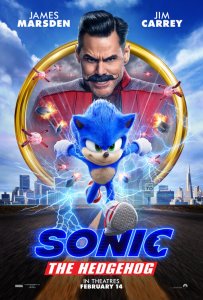 When the first footage of a live-action Sonic was unleashed, it became the Internet’s new nightmare, until the Cats trailer was released. The strange, unsettling design made the classic Sega speedster just creepy to behold, and you could count his baby teeth in his human mouth. The producers did something unheard of in response to the onslaught of negative criticism — they listened. They redesigned the character to be more akin to a familiar 3D model from the games and delayed the movie several months in order to accommodate the special effects time crunch. The new and improved Sonic the Hedgehog movie benefits immensely from this redesign, though I routinely kept imagining what the original nightmare-inducing design would look like at different points in the film (a side-by-side DVD special feature, eh?). This is a kids movie very much geared toward that audience but I was mostly charmed by the inclusion of Sonic (voiced by Ben Schwartz) into our world. He’s paired with a straight-laced small-town cop (James Marsden) and given a road trip to retrieve his portal-creating magic rings. Jim Carrey plays Dr. Robotnik, a mad scientist hired by the U.S. military to find and capture the alien responsible for the mysterious power surges. Carrey’s unrestrained, intense physical performance is a nostalgic delight for 90s kids who grew up on his rubber-faced silliness, and he often made me laugh through sheer force of personality alone. However, I appreciated that the screenplay actually shows effort. There are sly, unexpected jokes that didn’t have to be there and yet the filmmakers didn’t rest on their laurels. I enjoyed the buddy dynamic between Sonic and Marsden and the more mawkish moments didn’t make me gag. It’s not anything groundbreaking or operating on higher levels of sophistication like Pixar, but it’s a generally enjoyable and brisk experience that’s colorful, fun, and accessible to Sonic fans and non-fans alike. Perhaps this will signal a new age where studios are more beholden to the demands of a noisy fanbase, and perhaps that’s not exactly the best thing moving forward for art. But it worked in this instance. The fans won.
Nate’s Grade: B-
Share this:

The Bad Batch (2017)
 Days after viewing writer/director Ana Lily Amirpour’s The Bad Batch, I’m still contemplating what I just saw. That can be the sign of a good, thought-provoking movie, or it could be further proof that The Bad Batch is really an empty experience.
In a not-too-distant future, the United States has found a unique solution to crime. Those deemed irredeemable are tattooed with “bad batch” and abandoned into the American Southwest. It’s a dusty land of outlaws that the U.S. doesn’t even recognize. Arlen (Suki Waterhouse) is deposited into the wastes of the Southwest and she is abducted by cannibals who make a meal out of her right arm and leg. She escapes and finds Comfort, a small outpost where she can heal and find community. The makeshift leader of Comfort is The Dream (Keanu Reeves), a messianic figure who doles out free drugs to the townspeople. He also has a harem of pregnant women. Miami Man (Jason Momoa), one of the hunkier cannibals, loses his daughter and forces Arlen to help him.
 I’m going to summarize the sparse two-hour plot, dear reader, to share with you just how little there is to this film (will keep spoilers mild). Arlen gets kidnapped. She escapes. Months later she kills one of the cannibals. She quasi-adopts a little girl. Her father goes searching for her. Arlen loses the little girl. The father finds Arlen. They find the little girl who was unharmed. They eat a bunny. The end. Now admittedly any movie can sound rather flimsy when boiled down to its essential story elements (Star Wars: “Space farmer accepts call to adventure. Rescues princess.”) but the counterbalance is substance. Characters, world building, arcs, plot structure, setups and payoffs, all of it opens up the film’s story beats into a larger and transformative work. That’s simply not there with The Bad Batch. It’s a vapid film that has too much free time to fill, so you get several shots that are simply people riding motorcycles up to the camera. I grew restless waiting for something of merit to happen. Arlen simply just walks out into the desert like three different times, and this is after she was captured by roving cannibals that are still out there in healthy numbers. If you went to a store and the owner captured you and cut off your arm, would you venture back in that direction? Maybe there’s a commentary about victimhood and the cycle of abuse and exploitation, or maybe I’m left to intuit some kind of grander implication out of a filmmaker’s lack of effort. There’s just not enough here to justify its running time. It feels stretched beyond the breaking point.
If the film is meant to be about immersion, something that holds together via hypnotic Lynchian dream logic, then it better work hard to hold my attention since plot has already been abandoned. This is where The Bad Batch also lost me. It’s just not weird enough, though even weird-for-weird’s-sake can be insufferable, like Harmony Korine’s Gummo. Amirpour (A Girl Walks Home at Night) has an innate feel for visual arrangements and little quirky touches that can burn into your memory, like the sight of Arlen sidling next to a magazine clipping of a model’s arm she taped to a mirror or a well-armed pregnant militia. The most interesting elements of the story are left unattended though. This is a vague dystopia where the government has decided to let the “bad batch” fend for themselves in a desert. It screams neo-Western with a lawless land populated with criminals and killers. There are only ever two locations we visit: the cannibal’s junkyard and the outpost of Comfort. Do we know anything about these locations? Are they at war? Is there some kind of understanding between them wherein Comfort offers sacrifices for protection? Is there an uneasy peace that could be spoiled thanks to Arlen’s vengeance? It’s all just vast wasteland, but even when they get to actual places, it still feels like empty space. How can you make something about dystopian cannibals be this singularly boring?
 The characters just aren’t worth your attention and ultimately don’t matter in service of story or even a potential message. Arlen is much more of a figurehead than a person, and perhaps that’s why the director chose Waterhouse (Pride and Prejudice and Zombies) as her lead. The former model certainly makes a visually striking figure and knows how to arc her body in non-verbal ways to communicate feelings. However, I don’t know if there’s a good actress here. There’s no real reason to take away her arm and leg except that it looks cool and edgy. Initially it presents a visceral vulnerability for her and a disadvantage of escape, but after she arrives in Comfort, it’s as if she’s just any other able-bodied character. It feels like the director just liked the look and thought it would grab attention or say something meaningful. Momoa (Justice League) has a natural intimidating screen presence but he’s given so little to do. He’s just on glower autopilot. Miami Man is a killer and we watch him cook people’s limbs for some good eats. It’s almost like the movie wants you to forget this stuff when his paternal instincts kick in. Rather than embracing the light-and-dark contradictions, the movie just has him shift personality modes. There’s no confrontation or introspection. Reeves (John Wick 2) gets an idea of a potentially menacing character but even he isn’t presented as an antagonist. The Dream is living large thanks to the cooperation of those in Comfort. He has a harem of willing ladies for breeding but he doesn’t seem dastardly. He’s like the grown-up rich kid throwing the party that everyone attends. Then there are near cameos by Giovanni Ribisi, Jim Carrey, and Diego Luna, which make you wonder why they ever showed up.
The depressing part is that The Bad Batch starts off with a bang and had such potential. Amirpour is so assured early on and draws out the terror of Arlen’s plight in a gripping and satisfying manner. Her drifting is then met by a futile escape, and then we witness the relatively tasteful dismembering of our heroine. It’s disorienting but establishes the conflicts of the scene in a clear and concise fashion. The odds are against her and Arlen uses her captors underestimating her to supreme advantage. The opening twenty minutes are thrilling and well developed, presenting a capable protagonist and a dire threat. And then the movie just drops off the face of the Earth. I haven’t seen a movie self-sabotage an interesting start like this since perhaps Danny Boyle’s Sunshine. The first twenty minutes offer the audience a vantage point and set of goals. We’re learning about Arlen through her desperate and clever acts of survival. The rest of the movie is just bland wandering without any sense or urgency or purpose exhibited in that marvelous opening (hey, the amputated limbs special effects look nice).
 Vacuous and increasingly monotonous, The Bad Batch valiantly tries to create an arty mood piece where it re-purposes genre pastiche into some kind of statement on the broken human condition. Or something. The story is so thinly written and the characters are too blank to register. They’re archetypes at best, walking accessories, pristine action figures given life and camera direction. It’s flash and surface-level quirks with distressed art direction. It feels like it’s trying so hard to be a cult movie at every turn. I’m certain that, not counting Keanu’s cult leader, there might only be 100 words spoken in the entire film. I feel like The Bad Batch is going to be a favorite for plenty of young teenagers that respond to its style and general sense of rebellion. Until, that is, they discover movies can have both style and substance.
Nate’s Grade: C-
Share this:

Anchorman 2: The Legend Continues (2013)
 A lot has changed in the nine years since the raucous, instantly quotable, and deeply silly hit comedy, Anchorman. Steve Carell, Will Ferrell, and Paul Rudd have all become big stars (sorry Dave Koechner), producer Judd Apatow has become a comedy empire unto himself, and director Adam McKay has gone on to helm several other hit Ferrell collaborations. As much as I loved Anchorman, and I unabashedly do, I was nervous about a sequel capturing the same magic. While Anchorman 2: The Legend Continues cannot be as good as its predecessor; my worries were mainly unfounded because this is still the funniest movie of the year. Simply put, if you’re a fan of the original, you’ll find enough to enjoy, possibly even love, with this latest chapter. The laughs-to-minute ratio is pretty high, as long as you don’t mind some scenic detours. The plot is much looser this time with several competing storylines that come in and out of focus. There are segments that could have been cut completely, like Ron’s bout with blindness, but I laughed enough that I never minded. But that ending 15 minutes is where the filmmakers drop any pretension of reality and double down on absurdity. It’s no surprise that those last crazy 15 minutes were my favorite. The cast is universally strong together, working off one another’s comedic styles so effortlessly, but the plot is very much a kitchen sink approach. I’m happy that Ferrell and McKay, co-writers again (though it’s hard to credit a collaborative improv), didn’t feel the need to recycle many jokes from the first film, reliving their old hits for fans hungry for instant nostalgia. Anchorman 2 is the same brilliantly broad comedy and absurdist dada experiment every loyal fan was hoping for. Give the gift of Ron Burgandy this holiday season and stay classy, America.
Nate’s Grade: B+
Share this:

Kick-Ass 2 (2013)
 It’s hard for me to discuss Kick-Ass 2 without sounding like a hypocrite. I enjoyed the first film’s visceral thrills, style, and satire of superhero tropes. The sequel gives me more of the same except not nearly as well polished, and in typical sequel mentality, it goes bigger, expanding the world and the height of the sick puppy violence. Kick-Ass (Aaron Taylor-Johnson) and Hit Girl (Chloe Grace-Moritz) are trying to live ordinary lives but keep feeling the need to don their suits and fight crime. Kick-Ass joins a ragtag team of other costumed vigilantes to battle a super villain team, lead by the former Red Mist (Christopher Mintz-Plasse). For long stretches, the movie seems like an unwanted Heathers knockoff as Hit Girl attempts to fit in at high school. She has some particularly nasty vengeance against a popular bully, and if there is a line, it may have been crossed here. I don’t know what it says about me, but I guess I’m fine with a pint-sized kid slicing up bad guys and cursing like a sailor, but making a woman simultaneously vomit and defecate herself, watching both projectile streams spray out her ends, is too much for me. This is a darker, cruel, and mean-spirited feel with the material, and writer/director Jeff Wadlow fails to compensate for the lack of creativity this go-round (I miss you Matthew Vaughn). The humor is still lively, but the plot is predictable at every step, the characters behave in ways that don’t make sense, and the action sequences are poorly filmed, leading to an anticlimactic ending that simply peters out. Kick-Ass 2 won’t be knocking anyone out.
Nate’s Grade: C+
Share this:

The Incredible Burt Wonderstone (2013)
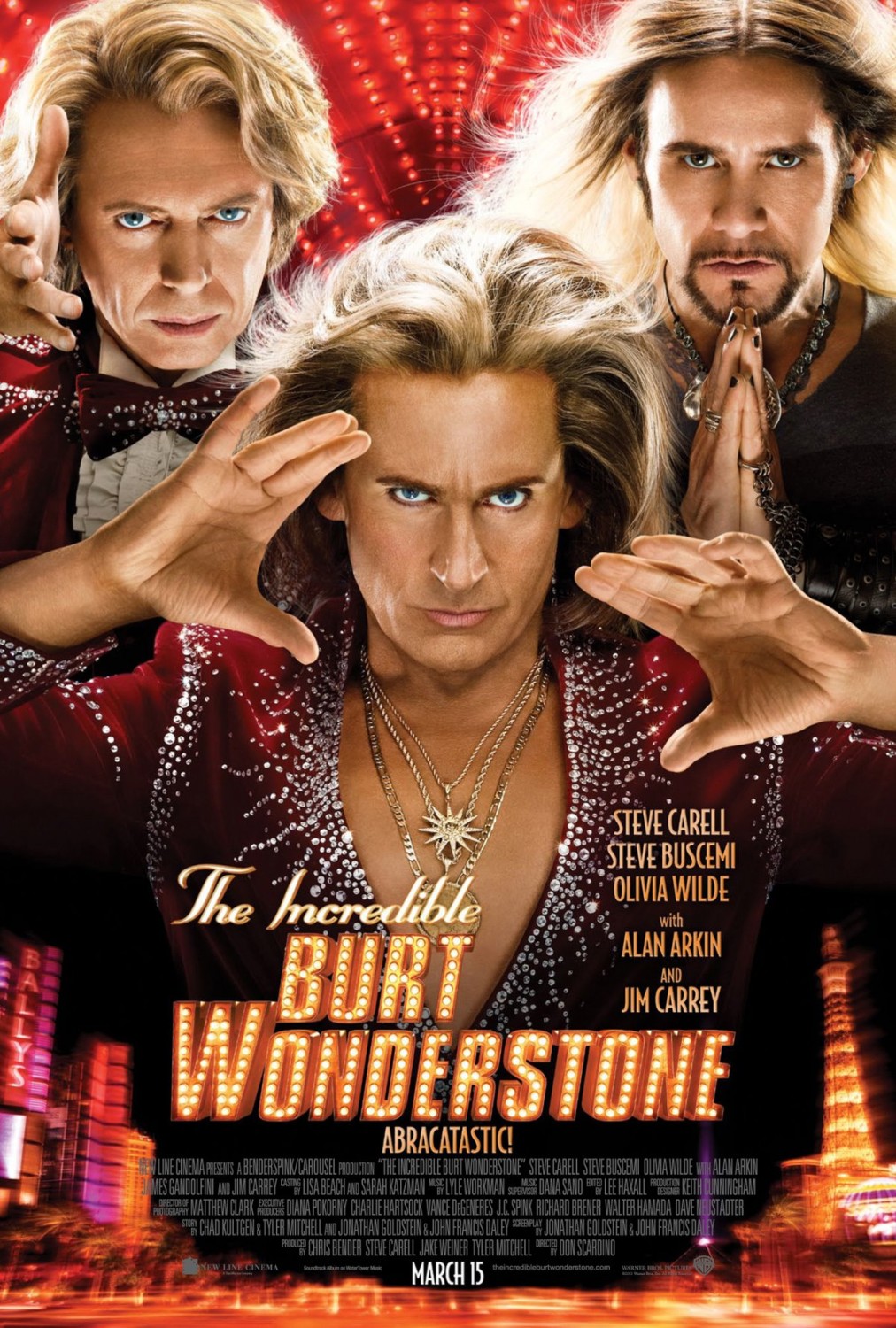 The Incredible Burt Wonderstone is a far better comedy than it has any right to be. It’s not perfect by any means, but it finds clever or darker angles to take that surprise, at least until it hits the next big marker on its jerk-learns-a-lesson plot playbook. The titular magician (Steve Carell) has a falling out with his longtime assistant and even longer-time (is this a word?) friend played by Steve Buscemi, who is disarmingly affable and warm. Their Vegas act is old hat in the face of younger, hipper, and more danger-seeking magicians, notably the Chris Angel-styled Steve Gray (Jim Carrey). While only a supporting character, Carrey’s bits onscreen are easily the best thing he’s done in a decade, comedy-wise. His physical comedy finds a perfect outlet. Gray’s schtick is more Jackass than David Copperfield, and the movie does well to explore this division and why people gravitate to magic in the first place. It’s ultimately a sweet film about the bonds of friendship, with Carell and Buscemi taking the bulk of the running time, and while it has plenty of silliness there’s also sincerity there. It all builds up to a great climax and a conclusion that left me laughing so hard I was in stitches. Make sure to stay through the credits. The Incredible Burt Wonderstone, from the writing team behind Horrible Bosses, is a charmingly broad comedy that has enough heart, committed comedic performances, takes enough clever turns to justify a viewing.
Nate’s Grade: B
Share this:

A Christmas Carol (2009)
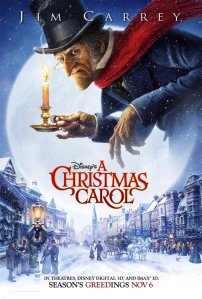 I still am at a loss over the appeal of the motion-capture system that director Robert Zemeckis fancies as of late. The creative mind that gave us classics Back to the Future and Who Framed Roger Rabbit? has embraced a technology that straddles the middle between live-action and outright animation. Motion-capture attaches electronic nodes to actors and digitizes their movements and facial features to later be conceptualized by computer wizards. And to this I say… so what? It seems like a whole slew of unnecessary work that adds little else than a vague starting point. Why not let the animators start from scratch? Why hamstrung creative professionals because Cary Elwes was feeling like making a certain gesture as “Portly Gentlemen #1?” I just don’t get it. To me, the motion-capture system is stranded in some artistic netherworld where it isn’t live-action and it isn’t animation. Zemeckis has cranked out his third mo-cap baby this decade, a retelling of Charles Dickens’ famous Christmas Carol. Why Zemeckis thought an old holiday chestnut would work best in this format, I’ll never know.
Cold-hearted Scrooge (Jim Carrey) is set to be visited by three spirits on a very magical Christmas Eve. The old man goes through Christmas past, present, and future to reevaluate his life and the true meaning of “peace on earth and good will toward men.” You know the drill, folks.
I like A Christmas Carol. I do. So do plenty of nice people. There’s a reason this oft-told tale still manages to resonate with generation after generation and that?s because it’s a good story. Of course it’s also an extremely familiar story to just about anyone outside of a womb at the moment. I expected Zemeckis and his crew to use their technology to jazz up the old story and give it a fresh new life on the big screen. Despite a handful of excursions flying through ye olde London, the extra slathering of special effects doesn’t enliven this holiday tale. I remember having great fun with Zemeckis’ previous motion-capture movie, 2007’s Beowulf (which does not play nearly as well in 2-D). That movie played around with the 3-D environment to great effect and made you feel apart of the experience. In contrast, A Christmas Carol does shockingly little with its depth of field, rarely placing distance between the foreground and the background. It’s a fairly lackluster 3-D experience. Maybe I wasn’t relaxing my eyes the right way, though I did notice how conscious I was of trying to elevate the 3-D experience myself. My disappointment is magnified by the fact that Zemeckis has been a pioneer for the 3-D playbook that Hollywood has now dubbed as the savior of the theater going experience.
 I wonder if Disney execs imposed limitations on the use of the 3-D immersion, not wanting to scare children by making them feel like they’re in the middle of a ghost story (there are some spooky moments already). The whole draw of motion-capture, and animation, is to transport an audience untethered by the limits of traditional practical filmmaking. This newest incarnation of A Christmas Carol fails to justify its existence. Why should I pay to see the most familiar story of modern day if there isn’t any new offering? At least The Muppet Christmas Carol gave me something different. And it had Muppets.
When I was younger in the mid 90s I was a huge fan of Carrey’s rubber-faced antics. I quoted Ace Ventura verbatim with my fellow seventh graders in 1995. So I understand the attraction of having him play multiple parts, but why exactly in a Dickens story? It’s not a comedy unless it’s adapted into one, and Zemeckis hews very close to Dickens and mostly recites the tale word-for-word. Scrooge isn’t funny, the ghosts aren’t funny, so why hire a renowned comedian to portray them all? This is a straight-laced adaptation and as such not the best use for Carrey’s talents. Is the move any better because Carey played all three ghosts? Is the movie any better because Gary Oldman gets to play Bob Cratchett and voice Tiny Tim? Is the movie any better because Elwes is credited for five inconsequential roles? Celebrity vocal casting is rarely effective in animation and so it seems the same in motion-capture.
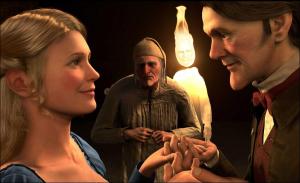 The technology has improved from the dead-eyed zombie children days of Polar Express, but it still seems like little more than less refined animation to my eyes. The movements are more fluid but the color palate is subdued into amber hues and candlelit locales. It doesn’t exactly use all the technological tools in the toolbox. It’s like a five-star chef toasting a Pop Tart: a waste of potential. I didn’t care for the skewed proportions on people either. Scrooge has a wiry frame with long spidery limbs and a triangular torso, and his character design kept reminding me of Jack Skellington. It’s too otherworldly considering nobody else comes across as a garish caricature in design form. The character designs for the three spirits are also fairly underwhelming. The Ghost of Christmas Past is a wispy flame. The Ghost of Christmas Future is nothing but a shadow. Is there a connection here? Otherwise, a shadow is pretty lame for the one ghost that can get really inventive and scary. Really, a shadow? I can do that myself without the aid of computers. And was it Carrey’s shadow to make it officially motion-capture? Because God forbid no other shadow could do or give the same performance of being draped over shapes.
I actually had to vehemently fight the urge to nap during A Christmas Carol. Maybe it was my poor sleep from the night before, maybe it was the fact that the 3-D glasses make everything darker (they still manage to hurt my eyes after prolonged use), but it was likely due to the fact that Zemeckis added a coat of polish to a holiday classic but declined to find purpose for doing so. Does this story get better with zooms through London, or Scrooge being shrunk and chased by demonic horses? It all seems like folly to me, like somebody’s idea to goose literary classics. Can you imagine Jane Eyre being shrunk and climbing through the walls of her Victorian era home? It all seems like an annoying distraction. Zemeckis? A Christmas Carol is exactly what you’d expect, which means you’d be just as well to flip through the TV channels and find any number of Christmas Carol versions. The Muppet Christmas Carol might even be on. Give that one a try instead. It even has some nice songs. And it’s got Muppets.
Nate’s Grade: C
Share this:

The Number 23 (2007)
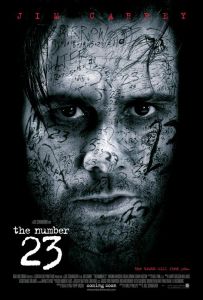 “Nobody likes you when you’re 23.”
-“What’s My Age Again?” by Blink 182
I know math scores have been systematically dropping with America’s youth, but have we gotten to the point where numbers themselves are scary? The Number 23 is a thriller built around the spookiness of a digit greater than 22 but a little less than 24. Does anyone have nightmares about walking down an empty hall only to have the number 23 pounce from the shadows and scream, “Boo?”
Walter Sparrow (Jim Carrey) is a dogcatcher that gets bit on the job. This event causes him to be late for a scheduled birthday rendezvous with his wife Agatha (Virginia Madsen). She wanders into a local bookshop and picks up a worn, self-published book called The Number 23 as a present for her hubby. The book seems to be littered with private details from Walter’s life and he’s left dumbfounded. The main character is haunted by the number 23, which seems to be everywhere and nowhere. Walter starts to see the number dominate his life and fears that he too will fall victim to its control. Walter is also worried that his life will start mimicking that of the book, including the part where he goes psycho and kills his loved ones.
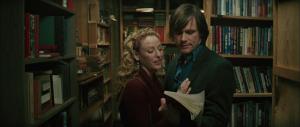 The film spends the majority of its time on two obsessions: the book and the number 23. Now, the number conspiracy is just ludicrous and silly, and it contorts and strains to prove its message. In the flick, someone will scream about some important date in, say, 1940, and then go theorize that it has eerie significance because 19+4+0 equals, tada, 23. But why not 1+9+4+0, or 19+40, or even 1+940? Because then it doesn’t work. Sometimes you take the date, sometimes you add up the numbers in the month, sometimes you need to add up the numbers in the month and the year, sometimes you add and then multiply and then divide numbers (like the contrived manner of making the word “pink” part of this theory); the point is that it’s all arbitrary and worthless. You could go through the same convoluted dance with any number. The same effect happens with cold readings where a “psychic” will spout some vague declaration (“I feel like someone with an ‘R’ in their name died in the last five years”) and rely on the sucker, in this case the audience, to imbue it with some personal meaning (“Oh my God, there was a guy on my street named Rick that died four years ago!”). And all of this relies on the assumption of accurate record keeping for time.
Being haunted by a reappearing number is just dumb, but reading a mysterious book that depicts your own life and predicts you will become a murderer, now that’s interesting. I wish The Number 23 had spent more time with this idea instead of the numerical nonsense. I wanted more questions and contemplation about a book that knows all instead of a number that people bend over backwards to locate in their daily lives. And yet, even this storyline needed a metaphysical jolt. The conclusion follows the most boring, tame, and predictable route that can be best explained. The second half of The Number 23 needed to be more Stephen King and less James Patterson. The psychological aspects of this conundrum are barely explored before the movie seems to lose interest even with its own brand of hokum. Debut screenwriter Fernley Phillips takes the path of least resistance to the finish line.
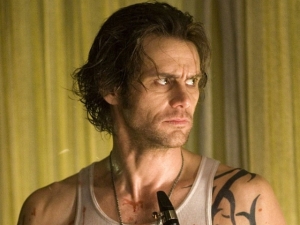 There are some leaps in logic and character motivation throughout. The Number 23 has a strange moral reminder, namely that of a dog that saw something bad and has convinced its doggy self to do something about it, which means spontaneously appearing all over town like a nagging ghost. It is just another plot point that goes too far and breaks credibility, especially since The Number 23 wants to be remotely plausible. Another example is a murder victim who berates her would-be killer while he holds a knife to her throat. She says, among other things, that he’s a freak, she never loved him, and then the final dagger is aimed straight at some long-suffering daddy issues. I doubt anyone picks “knife to throat” as the time to unload their personal grievances. The dialogue also suffers from being so serious to the point of hilarity: “Is 23 a blessing or a curse?” What? Huh?
Director Joel Schumacher (Phonebooth) seems to be having a fun time getting his hands dirty with the material. He can get carried away, and sometimes he uses a sledgehammer when he should have used a slight tap to establish mood. Still, this is one film that you cannot blame the oft-reviled director for ruining. He attempts to goose up this psychological thriller with some persuasive visuals, but all the tricks can’t hide the fact that The Number 23 needs a lot more bite to come across as edgy. It’s too plodding to be disturbing; it’s mostly dank.
Carrey seems an ill choice for this material. Dark brooding doesn’t come natural for America’s foremost manic funnyman; he has some dramatic skills, Eternal Sunshine of the Spotless Mind and a spot-on Andy Kaufman are proof of that, but this isn’t drama, it’s serviceable, gussied-up trash and Carrey doesn’t have the reservoir to show us the dark depths of the human soul. It is somewhat comforting to see Madsen getting more roles since her 2004 Oscar nomination, but she seems to be parlaying that nom into a permanent slot as “wife to lead.” She at least gets to vamp it up in the story within a story as a raven-haired femme fatale.
Even with the preposterous killer number thing, this is a movie with remarkable guilty pleasure potential upside. It’s equal parts interesting and frustrating, and builds a good head of steam before totally unraveling in the last act. The Number 23 is a psychological thriller that just needed better focus with its own obsessions.
Nate’s Grade: C
Share this:

Fun with Dick and Jane (2005)
 This feels like two movies battling for control and neither of them are good. Jim Carrey is horribly miscast and the film goes off the rails whenever it veers into his face-contorting slapstick. The corporate satire bits have more bite but fall short of even being on the same playing field as an off-day on The Daily Show. The end credits thanks big companies like Enron and WorldCom for making this film possible, but Fun with Dick and Jane hasn’t earned that ending gripe. This film is a sadly unfunny mess that deserves to be let go. Maybe we should outsource our comedy next time.
Nate’s Grade: C-


 nathanzoebl
You must be logged in to post a comment.