Blog Archives
A Working Man (2025)
 You can see the reasoning behind a movie like A Working Man. It’s based on a series of popular novels by Chuck Dixon, and it looks like a spiritual sequel to 2024’s The Beekeeper, with the same director and star and roughly the same formula of bad man comes out of retirement to enact extreme vengeance on bad people. While The Beekeeper was entertaining mostly for its incredulity and becoming a self-parody of these kinds of loner action vehicles, A Working Man just feels like any other mediocre genre entry that populates the realm of lower-budget direct-to-streaming action. Jason Statham stars once again as a man of the people, a construction foreman, who also happens to be an ex-Royal Marine. The daughter of a friend is abducted for sex trafficking, or taken if you will, and Statham has to use his particular set of skills to crush some skulls and save the girl. I’m struggling to remember much of this movie because there’s nothing that truly stands out. It goes about its business with a pre-programmed utility, delivering Statham to a new bad guy every ten minutes or so as he works his way up the scuzzy ladder of bad men in bad suits. I guess that might be something memorable, one of the bad guys has an exquisitely bad suit, enough that others even question and comment. There aren’t any memorable villains or exchanges or even action sequences. It’s all so rote and mechanical and so easily forgettable. There’s nothing here worth spending almost two hours for, and there’s certainly little here to get anyone excited for a possible franchise of Statham being a faux working man striking back for the little guy.
Nate’s Grade: C
Share this:

The Beekeeper (2024)

The Beekeeper is a ridiculous action thriller that begs for incredulous laughter but this proves to be the movie’s real appeal. Jason Statham plays a retired black ops soldier whose call sign was Beekeeper, and who belonged to the secret group known as the Beekeepers, which would be really hard to differentiate agents, and then in his retirement, he literally keeps bees. Imagine a secret spy agency known as The Window Washers, and then their top operative decides to work in retirement as a window washer (or a Grave Digger who digs graves etc.). This on-its-head literalness is part of the silly entertainment value of the movie, along with Statham continuing to make bee-related quips no matter the scenario, which just makes him seem crazy or mentally trapped in a different movie, a more satirical version that the rest of the actual movie cannot support. There are many scenes that are one wink away from self-parody, like the FBI agents on the trail and one of them starts reading up on bee science as a means of better understanding this elusive man. What sets Statham off on his journey of bee-themed vengeance is when his kindly neighbor gets her life savings stolen from online hackers who are treated like Jordan Belfort of The Wolf of Wall Street. The old lady takes her own life, and from there Statham is blowing up office buildings, cracking heads, and at one point literally becomes a national terrorist. If you stop and think about the actual implications, The Beekeeper starts to feel like madness personified. As a revenge-thriller, it still works on the simple satisfying structure of watching bad guys get their comeuppance. It can be enjoyed as an effective B-movie (or… hear me out, a “Bee-Movie”?) that hits its genre marks, but as an unintended comedy and self-parody of the stupidity of so many direct-to-DVD action titles, this is where The Beekeeper is at its buzz-buzz-best.
Nate’s Grade: C+
Share this:

The Meg 2:The Trench (2023)
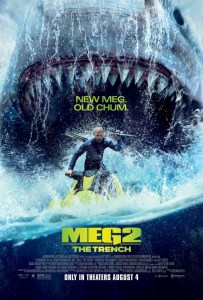 It’s Jason Statham riding a Jet ski and literally jousting giant sharks, so the fault should be on me expecting something more from The Meg 2, right? I wished there was more of this kind of gonzo schlocky action, moments like Statham kicking a guy into the mouth of a killer shark and saying, “So long, chum.” Too much of this movie is setting up an ensemble of characters that are boring and not Jason Statham, including villainous turncoats that I kept forgetting who they were. There are also small-sized dinosaurs but other characters just chase them down to shoot them. I was mostly fine with the first Meg movie as dumb fun, and this one seems to be going for the vibe of a bigger-budget Asylum/Sci-Fi Channel schlockbuster, the kind of movie with a “Sharktopus” or “Mega Shark” in its outlandish title. Unfortunately, the movie doesn’t seem to accomplish even that aim. I wish the movie had been even more crazy but it feels like, for whatever misplaced idea of tone, that the filmmakers held back. Next time just have Statham psychically linked to the shark and fighting dinosaurs and own it.
Nate’s Grade: C
Share this:

Wrath of Man (2021)
 Wrath of Man is the least Guy Ritchie movie of Guy Ritchie’s career. It’s a crime movie, yes, and based upon a 2004 French film, but it’s absent his trademark big colorful Cockney personalities, ironic coincidences and upheavals, and broad slapstick violence. It has some narrative shuffling on board, as you can’t have a Ritchie heist movie where he’s not cross cutting between characters explaining the steps of the heist and enact it simultaneously, but Wrath of Man has far more in common with a lean, stripped down crime thriller like Heat than Snatch or Lock, Stock, and Two Smoking Barrels. Even a fun caper like 2015’s Man from U.N.C.L.E. felt like a clear distillation of his signature style into a new mod studio setting. This movie doesn’t feel like a Guy Ritchie movie. There is style, sure, but it’s far more gritty and less self-consciously flashy. It’s a solid vengeance tale, a pulpy though confusingly structured B-movie, a crime story with a message about anticlimax, and a sign that Ritchie can restrain himself when his film project calls for it.
In an opening scene, we watch an armored truck robbed and both drivers are executed. The repercussions of this will echo throughout the story. H (Jason Statham, reuniting with Ritchie for the first time since 2005’s Revolver) is a new hire for that same armored truck company, escorting large sums of money. He and his partner, Bullet (Holt McCallany), are held hostage by armed thieves and H methodically dispatches them, killing them all. Who is this man? He’s someone trying to find the culprits behind the opening robbery for his own personal reasons of vengeance, and that means setting up tantalizing traps for would-be robbers and working his way across Los Angeles to determine who is going to feel his manly wrath.
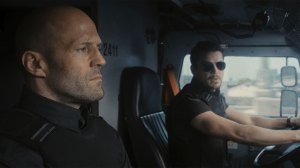 This is a darker and more somber vengeance movie where the violence has more weight to it. Everything feels heavier in Wrath of God. Even though this is strict B-movie territory, Ritchie does a commendable job of making the violence feel real and dangerous. It’s not cartoonish. There are recognizable genre moments, like too-cool interrogations, but this feels closer to a version of our own world where violence isn’t cool but awful. That may sound like the opposite of a recommendation, and I can hear someone say, “Why would I want THAT in my Jason Statham thriller?” Fair point, but the visceral nature of this depiction of crime makes the thrills feel more earned and less fleeting. The musical score by Christopher Benstead (The Gentlemen) is heavy dread personified for the entire two-hour running time. I was surprised how involved I found myself getting as the movie progressed, and during a climactic shootout I was feeling palpable nervous tension. I didn’t know who was exactly going to make it out alive, but I also wanted the “bad guys” to be taken down, but I was uncertain whether any of this would happen. Wrath of Man is an efficiently calibrated thriller when the action heats up. It doesn’t do anything special but what it does is build its moments with compounding dread. You’re waiting for bad things to happen, and you should expect bad things to happen, but you don’t quite know if they’ll happen to characters you like or don’t like, and that pumps up suspense. I was honestly surprised how invested I was during that shootout despite the limitations of characters as genre placeholders. The action and confrontations are chilly and ruthlessly efficient.
It’s the structure that’s the real villain here. I’m exaggerating a bit but there are significant structural curve balls that attempt to make Wrath of Man more unpredictable and I think take away from its overall impact and coherency. We see the opening robbery from three eventual perspectives, the drivers inside the truck, the perpetrators, and the bystander victims. We’re also shifting perspectives from chapter to chapter, but I’m not certain that all this fancy narrative shuffling is actually worth the strained effort. I’ll agree it keeps things unpredictable, but any movie where beginnings and middles are rearranged would achieve that same effect. Our first segment presents a mystery, but then it’s answered immediately in the next segment. The third segment answers another mystery, and it’s here where I started feeling like these answers weren’t quite worth the efforts to get there. There’s a notable anticlimactic design to much of the reveals, and while I believe it has ripe thematic purpose (more on that later), it also removes degrees of satisfaction that you can take from the movie. When you find out who H really is, you’ll be like, “Oh. Okay.” And from there he seems like an unkillable superhero. And when you find out who is responsible for the opening robbery, you’ll likely be like, “Oh. Okay.”
 The problem is that these answers aren’t nearly as satisfying because the people are so one-dimensional. The gang involved in the robbery, and responsible for H’s tragedy, are just one-note dudes and with a super obvious liability they keep on their team that takes away from their so-called professionalism. By taking characters in and out for long portions of the movie, we can lose track of meaningful supporting characters but also it limits the dramatic appeal. If we knew who hit that robbery early, and how they’re reacting, we might feel more conflict when they come head-to-head again with H in the climax. Or we might be better off simply not knowing them at all for as much time as they are given. Getting such shrift characterization, and with an obvious psychopath on board, feels like a half-hearted shrug. Likewise, knowing H’s tragic back-story later into the movie doesn’t really produce much more than had the movie opened with that information. It feels like Ritchie and company have recognized the limitations of their mystery and rearranged the pieces just to provide some extra questions for an audience to grapple with longer. I enjoyed early on discovering just how capable H was, and I enjoyed how the movie doesn’t pretend the obvious isn’t apparent (“Your shooting was… unambiguously precise”). However, this is Jason Statham, so we already know he’s going to be more than capable on the job.
I wanted to talk about the emptiness of the movie, and I don’t mean this as a pejorative assessment but in the themes. It’s about greed and pride and vengeance and, ultimately, it’s about how little any of these motivating factors add up. This is a gloomy movie about bad people, each with a reported reason for doing the bad things that they do. There’s been a million “crime doesn’t pay” messages in movies, but this is one of the few where I felt the futility of it all. By the conclusion, as innocent people are being killed by not-so-innocent people, and then they are just as easily dispatched by even less innocent people, I kept thinking of Marge Gunderson’s inability to reconcile criminal behavior during the end of the brilliant movie Fargo: “And all for a little bit of money? There’s more to life than money, ya know?” I don’t think it’s a spoiler to say that H does get his vengeance at long last in the movie’s resolution, but by that point I felt like it didn’t even matter. Sure I still wanted the antagonist to be toppled, but after such mayhem and such loss of life, and all for a little bit of money, the anticlimactic nature of the ending felt purposely designed. The movie has been leading up to this moment and yet when it comes, it’s not quite what we would have hoped. That intentional emptiness is meant to convey the hollow nature of vengeance as well as a nihilistic approach to crime movies. It kind of works but also it works because the movie didn’t do much work making this antagonist memorable or multi-dimensional so that I could relish his eventual smiting. It feels, in some ways, like the grimy B-movie equivalent of Matt Damon getting clipped at the end of The Departed (spoilers?).
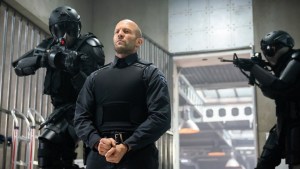 Wrath of Man is a solid vengeance thriller with some heavier themes and some weightier violence, but it’s still a movie where Jason Statham cleans shop. It’s still going to scratch those very basic demands but I applaud it for trying to be a little something more. It succeeds in some areas, like tone and theme and thrills, and doesn’t so much in others, like the non-linear narrative and too many one-dimensional characters. Ritchie demonstrates some artistic growth taking just a few fateful steps outside his cocksure and gaudy signature style. I would welcome more Ritchie signature movies akin to Snatch, but I would also welcome more well-oiled thrillers where Ritchie sublimates his style for the good of the story and mood. Either way, I’d just be happier with more good Guy Ritchie movies (and a sequel to The Man from U.N.C.L.E., please).
Nate’s Grade: B
Share this:

Fast and Furious Presents: Hobbs & Shaw (2019)
 It took nine movies but we can now put the Fast and Furious franchise to rest, and that’s because we now have Hobbs & Shaw, the spinoff that took the best parts of the franchise and ran away. What started as a film about underground street racing in 2001 has morphed into an over-the-top superhero spectacle where their superhuman power is being really good with cars, as well as not adhering to any laws of physics. Now they’ve cordoned off The Rock and Jason Statham, attached the director of Atomic Blonde and give me Idris Elba as the villain, who openly proclaims himself to be “black Superman.” Why do we ever need to go back to Vin Diesel and his pit crew ever again? Hobbs & Shaw is a big blast of action overkill fun. It’s not without its flaws and limitations but it’s exactly what it set out to be.
Agent Hobbs (Dwayne Johnson) is trying to enjoy some rest and relaxation with his daughter but the world isn’t going to be save itself. He’s recruited to team up with the wily Deckard Shaw (Statham) to recover a missing sample of a super virus that can be programmed to kill anyone on the planet. The key is finding MIA MI6 agent Hattie (Vanessa Kirby), accused of killing her team and absconding with the virus. She also happens to be Shaw’s estranged sister. The real villain is a super mercenary Brixton (Elba) who is engineered to be a superior killing machine. His mysterious employer wants to recruit Hobbs and Shaw to the cause, but in the event of their refusal, death is always an option. The Shaw family reunion makes the majority of the movie a three-person chase film that ultimately pushes Hobbs to go back home to the Samoan family he left behind decades ago and they haven’t forgotten their prodigal son.
 Once again, the main draw of a Fast and Furious movie are the eye-popping action set pieces, and Hobbs & Shaw has its fair share of excitement and satisfaction. There are a couple standouts, notably a climactic helicopter face-off involving a chain of racing vehicles and the concept of lift, but really none of the action will displace the top moments from this increasingly insane franchise. Director David Leitch (Deadpool 2) doesn’t have any signature moments that stun like that extended, fatigued fight sequence in Atomic Blonde, but he definitely taps into the moment-to-moment fun and absurdity. A chase down the side of a building is not remotely realistic, but with Leitch there’s an added sense of comedy by making it another contest between Hobbs and Shaw. That macho posturing can liven up an already enjoyable scene and give it a personal edge that ties into the charisma of the stars. So even when the action is cooking at a lower level, focusing on that charisma elevates the sequence. The action pumps at a constant pace with plenty of explosions, tumbles, and powerful fists. The movie follows the latter Fast and Furious mold by not even trying to resemble reality. When Brixton’s super hands-free motorcycle acts more like a living Transformer, it doesn’t matter because the movie isn’t building a reality where something like that would seem like an exaggeration. I laughed more at moments like that and smiled rather than scoffing at its disconnect from crafting some kind of baseline sense of reality.
I will say the action beats could be shaved down, especially as the movie teeters to 135 minutes long. It’s not exactly the kind of action cinema like Mission: Impossible where the set pieces are so brilliantly constructed with organic complications. These aren’t quite at the level of spectacle or immersion of a Fury Road or even the Justin Lin-era of Furious land. There are few sequences that couldn’t be pared down because often the beats are the same beats just with more of them. I wished there had been a greater variety of action sequences or at least an interesting series of complications, the lifeblood of great action movies. There are a few standout moments with larger-than-life imagery but mostly the action has a very same-y quality that can feel repetitive. That’s where the comedic perspectives can help. A hallway fight is enjoyable but lacks impressive fight choreography, but what saves the scene is the comedic exasperation at the end for Shaw and again tying it to the ongoing competition with Hobbs.
 Beyond the explosive action, the real draw is the cast and they are overloaded with charisma. There’s a reason somebody at Universal decided to slice off these two characters because they are clearly the only characters many people ever cared about, because both actors have an innate charm that pops off the screen. Watching the two of them butt heads and trade insults and glares is an ongoing pleasure. It reminds one how big personalities can effortlessly carry big Hollywood action movies when you have the right stars together. They do form their own sort of combative bond and understanding by the end, but one wonders if their banter will get old if it doesn’t evolve over the inevitably commissioned assembly of sequels. The Rock and Statham get some big laughs and hearty entertainment squaring off and working together for even bigger destructive power.
Kirby (Mission: Impossible – Fallout) is a terrific addition as a strong-willed, kickass heroine first and a potential love interest for Hobbs second, which amusingly upsets Shaw. Kirby has an above-it-all air to her that makes her seem like a natural match as a sister to Statham. Elba (Molly’s Game) is settling into a groove as a go-to heavy (Star Trek Beyond, The Jungle Book) and even while threatening a global pandemic he can’t help but be smooth and charming. This is the best cast ever assembled for a Fast and Furious movie, and you throw in unexpected comedy cameos, Helen Mirren, and an extended Samoan family, and the movie begins to stake out its own claims on a world separate from Diesel’s boring “family.”
 Hobbs & Shaw is a combination of 80s action movie attitude, 90s bombast, and 2010s outrageous set pieces, lead by two of the more charming men Hollywood has at its punching-kicking disposal. That’s actually a pretty good word, “disposal,” because the movie is designed as nothing more than a breezy two hours at the movies with your biggest tub of popcorn. Of course the studio has larger plans and envisions it as a way to keep the Fast and Furious franchise alive and diversified. Hobbs & Shaw has little more on its mind than giving its audience a good time, and it easily achieves that aim. I may not feel the need to watch Fast and Furious movies again like I do other action franchises that provide more emotional investment, practical stuntwork, and structural brilliance, but that doesn’t mean I won’t happily consume the next entry. As long as The Rock and Statham are in place and feeling good, so too will the eventual audience.
Nate’s Grade: B
Share this:

The Meg (2018)

Ever since Steven Spielberg’s Jaws cemented the concept of a Hollywood blockbuster, sharks have been synonymous with the summer movie season. Just last year a small-scale indie thriller, 47 Meters Down, was a breakout hit with a planned sequel on the way (they ignored my obviously brilliant suggestion of naming it 48 Meters Down, thus proving each additional entry would move the depths a measurable increment of peril). People love them some killer shark movies and the bigger the better. Well it doesn’t get much bigger than The Meg, a movie with a monstrous prehistoric Megalodon shark approaching 75 feet long (that’s one half of 47 Meters Down, if you think about it). The Meg has enough awareness, payoffs, and fun to stay afloat and be a better B-movie.
Deep under the Mariana Trench, a team of deep-sea scientists has discovered a new habitat previously cut off by man. From here emerges the Megalodon, a ferocious predator that has no earthly competition. The team seeks out the help of Jonas Taylor (Jason Statham), a one-man rescue squad who had a run-in with The Meg in his tragic past. The science team must rescue its trapped members, track and evaluate the shark, and prevent the ancient beast from feasting on the locals in the South China Sea.

This is a big stupid shark movie about a big stupid shark, and The Meg provides enough fun to at least warrant one trip out into the water. It’s a monster movie that follows a well-worn formula of discovery, containment, escalation, and then all-out large-scale disaster. I appreciated that the succession of events followed enough of a logistical cause/effect relationship that allows the audience to better suspend disbelief and stay within the movie’s agreeable wavelength of campy thrills. This is the kind of movie that introduces a family of whales only to mercilessly kill them off screen as passing shark food. It’s the kind of movie that knows we want to watch Statham punch sharks in the face. There’s genuinely more shark action than I was expecting and the action sequences have been given consideration to maximize their popcorn thrills. I am used to recent shark movies that hinge on the threat of the shark as an aquatic Boogeyman, on the peripheral and always threatening to return. With The Meg, once the shark is loose it’s a constant presence and persistent problem. There is one moment where our hero has to shoot a tracking device into its dorsal fin. He has to get close while also not disturbing the water and calling attention to himself. It’s a well-engineered and developed suspense sequence that takes advantage of the fun possibilities at play. There are more moments like this that exemplify a degree of thinking and development than sloppy, slapdash CGI mayhem.
This is a major co-production with China and it’s easy to tell. It’s a $130 million Hollywood hybrid with an inclusive cast, global danger, and the havoc wrought on the human population this time are Chinese beach dwellers running in panic. The co-lead is Chinese star Bingbing Li (Transformers: Age of Extinction) who is set up by literally every character to be the romantic interest to the dashing Statham. Even the man’s ex-wife is on the same mission, trying to hook these two up. Statham banging this single mom is the key to bridging these two market forces together, apparently.
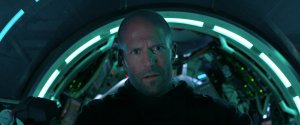
Speaking of the man in question, Statham (The Fate and the Furious) is dependable and irony-proof no matter the absurd film scenario. He provides the audience a reliable anchor amidst the genre silliness, plus gratuitous shirtless beefcake shots. He can say the most ridiculous lines of dialogue with a straight face and make you believe it. He’s also great with children. Some of his best moments are his interactions with little Meiying (Shuya Sophia Cai), the young daughter of Li’s character. Statham is so charming and natural around children, and he’s able to coax instant chemistry with a child actor. Why hasn’t somebody given Statham a Rock-style family vehicle where he acts alongside a precocious group of kids? What if he’s an over-the-hill action star helping a group of kids make their own amateur movie? What if he’s an ex-special forces agent-turned-birthday party magician trying to fish out a hidden target? What if he’s a retired movie star trying to coach a pair of kids how to get their parents back together? I never knew I wanted this.
There’s enough of a knowing awareness that let me know the filmmakers understood the goofy kind of movie they were making. It’s not exactly turning to the camera and winking but it feels like it’s nodding at you, asking you to play along. This is exemplified in Rainn Wilson’s (TV’s The Office) character Morris, the outspoken billionaire who founded the whole science station. He’s general comic relief in a movie about a giant shark because The Meg doesn’t treat the shark as comic. After discovering the creature, the science team is ready to take things slowly and cautiously, and Morris flatly screams that we have no time for slow here. When Jonas jumps into the water to take on the shark, it’s Morris exclaiming how awesome it is. The best example is when one of the lead scientists takes a moment to bemoan the overreach of science in a “what have we done?” speech, and Morris just throws up his hands and walks away grumbling, disinterested in listening to any self-serious yammering. Morris kept amusing me because we were repeatedly alike in our commentary and requests for this film experience.

Even with scaled-down expectations, The Meg is still a monster movie that probably needed to be campier or more frightening to be a better movie (I gave the same diagnosis to Krampus). It’s a fun film that understands what a genre audience wants, though it could have pushed further and found ways to subvert those expectations or given us more mayhem. This isn’t a tiresome so-bad-it’s-good-but-it’s-still-bad genre wankfest like the tacky Sharknado movies. It’s also not the delightful, campy, gory B-movie that is Deep Blue Sea. It’s a monster movie that has a sense of amusement and doesn’t waste time pretending to be too serious even when the professorial characters are given to lament. It achieves a middle zone that satisfies enough of your cravings but not fully hitting them.
Not quite as enjoyably dumb as the earlier Rampage, The Meg is still a relatively silly, splashy monster movie with solid thrills, action development, and a good sense of what its core audience demands and how to go about fulfilling that promise. Statham and company plow ahead through the genre shenanigans and make it out the other end bloody yet unscathed. My biggest criticism is that I wanted more; more camp, more carnage, more knowing nods, the kind I got in abundance in last year’s gloriously entertaining Kong: Skull Island. It gave me enough of a tantalizing preview of the better movie it could have become. Still, The Meg is a slice of summer escapism that gave me enough thrills, laughs, and satisfaction to leave me wanting more but mostly content with what I ultimately got.
Nate’s Grade: B-
Share this:

The Fate of the Furious (2017)
 I’ve written before that all I demand from the ever-ascendant and popular Fast and Furious franchise are its eye-popping action set pieces that teeter into madcap lunacy and impressive stunt work. A fiery meteor could crush all the characters, short of The Rock, and I wouldn’t shed a tear. Despite the super serious plaudits about the importance of family and loyalty and blah blah blah, I’m only here for the action spectacle that obliterates the laws of physics. I’ve said before there’s a fine line between stupid action and stupidly awesome action, and the Fast and Furious franchise has planted its flag like few others. Nobody today goes to the level of action spectacle that the Fast and Furious films achieve, bringing to life exciting action set pieces that feel fully plucked from the imagination of an exuberant child, and I don’t mean that at all disparagingly. These movies deliver like few others nowadays. We’re a long way from undercover cops and underground street racing. Vin Diesel and his team are essentially superheroes and their power involves doing amazing things with cars. I’m not a gearhead, I don’t care a lick about automobiles, but I’ve come to eagerly anticipate this franchise. It delivers ridiculous action on a ridiculous scale like few others. It’s earned my confidence. The Fate of the Furious, the eighth film, still delivers the high-octane goods even if it can’t quite keep up with the best of the franchise’s entries.
Dom (Diesel) has been preaching the virtues of family for years but now he’s turning his back on them. The notorious cyber terrorist Cipher (Charlize Theron) extorts Dom into helping her get her hands on nuclear codes. Dom’s crew (The Rock, Michelle Rodriguez, Ludacris, Tyrese Gibson, Nathalie Emmanuel) is wondering whether the man they know is still there. Government agent M. Nobody (Kurt Russell) reassembles the team to track down Dom, and they’re working with some unexpected help. Deckard Shaw (Jason Statham) has been released from maximum-security prison to thwart Cipher.
 This is a franchise that soared to new heights of commercial success after it left behind its inhibitions of the imagination. It’s a franchise that lives or dies depending upon its giddy action set pieces. As I wrote about Furious 7: “The set pieces of the last few films have been stunners, and at its height, the franchise can make you feel giddy like a child watching the unreal unfold with such delight. There’s a tremendous and infectious high watching a well-executed action scene on such a large scale. With every movie our expectations are hungrier, and the franchise has found a way to satiate our action movie demands.” Fortunately for the eighth film, there are two standout action set pieces that are some of the stronger ones in the history of the franchise. The first is a car chase through New York (though filmed primarily in Cleveland) that builds and changes as it continues, an essential element for any great action sequence to stretch forward. At one point Cipher takes control of an armada of hackable, self-driving cars and pilots them as a collective weapon of mass destruction. They resemble a herd of runaway bulls. The destructive fleet leads to some impressive sights such as a bevy of cars plummeting from a parking garage. It’s a strong sequence that also finds room for the other characters to try and take down Dom, and it allows Dom the ability to outsmart them, adding the personal element. The other standout is the entire third act set around the Arctic Circle in Russia that climaxes with the dizzying heights of a nuclear sub chase and The Rock manually redirecting a speeding torpedo. There are multiple points of action and mini-goals that lead logically to the next, allowing escalation to mount. It’s dangerously over-the-top even for this franchise and it’s generally awesome and I loved it.
Eight movies in and Fast and Furious is really becoming an expansive ensemble series. The core team has been picking up players here and there with each additional movie, building its diverse definition of a diverse family. This is getting to be a crowded film and there’s just not enough room to go around for everyone to contribute meaningfully, which means it’s more likely from here on out, unless there is some judicial pruning, that characters stay religiously archetypal. Ludacris is the tech guru, but isn’t Emmanuel now also the tech guru, or does she only specialize in the tech subgroup of hacking? Why do I need Scott Eastwood (The Longest Ride) to join the gang as the awkward rookie trying to look cool? Isn’t that a milder version of what Tyrese Gibson offers as the comic relief bravado? Admittedly, I only started really paying attention to this franchise once it added The Rock, but I’m still unsure what Rodriguez brings to the dynamic beside history and romance. This general sense of the characters settling into their expected roles is exemplified in the in-car banter and one-liners. It appears often that they’re just talking to themselves for these lines. I could do with far less Tyrese reaction shots and Rodriguez one-liners. Theron is also generally wasted as the new villain du jour. She’s got the icy glare down and looks to be having fun, but she’s not given anything interesting to do. Without going into greater spoilers, I will say that Dom’s heel turn is wrapped up by the end of its 135-minute running time. No need to turn it into a multi-film arc.
 Paul Walker’s character is understandably absent and I’d hate for them to bring him back after the very sweet and surprisingly poignant sendoff at the end of Furious 7, but he does still exist in this universe. I can agree with characters not wanting to get him involved in their dangerous missions across the globe, but at the end when they’re all dining as one big family, wouldn’t they also invite Dom’s sister, brother-in-law, and their children too? It gets into the Avengers territory where you start wondering why the Avengers haven’t assembled for the world-destroying threats from their respective solo film adventures.
The best post-Rock addition to the franchise has easily been Statham (Spy) and he proves it with his limited but highly entertaining time on screen. His appearances were a fun disruption in the previous film and he served as the most formidable villain. Reintegrating him onto the team was a smart move because he adds charisma, unpredictability, and a new dynamic that also seeds conflict. It was also smart because more Statham means including hand-to-hand combat action sequences that can involve a higher degree of stunt choreography, even if the former Transporter is starting to show his age. His scenes with The Rock were a natural highlight. However, adding Deckard onto the team to tackle a bigger baddie presents some weird questions. By the film’s end, everyone seems rather chummy with the man who straight up murdered their friend Han (Sung Kang). Sorry dude but it seems like everyone is rather relaxed with your murderer and big government having unlimited and regulation-free surveillance powers. My advice to future Fast and Furious installments, and there will be various, is to try and include as much Statham as possible (it’s essentially a repeat of The Rock Rule).
Where the movie has rougher terrain is in the area of drama and comedy. Look, nobody is going to confuse the Fast and the Furious films as great works of human drama. Director F. Gary Gray (The Italian Job, Straight Outta Compton) takes over for James Wan (The Conjuring) who took over for Justin Lin (Star Trek Beyond), and the discrepancy is noticeable. While having two excellent set pieces that place highly along the big board of the franchise, they’re not as well shot. Gray’s command of visuals is more than adequate but lacks the sizzle and vision of his predecessors. Wan was able to adopt the house style of the franchise and deliver a satisfying though lesser experience (Lin is king). Gray has a harder time with the material. The CGI approaches cartoon levels at points and Gray doesn’t better maintain tone. He doesn’t know when to pull back, which is unusually exemplified in the comedy asides. Everything that gets a laugh will be repeated until it becomes somewhat annoying, in particular a scene with Statham and a baby. It begins fun and cheeky, and Statham even uses the baby carriage as part of the fight choreography, but then it overstays its welcome like the other comedy bits. The dramatic moments are also far too overwrought, even for this franchise. It can be a bit much.
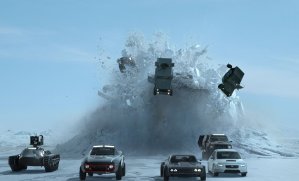 This is a franchise that revels in the ridiculous, that embraces being a big dumb action movie in the best way, delivering imaginative and often eye-popping action that deserves the full big screen treatment. Fate of the Furious falls somewhere in the middle of the franchise from a quality standpoint. It’s not as good as seven, which wasn’t as good as six, which wasn’t as good as five, but it’s still good enough. It’s definitely lesser and the new director doesn’t have the same natural feel for the preposterous as previous directors, and even after eight films I’m still mostly indifferent about the far majority of the characters on screen. As I’ve written before, though, thankfully the movie has the good sense to know what the audience is paying to see. It’s here for the fast cars, eye-popping stunts, and gratuitously framed camera angles highlighting women’s derrieres (I think there’s a contractual law that a close-up of booty shorts must make a grand entrance in the opening minutes of every film). Fate of the Furious is just enough of what I want from the franchise, though it’s getting harder to keep up with every new movie. Furious 9 and 10 are already in the works, and it’s only a matter of time before we get Fast and Furious in Space. It’s getting further and further removed from a sense of reality but as long as it keeps up with incrementally raised expectations and employs enough charming actors to compensate for Diesel’s enormous lack of charisma, then they’ll keep fans like me happy in the short run.
Nate’s Grade: B
Share this:

Spy (2015)
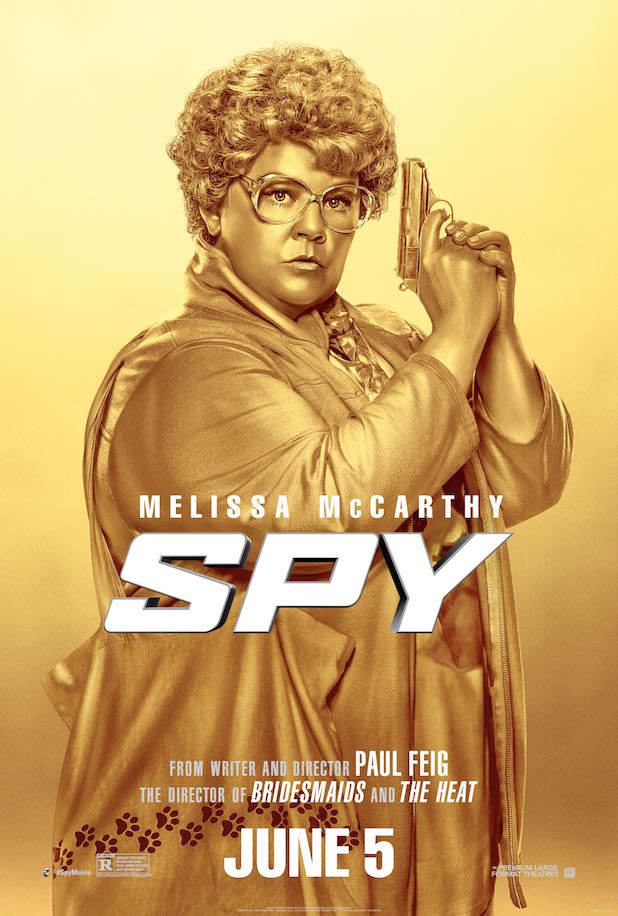 Melissa McCarthy’s meteoric comedic rise hasn’t been without its missteps, mainly the complaint that she seems stuck in a rut playing aggressively weird and foul-mouthed characters that are growing tiresome. McCarthy is never better than when teamed with her Bridesmaids’ director Paul Feig, and Spy is a welcomed return to form for a great comic actress who relishes being outlandish. The best part of the film is that it’s a character-centric comedy, with McCarthy as Susan Cooper, a CIA agent who works as a handler, the voice on the other end of the earpiece, guiding her partner the handsome Agent Bradley Fine (Jude Law). When Fine is compromised on a mission, Susan unexpectedly finds herself in the field to track down some very bad people. McCarthy does get to be vulgar, but fortunately it’s only one persona she adopts as a mask, and it’s cleverly utilized. Feig’s screenplay makes sure to find different comic beats as it goes, rarely repeating itself and, like any good action movie, finding twists to further develop conflicts. Part of what’s so enjoyable about Spy is how comic scenarios will evolve while staying true to the characters and the central conflict. Also, Feig acquits himself more than well with the film’s semi-slick action photography. The supporting cast is nicely tied into the story and matter and each actor has material to cut loose, none more than Jason Statham (The Expendables) as a hilariously boastful and incredulous agent. His boisterous chest-beating about his past deeds are some of the film’s funniest moments. Consistently funny, witty, and mildly progressive with its heroine, Spy is a vehicle that makes perfect use of McCarthy’s talents and then some.
Nate’s Grade: B+
Share this:

Furious 7 (2015)
 The Fast and the Furious series has never been more popular, which is crazy to think about for a franchise entering is sixth sequel. Then in November 2013, it suffered its biggest shock. Actor Paul Walker was killed in an automobile accident. The already-filming seventh film was put on hold, pushed back a year for release, and retooled to accommodate the new tragic reality that one of the core members of a popular series going back to 2001 was no longer walking this Earth. With this context, it’s hard not to apply an added level of gravitas and dramatic weight to a series that previously skirted by on its fun and outrageous stunts. It’s weird to watch an actor’s final filmed moments, knowing this is the last time you’ll see that face, hear that voice, on screen again. I’m already dreading that painful realization in November that, with Mockingjay Part 2, this will be the last cinema will see of Phillip Seymour Hoffman. With tragedy hanging over it, Furious 7 does an admirable job of sticking to what it does best while serving as a fitting tribute and sendoff for Walker.
Coming on the heels of the events of Furious 6, Dom (Vin Diesel) and his crew have dispatched Owen Shaw (Luke Evans, collecting a paycheck for one scene lying in bed). Shaw has an older brother, Deckard (Jason Statham), who swears vengeance and comes hunting after Dom’s team, killing Han in Toyko (events previously seen in 2006’s Tokyo Drift). Then Shaw hobbles Agent Hobbes (The Rock), leaving him sidelined for much of the movie. Dom and Brian (Walker) place their families in safety and then set off to eliminate Deckard Shaw. Little did they know that the government has a similar interest. Mr. Nobody (Kurt Russell) promises to help Dom in his quest if Dom agrees to a secret mission to rescue a computer hacker (Game of Thrones’ Nathalie Emmanuel). This hacker, codenamed “Ramses” has developed a device that taps into every camera and microphone on the planet to track anyone anywhere. If Dom can secure the device, Mr. Nobody will use it to track and take down Deckard Shaw.
 What elevated the Fast and Furious films into new heights of critical and commercial acclaim are the over-the-top action set pieces that don’t just defy the laws of physics, they obliterate them. There’s a fine line between stupid action and stupidly awesome action, and I think Michael Bay is still trying to finesse this understanding. Under the guidance of director Justin Lin, the franchise got bigger and ballsier and enjoyably insane. The action set pieces were huge and wild and well developed with organic complications and world-class stunt driving. The set pieces of the last few films have been stunners, and at its height, the franchise can make you feel giddy like a child watching the unreal unfold with such delight. There’s a tremendous and infectious high watching a well-executed action scene on such a large scale. With every movie our expectations are hungrier, and the franchise has found a way to satiate our action movie demands (for my money, Fast Five is the best). Furious 7 is the first Fast film not directed by Lin in ten years. James Wan, best known as the director of horror films Saw and The Conjuring, stepped into the director’s chair and he assimilates well into the “house style” of the franchise. However, I found myself missing Lin’s touches; he has a natural feel for choreographing action sequences with style and a clear eye for orientation. I found the editing for Furious 7 too choppy and several action sequences hampered by not getting a better sense of the wider surroundings and what was happening. Wan acquits himself well and keeps things running smoothly, though Furious 7 is a slight step down but still plenty entertaining.
Let’s talk about those giddy highs of Furious 7, because they are certainly there, though I wish there was more of them. Am I just getting greedy or building a tolerance? There are two standout moments that made me squeal. The first involved a set piece involving cars parachuting out of a transport plane. The next was a car crashing through the window of an Abu Dhabi skyscraper into another skyscraper and then into another skyscraper. Your brain tells you that there are no way any of these moments could truly happen in reality, and that in these circumstances it’s majority CGI, but if you’re like me, you just do not care because the sheer scale of awesome is too enjoyable to pass up. When you can pull off large-scale and imaginative action that manages to also maintain a strong sense of fun, then you’ve landed upon something special. The previous Fast films have been able to maintain that giddy high for a more sustained period of time, but I cannot deny that the same thrills and over-the-top pleasure is present with Furious 7.
A factor that added to my enjoyment is that Furious 7 never dawdles or dwells too often during its 137-minute running time, save for an extended resolution for Walker. This has never really been a franchise that has soared on the strength of its characterization. Seven movies in, I still don’t really care for any of the characters except for The Rock and that’s mostly because he’s The Rock. I was happy that the film was always active to distract me from how one-dimensional and boring most of these characters are, even the villains. Statham (The Expendables) is the best villain the franchise has had so far but even he seems to be stuck in a lesser gear, failing to capitalize on all his abilities with a car chase franchise. The Rock vs. Statham fight shatters all breakable furniture within near proximity, but you still suspect it should be better given the participants. Djimon Hounsou (Guardians of the Galaxy) is wasted as a number two villain who mostly just shouts orders for people to fire weapons, and martial arts superstar Tony Jaa is definitely wasted as a number three villain, an elevated henchman with too few opportunities to bust a move. MMA fighter Ronda Rousey appears briefly as an Abu Dhabi security chief. She performs well, pummeling Michelle Rodriguez while in evening wear; however, you quickly realize that Rousey is not an actor. She’s no Gina Carano (Fast and Furious 6), and speaking of, when is this woman going to finally be cast as a super hero? She’s practically a living Wonder Woman anyway and she has that “it” factor.
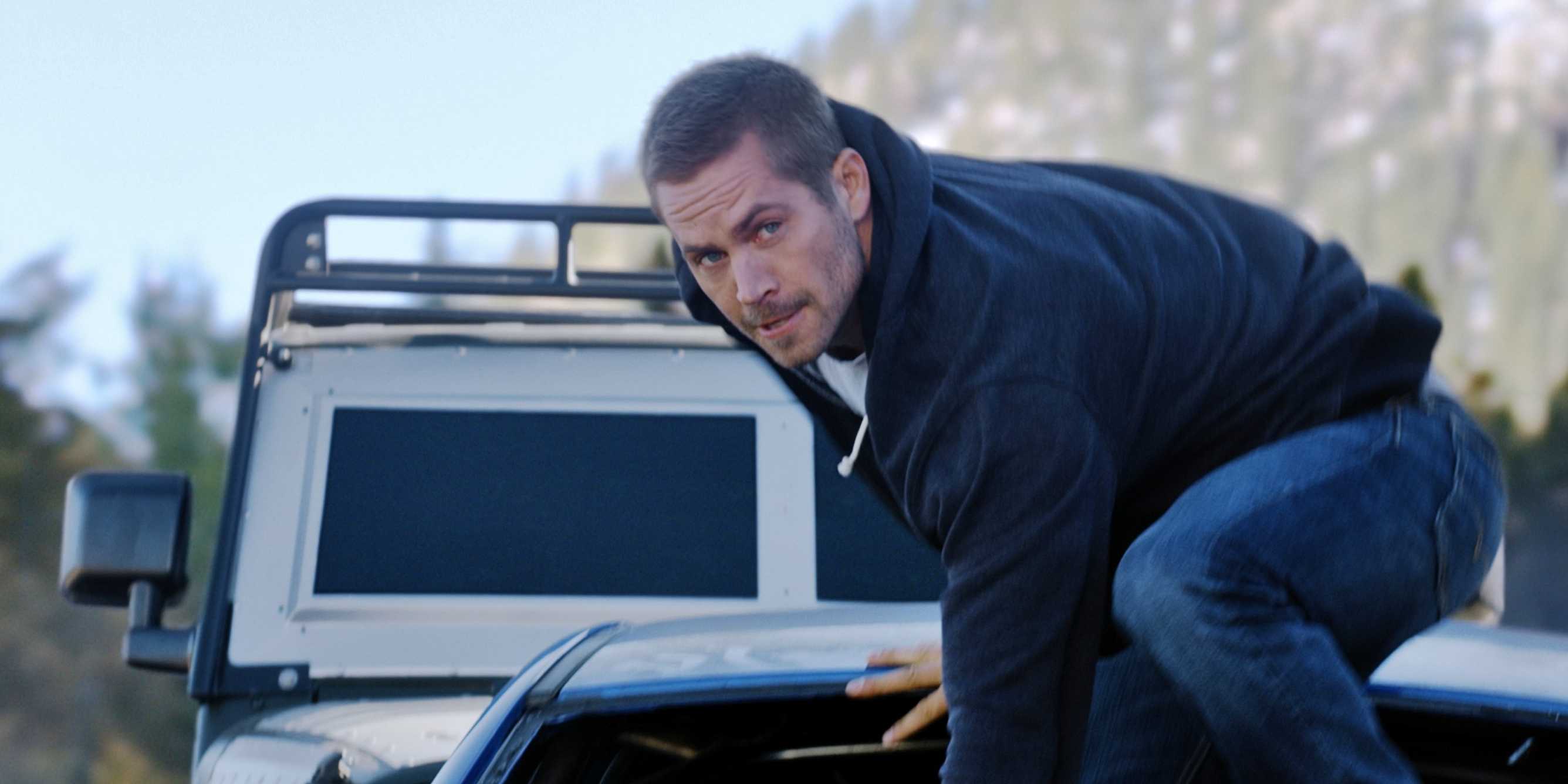 When the movie tries to be dramatic, it starts to stall, which is probably why it relies mostly on platitudes about family (“I don’t got friends, I got family,” Dom says in a weird retort). Jordanna Brewster is once again written to the side as the Concerned Wife, and the movie still doesn’t seem to know what to do with the re-emergence of Rodriguez’s Letty character. She got her memory back in the previous film, but now she’s having trouble readjusting, but before this can develop into an actual plot she disappears again and then the big action just kicks in. There’s enough of a team built up to provide diversity, with Ludacris and Tyrese Gibson serving as comic backup. There’s a sense of camaraderie that doesn’t feel artificial, and the small moments together are perfectly nice, but thankfully the movie has the good sense to know what the audience is paying to see. It’s here for the fast car, eye-popping stunts, and gratuitously framed camera angles highlighting women’s derrieres (there are a lot of thongs in this movie).
With the specter of Walker’s passing, the movie also presents a ghoulish game of looking for the tricks to work around his untimely absence. Reportedly the actor had filmed “most” of the movie and the remaining scenes, retooled after months of production being on hiatus, were completed by Walker’s brothers and some CGI sleight-of-hand. Perhaps I just have a more trained eye for spotting the cinematic wizardry, but by my judgment it sure didn’t feel like Walker was present for most of what was eventually used in the movie. I noticed a lot of wider shots and scenes where Walker is not facing the camera to speak or he’s at an odd angle. At no point did the movie become a strange uncanny valley experience of discomfort; movie productions have digitally attached faces before to other heads, notably for Oliver Reed in 2000’s Gladiator. If you’re not looking for it intently then it will all pass seamlessly. The film’s final ten minutes end up becoming an extended sendoff for the character of Brian, but really it’s the actors saying goodbye to their friend. It’s reverent and respectful and might be the most honestly emotional moment in the series history, which I know isn’t saying exactly much.
I mentioned Phillip Seymour Hoffman in my opening paragraph, and I don’t think anyone is going to confuse Walker for Hoffman in terms of acting talent, but that doesn’t negate or mitigate loss and grief. Personal confession: when I was writing for my college newspaper, I interviewed Walker over the phone for 2003’s Timeline, which if you haven’t seen it, and I’m assuming that’s the majority of readers, is a terrible movie. I’m not going to pretend I had any terrific insight into the man, but I found him to be a good guy with a level head who hadn’t let fame get the better of him. One could argue that the character of Brian was not significant enough in the context of a big, dumb action franchise to deserve this sort of emotional catharsis, but loss is felt, and Furious 7 has two missions: to entertain and to memorialize Walker. While the action as a whole is not up to the same caliber, it’s still plenty engaging and has enough of its characteristically dizzy thrills to be memorable and worth seeing on a large screen. On the second count, it lets Walker race off into the sunset in a way that feels appropriate, sincere, and without tipping over into complete melodrama. In that regard, this is the Fast and Furious movie that had the most to accomplish and it succeeds. It’s a near certainty that there will be a Fast and Furious 8, or a Furious 8, or a Fast 8, or whatever you call it, but for now it’s a chance to take a breath and add a dose of reflection for a series normally about the ridiculous.
Nate’s Grade: B
Share this:

The Expendables 2 (2012)
 The Expendables was a surprise hit two years ago. Sylvester Stallone collected an all-star team of aging AARP action stars and they kicked ass, took names, and didn’t apologize. It was a fitfully amusing throwback to the burly, macho action movies of the 1980s and the early 90s, a time where many of these men were kings. The nostalgia trip worked box-office magic for Stallone. A sequel was commissioned and these men of action were put back to work. There was already preliminary talk about the possible stars that could sign up for a third Expendables (Nicolas Cage and Clint Eastwood are on a wish list). Maybe people should see The Expendables 2 before getting too excited plotting out the future of this franchise. This is not a good movie even by Stallone’s standards.
Barney Ross (Stallone) is back with the best team money can hire. No, not the A-Team, the Expendables. There are also the preposterously named team members Lee Christmas (Jason Statham), Ying Yang (Jet Li), Gunner Jensen (Dolph Lundgren), Toll Road (Randy Couture), and Hale Caesar (Terry Crews). The over-the-hill gang also has some new blood, namely Bill(y) the Kid (The Hunger Games’ Liam Hemsworth). The gang runs afoul with Vilain (Jean Claude Van Damme), a terrorist mining for plutonium to sell to the highest bidder. Barney swears to thwart Vilain and calls in help from other living action legends like Chuck Norris, Bruce Willis, and Arnold Schwarzenegger.
 What made the first Expendables enjoyable, at least for sustainable spurts, was its over-the-top nature comingled with a lack of irony. The movie felt often like a satire of the genre but you knew that Stallone was never winking at the camera. Stallone was never in on the joke. That changes with The Expendables 2, which often resorts to self-aware humor to poke fun at itself. This approach simply does not work. There’s an entire sequence where Chuck Norris even makes a Chuck Norris Internet joke, merging reality with irony. The bad guys are lousy shots and the good guys are the world’s greatest marksmen, but I don’t even know if this is intentionally self-aware or just par for the genre. Having Arnold repeat other people’s famous one-liners and quips (“Who’s next? Rambo?”) are not funny. The self-awareness never rises to the level of commentary or intentional satire, like say the underrated Last Action Hero. It’s just the same mindless violence but with the slightest of nods, the bare minimum to say, “Hey, we get it.” Except the movie feels shackled to this flawed approach and often the action fails to gestate into something larger than old guys shoot guns and make occasional wisecracks. The action sequences are really disappointing here. Little attention is given to geography, short of a climax set amidst an abandoned airport. I kept hoping for more of the gonzo, hyperbolic touches that the first film had in abundance. The best ridiculous moments this go-round are Van Damme roundhouse kicking a knife into a guy’s heart, and the piece de résistance, Norris shooting a guy onto an airport security conveyer belt where we then see the body full of lead on the x-ray machine.
Most of the Expendables teammates simply have nothing to do. Granted with a large cast the ratios of screen time are not going to be equal across the board, but I’d expect that Stallone and crew would at least give these people some reason to exist in the plot. Jet Li vanishes after the twenty minute mark and never returns. There’s truly no reason that Randy Couture and the great Terry Crews couldn’t have been Guy #5 and Guy #6. Lundgren is setup to be a chemistry genius, and then when trapped inside a mine, it looks like he’s about to utilize his chemistry knowledge to save the day. Nope. Then why would you even set this ability up if you weren’t going to do anything? Even Statham is pretty mitigated and he’s the number two guy. If you’re going to have a team-oriented action movie, then make use of the team and their unique skills. Part of the joy of these kinds of movies is watching the crew work together, like in The Avengers. With this film, we just get rapid-fire shots of the good guys shooting the bad guys, sometimes separately, sometimes together. It gets boring plenty quick.
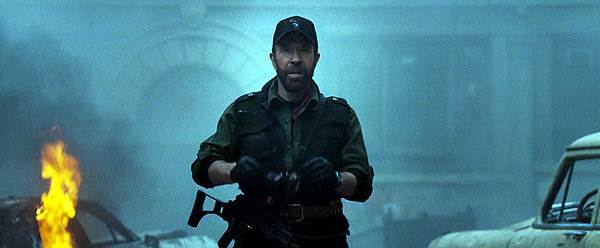 The plot is fairly bare-bones even more an action movie. It’s a rote revenge movie where Stallone and the boys are out to get Van Dame after he killed one of their guys (the only expendable Expendable, it seems). The plot never gets much more complicated than that. The gang encounters a group of terrorized villagers who want to rescue their husbands from Van Damme’s forced labor. Our bad guy even has a name that is a single letter away from spelling “villain” in case you needed the help. You know how he’s one evil man? He wears his sunglasses at all times even underground inside a mine. Of course this may also be a stylistic choice to hide Van Damme’s horribly Botoxed face. The Muscles from Brussels is actually the second best actor in the movie (Crews easily remains the best), good enough that I wouldn’t mind seeing the older Van Damme in more movies. Sadly his big showdown with Stallone is pretty short, with Van Damme resorting to the same roundhouse kicks before being subdued.
Stallone sat out the director’s chair and instead Simon West (The Mechanic ) takes the reins. I suppose this freed up Stallone to… focus more attention on the script? Emoting more? The visuals are fairly muddy and lack the polish of West’s other hyperactive action movies like Con Air. The opening assault sequence, where Barney and the Expendables roll through an enemy compound, literally busting through walls, is the visual highpoint for the movie. I credit the filmmakers for sticking with the R-rating and not toning down their violence. It would seem like hypocrisy to have a movie about a bunch of crusty old-timers lamenting how soft the world has gotten and then wuss out to a bloodless PG-13 rating. At least this wrecking crew doesn’t hold back when it comes to their specialty: mayhem.
The Expendables 2 should have been more than just Stallone and his peers patting themselves on the back. I’m glad Willis and Schwarzenegger graduated from cameos to supporting roles, but I wish the movie just had something for these men of action to do. There’s far too much repetition with its action, which becomes a formless montage of people shooting guns in slightly varying locations. The self-aware humor kills the development of the action and it’s simply not funny enough. It’s the kind of sad humor of old men trying to still look hip, like they’re in on the joke. Hey, they can make fun of themselves too. It’s just not a fun movie. There are only so many tried wisecracks you can endure, only so much redundant action, plotless excess, and crowbarred cameos. The Expendables 2 takes the little merits of the first film and completely loses touch, all to try and make a joke. In the end, the real joke is still on Stallone and the filmmakers. They wanted to make a movie that knew it was stupid. Instead they just made a stupid movie.
Nate’s Grade: C-


 nathanzoebl
You must be logged in to post a comment.