Blog Archives
Rise of the Planet of the Apes (2011)
 I owe the makers behind Rise of the Planet of the Apes a huge apology. I have been vocally dismissive of a new Apes film from the first moments I heard about the project. I just thought rehashing this material was a stupid move. Then I heard James Franco (127 Hours) was going to be the lead, and I sighed. Then I saw the trailers and verbally impugned them in my theaters. Upon the conclusion of the trailer I yelled, “You can still shoot them!” and my criticism drew applause from those around me. The concept that we suddenly made apes smarter and they could now enter the Bronze Age, brandishing spears, didn’t overwhelm me. Just because the apes suddenly had tools didn’t seem like enough to topple mankind from the top of the evolutionary ladder. So in the months and weeks ahead I sneer, jeered, and overall dismissed Rise of the Planet of the Apes. And then the reviews came out and they weren’t just good, they were ecstatic. I went begrudgingly into the theater, waiting to hurl my own feces at the screen (figuratively, of course). Then I was completely taken aback by how much I unabashedly loved it.
Will Rodman (Franco) is a young scientists working hard at create a miracle cure for Alzheimer’s. His corporate company has been testing their drugs on chimps to mixed results. One day a promising ape, made smarter by a dose of ALZ 112, goes bananas and is put down by security. The lady ape left behind a baby ape that has taken on traits from the ALZ 112. Will takes the little chimp home to care for the “company property.” But then he ends up adopting the chimp, which his ailing father (John Lithgow) names Caesar. Due to the super drug, Caesar shows remarkable intelligence and looks to be getting even stronger. It looks like Will might have found his cure, and his boss (David Oyelowo) will make billions. But then complications ensue, as they always do, and Caesar is taken to an animal preserve facility run by a crooked father/son team (Brian Cox and Harry Potter’s Tom Felton). Caesar is mistreated and distraught to adjust to a life in pens. He makes plans to escape but then decides to rally his fellow imprisoned apes to a greater cause with the help of some of the ALZ 112.
Even through Franco is the headliner he’s really nothing more than a supporting character, a catalyst. The real star of the movie is undoubtedly Caesar the chimp. After about he 45-minute mark, Franco is reduced to making frowny faces while he scowls, trying to ascertain where his favorite monkey is. His dialogue is mostly reduced to different iterations of yelling Caesar’s name in different locations (the guy even manages to smirk in his sleep in one scene). But the major surprise is that Caesar is not only a compelling leading character but also a well-developed one at that. This is a living, breathing character brought to life thanks to top-notch computer wizardry and the talents of Andy Serkis, the leading authority for soulful motion-capture performances. Caesar may be the greatest single special effect of all time, not because of its life-like quality (it’s close, but again the creature’s features seem too waxy). But the reason Caesar is so impressive is because of the depth of emotion that can be read onscreen. This is a textured performance where you can read varying emotions through the looks of eyes, the twitching of facial muscles, the biting of lips. The emotions are genuinely recognizable; he flashes guilt, anger, frustration, heartache, disbelief, betrayal, fear, shame, just about everything in the book. From a DNA standpoint, chimps and humans share 96 percent of the same genes, so it’s understandable that we can relate to the plight of our distant relatives. Serkis is responsible for providing the groundwork for CGI creations like Gollum and King Kong, so he’s the world’s go-to guy when it comes to providing a framework for animators (Robert Zemeckis, why have you never called this guy?). It’s an amazing special effect accomplishment and works side-by-side with the storytelling to make Caesar a complicated, interesting, and deeply empathetic hero. He’s a terrific center for the movie and a figure that you root for, even with the tacit understanding that cheering on the apes’ escape is also tantamount to cheering the decline of the human race. But by God, during the apes-run-amok climactic sequences you are cheering for mankind’s downfall hardcore.
The Planet of the Apes saga (six films) is, let’s be honest here, rather abysmal. Everybody loves the first movie but the quality sharply drops from there, with four sequels in four years each managing to answer the depressing question, “Can this thing really get any worse?” The 2001 Tim Burton “re-imagining” was just embarrassing and filled with loopy logic (how can the apes take over Earth’s past when Marky Mark crashes on a DIFFERENT planet in the FUTURE?). Given that, the filmmakers behind Rise of the Planet of the Apes did not have to achieve much to separate themselves from the monkey-stank of the sci-fi franchise. The film serves as a prequel to the series but it’s easily the best film since the original. Easily. For one, the storytelling is not overwhelmed by the allegory of sci-fi packaging. The world is decidedly our own and the problems the characters grapple with are fairly relatable. Will may be responsible for the annihilation of the human race but his motivation is pure – he wants to save his ailing father. That’s a believable motivating force that would push the character to action over caution, testing his special serum without fully examining all the side effects. You know what they say about the road to Hell (my friend Eric Muller always suspected Franco would be linked to the end of civilization)? But in a Planet of the Apes movie there is a wealth of thoughtful human drama. Animal rights are one of the more obvious messages the movie deals with, but the film takes a character-driven approach following the animal himself. You care about these characters and when one CGI ape was cradling a dying CGI ape, I swear I was getting choked up over those computer pixels. That’s how emotionally involving this new Apes film can be. It’s refreshing to have a Hollywood action film that has more on its mind than blowing stuff up all good like.
 But when the action shapes up, mostly during a stirring man vs. apes climax, the film easily delivers. The nimble screenplay by Rick Jaffa and Amanda Silver (their first film since 1997’s Relic!) is a terrific example of economical big-budget pacing. Every scene moves the story forward and doesn’t waste a frame. The final running time is only 105 brisk minutes but it squeezes in so much entertainment and emotion. Director Rupert Wyatt keeps the thrills coming on a human-scale, never letting the enormity of the events getting too out of hand. Sure suddenly there are like 500 apes all of a sudden and all of them are super smart, but I can roll with that. The stakes are always clear and the action is easy to follow and easier to get swept up in. There are a few shout-outs to the original film’s iconic lines, which will either come across as fun or ham-handed. And thankfully a plausible scenario is put forth to explain why the humans would be overtaken by the apes. That’s not to say that everything is smartly woven into the narrative. Several of the side characters are but crude renderings. Frieda Pinto’s (Slumdog Millionaire) underdeveloped love interest could be completely taken out with minimal effect on the plot. Likewise the Evil Business Head seems to have nothing but speeches that remind you his sole interest is making lots of moolah.
Rise of the Planet of the Apes is a Hollywood movie with a soul. Finally late in the summer a major studio movie emerges that has the right balance of brains, brawn, and thrills. It’s an exciting action movie, a poignant drama from an animal’s point of view, a tour de force of special effects that manage to make the film more emotionally involving, and a sci-fi prequel that’s actually worthy of its name. Serkis’ gifts for physical performance are invaluable to the emotional core of the movie. By going back to its DNA, Rise of the Planet of the Apes has given new life to a franchise whose best days were 40 years ago. I don’t see where the series can go from here. A prequel to the prequel seems superfluous. A sequel would only really showcase the waning days of humanity and also seem superfluous. Then again, until the moment I was watching Rise of the Planet of the Apes I would have said this very movie was superfluous too. Instead this is the finest summer spectacle of the year and destined to make my top ten list for the year. If you can’t beat them, join them, damn dirty apes and all.
Nate’s Grade: A
Share this:

127 Hours (2010)
 So would you give your right arm for a good movie? 127 Hours is the true-life tale of a man trapped between a rock and a hard place. Hiking in dusty canyons, James Franco gets his arm pinned under a rock. And that’s about it from the plot standpoint. That’s because everything is leading up to the grisly inevitability that he will be forced to cut his own arm off for survival. And director Danny Boyle (Slumdog Millionaire) does not let you off the hook. You will see every gruesome second of a man hacking away his own arm, slicing nerve-by-nerve, crushing bones, etc. It’s not the uplifting experience that Boyle and the producers mistakenly believe. The film’s true success is that it still manages to be entertaining and exciting, despite having a central character unable to move more than inches. It’s fascinating to watch Franco use the tools at his disposal to survive for five days before, well, you know. Boyle does a terrific job of making an intimate almost claustrophobic plot feel much more open. Nobody probably could have done this movie better than Boyle, taking his kinetic trademark style and allowing us to enter the mind of Franco’s fallen hiker. 127 Hours isn’t so much an inspirational tale as it is a morbid curiosity that entertains in spurts. But all the visual tricks in the world can’t get people to want to pay to see a man cut off his own arm.
Nate’s Grade: B
Share this:

Eat Pray Love (2010)
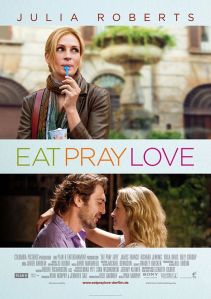 Eat Pray Love is based on the best-selling memoir about Elizabeth Gilbert (Julia Roberts), a woman in her 40s trying to recover from personal setbacks. She’s divorcing her husband and she’s generally unfulfilled with her life. It seems to be missing meaning. Her solution is to set off on a journey to Italy, India, and Bali in order to rediscover who she is and what is missing in her privileged life.
Granted I am not in the target demo for this movie’s audience, but I found the main character to be rather hard to relate with. The film opens with her deciding to end her marriage to Billy Crudup (Watchmen). So far I’m okay. The dissolution of a marriage, especially when you’re older, is a prime starting point to reevaluate your life now that you’re on your own and, frankly, terrified by that prospect. But then the movie presents Gilbert as a rather self-involved and almost callous individual. Her husband is devastated, but she’s only tear-eyed one night as she prays to God why she’s in her marriage. The movie throws out some half-hearted excuse, saying her husband is wishy-washy about his career, but it’s a smokescreen. Why even leave this stuff in there if we’re just going to dislike Gilbert? That’s like including an opening scene in Schindler’s List where Schindler beats a child. A hyperbolic example, yes, but proof that it’s a terrible idea to have an early scene harm audience sympathy.
 And so Gilbert goes about on her globetrotting voyage of self-discovery, chiefly to fulfill her health, spirit, and heart. Except the movie seems to get worse with every stop on the map. The overly long beginning in New York shows that our flighty main character shacks up with a hunky theater actor (James Franco), and then agonizes over how unhappy she is with this new guy. She needs to learn to love herself before anybody else, she says. In Italy, she finds freedom in losing herself to food. She feasts on fine Italian cuisine and doesn’t obsess over her weight gain. In fact, she and a buddy treat shopping for larger sized jeans as a joyous celebration. I’m pleased that people can become more comfortable with their bodies. This Italy section focuses on food and fellowship, and Gilbert learns the language, enjoys the company of a group of locals, and cooks a traditional Thanksgiving dinner for her new friends. This is easily the most likeable Gilbert will be in the film.
First off, a film about a character finding personal discovery and self-awareness is going to be hard to pull off. Internal journeys of self-actualization and enlightenment don’t necessarily scream great movies, a medium of images and movement. For this to work you need a good story and a character worth rooting for, somebody who the audience can empathize with and cheer on the arduous path to personal grace. Elizabeth Gilbert is not that character. The other two segments in India and Bali are a true test of patience. Watching Roberts sway around, chant to herself, and look forlorn waiting for enlightenment to come is not the best use of 40 minutes. Richard Jenkins (The Visitor) gives the film’s best performance in the most tedious segment, which kind of reignites the “tree falling in a forest” scenario. When Indians have spiritual crises do they travel to New York? The end feels even more leisurely paced and I found myself nodding off here and there. The movie was failing to keep my attention short of some lovely scenery.
 Director Ryan Murphy, co-creator of TV’s Glee, knows that his audience wants beautiful countryside, beautiful food, beautiful men, and Julia Roberts smiling. To that end, Eat Pray Love is a success. Murphy seems to enjoy filming the food sequences the most. The food is portrayed like a glamour reel. It’s easy to feel the rumbles of hunger while watching this movie. Pizza from Naples looks divine. But Murphy also serves as co-writer, along with Jennifer Salt, so he should have known better about the plot deficiencies that keep the audience at a distance from embracing Gilbert. The actors all seem to be having a good time, and why wouldn’t they? Visiting exotic places and stuffing their faces with local delicacies? It feels like I’m watching someone else’s boring vacation videos that go on for 135 laborious minutes.
Eat Pray Love seems to be missing something, namely the soul of its journey. By design, so much of this existential crisis is internal, which is where the book can fill in all the clarifying and illuminating details to make this feel like a full story. As a movie, it just doesn’t work on screen no matter how powerful Roberts smiles. The main character is hard to relate to. How many people can solve a midlife breakdown by flying across the world for over a year? How did Gilbert afford this? I’ll tell you how. Gilbert pitched the idea to a publisher and then used the advance to pay for her yearlong trek of dining and self-discovery. It makes me doubt how genuine this whole journey really was, considering she sold the ending before she ever reached her catharsis. Maybe the title should have been Eat Pray Cash Check.
Nate’s Grade: C
Share this:

Milk (2008)
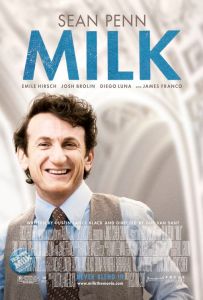 The biopic of America’s first openly gay elected official is stirring, thoughtful, and occasionally limited. Sean Penn gives a wonderful performance as the captivating and tragic Harvey Milk, assassinated in 1978 by fellow San Francisco councilman Dan White (Josh Brolin). He changes his look, his voice, how he carries his shoulders and moves his arms; it’s a terrific and transformative performance that only sometimes hits a few fey stereotypes. The movie mostly follows Milk’s path as a community organizer who successfully mobilized the gay rights movement. You’ll witness local politics in depth, and that’s my one reservation with this fine film – it focuses too heavily on the political formation of a movement and less on the man that kick-started it. You get little glimpses of Milk the man, and most of those glimpses happen to be his romantic relationships with annoying men. That said, director Gus Van Sant orchestrates real archival footage from the time including protestors and homophobic spokespeople, and it gives the movie an authentic relevancy. The deadly confrontation between Milk and White is played in a painful, very un-Hollywood approach that made me wince hard. It’s amazing to watch Milk and realize how far the American public has come since the 1970s and how much further we, as a nation, have to go.
Nate’s Grade: A-
Share this:

Pineapple Express (2008)
 There’s something to be said about a comedy that requires an audience to puff illegal substances in order to fully be entertained. Somewhere along the line the Judd Apatow comedy unit went down a wayward track with the stoner comedy, Pineapple Express, an amiable goof of a comedy at best. The premise is solid, two stoners (Seth Rogen and James Franco) witnessing a murder and on the run. Rogen and Franco have a great rapport with one another that translates to plenty of good vibes and humor (Danny McBride steals the show as a seemingly indestructible low-rent drug dealer). But the movie veers off into action territory with bloody violence that really harshes your mellow, man. Pineapple Express never really settles on a consistent tone, so when the movie fully transforms into a strained guns-a-blazin’ action caper, the comedy has totally vanished. The realistic violence is intended to get the laughs. When people get shot, it’s ugly, and when ear lobes get blown off it’s just plain gross. There’s no room for humor in the third act and the action is lazy and uninspired. If Rogen and his writing partner Evan Goldberg (who scripted the much funnier Superbad) were aiming to create an action parody, then they didn’t push nearly hard enough. After the movie ended, I thought back to last year’s superior action parody, Hot Fuzz, which had a consistent tone and packed jokes as hard as punches. As a sober moviegoer who has never inhaled any such wacky tobaccy, Pineapple Express just kept eluding me. The movie is too slipshod, too misshapen, and it completely goes up in smoke by the end.
Nate’s Grade: C+
Share this:

In the Valley of Elah (2007)
 Is anyone more polarizing in the film world at this moment than writer/director Paul Haggis? He takes a far subtler approach to exploring difficult subject matter this time, and the lack of histrionics makes the message far more serviceable. The film begins as a mystery, with Tommy Lee Jones investigating the disappearance of his son who was supposed to return from Iraq. Then the film transforms into an examination on the hidden, psychological costs of a war that continues to backslide into incivility and chaos. Jones gives a terrific taciturn performance, expressing so much sorrow with his hangdog expressions and sad, soulful eyes. There isn’t a moment in the movie that feels trite or contrived, and its conclusion is surprising in how subdued it plays out, which makes it far more emotionally troublesome. The title is in reference to the location of the famous biblical battle between David and Goliath. Is America Goliath? Are we David? I can’t honestly decode all the metaphors in this solid slow burn anti-war flick. Haggis is bristling with things to say but effectively buries them below the surface so that the viewer is not beaten over the head but yet left with many significant questions. And what police investigation, even in a war away from home flick, would be complete without a visit to a strip club?
Nate’s Grade: B+
Share this:

Knocked Up (2007)
 Judd Apatow scores again. The man has a long history of creating memorable and heartwarming character-based comedy, and Knocked Up is another winner. This man creates thoroughly human and engaging stories that focus on our own foibles and triumphs. Apatow wrote and directed yet another poignant, clever, and uproarious comedy that has so much more below the surface and becomes universally appealing.
Alison (Katherine Heigl) is out on the town celebrating her promotion at the E! Entertainment Channel. She’s going to go from behind the camera to in front of the camera. It’s at this Los Angeles club where she meets Ben Stone (Seth Rogen), a doughy Jewish slob of a man content to drift through life penniless and high. Their night of partying leads to a drunken one-night stand. Eight weeks later Alison is going through extreme nausea and can’t figure out what kind of flu bug she has, that is, until she remembers her one night out. She locates Ben and informs him that she is pregnant and, yes, he is the father. The two decide to try and make it work, forging a relationship as they plan on becoming parents. Alison’s sister Debbie (Leslie Mann) and her husband Pete (Paul Rudd) and their two kids are a potential glimpse into the future. Pete and Ben hit it off real well, to the point that Alison feels like her mate might not be the one for her even if his DNA is growing inside.
 Naturally, this is a comedy where sex is at its very inception. The humor is ribald and playfully profane. I believe one of the greatest compliments you can give a comedy is when you cannot single out a single set piece or moment as an instant standout. Knocked Up is packed with many wildly funny scenes but it also has killer one-liners from start to finish and sharp pop-culture references (Ben on an exercise bike: “Matthew Fox? From Lost? You know what’s interesting about that guy? Absolutely nothing.”). Ben credits the flick Munich for the ability to get Jews laid. Ben watches the 2003 version of Cheaper by the Dozen with horror, saying that 12 kids is no laughing matter. The roommates are plotting a flesh-friendly website that notes the time and location of celebrity nudity in films. This commercial venture plays right into the frat house lifestyle for this band of stoners that bet their friend not to shave his beard for a year for free rent.
Knocked Up is bawdy and hilarious, sure, but it’s also far more realistic and a lot more emotionally involving than any romantic comedy Hollywood has offered in years. Apatow seems to have mined his personal parental experiences for a lot of hard-earned truths. The film is most natural when it showcases the male perspective of prolonged adolescence and an unplanned pregnancy, but Knocked Up also has a mature and thoughtful view on marriage and feminism. We see the array of personal challenges a woman would go through but the movie still manage to slip in humor amidst the uncertainty. There’s a montage looking for the right gynecologist. The gauntlet of sexual positions is explored while pregnant, with Ben afraid that his child’s first impression will be daddy’s manhood constantly poking it. When Alison and Debbie go shopping for pregnancy tests we see them fill their cart with every kind of tests, and then test after test comes back positive. “Hey this one has a smiley face,” says Debbie, before realizing, “Oh, that’s not a good thing.” Debbie then tests the reliability of the tests herself and for a brief moment panics when she thinks she may be pregnant for a third time. She then calms down and says, sarcasm-free, “Whoa, that would have sucked.” The inclusion of Debbie and Pete offers a whole other relationship viewpoint, something that Alison and Ben can learn from. She’s paranoid and blunt, and he’s apathetic and passive-aggressive, and Alison is terrified that she and Ben are doomed to a similar fate. The insights into marriage and secrecy are realistic and give the film so much more meat to its bones. This isn’t just a movie about what to do with an unplanned pregnancy; it’s fully about male-female dynamics and what it takes to make a family work.
 In the end, you really care about these characters because Knocked Up is a raunch-fest that has a sweet gooey center of sentiment. Ben is pushed into adulthood by this unexpected development and, as they say, puts away childish things after a lot of trial and error. There’s an undercurrent of emotional vexation under most of the comedy, like when Pete confesses that he doesn’t know if he can accept love, and Ben cannot pity this because he sees his love being rejected. Alison doesn’t quite have as big of an arc, but she never gets callously cast to the side and forgotten. She too has a lot of growing up to do very quickly, and when both characters welcome their newborn into this world it’s rather moving and exciting to experience it alongside them. Ben’s confesses to his child that not putting a condom on was the best decision he ever made. In any other movie this ending conversation might seem trite or hokey, but Apatow has paid so close attention to his characters that the emotional payoff is earned and rewarding.
Another hallmark of an Apatow production is how perfect the cast seems with one another. There’s a real camaraderie with the actors and it produces natural onscreen chemistry and amusing improvisation. Rogen and Rudd, teaming again after 40-Year Old Virgin, can riff off one another for a whole movie and I would gladly pay to watch. I loved when the two boys go to Vegas, take mushrooms, see Cirque Solei, and then freak out in their hotel room (“There are five different kinds of chairs in this room”). I was laughing so hard I had tears in my eyes, and I’m sure the crux of this moment was born from the freestyle exchange between the actors. Ben’s roommates have a believable kinship to them as a collection of amicable oddballs and stoners. Mann and Heigl also seem believable as sisters, much more so than would Anne Hathaway, who was originally cast as Alison but left due to creative differences (I guess the difference was she didn’t wish to be apart of a good movie). The Knocked Up cast work together like a truly wonderful team that appreciates the material and each other.
Rogen is destined for stardom after this movie. He can make anything funny with exceptional comic timing and line delivery that never feels forced. Hearing his unique giggle at the end of jokes, you can sense that this sweet and amiable guy would crack himself up and for good reason. Rogen was great in 40-Year Old Virgin and is even better in a bigger dose. Heigl gets to play more familiar notes, from stressing that work will discover her little bun in the oven to the expected birthing scream session. She has a good rapport with Rogen and brings a lot of warmth to her role. Rudd is so effortlessly charming and easy going. Mann plays a perfect bitch, but she also has a nice scene where she explodes at the realization that her days of youth are finally behind her. Special mention must go out to Kristen Wiig. She steals every scene she’s in as an E! Channel employee that makes plenty off-the-cuff passive insults against Alison during two staffer meetings.
 I’ve read online that several leftist bloggers are angry and flabbergasted that Alison does not get an abortion. They argue Ben is a fat and unappealing slob, she’s an attractive career woman, and not having an abortion in this situation is, as one put it, “stupid.” Excuse me, but this may be the first mainstream comedy that actually discusses the prospects of an abortion (or as one character deems it, a “smashortion,” as not to offend the delicate sensibilities of his roommate). I also take umbrage to anyone saying 1) choosing not to have an abortion is a bad decision, and 2) that these critics would be so daft to miss the point that if Alison had an abortion there would be NO MOVIE.
Knocked Up is a very funny and very wonderful sex comedy for adults, but it also happens to be an endearing and heartfelt romance. The cast is excellent, the comedy rarely misses a beat, and Apatow is a instant classic hitmaker. Just like The 40-Year Old Virgin, Apatow has explored a deeply personal topic for all the comedy and pathos he could wring from the material. Knocked Up is nothing short of a knockout. I hope you’re happy with your decision Anne Hathaway. I know I am.
Nate’s Grade: A
Share this:

Spider-Man 3 (2007)
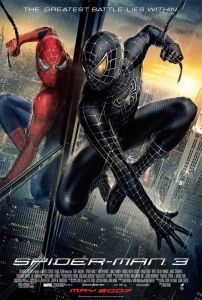 Who the hell are you Spider-Man 3 and what have you done with the franchise I loved? After the massive commercial success of first two Spider-Man chapters, my expectations had been raised fairly high. The more time that passes the more I reflect on how disappointing Spider-Man 3 sadly is. Part of my dashed hopes are because the 2004 Spider-Man sequel was a wonderful follow-up to a pretty swell introduction, and I placed that movie in my Top Ten list for the year and consider it one of the best comic book movies of all time. There’s some great popcorn entertainment to be had with Spider-Man 3, but man is this film just beside itself in wasted potential, a lack of focus, and some really poor choices.
Things are going pretty well for Peter Parker (Tobey Maguire). He plans on asking Mary Jane (Kirsten Dunst) to marry him and New York City is planning a parade out of appreciation for Spider-Man. But the good times can’t last long. Harry Osborn (James Franco) has accepted his fate and become a second generation Green Goblin villain, out to avenge his father’s death at the hands of Spider-Man. But Peter also has to be on the lookout for his job at the newspaper. Eddie Brock (Topher Grace) is an unscrupulous photographer out to replace Parker and nab a picture of Spider-Man caught in a bad light. An alien substance has also hitched a ride to Earth via meteorite and sought out Peter Parker. The black goo attaches itself to Peter and forms a black Spidey suit, one that gives him intoxicating power and a slimy menace. The new Peter cavalierly flirts with bouncy lab partner Gwen Stacy (Bryce Dallas Howard), hurts his friends, and loses his do-gooder ways.
Meanwhile Flint Marko (Thomas Haden Church) has escaped from prison. It seems the police got it wrong and now inform Peter that Marko confessed to being the one who killed Peter’s uncle. While on the run Marko happens to tumble into an open pit that is a science experiment and becomes fused at a molecular level with sand. He uses this new power to rob banks in order to save his sick daughter at home. Peter, with the power of the alien suit, hunts the Sandman to get his own slice of sticky vengeance.
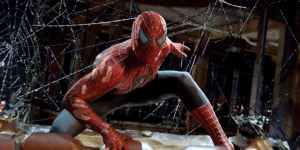 The film has way too much on its plate. There are too many characters, too many undeveloped storylines, too many coincidences, too many contrivances (Amnesia? Really? Really?), and too many aborted moments of drama. Spider-Man 3 is an undisciplined mess. The film practically stumbles from one scene to the next and lacks the coherency and intelligence of the earlier entries in the series. The third film tries to do too much and please too many interests, and as a result it may end up pleasing few fans. I had some trepidation when I learned that there was going to be upwards of three villains for this movie, but I swore that it could work since Batman Begins confidently worked around a trio of big bads. Three villains do not work in Spider-Man 3. Let me dissect this rogue’s gallery and where they fall short.
1) The Sandman is kind of a lame idea from the start. His power seems to limit his available locations, and I’m surprised that he wouldn’t stick to beach areas as a means of playing to his sandy strengths. Regardless, the character plays no part in almost anything that happens, and the Sandman is given one note to play. He’s got a sick daughter and he robs to try and pay for her medicine. That’s great on paper but it never really seems to give the character any sense of urgency or frustration. If he got special sand powers why not sneak into banks through cracks in walls instead of forming as a giant sand monster? Church attempts to imbue the character with a sad soul but he just comes across as being wooden. If he was really on the hunt for money to save his daughter then why does he just slouch around all the time? Wouldn’t it be easier to rob a city not patrolled by a web slinging super hero? How can he say he’s a misunderstood victim of luck just minutes after he tried killing Peter? He seems like a dull lunkhead. The Sandman is given a tiny wisp of character detail (sick kid!) and that’s it. He doesn’t get any other characterization and is kept on the run and pops up whenever the film needs him. He becomes a token character until the very end where Church is given 2 minutes to pour his heart out to Peter. Two minutes of character at the start, two minutes at the end, and a gaping center. The Sandman isn’t so much a character as the ideal of some issue that the filmmakers want to have Peter work through.
And what is that issue? Why vengeance and forgiveness. You see, Spider-Man 3 foolishly rewrites its own history and now it was the Sandman hat killed Peter’s Uncle Ben. This revision does not work at all and actually legitimately damages Spider-Man. Just like Bruce Wayne is tackling crime to alleviate his guilt, so too is Spider-Man, who can never shake the fact that he could have prevented his uncle’s death had he done the right thing moments before. By introducing a new killer it means that Peter has no responsibility for his uncle’s death. This completely strips away the character’s guilt and rationale for what compels him to swing from building to building to fight crime.
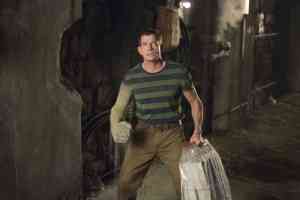 2) Eddie Brock/Venom is wasted as well. Director Sam Raimi has said before he’s not a fan of Venom and doesn’t get the character, and I feel that his contempt carried over into the film. Venom and the black alien goo are given about the same abysmal care as other half-baked plot points. Eddie Brock has about three total scenes before he gets to transform into Venom thanks to the alien substance, and none of these scenes fully flesh out who the character is or justify his relationship with Peter Parker. When we do see Venom in the finale its all too rushed and hokey. The effects make him look less like alien and more like a wax figurine (I suppose there could be intelligent wax life amongst the stars). For whatever dumb reason the alien suit has to retreat so we can see Grace’s face while he taunts and mocks with bad vampire teeth that are meant to inspire what exactly? The character is rushed and underdeveloped and should have been saved for the next sequel instead of being given lip service in this one. Venom is supposed to be the evil doppelganger to Spider-Man, not some smart-alleck with frosted hair that gets about 15 minutes of screen time. I like Grace, I really like him a lot and envision him as his generation’s Tom Hanks, but he does not work in this movie. He could, but I get the sneaking suspicion that Raimi sabotaged the Venom role on purpose or at least subconsciously. The villain goes out with a whimper and it feels like a giant, foolish wasted opportunity that becomes more maddening the more I discuss it. The presence of Venom feels like a shallow attempt to placate a younger generation of comic fans and to sell more action figures.
The alien goo suit is supposed to tempt Peter and bring out his wicked wild side. So what does he do? He acts like he’s auditioning for the lead in The Mask. This embarrassing sequence is painfully goofy and will make you cringe and shield your eyes. Peter flirts with girls and dances at a jazz club, and this is supposed to be the dark side of Spider-Man? What the hell? I acknowledge that Peter has always been an unpopular dork and would be a dork even if he ventured to the dark side, but how does this square with the more serious and edgier tone the film is grasping for? Evil Peter seems more like a broody emo kid, with shocks of black hair in his eyes and traces of eyeliner. The dark side of Spider-Man, much like the rest of the film, is given little time or thought. Peter’s trials with the symbiotic suit last about a reel or two and then it’s abruptly finished.
 3) Harry should have been the main focus of this sequel and it?s a shame the filmmakers had to cram so much crap into a story already heavy with plot leftovers. Harry has the most obvious arc through the three movies and deserves better than to be knocked out of commission by amnesia. The conflict between Peter and Harry is where the film finds its emotional core and it would have been wise to expand this section and eliminate one of the other underutilized villains (my vote: both Venom and Sandman). Harry’s vow to avenge his father is far more interesting than what the other two villains have as motivation, and plus Harry requires no extra time-consuming setup to slow the pacing down. I’m glad the final battle encouraged Harry to come out and play; the film finally gives Franco the screen time he deserves, but it should have been more. The worst plot device in the film involves Harry’s all-knowing butler who has some vital information he most certainly should have shared years ago. So much time is spent on storylines that go absolutely nowhere, and the musical chairs of villains, that the film resorts to having a freakin’ butler tap someone on the shoulder and say, “Excuse me sir,” just to tie things up in the most awkwardly shrift way possible. And even if what the man says is true, how does his perspective add any clarity to the situation? Think about it. I have.
The romance between Peter and Mary Jane feels awfully trite and meandering. Spider-Man 3 lacks the tight focus of the second film. It throws contrivances to place a wedge in their relationship, like the fact that Mary Jane is fired from her Broadway gig but doesn’t tell Peter, or the fact that they never seem to answer the phone on time when the other person is apologetic. Gwen Stacy is less a character than simply a dimwitted blond tool to make Mary Jane jealous and sulk. The ups and downs in this relationship feel pretty forced and some moments defy all human understanding. At one point Mary Jane is forced by Harry to break up with Peter to spare both their lives. So she breaks the news in a park, and Peter is devastated, but why in the world does she never say anything again? Why would she not clear things up after time had passed to explain her actions? Spider-Man 2 ended with Peter finally getting the girl but also on a hint of doubt, and it was marvelous. Spider-Man 3 just sort of ends with everyone presumably in the same place they started.
Spider-Man 2 really succeeded on how focused it was and how it related its action with character. Spider-Man 3 has to resort to cheap and lazy devices to cover its storytelling pitfalls. Don’t even get me started on the fact that the film has to resort to a newscaster narrating our final battle where he actually asks, “Is this the end of Spider-Man?” This might be the end of the quality associated with Spider-Man.
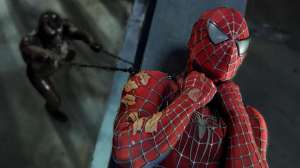 After having spent a whole slew of words detailing in length where the film goes wrong, allow me to illustrate some of what the film does right. Whenever it sticks to action, that’s when Spider-Man 3 works, and Raimi has cooked up some wonderful whiplash-inducing action sequences. The first battle between Peter and Harry is intense and sets the film on the right path, but the action as a whole isn’t as closely tied to Peter’s domestic life and emotional troubles as it was in the other films. A high-rise rescue from a crumbling office building will stir some 9/11 memories but it is awesome to behold. The effects have improved and the swinging shots through New York look the best they ever have. The greatest moment in the film is perhaps the birth of the Sandman as he rises grain by grain from a pile of sand and attempts to reform himself. Aided by some lovely music, the moment takes on a beautiful and unexpected poignancy. This is where Raimi and the CGI wizards hit it out of the park. Nothing rivals the train sequence in Spider-Man 2, though.
It might be dangerous to say, but I feel jilted from this film and either new blood needs to be brought in or the filmmakers need more time and control to make a Spider-Man sequel worthy of its name. This is the gold standard for super hero movies and its been tarnished and sullied. Spider-Man 3 has moments to dazzle and excite but it also feels battle fatigued from carrying the dead weight of extraneous characters and half-baked storylines. There are too many balls in the air for Raimi to juggle. This Spidey chapter squeezes too many ideas in too short a space. After obliterating box-office records, Sony has stated that they plan on three more Spider-Man sequels. If this film is the tipping point, then I’m afraid of what will be swinging down the pipe in years to come.
Nate’s Grade: C+
Share this:

Spider-Man 2 (2004)
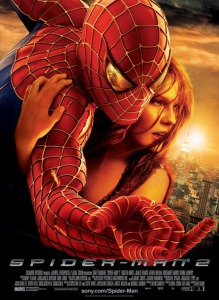 No other movie had higher expectations than Spider-Man 2 and no other movie met and trounced those expectations than director Sam Raimi’s high-flying webslinging sequel. Spider-Man 2 was that rare sequel that excelled in near every way. The action sequences were lively and highly exciting, but what made Spider-Man 2 so thrilling was its success in building strong emotional characters. After all, how many superhero films are written by the writer of Ordinary People? (One wonders what he would have done with Catwoman) Alfred Molina, as Doc Ock, made for a great formidable foe and brought surprising humanity to the dastardly part. Spider-Man 2 was a momentous crowd-pleaser that also dazzled the hardest critics. It reaffirmed exactly what a summer popcorn film can make us feel.
Nate’s Grade: A
Share this:

Spider-Man (2002)
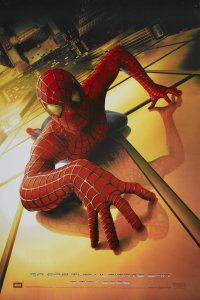 Hollywood take note, Spider-Man is the prototype for a summer popcorn movie. It has all the necessary elements. It has exciting action, great effects used effectively, characters an audience can care for, a well toned story that gives shades of humanity to those onscreen, fine acting and proper and expert direction. I recommend movie execs take several note pads and go see Spider-Man (if they can get in one of the many sold out shows). What summer needs are more movies in the same vein as Spider-Man, and less Tomb Raider’s and Planet of the Apes.
Peter Parker (Tobey Maguire) is a dweebish photographer for his school yearbook clinging to the lowest rung of the popularity ladder. He lives with his loving Aunt and Uncle who treat him like a son. Peter has been smitten with girl-next-door Mary Jane Watson (Kirsten Dunst) ever since he can remember, but he’s been too timid to say anything.
At a field trip to the genetically altered spider place (there’s one in every town) Peter is snapping pictures when he is bitten by one of the eight-legged creatures. He thinks nothing of it and awakes the next day to a startling change. He has no need for his rimmed glasses anymore and has a physique that diet ads would kill for. He also discovers he can cling to surfaces, jump tall building in a single bound and shoot a sticky rope-like substance from his wrists. Hairs on his palms and shooting a sticky substance from his body? Hello puberty allusion! Peter tries to use his new abilities to win the girl and when that doesn’t work out he turns to profiting from them. He enters a wrestling contest in a homemade costume and proceeds to whup Randy Savage. Following the fight Peter’s Uncle Ben is dying after being involved in a car jacking Peter inadvertently let happen. Haunted by grief Peter becomes Spider-Man and swings from building to building as an amazing arachnid crime stopper.
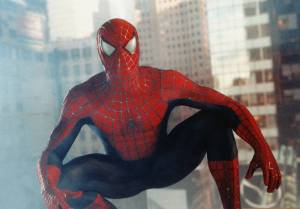 But every hero needs a villain, and that is personified in the Norman Osborn (Willem Dafoe), scientist and businessman. Osborn is experimenting with an aerial rocket glider and a dangerous growth serum. When the military threatens to cut his funding and shop elsewhere Osborn haphazardly undergoes the serum himself. What it creates is a duality of personalities; one is Norman, the other is a sinister and pragmatic one. The evil alter ego dons the glider and an exoskeleton suit and calls himself the Green Goblin. The Goblin destroys all that are in his way, and has his yellow eyes set on the pesky Spider-Man.
The casting of mopey-eyed indie actor Tobey Maguire over more commercial names like a DiCaprio or a Prinze Jr. (I shudder to think of a Freddie Prinze Jr. Spider-Man) left some people scratching their heads. Of course the casting of Mr. Mom to portray the Dark Knight likely got the same reaction in the 80s. Maguire plays the nerdish and nervous Peter Parker to a perfected awkwardness with his sensitive passivity. When he explores his new powers with exuberant abandon then begins crime fighting, we as an audience are with him every step of the way pulling for Peter.
Kirsten Dunst was also a surprising casting choice but works out very well. She allows the audience to fall for her along with Peter. Her chemistry with Maguire is great and could be a major reason why rumors have surfaced about the two leads taking the onscreen romance off screen.
Willem Dafoe is one of the creepiest actors in the business (though he made an effective creepy-free Jesus) and delves deliciously headfirst into the cackling menace of Spider-Man’s nemesis. Dafoe, with a face that looks like hardened silly putty and jutting rows of teeth, relishes every maniacal glare and endless evil grin. But instead of being one-note he adds certain amounts of sympathy and understanding as Norman Obsorn. No one could have done this role better than Dafoe.
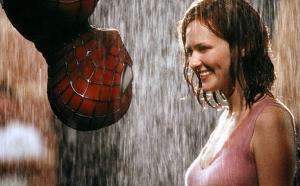 Director Sam Raimi was most known for his cult splatter house Evil Dead series, but he’s got a new resume topper now. Raimi was chosen over a field of directors because of his passion for the character and story. Raimi brings along integrity but with a joyous gluttony of spectacular action sequences. He expertly handles the action and daring-do all the while smoothly transitioning to the sweet love story. He has created the movie Spidey fans have been dreaming of for 40 years.
Spider-Man swings because of the respect the source material has been given, much like 2000’s X-Men. The story follows the exploits of the comic fairly well but has some stable legs of its own. The multitudes of characters are filled with life and roundness to them, as well as definite elements of humanity. You can feel the sweet romance budding between the two young stars, the tension and affection between Osborn and son, but also the struggle with Norman and his new sinister alter ego.We all know villains are the coolest part anyway. Isn’t that the only reason the last two Batman films were made?
There’s the occasional cheesy dialogue piece but there is that one standard groaner line. In X-Men it was Halle Berry’s query about what happens when lightening hits a toad. In Spider-Man it was the response to the Green Goblin’s offer to join him, to which he asked “Are you in or are you out?” (Obviously channeling George Clooney). The dreaded response: “You’re the one who’s out Goblin. Out of his mind!” Sigh. Maybe a well placed “freaking” before “mind” would have made the line better.
Spider-Man is the best kind of popcorn film: one that leaves me anxiously anticipating the sequel (which will come out two years to the day the first one was released).
Nate’s Grade: A-


 nathanzoebl
You must be logged in to post a comment.