Blog Archives
Take Shelter (2011)
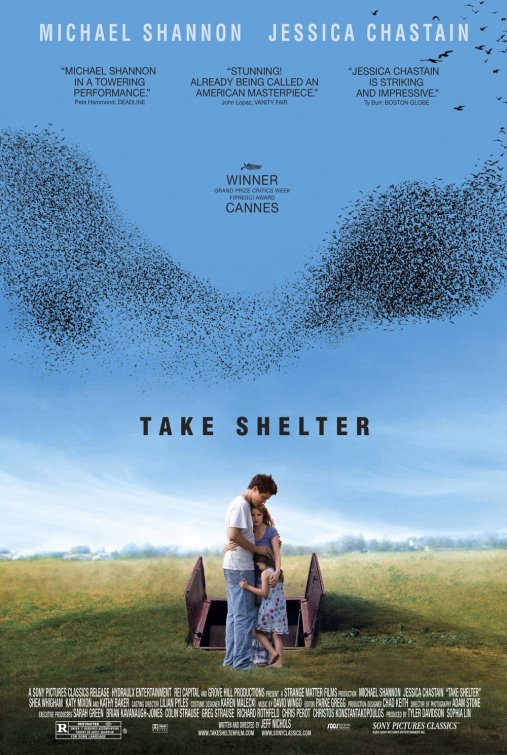 It’s rare that I get to take some local pride and puff my chest about a movie being shot in Ohio. Take Shelter, a small, suspenseful character-piece, was filmed in Loraine County, near Cleveland. Several of the actors in the production are local actors, including Tova Stewart, the adorable seven-year-old who plays the onscreen deaf daughter. The young gal, who is also deaf in real-life, is from Columbus and was in attendance at the theater I saw Take Shelter at. And I can beam with even more local pride at the fact that Take Shelter is unwaveringly magnificent. It’s a remarkably tense movie, deeply realized, expertly crafted, and one of the best films of the year.
Curtis (Michael Shannon) is a working-class family man in rural Ohio. He works as a manager of a two-man drill team, scouring the earth for valuable deposits. His wife, Samantha (Jessica Chastain), cares for their recently deaf daughter, Hannah (Stewart), and sews pillows and embroidery on the side. They are making ends meet to save up for Hannah’s cochlear implant surgery. This family tranquility is interrupted when Curtis begins having strange visions. He sees dark, ominous storms that no one else seems to see. He hears loud cracks of thunder during clear skies. He feels the dark rain fall on his person. He wakes from frightful dreams detailing friends and family turning on him. What does it all mean? Curtis feels compelled to remodel the storm shelter in the backyard. He even purchases a cargo container and buries it in the yard, collecting some end-of-the-world provisions. Could Curtis just be crazy? His mother has been in a psychiatric home since she abandoned Curtis as a child. She began having schizophrenic episodes in her mid 30s, and Curtis is now 35. Is he being warned of what lies ahead or is he succumbing to the pull of a hereditary mental illness?
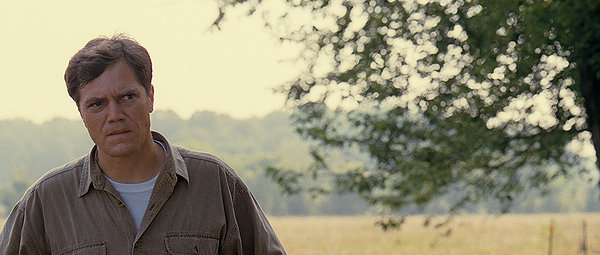 This is very likely the most nerve-racking, tense, dread-filled film I’ve watched since 2009’s Oscar-winner, The Hurt Locker. Writer/director Jeff Nichols (Shotgun Stories) masterfully lays out the particulars of his tale. Even the family drama has some nicely constructed tension. Curtis’ family is living paycheck to paycheck, so his backyard project is a real financial setback. By borrowing equipment from his work, Curtis is even risking losing his job, the only way he can afford his child’s cochlear implant. Not only do we dread stormy weather and strange flocking patterns for birds, we dread the everyday struggles of keeping afloat. Curtis following his visions can very likely put his family into financial ruin, but is that a risk worth taking? Nichols nicely creates an authentic small-town setting. There are small, acute character touches that enrich the story, like when Dewart (Shea Wigham) concludes that the best compliment a man can give is that “he’s lived a good life.” When Curtis and Samantha watch their daughter sleep, they share behavior they are still trying to kick in adjusting to having a deaf child (“I still take my boots off not to wake her,” he confides. “I still whisper,” she returns). These people and their troubles feel believable, and their reactions to Curtis’ strange behavior feel extremely believable. Whispers begin to spread and people start to treat madness like it’s a communicable illness. Religion seems like a natural landing zone when discussing anything apocalyptic and/or prophetic, but Nichols sidesteps this discussion. There could have been some interesting theological room to explore here, considering a Biblical prophet would likely be derided as mentally ill in our modern age. Nichols keeps things secular. Curtis is admonished for missing church again, but that’s about the extent of religion in the man’s life. He does not seek out spiritual advice. He seeks out psychiatry, at least if he could afford it he would.
There are some terrific standard thriller moments, like some well-calculated jump scares and many nightmare fake-outs, but the film’s real skill is drawing out tension to the point where you want to shout at the screen. This is a deliberately paced thriller knotted with unbearable tension. We become conditioned to start doubting the onscreen imagery after Curtis’ series of nightmares. Every time there’s a storm now the audience, too, fears the validity of what we witness. What is the significance of these portent signs? There’s a moment toward the climax, where a storm door needs to be opened, and I simultaneously was dreading every second leading up to that door opening and silently screaming in anticipation. Every part of me wanted to see what was going to happen next and I could not guess where Nichols would take us. I was a nervous wreck. The dread was so heavy, so all consuming, and not just from an apocalyptic standpoint. Curtis understandingly thinks he may be nuts, especially since his own mother is a paranoid schizophrenic. The threat isn’t just the strange apocalyptic signs but also Curtis himself unraveling and lashing out. He worries that he’ll become a danger to his own family, and if he cannot discern the difference between reality and fantasy it’s only a matter of time before he jeopardizes his loved ones. He fears he’ll be ripped away from his family. He wants to be better, he wants to be “normal,” but he can’t trust his own senses.
 Take Shelter is also so effective thanks to Shannon, a talented actor who always seems to be on the brink of freaking out. The bug-eyed, crazed, monotone actor has played plenty of nutcases in the movies. He was nominated for an Oscar in 2009 for Revolutionary Road for playing such a nutter. He’s a live wire of an actor, simmering, waiting for the final cue to explode. Shannon uses this intensity to his great advantage, wonderfully mirroring the movie’s compounding dread. Shannon’s character is troubled, that’s for sure, and worries about slipping into insanity. His performance is simply riveting, searching for answers amidst the desire to keep his family safe at all costs, even if that eventually means his removal. When he has to confront his central dilemma, the legitimacy of his visions, Shannon is racked with fear, eyes glistening with tears, terrified to go on faith, and your eyes are glued to the screen, completely taken in by the depth of the performance. I hope Shannon gets some due recognition come awards season because I doubt I’ll see few performances more compelling.
Chastain has had quite a breakout year for herself with lead roles in Tree of Life, The Help, and The Debt. She has a remarkable vulnerability to her, radiating an ethereal vibe (no doubt why Terrence Mallick chose her), and both aspects are put to fine use in Take Shelter. She’s much more than the oft underwritten put-upon wife, silently enduring her husband’s foibles. She’s desperate for an answer to explain her husband’s actions and motivations. She’s alert, angry, compassionate, and deeply concerned. Chastain holds her own with Shannon, and the two elevate each other’s performance subtlety, making their supportive relationship even more believable.
Take heed movie lovers, and make sure to find Take Shelter, an intelligent, expertly constructed, suspenseful drama with powerful performances and a powerful sense of dread. Shannon’s coiled intensity nicely fits the mounting tension. Nichols has created a taut thriller, a fiercely felt human drama, and an involving character-piece attuned to the talents of its cast. Take Shelter is a commanding, unsettling film that puts the audience in the unreliable position of the main character’s point of view. You may almost hope for some actual apocalypse just to validate the guy’s struggle. When was the last time you secretly hoped for the end of the world just to give one person a sense of relief? Take shelter from inferior movies and find a theater playing this tremendous movie.
Nate’s Grade: A
Share this:

The Beaver (2011)
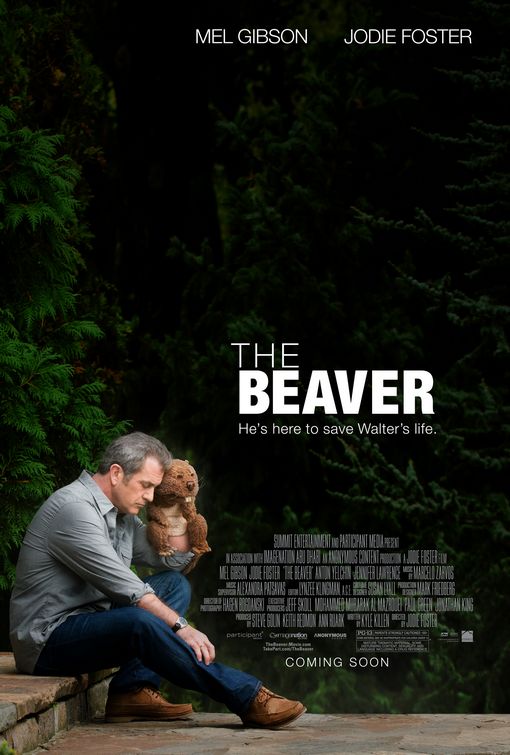 Eerily mirroring his real-life public breakdown, Mel Gibson stars in The Beaver as Walter Black, a man crippled by depression who finds a therapeutic outlet via animal puppet. The beaver is a puppet that Walter chooses to speak through, albeit in a cockney Brit accent that sounds faintly like Ray Winstone (The Departed). Given this twee premise, you’d expect plenty of laughs, but under the prosaic direction of Jodie Foster, also starring as Black’s anguished wife, the movie comes off like a stupefying heart-tugger, a sub-American Beauty style in suburban mawkishness. The comedy and drama elements don’t gel at all, and The Beaver is too tonally disjointed to settle down. Gibson gives a strong performance as a man battling his demons, and the subject matter of mental illness is thankfully treated with respect despite the fantastical premise. It’s the extraneous moments outside the beaver that help to detract and distract. The story of Walter’s son (Anton Yelchin) worrying that he’s already showing signs of mental illness, doomed to end up like the father he hates, is a palpable storyline. But writer Kyle Killen sums up this dilemma with clumsy brevity, having the son jot down post-it notes of behavior he has in common with dad, behavior to be eliminated. The entire subplot involving the son romancing the school Valedictorian (Jennifer Lawrence, sunny and beautiful as always), a pretty gal troubled with grief, never feels authentic. That’s the problem with The Beaver; too much feels inauthentic to be dramatic and it’s too subdued and brusque to be dark comedy. It’s like the strangest public therapy session ever for a fading star.
Nate’s Grade: C+
Share this:

Chillerama (2011)
 Chillerama is the latest ode to the drive-in B-movies of old. Like the higher profile 2007 Grindhouse, this movie is a series of short films from four different filmmakers celebrating the exploitation spirit of schlock cinema. Cecil B. Kaufman (Richard Riehle) is closing his drive-in theater, and for the final night of operation he’s showing four movies never before seen: the killer sperm movie “Wadzilla,” the unexpected lycanthropy romance “I Was a Teenage Werebear,” the black-and-white monster movie “The Diary of Ann Frankenstein,” and a final fecal-filled adventure into the abyss, “Deathication.” However, during this final night the drive-in is also ground zero for a new zombie outbreak, a disease spread through sexual fluids. Tobe (Corey Jones) has to navigate through the sex-crazed corpses to save his crush, Mayna (Kaili Thorne), and escape the drive-in- of death and maybe lose his pesky virginity.
 Given its vignette nature, not all of the segments will be equal in quality. The absolute highpoint is indisputably “The Diary of Ann Frankenstein.” I laughed long and hard during this clever, cock-eyed satire. The absurdity of its premise and the assured demented sense of comedy of its creator, writer/director Adam Green (Frozen, Hatchet), had me laughing until I was in physical pain. The Frank family (formerly Frankenstein) is found by none other than Hitler (Joel David Moore, embracing the silliness with gusto) who dispatches them and steals the family journal. In one of the movie’s funniest lines, Hitler tosses a journal to a Nazi cohort and instructs: “Here, write some depressing stuff in this. We’ll say the girl wrote it and make millions after the war.” Hitler creates his own Jewish Frankenstein-like creature, though a missing film reel reveals his true motivation for reanimating this corpse (and he sings!). Green’s sense of comedy is evident in the pacing, construction of layered jokes, and genre spoofing. There’s one point where the monster is locked in the laboratory and just walks around the set, breaking down the fourth wall. Green even has the entire segment subtitled, though if you listen closely you’ll notice only about 10 percent is German. At one point Moore is screaming “No!” for a solid minute but he says a different word or phrase every time, including “Goldie Hawn!” at one point. The segment is so good that you may not even notice that joke at first glance. “The Diary of Ann Frankenstein” is wickedly hilarious and too tacky to be taken as a serious offense.
The other vignettes falls somewhere in the middle. “Zom-B-Movie” is the slickest looking movie, set in the present, and is a lot of fun. It adds a twist to the crowded zombie genre by adding in a sexual element, making the zombies a sex-crazed orgy (expect nudity that makes you feel funny). There are plenty of solid gross-out effects, and several sequences of penile endangerment, and there are some ingenious camera angles to match the segment’s electric energy. It’s the most self-aware segment, as characters openly discuss horror movie conventions and their own place in the movie Scream-style (“I’m the Final Girl,” one guy declares). A good percentage of the dialogue is comprised of movie quotes and catch-phrases brilliantly placed in this incongruous setting. During the climax, Riehle (Office Space) shoots round after round into the bands of zombies, ripping off like 20 anachronistic movie quotes as if they were action movie quips (“Nobody puts baby in a corner!” he yells and then shoots a zombie in the crotch). I was flabbergasted that the segment actually quoted Billy Madison, and well. The self-aware humor and the overall feverish energy, plus some characters we’ve been investing with in between the earlier segments, makes for a fun and satisfying sendoff for the whole trashy enterprise.
 The first two segments rely more on base humor and seem to run out of gas midway through. “Wadzilla” is a one-joke segment about a man whose single sperm grows to monstrous, man-eating size. The cartoonish tone and low-rent visuals feel like a Joe Dante (Gremlins) homage. The segment does feature one truly inspired, wacked-out image: the giant sperm fantasizes the Statue of Liberty stripping out of her cloak and shaking her green goods (I think this segment just gave birth to a brand new fetish). But the overall concept is weak and the segment relies far more on shock value than wit. It’s more like a rejected Troma flick, though helped immensely by the presence of Ray Wise (TV’s Reaper). “I Was a Teenage Werebear” takes the 1950s beach blanket bingo teen films and gives it a gay twist, and to boot it’s a musical (territory covered well in Psycho Beach Party). The storyline of guy-meets-werebear doesn’t provide enough material to hold together the segment. Many of the actors cannot sing either, which adds to the joke but also makes the film more punishing to watch. The pacing is poor and the gags feel like they were the first things conceived. There’s not enough thought on display; the segment just peters out and becomes tiresome. The fact that Chillerama opens with “Wadzilla” and then “I Was a Teenage Werebear” makes it harder to appreciate the finished product.
Chillerama is certainly going to have a restricted audience interested in campy homages celebrating the trashy nature of cheesy low-budget, exploitative B-movies. Unlike Grindhouse, this collection lacks big names but it makes up for it with a cracked sense of humor. The segments all run about 25 minutes in length, which means even if you dislike one it’ll be over soon enough. The four segments vary in quality, though each has its moments. “The Diary of Ann Frankenstein” is easily the standout of the bunch, elevated by droll, absurdist, demented humor that’s skillfully constructed and deconstructed. “Zom-B-Movie,” the culmination of the film’s connecting characters, is a fun blast to conclude with. Chillerama is a messy, uneven, crude, occasionally brilliant, but most of all it’s a great way to spend a Saturday night with some friends and a supply of popcorn. Just watch out what’s in that butter topping.
Nate’s Grade: B
Share this:

Margin Call (2011)
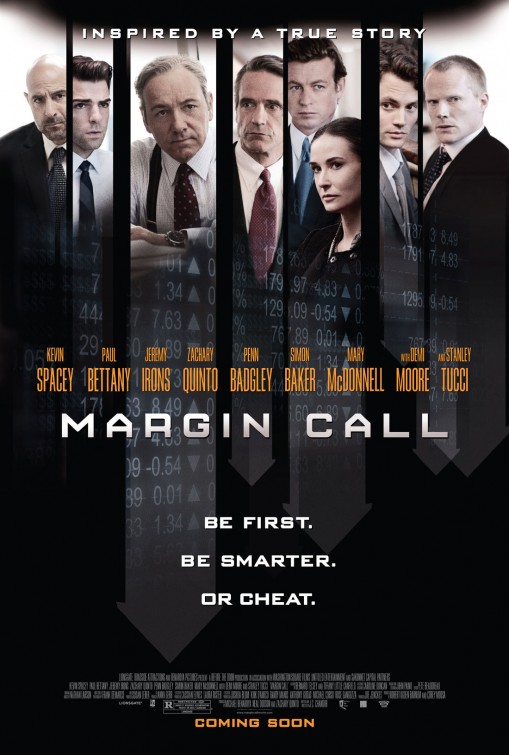 Set during the first twenty-four hours of the 2008 economic meltdown, Margin Call feels like David Mamet’s classic play Glengarry Glen Ross just set fifty floors higher. It’s a tense stew of ego and hubris and cunning and manipulation and self-preservation, peppered with some salty language. The corporate bigwigs of a fictional financial firm scramble to get out the door first before everyone else catches on to the looming market crash. “There are three ways to make a living in this business: be first, be smarter, or cheat,” says the CEO (Jeremy Irons). Debut writer/director J.C. Chandor brilliantly captures the rationalization of sociopathic greed; the CEO waxes about the historical inevitability of our own self-destructive influences, glibly recounting other market crashes and saying he will survive because the nation’s class systems are fixed. The behind-the-scenes scheming has a sick appeal, witnessing how Wall Street wriggled free of responsibility. This isn’t a far-reaching look into the financial meltdown; it’s more of an insular, thoughtful, occasionally meditative play about the moral questions at play. The prosaic pacing caused quite a slew of yawns in my audience. There does seem to be a never-ending cascade of scenes where two characters will just sit and talk. However, when the writing is this sharp and the actors are all at the top of their game (Kevin Spacey is emotionally spent in a test of loyalties; Irons is charmingly sleazy), then you can forgive some stagnate pacing. Margin Call has a few heavy-handed metaphors (Spacey putting his dog down = the economy!), but overall it’s astute, insightful, sophisticated, and compelling enough to forgive its overreaches.
Nate’s Grade: B+
Share this:

Red State (2011)
 Kevin Smith, love him or hate him, you can’t deny the man is a natural promoter. Earlier in the year, the indie filmmaker self-distributed his first foray into horror films, Red State, on a nationwide tour of screenings. I first saw Red State way back in March when Smith visited Springfield, Ohio to screen the film and then answer questions afterwards. I’ve been trying to wrestle with my critical opinion in the ensuing months. Fortunately for me, Smith has made it extremely easy to revisit my thoughts. Red State eschewed the traditional theatrical release pattern for a new digital-age model. It was available on demand through cable systems, available for download, and even broadcast in special theaters for a one-night only event. A month later the film hit DVD. In its better moments, Red State is the unholy union of Quentin Tarantino’s love of language, and penchant for jolting violence, and the Coen brothers’ nihilistic, cock-eyed sensibilities. This is strange new territory for the man. I wish I could say Red State is worthy of all the attention, though this sinister, messy, gritty little movie can work its wicked mojo, at least for a while.
The Five Points Church is a notorious family-operated cult. Under the guidance of their shepherd, Abin Cooper (Michael Parks), this fundamentalist Christian group pickets the funerals of dead soldiers, haranguing the grieved that their loved ones are dead because “God hates fags” (excuse me for failing to put two and two together). A group of teenage boys (Michael Angarano, Kyle Gallner, Nicholas Braun) is lured to Sara’s (Melissa Leo) trailer with the promise of sex. The middle-aged woman plies her young bucks with drinks and they are knocked out. The boys awaken to find they are inside the Five Points compound and witness to Abin Cooper’s solution to sinners. Rather than railing with signs, the family has decided to take a more hands-on approach and execute them. While this is going on, a sheriff’s deputy alerts the authorities and the ATF rolls up to the compound. Lead by Agent Keenan (John Goodman), the government agency engages in a firefight with the rightwing cult. Ordered to take down the compound, and all witnesses, the various characters will try and escape with their lives, never knowing when that fateful moment of atonement may drop.
 What Smith does well for a genre novice is to keep his audience constantly upended. Just when we think we’ve settled on a protagonist and a plotline, suddenly Smith switches gears. The surprises are sudden and often merciless, leaving the audience little room to adjust. In a genre usually beholden to formula, the consistency of Smith’s surprises makes for a darkly satisfying viewing. Watching Red State demands due attention. Naturally, not all of these tonal shifts work to the movie’s best interest. The final shift, to all-out action thriller, is the most leaden. The Ruby Ridge/Waco-style standoff allows for a lot of gunfire but very little action. We mostly just cut back and forth between the two sides firing and, inexplicably high numbers, being shot in the face. It can get repetitive and seem like all the mounting tension gets squandered. There is a nice storyline within of one family member, Cheyenne (Kerry Bische), forming a plan to save the compound’s children and escape. Bische (the lead on the last season of TV’s Scrubs) makes fantastic use of her limited screen time to render the anxiety and fear of her character. She’s second only to Parks in the performance department as far as I’m concerned. Then the climax comes along and Smith teases being audacious, going in a fire-and-brimstone angle that would completely obliterate audience expectations. And just when it seems like we’re about to get something radical… Smith falls back to what he knows – dialogue. For the final five minutes, Smith concludes his narrative with two government officials explaining what happened in florid detail. It’s a fairly big letdown.
The setup of luring teens to their doom is an old horror staple, though usually the ones doing the sacrifices are card-carrying Satanists. And when exactly would a Satanist be in a situation needing to prove their validity with a membership card (“I’m sorry Mr. Darkseed, but we can’t give you the ten percent discount on all those goat skulls unless we see some valid photo ID.”)? Smith flips the switch religious allegiance. Instead of Satanists or some other misunderstood fringe religion, the cult is a group of pious Christians. There’s plenty of room to work here and Smith refrains from making easy associations; the Five Points nutjobs aren’t meant to represent Christians as a whole or Christianity. They are extremists, and they will go to extreme measures. Ostensibly based upon the Westboro Baptist Church and Fred Phelps, you keep waiting for Smith to satirically carve up the clan, but this never really occurs beyond the superficial. Smith’s writerly instincts give Abin Cooper a ten-minute sermon/platform where the guy just unloads a hate-filled diatribe against homosexuals and progressives. For many, this will be the make it or break it point of the film. There are some genuinely tense moments to the first half of Red State. There’s one scene where the camera holds on Gallner (The Haunting in Connecticut) inside a wired cage. He rattles and screams and generally comes unglued, and we too piece together what he hears, dreading what is to come. The many escapes and narrow calls are also harrowing and finely edited to ratchet up suspense.
 It seems, though, that Smith’s bleak screenplay does not present any characters we can truly root for. Horror has been shifting this way for the past twenty years. Thanks to the rise of the slasher flick, audience empathy has shifted from being with the running/screaming victims to being with the gruesome yet personable killers. Red State has a high body count but you won’t feel much when those bodies hit the floor. You’ll feel a jolt of shock, but from an empathy standpoint the needle barely registers. Sure, we don’t want people to be tortured and we want the abused to escape torment, but that’s not the same as characterization. The closeted sheriff (Stephen Root) feels like the start of an idea more than anything else. The trio of teen boys is presented with as little care as any other throwaway slasher flick. They are but meat for the grinder, our entryway into this hidden and spooky fundamental world. These aren’t so much characters as bodies waiting to be slain. The people are set up so they can be knocked down. This issue can become troubling when Smith wants us to rethink our loyalties, especially once the siege has begun. He wants us, dares us, to start feeling empathy for members of the Five Points Church. The problem is that the plot’s adherence to shock value and the underbelly of human nature has desensitized our empathy. When the ATF starts firing most in the audience will probably just cheer, not reflectively question the moral relativism. I doubt anyone will be switching allegiances midway through.
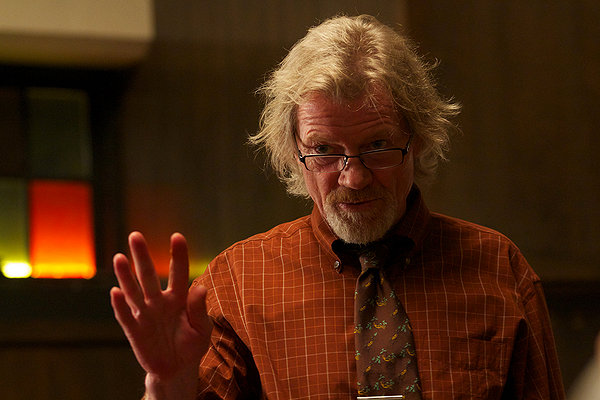
Cults are usually held together with a charismatic leader, and Red State has that in spades with Parks. The man just dissolves into his twisted character, a preacher that uses the Word of God to indoctrinate and arm for his own holy war. Parks has done fine supporting work before in the stable of Tarantino and Robert Rodriguez movies, but Red State is the actor’s biggest modern showcase yet. The man makes your skin crawl the way he can wrap hate into a honeyed, easily digestible product. Abin holds sway over his flock and likewise Parks commands the screen. He provides grandeur and menace to Smith’s words. It’s not a scenery-chewing performance; Parks doesn’t go for the obvious notes when he can hit something deeper and more unsettling. You get a sense that this man fully believes the dogma he teaches, and that makes him all the more terrifying. The other actors peopling Red State are fine, though Leo (Oscar-winner for The Fighter) seems a bit unrestrained especially in contrast with Parks. Goodman (TV’s Treme) gets to talk on the phone a lot to his unseen superiors. The end of the film just descends into frenzied yelling on everyone’s part.
Credited as a horror movie, though I view it more of a survivalist thriller but I suppose genre specifications are subjective, regardless, Red State is miles away from Smith’s usual output. The movie has its share of creeping dread and menace, thanks to Parks’ transfixing performance. The screenplay is unrepentantly dark, cruelly cutting down lives with shocking acuity. The constant surprises and upheavals are a way to keep the audience guessing, though the shock value starts to wear off by the noisy, repetitive gun battle climax. It’s hard to nail down exactly what kind of commentary Smith is presenting. Obviously he doesn’t side with the hateful fundamentalists (this is probably why he pulls back at the end), but he also shows the government’s reaction to religious zealots to be morally queasy at best. It’s hard to get a read what the commentary is, and with horror, if you don’t take a stab at commentary then you’re just watching high-gloss snuff films. Red State resembles a snuff film in several ways and not just in its grimy aesthetics. You feel a little dirty after it’s over, and you can’t help but question your motives for watching it. Plus you can’t help but think it could have been better done (note: I have never watched an actual snuff film, you sickos, but the point remains).
Nate’s Grade: B-
Share this:

Cedar Rapids (2011)
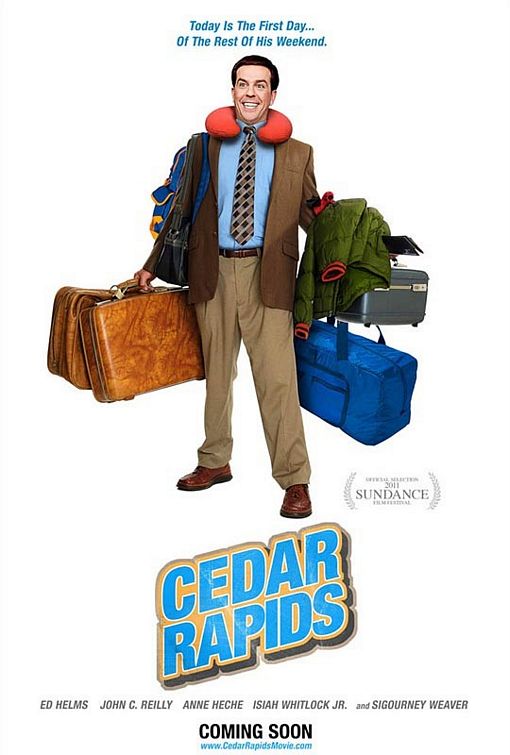 When people think about the temptations and sundry thrills of the Big City, most people are probably thinking of a sin-stained location like Las Vegas. Most people would not confuse Vegas with Cedar Rapids, and yet the Iowa city of note is the setting for a sweet and sometimes dirty, but still sweet, comedy of big-city adventures. To a guy from a town without a stoplight, Cedar Rapids is like New York City. It all depends on your perspective.
Tim Lippe (Ed Helms) is an insurance salesman from Brown Valley, Wisconsin. The town is small but the little insurance agency that could has won the coveted Two Diamond Award four years running at the annual insurance convention held in Cedar Rapids. Tim’s life is in a holding pattern. He wants to do big things but can’t find the oomph to get there. He’s involved in a romantic tryst with his (one-time) seventh grade teacher (Sigourney Weaver). Tim’s chance to make a name for himself comes when he’s selected to represent his company at the annual convention. He has to impress the right people to take home another Two Diamond Award. Never having been on a plane before, he leaves small-town Brown Valley for big-city Cedar Rapids. At the convention site, Tim rooms with Ronald Wilkes (Isiah Whitlock Jr.) and the more unsophisticated Dean Ziegler (John C. Reilly). The group meets up with Joan Ostrowski-Fox (Anne Heche), and together they work on helping Tim loosen up. Over the course of the weekend, bonds will be made, principles will be tested, and tom foolery of the first order will be had.
The premise is rather simple, small-town guy heads to the big city (well, bigger) and the culture shock that waits. But the film never looks down on Tim Lippe. While there is plenty of humor drawn from his naiveté, the movie doesn’t condescend or play up the small-town folks as rubes and squares. It’s funny to see Tim’s mild-mannered explosions of anger, mostly of the “horse pucky” variety of vulgarities, but the movie doesn’t say that the big-city folk are better than Tim. On the contrary, Tim is a principled and devoted insurance salesman, courteous to a fault. He could have stepped out of a Frank Capra movie from a bygone era (Mr. Lippe Goes to Town). Tim is sheltered, which provides some amusing fish out of water comedy, like when he initially is on alert because his roommate is African-American, a rarity in Brown Valley despite whatever the name may imply to some. Tim is a man out of time, but that can be small-town life in general. The Midwestern satire reminds me of the gentle yet knowing nudge of King of the Hill. Phil Johnston’s script sets up Tim’s dilemma as a crisis of conscience, the compromises we make in morality. Tim’s trip to the “big city” is the push the guy needs to get his life out of stasis. There’s something deeply satisfying in watching a character you care about triumph in the end, even if that triumph is a small victory befitting a small-town guy with a big heart.
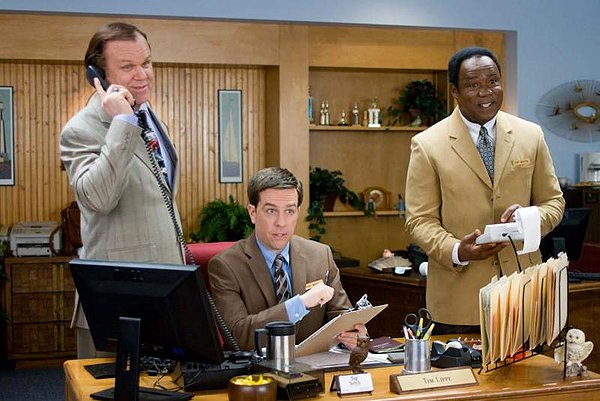 The real fun of the movie, however, is watching the effect the group has not just on Tim but on each other. They teach Tim to cut loose and live a little, but this is still Cedar Rapids, so cutting loose goes as far as nighttime pool escapades and drunken sex. His flirtatious fling with Joan brings the guy out of his shell, and the two of them are genuinely cute together without going overboard. It’s a reserved romance that feels true to the nature of both of the characters. Dean is the loudmouth knucklehead notorious for his oafish shenanigans, but once he feels accepted he goes to war for his friends. He’s a buffoon but not stupid. And then Ronald, though less developed than the other three, provides a nice foil as a straight-laced businessman who keeps it together impressively. Together it’s a team of likeable characters that have grown closer together over the course of that weekend in Cedar Rapids, and you’ll feel the same. You feel like they’ve formed a family around the earnestness of Tim.
Helms (The Hangover) is a suitable candidate for a nice, regular, Midwestern guy. Helms has honed his awkward comedy chops after several seasons on TV’s The Office, and here he sticks to what he knows. Tim Lippe is another in a line of embryonic men. Helms settles into his usual nervous tics that fans will be familiar with. His sunny naiveté wins over the audience and provides for several laughs in contrast with the jaded “big city” folk. Reilly (Step Brothers) can overdo his character’s intentional obnoxiousness. He’s chartered a successful second career as a winsome nitwit, so like Helms, Reilly relies on notes gleaned from past performances. Whitlock Jr. is mostly straight man to the others. His comedic highpoint is an impromptu impersonation of a character from The Wire to get the group out of a dangerous jam (Whitlock Jr. himself played a state senator on The Wire). Other than that, he’s more contrast than character. Heche (TV’s Hung) is a real surprise. She underplays her character, tantalizing us with tidbits that leave us wanting more, much like Tim. The way she plays Joan, you feel the connection.
 With all that said, Cedar Rapids still has its share of flaws. The naïve comedy can go so far before you start to question Tim’s senses, like his casual mistaking of a prostitute (Alia Shawkat, Whip It) for a fellow attendant. His relationship with his former seventh grade teacher is intentionally awkward, but the whole plotline presents an unseemly overtone that doesn’t fit. She’s made to be rather motherly, even when she’s rolling her eyes at her bedmate’s pie-eyed declarations of being “pre-engaged.” I think the motherly aspect makes the whole Oedipal mess even worse (Weaver just seems bored). Late into Act Three Tim goes on a drug-fueled bender that feels out of place for his character who, when first asked for a drink, requested a beer of the root kind. The character of Dean is given too many moments to just wander around and spout crude one-liners. It sometimes feels like the movie is resting while it lets Dean do his thing, and a little of this guy can go a long way.
The plot is relatively predictable and the ending is pretty pat. It works, but the actors and the characters were capable of more. The relationship between Tim and Joan also leaves something to be desired. There’s a great assembly of recognizable guests (Stephen Root, Thomas Lennon, Rob Corddry, Mike Birbiglia) that stop by but add little. Again, the potential for more feels missed. With a solid 80% of the movie taking place in a hotel, you can also start to feel a little cabin fever. And not that it matter much, but I’m disappointed that film with “Cedar Rapids” in its name was filmed in Ann Arbor, Michigan (Iowa did away with its in-state film tax credit).
The appeal of Cedar Rapids, the film, is much like the appeal of its central figure, Tim Lippe. It’s an unassuming, earnest charm, enjoying the company of likeable characters who we want to see succeed. I just wish the predictable plot had done more or trusted the actors’ capabilities. The core characters feel mostly authentic and easily recognizable, which makes the familiar, if at times bland, plot fairly forgivable. Helms and company are an easygoing bunch and you’ll be happy to tag along on their unspectacular hijinks in the “big city.” Cedar Rapids is the kind of low-key, charming little movies that often gets overlooked. It’s worth viewing for the pleasurable camaraderie of the core cast. Cedar Rapids, much like the city that bears its name, is worth a visit but does not require more commitment than that.
Nate’s Grade: B
Share this:

Attack the Block (2011)
 Attack the Block is the hip new sci-fi comedy/thriller from across the pond. The Brtis know a thing or two about elevating genre movies to an art form. While not rising to the same level of executive producer Edgar Wright’s oeuvre, this is one of the most fun experiences I’ve had in a movie theater all year.
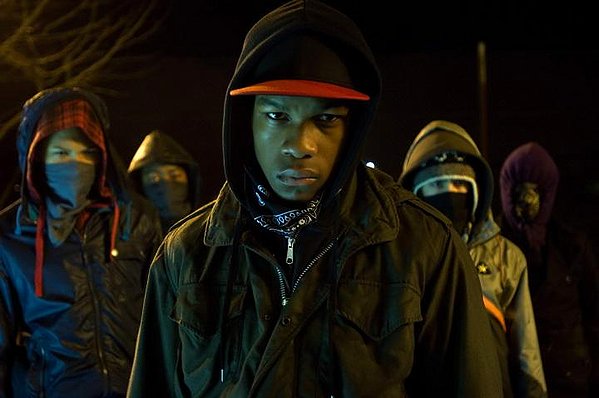
On New Year’s Eve in a South London ghetto, a very different kid of firework is lighting the moonlit sky. An alien race is crashing to Earth as fiery meteorites, which the kids of the neighborhood term “Gollums.” Moses (John Boyega) is the leader of a group of teenage wannabe hoodlums. Their crazy night begins with mugging Sam (Jodie Whitaker), a nurse who lives in the boys’ apartment complex. Moses and his crew later run into Sam and need her help when one of their own is injured. The alien monsters have descended upon their block, scaling the apartment building looking for easy prey. Moses and other block residents band together to battle a common foe, the outer space monsters, which have the misfortune of trying to invade the wrong neighborhood.
Attack the Block is a refreshing spin on a genre that seemingly had covered every ground. But lo, it never covered the modern urban landscape, or, as the tagline succinctly puts it: inner city vs. outer space. It’s not long before you realize that writer/director Joe Cornish (writer of the upcoming Tin Tin flick) is the real deal. The camera angles are lively and inventive, without crossing over into self-infatuation for style’s sake. The cinematography by Thomas Townend is delightful to look at, often making our own home feel like an alien landscape with harsh color tones. The movie has the slick look we associate with music videos and commercials, but never does the movie let the visuals overwhelm the story. The edits are crisp and quick, packing a lot of material into a small 99 minutes and doing well to quicken your pulse during several iterations of the alien attacks. But most of all, the film is completely, unabashedly fun with a capital F. It has a swagger to it, adopting the same cocksure attitude of its main characters. The accents and the breathless jargon take some adjusting, but by the time we’re running from aliens you’re pretty much at the same pace of astonishment with the characters, forgetting the language barrier. I was quickly sucked into the world of this movie, able to enjoy the depth of skill by the invisible technicians. There’s an immense sense of satisfaction watching this crew band together to take out superior numbers of baddies, some of them even Earthlings. Cornish confines his narrative focus to one apartment building over the course of one night, setting up our orientation to the building so that when we have characters running back and forth, and various storylines criss-crossing, we are kept in the loop. As people start becoming monster chow, the stakes get even higher.
 The dialogue is regularly clever without having to stoop for self-aware gags. This is not a genre spoof. This is played relatively straight, just with amusing characters (“You’d be better off calling the Ghostbusters, love.”). One of the kids, who is on a pay-as-you-go cell plan, breathlessly says, “I only got one text left. This is just too much madness for one text!” Attack the Block is the right combination of scary and funny, the same fine line that its forebear, Shaun of the Dead, so successfully walked. This is the kind of movie that genre fans tell their pals about in breathless declarations of awesome before falling over dizzy. Nick Frost, star of Hot Fuzz and Shaun of the Dead, even has a minor roll as the neighborhood pot supplier. While Block doesn’t approach Shaun’s utter genre-spoofing greatness, there is enough of squandered potential in Cornish’s script, particularly how the various pieces ultimately stack together for its standard but effective fist-pumping climax, to keep Block from being crowned an instant genre classic. The characters remain little more than types, distinguishable by the few traits thrown to the actors like meager breadcrumbs (kid with glasses, angrier kid, white kid, etc.). If you’re a fan of Shaun of the Dead, and witty, bloody sci-fi, then you already know that Attack of the Block is destined to beam into your home.
The aliens themselves deserve a special mention since they break away from the traditional mold of cosmic movie monster we’re familiar with. These minimalist aliens look more like giant yeti creatures that run on all fours. They’re all black, like inky black hole light-cannot-penetrate black, which is scary but also a clever way to hide the shortages of a limited budget and the reality of people in suits. The only thing that stands out is a set of fluorescent blue jaws that snap wildly. It’s like the monsters ate a can of glow sticks. This aspect is smartly used at points to pump up suspense. It’s a novel approach that veers away from the H.R. Geiger (Alien) stuff that’s been copied and recopied to death for the last 30 years. These aren’t smart aliens. They’re more like rabid beasts overwhelmed by their biological impulses. These aliens don’t come across as organized as other movie aliens. It seems like they’re just floating around through the void of space waiting to land on the right rock and multiply.
The musical score is greatly enhanced through the talents of Felix Buxton and Simon Ratcliffe, better known to big beat electronica fans as Basement Jaxx. The musical duo provide a score tinged with their famous electronic mélange of sound, including pieces that sound like retro video game sound effects (Space Invaders?), 1950s sci-fi movie scores thick with Theremin use, and an ongoing sludgy beat that weaves in and out of the picture. Working with Steven Price (Scott Pilgrim vs. the World), traditional rousing musical pieces are enhanced with the Basement brothers’ dubsetp influenced bass and drum lines. The score perfectly matches the frenzy of what’s happening onscreen, evoking a fuzzy mood. I have been listening to clips of the Attack the Block score for days. It’s not as integrated and essential to the film as Run Lola Run’s famously kinetic electronica score (the standard bearer of all electronica-enhanced scores), but I was delighted every time it remerged. With the Chemical Brothers score for Hanna and Oscar-winner Trent Reznor’s score for the Girl with the Dragon Tattoo later this year, this may be the best time yet for film lovers that enjoy toe tapping to some electronic beats. These kinds of scores age so much better than synth scores, one of the absolute worst things ever to happen in the history of movies (Apocalypse Now is almost unmatchable thanks to its dreadful synth score).
 Of course your level of enjoyment is going to severely rest upon whether you want the main characters to survive or get eaten. Attack the Block begins with an empathy deficit, meaning it puts its hoodlums immediately in a hole that they might not get out of. Our first introduction to Moses and the gang is watching them mug Sam. Later on one of the guys says the knife that was bared was just for show, and that the boys were just as scared as she was. I doubt that. When you’re on the receiving end of a weapon, and outnumbered, and surprised, it sure seems like you got it worse. The movie then spends the rest of its running time with these wannabe ruffians, and we do get to know them slightly better but really only slightly. Some of the kids have absentee parenting situations, which isn’t too shocking, and occasionally a character will take a moment to reflect, thinking beyond the situation, blaming the government in a fit of paranoia for being behind the alien nasties. One kid even makes a curt remark when he finds out Sam’s boyfriend helps impoverished kids in Africa. “We don’t got poor kids here that could use some help?” he comments. Well, kid, I wouldn’t dismiss the magnitude of systemic poverty in the African continent, but you could have made your point without seeming like a dick. And these are our characters. They blather a lot; in fact they rarely stop talking. Eventually they do apologize to Sam for mugging her and Moses does take the mantle of hero to redeem himself. However, by that time some audience members may have checked out. Attack of the Block is decidedly less fun if you don’t give a fig for its wannabe thug figures.
Attack the Block is like a delirious head rush, witty, full of energy and style to spare, and an infectious attitude that washes over you. The movie delivers what Super 8 promised, namely the bond of kids coming together to thwart an alien invasion on their home turf. This is a high-energy flick that succeeds as a comedy and a thriller, with a few nasty splashes of gore thrown in for good measure. It has some issues that keep it from the pantheon of genre greatness, but I won’t quibble the movie to death. Not when I get something as deliriously entertaining as Attack the Block.
Nate’s Grade: A-
Share this:

50/50 (2011)
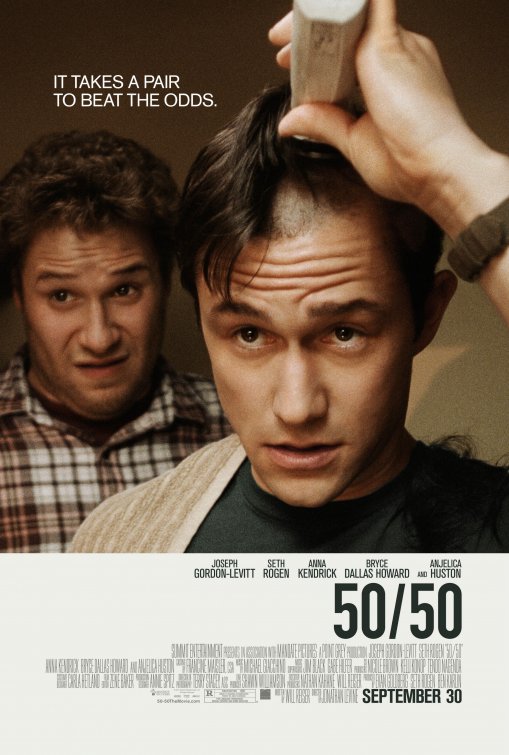 50/50 is based upon the experience of screenwriter Will Reiser, a writer for HBO’s Da Ali G Show who contracted cancer before his 30th birthday. Reiser’s real-life travails with his buddy Seth Rogen (who serves as executive producer) through the good times and bad. I guess when you get cancer it helps to have an established movie star as your good friend. It also helps when you write a terrific script, which Reiser has accomplished. Originally titled I’m With Cancer, I guess the studio felt that a movie with “cancer” in the title was a hard sell to mass audiences (On a related note, Showtime’s comedy-drama The Big C, about Laura Linney finding the humor through cancer treatment, was previously titled The C Word. I don’t know about you, but when I heard “the c word” the first thing that comes to mind is not “cancer.”). Even with a more oblique title, 50/50 manages to walk between comedy and drama with flair. It’s probably the funniest movie you’ll ever see about cancer. Definitely funnier than My Sister’s Keeper.
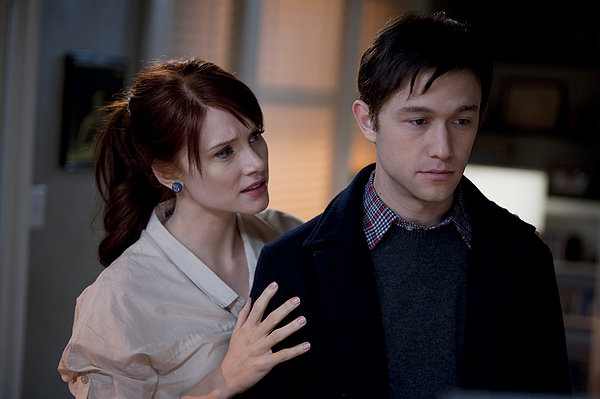
Adam (Joseph Gordon-Levitt) is a relatively healthy 27-year-old. He likes his job writing for a Seattle National Public Radio station. He likes his girlfriend, Rachel (Bryce Dallas Howard), an aspiring painter. He likes his best friend, Kyle (Rogen), a dude prone to speaking whatever is on his mind. Then one doctor’s visit changes everything. Adam has a very serious form of spinal cancer. He begins chemotherapy to try and stop the tumor’s growth. Rachel drives him to his hospital treatments, helps him during his long nights of nausea, but ultimately it proves too much to bear. She leaves him. Luckily, Adam has a young therapist, Katherine (Anna Kendrick), helping him put his life in order. Adam’s chances of surviving this rare cancer are exactly as the title proclaims, 50/50. As he comes to grips with the measures needed to survive, Adam finds himself growing closer to his therapist in a completely unprofessional degree.
50/50 may be the least sentimental movie I can recall about the realities of living with cancer, and that is its greatest attribute. That doesn’t mean that the movie doesn’t cover serious issues in a flippant manner. Instead of hitting cheap sentiment and milking cancer for easy tears, the movie, thanks to Reiser’s sharp script, forgoes false feelings and finds something more rare and true. There’s no real playbook for something as unexpected as a person in their 20s being diagnosed with terminal cancer. It seems like a cruel irony to be stricken with an illness so young. Adam doesn’t drink, doesn’t smoke, and doesn’t even drive due to the danger. He’s pretty mild-mannered and a bit of a pushover. Adam tries to not let cancer get to him, to shrug off the heavy implications, and to just make it seem like any other personal setback. If he doesn’t treat it like a big deal, maybe it won’t be and his friends and family can follow his lead. This kind of self-manufactured blasé attitude, even in the face of cancer, seems like an apt approach for a younger relaxed generation. Naturally, this denial-heavy approach doesn’t exactly work. It’s too easy to confuse numbness with acceptance. Fortunately, Reiser does not let his story slip into easy maudlin theatrics. We don’t need anybody reminding us, or Adam, how serious his situation is. On the other hand, we also don’t need anybody moralizing about any self-help slogans. Not everyone sees adversity as a blessing into Discovering Who You Truly Are. Reiser refrains from his characters making anything approximating Big Life Statements. Cancer does not lead to automatic personal epiphanies. If it did, we’d have a lot more people inhaling carcinogens and volunteering to work in the Chernobyl ruins.
 50/50 doesn’t ignore the sometimes odd and dark humor that arises from life’s predicaments. That means this is the only cancer movie where the guys try and use the disease as a way to convince girls to sleep with them. At no point do I remember this occurring with Terms of Endearment or Beaches. And this opportunistic babe hunting doesn’t make the boys come across as sleazy. Adam can’t even enjoy the one-night-stand as his back pain robs him of the pleasure of his nubile well-wisher. The tone is very controlled. The raunchy comedy is not a distraction; at no point does any situation feel like a comedic setup. The comedy comes from the characters being genuine to who they even through the trying circumstances. If your friends are funny, chances are they’ll still be funny talking about cancer. The humor doesn’t make light of things nor does it just play everything for laughs. Humor is how we humanize, how we make the insurmountable digestible.
50/50 also treats its characters with a bittersweet sense of reality; these people are flawed and relatable. They are not instantly made into self-actualized saints thanks to cancer. Adam’s girlfriend actually breaks down because she cannot handle the extra responsibilities and emotional wear and tear. Their relationship fizzles. This seems far more realistic considering many people will feel like they did not sign-up for sleepless nights, 24-hour care, and watching their loved one waste away. It’s a strong individual that can endure that kind of collateral pain, but the movies make it seem like every romantic partner is unnaturally selfless. They become ideal partners, but really most of us would just bail. Reiser easily could have easily written his ex-girlfriend as an insensitive shrew. While she does cheat on the guy, thus making her easy to dispel, Howard makes her vulnerability relatable. She even comes back trying to make amends, forcing kisses upon him to weaken Adam’s resolve. Kyle relishes the opportunity to finally be able to tell off Rachael, a girl he admits to disliking from the start. I don’t get the instant hate, but maybe it’s my complete adoration for Howard even when she’s playing a bad girl that blinds me to her offenses. To dismiss her as a “bitch” seems unfair. How would you react if your boyfriend/girlfriend were suddenly diagnosed with cancer? Could you last?
I found all of the characters to be empathetic and relatable (though a lead who waxes about the glory days of radio and works for NPR seems a bit hipsterish), especially in their personal struggles surrounding Adam’s illness. Adam’s mother, Diane (Anjelica Huston), can be overbearing and would have easily been kept as a caricature in other movies. In 50/50, the film examines her own struggle – a husband with Alzheimer’s who can’t talk to her and a son with cancer who chooses not to talk to her. The isolation she feels, the loneliness, always putting other people’s needs ahead of her own, this is culmination of the caregiver, a role as I’ve stated that too often gets canonized. In 50/50, the reality of living with illness is dealt with in a meaningful manner. The people surrounding you are also affected by your illness. You cannot shut them out to spare them from pain. Adam realizes this too as the film progresses to its moving conclusion.
 The heart of 50/50 concerns two sets of relationships. The one that will catch the most attention is Adam’s budding romantic relationship with his therapist. Their romance feels like it emerges naturally, albeit in a slightly hurried up pace for our small timetable. It’s a romance built upon the chemistry of the two actors, the strength of their individual performances, and the fact that Reiser forgoes anything obviously romantic. He cleans out her car. She gives him a ride home. It’s little things that seem like they matter on a personal level, not the outsized theatrics of romantic gestures. The movements are small but they add up, and we can feel it too. So when Adam, at his lowest point, calls her and says, filter down and radiating in emotion, “I bet you’d be a good girlfriend,” it’s a moment that feels earned. I also greatly appreciated Katherine’s own insecurity about being a therapist. Too often movies depict therapists as omniscient beings that have a fortune cookie answer for all of life’s mysteries. Kendrick hides behind evaporating smiles as her character’s defense mechanism. In 50/50, we get to see a character that is honest about her insecurities about a job that advises others. It’s refreshing. The other main relationship is between Adam and his best friend, Kyle. His best buddy is his spark, the guy who gets him out, who shakes him from moping around. He cares but goes through unorthodox methods to show that care, including trash talking and ball busting. He remains likable to his shaggy core because he has Adam’s best interests in mind, even if that means scoring with girls.
Director Jonathon Levine (The Wackness) gives the movie an improbably beautiful look. This is one cancer comedy that is simply pleasing to watch for the cinematography alone. He doesn’t overpower the narrative with self-aware visual touches, though there is one that stands out. When Adam receives the news from his doctor, the audio becomes distorted after the shocking word “cancer” is uttered. The picture becomes blurred. The world seems to have been swept away. I imagine this sonic body blow is pretty much how Reiser recalls receiving the news, and if not it still feels authentic. The score by Michael Giacchino (Up, Super 8) is subtle and doesn’t intrude too often, ably assisting the drama instead of smothering it.
50/50 is an unsentimental film that manages to be moving and genuinely entertaining on its own terms. It can be rude but that doesn’t mean it lacks sincerity. The characters and their dilemmas feel all too relatable, even the ones we hope don’t become us. The 50/50 production has followed a subdued edict, forgoing sappy melodrama and easy pathos. These emotions are earned the old fashioned way, through characters we care about and drama that feels truthful. The mixture of the course and sweet gives the film a decidedly Judd Apatow (Knocked Up) flavor even though his name is nowhere to be seen. Gordon-Levitt, who at this point can do no wrong in my eyes, gives one of the best performances of his already accomplished career. The comedy, lead by Rogen’s obnoxious best friend, keeps the movie from being bogged down in melodrama. It’s the only way to stay sane, and 50/50 recognizes this and delivers a film that earns its tears and laughs.
Nate’s Grade: A-
Share this:

The Future (2011)
 Miranda July is a writer/performance artist/filmmaker whose unique voice earns as many praises of “precocious” as it does hails of “pretentious.” Her previous effort, 2005’s Me and You and Everyone We Know, had such oddities as a group of cars creating a caravan to save a goldfish left atop one’s roof and children engaging in online sex chat over sharing feces from behind to another ( ))<>(( is the visual articulation of this function). Yeah.
With her second feature film, The Future, we follow Sophie (July) and Jason (Hamish Linklater), a couple who decide to adopt an injured cat they find. Named Paw-Paw by Sophie, they must wait 30 days for the medical checks to clear before they can pick up the cat. They believe that they are doing a kindness and giving the cat a good place to live in its last month of life. Then the vet informs them that if bonded, the cat could live an additional five years. Sophie and Jason will be 40 in another five years, and this realization stops them cold in their tracks. Both are unhappy with their lives, he works as a technical help guru and she teaches dance to preschool-aged children. They decide that for the next 30 days they will reinvent themselves. They will take the road less traveled and see where it takes them. Jason volunteers to be an environmental solicitor on a whim. Sophie wants to do 30 dances in 30 days but is crippled by fear. She reaches out to Marshall (David Warshofsky), an older single dad who proves to be a source of unlikely temptation. Along the way to the conclusion of those 30 days, Jason will utilize his abilities to stop time, speak with the moon, an old T-shirt will crawl will come alive, and the story will be narrated at turns by Paw-Paw.
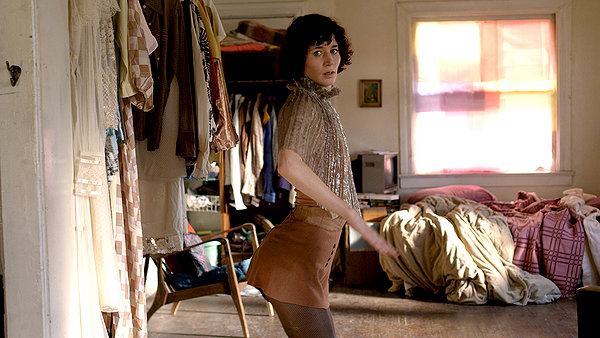 It should be obvious at this point that July is not going to be everyone’s taste. You could just as well furrow your brow at all these pseudo-intellectual bohemian artsy smartsy pretensions and make snide remarks under your breath. And I can’t say I’d blame you at points. However, if you happen to catch a ride on July’s funky wavelengths, then The Future becomes a poignant, observant, and occasionally profound rumination on human connection. July’s two main characters encounter a full crisis of self, fearing that their lives will essentially be over upon turning 35, which they reason is almost 40, which is practically 50, and all that back-half stuff is “loose change” (not enough to really get what you want). I believe I heard none other than Jessica Simpson herself utter a similar statement on her ill-fated Newlyweds reality TV show. She said, “I’m turning 23, which is practically 25, which is almost 30.” Perhaps Ms. July was also watching that episode, and if so this will be the only time in print that I congratulate Jessica Simpson for anything. This manufactured anxiety over doing something of worth and lasting value with your time on this planet is nothing new but it is deeply relatable, despite the silly numbers game the characters endure. It’s a paralyzing existential doubt. Who doesn’t want to feel like their life had purpose? You only get one. July makes a series of observant comments about human interaction. For their life project, Sophie decides to cancel the couple’s Internet connection. They have but moments, perhaps seconds left, before the Internet is lost to them for 30 days, and they scramble to open their laptops to do important stuff. “Only look up stuff we can’t find in books or by talking to people,” Jason intones. Slowly, both of them come to the same realization and close their laptops. It’s a silent admission that the technology we feel dependant upon might not be so.
There’s a striking clarity when an artist cuts through everything and finds something dwelling inside your grey matter. For me, July is that kind of artist. I loved a sequence where Sophie, out of slumming desperation, takes a job as a receptionist back at her old work place. One day two of her female friends come into the studio. Both women are several months pregnant, and Sophie is aghast that she let time get the better of her. She keeps shaking her head, rationalizing that it must have only been a couple weeks since last she saw her friends. Then through a series of edits, we witness a fantastic fantasy that highlights Sophie’s abject feelings of accomplishing little while time flies by. Every time the camera cuts back to the friends more time passes; we see them hold newborn babies, then we see those babies as kids, then as young adults, and finally as adults who themselves have married each other and wish to enroll their own daughter into pre-dance. They inform Sophie that their mothers passed some time ago. And all the while, Sophie is still in her dead-end job. It’s a terrific scene that highlights the anxiety we all feel about being lead footed in life, watching others skirt by and negatively assessing our own personal journeys by someone else’s accomplishments. The Future is full of moments like this that hit so hard you feel like the ground beneath you has vanished. Jason’s refusal to restart time is painfully identifiable, the wish to stay frozen in time to defer facing the hard pains of a breakup, the rueful knowledge that life will be forever different, and worse, in the passing of a second. The future can be a painful place we’d all like to hide under the covers and avoid.
Like July’s previous film, The Future is more a series of encapsulated vignettes, each with their own peculiarities, than a fully formed coherent story. While I enjoyed the separate vignettes better in Me and You, the overall story congeals better in The Future even if the results are messy. This is a less romantic and hopeful film than Me and You. It’s much more ambiguous (that’s saying something) and bleak when it exposes the missed chances that can haunt, none more so than Paw-Paw, our bandaged feline narrator. Scurry to the next paragraph if you’d like this part unspoiled for you, sensitive animal-loving readers. Paw-Paw speaks about her new sense of happiness, about having owners that will be kind to her, and this new sense of belonging fills the cat with a ballooning hope that her real life has finally begun. But then Paw-Paw doesn’t make it. She dies a day before either Sophie or Jason comes by to pick her up. But the cruel irony is that Sophie and Jason missed picking up their cat/metaphor of their relationship on its release date. Paw-Paw could have spent her last day on earth with the people she had yearned to be with, the people she wrote an imaginary letter to telling them how grateful she was and how much she promised to love them. Instead, the cat dies, forever waiting. That’s pretty rough, and even though July’s scratchy, high-pitched Paw-Paw voice can be annoying, God help me if the pet lover in me wasn’t in tears every time this damn cat was narrating, including after its death. That’s the kind of film The Future offers. It does not dish out easy answers for life’s Big Questions. Even as the end credits roll, you’re left to ponder whether you believe that Sophie and Jason will reconcile.
 July, resembling a cross between Kristen Schaal (Dinner for Schmucks) and Juliette Binoche (The English Patient), is probably also her biggest hindrance. She’s not that developed as an actress, or is being purposely opaque, and thus Sophie seems to be lost in a medicated fog. This was less of a problem with Me and You because the ensemble was larger. Here, it’s mainly three actors. July delivers every line in a flat style that makes her character harder to decipher and harder to empathize with when she goes off into her affair. The entire storyline with the sign making “other man” is kept at a mystery. We’re not really sure why Sophie would be attracted to this man or what problems are ailing her relationship with Jason. I suppose the early mid-life crisis could serve as a fire to get Sophie to reach out to someone who offers more security, but that’s merely my best estimation. It’s a detour that could use more attention to explain its significance. I suppose it could be July’s version of a romantic comedy staple of being with the wrong man and finding out late your mistake. It’ll be up to the viewer which guy fills the role of “wrong man.” Luckily, Linklater (TV’s New Adventures of Old Christine) is a winning presence, affable without being offbeat and striving for meaning without coming across as pompous.
Whether it’s a dance inside an oversized T-shirt or choosing a song to communicate undying love in the event of amnesia, The Future is chockablock with memorable moments, images, insights, and peculiarities. Whether all of that comes together into a fully realized movie is another matter. The scattershot nature and July’s own acting shortcomings clip the film’s momentum, but the uniqueness of voice and observant vision of July as writer/director makes me forgive much of The Future’s faults. It’s not exactly an easy sell of a movie, especially to concerned pet lovers, but July is one of those polarizing artists I’m glad finds the time to empty their brain every now and then. I may not fully understand everything but The Future held enough promise for me to leave feeling satisfied.
Nate’s Grade: B+
Share this:

Beginners (2011)
 Burying a parent is one of the most gut-wrenching hardships of life, a passage I have thankfully not had to endure yet in my own life. Writer/director Mike Mills (Thumbsucker) turned his own heartbreak into a subdued, life-affirming movie called Beginners. This gentle movie is comic, poignant, and frustratingly limited thanks to a miscalculation in its structure.
Oliver (Ewan McGregor) is reeling from the loss of his elderly father, Hal (Christopher Plummer). After the death of his wife, in his seventy-fifth year, Hal came out as being gay his whole life. And he decided to have some fun in those last years too, notably with a hunky younger boyfriend (Goran Visnjic, remember him, ER fans?). We get several flashbacks with Oliver and his ailing father, who was diagnosed with stage four lung cancer soon into his gay reemergence. In the present, Oliver, as a dissatisfied graphic designer, is trying to find his bearings after burying both of his parents. Hal’s dog, a Jack Russell terrier, is mourning as well, refusing to be left alone. As a result, Oliver takes the small dog with him wherever he travels, including social events. He meets Anna (Melanie Laurent) at a friend’s costume party. He’s dressed as Sigmund Freud and she mimes having laryngitis. Anna, a young actress who spends most of her life in hotels, invites him back and the two explore the possibility of a relationship. She’ll be off to another film shoot in a month, but the two become inseparable during the time they have together. Anna learns about Oliver and his complicated relationship with the complicated man he knew as his father. Oliver, and in flashback Hal, are beginners on a road to making sense of their lives.
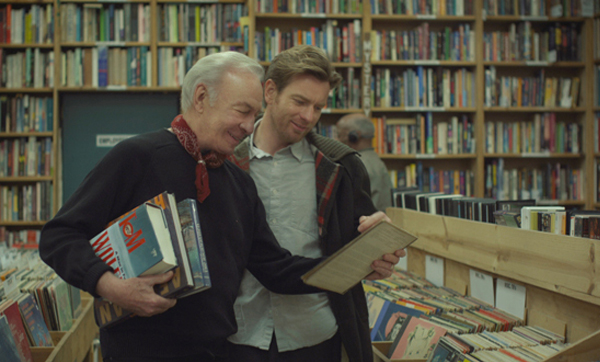 What eventually holds Beginners back is its clipped structure. The film diverges into two main storylines, father and son (60%) and son with new love (40%). The new love stuff is presented fairly linearly, however, the father/son material is not, consisting of memories that can be triggered by objects or offhand sayings. Like (500) Days of Summer, memories are presented not in a linear fashion but through a connection of theme or tone. Rarely do we recount memories in a chronological fashion, and as such Oliver is beset by deluges of images of his father ailing at various points. But it’s like Mills took that fleeting memory approach to heart because Beginners is a slave to the altar of jump cuts. The editing, and the narrative, is constantly leaping forward; scenes rarely last longer than 30-45 seconds, making the film feel like somebody had their finger mashed against a stubborn fast forward button. As a result, the film feels hurried and unsettled, and this clipped structure mollifies the emotional impact of the movie. It’s because the romance only feels like someone’s remembrance of those burgeoning happy beginnings. The film doesn’t feel like it is in its own present; we’re in 2003 and Oliver will occasionally inform us, in High Fidelity-styled notation, of life at that moment. It feels like the entire enterprise is an assembly of past memories ping-ponging off one another. Another hurdle is that Anna and Oliver’s main conflict concerns their fear of happiness. Each had parents who wed as unhappy people, had unhappy unions, and both are fearful that they too will commit to living unhappy lives. It’s not an impossible feat, to be sure, but it does make it somewhat harder to relate to your characters when the main relationship problem is that they cannot accept happiness. While psychologically interesting in larger scope, due to the structure of Beginners, this conflict for Anna and Oliver seems petty and insufficient. The antsy story structure limits the emotional resonance of the movie. What should be a nourishing meal about the human condition ends up being a tidy snack instead.
Don’t get me wrong, Beginners is still a fairly moving film in its own right. Just the very nature of the story, dealing with the last months of an ailing parent and what to do next, is destined to hit poignant pockets of drama. Plus you have gifted actors doing fine work to wring out those tears. Mills’ tale is semi-autobiographical, which allows for several personal insights that can wound, like direct shots of honesty. Oliver narrates the steps taken after a parent’s death, including the mundane yet painful trivialities needed to convince every bill collector that their client has left the Earth. When Hal is informed that he has a spot of cancer the size of a quarter in his lung, the screen flashes to black as the doctor continues her somber diagnosis. A quarter appears. Then five nickels, finally twenty-five pennies. It’s a small little visual insert, and yet it manages to seem like a believable, personally relatable moment when delivered such thundering news. Something the size of a quarter will be responsible for your father losing his life. Five nickels. Twenty-five pennies. The scenes with father and son, coming to terms with saying goodbye, reflecting on lives lived and lives deferred, is what gives Beginners its beating heart. The clipped present-day romance plays more like a post-script attempt to forge a neat resolution after all that heavy grief.
Plummer gives a performance that is equal parts weighed with the gravity of death and the electricity of life. After his wife’s death, Hal finally has an opportunity to embrace who he has been his whole life. Mills and Plummer are delicate with how they handle the relationship between Hal and his wife (Mary Page Keller in flashback). Neither hated the other, and both did express love, but they were together in a marriage of convenience, both of them hiding who they were from preying eyes (Oliver’s mother hid that she was Jewish). Plummer’s celebration of life, the twinkling realization of accepting who you truly are, is an uplifting path for his character, and thanks to both Mills and Plummer it never feels like he’s dancing on the grave of his long-suffering wife. He’s not celebrating her death; he’s embracing who he is in the twilight of his years. He’s looking for a small amount of kindness and comfort while finally being socially recognized without fear or intimidation. Plummer is delightful during Hal’s happier moments and heart wrenching during the realities of his failing body. Plummer deftly bites into one of those juicy, Oscar-bait roles.
 McGregor acts very well even if his character is kept in a very tight box of emotional expression. His character seems to sleepwalk from scene to scene; often little is said and much left to the imagination through pregnant pauses or gestures. McGregor does a fine job of balancing the different timelines of grief his character is experiencing. He’s in comic shock about his father’s newfound immersion in a gay lifestyle, he’s in mourning about the recent loss of his father, he’s in annoyance tinged with guilt about the burdens of taking care of a man that was often absent in his own life, leaving him in the care of his mother, resigned to a life of dutiful despondency, and he’s infatuated with the possibility of romantic love, a cleansing force. It’s a lot for one actor to keep straight and McGregor does an admirable job. Laurent does not fare as well. The Inglourious Basterds‘ actress is forced to rely mostly on wry smiles and her penetrating eyes. She also cocks her head to the side a lot, or a least that’s how I recall. She’s given something of a thanklessly underwritten role but she manages to be adorable from her first moment onscreen, which is her most vital acting accomplishment here. She’s supposed to be that happy ending we want Oliver to have.
Beginners is a moving, charming, and perceptive movie. If only there was more of it. The clipped, hurried jump cut-heavy structure keeps the audience at a certain distance and capping the emotional resonance. The father/son stuff is going to be easier to empathize with, both good times and bad, than two good-looking thirtysomethings afraid of being happy because their parents are screwed up. Ultimately, the film’s pretenses of a budding, quirky romance will take away from the more genuine father/son bonding late in life. You’ll get weepy at turns, maybe even swoon here and there, but the rewards are sadly too momentary, never cohesively assembling into a full-fledged narrative. Beginners has an equal number of hard truths and light moments of whimsy (the subtitled dog is a hoot), but ultimately it’s a movie that makes you wish it had left a better impression when it had the chance.
Nate’s Grade: B-


 nathanzoebl
You must be logged in to post a comment.