Blog Archives
The Gift (2015)
 Reminiscent of adult thrillers that dominated the 1990s, Joel Edgerton’s The Gift is a slick and fiendishly enjoyable movie that unravels methodically and is comfortable dealing with moral ambiguity. Simon (Jason Bateman) and Robyn (Rebecca Hall) are transitioning to a new city and a new job when they meet an old high school acquaintance, Gordon (Edgerton). It seems at first like “Gordo” is going to be a scary stalker with boundary issues, but Edgerton, who also wrote and directed, keeps pushing his familiar narrative further, adding different shades to the trio of characters and allowing them to be flawed humans revealing their secrets. It’s a movie that’s not afraid to go dark and dwell in the unknown, especially with a note-perfect morally murky ending that leaves the viewer in the same wonderfully cruel sense of uncertainty and gnawing curiosity. Bateman pays against type as a rather strident character who definitely has issues with sticking to the full truth. Hall is more than a damsel in distress. She’s overcoming serious problems that she may or may not bear some culpability for, which makes her performance that much more interesting. Edgerton doesn’t overplay any off-kilter tics; his Gordo is a bit off, and always comes across like he’s holding back saying more, but his impression is a lot more wounded animal than psychopath. The screenplay is a model of efficiency and the secrets and reveals are evenly doled out. The Gift is an entertaining thriller with dark turns, deliberate pacing and structure, morally grey characters, comfort in ambiguity, and a healthy respect for its mature audience.
Nate’s Grade: B+
Share this:

The Diary of a Teenage Girl (2015)
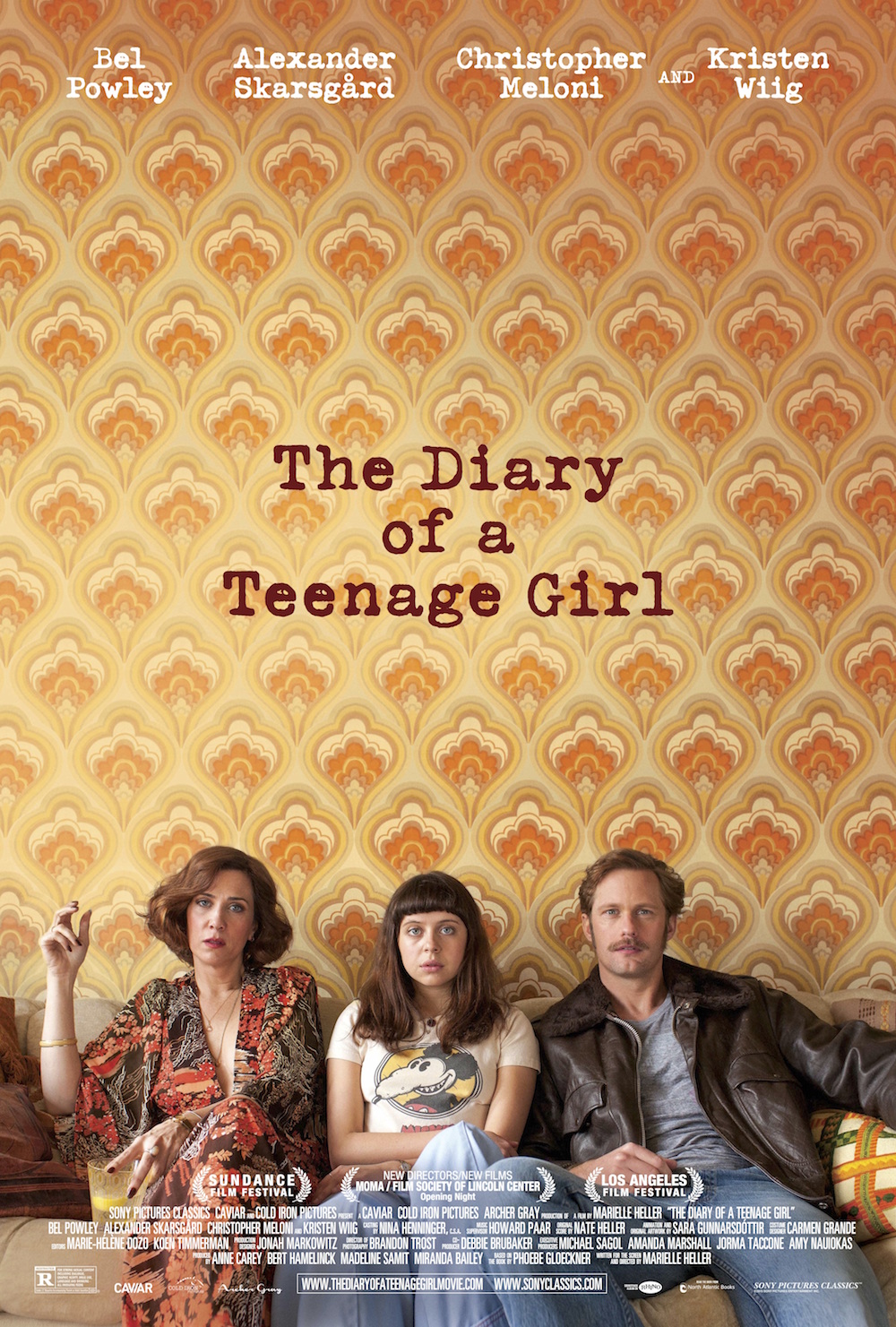 In 1976 San Francisco, Minnie (Bel Powley) is trying to navigate the world of boys and her teenage feelings. She’s 15 years old and wants to be an artist. She lives with her mother, Charlotte (Kristen Wiig), and her mother’s boyfriend, Monroe (Alexander Skarsgard), and her little sister. Minnie has always exhibited a desire to be touched, and the accidental touches of Monroe are exciting her mind. One night, their sense of play crosses a line and the two kiss, and from there Minnie and Monroe carry on a secret tryst.
Refreshingly, The Diary of a Teenage Girl may be one of the few coming-of-age films about a teen woman discovering her sense of sexuality without extolling an overpowering sense of moral judgment. The movie is frank and honest and allows its characters to make mistakes but also learn from them, and the kind of activities others might deem as mistakes or pitfalls might not be deemed as such by our characters, at least at their current point in time. Minnie is such a starkly interesting character, cheerfully independent and naively romantic. Her very first words in the film are, “I just had sex today.” Minnie is a character that enjoys sex and the movie does not punish her for her hormonal impulses. It’s encouraging to see a portrait of a woman who takes agency over her own sexuality. Once she’s discovered sex, it’s like a new world for Minnie. She feels like she’s discovered the secret handshake to being an adult. The world looks different to her. There’s a funny scene where she’s in a record shop and eyeing some of the varying male patrons, imagining what their respective penises might look like, which are depicted with colorful onscreen animation. It’s a nice change of pace to have a movie adopt a female point of view and the Female Gaze, if you will. We see the world as Minnie does, bursting with possibility, pleasure, and excitement. And yet, at the corners, we can sense the contours of doubt, the life lessons that will eventually present themselves to our restless heroine (the audio diary of her sexual escapades with Monroe is a time bomb waiting to happen). These lessons are not one of punishment but one of experience and understanding reminiscent of 2009’s An Education.
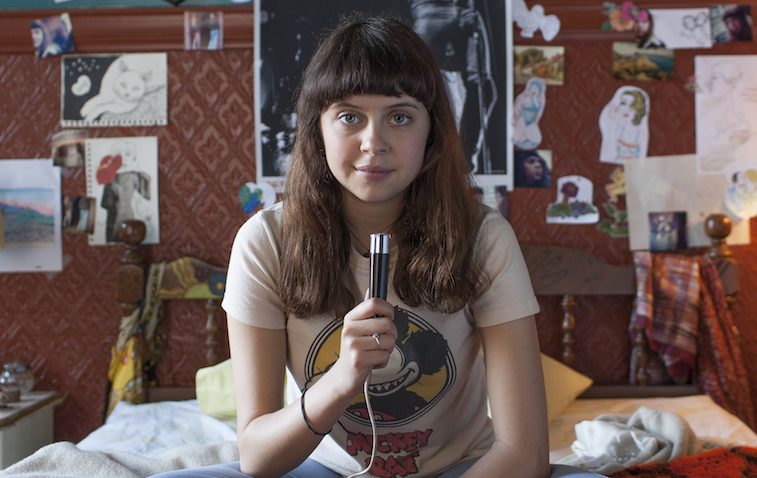 Its bracing sense of honesty and its finely attuned perspective also help elevate the film. Minnie’s voice is all over this movie, and not simply because she provides narration. She’s not over precocious or hyper literate; she speaks like an average teenager bursting with feelings and ideas that she has trouble putting into words. There is a sprightly sense of humor that runs throughout, a sense of comedy that get can get naughty while still feeling wonderfully immature. Minnie’s point of view and the way she processes the world, aided with often-animated fantasy and dream sequences, provides plenty of entertainment. Some of the humor is derived from her naiveté and how brashly straightforward she can be about her wishes, but even these moments are free of judgment. Minnie is allowed to be the funny, flawed, and complex creature she is.
Teenage Girl is also a remarkable spotlight for two artists, Powley and debut director Marielle Heller (wife to Lonely Island Boy Jorma Taccone). Powley is a terrific lead and gives Minnie an appealing mixture of curiosity, angst, attitude, and humor. She’s thrown into a different world and trying to adjust as she goes, which leads to plenty of vulnerability and honest reflection. She’s looking for more than sex but doesn’t quite know how to find the companion she desires yet in a culture that values her most as a figure of desire. Powley, it should also be noted, is British (though you’d never know) and 22 at the time of filming. There are several sex scenes and nude sequences for Minnie that can be uncomfortable to watch given the age of the character. I never felt the movie was being exploitative with its lead actress and character. There’s a moment when Minnie stands naked before a mirror, touching her body, and openly hoping for someone who will love her as a whole. These moments are meant to be awkward and raw and they achieve that power without feeling exploitative. Powley’s performance is such a natural and cutting teenage performance with touches of Maggie Gyllenhaal in her voice. This is the kind of character that a young actress desperately hopes for and luckily Powley was gifted the right director.
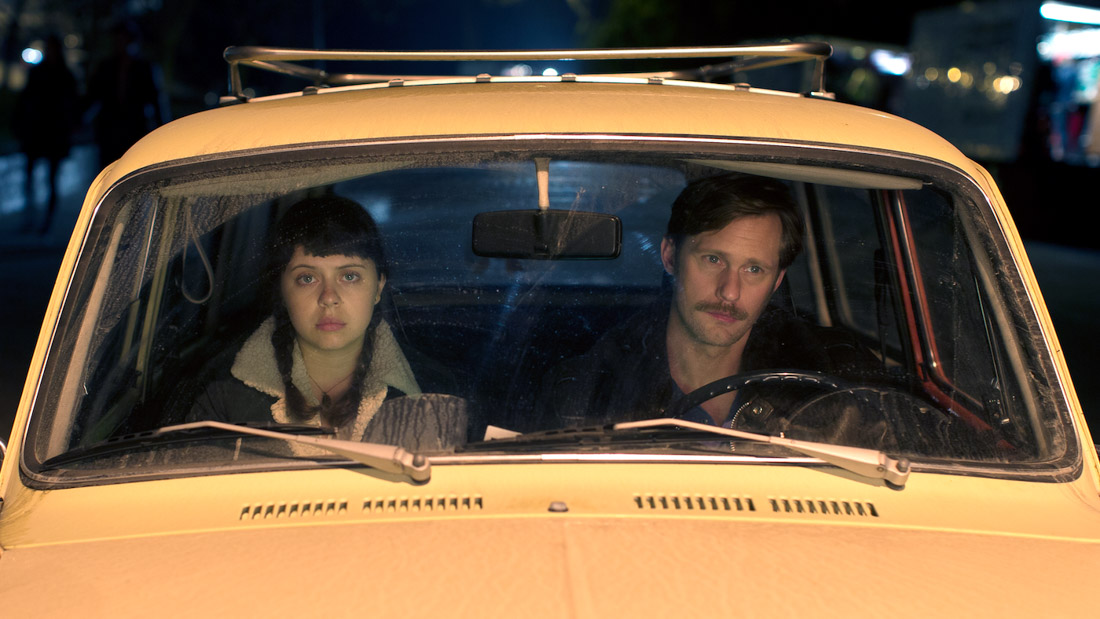 Heller, who also adapted the script based upon the semi-autobiographical graphic novel by Phoebe Gloeckner, has a definite feel for the material and keeps the tone controlled. It would be very easy for this story to veer into tawdry with its sensationalist elements, and yet it feels far more grounded in the reality of a teenage girl discovering how to interact with men and the power she has within her. There are some cringe-worthy moments between Minnie and Monroe but the movie doesn’t tell us how to feel and instead challenges the audience. Monroe isn’t presented as some leering and lascivious pederast. He is presented as yet another flawed individual who is wrestling with conflicted feelings; he knows what he’s doing with Minnie is wrong but he can’t quite quit her. There’s a level of sympathy toward his character that doesn’t excuse his actions and weaknesses. Charlotte, in contrast, is a character that speaks the language of the 1970s enlightened feminist but has shackled her subconsciously, setting up reoccurring failures for herself because she has difficulty taking responsibility for herself. When she gets a big check from her concerned ex-boyfriend (Christopher Meloni), she frivolously spends it on drugs. By the end of the movie, Minnie acknowledges that her mother will always think she needs a man, a provider, to simply get by in this life. Heller’s feel for these characters is sharp and the ambiguity she affixes is appreciated.
The Diary of a Teenage Girl is a coming-of-age drama that sits unique amongst the burgeoning subgenre of teen angst and broken hearts mostly because it is female-focused and free of judgment or moral castigation. Our heroine learns about the world, learns the power and pitfalls of sex and the potential enjoyment, and yet she still gets to be herself, free of long-term scarring punishment usually befit a Lifetime original movie on the sordid subject. Even better, Minnie is an intensely interesting and entertaining character that freely shares her frank perspective. The film adopts her perspective and Teenage Girl comes across and far more honest about its characters and about growing up. Powely is a standout and destined for further great things, and the supporting cast all perform ably. There isn’t a bad or misplaced actor in a beautiful looking film. The Diary of a Teenage Girl (man do my fingers really confuse this title with the name of that cheesy ABC Family TV show starring a young Shailene Woodley) is a smart, funny, provocative yet mature and welcomed slice-of-life story that feels painfully honest and praiseworthy. It’s a story that doesn’t excuse or condemn the actions of any of its characters. It’s a film that takes chances and reaps rewards from its risk-taking. It can feel like watching a slow-moving car slide into a ditch, but you’ll be glued to the screen throughout.
Nate’s Grade: A-
Share this:

The Visit (2015)
 For the past ten years, M. Night Shyamalan has been a figure of piñata-whacking derision, and yet the man has consistently been at work on films big and small. You would think a decade of duds would lead to Shyamalan being unable to direct more than a junior high theater production, and yet people like Will Smith were specifically seeking him out to direct inevitably terrible movies like After Earth (oh is that one bad). The association has been burned into our minds: Shyamalan and bad movies. Is it even possible for a man whose name has become a punchline to turn his career around? A low-budget lark like The Visit allows Shyamalan the freedom of risk. If he fails, he’s only made one more bad found footage horror movie in a near infinite sea of them, and the budget number isn’t one that will bankrupt his generous producers. Perhaps it’s through the benefit of low expectations cultivated over ten grievous years of filmmaking, but The Visit is a modest little thriller that has enough suspense and campy humor that it works, mostly. I walked out of the theater generally satisfied and entertained, which are two attributes that haven’t been associated with Shyamalan films since… Signs? Goodness, that was back when Mel Gibson was a box-office titan.
15-year-old Becca (Olivia DeJonge) and her 13-year-old brother Tyler (Ed Oxenbould) are visiting their grandparents for the first time. Becca is a budding documentary filmmaker and brings her camera along to make a movie about the five-day visit. Nana (Deanna Dunagan) and Pop Pop (Peter McRobbie) live deep in the woods of rural Pennsylvania (the local police force consists of one guy). Everything is warm and cozy until it’s nighttime and Pop Pop insists that, for their safety, the kids stay in their rooms after nine o’clock. The strict rules and forbidden areas of the home encourage the kids to go exploring. Their grandparents may just be more than weird and old.
 The premise is deceptively simple and yet perfectly relatable and dripping with potential. I heartily enjoyed the fact that for a solid two acts, The Visit is a horror film where the horror elements are old people. Nana and Pop Pop both display fraying mental states, and Nana has an unusual trance-like state that kicks in once the sun goes down. I was expecting something supernatural or vaguely related to fairy tales to emerge to explain the overall weirdness and creepy affectations, but it never does. For most of the movie, the ravages of aging provide the scary business, and I think that’s great. Telling the story from the perspective of Becca and her camera also reinforces the cross-generational peculiarities, where the elderly and their older system of rules and way of life seem even more alien and alarming. Shyamalan, to his credit, does a fine job of coming up with suspense sequences built around his premise. Watching Becca and Tyler debate opening their bedroom door at night, especially after a series of unsettling scratching noises, is a well developed moment that revs up the audience imagination. Of course they shouldn’t open that door but boy do we want them to and discover what is going on. The performances from Dunagan and McRobbie hint at something menacing lurking below the surface but in a casual way. Nana asking Becca to literally crawl inside the oven to clean it is the kind of memorable what-the-hell moment that makes a horror thriller.
The offhand comments from the grandparents and their occasional erratic behavior are also played for laughs thanks to the camp factor of the actors. There is a clear absurdity to the scares and tension, and Shyamalan smartly embraces this. The Visit encourages you to laugh. Apparently, Shyamalan delivered three different edits of the movie: one pure comedy, one pure horror, and one a mixture of the two. The horror/comedy edit was the one released to theaters, and the film is better because of the inclusion of its offbeat humor. Without it, the movie would risk being too serious. To be fair, the movie isn’t making fun of dementia or ridiculing the elderly just because they’re out of touch. When the kids first see signs of Nana and Pop Pop getting confused, they behave very compassionately, like when Pop Pop dresses for a costume party he doesn’t know anything else about. Strangely enough, my theater was mostly populated with people over the age of 50, which made me wonder if they were duped into what kind of movie they were seeing or relished the chance to be seen as the scary boogeyman to teenagers.
 Which leads me to the point of the review where I discuss the parts of The Visit that don’t work quite as well. I don’t think Shyamalan knows how to write for teenagers because Becca is far too precocious for her age (using terms like “elixir” and “mise-en-scene” as everyday vocabulary) and Tyler is just downright annoying. There are three separate incidents of Tyler free-style rapping and it’s about as successful as you would expect, though it provides me amusement thinking about Shyamalan writing free-style raps for a thirteen-year-old white kid from the suburbs. My engagement with The Visit was more tethered to a general sense of morbid curiosity than a concern for the teen characters. I would have been perfectly fine if the teens didn’t make it out alive. I knew that was never going to happen because of the PG-13 rating, which does put some limitations on just how far out there Shyamalan can go. Though it doesn’t limit a scant shot of elderly nudity used for comic purposes. There is a great reveal that leads into the third act that ups the stakes, but it also shifts the movie into a more definitive slasher territory, and a PG-13 rating is going to further limit that territory. There are plot holes (a disabled laptop Webcam; the fact that they don’t have cell phone service but can Skype with their mom) and several mysteries are short-lived and anticlimactic (What’s in the shed? Oh, it’s just soiled adult diapers – incontinence!). Like many found footage movies, the movie fails to justify or incorporate this forced narrative device. Becca is a teen with two cameras and yet she stages them so counter-intuitively. For her first meeting with her grandparents, she sets down the camera and then runs into the distance to hug them. Would it not make more sense to get a closer shot of this first meeting? The found footage structure also provides a coda that frustratingly undercuts the climax of tension and replaces it with a sentimental monologue. It makes sense as a movie-within-a-movie but it’s a poor choice to end a horror/comedy that just hit its peak with an unnecessary and tonally-unwarranted resolution meant to warm the heart.
Shyamalan has a long road ahead to atone for his cinematic sins, and while I wouldn’t call The Visit an outright success, the movie succeeds more often than it fails. I think more could have been done to subvert and push the premise further, but the limitations of the rating and the found footage structure keep the movie from getting too crazy. There are some well-drawn suspense sequences and the use of campy humor is a strong asset that allows the shortcomings to be more forgivable. It’s the best Shyamalan movie in over a decade, which is really saying everything you need to know. Who knows? Maybe the comeback starts here with a tiny horror movie with rapping kids and dirty Depends. Stranger things have happened in Hollywood.
Nate’s Grade: B-
Share this:

The Last Five Years (2015)
 It’s a musical about the beginning and end of a five-year relationship, and each partner is starting at a different point and meeting in the middle. If that sounds confusing, The Last Five Years will do little to better orient you, the audience, on its criss-crossing narrative-leaping timeline. Anna Kendrick is Cathy, who is traveling from the breakup of her marriage to the moment she met her eventual husband. Jeremy Jordan is Jamie, who is traveling the more linear path of infatuation to marriage to his divorce from Cathy. Neither character is particularly that involving though their eventual conflicts that lead to their parting of ways are more relatable than I was expecting since Jamie becomes a publishing phenom. I was looking for parallels with the song pairings, since we switch from a Cathy song to Jamie song, but the more I listened the more the narrative structure felt like an unjustified gimmick. Director Richard LaGravenese (Beautiful Creatures) feels like he was rushed to complete this film because much of the camerawork feels lacking, losing track of the characters in their long takes. Could he afford to do more than one take? There isn’t so much a sense of style or expanding into the medium of film. It feels like LaGravense was grabbing what he could. But that’s not the biggest problem. The biggest problem is that for an entirely sung musical (there may be like two lines of spoken dialogue) none of the songs are particularly memorable. Even minutes after finishing the film, I could not for the life of me hum one tune. To be fair the music isn’t offensive to the ears, but it falls within this vanilla middle ground that plays like it should be background noise rather than featured music. Kendrick and Jordan do a serviceable job singing these bland songs, but when your movie is wall-to-wall with music that doesn’t engage or register, it’s the equivalent of a comedy being unfunny. The Last Five Years is a movie musical that is decidedly pleasant and deadly bland.
Nate’s Grade: C+
Share this:

Little Boy (2015)
 I was expecting to bury Little Boy in an avalanche of negativity once I found out a late plot point that made my jaw drop. This inspirational Christian independent film is set during World War II and features a pint-sized moppet, Pepper (Jakob Salvati), whose only real friend is his father (Michael Rapaport), who is now serving in the fight in the Pacific. He’s told that through the power of belief he can accomplish great things, and well, he really wants his dad to come home. So through the power of belief he causes… the dropping of the atomic bomb (WWII aficionados will recognize the nickname of the bomb). I was waiting for the moment and amping my sense of dread and moral outrage. A funny thing happened on the way to a nuclear bomb detonation, and that is that Little Boy is a fairly agreeable and effective family film that conveys a message with a welcomed degree of ambiguity and complexity and tolerance. This is a Christian-themed film about the power of belief but at no point does it make explicit whether it’s coincidence or the power of Pepper channeling God. Part of Pepper’s list of good deeds given to him by a priest (Tom Wilkinson) is to befriend a Japanese neighbor who returned home from an internment camp. The movie shows how casual these small-town folk indulge in racism and bullying. The Japanese man is also an atheist and I was legitimately astonished that the movie never makes a judgment about this. He’s treated as a complex man with his own system of thinking, and he’s not viewed as lesser or wayward because of his lack of belief in a higher power. Little Boy is no God’s Not Dead. The melodrama is well paced, the acting is solid if a bit heavy on long bouts of weeping, and the movie undercuts what normally would be the inspirational apexes with harsher reality. The bomb is dropped, and Pepper is initially celebrating until he discovers the total horror of Hiroshima. His “wish” may have even backfired with his father getting further punishment in a POW camp. While I still find the development tacky, I have to reluctantly credit the filmmakers for refusing to pander in a style that removes the complexity and ambiguity of real life. It’s still a movie and it still has a rather predictable albeit emotionally earned ending, but Little Boy might just be one of the biggest surprises of this year for me at the movies.
Nate’s Grade: C+
Share this:

Me and Earl and the Dying Girl (2015)
 In many ways Me and Earl and the Dying Girl feels like the perfect specimen that was programmed and brought to life in some mad scientist Sundance film lab. It’s got a hip point of view, a meta commentary on its plot and the directions it doesn’t take, style to spare with lots of self-aware camera movements, and even Wes Anderson-styled intertitles and colorful visual inserts, including stop-motion animation. It’s about two amateur filmmaking teenagers, Greg (Thomas Mann) and Earl (R.J. Cyler), who befriend Rachel (Olivia Cooke) who happens to have terminal leukemia. The movie has a good heart and it deviates from convention with its storyline, though it has to stop and add narration to point out how it does this, like it demands a pat on the back for not being a “typical cancer weepie.” The big problem is that we’re stuck with the perspective of Greg, who is the least interesting character and just trying to stay invisible. He has a low opinion of himself and his friendship with Rachel will somehow make him a better person. Earl and Rachel are both tragically underwritten but valiantly played by their actors. The annoying aspect is that Greg makes everything about him and so does the movie. The supporting parts are broadly portrayed and fit awkwardly with the larger setting, like Greg’s overenthusiastic teacher, Rachel’s lush of a mother who seems one drink away from committing statutory rape, and Greg’s mom, who forces Greg to hang out with Rachel, even though they were acquaintances at best, because the plot demands it. The script by Jesse Andrews, based upon his YA book, sets up the completed tribute film as an emotional climax that cannot be met, and the abstract movie results prove it. This is a likeable, funny, and entertaining indie with a sense of style and wit. It’s good, but it could have been better. I wish the “Me” had been removed from its title.
Nate’s Grade: B-
Share this:

Not Cool (2014)/ Hollidaysburg (2014)
 Last year, Starz aired a reality TV series called The Chair. Produced by actor Zachary Quinto and Project Greenlight breakout Chris Moore, the aim was to give two different directors the same script, the same budget, the same shooting city, and the same access to resources to see what kind of movies they would create. The public would vote on a winner and the winning filmmaker would earn a $250,000 prize. Film is a director’s medium, and both of the chosen participants, Shane Dawson and Anna Martemucci, were allowed to rewrite the script, likely to the dismay of screenwriter Dan Schoffer. Dawson has built a following of millions making comedy shorts on his YouTube channel. Martemucci has written one other film and has professional ties to Quinto. Over the course of one winter in Pittsburgh, both Dawson and Martmeucci shot their films under the extra scrutiny of the reality show cameras. Whatever their TV portraits may have been, the work stands on its own. Dawson made the sex comedy Not Cool and Martemucci made the coming-of-age drama, Hollidaysburg. They are two quite different films, but are they any good and should The Chair be considered a success?
Scott (Dawson) is home for Thanksgiving break from his first year at college. In high school he was prom king and a big deal. Life since hasn’t been that easy. His girlfriend, Heather (Jorie Kosel), dumps him after a spontaneous hookup in a public bathroom. His father is closing the family’s record store. His sister, Janie (Michelle Veintimilla), might not graduate on time from high school. And then Tori (Cherami Leigh) accidentally hits him with her car. The two have history: Scott was responsible for Tori’s cruel nickname, “Tori the Whore-y.” Not having any of it, she lays in to him and unleashes years of anger, and then the two of them have sex. They try and pass it off as a one-time deal but they both can’t stop thinking of the other person. Tori’s pal Joel (Drew Monson) is determined to have sex with his high school crush, Janie. He agrees to help her with her schoolwork for a prime opportunity to make her fall in love with him. As Joel and Scott chase after their resistant love interests, they have to decide how far to go.
 I was completely unfamiliar with Dawson and his YouTube fame before seeing his film, and after watching Not Cool I wish I had remained in blissful ignorance. To call Not Cool unfunny is too kind. It is aggressively unfunny, going above and beyond to shock and appall. By no means am I a prude when it comes to crass comedy, but you have to put effort into it just like any other style of telling and developing jokes. You don’t just blurt out something vulgar repeatedly and confuse that for comedy construction. I knew I was in trouble when the movie resorted to projectile vomit within two minutes. Dawson’s direction consists of telling his actors to go as broad as possible; they feel like over-the-top cartoons engaging in shouting matches. A Thanksgiving dinner with Scott’s family feels like an insane asylum was evacuated. It’s fine that Not Cool doesn’t approach a relatable reality, but it needs to have some internal grounding that makes sense. It also needs to be funny. Much, much funnier. After ten minutes I had to stop the movie and gather pen and paper to start noting the unfunny and off-putting misogynist jokes on display. Let me make this clear: characters can be unlikeable and have non-P.C. POVs, but when the film itself seems to be adopting a tone and perspective that allies with ignorance and intolerance, that’s when a movie can become increasingly uncomfortable. Dawson’s interpretation of the script is rife with jokes that are homophobic, xenophobic, slut shaming and in general anti-women, and, I repeat, they just aren’t funny:
In response to dad’s new girlfriend (who is never mentioned again) being named Anastasia: “With that name she’s either a Disney princess or a stripper.” Fresh.
Janie relates how her sexist teacher is flunking her, which Joel responds with, “I’m surprised he didn’t give you an ‘A’ for those tit-ays.” Ugh. Just ugh.
“Tori the Whore-y? You look kinda good now. You know that nick-name might not be ironic anymore.” Because Scott is the arbitrator of what is acceptable attraction, therefore Tori should now have a sense of self-worth because he has deigned to find her of interest. This is later reiterated when Scott tells her, “You’re beautiful. You always were.” Thanks, now that you said it Scott it must actually be true.
Joel: “The only thing hotter than Leonardo DiCaprio is a retarded Leonardo DiCaprio in a sexy diaper.” What? I don’t think he ever wore a diaper in What’s Eating Gilbert Grape?. And Janie’s response is equally baffling: “That shit makes me so wet.” Huh? Watching an actor play a mentally handicapped child makes you sexually aroused?
To quickly wrap up this detour, let me highlight the most egregious stab at humor in the entire movie. During the film’s climax, his horny ex-girlfriend sexually assaults Scott. Tori sees this and, oh no, miscommunication. Scott explains he was raped and it was not consensual. The party’s host quietly walks over to a dry erase marker board that says, “Rapes at this Party.” He erases the zero and writes a “one” on the board, then goes back to partying. Let that sink in. The board was prepared for some sense of inevitable rape, and yet once it happens, the host carries on. That’s offensive on a number of issues.
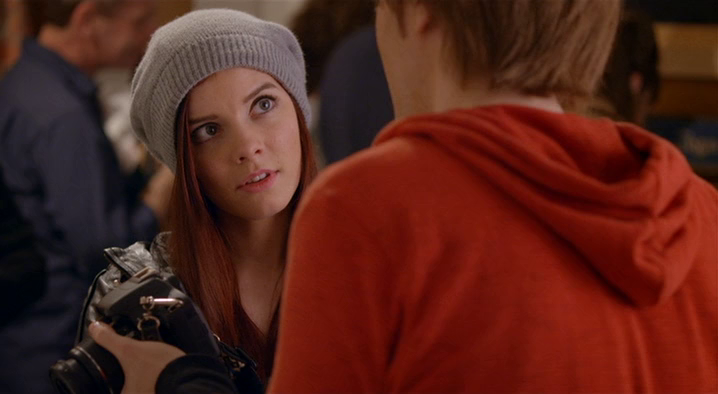 These scenes and lines are merely par for the course in what is ultimately a coarse and misguided comedy that is stocked with vile characters. Scott is served up as a figure that needs to get past his hubris, but the movie treats him more of a hero who the other characters just can’t help but love. It’s hard not to feel like the film is made to flatter Dawson as an actor. Within minutes of meeting Scott again, Tori says, “Would I have sex with you? Probably.” No one can resist his appeal, certainly not Tori’s family. Tori’s mother is practically begging to jump on top of him. When the character’s defining moment of humility and growth is cutting his Justin Beiber-like hair, it’s a failure. Tori is written in such an inconsistent fashion. She’s supposed to be all about negativity and hates everything in the world, but then she transforms into a Manic Pixie Dream Girl for Scott’s cutesy scavenger hunt. Leigh does a credible job with the character but she’s a half-formed assortment of quirks and messages meant to push Scott along. Dawson errs considerably by casting himself as the romantic lead. It further exacerbates Scott’s flattering portrayal, but really Dawson is just not a good enough actor to carry a film. But a lead role wasn’t enough, and Dawson appears as several female supporting characters in drag. The appearances stop the movie dead in its tracks. The characters are also just lame mouthpieces to blurt lazy inappropriate comments, especially a popular girl who just keeps calling people names at the top of her lungs. It is deeply unpleasant.
The worst character in the entire film is Joel. This guy is obsessed with having sex with his high school crush, who is still in high school while he’s in college, by the way. She has clearly and consistently stated that she does not have feelings for him, but what’s a woman stating her decisions going to matter to this guy? Joel’s pursuit of Janie is just insanely creepy. He mimes preforming cunnilingus on her. He stalks her online profiles to mine useful personal information. He enlargers and decreases a picture of her face on his phone and narrates the experience like she is giving him oral sex. At every point he treats her as a sex object. Even after a night out, where she wears a dress he picked out for her after trying it on himself and fondling himself in expectation (!), she tells him she doesn’t feel the same way, and he still forces the situation. It’s gross and at no point is Joel and his behavior held up to criticism. He’s rewarded for his “virtue” by having Janie pimp out all her promiscuous friends onto him. What makes the character even more repulsive is just how annoying Monson’s performance comes across; he’s going for faux bluster but it’s more like misplaced entitlement. If this storyline had ended with Joel murdering her while weeping and slow dancing with her corpse, you wouldn’t be that surprised.
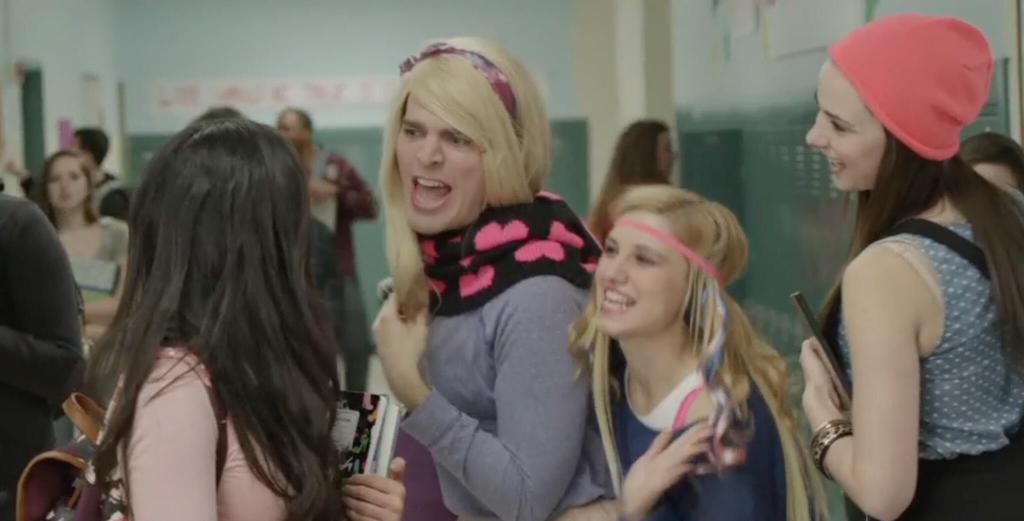 As the previous two paragraphs should indicate, there is certainly a point of view that emerges from the movie, one that trumps the heterosexual white male at the top and looks with derision on anybody that falls outside that definition. It feels like every joke is at someone’s expense. In the opening minute, an overweight woman tweets a picture of herself as a skinny model. I suppose it’s funny because she’s misrepresenting herself but it feels like the joke amounts to, “Ha, she’s ugly and fat.” But those who are conventionally attractive still don’t get off easy. Tori is slut shamed as a whore in high school, lead by Scott, and this is merely excused as the behavior of a loveable scamp. Janie’s friends are treated like idiotic sluts. Tori’s gay friend is defined by his flamboyance and obsession with sex. Disabled people are apparently hilarious just because they’re disabled and different. Tori’s older sister is blind and it’s funny because she accomplishes things… but she’s blind. I suppose the joke is that she shouldn’t have a successful life. There’s a woman at a party in a wheelchair (confession: I know this actress) and the joke is she’s doing normal activity. There’s one black character in the movie that is a homeless man who devours his own feces. At one point, his genitals are also used as a laugh. There’s also the characters’ flagrant and casual use of the word “retarded” to describe anything repulsive. The hoary stereotypes and unfunny portraits blend together, creating a mosaic of intolerance masked as comedy. Dawson’s sense of comedy is fairly puerile but it’s also offputtingly mean-spirited and denigrating.
Dawson makes too many fatal mistakes as a director for Not Cool to survive. Casting himself in the lead was a mistake. Appearing as female supporting characters was also a mistake. Excusing the bad behavior of his male characters, and rewarding them, was a mistake. Catering the humor to make fun of anyone that doesn’t classify as a heterosexual white male was a mistake. Relying solely on gross-out gags without better comic development was a mistake. Trying to earn a heart late into the film was also a mistake. After watching jerks behave like creeps with their inflated sense of entitlement, I don’t care if they maybe have feelings. Directing his actors to be heightened caricatures was a mistake. In short, Not Cool is a comedy graveyard of mistakes and bad decisions. I’m sure there will be people that find something to enjoy here, who laugh at the easy juvenile humor. I even laughed a couple times. There was a visual gag with a smuggled watermelon that was simply inspired. I think Dawson didn’t want to stray too far from his YouTube persona and the tone of his videos, lest he upset his fan base of millions, but what works as a three-minute YouTube short doesn’t translate to a feature film. Not Cool is proof enough that an overabundance of energy and cheap vulgarity does not compensate for a deficit in storytelling and execution. Not Cool is just not good.
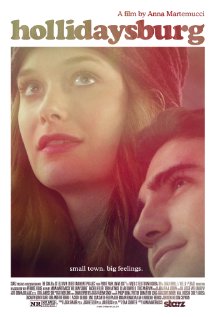 Going far in the other direction is Hollidaysburg, a modest coming-of-age drama that patterns itself after the mumblecore movement of indie cinema. Director Anna Martemucci definitely takes a more restrained approach to her interpretation of Dan Schoffer’s screenplay. She has some problems of her own but on a whole Hollidaysburg is the more promising and well-executed movie. It’s more sophisticated, better articulated, heartfelt, and comes far closer to achieving something worthwhile.
Right away you can tell a difference. We begin once more with Scott (Tobin Mitnick) and his girlfriend, Heather (Claire Chapelli), breaking up in the middle of sex, but they keep at it. It’s not exaggerated for extra laughs; the situation itself naturally draws them. The character isn’t made the butt of the joke either. It’s a much more encouraging opening than projectile vomit. Scott is also dumbstruck when he discovers his family home is days away from being emptied and sold. He reconnects with high school acquaintance Tori (Rachel Keller) and the two sleep together impulsively. As they’re trying to make sense of possible feelings, Heather is seeking out some company, anybody, and settles on her pot dealer, Petroff (Tristan Erwin), who happens to be buds with Scott. He’s wary of stepping over some kind of friend code, but in his efforts to get Heather out of her funk, Petroff starts to form a romantic interest he can’t help.
The focus is on our foursome of young, curious, and emotionally free-falling characters stumbling for some sense of personal identity. The theme of the film is about stasis versus change. Heather reasons that their long-distance relationship is not meant to be, and that it’s better to check out early. She’s also disillusioned by college, an experience that she had hoped would be remarkable at pointing her life in the right direction. Scott is quite literally saying goodbye to his childhood and his prior sense of who he was. His task for the holiday weekend is to pack the last of his childhood things in his old room so they can be sent to Florida. He won’t be returning to Pennsylvania likely, which is what Tori is also wrestling with. How far does she let herself get attached to something that could never happen? The two of them dance around their attraction and unconventional courtship. There’s real uncertainty about their possibility as a couple that’s palpable. Then there’s Heather’s sense of ennui that might just be a symptom of depression. She feels like she’s in a fog and that college is not the gateway others perceive it to be. Petroff is trying to juggle his role as friend and potential more-than-friend, and even though he has no real obligation to Scott on this one, he is trying to be deferential and sensitive. Before the breakup, he didn’t even consider Heather a friend. Now they’re getting to know one another on a much more personal level. The foursome is likeable, complicated, flawed, and pleasant to be around, enough to excuse some of the movie’s genial pacing.
 There are assorting supporting characters, notably siblings to Scott and Tori, but they are complimentary and better inform the story. Scott’s older brother spends the entire film trying to recreate his father’s recipe for pumpkin pie. It’s just the sort of concept that is slight enough to be fun but also lead into a dramatic character payoff. The dialogue feels attuned to the natural speech rhythms of human beings while still being entertaining. Scott and Tori’s initial reunion revolves around her keeping watch to make sure he doesn’t have a concussion after she hit him with her car. It’s a cute scenario that’s played with the right flirty tone that nicely sells the emergence of their romance. The humor isn’t as loud and underlined as Not Cool, and that’s to its benefit.
Your enjoyment of Hollidaysburg (named after a city in Pennsylvania) will depend mightily on your personal tolerance for the observational, delicate human comedies of the mumblecore genre. Sometimes derided as affluent navel-gazing, the often-DIY subgenre can have its own hardscrabble charm and touch upon relatable themes and conflicts that transcend their often self-indulgent characters. There’s also a stronger sense of realism in how fleshed out these worlds feel, and so I have enjoyed mumblecore primarily because of the combination of well-developed characters, emotional truths, and sincerity. I acknowledge a movie about a bunch of teenagers sitting around, mingling, smoking pot, and making life decisions is a harder sell than, say, sex comedy shenanigans. The difference is that you feel the care put in by Martemucci. She cares about these people and makes you start to care as well, or at least be interested. But if you’re not on the same wavelengths, one person’s observational is another person’s doddering.
While technically better on just about every level, Hollidaysburg has its own issues. The character arcs for Scott and Tori are rather nebulous. I’ll credit Dawson with this, in Not Cool the characters’ arcs were front and center and there was a progression. With Hollidaysburg, Scott is vaguely defined by his past but he doesn’t go into many details, failing to indicate how he’s undergoing some sort of high school hangover as he adjusts to a bigger pond. He’s uncomfortable with the discovery of how close Heather and Petroff have gotten, but this character turn doesn’t get developed enough to matter, instead coming across as a somewhat manufactured conflict break. Likewise Tori is looking to redefine herself in college but finding it harder than she anticipated. By the end of the film, her closing voice over quotes John Updike about being reborn every day, and how reassuring she finds this reflection. You could make the argument that through her romantic tryst with Scott, she’s better accepted the notion that she will define herself as she pleases, but I don’t even know if that approaches the conclusion. The two characters with the more clearly defined arcs are Heather and Petroff, and they’re on a relatively straightforward path where their biggest obstacle is hiding their emerging feelings from their mutual friend who would be hurt.
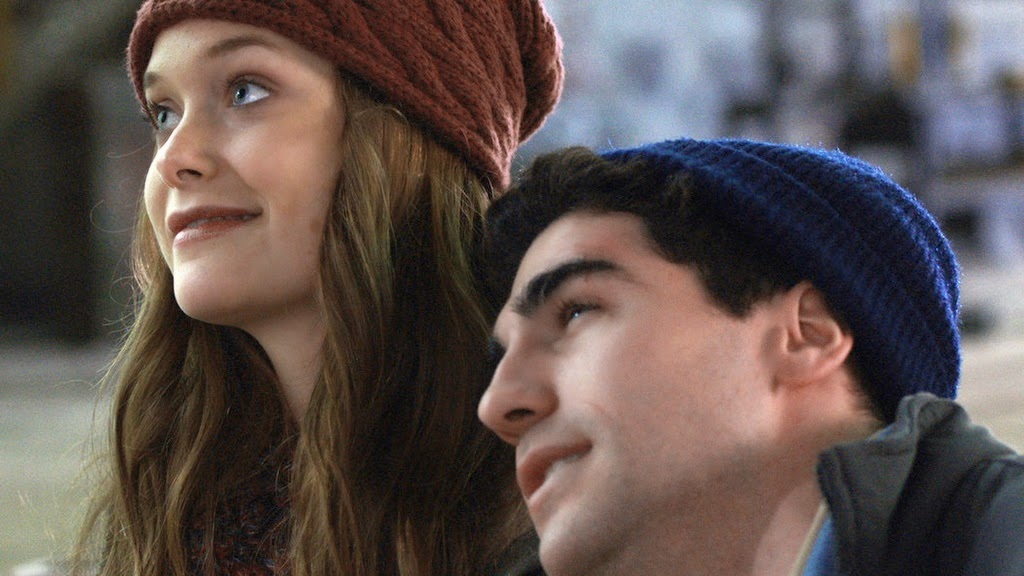 I don’t necessarily know if I’d call The Chair a success. The fascinating premise has given birth to very different movies, but in the end one of them is an aggressively unfunny comedy and the other is an acceptable coming-of-age mumblecore entry. It’s hard to call either a rousing success. Not Cool is an abysmal comedy that is overly reliant on witless shock humor to substitute for storytelling basics. Dawson makes a slew of bad decisions, mostly playing to ego or his built-in audience, but I’ll say at least he goes for it. Martemucci certainly comes across as the more promising filmmaker; her film is better on a technical level and her handling of actors is far defter. At the same time, her aim is lower with her goals and her character arcs less defined. I suppose you could argue the hazy arcs tap into the characters trying to better find themselves but I won’t. Hollidaysburg is clearly the better film but Dawson’s legions of fans came to his service, and in the fall of 2014, Dawson was declared the victor by a majority of public voting. I purposely wanted to watch the finished movies before delving into the TV show so my feelings toward the filmmakers would not influence my reviews. Usually Project Greenlight was at its best when things were falling apart for its fledgling filmmakers, and I imagine the same level of entertainment will be had with The Chair. My foreknowledge will create a delicious dose of dramatic irony, as I know what all these efforts will lead toward. In my head I’ll likely be thinking, “Not worth it.”
I’ll add to this double-review after watching the series for any additional thoughts on Dawson and Martemucci as filmmakers and human beings.
Update: After having watched all ten episodes of The Chair, I can say neither director comes off terribly well. Martemucci is indecisive, poor with time management, and loses the big picture, but she’s far more open to collaboration and criticism. Dawson knows what he wants, is decisive, but is also quite thin-skinned and defensive and hard-headed to criticism. He seems incapable of thinking outside the bubble of his fanbase. He also has a far higher opinion of many elements of his film that I found awful, but that isn’t surprising. What’s surprising to me is that established producers could read Dawson’s script and watch the final movie and say, “Yeah, this is good.” Not everyone did though, as I discovered Quinto and another producer were so appalled by Not Cool that they elected to take their names off of it. They did not want to be associated with that material, which Dawson has trouble seeing as more ugly than standard “raunchy teen sex comedy” stuff (it is uglier, Shane). The funniest part for me was a tattoo parlor owner who discovers Dawson’s YouTube resume after she agreed to let him film in her parlor. She doesn’t want her shop’s name visible and associated with what she feels is racist, sexist, unfunny jokes. She even chastises Chris Moore about it. It’s like this one tattoo shop owner spoke as the prophet of me and all other home viewers and those who endured the awfulness of Not Cool. Congratulations for telling it like it is, Pittsburgh small business owner.
Nate’s Grades:
Not Cool: D
Hollidaysburg: B-
Share this:

It Follows (2015)
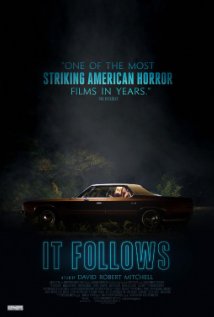 Indie horror is always looking for the Next Big Thing, and at the start of 2015, that movie was It Follows. Coming out of relatively nowhere, the second film by writer/director David Robert Mitchell was dubbed the real deal, and audiences flocked to see what all fuss was over. I would have been intrigued before the positive word-of-mouth namely because Mitchell made one of my favorite films of 2011, the understated and perfectly yearning ode to adolescence, The Myth of the American Sleepover. I dearly hoped that Mitchell was not another flash in the pan. In retrospect, I did not have need to fear. It Follows is unsettling, suspenseful, and borderline ingenious with its concept, but it also has some faults that mitigate its concluding power.
Jay (Maika Monroe) is a normal 19-year-old girl going to college in Michigan until the night she sleeps with her object of desire, Hugh (Jake Weary). In her post-coital mediation, he drugs her, ties her to a wheelchair, and then waits. He wants to show her something, or more accurately someone (perhaps something is actually more appropriate). A woman slowly trudges toward them, the embodiment of a curse he passed on to Jay through sex. It will keep following her until it gets her and kills her. The only way she can protect herself is to sleep with someone else, to pass the curse onto a new recipient. Then the monster goes after them; however, once this newest curse-holder is murdered, the monster moves back up the ladder, attacking the next curse-holder. Once you have it, there’s no getting rid of this curse, only delaying it.
 The top question with a horror movie is whether it provides enough suspense, spooks, and scares to jolt an audience, and in this regard It Follows is quite good; not as unsettling as last year’s Babadook but still plenty unnerving and extremely well executed and developed. The opening hooks you, with a teen girl constantly looking in the direction of the camera and clearly scared out of her mind. The camera has adopted the identity of the monster. The central premise is wonderful, rich with thematic potential about the alienation and anxiety of being a teenager navigating the world, but also intriguing enough that I always wanted a large expository info dump scene just to learn more about the rules or its history. Rare is the film, let alone a horror film, where I’m left desiring lengthy exposition. One of the clever developments of its monster is that it can adopt the appearance of anyone, including people close to you (though it rarely does this for an unexplained reason). That means anyone can be your doom and the only way to know is to double-check whether other people can see this menacing phantom as well. Imagine going the rest of your life always having to look over your shoulder, always having a little nagging doubt in your mind about whether or not this person or that person is real. The premise is well developed with sequences that draw out the tension and make us dread what’s coming next or what may or may not be real. Now, slow-trotting fully naked people might not be a scarier monster than, say, Leatherface, but it’s still alarming.
The premise also allows the audience to imagine what course of action they would do if they were stuck in this situation. Would you doom an innocent human being to protect yourself? If so, would you be upfront about it and the ensuing danger? Would you formulate a plan like Hugh and drive long distances to provide further distance? If you thought you were being followed, would you immediately find a sexual partner? The clever premise gets your brain thinking of what you would do to survive and at what cost.
There’s a distinct Stanley Kubrick and John Carpenter vibe with the filmmaking, which will enhance the overall mood of the film or drive certain viewers crazy. The camera movements fall into very few selections, mostly slow pans, slow zooms, or long tracking shots with the subject routinely framed in the center. It’s hard not to evoke feelings with The Shining, an all-time great horror film that likewise built a sense of foreboding terror, and Halloween. You’re conditioned to feel that something bad is about to happen as the camera turns or hovers, waiting for the creepy thing to pop around the corner. It plays into second-guessing everything you see, taking away the illusions of safety, and the steady and controlled camerawork enhances this mood. The entire movie feels vaguely out of time, notably a capsule from the 1980s save for one strange inclusion of a wireless reading device. The musical score by Disasterpeace (nee Rick Vreeland) is another throwback to the 80s, and its fuzzy synth-drenched soundtrack smoothly blends in and enhances the atmosphere.
 If anyone caught Mitchell’s previous film, you’ll know that besides a wonderful eye for framing visual compositions, the guy has a very natural feel for developing realistic teenage characters milling about their relatable existences. It Follows is no different, and while I would stop short of saying that the characters have depth to them, they are realistically drawn and portrayed by actors who look and act like scared teenagers. The relatablility of unrequited feelings, or going out on a limb and getting your heart broken, of trusting the wrong people who have ulterior motives, are universal pains that makes it all the easier to put ourselves in these unfortunate character’s shoes. It also helps that, up until the final act, the characters defy the arc of rampant stupidity in horror. After realizing the danger she’s trapped in, Jay actually seeks out the one person who she can get answers from, even if he’s the same person who doomed her with the curse.
It’s unfortunate that the movie loses steam when it creeps into its third act and forces a solution and showdown with the monster that makes no sense whatsoever. I understand the need to feel like the teens can regain the upper hand or somehow outsmart the curse that doggedly follows them, but with everything presented, it’s just not believable. For the entire movie, we’ve seen that this supernatural force doesn’t really have a loophole in its system of rules. The only way to stave off annihilation is to pass it along and create a series of firewalls as protection with other sexual partners. Otherwise, it’s relentless and like zombies the eventuality is what helps magnify the sense of dread. We even see it get shot in a hasty defense from the teens and the gunshots do nothing. And yet, this vital information doesn’t seem to register with our band of teenagers. Their third act solution (spoilers): they’re going to lure the following terror into a pool and… electrocute it. Huh? Why would a supernatural entity that has not shown any weakness to electricity, or any mortal dangers, be able to be killed? This plan makes no sense and not one character voices a counter-argument to what is proven to be a very bad plan. Maybe the point is that it’s supposed to be bad, that it’s an example of how desperate these characters have become that they would hold out hope for something that is completely inaccurate. After this failed plan, Jay does exactly what you’d expect with the boy who’s been itching to jump her bones for the entire movie. He gets what he wants (physical copulation, being the white knight), she gets what she wants (flimsy security), and then the movie just kind of peters out and ends. I understand that Mitchell’s extended point is that there is no happy ending possible and the characters will have to uneasily look over their shoulders for the rest of their lives. However, the point could have been made even without the third act. I wish It Follows could have found a better landing than just shrugging and saying, “Well, what are you gonna do with curses, you know?”
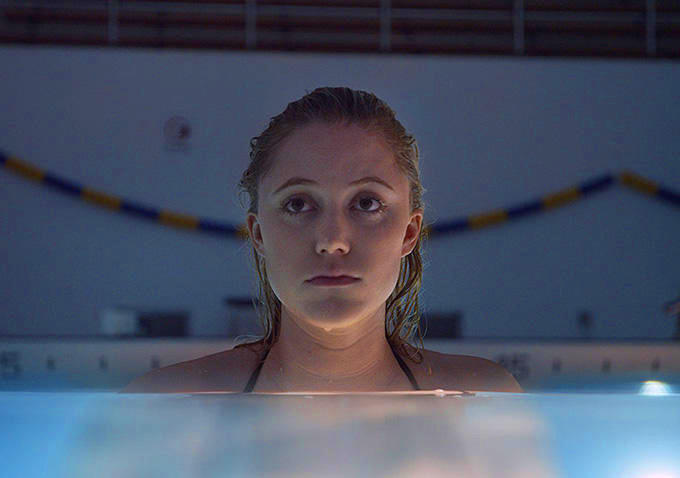 Before the movie hits the skids in the third act, I was pondering the greater implications and logistics of its sexually transmitted curse. Does “passing” it along require some form of genital contact? Does it require fluid exchange? If you wear a condom, does the prophylactic also protect your sexual partner from the transmission? Does the curse function relatively the same for same sex couples? What about people with non-functioning parts below the waste? Can someone who suffers from erectile dysfunction pass the curse along? Can it be transferred onto inanimate objects? Can men ejaculate into some sort of container and then send the container into space via the space shuttle and be protected? Actually, banging an astronaut who’s about to live on the space station or go to Mars might be the smartest move. I enjoyed thinking of a stratagem to best protect myself if I was caught in this scenario; even after passing it along and providing a buffer, you still always have to be on guard for the curse to move back up the ladder. My solution: have relations with a prostitute. This is probably a guarantee that the curse will be passed on within a 24-hour period, and even if that john is found and killed, chances are this prostitute may have already passed the curse along to a new client. If one cannot inoculate themselves from a supernatural STD-like curse with the aid of prostitutes, then there’s no hope for the rest of us poor mortals. Anyway, my mind wandered a tad.
It Follows may suffer due to the hype, the inconclusive resolution, and a third act that deflates, but it’s still an extremely well executed horror thriller with a terrific concept at heart. The sense of dread is stark and the camerawork and storytelling draw out the tension until you feel you’re about to break. It’s more unnerving than traditionally scary, but it has a power that does stay with you, particularly its fascinating premise and the natural relatability of the characters and their choices. I don’t know if this premise could sustain a sequel, especially with a villain that appears to be unstoppable, but that hasn’t thwarted the horror genre before in its stampede at cashing in on success. It Follows is a solidly entertaining and creepy movie, but it’s even more confirmation for me that David Robert Mitchell is going to be a filmmaker who has staying power. I’ll be following him.
Nate’s Grade: B+
Share this:

Child 44 (2015)
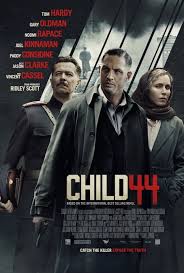 Unfairly cast out like some unwanted vermin, Child 44 is a police procedural based on a best-selling novel that the studio simply wanted to get rid of quietly. It was “dumped” into theaters and, as expected, began its disappearing act. That’s a shame, because it’s actually a rather involving mystery and an especially fascinating perspective into a little known world of being a cop on the other side of the Iron Curtain. Tom Hardy plays Leo, a member of the Soviet state police who is tracking a serial murderer preying upon orphaned children across the countryside in 1953. His wife (Noomi Rapace) is terrified of him and secretly a rebel informer. The two of them get banished to a Soviet outpost when Leo refuses to turn her in; he also refuses to accept the state’s conclusion over the dead children. In a weirdly perplexing turn, the Soviet Union believed murder was a Western byproduct. “There is no murder in paradise,” we are told several times, and since the U.S.S.R. is a communist worker’s “paradise,” whatever reality that doesn’t jibe with the party line is swept away. The murder mystery itself is fairly well developed and suspenseful, but it’s really the glimpse into this bleak and paranoid world that I found so intriguing. Child 44 is a slowly paced film thick with the details of establishing the dour existence of Soviet Union life. You truly get a sense of how wearying and beaten down these people’s lives were, how trapped they felt, how justifiable their paranoia was. The husband and wife relationship grows as they’re forced to reevaluate their sense of one another, and it genuinely becomes a meaty dramatic addition. Child 44 is a slow movie but the pacing serves the deliberate and oppressive tone of the film. It’s a film with some problems and missteps (certain antagonists make little sense in their motivations), including some incoherent action/fight scenes (fighting in the mud? Way to visually obscure everybody, guys). However, this is a better movie than the studio, and a majority of critics, would have you believe. It’s engrossing and taut and ambiguous and consistently interesting, with another standout performance by Hardy. Like many of the characters, this movie deserved a better fate.
Nate’s Grade: B
Share this:

Ex Machina (2015)
 Alex Garland is a screenwriting staple in Hollywood. He’s a science fiction specialist, adapting everything from Kazuo Ishiguro’s wrenching Never Let Me Go to the Halo movie. He’s worked with Danny Boyle, adapting his novel The Beach, and then on 28 Days Later and Sunshine. If you’ve noticed a theme with the titles, Garland tends to subscribe to a pessimistic view of human nature. And yet each film is grounded by the humanity of its characters no matter the extreme circumstances. Garland’s gift is making the fantastic grounded on a recognizable human level. Ex Machina is his latest and his directorial debut but you’d never have guessed it with how controlled and polished the film comes across. It’s a cerebral sci-fi film that haunts, enchants, and consistently engaged the imagination.
Caleb (Domhnall Gleeson) wins a corporate contest to spend a week’s vacation in the home of a reclusive Google-esque tech billionaire, Nathan (Oscar Isaac). Caleb is here to test out Nathan’s newest invention – artificial intelligence. He’s built an android woman named Ava (Alicia Vikander) and he wants Caleb to interview her.
Ex Machina throws you right into the hook within minutes, and it was mere minutes for me to get hooked. Garland does a glorious job of teasing an audience with his story and unlocking further mysteries that develop intrigue. At the start, knowing the Turing test, we’re just as interested in Ava as Caleb is, trying to figure her out and how lifelike she may be. But then the conversations start to linger and, during a brief power outage that cuts the feed to the omnipresent cameras, Ava warns Caleb that his host is not whom he thinks. As soon as the power is back and running, it’s as if the comment never happened. The pristine underground quarters have an eerie tranquility to them, almost as if Apple is designing high-end prisons. Garland’s movie becomes consumed in paranoia. Is Ava being honest? Is Nathan being honest or underhanded? What’s in some of those “off limits” rooms? What is the true test at hand? Who is the silent Asian assistant? At one point, Caleb slices open his own arm to search for circuitry, and you completely understand his reasoning. This mounting sense of paranoia and dread, tagged with Garland’s mysterious and well-developed storyline, are enough to keep your eyes glued to the screen and rapidly second-guessing and triple-guessing your shifting loyalties.
 Garland also smartly doesn’t dance around the obvious plot device of having a beautiful robotic woman, namely the inevitability of romance to bloom. What is it about android women that science fiction seems to love so much? From Blade Runner to Fritz Lang’s Metropolis, the genre loves the concept of robotic women. Perhaps this is merely a byproduct of a genre written by a majority of men, or perhaps it taps into something more unconscious about the desire to control women, or a fear of women, but that’s a conversation for another day. Ava is certainly a stunning creature, thanks to Vikander, but also from the sleek production design that makes her feel like the world’s most gorgeous Mr. Potato Head with her lycra-like skin for easy detachment. Her exposed stomach of bolts and bulbs is also a constant reminder of her “other-ness.” There’s an obviously sexual dynamic to the character, and while she’s technically nude for most of the film, watching her slip out of stockings and a dress has a strange erotic quality. Thankfully, the percolating would-be romance between man and machine actually plays a vital part throughout the script and especially with the end. There’s even a darkly comic yet disconcerting reveal about why Ava looks as she does. Is Ava capable of feelings? Is she falling for Caleb, or does she merely view him as a means to an end?
It’s essentially a sci-fi play with limited locations and three primary actors. The power is on Garland’s effortlessly engaging script, which is far more cerebral and philosophical and nuanced than you might expect from its premise. This is a film that allows its characters to breathe, to organically develop relationships and doubts. The concept of A.I. has been explored in many sci-fi stories before but Garland finds fresh resonance by paring down his story to a manageable trio. Nathan’s reclusive home is like a twenty-first century version of the haunted house and full of fun detours begging to be explored. Garland’s cinematography and production design are reminiscent of the cool artifice of David Fincher’s films. The world feels like a small step into the future but constantly unsettling. Garland’s story always has another mystery to unlock, always driving the story further as Caleb’s weeklong stay is coming to a close. Garland has a natural eye for images and composes several startling sequences that can equally evoke beauty as well as disquiet. There’s a moment where Ava passes a wall of faces as if they were simply a row of hats. Simple moments like Ava “dressing up” are given a gentle poignancy that isn’t overplayed for effect. Garland’s film is what I wanted 2014’s Under the Skin to be. Both of them are unsettling, moody, and atmospheric with striking Kubrickian imagery, but Garland’s film is less purposely oblique.
The trio of actors provides strong work, especially Swedish actress Vikander (Seventh Son, A Royal Affair). As the film is told from Caleb’s perspective, she has to find a very exact balance with her performance with elements of innocence, uncertainty, and ethereal curiosity. She’s rather placid but you always feel like there’s more just under the surface, whether it’s the ache of sentient realization or something more sinister. She’s a test subject, a captive, and a possible romantic interest. Vikander hits every right note to remain mystifying and beguiling. Gleeson (Unbroken) is becoming a go-to young actor for Hollywood. His awkwardness and enthusiasm to be part of history is an easy channel for the audience, but as Garland’s script spins along, Gleeson’s enthusiasm ebbs to concern, for Ava and then himself. The source of Ex Machina’s surprising font of humor is Isaac (A Most Violent Year) as a too cavalier tech genius. He’s so nonchalant and chummy, usually soused, that you start distrusting his amiable nature.
 It’s a shame then that the film couldn’t quite hold onto these ambiguities to the end. Garland has had third act missteps in many of his films, some tone-altering and simply losing momentum like 28 Days Later, and some as disastrous as Sunshine’s blurry slasher killer, which ruins a perfectly good-to-great sci-fi thriller. Ex Machina too exhibits its own share of third act issues, namely a confluence of contrivances with the characters. There are certain revelations you should already be suspecting giving the nature of the film, and if you’ve watched other movies before. Those reveals work in relation to Garland’s plot; however, the climax feels a bit too forced and obvious for a movie that has been, up to that point, expertly keeping the audience on its toes. Nathan spilling the beans on all the different levels of the experiment comes across not as an outlet of his character’s blasé narcissism and more a need for the script to force a confrontation. The different levels of intrigue fade away to what is a rather conventional climax that feels poorly developed and woefully inadequate for the story being told. I will credit Garland with the courage of his resolution, though, which provides deliberate decisions that cast the rest of the film in another dimension. It also feels completely right, while still allowing for Garland to work his Kubrick fetish fully to its eerie erotic ends.
Ex Machina is a hard movie to pin down because it balances various genres with delicacy, providing a little something for every sci-fi fan. It’s a well-developed mystery that constantly unravels new layers that only hooked me further, but then I was hooked from the immediacy. The relationship between the main three characters is enough to hold an entire film thanks to Garland’s scripting. I started doubting my own senses and that is a testament to Garland’s artistic vision. It’s a nice antidote to the louder bombast of Hollywood, especially with science fiction films that confuse shrill and busy with appealing and satisfying. Here is a film that doesn’t forget to entertain but respects an audience enough to take its time to properly develop its mysteries, tension, and characters. Ex Machina is a stellar debut for Garland as a director and I wouldn’t be surprised if he starts shifting more of his attention to getting back into the director’s chair. It’s not a perfect film, as it too suffers from Garland’s streak of third act troubles, but it’s a remarkably assured, sleek, and absorbing movie that gets under your skin.
Nate’s Grade: B+


 nathanzoebl
You must be logged in to post a comment.