Blog Archives
Alice in Wonderland (2010)
 Director Tim Burton seems like the perfect candidate to take on the imagery of author Lewis Carroll. I would argue that, short of Dickens’ Christmas Carol, Alice in Wonderland is the most reproduced piece of literature in modern history. It’s going to take a keen vision to make these old characters interesting (the macabre American McGee video game sure felt like it could have been born from the mind of Tim Burton). Unfortunately, Burton and some 3-D wizardry are not enough to compensate for a story that only works in one dimension.
Alice (Mia Wasikoswki) is now a teenager girl who can barely remember her jaunt to Wonderland in her youth. She’s assigned to marry a simpering lord because in Victorian England that’s how women took care of their futures. Alice is more interested in taking over her dead father’s trading company. So when the time comes for her lord to ask for her hand in marriage, Alice stammers, says she needs some air, and chases after what looks like a rabbit with a pocket watch. She falls down a rabbit hole and winds up back in Wonderland, however it’s really known as Underland. It’s been 13 years since Alice visited this magical world, and in the meantime the Red Queen (Helena Bonham Carter) has ruled as a tyrant quite fond of removing the bond between head and neck. Her sister, the White Queen (Anne Hathaway), was deposed and lives in exile. The (W)underland residents live in hope that an Alice will return and free them as an old prophecy foretells. She’ll have to rely on old friends, like the Cheshire Cat (Stephen Fry) and the Mad Hatter (Johnny Depp) to fulfill her destiny, and, why not, slay the Red Queen’s fearsome dragon, the Jabberwocky.
 You would think that the combination of Burton, Depp, Lewis Carroll, and 3-D would produce an irrefutable masterpiece, at least from a visual and entertainment standpoint. I’m compelled to argue that the finished results are pretty much a mixed bag. The world of (W)underland seems fairly drab. Sure it was some big stuff and some weird stuff but from a color standpoint everything comes across as washed out, like Burton took one look and said, “Bright colors equate happiness. We can’t have that.” I understand the world wanting to convey a dispirited mood, but this isn’t any regular Burton film, this is Alice in Wonderland and we need a sense of, wait for it, wonder. Instead, we get an overwhelming feeling of drabness. Now, full disclosure, I didn’t catch the 3-D version of this movie for two reasons: 1) my then partner’s head was hurting and she couldn’t take 90 minutes wearing nose-pinching, eye-hurting glasses that play with her depth of field, and 2) the 3-D shows were all sold out. I could tell which elements where intended to pop in a 3-D environment, namely the Hare always throwing objects as a calling card and the materialization of the Cheshire Cat. The tone isn’t too dark to scare the Disney families but at the same time there’s a bit more menace to the proceedings. The Red Queen’s bulbous, disproportionate head makes for an eye-catching visual that doesn’t get stale. (W)underland is a more hostile world but at the same time it’s not too threatening. Pretty much all the villains have some moment of redemption that makes them less threatening. The weirdest motif in the movie is eye gouging, which happens twice thanks to the same diminutive character.
Having said that, this is a visual decision that I could live with if the story engaged my senses more. Alice is now an older 19-year-old girl that has to defend (W)underland by fighting a dragon and suiting up in armor. She has to accept her destiny and be THE Alice and save the kingdom. The mystery of whether Alice is the one true Alice, look no further than the title, folks. He doesn’t remember anything from her first encounter in (W)underland and yet she has no sense of awe or curiosity. Also, why now do the residents of (W)unerland seek out Alice to rescue them? They never thought about reaching out in the 13 years the Red Queen has been ruling?
 The plot is a fairly pedestrian “hero’s quest” that ends in a fairly pedestrian battle sequence where the armies of good and evil clash in CGI combat. The problem is that the original Alice in Wonderland source material really didn’t have much of a plot to it; it was really more a satire of the times, which featured Alice essentially going from one oddball to the other. The appeal was more the language than the story. It’s not the easiest piece of literature to adapt, to find a through line for a plot, so I guess making it about a hero’s destiny seems like the easiest, laziest path. The screenplay by Linda Woolverton (Beauty and the Beast) assembles all the memorable characters but gives them little else to do, other than act mad. You may start to feel Alice’s sense of frustration after a while. Because of the threadbare story, you know exactly where the movie is going to be headed (wow, unintentional pun). In some ways this movie functions as a sequel and in some ways this movie functions as a remake, meaning that the plot is pretty much stuck trying to decide where to go next in a standard fantasy narrative device.
And then there’s the dance scene. Oh, the dance scene. How do I approach this gingerly? The climax that’s established is not Alice slaying the dragon, accepting her destiny, and (W)underland triumphing over the Red Queen’s tyranny. The climax is Depp break-dancing. You read that right, though the residents refer to his crazy legs movement as “futterwackin,” which sounds suspiciously naughty. It’s a moment so goofy, so tonally inappropriate that it shatters the entire notion of suspension of disbelief. It rips you out of the movie and all for a cheap laugh. It’s bizarre. I acknowledge that, given the fantasy framework, that the ending ought to stay in touch with the fantastical setting. But break-dancing? Would The Wizard of Oz have ended better if the Tin Man and the Scarecrow started break-dancing? At least the Tin Man could effectively perform the Robot. It’s a real-world artifact that has no place in the world of fantasy.
 Depp is usually such a valued performer, digging deep into his character and reveling in their eccentricities. He’s the strangest and most exciting character actor that has become a box-office star. But that doesn’t mean he’s immune from giving a rare bad performance. While nowhere near as off-putting as his Willy Wonka, Depp’s Hatter is more distraction than anything. He comes across like a figure grappling with post-traumatic stress, causing him to mutter incomprehensibly in a Scottish brogue. He’s tiresome after a while. Carter (Sweeny Todd) can be pretty shrill, playing the same overwrought note time and again, but she still manages to give the best performance in the movie. Hathaway just sort of acts flighty and raises her arms, waltzing around like she’s trying to imitate Depp’s Jack Sparrow. She’s entirely wasted. Stephen Fry (V for Vendetta) is a delight as the voice of the Cheshire Cat, and our heroine, Wasikowska (HBO’s In Treatment) has a striking Grecian presence, even if her performance is more dour than it needs to be given the fanciful environment.
Tim Burton and Johnny Depp usually make for an unbeatable creative team, but I think Disney was the key figure in this arrangement. Alice in Wonderland wants to thrill without getting too scary, wants to delight without getting too original, and wants to dazzle without getting too weird. Burton’s visual inventiveness manages to make the movie entrancing at times and bewildering when the rest of the movie fails to live up to those fleeting moments. Truth be told, I actually enjoyed the real-world Victorian scenes more than many of the ones in (W)udnerland. The film is just too disjointed and uneven to fully embrace, regardless of the 3-D upgrade. There are moments that I adored and moments that I could have lived without — like the break-dancing finale. The finished product isn’t a terrible night out at the movies, and there are plenty of enjoyable elements to savor. However, Alice plays like a familiar fantasy that takes Lewis Carroll’s creatures and rearranged them into a watered-down Lord of the Rings hybrid.
Nate’s Grade: C+
Share this:

Terminator Salvation (2009)
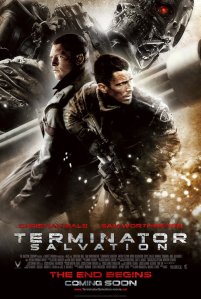 The fourth Terminator movie ultimately comes across as a lifeless enterprise. It’s set during the war between man and machine, which means John Conner (Christian Bale) is leading the human resistance, as was prophesied. He must stop those crafty machines from finding and killing Kyle Reese (Anton Yelchin), who is destined to be sent back in time and become Conner’s father. The storyline focuses a lot more attention on the mysterious man Marcus (Sam Worthington), who isn’t so mysterious because they give away in minutes that he’s a machine. But he’s a thinking machine that reclaims his humanity, or whatever. The point of this movie is to make some cool action sequences and not step on the toes of the previous movies. Director McG (Charlie’s Angels) has a few nifty visual tricks up his sleeve, but this is one soulless machine just going through the Action Blockbuster subroutine. The character development is nil, the story is muddled, the machines are dumb, and Bale forgoes any normal kind of speaking voice in favor of growls and hissing. The throwbacks to the other movies can be fun (a 1984-aged Arnold!) or agonizingly lame (shoehorning in famous quotes like, “I’ll be back”). The movie is competent and has one or two exciting chase sequences, but that is simply not good enough coming from this storied action franchise. Terminator Salvation plays out more like Transformers, where the robots are big and bad and loud and sort of dumb. I guess that sums up the movie pretty well.
Nate’s Grade: C+
Share this:

Harry Potter and the Half-Blood Prince (2009)
 Not every film franchise gets to a sixth installment, although Police Academy and Friday the Thirteenth managed to. After over twelve hours of storytelling, is it even possible for non-fans to enter the Harry Potter world (only an idiot would begin a film series at number six)? I am a willful Muggle to this universe. I am content to wait for the movies, and it drives the readers nuts. “The books are so much better,” they all say. Then they tell me what was left out of the movies, and honestly it’s usually a good thing. Harry Potter and the Half-Blood Prince echoes the increasing darkness of the later books by author J.K. Rowling, but now I can finally walk out of a Potter film and know, without a shadow of a doubt, that the book must have been superior. Half-Blood Prince is a film adaptation that spends too much time in all the wrong places.
Lord Voldermort (Ralph Fiennes, seen only for literally a split-second) is back with a vengeance, and his followers, Death Eaters, are branching out and attacking the Muggle world as well. Headmaster Dumbledore (Michael Gambon) has asked Harry (Daniel Radcliffe) for help in recruiting a former Hogwarts professor. Horace Slughorn (Jim Boradbent) used to be an esteemed potions professor, and one of his bright students was none other than a young Voldermort (Hero Fiennes-Tiffin, Fienne’s real-life nephew). Dumbledore and Harry explore liquid memories that belong to the Dark Lord in hopes of learning how to defeat him. In the meantime, the kids are under attack not by Voldermort but by hormones. Harry’s friend, Ron (Rupert Grint) and Hermione (Emma Watson), are secretly in love but neither has the heart to say something. Ron uses his star Quidditch status to “snog” with the eager Lavender Brown (Jessie Cave), who’s infatuated with Ron. This infuriates Hermione and she seeks comfort in a studly student herself. Harry is starting to feel his heart go pitter-patter for Ron’s sister, Ginny (Bonnie Wright), which requires Harry to be very delicate in negotiating the “Can I snog your little sister?” portion of male friendship. Oh yeah, and apparently Harry is also using a potions textbook that used to belong to some whiz kid known as the Half-Blood Prince.
 The further I get away from Half-Blood Prince the more certain I am that it is the least involving film of the series. The plot is somewhat nebulous and unclear, and so much of the story is dominated by boring teenage romance. I understand that Hogwarts is swimming in hormones, but these kids spend the whole time making shifty doe-eyes at each other than doing anything substantial. That makes for a boring romance, and when the movie is dominated by this stuff for two hours it doesn’t make the movie too engaging. I understand that the Ron/Hermione courtship has been setup for some time, but it takes forever to move even incrementally closer to that coupledom. The Harry/Ginny material is lacking at best. She’s such an empty presence and they do so little with her character that I have no idea what would warrant Harry’s affections. There is no spark, no heat, no sexual tension, and no interest. I was actually relieved when Half-Blood Prince drops practically every storyline with twenty minutes left. Seriously, these plotlines aren’t resolved or capped or even addressed, they just don’t exist once Harry learns the word “horacrux.” And let’s talk about that subject just for a moment. Dumbledore lures Professor Slughorn back to Hogwarts so Harry can learn Voldermort’s secret of eternal life, a secret that Dumbledore already knows because he’s been taking leaves to locate and destroy Voldy’s horacruxes. I felt detached and disenchanted throughout Half-Blood Prince.
There are other plot holes and irregularities, and I wonder if writer Steve Kloves (who took the fifth movie off) is merely serving up 153 minutes of plodding prologue for the big finish. The drama is becoming more static and the supporting characters of previous installments reappear and do little but stand with hands in their pockets; they have nothing to do. The flashbacks to Voldermort as a child reveal relatively nothing new; only indicating her was a creepy kid. The two action sequences squeezed in are not from the book, meaning Kloves was trying to add some excitement to what is a rather sleepwalking storyline. The action sequences mean little; the opening attack on London’s Millennium bridge offers some nice sights but little consequence, and the destruction of the Weasely house comes across like Kloves was grasping for greater conflict. Too much of his film is the young love foibles with the occasional sideways glance at Draco (Tom Felton) brooding in the shadows. The ending, with its notable death, still strikes an emotional cord but it also comes across as rushed and without depth and resolve.
 What is the significance of the Half-Blood Prince in this adaptation? The mysterious figure was good in potions class and his old textbook helps Harry in class. That is it! The late reveal of the identity of the Half-Blood Prince is so incidental and off-the-cuff, that the actor practically has to say, “Hey, remember that whole Prince thing like an hour ago? That’s me. Yep. So see ya.” It’s such an indifferent plotline handled with such indifference. I had to ask my Potter-versed wife why Rowling would even bother naming the book after such a minor, irrelevant plot footnote. Kloves’ adaptation feels lost and mostly like filler.
So why does a slower, less coherent, less interesting Harry Potter rank better than the first two films? Because director David Yates takes an artistic step forward and this addition has style to spare. Returning to the Potter director’s chair, Yates has a stronger feel for the world and creates striking film compositions with the added help of noir cinematography by Bruno Delbonnel (Amelie, Across the Universe) and the foreboding production design by Stuart Craig. The sets have a grand Gothic appeal and help compensate in tone for what is lacking in the screenplay. The opening bridge attack allows for soaring flights through London and then into the magic world, and it’s a great opening visual rush. The memory flashbacks have splendid visual artistry to them as we watch inky brush strokes coalesce into solidified images. It’s a fantastic special effect and it is welcomed every time. This isn’t one of the more special effects heavy installments but the effects are as good as ever especially when seen through Delbonnel’s lens.
It’s interesting to have watched the three main actors grow up in their roles, which also gives them the ability to revert to autopilot when the movie lags. In the Half-Blood Prince, the trio burrows back into previous acting episodes. Radcliffe gets talked to a lot so much of his acting in this jaunt seems to involve intense bouts of nodding. He does have one sequence of exaggerated comedy when he swallows a luck potion, and the actor feels delightfully unrestrained. Grint gets the most screen time he’s had in ages and continues to dial up the daffy humor. As I stated with my review of Order of the Phoenix, I think Watson began as the best actor of the trio and is now on a fast-paced downward slide. Her character gets to experience jealousy and heartache, and Watson shows some ability to convey mixed emotion. The most interesting actor of all the kids is Felton, who I found to be surprisingly empathetic. He’s tortured over his fate, a mission given to him by the Dark Lord. He’s torn apart by moral indecision and a sense of duty. That’s way more interesting than watching Ron and Hermione try to make each other jealous. Why didn’t Kloves devote more time to the anguish of Draco? That’s where the drama is. There just isn’t much room for character growth and acting in the rest of Half-Blood Prince. The best acting award goes to Broadbent (Moulin Rouge, Hot Fuzz). He conveys the regret of Slughorn with every manner and gesture. His sad, poignant confession is oddly the emotional highlight in a movie that includes a momentous death later.
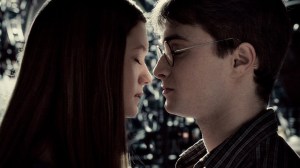 Harry Potter and the Half-Blood Prince feels like a half-hearted adaptation, with way too much time spent on tepid teen romance. This is the most visually arresting Potter film next to 2004’s Prisoner of Azkaban, but it just fumbles the storytelling. The sixth film is too often boring and inconsequential. Too much of the film feels like it was purely made for the die-hard Potterheads, and if any Muggles have questions of clarity they are required to seek out a friend to ask. This is just sloppy writing. It feels like everyone is just busying themselves before the sprint to the big finale. We’re just about at the end of the long winding road that is Harry Potter, though I’m sure the fact that the producers are splitting the final book into two movies likely will not mean that the individual movies can finally have a two-hour running time. Half-Blood Prince would have greatly benefited by being shorter, more precise, and more significant; the 16-year-old romantic squabbles seem so slight in the backdrop of Voldermort and his army on the rise. I’ll give everyone the benefit of the doubt, but this is not a Potter venture I’ll likely return to again. It just doesn’t measure up when it comes to movie magic.
Nate’s Grade: B-
Share this:

Harry Potter and the Order of the Phoenix (2007)
 The most interesting aspect for me about the ongoing Harry Potter big screen adaptations are how each new director handles the material. Christopher Columbus got the ball rolling with his autumnal and slavishly loyal films, Sorcerer’s Stone and Chamber of Secrets. Then Alfonso Curaon made the series feel magically its own for the first time with Prisoner of Azkaban. Mike Newell made The Goblet of Fire feel like a teen romantic comedy. Now it’s David Yates’ turn to be at the Potter helm. Yates has little to his resume beyond assorted TV movies, but his direction must have impressed the Potter brass. Harry Potter and the Order of the Phoenix feels somewhat like setup to more important events yet to come, but with Yates and new screenwriter Michael Goldenberg, this new entry feels up to the entertainment challenge of its forebears.
Harry Potter (Daniel Radcliffe) is entering his fifth year of education at Hogwarts School of Magic. The Ministry of Magic is trying to silence Harry’s claims that Voldermort (Ralph Fiennes) has arisen anew. They’ve installed one of their own, Delores Umbridge (Imelda Staunton), as the new Defense Against the Dark Arts professor. But she’s not interested in teaching the students actual magic. The Ministry feels it’s best for the Hogwarts youth to just have a theoretical knowledge, so they’re distributed out of date and censored textbooks. Umbridge gathers greater power and eventually has the run of Hogwarts, forcing Harry and his friends, like longtime buds Ron (Rupert Grint) and Hermoine (Emma Watson), to practice their own protection spells in hiding. Umbridge and the Ministry are convinced Harry and Headmaster Dumbledore (Michael Gambon) are trying to unseat their leadership. In actuality, they’re just trying to warn people about a war that is on the horizon.
 The fifth movie is also the most grownup in tone and temperament yet. Harry is in a very different place and feeling alienated from the important people he cares about. The Ministry of Magic is turning the public against him by making everyone believe that Harry is a liar. Order of the Phoenix explores a lot of psychology and doesn’t have anywhere near the humor of previous installments, especially 2005’s heavily comedic Goblet of Fire. I think this is a step in the right direction. Harry’s mortal enemy has been resurrected, his schoolmate has been murdered, and you can’t really go back to zippy Quidditch matches and silly spells that make people hurl slugs. The Harry Potter universe has gotten darker and more serious and Order of the Phoenix reflects this. Harry warns his peers during a training session that death is a real consequence of what they’re about to face, and that bad things will indeed happen to good people.
Order of the Phoenix is structured into two dominant storylines: Umbridge and the school repression, and Voldermort’s attempts to infiltrate Harry’s mind. Voldermort is handled as a murky puzzle, mostly in a succession of quick flashes and nightmares, and this results in the storyline feeling more like a fuzzy memory. I found the Umbridge character to be far more interesting and even far more menacing than He Who Must Not Be Named. The combination of political suppression of the truth, fear mongering and paranoia, torture interrogations, trampling over civil rights, and teaching students censorship in the name of safety is a fascinating correlation with our own modern society. The book may have been released in 2003, and written by an English woman, but the political repression feels alive and relevant today. While I appreciated the well-crafted peeks to the nasally-challenged Dark Lord, I found Harry raging against the system trying to keep him mum to be the real meat of Order of the Phoenix. I lost some interest once Umbridge had been vanquished.
Harry Potter advocates of all stripes and sizes constantly ask me why I have little interest in sitting down and reading the actual novels, why I’m content to wait the extra time for the movies. The answer is two-fold: 1) I’m lazy, and 2) I think the slimmed down screenplays may boil the essence of J.K. Rowling’s verbose books and present a better and more focused story. In all honesty, I don’t really care about who wins a Quidditch game, or how someone helps a magical creature that is of no consequence to the story. Rowling’s massive tomes seem so overstuffed, and I repeat that I am passing this judgment never having read one book, that I don’t mind all the superfluous subplots and characters that are trimmed and/or eliminated in the path of economic storytelling. The essential essence of the story and all the really important elements will be included, any the quibbling of what gets tossed aside is often enough to confirm for me that I don’t need to read the books to see what I’m missing. Then again, this entire paragraph may do nothing but prove that I am willfully ignorant or just plain wrong. Oh well. Two more movies to go and two more books not to open.
 Yates brings in the shortest Harry Potter movie to date at 2 hours and 18 minutes long, but the hastened pace sometimes causes the film to stumble or lack clarity. There’s a death late in the film (while I’m sure the entire world knows the person’s identity I will refrain from spoiling) and I had no idea what had just taken place. The death is abrupt, and the person just sort of leans back and disappears into some gate that is never given context. The whole scene is meant to be defining drama but if I hadn’t known ahead of time what was supposed to happen then I would have been scratching my Muggle head. The prophecy that the bad guys want so badly seems rather unimportant, so the ending scuffle over this little glowing ball seems like much ado about nothing. Most of the new characters, like Helena Bonham Carter as Bellatrix Lestrange, don’t feel well incorporated into the overall story. But the worst part of the hasty pace is the fact that when we finally get an all-out wizard battle between good and evil that it ends far too quickly. The Order and Voldermort’s Death Eaters are going at it with colorful attacks jettisoned around the room, but this exciting bite of action turns out to be little more than a morsel. After the wizard-on-wizard combat, Order of the Phoenix goes back to a pretty predictable finish with little in payoff. And was Hagrid’s giant goofy brother really necessary to include?
The adults have always been impeccably cast in the Potter flicks, and real star of the fifth film is Staunton (Vera Drake). Umbridge is a juicy role and Staunton brilliantly plays this fascist little school marm in Pepto pink. She has this exquisite stuttering giggle, and her ever-smiling, cherubic face quivers like there are strings attached. Staunton makes even the most innocent “excuse me” sound like it’s dripping in poison. She’s so peppy and seemingly wholesome but in the same moment is There’s one scene between Umbridge and Professor Snape (the irreplaceably awesome Alan Rickman) where he can’t stand her presence and adds an extra dose of snarl in his annoyed replies; this woman has found a way to make Alan Rickman even more awesome. Order of the Phoenix is at its best when Staunton is stalking the corridors and enforcing her brand of control. I’ll miss her dearly.
 I think I need to reverse my stance on the child actors of this profitable series. With the first movies, it seemed like Watson was the real star as the studious and nitpicky Hermoine. It also appeared that Grint would never escape the trappings of squealing cowardly relief. Radcliffe seemed to suit the material but felt overly wooden and I predicted he would never be anything but a blah actor. I now must rescind my earlier predictions. Watson has become more grating as the films progress, She outshined her fellow actors when they were 11, but now that she’s a teenager and working the same limited, yet extremely huffy, acting range, turning her character into more of an annoyance than an ally. Radcliffe, on the other hand, is nicely growing into his role and expressing deeper emotions and anxiety as the weight of his Harry’s name and destiny weighs on him. I think Radcliffe will have a career outside the boy wizard; he was strikingly funny on an episode of HBO’s Extras that sent up his youthful image. I don’t think we’ll ever hear much from Grint and Watson again once the end credits roll on movie seven.
After five movies, I think we pretty much know what we’re going to get with the Harry Potter series. The stories are getting more mature and serious, and this means that the films need more attention to adaptation and weeding out the nonessential elements. I think the fans that are still grumbling about the books being butchered have missed the point (they’re also still fuming over the “new” Dumbledore, even though Gambon has been in 3 movies now). Order of the Phoenix was the longest book but has been turned into the shortest movie, and it still resonates as an exciting and emotionally engrossing fantasy now taking definite and irrevocable steps toward something dark and meaningful. Yates is scheduled to direct the next Potter chapter,The Half-Blood Prince, and even though I won’t have a new director’s style to analyze, I look forward to more adventures with these characters. Just don’t tell me to read the books.
Nate’s Grade: B
Share this:

Charlie and the Chocolate Factory (2005)
 The visuals by Tim Burton are suitably lavish but it’s missing the heart of the 1971 film. I never thought I’d say a movie worked despite Johnny Depp’s performance, but that’s the case here. It was far too off. Whereas Gene Wilder had the dichotomy of warmth and madness, Depp was just the kooky Michael Jackson-esque weirdo in a bobbed haircut (I thought Neverland had been found). Perhaps the added Michael Jackson vibe makes the premise a lot darker, what with luring children into a chocolate factory. Charlie is a really boring character lacking definition beyond his “goodness.” Once they get to the factory he?s basically wallpaper, watching his peers fall one by one to their vices. I’m not sold on a Wonka back-story. I don?t need to know why he is as he is; I need no tormented childhood and daddy issues. This new film has more polish but the old film has more togetherness and lasting power.
Nate’s Grade: B-
Share this:

Corpse Bride (2005)
 Not as good as Nightmare Before Christmas, but really, what can be? Tim Burton second stop-motion animated film is beautifully crafted and emotionally involving. It’s interesting because all three characters in the movie’s love triangle have really done nothing wrong, and our sympathies are stretched to all three. The contrast of the world of the living (drab, formal) and the dead (colorful, lively) is stark, and death in Corpse Bride is presented as simply another stage of living. Therefore, you don’t have to worry about scaring the kids with this one. The ending is a bit too conventional and the songs are all lackluster, nothing ever as remotely hum-able as Danny Elfman’s masterpieces in Nightmare Before Christmas. Despite the unfair comparisons, Corpse Bride is easy on the eyes, amusing, and nicely romantic.
Nate’s Grade: B
Share this:

Big Fish (2003)
 Big Fish (2003)
Premise: Estranged son Will (Billy Crudup) travels back home in an effort to know his ailing father Edward Bloom (Albert Finney; Ewan McGregor as the younger version). Will hopes to learn the truth behind a man who spent a lifetime spinning extravagant tall tales.
Results: Despite a shaky first half, Big Fish becomes a surprisingly elegant romance matched by director Tim Burtion’s visual whimsy. McGregor’s shining big-grinned optimism is charming. Not to be confused with the similar but too mawkish Forrest Gump, Burton’s father-son meditation will have you quite choked up at its moving climax. Fair warning to those with father issues, you may want to steer clear from Big Fish. You know who you are.
Nate’s Grade: B+
Share this:

Planet of the Apes (2001)
 Taking a storied, and for the most part successful, franchise like Planet of the Apes and trying to rework it is frightfully difficult. You don’t want it to turn off the original’s fans but not be different enough to have its own voice. When I heard that Tim Burton was going to helm this reworking I became optimistic about the prospects of a Burton Planet of the Apes and began to eagerly anticipate its release. What I got, despite some stellar visuals, is a disappointing low point for many people involved, and that does include the man that gave us “Good Vibrations.”
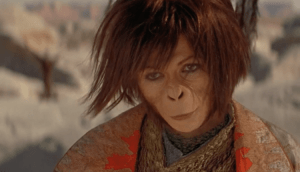
Capt. Leo Davidson (Mark Wahlberg) is a trained pilot inhabiting a space station orbiting the rings of Saturn. The members inside are performing tests on the intelligence of apes (foreshadowing poking you in the eye) and seem to be coming back with optimistic results. A cosmic energy storm erupts near the station and Leo’s chimp is sent out into a pod to investigate. When the ape disappears (oh the foreshadowing is starting to hurt) Leo decides to venture out himself to save his monkey despite the instructions of his superiors. He gets pulled into the energy field and crashes on a distant planet where he discovers that apes are on top of the food chain and humans are the sport. Captured by the ape commander Attar (Michael Clark Duncan), he is taken to Ape City. He is sold into slavery but wins the attention of a human rights activist Ari (Helena Bonham Carter) who agrees to help him escape and get to his crashed vessel. General Thade (Tim Roth) still carries a torch for Ari but has an entirely different viewpoint when it comes to humans. At one moment he grabs Wahlberg and pulls apart his mouth to murkily inquire “Is there a soul in there?” When Thade begins to learn about Ari’s assistance to the human escape he mounts a full army to travel to the Forbidden Zone and annihilate the humans once and for all.
 Burton’s Apes remake, excuse me… “re-imagining,” lacks the social commentary, originality, and heck, even entertainment level that its predecessor possessed. Burton adds his usual great touches of style and the sets are vast and a wonder to see, but what movie is all set watching? This isn’t the simian Home and Garden channel. Burton dresses his players up nice thanks in part to Rick Baker’s fantastic makeup but the components in Apes redux are all dressed up with nowhere to go.
The script is credited to four writers but I wonder why anyone would want to take any credit for it. The story is not only half-baked it seems to never have come out of the oven. The tale is full of numerous incongruities that make this new Apes feel stagnant, especially during its middle portion. The story never gives us any real characters or an exciting line to follow. It’s more like a story pitch than a full story. There are many moments where dialogue is paraphrased from the original in an attempt at a humorous wink, but it’s worthy of more groans than applause.
Unlike the first Apes series, the humans of Burton’s ape world can speak… they just don’t have anything interesting to say. Estella Warren fills in as the good looking and useless heroine that spends her days frolicking about in ripped rags. She’s supposed to be the love interest for Mark but she fails at that (even though she’s the planet’s only attractive female) with Carter getting more googly eyes cast her way. There’s something weirdly natural seeing Kris Kristofferson as a scrubby post-apocalyptic dweller. It seems like he was made to lurk through caves and grunt. Wahlberg himself seems to sleepwalk through the entire film and speaks in only one monotonous tone.
Roth gets to huff and puff a lot and does quite a good menacing job. Every expression of his has a dominating glare of power and every piece of dialogue spoken in a gruff snarl. He has total capture of a great villain and serves his end well enough as the story provides. Carter gives a light touch as the sympathetic human defender but the long awkward moments where her and Mark gaze at each other gave way to great howls from my audience. Giamatti hams up his role with verve and provides some of the best moments of levity for this overwrought film.[
The original Planet of the Apes ending was one of the greatest twists of cinema. It was entirely logistical and packed a great punch. The ending of Burton’s “re-imagining” packs as much punch as a wet noodle. The ending is TOTALLY IMPOSSIBLE given the set-up of the events in the film. Not only is it a disappointing head-scratcher but ]it also manages to rip off the first film’s ending with no shame. It truly may be the worst ending possibly ever. I bet a room full of monkeys could have written a better ending, and I’m willing to put money on it.
 Let me explain why it’s impossible through the use of spoilers. So Mark is in the future. He follows his little monkey friend and crash lands on a separate planet IN THE FUTURE. On this planet, Mark’s space station has been looking for him and crash landed. Their monkey experiments get loose and bing, bang, zoom, we got fully evolved monkeys ruling the place (don’t even bother asking where the horses came from). Now, after learning all this, Mark takes a space pod and zooms his way back to present day Earth. He crash lands against the Lincoln Memorial steps only to discover that Lincoln has been replaced with General Thade and Earth is populated with highly evolved apes that still speak English. What? How? What? This cannot be because the film establishes a frame where Earth already has a long history of non-evolved monkey rule. Wahlberg crash landed on a DIFFERENT planet in THE FUTURE that should, therefore, have no bearing whatsoever on what happens to Earth or its past. The Apes remake rips off the most famous twist ending ever by serving up an incongruous version that makes no sense and cannot happen.
Planet of the Apes had all the right components for an exciting and sleek sci-fi ride but falls far short. Burton adds enough of his Gothic vision but this will likely go down as the weakest film on his resume. The usually reliable Danny Elfman’s score is nothing more than hyped up symphonic white noise. Burton may go home with a large check but I pray they don’t do a “re-imagining” of the next Apes picture. Marky Mark and the Furry Bunch are stuck in a hollow, head-scratching bore. Fans of the original series may find interest in comparing and contrasting, but if that’s cause enough to make a film then give me 100 bucks and I’ll make my own versions in my backyard. And they’ll at least make more sense than this monkey mess.
Nate’s Grade: C
Share this:

Fight Club (1999)
 Fight Club is a movie that will kick you in your teeth. It’s the adaptation of a sort of anarchist handbook by David Fincher, the man who gave us the grisly masterpiece Se7en. Fincher’s latest re-teaming with Brad Pitt is a disturbingly gritty tale of politics and violence.
Ed Norton plays our un-billed narrator through the harrowing tale of fascist propaganda and anti-social behavior. Norton dwells in a world of cubicles and consumerism. He meets Brad Pitt’s Tyler Durden on a flight and the two instantly connect. Norton moves in with Pitt into something resembling the Munster’s house once his own apartment has exploded. Pitt and Norton find the therapeutic realization through fighting. These fights grow larger and build up into clubs where all the guys are fighting to get in to get their head slammed on concrete. These clubs start turning into neo-fascist soldiers of fortune as they try to ambitiously grow and destroy the reality of consumerism. It kind of spins out from there and never returns back.
David Fincher’s direction is ultra slick and highly stylized. He is one of the most lavish and intriguing visual artists of this decade. He really knows how to pump out excitement and vivid hypnotism from striking images and tones strewn apart every inch of letter-boxed form. Norton has the same commanding presence and magnetic performance that he flashed so brilliantly in last year’s American History X. Norton is the one that runs the emotional gambit and shows just how it should be done. Brad Pitt takes on a role none have seen (Does anyone remember Pitt splicing porn images into children’s films with Legends of the Fall?) and once again proves there’s a calculating and superb actor behind the pretty face. Helena Bonham Carter goes leaping against type to play the bumbling Goth love interest with such charm and humor. And Meat Loaf will really surprise as a pathetic breast enhanced friend to Norton.
Fight Club speaks to a world where men feel they have been robbed of what has historically defined them; a world with Oprah, The English Patient, and self-help groups telling them to cry, be kind, rewind. All of the social consciousness has made some men feel less like their upright ancestors. So Fight Club‘s proposition is that to freely express your emotions you need to either be pummeled into ground round or be the one doing the pummeling. The notion is a tad laughable. Fight Club is a flick with so much on its mind to say that it brisks from topic to topic sometimes not dwelling as much as it could. The twist ending is unnecessary and is something that truly comes out from left field.
Fight Club has been criticized for its promotion of violence, but if anyone actually sees the film the violence is gruesomely repellent. No kid is going to walk out of this and think it would be cool to start a Fight Club in their local suburb. The movie is an interesting mirror to our always-on-the brink commercial society, and its push toward a kinder gentler civilization and its effects on the male psyche. Despite some oddities at the end and some fascistic rhetoric, Fight Club is an exciting blend of suspense, action, and dark humor. Go ahead and break the first rule of Fight Club – tell your friends about the adrenaline kick this movie is.
Nate’s Grade: A


 nathanzoebl
You must be logged in to post a comment.