Blog Archives
Argentina 1985 (2022)
 How does one adjudicate a country’s own nightmare and find justice? That was the situation Argentina found itself in after returning to a democratic state following seven years under a military junta that kidnapped, tortured, interrogated, and killed thousands of its own citizens in the guise of “stopping radical communists.” Argentina 1985 gives you its setting in the title but it’s really about the chief prosecutor (Ricardo Darin) trying to hold the top generals accountable for their crimes against humanity. There is a lot riding on this case and plenty going against him, including near-constant death threats for he and his supportive family. There are some very harrowing personal accounts in the movie, but it’s set up almost like an underdog courtroom drama conceived by Aaron Sorkin, and much is made about putting together the young hotshot team and seizing the day. The movie is swiftly paced for being over two hours and has notable comic relief to keep things from getting too overwhelmingly gloomy given the subject matter. However, Argentina 1985 never loses its focus on making the powerful account for their sins. It’s a rousing courtroom drama with piercing details, engrossing human stories, and the temerity of history. In the light of rising authoritarian movements around the world and even in the U.S., this movie has even more urgent political relevancy about making sure the crimes of government officials are accounted for and that justice is served. It’s a testament to the heroism of everyday citizens and it makes for an invigorating drama that doesn’t lose sight of the big picture amidst the plethora of procedural details.
Nate’s Grade: B+
Share this:

Decision to Leave (2022)
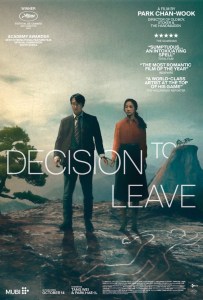 Imagine crossing a classic film noir detective story with some unrequited romance heavy with yearning, like In the Mood for Love, and that’s the combo you get with director Park Chan-wook’s newest, Decision to Leave. In Busan, a straight-laced detective (Park Hae-il, The Host) is investigating an older government official who fell to death from a mountain peak. He suspects that the man’s wife, Song Seo-rae (Tang Wei, Lust, Caution), a much younger Chinese immigrant, might have something to do with the death, and so the detective gets closer and closer to his suspect, blurring the lines of the investigation and his own personal desires. It sounds like familiar genre territory, and it can be, but director Park Chan-wook (The Handmaiden, Oldboy) is the X-factor, and quite simply, he shoots the hell out of this movie. There are some jaw-dropping shot selections and camera arrangements here to cherish. The movie is less interested in its sordid murder mystery details and more the possible relationship between its two magnetic poles, made even more complicated by the detective already being married, though only spending the weekends at home. There is a stormy swell of will-they-won’t-they sexual tension in constant churn, and it adds a dour sense of melancholy to the entire movie. There’s a time jump two-thirds of the way through the movie that is slightly aggravating, because it’s like starting over and repeating the mystery catch-up but with less time, making the details of this new case even less meaningful than earlier. Decision to Leave ends on a strong downbeat that feels appropriate given the mood of the preceding two-plus hours. I don’t think the characters are as textured as they could be, part of this is being jostled around by the non-linear storytelling and artistic tricks of Chan-wook. I think the movie generally favors mood and flirts with wanting to be seen a tragic romance worthy of Hitchcock, though I don’t think it fully gets there. So much of the movie is about probing whether or not the feelings are real between these two, whether she’s toying with him or he just wants to complete the unfinished assignment (the dynamic reminded me of Luther and Alice in the BBC series Luther). Decision to Leave feels like a solid film noir mystery, elevated by A-level directing talent, and then missing its ambitious grasp with its lilting love story that feels a little too subdued and understated to really smolder.
Nate’s Grade: B
Share this:

RRR (2022)

The Indian film sensation that has converted millions across the world has one new convert: me. I’ve been hearing about RRR all year and how outlandish it is, how wild and audacious this three-hour action historical musical can be, and that it’s a celebration of the exuberant possibilities of film, and to every part of that sentence I pump my fist and declare an enthusiastic yes. Think of it as a superhero movie that also happens to be a musical. RRR is set in 1920s India and follows two real-life figures central to India’s independence from Britain. Komaram Bheem (N.T. Rama Rao Jr.) and Alluri Sitarami Raju (Ram Cgaran Teja) never met in real life, but the movie makes them not just enemies but also the best of friends. Both men are set on a collision course, with Bheem searching for his little sister who was kidnapped into the big city by the British governor (Ray Stevenson), and Raju is working his way through the ranks of the British police and searching to arrest Bheem. What might get in the way is the greatest bromance in years, as these guys don’t just like one another, they will swear their undying allegiance and love for the other. Raju helps his BFF talk to a nice British girl he is crushing on, and he even helps Bheem by leading a dance off between hilariously haughty British elites. That “Naacho Naacho” dance is a shot of pure joy and encapsulates the movie: it’s frantic, frenetic, overpowering, and purely genuine. There isn’t a hint of irony in any of the overzealous 186 minutes here. The lead characters act like super powered gods, or burst into song and dance, complete with cover-worthy poses, but at no point does the movie want you to laugh at it; it wants you to get on board and enjoy how perfectly crazy the movie is. It took me about an hour, but I was won over completely by RRR. There is a man getting whipped who moves the crowd into a revolutionary mob through the power of his song. There’s a guy throwing a leopard at another man’s head. A man kicks a running motorcycle into the air and then uses it as a projectile. It’s got spectacular action with more style than a hundred Hollywood movies. The action is so well choreographed and clear to understand that it’s immensely gratifying to watch. The extravagant wire work adds to the grandiose mythic nature of the movie. The arc that Raju has is more compelling and satisfying than many in even American indies. Not only are these gents buff as hell, and effortlessly charming, but they can and will dance circles around the competition. I won’t pretend I have a deep knowledge of Indian cinema but this seems like an excellent entry for many Western fans to explore the stylistic heights of Indian cinema. This is a wild romp with cheer-worthy heroes, a bromance for the ages, and villains you can’t wait to topple. RRR is a bit exhausting by the end but I was never bored during its different tonal shifts. It might not be the best movie of the year but it’s certainly going to be the most movie you’ll get in 2022.
Nate’s Grade: A-
Share this:

Triangle of Sadness (2022)
 The Palme d’Or-winning satire Triangle of Sadness comes from excellent stock. Swedish writer/director Ruben Östlund made audiences squirm with 2014’s Force Majeure and 2017’s The Square, so I anticipated an excellent comedy that made me cringe as often as it made me laugh. The unwieldy two-and-a-half hour experience made me laugh, made me avert my eyes, and ultimately underwhelmed in approach and pacing. Lampooning the entitled, oafish, and essentially useless upper class is an easy enough comedic approach, but I guess I was waiting for something more specific or nuanced. I did enjoy the kindly elderly couple who made their fortunes on grenades and landmines. The movie starts off lackluster, with a handsome young couple (Charbli Dean, Harris Dickinson) arguing over money, and then transitions to its luxury cruise where the rich are pampered and pandered, like when the entire crew has to drop whatever they’re doing to change into a swimsuit and take a dip in the water to please a rich lady who bravely believes she is helping these poor souls “relax” from their troubles. Too often, the movie trades in pretty broad critiques and even humor. There’s a nauseating ten-minute sequence that is nonstop projectile vomiting and exploding toilets overrunning with filth (do you get it? The ship is also called “Society” and it sinks, so do you get that?). The last hour of the movie involves a small group from the cruise trying to survive on a deserted island, and it’s here where the power balance shifts, allowing Abigail (Dolly De Leon), one of the housekeeping staff, to become a de facto leader because she’s the only person with useful skills. The obnoxious rich people begin to get some comeuppance, but Östlund won’t allow easy payback for satisfaction. I missed the simplicity of Force Majeure‘s deconstruction of fragile masculinity. It was a much more coherent thesis that felt richly explored with its supporting characters and central dynamic. I think this movie was a little too scattershot and lackadaisical. It’s supposed to be about capitalism propping up a useless class of people, but there isn’t enough savagery during the island portion to really seal this prickly commentary. At no point, do people literally eat the rich, alas. Triangle of Sadness ends so abruptly that I loudly groaned, as it feels less ambiguous and more like I’m missing out on an actual conclusion of a movie, and after 150 minutes at that. It’s an entertaining and exacting experience but one that could have benefited from judicious trimming and a little more shaping, with its narrative and social criticisms. Also, R.I.P. Dean, who died shortly after the film’s release and was only 32 years old.
Nate’s Grade: B
Share this:

Drive My Car (2021)
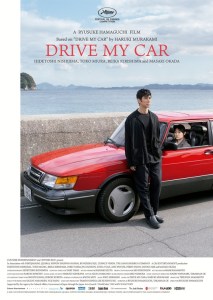 Here comes my shocking cinematic admission that lowers my standing with my critical brethren: I don’t see what the big fuss is with Drive My Car. The three-hour Japanese movie has bewitched most critics, won several Best Film of the Year designations, and was nominated for four Oscars including Best Picture, something only ten or so films have achieved in the Academy’s history. It’s a guaranteed winner for Best International Film, something only one other Japanese film has earned, and no, not anything from legendary Akira Kurosawa. All this is a protracted way of saying this is a very well regarded movie across the globe… and I just couldn’t get into it. Part of this is that the length is overly indulgent and meandering. The three hours feel far too leisurely, and structurally, the entire opening 45 minutes could have been cut and begun with our grieving actor/theater professional restarting his life two years after the sudden death of his wife. Everything you would need to know in that pre-credit beginning is covered later in the movie, which made me wonder why not leave some of the elements as mysteries to be filled in later such as the character’s complicated relationship to his unfaithful wife, what he knew or didn’t know, who is the voice on the tape he’s listening to running lines for the Chekov play Uncle Vanya in his car, and his personal connection to the leading man in the play he’s directing. A whole hour of this movie might be listening to actors say lines from Uncle Vanya, or just hear lines from Uncle Vanya, and then applying the 1898 Russian play to these modern characters and their lives. It’s clever but this kind of stuff works better as subtext. With Drive My Car, it’s the text, the literal text of the story for long portions, and that comes across as frustrating because it’s setting up characters, having them read a famous play, and then telling the audience, “Well, you find the connections.” Again, this works as layered subtext and metaphor in addition to a compelling story, but so much of Drive My Car is at this level of artistic interpretation. Did we need a dozen subdued scenes of them practicing the play in order for the ending to have its impact? That’s the power of art, a tool we can use to relate our fears, hopes, and identities with, sympathizing with the struggles and triumphs of people from other times and places. The core of this movie, for me, was the relationship between the main character and his younger driver assigned to him by the university. This character unfortunately doesn’t get her due until much later. Drive My Car has some beautiful moments, like a graceful family dinner, like the trip to the garbage site in Hiroshima, like a backseat monologue about, what else, decoding a story for meaning as it applies to character insight. This isn’t a bad movie. I can certainly appreciate the big swings at big ideas about grief, the human condition, and the reflective power of art. It’s just structured in a way that doesn’t allow those core elements to shine. Eliminate many scenes of play rehearsals, eliminate many scenes of driving, and even eliminate the opening 45 minutes, and you have a better paced, better emphasized human drama, at least to my mind. There are plenty of people who have fallen in love with all three hours, but I found myself more listless than lovelorn. I really wanted to like Drive My Car better but I found too much of it to be meandering, redundant, and frustratingly cold and opaque. In the end, after three dragging hours, I could at least say, yes, that woman certainly did drive that man’s car.
Nate’s Grade: B-
Share this:

The Worst Person in the World (2021)
 Joachim Trier is a filmmaker that dazzled me with his debut feature Reprise, which I placed as my number three film of 2008. The Norwegian filmmaker has amassed a small collection of quirky, introspective, bohemian dramas exploring the growing pains of being young in Oslo. His movies tend to be deeply empathetic and refreshingly free of judgment, which then allows the audience to empathize with the characters even when they are failing or floundering in life and in love. In some ways, Trier’s open approach to building character over time reminds me of Richard Linklater, and it’s easy to find a loose thematic connection between Reprise, 2011’s Oslo, August 31st, and now this new movie, besides the same actors he returns to again and again. It’s more a humanist spirit that pervades the films, capturing life’s moments, big and small, that formatively alter who we are. The Worst Person in the World is a pretty straightforward character study of an impulsive, indecisive woman trying to live her life and having a challenging time of things.
Julie (Renate Reninsve) is a conundrum of a character. She’s far from the titular worst person in the world but she’s certainly flawed, a young woman in Oslo turning thirty without a clue about what she wants from life. She drifts from one job to another, one academic pursuit to another, and one man to another, growing restless whenever stability seems to be materializing. She’s the kind of person who is always looking ahead but unsure of where ahead even lies. At first her boyfriend Aksel (Anders Danielsen Lie) seems alluring, a successful underground cartoonist known for his boundary-pushing work. But the man is fifteen years her senior and more eager to start a family than Julie is. Then one night she crashes a wedding and meets Eivind (Herbert Nordrum), a carefree barista, and they hit it off while trying not to cheat on their respective others. Julie keeps thinking about this other man, her other possibilities, and wonders what if.
 Each of the twelve segments feels like a new version of herself Julie is trying on, feeling out the edges to see if it fits well. With each segment, we can learn a little bit more about her in different contexts. The format makes the moments feel like formative memories more than just scenes driving the story forward to the next. Often there are great leaps of time in between, and some segments are relatively short, like a few minutes. Some of them are comical, some of them are heavily sexual and/or sensual, and many of them are unrepentant for Julie. Then as the movie continues the chapters get longer, becoming more reflective and remorseful. Every now and then, Trier’s sense of style, something more explicitly pronounced in his earlier films, will seize the moment to better illustrate the internal life of Julie. When she’s making a significant choice to leave her current boyfriend, time literally stands still as she runs through streets and frozen pedestrians to leap into the arms of her new lover. When Julie is tripping on magic mushrooms, the depths of the world dip, and she’s in rapid free fall away from that same lover. My favorite stylistic flourish is when Julie is reflecting upon what she has accomplished by age 30 and how this compares to her mother, grandmother, and so on, going back to her deceased great-great-great grandmother, who died before getting to thirty as the average life expectancy of her era was tragically only 35 years old.
I think Julie represents a certain generational “buyer’s remorse/FOMO,” a restless spirit that is always thinking about what she doesn’t have as opposed to what she does have. This is evident in what we see in her romantic relationships. Each of the two suitors that Julie bounces between offers different experiences, one more akin to her carefree and aimless sensibility, and the other more focused, certain, and forward-looking. As she settles into a routine with one man, her restless nature kicks back in, and she starts thinking about what the other has to offer. It’s a constant push-and-pull that will sabotage any potential long-term romantic relationship. This leads to Julie making rash decisions, never really allowing herself to get comfortable, and hurting the people she cares about, even professes to love, and yet she’s far from hateable. She may even be relatable for some.
 During the more morose final act, this is where the movie slows down and Julie perhaps realizes that settling down is not the same thing as settling. I say “perhaps” because I don’t know by the end if Julie has really changed as a person through these dozen chapters. I’d like to think so, hopeful that our experiences and challenges reset our nascent thinking and broaden our perception. By the end, Aksel has had some very dramatic and negative turns, forcing him to re-evaluate his limited time on this planet and his personal actions, always looking ahead when he wishes he had more appreciated the moment. He says he doesn’t want to live on through his art and would rather simply live in his apartment. It’s all too little by the time it comes to a finite end. He wishes he and Julie had never broken up, that they had raised children, and he simply had more time with the person he knew was the love of his life.
For Julie, this somber final stretch allows her to contemplate her own naivete and what drives her away from others, that no matter what career path she takes, what man she chooses to shack up with, what goal she prioritizes, that little will change unless she focuses on resolving her own internal issues and hangups first (if you guessed emotionally distant father, congrats and collect your prize). She’s so scared of missing out on something better, of being denied her true self, but in pursuing this aim at all costs, she’s missing out on other experiences that can be just as rewarding and fulfilling. Making a choice does not mean you are burdened with the unmet possibilities of the myriad of choices you did not make. It’s about committing to a person, a vision, a possible version of yourself, and giving it a real chance.
Much of this hinges on the shoulders of the lead actress, and Reinsve shows why she earned a Best Actress award at the Cannes Film Festival. Reinsve had a small supporting part in Trier’s Oslo, August 31st but is best known as a Norwegian theater star, and here she makes quite a lead film debut for herself. Looking like a dead ringer for a Nordic Dakota Johnson, Reinsve gets to showcase an impressive variety of emotions as a constantly evolving, self-sabotaging individual. At every point, she feels like a genuine human being, even as she’s losing interest in her current situation or lover, and even when she’s struggling you can appreciate how committed Reinsve is to being as honest and messy as Julie turns out to be. Another standout is Danielsen Lie (a constant in Trier’s films) who gets the biggest emotional arc and has the saddest moments. Aksel’s late epiphanies will hit but the character’s troublesome nature might blunt the depth.
 I’m undecided whether the twelve-chapter (plus prologue and epilogue) structure of the narrative actually helps or hinders the impression of Julie. Some of these moments feel far less important than others, or examine a hobby or side-step that Julie takes before abandoning again. There’s a certain frustration that’s going to be inherent in watching a serial quitter. You might even yell at the screen to pick something, taking on the silent yet exhausted expression of Julie’s mother whenever she mentions her next life direction. The addition of an off-screen narrator that drops in and out for some wry commentary seems like something Trier should have committed to more to provide some observational distance with the on-screen antics or ditched entirely. The concluding epilogue is open-ended enough to allow the viewer to be pessimistic or optimistic; has Julie learned about herself enough to settle on a career and allow herself to be happy? Can she ever be happy? It’s enough to keep the viewer guessing, which is appropriate for the ambiguity of the characterization, but it misses out on feeling like an ending. It’s more a pause at this juncture of Julie’s life, and maybe that was the design all along. It’s not a journey of one continuous climb to self-actualization but a series of starts and stops and unfortunate missteps.
Julie is far from what The Worst Person in the World might lead you to believe. She’s confused and struggling and searching for what will eventually click, some sense of herself that rings true that finally gets her to stop and enjoy her present rather than fretting about what she may be missing. Ultimately, only focusing on what you do not have will never allow you to appreciate what you do, but life and learning is a process and everyone comes to these realizations from a different path, if they ever come to it. Trier’s movie is a little meandering, a little lopsided in structure, and I don’t quite know if the pathos is earned by the overly somber conclusion. It is another observational, funny, and occasionally melancholy tale from Trier, a filmmaker who still has deep feelings for his characters and their all-too human foibles.
Nate’s Grade: B
Share this:

The Hand of God (2021)
 For writer/director Paolo Sorrentino’s Oscar-winning 2013 film The Great Beauty, of which I was a great fan, I wrote: “It’s a bawdy, beautiful, and entertaining film but one that also takes its time, luxuriates in atmosphere… The film is far more free-floating and meditative … I felt like I could celebrate the absurdities and joys of life along with the people onscreen. It’s existential without being laboriously pretentious, and the comedy and stylish flourishes help anchor the entertainment.” Most of those words still apply to 2021’s autobiographical coming-of-age drama, The Hand of God, so why does it feel less appealing this time? We follow a young man in 1980s Naples and his large, boisterous, very Italian family. It’s a movie of moments, several extended vignettes, and it sadly doesn’t add up to much for me. I think that’s because the young protagonist is too blank to care about. He’s a surrogate for the filmmaker, but you never get a sense of his passions or interests or even personality. It’s a movie of people talking to and at him, so it’s hard to work up much emotion for his triumphs and perseverence. There are some memorable parts, like his awkward deflowering to an older woman, and a tragic turn halfway through that sneaks up on you. The life lessons are familiar for the well-trod territory, and the personal details of the era, the community, the 1982 World Cup (where we get the title from) feel richly realized as Sorrentino’s gauzy nostalgia. It’s just that Sorrentino’s ratio of interesting to ponderous moments has tilted into the negative this time. The Hand of God is overlong, free-floating, occasionally beautiful and frustratingly inaccessible.
Nate’s Grade: B-
Share this:

Parallel Mothers (2021)
 There is little else like a Pedro Almodóvar movie. The famed Spanish writer/director has been making movies since the 1980s and across an eclectic array of tones and genres. He can make a sexual farce, an unsettling thriller, a moving character-based drama, or a movie with elements of all three in harmony. Almodóvar has found ways to take some of the strangest story elements and make them feel real. Watch a movie like 2002’s Talk to Her, which he won his only (!) Oscar for, or 2011’s The Skin I Live In, or 2006’s Volver, and marvel at how seamlessly Almodóvar can combine any element, any genre, any twist, and turn it into genuine emotional pathos. He’s a witty man but rarely is he flippant, especially as he matured throughout the 1990s. He genuinely cares about his characters and treats their dramas as serious business no matter the content. Parallel Mothers is another example of Almodóvar, even in his seventies, operating at the top of his unique artistic capabilities. This is definitely one of the best movies of 2021. Find it when you can, dear reader.
Janis (Penelope Cruz) and Ana (Milena Smit) are both recent mothers in Madrid; Janis is pushing 40 and planned on having her first child, and Ana is in her late teens and her pregnancy was an accident. They share a hospital room, bond over their ordeal, and exchange phone numbers to keep in touch. Months later, both women are acclimating to the growing demands of motherhood, except for a gnawing doubt that has taken hold of Janis. Her boyfriend and the reported father of her baby, Arturo (Israel Elejalde), believes he is not the baby’s father and wants a DNA test. Janis is outraged, but the more she begins to think about it, the more she cannot let this nagging doubt go.
 Parallel Mothers is an unpredictable drama that also has a surprising heft to it when it comes to emotional substance. When I read the premise of this movie, I erroneously thought it was going to be a two-hander of a story about two different mothers, one older and one younger, connecting over their new babies and sharing their experiences, hopes, and fears about raising a child at their respective ages. That is a fraction of the movie, but Almodóvar’s deft storytelling is refreshingly nuanced and unexpected. There were several turns in the movie where I audibly said, “Ohhhhh,” or, “Did not see that coming.” Instead of resting on his plot turns, Almodóvar makes sure that the aftermath is given its due time. I really appreciated that; here is a writer who knows throwing sensational elements or twists is not as important as focusing on how they affect the characters and narrative. When Janis begins to doubt whether her child is hers, that’s when Almodóvar is just getting started. There are several twists that are so well staged and developed, and each one brings added intensity and another chance to revise everything we know. I loved watching the movie because I genuinely could not anticipate where things would go next, and each additional turn was organic, meaningful, and would compound the guilt or fears of the main characters. It might seem like a soap opera when you distill all these outrageous elements to their essence, but Almodóvar has always excelled at taking the outrageous and making it sincere.
The movie explores motherhood but also generational connections and understanding the past to better understand the present. Janis and Ana have different though distant relationships to their mothers. For Janis, her mother died of a drug overdose at the age of 27 when she was only five years old. She was raised by her grandmother and has no picture of her biological father (the only thing she knows about him is that he was a Venezuelan drug dealer). By having a child, a goal she’s wanted to do for some time before 40, it allows her a chance of bringing her father’s genetics back into the world, to potentially see what he may look like, to bring back life that has been absent. It’s such a beautiful idea, and also articulated in 2009’s Away We Go to poignant effect. For Janis, having a child is a way for her to reconnect with her past, her parents she’s never known, and honor her grandmother. For Ana, her own mother left her when she was younger to purse her acting career, and now that she’s having a baby history is repeating as she’s once again leaving to tour with a theater show. Janis thought she knew who the father of her baby was, and insists she was only intimate with Arturo, but this ends up being another point of connection between the two mothers. Ana is unsure whom the father is of her child, though hopeful it’s a select person she had feelings for at the time. These babies mean different things for each woman but they both love them completely, no matter what devastation happens later. These beloved children are means of connecting to their past.
 Another aspect that Almodóvar includes strengthened this movie as great for me, and initially it seemed like an odd fit until the thematic richness becomes realized. Before she was pregnant, Janis was determined to secure an exhumation of what is believed to be a mass grave in a small rural village from the Spanish Civil War and Francisco Franco’s regime. Using modern technology and careful attendants, they can uncover this crime of the past and provide closure and dignity to generations of family members still left with unanswered questions. The movie returns to this storyline again late, as if Almodóvar is putting a fine point on bringing home his message of reckoning with our past and the importance of uncovering painful truths. Janis and Arturo return to this small village and interview descendants about what they can remember about their departed loved ones, the men whose remains may be found. It’s such a sincere expression of empathy and generosity, and the short snippets of interviews allow the movie to broaden its scope, adding different mothers and daughters to the sphere and creating even more spokes of human connection. What Janis is doing is a legitimate kindness, an act she hopes to better understand her own history and family ties to the worst that her country had to offer under Franco. One villager recounts how her grandfather had to dig his own grave, then was sent home for the night, only to be reclaimed and never return the next day. “Why didn’t he run if given the chance?” Janis asks. The descendant relates he couldn’t be without his wife and daughter, even for a night, even if it meant his certain doom.
Cruz has never been better than when she’s collaborated with Almodóvar (2006’s Volver was her first Oscar nomination). She goes through some emotional wringers here, the details of which I will not spoil, but it is an understatement to say that Janis is presented with a very complicated scenario. Each scene, especially in the second half once Almodóvar’s box of twists has been unpacked, has so much conflicted emotion for Cruz to cycle through on her face, swallowing guilt and hope and desire and dread. She’s fully deserving of another Oscar nomination for her heartbreaking work with the messiest of material. Smit (The Girl in the Mirror) is a screen partner equal to the challenge but her character is more in the dark by narrative necessity.
 I’m loath to reveal too much more when it comes to the potent central drama of Parallel Mothers, because it’s so well developed and so well performed that you should really experience it for yourself. Knowing ahead of time the added complexities won’t ruin the movie, but I had more appreciation for how Almodóvar was so nimbly able to keep upending my expectations and my sense of understanding as it pertained to the two mothers. It’s a delicate drama, nourishing with empathy and also heart-rending in the dread of what Janis may choose to do next. Thank you, filmmakers of the world, for lifting the 2021 year in cinema for me. Parallel Mothers is one of the best films you’ll see this year and an affecting examination on reconciliation.
Nate’s Grade: A
Share this:

Titane (2021)
 What’s the point of a weird, gonzo movie when it stops being weird? That’s my takeaway from French director Julia Docournau’s (Raw) Palme D’Or winning oddity, a movie that has been nicknamed, “That film where the lady gets impregnated by a car.” That does inexplicably happen, and I was waiting for more bizarre interludes, but then Titane becomes a completely different movie. The first half hour involves the car copulation and then becomes a slasher movie, as it’s revealed our heroine has been killing locals for months. We watch her kill her friend, on a whim, and then her roommate walks downstairs, a witness needing killing, and then another and another, and this for me was the darkly comic high-point of the film. From there she goes on the run, poses as a man’s missing adult son, and the movie becomes entirely about hiding her real identity, whether this grieving father fully suspects or even cares, and learning the ropes of fire department protocol. To say the second half of the movie is a creative letdown is an understatement. Titane feels like Docournau was combining different stray story elements from half-finished scripts and trying to, through sheer force of will, cram them together. The car fetish is never quite explained, which is fine, but once she’s impregnated, the movie becomes more of a standard drama about hiding her burgeoning pregnant belly to keep her cover. It seems quite strange for me to say that a movie about a woman impregnated by a car isn’t strange enough, and yet there it is. Titane will appeal to fans of David Cronenberg’s body horror and the French noveau horror scene, but I found its exploitation excess to be short-lived, and the creativity on display felt more stuck in neutral than as advertised.
Nate’s Grade: C
Share this:

Petite Maman (2021)
 There are two things to know about the deeply heartfelt new French movie, Petite Maman. The first is that it’s the follow-up by Celine Sciamma, the writer and director of one of 2019’s absolute best movies, the sumptuously romantic, Portrait of a Lady on Fire. That was reason enough to watch this relatively short movie. The next is a twist that I’ll save for the body of this review but that makes this childhood examination on loss, grief, and the future far more compelling and emotionally striking. It’s further proof to me that Sciamma is one of the best filmmakers out there and that her devotion to story and human emotion is paramount; just as I was enveloped in the romantic swell of Portrait, I was charmed and enchanted by this wholesome movie that’s so winsome that you could watch with the whole family, that is, if you can convince children to watch a 75-minute French drama with you, and if so, congrats.
Nelly (Joséphine Sanz) is mourning the recent loss of her grandmother. She and her mother and father have camped to grandma’s old home to pack it up. Everyone is sad and one day Nelly’s mother leaves without warning. She doesn’t know when mom is coming back. In the meantime, Nelly makes a friend with a neighbor girl, Marion (Gabrielle Sanz). She’s living with her mother and nervous about an upcoming operation to fix a genetic malady. However, in the meantime, these two little girls find solace in playing with one another, building a fort in the woods, and creating role play scenarios that allow each to hone their acting skills. Over the course of a few days, Nelly learns to understand her family more while learning to say goodbye on her own terms.
 I’ll save the spoilers for the next paragraph because I feel like they are unavoidable to truly get at what makes this movie special. One non-spoiler merit of this movie is how persuasively it is told from the perspective of childhood. Our little eight-year-old heroine is the protagonist, and we see the world from her understanding. That doesn’t mean the movie ever leans on narration or a reality-bending imaginative framework; it’s simply told with the understanding of what it’s like to be a child with questions and emotions that you don’t quite know how to handle. There’s a beguiling innocence with the movie that makes it so wholesome and sweet. As an adult, it’s not too difficult to remember your understanding of the world as a child, let alone family relationships, especially in the aftermath of bereavement. Nelly is forlorn because she didn’t know her last exchange with her grandmother would be their final interaction, and that ache is relatable no matter the age. Nobody knows when their last interaction with a loved one could be, so it’s easy to feel that same lament that more wasn’t made to achieve a better sense of closure. There’s a sweet moment between Nelly and her mother where they role play what that final exchange could have been, and all Nelly wishes is to say goodbye one more time but with more forceful feelings behind the words, and it was a moment so pure and innocent. The entire movie is like this moment, a lingering earnest sensation that is universal and expertly delicate.
Here comes the spoilers, so dear reader be aware if you still want to remain as pure as this movie, although I would argue knowing this spoiler ahead of time will improve your movie-going experience by giving you a necessary part of the puzzle. Petite Maman translates to “Little Mother” and it’s more than simply little kids pretending to be adults. It turns out that Marion is actually the eight-year-old version of Nelly’s mother, and her house they retreat to after playing in the woods is an older version of Nelly’s grandmother’s home. There are clues early, like the same distinct wallpaper and interior design of the house, but you might be able to dismiss that as maybe there are just similar houses being built in this neighborhood. After a while, though, you start to realize there’s more going on here, and the movie doesn’t treat you like an idiot. Nelly flat out tells Marion that she is her child from a future. From there, the movie becomes a fully felt inter-generational bonding experience, where daughter gets to talk to her mother on her own level, answer questions for her curious young mother, and they talk about dealing with sadness as they know it. When Marion asks if Nelly was planned, she says yes, and Marion says, “That makes sense. I can’t stop thinking about you already,” and tears come to my eyes even typing the words. This twist brings so much more meaning to everyday activities; instead of Nelly staying one last night to make pancakes with her new friend, now it’s Nelly having only one more opportunity to bond with her mother when they’re both at the same age, saying goodbye while telling her how much she loves her, not knowing if when they part that she may even see her adult mother again. Wow, that is so much going on. Nelly even gets another shot to find that closure with her grandmother.
 The two young actresses are twin sisters, and both are terrific. Given the gentle nature of the movie, neither is given any great moment where they tearfully break down, shout their feelings, or chew the scenery in general. These feel like real kids dealing with real emotions under some unique circumstances. Each of the Sanz sisters is a delight and realistically subdued and not just poor actors incapable of effectively showing emotion. When Nelly and Marion are play acting a scene, with one pretending to be an investigator interrogating the other as a suspect, they both have a twinkle to them as they admire each other’s acting ability, saying they should become an actress. It’s a nice moment for each of the Sanz sisters because they’re living their own dreams in the scene.
Petite Maman is a special movie and one that doesn’t feel like a frame is wasted. Even at only 75 minutes in length, its compassion and sweetness are eminently felt and appreciated. My only regret is that we could have had more time together with these two and to develop even more, but it almost seems like its own commentary on life and our relationships itself. We always are left wanting more, never knowing when one last hug or joke will be the last, and so savor the human experiences we have, the cherished memories earned, the gamut of emotions shared, and enjoy what we have.
Nate’s Grade: A-


 nathanzoebl
You must be logged in to post a comment.