Blog Archives
It Was Just an Accident (2025)
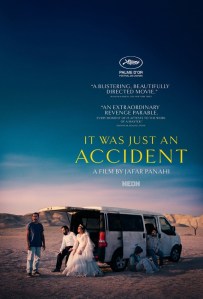
Iranian writer/director Jafar Panahi (The White Balloon, The Circle) is an example of an artist literally willing to put it all on the line for his art. He’s been banned by the authorities of Iran from making movies, and then Panahi secretly made a documentary of himself serving as a taxi driver in 2015. Scanning his filmography, all of his movies after 2000 were either made “illegally” or banned in his home country before their release. He was sentenced to a six-year prison sentence in 2022 and was released shortly after undergoing a hunger strike. Panahi filmed his latest movie, It Was Just an Accident, in secret without knowledge by the Iranian Authority, which makes sense considering how openly critical it is about the regime. It won the Palm D’or, the top prize, at the 2025 Cannes film festival and has been one of the most acclaimed movies of the year. It’s also likely going to make life much harder for Panahi, who was also sentenced in absentia by Iran to another prison sentence for “propaganda activities.” Yet his art persists, and It Was Just an Accident is easily one of the finest movies of 2025 and it’s no accident.
It begins simple enough. A middle-aged man and his family have car trouble after accidentally hitting a stray dog (sorry fellow animal lovers, but at least you don’t see it). They are taken into a nearby garage and that’s where the owner overhears the family man’s voice and then freezes in terror. He sounds EXACTLY like the man who interrogated and tortured him for the Iranian government years ago. Could it be the same man? How can he verify? And if so, what does he plan to do with his possible former captor?
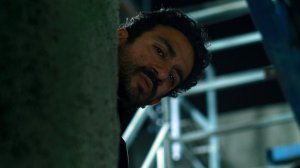
What a brilliantly developed and executed movie this is, taking a concept that’s easy to plug right into no matter the language and cultural barriers, and then to unfold in such contemplative, bold, and unexpected ways. It captures mordant laughter, poignant human drama, and a nerve-wracking thrills. Most of all it’s terribly unexpected. As more and more people get brought in on the kidnapping, and more reveal their personal trauma from their shared captor, I really didn’t know what the fate would be for anyone. Would they kill this man? If so, what would that say and how would they view themselves after? If not, what lessons might they have learned from this ordeal and what lessons might their former captor have learned? It really kept me guessing and because it’s so exceptionally well developed and written, the script could have gone in any direction and I would have likely found satisfaction. There’s even the question over whether or not all these people are mistaken and projecting their fury onto an innocent man. However, I will say, the movie flirts with Coen-essque dark comedy, almost at a farcical level for its first half as these amateurs stumble their way through a kidnapping plot they are not equipped to control (a woman is stuck in her wedding dress for the entirety of these vigilante deliberations). Then in its second half it transitions into a really affecting moral drama about the lengths of trauma and the desire for forgiveness as a key point toward processing grief and preparing oneself to move forward. Even though the circumstances are specific to Iran, the movie is emblematic of accountability and reconciliation, and those elements can be easily empathized with no matter one’s cultural borders.
As you might expect, this is a movie brimming with anger, but it’s not suffused with bitterness, which is a remarkable feat given its subject matter. This is a movie that unfolds like a crime thriller, with each scene unlocking a better understanding of a hidden shared history. Each new character provides a larger sense of a bigger picture of oppressive state control and abuses, with each new person adding to the chorus of complaints. Naturally, many of these victims want to seek the harshest retribution possible for a man who tortured them with impunity. It’s easy to summon intense feelings of outrage and to demand vengeance. The filmmakers have other ideas in mind that aren’t quite as tidy. It’s easy to be consumed by anger, by outrage, that surging sense of righteous indignation filling you with vibrant purpose. It’s another matter to work through one’s anger rather than simply serve it. I’m reminded of the masterful 2021 movie Mass, a small indie about two groups of parents having a lengthy conversation; it just so happens one couple’s son was killed in a school shooting and the other couple’s son was the gunman responsible. It was a remarkably written movie (seriously, go watch it) and a remarkably empathetic movie for every character. It’s easy to pick sides of right and wrong, but it’s so much more engaging, intriguing, but also humane to find the foundations of connections, that every person lives with their own regrets and guilt and doubts. It Was Just an Accident follows a similar moral edict. Every character is a person, and every person is deserving of having their perspective better known, and we are better having given them this grace.

I think the movie is also especially prescient about this time and place in American history. It very well may prove a sign of the future, detailing a populace of the abused and traumatized and the former aggressors who worked for an authoritarian agent and administered cruel violence to cruel ends. It’s not difficult to see a version of this movie set in, say, 2035 America, with a ragtag group of characters discovering a retired ICE agent who they all have an antagonistic relationship with. In many ways the movie is about Iran and its history of an oppressive government turning on its own people, but in many ways it can also be about any system of power abusing that power to inflict fear and repudiation. It’s about a reckoning, and that’s why I think while the movie is clearly of its culture and time it’s very easy to apply the movie’s lessons and themes and larger ideas to any country, It’s all about characters coming to terms with harm and accountability, and sometimes it takes a long time after the fact for the perpetrators to accept that harm has been done, especially if they can fall on the morally indefensible “just following orders” defense. In the near future, will ICE agents, especially the ones who joined up after Trump took office for the second time, argue the same as the Nazis at Nuremberg? Will they rationalize their actions as just fulfilling a job to pay a mortgage? It might even be overly optimistic to believe a reckoning would even occur in the not-so-distant future, not to the profile of the Nuremberg trials but even just an individual accounting of individual wrongdoing. That assumes an acceptance of wrong and ostensibly a sincere request for forgiveness. As I write this, with an ICE officer whisked away to the protective bosom of federal government after executing a woman shortly after dropping her child off at school, it’s difficult for me to even accept that those in power and so eager to impose their bottomless grievances upon the vulnerable and innocent would ever allow themselves to accept the possibility of blame or regret. But then again this is perhaps what the citizens of Iran felt and they’re presently marching in the thousands to protest their authoritarian government in 2026, so maybe there’s hope yet for we Americans in 2026 too.
There is a deliberate sense to every minute of It Was Just an Accident, from its long takes to its interlocking sense of discovery, to the questions it raises, answers, and leaves for you to ponder. It’s a movie that drops you into a fully-realized world with rich characters that reveal themselves over time. If there’s one pressing moral for Panahi, I think it’s that every person matters, even the ones we’re told have less value. This is an insightful, searing, and ultimately compassionate cry for justice and empathy. It will be just as effective no matter the date you watch it, but with a movie this good, why wait?
Nate’s Grade: A
Share this:

No Other Choice (2025)
 The title of the Korean movie No Other Choice is spoken, in English actually, a few minutes into the movie. It’s the brief, unhelpful reasoning from an American exec that just bought a South Korean paper company and is reducing the local labor force. Our main character, Yoo Man-su (Lee Byung-hun), has been work-shopping his spirited speech about how important these jobs are to appeal to the American businessmen, and then when it comes time to deliver, he’s reduced to chasing them down as they quickly depart. Before he can even get into a second poorly-formed sentence, the exec cuts him off by saying, “No other choice,” and then sidles into the protective safety of a chauffeured vehicle. The implication is that this business has to reduce its labor force to stay profitable, and yet rarely is this so simple. In legendary director Park Chan-wook’s (Old Boy, Decision to Leave) latest, characters will often repeat the title of the movie as a deference to guilt, that they were forced to make hard decisions because those were the only decisions that could be had. Unfortunately, as this mordantly funny, exciting, and intelligent movie proves, people have a way of deluding themselves when it comes to finding justifications for their bad behavior and greed.
 The real plot of No Other Choice is Man-su’s readjustment. In the beginning, we see the life he’s built for his family, his wife Lee Mi-ri (Son Ye-jin), stepson Si-one, and daughter Ri-one, with their two big dogs. After a year of job searching, Man-su is bouncing from one job to another, and the family has been forced to make cutbacks to their lifestyle (“No Netflix?!” the son says in shock). Lee Mi-ri takes on a part-time job as a dental assistant to a hunky doctor. The dogs are shipped to Lee Mi-ri’s parents. Ri-one might have to stop her expensive cello lessons, which is a big deal as her teacher says the Autistic child is a prodigy, but her parents never hear her play. The paterfamilias needs to find a good job fast. That’s when Man-su gets the idea to post a fake job for a paper company manager to better scope out his competition. He takes the top applicants, the guys he acknowledges would be hired ahead of him, and creates a list. From there, Man-su pledges to track them down and eliminate them so his own odds of being rehired climb up.
The movie keeps shifting in new directions and tones with each new target, and it creates a much more fascinating and intriguing experience. I loved how each of the targeted rivals is treated differently and how each of these men come across as people who are struggling, hopeful, and quite like our beleaguered protagonist. There are good reasons why this movie has been described as Chan-wook’s Parasite, his culminating condemnation on the pitfalls of capitalism, how it pits peers against one another when they should be allies. Man-su views each man as his competition, impediments to him getting that prized position. However, each of these people is far more complicated than just their resume. At any time the movie could stop on a dime and just have two strangers, one of them intending to possibly kill the other, just have a heartfelt conversation about the difficulties of providing for your children and knowing that there are hard limitations that cannot be overcome. One man is struggling to adapt to a new marketplace after working in the paper industry for twenty years, and Man-su even echoes the complaints from the man’s wife, chiefly that he could have applied himself to other industries and jobs, that he didn’t have to be so discriminating when it came to a paycheck. Now, from her perspective, she’s arguing this point because she feels he is not casting a wider net for promising non-paper job opportunities. From Man-su’s perspective, he’s chiding the man because he doesn’t want to kill him but the guy’s intractability has put him in Man-su’s crosshairs. The unspoken comment is that Man-su is doing the same thing. At no point does he really consider getting a different job and thus being in a position where he does not feel forced to literally eliminate his best competition. He too is just as stubborn and blind to his own intractability. The system has a way of turning men against one another in order to boost a corporate balance sheet. This movie is just taking things a little further to the extreme when it comes to cutthroat competition.
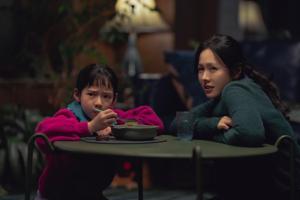 I also appreciated that the movie has a larger canvas when it comes to charting the ups and downs of its conspiracy. Man-su’s wife is not kept as some afterthought, you know the kind of movie where the husband goes on these wild journeys of the soul and his wife is just as home going, “Where have you been?” She’s an active member of her household and she is not blind to their financial shortfalls nor her husband’s increasingly worrying behavior and absences. She’s worried her husband may have begun drinking again after years of sobriety and peace. She makes attempts to reconnect with her distant husband, who is becoming more consumed with jealousy about her boss and his desirability. She’s not just the doting spouse or concerned spouse. She’s a resourceful character who recognizes problems. When another threat to their family materializes, Lee Mi-ri takes it upon herself to find a solution. Naturally, given the premise, whenever you have one member of a couple doing dastardly deeds, whether they get caught by their partner is a primary point of tension, as well as if so, how will their partner respond. I think the track that Chan-wook and co-writers Lee Kyoung-mi, Don McKeller, and Le Ja-hye decide is perfect for the story that has been established and especially for the darker satirical tone of the enterprise.
Despite the murder and gnawing guilt, No Other Choice is also a very funny dark comedy as it channels the absurdity of its premise. It’s always a plus to have amateur murderers actually come across as awkward. Just because they decide to make that moral leap shouldn’t translate into them being good at killing. There’s unexpected humor to Man-su’s amateur stalking and preparations. He’s also not immune to the aftereffects of his actions, getting queasy with having to dispose of these men and thinking of the best ways to obscure his physical presence from crime scenes (there was one moment I was literally screaming at the screen because I thought he forgot a key detail). Lee Byung-hun (Squid Games) is terrific as our lead and finds such fascinating reactions as the movie effortlessly alters its style and tone, one minute asking him to engage in silly slapstick and the next heartfelt rumination. I don’t think the film would be nearly as successful without his sturdy performance serving as our foundation. You really do feel for him and his plight, and perhaps more than a few viewers might feel the urge for Man-su to get away with it. The culmination of the first target is a masterful sequence where three characters all have a different misunderstanding of one another as they literally wrestle for a gun inside an oven mitt. It’s one of those moments in movies where you can stop and think about all the small choices that got us here and appreciate the careful plotting from the screenwriters. I found myself guffawing at various points throughout the movie and I think many others will have the same wonderfully wicked reaction.
 I could go on about the movie but hopefully I’ve done enough to convince you, dear reader, to give No Other Choice the ultimate decision for your potential entertainment. It’s a movie that covers plenty and leaves you deeply satisfied by its final minutes, feeling like you’ve just eaten a full meal. The ending is note-perfect, but then I could say just about every scene beforehand is also at that same artistic level. I won’t go so far as some of my critical brethren declaring this as Chan-wook’s best movie; I’ll always fall back on 2016’s The Handmaiden, also an adaptation of an English novel, much like No Other Choice (would you believe the source materiel is from the same author who gave us the novel for Play Dirty?). Regardless, this is exceptional filmmaking with a story that grabs you, surprises you, and glues you to the screen because you don’t know what may happen next (Patricia Highsmith would have loved this film).
Nate’s Grade: A
Share this:

The Secret Agent (2025)
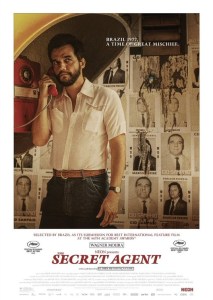 The Secret Agent is a hard movie to fully categorize. It’s set in 1977 Brazil and with its title you might think it’s about some clandestine espionage operation or fighting against a corrupt government, and it does fit those descriptions but not in a traditional Hollywood way. We follow Wagner Moura (Narcos, Civil War) as a former grant-supported energy scientist who comes to clash with a powerful businessman who then hires an assassination team to kill this know-it-all. It’s also about entrenched police corruption and coverups, a found family of people seeking protection and new lives, the search for memory and proof of life, a father wanting to connect with his son in the wake of his mother’s death, and then there’s a running story about a severed leg that goes into the wildest, most unexpected places. It is a leisurely paced movie at almost two hours and forty minutes in length, but each scene is its own luxurious moment to dwell in. Take for instance the opening scene where Moura drives his car to a dusty, rural gas station and finds a dead body covered in newspaper. Nobody wants to come claim the corpse, and then the police do arrive but they take particular interest in Moura, wanting to search his car and ask him questions. Do they know something? Who is this man? A similar early scene involves the police investigating a dead shark where a severed human leg was found inside its mouth, and the way it unfolds and escalates is so naturally fascinating. The Secret Agent juggles many different tones, from nostalgic drama to crime thriller, but every scene is so expertly written and paced by writer/director Kleber Mendoca Filho (Aquarius, Pictures of Ghosts). You may grow weary by its length, but when I was in every scene, I didn’t want it to end because it feels so well-realized in its moment. There’s a subversive switch-out with its climax that reminded me of No Country for Old Men, and the ending coda ties together the flash-forwards and hits hard with the theme of uncovering and honoring the past. This is a lot of movie, much of it I admired more than I outright loved, but it’s such a fascinating balancing act that I would recommend The Secret Agent as a sprawling dive into Brazilian history, culture, and its own political reckoning.
Nate’s Grade: B+
Share this:

Sentimental Value (2025)
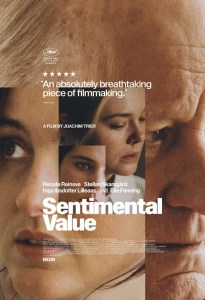 It’s an old cliche to say “they don’t make movies like this anymore,” but with our current media environment, there’s a reluctant truth to the fact that many genres, particularly adult dramas, romantic comedies, and non-action comedies, have declined steadily from their studio heyday. And yet Sentimental Value is also proof against this adage, as this wonderful movie is the kind of engrossing, mature, and thoroughly artistic original adult drama that Hollywood would have positioned decades ago to prominent award glory, like your Terms of Endearment or Rain Mans. I guess the caveat is that Sentimental Value comes from Norway, so outside the Hollywood system, and it’s reminding every movie lover not just of what we’ve lost in recent times with studio output of rich adult dramas, but it reminds us why we love the movies. Sentimental Value is easily one of the best movies of the year and a triumph all around of acting, writing, directing, and editing. It’s so thoroughly well-realized that it feels like we’ve been dropped into the realm of a classic novel brought to stunning life with a level of care, insight, and artistry that is rare to experience in any medium. I knew right away I was in for something truly special.
We begin by tracing the history of a house in Oslo, particularly the Borg family that has lived there for generations going back to pre-World War II. The father, Gustav (Stellan Skarsgard), is a famous film director who divorces his wife when their two daughters are young. The oldest daughter, Nora (Renate Reinsve), grows into a talented but neurotic theater actress, one beholden to stage fright even after all her accolades. Her younger sister, Agnes (Inga Ibsdotter Lilleaas), has married, has a young son, Erik, and she works as a historian researching specifically her grandmother who was tortured by the Nazis. After the death of their mother, Gustav resurfaces in their lives after a long absence working in Hollywood. He has plans. He has written a semi-autobiographical screenplay about the life of his mother, and he wants to film it in their family house, and he wants Nora to play the starring role. The sisters are resentful and wary of their father, but could this entire artistic enterprise be a push for reconciliation and better understanding for everyone?
 I’m talking mere seconds into the movie, director/co-writer Joachim Trier (The Worst Person in the World) had already grabbed me with his deft storytelling. A narrator provides the complicated history of this house, treating it like a living vessel that itself has been an observer to the many generations residing within. The details are so precise and telling, like a novel giving you a larger sense of the world that exists beyond the margins of what we can see and hear. To say the movie is a complex family drama is only scratching the surface. Let’s just unpack some of the layers inherent from its premise. Gustav’s world is cinema and he wants to make what might be his last movie his greatest and most personal. He’s telling his story, asking his own daughter to play his own mother. When Gustav was a child, he was the last person to speak to his mother before she decided to take her own life by hanging herself. Think about the psychology at work here, a father trying to reconnect with his estranged daughter through the means of her playing his own mother and possibly better understanding his loss that has haunted him since childhood. Then Gustav also wants Erik, his grandson, to play the younger version of himself in the movie, though Agnes is against the idea. There are so many intriguing layers at play with all of this, the use of art to process grief and trauma, the mirrors of family members portraying other members as engines of empathy, and the act of filmmaking as recovery. I’ll slightly spoil the movie to say that Nora turns down the role. The rest of the movie is about how she gets to “yes.”
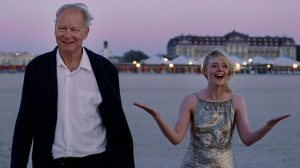
In the wake of Nora’s rejection, Gustav offers the role to an American actress, Rachel Kemp (Elle Fanning), a hot commodity that convinces Netflix to get involved. However, with the streaming giant attached, there are several compromises that Gustav must endure. He intended the project to be in his native tongue but now it’s in English. He isn’t allowed to bring back older members of his crew he’s worked with for decades, like a retired cinematographer who is infirm to the point where he needs to walk around with a cane. With each compromise, you can see Gustav making a mental cost-benefit equation. He envisions this movie as his most important, and possibly his last, and it becomes a gauntlet of what shape it might eventually take to get made and if that shape is too malformed and unrecognizable from his original artistic vision. When you consider this movie could also be his vehicle to better understand his own mother, as well as an amends to his daughters, then every new compromise bears even more significance. Rachel is eager to please a director as well-regarded and as famous as Gustav, but she also recognizes her vulnerabilities and shortcomings. She can’t shake the feeling that she’s not right for the part, that Nora is the rightful pick, and she’s struggling to get a better grip, plus there’s the whole Norwegian accent that she has to master as well. Fanning (Predator Badlands, A Complete Unknown) has a few standout scenes but even she recognizes she’s the interloper to this family.
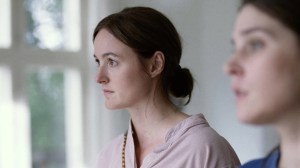 Reinsve has been a collaborator of Trier’s all the way back to 2011’s Oslo, August 31st, but it was her starring role in 2022’s The Worst Person in the World that cemented her international stardom. She’s a wonderfully intuitive and expressive actress, inviting us in with every scene to study her character’s guarded emotional responses and occasional outbursts, like her stage fright hysteria. As the older sister, Nora has built more resentment against their father, whom she blames for everything that her family lacked back in Norway while her father was off in Hollywood making movies with celebrities. Nora is wary about filmmaking, viewing the theater as more of a pure artistic and worthy medium for acting, though you could even view this designation as a division she has drawn: “this is my territory, and that is my father’s territory.” Now he wants to bring her into his world, and she can’t help but be skeptical after all their time apart. Why now? Why this? While this is a splendid ensemble drama with great attention paid to many characters, for all intents and purposes, Nora is our protagonist, and Reinsve keeps us compelled to examine every internal development of this character.
Every actor is at the top of their game, contributing to a marvelous ensemble that makes this family so richly felt. Skarsgard (Dune) is used to playing heavies, stooges, and bad dads, and the role of Gustav allows him to tap into all of those mercurial skills to bring to life a man who is trying to take stock of his life late in its run and make some changes, notably who is allowed inside his cherished circle. Skargsard is mournful but still egotistical, reaching for reconciliation but not begging for it, using the enterprise of the movie and particularly the leading role offer as the unspoken apology. However, Gustav is more than just an absent father, as in the screenplay, by Trier and longtime collaborator Eskil Vogt, he’s also still suffering from his own trauma with the loss of his mother. This movie is an attempt to better understand her and perhaps her psychology that would lead her to make such a heartbreaking decision to end her life. It’s an honest attempt to bring back to life a woman he dearly misses while also discovering a path of forgiveness, while he seeks his own act of forgiveness with his own adult daughters. I told you, there are layers all over this movie.
 As the younger sister, Agnes has a more charitable view of her father, and she even acted for him in one of his earlier movies and fondly recalls how warm his attention and affection felt. She’s wary about his desire to have her son, who has professed an affinity for filmmaking but not acting, play the role of young Gustav. She’s worried about her child going through the same level of attachment and disenchantment that she experienced when she was younger and wanting to grow closer to a man who had kept his distance from his family. Agnes’ story is one of uncovering the history of her grandmother, a member of the Norwegian resistance who was taken into custody during Nazi occupation and endured all kinds of torture. Her grandmother is indicative of an entire generation of resistance, and by re-examining one person it provides a larger statement about the sacrifices of those who deserve not to be forgotten, whose memories persist even after the horrors they survived. The movie makes an implicit line between her suffering and eventual suicide but making it a direct line of cause and delayed effect is not so simple. People are complicated by nature, and Agnes fits this bill as well, as demonstrated by Lilleaas’s commanding supporting performance. I think she has what may be the most affecting scene in the movie, a sisterly heart-to-heart that strikes you right in your own heart.
Reminiscent of Ingmar Bergman and Francois Truffaut, Sentimental Value is a richly realized drama with such engrossing and complex characters told in a richly entertaining fashion. There are stylistic touches, like the recurring omniscient narrator, but the movie is more grounded in the simple pleasures of transporting us into the lives of other people and to embrace their flaws and hopes and desires. The actors are incredible and bring such startling life these characters and their nuances. I could have endured an entire series in this world but at a little over two hours, Sentimental Value feels complete and satisfying. It’s the kind of movie “they don’t make anymore,” to our detriment, so when you discover a film as beautifully executed as this one about the relatable issues that drive many families apart and can bring them back together, then you thank your lucky stars that we still have filmmakers dedicated to making complex adult dramas without any high-concept gimmick to couch their real intentions. This is a marvelous movie about life. Full stop. See it, reader.
Nate’s Grade: A
Share this:

Anatomy of a Fall (2023)

I was so looking forward to watching the French drama Anatomy of a Fall, nominated for five Oscars including Best Picture and Best Director for Justine Triet, that I had to track down the publicity department for Neon Studios and hound them to finally get my annual Neon screener box-set for critics. It took several weeks, and email chains, but thankfully the good folks at Neon supplied me with their screener box, like Christmas morning for a film critic. The surprise Oscar nominations only made me more eager to finally watch this movie. As Anatomy of a Fall played, and the criminal case became ever more complicated, shedding further light upon the characters and their stormy marriage, I found myself sitting closer and closer to my TV, finally sitting on the floor right in front of it. Part of this can be explained by trying to better read the subtitles, though truthfully half of the movie is in English, but the real reason was that I became absorbed, waiting anxiously to see where it could go next, what twist and turn would further reassess our fragile understanding of the events, the people, and the possible circumstances. The original screenplay is so thoroughly engaging, and with supremely talented acting and clever directing, that I knew I was in good hands to ensure my investment of 140 minutes wouldn’t be wasted.
Popular novelist Sandra Voyter (Sandra Huller) is talking with a female reporter about her process as they lounge in her home. They’re drinking, laughing, and then the loud sounds of a steel drum start echoing from upstairs, thanks to Sandra’s husband, Samuel (Samuel Maleski), who puts the song on repeat. He’s passive aggressively sabotaging the interview, and Sandra bids goodbye to the interviewer. Hours later Samuel is found on the ground outside with blood seeping from a head wound. The attic window is open, the same attic he was remodeling before presumably falling to his death. Did he take his own life or was foul play involved? Did Sandra actually kill her husband?

At its core, the movie is an anatomy of a criminal investigation, a prosecution and the personal defense, but it’s really an anatomy of people and the versions of themselves that they selectively present to others and themselves. It’s an old maxim that you can never know what’s going on inside a marriage, or really any relationship, as the inner reality is far more complex than what is easy to digest and categorize by the public. It’s not new to hide aspects of ourselves from wider scrutiny and consumption. It also isn’t new for a larger public profile to invite speculation from online busybodies who think they are entitled to know more. The mystery about whether or not Sandra is guilty or a cruel victim of suspicious circumstance is a question that Triet values, but clearly she values other more personal mysteries more, chiefly the mystery of our understanding of people and why they may choose to do inexplicable acts. How close can we ever really know a person? The upending of her life pushes Sandra to re-examine her own marriage in such a high stakes crucible that can determine whether or not she spends the rest of her life in jail. Under those extreme circumstances, the bigger question isn’t how someone may have committed murder, or taken their life, but the unexamined why of it all that nibbles away at Sandra as well as our collective consciousness as viewers. To me, that’s a more compelling and worthwhile mystery to explore than whether or not it was a murder or suicide (there is a wild theory finding some traction online blaming the death on the family dog).
I don’t feel it’s a significant spoiler to prepare the viewer to know that Triet keeps to ambiguity to the bitter end, refusing to specify what actually happened to Samuel. It’s ultimately up to the viewer to determine whether they think Sandra is guilty or innocent, and there’s enough room to have a debate with your friends and Francophile colleagues. I’ll profess that I found myself on the Team Sandra bandwagon and fully believed she was being railroaded by the French judicial system and press. The righteous anger I felt on behalf of this woman rose to volcanic levels, as it felt like much of the French prosecution’s line of questioning and theorizing was mired in blatant eye-rolling misogyny and conjecture. They insist that because Sandra is bisexual that she must have been flirting with her female interviewer on the day of Samuel’s death, because that’s how it works for bisexuals, obviously, to only be able to size every person they meet, no matter whatever anodyne circumstances, as some possible or inevitable sexual conquest. As an outsider to the French judicial system, I was intrigued just by how the trials are conducted, which seems far less formal despite the wigs and robes, where the accused can interrupt anytime to deliver speeches and question experts. I also appreciated how much attention Sandra’s family friend and defense attorney puts into helping her shape her image, to the press, to the court, to the judge, down to her perspective of her marriage to her vocabulary choices. Rather than be a reflection of Sandra as coolly calculated, I viewed it as learning to prepare for the dangers ahead. It reminded me of Gone Girl with the media-savvy lawyer coaching his high-profile client through their trouble.
Of course, there are larger implications with this prosecution. Sandra isn’t just on trial for suspicion of killing her husband to clear the way for her next lover, she’s the victim of all the ways that women are judged and found guilty by society. Sandra is a successful novelist, the top provider, and her husband isn’t, and it eats away at him, festering resentment that she is somehow stifling his own creative dreams. Is she giving him space or being distant? Is she doing enough or too little? Is she a supportive spouse or selfish? Is she a good mom or a bad mom? Is she allowed an independent life or should she be fully devoted to the titles of mom and wife? It’s the struggle to fit into everyone’s impossible and conflicting definition of what makes an acceptable woman and mother, and it’s infuriating to watch (think America Ferrera’s Barbie speech but as a movie). It’s also an indication of the cultural true crime obsession and turning people’s complicated identities and nuanced relationships into easy-to-digest fodder for morbid entertainment. It’s not like there’s some grand speech that positions Sandra as the martyr for all of embattled womanhood, but through her trial and media scrutiny, these social issues are projected onto her like a case study.
As much as I loved Lily Gladstone and Emma Stone in their respective performances in 2023, at this point I’d gladly give the Best Actress Oscar to Huller (The Zone of Interest). First off, she delivers a tremendous performance in three separate languages, as her character is a native German who marries a Frenchman and then they agree to speak in English as their linguistic “middle ground,” a language that isn’t native to either of them. Huller slips into her character seamlessly and it’s thrilling to watch her assert herself, press against the bad faith assumptions of others. One of the highlights of the movie is the most extended flashback where we witness the simmering resentment of this marriage come fully to force, and while it’s unclear whether this moment, as the other occasional flashbacks, is meant to be conveyed as Sandra’s subjective memory or objective reality, it serves as a mini-climax for the story. It’s here where Sandra pushes back against her husband’s self-pitying criticisms and projections. It’s a well-written, highly satisfying “Amen, sister” moment, and Huller crushes it and him. There were moments where I was in awe of Huller that I had to simply whistle to myself and remark how this woman is really good at acting. With such juicy material and layers to sift through, Huller astounds.

Another actor worth celebrating is Milo Machado-Graner (Waiting for Bojangles) as the couple’s only child Daniel, a young boy who is partially blind because of an earlier accident from Samuel’s negligence and the one who discovers his dad’s body. This kid becomes our entry point into the history of this marriage but it also turns on his perceptions of his parents, as Sandra is worried over the course of the trial that Daniel will learn aspects of their marriage that she was trying to shield from him, and he may never be able to see his father and mother the same way again. It’s a rude awakening for him, and key parts of the trial rest upon a child’s shaky memory, adding intense pressure onto a hurting little boy. There’s a key flashback that will change the direction of the case, but again Triet doesn’t specify whether this is Daniel’s memory, Daniel’s distorted memory looking for answers whereupon there might not be any, or the objective reality of what happened and what was said. Machado-Graner delivers a performance that is built upon such fragility that my heart sank for him. It’s a far more natural performance free of histrionics and easy exaggerations, making the response to such trying events all the more devastating.
Anatomy of a Fall was not selected by its home country for consideration for the Academy’s Best International Film competition despite winning the Palme D’Or, the top prize, at the prestigious Cannes Film Festival. Not to take anything away from 2023’s The Taste of Things, a French drama I’ve heard only fabulous responses, but clearly they picked the wrong contender and lost a winnable race. Do you know the last time France won the Oscar for Best Foreign/International Film? You have to go all the way back to 1991’s Indochine, a movie about the history of France’s colonial occupation of Vietnam. For a nation known for its rich history of cinema, it’s now been over thirty years since one of their own movies won the top international prize at the Academy. Oh well, there’s always next year, France. It’s truly befuddling because Anatomy of a Fall is such an easily accessible movie that draws you in and reveals itself with more tantalizing questions. It has supremely accomplished acting, directing, and writing. Anatomy of a Fall is a spellbinding, twisty movie and one of the absolute best films of 2023, in any language.
Nate’s Grade: A
Share this:

The Zone of Interest (2023)

The Zone of Interest is one of the more maddening film experiences I’ve ever had, and I’m sure that was part of the intention of writer/director Jonathan Glazer (Under the Skin). While based upon a 2014 fictional book by Martin Amis, Glazer had hollowed out the novel’s fake story and replaced it with its inspiration, the Höss family, a real-life German couple and their children who literally had their villa next door to the horrendous Auschwitz concentration camp. The husband was the chief commandant for the camp, and he had his family literally sharing wall space with the notorious factory of death. The entire feature film is then given to observing this family from afar as they try to live a “normal domestic life” in the shadow of something profoundly abnormal and abhorrent. It’s a classic example of a type of movie I will dub the “Yeah, okay, so what?” movie. I get it, I do, but why is this exactly a feature film?
I understand artistically what Glazer is going for here. It’s the ironic juxtaposition of the ordinary and the awful, asking the viewer to think about how many millions of Germans went along with the mounting anti-Semitic and racist policies of Nazi Germany out of self-interest and/or willful ignorance, the banality of evil, as Hannah Arendt termed it. That becomes the challenge of the movie, watching this family tend to the garden, host a birthday party, and read bedtime stories while watching the gloom of the chimneys, listening to the constant soundtrack of scattered gunshots and the screams of victims, including the wails of babies. Every scene is elevated by the dramatic irony of the context that it is happening next door to a concentration camp. We watch them plant flowers, and it just so happens to be next door to a concentration camp. We watch them invite the mother-in-law to make her new bedroom her own, and it just so happens to be next door to a concentration camp. It gets tedious as a viewer because without the irony, we’re just watching a family live their life. I get that’s the point, this example of one family trying to ignore the terrifying reality literally at their very doorstep. I understand that message and I understand why that is even more relevant to our troubled modern times with an alarming rise in anti-Semitism and the celebration of fascism and repressive strongmen. However, I don’t think we get real insights into these characters because they’re more just general ideas intended to forward the critical thesis of the power of self-delusion and excuse-making. That’s fine as a starting point for a provocative movie, but don’t make me watch a family do their laundry for an hour and then tell me it’s an Important Statement because they happen to be next door to the horrors of history.
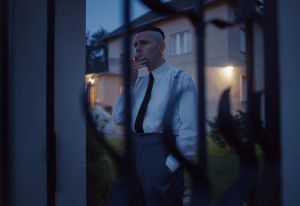
Let me try this same kind of approach on another human tragedy. Say we have a family drama about a hard-working couple trying to go through the day-to-day challenges of marriage and raising a family, and it JUST SO HAPPENS that they live within distance of… the internment of the Japanese in World War II. Does this magically transform and elevate the ordinary actions on-screen into more than what they are? Perhaps to some, but for me it felt too transparently methodical and quickly redundant. I don’t need a whole movie documenting a family next door that barely scratches the surface of their circumstances of living.
There are a few moments that manage to break through. There’s a scene where the daughters are swimming in the nearby river and the family realizes that the gray streams intruding upon the water are the ashes from the camp. From there they furiously scrub themselves clean, the grotesque horror something they attempt to cleanse, whether they’re horrified because the ash belongs to people or because it specifically belongs to Jews. The mother (Sandra Huller) refuses to move away after her husband Rudolph (Christian Friedel) is reassigned by the Nazi brass. This is the home she’s put her time into remodeling and reshaping and she isn’t going to just let anyone live under her roof. This setback is far more upsetting to her than anything she overhears on the other side of her garden walls. There’s also an ongoing story where one of the Höss children is leaving behind a trail of apples, inspired by a favorite bedtime fable, and this has an unfortunate unintended tragedy for people these children will never know or see. There’s an offhand remark by the mother-in-law as she’s touring the backyard where she wonders if a woman in her book club is among the throng next door in the camps. Rather than use this as a moment of reflection over the genocide occurring next door, she then moves onto lamenting that she never got this same woman’s curtains that she always prized. I wish the movie had more of these character moments that directly confront the willful ignorance rather than keeping the audience simmering with the same meditative Big Picture concept that has been relentlessly winnowed down so finely that it may as well be dust.

Glazer makes very specific choices to highlight the detachment of the movie. His camera angles are often taken from far fixed points, and the coverage makes for smooth edits that let you know there were multiple cameras filming these scenes rather than the stress of multiple setups and different takes to cobble together. This makes the movie feel closer to a documentary where we have captured real life as it is happening instead of a group of actors on a set pretending to be different people putting on a show for our entertainment.
The Zone of Interest is a movie that crushes you in the everyday details, and in that it reminded me of 2020’s The Assistant, another indie that didn’t quite work for me. That film was about a young woman who served as a film production assistant to a producer modeled after Harvey Weinstein, and it asked how much she can ignore for the sake of her own upward mobility. It had a really compelling premise but the movie spent most of its running time just watching her do her job, filing papers, getting coffee, walking home, with the implicit knowledge banging around in our anxious minds to then elevate the mundane (she’s not just fixing the copy machine, she’s fixing the copy machine and Harvey Weinstein might be abusing someone just in the next room!). This ironic juxtaposition proved too tiring for me without also exploring the characters and conflicts more explicitly. Things happening off-screen while far more boring things happen on-screen is not itself great drama. Being drama-adjacent does not automatically magically imbue the ordinary with transcendent meaning. I need more than, “Big things are happening… over there.” The Zone of Interest is a critical favorite for 2023 but I think many viewers will have the same response I did: yeah, okay, so what?
Nate’s Grade: C+
Share this:

Godzilla Minus One (2023)
 In his seventy years, Godzilla has been many things, a force representing mankind’s hubris, a protector of the Earth, a father, a weird chicken-like creature that Godzilla 1998 director Roland Emmerich asked his concept artists to make “sexy,” but rarely has the famous giant lizard been genuinely scary, and even rarer still has any of the thirty movies been genuinely serious. The surprisingly affecting Godzilla Minus One achieves both with impressive execution. Set shortly after the end of World War II, the far majority of this monster movie is given to somber human drama, with our protagonist a kamikaze pilot too afraid to give his life senselessly for the cause. Once he returns home, he is treated like a pariah, shamed by his neighbors attempting to literally put the pieces of their lives back together amidst the rubble. He’s riddled with post-traumatic stress and two counts of survivor’s guilt eating away at him. For this man, his war is not over. To make matters even worse, there’s a gigantic lizard terrorizing the seas and heading straight for Tokyo. The second half of the movie follows a very satisfying formula taken from Jaws, with a group of men getting on a boat, working together, and trying to catch their big prize. The ingenuity of their plans makes use of the meager means at their civilian disposal, as the military cannot get involved out of fear of stoking U.S.-Russia aggression in the dawn of the Cold War. The way this character’s arc comes together, at a great moment of heroism that also ties in his relationship with other supporting characters you’ve come to enjoy, is great storytelling. Usually in monster movies the human drama is filler and you can’t wait for those pesky people to get squished to make way for the waves of destructive fun. Not so here, as every scene the characters are in peril has you clenching your fists in fear that Godzilla could triumph. This Godzilla is terrifying and I really enjoyed the sense of scale the filmmakers exhibited, making sure we saw him from a human-sized perspective, and the special effects, while not outstanding, are quite remarkable for its small-scale budget. For Godzilla fans, there might not be enough of the Big Guy for them. I was taken with the emotional journey of these hardscrabble characters fighting for dignity and redemption and to protect their found families, and that was never something I thought would be the major selling point of a Godzilla movie — human emotion. Fear not, the 2024 American release looks to bring back the cheesy nonsense.
Nate’s Grade: B+
Share this:

The Boy and the Heron (2023)
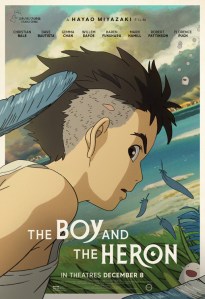 It’s been over ten years since renowned animation legend Hiyao Miyazaki graced the silver screen with what was believed to be his last film yet the retirement didn’t kick, for the benefit of all of us. I’ve resisted watching 2013’s The Wind Rises simply because of the melancholy of it supposedly being his final film. The man is in his 80s and still hand draws much of his storyboards, so if indeed this is the last Miyazaki movie we ever get, it ties thematically with many of the concepts and interests of this man’s storied career that it feels like a fitting capper. It’s his most autobiographical, following 12-year-old Mahito as he relocates to the country after surviving the firebombing of Tokyo during World War II. Unfortunately, he lost his mother in the bombing, and now his father is remarrying his mother’s younger sister, who looks near identical to Mahito’s mother. On the grounds of his new home, the boy discovers a strange overgrown tower with a door that leads to another world, and it’s within this world that a creepy scary bird promises Mohito can find his mother again. The Boy and the Heron is an imaginative and transporting fantasy with some major themes around the edges about grief and acceptance and environmental disaster, but it’s the haphazard structure and poor pacing that hold it back for me. Simply, it’s too long to get going and then too short to conclude. We don’t exit to the hidden fantasy world until almost halfway through, and the time in the regular world is stretched out, especially without going into further detail about our protagonist, who is kept very opaque. The discovery of the new world and learning its strange mostly bird creatures and rules and conflicts is where the movie really gets interesting, especially once the menacing heron becomes a squat man serving as our reluctant guide. It feels like there’s going to be some heavy revelations forthcoming, especially with the supposed duplicate nature of Mohito’s mothers, but it all comes down to an aged Man Behind the Curtain with a reveal straight out of Willy Wonka and the Chocolate Factory. We take too long to get to that intriguing fantasy world, and then once we’re there it feels a little too surface-level in design for a world on the cusp of dying. Then it’s a mad scramble to leave, and while the culminating decision feels earned in its wisdom, it also feels like the movie has simply run out of ideas. The Boy and the Heron is beautifully animated; the world feels like it’s undulating before your eyes, and there are numerous moments that allow it to breathe. However, it feels like maybe we could have gotten started sooner and finished a little later. Even mid-level Miyazaki is better than most, so The Boy and the Heron is still a worthwhile animated fantasy even if it doesn’t reach masterpiece status from a master storyteller. At least now I can finally watch The Wind Rises, so there’s that too.
Nate’s Grade: B
Share this:

All Quiet on the Western Front (2022)
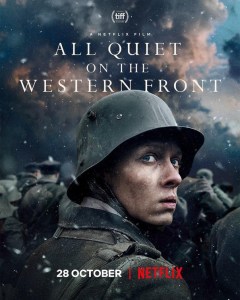 The surprise surge of the Oscar season is a German-language remake of the 1929 Best Picture winner, and after watching all 140 minutes, it’s easy to see how it would have made such an impact with modern Academy voters. All Quiet on the Western Front is still a relevant story even more than 100 years after its events. It’s a shattering anti-war movie that continuously and furiously reminds you what a terrible waste of life that four-year battle over meters of territory turned out to be, claiming over 17 million casualties. I’ve read the 1928 German novel by Erich Remarque and the new movie is faithful in spirit and still breathes new life into an old story. We follow idealistic young men eager to experience the glory of war and quickly learn that the horror of modern combat isn’t so glorious. There are sequences in this movie that are stunning, like following the history of a coat from being lifted off a dead soldier in the muck, to being reworked at a seamstress station, to being commissioned to a new recruit who questions why someone else’s name is in his jacket. It’s a simple yet evocative moment that sells the despairing reality. The movie doesn’t skimp on carnage as well, as long stretches will often play out like a horror movie where you’ll fear the monsters awaiting in the smoke and that nowhere is safe for long. And yet, where the movie hits the hardest isn’t depicting the trenchant terror but with the little pieces of humanity that shine through the darkness. There’s a small moment in a crater shared by two enemies where one of them is dying, and these final moments of recognizing the same beleaguered helpless and frightened humanity of “their enemy” are poignant. Make no mistake, All Quiet is a condemnation on the systems of war where old pompous generals send young men to needlessly die for outdated and absurd reasons like the concept of “maintaining national honor.” A significant new subplot involves Daniel Bruhl (Captain America: Civil War) as a representative of the German government trying to negotiate an armistice when the French representatives are looking for punishment. It allows us to take a larger view of the politics that doomed so many and laying the foundation for so many more doomed lives. The ending of this movie is a nihilist gut punch. The production values are impressive and elevate the artistry of every moment. The sound design is terrific, the cinematography is alternatingly beautiful and horrifying, and the production design is startlingly detailed and authentic; it’s easy to see how this movie could have earned nine Oscar nominations. All Quiet on the Western Front is a warning, a eulogy, and a powerful reminder that even older stories can still be relevant and resonant.
Nate’s Grade: B+
Share this:

Corsage (2022)
 Corsage aims to loosen the stuffy costume drama with a dose of feminist upheaval and irreverence, but ultimately I felt like I was spending my time with a bored woman trying and failing to conquer her boredom. After turning 40, the Empress Elisabeth of Austria (Vicky Krieps) has a midlife crisis. She’s been renowned for her beauty, as that was her primary function for her husband the Emperor (Florian Teichmeister, an actor literally on trial for child pornography), and has become obsessed with her weight. Every person she meets seems to remark that she’s much thinner than her paintings. Now that she’s beyond her child-rearing age, she is languishing with how to spend her copious amounts of time in fabulous luxury. She goes horseback riding. She visits her cousin, and tries to have an affair with him. She gets to experiment with an early film camera. She gets prescribed morphine for her melancholy. She visits wounded soldiers and women locked away in sanitariums. She even gets a tattoo on vacation with her best friend. I thought the movie was going to be either more of an expose on yet another woman suffering from the oppression of her gilded cage, and Corsage glances at this topic, or a fictional account of a rebellious woman pushing against the patriarchal powers that be. The movie doesn’t really feature either approach. There aren’t enough tweaks to its genre to qualify as satire. It’s a character study of a supremely bored wealthy woman missing out on any passion in her life, whether that’s from lovers or political causes or even good company. Krieps (Phantom Thread) is the best reason to keep watching, but as the movie chugged along, it felt like I was watching a depressed character go through the motions looking for anything to possibly spark joy. The movie felt rather rudderless and I don’t feel like the totality of the scenes added up to a multi-dimensional portrait of our lead. I wish the movie had more attitude or more irreverence or even reverence, something to stir the nascent passions of those watching and waiting for more.
Nate’s Grade: C+


 nathanzoebl
You must be logged in to post a comment.