Blog Archives
Wonder Boys (2000) [Review Re-View]
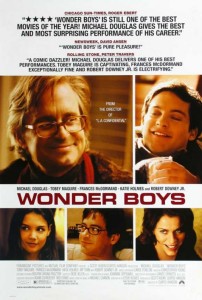 Originally released February 25, 2000:
A rather warm but ultimately meandering tale of Michael Douglas as a college professor going through one crisis after another, Tobey Maguire as a creepy kid (again?!), and Robert Downey Jr. as an editor who seems to have a taste for transvestites. Though likable, Wonder Boys goes nowhere and nowhere slow. It carries the feel of a novel that was never intended to be brought onto the screen because of what it would lose in transition and it does. Douglas’ performance is sincere and syrupy but Wonder Boys is not a night out on the town.
Nate’s Grade: C+
——————————————————
WRITER REFLECTIONS 20 YEARS LATER
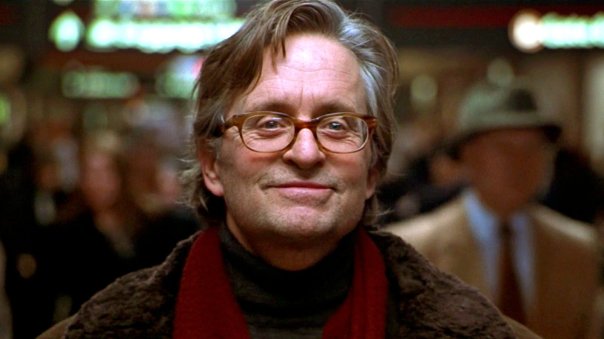
This was another film that I was curious to revisit because I was wondering whether or not I would find more of value than when I was 17-years-old and seeing Wonder Boys at a rare promotional screening with my good pals Kevin Lowe and Natalia Riviera (I recall none of us being particularly taken with the movie). It’s based upon an acclaimed book by Michael Chabon (The Amazing Adventures of Cavalier & Clay, The Yiddish Policeman’s Union), starring the eventual first big screen Spider-Man (Tobey Maguire), Iron Man (Robert Downey Jr.), Hank Pym (Michael Douglas), the first Rachel Dawes (Katie Holmes), and Oscar-winner Frances McDormand (Three Billboards Outside Ebbing, Missouri). It was director Curtis Hanson’s follow-up from his 1997 masterpiece, L.A. Confidential. The screenwriter, Steven Kloves, would go on to adapt every Harry Potter movie minus one. The studio even re-released the movie later in the fall of 2000 under new more ensemble-focused marketing to push for awards consideration (to my surprise, it was nominated for three Oscars: Editing, Adapted Screenplay, and winning Best Song for a craggy Bob Dylan tune). Maybe my indifferent review earlier was just a young man unable to connect with this brand of middle-class ennui. Now two decades later I can finally say… I still don’t connect with this ennui.
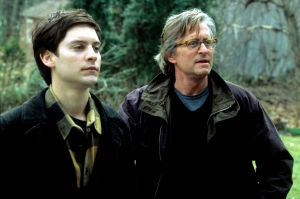
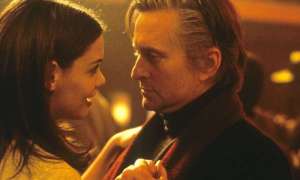
Wonder Boys is one of those shaggy dog stories where it’s not so much the destination but the journey, so you better enjoy the characters or else it will feel like a long ride. The problem with this story is that its protagonist feels so self-pitying and yet the universe seems designed to cheer him up. Grady Tripp (Douglas) is a celebrated creative writing professor just going through his days in a pot-fueled haze to dull the pressure of living up to his big breakout novel. It’s been over seven years and his next novel has no end in sight, already clocking over 2000 pages. Grady thinks he’s a has-been but every other character in this tiny bourgeois universe tells him how great he is. His publisher (Downey Jr.) is eager to peek at Grady’s next surefire literary hit. His students adore him and hang on his every word. He has multiple women throwing themselves at him, including McDormand, who wants to have his baby, and Holmes as his infatuated student/boarder. Everyone tells him how great he is as a writer. James Leer (Maguire) confesses that it was Grady’s book that inspired him to even be a writer, and he seems poised to become a great one. It’s exhausting for every other significant character to proclaim repeatedly how great our lead is and to have him repeatedly respond, “Yeah, but I just don’t know, you guys.”
Self-doubt is already relatable enough, on top of imposter syndrome for an artist or even just an adult, so the material is there for an introspective story about the struggles of creativity and responsibility, but that’s not what Wonder Boys presents as a movie. It’s filled with zany mishaps to fill up those meandering two hours. There’s Downey Jr. and his wandering eye, first with a trans women and then with James. There’s a man incorrectly labeled “Vernon” who stalks Grady demanding what he says is his car back. There’s also a dead dog that gets carried around for almost the entire movie, even though the plot covers days and it would seem like a very bad idea to continue hauling a decaying animal in one’s car. There’s no real reason why this dog’s corpse is even held onto. It belongs to Grady’s boss, the chair of the English department, and the husband to his mistress (McDormand). Why not dispose of the evidence especially with the personal connections? It’s yet one of several signs of the movie trying to be quirky and edgy over the consequences of character actions. Much of the plot beats follow retrieving a stolen coat once owned by Marilyn Monroe. Does the coat represent something of time gone by? A promise never fully able to be fulfilled? America’s innocence? Does it even matter? If Wonder Boys was going to explore the inner turpitude of Grady, why does the movie need so many dead ends and loping storylines as a means of distraction?
It’s not a terrible viewing experience but it feels like the movie is definitely missing material that made the book so effective. As I stated in my early and remarkably on-point review in 2000, it feels like a novel that would lose its appeal in translation and it has. The plot is treading water until Grady finally makes a big personal decision at the very end. He even gets a happy ending where his next great book is the recollections of the film’s events. The many supporting characters are not as interesting as the actors might make them appear. Even Maguire’s wonderkid writer, where the title is derived from, is a walking awkward quirk machine, an early representation of an autistic student before many of the characteristics were wider recognized. He provides a detached sense of comedy with his bluntly direct approach, like his encyclopedic knowledge of famous Hollywood suicides (fun fact: the home video versions edited out Alan Ladd’s name at request from his family estate). The problem with James as a character is he’s meant to represent promise to Grady, further compounding his sense of inadequacy. He’s the shiny new up-and-coming talent headed for great headlines, the kind Grady might have enjoyed but might now be too far in the rear view mirror. James has his own mini-arc of “cutting loose” but he wasn’t tightly wound from the start, just antisocial and aloof. He’s a symbol by design and an impenetrable autistic mumbly sidekick for offhand comedy observations, not so much a person.
Curtis Hanson’s direction is fine, the acting is fine, and even when relatively uninspired, the story is fine as it meanders and goes in self-defeating circles. It’s a movie that I think will be more remembered for weird little trivia, like a scene where future Iron Man and Spider-Man are in bed together. I don’t regret re-watching Wonder Boys but I didn’t get much more out of the experience than when I was 17. The main character is hard to fully embrace, especially his self-pitying problems of middle-class privilege, and the story is more a collection of chapter-based anecdotes and hasty character resolutions. Even if the two hours is amiable enough, it’s hard to connect with the characters and their conflicts, and it’s a prime example of an adaptation that can’t replicate its specific authorial charms. If I were 17 again, I’d make a pun on the word “wonder” but I’ll refrain. After all, I’ve grown.
Re-View Grade: C+
Share this:

Noirvember: L.A. Confidential (1997)
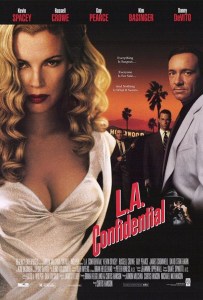 There was no stopping Titanic in 1997, iceberg be damned. James Cameron’s epic disaster movie had all the momentum of the times, and yet it’s a smaller movie that captured more of the critics and was far more deserving of the ultimate Oscar prizes that year. L.A. Confidential was based upon a James Ellroy novel that many argued was unfilmable. Enter journeyman director Curtis Hanson and novice screenwriter Brian Helgeland, and the pair stripped the book down from eight main characters to three, kept the spirit and essence of the book alive while rearranging the storylines for large-scale popcorn thrills. It’s been nearly twenty years since L.A. Confidential first seduced big screen audiences and its powers are still as alluring to this day. It’s a neo noir masterpiece.
In 1950s Los Angeles, not all is what it seems. The captain of the police, Dudley Smith (James Cromwell), is looking to keep the peace in the City of Angels as outside criminal elements are looking to fill the void from Mickey Cohen going to prison. Three police officers of very different stripes find themselves on the edges of a complicated murder case stemming from a massacre at the Nite Owl cafe. Ed Exley (Guy Pearce) is the son of a famous police captain and wants to rise up the ranks as quickly as possible. He’s a political animal and unafraid of ruffling feathers. Bud White (Russell Crowe) is a bruiser of a man who enforces his own level of justice when it comes to men who beat or harass women. Jack Vincennes (Kevin Spacey) is a happily shady officer who serves as a consultant for a hit TV police procedural. The Night Owl case takes them into many sordid corridors of sex, money, and power, including Lynn Bracken (Kim Basinger), part of Pierce Pratchett’s (David Strathairn) stable of prostitutes meant to look like movie stars, the mysterious self-serving sources to tabloid journalist Sid Hudgens (Danny DeVito), and good cops and bad cops on the controversial L.A. police force.
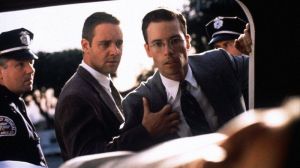 This movie is a master class in plotting and structure, enough that it should be taught in film schools. By nature noir plots are meant to be busy and mysterious, and a guarantee for mystery is a Byzantine plot full of plenty of suspects, dispirit elements, and strange coincidences that eventually coalesce into a larger picture. The beauty of what Hanson and Helgeland have done is that they have made the script complex yet accessible, able to lose one’s self in the tangled web of intrigue but still able to see how all the myriad pieces fit perfectly together by the conclusion. There is an efficiency to the screenwriting that is mesmerizing. It all seems so effortless when you’re with storytellers this gifted or who have a divine connection to the source material. Forgoing the customary slow builds of recent film noir like the oft-cited Chinatown, L.A. Confidential just moves from the opening narration. Within the first 25 minutes, the movie has expertly set up all three of its main characters, what defines them, their separate goals, the obstacles in place, and previews how they will intersect into one another’s orbit, and then the Nite Owl case explodes. Every scene drives this narrative forward. Every scene reveals a little more depth to our characters or fleshes out a superb supporting cast. Every scene cements that contradictory theme of the glitzy allure and unseemly darkness of the post-war City of Angels. My only quibble is that before the truncated third act the movie resorts to a few easy shortcuts but by that point Hanson and Helgeland had more than earned their paces. This is one of the greatest modern screenplays, period (WGA listed it as #60 all-time).
There are so many remarkably assured sequences but I want to emphasize one in particular – Exley’s interrogation of the three Nite Owl suspects. “Oh I’ll break him,” Exley promises his superior before entering into the first interrogation room. At first you’re with the other officers and morbidly curious with his arrogance. By the end, your jaw hangs in amazement at the intuitive pressure this man is expertly applying. It’s a terrific moment that allows Exley to masterfully manipulate three different men, taking pieces and running toward accurate insinuations, building momentum and clarity. Each man is different and each man offers a new piece of the overall puzzle. A slight reference by one unlocks another’s confession. An overheard sound byte pushes another into self-defense. I’m convinced it was this scene that ensured robust and thorough interrogation was a crucial element of the gameplay for the 2011 video game L.A. Noire, a noble misfire that definitely looked to replicate Hanson’s film as a user experience.
 Noir is one film genre with a visual code that can get the best of directors, but Hanson played this to his advantage. Classic noir is filled with criminal activity and the allure of sex and violence, typified perhaps best in the position of the untrustworthy but oh-so-sexy femme fatale. Yet the majority of film noir was produced in an era of censorship thanks to the implementation of the notorious Hayes Code, making sure that audiences didn’t enjoy the sordid elements too far. Free of these restrictions, some modern filmmakers take the opportunity to revisit the noir landscape and fill in the blanks of old, furnishing an outpouring of unrestrained exploitation elements. Brian DePalma’s 2006 film The Black Dahlia (also based on an Ellroy novel) gets drunk on this mission, though “restrained” has never been a word I would associate with DePalma’s filmmaking anyway. My point, dear reader, is that it’s easy to get lost in the superficial trappings of the genre: sexy dames, corrupt lawmen, temptation, shootouts, schemes, and chiaroscuro lighting. It’s easy to dabble in these elements because they’re so nostalgic and celebrated.
Hanson did something different with his 1997 masterpiece. He builds upon the audience expectations with noir but he doesn’t let his complex story and characters come second to the visual spectacle of the famous genre. L.A. Confidential is in many ways a movie that straddles lines; old and new, indie and Hollywood classicism, and film noir and drama. It’s an adult film that doesn’t downplay its darkness, brutality, and moral ambiguity, yet when it comes to those exploitation elements, especially sex, it’s almost chaste. The relationship between Lynn and Bud seems refreshingly square, like it was pulled from Old Hollywood. The entire movie feels that way, an artifact that could exist any decade.
Hanson was something of a journeyman for most of his career, directing competent thrillers like The Hand That Rocks the Cradle and The River Wild. As Variety film critic Owen Gleiberman wrote in his eulogy for Hanson (he died in September 2016, a fact I shamefully didn’t know until writing this review), after 25 years in the industry the man became an earth-rattling auteur after the age of 50. That is a rarity. Who knew the guy had something this singularly brilliant within his grasp his entire career? The care he puts into the screen is evident from the opening montage onward. There’s an elusive magic to the filmmaking on display, a bracingly divine sense of how to move the camera for best effect, how to escalate and deescalate audience nerves. He knows his story structure and characters inside and out, but he also knows how to play an audience. His time making serviceable studio thrillers certainly helps him during the film’s climax, a bloody shootout that’s also a mini-siege thriller.
 Hanson also assembled an incredible crew to enable his vision. The technical elements recreate the early 1950s L.A. time period with beguiling immediacy; the cinematography by Dante Spinotti (Heat) gives a sense of the darker elements just under the surface without having to overly rely upon the film language of staid noir visuals. Peter Honess’ sharp editing provides a downright Thelma Schoonmaker-esque musical orchestration to the proceedings, especially as the multiple storylines and developments spill onto one another. Speaking of music, the score by Jerry Goldsmith (Star Trek) is thick with the jazzy overtones of the genre. It’s a score that simmers with sexual tension and malevolence. The casting director deserves a lifetime free pass. There are a whopping 80 speaking parts in the movie, and each person is a great hire that builds a richer film.
While the plot of L.A. Confidential sucks you in right away, its characters take hold the strongest. Film noir is one genre that has a codified cheat sheet of character archetypes, and this movie fulfills and subverts them, finding surprising and gratifying ways to further round out these figures into complex and nuanced human beings. The three main characters all provide a different approach to law enforcement and when we see them start to work together it’s a wholly wonderful turn of events. Bud is the muscle, Exley is the brain, and Vincennes is the charm, and each one attacks the Nite Owl case and its subsequent leads from different angles that best apply to their set of skills. Each of the three characters discovers new pieces of evidence, new contacts and suspects, and when they start to work together it not only provides a payoff with the combined evidence but with the satisfying nature of their teamwork. That’s because they become better people when they work together and each moves closer to some moral redemption.
Bud is the loyal cop with a hair trigger and a penchant for being a white knight to abused women. His personal history of abuse makes him seek justice, often by his own fists. He has a rigid moral code of right and wrong and isn’t afraid to cross lines to achieve it. He’s also tired of being a bully and wants to be more than just the muscle. Exley is a straight arrow with a strong sense of moral righteousness and a mind for politics. He knows how to play sides for his own gain. He’s not afraid of making enemies within the department, and his opportunistic choices create many. He’s trying to forge his own path outside the shadow of his father, a famous lawman who was gunned down by a random purse-snatcher (“Rollo Tamassi”). He has to learn that he can’t do everything on his own. Finally, Vincennes is in many ways the face of the department as an ambassador to the world of TV and film. He’s succumbed fully to the glamour of Hollywood but he’s also full of profound self-loathing, trying to count how many compromises he’s made in life and where it’s gotten him. The appeal of the old life is crumbling and his detective instincts are reawakened, spurring Vincennes into the fray and surprising even himself. It’s extremely rare for any movie to successfully develop more than one protagonist, let alone three, and yet L.A. Confidential achieves this milestone so that when we alternate perspectives there isn’t a drop in viewer interest. Each man brings something different and interesting, each man reveals new hidden depths, and each character is fascinating to watch in this setting.
 The gifted actors take the already excellent written material and elevate it even further, turning an already sterling movie into one of the all-time greats. Almost twenty years later, it’s fun to see these famous actors when they were young and, arguably, in their prime. Spacey (House of Cards) was on a tear at this point in his career, between his two well-deserved Oscar wins, and having the time of his life in every role. His character seemingly has the least complexity, a man who knows he’s sold out but believes himself to be enjoying the ride, but Spacey offers poignant glimpses of the man behind all that oily charm and sly glances. There’s a scene where he stumbles across a mistake of his making and the subtle, haunted expression playing across his face is amazing. The man was capable of expressing so much, and still is. Crowe was still a couple years from his big breakout in 2000’s Gladiator but he put himself on the Hollywood map as Bud White. He’s a coil of anger and pain looking for an outlet, and Crowe is magnetic as hell. His glowers could burn right through you. Pearce (Memento) was another knockout that solidified leading man status thanks to his performance as the rigidly self-righteous Exley. He’s a character that thinks he’s above moral reproach, and his humbling is a necessary part of solving the case. Exley is constantly surprising his peers and it feels like Pearce does the same, showing exciting new capabilities from scene to scene, from his stirring hire-wire act with the interrogation scene to his understated glimmer of fear through a poker face. These three performances are golden.
Nobody better represents sleaze than Danny DeVito’s character and the man brings a merry lechery to his tabloid journalist/exposition device. His unquenchable thirst for the worst in humanity to sell more papers feels even more sadly relevant given the media climate that contributed to the recent presidential election. Kim Basinger (Batman) won an Oscar for her somber performance, which reinvigorated her career. She’s good but I can’t help but feel that she won the Oscar in a weak field (my choice would be Julianne Moore for Boogie Nights). David Strathairn (Good Night, and Good Luck) is enjoyably nonplussed as a man who specializes in delivering vice. James Cromwell used every bit of audience warmth associated as the loveable farmer from Babe and used that to his advantage. His pragmatic police captain is a father figure for Exley and the audience and perfectly sets up a turn that leaves the audience spinning even twenty years later.
There are little details the could go unnoticed but confirm for me just how much thought was put into L.A. Confidential. Exley is chided by his superiors for wearing glasses as they think it makes him look weak. As the film develops and he gets more immersed in the Nite Owl case, his compulsions against violence and rash judgment start to waver about the same time he stops wearing his glasses, a subtle symbol of his difficulty to see things for what they truly are. I enjoyed that our introduction to Lynn is in a liquor store and she’s wearing a winter cloak that strongly resembles a nun’s habit. It’s a memorable costuming choice and also suggest Lynn’s penchant for straddling the line of devotion. The Patchett “whatever your heart desires” line of high-class prostitutes has allusions to our current media culture of celebrity worship and personalized sexual fantasies. It naturally ties into the exploitation of the dream factory of Hollywood that takes young ingénues with dreams in their head and squashes them pitilessly. It’s not the first film to explore the darker side of the film industry but that doesn’t make its themes lesser.
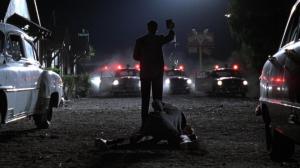 L.A. Confidential feels like the noir thrillers of old but stripped down to its essentials and given a new engine. It’s something that celebrates noir thrillers of old and Old Hollywood but it isn’t so lavish to either the genre or older time period that it loses sight of its own storytelling goals. The elaborate plot is complex and intensely engaging while still being accessible, populated with memorable and incredibly well developed characters, each given their own purpose and own insights that contribute to the larger whole. Hanson’s lasting accomplishment is a near-perfect masterpiece to the power of story structure and characterization. The three lead detectives are compelling on their own terms and the movie keeps them separate long enough that when they do come together it feels like a payoff all its own. Hanson recreates the world of classic film noir and makes it his own, using new Hollywood to lovingly recreate Old Hollywood. It’s the kind of movie I can watch again and again and discover new depths. It gave way to a wave of success for its participants. Hanson never quite delivered another movie on the level of L.A. Confidential, though I’ll posit that In Her Shoes is an underrated character piece. Helgeland has become a go-to screenwriter for many projects low (The Postman) and high (Mystic River) and became a director for A Knight’s Tale and 42. It’s a movie that plays just as strongly today as it did almost twenty years ago, and that’s the mesmerizing power of great storytelling and acting. L.A. Confidential is a lasting achievement that proves once more the power of our darker impulses. It’s stylish, seductive, smart, subversive, and everything you could ask for in a movie.
Nate’s Grade: A
Share this:

Wonder Boys (2000)
A rather warm but ultimately meandering tale of Michael Douglas as a college professor going through one crisis after another, Tobey Maguire as a creepy kid (again?!), and Robert Downey Jr. as an editor who seems to have a taste for transvestites. Though likable, Wonder Boys goes nowhere and nowhere slow. It carries the feel of a novel that was never intended to be brought onto the screen because of what it would lose in transition and it does. Douglas’ performance is sincere and syrupy but Wonder Boys is not a night out on the town.
Nate’s Grade: C+
Reviewed 20 years later as part of the “Reviews Re-View: 2000” article.


 nathanzoebl
You must be logged in to post a comment.