Blog Archives
Green Hornet (2011)
 Unassuming, impetuous, and with a lowbrow sense of duty, The Green Hornet gets by on its self-aware, campy, chummy tone thanks to co-writer/star Seth Rogen. The slimmed-down comedian plays a news media playboy who tries to right his life by becoming a super hero with his deceased father’s assistant, the kung-fu connoisseur Kato (Jay Chou, making a very poor English acting debut). Where the movie works best is when it upends formula convention, like making every character insecure about their personal standing, including the villain (Oscar-winner Christoph Waltz), who is aggravated that the “Green Hornet” is dazzling criminals with his digital age marketing. When the film thumbs its nose at convention, it plays like a mischievous prank on super hero/crime fighting tales. Green Hornet is a movie that at times is too busy, too childish, bordering on a bromance between Rogen and Chou. But with director Michel Gondry (Eternal Sunshine of the Spotless Mind) at the helm, there are enough quirky visuals to keep things interesting to the noisy climax. Rogen and his film can never be accused of being too serious, and given the material that’s a blessing.
Nate’s Grade: B-
Share this:

Bad Teacher (2011)
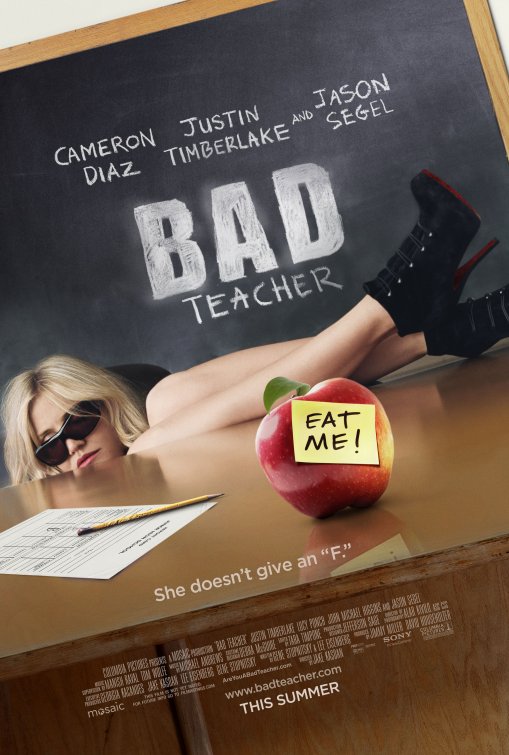 The teaching profession sure is taking its share of beatings lately. After the critical documentary Waiting for ‘Superman’, the loss of collective bargaining in several states, and the continual belief that teachers, despite having to take college courses and/or pass content tests routinely for license renewal, know nothing (full disclosure: I work in the teaching field), along comes the crude comedy, Bad Teacher. This is a comedy that wants a passing grade without showing its work.
Elizabeth Halsey (Cameron Diaz) is a figure that lives up to the promise of the film’s title. She drinks, smokes pot, sleeps, and all while in class. She looks down on her peers who actively attempt to be engaging to students, like the high-energy Miss Squirrel (Lucy Punch). The school’s gym teacher (Jason Segel) keeps trying to chip away at Elizabeth’s surly, apathetic demeanor, but she continues to shoot him down. Elizabeth’s attention is focused squarely on the handsome substitute teacher, Mr. Delecorte (Justin Timberlake). Not only is he handsome, he’s from a wealthy family. The only thing standing in her gold digging way is Miss Squirrel, who also has an interest in courting the studly sub.
Let’s analyze the bounds of having an unlikable protagonist. There’s a difference between an anti-hero and a generally disreputable lead character. An anti-hero usually has some interior good, or at least a relatable core. An anti-hero generally finds some small measure or redemption or change for the better, even if met through unorthodox means. An anti-hero doesn’t beg to be liked, but the trick is that the audience eventually does like this nontraditional lead. We do not have to agree with the values or behaviors of our lead. You do want to care and desire the character to reach some measure of happiness or wh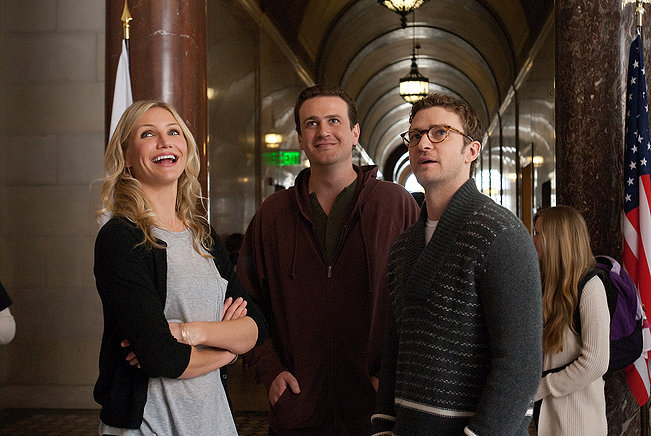 atever their goal is, perhaps an inkling of personal change. Examples include Bad Santa, Goodfellas, Jack Sparrow and Alex DeLarge, nearly every Clint Eastwood character, and take your pick from Quentin Tarantino or Robert Rodriguez’s oeuvre. A wholly unlikable protagonist is another concern. If you are so turned off by the protagonist you could not care less what befalls them. Whether they reach their goal, get away with their plot, or even risk life and limb, you do not care.
Bad Teacher suffers from having an unpleasant, obnoxious, selfish, greedy, churlish twit as its lead. Elizabeth is no dashing rogue, no charming cad, no subversive combatant against a corrupt system, nor is she is she a vulnerable individual lashing out to mask her pain or insecurity. All of those qualities would help make for a complicated but ultimately likeable hero or heroine. Instead, what Bad Teacher gives us is a woman that is so thoroughly unpleasant that you tune out early, severing all connection to a comedy. Bad move. Elizabeth’s one goal is to collect enough money through whatever means necessary to afford a boob job. And if she can bring other people down that annoy her, never mind if they are actually good people or teachers, then victory is all the sweeter. Bad Teacher‘s problem is that you don’t want Elizabeth to succeed, you want her to be punished. Elizabeth isn’t likable bad or truly nasty enough to be memorable. She’s the adult version of the popular girl that got away with everything. I never felt an ounce of pity for this person. There is no redemption for this woman, even if she starts treating a small handful of people mildly better. Acting 2% more like a human being does not qualify as progress. How did this woman get into teaching in the first place and for what purpose? There are a lot less strenuous ways to earn a paycheck.
I started feeling for Elizabeth’s rival, Miss Squirrel. Sure, she’s that hyperactive, goody-two-shoes, incredibly cheerful personality that can become grating in large doses, but she’s the only figure in the movie that displays a genuine interest in teaching. Everyone else just seems to be walking around. Elizabeth gets through months of teaching by showing inspirational teacher movies (Stand and Deliver, Dangerous Minds – no School of Rock?) and sleeping off her hangovers at her desk. Miss Squirrel is a bit obsessive about her job but she cares, and in the film’s void of having a likeable center I gravitated to the spastic, alternative foil. I began rooting for Miss Squirrel to root out her rival’s lies, expose her bad/illegal behavior, and earn some vindication. It was she that I latched onto sympathetically. I rooted for the character that was served up for ridicule by the filmmakers. What does that say about the movie? It also helps that Punch (Dinner for Schmucks, You Will Meet a Tall Dark Stranger) gives the strongest comedic performance. In the realm of Bad Teacher, the good, competent, idealistic, passionate educators are the ones unjustly punished by film’s end.
Diaz (Knight and Day, The Green Hornet) can do the salty, spunky stuff in her sleep, and often in Bad Teacher she seems to be on autopilot, dispensing with the vulgarity without a true glint of madness or enjoyment. She just seems to be irritated by everyone, including the audience. Timberlake (The Social Network) is playing aloof but could have easily been replaced by any decent-looking comic actor. Segel (Forgetting Sarah Marshall, I Love You, Man) gives the film a much-needed jolt when he appears onscreen. Too bad his screen time amounts to about 10 minutes and ends in a rather trite fashion with his gym teacher miraculously taming the shrew. Several other comedic actors are wasted in one-bit parts including John Michael Higgins, Molly Shannon, Phyllis Smith (TV’s The Office), Matt Besser (TV’s Upright Citizen’s Brigade), David “Gruber” Allen (TV’s Freaks and Geeks), and Eric Stonestreet (Emmy-winner for Modern Family).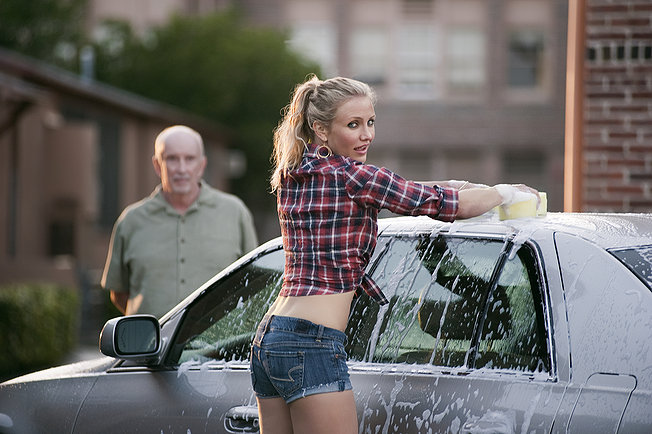
All of this would be marginally forgivable if the film were just funnier. The jokes are stuck in the same gear, mainly Elizabeth being rude or outrageous. It’s a recipe that gets repeated too often, only altering clarifying details. The school has a car wash and Elizabeth dresses provocatively, scrubbing dirty automobiles with a nubile and sudsy devotion not seen since 1980s heavy metal music videos, the heyday of car washing imagery (there sure were a lot of filthy cars in Reagan’s America). The men are agog. It’s the same joke on repeat. She drinks. She says something inappropriate at school. She gets high. People are agog. Bad Teacher is set up from a comedic front to be 100 minutes of reaction shots. It’s like director Jake Kasdan (Orange County, Walk Hard) has to rely on a glut of reaction shots to sell the gags. Why are the kids so meaningless in the comedy? Surely you would think the screenwriters would want to have some students as main characters as well, if nothing else than as a gauge for their lead. Elizabeth does give some advice to a lovesick dorky kid, but her advice is more of a tough love. When Elizabeth discovers there’s a bonus for whoever’s class has the highest state testing scores, you’d think this would be a rally the troops moment. She actually starts teaching and utilizing her skills to get her class to learn, albeit for a personal financial incentive. You would assume then that this might be a changing point for the character, where she actually discovers that she may like teaching or that she does in fact have some aptitude for the profession. Nope. She just resorts to cheating and blackmailing the maker of the state test (Thomas Lennon). I would applaud this narrative pivot, avoiding the expected, if it led to a funnier series of jokes.
The teaching profession is ripe for an astute, mordant satire exploding the politics of the position. Bad Teacher is not that movie. It’s not even close to that movie. It is, however, a comedy that is weighed down by an abhorrent lead character. Diaz’s heroine is unlikable to the point that she turns you off from the whole movie. I suppose there’s a certain measure of bravery having a mainstream studio movie with such an unpleasant main character that doesn’t give a damn about redemption. In the end, watching an appalling egotist get theirs in the end can lead to some sliver of satisfaction, but when that same detestable character gets away with their dastardly deeds? You feel robbed. That’s Bad Teacher in a nutshell. It robs you of laughs, money, and time.
Nate’s Grade: C
Share this:

Midnight in Paris (2011)
 Woody Allen hasn’t been this light-footed in a long time. Midnight in Paris is an effervescently charming film that flirts with overt sentimentality. But before you think Allen goes all gooey, the fatalist in him pulls back for some wisdom about the folly of nostalgia. Allen’s nebbish stand-in this time is Owen Wilson, assuredly better looking but on the same neurotic wavelength of his director. Wilson is a disgruntled Hollywood screenwriter visiting the City of Lights with his shrewish fiancé (Rachel McAdams) and her upper-class parents. One night a mysterious taxicab picks him up shortly after midnight. Wilson is transported back in time to his favorite era, 1920s Paris. He gets to rub elbows with literary and artistic giants, like Gertrude Stein (Kathy Bates), Ernest Hemmingway (Corey Stoll), Scott and Zelda Fitzgerald (Tom Hiddleston and Alison Pill), Salvador Dali (Adrien Brody), and others. He even falls for a lovely lady (Marion Cotillard) from that time period who served as a muse for several artists. Midnight in Paris is a far more enjoyable experience if you have a modicum of education in the humanities. Identifying the artists of old, albeit exaggerated cartoon versions of themselves, is part of the fun, fantasizing about interacting with the greats. But Allen is also playful with his storytelling, and for a while Midnight in Paris becomes a highly refined cross-time romance (think The Lake House written by Tom Stoppard). Midnight in Paris has been catching on with audiences, becoming Allen’s biggest hit in 25 years, and it’s easy to see why. It’s whimsical while being literate and romantic without being corny.
Nate’s Grade: B+
Share this:

happythankyoumoreplease (2011)
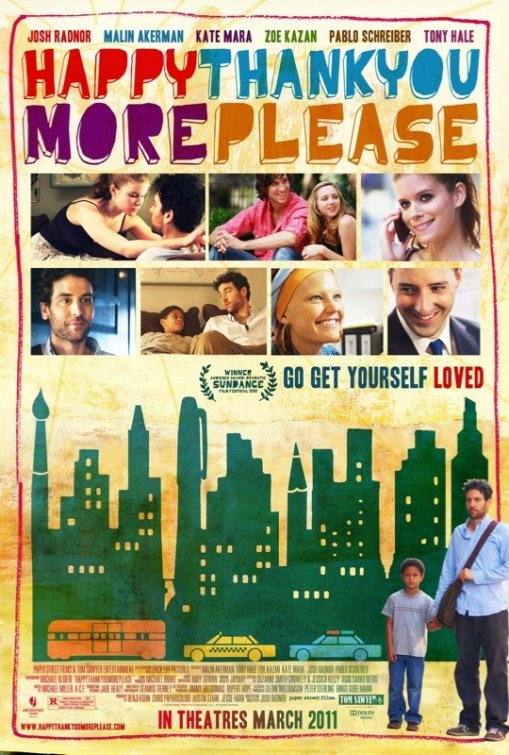 Josh Radnor’s (How I Met Your Mother) writing/directing debut reads like a heavy order of sitcom plots rolled into one tight space. There’s enough New York navel-gazing to fill up a spate of twee indie films. There’s Sam (Radnor), a struggling writer prone to relationship problems, having a three-night stand with Mississippi (Kate Mara), a waitress/cabaret singer. There’s Sam’s cousin, Mary (Zoe Kazan), is being pressured to move to L.A. by her boyfriend (Pablo Schrieber). Sam’s best friend Annie (Malin Akerman) suffers from dating the wrong kind of guys. She also suffers from alopecia, which makes her hairless (doesn’t sound like a deal-breaker to me). She’s being pursued by a suitor, Sam #2 (Tony Hale), a good man who acknowledges he’s not exactly a lady’s first image when it comes to Mr. Right. If this wasn’t enough plot to fight over for 100 minutes, Sam becomes an unlikely caretaker to a young child, Rasheen (Michael Algeri), left behind on a subway. The kid refuses to go back to foster care so he just sort of becomes Sam’s pet. Actually, the child is a plot device to facilitate Sam’s maturity and personal growth, which is why he all but disappears in the film’s second half dominated by romantic drama. Radnor is a relaxed presence onscreen. As a director, he knows a thing or two about pleasing shot compositions. As a writer, he has a good feel for droll observation (“Don’t make me run, kid, I’m almost thirty,” had me ruefully chuckling). As with most ensemble movies, some storylines are stronger than others; the Annie/Sam #2 stuff could have been its own movie. Both actors, Hale especially, are winning. Mara is sexy and a star in the making. The Mary stuff would have been better left alone. Kazan’s performance is somewhat irritating, and my interest sunk every time her face came onscreen. And yet, the film is carried by a sweetness that doesn’t tilt into saccharine. Given some of the sitcom-level setups, this could have spilled into eye-rolling cuteness (a girl named after the poorest state in the nation!). It’s romantic in a somewhat cheesy way but that’s part of its charm. It’s nothing groundbreaking, but happythankyoumoreplease rolls agreeably along thanks to being earnest, but not too earnest, and witty without being overly whimsical.
Nate’s Grade: B-
Share this:

The Hangover: Part II (2011)
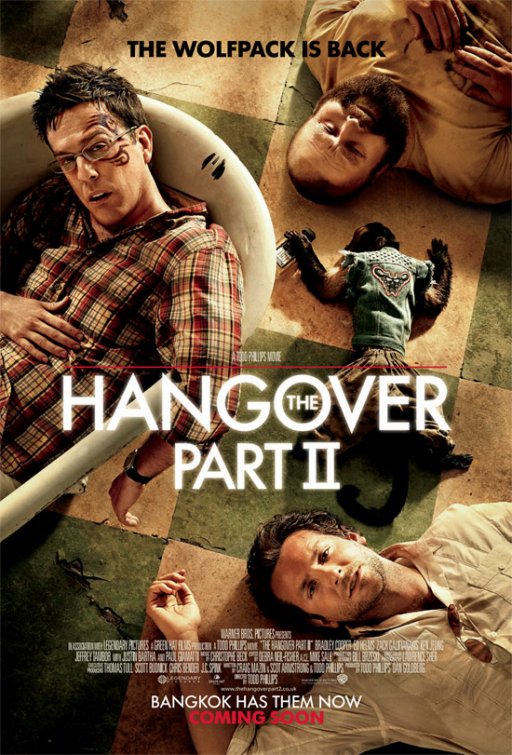 When you’re responsible for the highest-grossing R-rated comedy of all time, a film that grossed over half a billion dollars worldwide, then you don’t want to tinker with a winning formula of a surprise hit. Naturally, with that kind of money, a sequel was inevitable. Director/co-writer Todd Phillips (Old School, Due Date) is back and so is everybody and everything else. You’ll get a strong sense of déjà vu watched The Hangover: Part II. That’s on purpose. This calculated, rather soulless cash-grab sequel wants to recreate the organic experience of the first film. If you played The Hangover and The Hangover: Part II on simultaneous TVs, I would not be surprised if the same plot points happened at the exact same minute-marks. It might even be like a Pink Floyd/Wizard of Oz experience. I paid twice to see the same movie two years apart.
Stu (Ed Helms) is about to get married in Thailand to Lauren (Jamie Chung). Our favorite wound-up dentist is apprehensive about any sort of bachelor party shenanigans after the events of two years ago in Las Vegas. His pals Phil (Bradley Cooper), Doug (Justin Bartha), and the socially inept Alan (Zack Galifianakis) make the trek to attend the festivities. For Alan, it’s a reunion of the Wolfpack and an excuse finally to venture out of his parent’s home. Stu has some ground to make up with his bride-to-be’s father. Her father seethes about the prospect that his beautiful daughter is going to marry Stu, a man he compares to watered down rice. Lauren’s younger brother, Teddy (Mason Lee), a pre-med student and concert cellist, is left to the Wolfpack’s care the night before the wedding. They’ll just have one drink on the beach. What’s the worst that could happen? Flash to the next morning. The guys awaken in a strange apartment. Teddy is missing and missing a finger as well. Stu, Phil, and Alan must once again retrace their steps and solve the mystery of their hard-partying antics before the wedding ceremony.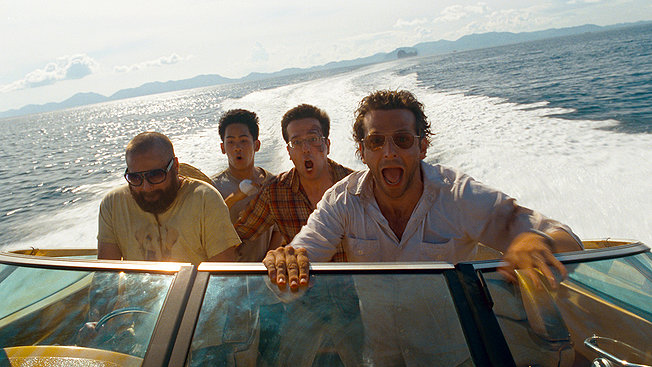
The Hangover: Part II is a carbon copy of the original. Because the same joke is just as funny the second time around, right? This empty enterprise gives its audience exactly what they want, which is precisely the same experience they had with the first film. But so much of comedy is predicated on surprise, so how can you recreate the experience of discovery that people so heartily enjoyed with the first film? The Hangover: Part II is like a cheap comedy Mad Libs game: it reuses the same gags and just fills in the blanks. Hey, if Joke A worked before, why couldn’t we just have Joke A in this different location (instead of two guys walking into a bar, they walk into a different bar)? It’s like somebody copied and pasted the screenplay from the original movie, changed the locations and minor details, and cashed a check. Let me get into how stunningly indolent the screenwriting is (small spoilers to follow). Once again a person in their group goes missing before a wedding. Once again Stu has some self-inflicted wound to his face. Once again the guys have stolen someone else’s unorthodox pet. Once again they find themselves with a ward (baby in first film, Mr. Chow in second). Once again Stu has gotten involved with a prostitute. Once again Alan was secretly responsible for their drugging. Once again Justin Bartha gets left out of the escapades. Once again Mr. Chow shows his junk for shock value. Once again Mr. Chow jumps out of a locked container attacking the guys. Once again the guys have to return money to a gangster. Once again Stu plays a song of his own creation bemoaning their situation. Once again they have to race to the wedding minutes away. Once again we have a Mike Tyson cameo. Once again the guys find pictorial evidence of their debauchery and they play over the credits. Even directing touches like a time-lapse high-rise shot passing the time before they wake up is reused.
That’s what kills the movie is the lack of surprise. It throws the guys into a different setting, gets darker and meaner, but it’s rarely funny. I was surprised how many jokes left me in stony silence. Phillips and his screenwriters have gotten into the trouble of having to top themselves, so they rely on the “bigger is better” approach to match the outrageousness of the original. If Las Vegas is Sin City, then what would be even seedier? Bangkok, of course. Where would they go for a third film? What gets seedier than Bangkok (The Hangover 3 to be set in Rep. Anthony Weiner’s office). Yet the film curiously ignores much of what makes Bangkok the world’s preeminent hotspot in the sexual trades. The payoffs are darker and lack the bemusement of the original. Knowing some guy is missing a finger is not as whimsical as somebody missing a tooth. The movie has an unpleasant homophobia to it thanks to male genitalia being used to shock and horrify and humiliate. The horror of being involved with transsexual women made my theater audience groan with extra relish, like the presence of a penis or homosexual content makes everything automatically more disgusting to the common people, as if anything gay is the worst thing that could possible befall a man. Mr. Chang is an odious and fairly unfunny stereotype, and Jeong (Role Models, TV’s Community), so funny in just about every other role he’s ever had, is a braying, high-pitched annoyance. This go-round the jokes feel stale, the characters feel tired, and the payoffs seem too mean-spirited to be satisfying.
When you have a movie where the comedy is situation-based, then those situations better be funny because the characters are only serving as a means to an end. The premise allows the filmmakers to have it both ways. They can fulfill the hedonistic spectacle that will make people blush, and at the same time they can have button-uped, likable, relatively relatable nice characters that an audience will root for. If we watched these characters acting like irredeemable morons, then audience sympathy would wan. But having the guys investigate their previous dirty deeds, and react in horror, does not lessen audience sympathy. I enjoyed how the main trio played off each other in the first Hangover, and the central mystery was a solid glue to hold together a loose collection of mostly worthwhile gags. Just as the first film fell short of its potential, so too does the second movie. A monkey serves little purpose other than to get it to do things that seem outrageous just because it’s a monkey (it smokes, it mimes oral sex – hilarious!). But the second time around, the amusement of seeing Stu fly off the handle, or listen to Alan’s moony non-sequitors, doesn’t have the same draw. Galifianakis (Due Date) made the film watchable for me despite the fact that the screenplay makes his character a petulant and highly irritating character rather than a man-child doofus. And the women are once again relegated to the sidelines when it comes to being in on the comedy.
For The Hangover‘s legions of fans, more of the same will likely be exactly what was desired. But without the cheeky element of surprise, the comedy just seems like it’s hitting pre-ordained stops according to its formulaic cheat sheet. For the original Hangover I wrote: “Let’s face it; once you know the solution to the mystery and all the surprises, will this movie still play out as funny? …But once you knew who was behind what, and how the whole game was staged and operated, could you even watch the movie a second time? Would it still work now that a repeat viewer knew all the secrets? Does this comedy have a built-in expiration date?” Well, The Hangover: Part II is the answer. If the first film was a comedy with an expiration date, then The Hangover: Part II is one comedy that’s gone rancid.
Nate’s Grade: C-
Share this:

Pirates of the Caribbean: On Stranger Tides (2011)
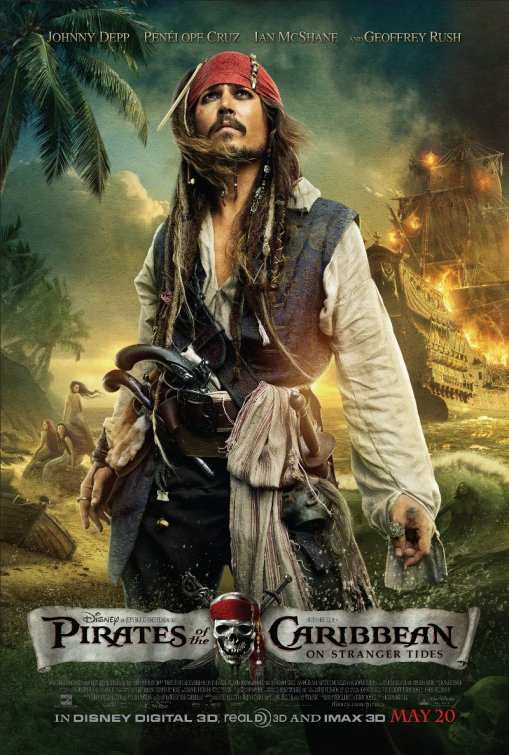 The public reaction to the two previous Pirates of the Caribbean sequels, 2006’s Dead Man’s Chest and 2007’s At World’s End, were decidedly mixed, though that didn’t stop them each from earning a bazillion dollars. Fans didn’t care for the darker tone, the confusing interlocking of the story, and especially the bloated running times. It feels like Disney’s uber-producer Jerry Bruckheimer must have taken notes from the sequel backlash and they amounted to: “Less of everything.” Welcome to less plot, less character, less involvement, and far less entertainment. Welcome to Pirates of the Caribbean: On Stranger Tides.
It’s been a few years since the non-world-ending events of At World’s End, and Jack Sparrow (Johnny Depp) has been in London putting a new crew together. Except, it’s a Sparrow imposter. Turns out it’s Angelica (Penelope Cruz), a former lover of Jack’s who woud still like to settle some scores. She and her father, the feared pirate captain Blackbeard (Ian McShane), force Sparrow to lead them to the Fountain of Youth. Apparently, Jack at one point had the map. King George II (a delightfully hammy Richard Griffiths in one of the film’s best scenes) is in a race against the Spanish crown. The English monarch hires Barbossa (Geoffrey Rush), Sparrow’s occasional enemy and ally, to find the fountain as well. It’s a race to see who can benefit from eternal youth first because, apparently, no one can share a source of water. Second grade teachers nationwide are very disappointed, Disney.
The entire enterprise just lies there on the screen, devoid of all energy or danger. The entire picture is just so shockingly inert, lazy, phoned in from every angle, missing any resonance of magic. Rob Marshall was the wrong man to be tapped as the new director of this series. Marshall has a fine eye for visuals, but the man couldn’t stage an action sequence to save his life. The Oscar-nominated director of musicals like Chicago and Nine stages his action sequences like dance sequences, which on paper don’t sound too far off. That’s until you realize action needs to incorporate story, location, build in tension, create organic obstacles, and be easy to follow. The action sequences in On Stranger Tides aren’t outlandish enough. It’s all so dull, a sword fight here a sword fight there. Short of a mermaid attack sequence, there’s no excitement to be found onscreen. That is disastrous for a franchise that has built a reputation for its anarchic, wild action and storylines. Marshall’s action angles and editing don’t communicate urgency. There’s no mood to these set pieces. The editing feels like it’s always catching up, always too late, needing a myriad of trims. Action cinema has been lambasted when it’s hyper edited and the audience cannot see what is happening; On Stranger Tides is not edited enough. One of the reasons these half-baked action sequences can never get going is because they always seem to be starting and stopping with the lackadaisical editing, always a step behind. The shots linger when they shouldn’t. The ingredients are there for a tasty meal but the chef (Marshall, screenwriters) doesn’t know what to do. The musical score by Hans Zimmer tries very hard to compensate and rattle the audience, compelling them to think what is transpiring on screen is exhilarating. It is not, and the music is just loud and annoying.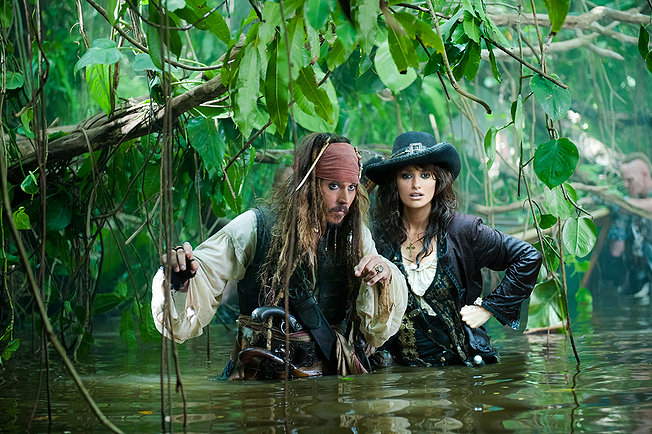
One of the chief criticisms of the two Pirates sequels were that they were overstuffed with storylines, characters, setups, and were just far too convoluted and confusing for their own good. So with On Stranger Tides we get a simplified, pared down one-off movie. Much of the film is just characters walking in circles and, likewise, talking in circles. Motivations are flimsy. The dialogue is stilted; Sparrow’s malapropisms and one-liners feeling sloppy (“I agree with the missionary’s position,” he quips. Groan). The entire premise is to get to the Fountain of Youth, and then they get there and, well, very little happens. The characters will talk about little, walk a few feet, talk about little more, and this process repeats. Barbossa should be an interesting foil, going from fop to pirate by film’s end, and yet his every appearance in the movie feels like when the next-door neighbor appears on a TV sitcom. It’s an intrusion meant to remind you that you, the audience, like this character, even if they don’t serve any point in the story. The plot lacks any twists and turns, ultimately having every competing force converge on the Fountain of Youth at exactly the same time for a slapdash climax that involves more lackluster sword fighting, just like all the other sequences. On Stranger Tides is a full half-hour shorter than the third movie, and yet it still feels like an eternity at two hours and seventeen minutes because it spends so much time doing so little.
At least the other three Pirates movies found clever ways to mingle their sci-fi mythology into an old-fashioned Errol Flynn swashbuckling adventure. With On Stranger Tides, the sci-fi fantasy elements are just as underdeveloped as the characters. The Fountain of Youth is another of those magic do-hickeys that involve gathering magic tokens and blah blah blah, mermaid tears, silver chalices. Hey, if you wanted to drink up some mermaid tears, have them watch 2009’s Oscar-winning best documentary, The Cove. That ought to do it (a scene driving the mermaids into nets oddly reminded me of The Cove). Blackbeard and Angelica have a Jack Sparrow voodoo doll, which is highly effective, and yet this plot device is nearly forgotten for the entire film. There is no clever application of this unique device. Blackbeard has a magic sword that makes ships come alive. Why? How? It’s just another magical Macguffin, like Jack’s compass. Man-eating mermaid temptresses is an interesting idea, and a great way to squeeze in a lot of obfuscated nudity in a Disney film for teen boys who have not discovered the Internet. Too bad the mermaids are confined to one scene, albeit the highpoint of an otherwise bad film. Their feeding frenzy is the only moment in the film that channels that high-flying sense of verve that made the original so memorable. Don’t even get me started on the fishy romance presented between the captive mermaid (played with all the acting capability of a French perfume model) and a missionary (Sam Claflin). The whole experience feels like a shambled, draggy, inarticulate rip-off of Last Crusade, complete with a climactic drink from a magic chalice. I appreciate Marshall’s emphasis on practical special effects but if these are the results then bring back the previous sequels’ CGI vomitorium. This franchise feels like every ounce of energy and danger has been squeezed out of it.
So does that means that this Pirates venture is more character-based now that it has jettisoned side characters and complex plots? Fat chance. The problem is that Jack Sparrow is not a good lead protagonist. He’s not meant to be a classic good guy. He’s a libertine, somebody who makes selfish choices but will revert to do something proper when his conscience nags him enough. Sparrow is more of the dashing rogue at best. Does anyone remember how he was going to trick doomed men into signing their souls to Davy Jones? He also needs a foil, a striaghtman to bounce off of. I almost miss the wooden performance of Orlando Bloom. Without a do-gooding striaghtman, Jack Sparrow plays like a man adrift, searching for his groove. Unfortunately, Sparrow never finds it in this vehicle, which just asks him to go through motions and mannerisms. Blackbeard makes for one very bland villain. McShane (TV’s Deadwood) can glower and chew scenery with the best of them, but his baddie never seems too menacing. He burns one guy alive and threatens to kill his own daughter in order to keep Jack in line. I’m sorry, but that doesn’t even compare after the previous films included a monstrous ship captain who would readily slice prisoners’ throats and a British bureaucrat who hanged an eight-year-old before the freaking opening credits. Blackbeard, in contrast, just comes off like a crusty old man in need of a shave.
 The film’s biggest addition was bringing in Jack’s former flame Angelica, a woman he robbed of her virtue and personally betrayed. But is there any tension? No, because Jack and Angelica don’t have any old feelings for one another they rehash (oh how I was even pleading for a trope like that), and the characters don’t really feel any antagonism either. Sure they will parry and threaten one another, but it’s so devoid of danger or tension or interest. This is no screwball romance. They feel like a couple that can’t be bothered working up any notable feelings toward one another. Therefore, all their shared scenes, and there are many, sink the film’s flow. Their bickering should bring some sparks. She should be exciting; she’s the daughter of a notorious pirate, she was going to be a nun until Jack Sparrow came sailing into her life. She should be sore. She should be angry. She should be a lot of things that ultimately the character is not. Cruz (Nine, Vicky Cristina Barcelona) doesn’t come across as an equal or love interest, she just feels like an annoying sidekick, harping on “Yack.” At one point, Jack tells her, “If you had a sister and a dog, I would take the dog.” When she’s got a personality like this, I’d agree.
Depp (Alice in Wonderland, Sweeney Todd) is obviously a comic gift and his Sparrow character will go down in the ages as one of the most universally beloved figures in cinema history. Everyone adores this character, a loveable scoundrel. But that doesn’t mean the screenwriters can just strand him in a crummy story with nothing to do. Depp will always be enjoyable when he puts on his Captain Jack eye liner and does that funky, swishy walk of his, but even he feels like he’s phoning this one in. He realizes that his character is trapped in a sodden adventure that offers little to do as a character and an actor.
I never thought I would say this, but On Stranger Tides makes me positively reevaluate the other Pirates sequels (I admit to being one of the few critics who liked Dead Man’s Chest a good deal). If this is what a simplified Pirates of the Caribbean film gets you, bring me back the messy, maddening plots of the previous films. Bring me back the scope, the danger, the clever mingling of genre elements, the adventure, the sizzle, the anarchy, and bring me back director Gore Verbinsky. Marshall has no feel for this material or how best to serve story. I never expected a movie with this kind of budget to be so lifeless. It all just sits there on screen, expecting the pieces to come together through ardent wishful thinking. On Stranger Tides suffers not because it strips away some of the excess and convolution that plagued the other films, it suffers because it gives no reason for its existence. It does not enrich the characters, the Pirates universe, or provide a rip-roaring story. Obviously, the film exists to line the coffers of Disney. It may earn plenty of booty this summer, but this is no way to rejuvenate a sinking franchise.
Nate’s Grade: C
Share this:

Bridesmaids (2011)
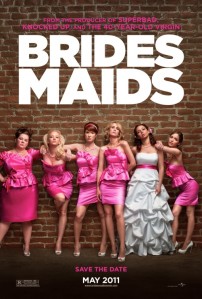 To refer to the bawdy new comedy Bridesmaids as a “female Hangover” seems disingenuous and a facile comparison cooked up in some marketing laboratory. This is nothing like The Hangover, a conceptual comedy that, can we all agree, was a funny movie but not the funniest movie of all time? Bridesmaids is a byproduct of the Judd Apatow comedy factory, and that’s what it feels like. This is no mere concept comedy built around a madcap premise. This is a magnificent character-based comedy that lets the women finally be in on the joke rather than the butt of it. Bridesmaids proves that the ladies can do everything their gender counterparts can do and better.
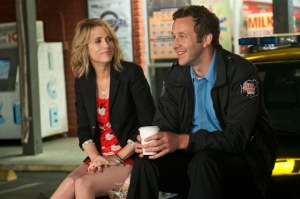
Annie (Kristen Wiig, who co-wrote the screenplay) is a woman down in the dumps. She lost her bakery due to the crummy economy, she lives with a pair of cretin roommates, and she’s a sleazy creep’s (Jon Hamm, wonderfully douchey) number three choice whenever he needs some casual sex. Her lifelong best friend, Lillian (Maya Rudolph), has just gotten engaged and asked Annie to be her Maid of Honor. Annie is threatened by Helen (Rose Byrne), a rich socialite who has grown close to Lillian in Annie’s absence. Helen is also apart of the bridal party and is always at the ready with a classy alternative when Annie stumbles. Annie gets pulled over by state patrol Officer Rhodes (Chris O’Dowd) who takes pity on her but warns her to get her taillights fixed. She continues to meet Rhodes at different spots and the two seem to be circling something romantic. Annie’s life seems to be unraveling just as Lillian’s is coming together.
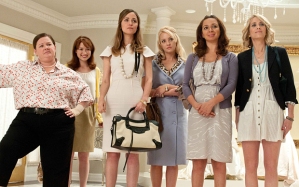 Apatow himself has been accused of making overly guy-centric comedies about rude adolescent man-children (I wouldn’t agree fully with that statement), and people have been rightfully asking when do the girls get a chance? When will the ladies be able to be something other than “love interest” or “device that triggers male character’s metamorphosis into maturity” (Forgetting Sarah Marshall, even from a clear male POV, was rather charitable and empathetic with its feminine characterizations). Well here it is, folks. Bridesmaids let’s the ladies are just as rude, crude, crass, and sexual as the men in the comedy universe. Bridesmaids is a terrific gross-out adult comedy told from a distinct feminine point of view. They can be just as crude as the dudes. But what really sets it apart is that it’s even more so a story about the dynamics of female friendship and the pain of growing apart due to the circumstances of life. Much like the joyous male camaraderie as one of the hallmarks of an Apatow film, we get to witness an entirely female dynamic that feels authentic. These women, their troubles, their friendships, all feel real and deeply felt. Even the supporting characters get a chance to be fleshed out with added dimension rarely seen in mainstream comedies, like Becca (Elli Kemper) and Rita (Wendi McLendon-Covey) confiding in each other about their disappointments with married sex. In other movies these ladies would just be “Bridesmaid #3” or “One-note Bridesmaid,” and while Becca and Rita could both be designated as types, they transcend classification when the script allows them to become rounded out as people. Another hallmark of an Apatow production, this is a true ensemble work.
You really do care for these people because of how relatable they are. I’ve never been the operator of a uterus, but that doesn’t stop me from being able to greatly relate to the anxieties of the female characters on screen. I know how significant female friendships are, and that is the central focus of the movie. You buy the relationship between Lillian and Annie, the comfort level they have with one another, the importance, the history, and you feel the pains of Annie’s plight. You feel like the entire bridal party could actually be a group of friends instead of a collection of wacky caricatures. These feel like real people, and people you want to see experience good times. Even the treatment of Helen feels thoughtful. She’s not this shrewish antagonist, but a trophy wife trying to impress the one person she could call a friend in her own life. For Helen, her friendship with Lillian means the world to her. She comes across as another real person, albeit a fabulously looking one. Annie’s romance with Officer Rhodes is indelibly cute and the duo has a warm, charming interaction. You pull for their union. Their relationship spawns a very funny sequence where Annie tries an assortment of illegal driving activities to get his attention. A romantic subplot is expected but that doesn’t mean it has to feel like rote, and in Bridesmaids the romance feels just as authentic and charming as the female friendships.
But don’t let my adoration with its character-work fool you into thinking this is some sort of “chick flick,” a divisive term tragically slapped onto anything female-centric or female-led. Just because there is rarely a Y chromosome on screen does not mean that this is some frilly, frothy sentimental fantasy replete with a “trying on clothes” montage and some sequence where the main characters break out into song in a bar. A wedding central to the plot should hopefully not be disqualifying for male audiences (men don’t get married too?). This is not a story about a crazed, jealous woman who wants to shiv another pretty lady in her pretty lady ribs because she stole her Maid of Honor duties. The cinema is littered with plenty of awful movies that revolve around women battling over petty squabbles. This is not that movie. It is not about who wields the title of Maid of Honor. It is a tale about your friends making new friends, entering new phases of their lives and possibly leaving you behind in the process. It’s about insecurity and holding onto those important people in your life, despite a gradual pulling apart. Relationships change over time, and it’s terrifying to have to adjust to the people closest to you taking lesser stations. It’s terrifying to feel like you’re being pushed out by new people. That sounds fairly universal to me, not some chick flick pabulum.
 There were several spots where I laughed so hard I was crying; the film kept me in fits of laughter throughout. The fact that a great majority of the comedy is character-based and not situation-based makes the jokes richer and more satisfying. Even a hard-to-top gross-out sequence where the girls are trying on bridal dresses at a chic store and all start losing control over their bodies due to food poisoning is related to character. Annie took the bridal party to a cheap restaurant to save money, because she’s too proud to admit her own penniless nature and too stubborn to allow Helen to swoop in and claim another victory. So the women all get terrible bouts of food poisoning, which causes them to spew vomit and forces Megan to make one very unfortunate decision with a sink (“Don’t look at me!” she bellows). The movie doesn’t shy away from the gross-out goods but doesn’t overly rely upon them for surefire gags.
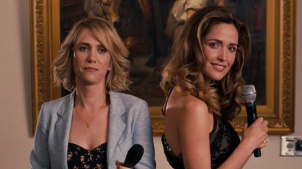
The film has several terrific comedic set pieces that connect back to the fractious relationship between Annie and Helen. The two get into a competition when it comes to party toasts. They must upstage the other, asserting who has the closest relationship with Lillian. Just when you think it’s done, one of them grabs the mic again and takes it to another level. Bridesmaids has several comic set pieces that carry on longer than you would expect for a comedy. Director Paul Feig (director of episodes of Arrested Development, The Office, and co-creator with Apatow of Freaks and Geeks) has the resolve to keep the situation alive, steadily building the comic momentum as situations get more and more out of hand, but pulling back before we reach farce levels. The movie goes one step further, convinced that the audience would be there to follow. The movie expertly lays out setups, finds satisfying payoffs, and ties up its storylines in worthwhile ways.
The dialogue is sharp and jokes work on a very fundamental level of context and defying expectation. Annie is terribly nervous to fly. She sits next to a passenger (Wiig’s co-screenwriter, Annie Mumolo) who is also deadly afraid of flying. “I had a dream last night. This plane went down,” she sys. “You were there.” That last part just turns an okay joke into a great joke. There’s a great visual gag where people keep assuming that the unkempt men standing behind Annie at a party is her husband or boyfriend. And then there’s a conversation between Annie and Officer Rhodes about being born for a profession. He encourages her to get back to baking, relating that if he were not a police officer he would still “patrol the streets and… shoot people.” These are just a few small examples I wanted to share that illustrate that, to its core, Bridesmaids is a funny story and knows the fundamentals of comedy.
Wiig has been a comic that I have found grating due to her ever-present dominance of Saturday Night Live. Her stable of wacky characters grew tiresome, but now she gets to play someone who has three dimensions. Annie is often as big an antagonist in the story as Helen. She can be self-destructive and stubborn and when she finally decides to stop being quiet is when people get hurt in her wake. You give her some latitude because, like many comedies, Annie begins as a put-upon character and has to regain her dignity and put her life together. Her life hasn’t turned out as she’s hoped, and how relatable is that? Wiig is a tremendous center for the film. Her rapid-fire eyes communicate so much nervousness and indecision, as well as her crinkly defensive smiles. But she’s also funny, tremendously funny as she loosens up and becomes more aggressive. The film is impeccably cast from top to bottom, another Apatow hallmark.
 What Melissa McCarthy does in this movie is incredible. You’ve never seen a person steal a movie at this high degree of theft. McCarthy, best known from the TV show Gilmore Girls, is Megan, the sister of the groom and an unapologetically brash woman with limitless confidence. She’s built like a linebacker but, thankfully, no attention is made to the fact that McCarthy is an overweight woman. That’s not significant to her character, though it does provide for a nice character moment as she confides to Annie late about the horror of being fat in high school. It’s not funny because she’s overweight; she’s just a brash woman without a filter who happens to be overweight. The fact that nobody cracks a joke at her expense or even comments on her weight is refreshing, and a reminder that character is not confined to outward appearance. With all that said, McCarthy is flatly hilarious. There won’t be a scene that McCarthy doesn’t get in one solid belly laugh out of. She is consistently funny from scene to scene, but stays true to her character at the same time. I would love for Megan to have her own spin-off movie much like what Russell Brand earned after his scene-stealing work in Sarah Marshall.
Bridesmaids is a comedy and it is one hell of a comedy. It may no be the best movie under the ever-expanding Apatow banner, but it is easily the funniest film yet. Yes, I said it. Bridesmaids is funnier than Knocked Up, The 40-Year Old Virgin, Superbad, and all the rest. Wiig deserves to become a star and so does McCarthy. This movie left me sore from laughing and giddy with happiness. It’s funny, touching, and genuinely entertaining, and destined to become a modern classic worth revisiting. I foresee this becoming a word-of-mouth sensation this summer, particularly from appreciative female ticket-buyers who feel like they finally have a worthy, relatable, very funny comedy that they can call their own. It’s kind of like the old slogan for female deodorant: strong enough for a man, made for a woman. That may sound too flippant, so I’ll just put it like this: do yourself a favor and RSVP ASAP for the funniest film of 2011 and one destined to charm members of both genders.
Nate’s Grade: A
Share this:

Megamind (2010)
Y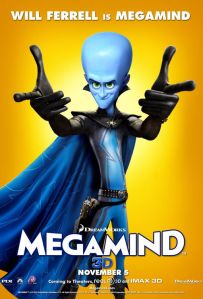 ou’ve seen this movie before, and pretty recently too given in the influx of superhero tales in the last decade. Megamind recycles heavily from numerous other super forbears, and yet this animated tale about a tired hero (voiced by Brad Pitt) and his inept nemesis (Will Ferrell). While it’s never as funny as its premise and cast should make it, the movie does pack a lot of fun and even a little bit of heart. The action sequences are inventive enough and the movie has a tone that drifts from sincere to self-conscious satire, while never settling down but doing enough right not to inflame your sense of irritation. The concepts of identity, good and evil, the duality of man, striking a life for your own… they’re all here. It’s a sloppy message that feels copied out of a plot playbook. Ferrell is funny but a bit more restrained than I like him. I think he works best when he cranks up his absurdist tendencies with a jolt of enthusiasm. Megamind doesn’t come close to approaching the magic, thrills, and emotions of How to Train Your Dragon, but it’s still many ways better than stuff like Monsters vs. Aliens and Shark Tale. It’s overly familiar story given a super spit shine.
Nate’s Grade: B
Share this:

Dinner with Schmucks (2010)
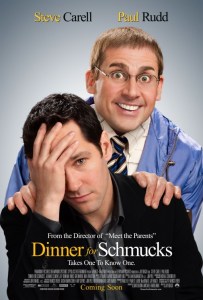 Oh man was this thing just painfully unfunny on all levels. It’s an American remake of a fairly funny French film and it stars Steve Carrell and Paul Rudd, two actors that have to work really hard not to be funny. Well they found a way. Talk about a bunch of schmucks. Every single character is a world-class idiot that behaves in a manner that 1) isn’t remotely relatable and 2) isn’t funny. It’s all yelling and raised eyebrows and exclamation points in place of setups and payoffs. Even worse, it tries to force a horrendously false saccharine feel-good message, a comedic “believe in yourself” sort of moralizing that says, “They aren’t the freaks, we are.” No, you all are freaks. The film confuses situations that are weird, uncomfortable, and just plain unlikely with comedy, which doesn’t work without some careful context and setup. Watching this nonstop leaden buffoonery makes you hang your head and sigh. This makes Three’s Company look like enlightened comedy. The movie also features Jeff Dunham doing his wacky puppets. This cinematic stick in the eye comes across as an obnoxiously unyielding comedy that doesn’t know when to stop, how to start, or what to do in between.
Nate’s Grade: C-
Share this:

The Spy Next Door (2010)
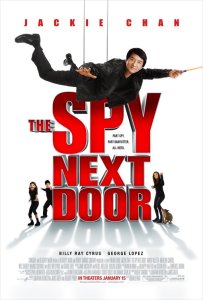 I have seen hundreds of movies go bad. I’ve seen plenty try and cram a ham-fisted saccharine, entirely phony message about family values or whatever hackneyed lesson needs to be delivered with the subtlety of a sledgehammer. Rarely have I seen a movie that tries to cram in EVERY banal family message possible into one exasperated running time. There was one point where I counted three clichéd platitudes in a row. Rarely have I seen a movie fail at comedy so badly, even the generous definition of comedy in family films, a subgenre that haunts all those who crossover into it. Rarely have I seen one single family film try to do so much and succeed so breathtakingly little. The Spy Next Door is that movie. Jackie Chan stars as a retired Chinese super spy who the American government wants to keep contracting. He’s also dating his neighbor (Amber Valetta) who has three rambunctious kids that fall into easy slots (surly teenager smarting from parent’s divorce, dweeby tech kid trying to learn to stand up to bullies, precocious little tyke who makes a mess). Chan agrees to watch over them for a weekend to convince those kids they should give him a shot, or else it’s splitsville between he and the mom. It’s the Vin Diesel Pacifier movie but done with even less finesse, if possible. The comedy is nonexistent, which is saying something for being as broad as it is, the physical action shows how badly Chan is aging, and the plot is painfully predictable. This is just a sad, uncomfortable viewing experience; it reeks of desperation and despondency. No one looks to be enjoying themselves for a single second. That’s probably because The Spy Next Door is a vacuum of fun; it’s lazy, incompetent, but worst of all, devoid of any effort to be something other than a mind-numbing, head-scratching waste of 90 minutes.
Nate’s Grade: D-


 nathanzoebl
You must be logged in to post a comment.