Blog Archives
American Hustle (2013)
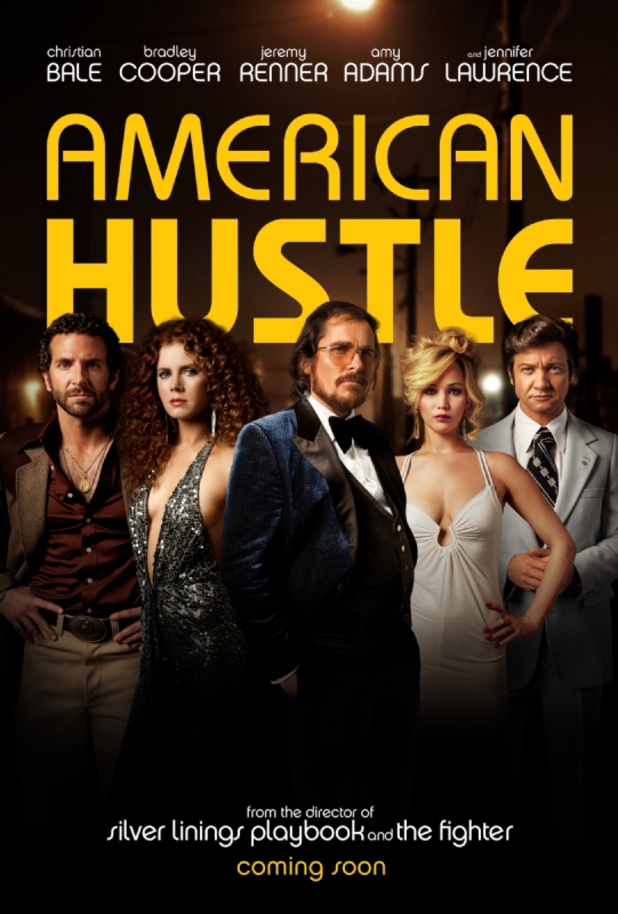 With two movies, writer/director David O. Russell has vaulted to the top of Hollywood. Previously known for his own difficult behavior, Russell’s last two films, The Fighter and Silver Linings Playbook, were both critical and commercial hits (Silver Linings made over $230 million worldwide). Both brought a bushel of Oscar nominations as well, making Russell one of the hottest directors for actors and producers. But a new side seems to have emerged over these last two movies, one less of Russell the domineering director and one of Russell the open collaborator. It feels like he’s just hitting his stride too. American Hustle is Russell’s latest and it’s sharply written, engrossing, lively, surprisingly comic, and readily entertaining.
In the late 1970s, the FBI set up an undercover sting to nail political corruption, ultimately nabbing several U.S. congressmen and one standing U.S. Senator. Richie DiMaso (Bradley Cooper) is an FBI agent who snags the perfect assistance. To catch a crook you have to think like a crook, and so Richie has strong-armed a pair of lucrative con artists into helping him. Irving Rosenfeld (Christian Bale) is a professional down to his elaborate hairpiece. He’s used to fleecing desperate people and selling phony artwork to the gullible, but he’s been too shy about making too much noise. If you stay small, you go unnoticed. Irving’s partner in crime is Sydney Prosser (Amy Adams), a kindred spirit who has reinvented her self. She and Irving are in love, and now they’re trapped by Richie to set up New Jersey mayor Carmine Polito (Jeremy Renner). The one unpredictable element is Irving’s young wife, Rosalyn (Jennifer Lawrence), who could blow up the whole operation with her careless and self-involved tantrums.
 Russell has once again given audiences one of the most entertaining films of the year, this time allowing them to participate vicariously in a con game, trying to anticipate the twists and turns and assessing everyone’s personal angle. This is a fictionalized rendition of the Abscam case (the opening text drolly says, “Some of this actually happened”) and it gives us a slew of meaty characters that have something going on. The central point elaborated in this pop crime caper is that we’re all cons, we’re all pretending, on some level, to be different people; Russell’s film just takes this notion to the extreme. Irving and Sydney are trying to escape lives of ordinary malaise, of being victims, of the more powerful dictating their options for them. With Sydney, she’s pretending to fall for Richie, but we don’t fully know which side she may choose to end up on. Richie is trying to also escape his dull life of desk jobs and lower middle-class dinners. His ambitions get hold of him, and with Irving’s aid, he catapults himself toward achieving those oversized dreams of his, never mind the ethical lapses in nabbing the bad guys. For Carmine, he’s so fiercely devoted to his community that you don’t doubt his loyalty for a second. He’s a man who sincerely wants to help others and is knowledgeable enough about how the world works, knowing he may have to grease some wheels to get the progress started. He is the most moral figure of the five main players and you may find yourself rooting for him to escape the snare closing in on him. Then there’s Rosalyn who has her hooks in Irving, looking for a sense of stability for her and her child. She’s a volatile cocktail of emotion but she knows what she needs to do to keep Irving anchored to her needs, though she’s also cognizant enough to latch onto a better provider if one materializes. Mixing and matching those characters, you have an eclectic mix of personalities clashing, many at odds with one another as far as goals, and the conflict stirred up is delicious.
Russell also attaches on his Martin Scorsese filter, delivering a freewheeling film about criminals from their wizened point of view, explaining the ins and outs of their hustle with flamboyance, style, and vigor. While the opening is a tad slow, including an opening minute watching Irving work his almost breathtaking comb over hairstyle, we plow right along into this world of hustlers and con men, learning tricks of their trade (hint: desperate people are desperate) and the tools to stay ahead of detection. We’re awash in multiple perspectives, each with voice over, a frenetic camera, and emboldened editing. It’s the Scorsese approach given studious application to the Abscam affair. It’s a great thing that Scorsese is the finest living filmmaker and devoting a two-hour-plus homage to the man’s most stylized crime pictures is a plus. Russell’s movie feels alive but also hungry, like many of his characters, restlessly searching for something. The scenes land but they don’t feel like they’re standing still; everything is propulsive in this movie. The small operation of Irving and Sydney is taken to the big leagues thanks to Richie’s ego, and the FBI’s desire for splashy headline busts, but wider exposure also exponentially multiplies the danger. Once the gambling scheme attracts the investment of the Mob, that’s when everyone has gone too far. I was clenching my fists in suspense toward the end, worried that our fictional cons may be too far in to survive.
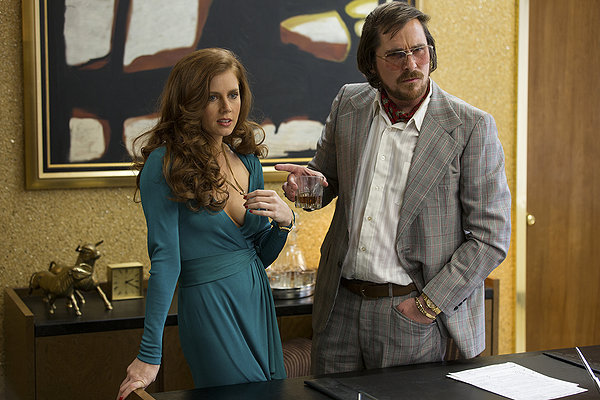 Russell hasn’t lost his magic touch with actors. His last two films have netted seven acting Oscar nominations and three wins, and the cast of American Hustle meets that same level of excellence. Perhaps even more so than The Fighter, the characters are given a very broadly comic brush, easily and routinely stepping into a carnival row of over-the-top behavior. It provides plenty of entertainment of the mishap and absurd variety, but there are also lone piercing moments of great empathy with these messy people. Mostly, the various actors all seem to be in a great syncopation, each one contributing where the other left off, building a great and compelling picture. When this ensemble is firing, it’s hard to beat. Special mention to comedian Louis C.K. (TV’s Louie) making the most of every scene he’s in as an FBI party pooper. His running gag involving a personal ice-fishing story is one of the film’s best jokes.
Bale (Out of the Furnace) is our guiding voice in this world, a flimflam man of the first order who fools maybe even himself. He’s got his own code of ethics and a heart behind that pot belly (another physical transformative performance by Bale the chameleon). He’s briskly entertaining but my only complaint is that, by being so suave and slick, he seems a tad too low-key at points given the risk involved. I know it’s part of the act, but from an audience standpoint, it makes him seem a tad too modulated. His equal is Renner (The Bourne Legacy) who is so earnest that it practically breaks your heart when he oversteps into morally murky territory.
However, Bale’s performance is compensated by the sheer craziness of the Silver Linings co-stars, Cooper and Lawrence. Cooper (The Place Beyond the Pines) is a lawman but also the film’s biggest antagonist. He gets drunk with power and the credit he’s receiving at the FBI. He’s also a deeply insecure man who is trying to style himself like Irving and Sydney as a posh reinvention. Cooper gives him a manic energy and taps back into his reservoir of eager-to-please egotism. Lawrence (Catching Fire) is the most unpredictable character. She acts on impulse, flirts with sabotage, and soaks up the spotlight she’s so rarely afforded. Lawrence is having the time of her life playing a loud, shrewish, vampy housewife who has a noticeable habit of starting house fires.
Beforehand, I would have thought that Lawrence and Adams should have swapped roles (still an interesting experiment), but having now seen the film, each suits them well. Adams (Man of Steel) is the saddest character of them all to me because she’s the bruised dreamer anxious to be anyone but who she really was. She relishes the con, more so than Irving, and ties much of her self-identity to her shyster skills.
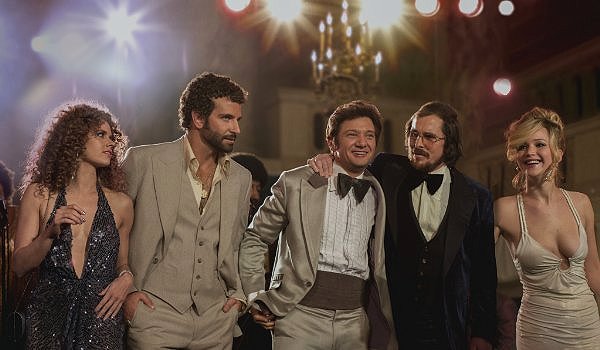 I’ve been dragging my feet writing my review and I’ve been trying to determine why, beyond, obviously, holiday-related sloth. American Hustle is readily a good movie that provides plenty of entertainment, meaty characters, and fun, but why do I keep feeling like it’s missing one undetermined ingredient? I can’t even articulate what at the moment but after having seen the film two times now, I feel like perhaps my emotional involvement was stunted. It’s a finely tuned script that delivers big performances for big-time actors, with a dandy ending that manages to dish out satisfying conclusions to its bevy of wheeler-dealers. But why didn’t I care more, why didn’t I feel more resonance by the time the end credits landed? The best theory I can surmise at this time is that we’re caught up in the con game, where everyone is pretending to be somebody else out of necessity or desire, that when it’s all over, we reflect on what a fun ride it’s been with fun characters but do we feel like we’ve gotten anywhere? I feel like I was more interested in the characters than attached to them. Again, American Hustle is still a sensationally entertaining movie and this paragraph is but a quibble, but it’s enough to thwart me from fully embracing and celebrating Russell’s film (confession: having already seen Scorsese’s brilliant Wolf of Wall Street, this could be coloring things for me with Russell’s Scorsese homage).
American Hustle is a fun ride with arresting performances, oodles of style, energy, and comedy. It’s a crime caper of the first order, easing you into this world and watching people play all sides. Even better, we’re given a volatile mix of personalities that clash, forming new and lasting conflicts, some of which could endanger the entire operation. These are interesting people to spend time with and so we can excuse the indulgences of a 140-minute movie that offers even more with this fantastic cast. Russell with a Scorsese filter is an even more improbably entertaining filmmaker. This is a crowd-pleasing sort of movie, much like Silver Linings, that doles out punchlines and payoffs with aplomb. It’s easy to go along for the ride, laugh uproariously, and then by the end sort of wonder whether it was all worth it. The emotional detachment to the characters may be a minor complaint for a film this largely satisfying, but since we’re spending so much time on our characters, I think I would have preferred something a tad more substantive by the end. It’s a great ride, with great characters and great humor, but there is a nagging concern that it may have been a better ride than a story. Regardless, American Hustle is an enjoyably alluring con that mines the absurdist fashions, personalities, and political overreach of the 1970s, painting a tale of criminals who may be the real heroes of the American dream.
Nate’s Grade: A-
Share this:

Anchorman 2: The Legend Continues (2013)
 A lot has changed in the nine years since the raucous, instantly quotable, and deeply silly hit comedy, Anchorman. Steve Carell, Will Ferrell, and Paul Rudd have all become big stars (sorry Dave Koechner), producer Judd Apatow has become a comedy empire unto himself, and director Adam McKay has gone on to helm several other hit Ferrell collaborations. As much as I loved Anchorman, and I unabashedly do, I was nervous about a sequel capturing the same magic. While Anchorman 2: The Legend Continues cannot be as good as its predecessor; my worries were mainly unfounded because this is still the funniest movie of the year. Simply put, if you’re a fan of the original, you’ll find enough to enjoy, possibly even love, with this latest chapter. The laughs-to-minute ratio is pretty high, as long as you don’t mind some scenic detours. The plot is much looser this time with several competing storylines that come in and out of focus. There are segments that could have been cut completely, like Ron’s bout with blindness, but I laughed enough that I never minded. But that ending 15 minutes is where the filmmakers drop any pretension of reality and double down on absurdity. It’s no surprise that those last crazy 15 minutes were my favorite. The cast is universally strong together, working off one another’s comedic styles so effortlessly, but the plot is very much a kitchen sink approach. I’m happy that Ferrell and McKay, co-writers again (though it’s hard to credit a collaborative improv), didn’t feel the need to recycle many jokes from the first film, reliving their old hits for fans hungry for instant nostalgia. Anchorman 2 is the same brilliantly broad comedy and absurdist dada experiment every loyal fan was hoping for. Give the gift of Ron Burgandy this holiday season and stay classy, America.
Nate’s Grade: B+
Share this:

A Madea Christmas (2013)
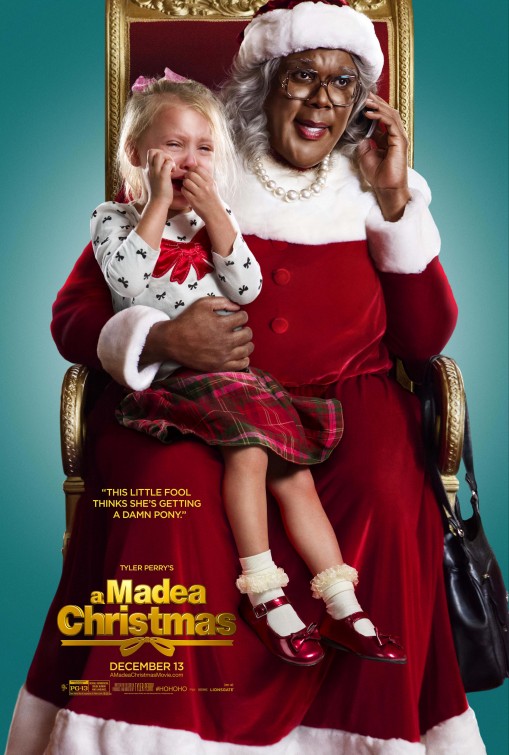 I had no plans to watch this movie, let alone in a theater and on opening night. Then one fall weekend, my pal decided to raise the stakes on our fantasy football match-up, and then Ronnie Hillman couldn’t hold on to the ball, and I lost by four points. My punishment: seeing Tyler Perry’s A Madea Christmas in the theater. My friend and critic Ben Bailey has taken it upon himself to watch and review all the Madea films, so he was ready and planning to watch the latest. I accompanied him for one magical night of holiday messages bequeathed by a large man in drag pretending to be an old woman.
Madea (Tyler Perry) is called into action to help drive her sister Eileen (Ana Maria Horsford) to Alabama. Eileen wants to surprise her daughter, Lacey (Tika Sumpter), for Christmas. Lacey is working in a small-town as a teacher. Her husband, Conner (Eric Lively), is trying to engineer a new strain of corn to help his hometown confront a water shortage. There’s just one problem. Eileen hasn’t told her mom she got married… and to a white man. Lacey is worried that the news would kill her mother since Eileen has a weak heart. So Conner has to pretend to be a farmhand while Eileen visits. Then, unexpectedly, Conner’s parents (Larry the Cable Guy, Kathy Najimy) arrive to spend Christmas with their family, but they too must get in on the act. The small town is also in trouble of losing lots of money if they cannot put together their annual Christmas Jubilee celebration. Lacey’s ex-boyfriend Oliver (JR Lemon) swoops in to offer a corporate savior, but there are strings to attached, and he’d certainly like to get closer to Lacey.
I am about to type a string of words I never thought could possibly be put together in the English language: Tyler Perry’s A Madea Christmas, also starring thespian Larry thy Cable Guy, is not altogether terrible. I feel like a weight has been lifted just admitting this. Oh, let there be no question that this is a bad movie in just about every way, but the simply bad and poorly executed outweighs the terrible. To be fair my expectations could not have been any lower, especially after suffering through my first Tyler Perry movie ever this year, the earlier 2013 film, Temptation. This was my first Madea film. Part of my other entertainment was observing my audience, the mostly full theater on opening night, and charting their reactions to Madea and my own differences in opinion. I can’t in good conscience suggest this is a reason for people to go see this movie, but there it is.
 Every actor not named Perry or Cable Guy looks like they could sure use some more direction; they’re hungry for it. Actually, Najimy (The Guilt Trip) and Larry make a good team and you’re actually pleased when they enter the story, providing an alternative to Madea’s shenanigans. I’ll credit Perry with this twist: the redneck family is tolerant from day one and compassionate human beings and the conflict focuses on a black racist against white people. Although in the year 2013, inter-racial marriage seems like a strangely dated conflict to get so worked up over. This is also the least grating Larry the Cable guy has ever been in a movie, including the Pixar Cars franchise. But these are acting professionals. The rest of the cast is filled with Pretty Bland Young People, all of who look like they’d rather be on a TV soap. Sumpter (Sparkle) in particular comes across like discount Zoe Saldana. Hey, there is a former CW star involved in this too, Chad Michael Murray (TV’s un-canceable One Tree Hill, House of Wax) and while his character is dumb, the town’s chief redneck, he’s actually fine when you can make out what he’s saying. But the best actor in the whole movie turns out to be Alicia Witt (Urban Legends, 88 Minutes) as Murray’s put-upon wife. If there’s anything approaching subtlety in this mess, it’s through Witt’s graceful performance of a woman struggling against her husband for what she believes is best for her child.
The Madea character, Perry’s most famous alter ego, can have a numbing effect that mellows your judgment of an otherwise unlikable figure. Our introduction to the matriarch is her brief stint working at a retail store. She’s unfailingly rude to customers asking ordinary questions, she’s hostile, threatens violence readily, and then, when rightly fired, creates a scene and literally steals from the store. In mere minutes, I’m left with the impression that this elderly grandmother who looks like a linebacker is just a horrible human being and should be in jail. And this impression sticks for some time, that is, until you begin to adopt a Stockholm syndrome-like appreciation for her mean-spirited bickering and retaliation. As we sit and watch Eileen act like a horrible human being, so condescending and needlessly hurtful to her unknown in-laws, the balance of most terrible shifts, and we start to root for Madea because she’s the only one who cuts through the nonsense, the only one to speak truth to Eileen’s reproachful behavior. In the end, you may come to appreciate her being there to set people straight. I still think the whole Madea character is a large miscalculation on Perry’s part, a character that’s never as funny as he thinks it is (though eight movies in, so what do I know?). The constant string of malapropisms feels like the dying riffs of a deflated improv jag. There are several scenes that involve lines given off screen as if Perry is still experimenting with the scene. In the end credits bloopers, which are also not funny, it looks like Perry’s shooting style is just to turn the camera on and say whatever. This is a character born to be a supporting player if utilized at all. Though her best asset is when here happens to be a worse character onscreen to whom she can focus her ire. So as long as Madea keeps starring in movies alongside more horrible human beings, we should be fine.
Part of my forgiveness with several of the film’s sins goes back to its inception as a Christmas fable. You see these kinds of movies all the time on TV, where the threat of not having the small town’s Christmas ceremony is going to bankrupt the whole town in an impenetrable dark cloud of holiday misery. These are the movies where plots hinge on silly things given way too much significance, and where solutions can be pulled out of nowhere and the film’s family-friendly message tied up nicely in a bow. In other words, it’s a world not meant to remotely echo our own reality. And so I ended up giving A Madea Christmas more leeway during the many, many times its onscreen actions conflicted with credulity, because it doesn’t matter. So then…
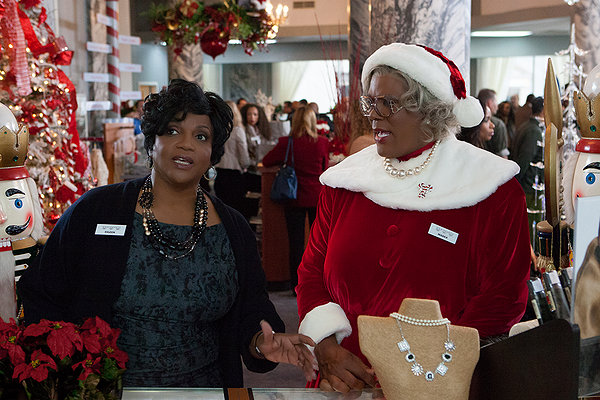 Who cares if Conner is a college-educated scientist and doesn’t know the difference between male and female cows? Who cares if Conner conducts cutting-edge bio-engineering in an open barn with, what appears to be, doing little more than pouring different liquids into different vials? Who cares that the town lawyer is so incompetent he can’t be trusted to read a contract that is all of three pages? Who cares that catching a glimpse of a husband and wife in bed, with the husband under a sheet, is immediately interpreted as Klan membership, because what other possible explanations could there be? Who cares that there is a Klan meeting that Madea accidentally walks in on, and oh yes, they all happen to be in uniform? Who cares that the town’s chief redneck bullies the mayor into firing a teacher when I’m pretty sure that duty is not under the mayor’s direct powers? Who cares that for no reason there is a Naked Gun-style tracking shot that involves passing YouTube celebrities Sweet Brown (“Ain’t nobody got time for that”) and Antoine Dodson (“Hide your children and hide your wives…”)? Who cares if a character believes saying things in public over a microphone to shame a corporation into charitable giving is tantamount to an unbreakable oral agreement? Who cares about the wanton violation of the separation of church and state throughout the film?
Let me dig into that last one for just a bit. Perry takes up the “War on Christmas” mantle and dominates his conclusion with this non-conflict conflict. Turns out the company that is saving the town’s Christmas Jubilee festivity, thus saving jobs and keeping the beleaguered town afloat, has the audacity to request a secular ceremony. First off, this entire service is coordinated and produced by the local town’s government, on government property, and already a violation of the reach of government and religion. Even their classrooms have giant wooden crosses in them. What about anyone in this town who doesn’t happen to be Christian? I suppose anybody with differing religious beliefs is just not welcomed in this part of Alabama. But the most eye-rolling part is when characters screech that some vague omnipresent corporate or bureaucratic entity is taking away Christmas or stopping them from celebrating Christmas. NO ONE IS STOPPING YOU FROM CELEBRATING CHRISTMAS. Some of us just don’t believe that it’s government’s place to advocate or do so on government property, and the courts agree. Anyway, it’s an easy target for Perry and my crowd seemed to be nodding dutifully along to the whole “keep Christ in Christmas” message. It seems like a cheap way to unify the town, and it is.
Perry has been knocking out about two movies a year since he came onto the scene in 2005, and I still don’t know if he properly knows how to adapt his skills to the screen. The tone is uneven and the comedy usually falls flat, but there are just moments that make you shake your head in befuddlement. This is the SECOND Perry movie this year where a mother has been lying to her daughter for decades about her father being dead when he really ran out on them. Perry also decides to fill his holiday film with Christmas-related wipes. One second we’ll be watching some serious drama and then a giant animated Christmas tree will fly across the screen transitioning us to another. What? I’ve never seen this many wipes in a film short of a movie that had Star Wars in its title. From an acting standpoint, I still feel like Perry’s direction is more theatrical, trying to play to the people in the cheap seats. Too many scenes feel rudderless, with assorted actors just feeding more lines to Madea so she can continue on a longer improvisation before somebody remembers to pick up the plot again. The film also ends immediately following the climax, the solution to the town’s ails, without resolution. The camera pans up above the town and cue the end credits. It’s a bit abrupt.
 Then again after directing over ten movies, many starring the Madea character, there is little incentive for Perry to change his style. His brand has made him one of the most lucrative entertainers in the industry, and he has a thriving studio of his own in Georgia, pumping out content and giving lots of African-American actors valuable experience and exposure with parts that don’t include Black Best Friend to the White Lead. Perry is a one-man industry and has legions of fans that will make any one of his movies a hit. They want what they want, and Perry is going to shovel it out to them. A Madea Christmas looks to be more of the same. It’s generally leaden in its comedy, filled with heavy-handed messages, a loose narrative built around propping up Madea improv riffs, and the character’s mean-spiritedness only really works when she’s attacking a deserving party. I’ll have to defer to Ben Bailey on where this ranks up there in the franchise (he said it may be the best), but for me, I was expecting terrible and was treated to mostly just bad. That’s a victory. Merry Christmas everyone! Hallelujer.
Nate’s Grade: C-
Share this:

Frozen (2013)
 Enough time has passed that a revival of the 1990s Broadway formula that Disney stuck so aggressively to for so long is actually a welcome treat, especially when Frozen is this good of a movie. An extremely loose retelling of Hans Christian Anderson’s The Snow Queen, we follow two sisters and princesses, one of whom, Elsa, is gifted with magic powers controlling ice. She’s lived a life of solitude out of fear and penance for endangering her sister when they were kids. Ana has no idea, having her memory wiped through magic, and so she desperately wonders why big sis gives her the cold shoulder. After another accident, Elsa lets her powers loose, refusing to try and fit into the confines of society no longer. Ana is the only one who can save her and the town. Did you read any mention of a man in that plot breakdown? While there are significant male characters, including romantic suitors, Frozen is the story of a different kind of love, a familial love between sisters. It also generously pokes fun at Disney’s admittedly spotty record of heroines giving up their dreams for the first man they meet. Even the comedic side characters work wonderfully. Josh Gad (Jobs) as a magic snowman had me cracking up throughout with his dopey line reading and enthusiastic inflections. Idina Menzel (Rent) as the voice of Elsa is enthralling, and she gets the film’s “Defying Gravity”-esque showstopper, “Let it Go.” Kristen Bell (TV’s Veronica Mars) is terrific as the voice of Ana, vulnerable, heartfelt, and a little bit goofy, and she sings great. All the actors sing great (look what happens when you hire musical theater alums). Even better, the songs are catchy, well composed, and critical to the plot, short of a silly troll tune that should have been cut. The movie also looks gorgeous, which is surprising considering I thought the color palate would be limited with the film mostly taking place in the snow. But what makes the movie truly enjoyable is how emotionally engaging it is, the somber opening twenty minutes setting up just how much tragedy and misunderstanding there is between Ana and Elsa (the melancholy end to their song killed me). Their eventual reconciliation and the selfless acts of bravery might just make you misty. Frozen is a holiday treat for families, animation aficionados, and those hoping Disney could make a film with positive messages for young girls. In a weak year for animation, this rockets to the top of 2013. Just make sure you get the Disney version for your family and not, you know, the horror movie of the same name about people stranded on a ski lift. Though that’s a pretty good survival thriller itself, so, your call.
Nate’s Grade: A-
Share this:

The Starving Games (2013)
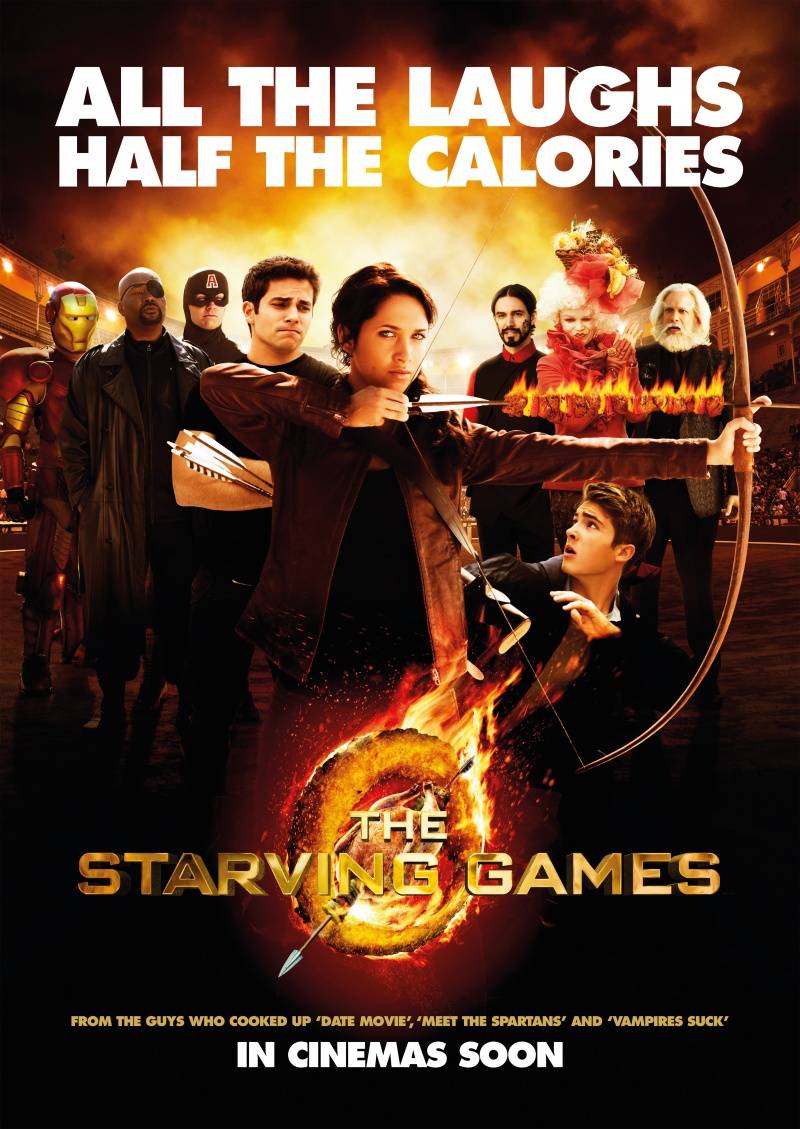 I feel like lambasting the duo of Friedberg and Seltzer has gotten to the point of beating a dead horse. I’ve been railing against their misbegotten sense of comedy (really just pointless and soon-to-be-dated pop-culture references) for years, declaring three of their terrible spoof movies as my worst film of that year. There is no love lost between me and these two men, and yet I feel the sense to restrain my ire when it comes to their latest, The Starving Games. It’s another witless comedy caper, this time using the popular Hunger Games series as its skeleton to hang its desperate jokes upon. These guys don’t know what parody is, don’t know the particulars of comedy and how to build and payoff a joke. It’s the same pattern of ineptitude that will never change. Yet while sitting through all 80 laborious minutes of Starving Games, I felt like Friedberg and Seltzer have come to the realization that the end is nigh for their spoof careers. This last movie didn’t get a theatrical release and the production values look chintzy even for them. They used to crank these lousy films out one a year; hell, in 2008 they gave us two. Now they’ve released two in the last five years. Usually they’ll pack a celebrity or, barring that, MadTV alums. Even those are absent. That’s right, even this movie couldn’t snag a MadTV alum or D-list celeb. Perhaps, as I’d long prayed, the public has grown sour on Friedberg and Seltzer’s misunderstanding of comedy and matured enough to realize that pointless references are not the same as parody. In all fairness, I did laugh two times in The Starving Games, both related to Diedrich Bader as President Snowballs. The lead actress, Maiara Walsh, displays a lot of potential. She’s a good comic actress, has a tremendous smile, a memorable face, and sturdy poise to slough through this mess. She deserves a better movie and more opportunities.
At this point, you know what you’re getting with Friedberg and Seltzer, and that’s all you’re going to get. However, I just looked online and discovered they have two movies scheduled for release next year, one a Fast and Furious parody (goody), and the other an honest to God spoof-free straight comedy. I’ll be fascinated to see what these two have to offer when it comes to non-spoof comedy, but their background fills me with equal parts dread and derisive excitement. Hey, it can’t be worse than InAPPropriate Comedy, could it?
Nate’s Grade: D
Share this:

About Time (2013)
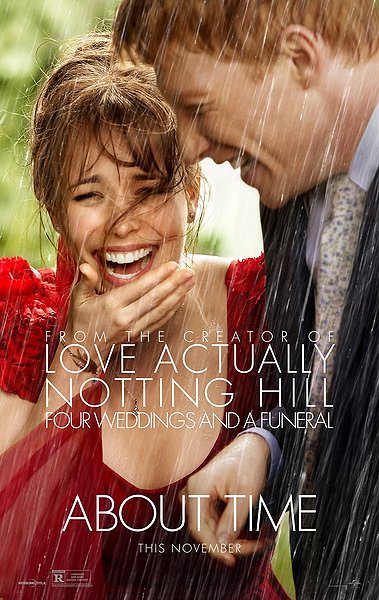 Richard Curtis is something equivalent to royalty in romantic comedy circles. The man wrote Four Weddings and a Funeral, Notting Hill, the screenplay for Bridget Jones’ Diary, and he wrote and directed Love, Actually. If you are a fan of those movies, then About Time is already at the top of your to-do list. Reportedly Curtis’ last movie he will direct (he’s only done three), this time-travel romance looks to be a break from a genre burdened by convention. If you like your British rom-coms to be mildly cheeky, hopelessly dewy-eyed romantic, filled with beautiful people, and loaded with hugs, then About Time with suffice. If you were expecting something grander from the premise you’ll walk away shaking your head at all the squandered potential.
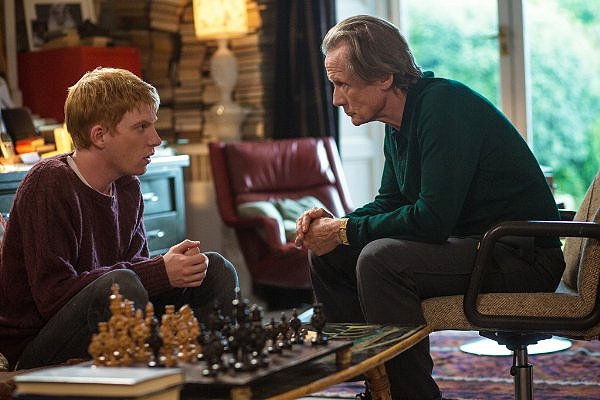
Tim (Domhnall Gleeson, son of Brendan) is a normal upper class British student when his father (Bill Nighy) sits him down to have… The Talk. This one isn’t about birds and bees so much as it is the space-time continuum. It seems that the men in their family have the unique ability to travel through time, though only during their lifetimes. All Tim need do is find a somewhat secluded, dark corner, clench his fists, and think his way back to a particular memory. Tim is able to blink out embarrassing incidents and use his foreknowledge. He meets Mary (Rachel McAdams) and sets his sights on making her fall in love with him. He corrects their courtship until he gets everything “right.”
 While eminently pleasant and suitably funny and emotional, About Time is a tale of wasted potential. I’m unsure why Curtis even brought in such an unconventional element like time travel if he was just going to play it safe. The standard, feel-good rom-com route feels the safe way through, and while it’s well done in that regard, I almost wish the film had pushed further with its concept. To begin with, the time travel restrictions are arbitrarily applied and will later be broken altogether as the film continues. When time travel is used it’s played out like Groundhog Day, with Tim immediately going back to fine-tune his actions, particularly his courting of Mary. That works, as we get used to the inertia of the edits, but that seems to be the lone focus. Once he gets the girl, Tim rarely uses his amazing gift. He’s content and so time travel is an afterthought when, as I suspect for any of us, it would be all we could think about. Tim lacks suitable ambition. I think the film would have been weightier had its lead been less idealistic. He’s a nice guy but imagine a Lothario having the power to travel back in time. He could physically cheat on his wife, go back and make sure it never happened, and live his life, having his cake and eating it too, except for the guilt. Is it cheating if it happened in an alternate timeline? Or what if he was a stockbroker committing insider trading with his past self. In fact, what if he just interacted with his older, more morally wanton self? There’s also the fact that Mary never finds out about any of this. At no point does Tim reveal his family’s incredible ability and have to atone for his actions. I’m fairly certain Mary would feel like her marital bliss could be the end product to manipulation. Alas, we’re stuck with our cute, acceptable, but mostly square rom-com.
While likeable, I didn’t think the characters themselves were sketched out well; I like McAdams and Gleeson, but I couldn’t really say much about them as people. He’s a lawyer. She works as a reader for a publisher. His family is kind of rich. And that’s about it. Even through their interactions we don’t learn much about Tim or Mary. They fall in love, and it’s nice, but the lack of characterization, besides the fact that they are cute together, kept me from fully investing in their love story. I doubt the target audience will have this same issue. I found them cute and their scenes are cute together but I need more about my main characters than a collection of cute scenes. Another nagging aspect of their courtship is that it seems too easy. Tim has the amazing power of time travel so he can fix any problem presented, but that shouldn’t stop the appearance of problems. Tim and Mary are nice people that seem to have no discernible differences, besides Tim’s leftover feelings for a first love. An audience may say they want a couple to be sweet together always. They don’t. It’s boring. We need conflict. With About Time, there just isn’t enough of it and Tim and Mary are too underdeveloped for me to pine for them.
There are loads of dangling storylines that feel like they are leftovers from past drafts. You would think wrapping up a peachy marriage early would lead to some sort of personal crossroads and sacrifice. Everything was coming far too easily for Tim, so I kept waiting for another shoe to drop late in the film, to give him the chance to undo his own personal happiness and marriage to, say, save a beloved family member. I kept waiting for some kind of greater personal stakes, but it never came. Then the movie has all sorts of dangling storylines that do not seem conceptualized. The doddy uncle who seems to be experiencing the ravaged effects of too much time travel? Not much there. They never explain him and so he is just the standard Brit com-com kooky family member to say weird things offhand. Seems like a waste of greater pathos. Tim’s troubled sister? She’s fixed in a pinch and of course it all has to do with the men she’s dating.
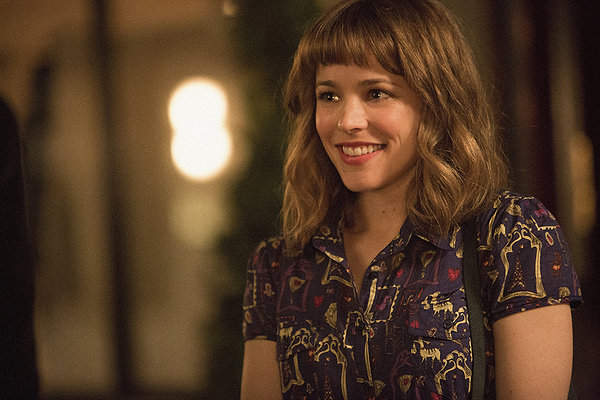 Then there are the rules, which in time travel need to be adhered to closely or else the butterfly effect ripples cascade. We’re told at first that Tim can only go backwards in time. This gives the impression that he has to live out all that extra time. So, say, if Tim traveled back two years, he’d have to live out all two years to get back to the presumed moment he began his journey backwards (writing about time travel does wonderful things with sentence tenses). So every jump back requires reliving your life. But then all of a sudden Tim can jump forward in time as well. No one comments about this. If the men in the family are reliving days and possibly years of time, then shouldn’t they be preternaturally aging, looking 70 at 50 and so on? Then there’s the fact that Tim introduces the ability to travel back in time WITH another person. This is never dealt with again, sadly, and it’s a big deal. You can bring other people with you through time. This is an amazing opportunity but it’s wasted like so many others.
However, with all that said, the movie won me over more as it transitioned into a greater emphasis on the father/son relationship, enough so that it feels like Curtis trying to get the sense of closure we so rarely get in life. I though a late trip backwards, as a young son skipping stones with his dad before he may never see him again, was quite beautiful. It got me wishing the film had given more time to explore the dynamics of father/son time travelers, a rich dramatic possibility that only reminds you how much more interesting About Time could have been.
About Time will be catnip to its target audience, namely female rom-com fans. I found it a fairly pleasant movie and its stars wholly likeable. I laughed at spots and even got teary-eyed a bit toward the end as the film’s emphasis shifted from a guy-gets-girl narrative to more of a father-son examination. The funny Brit characters do their thing, the lovely scenery remains lovely, and the declarations of love get a spit-shine. It is an effective romantic comedy that will charm and please and get its audience to swoon, but I was left feeling that its potential went untapped as it settled on a safer, more conventional story despite all the unconventional possibility. Why introduce time travel if you’re just going to take the safest route possible with your storytelling, never pitting Tim in a difficult decision he has to make, or jeopardizing his carefully manipulated happiness? There are so many possibilities Curtis had with a premise that opens up alternative histories, but it seems like he settled for another dash of more-of-the-same.
Nate’s Grade: B-
Share this:

In a World… (2013)
 Actress Lake Bell’s writing/directing debut, In a World, is a comical look inside the world of voice acting, particular in the field of movie trailers. It’s an interesting world and told with enough comic acumen by Bell (TV’s Children’s Hospital), a serious student of vocal artists. She plays Carol, a woman who breaks into the trailer voice over biz, causing ripples in a field dominated by baritone-voiced men, like her legendary father (a perfectly unctuous Fred Melamed) who holds to sexist dictum. There’s a cute romance involved with Demetri Martin, an effective subplot about Carol’s sister having an affair, and an ongoing commentary about the uncomfortable infantilized voice many young women utilize. The story is threatened by a percolating mistaken identity rom-com convention, but thankfully regroups for a third act pitting father against daughter in vocal performance, as it should be. As a director, Bell has a steady feel for her scenes, following a subdued comic rhythm that also feels eccentric without going overboard. As a writer, she gives her characters space to grow, to make mistakes, and to triumph but not without complications. As an actress, Bell is charming and a terrific lead anchor for a film filled with likeable, quirky characters. In a World is a little movie but it’s effortlessly cute, winning and pleasant in the right places, and filled with a great cast of comic actors. Beware: upon exiting the film, it is unavoidable that you will do your own fake trailer “In a world…” impressions.
Nate’s Grade: B
Share this:

We’re the Millers (2013)
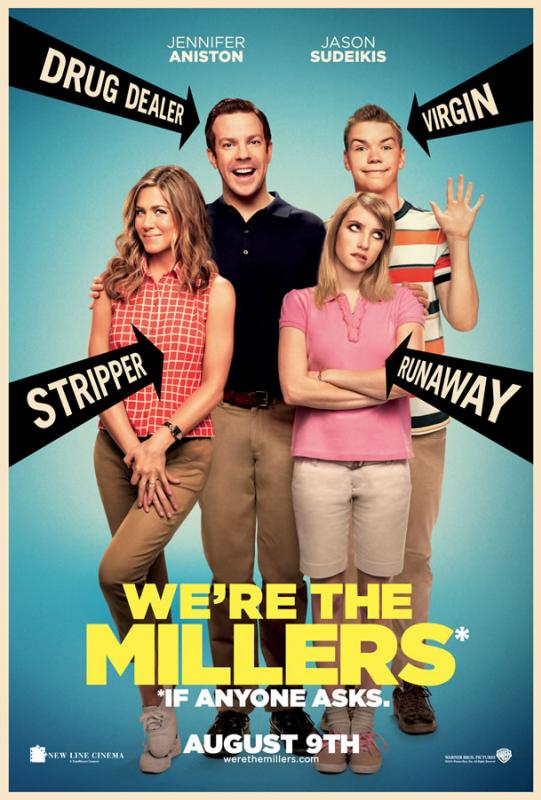 I finally caught one of the biggest surprise hits of the year, the raunchy comedy We’re the Millers, and while fitfully entertaining, mostly in its second half, I have to wonder what made this film the hit it was, despite lack of clear comedy competition. The setup involves four people (Jason Sudeikis, Jennifer Aniston, Emma Roberts, Will Poulter) posing as a model nuclear family to smuggle drugs into the United States. You’d think the difficulty would be getting back into this country, but no, it’s all about keeping their cover, especially when a vacationing DEA agent (Nick Offerman) pals around. The flimsy setup gets much better in the second half as the false family dynamics and roles are skewered, particularly an educational kissing session between siblings and mother. I can also see the markings of why audiences gravitated to this otherwise so-so comedy. It offers each member to contribute meaningfully, it gives each a lesson and a triumph, and they form a likable bond. So while the joke payoffs may whiff, there’s a character payoff to pick up the slack. Plus there’s an Aniston stripping sequence to showcase the fitness of the forty-something actress. The jokes settle for easy vulgarity a bit too often but every now and then the film surprises. Sudeikis is slyly enjoyable channeling a young smarmy smartass Chevy Chase, and Offerman is hilarious, enough to make you wish the movie followed his family. We’re the Millers reminds me of the 90s works of the Farrelly Brothers, a mixture of gross-out gags, slapstick, uninspired villains, and a dash of sentiment. We’re the Millers is an acceptable comedy, not a great one, but after its quarter billion dollar box-office riches, get ready to meet the Millers all over again.
Nate’s Grade: C+
Share this:

Blue Jasmine (2013)
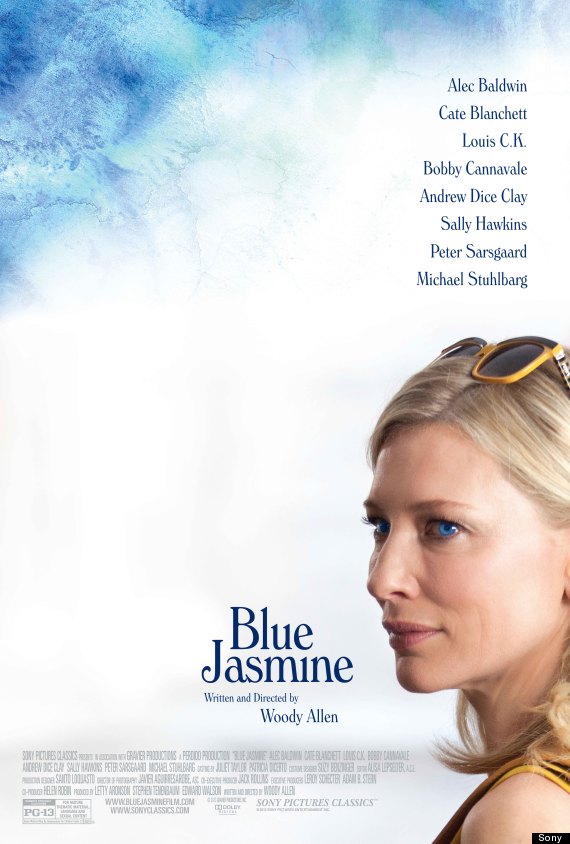 With writer/director Woody Allen’s proliferate output, cranking out a movie every year, it’s all too easy to take the man for granted. Critics will argue his halcyon days are long gone, that the man is coasting on his past laurels. Of course when you’re comparing everything to Manhattan, Annie Hall, or Crimes and Misdemeanors, well sure most movies will be found lacking, even Allen’s. And there’s no real forgiving of 2001’s Curse of the Jade Scorpion. But when Allen hits a rich topic with a capable cast, he can still produce knockout cinema, as is exactly the case with the engrossing Blue Jasmine.
Jasmine (Cate Blanchett) is experiencing a tumultuous change of living. Her wealthy husband Hal (Alec Baldwin) has been indicted for a Ponzi scheme that fleeced millions. Her posh New York lifestyle has vanished, Uncle Sam has frozen the assets that haven’t been repossessed, and she’s forced to move in with her working class sister, Ginger (Sally Hawkins), in San Francisco. Jasmine immediately has her complaints, mostly about the men that Ginger seems to date. She also tries adapting to a life she has been ill prepared for. Much like a domesticated animal, Jasmine’s social skills and pricy tastes do not have real-world transitions into her getting a job and supporting herself. She’s looking for a way to re-enter the shrine of privilege, and that it through a man of means.
 Blue Jasmine is a fascinating character study of a life of self-delusion, denial, greed, and guilt, and it is a marvelous film. Allen hasn’t done something this cutting, this precise in several years and it’s a reminder at just how skilled the man can be at building magnetic, fully realized characters, especially women. This is a rich, complex, and juicy character for an actress of the caliber of Blanchett (Hanna) to go wild with. Jasmine is something of a modern-day Blanch DuBois with a sprinkling of Jay Gatsby; she’s a woman who’s become accustomed to a luxurious fantasy world that she’s still striving to recreate, but she also is a woman who reinvented herself. As we learn in the opening scene, Jasmine left school without finishing her degree when Hal whisked her off her feet, to a world of privilege. She even changed her name from Jeanette to Jasmine at her husband’s whim. She also became particularly adept at looking the other way when it concerned her husband’s shady dealings. Surely she must have known what was happening (in the end, it’s pretty clear) but as long as her illusion of wealth was maintained then it was easy to not ask questions. Why ruin a good thing, even if that good thing is built upon ruining the lives of ordinary people? Two of those people bilked of their money were Ginger and Augie (Andrew Dice Clay), which make Jasmine’s complicity all the more troubling. Every line of dialogue from Jasmine needs to be studied and dissected, analyzing how buried is the real Jasmine.
Jasmine’s declining mental state is also given much attention and curiosity. We are watching in full view a woman go through various stages of a nervous breakdown. She’s medicating herself via booze and a cocktail of prescription drugs, but there are hints that point to something other than substances at play. She hints at undergoing electric chock therapy (does this still exist?) and she may have a touch of mental illness as well, though it’s unclear. Jasmine is given to talking to herself, reciting anecdotes and patter from previous parties with the rich and fabulous. It could be a sign of madness or it could be a desperate attempt by Jasmine to zone out, to return to that former life, to relive her former glory. Personally, I’ve done something similar, recited old conversations out loud to myself, though usually a line or so, not to the degree of recitation that Jasmine engages in. In the opening, it’s revealed that the lady she’s sitting next to on the plane, who we assume she’s talking with, is really just a bystander. She tells her husband she was confused because Jasmine was really just talking to herself. As Jasmine tries to get back on her feet, with delusions of grandeur about reinventing herself again, her world seems to be collapsing around her as she struggles to adapt to the real working world. A receptionist job for a dentist is beneath her as well as far too much for her to handle. She has one real sincere heart-to-heart where she lays out her true feelings, and it’s to her nephews in a pizza shop with no other adult present: “There’s only so many traumas a person can withstand until they take to the streets and start screaming.
An enthralling character study, but Blue Jasmine also benefits from Allen’s precise plotting, folding back into flashbacks to create contrast and revelations. There is an economical finesse to Allen’s writing and directing. Every scene is short and sweet and imparts key knowledge, keeping the plot moving and fresh. It also provides back-story in a manner that feels unobtrusive. Jasmine’s more modest living conditions with her sister are contrasted with apartment shopping in New York City’s Upper West side. The class differences between Jasmine and her sister are put on full display when Ginger and Augie visit New York. However, Allen isn’t only lambasting the out-of-touch rich elite here. Few characters escape analysis. In this story, everyone is pretending to be someone else, putting on fronts, personas, to try and puff themselves up. Once living with her sophisticated sister, Ginger starts seeing her world with new eyes, mainly finding dissatisfaction and a yearning that she could do better. She meets Al (Louis C.K.) at a fancy party and gets smitten, though he’s not what he seems. She dumps her current boyfriend, buying into Jasmine’s theory that she “dates losers because that’s what she thinks she deserves.” She tries to remodel herself into a posh, inaccurate version of herself, a knockoff on Jeanette to Jasmine. It’s a bad fit. The person with the most integrity in the entire film appears to be, surprise, Andrew Dice Clay’s character. Augie is a straightforward blue-collar guy but he has a clear sense of right and wrong, one that comes in handy when he’s able to bust people.
 This is much more a dramatic character study than a typical Allen comedy of neurosis, but I want to add that there are a number of laughs to be had, mostly derisive. There is comedy but it’s of a tragicomedy vibe, one where we laugh at the social absurdities of self-deluded characters and the irony of chance encounters. It’s far less bubbly than Midnight in Paris, Allen’s last hit, but that serves the more serious, critical tone. The class conflicts made me chuckle, as well as Jasmine’s hysterical antics and self-aggrandizing, but I was so thoroughly engaged with the characters and stories to complain about a lack of sufficient yuks. Confession: I generally enjoy Allen’s dramas more than his straight-up comedies.
Naturally, the movie hinges on Blanchett’s performance and the Oscar-winning actress is remarkable. I expect her to be a lock for another Oscar nomination if not the front-runner until later. She fully inhabits the character and lays out every tic, every neurosis, every anxiety, and every glimmer of doubt, of delusion, of humanity. She is a fully developed character given center stage, and it’s a sheer pleasure to watch Blanchett give her such life. You’ll feel a mixture of emotions with the character, from intrigue, to derision, to perhaps some fraying sense of sympathy, especially as the movie comes to an end. Blanchett balances the different faces of Jasmine with startling ease; she can slip into glamorous hostess to self-pitying victim to naiveté like turning a dial. I never tired of the character and I certainly never tired of watching Blanchett on screen.
Woody Allen has been a hit-or-miss filmmaker for over a decade, and you’ll have that when the man has the perseverance to write and direct a movie every freaking year. I had a pet theory that, as of late, every three years was when we really got a great Allen movie: 2005’s Match Point, 2008’s Vicky Cristina Barcelona, 2011’s Midnight in Paris. Well now my theory has been put to rest, thank you very much, all because Allen couldn’t wait one more year to deliver Blue Jasmine, a truly great film. It’s a tragicomedy of entertainment, an exacting character study of a flawed, complex, deeply deluded woman as her carefully calculated world breaks down. Anchored by Blanchett’s supreme performance, the movie glides along with swift acumen, doling out revelations at a steady pace and consistently giving something dishy for the actors and audience to think about. It’s funny, it’s sad, but more than anything Blue Jasmine is compelling as hell. This is one of Allen’s best films and one I’d recommend even to non-fans of the Woodman. Give Blue Jasmine a chance and you may be surprised what you feel, for the film and the woman, both complex, engaging, and memorable.
Nate’s Grade: A
Share this:

The World’s End (2013)
 The third in the Cornetto trilogy, the series of loving homages to genre films that end up transforming into those films, written by star Simon Pegg and director Edgar Wright (Scott Pilgrim vs. the World), is so self-assured, so witty, and so stylish, but it’s also the best film Wright has done. While my heart will always bleed for 2004’s Shaun of the Dead, it’s something of a revelation how everything comes together so magically in The World’s End. Every joke, every sight gag, every offhand reference, it somehow is all tied up together or has some greater narrative connection, like the names of the 12 pubs on a pub crawl reunion that discovers an alien invasion. The dialogue is packed with layered humor, with choice bon mots like, “That’s why I drink out of a crazy straw. Not so crazy now, huh?” and, “Or selective memory like that one guy… who? Oh yeah. Me.” Given the previous films, Shaun and 2007’s Hot Fuzz, I knew this would be a funny movie, but I was unprepared for how emotionally adept it is. The characters are given surprising depth and pain and anger, mostly stemming from Pegg’s screw-up alcoholic character desperately trying to relive the good times. The writing is so textured that the characters come across like actual people, and the twists and turns, while entertaining, are far more emotionally grounded than in any previous Wright movie. There is real pain and atonement for these fallible characters, which makes us root for them even more against the robot invaders. Pegg and Nick Frost are terrific again. The action is frenetic and inventive, the laughs are frequent, and the characters are so fully realized that The World’s End isn’t just the best film in a stellar, pop-culture savvy trilogy, it’s also one of the best movies you’ll see this year.
Nate’s Grade: A


 nathanzoebl
You must be logged in to post a comment.