Blog Archives
Layer Cake (2005) [Review Re-View]
 Originally released June 10, 2005:
Layer Cake may be the least intimidating name ever for a crime movie. It conjures images of bridal showers, cooking shows, and birthday parties. It does not necessarily bring to mind thoughts of gangsters, assassins, drug trafficking, and the seamy underbelly of London’s criminal underground. Unless you’re watching some really awesome cooking show I don’t know about. The “layer cake” in question refers to the hierarchy of criminals. This isn’t unfamiliar territory for Matthew Vaughn, who produced Guy Ritchie’s Lock, Stock, and Two Smoking Barrels and Snatch. This time it’s Vaughn sitting in the director’s chair and the results are exceptionally entertaining. Layer Cake is a cinematic treat.
Daniel Craig (Road to Perdition) plays our untitled lead, referred to in the end credits as “XXXX.” He’s a cocaine dealer but not a gangster by any means. He wants to make his money, not step on any important toes, and then walk away on top and without any gaping holes in his body. Craig is summoned by his boss Jimmy (Kenneth Cranham) and given two missions, whether he wants to accept them or not. The first is to relocate the missing daughter of a very powerful friend of Jimmy’s. The second, and far more dangerous job, is to secure a package of millions of stolen ecstasy pills and make a profit. Complicating matters is the angry Serbian mob that the pills were stolen from. They’ve dispatched a deadly assassin known as Dragan to track down their stolen drugs and kill anyone involved. Craig is left to juggle the investigation, find a buyer, stay ahead of Serbian hitmen, get some time in with a hot new girl, and all the while keeping his higher-ups content enough not to kill him themselves.
 Layer Cake should be the film that makes Craig the star he so rightfully deserves to be. This man is a modern day Steve McQueen with those piercing blue eyes, cheekbones that could cut glass, and the casual swagger of coolness. Craig grabs the audience from his opening narration as he explains the ins and outs of his business. We may never see Craig sweat but he still expresses a remarkable slow burn of fear so effectively through those baby blues. He’s in over his head and the audience feels his frustrations. In an interesting character twist, when Craig does resort to killing, he’s actually tormented and haunted by his actions.
As with most British gangster flicks, there are a batch of colorful characters that leave their mark. Dragan (Dragan Micanovic) is a wonderfully enigmatic ghost of an assassin always one step ahead of Craig and the audience. Morty (George Harris) and Gene (Colm Meaney) add heart and bluster as Craig’s trusted right hand men. But the actor who steals the whole film with a malevolent glee is Michael Gambon (Harry Potter and the Prisoner of Azkaban). He plays Eddie Temple, the man behind the men behind the scenes. Gambon delivers the harshest of speeches with a velvety pragmatic calm. We don’t know what runs deeper with Eddie, his tan or his scheming.
Sienna Miller plays the thankless love interest to Craig. She’s pretty, sure, but there isn’t much acting ability on display in Layer Cake beside some smoldering glances. We never really know what Craig sees in her besides being another cute blonde to choose over. Miller isn’t alone in the “underwritten character department.” Layer Cake is crammed with secondary characters that pop in and out when it’s necessary. It’s not too annoying but it does mess around with an audience?s ability to follow along coherently.
Layer Cake is not one of the slick, whack-a-mole ventures Ritchie has given us (pre-Madonna). No sir, this is a brooding, serious and nearly terrifying look at the old adage “crime doesn’t pay.” Very few crime centered films express the day-to-day anxiety of just being a criminal. Jimmy reminds Craig that he’ll never be able to walk away because he’s too good an earner for his higher-ups. In Layer Cake, you can get killed for being too greedy, being too careless, being too good at your job, and even just being in the wrong place. Eddie sums it up best whilst describing Faust: “Man sells his soul to the devil. It all ends in tears. These things always do.”
 Vaughn has a polished visual sensibility that doesn’t overwhelm the viewer. He keeps the camera fluid and steady with a minimal amount of cuts. A nifty opening scene involves an imaginary drug store (stocked with pot, cocaine, and the like) melting into a real drug store (one hour photo, impulse items at the register). When the tension does mount Vaughn knows just how to turn the screws. A late sequence involving a chase between the SWAT team and our batch of criminals had me on the edge of my seat. For a first time director, Vaughn also has great patience. He doesn’t rush his storyline and he doesn’t suffocate his movie with visual flourishes. He also has a great deal of faith in his audience’s intelligence. This isn’t as lively as Snatch or Lock, Stock, but that’s because Vaughn’s film is also much more serious and dangerous.
This is an intricate and gripping film but it might be a little too complex for its own good. Twists and double-crosses are expected in this genre, but writer J.J. Connolly has so many characters running around and so many hidden agendas that it’s nearly impossible to keep track. Some of the subplots and back stories add very little like the inexplicable “Crazy Larry” flashbacks. I left the theater still confused about plot points but refreshingly satisfied nonetheless.
Layer Cake is the most thoroughly exhilarating time I’ve had at a theater this year. This pulpy daylight-noir caper is full of memorable hoods, plenty of twists and turns, and a star making performance by the steely-eyed wonder that is Daniel Craig (rumored to be the next 007, though in my heart I’ll always root for Clive Owen). Fans of Ritchie’s frenetic gangster flicks should be entertained. Anyone looking for a clever and exciting potboiler that treats violence and crime seriously should start lining up immediately. If you’re suffering from the cinematic wasteland that 2005 has shaped up to be so far, then have yourself a generous helping of Layer Cake and thank the Brits.
Nate’s Grade: A
——————————————————
WRITER REFLECTIONS 20 YEARS LATER

Back in 2005, Layer Cake was really a proof of concept movie for many items. It was proof that someone could take a Guy Ritchie-style crime pot boiler with colorful Cockney criminals and plenty of twists and unexpected violence and play it straight and serious. It was proof of Matthew Vaughn as a director, who had previously served as a producer of those early Ritchie films. It was proof of Sienna Miller as the next It Girl, a proclamation that carried her for years despite mixed results with the movies. Most of all, it was proof of its lead, Daniel Craig, as being so suave he should be considered the next possible 007. James Bond producer Barbara Broccoli has gone on the record saying this movie is what officially put Craig on their radar and got him the gig that has defined his career trajectory. Twenty years later, Layer Cake is still a potent and smooth little thriller that glides right by on its intelligence, sex appeal, and Craig’s charisma
I find myself agreeing with so many of my original points from 2005 so I don’t want this re-examination to be merely a “ditto” without some additional critical analysis. Even though it’s based on a book by J.J. Connolly, who adapted his own novel, the movie feels very much in the company of those early Guy Ritchie movies that Vaughn began producing. Ritchie burst onto the international scene with 1998’s Lock, Stock, and Two Smoking Barrels, a brash and stylish crime comedy with outlandish characters, violence that alternated between visceral and slapstick, and twisty plots that often left your head spinning. It was like a mixture of Tarantino and a more lewd Looney Tunes cartoon. While the early Ritchie films, including my favorite, 2001’s Snatch, have their share of characters with grounded stakes, the reality is exaggerated, with the appeal being these grandiose personalities butting against one another. No one would confuse one of these Ritchie movies with a realistic portrayal of London criminals. They’re fun. What Layer Cake does so well is take a Ritchie-esque premise with plenty of low-life screw-ups and hardasses and plays it straight. It takes this middle-level drug distributor and makes his life less a comedy of errors and more a never-ending anxiety attack about how he can become undone from any angle. The movie sure doesn’t make a life of crime look appealing.
 Craig’s character, named XXXX, is a smart guy just trying to keep his head down and do his job. The problem for him is that he’s too good at earning money for bad men who like money. In this life, you can get killed for any number of reasons, some of them logical and pragmatic, and others rash and illogical: not being a good enough criminal, being too good of a criminal, thinking he’s too good of a criminal, someone else wanting to make a name for themself and establish cred by going after you, dumb luck, etc. XXXX has his rules and standards to live by to ensure he limits his risk, but when your profession is literally dealing with money and unscrupulous types, there is no absolute zero in that risk. He may be smart and measured but he’s also working with plenty of stupid people who don’t know they’re stupid, and then you mix in vice and avarice with that, and it can be a combustible cocktail of dangerous idiots intruding on whatever peace and distance XXXX has cultivated for himself. In the movie, XXXX is burdened with competing tasks. He’s been offered a stash of stolen ecstasy pills, and his slimy boss wants them sold no matter what, but the assassin hired to retrieve them definitely wants them back too. Either way, our lead character is endangering himself by making someone unhappy. He’s dropped into the sticky morass of power plays and competing interests that will challenge his intended neutrality.
I think the ending for Layer Cake is brilliant and very fitting. For almost two hours, we’ve followed XXXX through hell and back and it looks like he’s found a way out, siding with the right hoodlums and eliminating different risky angles needing to be resolved. He’s kept to his stated retirement of not going out on top and instead going out while comfortable and capable. He’ll leave the business to his associates because he’s tired of looking over his shoulder. And as he walks out with his pretty lady (Sienna Miller) around his arm, that’s when he abruptly gets shot by Sidney (Ben Whishaw – yes, the future James Bond is killed by his future Q). This isn’t some tough or some hotshot; he’s a lanky nephew to another gangster, and he hasn’t exactly shown anything close to a killer instinct. In his brief appearances beforehand, he’s seemed out of place, like a latchkey kid who wandered into a criminal enterprise and everyone has been humoring him for good measure. The only thing he has is… was… the blonde girlfriend (Miller) who’s clearly not interested in him. After playing it so cool and calculated, he’s taken out by this twerpy nobody because he had the audacity to try and steal “his girl.” Even if you are the smartest guy in the room and you’ve made all the right moves, all it takes is one twitchy trigger finger and one grumbling grievance to take you from living to dead. Our hero is denied his happy ending driving off into the sunset with his modest sums of money and his newly acquired pretty woman. Try as he might, XXXX, gunned down mid-sentence as he reveals his real name, becomes just another unfortunate corpse.
 Vaughn’s skilled direction immediately made him an attractive target for bigger studio fare. He was originally attached to direct 2006’s X-Men: The Last Stand but left weeks before filming for stated “family reasons.” In 2023, Vaughn revealed that he left because of the tight production timeline, going from pre-production to a complete movie in under a year, but it was really the shady behavior of Fox execs that pushed him out the door. Apparently one exec put together a fake script to lure Halle Berry back, including scenes of her character Storm saving vulnerable children in Africa to appease Berry, scenes that were never intended to ever be filmed. It was a ploy to trick her into signing onto the film. After two more geek-friendly adaptations, 2007’s Stardust and 2010’s Kick-Ass, Vaughn was courted yet again back to the X-Men franchise. Once again there was a tight one-year turnaround deadline but Vaughn stayed on board and delivered what I consider to be the best X-Men movie, 2011’s First Class. It revitalized the declining franchise, enough so to lure Bryan Singer back. Singer had departed in 2005 to make his Superman movie, opening the door for Vaughn’s first foray with the world of mutants. Now that Vaughn had reinvigorated the franchise with a new cast of younger actors, Singer was ready to take it back to helm 2014’s Days of Future Past. Vaughn was rumored as one of the potential names to make the first new Star Wars movie in ten years. Instead, he made his own action franchise with 2015’s Kingsman. Granted it was based upon the comic by Mark Millar, the same author behind Kick-Ass and Wanted, but it was Vaughn’s signature all over this new spy franchise. Vaughn had constructed a new Bond for a new age. At this point, I was dubbing Vaughn the best working director to use studio money. Each movie was different but made with style and panache with great structure and payoffs. And then…
I think he got so enraptured with the world of Kingsman that he’s now trapped himself creatively. In the ensuing years, he’s made one Kingsman sequel and one prequel, both of them varying degrees of underwhelming, and another action spy-thriller that might as well be called Kingsman-lite, 2024’s Argyle. For an artist that was dabbling with so many genres beforehand and finding sure footing and a way to make his stamp within each, he now feels stuck, finding diminished returns with each iteration of yet another swanky spy action movie with snark. I’m not even an Argyle hater, a movie that appeared on numerous Worst of the Year roundups but one I consider perfectly fine as a TNT Sunday-afternoon kind of chill entertainment. I loved Kingsman when it was originally released in 2015, but looking back, it appears like this was Vaughn building his own prison brick by brick. Maybe he was too preoccupied with turning it into a franchise with many tendrils stretching all over. I truly wish Vaughn would hop genres once again and leave the realm of spy action to others at this point. Maybe he needs a return to something straight akin to Layer Cake without its tongue already so firmly implanted in-cheek.
 But this movie will forever be known as the movie that secured Craig as the next James Bond. He had been working in movies for a while with some high-profile supporting roles like 1998’s Elizabeth and 2001’s Tomb Raider and 2002’s Road to Perdition, but this was a platform that showcased the suave presence of this actor like nothing before. He was so magnetic and a perfect choice for this character, and just listening to him try and talk his way out of jams with so many loose canons was as impressive and entertaining as any high-stakes chase or shootout. These sort of star-making roles are rare and even more rare when they do indeed prove to be star-making. It becomes an artifact to analyze what qualities people with money and influence were won over by. It’s interesting that Craig’s character is so anti-guns and wanting nothing to do with the more unsavory and violent aspects of his profession. When he does hold a gun for the first time, one he compliments as being “really pretty,” he holds it out and strikes a pose, dashing through a hallway like he was James Bond, and it’s just especially funny with hindsight.
The movie is also filled with familiar faces that would become even more familiar over the years, including Tom Hardy, Sally Hawkins, Whishaw, Burn Gorman, and some Vaughn regulars, alums from Snatch and Lock, Stock, Jason Flemyng and Dexter Fletcher. Flemyng became Vaughn’s lucky charm, appearing in his first four movies in some capacity, much like Greg Grumberg does for J.J. Abrams. There you go, an SAT-style relationship sentence I never thought I’d write: Jason Flemyng is to Matthew Vaughn as Greg Grumberg is to J.J. Abrams. My original review in 2005 highlighted Michael Gambon as the biggest honcho, the top tier of this criminal layer cake. I wrote: “He plays Eddie Temple, the man behind the men behind the scenes. Gambon delivers the harshest of speeches with a velvety pragmatic calm. We don’t know what runs deeper with Eddie, his tan or his scheming.” He’s so good at being so malevolent without ever having to raise his voice or anything outwardly hostile.
 This movie has a personal factor for me because I was so highly anticipating it that, during a trip through the British Isles with my father in May 2005, I bought it on VHS overseas. I naively thought that while DVDs had different regions to thwart piracy, that VHS tapes would be rather universal considering it’s just tape being read. I got home, popped it into my American machine, and the thing wouldn’t work. This was one of the biggest souvenirs I got for myself during that trip, which my father wanted to embark as something memorable we could share together, and now that he’s recently passed, I do think back on those experiences and part of me wishes my 23-year-old self would have been more actively appreciative. So now with Layer Cake, part of me will always think about that VHS tape, and that trip, and my father, and it will make me miss him more, but I am glad we got to share that experience.
Ever since I’ve been doing this re-review project, now going on five years, it’s a relief to see my twenty-year-younger self having written a smart and articulate review, especially when I mostly agree with it even so many years later. Again, I find myself nodding along to just about everything I had written with my past critique, from singing the praises of Craig and the general examination of day-to-day anxiety, to shaking my head at the underdeveloped Sienna Miller character served as little more than a trophy for our hero to take with him into retirement. It still is a movie overstuffed with characters and storylines and antics that probably could have been trimmed around the edges, but that same burdensome feeling connects with the emotional state of our lead, the anxious feeling of having too much to do and not enough time to achieve it, so in a way, it’s excusable. I don’t know if I think the movie is quite at the same level, calling it “thoroughly exhilarating” seems a bit much, but Layer Cake is still a movie that proves fresh even twenty years later, and one worth a second helping.
Re-View Grade: A-
Share this:

Women Talking (2022)
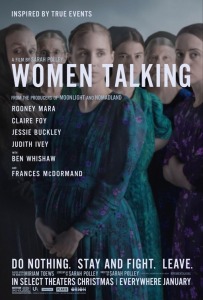 The hard-hitting Oscar-worthy drama Women Talking could have been titled Twelve Angry Women, but with the necessary subtitle: But They’re Very Justified in Their Rage. It is, as the title suggests, a movie almost entirely about women talking in one central location, enough so to feel like a stage play captured for the screen. However, the reason these women are assembled is heartbreaking, infuriating, and eminently engrossing. Women Talking demands to be heard.
The dozen women have gathered to debate the future of their participation in their community, a closed-off Mennonite coalition. They are victims of heinous sex crimes and general repression, debating between staying and fighting and abandoning their way of life. These women are talking about their own agency and what their collective response will be to the great wrongs that have prevailed upon them. It’s not just that the women of this community have been preyed upon by predators in their midst, their trauma has been dismissed as ghosts and devils until literal men were literally caught and apprehended. The next part is even more galling, as the guilty men will be returning back to the community and the women are expected to forgive the predators and go back to life as it has been. Except how exactly has life been for the women of this small community? The assaults have been going on for decades, enough that many of the children are the byproducts of their abusers. One grandmother is brought to tears that she should have done more to protect her adult daughter, herself married to an abusive man. The systematic nature of this abuse is the core of their deliberation. Can they stay and reform a broken society from inside, or is the best hope radically breaking away and starting anew without the men?
 The movie also serves as a debate over the capacity for grace and forgiveness, reminding me in subject as well as the approach of last year’s equally hard-hitting and equally spellbinding indie, Mass. I found it especially insulting that these women are expected, by the male leaders, to simply forgive and forget, to shuffle back to subservience. It’s a larger philosophical discussion over the nature of grace and accountability. It would be showing grace to these men to forgive them when they do not deserve it, and surely the male leaders would underline this point in a comparison with their religious text, akin to Jesus forgiving those who crucified him. However, if forgiveness is not the catalyst for reform and reclamation, then it’s just another empty gesture that maintains the status quo of abuse going unpunished and the abusers being protected. It’s easy to make larger connections to larger societies protecting predators through conditioned silence. The entertainment industry has been rife with bad men, and yes it’s typically men, behaving criminally and being protected by their position, and it might be easy to make connections with Women Talking and She Said, the fact-based take-down of Harvey Weinstein. Are these people worthy of forgiveness or is the patriarchal system of power (women aren’t even allowed to learn to read and write in this community) beyond salvaging? Within minutes of watching, I was already shaking my head and saying they should burn it all to the ground.
Women Talking is powerful and somber without being overly grave to the detriment of the material. It’s never taken anything less than serious, but the subject matter is handled very sensitively and even rated PG-13. Under the careful guidance of writer/director Sarah Polley (Away From Her, Stories We Tell), the film doesn’t soft-pedal the abuse these women have suffered but it doesn’t wallow in it either, getting overloaded with sordid details. The screenplay unfolds key pieces of information over time, allowing the audience to piece together a fuller picture (I didn’t even realize the family connection of the dozen women until an hour in). It would be easy if the only response explored was one of unfathomable rage, best exemplified by a stirring monologue where Claire Foy (The Crown, First Man) rattles off what she will do to protect her young daughter including murder, including vying with the Almighty, and even including spending eternity in hell. It’s easy to be all teeth-gnashing vengeance and fury, and entirely deserved considering these women are already looked upon as second-class citizens. However, Polley aligns her movie as a debate between anguish and hope and the difference between false and real hope. Is it real to hope that these men will change? Is it real to hope that August (Ben Whishaw), a college-educated child of a former outcast, can break the cycle? By the end, the main feeling I had was catharsis, that these women can chart a new, better path.
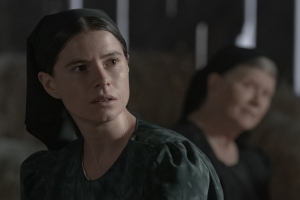 Given the heavy subject matter and the ensemble nature of the production, you would be right to assume that this is an actors’ showcase. The three biggest roles belong to Foy’s Salome, Rooney Mara’s Ona, and Jessie Buckley’s Mariche, each presenting a different perspective. Salome wants to stay but mostly as a means of collecting vengeance for her and her daughter. Mariche wants to forgive the men because, if they do exile themselves, they are told their immortal souls will be denied the kingdom of heaven. It also happens that Mariche’s alcoholic husband is one of the accused men returning. Ona is pregnant with her attacker’s child and questioning which setting would be best for her, staying with what she knows or risking a new life, for better or worse. Foy and Buckely (The Lost Daughter, Men) each have a signature monologue opening up their character perspective and each of them cinches it (call it their “Oscar clip moments”). Mara (Nightmare Alley) has the more contemplative and subdued role, which makes it less showy. Her character is the one who questions the most the value of forgiveness, and of course whether it counts when forgiveness is forced with the threat of eternal damnation. If Salome is the movie’s fury, then Ona is a reflection of begrudging hope, and Mara succeeds with a noble sense of grace.
There are two minor quibbles I have with Women Talking that hold it slightly back for me, and it’s not the locked-in setting making the proceedings feel like a staged play. Polley uses visual inserts and cutaways to devastating effect to highlight the women’s trauma, from awakening to the aftermath of assault to miscarriages, notions to heighten the visual storytelling potential of the medium without digging into exploitation and losing the tasteful tone. The directing even takes a few cues from Sydeny Lumet’s work from 12 Angry Men. One critical aspect that holds back the movie, again only slightly, is that the characters tend to feel a little more like various points of view rather than finely developed characters. Given the nature of the debate, there’s a lot of ground to cover, and it’s a smart storytelling move to coalesce. It just slightly limits some emotional engagement; it’s still there because of the skill of the actors and every drop of empathy they rightly earn, but the characters aren’t as well realized as they could have been. This can also be simply because we’re dealing with a dozen characters to try and supply enough material for. Even in 12 Angry Men, not every juror is going to be given equal importance (nobody cares about you, juror #7, so sit down). I reflect back to Mass, an excellent 2021 movie that you should seek out, and how personable and in-depth those characters came across over their feature-length sit-down. It also helps that it only had four characters to balance. The other minor criticism I have is the overemphasis the movie places on a long-in-the-works romance between Ona and August, who maybe has more screen time than maybe any woman. For a movie dealing with the sexual and emotional trauma of women and them taking account, I’m left uncertain about the amount of time we spend on an unrequited romance. It’s not like Polley is elbowing in wacky rom-com material, as it all likewise carries the same subdued tone. I just don’t know if this movie needs a romance elevated during its otherwise 100 plaintive minutes.
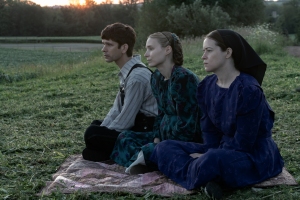 Women Talking is an urgent movie that every person should watch. The central dynamic is radiating with dramatic potential, and the actors are uniformly excellent, even the youngest actors handling some very touchy material. Polley’s direction is stately and subdued without removing any of the surging emotional power inherent in her drama. I’m overjoyed that Polley has returned back to filmmaking as she hasn’t made a movie in ten years. It’s a triumphant return for Polley, one that will likely have her vying on the biggest stages come awards season. Women Talking is timely and, unfortunately, also timeless. By the end, you’ll feel slightly exhausted but better for it, like the euphoria that comes after a good cry and you feel like, having pushed through, you’ll be better for it.
Nate’s Grade: B+
Share this:

No Time to Die (2021)
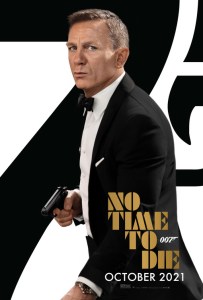 One cannot talk about No Time to Die without talking about finality. I’ll try and dance around significant spoilers but the movie by design is meant to serve as the capper to the Daniel Craig era filling out the world’s favorite martini-drinking British secret agent. I thought that 2015’s Spectre was the swan song for Craig as it brought back a famous franchise villain Blofeld (Christoph Waltz) made the man Bond’s secret half-brother, and it tried to explain how every bad thing that seemed to befall Bond was the machinations of an evil conspiracy, and then it literally ends with Bond driving into the sunset in his classic car with his girl (Lea Seydoux) by his side. It felt like the end, and it felt very much like everyone was just done and tired. And then the Bond producers wanted one more shot, or more likely one more lucrative franchise entry, to send an even older, battle-tested Craig on his way. I was wary of another Spectre-like entry, one that was tying back to the elements of decades-old for empty homage. Does anyone really care that the villain is meant to be Blofeld who means next to nothing to audiences in this era? After watching all 160 minutes of the longest Bond on record, for an actor who has portrayed 007 for 15 years, I have to say that No Time to Die is a terrific action movie and a welcomed second chance at a sendoff for the modern era of Bond that has gone through great artistic rebirth.
Bond’s cozy retirement is short-lived. Spectre agents have found him and Madeleine (Seydoux) and now Bond is forced to ship off his love for her safety. Years later, Lyutsifer Safin (Rami Malek) is determined to take down the last vestiges of the Spectre organization, the same group responsible for murdering his family. Bond is recruited by the newest 007 agent, Nomi (Lashana Lynch), to help MI-6 locate a kidnapped scientist with a powerful nanobot poison that can be genetically targeted to a specific person. Bond agrees especially once he realizes that Safn and his dangerous organization are targeting Madeleine, who has a big surprise of her own.
 As an action movie, I will argue that No Time to Die is better than 2012’s Skyfall, the Bond film that is widely seen as the high point of Craig’s tenure but one I find overrated. Director and co-screenwriter Cary Fukunaga, the second director ever given a writing credit for a Bond film, has crafted a beautiful movie with a real sense on how to showcase the majesty and suspense. Nothing will likely rival the superb cinematography by the legendary Roger Deakins on Skyfall, but this movie gets as close as you can get. It’s a remarkably beautiful looking movie. I mean that not just in the exotic locales and scenic vistas but simply in its depiction of action. The visual arrangements are noticeably several levels higher in quality, elegantly composed and lit to make each scene so pleasing to the eyes even before the information of the scene translates. Fukunaga (True Detective) frames the action in clear shots and clean edits so the audience is oriented with every shot and each patient edit point. For an era that began by trying to adopt the Paul Greengrass-style of docu-drama edits popularized with the Bourne sequels, it’s quite a welcomed change. I appreciate that action directors have creatively gone more in a direction of longer takes, wider shots, and a conscious effort to showcase the ingenuity and skills of its action choreography. Let us enjoy watching the masters of action operate at their highest level. Fukunaga understands this, and while the action might not be the best in the series, it is lovingly orchestrated and displayed.
There is a delightful mid-movie set piece that deserves its own attention mainly because of how actress Ana de Armas (Knives Out, Blade Runner 2049) steals the show. She plays Paloma, a CIA agent working in coordination with Bond, and the two of them wreak havoc across a Cuban neighborhood while wearing their finest evening wear. She immediately leaves a favorable impression and struts her stuff while operating heavy machinery with confidence. This part feels the most aided by co-screenwriter Phoebe Waller-Bridge’s contributions. Craig personally requested that Waller-Bridge, best known for award-winning TV like Fleabag and the first season of Killing Eve, come aboard and help polish the script, including characterization and dialogue. This sequence feels the most in keeping with her past spy thriller work and penchant for strong female characters who are meant to take the lead. de Armas is so memorable, and her segment so self-contained, that it feels like a backdoor spinoff to set up her own character’s franchise, and one that I wouldn’t hesitate to watch.
 If you thought Spectre was getting convoluted with how it tried to bend over backwards to explain how one man and one villainous conspiracy were manipulating all of Bond’s many miseries and setbacks, well then things are going to get even worse for you to keep up with. I’ll credit returning screenwriters Neal Purvis and Robert Wade, who have been with the storied franchise even before Craig’s 2006 debut, with attempting to make the continuity matter for a franchise that often throws up its hands at continued emotional stakes. By stretching backwards with ret-cons and added flashbacks, every new Bond movie tries to better evaluate the previous ones including the poorer movies, like Spectre and 2008’s Quantum of Solace. It’s like saying, “Hey, you didn’t like those bad guys in that movie? Well, these are the real bad guys,” or, “Well, maybe you didn’t like them, but their heinous actions gave rise to these new bad guys.” However, a consequence of continuing to add further and further clandestine machinations, and spiraling consequence from those machinations, is that Bond has now become a tangled web that is more convoluted without offering much in the way of payoff. I don’t think much more is gained introducing a new villain saying, “It was me all along,” when we don’t have an established relationship or interest with these new villains. Imagine introducing the Emperor back in Episode 9 of Star Wars and saying he was secretly behind everything… oh wait.
There are also benefits to this approach and No Time to Die crafts a sendoff unlike any other final entry for a Bond actor. This is a franchise going back sixty years, but the 007 brand has endured because no one actor is bigger than the brand. The franchise is regularly resetting with each new addition. The hyperbolic bombast and tongue-in-cheek frivolity of the Pierce Brosnan years (1995-2002) was replaced with a more grounded, gritty, and psychologically wounded Bond, made even more so by giving him personal attachments and then taking them away. I would argue this decade-plus with Craig (2006-2021) has involved the most mature and personal movies of the franchise;s history. It’s fitting then for the final film to pay service to that elevated take on the character. If you’re treating the secret spy as more of a person than a suit and a gun and a wisecrack, then that character deserves an ending that stays true to prioritizing more human elements of the character. To that end, No Time to Die works as a final sendoff, and I feel pretty confidant saying Craig is officially done now.
After a year and a half of delays from COVID, as well as its parent company, MGM, being bought for billions by Amazon, we finally have the final Bond movie in Daniel Craig’s successful run, and it’s a worthy finale for an era of the franchise becoming relevant again. I don’t know if that many people are emotionally attached to the character, likely more so just the nostalgia and the franchise, but if ever you were going to tear up from a James Bond thriller, this would be the one. It’s an exceptionally strong visual caper, with smooth and steady direction from Fukunaga, and while overly long and convoluted and a dull villain, it comes together for a worthy and celebratory conclusion that stands with the best of Bond. I’ll still cite 2006’s Casino Royale as the best Craig Bond, and one of the best ever, but No Time to Die is a solid second-place entry, and it does what few other Bonds ever could: fitting finality. Until, naturally, the popular series inevitably reboots with the next handsome leading man sipping a signature vodka martini (shaken, not stirred).
Nate’s Grade: B+
Share this:

Mary Poppins Returns (2018)

I have no real investment in Mary Poppins as a character or the original 1964 movie, so I was expecting to walk out of Mary Poppins Returns with a shrug, likely finding it middling at worse. I was unprepared for what I endured, and endured is the accurate statement. Mary Poppins Returns is an insane movie and one of the most maddening and painful experiences in a theater I’ve had all year, and no number of spoonfuls of sugar will help this bad medicine go far enough down.
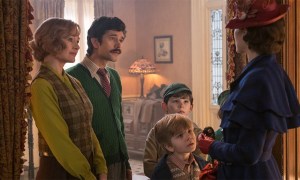
It’s the “Great Slump,” a.k.a. Depression, in London and the Banks children have grown up. Michael (Ben Whishaw) has three young children of his own and he’s struggling to maintain his job at the bank and be the father they need in the wake of his wife’s death. His sister, Jane (Emily Mortimer), has moved into help but it’s still not enough. Enter that famous nanny, Mary Poppins (Emily Blunt), who takes it upon herself to watch over the children, help them through the grieving process, and explore the outer reaches of London with some help from some friends, chiefly Jack (Lin Manuel-Miranda). The Banks family is in danger of losing their home to the head of the bank (Colin Firth) unless they can find a specific title of shares that will grant them a wealth denied their adult lives.
This movie felt like it was eight hours long and I had no sense of how much time was passing, mostly because of its misshaped structure and general lack of pacing. Mary Poppins Returns feels like it could have been renamed The Tony Awards: The Movie. It’s one unrelated song-and-dance number after another, rarely building from the previous one, and so it feels like an eternal televised awards show that just shuffles from one set piece to the next, never providing a sense of direction or finality. Things just happen in this movie and then different things happen but rarely do they feel consequential. This makes the film feel endless because you have no real concept of progression. It’s just another unrelated song into an unrelated magical realm that doesn’t really seem like it matters, and then we’re off to the next. I think some part of me is still trapped watching Mary Poppins Returns, never allowed to leave.
This would be mitigated if the songs were any good. There are over a dozen and not a single one is memorable. It was mere minutes after leaving the theater that I pressed myself into trying to hum any one of them, and I could not. They instantly vanish from your memory because there are no melodies or interesting production aspects that cause them to stand out. They assault you with their blandness and staid orchestration. They’re a careful recreation of an older sounding, 1950s musical, an antiquated sound that doesn’t have the same traction today. The only way you can remember one of these songs is if you have a traumatic experience forever linked to one of these mediocre, warbling collection of sounds.
There are two astoundingly peculiar songs. “Trip a Little Light Fantastic” is a big ensemble number involving the lamp lighters lead by Miranda. However, the song reference is clearly evocative of the Timothy Leary “trip the light fantastic” comment about LSD. It’s strange to think this is only a coincidence when the lamp lighters are dubbed “learies.” It’s not a good song to begin with and the performance literally involves men on BMX bicycles flying around and doing tricks. How is any of this happening in a reported Disney family film? The Meryl Streep “Turning Turtle” song may be the most excruciating five minutes I’ve sat through for all 2018. It’s just embarrassing to watch and made me honestly think of the children’s movie disaster, The Ooogieloves, where you watch once proud actors debase themselves and their legacies in depressing fashion. That’s the level of dread and mourning I had watching Streep slog through a Bela Lugosi accent and dance upside down. It has to be seen to be believed but you shouldn’t ever have to see this. I have a new appreciation for the La La Land songs.

The continual removal of stakes robs the movie of feeling like anything onscreen genuinely matters. Mary Poppins is a magical creature without clearly defined rules or limits. At any point she might simply have the solution to a problem that she wasn’t sharing. Take for instance the ending (spoilers for the duration of this paragraph, but really, who cares?) where the lamp lighters and the Banks family race to ole Big Ben to literally “turn back time” by adjusting the clock hands. The lamp lighters use their ladders to free climb the face of the clock to the very top, only to be undone by not being able to reach the minute hand at it nears twelve. Then all of a sudden Mary Poppins scoffs to herself and flies up to the clock face to adjust it. If she could do this the whole time why did these very mortal men risk their lives in this exercise? I think Mary Poppins may be a cruel god (more on this later). The concluding dash to ensure the Banks family can keep their home involves not one, not two, but three deus ex machinas, a “Turducken of ex machinas” as my pal Ben Bailey termed it. Ultimately all of their actions do not even matter because the film routinely provides an unknown escape route that invalidates their efforts. It turns out, in the end, they weren’t even going to lose their home thanks to (at my best guess) a magical bird head that is best friends with the head of a bank and who never mentioned this before, the same head of the bank who has just been off in what appears to be an adjacent room for whatever reason and that also knows that Michael Banks has accrued a hefty fortune from a childhood investment, and has never mentioned it as well except in this crucial moment. Why, why does Mary Poppins Returns do this? Why does it present stakes or the illusion of stakes only to sabotage them every time?
Is Mary Poppins really a creature of good or does her need to be loved prove her a fickle god who demands adulation, subservience, and obedience? When Mary Poppins travels from world to world, some live action, some animated, all fanciful, every inhabitant seems to know this woman and love her unconditionally despite her prevalent smarm. The bigger question is do these magical worlds exist independent of Mary Poppins? Is there a pocket universe in existence on the side of a chipped porcelain bowl, or did it only come into existence when Mary Poppins decided it would be a lovely vacation spot? If so, that means she is calling into being a throng of adoring creatures that exist to validate her impulsive whims. She is a selfish god that demands an audience of servants and sycophants, not unlike the Javier Bardem character in Darren Aronofsky’s polarizing polemic, mother!.

The actors acquit themselves fine for their roles. Blunt (A Quiet Place) and Miranda (Moana) will still be charming performers even when given substandard material. Blunt holds your attention with her prissy, schoolmarm persona, balancing the audience’s memories of Julie Andrews without going into parody. Her singing (as also evidenced from 2014’s Into the Woods) is above average and can help make some of the songs more tolerable to listen to. Miranda is a talent bursting with charisma and range, which makes it all the more frustrating to squeeze him into the narrow confines of a cockney scamp. He does get a rapping reprise in “A Cover is Not the Book” with a group of cartoon penguins. The stranger element is that it really feels like Miranda’s character wants to have sex with Mary Poppins. They slot him as a forced romantic option for Mortimer’s underwritten sister, but his eyes are clearly set for the woman who bosses people around and has magic in her fingers. He remembers her when he was a boy chimney sweep and I think he’s been fantasizing about her every day since. Plus, she hasn’t aged in 30 years.
Mary Poppins Returns is a bizarre artifact of a displaced time, taking great pains to recreate a style but without providing a purpose or sense of feeling beyond emulation. I don’t know who this movie is for besides the hardcore fans of the original. There are dancing dolphins, talking dogs, bathtub portals, an upside down house, flying balloons, union protests, Angelina Lansbury or an animatronic lookalike, and there’s lots of songs you will be unable to recall and a story that repeatedly removes any stakes or grounding from beneath itself so that the movie never feels firm or purposeful. There were several points where I just wanted to throw up my hands and ask, “What am I watching?” I still don’t know. Mary Poppins Returns is a movie musical that is nothing short of super-cali-fragil-awful.
Nate’s Grade: D+
Share this:

Cloud Atlas (2012)
 Most people regarded David Mitchell’s 2004 sprawling novel Cloud Atlas was unfilmable. It has six different stories each set in a different time period, slotted into a different genre, and each a variation on storytelling. Mitchell’s tome was structured like a series of nesting dolls, each narrative pulling back to reveal a character reading the previous manuscript, and eventually the direction was reversed. We go from the mid-nineteenth century to post-apocalyptic and back again. I read the book over the summer and found it to be enthralling, especially because each storyline was written so distinctively in a different writing style. The post-apocalyptic linguistics definitely took some getting used to. How could you turn this unwieldy book into a workable movie?
The Wachowski siblings, Andy and Lana, teamed up with German director Tom Tyker (Run Lola Run) to try and find a way. They decided to split up the stories into a musical syncopation, with stories blending into one another. As a result, Cloud Atlas is six different movies for the price of one but it’s far more than the sum of its parts. Cloud Atlas coalesces, bleeds, and bends, becoming a Mobius strip of causality and courage and love. The trio of directors, who shot simultaneously with two separate film crews, has done the impossible and translated Mitchell’s brilliant novel into a soaring, compelling, and multifaceted epic on hope and humanism.
Where to begin with this one? Well, in 1849, Adam Ewing (Jim Sturgess) is traveling across the Pacific back to his home in San Francisco. He’s fallen ill on the ship and keeping the secret of a stowaway in his chamber, a Moriori slave named Autua (David Gyasi). In 1931, Robert Frobisher (Ben Whishaw) is a penniless gay musician looking for refuge. He offers his services to the aged but still famed composer, Vyvian Ayers (Jim Broadbent). Ayers will dictate and Frobisher will assist in writing. In 1971, Luisa Rey (Halle Berry) is a reporter investigating a series of murders tied to a nuclear facility and a report the head honcho (Hugh Grant) doesn’t want exposed. In 2012, Timothy Cavendish (Broadbent) is a small-time publisher who mistakenly checks himself into a nursing home that won’t allow him to leave. In 2140, a new working class is grown from the lab. Somni 451 (Doona Bae) is one of these fabricants. With the help of a revolutionary (Sturgess), she escapes her confines and learns the horrors of the totalitarian world and becomes part of the rebellion. And 100 winters after “The Fall,” mankind has descended into agrarian tribes. Zachry (Hanks) is a goat herder who reluctantly agrees to take Meronym (Berry) to a hallowed mountain. Meronym belongs to the last group of technology-abled civilization, the Prescients, and Zachry mistrusts her and is tempted to kill her to protect his people. Just describing this stuff is tiring and could take up two reviews.
 This is going to be a very divisive movie, this much I can tell. It’s so powerfully earnest that you either embrace its mushiness and ambitions or you smirk and mock its New Age philosophy and optimism. There will be no middle ground with this film. We’re talking about transmigrating souls over the course of 500 years, Tom Hanks as a post-apocalyptic goat herder, and an evil presence known as Old Georgie, who looks like the forgotten cousin to the Wicked Witch of the West. There is some stuff in this movie that is plenty goofy, especially when seen on the surface. It takes a while to ease into the film, adjust to its tempo and accept the context of those goofy elements. But once that’s established then it feels like you can handle anything. There’s such an overflowing of feeling in this movie that it’s easy to make fun of it, to dismiss it under the safety of ironic detachment. It would be easy to decry the Cloud Atlas team for being self-indulgent or pretentious. What they are doing is far from normal, but the achievement of Cloud Atlas is the graceful way it finds to connect the rhythms of a deeply felt humanity. It has its stirring moments and memorable scenes, but when compacted and collected into a beautiful whole, that’s where the movie transcends. When an authoritative character barks, “You are but a drop in an ocean,” and our hero responds, “What is an ocean but a series of drops?” you either roll your eyes or you cheer. This is an earnest movie that wears its humanism on its sleeve. You either roll with that or you don’t, and I decided to embrace the big, messy, mushiness of the whole project and was swept away.
For a three-hour movie, the time flew by, and by the end I knew I had to see Cloud Atlas again. The first viewing requires much in the way of processing. You’re stringing together the disparate strands of the narrative, you’re listening hard to decipher the post-apocalyptic tongue of Zachry and company, and then you’re also keeping track of what actors are playing what characters, crossing lines of race and gender. The disguised actor factor is something of a fun ”who’s who” party game throughout the movie; initially distracting and somewhat questionable (especially the cross-racial makeup). I think seeing Cloud Atlas a second time will allow me to immerse myself further, finding new depths and connections. The pacing is surprisingly swift for a three-hour movie. You barely notice the time is gone, and honestly I could have done with even more movie, especially during the Neo Seoul segment. Given the six segments, some stories are going to be more compelling than others. I don’t think too many people are going to be as compelled with Frobisher’s creative sessions as they are Somni’s escape from enslavement. Initially, you’ll be scratching your head what they all have in common, and the lighthearted segments seem to clash with the more severe segments of systemic abuses. But then the big picture starts to eventually emerge and you see the parallel themes of oppression, bondage, rebellion, sacrifice, abolition and the yearning for freedom at all costs. The filmmakers find clever ways to thematically link their different tales. The movie starts to become a musical experience, much like Frobisher’s central melody, the overlapping notes of repetition and the swelling movements of human life in minor and major.
 As anyone who endured the Matrix sequels will attest, the Wachoswkis are film theologians and Cloud Atlas is unabashedly spiritual. The filmmakers openly favor examining the spiritual side of Mitchell’s novel rather than the political. I found the results to be intriguing but short of profound. From a philosophical/theological standpoint, Cloud Atlas is not breaking new ground or even going into great depth. We’ve got some basic Eastern notions like reincarnation and trying to improve upon one’s soul through various lifetimes. There’s also the notion that death is just a transitional phase and not the end. The film is also very interested in the transcendentalist interconnections of human history. “With each crime and each act of kindness, we give way to our future,” says Somni at one point. I like this; it’s essentially karma in its purest form but it also denotes that every choice gives ways to multitudes of possible futures (perhaps pedestrian but I still like it). I feel that human kindness is long-reaching and casts out many ripples, and Cloud Atlas is a film all about the ripples, seeing the long-reaching effects to causes, and discovering that individuals can become movements and movements can become inspiration. I also like the relatable debate over religious belief in the far-flung future; the Valley people worship Somni as their gracious Goddess, but the more advanced Prescients view her as a person, noble and with strong and important ideas but flesh and blood. And yet the film doesn’t look down on Zachry and his people for their beliefs; Somni inspires them to do good. Do the details matter when the results are positive? Cloud Atlas has plenty of intriguing questions roiling around, moments of pause worthy of post-screening debate. It’s not too deep but it’s far from shallow (the Wachoswkis love their Christ-like imagery, don’t they?).
From a filmmaking craft standpoint, Cloud Atlas is often breathtaking. In some respects it feels like something radically new, a $100 million dollar art film. The visuals are wonderful and the different time periods all come across handsomely mounted, perfectly realized, the details vivid and period appropriate. The future worlds are easily the most engrossing just because of how different they are. You’re never spoon-fed the answers in this movie, so we’re left to put together what lead to each future. I would have loved to have gotten even more details about Somni’s world, a time where democracy has been replaced by “corpocracy,” a world run by corporations. The ambitious story structure of Cloud Atlas could have easily become confusing, but the filmmakers smartly give each segment its own little undivided period to set up that world and its unique tone. They even provide date stamps. Then things get more spliced together, the different storylines cascading and braided together. Some of the storylines have to wrap up early and others are saved for heartbreaking finales of tragic resonance. The elliptical romances spanning centuries provide nice counterpoints and satisfying out-of-time conclusions for storylines that don’t always end cheerful. The movie is often thrilling, intellectually stimulating, disturbing, and poignant, though to be fair it comes up short when it comes to emotional involvement. Like the stunted depth of its philosophy, the movie has a way of drawing you in but never fully; it’s all about a wealth of human feelings and the nature of humanity yet it quixotically comes up short emotionally.
With up to six roles to play, the actors are given plenty to work with. It would be redundant to say you’ve never seen many of these actors like they are in Cloud Atlas (has anyone ever seen Berry in whiteface?). Every actor gets to play heroes and villains, saints and sinners. Only Weaving (The Matrix) and Grant (The Pirates! Band of Misfits) play antagonists in just about every story, and when you have Weaving at your disposal you have to give the man a role with menace. Grant gets to play a post-apocalyptic marauding cannibal. You won’t see him eat anybody’s face in one of those Bridget Jones movies. Like the filmmakers, the actors display full commitment to their varied roles no matter how silly some of the future diction may sound (“for true-true”). Hanks instantly anchors your empathy as Zachry and grounds a storyline that has the biggest danger of slipping into silliness. Readers will know I’m not the biggest Berry fan, and that is probably being charitable. However, I was truly impressed with her work in Cloud Atlas and would easily classify this as her best work since her Oscar-winning turn in Monster’s Ball. Her portrayal of Luisa Rey has such fire and her Meronym has such melancholy. Broadbent (The Iron Lady) is still highly enjoyable as a pompous sort, I’m always happy to see Keith David, and Weaving is delightful in his venomous villains, as a devil, a hit man, and most vividly as the Nurse Ratchet-style sadistic head nurse antagonizing Cavendish. The real breakaway star is Bae (The Host), who also benefits by having the most involving storyline. Her gradual awakening is just about note-perfect, alternating between curiosity, horror, amazement, and finally anger. All of those emotions need to be free of histrionics but if too underplayed then Somni seems like a walking zombie. Bae finds the right somber middle ground and her journey is the most emotionally rewarding.
 In the end, there’s so much to unpack, dissect, discuss, debate, and contemplate with this movie, and every hour I think of some new connection that dovetails the plots. Cloud Atlas is a thrillingly artistic mosaic, a giant puzzle that begs for closer examination. Unlike the films of Terrence Malick, this is a dense, challenging work that is also accessible and, here’s the heretical part film snobs, entertaining. We get a kaleidoscope of the human experience told in beautiful flourishes. There are a lot of demands with Cloud Atlas, and ultimately it may demand multiple viewings to completely sort out one’s opinion on this gigantic picture of gigantic feeling. I’m still uncertain whether I really enjoyed it or loved it, nagging doubts concerning the limited emotional attachment to consider. I’m curious what a second viewing, stripped of analyzing which actor is in what body, will allow me to further appreciate the scale and scope of the film’s achievement.
The individual stories of Cloud Atlas may not be terribly profound but collectively this movie is something special. I anticipate it will be trendy to mock its sincerity and ambition and New Agey spirituality (not that a negative opinion is automatically invalid). We live in a cynical world. It’s rare to find a movie that has so many things to say with such intense earnestness. It’s even more rare for that movie to be good. Due to the sci-fi elements and time hopping, The Fountain and 2001 will be natural film comparisons, but In some ways Cloud Atlas reminds me more of another divisive film, 2001’s Moulin Rouge!. Both were sincere movies about the genuine power of love and human connection, told with such artistic flair, drive, and ambition, and both attempt to transform the traditional tropes of storytelling and drama into a brave new 21st century collage of sight and sound and sprawling spirits. Simply put, you’ll never see a movie like Cloud Atlas again. So do yourself a favor and see it already, then find someone to talk about it and compare how fast the time goes. Then, if you’re like me, see it again.
Nate’s Grade: A


 nathanzoebl
You must be logged in to post a comment.