Blog Archives
Emancipation (2022)
 There is a question with every new movie depicting the Holocaust or slavery or some other horror of the past, why do we need this still? It’s a suitable question but one that rests upon the fleeting assumption of history being settled upon. “We all agree slavery was bad,” some opponent might say, “So why do we need another movie to convince us what we already know?” One need only look at the last couple years and the diverging controversies over teachers covering the ills of America’s past with clarity, and it’s clear that the idea of settled-upon history is an illusion. There will be people arguing slavery wasn’t as bad as history has perpetuated, that even the Irish experienced something similar as indentured servants (but they were still legally viewed as people). Some will erroneously argue that slaves were there by choice, or that their masters weren’t all cruel, and that even by having a roof over their head and the bare minimum for sustenance that they were “looked after.” There are battles happening all over the country, with one side trying to present the evils of slavery in an unvarnished manner and the other trying to obfuscate, mitigate, or distract from the facts because accepting a reality that your country has made mistakes somehow means being unpatriotic or loving your country considerably less. So to answer the question, as long as we have others denying history for political expediency, then yes, we need more media to remind us that the horrors of the past were indeed horrific. With that in mind, Emancipation is meant to be a rousing spectacle about one man’s incredible fight for freedom, but what it really comes across is a fumbling awards movie as awkward action movie.
Peter (Will Smith), or known as Gordon, is separated from his family and forced to work on the Confederate railroad in 1863 Louisiana. He hears about President Lincoln’s Emancipation Proclamation freeing the slaves and believes if he can just get to a Union camp, then he can return to his family. Peter fights back and escapes into the swamps and heads for Baton Rouge, a five-day journey. On his trail is the dangerous slave catcher Jim Fassell (Ben Foster), who will stop at nothing to secure Perter and prove his racial superiority to his fugitive.
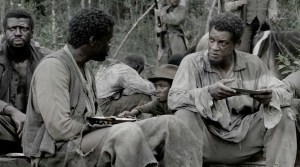 There are two competing impulses running through Emancipation that never seem to coalesce, always pulling the movie in opposite directions or at least undercutting its value in entertainment or substance. On the surface, Emancipation looks like an awards-ready spotlight. It’s got Will Smith playing a real-life historical figure who suffered greatly but triumphed in the end, a man whose image lives on in our history books (well, depending upon your state) and contributed to the abolitionist movement. He was a real person who made a real difference during a tumultuous time. I get a strong sense that Smith was following the 2015 template of Leonardo DiCaprio’s The Revenant for this project, and especially the Academy-friendly model of physical torment equaling Oscar gold as it did for Leo. It’s hard not to feel like the movie was formulated as an awards gamble, that sizing up all the elements, Smith saw a fast track back to the Oscars (this was in production before Smith did win his first acting Oscar for 2021’s King Richard). Naturally, Smith isn’t the first person to select Oscar-friendly roles for the purpose of earning some serious acting trophies. Nor should he be inordinately penalized for that ambition. All that matters is the end result, and it’s there where Emancipation struggles with its own identity crisis and where its transparency becomes a hindrance.
This movie wants to be a substantive drama that can enlighten us about the perseverance of the human spirit, and for the first thirty minutes Emancipation feels honed from the likes of 12 Years a Slave. Then at the Act One break, Peter and several other slaves break free, and from there the story becomes a tense chase movie for an hour, only to conclude its final half hour as a war movie akin to Glory. It’s a tonal balancing act that doesn’t quite work. I was interested in the first 30 minutes, which establishes the brutality of slavery in a way that feels empathetic but tasteful. It’s a question whether or not historical horrors should be watered down, made palpable to a wider audience, and if in doing so dilutes the power of history, but that’s another debate. When the movie becomes an elongated chase sequence is where my patience began to wane. This is where director Antoine Fuqua really seems to settle in, playing into his background of action movies (Training Day, The Equalizer, Olympus Has Fallen, The Magnificent Seven). Fuqua’s instincts are for action movies, and that’s what Emancipation becomes, but it so clearly wants to also be Something More and doesn’t quite accumulate into that. The Revenant stretch is reliant upon episodic survival and the final half hour is about a war charge. I suppose one can be generous and say that Peter’s canny survival skills are overt characterization, or that the environmental threats are representative of a larger hostile world, but the action movie parts were pretty to look at but also emotionally inert for me.
 I considered the lead character in 12 Years a Slave to be the least interesting person in his own story, but the movie found plenty of space for more immediately compelling figures. Not so with Emancipation, as once Peter goes on the run, it feels like overall characterization is put on hold. Smith is perfectly reasonable as a determined and dehumanized individual pushing back against the monstrosity of slavery, restricting much of his performance to the physical realm. The sheer intensity of his eyes can convey plenty that the script characterization lacks. Smith lowers his voice modulation, adopts an inconsistent Haitian accent, and gives a rather subdued performance given the sensational material. I think it’s because the film is geared more as an action movie rather than as an in-depth character study, so when we’re left with the characters, their limitations emerge.
This paucity also extends to the supporting characters. At first I thought that Charmaine Bingwa (The Good Fight) was going to be relegated as the suffering wife for our protagonist to get home, but then the movie keeps cutting back to her like she’s having prophetic dreams. What is happening here? The check-ins with Peter’s wife all deliver the same obvious information, namely his family misses him. This woman doesn’t even get a storyline of her own in the meantime, a conflict to overcome to keep her family out of further harm in the absence of Peter. The biggest supporting character is the villain, and even he is boring. Foster made a name for himself playing psychopaths in late 2000s cinema and has matured with more nuanced roles in The Messenger, Hell or High Water, and Leave No Trace. He’s one of our best actors, and yet he’s given so little here. His slave catcher gets a monologue that’s meant to provide insight into his admiration for the intelligence of black people. I kept waiting for something more with this guy to define him beyond a stock racist. I guess maybe the movie is saying he’s not as racist because he begrudgingly concedes that slaves aren’t stupid, but he’s still massacring them, so it feels like a minimal distinction of character. He also gets defeated in such an anticlimactic manner. If he’s only a stock villain, at least give us the thrill of defeating him.
 The cinematography by Robert Richardson (Once Upon a Time… in Hollywood) is at once gorgeous and also confounding. The emphasis is on deep focus, so you can see lots of rich details in elegantly framed compositions. There are sweeping camera movements, especially during the war-torn finale worthy of Matthew Brady, that are breath-taking, again calling attention to its handsomely mounted pedigree. However, the color palette has taken notes from Zack Snyder and drained away all color to the degree of looking monochromatic. Repeatedly throughout the movie, I would comment to myself about how beautifully filmed a scene was… and then complain about how the dour color grading sucked the life out of it.
Emancipation is a genre movie that envisions itself as a high-minded Oscar contender, and when it attempts to be something more than a crisp-looking chase movie, that’s where it exposes itself as lacking the substance it so desires. The life of Peter, or Gordon, is meaningful, the person behind the famous photo of the scarred back that made the cruelty of slavery a vivid picture. The experiences of every person who endured the hell of slavery is an indictment worthy of being told, but the personal story becomes grounded down into familiar B-movie pap. If the production was content to be a thrilling B-movie, that would be one thing, but it’s clearly engineered to be Something More, which is usually adjacent to Something Important. I think following The Revenant as a model was a mistake, and I think giving the reins to Fuqua was a mistake, and I definitely think the limited characterization and color palette was a mistake. Emancipation is a strange movie to watch. It’s about the horrors of slavery, and it’s also at the same time about a man wrestling a gator in the swamp. Emancipation is a movie that wants to pretend to be something it’s not but also won’t fully trust its deeper instincts and impulses.
Nate’s Grade: C+
Share this:

Inferno (2016)
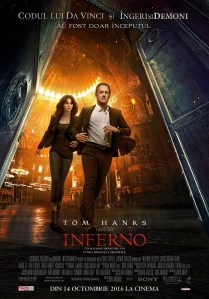 You know it’s a bad sign when the best part of your movie is the scenery. Inferno is the third in the Robert Langden series where Tom Hanks stars as the world’s foremost symbologist that traverses old European museums and cathedrals to solve mysterious puzzles. The Da Vinci Code was pretty bad, its sequel Angels & Demons was a marked improvement, and now Inferno is a depressing step backwards. Langden has to stop a madman (Ben Foster) from releasing a super virus that will kill half the world’s population. The villain’s plan requires him to wait and he has no reason to do so. Waiting only needlessly delays his goal and makes it more likely for him to get caught or fail. His plan is stupidly convoluted, but I didn’t expect that the good guys’ plan was also stupidly convoluted, relying upon fake blood squibs and disguises and for what? There are three competing, stupidly convoluted storylines that smash together. I simply could not engage with what was happening and felt I had little reason to care. The mystery aspect is pretty tame and the thriller set pieces are unmemorable save for a climax that at least feels like the highpoint. There was one interesting aspect that never fully gets developed and that’s the idea that Langden can’t trust his senses. He’s a man who relies on his arcane intellect and to turn that against him, as well as possibly draw in hallucinatory visions, was a smart move. It’s only more disappointing when they fail to do anything with this possibility. The myriad plot holes were clearer to me than the hackneyed plot itself. Inferno has some very nice footage as Hanks and Felicity Jones scamper from one Florence site to another and that’s the best thing I can offer about this mess.
Nate’s Grade: C-
Share this:

Warcraft (2016)
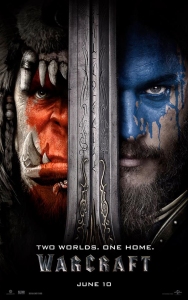 It’s been a long five years since we last saw a movie directed under the name Duncan Jones. He’s not just the son of David Bowie (R.I.P.) but also a talented and nimble director of science fiction thrillers with a rewarding intelligence and visual acumen. Moon and Source Code are two strong entries for anybody’s resume. After flirting with Hollywood franchises for a while, Jones latched onto a personal project, spearheading a Warcraft film adaptation based upon the popular online multi-player role-playing game that boasts over 12 million subscribers. Jones has gone on record saying he is a Warcraft player himself. He co-wrote the script and embarked on a long development process working with heavy use of special effects and actors in motion capture to bring to life the otherworldly fantasy races. It’s been a tumultuous road for the expensive final product, and Warcraft, as a movie, is proof that some concepts are best left to your home computer.
The orc race is in need of a new home because their old world is dying. Their leader, a wizard named Gul’dan (Daniel Wu), uses magic to open a portal to the peaceful world of Azeroth. The orcs invade and plunder although one orc, Daruton (Tony Kebbel), is wary of the motives of his leaders. He’s looking for stability rather than constant conquering. He finds an unlikely ally with Anduin Lothar (Travis Fimmel), a human warrior serving King Wrynn (Dominic Cooper) and his sister, Lady Taria (Ruth Negga). The humans seek help from their own wizard, the Guardian Medvih (Ben Foster). Someone must be collaborating with the orcs to allow the inter-dimensional portal to open. Medvih’s apprentice, the mage Khadgar (Ben Schentzer), teams up with Lothar to investigate and find a way to thwart the oncoming orc invaders.
 Unless you are a fan well versed in the lore and characters of the popular online game, Warcraft will leave you sputtering to construct cohesion from what seems like a lot of incidents without explanation, connective tissue, and a compelling reason to engage with this fantasy trope mess. It felt like every third page of the screenplay was ripped out of the shooting script; things merely just happen without proper setup and development. All of a sudden this character will be evil, or that character will have some prized piece of knowledge, or these two characters will be a romantic item. Things just happen in this movie and they are far too rarely given the context necessary to matter. This is less a story than a collection of ideas scattered onscreen. Take for instance our protagonists, or what you would assume are the protagonists, a pair of capable warriors trying to prevent mass causalities on both sides of the human/orc war. Except the orc character never really translates as an effective parallel to his human counterpart. You would naturally think they would be equal in significance as they try and steer their two warring sides to making less destructive decisions. I can’t tell you anything about the worlds we’re spirited to and from. We got elves and dwarves and mages and wizards and portals and dark magic and good magic and guns that feel entirely out of place in this universe and all sorts of names we’re expected to keep up with. There is little that leaves an impact, and after a while the movie ends up becoming the metaphorical equivalent of cartoon characters that run in place while the interchangeable backgrounds alternate behind them. Besides the fact that sometimes a guy wears a crown to help you realize he’s king, or a guy flashes a ball of energy in his hand, you’re left on your own to interpret the characters and why they are meaningful. The plot is simple, orcs versus humans and bad warmongering leaders at fault, but it’s the deluge of underdeveloped characters, subplots, and world building that make what was once simple hard to understand. I couldn’t tell you why anything was happening. There is no way the casual moviegoer will be able to keep up with the speed that Warcraft hurls information at them without careful setup and meaning. You need an instruction guide to make this stuff accessible.
Fantasy is a naturally transporting genre of storytelling but unless you actually develop and explain the worlds, the inhabitants, and perhaps some of the cultures, you’re destined to feel like a stranger bumbling through a most foreign and unfriendly place. Warcraft does a terrible job of making its worlds feel lived in, never mind accessible. Every new location should tell us more about the world and its characters, their interactions and conflicts, differences and similarities. This is just bad storytelling, people. Ultimately, it doesn’t matter where any of these locations are because they don’t impact the plot. The only story is about the conflict between the orcs and humans, but this could happen anywhere. There are some “important” characters on both sides of this battle but good luck trying to engage with any of these characters. The human characters are bland. I didn’t care about anyone and gave up trying. Cooper and Negga are both considerably more entertaining and effectively utilized on AMC’s Preacher. It takes an hour just for Warcraft to finally establish the relationships between its various stock characters.
It’s the orc characters that showcase the most humanity, and credit goes more to the special effects artists and motion capture actors than the screenwriting. I appreciate how the movie devotes time to both sides of the conflict and finds figures of honor, and its best representation is Durotan. Kebbell seems like an actor who really feels a sense of freedom with mo-cap performances (he was excellent as the simian villain Koba in Dawn of the Planet of the Apes). I initially thought the creature design of the orc, what with their hulking underbites, was going to be hard to render emotive performances, but there were glimmers where you could witness the shadings of the actors beneath the underbites. It’s an impressive technical feat considering the obstacles that all parties had to overcome. Sadly, this only further exposes just how shoddy the storytelling is considering the technology was capable. Darotan is a loving husband and father who is leery of his leaders intentions, but this too is just a means to serve the ultimate ends of the plot. There isn’t a thoughtful moral anti-war argument to be had here. As a whole, the orcs are a rather personality-free race of creatures. Sure they talk a big game and have some curious decorative flourishes (tusk piercings!), but to this Warcraft layman, they come across like any other barbarian group. Early on I was mentally thinking of the Klingons from Star Trek and then I concluded that this was an inappropriate comparison because Klingons have memorable personality and culture.
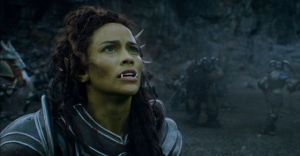 The actor who gets my greatest sympathy is Paula Patton (Baggage Claim) as the half-orc/half-human outcast, Garona. First of all, given the immense physicality of the orcs, I imagine any form of fornication with a human would prove highly fatal. It would be like an elephant mating with a labradoodle. Trapped between the two groups, Patton is painted green and given a lesser underbite that is reminiscent of snake fangs. When realized on an actual person, as opposed to a creation from the realm of computer effects, it’s not terribly convincing. Patton tries her best to speak all her gobbledygook lines of dialogue but the reverse vampire fangs make it awfully difficult for her to properly enunciate. She looks too ridiculous to be an effective character, and the fact that she is pushed into a romance with a human without any sense of setup beyond the universal law that pretty people should be together with pretty people is deflating. Why does the only female character of significance have to be shoved into a romantic subplot? Your poor poor jaw muscles, Paula Patton. At least you didn’t have to wear a metal bikini. Yet.
With all of this stated, Warcraft is not a horrible movie, and credit for that should go to Jones as a director. In the same token, Jones is also the co-writer so I guess he also deserves blame for the storytelling shortcomings. Jones very smartly limits his camera movements. Character will move within the frame but usually the camera point is fixed, which allows the focus to be more attuned to what exists within the frame. This is especially helpful during battles and with the multitude of CGI elements. This stylistic choice allows the film to be more visually immersive. The fighting sequences do get a tad repetitive as one guy with a sword or club runs at another guy. I saw Warcraft in 3D at my screening and I might actually recommend people see it this way, which is something I hardly ever do. It’s not that the 3D elements will compare to the experiences of modern standard-bearers like Life of Pi or Gravity, but it’s a pleasurable experience and the presentation of the visuals is crisp. I was worried about the usual effect of the glasses darkening the onscreen image and this was not the case at all. From a purely visual standpoint, Warcraft is worth watching at least once. The special effects vary between photo-realism and extended video game cut scene, but overall the visuals are colorful and fun and easy to discern. When the action heats up, you’ll be able to cleanly follow what is happening to whom. If only this same clean precision had been applied to the half-baked screenplay.
I will admit I have never played a single minute of the Warcraft game. I am not familiar with any of the worlds, characters, or races beyond what I have watched from other more popular fantasy films and series. I am not coming at this movie from the perspective of a fan who has been eagerly awaiting the holy grail of video game movies. If you’re willing to look past its flaws, mainly its bereft characterization and haphazard plotting, then I’m sure there is a forgivable and sporadically entertaining movie here. As a man who has reviewed over 20 films directed by notorious video game adapter Uwe Boll, this is no unbridled suckfest. However, it’s still too limited for its own good. The visuals can be immersive but the story is certainly not, and there are numerous points where the movie just actively forgets that an audience requires servicing. You need to introduce us to the characters, allow us to get a sense of who they are, their internal and external battles, their relationships with one another, their significance to the plot, and relevant history and culture as it relates to the larger story. In a rush to visit all the different game settings, the movie’s screenplay zips along when it should be building its narrative. At times it feels like a travelogue with very exotic locals. Warcraft is a repository of incidents and events, almost as if it were awaiting a user to plug in and control the storyline and provide the meaning. It’s no unmitigated disaster but I don’t believe this was worth the five-year price for Jones.
Nate’s Grade: C
Share this:

Lone Survivor (2013)
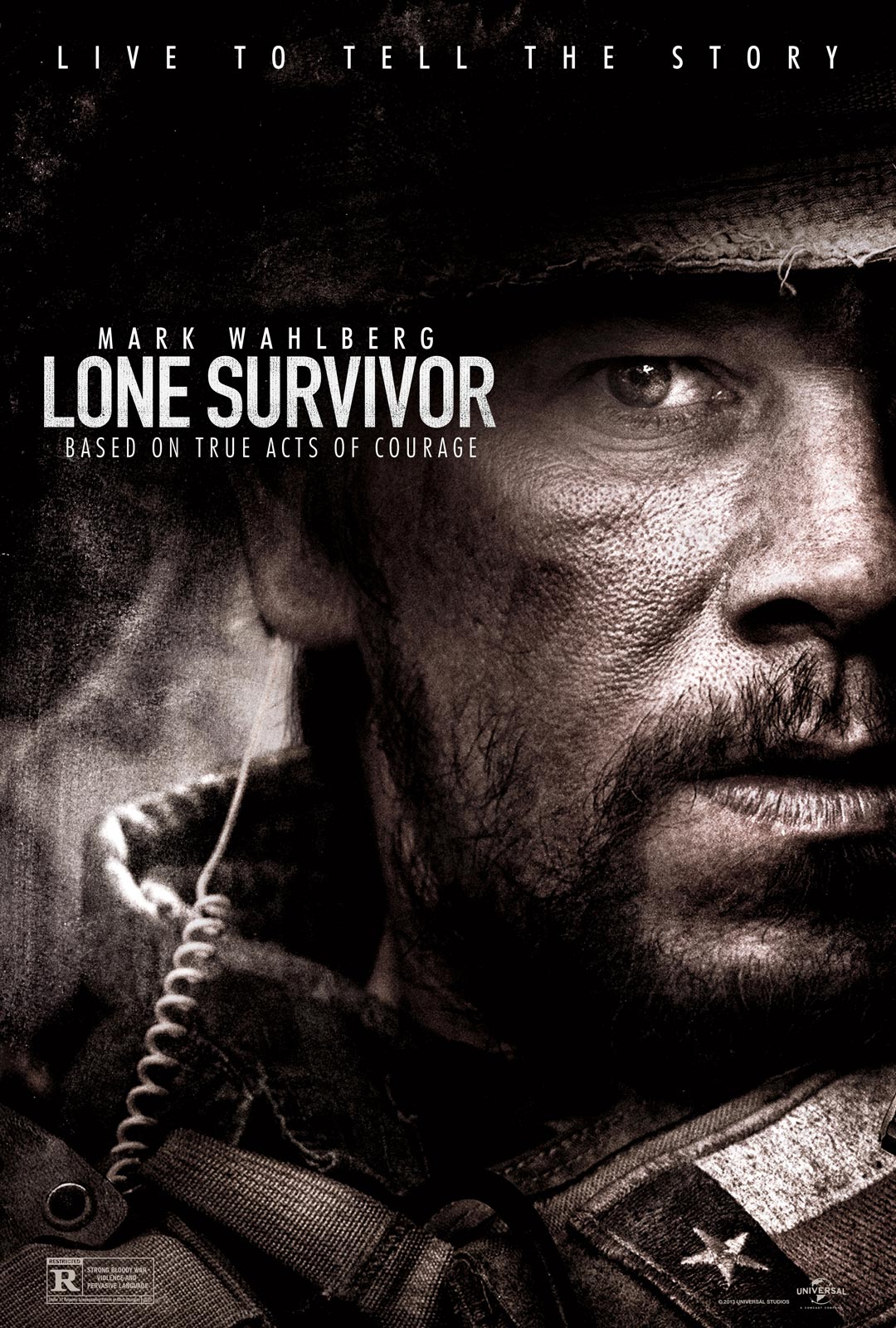 What do you do when the title of a movie is a spoiler? That’s the question with director Peter Berg’s reverential military action film, Lone Survivor. It’s the true story of a team of Navy Seals who had their mission compromised by a pair of unlucky Afghan goat herders. After deciding to set them free, rather than snuff them out, the Seals retreat to an extraction point, with a hundred Taliban fighters hot on their heels. When the action is firing, Berg is right at home, placing the audience in the middle of a visceral firefight that’s bloody and hardcore and pulse pounding. The rocky terrain of the country is just as deadly as the Taliban, as the Seals bounce around like ragdolls. The performances are all grizzled and finely attuned to keeping the terror of the moment at bay. Ben Foster (The Messenger) is the standout, which is a statement that’s been said with most Foster performances. At the end, I’m left wondering what is the film’s greater message. It’s retelling a military episode few people know about, illuminating the courage and bond between soldiers under fire. But in the end, all of these lives were lost because of one moral though arguably bad decision. Couldn’t they have just tied up the goatherds and gotten a better head’s start? Will the movie convince an audience that those innocent Afghan goatherds should have just been collateral damage? Does the movie critique the futility of America’s ongoing presence in Afghanistan? The futility of war itself? I doubt it, especially with Berg’s fervent appreciation of the armed forces putting their lives on the line (the opening credits themselves glorify the toughness of the Seals while also setting up an explanation why they could survive so many gunshots, injuries, etc.). Lone Survivor isn’t the heedless jingoistic propaganda piece that others critics have feared, but in the end it’s simply a sober and respectful tribute to the fallen, and that’s it. For many, this will be enough. For me, I was thrilled by the heroics but looking for more.
Nate’s Grade: B
Share this:

Rampart (2012)
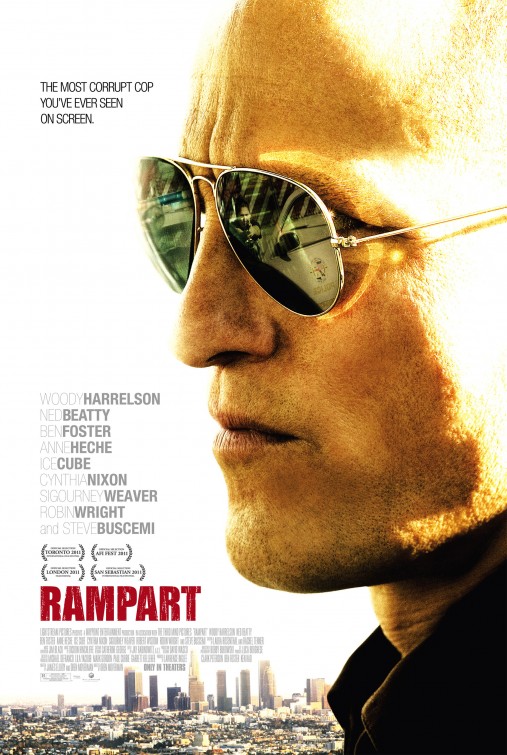 Stop me if you’ve heard this one before. A corrupt L.A. cop (Woody Harrelson) makes bad choices, alienated and frightens his family, and looks to be on the way out as a career of taking the law into his own hands is at long last catching up with him. Yeah, you probably stopped me after the third word in that sentence. This dour character-study showcases Harrelson nicely as a cocksure cop who’s so self-destructive and paranoid that he pushes everyone away. Co-written and directed by Oren Moverman, who made the terrific and searing drama The Messenger, this movie just about turns into high-gloss navel-gazing. The plot is quite loose and there’s very little traction. We get to see scene after scene of Harrelson behaving badly or violent, but what does it all add up to? We already know he’s a bad cop tortured by his own sins and the demands of the job. In a way, there’s an intriguing connection between law enforcement and soldiers who are often called to bear incredible burdens and just deal with it, forgotten by a public complacent with being safe. But really this movie is just one long trip with an angry man who keeps everyone, including the audience, pushed away. He’s complex but I can’t say we ever got to know him better. The film is well acted with plenty of recognizable stars, but why should I care? The central message about the prevailing influence of corruption is a bit heavy-handed as well; at one point Harreslon’s wife says, “You made us dirty.” Rampart is a disappointing venture for Moverman despite Harrelson’s best efforts. In the end, when you’re stuck with a dirty cop he better be worth the time.
Nate’s Grade: C
Share this:

Contraband (2012)
 January at the movies has long been a time for two kinds of releases: 1) award-worthy films expanding into wider release, and, 2) crap. That’s about it. I’ll let you figure out which category the action thriller Contraband belongs in.
Paul (Mark Wahlberg) was once the best smuggler in the business. He’s since gone legit, starting a family and his own private security business. His brother-in-law (Caleb Landry Jones) gets into trouble with some bad men. He tosses a load of smuggled drugs to elude Customs ships, but now Briggs (Giovanni Ribisi) wants the value of the drugs or else. Paul knows he has no choice but to put together one last job to save Kate’s (Kate Beckinsale) brother. Paul leaves his family in the hands of Sebastian (Ben Foster), a trusted accomplish on many missions. John puts together a team and plans to board a ship headed for Panama City. While there, the team will load large sums of confederate money. The sale of the fake currency should square things between John and Briggs. However, little goes according to plan.
 Contraband is a lousy heist picture that feels like it’s making it up as it goes. First off, the premise of John having to go back into his art of smuggling to settle a debt has been overdone, and the fact that John’s idiotic brother-in-law is as fault makes it hard to care that something might happen to the idiot. But why God do they bring this screw-up, the brother-in-law, along with them? He’s already proven to be a poor decision maker and a moron, and, surprise surprise, when in Panama the guy gets them into more danger. So irritating is this character, always foolishly making things worse for John, that you wish they had thrown this dolt overboard. This is a movie structured with a small beginning, a small end, and a great big fat middle, and it’s that middle that involves our destination to Panama. With heist movies, as well as most thrillers, we don’t want things to go according to plan. We want to see organic complications and watch our team of characters adjust. With Contraband, the complications don’t feel natural so much as like careening plot elements from other movies. John’s quick visit goes out of control, with the team losing their payment money for the confederate loot (guess who’s responsible for that? Guess?), and they have to go find a budding crime lord, Gonzalo (Milk’s Diego Luna), and then this crime lord just happens to be plotting a heist at THAT EXACT MOMENT and John and his team should come along and then the heist goes bad, as always, and the team ahs to get away, but Gonzalo demands to be taken to a hospital by gunpoint, and then the cargo ship is going to leave port, and, and, and, and, etc. There are so many breakneck plot turns thrown in that it feels like a broken blender spewing half-formed plot residue everywhere. It’s the film equivalent of the If You Give a Mouse a Cookie story (“If you give a smuggler a deadline, he’ll need a contact. If you give him a contact, he’ll need to do the contact a favor. If he does the contact a favor, he’ll have to do this one job for him. If he does this one job for him, he’ll need a crew. If he needs a crew, he’ll need… etc.).
Let’s take a moment to analyze the peculiar masks Gonzalo and his team choose to utilize. They literally wrap duct tape around their faces. That’s got to be the dumbest mask in the history of cinema, and there have been some stinkers. They couldn’t afford pantyhose? Anything? They had to use tape? First off, you can’t conceal key features, like your eyes and mouth, and lastly, isn’t it going to be something of a bitch to rip those things off? The only person who could properly wear a duct tape mask would be someone suffering from alopecia (condition that leaves a person hairless). Otherwise you’re sacrificing your eyebrows. Maybe this is just how things are done in Panama.
So much of this movie feels like it’s on autopilot, just drifting like that cargo ship. At this point, I don’t even think Wahlberg is trying to hide his indifference to the material. He’s a man with a shady past who went legit and has a family now, but in order to protect that family he is drawn back to his shady past. How many times has this plot device just been used in the last few years? The rest of the characters fill out the crime thriller cheat sheet: young screw-up who serves as plot catalyst, parent in prison to provide cautionary tale, best trusted pal that ultimately proves to be untrustworthy, and the harried, often victimized wife. Poor Beckinsale (Underworld) who gets beaten, threatened with a gun in her face, and victimized to a degree that it feels like exploitation. This woman can never catch a break. She gets few moments in the film where she is free from being terrorized with violence. I have no idea what would attract an actress like Beckinsale to this part other than the allure of a paycheck. Contraband stalls when it comes to thrills, and part of this is because the villains seem so lame. Briggs just comes across as an inept criminal, like somebody’s own screw-up brother-in-law that tagged along to play with the big boys. He’s routinely beaten and bossed around. It’s hard to take his threats seriously, so the movie cuts its losses and just has him threaten Kate some more. It becomes old quick. The only thing that keeps Contraband going is the great distance between Paula and his family, a divide that keeps Paul vulnerable. Too bad that the movie can’t think of anything thrilling to do with this scenario and settles, all too frequently, on scaring the wife. Wouldn’t the film have been more engrossing if Paul’s wife had been kidnapped this whole time? Would that not cause a better sense of urgency than the vague threat that a character we don’t care about might get offed for being stupid?
 From an action standpoint, the thrills rarely materialize, relying on a contingent of blunders and coincidences to provide the thrills. There wasn’t a moment where I worried for a character on screen. This may be because I didn’t care for a person on screen, thanks to workmanlike characterization, but it’s also got to fall on the feet of Icelandic director Baltasar Kormakur (who starred in Wahlberg’s role in the original Icleandic version of this flick) and his nascent camerawork. There will be moments where his camera does stutter-step zooms, mimicking the docu-drama camerawork that’s been en vogue with action cinema. And then he’ll never repeat it. There’s a shot of Gonzalo blowing the armored car up and it’s filmed in a high-speed, stylized shot to distill the strange beauty of the force, and then this never happens again. It’s like Kormakur is sampling all 31 flavors of action movie styles and can’t decide on a visual tone. The action is too dependent on arbitrary coincidences for it to be satisfying of thrilling; we’re just waiting for the next out-of-nowhere plot turn to move things along. The ending attempts to tie up things nicely but feels asinine and laughable in how John can take out three villains in one well-orchestrated, tidy swoop. Don’t even get me started on the impracticalities of John hearing a lone cell phone ringing to be able to trace his wife in an entire construction site. The resolution feels ludicrous and a stroke of dumb luck.
Contraband is a convoluted, knuckleheaded thriller that drags because of arbitrary maneuverings, poor characterization, a fat middle section plot-wise, and pedestrian action. The movie feels like it’s being made up on the spot. As a result of all this tiresome lateral plotting, Contraband feels like it’s going nowhere and spinning into oblivion. I found myself nodding off at various points, my brain bored by all the generic goings-on. The constant victimization of Paul’s wife is a rather ugly development for a movie that confuses salty language and furrowed brows for toughness. The movie is devoid of any sense of fun. It just becomes an empty enterprise of actors going through the motions to work of genre pap. Even by the dirt-low standards of January cinematic offerings, Contraband isn’t worth a cent of your hard-earned money.
Nate’s Grade: C-
Share this:

The Mechanic (2011)
 The Mechanic is a routine remake of a 1972 Charles Bronson hitman thriller. But when did “mechanic” ever become commonplace slang for “killer”? The film treats this concept like everyday knowledge. Bishop asks, “You know what a mechanic is?” A character responds matter-of-fact: “A hitman.” And the “mechanic” services are advertised via a system that includes a Craigslist style message board. It makes me wonder what the “adult services” section on Craigslist was really all about this whole time.
Arthur Bishop (Jason Statham) is the world’s greatest hitman. He meticulously plans his hits, deciding whether to make it look like a suicide or an accident or whether to send a message. He’s the cleanest of the cleaners. Then he gets a very delicate assignment – he’s to take out his mentor, Harry McKenna (Donald Sutherland, taking a paycheck). Bishop’s boss (Tony Goldwyn) tells him that somebody is going to kill Harry. If it’s Bishop at least he can make it more humane. Bishop takes out his mentor and makes it look like a carjacking. Then Harry’s screw-up of a son, Steve (Ben Foster), appears to get vengeance for his old man. Bishop takes the hotheaded kid under his wing and trains his to be an assassin. Then, naturally, Bishop discovers he was set up and played by his employers, which brings about a larger examination on the cyclical nature of violence. Just kidding. There’s more killings.
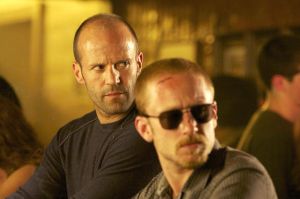 To say that The Mechanic is a well-oiled formula picture is probably the kindest thing that can be said. It follows the path of its hitman forbears fairly close. The opening pre-credit sequence is a hit that established the abilities of our deadly lead, Donald Sutherland pops up just long enough to lay down the necessary exposition for the film, and then before we even finish the first reel (20-minute mark) the movie manages to introduce a sexy female (Mini Anden) whose only purpose, in grand action movie tradition, is to have enthusiastic sex with the lead whenever his tank is low. The rest of the movie follows rather lockstep with the various beats of the genre, meaning that Bishop takes on an apprentice, shows him the ropes, they bond by taking out the bad guys, and then of course the final show drops and the truth about Bishop killing Harry is revealed. Along the way, The Mechanic does enough to satisfy genre fans looking for the goods when it comes to thrills.
The best moments are the tag-team hitman efforts of Bishop and Steve. The stuntwork is occasionally impressive like when Bishop and Steve repel down a large hotel building or when a car literally drives all the way inside a bus. There’s a brutal, visceral fight between Steve and his first kill that serves as the film’s highpoint. It was these sequences that made me actually sit back and think, “You know, I think this concept would actually play best as an ongoing TV series.” Think about it: you’d have your target of the week, the planning and execution that always make for satisfying payoffs, and then week-to-week Bishop and Steve would continue their complicated relationship with Bishop’s guilt eating away at him while he tries to keep the truth at arm’s length away from his neophyte partner. To me, that sounds much more dramatically rich while still keeping the body count consistently high.
Of course by hewing so close to the confines of genre, The Mechanic also has very little going on outside of the mini-missions of the hit jobs. Bishop obviously has been misled and setup by his sleazy employers. It’s fairly clear early on that when a guy gets out of a limo in a three-piece suit and tells you that the old man in the wheelchair is the bad guy, red flags should be waving. There doesn’t seem to be a formidable opponent in this fight mostly because Bishop is long described as the best at what he does. So how do you stop the best? You’d think you’d hire other players of comparable skill or offer an incalculable amount of money to kill the guy. But our villain doesn’t do any of this. Five minutes prior to his death, our villain fails to even once threaten Bishop (don’t even pretend like that’s a spoiler). The main conflict is really the complicated connection between Bishop and Steve; however, this relationship is kept at a slow simmer the whole film, even after Steve pieces together the ugly truth. The character development is left mostly at an inferential level. That means that there are long stretches where the characters glare, dispense with macho cool speak, glare with sunglasses, and then fall back on some unique hitman quirk they all have to relax (Bishop listens to classical music on vinyl records because he takes life yet appreciates beauty! IRONY!).
 But the ending needs to be further discussed because it leaves a terrible aftertaste. Given the dramatic dynamic at work, you pretty much know that Bishop and Steve will eventually come to a head. Bishop regrets what he’s done and is trying to make amends and find some meager form of redemption by taking Steve under his wing. He’s trying to make amends for the many sins in his life. He’s coming to terms with his life’s choices. So then you would assume (spoilers to follow) that when Steve ultimately seeks his own very deserved sense of vengeance, that the old pro would accept his doomed fate. It makes the most sense. It provides an end for the character’s journey, it provides closure to Steve, and it allows for an ending where people have to pay for their life’s mistakes. It’s not even downbeat because it feels right; it’s the correct ending for this material. It’s also the way the original Mechanic ended. But why end the movie on Statham accepting death? That would shuttle any chances for Mechanic sequels. And so, in a colossal cop-out, our hero narrowly survives and even manages to set up a bomb to take out Steve. While his young partner was emotionally unstable and looking for an outlet for his billowing anger, but the man was warranted in his vengeance. It’s entirely the wrong ending for not just this kind of movie but this movie specifically. It smacks of a pathetic attempt to leave the option open for a would-be franchise. It eliminates the entire idea of consequences mattering.
Statham gives the exact same performance he’s been giving in every movie for a decade plus. You know what you’re getting with a Statham action vehicle, for better or worse. He’s going to get shirtless, he’s going to dispatch the bad guys with relative ease, and never once will an expression flash across his stony face. He even verbalizes guilt while still being completely stone-faced. You don’t really buy any inner turmoil with this guy; he’s too “cool” to have feelings other than anger and vengeance. But then Foster practically redeems the entire movie. The young actor has been delivering intense performances for years now, whether it is an emotionally unstable guy in Alpha Dog, an emotionally unstable guy in Hostage, an emotionally unstable guy in 3:10 to Yuma, or an emotionally unstable guy in The Messenger. Notice a pattern? I’m amazed the reservoir of little tricks Foster finds to make Steve pop. Foster gives a far better performance than the movie deserves.
The Mechanic is a routine action movie that fails to rise above its genre conventions due to a lackluster plot, some vapid character development, and a horrendous ending. Statham does his thing, his shirtless chest gets due prominence, but the movie lets both he and a game Foster down. The kills are rather sloppy leaving behind mountains of evidence and dead bodies, and yet there seem to be no consequences. That makes for a long march to an inevitable conclusion with a few bursts of colorful violence to entertain. But what actually exists on the screen isn’t half bad. It’s fairly unremarkable, straightforward genre pap, but that can be suitable for the right audience and the right frame of mind. I was seeking something brainless to excite me when I caught The Mechanic, and it modestly achieved these modest goals.
Nate’s Grade: C
Share this:

Alpha Dog (2007)
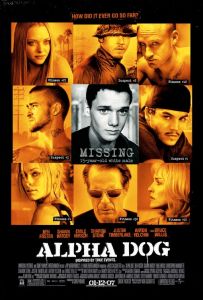 One part navel-gazing, one part slow-moving train wreck, director Nick Cassavetes (The Notebook) long-in-the-works true-life saga about a bunch of suburban wannabe gangsters is something of a chore because you want to punch every character in the face at multiple times. The tale revolves around a kidnapping that spirals into the brilliant notion that the best way to avoid jail time is to kill the kidnapee, never mind the fact that dozens of eyewitnesses can place kidnappe to kidnappers/eventual murderers. These kids are dumb and caught up in their machismo. Alpha Dog resembles, in many ways, Bully, but that film felt more authentic in its lascivious lifestyle. Justin Timberlake proves that he can be a decent actor, which is more than what can be said about Sharon Stone, who in one highly regrettably but unmissable moment, dons a fat suit, overacts like hell, and breaks down altogether. It’s stupefying to watch and simultaneously the high/low point of the flick.
Nate’s Grade: C
Share this:

3:10 to Yuma (2007)
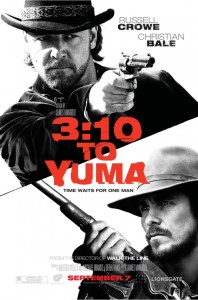 The Western used to dominate the pop culture landscape. In the 1950s, you had John Ford and Gary Cooper in a different dustup practically every week at the cinema, and the TV lineup was wall-to-wall cowboys, Indians, horses, and damsel retrieval. The Western has become rather inactive since its cultural heyday and now resides on the outskirts of movie land, idly chatting with Screwball Comedy and Busby Berkley Musicals about how good they had it back then (yes, I have just personified genres). With that said, director James Mangold (Walk the Line) has remade the 1957 John Ford film 3:10 to Yuma for a modern movie-going audience. The film has to work extra hard just to overcome the prejudices of a dormant genre, but fortunately 3:10 to Yuma is a rousing drama that could have knocked ’em dead way back when.
Dan (Christian Bale) is a wounded Civil War veteran trying to eek out a living in Arizona. He cannot grow any crops because of drought conditions, is behind on his payments, and his teen son has no respect for dear old one-footed dad. To keep his family financially afloat, Dan agrees to help transport notorious outlaw Ben Wade (Russell Crowe) to his date with justice.. It’s three days to ride across Arizona and get Wade onto the 3:10 train to Yuma prison, and along the way the posse is beset by unexpected setbacks and Wade’s gang hot on their heels to save their imprisoned leader.
 This is no deconstructionist Western or a modern revisionist Western, no this is an old-fashioned Western and Mangold embraces the genre staples instead of steering away from them (runaway stagecoaches, high-noon showdowns, ineffective lawmen, saloon girls). There’s a reverence for the genre and Mangold makes sure the audience soaks up the dusty details of frontier life with lots of revealing close-ups. You can practically taste the earth these men are caked in. The script is filled with plenty of surprises along the way as Ben keeps regaining the upper hand even as he’s outnumbered and in shackles. The story benefits greatly from really opening up and exploring in depth whom Dan and Ben are and what makes them this way. 3:10 to Yuma does not paint in broad strokes and dwells in a lot of grey, which presents opportunities for the actors to work their magic.
At the heart of the film is the moral battle between Ben and Dan, and both actors rise to the occasion. Crowe’s name is all but a guarantee for a quality performance and he shows an array of seemingly contradictory elements to Ben Wade. He has roguish charm and swagger, but then in an instant you can feel the intense glare of hatred in his eyes, and the scary calm in his voice, and you realize that this man is a caged tiger always stalking his prey. He can erupt in sudden and vicious violence and then fall back into a conscienceless laugh. He has moments that seem like empathy and kindness, but then you realize every seemingly kind gesture has a hidden meaning that links back to Ben’s own benefit. Crowe is magnificent and plays around with audience expectations to keep us jumping back and forth between liking the sly brute and fearing him.
Bale is equally as good as a martyr for his moral principles. He sticks to his ethical convictions no matter the hardships and temptations to take an easy way out. The painful lengths Dan goes to protect his family produce several touching exchanges and add substantial meat to a character that very easily could have been drawn as a simplistic do-gooder. Bale sells every moment with commendable authenticity.
 The rest of the supporting cast -Gretchen Mol, Alan Tudyk, a near unrecognizable Peter Fonda- add strong contributions to the movie, but none more memorable than Ben Foster. As Ben Wade’s sadistic right hand man, Foster displays a sick brand of hero worship and homicidal insanity. He’s an unpredictable and menacing figure and Foster magnifies these qualities to frightening realization. These excellent actors make 3:10 to Yuma more than throwback; it reminds you how great Westerns can be with the right actors and devotion to characters.
The only marks against 3:10 to Yuma occur during its climax. Things escalate immensely into a wild shoot-out that racks up a massive body count. While exciting, the sequence feels at odds with the intimate moral struggle between these two men. I’m also unsure about whatever prompted some eleventh hour motivational change for one key character. The ending is unnecessarily dark and will surely leave most audiences with a bad taste in their mouth to exit upon. Maybe it’s just the recent bout of films that I’ve been watching, but I’m starting to get tired of movies that are convinced that a pointlessly tragic ending somehow makes their story more meaningful (The Painted Veil, my wife is still upset with you, novel adaptation or not). A happy ending has long been perceived as a trite Hollywood cliché, but now I wonder of the pendulum has swung too far the other way so that conventional thinking says an audience has to be left wanting more or dissatisfied for a movie to attain higher artistic credibility. This is, of course, utter nonsense. A movie ending need only be appropriate for the scope of its story, but then again it doesn’t have to strive for forced wisdom delivered by unnecessary tragedy.
3:10 to Yuma is a hard-charging, stoic, classic American Western of the old guard with a bit more blood and profanity mixed in for a modern public. Despite a small handful of missteps toward the end, this is an engaging and often gripping morality tale catapulted by two strong performances from foreign-born actors showing Americans how the West was done right. Let 3:10 to Yuma stand as proof that any genre, no matter how outdated, can succeed as long as the filmmakers place care with character and treat the audience with a modicum of respect.
Nate’s Grade: B+
Share this:

X-Men: The Last Stand (2006)
 The story behind the making of X-Men: The Last Stand is more interesting than most. Bryan Singer had directed the first two X-Men films and had done a fine job establishing many loveable characters and the universe that housed them. Warner Brothers has been trying to get their Superman franchise flying for so long, going all the way back to 1996 when Kevin Smith wrote the script, Tim Burton was to direct, and Nicolas Cage was going to be the man in tights. Since then directors and drafts of screenplays have come and gone, including Brett Ratner, best known for directing both Rush Hour movies and a slate of mostly mediocre movies. Then Warner Brothers poached most of the X-Men 2 team to make Superman Returns, hiring Bryan Singer as director, plus X2‘s screenwriters, cinematographer, editor/composer, and maybe even the cat that licked Wolverine’s claws. Fox was left without a captain for X-Men 3. They daringly picked Matthew Vaughn (Layer Cake) but then he dropped out for family reasons. Then Fox went with their second choice … Brett Ratner. Both directors had essentially switched projects. Hollywood’s funny like that.
It’s been a few months since the events in X-Men 2. Scott “Cyclops” Summers (James Marsden) is still mourning the loss of his love, Jean Grey (Famke Jannsen), who sacrificed herself to save the rest of the X-Men. He’s tormented by her voice, whispering all around him and pleading with him to return to Alkali Lake, the site of her death. Miraculously, Jean returns from the dead but she’s much different. Her persona has broken and the Phoenix has taken over, a destructive killing force unparalleled on earth.
Magneto (Ian McKellen) has great use for such a force. There’s been news of a new drug that suppresses the gene that causes people to be born as mutants. This discovery has been dubbed a cure. The question persists, is should being different be curable and what would that even mean? Magneto sees the writing on the wall, knowing that any cure would only be voluntary for so long. He collects new mutant fighters along with his stalwarts the shape-shifting Mystique (Rebecca Romijn) and fire starter Pyro (Aaron Stanford), a former student at Xavier’s School for the Gifted.
 Over at Professor X’s (Patrick Stewart) school, the mutant students are each questioning life with a cure. Rogue (Anna Paquin) is considering it so she can finally touch her boyfriend, Bobby “Ice Man” Drake (Shawn Ashmore) without killing him. Plus, so he’ll stop spending so much time with Kitty “Shadowcat” Pryde (Ellen Page), a girl who can walk through matter. Storm (Halle Berry) and Wolverine (Hugh Jackman) are left to run the team after some disastrous setbacks. Henry “Beast” McCoy (Kelsey Grammer) is a man covered in blue fur and appointed as head of Mutant Relations for the president. He senses the growing danger and anxiety the administration has with mutants and joins the X-Men to do what he feels is right.
It feels like that in a rush to production that character development, subtlety, and subtext were chucked out the window to make time for more boom-boom action. The first two X-Men flicks juggled the characters and introductions but still managed to squeeze in one great moment for the characters we cared about. The plot moved at a mature pace, insightful and touching on elements of psychology, politics, and personal struggles to fit into a society that fears you. There was some sophisticated, relevant stuff bandied about this franchise in between the kick-ass action. But with X-Men 3, you basically have Halle Berry doing less with more. She’s got more screen time, in part to her demands, and now she can use that extra time onscreen to show us how perfectly bland her character is as the film’s most laughable moral ideologue. The idea of a cure for the mutant gene is vastly interesting with all kinds of great avenues for character introspection and socio-political debate. But X-Men 3 renders all of its debate to be merely superficial, another in a series of plot points to get the action moving quicker.
The X-Men franchise was already overpopulated with lots of characters vying for screen time, so I don’t understand the decision to add even more characters to the ensemble and cut down the running time to a brisk 100 minutes. As a result, certain characters sit out for long stretches of the film, are inactive during key moments, some are mostly forgotten, or some meet unjustifiably hasty ends. If I was still an ardent comic book fan, and a follower of the X-Men, I might view the third film as heresy. Why even bother bringing the character of Angel into the movie if he’s just going to be on for two minutes, including a forehead-smacking deus ex machine moment? The Dark Phoenix storyline is the most pivotal storyline in the comic’s history, so why even bother dragging it into X-Men 3 if it’s just going to be Zombie Jean Grey? It feels like Ratner is off screen with a pole poking Janssen whenever the story needs her to wake up and stir up some stuff.
 I hope comic fans enjoy the brief glimpses of some of their favorites, because X-Men 3 does a good job of throwing characters into a meat grinder. I had to check online to just to find out who they were, and even then my realization was followed by, “Her? Him? What?” And what the hell is up with Porcupine Face? That has got to be the worst mutant ability of all time. What’s he going to do to his enemies? “Hey, will you come a little closer. I have a secret to tell you. Closer … closer … closer still … that’s right, now please lean against my face.”
The movie trades character for action, so is the action even good? Ratner is a workmanlike director devoid of any personal style, which further brands X-Men 3 as ordinary. The action sequences aren’t anything extraordinary, there just happens to be more of them. The climax pits mutant against mutant in short-lived bursts. A battle between Ice Man and Pyro should be awesome, but Ratner stages the showdown like he was choreographing his neighbor’s kids. This battle lasts a whopping 45 seconds. The climactic end battle, the “war to end all wars,” is rather sloppy. Ratner keeps cutting back and forth between his pairing of Good mutant vs. Evil mutant (why do the two black girls seem forced to fight each other?), but his showdowns are all too quick to quicken the pulse. Wolverine’s brawls in the woods never rise up to the adrenaline-soaked fights in X-Men 2. The special effects and make-up are just as good; they’re just not being put to as good a use. If Ratner is going to dump character for action he has to make his action exceptional. The movie feels on autopilot.
Ratner is not fully to blame for the shortcomings of X-Men 3. Screenwriters Simon Kinberg and Zack Penn (Elektra) have crafted an overly rushed story that is more tailored for getting the job done than telling a good story. They present some big ideas and interesting elements, like a love triangle between Rogue-Ice Man-Shadowcat, but then most of the promise is either skipped over or dropped. They’re trying to juggle too many balls at once, and it just makes me miss Singer and the X2 screenwriters and how effective they were in defining character even in the smallest of moments. Some of the X-Men 3 dialogue is awfully stilted, like “You of all people know how fast the weather can change” and “Sometimes when you cage the beast, the beast gets angry.” There’s also a silly subplot about Storm teaching Wolverine what it means to be responsible. Try and count how many times you roll your eyes with that one. How many times are they going to have the president look blankly at a TV screen and gasp, “My god”? There’s some clever use of mutant powers during battles (mostly involving Shadowcat) but there’s just as many routine moments as well.
 The acting is all over the map. Jackman owns his role as Wolverine. McKellen and Stewart bring a needed dose of grandeur to the proceedings. The X-kids are enjoyable, and Ellen Page (knocking ’em dead in Hard Candy) makes a very nice addition to the fold. I’ve likely enjoyed Paquin the most in this series, next to Jackman of course, so it’s so frustrating that she just plays Jealous Girlfriend at Window. I think it’s criminal how little she’s examined in the movie, especially since the supposed cure has the most questions and ramifications for her. Grammer is essentially Frasier in blue fur, but that’s essentially what Beast is so it works. He has a very nice moment when he sees what life would be like minus his mutant likeness. It’s really hard to judge most of the performances because of how short they appear in the movie.
X-Men: The Last Stand is far from boring but it’s more serviceable than special, and lacks the maturity and imagination that its previous films held. This was a franchise full of limitless potential, so to see it drop to something ordinary is sad, especially if this is the rumored end of the franchise (a record opening gross over Memorial weekend says otherwise). This franchise feels dumbed down; yes it’s still entertaining on a mass market level but it doesn’t have the creativity and precision that Singer’s movies had. X-Men 3 is fast-paced and not without its great geek moments, but it’s also the least emotionally involving of the films. When the deaths and departures come you’ll probably shrug your shoulders because of how the film presents them. X-Men 3 is fine, but I expect better from this franchise.
Nate’s Grade: C+


 nathanzoebl
You must be logged in to post a comment.