Category Archives: 2022 Movies
2000 Mules (2022)
 I swore I would be done with conservative filmmaker Dinesh D’Souza after 2020’s pseudo-documentary Trump Card, just as I also wrote that I was ready to be done with Donald Trump as president, and yet both have persisted and still pose a danger to the general public. Trump had been priming his voters to not trust any election outcome where he lost and now the Big Lie has become fundamental dogma for millions. 2000 Mules is intended to be D’Souza’s smoking gun, his proof that the election was stolen by nefarious Democrats and their cronies taking advantage of making absentee ballots easiest to access during a world-altering pandemic. D’Souza says he has amassed cellular data proving that ballots were stuffed into voting drop boxes, and these “mules” have been “trafficking” votes, and posits that 400,000 votes were invalid and tilted the presidency.
The entire rhetorical argument D’Souza and his co-conspirators have gathered amounts to a lot of, “Yeah, buddy, trust us on this,” when they’ve earned no such faith except for those who are already desperate for confirmation bias. D’Souza has built a lifetime of bad faith arguments, and anyone he brings on board to further his thesis statements is likewise to be dubiously trusted. True The Vote is listed as a “non-profit organization” about “voter integrity” when it’s really looking to restrict access to voting. They made the same baseless accusations after 2016’s election. The movie says we should trust this organization because they even helped solve a cold case murder by tracking cell phone data and contacting the Atlanta Bureau of Investigations. The problem with this noble claim is that True The Vote contacted Georgia officials two months AFTER they had already indicted two suspects for the 2021 murder of Secoriea Turner. You don’t get credit for solving a cold case that 1) wasn’t cold, and 2) where the police had already solved it. Should I get credit for reporting to the FBI that I know who’s responsible for Ted Bundy’s murders with my own evidence? True The Vote’s executive director, Catherine Engelbrecht, and board member, Gregg Phillips, are listed as executive producers, so I find it especially odd when, confronted by this discrepancy by NPR, Englerecht responded via email that her movie “did not have the benefit of full context.” Well, as an executive producer, and someone featured prominently on camera, would you not have the ability and say to provide that important context and clarity?
 D’Souza states, “Bold accusations require bold evidence,” although this has never stopped the man from making documentaries that make the most baseless of accusations and disingenuous conclusions, but 2000 Mules lacks the potency to support its claims. It doesn’t have security footage of people dumping tons of ballots, although D’Souza somehow says the data they do have is even better than video footage (“No no, this Tiger handheld game is way better than any Game Boy, grandson”). It doesn’t have any important testimony from people involved outside of True The Vote with the exception of one “whistleblower” who cannot go into accompanying details and speaks in racist generalities about Mexicans. Just because D’Souza and a few of his friends got together (Sebastian Gorka didn’t bring his Nazi medal) and talk about 400,000 false votes doesn’t make them magically appear from nothing. It’s always worth remembering that D’Souza was a convicted felon for campaign finance fraud before being pardoned by Trump after a movie courting his incalculable ego.
The only thing that D’Souza presents is assorted cellular data points that he wants to infer only nefarious conclusions. The technology for data pings is not that exact, according to several Associated Press reports, which means True The Vote cannot even be certain that these points of data are people dropping off ballots rather than simply standing ten to twenty feet away from the drop boxes. Nor can they tell if these data points aren’t cab drivers, election workers, or people that would frequent the area for work. Nor can they tell if these multiple data points aren’t merely people wearing multiple pieces of technology (phones, watch, tablet, laptops, etc.). The fact that the movie is purporting that it was busy around a space adjacent to a drop box is not exactly bold or revelatory when they were always intended to be placed in busy metro areas for better civic engagement. Never mind that ballot drop boxes have been utilized in Democrat and Republican-run states for decades and are tamper-proof. It’s the flimsiest of evidence blown to massive proportions that breaks down upon the most minimal dollop of intellectual scrutiny, but this is true of every dysfunctional D’Souza political polemic.
However, even if I was the most generous person in the world and took D’Souza’s assertions at face value, and again no human being should ever do this for their own mental and ethical well being, 2000 Mules falls apart because it’s not ever asserting that these ballots are phony. Even if someone was stuffing ballots, each one of these would be verified through a rigorous system of checks. Absentee ballots are tracked via signature and anyone can track their ballot online, which is what I did for my own 2020 absentee ballot. Casting extra ballots is really difficult when everything is finely tracked. One of the references True The Vote made to Georgia officials was investigated and found to be a man dropping off ballots for the rest of his family, completely legal under Georgia law. It is legal in 31 states for someone else to drop off your ballot for you even if they aren’t your family. All of this also assumes that anyone voting absentee would be voting for Biden over Trump, and while more Democratic voters did make use of the absentee process during a pandemic, to just assume absentee equals Democrat and thus equals untrustworthy is an escalating blend of bad faith.
 The votes have been counted, recounted, and in some states and counties recounted again and again, and yet Joe Biden still tops Donald Trump by seven million votes and still serves as president. Even if D’Souza’s incredulous account is true, and these people “trafficked ballots,” they would have been easily discovered and larger discrepancies would have been uncovered especially with so many partisans scouring for even the faintest hint of fraud. And yet, the scant cases of 2020 election fraud have been Republican voters trying to vote twice or vote for their relatives, living and dead (the call is coming from inside the house, True The Vote). According to the Associated Press, in the 2020 election there were fewer than 475 potential voter fraud cases in the six battleground states of Arizona, Georgia, Wisconsin, Pennsylvania, Nevada, and Michigan (out of a combined 25.5 million votes cast, being approximately .00002%). No matter how many times fraud is claimed, no matter how loud its champions get, it’s never verified in a statistically meaningful way. The Atlanta Journal-Constitution reported only finding four cases of dead people voting in Georgia, not the “thousands” that Donald Trump swore up and down had wrongly cost him the state. Trump’s own legal team had sixty chances in court to substantiate his claims of widespread voter fraud. It didn’t happen. True The Vote even told the Wisconsin legislature that they aren’t arguing the ballots were illegal, only that the process was somehow abused. So if the votes are legal then should not every legal vote be counted in free and fair elections? Where exactly is the controversy there? The controversy occurs when politicians, and bad actors, try to forge dubious claims about “protecting voting” by providing more obstacles between a voter and a ballot, less so protections after voting.
So in the end, what does D’Souza’s reportedly “explosive” “game-changing” “documentary” actually legitimately prove? It proves how easy misinformed organizations can buy consumer metadata. It proves that there were people around ballot drop boxes in cities. Or it proves that people exist in cities. It proves that D’Souza and his fellow bottom-scraping partisans will keep looking for any fig leaf, no matter how insignificant or made up, to still hold onto their quixotic claim that the 2020 election was stolen. It doesn’t matter that recounts have occurred and confirmed the totals, it doesn’t matter that these recount totals have been confirmed by Republican-led legislatures and committees, it’s become a defacto belief for over half of registered Republicans that the only way Donald Trump, an immensely unpopular president with a lifetime of self-serving bluster, could have lost the 2020 presidential election was because it must have been rigged. Somehow. This new Lost Cause is corrosive and becoming the purity test for Republicans seeking office. That’s why it’s important to rebut obvious falsehoods that undermine the integrity of our elections.
 2000 Mules has no real experts, no real smoking guns, no real legitimate evidence beyond purchased cell data it has extrapolated into grossly malicious conclusions. Even by D’Souza’s ridiculously low standards, there just isn’t any merit to his phony points. That’s because this man isn’t formulating a real-world argument. This is an alternate world argument for people living in bubbles of confirmation bias delusion. But that’s always been this man’s audience and he knows it. There’s no persuasive points here to convince anyone outside the circle of election deniers. D’Souza’s round table of pals, including Charlie Kirk and Dennis Prager, has Kirk saying, “Millions of Americans know something went wrong, and they have little pieces, and no one’s really put it together.” By the end of the movie, all of D’Souza’s friends have been amazingly convinced from his amazingly unconvincing evidence. Even Gorka says the 2020 election was the “perfect crime” because it “cannot be curated after it’s been committed.” So there you have it, folks. They don’t ever have to prove the fraud because it cannot be proven because it was so perfect, therefore there had to have been fraud all along. 2000 Mules is a deeply un-serious documentary about a serious subject for people willfully ignorant.
Nate’s Grade: F
[Update: Since the release of D’Souza’s movie, a Fulton County Superior Court judge ordered True the Vote to prove their evidence of voter fraud and to submit any witnesses or witness statements. They admitted they had no evidence. Funny how when it comes to court, and penalties of perjury and jail, all these “massive voter fraud” Kraken-conspiracy mongers eventually reveal they’re completely full of it. It’s all a money-making scam, folks. Wise up.]
Share this:

Doctor Strange in the Multiverse of Madness (2022)
 The first Doctor Strange is one of my favorite movies in the ever-expanding and incredibly popular Marvel Cinematic Universe (MCU). It was a visually audacious and imaginative sci-fi action movie that just had one standout set piece after another. The original director, Scott Derickson, departed over creative differences with the MCU brass, and having now seen Doctor Strange in the Multiverse of Madness, I might have the same stark differences of opinion.
Dr. Stephen Strange (Benedict Cumberbatch) is still nursing his regret over his former flame, Dr. Christine Palmer (Rachel McAdams), who is now getting married to another man. During their wedding reception, Strange helps a young woman being chased by a giant one-eyed monster. America Chavez (Xochitil Gomez) is from another universe and has the power to open portals to other dimensions. Unfortunately, she doesn’t know how to control these powers and they only seem to activate when she’s reached a level of fear. Strange protects America Chavez from a malevolent force that wants to gain her unique power and open the multiverse for conquest.

It’s been almost ten years since Sam Raimi directed a movie and Multiverse of Madness is at its best when it feels most like a Raimi picture. The man’s beginnings in low-budget horror comedy are still evident, and it’s that campy combination that entertained me the most in Multiverse of Madness. There are some creepy, goofy moments that definitely reminded me of Evil Dead 2 and Army of Darkness. If you’re not a fan of these heightened levels of horror that incorporate slapstick and camp, then you might roll your eyes and find these moments to be too goofy for the MCU. As much attention as this movie has gotten for being darker, which is a tad overblown, it’s also one of the goofier Marvel movies. The MCU has a relatively breezy, wiseacre sense of humor that can occasionally undercut some of its more serious or sentimental moments of drama, but with Multiverse of Madness, Raimi is inviting the audience to laugh and cringe in equal measure. A horror sequence where reflections are a vulnerable point has both laughs and creeps. It’s a different kind of tone for a Marvel movie, which propelled my entertainment level when it occurred. Raimi getting to play once again in the superhero sandbox and still retain his signature style and impulses, which is exactly what I would want from this man as a blockbuster filmmaker. I loved the match cuts of Wanda experiencing two different universes in one smooth camera move. I cackled when Doctor Strange took his final form for the finale, and how ridiculous it looked, and that screenwriter Michael Waldron (creator of Loki) set it up with Chekov’s corpse.
For a movie with “multiverse” in its title, we don’t really get much of an exploration of the alternate universes. The concept of a multiverse is mostly kept at a thematic level and as a delivery system for wishes. The villain views the prospect of a multiverse as their means of fulfilling a vision of their life that is unrealized in their present reality. Strange thinks of an alternate version of himself where he got the girl. Beyond these reflections, that’s really about it. We jump to about two alternate realms and the only real exploration we have is that, hey, in this version of the universe people walk on red lights. It’s a bit trifling considering that there are endless imaginative possibilities, some of which are showcased during some stylish visual transition sequences crashing through different realms. It feels far too small for a concept with boundless possibility. Strange was already in another multiverse movie six months earlier with 2021’s Spider-Man: No Way Home. That movie also explored the idea of second chances, redemption, and sacrifice but far better. For a better multiverse movie that really lets loose on the wild possibilities of alternate realities, as well as grounding the feats of imagination in relatable human drama enriched by its theme, see the amazing Everything Everywhere All At Once.

I’m not just disappointed because the movie doesn’t take full advantage of its plot possibility, it’s because what it settles for is so much more predictable and disposable as fan service. This current phase of the MCU is setting up a dilemma of multiverse proportions, so things are getting very expansive and their slate of Disney Plus TV series are becoming more incorporated into the direction they’re heading. The danger starts to become whether the entire process is becoming more and more specialized, insular, and directed for the most hardcore of hardcore fans, and whether or not such a heavy undertaking, across platforms and franchises, can be done well. Marvel has earned some faith from me with how they’ve handled their interconnected franchises and film universe, but my main complaint with 2010’s Iron Man 2 and 2015’s Age of Ultron was that they were spread too thin trying to set up other movies and offshoot franchises, so this still remains a danger. As the MCU gets more and more successful, and integrates more characters, this is always a risk, the balancing of the spinning plates, making the movies their own but fitting into a larger whole. With Multiverse of Madness, it feels like the mighty gears of the Marvel machine are a little too forceful and crushing for this endeavor. This doesn’t feel like an essential next chapter in Doctor Strange’s ongoing cinematic journey. The first film was already about him regretting what his life could have been, an expert surgeon, and learning to accept his new role as a sorcerer and ultimately sacrificing his ego and old sense of self. We’re running through the same motions this time but instead of lamenting he could have been a great surgeon he’s lamenting he could have gotten the girl. It’s again coming to terms with his personal regrets.
The other notable aspect of the multiverse is the inclusion of fun but diverting cameos that don’t so much as serve this story as provide winks and nods of what is down the line. I won’t spoil who shows up in the middle portion of the movie but there are a few alternate version characters and a few characters that have yet to be fully integrated in the MCU, meaning these early appearances also serve as confirmation of the intention to bring these characters, stories, and worlds into the ever-expanding reach of their storytelling. This sequence is best as throwaway fun and has some neat visual moments including a disturbing death played for effective gallows humor. Ultimately though, it’s meaningless because it’s one other universe of characters who only serve as reflections of the past and coming attractions for the future. Even the mid-credits sequence is just more of this (and it’s becoming a trend). It’s disposable fan service and no more meaningful than serving as a tacit promise of what’s to come.
But the biggest problem I have with Multiverse of Madness is also its biggest storyline, which concerns a certain character making a big villainous turn and becoming the primary antagonist. I was getting a lot of Game of Thrones season 8 vibes from this plotting insofar as the end result is not out of the question but it sure feels like we skipped a lot of necessary stops along the way. I won’t be able to go into greater detail without delving into spoilers, so dear reader now is the time to skip to the last paragraph if you wish to remain pure. I like the concept of a friend becoming a foe because we already have an investment in that relationship and therefore there’s more at stake with the fights and possible consequences. That’s the kind of drama that lends itself to heartache and tragedy. When it feels forced, that’s a tragedy of characterization.

I have to imagine that fans of Wanda Maximoff (Elizabeth Olsen) a.k.a. The Scarlet Witch are going to be let down from this movie’s calamitous turn of events. I wasn’t the biggest fan of the character prior to the WandaVision TV series, which I also found to be pastiche that wore thin before finally settling on what the show’s core would examine, the messy process of one woman dealing with her powerful grief. I liked that they didn’t excuse Wanda’s misdeeds, namely holding an entire town of people hostage to her reality-bending whims. However, by the end, the show had her come to terms with letting go of Vision and her fake life with him she had manifested. To then have her next film appearance revolve around her universe-destroying mission to get her fake kids back doesn’t just feel like backtracking, it feels like we’ve erased the character journey and growth from her TV series. If you hadn’t watched the series, then this villainous turn would feel especially jarring. The whole “You’re a monster’/”No, I’m a mother” hysterical villain lady is tiresome. This is why I was making the Game of Thrones season 8 comparisons. It’s cool to see Wanda fully unleashed and how formidable she can be, but it’s at the expense of wiping out her character’s growth for a single-minded crazy momma. It’s reductive. If she can assume the life of her multiverse self, why not just do that? Also, what’s the great urgency? Wanda wants to kill America Chavez and absorb her power so she can jump through multiverses. Why can’t she just wait a matter of months to allow America to learn how best to control her powers? The movie never explains why the villain can’t just work with her magic MacGuffin rather than kill her. And then it all comes to Wanda realizing, “Oh no, what have I become?” and allowing herself to die as penance for the hundreds if not thousands she has killed over the multiverses. It’s all just a rather dispiriting development and questionable end for a character that I feel deserved better.
Walking away from Doctor Strange in the Multiverse of Madness, I feel like there’s a better movie buried under everything (everywhere all at once). This movie was originally supposed to come out before Spider-Man: No Way Home, and America Chavez was the original reason for Spider-Man’s multiverse dilemma, but it was delayed because of COVID. Raimi has gone on record that they figured out the plot of the movie while filming and conceived of the ending halfway through the film shoot. That’s not a great place to be for creativity, but then again, neither is being the twenty-eighth film in an ongoing interconnected chain of franchises. I won’t harp on that too much because plenty other MCU movies have excelled under such conditions and requirements, but every now and then one of Marvel’s movies just feels like a sacrificial offering to the greater altar of the MCU’s need to keep progressing with its multiple projects. Doctor Strange in the Multiverse of Madness isn’t a good Doctor Strange sequel, it isn’t a good multiverse movie, and it could have even used a little more madness, as those were my favorite moments, excluding the sharp villainous turn. I’d consider this film in the bottom tier of the MCU, among the likes of Iron Man 2 and Age of Ultron, other similar altar offerings.
Nate’s Grade: C+
Share this:

365 Days: This Day (2022)
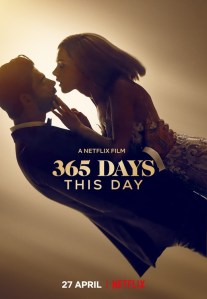 At this point, every viewer turning into 365 Days: This Day is doing so for very specific reasons: either for an erotic charge or morbid curiosity to see how bad this bad franchise can sink. The original film was a pandemic breakout for Netflix in 2020, reigning supreme as their number one movie for over a month internationally. It’s based on Polish writer Barbara Bialowas’ trilogy of best-selling erotic novels, clearly inspired from the successful Fifty Shades of Grey series, itself inspired from the Twilight series, the gift that keeps on giving. The first 365 Days got its name from its lead character being held captive by a mafia scion who just knew that this woman would fall in love with him during the time it took the Earth to revolve around the sun. This obviously problematic dynamic led many viewers to detest the movie and its depiction of romance where consent is definitely a concern, not that it would be the first Stockholm syndrome romance in cinema history. 365 Days was a hit explicitly for its explicit and off-putting aggressive sex scenes. Now that we have two sequels prepped, the question remains whether it can still maintain its performance or whether the franchise suffers from diminished returns. Simply put, this sequel isn’t as problematic as the first movie but it’s just as boring and possibly more pointless.
At the end of the first film, Laura (Anna-Maria Sieklucka) survived her tunnel attack but lost her pregnancy. She hasn’t told her jailer/boyfriend/now-husband Massimo (Michael Morrone) about the baby. They wed, they honeymoon, and she begins to resent feeling like a caged woman (oh lady, I thought that was what won you over?) and then she sees Massimo having sex with his ex-girlfriend. She runs away with Nacho (Simone Susinna), a hunky gardener with even more tattoos than Massimo. The new man whisks her away to his beachfront abode and says he only wants to protect her. Masismo is flummoxed trying to find the absentee Laura while a rival crime family schemes to take her out and make a move while Massimo is so torn and distracted.
 The first thing you’ll realize very early on in 365 Days: This Day is that there simply is not enough material here to cover almost two hours of running time. This movie is starched beyond the breaking point, and I’m not even making a pun here. There are twenty-two songs credited to this movie, and when a song plays, it’s not like some needle drop that only plays for a few seconds to impart a very specific impression. These songs are like full renditions. That’s why the movie often feels like a collection of music videos and luxury resort commercials. We’ll watch Laura and Massimo frolic on the beach, go horseback riding, and slinking into a bubble bath, all inter-cut together. If you just cut to an R&B group occasionally singing to the camera, it would all feel complete. Sometimes we are mere seconds between songs. Just as one is ending, another begins, and after 40 minutes of this, I began to question whether this was a deliberate creative decision by the filmmakers to limit the number of scenes relying upon the actors speaking. This is a blessing because both Sieklucka and Morrone have difficulty making the pseudo-smoldering dialogue sound right through broken English. There are lines like, “I can’t calm down, I’m Polish!” and Laura referring to her bedroom activities as “a sex.” The literal second line of dialogue is a reference to the bride not wearing any underwear. I think there might be 200 words spoken in this entire movie and a high percentage of them will make you groan or roll your eyes.
I have to devote an entire section to discussing the golf scene. You see, on their luxurious honeymoon, Massimo and Laura spend some time on the links but their kinky foreplay doesn’t take a break. She lays on the green, spreads her legs, and his grips his golf club (do you get it? do you get it?) and then literally putts a white ball across the green and between her open legs (do you get it? do you get it?). As it was happening onscreen, I joked to my girlfriend that it would follow this route, and sure enough, the filmmakers could not resist. It is the comedy high-point of the movie.
 It’s not like all these songs are soundtracking sequences of arched backs and heavy thrusting. There are even more music montages for luxury porn than for the soft-core porn. We watch Laura and her friend shop in luxury. We watch them drive in luxury. We watch them walk along the luxurious beach. We watch them jet ski in luxury. We watch them dine in luxury. This is why the majority of the first half of the movie feels like the raw footage from a commercial shoot for a getaway vacation. It’s padding upon padding because the characters of Massimo and Laura are wafer-thin. I was trying to even come up with adjectives to describe either lover, let alone full sentences, and my efforts sounded like a second grader trying to bluff their way through a book report. These characters are so boring that the movie won’t allow them to have any drawn out conversations because then the jig would be up. Even when Massimo confesses to having a brother he never toward Laura, this moment isn’t given extended time for her to interrogate. It’s off to the next shopping or driving montage with sun-dappled cinematography. This is also why the filmmakers have inserted a second couple for us to watch their own blossoming romance, but even this gets resolved so quickly with Massimo’s buddy proposing to Laura’s best pal Olga while they’re all still at the same honeymoon location. They’re supposed to be a distraction and they can’t keep our attention because it’s more characters without defining characteristics beyond their body parts.
The sex is put on hold for half of the movie (with the exception of an occasional frisky dream filling the gap, no pun intended) and 365 Days: This Day becomes a ridiculous soap opera. To fully detail the depths this movie resorts to I’ll need to go into spoilers, if that’s really a concern for you, like this movie is being watched for its storyline. The turning point of the film is when Laura catches Massimo fornicating with his ex BUT WAIT because that wasn’t Massimo but… his coke-addicted, twitchy identical twin brother, Adriano (Morrone is actually far more enjoyable in this dual part). He and the ex are scheming to drive Laura and Massimo apart and then kill them both. They’re being paid by the rival crime family that Nacho belongs to, being the son of the competing mafia boss. This overcooked drama reaches such absurdist heights that it ends on a Mexican standoff with the villains being gunned down, Laura getting shot badly in her abdomen, Massimo finally finding out about his lost child, and a question over where Nacho’s loyalty lies, possibly eliminating Massimo so he can have Laura to himself once and for all. This is like three seasons of soap opera storytelling crammed for the very end of what had otherwise been a ploddingly paced movie lacking needed plot events. Even this sequence is stretched thin by the inane cross-cutting from Laura in danger with Adriano to Massimo and Nacho walking down hallways in excessive slow-motion. I laughed out loud as we jumped from overcooked drama to languidly paced hall walking. The movie has the audacity to end on a cliffhanger, which I suppose also happened with the first movie. If you’re dying to find out what happens to these people in Part Three, I just feel sorry for you.
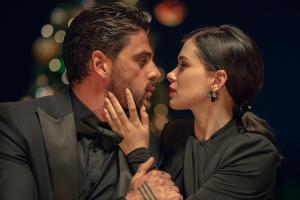 While the sequel is less problematic over consent than 365 Days, it’s also more boring and tediously forced to draw out the weakest, basest of stories that was never meant to be more than a wish-fulfillment appeal to people’s baser impulses. I don’t want to shame anyone that finds this movie sexy or stimulating. Good for you; attraction is uniquely personal and your found yours. However, this series is making me re-evaluate the Fifty Shades of Grey movies, none of which were good but man at least they were better than this. All of this makes me think the next franchise, inspired by the international streaming success of 365 Days, will be even worse to make me re-evaluate the artistic accomplishment of this very boring, very dumb movie. It is a spiral that will never end and only make us sadder.
Nate’s Grade: D
Share this:

White Hot: The Rise & Fall of Ambercrombie & Fitch (2022)
 I don’t know if the superficial fashion company Ambercrombie & Fitch deserves a better expose but a superficial documentary now on Netflix feels like a nostalgia trip that trades in too many glancing, annoying generalities. White Hot: The Rise & Fall of Ambercrombie & Fitch feels like an extended segment from one of those old I Love the 90s specials that used to dominate VH1 where a group of talking heads chatted nostalgically about whatever pop culture bon mot of the past that deserved reverence or being forgotten. I think there could be a story here too. Ambercrombie’s success was built upon two men, both of them gay, creating a brand image basically around the kind of man they found most alluring and attractive: WASPy, muscular, young, and their idea of what it meant to be American (a.k.a. white frat boys). One of those men was closeted and mercurial, and the other was a prominent photographer who was also a predator, but both of these men were responsible for a largely heterosexual cultural landscape accepting their vision and wanting to match their personal preferences. There’s also a story about their wantonly discriminatory hiring practices, keeping minorities in the back or with overnight shifts, wanting to maintain their CEO’s image of people in stores, including hiring people based upon attraction (i.e. thin and white) and not even whether they could be a functional employee. However, director Alison Klayman, no stranger to documentaries that feel rushed and uninformative (Jagged, The Brink, Take Your Pills), would rather speed through an armada of interview talking heads for clipped sound bytes and vague explanations for what made Ambercrombie so popular and then stopped being so (“It was really cool… and then I guess it wasn’t”). The doc completely misses relevant subjects like the online shopping revolution, the decline of malls and mall culture, or anything of actual meaningful cultural contribution beyond the rise of social media. According to the movie, because of social media, more people have voices, I guess just forgetting there was an Internet beforehand. It is strange, by today’s standards, for a large fashion company to be willfully uninterested in its brand being more inclusive. By the end, the documentary even seems to sell a redemption story, so it doesn’t go far enough in its condemnation because that would get in the way of its nostalgia trip and would actually push the interview subjects to confront more of their own actions or inaction. Alas, White Hot is yesterday’s news without any lasting appeal or insight.
Nate’s Grade: C
Share this:

X (2022)/ Choose or Die (2022)
 Horror is likely the most forgiving genre out there for being derivative. Just about every modern horror movie wears its many influences, even the recent trend of elevated horror movies that are trying to say Big Things with equal amounts of arty style and bloodshed. There’s only so many monsters that can chase so many teenagers. Ti West (House of the Devil) is a director I haven’t fully enjoyed, though I would say X is his most accomplished film to date for me. It’s clearly going for a Texas Chainsaw Massacre vibe and docu-drama aesthetic. It’s set in 1979 and we follow a ragtag film crew trying to make “a good dirty movie.” They’ve rented a guest house in the middle of nowhere Texas as their film site because who knows. The octogenarian couple who owns the farm property doesn’t seem to approve of these young folk, and the old lady ends up becoming the slasher killer that mows down the randy young adults. Turns out the old lady has her own urges that the old husband is no longer physically able to satisfy, so she seeks out solace one way or another with the newcomers, whether that be through her sexual satisfaction or through violence. To West’s credit, he has given more attention to his characters. These people are not going to be confused with three-dimensional figures but there’s enough character shading that made me more interested in spending time with them and a little more rueful that most of them will probably die horribly soon enough (Chekhov’s alligator). The slow burn is not wasted time or dawdling, and there are some very well-executed squirm-worthy moments of discomfort. I don’t think X quite works on that elevated horror level of late; it’s mostly a slasher movie with a dollop more complexity and style. The real reason to appreciate X is from the dual performances from actress Mia Goth (Suspiria), the first as a stripper-turned-ingenue that sees pornography as a path of possible self-actualization, but she’s also secretly the killer old lady under piles and piles of makeup. Her wild performances, including scenes where she is facing off against herself, makes the movie far more interesting. Goth goes for broke. I don’t think the X is as fun as it thinks it is, nor is it as thoughtful as it thinks it is, and I don’t know if I care about a prequel that was shot back-to-back that illuminates the killer old lady’s younger life. Is this character really that interesting to warrant her own movie? As a horror movie, it’s disturbing and bloody and surprising in equal measure even as it doesn’t do much with re-configuring the many conventions of its genre.
 Netflix’s Choose or Die is one of those spooky horror movies that wants the audience to play its deadly games alongside the unfortunate characters, much like Saw and Would You Rather?, and I typically enjoy these kinds of movies and thinking what options or strategies I would undergo if I was in their place. The structure is pretty straight forward, with a young woman (Iola Evans) and her programmer friend (Asa Butterfield) coming across a cursed old school text-based computer video game that forces its users to make awful choices. The game turns itself on every 24 hours, so there’s a natural delivery of set pieces, each increasing in its personal stakes. There’s the amateur investigation of the history of this 80s video game and uncovering the possible owner who might be benefiting from all this cruelty and sadism. This is a movie built around its set pieces and they start strong. When the protagonist sees the game in action, with a poor diner worker force-feeding herself broken pieces of glass, it’s truly horrifying and the sound design makes it so much worse. The movie isn’t s gory as it could have been and implies a lot more than it shows. The problem with Choose or Die is that there are too many leaps in logic and characters doing silly things just for the sake of the plot. There needs to be an established system of rules or else everything will feel arbitrary, and eventually that is what dooms Choose or Die. Even while we get more of an explanation behind the makers of the game and their occult connections it never feels like we’re better positioned to beat the game. I will say the final act, the Boss Battle, is where the movie cranks things up and gets really intense and darkly humorous. There’s a showdown that involves a key concept of self-harm that plays out in moderately clever, bizarre, and surprising ways, and this splashy, silly finish made me wish the rest of the movie could have lived in this tonal space. I found the overall sound design to be very annoying as it cranked up the volume on lots of glitchy electronic noises that just made me want to turn it off. There are some good ideas here, like the criticisms of being too nostalgic to the past, and of misogynist men believing nobody else is deserving of being the hero of their story, but this is a movie that lives or dies on its killer set pieces, and those just fall flat after its unsettling first level. Watching someone vomit VHS tape is not scary. Watching people move their bodies like they have no control over them will inherently look goofy. Choose or Die wouldn’t be the worst choice of a movie to kill 85 minutes but it’s certainly not much more than the sum of its parts, and even those are overly derivative and been done better by its predecessors.
Nate’s Grades:
X: C+
Choose or Die: C
Share this:

Sonic the Hedgehog 2 (2022)
 While not as enjoyable as the first outing, Sonic 2 mostly fulfills what you would be looking for with a sequel. This is the kind of kids movie that is aimed primarily for the little ones, and that’s okay, not every movie intended for children has to work on multiple levels of maturity. We follow our signature alien speedster as he meets two of the other famous faces from the video game franchise, Tails (voiced by the game’s original actress) and Knuckles (Idris Elba), except Knuckles is working with a returned Doctor Robotnik (Jim Carrey) to find a hidden gem of ultimate power. The plot is just a disposable excuse to set up some big screen adventure-seeking, and everything is kept at a very low-stakes realm of entertainment, breezy and quippy and pleading with you to just accept it on its own minor terms. At points, the Sonic sequel can feel like a direct continuation of its predecessor and Carrey is once again the MVP. I enjoyed the Knuckles character because the screenwriters have made this new alien warrior very much like the literal-minded himbo, Drax (Guardians of the Galaxy). Plus I just enjoy Elba’s natural British voice. The length of the movie is a bit padded at over two hours, a full twenty minutes longer than the 2020 original, and the attempts at heart feel strictly boilerplate and perfunctory. The subplot about a destination wedding in Hawaii feels included just to give the humans something to do away from the action, and while I enjoyed Natasha Rothwell (Insecure) getting to go full avenging bridezilla ham, this stuff could have easily been cut as much as it matters to the bigger picture of world-saving and robot-smashing. If you were a fan of the first Sonic movie, which I found to be a pleasant surprise, then you’ll likely relive those same feelings but just a little less potent. It’s still a fun, agreeable kids movie and one that can be enjoyed on that level even by adults, though the fun just might not be the same size as before.
Nate’s Grade: B-
Share this:

Everything Everywhere All At Once (2022)
 Even after only two movies, I would trust the directing duo Daniels (Daniel Kwan and Daniel Scheinert) with any movie. They have earned a lifetime pass from me. If these men can make the farting corpse of Harry Potter not just one of the weirdest movies of 2016, not just one of the best films of that year, but also one of the most insightful toward the human condition, then these men can do anything. It’s been six long years for a follow-up but it sure has been worth it. Everything Everywhere All At Once is, to be pithy, a whole lot of movie. Everything Everywhere (my preferred shorthand from here) is a miracle of a movie. It’s a wonder that something this bizarre, this wild, this juvenile, this ambitious, and this specific in vision could find its way through the dream-killing factory that is Hollywood moviemaking. This is the kind of movie you celebrate for simply existing, something so marvelously different but so assured, complex but accessible, and deliriously, amazingly creative. I’m throwing out a lot of adjectives and adverbs to describe the experience of this movie and that’s because it filled me with such sheer wonder and divine happiness. I am thankful that the Danirels are making their movies on their terms, and two movies into what I hope is a long and uncompromising career, I can tell that both of these gentlemen deserve all the accolades and plaudits they have coming. I’ll try my best not to sound like a simpering moron while I try to explain why this movie is so thoroughly outstanding.
Evelyn (Michelle Yeaoh) is a middle-aged Chinese immigrant who is taking stock of her disappointing life. She and her husband, Waymond (Ke Huy Quan), own a floundering coin-operated laundromat. They’re under audit by a dogged IRS agent (Jamie Lee Curtis). Evelyn’s disapproving father, Gong Gong (James Hong, still so great even into his 90s), has moved from China to live with the family, and he was never a fan of Waymond, looking down on his daughter for marrying the man. Then there’s Joy (Stephanie Hsu), Evelyn and Waymond’s twenty-something daughter, who wants to bring her girlfriend to dinner but mom still doesn’t accept her daughter’s queerness and uses the excuse of Gong Gong’s generational disapproval. Then, at the IRS agency, Waymond’s body is taken over by another Waymond, Alpha Waymond, who informs Evelyn that she is the key to saving a universe of universes, and she’ll have to tap into her alternate selves and their abilities to battle the evil destroyer, Jobu Tupaki, who wants to destroy all existence, and who also happens to be an alternate universe version of Joy.
 Multiverses are definitely all the rage right now as they present nostalgic cash-grabs and cameos galore, but Everything Everywhere is a multiverse that is personal and specific. It’s based on all the paths the protagonist never took, and each allows her confirmation of what her life could have been, often more glamorous or exciting or initially appealing. A movie star. A famous singer. A ballerina. A skilled chef. Evelyn is a character paralyzed by the disappointment of her life’s choices, the malaise that has settled in, and the nagging feeling that things could have and should have been better. In one of the best jokes early on, Evelyn is told she’s the Chosen One not because she is special but because she is, literally, living the worst of all possible lives of the multiverse of Evelyns (then again the pinata Evelyn didn’t look like an upgrade). She has taken all the many bad paths and dead ends, but this positions her as the only one who has the power to tap into every other power and ability from her multiverse duplicates. It’s one thing to be feeling like you should have made a different choice in the past, and it’s another to get confirmation. This backhanded revelation could just serve as its own joke but it actually transforms into a philosophy that coalesces in the final act, that of all the universes and possibilities we could have had, the best one is the one we are actually present for. In another universe, one very much styled like In the Mood for Love, where a Waymond who was rejected by Evelyn long ago reconnects with her, mournful of what could have been, and says, “In another life, I would have really liked doing laundry and taxes with you,” in reference to Evelyn’s dismissive summation of what his unrequited romantic “what if” would have lead to. It’s such a poignant moment. By the end of the movie, it’s become a journey of self-actualization but tied to self-acceptance, where kindness and empathy are the real super weapons and the answer to the tumult of postmodern nihilism.
Smartly, the Daniels have made sure that a universe-hopping threat is actually connected to our hero in a meaningful manner. By making the villain an alternate version of Joy, it raises the stakes and forces Evelyn to have to confront her own parenting miscues and frayed relationship with her daughter. It’s the kind of decision-making that reinforces the emotional and thematic core of a movie that is spinning so fast that it feels like you might fall off and vomit new colors. Joy is an avatar of generational disconnect, inherited disappointment and resentment, but what really makes her relatable is the growing feeling of being over it all. Given the power to see everything in every universe, Joy concludes that life is overwhelming and without meaning. It’s the same sort of nihilism we might feel today as we doom scroll through our phones, eyes glazed over from the barrage of bad news, outraged click bait, and feeling of abject helplessness while the world spins on in an uncertain direction. It’s not hard to feel, as Joy, that it’s all too much to bear, and if she can experience everything then does it present value to anything? If she can always just sidestep to another universe, what does that do to the value of life? That’s the ethical conundrum with Rick and Morty, a show where they can swap characters from other dimensions to fix more costly mistakes. What Daniels attempts with Everything Everywhere is to tackle the same question but approaching a different answer: that despite everything, life matters, our relationships matter, and kindness and empathy matter most. Watching Evelyn and Joy, and their many different versions of mother and daughter, try to reach an understanding, it’s easy to feel that struggle and relate to wanting to feel seen. As Evelyn encouragingly says to one character at their lowest point, “It is too much to handle, yes. But nobody is ever alone.”
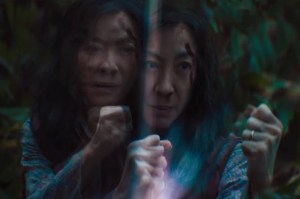 This is a dozen different kinds of movies, all smashed together, and each of them is utterly delightful and skillfully realized and executed. If you like martial arts action, there are some excellent fight sequences including a showstopper where Waymond wrecks a team of security guards with a fanny pack. The action is exciting and the martial arts choreography is impressive and filmed in a pleasing style that allows us to really appreciate the moves and countermoves. If you like wild comedies, there are many outlandish moments that combine low-humor and highbrow references. I’ll simply refer to one as finding payoffs for IRS auditor trophies shaped like butt plugs. This is one of the funniest American comedies in years. If you like family dramas, there is plenty of conflict across the board between Evelyn and Waymond and Joy, plus the specter of Gong Gong, and each person trying to communicate their dissatisfaction and desires for a better life. If you removed all of the crazy sci-fi elements, googly eyes, people’s heads turning to confetti, and what have you, this would still be a compelling human drama. When the movie isn’t working through ridiculous tangents, or eye-popping action, or a staggering combination of kitsch and intelligence, it’s building out its emotional core, the heart of the movie, the thing that makes all the gee-whiz fun matter, the family in flux. Likewise, this is a powerfully optimistic movie, life-affirming in all the best ways without being pandering, and one that is without any flash of ironic condescension. Sincerity is powerful and all over.
The movie is elevated even higher by the strength of the performances. Yeoh (Crazy Rich Asians) has spent decades as a martial arts master, and of late she’s been branching out in more demanding dramas, but this is easily the finest performance of her career for nothing less than playing a dozen different characters. She is sensational. The early Evelyn is full of despair and regret, and as she gets to explore each new version of herself, there’s an excitement that’s bristling, as she gets to see the successes she could have been and celebrate. Yeaoh is hilarious and deeply affecting in the central role and still very much a badass. She showcases starting range, it makes you weep that she has never gotten to play so many different kinds of roles because she’s so good at all of them. Hsu (The Marvelous Mrs. Maisel) is the wounded soul, and her sneers and seen-it-all attitude are killer without losing track of the pain at the core of the character. Her emotional confrontations with her mother still hit hard. But the secret weapon of this movie is Quan, the former child actor best remembered as playing Data in The Goonies and Short Round in Temple of Doom. Yes, that same actor. He too gets to play such a wide, wild variety of Waymonds, from the doting and meek husband, to the confidant warriors, to the smoldering former flame, but with each new Waymond, Quan makes you fall in love with the original more. The character of Waymond and his central philosophy of kindness is so moving and needed, that we almost get to fall in love and re-evaluate this man the same way Evelyn does. Also of note, Curtis (Knives Out) is having an absolute blast as her menacing IRS agent.
 It’s truly amazing to me that a movie can have some of the silliest, craziest, dumbest humor imaginable, and then find ways to tie it back thematically and make it yet another important thread that intricately ties into the overall impact of the movie. The genius of Daniels is marrying the most insane ideas with genuine pathos. Take for instance that one of the many multiverses involves people with hot dogs instead of fingers. It’s a goofy visual, and it could simply have been that, a passing moment to make you smile, but the Daniels don’t stop there. They continue developing their ideas, all of their ideas, and find additional jokes and purposes few could. Okay, so this is a big divergence from history, so how could humans evolve to have hot dogs for fingers? Well the movie actually showcases this moment in a hilarious 2001: A Space Odyssey reference. And then the film says, “Well, if this was the way of life, what other practices would evolve from here when it comes to communication and intimacy?” It’s that level of development and commitment that blows me away. The same with what starts as Evelyn’s misunderstanding of the Pixar movie Ratatouille. It works just as a joke in the moment, but then it comes back as its own reality, and even that reality has a thematic resonance by the end. This level of imagination, to take the weirdest jokes and make them meaningful, is special. In one second, I can cry laughing from a raccoon and in the next second a rock can make me want to cry. In essence, even though Everything Everywhere is beyond stuffed, nothing is merely disposable.
That doesn’t mean that the film doesn’t also fall victim to repetition at points. My only criticism, and it might even be eliminated entirely after a second viewing, is that Daniels can over indulge when it comes to their narrative points. Some things can get stretched out, so that they hit points with five beats when three could have been sufficient. It’s this kind of mentality that pushes the running time to almost two hours and twenty minutes, which feels a bit extended. However, the messiness and overstuffed nature of the movie is also one of its hallmarks, so I don’t know if this criticism will even register for many, especially if you’re fully on board their wacky wavelength.
If you can, please go into Everything Everywhere All At Once knowing as little as possible. The carousel of surprise and amazement is constant, but the fact that there is a strong emotional core, that all the many stray elements become perfectly braided together, no matter how ridiculous, is all the more impressive. This is stylized filmmaking that is very personal while also being accessible and universal in its existential pains and longing. It’s style and substance and exhilarating and genius and emotionally cathartic and moving and everything we want with movies. It’s the kind of movie that reignites your passion for cinema, the kind that delivers something new from the studio system, and the kind that deserves parades in celebration. Simply put, as I said before, this is a miracle of a movie, and you owe it to yourself to feel this blessing.
Nate’s Grade: A
Share this:

The Bubble (2022)/ Moonfall (2022)
 What to do with a comedy that just isn’t that funny? I come to co-writer/director Judd Apatow’s The Bubble with a rhetorical surgeon’s scalpel ready to figure out this conundrum. There are plenty of funny people involved with this Netflix project. Apatow has been an industry unto himself in developing comedic talent going back to his Freaks and Geeks TV days and with such heralded twenty-first century comedies to his credit like The 40-Year-Old Virgin and Knocked Up. The cast assembled for The Bubble has great comic potential. Even the premise is fun, a group of spoiled actors trying to film a bad sci-fi action movie under the challenges of the COVID-19 quarantine. So what went wrong here and why is The Bubble Apatow’s least engaging and least funny movie to date?
We follow the Hollywood production of Cliff Beasts 6, filming in rural England under the supervision of studio execs trying to keep the secluded production as problem-free as possible under the 2020 COVID outbreak. Karen Gillan (Avengers Endgame) plays Carol Cobb, an actress returning to the franchisee she had once left behind to star in a misguided Oscar bait movie where she, a white woman, was the solution to solving the Israeli-Palestinian conflict. She’s hoping to save her career, while her coworkers are just hoping not to go insane with the forced isolation and new safety protocols during their film shoot.
 So let’s circle back to the central question of why The Bubble isn’t funny, and I think I have some theories. First, we can acknowledge comedy is subjective but at the same time also acknowledge that the construction of good comedy can be academically identified and appreciated, that there are tenets that hold and maintain, like setups and payoffs, rules of threes, etc. I think one of the big problems is that nothing is really that surprising throughout the protracted and unfocused duration of The Bubble.
The characters are intended to be shallow but are too shallow to even register as distinct comedy types played against one another. There are levels of general buffoonery, but so many of these characters are missing out on a more definite angle or perspective. Take for instance the smug movie star (David Duchovny) who takes it upon himself to rewrite the script. This should be an obvious route where the story comes undone or character actions are inconsistent or that other characters, especially those who had larger roles, become subservient to the star and his ballooning ego. There needs to be distinct differences for the comedy to land and be an indication of his ideas about what he thinks would be an improvement. This doesn’t really happen. Take the recent Oscar winner (Pedro Pascal). He’s not haughty and pompous, thinking himself beneath this kind of genre filmmaking. He’s simply a dumb hedonist who is seeking out pleasure he is denying himself. That’s fine, as at least one character is set up to be more of a wild card to stir trouble. This character spends the entire movie whining and having unfunny fantasies when they should be the one causing havoc and unexpected consequences from their behaviors. What a waste. Every character falls into this nebulous underwritten area without being distinct enough to be considered stock and ultimately useful for comparisons and generating comedic conflicts.
Another lack of surprise is how every character is exactly how they are presented, so with no points of change it all gets very redundant. If this was going to be the case, Apatow needed to be far more exacting with his satirical barbs. If he wants to really send up the industry and self-absorbed actors, we need something akin to 2008’s Tropic Thunder, which, by the way, had very distinct character differences it used for maximum comedy. This movie feels more like an extension of the privileged world populated by the bourgeoisie characters from 2012’s This is 40, a marked misstep for Apatow and his idea of recognizable midlife struggles (“Oh no, we’ll have to move from our ridiculously large house to… just a very large house!”). It’s the same pitiable rich people whining about their lives while they quarantine in luxury. Watching montage after montage of them being bored in their private hotel suites is not funny. It doesn’t even work as a criticism of the characters on display. They aren’t doing anything out there or particularly telling, they’re just being bored, and just watching bored people is boring.
 The moviemaking process and the film-within-a-film itself is also shockingly unfunny. Apatow has worked in Hollywood for decades, so I was expecting harder-hitting satire of the moviemaking industry and the way that films are continuously compromised. As another example of shallow character writing, take the director (Fred Armison), a Sundance award-winning indie artist tackling their first studio project. The expected route would be to start with this character having big ideas about a grand artistic vision, taking real chances, and trying to do something different and compelling within the realm of giant dinosaur action movies, and then little by little, they have to compromise and delete this grand vision, taking studio notes, limitations from the actors, and bad luck. This would provide a foil for every bad item complicating the production, the artist struggling to watch their dream die piece-by-piece. This doesn’t happen and the director’s indie background is never utilized as a contrast for comedy.
Apatow plays the same trick over and over with the film-within-a-film. It will be a dramatic sequence and then cut to the actors running on a treadmill or swinging behind a green screen, the same undercutting gag on repeat. It’s not funny and, frankly, gets tiresome. The ridiculous nature of blockbuster filmmaking should be ripe for satire (again, Tropic Thunder did it) but Apatow never pushes too hard, settling on the same soft-pedaled jokes on simple characters. Pascal is left to practice funny accents, but none of what they say within the movies is funny-bad; it’s just tin-eared dialogue that is merely bad only. The only segment that genuinely had me laughing was when the young actress (Iris Apatow) teaches a raptor how to do the latest TikTok dance. This is the only moment that feels biting on the out-of-touch desperation of modern moviemaking to chase and incorporate vaporous youth trends to remain hip. The Hollywood film gone awry should feel like a mess, it should be getting progressively worse or more out of control or at least something so outlandish it separates itself from its targets. I suppose shooting the CGI genitals off dinosaurs is something you don’t see every day but it too gets old fast.
 Fortunately, these actors can still be charming even with lesser material, but you’ll simply walk away feeling enormous sympathy for them. Everyone is trying to do so much with so very little, and it can get painful at points, like Pascal’s character clinging to an amorphous evolution of an accent. There are very funny people here. Keegan Michael-Key is very funny, but he gets nothing here, especially with a ripe subplot where he might be starting a self-help cult. Maria Bakalova is very funny, and was even nominated for an Oscar, a rarity for a comedian, but she gets nothing here, being a horny hotel worker. Gillan is very funny, but she too gets nothing here as a slumming actress desperate to rehabilitate her career. It’s remarkable considering she’s the main character but really just an insecure straight man role. The main character needed to be Gavin (Peter Serafinowicz), the producer on location doing his best to herd all these spoiled and irresponsible people into getting this movie made and on time. You want to focus on the character with the most chaos to try and control, and that’s him. It just feels criminal that a cast this good, with fun supporting players like Samson Kayo (Our Flag Means Death) and Harry Trevaldwyn (Ten Percent) to round out the more famous faces.
This also made me think to reflect on the recent release of Moonfall, which looks like the big, schlocky sci-fi disaster movie that Judd Apatow would be satirizing with The Bubble. It’s a Roland Emmerich disaster movie where he does exactly what Roland Emmerich does best: expansive scenes of cataclysmic destruction on the biggest scale possible. It was believed by industry watchers that Moonfall would be the kind of epic that people would go back to the movies to experience, watching the scale of destruction on the biggest screen and cheering along. It didn’t work out that way and Moonfall reportedly will lose over a hundred million dollars for its investors. It seemed like a smart bet as disaster movies have performed well for Emmerich, like 2012 and The Day After Tomorrow. In times of struggle, human beings enjoy fantasies about surviving fantastic odds, or at least that was the established way of thinking. After two years of life during COVID-19, maybe our idea of sci-fi escapism isn’t quite what it used to be.
I watched Moonfall with general indifference. It felt like a mediocre hodgepodge of other Emmerich disaster movies and veered into campy nonsense at many points. It’s the kind of movie that demands you shut off your brain and just go along with the scientific gobbledygook, especially once the moon begins making Earth’s gravity go all haywire. At that point the movie becomes an inconsistent video game with its liberal use of physics. It doesn’t seem like it matters, but watching characters do Super Mario Brother-level jumps has a fun appeal as well as being impossibly goofy. One character says, “The moon can’t do these things,” and another character waves away that pertinent thought and says, almost directly to the audience, “Yeah, but this isn’t a normal moon, so forget everything.” The special effects are also quite hit or miss. Plenty of the larger effects are quite awe-inspiring and suitably terrifying in depicting an awesome reality, and then others look like they didn’t quite have enough money when it came time to render. Some of the CGI reminded me of moments from 2008’s Torque, where the high-speed backgrounds resembled badly composited video game texture blurs. If your movie is going to exist primarily in a junk food realm, then you need to either have as minimal distractions as possible to rip you from the believability of this world, or you simply need to veer into it and accept that the instability and chaos will be part of the general appeal. Provide the goods, and Moonfall just doesn’t.
 The movie also takes an inordinate amount of time to get back to space after a prologue, almost halfway through its two hours. This first half stalls with setting up so many characters to follow that you simply won’t care about. I didn’t care what happened to anyone back on Earth. When the rednecks found our party (again!) in a petty car chase, I literally laughed out loud. The alien/moon mythology is also convoluted and vague enough to simply apply a good versus evil designation for technology, and the big sacrifice doesn’t feel so big when you find that character to be annoying for the duration of their grating screen time. It’s another movie tipping you off about a possible linked sequel and one that appears more appetizing than the film we just witnessed (just like Emmerich’s 2016 Independence Day sequel). In short, Moonfall is a bit of a mess, a mess I can imagine others enjoying and laughing with, but definitely one of the lower outputs in Emmerich’s long career of destroying global landmarks and formerly pristine vistas.
I found Moonfall and The Bubble to both be poor examples of what Hollywood thinks audiences will desire as escapism in the wake of COVID-19 disrupting routines and lives. Each of the movies is disappointing because it doesn’t fulfill what it promises. The Bubble has a bunch of combustible characters in a combustible scenario and squanders its time with weak satirical gags and lazy characterization. Moonfall wants to be the big, fun epic of Emmerich’s past, but it takes its sweet indulgent time with uninteresting characters, convoluted and underwritten lore, and a plot that would have been more entertaining had it better embraced the absurdity of its implications. You may likely have an enjoyable time watching either movie, and they’re almost the same length too, but I found both to be middling examples of Hollywood’s attempt to try and give the people what they think they want and missing the entertainment mark.
Nate’s Grades:
The Bubble: C
Moonfall: C+
Share this:

Death on the Nile (2022)
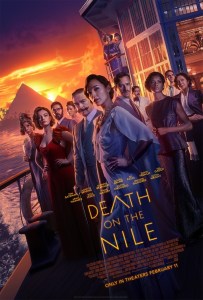 I am admittedly not the world’s biggest Agatha Christie fan, so once again reader, as you did with my review of 2017’s Murder on the Orient Express remake, take my critique with caution, especially if you are a fan of the illustrious author’s many drawing room murder mysteries. Kenneth Branagh returns as director and as the world’s greatest detective, Hercule Poirot, with arguably the world’s greatest mustache (as I said in 2017, it appears like his mustache has grown its own mustache). Death on the Nile takes the murder-on-mode-of-transport formula and leaves us with a gaggle of red herrings and suspects to ponder until the inevitable big conclusion where our smartypants detective reveals everything we had no real chance of properly guessing no matter the clues. Again, these kinds of impossible-to-solve mysteries are not for me, but I know others still find antiquated pleasures with them (Christie was the best-selling author of the twentieth century after all). What I don’t find as pleasing, and I’m sure even ardent whodunit fans would agree, is how cheaply this whole production looks. The budget was almost twice as much as Orient Express but it’s really a chintzy-looking cruise ship with one of the most obvious green screens for a big budget film. It takes away from the grandeur quite a bit, especially knowing the original 1978 movie was shot on location in Egypt. Another aspect that didn’t work for me was the added back-story for Poirot, including the explanation for why he grew his preposterous mustache. Did we need a mustache origin story? Did I need an attempt to better humanize this fastidious detective? If you were a fan of the overly serious and stately Orient Express, and of Christie in general, I’m sure there’s enough to recommend a new Death on the Nile. Branagh clearly has passion for this character and as a steward of this cherished material. However, for me, it took too long to get the movie really rolling, the characters were too lackluster, and there are too many tonally bizarre and uncomfortable moments, like Gal Gadot quoting Cleopatra while being, I guess, dry humped by Armie Hammer against an Egyptian relic. As Poirot’s mustache, which will be given top-billing in the third film, would say, “Yikes.”
Nate’s Grade: C
Share this:

The Lost City (2022)
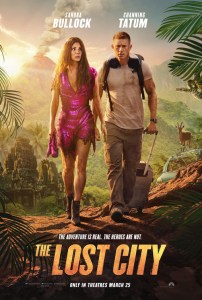 It’s a new spin on Romancing the Stone and as long as the leads are charming and the movie is fun, I have no problem with rehashing this formula. The Lost City mostly succeeds thanks to the winning chemistry between Sandra Bullock and Channing Tatum. She plays a self-loathing romance author and he’s her hunky and clueless cover model, and they both get into a treasure-hunting escapade and chased by scary men with guns thanks to a crazed rich kid (Daniel Radcliffe) looking for a titular lost city of yore to bolster his own rep. The movie stays on a consistently light wavelength even when death and sudden violence occurs. That jokey mentality assures the audience that the movie will not take things too seriously, and that relaxed-yet-antic attitude translates into fairly amusing banter with our leads. The movie does a good job of spacing out its comic set pieces and keeping things moving for its short 90 minutes. Not everything works as well as the leads though. Some storylines feel underplayed or forgotten until called upon for moments that don’t feel earned. Radcliffe feels wasted as a petulant baddie without any fun or memorable angle. One of the best aspects is what happens to the movie’s surprise cameo (spoiled via the movie’s own trailer) but the ending resolution of this feels entirely pointless and undercuts its nerve. It’s a movie that delivers exactly the kind of experience it advertises, and it’s nice to still be able to see a comedy in theaters lifted by the appeal of two stars having a ball together. The Lost City is a formula rom-com with enough good-natured screwball comedy and enjoyable zaniness to coasts on charm and star power.
Nate’s Grade: B


 nathanzoebl
You must be logged in to post a comment.