Category Archives: 2020 Movies
I’m Your Woman (2020)
 I’m Your Woman does for the gangster/crime genre what You Were Never Really Here did for the loner revenge thriller, namely demystify popular tropes and find a humanity often missing below the surface. We’ve been inured to gangster cinema for decades and love following the criminal antics of bad men without fully thinking about the collateral damage on the periphery of their story. I’m Your Woman imagines a typical crime story but from a very human perspective, focusing on the wife who has to deal with the confusion and fallout from her husband’s misdeeds. It’s a refreshing and modern take that works as moody paranoia thriller just as much as it does a subversion of them.
It’s the 1970s. Jean (Rachel Brosnahan) is married to a man who she knows does some very bad things. One day Eddie (Bill Heck) comes home with a baby that he declares is theirs. Where did this baby come from? Jean cannot say but she chooses to raise this child as her own son. Another day, her husband goes out with some friends and never comes back. One of his associates barges into her home in the middle of the night, bloodied, and tells her that Eddie is gone and she needs to likewise be leaving in a hurry. He tasks Cal (Arinze Kene) to drive Jean and her baby out of town, watch over her, and wait until the heat dies down or everyone else just ends up dead.
 And with that, the movie is off to a gallop and Jean doesn’t know what’s happened to her life, only that it’s bad, and she doesn’t know where her husband may be, or even if he’s alive, but she’s told that people will be coming for her to get to him or to punish him, and so she must be whisked away in the middle of the night into hiding. We as the audience are left very much in the dark with Jean, and this precious little information allows us to very strongly feel her paranoia and anxiety. Every scene when she’s been left alone and sees a car coming closer, every knock on the door, it raises the suspense because your mind, like hers, is questioning everything. Admittedly, some will find this to be rather boring and a lacking perspective, but I thought the approach of director/co-writer Julia Hart (Stargirl) was to highlight the perspective of a character often taken for granted and forgotten in gangster cinema and its celebration of doomed antiheroes. We’re used to criminals neglecting their molls, and I’m Your Woman declares its allegiance right in the title. We’re on the run with this woman, trying to make sense of the plight as we go, and being trapped in a position of limited information is an intriguing and relatable dash of realism.
There are violent outbursts from time to time, but much like You Were Never Really Here (the two of these movies would make a good double-feature, folks), the violence is far from glorified and often denied to the viewer. Much of the violence is depicted off-screen and we watch Jean stumble upon its awful consequences, again linking up with the perspective of a bystander to the careening violence and mayhem from her romantic attachment to a life of crime. There’s a mass shooting inside a club that is deeply unnerving because of our limited perspective. We’re tethered to Jean and hear the off-screen gunshots getting closer, the screams of civilians, and the camera keeps running without a cut as she dashes down a long corridor but cannot find an exit. She ducks into a phone booth and we watch armed men pass by. She waits and makes her escape, tripping over bleeding bodies, and the camera continues in one ongoing take. It’s nerve-wracking but it also denies us coherency or clarity which makes it so much scarier (I was having visions of what people might have gone through with the Pulse nightclub massacre). Given its subject, there are moments of sudden, shocking violence but often it’s to disorient us and not as some delivery system of satisfaction. It would be very easy to follow a more traditional formula for Jean where being thrust into fending for herself turns her into a steely killer that lays waste to the men hunting her as finds her own means of authority. That was essentially the plot of last year’s The Kitchen, a fairly mediocre and disappointing movie about threatened mob wives. That’s not this movie. Jean doesn’t become a ruthless mob boss. She certainly attains an agency that she didn’t have at the start of the film and a well-earned resilience, but she’s always a grounded, frantic, and relatable person trying to keep their wits and not serve up a witty retort.
 Because much of the movie involves the protagonist in wait and picking up small pieces of information to reform her sense of self and her dire circumstances, the digressions had better be worth it. I fully believe I’m Your Woman is going to be a divisive movie and it will entertain likely as many people as it leaves cold. I found the small digressions to be interesting and doing their part to strip away the movie world heroics and trappings, allowing people to simply act like recognizable people. There are little things that stand out, like a kind neighbor simply recognizing how exhausted a new mother looks, or a method of soothing a baby passed down from father to son, or the discussion of making a child laugh being the clincher for parental ties. There’s a lovely moment halfway through where Jean and Cal are stopping at a café. She delivers a monologue about her unexpected child, about her inability to carry a pregnancy full-term, about her prior miscarriages and her divining what that means about her involvement in crime, and it’s one of those moments where it feels like a character is just baring their soul. Jean is so vulnerable, so remorseful, but also so lost yet hopeful of what being a mother could mean for her, a title she says she tries to downplay but had really been her heart’s desire. I enjoyed getting to spend time with Cal and those he links Jean up with later. There’s a found family aspect of dislocated people trying to navigate the hand they’re dealt without pity or commiseration. When the movie stops to take a breath, that’s when it kept solidifying its growing authenticity for me.
Brosnahan (The Marvelous Mrs. Maisel) is a fine anchor. She has to constantly be alert and anxious, as well as exhausted, so even when she’s at rest her character can never fully be rested. It means that even during the quiet moments alone, Bosnahan is giving the viewer a terrific sample of non-verbal acting prowess. I appreciated that Jean isn’t stupid. She’s ignorant insofar as she lacks crucial knowledge, but throughout I’m Your Woman she responds to potential threats and suspicions in ways you would hope and avoids more than a few disasters. Brosnahan also has an easygoing chemistry with Kene (How to Build a Girl) that makes them a winning team.
I found I’m Your Woman to be a refreshing take on crime stories by re-examining life from a character very often left behind while the men run their schemes and accrue their violent demise. It’s an interesting character study of a gangster’s moll and what living with the consequences of a bad marriage can involve. There’s terror and bloodshed but it never feels sensationalized or glamorized. Our heroine proves herself capable of surprising those who discount her, but that doesn’t mean she transforms from a scared, confused, and desperate person into an action hero. The filmmakers have brought a reflective and humanist take on the gangster genre, and your appreciation will likely also benefit from familiarity with the genre and its tropes. If you’re subverting expectations, knowing those expectations is somewhat essential to the desired effect. I’m Your Woman is worth your time if you ever wondered about the life of so many of those underwritten, possibly stock supporting roles in a gangster movie and asked about their interior lives.
Nate’s Grade: B+
Share this:

Red Penguins (2020)
 The sports documentary Red Penguins starts off as a fun, so-crazy-you-can’t-believe-it tale of larger-than-life characters mucking it up in post-Soviet Russia and having a ball without oversight. It begins slight and light, though entertaining, briskly jumping from bizarre anecdote after anecdote of the Russian hockey club that was controlled by the Pittsburgh Penguins ownership group (and co-owner Michael J. Fox). Steven Warshaw was a young, extroverted go-getter and tasked with overseeing the American-Russian operation and he was a natural salesman and born showman, using events like free beer and strippers on the ice to build a popular following with the Moscow fandom. At one point, Michael Eisner and Disney were highly interested in getting involved with all of the possibilities of the larger Disney empire. The first half of the movie is zipping from crazy stories about how wild the Penguins could get, at one point having circus bears perform on the ice. However, the movie transforms into something darker, more meaningful, and very ominous that explores how the Russia of today became what it is in the wake of chaos following the Soviet dissolution. In the early 1990s, millions were adjusting to abrupt free-market capitalism with no thoughtful transition from 80 yeas of life under communism. The police forces were ineffective when present, the food lines grew longer over scraps, and many were grappling with what to do next. The country wasn’t ready and in the ensuing chaos the system of authority shifted from the state to the mob. The Russian mafia became the banks for millions, including those within the government, and their influence seeped into politics and established an echelon of entrenched oligarchs. The good times of the Penguins got much more serious when their success drew the attention of criminal elements wanting in on the profits. Multiple people attached to the team and assembled media were murdered, and the Americans realized it was time to cut ties and get out. The film by writer/director Gabe Polsky serves as an almost sequel to his 2014 Red Army documenting the decades of dominance from Soviet hockey players. His interview subjects can provide colorful details with the anecdotes, but when the film makes its tonal evolution, those same red-faced, churlish Russians take on a more distressing stance. They justify the rampant graft, corruption, and violence in a flippant “that’s the cost of doing business” sort of fatalistic moralizing. It’s an intriguing process to see the dark contours of interview subjects who beforehand had been portrayed an amiable oddballs. Red Penguins is a cut above the average ESPN 30 For 30 sports documentary when it reaches beyond the crazy headlines to address the costs of runaway good times and how one rowdy hockey team could serve as a symbol for an entire country’s descent.
Nate’s Grade: B
Share this:

Mank (2020)

In 2003, director Peyton Reed (Ant-Man, Bring it On) recreated the “no-sex sex comedies” of the 1960s starring Doris Day and Rock Hudson, with Down with Love. It recreated not just that era in time but also the hokey filmmaking techniques of its time, including green screen for rear projection as the characters drive. It was a big homage to older Hollywood and a celebration of its outdated filmmaking and storytelling. But was the movie ever more than one elaborate homage? Did the film have any other reason for being than imitation? What about Gus van Sant’s shot-for-shot remake of Hitchcock’s Psycho? This is what I thought of as I watched David Fincher’s highly anticipated new movie, Mank, a surefire awards contender about Herman Mankiewicz as he writes early drafts of his career masterpiece, Citizen Kane. Fincher goes to a lot of trouble to recreate the look, feel, and sound of Mank’s creative era, but by the end I had one clear summation in mind: Mank is David Fincher’s Down with Love.
Herman “Mank” Mankiewicz (Gary Oldman) is washed up and he knows it. It’s 1940 and he’s worn out his welcome at the movie studios he used to be a screenwriting titan, heading story departments and adding witty, sardonic patter to dozens of studio pictures. He was a favored guest of newspaper tycoon William Randolph Hearst (Charles Dance) and a friend to his wife Marion Davies (Amanda Seyfried), an actress who got a boost from her high-profile marriage. Now he’s on the outs of the industry that has grown tired of his antics. Enter 24-year-old radio wunderkind Orson Welles (Tom Burke) who personally wants to work with Mank. Welles has been given full creative control for his feature film debut and wants to make something big. He tasks Mank with writing the first draft and Mank turns to the people he knows best to skewer.

I was not expecting my blasé reaction to a Fincher film. It’s his first movie in 6 years (Gone Girl) and I think maybe his least compelling movie of his career. I’m not going to say that The Game or Panic Room are more artistic movies than Mank, steeped in the Hollywood studio system and lovingly recreating a faded era of bigwigs and big mouths. However, I will resolutely claim that either The Game or Panic Room are more entertaining. I doubt I’ll ever watch Mank again in my life. Thanks to the convenience of Netflix streaming, I watched the 130-minute movie over the course of two days but I was starting and stopping throughout. At one point I found myself zoning out and realized I had missed the importance of the scene and had to rewind to watch again. Dear reader, this was not my expected response at all. Why did I find the movie so lackluster? I think it comes down to the fact that it doesn’t really give you any more insight into Mank, the old studio bosses, the life and allure of filmmaking, the ascending industry of motion pictures and their prevailing cultural dominance, or even on Hearst or intriguing behind the scenes struggles with Kane. You’re just witness to history and not actively digesting and assessing it. In all honesty, you would be better off watching the Oscar-winning documentary The Battle Over Citizen Kane or the underseen 1999 HBO TV movie RKO 281 (starring Liev Schireber as Welles and John Malkovich as Mank). Either of those two other movies would give you better intrigue and insight into the men and their legacies.
The character of Mank comes across so superficially like he’s just a catty, booze-soaked genius who is only good for a cutting retort and vomiting on your floor. I cannot state enough how uninteresting the character of Herman Mankiewicz comes across during this movie. He’s exactly the same from beginning to end and it gets rather tiresome. Even his first moments, where every dialogue response has to be pithy or setting up a later pithy remarks, can grow tiresome. It’s as if Fincher has made Mank one of his own characters in one of his own movies. He’s certainly not an unblemished protagonist. He has all manner of self-control problems, from his drinking to his mouth to his gambling to his general impulsivity. There should be drama here especially as he composes what every character tells him is “the best thing you’ve ever written.” I think part of the reason that I never really warmed to this character is that it never feels like anything really matters to him. Sure, he has his liberal values and trumpets causes and spats but I didn’t feel like I ever really knew Mank as an actual person. He’s too flippant, too passing, and too pleased to remain that way that spending an entire movie with this portrayal becomes exasperating.
The screenplay by Jack Fincher (the late father of the director) jumps back and forth between the framing device of Mank being cooped up in 1940 and writing Kane and his earlier experiences in Tinseltown through the 1930s. The framing device is unnecessary and boring. Mank’s relationship with the personal secretary (Lily Collins) tasked to write his dictation is just a dull storytelling device, another person in the room to give Mank a foil to launch his wit, and also, naturally, to remind him just how great a writer he can be. The 1940 Mank doesn’t feel like he’s gained any more wisdom or remorse. The flashbacks, accompanied by typewriter screenplay headlines, never fully coalesce into a clearer picture of the times. There is a lengthy subplot involving muckraking writer Upton Sinclair (literally played by Bill Nye “The Science Guy”) running for California governor, but all it does is establish that the studio heads are on one side of the ideological spectrum and Mank is on the other. There’s some conflict, yes, for him to continue working with these fat cats, the antithesis of his socialist politics, but it’s such a lengthy segment that I kept waiting for more relevance or life lessons. Then there’s a guy who might or might not kill himself and I’m supposed to care. The screenplay feels more like a series of anecdotes that jumps around a bit too much to really offer an insightful portrait of its star.

It also doesn’t help matters that Fincher’s film is part revisionist fantasy about the creation of Kane. This discredited theory stems from film critic Pauline Kael’s 1971 book, Raising Kane, where she proposed that it was solely Markiewicz and not Welles who wrote Citizen Kane. That is true… for the first two drafts. There were five drafts afterwards leading to production. It’s very true that much of the sturdy foundations were laid in place from Mank and his connections to Hearst and Davies (though Mank swore his portrayal of Davies was not intended to be her but the media version of her). It’s also true that Welles would shape and revise what Mank had begun and improve upon an already great start. There are plenty of articles to be read to better educate on the subject, or you can watch The Battle Over Citizen Kane, but the idea that Welles wanted to steal unearned credit and that Mank is some artistic martyr has not held up to decades of re-evaluation after Kael’s initial publication. There really is an interesting story how many ground-breaking rules Welles and Mank and cinematographer Gregg Tolland broke to tell their great American movie, and how revolutionary the movie was and continues to be so modern. You don’t have to resort to revisionist fantasy to tell the story of Mank and Kane, especially when the portrayal of Mankiewicz isn’t exactly notable to engender my passionate outrage.
Another bizarre choice is that Mank sidesteps the real blowback from Citizen Kane. Hearst was a powerful man and using his considerable influence to sabotage the movie. RKO Pictures was offered a sum to sell the film and bury it so it would never be seen. Hearst used his newspaper empire to discredit and defame Welles and his collaborators, but the genius of their work was too much to ignore and was nominated for nine Academy Awards in 1941 including Best Picture, Best Director, and Best Actor. It lost to How Green Was My Valley (the Crash of its day) and only won a single category, Best Original Screenplay. To turn the opposition against Hearst and the powerful mechanisms of capitalism into a squabble with Welles over sole ownership of a collaborative work just seems petty and insulting. Again, there is real drama and real backlash to Kane’s domestic release. Welles was never given complete control again and Mankiewicz faded back into alcoholic obscurity and eventually died in 1953 at age 55. There was much more that Mank could have gone into as a film and yet it just dragged through scene after scene of characters entering rooms, saying pithy remarks, and exiting rooms. More was required.

Oldman (Darkest Hour) is a reliable actor and can be enjoyable as Mank but he’s also victim to the overall tone and limited characterization. His performance is too smirky and self-satisfied, like the character knows he’s going to serve up the perfect one-liner waiting in his mouth at every turn. It’s also a little weird that Oldman is even older than Mank was after he died but Mank’s wife (Tuppence Middleton), who was the exact same age of Mank, is played by a woman almost 30 years younger than Oldman. I see some things from the old system still remain. I thought the two best actors in the movie were Dance (HBO’s Game of Thrones) as Hearst and Seyfried (First Reformed) as his wife, Marion Davies. Dance very much is modeling Hearst like a living king holding court, and Mank is his favorite jester, and the malevolent authority just under the surface is always noticeable, always on the cusp, a powerful man ready to act upon his power. Seyfried gets to reclaim Davies as a character and showcase her not just as a smart actress, who would act “dumb and silly” when she got ahead of herself with Hearst, but as a loving and supportive spouse. She’s goofy, humble, loyal, but also multi-dimensional, far more than the low-class, lonely wannabe opera singer Charles Foster Kane destroys his marriage over that she represented. If anyone deserves to be nominated for an Oscar for Mank, it’s Seyfried and the way she can breathe depth and life so brightly into her role.
Give the tremendous filmmaking pedigree of Fincher, there are obvious technical pleasures to admire. Mank is a stunning recreation of the old studio system, and there is an enjoyment simply watching this world come back to vivid life. The costumes and lavish production design are impressive. Knowing how mercurial Fincher can be as an artist, whenever you’re watching a crowd scene, I think about how long it took to stage every specific element. Fincher is rarely rivaled as a big screen visual stylist with his compositions and camera movements. There’s a gorgeous montage where Mank awaits the gubernatorial election returns and the imagery comes together like a Renaissance painting, reminding the viewer why Fincher made such a name for himself as a music video director in the 80s and 90s. Fincher also adopts much of the technical style of Mank’s era including a sound design that sounds like it’s crackling and humming constantly and “cigarette burns” in the top corner to denote reel changes. Atticus Ross and Trent Reznor produce a score that is jaunty, jazzy, and period appropriate, a big detour from their ominous, fuzzy, electronic-heavy scores we associate with them. It’s a whole lot of effort to make a painstaking homage of an older era but what does the movie offer outside of this homage? I don’t think much. If you’re a fan of Old Hollywood and Citizen Kane, you may get more out of Mank, but if you’re looking for insight and entertainment into the men and the movies beyond stylistic imitation, retreat to the real deal.
Nate’s Grade: B-
Share this:

Ammonite (2020)
 Fair or unfair, my mind kept comparing Ammonite to 2019’s Portrait of a Lady on Fire, another period film about repressed women, furtive expressions of forbidden love, and isolation-fueled intimacy, and Ammonite was inferior in every regard. In all fairness, Portrait of a Lady on Fire was one of the best films of 2019 and deeply emotional, romantic, and sumptuous. It would be hard for many films to compete in direct comparison, and as such Ammonite can’t compare.
In 1840s England, Mary Anning (Kate Winslet) is a nationally renowned paleontologist. She spends her days digging up fossils along the rocky shore of her small town, caring for her aging mother, and keeping to herself. Her life is turned upside down when Charlotte (Saoirse Ronan) becomes her boarder while recuperating from some melancholia following a miscarriage. Charlotte wants to learn from Mary but Mary is more annoyed, and yet the two lonely women find a kinship in one another that turns into a romantic courtship neither knows where it will lead.
Repressed romances work best when you feel the connection between the characters, a growing hunger or desire, and you’re compelling them together from afar. This was the case for me with Portrait of a Lady on Fire. This was not the case for me with Ammonite. I cannot tell you why either Mary or Charlotte fall for one another. Neither is a very interesting character, especially Mary, who is very private and closed-off. She’s been hurt in the past with a previous gay romance (an underused Fiona Shaw) so likely gun-shy about risking vulnerability once more. There are mentions about her career and the satisfaction it provides but much of it is kept as generalized motivation, a woman making a name for herself in a man’s world. Charlotte is recoiling from a personal tragedy and an absent husband, but why do these two feel any spark of romance for one another in this oppressively drab setting? There’s more intense heat between Winslet and her fossils than with Ronan. It feels like we’re only at this point out of boredom and a lack of better options.
 For a movie about repressed passions, Ammonite is decidedly grey. This muted color palette and tone extends to everything about the movie. It’s all grey skies, grey pebbles, grey shores, grey bonnets, grey leggings, grey carts, grey houses, grey this, grey that, irrepressible grey. This dreary life is effectively conveyed and saps the movie’s energy. The characters go about their dreary lives that you, as the viewer, are begging for some renewed life to emerge. We’re begging for these characters to find something with one another because the world, as depicted, is bereft of life and excitement. To that end, the movie has established a favorable threshold to succeed and yet it still falls short.
This stark, stately, and tight-lipped style of writer/director Francis Lee (God’s Own Country) smothers the resulting romance and drama at play. These two women should be able to unwind with one another, open up, become their true selves the rest of the world is denied, something that cannot be manifested separately. They should be more interesting together, plain and simple. This person should unlock something within. I don’t feel like I gained any more insight into either Charlotte or Mary when they were together. Part of this is because it takes so long to get there and also because their coupling seems, in retrospect, to be completely surface-level in personal meaning. Looking back from its completion, it appears that each woman seems to misread the other person and what their intimacy has meant. I’ll credit the filmmakers for at least tacking on a resolution that amounts to more than “woman returns to husband and they can never ever be together again because Evil Patriarchy.” There is an ending but it’s not that much better than the two of these women sadly parting knowing they’ll never see one another again and that this brief time together will remain precious. I don’t know if I’m supposed to leave with the impression that Charlotte and Mary have the opposite conclusion. While they likely enjoyed the companionship and sex, as the camera seemed to, it seems like maybe both women are realizing that’s where it stops. If this was the intended goal, that’s fine, but don’t set up the entire estate of your storytelling upon this romance if it’s meant to fizzle. This ends up becoming the latest film example of Women Looking Sad in Bonnets.
 I’m sorry dear reader but I was growing bored with this movie. In comparison, I was spellbound with Portrait of a Lady on Fire and found its awakened passions to be luminous and directly tied to two interesting characters. Charlotte and Mary are quite boring. Again, they have potential to be interesting; any lesbian romance set in the 1840s certainly has potential for appealing drama. I was asked by my girlfriend, who herself was giving voice to an argument carrying on social media, why there must be no shortage of forbidden queer romances, and why can’t gay audiences just have movies where gay characters can fall in love and be comfortable being gay? It’s a legitimate question, though my only answer is that these period piece queer tales inherently involve internal struggles given the secrecy and consequences that make for ready drama for big-time actors. There’s also the fact that Mary Anning is a celebrated paleontologist and recognized superstar in her field and there is no evidence that any of her close female friendships were anything more than that. I’m fine with rewriting historical figures as queer and changing things up (I heartily enjoyed the queer revisionism in The Favourite) as long as it still makes the people interesting. Imagine taking a historically celebrated female paleontologist, making her gay, and then somehow making this character even more boring? How do you even do that?
Winslet (Steve Jobs) does a fine job of looking and acting glum. My trouble was trying to determine what points of life were recognizable with her character. How does one acknowledge what this change agent is doing to her when she’s, by nature, so insular and shut off? Winslet is one of her generation’s finest actresses and can do so many amazing things, and yet her guiding directorial note must have been, “Can you dial it back even more?” There’s a fine line between subtlety and just being lifeless. Ronan (Little Women) has even less substance to work with. At first, her character is suffering and lonely, but she leaps at companionship with abandon. Her character doesn’t seem like she’s wild or reckless or impulsive in any other regard. She stops wearing black when she embraces her feelings for Mary (Get it? She’s no longer in mourning). Still, Charlotte’s ultimate view of the world is one of privilege but this doesn’t inform her character until the very end. Ronan does her part making an audience believe she’s lovesick for Mary, but feeling it is another matter, and even an actress of Ronan’s caliber cannot accomplish this with this flagging script.
Ammonite is so drab, so passionless except during its sweaty sex scenes, that you’d be forgiven for wondering why anyone would even bother making this story come alive in the first place. If you’re all about furtive gestures and glances and the color grey, well you might be in luck. Look, I’m just going to be blunt. If you’re even remotely thinking about watching Ammonite, just seek out and watch Portrait of a Lady on Fire. It’s superior in every regard and a forbidden romance that is actually, surprise surprise, romantic and full of evocative feeling. Plus it’s French, so automatically more romantic. Watch that instead.
Nate’s Grade: C+
Share this:

Super Intelligence (2020)
 Given the sad and off-putting output from Melissa McCarthy and her husband Ben Falcone when they collaborate, it’s a small victory that Super Intelligence is only really super bland and forgettable. McCarthy stars as an everywoman picked by a highly intelligent A.I. to be the test subject for whether or not humanity should be saved or wiped out of existence. It sounds like an amusing premise but what it becomes is just a boring romantic comedy. The super A.I. (voiced by James Corden) becomes more or less a magic genie, and now our heroine has all her wishes granted. She has a huge new bank account, a new car, a new luxury condo, and all to impress the guy she let get away played by Bobby Canavale. That’s right, the super A.I., meant to test and judge mankind, is really just the world’s most advanced wingman and trying to get his human pal some love. As far as tests go this seems a bit weak. This mighty A.I. should be working against our protagonist, throwing increasing obstacles that push her out of her comfort zone, rather than just handing her everything and looking from afar with approval. The comedy is resolutely flat save for the inherent charms of McCarthy, who doesn’t seem challenged by anything in the movie. Much of the film is watching McCarthy talking into high angle CCTV cameras. Visually, it’s quite boring. Super Intelligence feels like an interesting idea that can’t be bothered to find anything interesting in execution. It’s standard rom-com fluff but the two characters aren’t even appealing together. I found Canavale’s character to be far more annoying than endearing. I’ve found that Falcone is a bad director for his wife. He encourages her worst onscreen habits and doesn’t have the presence or vision to be able to assert restraint or imagination. If Falcone is attached as director, you know you’re getting McCarthy doing her familiar shtick with little self-control. She’s still a highly appealing comedian, and an underrated dramatic actor, but the only super intelligence here are the people who avoid this film.
Nate’s Grade: C
Share this:

Happiest Season (2020)
 It’s about time that gay people were better represented in holiday rom-coms (according to my girlfriend, 2020 was the first year Hallmark featured a gay protagonist in a Christmas movie, which is astounding). Why shouldn’t queer people be able to enjoy cute, low-key holiday fluff that also better represents their stories and perspectives? That’s the goal of Happiest Season, written and directed by Clea DuVall, an actress best known for her 90s output like The Faculty and But I’m a Cheerleader who has transitioned behind the camera. The story follows a lesbian couple, Abby (Kristen Stewart) and Harper (Mackenzie Davis), celebrating their first Christmas together. Harper invites her girlfriend to meet her family, however, she hasn’t come out to her conservative parents and sisters. Abby will have to pretend to only be the “roommate” and from there the movie sets us up farcical misunderstandings and comic mishap. The problem with Happiest Season is that everyone is a big jerk. Harper’s parents are jerks. Her overly competitive sister played by Alison Brie is a jerk. Even her young niece and nephew are jerks. Why would it be such a big deal for a conservative politician’s daughter to be gay… in 2020? Hell, Dick Cheney has a gay daughter and he’s done okay for himself. Why would Harper want her girlfriend to spend upwards of five days with these awful people and under the guise of having to hide who she is and their relationship? I think it’s because Harper is also a jerk. She dismisses Abby’s feelings and misgivings, ditches her to hang out with an old boyfriend, and doesn’t seem to recognize how uncomfortable any of this is making the woman she reportedly loves. And then it’s revealed that Harper outed her high school girlfriend (Aubrey Plaza) and said she was obsessed with her in an effort to not be seen as gay when she was younger. That’s not endearing. This person doesn’t deserve Abby, and that’s the problem because when the happy ending and sweet kisses fortuitously come I wasn’t feeling joy but contempt. I kept yelling at turn after turn for Abby to leave this family to their own miserable devices. I wanted the movie to somehow transform into a separate story about the only people I genuinely liked, Dan Levy as Abby’s friend and Mary Holland as the youngest daughter, a sweet goofball, the only one in Harper’s family with a soul. The comedy bits run the gamut between cute and clumsy, though the escalations don’t rise to the farcical levels you would expect from compounded misunderstandings and secret-keeping. Happiest Season is an adequate holiday movie, and a boon for greater representation even in a genre with a low bar, but it would have been even better with characters you actually liked and wanted to spend the yuletide season with.
Nate’s Grade: B-
Share this:

Alan and the Fullness of Time (2020)
 I don’t think I’ve come across a movie with a title as curious in recent years as Alan and the Fullness of Time. This Ohio-made indie was created for a predominantly Christian marketplace so, fairly or unfairly, I went in expecting more emphasis on the message than the storytelling. I figured the titular “fullness of time” would be a larger lesson about using the time God has given you, seizing the day and such, or maybe even related to time travel (no such luck). What I got certainly felt like it was far from the fullness of its own meager running time and ideas.
Alan (Brooks Harvey) is a normal teenage boy except he isn’t. His parents belong to a Christian sect that has for generations plotted to protect a special savior. Alan wants to live a normal life, hanging with friends and going to parties, but he is thrust into a war between heaven and hell. After an attack at home, Alan is on the run to learn about his identity and accept his destiny.
This movie is maddeningly unclear in just about every aspect of storytelling. It feels like you’re watching a Mad Libs version of a story with missing blanks where there should be essential information. It seems like Alan is a classic Chosen One archetype along the lines of a Christian Harry Potter or Percy Jackson. Writer/director Markus Cook (The Deceived) repeatedly reminds the viewer how important Alan is in the larger scheme and how special he is but this is never fully explained except in very general terms meant to apply to any person watching, contributing to the idea that every life is important. That works as a comforting message but it doesn’t work explaining why Alan alone is so special. Likewise, if he’s so special and in hiding, why was he allowed to leave the house or go to a public school? The character would be far more compelling if he was a recluse not allowed to leave the house because his parents were overly protective with good reason. Sending the Chosen One that demons are looking for to a public school just seems careless (not an indictment on the quality of education). For that matter, why do these demons even bother waiting to attack? The Act One break involves demons attacking Alan’s parents and forcing him on the run, but if they’ve already infiltrated his school and are posing as his friends, why are they waiting? These are the kinds of things that add up and make a plot feel careless and under developed, and it starts early and often with Alan.
 This lack of clarity extends beyond the first act and muddles so much of the conflict and characterization. After Alan’s parents are harmed, why does he not go to the police? What reason would he have for hiding at his school? He doesn’t know his fellow students were demons, at least not in a fully confirmed way of this hidden world of monsters. For that matter, why is Alan on the run and there is national media attention given to what happened to his parents? What reason does he have to not resort to the police? It would make far more sense for the demons to frame Alan for the violence at his home. That way he would have a reason not to turn to the authorities and make him feel more isolated and hunted. He would be limited seeking out help and refuge. This would also better explain why anyone even remotely cares about finding this kid from a media standpoint. I can’t imagine round-the-clock media updates on where the son of one crime has been if he is not clearly the chief suspect. Alan spends much of the rest of the movie learning about his parents’ hidden life and his own part in a larger war, but the world-building is far too vague for a story involving hidden conspiracies of good guys and bad guys. I think the movie is presenting an alternate world where some Christianity is outlawed by the government but this too is flagrantly unclear. Are these people being persecuted for their beliefs? It doesn’t feel like it onscreen aside from a few snarky comments from Alan’s teenage peers about his perceived boring life (and remember, they were really demons). Regardless, there is a branch of the NSA (or some other acronym) that is being run by a a centuries-old demon with Jedi mind trick powers, and yet even this is unclear too. What are the rules here? What are the limitations? What are the objectives? What are the stakes? If you’re presenting a “hidden world” story with powerful creatures and faith as a weapon, then we need a lifeline to grasp.
Alan is a fairly boring blank of a character. He’s angry because he keeps moving schools and feels like he doesn’t fit in, but once he’s on the run Alan becomes a receptive set of ears for people to fill him in on the power of faith, God, and his divine place in the world. Will Alan triumph? You know the answer but I can’t exactly explain it beyond him simply having more faith. Frankly, this character is not interesting enough to warrant a franchise. Even his vague powers as a Chosen One are not interesting enough to warrant further adventures. The most interesting character, by far, is Weston (Lucas Bentley) and he could have been cut completely from the narrative. He’s introduced early, apparently trying to escape to… the Chinese border for… reasons I’m still unsure about from the opening that literally begins with footage and audio of 9/11 (this inclusion is never fully earned and, at best, quite tacky). He was part of the same splinter group that Alan’s parents belong to, but Weston lost his faith after his wife was killed. He seems like he’s on a redemptive arc, the old gunslinger being called into one last battle to save a youth and find something worth fighting for. This doesn’t exactly happen but this setup made Weston the character I knew the most about, who had the most accessible struggle, and who could have easily been the lead perspective of the movie rather than the vacant Alan.
I think the filmmakers were going for a combination of an indie Christian YA character and their own version of a Jason Bourne spy thriller (you better believe I’m trademarking the term “Jesus Bourne” for future franchises). This would not have been the first indie to treat a Christian protagonist as a fugitive being hunted down for their beliefs, an externalization of a self-persecution complex I’ve never personally understood when a majority of Americans identify as some form of Christian. This scenario plays into the fears of its ready-made audience and it at least also provides a ready-made story for danger and intrigue. Rarely, however, have I seen a Christian indie that seems so taken with providing the “other half” of a Bourne movie, and by that I mean the desk jockeys clacking keyboards. With every Bourne movie, there is the Chief Chaser and his or her team of NSA agents manning banks of computer terminals and tracking down the whereabouts of our target. In normal spy thrillers, these moments provide scene changes and exposition, but they can also ratchet up tension as we, the audience, know how much closer these antagonists are getting to our hero. With Alan and the Fullness of Time, there are numerous check-ins with the agent half of this pursuit but it never raises tension or provides helpful clarity about the world or this agency. Part of this is because the boss Malkam (no first name, just… Malkam) is established as supernatural too early. Do the other agents know they’re working for a demon? Detective Lowell (Brittany Picard) pushes back occasionally saying they are misusing their government office, but nobody else seems to give much mind. I even think the end involves a siege of a church with literal gunshots and people killed, but again, the movie is too vague to clarify whether or not this escalation and the consequences made much sense.
 It’s not like there wasn’t room to better develop this story, its world, the history and lore, and the characters. Alan and the Fullness of Time clocks in at 82 minutes, but for my online screening, the first three was an introduction by the lead actor, and if you wanted to discount opening credits and a minute of closing credits before a mid-credits sequence (why?), that means that Alan is actually approximately 76 minutes of material. There was more than enough space there to better flesh out, well, anything. If it was a concern about budget limitations, I don’t fully accept that because budget doesn’t limit how well you write for characters and conversations. The movie concludes with “Alan will return” and the promise of a sequel with a very Percy Jackson-sounding string of subtitles, Alan and the Rulers of the Air. If I had paid good money to watch this movie, I might be chuffed that the movie wants to carry over into a sequel when they didn’t even have enough material for 76 paltry minutes.
The dialogue can often be painful and stilted. For an action movie, there isn’t very much action. Most of the scenes from the Act One break onward are people chatting in cars, people chatting in churches, people chatting in homes, people chatting on the street. That would be great opportunities for the needed clarity and characterization lacking. It doesn’t help when these conversations include clunkers like, “At least we have that in common – dead parents. At least half of mine.” Dear reader, that line made me outwardly wince in pain. At another point the villain shows up with armed guards and says, “This is real lead and real brass, and they will pump you full of it.” Alan says he doesn’t have time and another character says, “Time has you, Alan. It has all of us. And it’s squeezing.” In reference to his school friends, who I remind you were demons that harmed his parents, he says, “They’re not my friends anymore.” Well, that’s good to know given the circumstances. Alan turns on a turncoat and says, “You sold me out. No wonder you can’t call us family.” I was a little worried about the implications of the line, “If you can pray, then you can fight.” At the conclusion, a character asks Alan how to teach her how to fight, and he hands her a bible, and we cut to credits. These are just the examples that stood out to me of bad dialogue. If we’re left with these characters and their thoughts, it is apparent that the filmmakers just were not equipped to provide them with appealing words to speak.
I don’t blame the performers because it feels like they were all following the same poor direction. Everyone in this movie is so subdued that I thought they would slip into a coma. This is intended to be a spy thriller, a chase movie, a world where demons can take human form and hunt the Chosen One, and nobody seems to be acting like it’s urgent. This does a tremendous disservice to establishing and maintaining tension. It completely saps the energy out of the movie. If the characters aren’t anxious or worried, then why should we be watching them? It’s too early to land a verdict on Harvey as an actor as this is his debut. I hope the future adventures of Alan provide the actor a better showcase and more energy. I want to single out one actor who was only onscreen for a few minutes but left quite an impression. In a movie filled with vague evildoers that seem too low-key, Kira Wilson (The Right to Remain) is definitely felt as the spooky principal to Alan’s school. She has a fun malevolence that is missing from the other bad guys and I can tell the actress is enjoying her wicked side. We could have used more of her.
 I will credit the filmmakers for making a film that looks and sounds like a professional movie. The cinematography by Josh Bedsole doesn’t have a lot of focus depth but it looks crisp. The persistent hand-held camerawork provides an extra dose of energy to the proceedings and is another reminder of the film’s aspirations to be its own Bourne-style escapade. It’s a low budget movie, all things considered, but it doesn’t feel glaringly so that it’s distracting or compromising. The best part about the movie is the score by Josh McCausland and Jake Halm that adds excitement when it’s not being felt otherwise from the writing and direction. At points the electronic-infused score even reminded me of the work of Trent Reznor and Atticus Ross.
Alan and the Fullness of Time doesn’t really justify your own investment of time. When you don’t provide enough explanation for your world when it’s different, when you don’t make it clear what the rules and limitations are, and when you don’t produce relatable and engaging character arcs, then you’re not really making a movie and more so making an inaccessible puzzle for the audience to piece together for their own fledgling entertainment. Alan and the Fullness of Time is not exactly an audience-friendly movie, despite the fact that its core audience will likely ignore its storytelling pitfalls because it admires its core message. I can feel the lack of storytelling finesse, as if the filmmakers shrugged and said, “It only has to be good enough to get us the next one.” I’ll even admit that the clips for the upcoming sequel look much more enticing and action-packed, but I haven’t been given enough from the first movie to hold out faith the second will deliver. This could have been Jesus Bourne, people.
Nate’s Grade: C-
Share this:

Shithouse (2020)
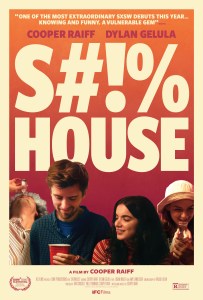 This should have been a winner for me. I’m a fan of mumblecore dramas that drop you into people’s ordinary lives. They’re character-driven and built upon naturalistic dialogue that can still be compelling and revealing of its participants. However, Shithouse seems to have found that middle zone between stylized dialogue and naturalistic dialogue; throughout the 100 minutes, the movie involves ordinary people sounding like they’re having real conversations, which means they are generally boring. If you were eavesdropping on these people in real life you would leave. There’s a fine difference between natural but still plot-driving and engaging dialogue and dithering dialogue that holds to the awkward starts and stops of real life but fails to keep your attention. Just because the scene feels realistic does not mean it is the same as being interesting. Writer/director Cooper Raiff stars as Alex, a college freshman with a serious case of homesickness. He spends one long night with his RA, Maggie (Dylan Gelula), and it feels like maybe these two will connect and become romantic. The problem with Shithouse is that it feels like each half-hour is its own different movie. The first is introducing an emotionally fragile young man having difficulty adjusting to collegiate life away from his family. The problem is that I didn’t care about Alex and I didn’t find him being mopey intriguing. It took too long to open him up. The next part is the film’s best and it’s Alex and Maggie spending hours together walking, chatting, having little adventures on the path to burying her dead turtle. It’s the best part of the film and where I felt the movie was starting to coalesce, even with a protracted setup. This is the Before Sunrise part. However, the next morning, Alex and Maggie seem to have very different views of their long night and eventual hookup. He’s overloading her with messages and she’s being distant and indifferent, and this is where the movie becomes like 500 Days of Summer, holding up for scrutiny the romantic aspirations of those grown up with the media of pop-culture happy endings. Had Raff left us in this direction, I could even argue that his structure served a larger point of condemning his protagonist’s viewpoint. I might not enjoy it but I could mildly respect it. However, Shithouse then undoes this part with a resolution set two-plus years in the future that doesn’t feel earned and is tonally disjointed from this prior section. If this was the intent, then why did Raiff even prolong us with this extended morass of missed Instagram messages and angry outbursts over misreading what the night meant to both parties? Regardless, there are glimmers and moments in this gentle little movie that worked, that hit upon a deeper truth, but mostly you’re stuck with dull people having boring conversations.
Nate’s Grade: C+
Share this:

Hillbilly Elegy (2020)/ Feels Good Man (2020)
 Hillbilly Elegy is based upon the memoir by JD Vance and in 2016 it became a hot commodity in the wake of Trump’s surprising electoral ascent, with liberals seeing it as a Rosetta Stone to understanding just how so many working-class white people could vote for a billionaire with a gold toilet. The movie, directed by Ron Howard (Apollo 13) and currently available on Netflix, follows an adult JD (Gabriel Basso). He’s a Yale law candidate forced to go back home to Middletown, Ohio after his mother Bev (Amy Adams) lands in the hospital for a heroin overdose. It’s 2011, and Bev has been fighting a losing battle with opioids for over a decade, costing her a string of boyfriends and jobs. JD’s homecoming isn’t quite so rosy. While he can take comfort in fried bologna sandwiches and his sister (Haley Bennett), the town is not what it once was. The factory has closed, poverty is generational, and his mother is one of many struggling to stay clean. In flashback, we watch MeeMaw (Glenn Close) take in the young JD (Owen Asztalos) and raise him on the right path. JD must decide how far the bonds of family go and how much he may be willing to forgive his mother even if she can never ask for help.
The subtitle of Vance’s novel was “A Memoir of a Family and a Culture in Crisis,” and it’s that latter part that got the most attention for the book and critical examination. Many a think piece was born from Vance’s best-selling expose on the hardscrabble beginnings of his personal story along the hills of Kentucky and the Ohio River Valley and his recipe for success. Given his libertarian political leanings, it’s not a surprise that his solutions don’t involve a more interventionist government and social safety nets. According to Vance’s book, he saw poverty as self-perpetuating and conquerable. It was the “learned helplessness” of his fellow Rust Belt inhabitants that Vance saw as their downfall. For me, this seems quite lacking in basic empathy. You see these people aren’t poor because they’ve been betrayed by greedy corporations, indifferent politicians, a gutted infrastructure and educational system in rural America, pill mills flooding Appalachia with cheap opioids, and a prison system that incentivizes incarceration over rehabilitation. For Vance and his like-minded fellows, upward mobility is a matter of mind over matter, and these working-class folks have just given up or won’t work as hard as before.
 Now, as should be evident, I strongly disagree with this cultural diagnosis, but at least Vance is trying to use his own story as a launching point to address larger points about a portion of America that feels forgotten. The movie strips all of this away. Screenwriter Vanessa Taylor (The Shape of Water) juggles multiple timelines and flashbacks within flashbacks as Vance follows the formula of prodigal son returning back to his home. The entire draw of the book, its purported insights into a culture too removed from the coastal elites, is replaced with a standard formula about a boy rediscovering his roots and assessing his dysfunctional family. At this rate, I’m surprised they didn’t even time it so that Vance was returning home for Thanksgiving.
Removed of relevant social commentary, Hillbilly Elegy becomes little more than a gauzy, awards-bait entry meant to uplift but instead can’t help itself from being overwrought poverty porn. If we’re not looking at the bigger picture of how Appalachia got to be this way, then Vance becomes less our entry point into a world and more just an escaped prisoner. Except the movie doesn’t raise Vance up as exceptional and instead just a regular guy who pulled himself up by his bootstraps through will and family support. I’m not saying he is exceptional, I don’t know the man, but this approach then ignores the reality of why so many others just aren’t following his footsteps of simply trying harder. Without granting a more empathetic and careful understanding of the circumstances of poverty, Howard has made his movie the equivalent of a higher-caliber Running with Scissors, a memoir about a young man persevering through his “quirky, messed up family” to make something of himself on the outside. This reductive approach is meant to avoid the trappings of social commentary, and yet in trying to make his film studiously apolitical to be safer and more appealing, Howard has stumbled into making Hillbilly Elegy more insulting to its Appalachia roots. Systemic poverty is seen as a choice, as people that just aren’t trying as hard, that have given up and accepted their diminished fates. Never mind mitigating economic, psychotropic, and educational circumstances. I imagine Howard wanted to deliver something along the lines of Winter’s Bone, unsparing but deeply aware of its culture, but instead the movie is far more akin to a sloppy compilation of Hallmark movies and catchy self-deprecating bumper sticker slogans. Seriously, about every other line of dialogue feels like it was meant to be on a T-shirt, from “Where we come from is who we are, but we choose every day who we become,” to, “There are three types of people in this world: good Terminators, bad Terminators, and neutral.” Well, maybe not that last one. The insights are fleeting and surface-level, with vague patronizing along the fringes.
The personal story of J.D. Vance takes the center stage and yet he’s the biggest blank of characters, and what we do get isn’t exactly that encouraging. I think we’re meant to engage with his triumph over adversity, but he has such disdain for his background while clinging to it as an identity, and this intriguing dichotomy is never explored. Vance as a character is merely there. His awkward experiences relating to the rich elites are just silly. He calls his girlfriend (Freida Pinto) in a panic over what fork to use at a fancy dinner table, as if this perceived social faux pau would be the difference between getting a law firm gig. He’s supposed to feel like an outsider, both at home and away, unable to escape his past that defines him, but the movie doesn’t even make Vance feel alive in the present. Most of the movie he is just there while big acting takes place around him. He listens to the life lessons bestowed upon him, good and bad, and it makes him the kind of man that when he grows up will join Peter Thiel’s venture capital firm, so hooray? I sighed when the movie established the stakes as he needs to get back in time for his big lawyer job interview, a literal family vs. future crossroads. The movie treats its frustrating main character as a witness to history rather than an active participant, and his personal growth is what? Coming to terms with the limitations of his mother? Accepting himself? Leaving them all behind to survive? I don’t know. There is literally a montage where he gets his life back on track, starts getting better grades, ditches his no-good friends, and heads out into the world. This could have been a better articulated character study but instead Vance comes across as much a tourist to this downtrodden world and eager to return to safer confines as any morbidly curious viewer at home.
 I simply felt bad for the actors. This is the kind of movie where subtlety isn’t exactly on the agenda, so I expected big showcases of big acting with all capitals and exclamation marks, and even that didn’t prepare me. I watched as Amy Adams (Vice) worked her mouth around an accent that always seemed elusive, with a character that veered wildly depending upon the timing of a scene. Almost every moment with Bev ends in some alarming escalation or outburst, like when a new puppy ends with Bev declaring she will “kill that dog in front of you,” or a ride back home descends into a high-speed promise of killing herself and child out of spite. This woman is troubled, to say the least, and her addictions and mental illness are what defines the character. With that guiding her, Adams is left unrestrained and usually screaming. There’s just so much screaming and wailing and crying and shouting. It’s an off-the-mark performance that reminded me of Julianne Moore in 2006’s Freedomland, where a usually bulletproof actress is left on her own in the deep end, and the resulting struggle leans upon histrionics. Was I supposed to feel sympathy for Bev at some point? Does the movie ever feel sympathy for this woman who terrorizes and beats her child? The broad portrayal lacks humanizing nuance, so Bev feels less like a symbolic victim of a larger rot of a society abandoned and betrayed and more a TV movie villain.
Close (The Wife) disappears into the heavy prosthetics and baggy T-shirts of MeeMaw, but you could have convinced me the character was a pile of coats come to life. Truthfully, MeeMaw is, by far, the most interesting character and the story would have greatly benefited from being re-calibrated from her painful perspective. She’s the one who bears witness to just how far Middletown has fallen since her and PawPaw ventured as young adults with the promise of a secure new life thanks to the thriving factory. She’s the one symbolizing the past and its grip as the present withers. She’s the one who has a history of abuse only to watch her daughter fall into similar patterns. Think of the guilt and torment and desire to rescue her grandson for a better life and save her family. That’s an inherently interesting perspective, but with JD Vance as our mundane lead, MeeMaw is more a slow-walking curmudgeon taken to doling out profane one-liners and grumpy life lessons. Close is easily the best part of Hillbilly Elegy and deserved more attention and consideration. A moment where she clings to JD’s high-scoring math test like a life raft is heartfelt and earned, more so than anything with JD.
 Another slice of America that feels forgotten and angry is on display with the documentary Feels Good Man, a.k.a. the Pepe the Frog documentary. Who is Pepe? He’s a cartoon frog created by Matt Furie as part of a comic series of post-college ennui between four friends. The character was adopted by the commenters on the message board 4Chan as their own symbol, and as their memes spread and became more popular with mainstream suers, and that’s when the 4Chan warriors had to do something drastic to save their favorite frog. They began transforming Pepe into a symbol of hate in order to make him toxic for outside use, and then the irony of their attempts at reclamation faded away and Pepe became a real symbol for Neo-Nazis and white supremacists. The character is currently listed on the Anti-Defamation League’s list of symbols of hate. The movie explores this evolution and de-evolution of Matt Furie’s creation and serves as a cautionary tale about the scary shadows of Internet culture and the nature of reclaiming meaning and intent with art.
Firstly, is there enough material here for a full-fledged documentary? We’re talking about a cartoon frog filling up the memes of Internet trolls. Is that enough? I think so, though I wish the movie shed even more critical scrutiny upon the 4Chan fringes of the Internet that have become a toxic cesspool of alienation and recrimination. These are people that self-identify and celebrate their social isolationism. The acronym N.E.E.T. stands for NOT Employed, Educated, or Trained and is adopted by many as an odd badge of honor. We even see home video footage of people sharing their personal lives in cluttered, trash-strewn basements. These are people electing not to engage with a larger functioning society and yet also feeling hostile to those that choose otherwise. Maybe it’s all a big joke to them, so why even bother; maybe it’s a defeatist mentality that plays upon social anxiety and learned helplessness. Maybe it’s just a noisy, nihilistic club that doesn’t want anything for themselves other than to disrupt others. The interview subjects from the 4Chan community are few but offer chilling peeks into this subculture. They see the world in terms of a very high school-level of social hierarchy, and the people who are pretty, successful, and having sexual relationships are the “popular kids” keeping them down. I think in terms of a Venn diagram, that incels and these NEET freaks are a flat circle. It almost feels like Vance’s cultural critiques of his poor Appalachia roots syncs up with the disenchanted 4Chan kids. This self-imposed isolation and self-persecution stews into a hateful mess of resentment. It’s not a surprise that several mass shooters have partaken in 4Chan and 8Chan communities.
 This scary subsection of Internet culture has been left to fester and it went next level for the 2016 presidential election. The trolls recognized their own sensibilities in Donald Trump, a candidate whose entire presidency seemed on the precipice of being a bad joke. The alt-right celebrated the man and used Pepe as a symbol for Trump’s trolling of norms and decorum, and the 4Chan message boards became an army of meme makers to steer Internet chatter. It’s hard to say what exactly the cumulative effect of these memes and trolling efforts achieved, in addition to the successful efforts of Russian hackers and a media environment that gave Trump billions of dollars in free airtime, but the 4Chan crowd celebrated their victory. “We memed him to the White House,” they declared. From there, Pepe became a synonymous symbol of a newly emboldened white supremacist coalition and any pretenses of ironic detachment dissolved away.
The rise and mutation of Pepe makes up most of the movie, and it’s certainly the most fascinating and scary part of Feels Good Man. However, there is a larger question about the ownership of art and interpretation that the movie presents without conclusive answers. Symbols are a tricky thing. They’re not permanent. The swastika wasn’t always associated with Hitler and Nazis. A pentagram has significantly different meanings depending upon a Wiccan and conservative Christian audience. Feels Good Man examines Furie as a humble albeit slightly naïve creator. He’s a nice guy who just can’t get his head around what has happened to his creation. How far does the artist’s intent go when it comes to credible meaning? At one point, Furie tried stemming the negativity by killing off Pepe in a limited comic, but it didn’t matter. The 4Chan followers simply remade him as they desired because at that point Pepe was their own. He has been built and rebuilt over and over again, that no one person can claim interpretative supremacy. Furie’s version of Pepe might be gone but there are millions of others alive and well. This gets into the nature of art and how every creator in some regard must make amends with letting go of their creation. Once it enters the larger world for consumption, they can steer conversations but art can take on its own life. The last third of the movie follows Furie taking action to enforce his copyright law to push back against the more outlandish uses of Pepe the frog, including from InfoWars’ Alex Jones, the same man who told us the government was making frogs gay for some unexplained conspiracy. Jones makes for a pretty easy villain to enjoy seeing defeated, and the conclusion of the movie involves dueling taped depositions between Furie and Jones over intellectual trademarks and free speech. It makes for an easy to navigate victory for Furie to end the movie upon, but is this larger war winnable? I have my doubts and I don’t think the trolls of the darker reaches of the Internet are going away.
I also want to single out the beautiful animation that appears throughout Feels Good Man, giving a visual representation to Pepe in a manner that’s like trying to give him a say in his own intent.
 So, dear reader, why did I pair both of these movies for a joint review? I found both of them as investigations into a sliver of America that feels forgotten, left behind, stuck in ruts outside their control, and resentful of a changing culture they see as exclusive to their hard-hit communities. I thought both Hillbilly Elegy and Feels Good Man could provide me, and others, greater insight into these subcultures and perhaps solutions that can make them feel more seen and heard. The problem is that Elegy doesn’t provide solutions other than “pull up your bootstraps” and Feels Good Man involves a destructive coalition that I don’t want better seen and heard. Both movies in their own ways deal with the nature of how very human it can be to retreat to their safe confines of people who too feel ostracized, hurt, and overwhelmed. I have pity for the people of the Rust Belt, the hillbillies experiencing generational poverty and hardships, though “economic anxiety” is not simply a regional or whites-only worry. I have less pity for the basement trolls of 4Chan trying to celebrate school shooters because it’s somehow funny. I’m amazed that so many talented people were part of Hillbilly Elegy and had such high hopes. For all of its full-tilt screaming, the movie is thoroughly boring and formulaic. Given the nature of an elegy, I was expecting Howard’s movie would be more considerate of its people, but their humanity is lost in this pared-down characterization, and the tragedy of society failing its own becomes an inauthentic Horatio Alger story of the plucky kid who went to Yale and became a real somebody. Feels Good Man might not be the best documentary but it feels more authentic and owns up to its inability to answer larger questions about human behavior, art, and interpretation. Both of these movies will prove horrifying to watch but only one is intentionally so.
Nate’s Grades:
Hillbilly Elegy: C-
Feels Good Man: B
Share this:

Run (2020)
 With Run, now available through Hulu thanks to COVID, we follow Chloe (newcomer Kiera Allen) as she yearns to leave home for college. She was born with multiple physical maladies and has been living at home in her wheelchair. Her mother, Diane (Sarah Paulson), tends to her needs but runs a tight ship, holding Chloe to a high academic standard. One day, while looking for college returns, Chloe finds a prescription for her mother that she denies is hers. This causes Chloe to investigate the myriad of medications she’s on and her mother’s cagey behavior. She comes to one conclusion: she is being held prisoner by her own mother.
I don’t consider it a spoiler to confirm that Run is exactly the movie it assures you from its start. Because the movie was so early and upfront about its distrust with the mother, part of me began to wonder, after watching so many Hollywood thrillers over the years, if I was being set up into false complacency. I began theorizing what a late twist could be, how we’re being lulled into one perspective so maybe the final twist would be that the big bad mom is actually the hero. This is not the case at all. There are later revelations that clarify just how disturbed and committed Diane is as a doting mother, but the core relationship dynamic is the same from the get-go. That means that Run might not have much going for it other than as an escape thriller. It’s not going to give you deeper insights into life with mental illness or physical disabilities, nor is it going to channel some relatable struggles with motherhood. It’s about a crazy woman holding a teenager captive and the great obstacles that teenager must overcome to reach freedom and safety. That’s all the movie has to offer but under the guidance of its filmmakers it does so with finesse.
 Let Run serve as a prime example of how you can take a simple story and create a lean, mean thriller that provides doses of satisfaction and triumph. The focus is so condensed that writer/director Aneesh Chaganty (Searching) can provide set piece after set piece to demonstrate his skills in suspense. The first act involves Chloe learning of her alarming state and getting confirmation that her medicine and ailments might not be true. From there, the next two acts are a series of planning escapes and escalating attempts at escape. There is a lovely sense of fulfillment in watching smart characters intelligently think their way through challenges. I recently re-watched 2015’s The Martian and was reminded how enjoyable it can be to just watch smart people smartly confront problems. Chloe is a formidable young woman with obvious vulnerabilities to overcome, but she has a sharp mind for science and can act like a plucky Zoomer MacGyver. It’s resolutely fun to watch her overcome her challenges. Each new set piece and setback presents a challenge and her thinking is logical and capable throughout. Even when the plot isn’t much more than a series of escape attempts, every time I wondered to myself how exactly Chloe was going to get through the next dilemma and admiring her as she persevered.
The photography, editing, and score work nicely in tandem to raise the level of suspense. The command that Chaganty has over all facets of filmmaking to serve a common purpose is impressive. It’s the same kind of assured vision he displayed with 2018’s Searching where the film screen was confined to the parameters of a computer monitor. As with that earlier inventive thriller, Chaganty has an innate understanding of how to make his moments matter, where every twist and turn has a connection to what came before it so it all feels of a whole. That is essential especially for a filmmaker working within a thriller genre. If you can tell even the simple stories well, where the pieces connect with perfect precision, and ratchet up tension efficiently no matter the scenario, then you’re already operating at an extremely high level. Given his first two entries, I would watch any movie, especially a thriller, that has Chaganty’s name attached.
 This is primarily a mother-daughter two-hander in terms of acting, though Paulson is off-screen for long portions. After several Ryan Murphy TV series, including Netflix’s Ratched, I’ve come to automatically assume I should be wary of whatever character Paulson is playing. This role is well within her unstable wheelhouse and she gets to better shine in her increased desperation in the second half when Diane no longer has to pretend to be sane. Her doting manipulation and intense mood changes can be quite creepy. The real star is Allen in a very physical performance. There is much the young actress has to communicate non-verbally, from her distress and paranoia to her doubts and fears and righteous anger. Plus all the crawling. She’s great, and I fully imagine this will be the start of Allen’s promising career as she finds even more high-profile roles to demonstrate her talent.
If you’re a fan of slick, intelligent, and sneaky fun thrillers, and why wouldn’t you, then seek out Run (not to be confused with the TV series of the same name on HBO in 2020). It’s well honed, well developed, and smartly constructed to deliver enjoyable thrills and payoffs for viewers. It might not have more on its mind than entertainment but that’s fine when the movie is this well done.
Nate’s Grade: B+


 nathanzoebl
You must be logged in to post a comment.