Category Archives: 2008 Movies
Fary Cry (2008)
 Say what you will about Uwe Boll as a writer and director; Lord knows I’ve written nearly a Master’s thesis on the notorious schlock filmmaker. However, this man would be an asset to have as a producer, at least initially. The German tax loophole was closed and yet the man still finds a way to make like three to four movies a year. He can pull together resources and organization as well as anybody in the business. So what if the final product happens to be substandard? This man knows how to produce. He’s just not as skilled at other positions. Far Cry, Boll’s latest video game adaptation, is a clunky action movie that treats genre clichés as virtues. It is not a bad movie but it’s not a good bad movie either. It’s just Boll’s version of disposable action.
Valerie (Emmanuelle Vaugier) is a Vancouver newspaper reporter who has got a great lead on a story. Turns out Dr. Krieger (Udo Kier), your classic mad scientist, is running experiments on a nearby island and he has an armored guard. Our spunky heroine is determined to investigate. Her uncle Max (Ralf Moeller) is actually working for the mad doctor and having misgivings, which is why he tries to send Valerie classified info on the experiments. Dr. Krieger is bankrolled by the (Canadian?) government to develop genetically modified super soldiers. They have a layer of armor under their skin and the only foolproof way to kill these super soldiers is to shoot them in the eye or mouth. My best guess why is because they both lead to the brain, but then why stop there? Why not shooting into ear and nose cavities? Anyway, the super soldiers won’t take orders so the mad doctor and his mercenaries capture Max and turn him into the newest test subject. Valerie has chartered a boat to meet up with her uncle. The boat captain, Jack (Til Schweiger, who sounds like his voice was dubbed by an actor that could not widen his mouth to enunciate), just happens to be an old Special Forces buddy of Max’s. This comes in handy when both Jack and Valerie are attacked once they reach the island. The duo must run for their lives and inflict much ass-kicking justice.
 Far Cry is a mediocre cliché-ridden action vehicle. You’ve got so many formula elements widely circulated in numerous other action flicks, and I’m not even talking about the standards like that the good guys are marksmen, the bad guys are terrible shots, and anyone can move unfazed if they get shot in the shoulder. We also have the fact that all evil hideouts, when not hewn into volcanic rock, must be located in giant warehouses with too many catwalks and chains and extraneous machinery that do little else but spit sparks when called upon. Jack also pulls the timeless tactic of stripping an enemy solider, putting on his uniform, and then infiltrating the enemy camp under a flawless disguise – a change in clothes. Let’s not also forget the tried-and-true method of throwing a rock in a different direction to cause a distraction. I think at this point only dogs fall for that. By the thirty-minute point, we’ve already seen two separate shots of Jack swimming underwater while an explosion rages above the surface. Though the word has likely lost all meaning to Boll, I would describe that as excessive.
Another major cliché of action movies is the forced coupling between Jack and Valerie. It doesn’t take long before their bickering leads to smooching. Shortly after just escaping mercenaries and a helicopter explosion in a lake, Jack and Valerie find a shack nearby and tend to their wounds. She changes out of wet clothes and makes sure that he doesn’t catch a peek (he does) and he dresses a flesh wound on his rippled abdomen. Eventually she crawls under the blankets on a bed to warm herself for the night. He does too, to stay warm of course. “I have to take off my wet pants, you know,” he reasons (oldest trick in the book). But after they’re in bed together they have to still talk about how cold they each are still, and then Jack suggests, “shared body heat,” you know, just to stay dry. After what seems like forever, these two just give up this charade and start kissing and have them some sex. Naturally, the introduction of an attractive female character in an action movie is designed so that she can snuggle and then be put in danger. Valerie does little else to the story. I want to know why either of these two is acting so casual moments after they escaped fiery death. They know that they’re still being hunted, and the shack is within walking distance from the crash site, which is being investigated by the mercenaries. For that matter, why do the bad guys call off each attack to search and confirm for kills? Are they that concerned with paperwork?
 Far Cry feels like every generic moment rises from the shadow of other generic action movies. The final conflict between Jack and Max the Super Solider boils down to an appeal to the man inside the monster, trying to tap the humanity buried beneath the killing machine. You’ve seen this in countless other movies. Dr. Krieger has a dominatrix-esque second-in-command that has some personality to her; it must be hard to be a female henchwoman, having to be even more evil than the henchmen to prove her self. The initial plot setup even reminds me of Ed Wood’s Bride of the Monster — girl reporter investigates mad scientist. The whole island-based setting, with the aquatic inclined stunts, led by a Central European action star, buddied up with a yammering idiot as a comic sidekick … it oddly reminds me of the entirely forgettable 1998 Jean Claude Van-Damme movie, Knock-Off, with also had the misfortune of co-starring Rob Schneider. A knock-off of Knock-Off? Well it is time for the tenth anniversary after all.
Boll stubbornly tries to make his mundane action movie into a comedy. The comic elements never fully gel with the rest of the film, and yet Boll keeps transforming the movie into this screwy action comedy. There’s the bickering between Jack and Valerie, which is expected territory for the genre, but then the movie fills its time with excessive wisecracks, strange digressions, and so much comic relief that it fails to be relief (or comic). Chris Coppola chews as much scenery as possible as Emilio, the irritating, hapless sidekick to Jack. He’s introduced at almost the hour mark and seems to be trying to make up for lost time in annoyance. He’ll offer to help Jack fight but then recoil and scamper off. This is the kind of movie that has the overweight Coppola lovingly caress a sandwich and coo, “I’ve been thinking about you all day.” Get it? He’s fat. Fat people love food.
But by far the funniest and weirdest aspect abut Far Cry is how unbelievably prepared Jack is for any situation. He hands Valerie a handcuff key from his pocket, which he always carried with him because, presumably, Jack lands in handcuffs often or cannot be trusted to remember his “safe word.” But then late in the movie, Jack is handcuffed and he literally regurgitates ANOTHER handcuff key. This means that Jack keeps a key in his pocket and swallows a spare. Does he eat these daily? What else is hidden among his body? The man could be a human Swiss army knife.
 No one ever seems to question what the chances are that a German former Special Forces agent will work at a Canadian lab, within reach of his Canadian niece ace reporter, who will charter a boat from another German former Special Forces agent who also happens to be within reach of this lab. I guess when you’ve got invincible super soldiers you don’t sweat the details.
Despite all its flaws and general laziness, Far Cry is a semi-decent action movie, especially one with a low budget. Boll manages to construct some passing action sequences with respectable camerawork, and the end battles between our heroes and the Super Soldiers is actually well-edited, with sharp cuts that help ratchet up the energy level, and has plenty of good stunt work. A chase through the nondescript warehouse between Jack and a super soldier actually makes use of some spiffy Parkour choreography, a welcomed addition. The forced comedy can actually succeed at times during the action, like when Valerie is hurling grenades with the pins still attached or when she accidentally lassos a helicopter with a harpoon gun (Dr Krieger scolds her, “You know, you owe me a helicopter.”).
In the pantheon of Boll movies, Far Cry lands more toward the top. It’s a middling action movie that tries too hard to constantly inject misguided humor into every freaking minute. The movie suffers from the same boneheaded flaws that plague the action movie genre, but by the end of its admittedly brief running time, Boll has pulled off a minor success. Far Cry is not a good movie and has too many derivative and unimaginative elements, but Boll seems to have cranked this one out. While Far Cry is not a particularly good action movie, it is relatively indecipherable from the thousands of other cheap mediocre action movies that pollute the direct-to-DVD market. He’s made an easily digestible product that isn’t even bad enough or weird enough to be memorable. To him that’s victory, but to me, an avid Boll expert, that’s just plain boring.
Nate’s Grade: C
Share this:

Synecdoche, New York (2008)
 Nothing comes easy when dealing with acclaimed screenwriter Charlie Kaufman. The most exciting scribe in Hollywood does not tend to water down his stories. Kaufman’s latest head-trip, Synecdoche, New York, is a polarizing work that follows a nontraditional narrative and works on a secondary existential level. That’s enough for several critics to hurtle words like “incomprehensible” and “confusing” as weapons intended to marginalize Synecdoche, New York as self-indulgent prattle. I guess no one wants to go to the movies and think any more. Thinking causes headaches, after all.
Caden (Phillip Seymour Hoffman) is a struggling 40-year-old theater director trying to find meaning in his beleaguered life. His wife (Catherine Keener) has run off to Germany with his little daughter, Olive. He also manages to botch a potential romance with Hazel (Samantha Morton), a woman who works in the theater box-office who has an unusual crush on Caden. He’s also plagued by numerous mysterious health ailments that only seem to multiply. While his life seems to be in the pits, Caden is offered a theater grant of limitless money. He has big ambitions: he will restage every moment of his whole life to try and discover the hard truths about life and death. Caden must then cast actors to portray the various people in his life. Sammy (Tom Noonan) argues that no other actor could get closer to the truth of Caden; Sammy has been following and studying Caden for over 20 years (don’t bother asking why in a movie like this). Caden also casts his new wife, Claire (Michelle Williams), as herself. The theater production gets more and more complex, eventually requiring the “Caden” character to hire his own Caden actor. Caden hires Hazel to be his assistant and Sammy falls in love with her. Caden admonishes his actor, “That Hazel isn’t for you.” Caden then tries sleeping with “Hazel” (Emily Watson) to get even with the real Hazel. By producing a theatrical mechanism that almost seems self-sustaining, Caden wants to leave his mark on the world and potentially live forever.
 I heard plenty of blather about how mind-numbing Synecdoche, New York was and how Kaufman had really done it this time when he composed a script that involves characters playing characters playing characters. People told me that it was all too much to keep track of and that it made their brains hurt. The movie is complex, yes, and demands a viewer to be actively engaged, but the movie is far from confusing and any person or critic that just throws up their hands and says, “Nope, too much to think about,” is doing their brain a disservice. The movie is relatively easy to follow in a simple linear cause-effect manner; Kaufman only really goes as deep as two iterations from reality, meaning that Caden has his initial doppelganger and then eventually that doppelganger must get his own Caden doppelganger (it’s not nearly as confusing as it sounds if you see it). Now, where the movie might be tricky to understand is how deeply contemplative and metaphorical it can manage to be, especially at its somber close. That doesn’t mean that Synecdoche, New York is impossible to understand only that it requires some extra effort to appreciate. But this movie pays off in huge ways on repeat viewings, adding texture to Kaufman’s intricately plotted big picture, unfolding into a richer statement about the nature of life and death and love.
Theater has often been an easy metaphor for life. William Shakespeare said, “All the world’s a stage, and all the men and women merely players; they have their exits and their entrances; and one man in his time plays many parts.” Kaufman movies always dwell substantially with the nature of identity, and Synecdoche, New York views identity through the artifice of theater. Caden searches for something brutal and true via the stage, but of course eventually his search for truth becomes compromised with personal interests. Characters in Caden’s life are altered and in the end when Caden steps down, as himself, reality starts getting revised. The truth is often blurred through the process of interpretation. Caden ends up swapping identities with a bit player in the story of his life, potentially finding a greater sense of personal comfort as someone else. Don’t we all play characters in our lives? Don’t we all assume different identities for different purposes? Do we act differently at a job than at home, at church than at a bar? Caden remarks that there are no extras in life and that everyone is a lead in his or her own story.
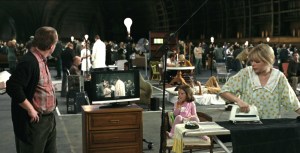 Kaufman’s movie is also funny, like really darkly funny and borderline absurdist to the point of being some strange lost work by Franz Kafka (Hazel even mentions she’s reading Kafka’s The Trial). You may be so caught up trying to render the complexities of the story to catch all of the humor. The movie exists in a surreal landscape, where the characters treat the fantastic practically as mundane. Hazel’s house is constantly on fire and yet none of the characters regard this as dangerous or out of the ordinary. It is just another factor of life. The entire subplot with Hope Davis as a hilariously incompetent therapist is deeply weird. Caden suffers some especially cruel Job-like exploits, particularly what befalls his estranged daughter, Olive. He’s obsessed with her hidden whereabouts and European upbringing, to the point that Caden cannot even remember the name of his other daughter he has with Claire. There is a deathbed scene between the two that is equally sad and twisted given the astounding behavior that Caden is forced to apologize for. There are running gags that eventually transform into metaphors, like Caden’s many different medical ailments and the unhelpful bureaucratic doctors who know nothing and refuse to divulge any info. Kaufman even has Emily Watson, an actress mistaken for Morton, play the character of “Hazel.”
This is Kaufman’s debut as a director and I think the movie ultimately benefits by giving its writer more control over the finished product. The movie is such a singular work of creativity that it helps by not having another director; there is no other artistic vision but Kaufman’s. While the film can feel slightly hermetic at times visually, Kaufman and cinematographer Frederick Elmes (The Ice Storm) pack the film with detail. Stylistically, the film is mannered but this is to make maximum impact for the vast amount of visual metaphors. Synecdoche, New York never feels as mannered as the recent Wes Anderson films, henpecked by a style that serves decoration rather than storytelling. The production design for the world-within-a-world is also alluring and imaginative, like a living, breathing dollhouse.
 The assorted actors do well with their quirky, flawed characters, but clearly Hoffman is the linchpin to the film. He plays a character from middle age to old age, and at every step Hoffman manages to infuse some level of empathy for a man routinely disappointed by his own life. The failed yet lingering and hopeful romance between Caden and Hazel provides an almost sweet undercurrent for a character obsessed with death. Hoffman is convincing at every moment, even as a hobbled 80-year-old man, and gives a performance steeped in sadness but with the occasional glimmer of hope, whether it be the ambition of his theater project or the dream of holding Hazel once more. Morton is also wonderfully kindhearted and endearing as the woman that just seems to keep slipping away from Caden.
There’s no other way to say it but Synecdoche, New York is a movie that you need to see multiple times to appreciate. The plot is so grandiose in scope and ambition that one sitting does not do it justice. Kaufman has forged a strikingly peculiar movie that manages to be surreal and bleakly comic while also being poignant and humane. This is a big movie with big statements that can be easily missed, but for those willing to dig into the wealth of metaphor and reflection, Synecdoche, New York is a rewarding film experience that sticks with you. By the end of this movie, Kaufman has earned the merging of metaphor and narrative. I have already seen the movie twice and still cannot get it out of my thoughts. This isn’t the kind of movie that you feel warm affection for, like Kaufman’s blissfully profound Eternal Sunshine of the Spotless Mind. This movie is less a confounding puzzle than an intellectually stimulating examination on art, the human experience, and, ultimately death. If people would rather kill brain cells watching whatever dreck Hollywood secretes every week (cough, Street Fighter: The Legend of Chun-Li, cough) then that’s their prerogative. Give me a Charlie Kaufman movie and a bottle of aspirin any day.
Nate’s Grade: A
Share this:

RocknRolla (2008)
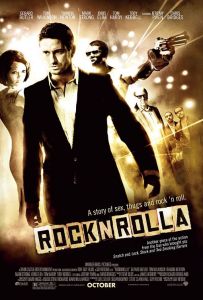 I’m a fan of Guy Ritchie’s convoluted cockney comedic crime capers (wow, check out that alliteration), but this movie is just plodding and dull. The trouble is that Ritchie works best when he has one foot in the fantastic, with comically over-the-top and menacing underworld personalities. A Ritchie movie usually involves a lot of crisscrossing characters, but this is his first film where I couldn’t keep the folks straight, I couldn’t understand much of the personal connections, I couldn’t understand the purpose of the various characters and their various interplay, and frankly, I never bothered to care. RocknRolla has maybe two colorful characters (all hail Tom Wilkinson as a sleazy real estate gangster), but the rest of the movie is overstuffed with bland and forgettable toughs. What the hell are Ludacris and Jeremy Piven doing here? You could eliminate half of the cast and the movie would barely be affected. This movie is just way too straight and square for its own good. Ritchie is still a top-notch visual stylist, and the movie has a terrific deep focus digital video cinematography, but there are very few moments or visual flourishes in this flick that prove to be remotely memorable. I hope Ritchie does not make good on his promise to continue telling more stories with these characters and in this style because this many needs to get back to what he does so well, and that is telling the darkly comic escapades of larger than life Dick Tracy-esque villains and scoundrels.
Nate’s Grade: C
Share this:

American Teen (2008)
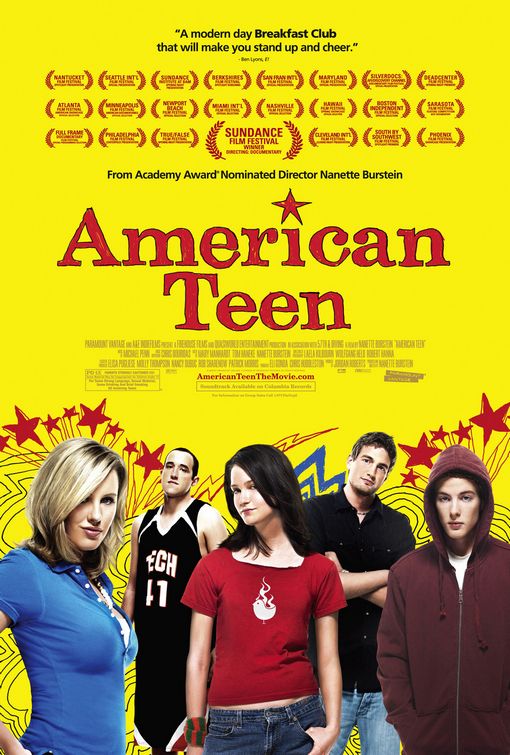 Filmmaker Nanette Burstein (On the Ropes) wanted to document the lives of actual American teenagers. After a national search, she settled on the town of Warsaw, Indiana, which we’re told in the opening narration is “mostly white, mostly Christian, and red state all the way.” American Teen is the feature-length documentary that chronicles the lives of four Warsaw teens during their senior year. The class of 2006 includes Colin, a basketball star worried about securing a scholarship. His father, an Elvis impersonator, supports his son but reminds the kid that dad has no money for school, so it’s either a scholarship or the Army. This, naturally, places tremendous pressure on a 17-year-old and his play diminishes as he tries to up his stats. There’s Megan, the queen bee at the school who feels pressured by her family to get into Notre Dame. This makes her act like a cretin, apparently. Jake is a kid who feels uncomfortable in his own acne-scarred skin. He plays video games a lot and desperately wants to find a girlfriend. Then there’s Hannah, the artsy girl prone to spontaneous dancing who feels trapped by her town.
I found American Teen to be largely unbelievable for two major reasons. First, teenagers today are way too media savvy after having grown up on a bevy of reality TV programming, the ultimate genre of manipulation. Remember way back in 1991 when MTV first started The Real World, the pioneering reality TV show? The people selected to live together as a social experiment were interesting, unguarded, a nice cross-section of the country; you felt like you could run into these people on the street some time. Then about half way into its run, the likely turning point being the Las Vegas season, The Real World participants became self-aware. They knew to exaggerate behavior for manufactured drama, to play up romantic crushes, and to work from the realm of playing a well-defined cliché character; no longer did these people feel real, instead they felt like drunken auditions for a really lousy soap opera. And all of the people started looking inordinately beautiful, chiseled hunks and leggy, waif-thin models. When was the last time they ever had an overweight person on that show? Anyway, the point of this anecdote is that thanks to the machinations of reality TV, teenagers today have grown up with the concept of cameras and they know how to manipulate reality. One could argue that you will never capture the true essence of a person by pointing a camera at them, because the instant a camera is placed to document reality it changes reality; people talk differently, either more reserved or confessional. A camera changes reality, but this discussion point is a little beyond the realm of American Teen. So I doubt the legitimacy of watching the “real lives” of “real students,” especially when these kids come from a more affluent area and probably digest other MTV semi-reality dramas like the unquestionably fake The Hills.
 So how would you behave if you knew a film crew was making a documentary in your school? I fully believe that many of the actions caught on camera are done so because the students wanted to ensure that they would be in a movie. I cannot blame them. I mean, if I was close to being involved in a film I would probably check every possibility to ensure my lovely presence eventually fills up the big screen. What do you want from kids who have grown up as a generation of self-reflective narcissists thanks to reality TV and uninvolved parents (sorry, soapbox moment)? This is why the nature of documenting reality in a high school setting is questionable. Burstein’s cameras follow Jake around and he’s able to walk up to girls and ask them out, point blank. Would he normally be so bold? I don’t know. What I know for certainty is that there would be fewer girls interested in the acne-scarred self-proclaimed geek if he didn’t have the adjoining camera crew. I’m sure girls looked at Jake and thought, “Here’s my ticket to being in a movie.” I’m not trying to be mean here because Jake is a rather nice, typically uncomfortable and socially awkward teenager who will find his niche once he leaves the confines of high school. I’ve known several Jakes in my life. But I don’t believe that a socially awkward kid like this naturally dates three different girls, all of them pretty, without the promised presence of cameras.
Also, there’s this popular guy Mitch completely thrown in at the middle of the film. All of a sudden he sees Hannah onstage rocking out at a school battle of the bands function, and the movie slows down, Hannah literally starts glowing, and Mitch says, “Wow, I have a crush on Hannah Bailey.” Allow me to doubt the sincerity of this sudden cross-clique crush. We never witness the beginning of this relationship, each side feeling the other out, the nervousness and delightful possibilities. We just get a voice over of Mitch saying he likes her and then the film cuts to like weeks into their supposed relationship when they’re goofing off at a gas station. When Hannah is invited to a party with Mitch’s friends, naturally she’s going to feel a bit out of place amongst the cool, popular crowd. He hangs out with his friends instead of his girlfriend. He makes sure to say hey to everyone else even while Hannah is sitting next to him. The next day Mitch breaks up with Hannah via the modern marvel of text messaging (ouch). You never see Mitch again until the end credits reveal that he feels he has matured. Essentially, Mitch is only seen and introduced to the movie because of his attachment to Hannah. Clearly, Mitch knew that if he buddied up next to the pixie girl he would ensure some place in the movie’s running time. It worked, because Mitch is featured in the trailer, the poster, and even tagged along on the national press tour. To paraphrase the title of Burstein’s superior documentary, the kid found a way to stay in the picture.
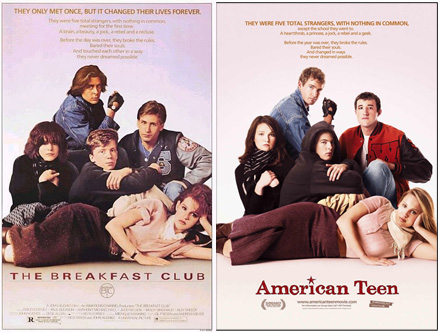 My second point of contention is that Burstein has taken scissors to 1200+ hours of footage to make her documentary about high school stereotypes, not people. Burstein has selected five figures to spotlight and she has whittled them down to one-word stereotypes: jock (Colin), geek (Jake), princess (Megan), rebel (Hannah), and heartthrob (Mitch). She isn’t destroying these lazy classifications but reinforcing them willfully. The marketing campaign around American Teen recreated the poster from The Breakfast Club. I swear, I think that art imitated life and now high schoolers are just imitating what they have seen propagated time and again as stone-cold reality in their schools: the rigid social caste system. There are so many missed opportunities by painting in such broad strokes. Colin is a jock because he plays on the basketball squad, but why can’t he also be a geek? Why can’t a rebel be a princess? I feel tacky talking in such degrading, baby-fied terms. Burstein doesn’t help her case by giving the main figures their own animated fantasy segments. Hannah is obviously the star of the film, and Burstein has seen to it that she narrates the tale as well. I suspect some canniness on Burstein’s part. Either the filmmaker felt that Hannah would most reflect the spirits of the crowds that attend indie documentaries, thus ensuring a bigger gross, or Burstein saw much of herself in Hannah and naturally wanted to make the “different girl” the star, possibly working through some of her own high school demons.
There’s also the issue of how staged some of this comes across. Am I to believe that Burstein’s camera crew managed to capture those perfect moments where the students stare out into space, thoughtfully? Am I to believe that the camera crew managed to capture everyone’s dirty little text messages then and there in the moment? Am I to believe that scenes of Hannah dramatically walking down the hallway weren’t planned? I’m forgiving when it comes to re-enactments but when a movie feels overburdened with re-enactments or posed figures, then it feels too manufactured. Just like The Hills.
Perhaps I’m coming down too hard on American Teen. After all, most documentaries distort some facet of reality and generally are edited to present a series of points. But the reason American Teen doesn’t work is because it offers zero insights into the American high school setting and little to no insights with its “characters.” Hannah is a cute girl with an independent streak but I fail to get a sense of her as a person. She gets dumped twice over the course of American Teen, suffers from crippling anxiety to the point that she misses almost a month of class, and she longs to leave the reach of her conservative town for the holy destination of California, so why then does the film not present her as a person instead of a classification? I also get the feeling that we don’t see any of would-be filmmaker Hannah’s own work because Burstein may be shielding her subject from the harsh realities or critical response.
 Obviously Megan is the villain of the piece and Burstein takes advantage of the girl’s self-absorbed sense of entitlement. Megan could be an interesting subject as far as casual cruelty. Megan vandalizes a student council member’s home because the guy had the gall to devise a different prom theme. We watch Megan literally spray paint a penis on a window followed by the word “FAG,” and then she whines that everyone is being mean to her even when the punishment she gets for a borderline hate crime is a slap on the wrists. Megan’s friend Erica makes the unfortunate decision to send a topless picture of herself in an e-mail to the guy she likes, who happens to be Megan’s friend and object of territory. So Megan briskly sends the picture to scads and scads of students with e-mail subject lines like “silver dollars” and “pepperonis.” Megan then leaves mean-spirited voice mail messages saying that Erica is destined “to live the rest of her life as a slut.” This is her friend! Burstein has the good sense of mind to interview a teary-eyed Erica after the topless photo fallout, and it probably is the emotional highpoint of the film because it’s so honest and wounded. Why not follow Erica after this? Surely her story, recovering from humiliation, is more intriguing then watching Megan scoot along her privileged life or whether or not Colin can be a better teammate. Speaking of the tall kid with the Jay Leno-sized chin, why does his dad insist that Colin needs a basketball scholarship or else “it’s the Army”? Has he not heard of student loans? Does Colin’s father believe sending his son into a war zone is preferable to amassing debt?
American Teen is a pseudo-documentary that has little intention to dig deeper under the surface of the realities of high school life. If your high school experience exactly mirrors this film, then perhaps you watched too many movies. Or the filmmakers did and tried to feed into the film idea of what goes on in a high school. Or both.
Nate’s Grade: C
Share this:

The Mummy: Tomb of the Dragon Warrior (2008)
 The Mummy: Tomb of the Dragon Emperor, the third film in the once popular Mummy franchise, is facing an uphill battle. It’s been a long seven years in between films and some, like myself, would argue that the franchise is already creatively exhausted. This stuff is the brainchild of writer/director Stephen Sommers (Van Helsing), who decided he would rather make a movie based upon an action hero than rehash mummies (see you this summer, G.I. Joe: The Movie). In comes director Rob Cohen who has given the world such cinematic abominations like XXX, Stealth, and The Fast and the Furious. Surely this was the proper artist to re-energize a semi-dormant franchise. The results are about as unexceptional as you’d expect.
In 1947, Rich O’Connell (Brendan Fraser) and his wife Evie (Maria Bello, replacing Rachel Weisz) are in retirement from adventure seeking. They live at a palatial estate. Their son Alex (Luke Ford) is in college except they do not know that Alex is really surveying ancient tombs in China. The lad has stumbled across the massive tomb of Han (Jet Li), China’s first united emperor. Han was a ruthless warlord that conquered all. He punished Zi Juan (Michelle Yeoh) for falling in love with one of his generals and not the mighty emperor. Zi Juan managed to cast a spell on the evil emperor that trapped him in metal. And he sat undisturbed in his tomb for 2,000 years until Alex came along. Eventually the spirit of Han is released and some Chinese military officials wish to serve their departed emperor. Han is seeking the location to Shangri-La to bathe in the pool of immortality, and then he will awaken his army and continue his quest for world domination. The Far Eastern exploits bring the O’Connell family unit together to save the world yet again.
 The first film was a cheesy, campy tongue-in-cheek adventure that managed to be consistently entertaining. The second film retained the same fun and humorous atmosphere, though it subscribed to the “bigger is better” theory of sequels and ramped up all the action to a cartoonish degree. Seven years later, the third Mummy movie is a complete bore. Tomb of the Dragon Emperor feels like two movies sewn together; ancient Chinese warlords and treasure-hunting archeologists do not come across as a good fit. The terracotta warriors are a great source for an imaginative tale, but this is not it. So Emperor Han has mastered the elements of fire, water, earth, metal and wood (when did wood become an element? I don’t see that one on the periodic table) and the guy can also turn into giant monsters like a three-headed dragon. The writers of this Mummy entry have goofed by making the villain too powerful. Yeah he can be slain by a magic sword (there’s always something magic-y) but this is a foe that can control oceans, water vapor, clouds, rain and snowstorms, ice shards, and that’s just with one element. I must confess that I cannot fathom Han getting too much use from the wood element. On top of that, he can transform at will into ferocious creatures, so what is the point of turning back into a tiny human? Why would anyone fight hand-to-hand when you could fight as a 30-foot monster of your own design? The problem with making the villain too powerful is that when they do not take advantage of their clear advantage, then the villains just look stupid. “The Dragon Emperor” looks stupid for fighting as a 5′ 6″-sized man instead of a killer dragon. Which would you fight as? At least the Mummy from the other films had limitations.
Even worse than being incomprehensible and dumb, none of the action sequences are thrilling or exciting. The action sequences are fairly sub par, resorting to shootouts and the occasional car chase. At least a car chase through the streets of Shanghai during Chinese New Year takes advantage of the location, allowing Rick and Evie to use firecrackers like missiles. The martial arts work is poorly choreographed and poorly presented thanks to some butchered editing. This is one of the worst edited big-budget films of recent memory. Tomb of the Dragon Emperor seems to be making it up as it goes. There are moments where characters will state where they need to travel to and then in the next second they’re preposterously there. Someone talks about the path to the hidden land of Shangri-La and then the next moment, hey, there they are. How did these places remain hidden for centuries? Very little makes sense in this movie. I’m not asking for complete believability in a film involving immortal bad guys and ancient spells, but at least let me able to follow along. I felt like I could tag along with the first two Mummy films and I had fun to a certain degree, but this time I felt like I was being dragged. I won’t even go into great depth about the appearance of yetis except to reveal that there is a moment where one yeti dropkicks a Chinese soldier over a gated wall and another yeti raises his arms straight in the air, signaling in football terms that it is indeed “good.”

Rachel Weisv not pictured.
Once again it all comes down to an all-out CGI battle between Han’s CGI army and the CGI zombie opponents buried under the Great Wall of China. The second Mummy movie ended in a similar fashion, and frankly I’ve become bored with the CGI armies clashing en masse unless I’m emotionally invested in the story. The effects work isn’t too fancy either. Most of the CGI creatures look flimsy and there’s nary a sense of wonder for a movie dealing with awesome supernatural forces.
The cleverest moment in the entire film involves the departure of Rachel Weisz. The Oscar-winning actress decided that she had had enough rumbles with the undead and bowed out of reprising her character of Evie. Smart move, lady. The film opens with Evie reading to an audience from her adventure novel based upon her encounters with a certain mummy. A woman asks her if the book’s female heroine is based upon the real-life Evie. She closes the book, smiles, and says in Bello’s first close-up that, “No. I can honestly say that she is a completely different person.” It’s all downhill from there for Bello, whose terrible British accent veers wildly to the point that she sounds like eight different kinds of Brits inhabiting one mouth.
The Mummy franchise is not where I go looking for parental drama. I understand that the 2001 Mummy sequel introduced Rick’s son, but why did this movie need to be set so far ahead in the future? The only reason this movie is set in 1947 is so that Alex can be like a twenty-something adventurer. The Mummy Returns was set in 1933 and Alex was eight years old, so by use of basic math he is now 22. There is no other prominent plot point, character revelation, or action set piece that relies on the date being 1947. Okay, so we’ve arbitrarily aged the kid, so surely the film will present some parental dilemma. Nope. The closest the movie gets to capitalize on Alex’s advanced age is pushing Rick to acknowledge his son’s accomplishments. The film’s idea of exploring family dynamics is a passing statement about making sure to express your love. Nothing is really gained by inserting the familial connection between Rick and Alex, who just as easily could have been a non-blood related character.
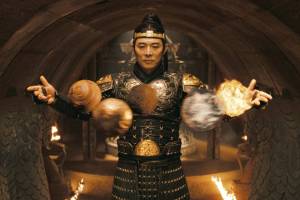 The inherent issue with an older Alex is that Fraser and his son look about the same age. Fraser has remarkably aged very little over the course of nine years since the first Mummy movie; sure there’s a few facial lines and a hardness that wasn’t there, but this man clearly looks like he is in his late 30s. Alex looks like he’s in his mid-twenties and the actor, Ford, is actually only 13 years younger than Fraser. It just doesn’t work at all. It looks like Rick and his younger kid brother, not his son. But lo, I think I have figured out the true reason behind position Alex as a younger, dashing version of Rick O’Connell, dispatcher of mummies. Fraser’s three-picture deal was fulfilled by this mediocre movie. If the producers want to have further mummy and non-mummy escapades, they have targeted Alex as their leading man of derring-do.
I like Fraser, I like him in these kinds of movies, but even he feels like he’s running out of gas with Tomb of the Dragon Emperor. The location switch from Egypt to China fails to give the franchise a new kick. The Chinese martial arts material bookends the movie and seems out of place, let alone poorly designed. Jet Li must have had a great time cashing his check because the kung-fu master appears for like 15 total minutes as himself. The lackluster action, questionable plotting, cardboard characters, and dearth of enjoyment make this a sequel a potential franchise killer. The tongue-in-cheek energy and cheesy fun of the other movies is completely absent. You can forgive stupid when it’s fun, but stupid and boring is a deadly combination for a huge effects-laden action movie. Hopefully The Mummy: Tomb of the Dragon Emperor will serve as proof that bad jokes, bad visuals, bad editing, bad plotting, and bad accents do not somehow go vanish because of lingering goodwill from previous films. This is one movie that should have stayed buried.
Nate’s Grade: C-
Share this:

The Reader (2008)
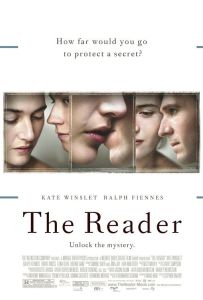 Every now and then, the assorted members that make up the Motion Picture Academy make, shall we say, quizzical selections. There are snubs and undeserving winners, but then there’s the crazy nomination where you see the movie and say to yourself, “What the hell were they thinking?” In recent years I’ve usually found at least one Best Picture nominee that left me scratching my head. In 2007 it was Atonement, in 2004 it was Finding Neverland. But I could at least fathom a guess as to why each of those movies appealed to the Academy and garnered a Best Picture nominee. I’m stumped when it comes to 2008 Best Picture nominee, The Reader. Based upon an award-winning novel, I can only surmise that Academy voters saw the words “Kate Winslet” and “Holocaust” and thought the movie had to be far worthier than the likes of WALL-E or The Dark Knight.
In post-World War II Germany, teenager Michael Berg (David Kross) begins a torrid affair with an older woman, Hanna Schmitz (Winslet). He’s 15 years old; she’s easily twice his age. She instructs her young lover to read to her before they engage in sexual activity, which turns reading into an act of foreplay. The summer affair ends abruptly when Hanna runs off after her employer has given her a promotion. Michael is heartbroken that his lover has flown the coop. Flash forward several years and Michael is attending law school in Berlin. He and his fellow students visit an ongoing trial that features a group of former female concentration camp guards. To Michael’s shock, Hanna is on trial as one of the murderous Nazi guards. The young boy is beset by his feelings of love for a person who has committed despicable deeds. Hanna is keeping a deeper secret and will go to her grave to keep it. Eventually an adult Michael (Ralph Fiennes, wasted) finds his life returning to an imprisoned, older Hanna, possibly his life’s greatest love.
 The Reader contains interesting story elements: sex, guilt, romantic affairs with former Nazi prison guards. But rarely do any of these interesting elements actually transform into an interesting story. The movie just kind of lies there, basking in some phony reflective pause when the movie manages to be so distant and uninvolved. At times the movies seems to have little interest in its own self. This movie feels like it was made to be Oscar-bait because it deals with Big Themes and Important Topics, or at least the film wants to appear like it deals with said items. The Reader is mostly shallow. It pretends to present a moral quandary but director Stephen Daldry (The Hours) doesn’t bother to analyze the contradictions of his characters. The film alternates between characters shouting obvious declarations and just stumbling around in contemplation, bumping into the furniture. It’s simultaneously annoying and boring. The movie wants to put a human face on monstrous deeds, which can be a noble pursuit. The Reader fails to be a “challenging” movie when it can’t be bothered to challenge its characters to do something.
The message of quasi redemption at the center of this specific film is either laughably naïve or downright insulting. Hanna keeps a personal secret shame at all costs, and she would rather go to prison for life as a Nazi murderer than let people know she cannot read. I’m sorry, but that’s dumb. The fact that it seems like The Reader presents the theory that Hanna’s illiteracy mitigates her guilt is offensive. I’m sure the 300 people that were locked in a burning church to die would be sympathetic that their killer couldn’t read See Spot Run. In what world is illiteracy more shameful than genocide? If you’re going to float ridiculous notions at least commit to exploring their very ridiculousness, and therefore acknowledge that there is something amiss. The Reader instead seems to flutter from idea to idea without ever truly delving deeper. If you’re going to craft a character that’s more afraid of a library than a book burning, at least try and explore this enigma. There’s drama in the disconnect. But the movie never feels like this should be an issue. Can’t you see, silly movie goers, that Hanna is but a symbol for the German people who couldn’t read the signs to come and were ignorant to the extent of Hitler’s horrors. She would rather stick to her duty than claim moral responsibility. That’s fine, but there are a great number of movies, and countless more books, that have examined the psychological culpability that can turn a populace into silently willing participants in mass murder. The Reader would rather spend its closing moments exploring the magical healing power of literature. The fact that the film eliminates the novels’ section where Hanna reads news articles and novels about the Holocaust (thus gaining moral clarity) is dumb. Instead of gaining insight into her actions she reads Chekhov. The movie ends up transforming into a weird and wrongheaded episode of Reading Rainbow.
 Winslet’s acting is fine. She’s such a gifted actress that I doubt you’ll see her give a bad performance even if the movie doesn’t live up to her talent. She isn’t doing anything showy to make Hanna a sympathetic character, which works out well, but the film’s distant perspective means that Hanna seems more like an aloof cipher. She’s this formless blob of a character that expresses a mixture of human emotions but doesn’t resemble a recognizable human. This is the fault of the director and screenwriter who chose to replace subtext with ponderous silent stares (note to all “deep” filmmakers: THEY ARE NOT THE SAME). Winslet slips into the character with the same ease she has slipping out of her clothes. The Reader is another nudity-filled performance for Winslet, her eighth movie featuring her nude (also her fourth Oscar nomination for a nude performance, there must be some connection). As readers can attest, I am no prude when it comes to the female form, but even I thought things were getting a little gratuitous. In the first 45 minutes, Winslet is naked in almost every scene she shares with Kross. It’s almost as if the nudity is supposed to disarm the audience and make Hanna a more intimate. Winslet is one of her generation’s finest actresses, which is reason enough that she shouldn’t be handed a Best Actress Oscar for substandard material.
The Reader may not be a traditional Holocaust film and in fact it’s really not so much about the Holocaust. Sure, that colossal event casts a shadow over Germany, but the movie is mostly about a cold and daft woman and the callow boy who loves her. It’s about two characters, but it the movie is too reserved and then some. Everybody just seems numb, which makes for a boring movie after a while. I repeat: a boring movie about underage sexual affairs with freaking’ Nazis! Winslet’s fine performance is not enough to redeem the whole movie. I think much was lost in translation from page to screen. The Reader actually was more effective when it was just a cradle-robbing unorthodox love story. But then, those flicks don’t typically get nominated for Best Picture Oscars.
Nate’s Grade: C
Share this:

Milk (2008)
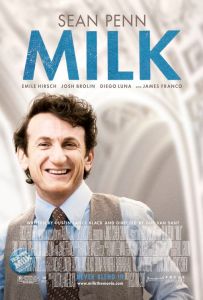 The biopic of America’s first openly gay elected official is stirring, thoughtful, and occasionally limited. Sean Penn gives a wonderful performance as the captivating and tragic Harvey Milk, assassinated in 1978 by fellow San Francisco councilman Dan White (Josh Brolin). He changes his look, his voice, how he carries his shoulders and moves his arms; it’s a terrific and transformative performance that only sometimes hits a few fey stereotypes. The movie mostly follows Milk’s path as a community organizer who successfully mobilized the gay rights movement. You’ll witness local politics in depth, and that’s my one reservation with this fine film – it focuses too heavily on the political formation of a movement and less on the man that kick-started it. You get little glimpses of Milk the man, and most of those glimpses happen to be his romantic relationships with annoying men. That said, director Gus Van Sant orchestrates real archival footage from the time including protestors and homophobic spokespeople, and it gives the movie an authentic relevancy. The deadly confrontation between Milk and White is played in a painful, very un-Hollywood approach that made me wince hard. It’s amazing to watch Milk and realize how far the American public has come since the 1970s and how much further we, as a nation, have to go.
Nate’s Grade: A-
Share this:

The Love Guru (2008)
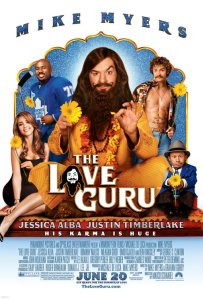 While never approaching the realm of good, I’ll admit that Mike Myers’ latest is not the cinematic abomination is has been hailed. I laughed a few times, though rare. Myers’ brand of comedy mixes puns, juvenile bathroom humor, slapstick, celebrity cameos (Ben Kingsley, why?!) and a certain level of self-aware absurdity (I don’t think Myers has found a penis joke that he didn’t enjoy). I feel that the comedy world has moved beyond Myers’ once popular brand of yuks. Thanks to Judd Apatow, we’ve transitioned to smart and tender character-based comedies. The threadbare plot relies takes too many self-indulgent and lazy detours. Why do we have to endure Guru Pitka (Myers) sing “More Than Words”? It’s not funny and just wastes time. Here’s an example of the lack of thought: Pitka wears a chastity belt but he can still get injured being hit in the groin. It’s a movie that doesn’t even remember its own gags. I’m always wary when a movie resorts to extended scenes of the characters cracking up and adding lines like, “I haven’t laughed this hard in a long time.” I have no qualms over crude comedy but it needs to be done with some planning to context and character. Watching someone get hit in the face with urine is not funny. Having pint-sized Verne Troyer get hit in the head is not funny the 80th time it happens. The movie never even satirizes the self-help industry. The Love Guru is too indulgent, too forced, too pun-heavy, too ill conceived, and far too stupid to succeed. I never thought I’d say this in a comedy that includes Myers, Stephen Colbert, Jim Gaffigan, John Oliver, Daniel Tosh, and Romany Malco, but Justin Timberlake is the funniest man on the screen as a daffy French-Canadian goalie, and that probably says enough.
Nate’s Grade: D+
Share this:

Repo! The Genetic Opera (2008)
 In a dystopian future, organ failure has become an epidemic. Fortunately, the GeneCo Corporation and its CEO Rotti Largo (Paul Sorvino) have devised a solution. They will loan out new organs to those in need. However, if the customer happens to be late on a payment then GeneCo sends out the Repo Man. This hooded figure will track you down and surgically remove GeneCo’s property, and perhaps they’ll harvest the rest of you too. People become obsessed with surgery upgrades (just think what wonders a third kidney could do for you). Blind Mag (Sarah Brightman) is a famous opera singer that signed a contract for new corneas. She’s now reconsidering retiring from the stage, no matter what that means. There’s also a powerful pain killer known as Zydrate that can be extracted from fresh corpses. Anyone caught robbing graves will be shot on sight.
One repo man, Nathan Wallace (Anthony Stewart Head), is working to keep his daughter safe. Shilo (Alexa Vega) has a rare blood disease she inherited from her mother, who died in childbirth. Nathan must keep her locked away in order for her to survive. His daughter must never know his true identity as a repo man. Rotti is informed that he is dying from inoperable cancer. His trio of bratty, homicidally crazy children (Paris Hilton, Bill Moseley, Nivek Ogre) are all fighting over who will get to run GeneCo once dad’s dead. Rotti plans a big bloody finale for everyone at the Genetic Opera’s final curtain call.
To answer the most burning question, yes it is an opera. There are perhaps five spoken lines and the rest of the movie is completely sung; you will get a solid 85 minutes of people singing while they engage in plenty of questionable acts. To say that Repo is unique is a disservice to the flick. I cannot imagine watching another movie that combines opera, vivisection, surgery addiction, Gothic costuming, and Paris Hilton actually doing a credible performance. Knowing that it is indeed a full-fledged opera, it mostly eliminates the snickers that arise from watching actors break into song at curious moments; when they’re singing all the time you’re more aware when they stop. It’s a futuristic rock opera that exists in the realm of a horror movie. There are several dispirited elements that can be occasionally awkward but that isn’t necessarily the flick’s fault. I just haven’t witnessed too many folks singing while arm-deep inside an exposed chest cavity. The movie isn’t as bloody or gory as repulsed film critics have lead you to believe. There are about four sequences of horror gore, though the film does resort to casual violence that can be off-putting, like stabbing extras. Repo possesses a wickedly entertaining and gleeful spirit.
 But how is the music for such an avant guard enterprise? It’s pretty solid, actually. It won’t be everyone’s cup of tea, naturally with some vulgar lyrics, but the music is certainly well crafted, with strong melodies, catchy hooks, squealing guitars, and some rather impressive singing. The music is reminiscent of industrial rock acts but it also has some pretty flavorful pop styling (the pounding hard rock beats reminded me of the underrated band, kidneythieves). These are tunes that will stick in your grey matter. Some of the highlights include “Infected,” where Shilo laments her condition and says, “I’m infected/By your genetics!/Mother can you hear me?/Thanks for the disease!” The tune is likely the catchiest of them all and has a fun pop-punk melody that becomes a leitmotif. Vega also proves immediately that she can sing. “Zydrate Anatomy” is led by the charming vocals of the Graverobber (Terrance Zdunich, who co-wrote the music and lyrics) as he exposits to the audience the ins and outs of the drug market. The guitars careen and the backup junkie chorus (“A little black vial? A little black vial!”) add some depth to the tune. But least you think it’s all Goth rock, Repo mixes in traditional arrangements as well, including plenty of harried violins, cellos, and some classical opera music. There are also subdued ballads like “I Didn’t Know I’d Love You So Much” and “Genetic Emancipation” that conclude the film on a high note. It all blends together into a unique soundscape that’s well worth singing along to.
Unlike the big screen version of Mamma Mia, the cast of Repo can actually sing, and they sing quite well. Vega (Spy Kids) sounds like a better Avril Lavigne than Avril Lavigne. She’s an ingénue that actually gets some good songs. Fans of Buffy the Vampire Slayer will recall that Head gave a standout performance on the TV show’s musical episode, and here he shows his amazing lung capacity. Head has a rich tenor voice that is lovely to hear. He howls with soulful anguish and holds onto notes for long duration. It’s tricky to present a performance only through song and Head has the most complex role (in one song he laments that “I’m the monster!/I’m the villain!”). Head also switches over into a gravely demonic voice, like his maniacal “I’m on the job” voice to frighten his victims. The personality shift is a credit to Head’s vocal range. The rest of the cast includes singers with actual opera experience (Sorvino, Brightman) and musicians (Skinny Puppy’s Ogre), and then there’s Hilton. She’s already proven with one flop album that the hotel heiress is not the surest singer in the world. However, she works with the material as a spoiled rich kid consumed by her vanity (at one point her face literally falls off).
 Repo! The Genetic Opera plays better as a soundtrack than as a movie. The story is mostly simple but still manages to be confusing at points because of unresolved subplots. The characters are given glimmers of outgrowing their stock roles, but most of them just accept their underwritten fates. Repo seems like it’s on the verge of making social commentary on vanity, man’s compulsion to destroy himself to live outside one’s means, the disposable nature of beauty, destiny versus free will, but it never really delves deeper. The surface is barely skimmed and then the movie kind of chugs along at a super brisk pace. The movie has a trashy, campy atmosphere that can wear thin at times, especially under director Darren Lynn Bousman’s lackluster lens. I know this is low budget but Bousman doesn’t conceal the budget limitations too well and his shot selections can seem rather redundant and mundane for a music video, let alone a feature length film. With that said, this is still worlds more ambitious than Bousman punishing audiences with another Saw sequel (he directed Saw 2-4 and took time off from 5 for this flick). Some of the songs, while fun, seem out of place given the narrative, like the punkish “Seventeen” where Vega declares her womanhood and pretends to be a rock star and pounces around her bedroom, complete with dancing stuffed animals. It’s almost like a Miley Cyrus/Hannah Montana moment of strange daydreaming. The finale at the opera is a tad overwrought and yet it seems appropriate given the operatic backdrop.
I’m dumbfounded that some critics would cite Repo! The Genetic Opera as the worst film of 2008. How could something this ambitious, with such a killer soundtrack, be worse than 88 Minutes, The Hottie and the Nottie, and the atrociously harmful Meet the Spartans? The movie is far from perfect and is bizarre, messy, and somewhat shambling, but I have a healthy appreciation for a film that tries something different, whether or not it succeeds. A bloody rock opera seems like it’s begging to be considered midnight movie material, but it’s better than that. This curious experiment works better as a soundtrack than a movie, but it’s well worth seeing because, really, when are you going to catch another freaking movie like this? If you ever venture inside a Gothic-themed club, you can expect to see this movie playing on a TV somewhere until the end of time. My advice: buy the soundtrack and get ready to have the songs take root in your brain.
Nate’s Grade: B-
Share this:

Doubt (2008)
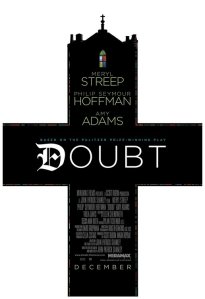 You know you’re in for some intellectual and moral ambiguity when the opening sermon covers the nature of doubt. Doubt follows a New York head nun (Meryl Streep) in 1964 that suspects one of the new parish priests (Philip Seymour Hoffman) of having an inappropriate relationship with a young male student. The acting by the four principal actors is phenomenal. This is a showcase of stellar acting. Streep is ferocious and unwavering, a one-woman wrecking ball, and yet she still manages to make an antagonistic character empathetic: she’s doing what she feels is right to protect her students. Are unethical deeds acceptable in a righteous pursuit? Does she truly believe her convictions, or is Streep striking back against an entrenched hierarchy that diminishes her value? There is a clear resentment between some of the nuns and the array of priests with all the power and all the say. Naturally, in a he-said she-said molestation case, the audience is more likely to side with the funny, caring, progressive priest than the scary nun who detests ballpoint pens and Frosty the Snowman. In the end, the accusations aren’t cleared up and the film lets the audience debate the results. Director/writer John Patrick Shanley adapts from his acclaimed stage play and does a mostly fine job bringing it alive on screen, though he has a penchant for relying on really simplistic visual metaphors. The supporting cast rises up to Streep’s level, notably Viola Davis as the mother of the boy accused of being mishandled. Note to future students of acting: study Davis’ 10 minutes of screen time to see how a truly talented thespian displays a range of conflicted emotions, none of them feeling inauthentic or cheap. Doubt isn’t just one of the best-acted films of the year but also one of the best, period, and I have little doubt to that.
Nate’s Grade: A


 nathanzoebl
You must be logged in to post a comment.