Category Archives: 2000 Movies

Traffic (2000)

The war on drugs may be one worth fighting but it’s a battle that every day seems more and more impossible. Traffic is a mirror that communicates the fruition of our current procedures to stop the illegal flow of drugs.

Traffic is told through three distinct and different narratives. One involves an Ohio Supreme Court justice (Michael Douglas) newly appointed as the nation’s next Drug Czar. While he accepts his position and promises to fight for our nation’s children, back at home, unbeknownst to him, his daughter is free-basing with her bad influence boyfriend. Another story involves a wealthy bourgeois wife (Catherine Zeta-Jones) awakened to her husband’s arrest. Her shock continues when family lawyer Dennis Quaid informs her of her husband’s true source of income. He’s to be prosecuted by two DEA agents (Don Cheadle and Luis Guzman) unless she can do something. The final and most compelling narrative involves Benicio Del Toro as an honest cop in Tijuana battling frustration with the mass corruption surrounding the city. Each story weaves in and out at various points in the film.

Traffic was photographed and directed by the man with the hottest hand in Hollywood, Steven Soderbergh. He uses a documentary feel to his filming that adds to the realism. Different color tones are assigned toward the three narratives as reflections of the emotional background. Soderbergh expertly handles the many facets of the drug industry and pulls out his typical “career best” performances from his onslaught of actors.

Benicio Del Toro is the emotional center of Traffic. His solemn demeanor and hound dog exterior reflect a good man trying to fight the good fight in a corrupt environment. He effortlessly encompasses determination, courage, and compassion that you’ll easily forget the majority of his lines are in Espanol. Benicio is an incredibly talented actor and one with such vibrant energy whenever he flashes on screen. It’ll be wonderful watching him collect all his awards.

Catherine Zeta-Jones also shows strong signs there may well indeed be an actress under her features. Her role is one of almost terror as you watch her so easily slip into her imprisoned hubby’s shoes. The ease of transformation is startling, but in an “evil begets evil” kind of fashion. The fact that she’s pregnant through the entire movie only makes the shift from loving house wife to drug smuggler more chilling.

The entire cast does credible acting performances with particular attention paid toward the younger actors deservingly. Don Cheadle throws in another terrific performance showing he’s sublimely one of the best actors around today.

Traffic oversteps its ambitions and aims for a scope far too large. It is based on a 6 hour BBC mini-series, so trying to cram that material into a two hour plus format is taxing. As a result we get an assembly of characters, but too many with too little time in between to do any justice. Screenwriter Stephen Gaghan (Rules of Engagement) condenses the towering impact and influence drugs have well enough, but he intercuts the stories too sporadically that attachment never builds for either of the three narratives. He does balance the Douglas Drug Czar one carefully as not to fall into the cliched vigilante metamorphosis. But the mini-series had more characterization and depth to its tale.

Traffic is a good film but it has edges of greatness never fully visioned. Soderbergh shines bright yet again and all accolades will be deserved. Traffic is undeniably a good film, but it’s one you may not want to watch a second time.

Nate’s Grade: B

Reviewed 20 years later as part of the “Reviews Re-View: 2000” article.

Thirteen Days (2000)

Another Kevin Costner film?! I’d rather suffer uncontrollable urination problems!” you could be saying to yourself. After Costner’s recent track record, hearing that he’ll have full Bostonian accent in hand seems a little nerve-racking. But despite Costner’s beantown speech 13 Days is a real surprise in just how much tension it actually wrings from the true story of the Cuban Missile Crisis.

Though 13 Days will suffer from the same problem Titanic did, people know their history and know how it ends. Though we all know we weren’t obliterated in nuclear war (At least I hope the majority of us know) 13 Days shows us the suspense through back-door politics as a fly on the wall in the White House. The audience sees all the political wrangling and power struggles in this cat-and-mouse game that made two nations hold their breathes in a high stakes stare-down. Bruce Greenwood, mainly known for beguiling Tommy Lee Jones in an assortment of flicks, plays our Commander in Chief John F. Kennedy. Costner seems to be a presidential advisor that could easily be mistaken for JFK’s imaginary friend the amount of time they spend together alone. Steven Culp plays Bobby Kennedy, and the fab threesome make up the core team that handled this bombastic situation. Of course there are dozens of other individuals involved within varying degrees, with the military leaders wanting procedures to lead them to inevitable war with Communist Soviets.

The warhawks recommend a Cuban invasion whereas the option of a quarantine hangs in sight as well. Through the next trying thirteen days stress will accumulate as options become more clear as deadlines become clearer. The political maneuvering makes for a gripping story, though a tad punched up at certain areas. It proves time and again that history makes the best stories.

Let’s get down to what’s on everyone’s mind: how much is the suck-ratio zooming on Kevin Costner in this picture? Well, his accent is very very jarring to begin with but you kind of get used to it after ten minutes of wear and tear. Costner does an alright acting job but the real spotlight is on the Kennedy brothers. Greenwood and Culp turn in star-making performances that gives human glimpses to the already prolific Kennedys. Culp is outstanding as Bobby, showing that the superiors discount him because of his young age but that he’s a shrewd and thoughtful politician. Greenwood doesn’t exactly sound like JFK but he adds particular dimension to the man behind the center of the crisis.

13 Days is a prime example of showing how intense and frightening fiction can be. Director Roger Donaldson uses black and white interludes for no real reason, but his final product is one of nail-biting suspense.

Nate’s Grade: B+

O Brother, Where Art Thou? (2000)

Loosely based on Homer’s The Odyssey comes the latest from two of the most talented and imaginative minds working in the business. ‘O Brother’ has all the things that go into making a good Coen brother film. It’s full of Coen regular like John Turturro, John Goodman, and Holly Hunter among others. It includes elements of wackiness like a KKK color Guard rally where they march into spelling KKK. It even has the great wit with dialogue being handed over to the overly verbose leader of the gang on the run Ulysses Everett McGill (George Clooney looking and sounding like Clark Gable). On top of this you get a wonderful blue grass soundtrack that is selling surprisingly phenomenal, and cinematography that is astonishingly beautiful. Yet, with all these positives, O Brother Where Art Thou? is a mid-level Coen movie. The comedy of the film is missing a lot when it should be there, replaced with pretty images or very pretty songs. Still, a mid-level Coen brother’s movie is much better than most anything out there today. It seems to aim to be a pleasant movie, and it achieves that finely. O Brother is a fun experience with the right person but not necessarily something that has a lot of rewatchability. Especially if you have bought the soundtrack.

Nate’s Grade: B

The Gift (2000)

Sam Raimi is a slick director and is maturing smoothly. The Gift is a nice ensemble pot-boiler in the South. Cate Blanchett gives a remarkable performance that was, as most were that were nominated, better than Julia. Keanu Reeves finds a role he can actually excel with in that of a wife beating redneck; he’s actually quite scary in it. Giovanni Ribisi gives the best performance of his career as a mentally challenged mechanic. The film coasts on some good atmosphere and direction by Raimi, but it is too easy to figure out the final turns in the end.

Nate’s Grade: B

The Family Man (2000)

If I poked this movie it would spray sap in my eye and blind me. It’s essentially a Hollywood remake of Frank Capra’s It’s a Wonderful Life with a bit more cynicism and a bit less success. Cage is a heartless Wall Street whiz who catches a “glimpse” of an alternative life where he’s married to Tea Leoni and has kids in the suburbs. The Family Man wants to kill you with its message of “business is EVIL” and “suburbs and mini-vans and bowling leagues and family… good!” It’s almost caveman like in its bludgeoning. Sap flows freely in this supposed feel-good flick, but stalls in a lackluster ending.

Nate’s Grade: C

Cast Away (2000)

Strand Tom Hanks on a desert island for years? Sounds too good to be true to many a disgruntled movie goer. Such is the state in Cast Away, Robert Zemeckis’ existential meditation on man, nature, FedEx and their product placement checks, and of course… volleyballs.

Hanks is yet another everyman, except he’s a real stickler for time and order as a FedEx supervisor. His girlfriend (Helen Hunt) is pushing for marriage but hey – they’ve got all the time in the world, right? So Tom boards a FedEx flight headed for the Southern Pacific that hits a nasty collision with a powerful storm. The plane goes down abruptly in what is likely the most terrifying plane crash ever performed on film. Hanks washes ashore onto a mysterious deserted island after drifting alone in the vast ocean. Without civilization and without human contact he must start all over just to survive the day. So becomes the Odyssey of Island Tom.

Cast Away hits one out of the park with its near dialogue free middle act with Tom’s first days upon his new island home. Hanks struggles to do everyday things from finding food to creating a makeshift shelter. As Hanks goes through these daily troubles the audience is with him every moment and learns as he does. Cast Away‘s middle is fascinating to watch. After a few days some packages from the crash wash ashore including a volleyball that Tom turns into his best friend. “Wilson” is Hanks’ companion and is totally understandable how one would branch out for contact under the circumstances. Plus, Wilson’s a dynamite celebrity of his own right now.

Hanks’ acting is his usually above average output, but his whole role seems more like a showcase for his method acting than the acting itself. The first half of Cast Away was shot then they took a year off so Hanks could become scruffy, thin Caveman/Unibomber Hanks. The transition is fun to watch and remarkable for an actor to devote themself completely to their role. But the part itself, and Hanks’ show, seem more spectacle than substance. Helen Hunt pops up in the beginning and end proving that she can somehow manage to be in every film in December. Pretty much the next actor in the film would be… well, a volleyball. Cast Away is basically a one-man show.

Despite a wonderful middle ‘Cast Away’ is suffering from the opposite syndrome of Saving Private Ryan: strong middle, weaker beginning and end sandwiching it. Our opening plays like an extended commercial for FedEx, complete with the dazzling FedEx package POV cam (coming soon!). The end plays like a thank you card to FedEx. The ending also suffers from extreme let-down from multiple climaxes that don’t end the film but just give way to another climax. By the time the movie does end you’re exhausted.

Zemeckis lends a skilled hand toward the direction, the script plays to the strengths of the tale good enough, and Cast Away has its moments but becomes too heavy-handed at certain periods. Still, the volleyball is good. Go for the volleyball.

Nate’s Grade: B

(For fun, count the amount of times FedEx is mentioned or seen in the film. Hell, do it with this review too. I’ll even help you out – FedEx, FedEX, FedEx, FedEx, FedEx, FedEx, FedEx, FedEx, FedEx, FedEx, FedEx, FedEx, FedEx, FedEx, FedEx. Oh fun.)

Reviewed 20 years later as part of the “Reviews Re-View: 2000” article.

Vertical Limit (2000)

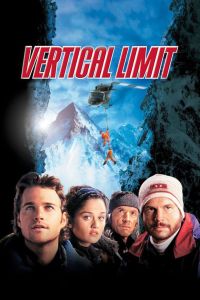
New heights are explored in the mountain climbing expedition that is Vertical Limit. A group of climbers must perform a rescue mission on the second highest mountain in the world or risk losing the lives of their friends and loved ones. With a set-up like this you would assume it would have a lot of great action. Well, yes and no.

Limit stars Bill Paxton (talented but has poor film choices) as the usual corporate villain, Chris O’Donnell (untalented with poor choices) as the tortured rock climbing hero, and Robin Tunney as the overly ambitious climbing sister to O’Donnell. This isn’t all the subplots though — oh no! We get a pair of wise cracking pot head brothers, a religious Pakistani serviceman, a military base, and a grizzled loner that everyone thinks is crazy until we finally realize he’s the best mountain man of them all. By the time it takes to establish all of these subplots, plus others I’ve failed to mention, we haven’t even gotten to the damn mountain yet. Rule #1 of a mountain climbing movie: Get on the bloody mountain within an hour of the movie starting!

The plot is overly cornball and excessively redundant. By the time you actually see the loner’s long lost wife frozen in a wall of ice and looking like a figurine from the Mattel Barbie catalog you will know the ends this film will go.

The experts of rock climbing are all young and seemingly frat house rejects. Why in every film must the experts in any field of scientific research be frat house party animals? How about some realism there and make them all middle aged balding white males. Well… I guess that would be less of a draw.

Director Martin Campbell (GoldenEye) has a great knack for establishing tight thrills and strong suspense. Campbell is clearly the strong point of this picture. When the action is running it’s plumb with excitement and great visceral visuals of the scenery. The only problem is that the action scenes are separated by long stretches of characters coughing or wheezing and terribly cheesy dialogue. If the story is technically built around the action sequences why do we have to devote so much time to it then? It’s a waste of Campbell, a true action talent.

Limit is rigid with expendable cut-outs designed to be its people. The characters are shoe-string and so is the plot but the action, when allowed to actually happen, is first rate. However, I do exclude a series of scenes where Tunney and Paxton are trapped in an ice cave that resembles more of your grocer’s freezer than a Himalayan peek. The 12 year-old behind me kicking my seat figured it all out good enough. I think that says enough.

Nate’s Grade: C-

The Emperor’s New Groove (2000)

Originally The Emperor’s New Groove was a grand Disney formula flick known as The People of the Sun concerning the Aztecs and included six Sting songs. We would have had this “same old same old” if it weren’t for someone who courageously raised their hand and said “Isn’t this stupid?” God bless that person. The original theme was scrapped as well as all the songs excluding one. The patented Disney formula was ditched for a fast pace and zany antics that haven’t been seen from Disney hands since Aladdin.

The central message of Emp’s Groove is still a moral lesson – this one over vanity and self-centeredness. David Spade voices a young prince named Kuzco with no regard for any of his followers. He plans on building a special waterslide by destroying the village of Pancha (John Goodman). Spade’s scheming high priestess Yzma (Eartha Kitt) concocts a potion to kill the Emperor with the aid of her dim-witted but loyal assistant Kronk (Patrick Warbutton). Through a mix-up the potion doesn’t end up killing Kuzco but turning him into a llama. So now alive and trying to regain his throne Kuzco can only find help with Pancha, the one he had wronged earlier.

The vocal talents of the four leads are particularly inspired with Warbutton on a different plane of comedy. Warbutton provides the film’s biggest laughs and is a genuine master of timing and vocal inflections. When Disney sequelizes this straight to video (as they do everything now) I hope it centers on Warbutton’s Kronk character. Kitt is fun in an over-the-top parody and Spade provides delicious sarcasm so simply.

What’s being advertised as hilarity is more or less spotty. Some jokes work but others are full of tedium. There are stretches of tedium that shouldn’t be there for something with “zany antics.” Yet, the 15 minute ending is the best piece of the film with multiple comic payoffs.

The anti-Disney Disney movie is anti enough. the jokes need to come more often and it takes a while to truly get into. It has its moments but The Emperor’s New Groove is not new enough. Although, I’m thankful that we got what we did instead of what we could have.

Nate’s Grade: B-

Proof of Life (2000)

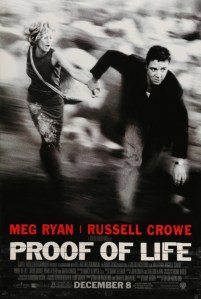
Proof of Life is more an interesting idea than an intelligent or well done thriller. The whole concept of the politics involved in K&R (kidnap and rescue) are duly fascinating. But Proof decides to build a different film around this premise and detours into mediocrity. The film ends with the standard take-down in the jungle I’ve seen many times over except I have the pleasure of seeing David Caruso do it this time.

David Morse is an environmentalist hired by an oil conglomerate to build a dam in a small fictional Ecuador looking country. He gets kidnapped by some radical revolutionaries and is held for ransom. Russel Crowe steps in as the hired K&R expert from Morse’s insurance agency.

The supposed romance on set between Crowe and Ryan is beyond my guess. On screen they have little chemistry and any romance bubbling rates a DOA on Dr. Love’s scale. Meg Ryan betrays herself as an actress and wanders the film minus a bra and constantly sniffling.

During play is a long going friction between Morse, who starts to look like he was auditioning for Cast Away, and some revolutionary hot-headed youth. It’s almost laughable the more it goes on. The will-they-or-won’t-they romance gets snuffed every time we cut back to Ryan’s husband enduring hardships. The editing and the concept ruin whatever sexual tension is supposed to build. The flick also has an unsettling theme that if you aren’t an English speaking white person you can’t be trusted.

The film starts off well with Crowe tangled in Russia but shifts into the mundane rather fast. Proof of Life is proof that what transpires off camera doesn’t always connect on camera.

Nate’s Grade: C+

You Can Count On Me (2000)

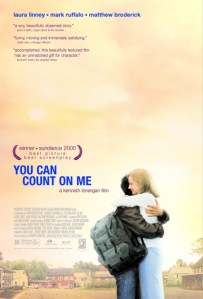
Kenneth Lonergan has had quite an up and down year. He started the year co-writing the atrocious What Planet Are You From? and writing The Adventures of Rocky and Bullwinkle to ending it with the character ensemble piece that ran away with an armful of awards at Sundance. Lonergan uses subtle moves to create a vivid mosaic of small town America and family relationships with You Can Count on Me. In film, quite often do we see the relationships of sisters or brothers (maybe too often). Rarely, though, do we see a thorough drama hinged upon the relationship of a brother and sister. Both torn by their genders yet always drawn together. You may kid, and get angry, but when danger arises you will always come to the defense of your sibling. It’s this seperational friction yet togetherness that creates the brother-sister bond.

Laura Linney and Mark Ruffalo are brother and sister who years ago lost their parents to a horrible automobile accident when they were young. Forced with the battle of growing up with grief, each goes their separate way. Ruffalo is branded the “difficult” rebellious one, yet deep down he knows that his publicly deified sister is just as much the rebel. Linney is a single mother dealing with the pressures of raising her son (a Culkin kid) and working in her town’s bank branch headed by her new boss (Matthew Broderick). Her brother reappears in her life suddenly and the two learn a little form each other. With her brother she can rely on someone else to watch her child and experiences another flash of the mischief that she had to forfeit from her childhood in order to raise her younger brother. Ruffalo provides he male figure her son is lacking and begins to shed the boy’s over protection and opens him up to the world. One experiences responsibility, one experiences release. but do either learn? That is a good question.

Lonergan crafts a subtle texture that allows his characters to breathe and grow, but not necessarily learn. His modest character driven picture may make you think of Made for TV but its a slice of life that’s immersible. It’s hard to find a film that is subtle, at its own pace, and restrained when it needs to be.

Linney is fantastic as the sister that breaks loose and winds up sleeping with her boss with reckless childish rebellion. Her performance is an Oscar nomination lock as her character runs the emotional gambit. Ruffalo is amazing and establishes himself as one to surely look out for. his mannerisms and expressions are wonderful and his demeanor is reminiscent of Marlon Brando.

You Can Count On Me is a wonderfully affecting story about people who are more complicated then simple plot synopsis will allow. Lonergan has crafted something of an anomaly in modern cinema: a film that takes its time, doesn’t answer any questions, but makes us feel all the more better after seeing it.

Nate’s Grade: B+

Reviewed 20 years later as part of the “Reviews Re-View: 2000” article.