Barbie (2023)
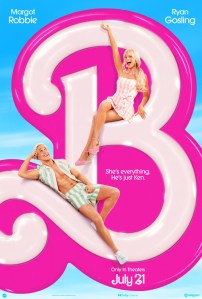
Who would have guessed a movie based upon a ubiquitous doll that dates back to the 1950s would become not just a cultural force and reclamation project but also the biggest moviegoing event of the year, as well as the highest-grossing movie in Warner Brothers’ history, even outpacing The Boy Who Lived? In 2023, it turns out we are all, every one, a Barbie girl living in a Barbie world. I came to this experience late, wondering if writer/director Greta Gerwig’s movie could live up to the lavish hype, the fawning praise, the hilarious offenses that many fragile males have levied against it. It couldn’t possibly be that good, could it? I saw it with three generations of women in my family, something I will privilege, and I must say, it is that good. Barbie is one of the best movies of the year and a shining example of what vision and passion can do to elevate any story. There’s so many ways this movie could have just been cheap corporate slop and instead it becomes an existential yet deeply personal treatise on life and death.
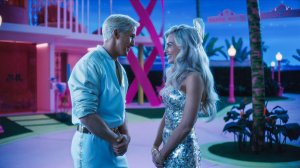
In the world of Barbies, women rule and the men are just afterthoughts. In this creation myth, the Kens were meant to compliment the Barbies. We watch “Stereotypical Barbie” (Margot Robbie) go through her daily routine of fun, frivolity, and nightly dance parties with all her best gal pals (no boys, er Kens, allowed). Then one day, this blonde Barbie started walking differently, started seeing the world differently, and started wondering about dying. Was there something wrong? Her human owner, in the real world, was in trouble, so Barbie sets off on an adventure to find her human owner and save the day, with help from her boyfriend, Ken (Ryan Gosling). Except for these two, the real world is very different from what they were expecting.

It’s easy to see how this movie could have been a mediocre fish-out-of-water comedy, with Barbie clashing in our modern-day world with its modern-day views of fashion, body image, and what skinny, buxom dolls represent to generations of young impressionable children. It’s clear to see what the scrapped version could have been when Amy Schumer was attached to star. What really impressed me with Barbie, beyond its delightful and inspired production values, is how ambitious and well-realized this movie is at every turn. It could have settled for easy jokes about Barbie and Ken not fitting in, not understanding human relationships and sex, and that stuff is there and it’s quite funny, but Gerwig and co-writer Noah Baumbach want to do so much more. This is a studio blockbuster, based upon a decades-long popular toy, that wants to do more with its platform. It aims higher, and in just about every measure, Barbie admirably succeeds. As a comedy, it had me howling with laughter, enough so that my response was providing another level of entertainment for my wife. There are jokes that are so specific, so beautifully targeted, that when they detonated, I was in awe and appreciation, (a reference to the literal definition of fascism and a Snyder Cut throwaway reference were perfectly attuned to my comedy sensibilities, thank you, Greta). As a frothy and fun fantasy, the movie has excellently crafted sets and costumes and retro visual aesthetics, making the movie a pink-accentuated sensory bombardment. But as a satire is where Barbie really becomes special.
Again, it would be easy for Barbie to learn lessons about body diversity and positivity and likely be browbeaten into what a good feminist is supposed to be, that the real world is a harder place for women than she previously thought. All of that is there, along with a consistent and entertaining critique of the faults of patriarchal society, but Barbie isn’t some reductive, man-hating screed to indoctrinate women into thinking they don’t need men (men are already very good at convincing women they don’t need men). This is a treatise on the power of inclusion and how this benefits society, both for men and for women. In Barbie Land, it’s a matriarchal society where girls rule and boys drool, but it’s a fantasy world reminiscent of a caste system, where the Kens will always be lesser afterthoughts because, well, they’re not Barbies, they’re just Kens. They are excluded in their own world. That’s why Gosling’s Ken is so excited by the real world, where the status quo is flipped, where the world is run by men, as he now sees this as an opportunity that has been denied to him. He wants to recreate his own version of the patriarchy not because he thinks women are inferior but because he just wants to be in power and respected, so he’s replicating his misguided understanding of what men in power are like, which naturally involves lots of horses. In the real world, Ken admonishes a suit-wearing corporate executive that they aren’t doing patriarchy right, to which the man winks and says, “We’re just better about hiding it.” The final act isn’t about “bringing down the patriarchy,” it’s about making a more inclusive world where people don’t have to feel marginalized and stuck and resentful.

Besides its social satire, there are other areas where Barbie goes deeper in surprising and affecting ways. There are more than a few applause-worthy moments explaining the perspective of women, particularly a monologue that is destined to be an audition piece for the rest of time, and it all works and is cutting without being too didactic. Gerwig even gets in a few jabs about corporate culture (“Are there any actual women in this boardroom?” “I’m a man with no power, does that make me a woman?”) and Mattel as an organization becomes another force of antagonism spearheaded by hapless buffoonish men (of course you get Will Ferrell to play the Mattel CEO). The biggest surprise is how emotional and deep the movie can become. There will be plenty that tear up just having a big Hollywood movie recognize their day-to-day emotional toil of being a woman in modern society. For me, the questions over what to do with the life we have flirted with some surprising existential contemplation, as Barbie is reminded at several points that death is a reality and yet would she want to move to the human world? An emotional highlight occurs when Stereotypical Barbie is speaking with the equivalent of her creator, and Billie Eilish’s tender-to-the-point-of-breaking song “What Was I Made For” lilts onto the soundtrack, and the sincerity of this sequence, topped with insert home video footage from the production cast and crew, really hit home how much more this movie is going for then bringing different dolls to life. It’s not just jokes about crotch-less creatures and weird feet, it’s about how we can live and why we do so, what inspires us. It’s a big studio summer release that flirts with the profundity and brevity of life.
There is one actor who deserves their own special recognition and that is Gosling (The Nice Guys), who so rarely gets to showcase his sharp comedy skills with the dour, serious, insular roles he gravitates to. Gosling is so committed to his role that he is operating on another plane of excellence, hitting sly jokes within jokes and selling every wonderfully stupid moment with Ken. This man isn’t afraid to look silly, he fully courts it, embraces it at every opportunity, and yet his performance doesn’t detract from Robbie but only makes them both shine brighter. He reminded me of Tommy Wiseau at points. His hilarious ballad “I’m Just Ken,” which segues into a wild West Side Story-style dance battle that is peak peacocking, is a phenomenal run of inspired silliness (the storming of the Malibu beach had me rolling), yet also connected to the character’s co-dependent arc and dissatisfaction with himself (when feeling down, just quote: “I’m just Ken, and I’m enough, and I’m great at doing stuff”). Ken has to learn to think of himself outside his combined definition with Barbie, and they both need to spend time discovering who they really are rather than who they think they’re supposed to be before considering forming attachments. I would not be surprised if Gosling earns a Best Supporting Actor nomination. It was the role he was born to play: insecure accessory doofus.
Gerwig has launched to mega-stardom with just three directing efforts (four if you count her co-directing effort in 2008 with Nights and Weekends, back in her early mumblecore breakout days). Already this woman has been nominated for Best Director, one of only seven ever, and she now owns the highest grossing movie of the year as well as in studio history. She’s proven herself with her 2017 coming-of-age semi-autobiographical Lady Bird, richly realized and achingly felt, with an established literary classic that is a foundation to generations, and had been adapted a dozen ways for the cinema, and yet she found ways to make her 2019 Little Women modern and personal, and now, on her biggest stage, being handled corporate IP that would be perfectly fine with just selling more toys, she has made a movie for the moment, something that compelled audiences back to theaters in droves, that will become a staple for a generation of film lovers. With just three movies, Gerwig has established herself in a league of her own as a director. Anyone who can turn the Barbie movie into a hilarious, poignant, and meaningful meditation on our times, on the relationships between mothers and daughters, and on life itself is a talent that deserves every creative latitude to achieve her vision. The voice and vision behind this, even to the smallest detail, is so impressive and fully committed and well developed and fabulous. Barbie is one of the best movies of the year and proof that studio blockbusters can indeed be more.
Nate’s Grade: A
Share this:


Posted on August 25, 2023, in 2023 Movies and tagged america ferrera, comedy, fantasy, greta gerwig, issa rae, kate mckinnon, margot robbie, motherhood, noah baumbach, ryan gosling, satire, simu liu, will ferrell. Bookmark the permalink. Leave a comment.


 nathanzoebl
Leave a comment
Comments 0