Blog Archives
Your Sister’s Sister (2012)
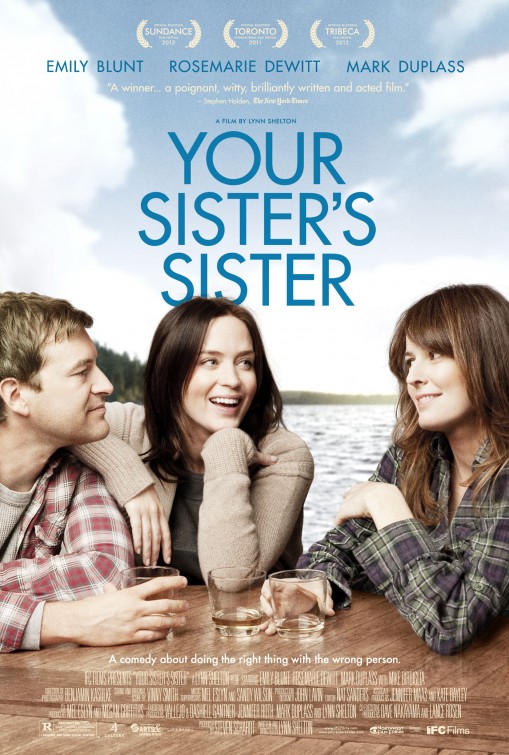 Lynn Shelton is quickly becoming one of my favorite indie film artists. Her writing and directorial offerings are somewhat relegated to the fly-on-the-wall hipster “mumblecore” category, but what separates Shelton is her narrative momentum, her laser-like focus with character, and her sense that a movie needs to build to something significant. With 2009’s Humpday, it was two dudes who might have sex as a test of their masculinity (you really need to see the movie for the full context). With Your Sister’s Sister, it’s the full ramifications of a bunch of delicious relationship secrets getting out there. Everyone in the film has something to hide and something to lose, and watching it all play out with humor and sweetness and honesty that is rare in movies.
Jack (Mark Duplass) is still coming to terms with the death of his older brother. His best friend, Iris (Emily Blunt), who was his brother’s girlfriend at the time of his passing, offers a suggestion. She arranges some alone time for the guy to clear his head. He bikes out to her family cabin but is surprised to find a guest already there, Hannah (Rosemarie DeWitt), Iris’ older sister. Hannah and Jack break the ice by bonding over their personal loss: his brother and her ending a seven-year relationship with her girlfriend. Over a long night of drinking, the two decide to impulsively have sex. The next morning is even more awkward when Iris shows up at the cabin, planning to finally reveal her own feelings for Jack. What follows may be one of the few character-based sitcom plots I’ve witnessed.
 Much like Shelton’s previous movie, the greatest strength of the film is how beautifully naturalistic it all feels while still telling an engaging story. The film has a relaxed vibe that washes over you, allowing you to immerse yourself in what feels like a real group of friends. There’s a tremendous naturalistic ease the film exudes, with the actors so familiar with one another that they truly feel like family. When I have well developed characters, and actors who seem so knowledgeable of their character’s tics and flaws and secrets and smallest details, I could honestly listen to them talk for hours. I don’t want to mistakenly give the impression that this movie is a dull yakfest where the participants are in love with the sound of their own exceptional voices. Each scene in this movie advances the plot further, twisting the screws, complicating matters, and brimming with delightful awkwardness and tension. With 2009’s Humpday, I wrote: “What I really appreciated about Humpday is that every moment feels genuine and every scene has a point. I was amazed that Shelton and her small unit of actors had made it so that every conversation had purpose; there is so little fat to this screenplay. Each scene reveals something new about a character or pushes the narrative forward toward its uncomfortable climax, and each moment never breaks the reality of the story.” And the same can be said for Your Sister’s Sister as well.
While the premise is a bit of a sitcom novelty with some farcical developments thrown in, the depth of the characters and the fantastic acting help to make sure that Your Sister’s Sister is nothing but graceful and beguiling. And the escalating conflicts, personal revelations and complicated feelings, always find a way to come across as organic to the story. That’s another amazing part of the film, that even with all the sexual hijinks that it still manages to feel grounded and surprisingly relatable. These are interesting, complicated, flawed, and spectacular characters, and watching them interact, profess their love through small actions and big declarations, seeing their heartfelt camaraderie, and watch them navigate their troubled lives to find some semblance of a happy ending is a joy to watch. This is a potent little movie, fully realized, poignant, funny, and genuine.
The film was shot over the course of 12 days and Shelton has said that much of the dialogue was improvised, working off her outline. Improvisation is a dangerous tact when dealing with a dialogue-driven film, such as this one. Just because it’s coming off the top of your head doesn’t mean it’s going to sound good. Not everyone is gifted with the ability to improv dialogue that is true to character, revealing, advances the story, as well as just being entertaining. Luckily, Your Sister’s Sister is the exception.
If Your Sister’s Sister does have a weakness, it’s the third act that seems to stall out without giving us much in development before tidying the broken relationships up again. The film’s comedic structure could feel, in lesser hands, like a generic sitcom. It is to Shelton and her actors’ credit that the twists and turns still manage to feel as believable as possible. The third act hits when all the secrets come out, pushing the characters away. Rather than (minor spoilers) ramping things up, we merely endure an extended wordless sequence of images of Jack biking around and the sisters burying the hatchet. Then it’s time for our big happy romantic declaration that tidies everything up, and we’re done. While satisfying on an emotional level given our empathy for the trio, the third act does seem very thin for an otherwise lean and well-structured story. It feels like perhaps Shelton only had enough plot for two acts.
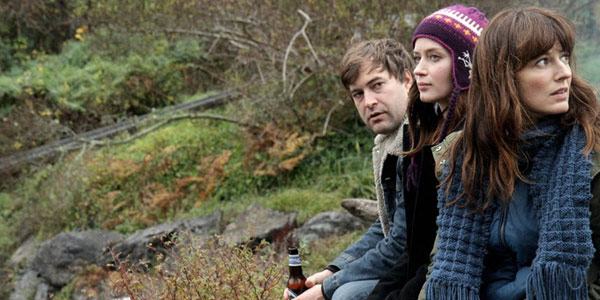 The main trio is a rather engaging ensemble that convincingly plays a besotted group of friends and family. Duplass (Safety Not Guaranteed) has gotten considerably more attention since starring in Shelton’s last movie; the man and his schlubby, smirky charm are ubiquitous. He has a way of being edgy without pushy and nonplussed and flummoxed without going overboard. Duplass has a natural fit for comedy but the man can really excel with the meatier drama bits as well, displaying the painful yearning of a man caught between his desire and the need to move on. He’s a winning and likeable presence that can still be endearing even when he’s flailing around or making others uncomfortable.
DeWitt (The Watch) was a late addition to the cast, replacing Rachel Weisv (The Bourne Legacy) when scheduling conflicts got the best of her. She deserves extra kudos for how good she is considering the miniscule prep time she had compared with her costars. DeWitt is amusing in how cagey and sardonic she can be, and her chemistry with Blunt (Looper) is outstanding. I greatly enjoyed the subtle nuances between them, the way their body language and gestures added extra layers to their relationship, the familiar communication and sisterly code, and just the smallest details that felt well thought out. The relationships in Your Sister’s Sister feel sweetly genuine, and with the benefit of great actors, it lays the groundwork for characters we care about.
Three people sharing time in a cabin might not seem like an exciting setup for a movie, unless, of course, there’s some supernatural presence murdering them in grisly fashion. However, when you lock away three great actors who know their characters inside out, a smart script that allows them the space to develop but pushes the movie forward scene-by-scene, and direction that feels seamless with the storytelling, then you have something special, and that something special is Your Sister’s Sister. While I think Shelton’s previous film had more at play concerning male relationships and sexual politics, this one, with a more straightforward, farcical plotline, is still plenty entertaining and with strong character work (the ending does leave one very large question unanswered). This is charming, sweet, unassuming little indie film that will provide a solid dose of smiles and laughs.
Nate’s Grade: B+
Share this:

Compliance (2012)
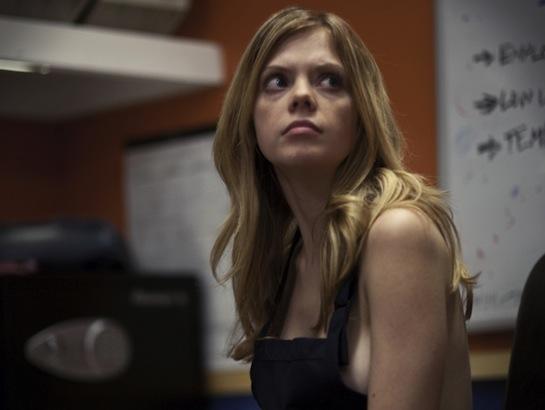
 The day at a fast food eatery began like any other. Sandra (Ann Dowd), the manager of the branch, has to shepherd her small group of employees through a hectic Friday evening. Then she gets a phone call from an “Officer Daniels” (Pat Healy). He tells her one of her workers, Becky (Dreama Walker), has stolen money from a customer. Sandra takes Becky into a storeroom and confronts her. Becky is aghast and professes her innocence. This is where things start to get out of control in writer/director Craig Zobel’s potent indie pressure-cooker. “Officer Daniels” insists that Becky be searched, then strip searched, and then worse, and Sandra and the employees begrudgingly go along. After all, it’s an officer of the law telling them what to do. Except that “Officer Daniels” is no police officer. This whole incident is an awful prank, and the people involved will never be the same.
This really is an indie horror movie, flipping the oft-repeated cry, “Don’t go in there,” with, “Why are you still doing this?” You may have to watch portions of this movie between your fingers. I was squirming and crying out at numerous points. The tension and dread just continue to mount, and you watch the characters slowly degrade, as they’re asked to do more insidious acts of humiliation in the name of compliance, and to watch them carry on the path of shame. It’s a step-by-step process of human degradation, so that the more disturbing moments of sexual obedience don’t feel entirely implausible given the journey through hell the characters have endured. It is impossible to watch this movie silent and detached. This is a provocative film that will garner many reactions but it’s also something of an endurance test. How long can you watch? How far can you watch these characters descend? The movie hooks you early and then you almost feel complicit, but you’re completely taken over by morbid curiosity.
 The movie is a powerful modern-day example of the Milgram experiment, the famous psychological exercise where a figure in authority, who assumes all responsibility, gradually gets average people to commit increasingly harmful acts to others. As long as people believe they are following orders, they can be convinced to do almost anything by someone in control. It’s easy to sit back and judge these characters, scoffing at how naïve they seem to be. It’s always easy for us to say what we would do in hypothetical situations, that is, until they happen. Compliance is an intriguing analysis of the shifting facets of power, authority, and manipulation. “Officer Daniels” enlists a host of tricks and verbal intimidation to persuade his victims to do things outside their better judgment (the caller’s true profession is a brilliant backstory). After a while, Sandra looks to be developing some slight Stockholm syndrome as she empathizes more with the plight of the phony officer on the phone than her employee. He provides just enough sympathy and validation she’s looking for to win her over. He also plays people against one another; he implores Becky to spare Sandra any extended grief, which often cows her into consenting. “Officer Daniels” isn’t the only one manipulating others; Sandra pressures employees to become involved in the situation, using her position of power to squeeze others into getting what she wants. There are numerous victims and culprits here.
Zobel could have easily given over to the exploitation elements of his story and made a very tawdry, voyeuristic exercise in sexual dominance. We watch as Becky bares all of herself and then goes even further, as “Officer Daniels” instructs male attendants to physically inspect her body cavities. It is a credit to Zobel’s sensitive direction that Compliance does not come across like a glorified S&M masturbation fantasy. He treats the incident very seriously, providing clear distaste without going overboard into preachy condemnation or superiority. It’s amazing that Zobel’s script finds so much empathy for his participants. You may be surprised at how relatable and “normal” these people seem. You may even recognize some of them. They’re all trying to do the right thing at heart, but that distinction gets extremely blurry as the night carries on. The point of Zobel’s script is that these people could be us. The added empathy makes the downward spiral all the more stomach-churning, as we want these characters to take a stand, to wise up and question the voice of authority.
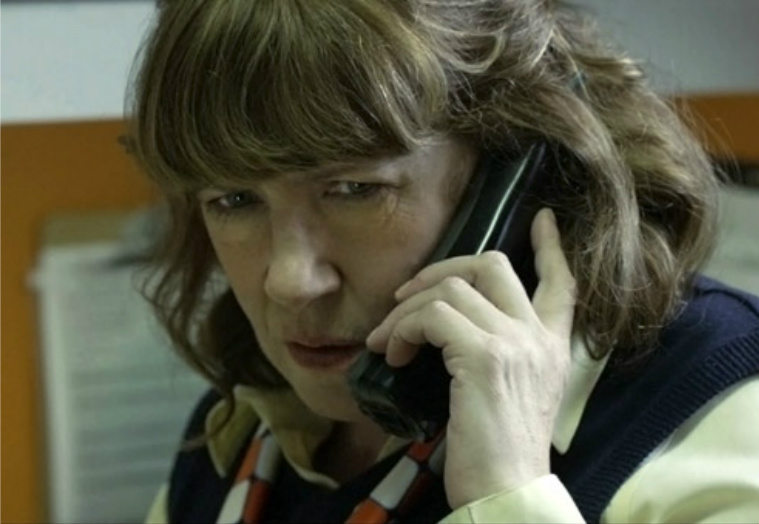 Dowd (Marley & Me) is downright heartbreaking and deeply frustrating in the movie. We get a clear sense of the pressure she’s under in her position, but she’s really the focal point of the movie. Walker (TV’s Don’t Trust the B in Apartment 23) is the martyr of the piece, and her slow resignation to the humiliation is deeply affecting, but this is Dowd’s movie. The longtime character actress takes the character of the dowdy Sandra, striving for respect, and transforms her into a figure worthy of Greek tragedy. She can be vindictive and, well, bossy, but she’s also a figure struggling for respect and validation and what she feels is morally just. We watch as her confidence starts getting chipped away, the flickers of doubt that she must tamp down because now she’s gone too far to reverse course. I don’t imagine that a movie as small as Compliance will be remembered around Oscar time, but I’ll certainly recall Dowd’s sad and transfixing performance.
I’d like to share a spooky bit of personal connection to the film. No I’ve never experienced anything this heinous before, but there was an offhand music cue that caught my interest. When we cut to the dining area early on, there’s an Admiral Twin song playing. Who is Admiral Twin? Why they’re a brilliant pop-rock band from Tulsa, Oklahoma that I’ve been singing the praises of since 2000. I’ve won over friends with my discipleship, but the band is still relatively unknown, playing few performances outside of their native Tulsa. Given the phonetic approximations of my name with the film’s writer/director, and the inclusion of an obscure indie band that few know (but should), it seems likely that Zobel may indeed be some far off relative of mine or, more likely, myself. I must have crafted an entire film without ever knowing about it. This seems like the most probable scenario.
I don’t want it sound like Compliance is some grueling exercise in group sadism. In lesser hands, it might have devolved to that. It’s a fascinating and provocative game that challenges and incenses an audience. The movie is a sickening but compulsively watchable dramatic experiment that will leave you talking for hours once it concludes. It’s an uncomfortable sit, yes, but that doesn’t mean it’s not worthwhile. The events in the film seem unbelievable and yet it’s based on a true story. This stuff happened, people. Not only that, it happened multiple occasions in multiple vicinities. What does that say about human nature? Will we only be as good as society lets us be? If we are absolved of responsibility, how far removed from our own sense of ethics will we go? Are we all susceptible to this moral failing under the right circumstances? I think that’s the truly terrifying and lasting lesson of Compliance. These people could be us, both victim and unwitting antagonist. Destined to stir debate and become a college ethics course favorite, Compliance is a gripping movie that will make you cringe but also give way to some scary introspection. How far would you go?
Nate’s Grade: A-
Share this:

The Sessions (2012)
 When The Session (formerly The Surrogate) debuted at the Sundance film festival, it seemed like Oscar catnip. You’ve got Oscar-pedigree cast, the limitations of disability (iron lung), and writer/director Ben Lewin (Paperback Romance) certainly knows a thing or two on the subject. He’s a polio survivor himself. But the story of a man in an iron lung’s sexual reawakening, as my mother would say, is a harder sell to the public. The movie has enough bizarre intrigue to garner a curiosity factor in many, and the sweeping acting and light-hearted tone will win over many a follower. I just wished that Lewin had focused more on his central character than what’s below the waist.
Mark O’Brian (John Hawkes) is a 37-year-old virgin looking to fix that oversight. The problem is that he’s suffered from polio all his life and can only be outside of his iron lung for upwards of a few hours. He’s not paralyzed, mind you; it’s just that his muscles don’t work too well. To move forward, Mark is set up with a sex surrogate, a sort of alternative therapy that is intended to help the disabled learn how to take control of their bodies for healthy physical relationships. Cheryl (Helen Hunt) has a set of rules as she goes about her business. There will only be six sessions to limit any emotional attachment. Mark is certainly a challenge, a man who doesn’t have muscle control below his neck (he confides that he hasn’t seen his penis in over 30 years). Together they work on getting Mark experienced and aware of his own body and abilities.
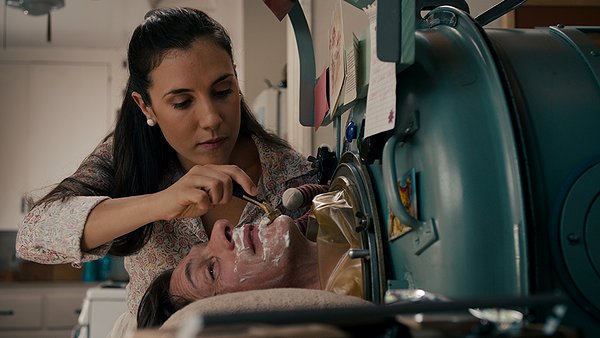 The Sessions is essentially a two-actor showcase (William H. Macy as a helpful priest is really just an ear to listen/audience surrogate), an ongoing dialogue and set of interactions between Mark and Cheryl. The script could have worked as a play though film certainly does open up the viewing possibilities when you’re dealing with an immobilized character. From that stand point, The Sessions is often a fascinating and funny portrait of a world that few of us will ever comprehend. We seem to have this concept that immobility is a death sentence; In Million Dollar Baby, Hilary Swank preferred death over disability. There’s the standard uplifting personal tales of success, the triumph of the human spirit, that sort of thing when we talk about disability in the movies. The Sessions is different. It’s all about sex, and it’s refreshingly frank about the realities of sexuality for those with disability. The human body is an amazingly adaptable creation, so no matter the setback, there is still plenty hope of having a relatively healthy sex life. Beyond a section in Murderball, I cannot think of another movie to explore the reality of sex for those with disabilities. It’s like a wondrous combination of two topics that makes people feel uncomfortable. So, in short, this is not going to be a movie for everyone.
That’s too bad because The Sessions is an engrossing story of a man trying to experience a world of human sexuality denied to him due to cruel circumstance. Mark is a relatively nice guy, a poet, though he can be a little quick with the emotional attachment and declarations of love. Can you blame the guy? I believe some will argue that limiting the focus to Mark’s sexuality, and his desire to shape himself into a better lover, is a misuse of the narrative potential. Some will chide that the film could be the indie version of any number of horny male sex comedies. To some degree, I can agree with this assessment, mostly because I wanted to follow more of Mark’s life and the movie is only 90 minutes long. But I also think the strict focus on human sexuality is also a boon for a movie like this. The fact that you could place a movie about a man in an iron lung and, say, American Pie in the same conversation is a testament that we are losing some of the stigma of disability. This guy wants to get laid. Period. And we can be grown up about this.
Hawkes (Winter’s Bone) is excellent in a role that requires him to do all his acting from above the neck. He’s convincing in every detail, down to his pained, willowy voice and his handling of a pointer for his mouth is first rate. Beyond the physical tics, Mark exists as a complex character that Hawkes is able to fully open up. He’s caustically funny, overcome with self-doubt, sweetly naïve, yet he’s also just like every other man on the planet. Hawkes doesn’t overplay the physical restrictions so it doesn’t end up being a performance dominated in showy actor traits. It’s a sweet and affecting performance that moves in small waves but makes a noted impact. Expect the man to get his second Oscar nomination this winter, as respected actor + disability is a combination they cannot refuse. Also, Hawkes is completely deserving of praise.
Hunt (Soul Surfer) has been grabbing a lot of headlines for the amount of skin she exposes, but her performance deserves more attention than a secondhand reference to her nudity. To be fair, it is copious nudity of Helen Hunt. I think she recites more lines while in different states of undress than clothed. It’s so much nudity that when you close your eyes, you may still be able to see it (not complaining here…). She does a lot of fine acting while naked. It’s hard exactly to get a bead on her character. She seems displeased with her insensitive husband, though he has to have some level of understanding to be okay with her profession. It feels like she’s looking to Mark as… something more, something else, but then it feels like her rationality returns and she returns back to the parameters of her job title. It’s a strong performance and the movie is at its best when Hunt and Hawkes are together. I just can’t help but feel if the ending wasn’t so blunted (more on that below) than maybe her performance would hit an even higher register.
 The actors are so good and the movie is so tender, I almost forgive it for lacking a proper third act (some major end spoilers to follow). Naturally the number one concern you’d imagine for a sex surrogate would be the danger of building emotional attachment. This is why Cheryl limits her sessions to six max. That doesn’t stop attachments from forming. Mark and Cheryl are dreading the conclusion of the sessions, having grown close emotionally as well as physically. So to spare them lingering pain, Cheryl suggests they stop early. Mark reluctantly agrees. There, ladies and gents, is your second act break. But then rather than get a third act, the movie simply gives you a slightly extended resolution instead. Mark meets a nice volunteer at the hospital and flirts with her, crowing with pride to inform he is no virgin. But then… we cut right into Mark’s voice over telling us that he spent the last five years of his life with this new woman. We get an introduction and then immediately jump to the end of the relationship. I understand that without Cheryl’s kindness and education, Mark’s long and healthy romantic relationship would not have happened. I understand that he’s able to succeed because they broke down barriers of confidence together. This doesn’t stop the ending from feeling missing, absent the payoffs we yearn for in drama. It’s a curious and muffled close to a movie that was so interesting and audacious.
The Sessions is more than just an Oscar-bait disability movie. It’s really an arty version of a sex comedy with some extraordinary participants played by skilled actors. It has a frankness that’s refreshing and it’s never less than interesting, exploring the minutia of Mark’s life and the difficulties he overcomes. It’s not exactly a triumph of adversity, per se. It’s not exactly a chamber piece devoted to characters even though two dominate the conversation. The Sessions is a hard movie to pin down. It’s perfectly enjoyable and funny, touching, disarming, and well acted, but I can’t help but feel like Lewin should have aimed higher. To focus solely on Mark’s budding sexuality seems rather limiting for the character, and the disappearance of a final act proves bewildering, blunting the dramatic climax, thwarting further involvement. I’ve seen the film twice now and my opinion of it improved slightly the second go-round, but I’m still left scratching my head over that ending. I get it, I just don’t get why Lewin felt like racing to the end rather than exploring the conflicts and personal struggles of his characters. I suppose there’s some testament to sticking to the facts but that doesn’t matter when it comes to telling me a good story. I’m of a mixed mind here because The Sessions has plenty to recommend but I also feel that the film’s finale and light-hearted, limited sense of purpose hamstring the emotional impact of the whole enterprise. Disabled people can lead healthy sex lives. I get it. Now show me more signs of that life.
Nate’s Grade: B
Share this:

V/H/S (2012)
 The found footage subgenre seems ripe for overexposure at this point. Just this year we’ve had a found footage party movie, a found footage superhero movie, a found footage cop movie, and this week will open Paranormal Activity 4, the latest in the popular found footage horror series. I understand the draw for Hollywood. The movies are cheap and the found footage motif plays into our culture’s endless compulsion for self-documentation. There are definite benefits to the genre, notably an immediate sense of empathy, a sense of being in the fray, and an added degree of realism. There are plenty of limitations too, notably the restrictive POV and the incredulous nature of how the footage was captured. With that being said, I think the people behind V/H/S finally found a smart use of this format. V/H/S is an indie horror anthology that offers more variety, cleverness, and payoffs, than your typical found footage flick.
Normally, found footage movies consist of 80 minutes of drawn out nothing for five minutes of something in the end. Usually, the payoff is not worth the ensuing drudgery of waiting for anything to happen. Watching the Paranormal Activity movies has become akin to viewing a “Where’s Waldo?” book, scrutinizing the screen in wait. V/H/S has improved upon the formula by the very nature of being an anthology movie. Rather than wait 80 minutes for minimal payoff, now we only have to wait 15 minutes at most. I call that progress. I haven’t seen too many found footage films that play around with the narrative structure inherit with a pre-recorded canvas. I recall Cloverfield smartly squeezing in backstory, earlier pre-recorded segments being taped over. With V/H/S, this technique is utilized once and it’s just to shoehorn in some gratuitous T & A. Plus, the anthology structure allows for a greater variety. If you don’t like some stories, and chances are you won’t, you know another one’s just around the corner.
 For my tastes, the stories got better as the film continued. I was not a fan of the first few stories. The wraparound segment (“Tape 51”) involves a band of delinquents who are hired to retrieve one VHS tape in a creepy home. The guys are annoying jackasses, and our opening image involves them sexually assaulting a woman and recording it to sell later, so we’re pretty agreeable to them being killed off one by one inside the creepy home. I just don’t know why anyone would record themselves watching a movie. It’s not like it’s Two Girls One Cup we’re talking about here. I found the wraparound segment to be too chaotic and annoying, much like the band of idiots. It ends up becoming your standard boogeyman type of story and relies on characters making stupid decision after stupid decision. Why do these idiots stay in the house and watch movies? Why do these people not turn on the lights?
The first actual segment (“Amateur Night”) has a solid premise: a bunch of drunken frat boys plan to make their own porn with a pair of spy glasses. They bring the wrong girl back to their motel room and get more than they bargained for. Despite some interesting commentary on the male libido (interpreting a woman’s spooky actions as being sexually aroused), this segment suffers from a protracted setup. There’s a solid ten minutes of boys being boys, getting drunk, that sort of thing. And when the tables are turned, the spyglasses lead to shakier recording, which is odd considering they are pinned on the guy’s nose. The horror of the ending is also diminished because it’s hard to make sense of what is literally happening. The weakest segment is the second one (“Second Honeymoon”), which is surprising considering it’s written and directed by Ti West, a hot name in indie horror after The Innkeepers. West’s segment is your standard black widow tale, following a couple on their vacation to the Southwest and their home movies. However, a stalker is secretly videotaping them while they sleep. Borrowing from Cache, this is a genuinely creepy prospect, and the sense of helplessness and dread are palpable. It’s surprising then that West concludes his segment so abruptly, without further developing the stalker aspect, and tacks on a rather lame twist ending that doesn’t feel well thought out. “You deleted that, right?” says one guilty character on camera washing away blood. Whoops.
The second half of V/H/S is what really impressed me, finding clever ways to play upon the found footage motif and still be suspenseful. The third segment (“Tuesday the 17th”) begins like your regular kids-in-the-woods slasher film. The very specific types of characters (Jock, Nerd, Cheerleader) are set for some frolicking when they come across a deranged killer. However, the slasher monster is a Predator-style invisible creature that can only be seen via the video camera. When recorded, the monster creates a glitch on screen. I think this is a genius way to cover the biggest head-scratcher in found footage horror: why are you still recording? With this segment, the video camera is the savior, the protector, the only engine with which they can see the monster. The fourth segment (“The Sick Thing That Happened to Emily When She Was Younger”) is shot entirely through Skype conversations on laptops. Emily is convinced her apartment is haunted and seeks support from her boyfriend, away on business. This segment’s co-writer and director, Joe Swanberg, is more known for being the mumblecore king than a horror aficionado, but the man makes scary good use of the limitations of his setup. The story might be a bit hard to follow, especially its ending, but there are some great jolts and boo-moments. There’s even a fantastic gross-out surprise as Emily shares her own elective surgery/exploration.
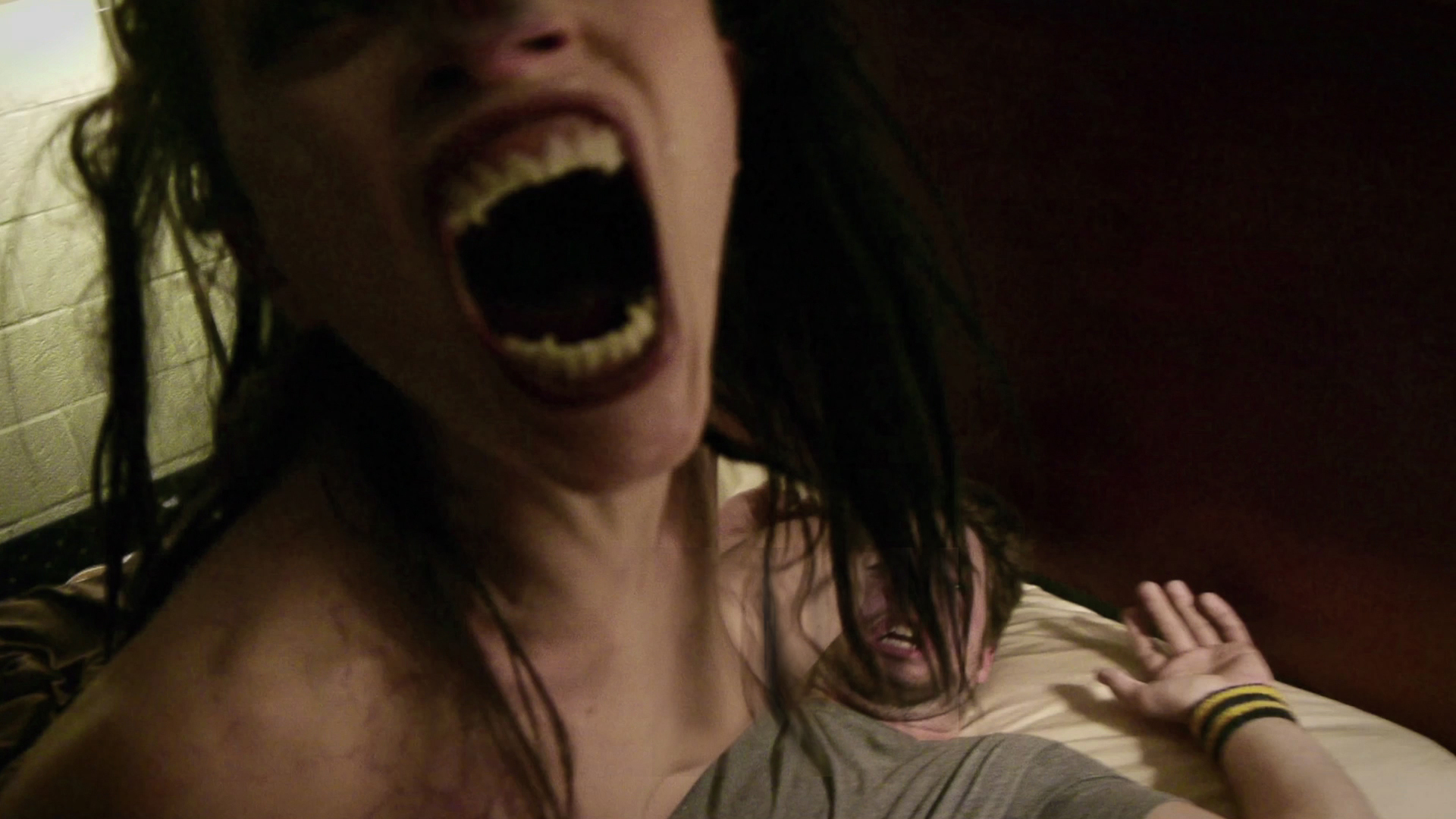 But it’s the last segment that takes the cake, ending V/H/S on a fever pitch of action. The wraparound segment isn’t even that, since it ends before the final segment, “10/31/1998.” It’s a haunted house story about a group of guys who stumble into the wrong house on the wrong night. Initially they think the human sacrifice in the attic is part of the show, but then weird things start happening like arms coming through walls and door knobs vanishing. This segment is a great example of how effective atmosphere can be aided by smart and selective special effects. When the madness hits the home, it feels just like that, and the rush to exit the house is fueled with adrenaline. You don’t exactly know what will be around the next corner. The CGI effects are very effective and the lo-fi visual sensibilities give them even more punch. The frenzied chaos that ends “10/31/1998” would be apt for a feature-length found footage movie, let alone a 15-minute short. It’s a satisfying climax to a film that got better as it went.
With all found footage movies, there’s the central leap of logic concerning who assembled this footage, for what purposes, and how they got it. With movies like the abysmal Apollo 18, I stop and think, “Why do these people assembling the footage leave so much filler?” V/H/S doesn’t commit a sin worthy of ripping you out of the movie, but when it’s concluded you’ll stop and ponder parts of its reality that don’t add up. The very idea of people still recording onto VHS tapes in the age of digital and DVD seems curious, but I’ll go with it. Several segments obviously had to be recorded onto a hard drive; the Skype conversations would have to be recorded onto two perhaps. So somebody transferred digital records… onto a VHS tape? And it just so happens that this tape then got lost.
While inherently hit-or-miss, V/H/S succeeds as an anthology film and generates new life into the found footage concept. Not all of the segments are scary or clever, but even during its duller moments the film has a sense of fun. There’s always something new just around the corner to keep you entertained, and the various anthology segments give a range of horror scenarios. The lo-fi visual verisimilitude can be overdone at times, but the indie filmmakers tackle horror with DIY ingenuity. I don’t know if anything on screen will give people nightmares, but it’s plenty entertaining, in spots. V/H/S is an enjoyable, efficient, and entertaining little horror movie just in time for Halloween. If you’re going to do a found footage movie, this is the way to do it.
Nate’s Grade: B
Share this:

Robot & Frank (2012)
 It’s the age-old story about an elderly man (Frank Langella) suffering from Alzheimer’s who teaches his robot helper to be his partner in jewelry heists. While that sounds a lot more fantastic than the movie we eventually get, Robot & Frank is a mellow, sincere, and overall nice movie that treats the particulars of its world with a wry sense of whimsy. The movie is really a mismatched buddy film as Frank is hostile to being forced to live with robotic help, but soon the two of them form the basis of a friendship, and when things get dangerous it’s heartwarming the lengths they’ll go to save the other. Give the Alzheimer’s subject, expect some twists in the final act concerning Frank’s world. The movie wants to hit us emotionally but I felt mostly remote, smirking at some of the fun of the old codger back in the burglary business of his youth. But the film just stays at a very even-keel level of emotional resonance, drawing us in but not exactly taking us anywhere. The ending is curiously without any sort of comforting resolution that could have put a solid piece of punctuation on the film’s emotional drama. Langella, it should be said, is excellent. Robot & Frank is a high-concept buddy film, fairly pleasant and entertaining but when it comes to a close you may wish that the film had relied less on chaste understatement.
Nate’s Grade: B
Share this:

Celeste and Jesse Forever (2012)
 Celeste (Rashida Jones) and Jesse (Andy Sandberg) have been best friends ever since high school, the couple everyone admired. They’ve been married for six years but now they are in the middle of divorce proceedings. Why? Celeste loves her longtime best friend but worries he’s not maturing or stable to be her marriage partner. During their separation, Jesse admits he’s found another woman whom he cares about. Celeste professes to be happy but deep down is troubled, second-guessing her decision now that there’s a real threat she might lose Jesse. The two buds act like nothing has changed, goofing around and paling it up, but how long can they keep up this façade? Eventually, someone is going to get hurt because divorce cannot be shrugged off. Reality has a way of outliving ironic detachment.
Can you remain best friends with someone you once loved? How about someone you once knew as your spouse? Celeste and Jesse are certainly trying but their idealistic “BFF” status seems destined to meet a harsh reality. Celeste and Jesse Forever is labeled as a “loved story” and I think that’s a pretty apt description. These two characters clearly have a deep affection for one another, but after six years the feelings just aren’t enough. What happens when you marry your best friend but that just isn’t enough? I was hoping for some greater answers from the movie, or at least a harder examination on why some relationships fall apart when things look like they should work. That’s not exactly what the movie offers. For a film with an aim to be more realistic about the fallings out of love, the movie follows a familiar formula. There’s the cute guy at yoga (Chris Messina) into Celeste, but first she has to get settled. I think I wouldn’t have minded this character if he didn’t feel so much like a plot device, a hasty happy ending meant to be put in a holding pattern until called upon. The “Jesse” half of the title will be gone for lengthy chunks of the movie. His portrayal also borders on simplistic. I wish we got more of his side of the relationship, especially since he’s going through sudden change himself. After seeing the trailer, I thought I was going to find the movie immensely relatable. Maybe I just got all the recognizable personal drama out of my system with The Five-Year Engagement (double feature for bitter lovers?).
 Fortunately, the movie is also fairly funny. The comedy can feel a tad sitcomish at times with misunderstandings and catching people in embarrassing situations. The screenplay by Jones and co-star Will McCormack (TV’s In Plain Sight) is routinely amusing, settling with soft chuckles rather than anything histrionic. It fits the subdued tone of the movie, since it’s about people coming to terms with messy emotions and not whacky mishaps. Then there’s a whole subplot involving a teen pop star (Emma Roberts) that feels recycled from a whole other movie. This storyline leads to a few good jokes but it doesn’t seem to add anything of value to the plot. The comedy doesn’t overpower the dramatics, and Celeste and Jesse Forever finds a nice tonal balance between the heartache and humor. I wouldn’t say the film is necessarily quirky but it certainly operates to an offbeat comedic rhythm. There are a few cringe-worthy editions but the characters and the actors make it worth any personal discomfort.
If Jones (TV’s Parks and Recreation) needs a good boyfriend I will gladly volunteer my services. My God this woman is beautiful. I don’t want to set off any alarm bells, but this woman is a goddess. She’s also extremely talented and a naturally charming presence. Her chemistry with Sandberg (That’s My Boy) is out of this world. They are so relaxed together, so amiable, so enjoyable, that it really does come as a shock when their unamused friends have to sternly remind them they are getting a divorce. They have a wealth of in-jokes and secret couple codes, and they’re so cute together that you wonder if maybe, just maybe, they’ll reconcile by the end. Sanberg is better than I’ve ever seen him, giving a strong, heartfelt performance as a nice guy trying to make sense of his eroding situation. But this movie is Jones’ movie, and she shines. While her facial expressions can get a little overly animated at times (TV-ish mannerisms?), this movie is a terrific showcase for her dramatic and comedic talents. This woman will excite you, frustrate you, break your heart, make you laugh, but you’ll be glued to the screen.
 The tricky part is that Celeste is both our protagonist and antagonist. She is the root of her own unhappiness, and coming to terms with the fact that she was wrong is a big moment of personal growth, however, it’s not exactly the direction audiences may be happy with. It’s harder to root for a character that is sabotaging her own progress. Jessie, especially as played by Sandberg, is pretty much an adorable puppy dog throughout the whole movie; it’s hard to stay upset with him, and occasionally Celeste will lead him on and then punish him for following. She tells him to move on but then pulls him back to her when he threatens to do just that. She chastises him for not being serious enough, for not having direction, yet you get the impression throughout the movie that Celeste bares some responsibility in this situation as well. Jesse is laid back, though hardly the arrested development slackers dotting most of modern comedy these days. As one character notes, perhaps Celeste enjoyed keeping her husband grounded, limited, stuck. I don’t chalk it up as malice, more a comfortable situation that Celeste is afraid to disrupt. She’s the overachiever, he’s the underachiever, they compliment one another, that is, until Celeste decides they don’t. Then when it looks like Jesse’s growing up, she wants him back, or thinks she does, at least this newer version of Jesse. As you can see, it’s complicated. At no point would I dismiss Celeste as a callous person, but the movie is tethered to her personal growth of being able to admit fault. Her window with Jesse has passed. The movie is about her journey to realizing that.
Celeste and Jesse Forever feels like a movie of small waves. It doesn’t have the Big Declarative Moments of most rom-coms or indie romances, and that’s because it’s not a romance as much as an autopsy on why a romance went down for the count. It’s melancholy without getting mopey. It has certain hipster tendencies but nothing that rises to an insufferable level of twee; it’s routinely adorable and rather heartfelt in places, though I wish it had offered more potent insight into its characters. This isn’t going to be a movie that people build up great emotion for. By nature it’s pretty low-key, choosing to handle its emotional pyrotechnics with delicacy and the occasional comedic set piece. For a comedy about divorc,e this si surprisingly sensitive. These are nice people, good humored, and you sort of wish the movie would just scrap any indie ambitions and substitute a happy ending. You want to shout at the screen, “Just reconcile already!” Maybe that was me just using the movies as good old therapy again (see: The Five-Year Engagement review, or don’t). Celeste and Jesse Forever is an agreeable, affable, bemusing movie, with enough laughs and emotion to justify giving it a chance.
Nate’s Grade: B
Share this:

The Invisible War (2012)
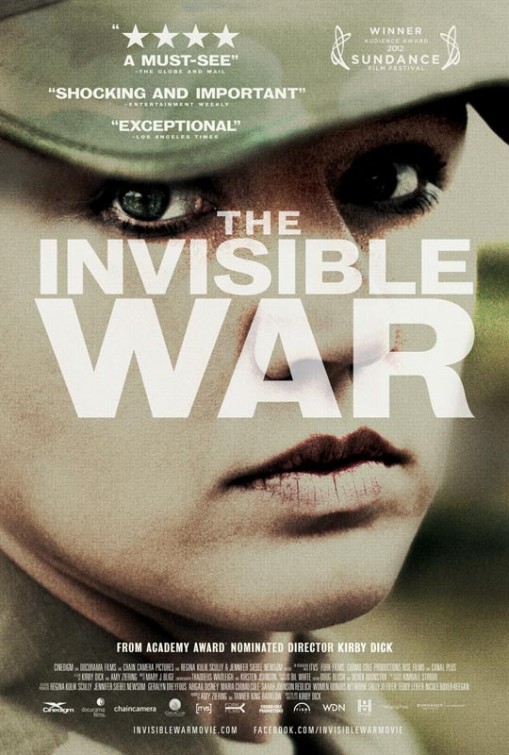 Kirby Dick is a documentary filmmaker known for picking fights with powerful institutions that operate in secrecy. In the Oscar-nominated Twist of Faith, he scrutinized the abuses of the Catholic Church covering up for sexual predators. In 2006’s This Film is Not Yet Rated, he hunted down the then-unknown members of the MPAA ratings board and delivered an overwhelming critique of their ratings hypocrisies. With The Invisible War, Dick has taken on a subject that’s even more powerful. The Invisible War, which won some awards at the Sundance film festival, examines the rampant numbers of sexual assaults and rape within the military. Through extensive, emotionally draining interviews and enraging statistics, Dick shows that most of the victims, when courageous enough to report their abuse, are met with skepticism, contempt, and injustice. One interview subject says that being raped isn’t what makes her angry the most: “It’s the commanders that were complicit in covering up everything that happened.” This is a shocking, sobering, and eye-opening documentary that deserves to be seen by every American. You owe it to the brave men and women who serve this country, to see this movie. The ugly truth needs to come out and be finally dealt with.
The upsetting statistics of sexual abuse within the military come from the Department of Defense, not an advocacy group, but our own government. Here are some of the most devastating stats:
-20 percent of all women in the military have been sexually assaulted and/or raped while serving.
-Women are twice as likely to be raped in the military rather than outside it.
-Military sexual assault/rape victims have a higher rate of PTSD than soldiers who have fought in combat.
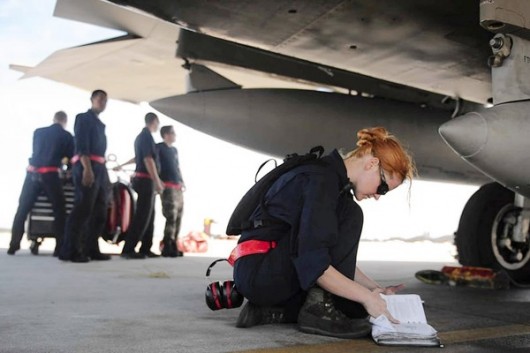 This is a profoundly revolting, morally repugnant, and infuriating story presented with damning testimonials clear-eyed logic. When I left the theater, I was radiating unquenchable fury. You could have harnessed my rage as an alternative resource. A lot of people blithely say they support the troops but we as a nation are letting these brave men and women down. The system is letting these people down, protecting rapists, training them to be better rapists, and then setting them loose upon the civilian population to continue their heinous crimes (it’s estimated the average sexual predator commits 300 acts in his or her lifetime). Listening to these heartbreaking stories can be grueling, but it is vital to listen. The women speak with such candor and bravery, befitting those ready to lay down their lives out of service for this country. But lest you believe this is merely a “women’s issue,” the film has a few interviews with male victims as well. With men outnumbering women six to one in the military, men are the majority of the victims of sexual abuse, a fact I doubt many would have known. As the experts attest, for an organization that rewards machismo, the shame for men can be compounded by the rampant homophobia within the American military culture.
It’s sadly understandable that so many of the interview subjects contemplated or attempted suicide. “Suicide or AWOL, those are your only two real options,” a military investigator laments. According to TIME’s investigative report, one Iraq and/or Afghanistan veteran commits suicide every day in America. Now remember that stat above concerning PTSD, and think about what the suicide rate must be like for victims of sexual abuse. One military man, husband to a rape victim, breaks down in sobs recounting his phone call for help while he tried to stop his wife from taking her own life. Watching proud, grown men break down into tears when they try and make sense of their institution harming their wives or daughters, it’s heartbreaking all its own. These veterans would not advise any woman to consider a career in the military, not when this is the sorry state of justice.
These victims were often handled with apathetic, callous, or downright hostile behavior, often being blamed for being attacked. These victims risked their careers to report their abuses, expecting some semblance of justice, and many times they were simply ignored or punished for “making waves.” One interview subject talks about how her commanding officer related that he had heard about three rape accusations that week and incredulously asked if the women were all in cahoots. One woman was raped and then charged with adultery; she wasn’t married but her rapist was, though he was never brought up on charges. Dick’s documentary lays a clear argument that giving the commanding officers, people often without any legal training whatsoever, the power to prosecute cases leads to plenty of ignored abuses. In 2010, the military reported 3,158 reports of sexual abuse (remember that 80 percent of cases generally go unreported), but only one-sixth of those cases lead to a court martial and only 175 of the assailants served jail time. And when they do serve jail time, it’s often knocked down to mere weeks. That way, the convicted serviceman doesn’t get charged with a felony. This also means when they leave the military, the convicted sexual offender does not have to register with a national sex offender database. When investigations do arise, they are routinely stonewalled.
 What emerges from this inflammatory documentary is that the command’s response wasn’t to protect the victims but to protect the accused, time and again. These commanders are supposed to be objective and impartial arbitrators, but this is hardly the case. It’s all about saving face, and a commander looks bad when he has a rapist in his unit, so rather than expel and punish the rapist, the military often drops the case and punishes the victim. Sometimes the commanding officer the victims are supposed to report the abuse to was in fact the perpetrator. In those instances, the victims have no possible path to justice. Major General Mary Kay Kellogg, Director of the Sexual Assault Prevention and Response Office (DOSAPRO), said victims could appeal to the Defense Department’s Attorney General, hence going over their commander’s head. Except that of the almost 3,000 cases sent to the DOD AG, not a single case was ever prosecuted. Kellogg also absurdly suggests that victims petition their Congressman. Just imagine a civilian being raped and told, “Better ask your Congressman if you want justice.”
The response to the systemic abuses has been ineffectual. The military response was to raise awareness, not sift out rapists from the ranks and protect their own soldiers from sexual predators. The ad campaign to raise awareness is jaw-dropping, with slogans like, “Wait til she’s sober,” and a horrendously ear-splitting rap song about sexual assault prevention. It’s so bad you can almost feel the seething resentment of the military. There’s also an informative video with a dramatization of a woman, fleeing helplessly after a man tries to touch her (the fact that this dramatization makes the woman look silly is intentional, me thinks). This woman runs into another serviceman who admonishes her, “Where’s your buddy?” The implication is that women should know that they can be raped at any time unless accompanied by a buddy. Does this not imply that every man in the military is capable of rape at the drop of a hat? And what if that buddy ends up being your rapist? The military builds a greater sense of camaraderie, and the men and women in uniform feel like a family. As one interview subject notes, when one soldier rapes another, it is akin to a crime of incest, a betrayal of that family. One victim was told she brought on the sexual harassment because of what she was wearing… which just happened to be her military uniform.
Dick’s film is obviously advocating a very specific side, but who cares about the idea of presenting balance given the subject? The Department of Defense spokespersons and their rote, officious responses are edited for some major points of baffled, incredulous laughter, as we contrast their company line with the testimonials of the men and women they failed to protect. Again, I return to the notion that not every story has two sides. What exactly is the other side in this epidemic of abuses? What possibly could the merits of the other side be, the status quo? This is not just some anti-military screed. In fact, many of the participants speak so highly of the ideals of the military, the duty to serve, and their genuine feelings of belonging to these hallowed institutions. This makes their disillusionment all the more distressing. Almost every interview subject has a military background, some discharged and some retired, and the movie presents its claims with clear, level evidence. The testimonials are so damming, the abuses so clearly documented, the obfuscation from justice so repeatedly maintained, that I cannot even fathom a second side to this story. When it comes to sexual assault, there is only one side to this issue.
 Dick also doesn’t overplay the obvious emotional appeals in the film. There is plenty, but he doesn’t sensationalize the drama or amplify the emotions in a self-serving manner. Instead, the film looks to clearly examine a systematic problem. Rather than deal only with potent outrage, Dick’s film is also a call to action with some strong ideas on how to better protect the victims of sexual abuses. Set up an independent system of justice outside of the commanders’ control, and work on preventing rapists from joining the military rather than cutting down the possibilities of how women can be raped. How about we punish the guilty party?
Last year, a group of veterans who had been sexually abused, initiated a class-action lawsuit against the military. This suit was dismissed by the court because, in their words, rape was an “occupational hazard of military service.” Reread that sentence again. Let it sink in. Now ask yourself is that at all acceptable given the values we profess for our country? The culture within the military is simply that rape and sexual abuses are just not that big of a deal (a Congresswoman admits that the Defense AG told her they have “other, higher priorities” to worry about), and so it all continues. The implication is that for the military to function, you’re going to have to excuse some excess, that excess being an estimated 30,000 sexual assaults a year. I’d like the military brass to explain to me what number would be unacceptable. How prevalent do these abuses need to be before proper action is taken, and not some facile PR, face-saving empty gesture, but something real? To me, one rape is one too many.
Dick’s excoriating advocacy documentary is powerful, furious, but sensitive to the victims and their horrifying ordeals. It declares that we can and should do better. In April, Secretary of Defense Leon Panetta watched The Invisible War and two days later made some changes. He took the decision to prosecute away from the commanders. It’s a start, but there’s a long way to go to fixing the military’s patronizing view of women. The movie opens with a series of advertisements targeted at women through the years, and the treatment is astoundingly patronizing and the film’s only spot of bleak humor. At one point, one of the victims asks if she and her fellow victims hypothetically deserve purple hearts for being wounded in battle too. “We’re never going to get anything,” another replies. These victims deserve recognition and justice, which has long been denied them. You won’t see a more challenging, infuriating, and compelling documentary of this year. It’s hard to watch at many points, and I cried at five separate occasions, but this is a movie that needs to be watched. I invite all readers to visit the Not Invisible site and consider joining the advocacy of this noble cause. You say you support the troops? Prove it.
Nate’s Grade: A
Share this:

The Queen of Versailles (2012)
 Meet the Siegels, the subjects of a Sundance-winning documentary, The Queen of Versailles. David is a real estate magnate in his 60s. Jackie is his 40-something wife, a former model, and together they have eight children. It would be an understatement to call the Siegels rich. These people are stupid rich. These are people that have so much money they don’t know what to do with it, which is why David and Jackie set out to build the biggest home in the nation. After the subprime mortgage flameout of 2008, the Siegels took a major hit in their resources. But not everyone sees worldwide economic disaster as a wake-up call. Some just keep on shopping.
The Queen of Versailles is one captivating clinical study in overreaching. In the wake of the financial collapse, politicians were eager to lambaste the poor who bought mortgages they couldn’t afford (the better to shield blame from their friends in the banking cabal). Let this film show you that even the super rich can have trouble living within their (enormous) means. I won’t lie; part of the appeal of this documentary is the continual shock of the wasteful extravagance the Siegel clan called normal. How opulent was their lifestyle? Well their 26,000-square foot home only had 17 bathrooms, so you can see why the Siegels would feel the need to build the biggest home in the nation. This 90,000-square foot fortress was modeled after the actual French palace in Versailles, so you know, it’s going to be modest. It was designed to have 30 bathrooms, 10 kitchens, a bowling alley, an ice-skating rink, and two movie theaters (for counter programming?). The large stain glass window itself cost $250,000. The total cost of the project: more or less $100 million. I repeatedly laughed to myself in disbelief at the untamed lavishness on display. I confess it’s hard for me to put myself into this vapid mindset. I just see all hat money and think of all the better things it could have been spent on. How many children could be vaccinated with $100 million? How many people could have been bought out of slavery with that money? How many low-income students could have afforded college? The kicker, what really gets my ire, is that is was all unnecessary. The Siegel family already lived in a giant mansion. Did they have to live in a giant-er mansion? When is enough just enough?
 By the end of the movie you won’t know whether to scorn the Siegels or feel sorry for them. I’m at a loss myself. There’s a certain level of schadenfreude watching a riches-to-rags story, watching the wealthiest among us find their world of easy money come crumbling down. But then you start thinking what these people are going to do now without the luxury of wealth. The Siegel children are horrified when at one point dad declares they will likely have to go to college and, gasp, earn their own living. And if these kids have to fend for themselves, it doesn’t take a genius to get a sense of what the future holds. At one point, the adopted niece discovers her pet lizard is dead. Jackie harangues her about not taking care of it. “No one takes me to the pet store!” the niece declares. “But why didn’t you at least give him water?” Jackie reasonably asks. The niece responds dead-serious: “That wouldn’t have made a difference.” And these people are going to have to fend for themselves! The horror that waits. The entire family has been wrapped up in a cocoon of wealth, insulated from the real world, and now has no real sense of how to navigate this new, blunt reality.
Adding to the sadness is the dawning realization that David Siegel cannot stand his wife. Jackie is wife number three, and a former pageant winner/model, so we all know what stood out to the older businessman. Even his kids know. Late in the film, when the weight of creditors bears down on him, David sequesters himself in his private room, shows no interest in his wife or his children, and confides to his dog that the two of them could just run away together. With the comforts of wealth stripped away, and Jackie reaching, gasp, middle age, it becomes readily apparent that David’s waning affection is not going to reverse.
But the movie belongs to Jackie, the titular queen, and she is easily the most fascinating figure in the film. It’s easy to dismiss the bleach-blonde woman with huge fake breasts and a shiny, fake life of glamor. Is she a ditz? She got a degree in computer engineering. Impressive. Is she a gold digger? She cannot help herself when it comes to buying, whether it’s at Southerby’s or Wal-Mart. Is she even a good mother? She does admit that she would not have had nearly as many children if it weren’t for the ever-present nannies. What I saw was a woman who knew she could taste the good life and then became afraid of being kicked to the curb. David is happy to fund her personal projects and let her splurge on posh buys, but for how long? Her body, impressive though top-heavy, is aging, and her model looks are naturally fading into a comfortable middle age. Such is life. However, you can tell that Jackie is terrified. Mountains of money acted like a buffer between her and her husband. That’s gone now. He keeps joking that when Jackie gets old he’s going to dump her for two twenty-year-olds. Even when the family is downsizing, Jackie makes sure to fit in her beauty stops (botox, tanning, etc.). Some might charge the woman with being toxically narcissistic, but I think that’s too simple. Her looks are her meal ticket and now they are betraying her. She knows the type of man she married, and they both seem to be failing to live up to expectations. Now that the shiny distractions are removed, they have to live with one another as-is, and as-is doesn’t really work for men of wealth and ego.
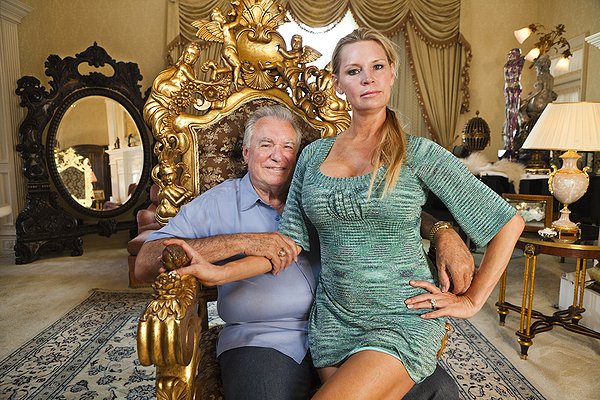 Director Lauren Greenfield (Thin) spent three years documenting the Siegel clan. She must have done something right with her finished product since David Siegel filed a lawsuit against the movie and Greenfield. The suit argues the film damages David Siegel’s credibility by positing that his company is on the verge of financial ruin. His company, Westgate Resorts, sold timeshares in the same kind of high-pressure sales tactics that lead to people buying things they cannot afford. After the 2008 meltdown, guess what? People couldn’t afford their own homes let alone a vacation timeshare. When the bankers freeze the easy money, Siegel and his company cannot pay their bills and have to downsize, sell offices, and foreclose major properties, including their signature Vegas resort. It’s hard to imagine that Greenfield went out of her way to portray a gloomy outlook on Siegel’s company when the facts are pretty black and white. He lost his access to money and lost assets he couldn’t afford any longer. The litigation just seems like desperate spin against the obvious and insurmountable.
From a documentary standpoint, not all of the storylines and messages stick together. You can tell Greenfield wants to use the Siegel clan as an allegory for the American consumerist culture. See, the movie says, even the rich overreached too. But beyond the audience feeling superior to such careless individuals, I don’t think this works. The movie never fails to be fascinating but practically in a car-crash sort of manner, as we vicariously lavish in the pornography of riches. Certainly Greenfield never condones the lifestyles of her subjects, not like the insipid, soul-deadening, vain Real Housewives reality franchise on Bravo (in a surprise to nobody, Bravo has snapped up the broadcast TV rights to Versailles). There’s plenty of derisive laughter to be had throughout, but you do wish that Greenfield had pushed further. Comparing the Siegel’s lives to their live-in nannies seems to be given superficial significance. These immigrant women bust their asses raising the Siegel brood and one of them literally lives in one of the kid’s super sized dollhouses. She literally lives in a former dollhouse. Choke on that metaphor. Then there’s a limo driver who’s had to cut back to make ends meet, but really the stars of the film are Jackie and David. Too often the film seems caught up in the “look how disgustingly rich they are” direction. This is a compelling documentary, to be sure, but it can lapse into an extended Lifestyles of the Super Rich and Famous.
David Siegel makes a very apt observation in the film. “Everyone wants to be rich,” he says. “If they can’t be rich, they want to feel rich.” Of course David Siegel’s company made a hefty profit from making people feel rich at their resorts. Everyone wanted to partake in the same illusion, the same false belief that the good times were never going to end. The Queen of Versailles is alarming, fascinating, and beyond belief at several points (why do these people keep getting more pets they won’t care for?). You’ll feel a general sense of moral superiority but that’s the movie’s weakness as well. The super rich are characterized as extravagantly wasteful, and while this is a notion that will not break any headlines, the movie too often dips into schadenfreude that doesn’t elevate the material. We’re left with the sinking impression that this clan is stuck in their ways and ultimately doomed. Since the film’s release, David Siegel has reclaimed his foreclosed super mansion, and now he’s brought the asking price down to a more reasonable $65 million. It seems that you can lose millions and still not gain a lick of sense and perspective.
Nate’s Grade: B
Share this:

Beasts of the Southern Wild (2012)
 After months of rapturous praise from Sundance and Cannes, allow me to be the wet blanket of the critical community, because Beasts of the Southern Wild is one big helping of “meh.” I didn’t enjoy this movie at all and its mixture of strange fantasy elements and a hellish childhood reminded me of another misfire, 2009’s Where the Wild Things Are.
Six-year-old Hushpuppy (Quvenzhane Wallis) lives on a spit of land off New Orleans and below the levy. This tucked-away land is nicknamed by its colorful, besotted residents as the Bathtub. Hushpuppy lives with her father Wink (Dwight Henry) in large shacks elevated high off the ground. This comes in handy because after a disastrous flood, Hushpuppy and her father have to navigate the waters to find others and scramble for some return to their life and culture. The residents must also make sure to be cautious because the U.S. government, which is evacuating all flood-devastated areas, is looking for survivors to forcibly remove. Wink is sick and has to impart the ways of his family and culture to young Hushpuppy, who sees herself as one piece in a big puzzle.
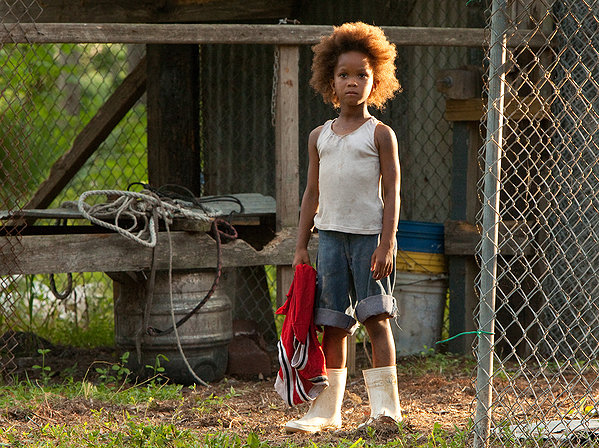 This movie is awash in all sorts of tones and storylines, failing to cohesively gel together or form some kind of meaningful message. I could have sworn that the fantasy elements, namely the giant thundering pack of large boars, were just going to be a visual metaphor for Hushpuppy’s journey. And then they actually show up and every person can see them. So, now what? The boars are one of many ideas that the movie just sort of toys around with before losing interest. This is not a film of magic realism. This is not a film about the escapes from a hard reality. In a way, this movie plays out like if Terrence Malick had made Gummo, and if you know me, you know I loathe both Gummo and Terrence Malick movies. Beasts constantly flirts with pseudo-intellectual pabulum, trying to reach something profound but instead settling for confounding. Hushpuppy’s curlicue unnatural narration talks about being a little piece in a big universe and the interconnectedness of all things, but by film’s end you get no dynamic sense of this. What I got was a little kid’s poor life getting worse, and that’s about it. If the film has anything larger to say about the world, Katrina, human connection, then I’m at a loss as to explain what that may be. Beasts offers half-formed ideas, strange, conflicting imagery, and characters that are rather thinly written and barely register. I never found Hushpuppy an engaging protagonist and felt like her very age and the heavy burdens she is forced to carry were manipulative substitutes for actual characterization. I cannot understand the love here.
The movie is something of a wild stew of Southern folklore and coming-of-age tropes and plenty of indie trappings, like weak political allegory, roaming handheld camerawork, and sacrificing story to the altar of realism. So much of this movie feels like it was made to give a sense of how an overlooked life in poverty is lived. From that standpoint the film does a commendable job of showing everyday life and the struggle to feed and survive. There’s a certain sense of ingenuity at work. But all of these setting details do not take the place of an involving story and characters we should care about. I felt sorry for the various residents of the Bathtub and their lot in life, but I never felt attached to any of them. That’s because, as mentioned before, they’re bland and simplistically drawn, but also because Beasts doesn’t bother to do anything else other than create its rich, tragic, harsh world. It’s authentic all right, but what does all that authenticity have to add to genuine character work? Artistic authenticity is not always synonymous with telling a good story. The Bathtub feels real, got it. So now what?
Hushpuppy lives in squalor and the movie has a disquieting romanticism of abject poverty. To the residents of the Bathtub, they are living in some forgotten paradise away from the concerns of the mainland. They refuse to leave their homes and their lives, even though there isn’t much of a home to call one’s own. We wade in this horrible existence and are meant to pretend like it’s an idyllic lifestyle, you know, with all the creature comforts of child abuse thrown in for extra measure. While Beasts looks entirely authentic with its impoverished, junkyard-esque production design, the overall mood and atmosphere hardly seems worth celebrating. Now, I’m not saying that characters can’t make the most of whatever life has given them and meet the implacable with fearless optimism. These characters would likely shun our pity; they reject any government assistance after the great flood and just want to sneak back to their simpler lives. This is not an enviable life, and the fact that the movie tries to romanticize it feels deeply irresponsible. At least with a film like Winter’s Bone, where you felt the crushing existence of systemic poverty, the filmmakers didn’t try and put a smile on all the drudgery. In that movie, you felt the trappings of poverty and how it can sink into your soul. On some level perseverance in the face of adversity is noble, but so would escaping poverty. Regardless, this is not worthy of romanticizing or fetishizing.
 Little Wallis is certainly getting her fair share of attention for anchoring the film. She’s six years old so it’s hard to assess her full acting potential, but the kid looks to have some fire in her. However, it is not a performance that leaves a lasting impression. I realized that much of her performance was long reaction shots and that ponderous voiceover narration. True, she does get some dramatic sequences and lets loose a few tears, but it feels like the movie didn’t want to push her too far and settled on a barrage of shots of Hushpuppy being stoic. I was more impressed with Henry, he too an acting novice making his debut. His character is more complex than an innocent naïf we have as our protagonist. He’s clearly dying and trying to quickly get his daughter prepared for a life of independence. He’s also quick to anger and you can feel the heavy weight of his life and his fledgling mission. In fact, I think Beasts would have been better if it had been told from the father’s perspective rather than our child trying to understand the great big scary world. There’s certainly a lot more drama and an easier route for sympathy, even if he could be accused of being cruel and neglectful.
I’ll admit that Beasts of the Southern Wild is different, daring, and fitfully imaginative, as well as benefiting from strong production design and special effects work. But “different” and “daring” doesn’t always mean good. I cannot in good faith say I enjoyed this movie, especially with its freeform plot, messages, tones, and occasional garish imagery. The plot seems desperate for some form of greater meaning, defaulting to ponderous poetry rather than supply a workable narrative and characters that are developed. Then there’s the whole romanticizing of systemic poverty that I find off-putting and wrongheaded. This is just a swampy mess of a movie, one that sinks under the weight of its own pretensions. It’s admirable from a technical standpoint but as a movie, Beasts of the Southern Wild is an exercise in eclectic navel-gazing.
Nate’s Grade: C+
Share this:

Safety Not Guaranteed (2012)
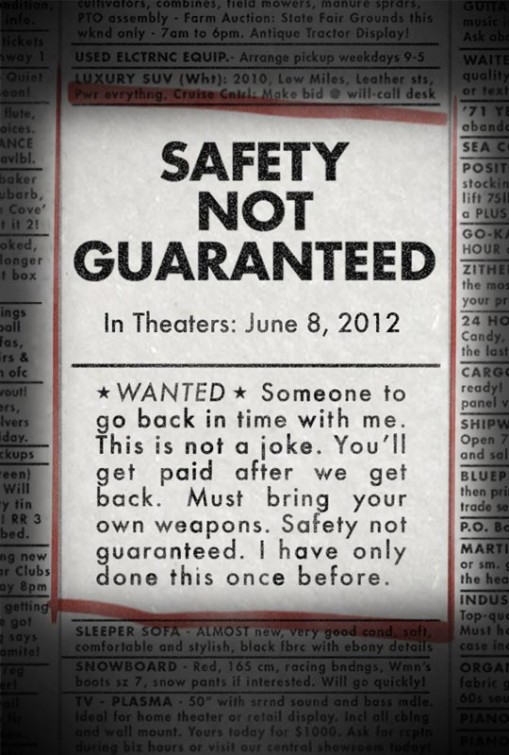 A man puts a classified ad in the newspaper asking for an unusual companion. No, it’s not some weird sex thing. Kenneth (Mark Duplass) intends to travel back in time to correct a few regrets. He’s looking for a partner, though he specifies his traveling companion must bring his or her own weapons and that safety is not guaranteed. This quirky ad grabs the attention of Jeff (New Girl‘s Jake Johnson), an egotistical writer for a Seattle magazine. He takes along a pair of interns, the surly Darius (Aubrey Plaza) and the nerdy Arnau (Karan Soni). Together, the gang heads out of town to seek out Kenneth and determine whether or not he is for real. However, Jeff’s real intention for this “work vacation” was to travel back to his hometown and try and score with Liz (Jenica Bergere), an old high school flame he is horrified to discover has… aged. Darius is the only one who can get close to Kenneth, but what starts as an opportune assignment into investigating a weirdo becomes something more. The guy, sweet if a little off, may be on to something… big, and Darius may be falling for him despite her own misgivings.
Safety Not Guaranteed is a modest film but does it ever sneak up on you and deliver an emotional wallop. I’m a romantic at heart, and so I’m generally affected by seeing two lonely people find their special something in the world reserved for them, and it’s even more affecting when these people are oddballs, and thus it’s even more resonant and meaningful for them to find that connection so elusive before. At its heart, Safety Not Guaranteed is a quirky yet naturally developing love story, and those are my favorite kind. I found my heart melting every time Darius couldn’t help herself and smiled. Perhaps it’s because Darius is our outside heroine or that Plaza is best known for her stone-faced deadpans on TV’s Parks and Recreation, but every one of those smiles felt so richly earned and rewarding. These aren’t the typical rom-com characters that are going to lapse into great speeches about love at key clichéd moments; while dabbling in some fantastical elements, Safety Not Guaranteed exists in our own recognizable world. And with that established, the unguarded moments of genuine happiness for characters we care about translates into a surprisingly touching experience. My heart felt so full at different points, melting and swelling and doing other non-medically accurate things. I honestly had tears in my eyes at different points. By the perfect end, I was so hopeful and overjoyed and left the theater soaring on my good vibes. I can’t guarantee everyone will find the same level of engagement in the romantic relationship, but I believe that the movie is inspired, clever, and authentic enough to deliver a crowd-pleasing finish. It’s earnest without being hokey.
 I’m trying to tiptoe around spoilers, though for those critical readers out there I’m sure you can infer a thing or two about the end of the film given my positive, beaming response. I’m sure my reaction would have been quite different if, say, Darius and Kenneth died in a horrible fireball because he was criminally insane from the start. All I’ll say is pay attention to certain discrepancies and see if they might prove to be a conversation-starter when you leave the theater.
Have I mentioned how truly funny this movie is? I’ve been talking all about the “rom” portion of the equation, but Safety not Guaranteed is a consistently funny movie, with a few big laughs. The movie’s sharp sense of comedy is more than everyone simply derisively laughing at the nutball. To be sure, Kenneth provides plenty of comedy in his super serious demeanor, and the movie doesn’t overplay the idea that he may be mentally unbalanced. The jokes come from the character interaction more than any contrived set piece, and the pleasure is in watching conflicting personalities bounce off one another. Every character contributes nicely to the comedic rhythms of this picture, adding a line here, a reaction there, to assemble one very funny movie. In movies where one character enters a relationship under initial false pretenses, usually you just keep waiting for that particular shoe to drop. You wait for the truth to come out and then deception reconciliation dominates the third act. Thankfully, the movie speeds over this narrative trap and gets us to the good stuff. We don’t need an entire act for people to be contrite and prove their love when what we see onscreen is obvious enough.
What elevated Safety Not Guaranteed for me was that beyond the oddball romance, there’s careful and compassionate attention paid to a slew of supporting characters. Now with a scant 80-minute running time, and the attention-grabber of a guy who thinks he can travel through time, naturally the supporting characters have minimized roles, but what I enjoyed was that they were not just relegated as stock players. The film has two stock roles, Nerd and Jerk, and fleshes them out further (though, to be assured, those are still defining characteristics). Arnau is a guy who is convinced any interaction with girls will ultimately lead to personal embarrassment. He’s only focused on the future and what he needs to get there, barely living in the present. It’s nice to watch him grow some confidence, albeit a small amount, and find some degree of enjoyment. And then there’s self-described asshole Jeff, who only submitted the story so he could come back and bang his old high school girlfriend. Some will find Jeff’s minimal personal growth to be disappointing and stagnate, but I thought anything substantial for this character over a three-day period of time would be unrealistic. Jeff is chasing his past memories, a faded time that had so much possibility when he was a stud in high school. The movie explores this notion of returning to a period of innocence as well. Going back to a time before overwrought cynicism, before settling, before compromising, before life became work, it’s something of a wish that the characters seem to be chasing. Jeff realizes how truly empty his life is, yet he’s probably too set in his ways to alter his path, which is a shame because Liz certainly seems like a lovely, caring, and capable romantic opportunity. Hey, she bakes, too (Bergere is great and easy to fall for). The unlikely friendship that emerges between Jeff and Arnau is also quite enjoyable and disarmingly sweet.
 I also need to single out the score from first time composer Ryan Miller, the lead singer and guitarist for one of my favorite alternative rock bands, Guster. The music has a lilting, dreamy quality to it but then follows a steady melodic rock path, reminiscent of the melancholic score for Little Miss Sunshine. The strumming guitars, plinging pianos, and swelling violins come together in harmony with little sci-fi touches. The score gives the film another sense of enchantment. I’ve been listening to “Big Machine,” the song Kenneth plays for Darius, on a loop for over an hour, if that gives you any indication on how much I enjoyed the original tune. The fact that “Big Machine” plays over the end credits when the movie meets its perfect end has got to account for some of my positive association. I think Miller has a bright future in crafting film scores.
Plaza (Funny People) deserves to break out in a big way after this film. She’s the heart of the movie and deeply vulnerable, covering it up with nonchalant cynicism. Darius is well within her surly comfort range so it’s no surprise that she excels with the hipster character, but the moments of dramatic weight are not given flippant treatment. Duplass (TV’s The League), just about everywhere in 2012, delivers a committed performance, though it seems mostly committed to the goofiness of his character. Yet when Duplass is able to show you some of the edge to his character, that’s when the performance walks a line between dangerous and exciting. The movie hinges on the two actors working together and they have good chemistry; the goofball and the cynic.
It’s so nice to discover a movie that lifts your spirits, that touches your heart without reaching for the treacle, and delivers a funny experience without compromising its modest aims and modest tone. Safety Not Guaranteed obviously plays a deliberate dance with the audience, vacillating between moments that make Kenneth seem crazy and moments that make you question whether he’s legit. The movie reminded me in a lot of ways of the underrated 2000 flick Happy Accidents, which featured Vincent D’Onofrio as a romantic suitor who also might be a time traveler or just plain nuts. Safety Not Guaranteed is a charming movie that seems to work a spell on you while watching; you get so invested in watching lonely people find meaningful human connections that you are compelling the movie to end under some happy scenario. Director Colin Trevorrow and writer Derek Connolly deserve to make waves in Hollywood with what they’re able to accomplish with a tidy budget and some clever yet earnest writing. This beguiling love story is all about stretching out of your comfort zone and taking a plunge into the unknown. Just like Kenneth, we’re all looking for a partner worthy of that plunge (not necessarily a romantic partner, mind you). Take the plunge and go see Safety Not Guaranteed, one of the best movies of the year. Not bad for a movie potentially based upon an Internet meme, huh?
Nate’s Grade: A


 nathanzoebl
You must be logged in to post a comment.