Blog Archives
Drive-Away Dolls (2024)
 Drive-Away Dolls is an interesting curiosity, not just for what it is but also for what it is not. It’s the first movie directed solo by Ethan Coen, best known as one half of the prolific filmmaking Coen Brothers, who have ushered in weird and vibrant masterpieces across several genres. After 2018’s The Ballad of Buster Scruggs, their last collaboration, the brothers decided to set out on their own for an unspecified amount of time. This led Joel Coen to direct 2021’s atmospheric adaptation of Macbeth, and now Ethan has decided that the fictional movie he really wants to make, unshackled by his brother, is a crass lesbian exploitation sex comedy. Well all right then.
Set in 1999 for some reason, Jamie (Margaret Qualley) is an out lesbian who unabashedly seeks out her own pleasures, even if it brings about the end of her personal relationships. Her friend, Marian (Geraldine Viswanathan), hasn’t had a lover in over three years and is much more prim and proper. Together, these gal pals decide to drive to Tallahassee, Florida using a drive-away service, where they will be paid to drive one way, transporting a used car. It just so happens that these women have mistakenly been given the wrong car, a vehicle intended for a group of criminals transporting contraband that they don’t want exposed. Jamie is determined to get laid and help Marian get laid all the while goons (Joey Slotnick, C.J. Wilson) are trailing behind to nab the ladies before they discover the valuable contents inside the trunk of their car.
 Drive-Away Dolls is clearly an homage to campy 1970s exploitation B-movies but without much more ambition than making a loosey-goosey vulgar comedy consumed by the primal pursuit of sexual pleasure. I was genuinely surprised just how radiantly horny this movie comes across, with every scene built in some way upon women kissing, women having sex, women talking about having sex, women pleasuring themselves, women talking about pleasuring themselves, and women talking about pleasuring other women. When I mean every scene I mean virtually every scene in this movie, as the thinnest wisp of a road trip plot is barely holding together these scenes. From a representational standpoint, why shouldn’t lesbians have a raunchy sex comedy that is so open about these topics and demonstrates them without shame? Except it feels like the crude subject matter is doing all the heavy lifting to make up for the creative shortcomings elsewhere in the movie, which, sadly there are many. The script is co-written by Coen and his wife of many years, Tricia Cooke, an out lesbian, so it feels like the intent is to normalize sex comedy tropes for queer women, but the whole movie still feels overwhelming in the male gaze in its depictions of feminine sexuality. I’m all for a sex-positive lesbian road trip adventure, but much of the script hinges upon the uptight one learning to love sex, which means much of the story is dependent upon the promiscuous one trying to then bed her longtime friend and get her off. Rather than feel like some inevitability, the natural conclusion of a friendship that always had a little something more under the surface, it feels more like a horny and calculated math equation (“If you have two gay female leads, you can get them both kissing women by having them kiss each other”).
I’m sad to report that Drive-Away Dolls is aggressively unfunny and yet it tries so hard. It’s the kind of manic, desperate energy of an improv performer following an impulse that was a mistake but you are now watching the careening descent into awkward cringe and helpless to stop. The movie is so committed to its hyper-sexual goofball cartoon of a world, but rarely does any of it come across as funny or diverting. When Jamie’s ex-girlfriend Suki (Beanie Feldstein) is trying to remove a dildo drilled onto her wall, she screams in tears, “I’m not keeping it if we both aren’t going to use it.” The visual alone, an ex in tears removing all the sexual accoutrements of her previous relationship, some of which can be widely over-the-top, could be funny itself. However, when her reasoning is that we both can’t use this any longer, then the line serves less as a joke and more a visual cue for the audience to think about both of them taking turns. It doesn’t so much work at being funny first and rather as a horny reminder of women being sexual together. The same with a college soccer team’s sleepover that literally involves a basement make-out party with a timer going off and swapping partners. It’s not ever funny but features plenty of women making out with one another to satisfy some audience urges. I will admit it serves a plot purpose of first aligning Jamie and Marian into awkwardly kissing one another, thus sparking carnal stirrings within them.
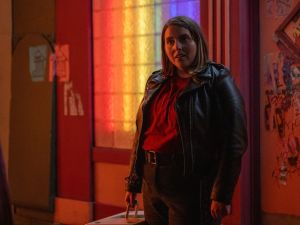 My nagging issue with the movie’s emphasis is not a puritanical response to vulgar comedy but that this movie lacks a necessary cleverness. It doesn’t really even work as dumb comedy, although there are moments that come close, like the absurd multiple-corkscrew murder that opens the movie. It’s just kind of exaggerated nonsense without having the finesse to steer this hyper-sexual world of comedy oddballs. The crime elements clash with the low-stakes comedy noodling of our leads bumbling their way through situation after situation that invariably leads to one of them undressing or inserting something somewhere. The brazen empowerment of women seeking out pleasure is a fine starting point for the movie, but the characters are too weakly written as an Odd Couple match that meets in the middle, the uptight one learning to loosen up and the irresponsible one learning to be less selfish. The goons chasing them are a pale imitation of other famous Coen tough guys; they lack funny personality quirks to broaden them out. There’s a conspiracy exposing political hypocrites condemning the “gay agenda,” and I wish more of this was satirized rather than a briefcase full of reportedly famous phalluses. If you got a briefcase full of famous appendages, I was expecting more jokes than blunt objects.
I feel for the actors, so eager to be part of a Coen movie, even if it’s only one of them and even if it’s something much much lesser. Qualley (Once Upon a Time… in Hollywood) is a typical Coen cartoon of a character, complete with peculiar accent and syntax. She’s going for broke with this performance but the material, time and again, requires so little other than being exaggerated and horny. There is one scene where her physical movements are so broad, so heightened to the point of strain, that I felt an outpouring of pity for her. It feels like a performance of sheer energetic force lacking proper direction. Viswanathan has been so good in other comedies and she’s given so little to do here other than playing the straight women (no pun intended) to Qualley’s twangy cartoon. Her portrayal of sexual coming of age and empowerment was better realized, and funnier, in 2018’s Blockers, a superior sex-positive sex comedy.
 As a solo filmmaker, Ethan Coen seems to confirm that his brother is more the visual stylist of the duo. The movie is awash in neon colors and tight closeups of bug eyes and twangy accents, but the most annoying stylistic feature, by far, is the repeated psychedelic transition shots, these trippy interstitials that don’t really jibe with anything on screen. It felt like padding for an already stretched-thin movie that can barely reach 75 minutes before the end credits kick in. That’s why the extended sequences where the intention seems exploitation elements first and comedy second, or third, or not at all, makes the whole enterprise feel like a pervy curiosity that has its empowering yet obvious message of “girls do it too” as cover. Agreed, but maybe do more with the material beyond showcasing it. Ethan Coen is a prolific writer who has written short story collections (I own his 1998 book Gates of Eden), poetry collections, and he even wrote five one-act plays before the pandemic struck in 2020. I’d love to see those plays. This man has true talent but it’s just not obviously present throughout this film.
Drive-Away Dolls is an irreverent sex comedy with good intentions and bad ideas, or good ideas and bad intentions, an exploitation picture meant to serve as empowerment but still presents its world as exploitation first and last. It’s just not a funny movie, and it’s barely enough to cover a full feature. I suppose one could celebrate its mere existence as an affront to those puritanical forces trying to oppress feminine sexuality, but then you could say the same thing about those 1970s women-in-prison exploitation pictures. It’s a strange movie experience, achingly unfunny, overly mannered, and makes you long for the day that the two Coens will reunite and prove that the two men are better as a united creative force; that’s right, two Coens are better than one.
Nate’s Grade: C-
Share this:

Love Again (2023)/ Rye Lane (2023)
 Romantic comedies used to be a powerhouse of Hollywood and now it feels like they’ve all disappeared from your local multiplex. Rom-coms gave us industry stars, careers, and household names, the likes of modern rom-com royalty including Nora Ephron, Cameron Crowe, Nancy Myers, and Richard Curtis, and two of which have screenwriting Oscars. It’s a subgenre that is quite often dismissed, usually by condescending men, let’s be honest, as empty-headed maudlin wish-fulfillment. It’s no coincidence that rom-coms are looked at as more of a female-driven genre aimed at a more female-centric audience, so the contemptuous pile-ons from men can often seem like insights into masculine social allowances for empathy. I’ve long been a fan of romantic comedies, even written a few, because they’re just so damn likable. It’s a foundational principle of the genre, to get you to like the characters, their interactions, their courtships. The movie is romancing its audience at the same time the characters are romancing one another, and who doesn’t like to be swooned? Two 2023 rom-coms, Love Again and Rye Lane, showcase directly how appealing and heartwarming and swoon-worthy that excellent rom-coms can prove, and how middling when its genre is taken for granted.
With Love Again, we follow Mira (Priyanka Chopra Jonas) who is mourning the loss of her deceased boyfriend. She continues to send texts to his old phone number explaining the depth of her grief and confused feelings trying to get her life back on track. It just so happens that her dead boyfriend’s old number has been given to the work phone for Rob (Sam Heughan), a journalist who is getting over his own recent heartbreak. He takes a curiosity to this stranger sending him such heartfelt texts, and after meeting her from afar, decides to try to get to know her better, resulting in the two of them romancing but with the Big Awful Dreadful Secret always waiting to be discovered for the unfortunate Act Two break.
 I don’t understand Love Again, like at all. I understand what happened on screen in a literal sense but the reasoning behind it, the storytelling choices, are so bizarre and foreign to me that it feels like a group of aliens who only learned human behavior through the worst direct-to-streaming rom-coms tried their hand at recreating human interactions and falling in love. The very premise seems almost like an afterthought, so why even go through the trouble of this labored conceit? The fact that Rob has been receiving this sad woman’s grief texts could present a real ethical conundrum, beyond the fact that he knows her private thoughts and feelings and he doesn’t even know who she is. The natural angle would be for him to take it upon herself to do small things to make her feel better, maybe from the outside perspective of a secret admirer, a position he never intends to go beyond. The issue becomes when he starts to transition to romance, because now he has a head start that she didn’t even realize was happening. Also, he could make use of the information that she’s been unknowingly feeding him, about favorite foods or interests, to better sweep her off her feet, but that also places us in an ethically dubious scenario of emotional manipulation, akin to what Bill Murray tries to get away with the loops of Groundhog Day. It’s a borderline stalker situation that can easily go too far. The fact that Love Again doesn’t even cover these most obvious plot scenarios makes the entire premise feel perfunctory; it could have been anything that accidentally drew Rob to Mira because it’s so unimaginative and, simply, bad at its own inept storytelling. It’s so baffling and feels like it was made with contempt for its audience, believing that they would accept anything as long as the genre parts were covered, so Love Again’s story is the barest of pained efforts.
Love Again is bad in ways that are despairing while also being mind-numbing. You get a sense early on how little feel for the material the filmmakers have, at how poorly the scenes are at disguising their creaky plot mechanics from the viewer. It’s the kind of movie where a kindly bartender introduces himself and seconds later is all, “I sure feel bad about your dead boyfriend.” It’s that kind of movie, the kind with supportive friends and work colleagues who are only there to provide words of encouragement or set the scene in the most transparent and lazy way, “You know you haven’t been the same since…” to better tee up the audience as far as what is important. All movies do this but the exposition needs to be masked with character details or comedic exploits, and the better to visualize a person’s life.
 This is also the kind of comedy where the jokes amount to the first idea of every scene, where there is never a subversion or even an escalation or a comedic situation. In this world, Nick Jonas makes a cameo as a bad date who is vainly obsessed with bodybuilding and that is the only joke you’ll get with that appearance to the end. It’s the kind of movie where Mira’s “quirk” is asking dates would you rather scenarios that aren’t even raunchy or extreme or even that telling of her own personality. Her other personality trait is that she likes, get this, putting her French fries on her cheeseburger (what a crazy bohemian!). It’s the kind of movie that has Mira as a children’s book author and doesn’t even bother to provide a scene of her demonstrating her storytelling prowess and insight for creating metaphorical-heavy stories to impart important lessons for children. This technique could have been a greater insight into her emotional state without having to rely upon the character just spouting out her feelings. Even worse, the movie doesn’t use her texts to her beloved as a means of getting to know her better. It’s the very premise of this movie, supposedly. These details meant to give the movie its definition, what separates it from the rom-com pack, but what it produces feels so insufficient and haphazard that you wonder if this was a failed genre MadLibs.
It’s also bad that Chopra Jonas (The Citadel) and Heughan (Outlander) have a remarkable lack of chemistry. They’re both good-looking human beings who have previously shown to be quite capable and appealing actors. I do not blame them for the lack of feeling in this movie. They could only do so much with the poorly written characters and the clunky dialogue. Watching them attempt to flirt with this material is like watching two cats try and recreate the H.M.S. Titanic. It’s just not going to work well.
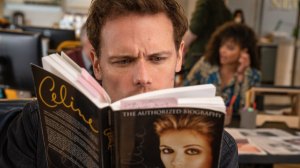 Here’s another example of how poor the filmmakers have developed the elements of their tale. Rob is still mending his broken heart from a fiance that left him a week before their wedding. He is a cynic, although like everything else in this movie, if you push too hard it’s only there as a shallow fixture for story. But if you’re going to make him the cynic, make him believe that love is impossible, it’s a chemical condition of the brain, some delusion, and that this drives his contempt for having to interview Celine Dion, a pop star best known for her soaring ballads about love and sunken ships and hearts going on. He thinks her songs are cheesy and silly, and over the course of the movie, of course he becomes a believer (at least this the movie understands the arc to follow). Again, the most obvious route would be to make him a music critic, someone who decries silly love songs and thinks of them as a destructive drug for the masses. This would make more sense why he’s so irritated at having to cover Dion, and why he would be covering Dion, and it would also make more sense then for his reconsideration. The movie, instead, makes Rob a big fan of… basketball. He loves to watch basketball. Why is this man covering Celine Dion then? If he was going to cover basketball, why not bring his passion for it more into focus, at least as something he can learn from and share with Mira? They share a quick game where she basically says, “I like this game too,” and that’s the rest of this completely underdeveloped characteristic that doesn’t tie back in thematically at all. Again, if you’re going to make this much of Dion’s multiple appearances, including devoting your end credits to having your cast and crew enthusiastically lip sync to her songs, then at least tie her better to your plot.
Ms. Dion doesn’t need me to defend her. She’s a grown woman and can make her own decisions, and I’m sure she was handsomely paid for her contributions in Love Again whose soundtrack features five new songs and six of her past tunes (why not go the jukebox musical route at that volume?), but I need to further explain the awfulness of Love Again’s choices. Late into the movie, Dion discusses her own personal loss, mourning her husband of twenty-plus years who died in 2016. The fact that this real woman is mining her own real tragedy to provide the emotional boost to our bad protagonist in a bad rom-com just feels morally queasy to me. It just feels wrong, especially in the name of such an undeserving character in an undeserving movie for her to have to rehash her own personal grief.
 On the other end of the quality spectrum is Rye Lane, a smaller British indie that follows Dom (David Johnsson) and Yas (Vivian Oparah) through a crazy day and night together across the bounds of South London. She discovers him crying in a toilet stall, a meet-cute so intentionally un-cute. They’re both nursing mixed feelings and unchecked anger over being dumped by their respective exes. Dom discovered his girlfriend cheating on him with his best mate and now he’s scheduled to meet with them both to better clear the air. Yas finally stood up to her neglectful and self-centered sculptor boyfriend but she wants to recollect her favorite record in his flat before she can bid goodbye to him forever. Together, they will help each other through their respective relationship detritus and plot their next steps forward.
What an immensely charming movie Rye Lane is and it’s one that reminds you about the innate pleasure of the rom-com genre when paired with characters we want to get to know better. Thank goodness the screenwriters keenly understand how to develop our protagonists but also make them imminently winning. By establishing both Dom and Yas as reeling from recent breakups, and from such awful people, it makes us want to root for them to regain their sense of composure, dignity, and personal joy. We want them to show up these people who have made them feel so low, and it just so happens that one another will serve as the ultimate and unexpected wingman. I loved it when Yas buddied up next to Dom and pretended to be his very doting and very sexual new paramour as well as press Dom’s former flame on her own cheating ways, shifting the power dynamic. It supercharges the growing friendship between the two of them as well as reconfirm their need to find a partner who can and will go out of their way for them. Watching each of them encourage and aid the other during a time of need and insecurity serves as a reliable provider of satisfaction and a clear path for us to also fall in love with these unique people.
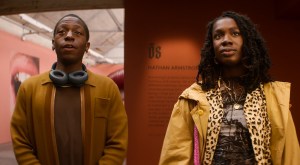 The writing is so quick-witted and charming that simply listening to these revealing and often hilarious conversations is a pleasure. I’m reminded of Richard Linklater’s famously talkative Before trilogy, another all-in-one-day whirlwind romance of two characters exploring a locale while also exploring one another under a limited period of time. It’s a natural structure because it provides a looming urgency but the drama also unfolds more or less in real time with the characters learning about one another at the same pace that the viewer is, and so our emotions feel better attuned as the characters change their perceptions of one another. This is the joy of rom-coms, finding characters you simply want to spend time with because they’re so charming, interesting, and deserving of finding happiness of their own making. Dom and Yas are wonderful characters separately but the right combination together. He’s more nerdy and awkward and she pushes him to be more assertive and confident. She’s less sure of her worth and sets herself up for sabotage in landing a job she might love, and he refuses to let her let herself down. It’s genuinely amusing and heartwarming to watch these two help one another in their time of need.
Rye Lane is also peppered with playful and, at times, chaotic visuals to goose up the talky proceedings. Debut director Raine Allen-Miller will often use quick inserts and playful visual framing to add more pizazz to the presentation, like when Yas and Dom present their recollection of events like narrators to a stage play of their own lives. It’s lively and fun but occasionally the visual inserts and sound design, or perhaps the score itself, felt like added distractions to the appealing core elements of the movie. It was the only annoyance I felt in such an otherwise funny and charming movie boasting such winning performances. It felt a little unnecessary at times and seemed like the filmmakers had doubts that the material and the performances themselves were enough to sell the entertainment of the movie.
 Romantic comedies remind me of the old saying, “it’s not the singer, it’s the song.” They’re like many other sub-genres of movies and storytelling itself, complete with expectations and formulas and rules and recognizable parts and pieces that add up to, hopefully, entertainment. In this regard, movies are like a meal, and two people can follow the same recipe with the same ingredients and concoct two totally different final creations. Fans of rom-coms are like fans of any other genre, looking for good storytellers to value their time and give them an escape. It’s not just that the familiar elements are included, it’s what is done with them, the care and affection from the storytellers, chiefly creating characters that you can fall in love with and root for their own happiness and fortuitous fortunes.
Love Again is based on the 2016 German film Text For You, itself based on a 2009 German novel (I watched the trailer on YouTube, and it’s weird having actors refer to text messages as “SMS-es”). It’s a reminder of how soulless the worst of these lazy rom-coms can feel when producers look to check boxes to fulfill some list of genre requirements that they think will satisfy the lowest expectations of a gullible fan base they can exploit. Rye Lane is the latest example of the real pleasures of a finely developed rom-com that understands the essential appeal of what makes these movies more than “chick flicks.” Skip Love Again and its ilk and instead feel the pitter-patter of your heart renewed with Rye Lane.
Nate’s Grades:
Love Again: D+
Rye Lane: A-
Share this:

Past Lives (2023)
 The world of cinema is rife with romantic tales of two people from the past reconnecting and rekindling a passion, learning to love again as older adults now presumably wiser. The Hallmark Christmas industry is practically built from this plot structure, as the man or woman, usually the woman, goes back home to rediscover that their old friend or former flame is still living a humble life and ready to teach him or her about the small pleasures of a simple life. It’s also human nature to think about paths not taken and wonder what may have been. That’s where Past Lives starts and that’s also where it differs. The small-scale indie drama getting some of the best reviews of 2023 follows Nora (Greta Lee) as a thirty-something writer who immigrated to the United States when she was twelve. One of the friends she left behind in South Korea was Hae Sung (Teo Yoo), the boy she was crushing on who she finds again as an adult. In their early twenties, Nora and Hae Sung reconnect online and grow close again, though she requests they take time apart as their lives will not allow them to physically meet again until at least a year later. He agrees. Cut to another twelve years later, and Hae Sung seeks out his old friend, except now Nora is married to another writer, Arthur (John Magaro). What will happen with their 24-years-in-the-making reunion actually takes place?
 Past Lives is a very gentle and sparse movie, and it’s remarkable that this is the debut film from writer/director Celine Song (TV’s Wheel of Time). She has the patience of an artist who knows exactly the vibe they are going for. It’s so confident with those long takes, prolonged pauses, and visual metaphors. Even the plot structure is reflective of her patience, with the adult reunion not even occurring until 50 minutes in and all three parties not meeting until 80 minutes. The opening scene spies all three of our main characters at the bar while two off-screen eavesdroppers provide their own speculative interpretation of the relationship of the three; are they lovers, are they family, who is who? It’s such a smart yet playful way to open her movie, presenting the three main players and then having unseen spectators theorize who they are, providing voice to the audience as we begin to question who might feel closer to whom. It’s also a scene that left me immediately confident that Song was going to be an assured storyteller from here on out.
A soapier and more melodramatic version of this story would center on whether Nora is going to have an affair with her childhood sweetheart; even Arthur recognizes in the “Hollywood movie” version of these events that he would be the white American villain standing in the way of true love. Except it’s not that at all. Past Lives is about two former friends and possibly romantic partners reconnecting but it’s not about whether there are still old feelings that will be rekindled. It’s not likely that after a dozen years these two would so quickly fall in love and run away together, so please don’t pretend like this is some kind of spoiler. Instead, the meeting of someone who was once important in their lives allows for a pause point to reflect not what could have been, as Hae Sung is wont to do as he imagines a life where he and Nora were linked, but as the person they used to be and how they have changed into the person they now are. This is how Nora sees their encounter, an opportunity through her childhood friend who stayed to serve as her own “what if.” Not what if she had ever gotten romantically involved with this man but what if she had stayed in Korea rather than immigrating to a new life in the West. There’s also a rosy presumption at play here, where people assume the road not taken would have led to an unmet present happiness. There’s just as much if not more a likelihood that had Nora stayed, and had she dated Hae Sung, that they could have eventually broken up on bad terms and want nothing to do with one another. By leaving young, and by never fulfilling that initial spark, they are both eternally preserved as meaningful people without regret coming into their (past) lives. Granted, every viewer can surmise their own interpretation, especially with a movie so powerfully understated, but my assessment of the movie was less romantic revisionism and more personal accounting.
 The movie hinges on three characters, so it’s a good thing that all three actors are compelling to watch. The nuance each of these three performers displays is amazing. They have to communicate much through gestures and glances, where a simple smile allowing oneself to acknowledge the significance of a hug a dozen years in the making are the tools of communication. This is the kind of movie where you can watch the characters processing their thoughts in real time. Lee (The Morning Show, Russian Doll) has the difficult job of navigating as the woman in between past and present, between her husband and this other man from her old life, and she does so with uncommon grace. Yoo (Decision to Leave) is the most reserved as the interloper who doesn’t know what is safe to reveal about himself and his interior life. He confides that he and his ex-girlfriend are on a break because he feels like he’s weighing her down, that he’s too ordinary and thus inferior for her. Then there’s Magaro (The Many Saints of Newark) who might just be the most understanding husband of all time. He’s not going to make a big stink and encourages his wife to see this old friend. There’s a nice moment where Arthur reveals one reason he learned Korean was because Nora would talk in her sleep in Korean. He wanted to learn more about a hidden part of her life. “It’s like there’s a whole place inside you I can’t go,” he says, and rather than seem like jealousy, it’s an admission of wanting to empathize with as many facets of the person you love. No wonder Hae Sung, despite himself, liked Arthur.
And yet the curmudgeon in me, the yin to my foolishly romantic self’s yang, has some qualms about what holds Past Lives back from being the emotional tour de force it could have been. This is because the characters are understated to the point that they feel less fully formed as people so that a larger selection of viewers will recognize themselves and their own questions and relatability. In making the film more universal, the movie has also made the characters feel less defined, more informed by key details of difference that the characters list like employee evaluations. Nora thinks like an American woman and Hae Sung thinks like a Korean man. In some ways, they’re meant to be stand-ins for Eastern and Western cultural differences. Understatement is grand but it can also leave less specifics. Think about how remarkable the characters are in Richard Linklater’s Before series, their mellifluous conversations so natural and pleasant to behold. It’s the same key aspect with many of the mumblecore indies, dropping you in on lives and characters that you want to observe for 100-or-so minutes of investment. They leave an impression because of who they are, whereas much of Past Lives is leaving an impression of reflection of who they could have been and how they might have changed over time. It’s not quite the same, and so this is why my emotional and intellectual investment were not as steadily satisfied by the full film.
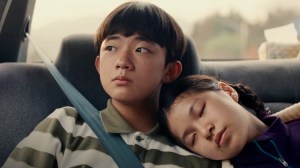 Aching to the point of being painful, Past Lives is a beautifully tender drama about characters taking stock of their lives both past and present. It’s like somebody mixed Before Sunset with a French New Wave romance. A key theme throughout is the concept of fate, known as “In Yun” in Korea. It’s about the many actions and ripples through years and years to bring people into contact with one another and recognizing that every connection is the result of thousands of these actions pushing us to that singular point. It’s a way to say be appreciative of what you have but also who you’ve been allowed to become. Past Lives is an appealing story that might be a bit too understated to break through higher levels of emotional engagement, but even at its current level, it’s still one of the finer films of the year.
Nate’s Grade: B+
Share this:

Gigli (2003) [Review Re-View]
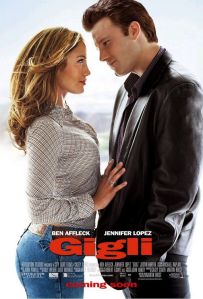 Originally released August 1, 2003:
It’s the feel-good movie of the year revolving around a lunkhead mobster (Ben Affleck) and his mentally challenged kipnapee and their attempts to covert a lesbian hitman (Jennifer Lopez) in between her yoga/horrific monologues concerning the superiority of female genitalia. Believe the hype people; Gigli is indeed as bad as they have told you. It’s not even entertainingly bad, like Bulletproof Monk, no folks; Gigli is just mundane and awful. During the entire two-hour stretch, which feels much much longer, I kept saying one thing aloud: “How could anyone making this think they were making a good movie?” Did they think audiences would find it funny that Affleck’s mother (the mother from My Big Fat Greek Wedding) shows us her big fat Greek behind? Did they really think that a mentally challenged kid (who has an affinity for gangster rap and wishes to travel to the mythical “Baywatch”) would come off as endearing? Well instead it comes across as insulting. And what else is insulting is the laugh-out-loud dialogue Lopez is forced to spit out concerning her attraction for women. I can’t think of any actress that could say the line, “I love my pussy” convincingly. And I’m sure a lot of actresses out there have true affection for it. The writing is just atrocious. And so much else fails as well. The score is a perplexing mix of upbeat jazz and inappropriate string orchestra. I don’t understand what emotions they were going for during scenes in Gigli but a full string orchestra playing music better suited for a real drama does not fit. Maybe it was for a tragedy. In that case, then it’s right on the money. You won’t see a more sloppily executed, horribly acted, painfully written, lazily directed, inept film this year. And what the hell did Christopher Walken walking in have anything to do with anything?
Nate’s Grade: F
——————————————————
WRITER REFLECTIONS 20 YEARS LATER

Gigli. It’s a word that instantly trigger shudders and shivers, a code name for fiasco, for career-destroying miscalculations. Writer/director Martin Brest was a Hollywood heavyweight with hit adult comedies like Going in Style, Beverly Hills Cop, Midnight Run, and Scent of a Woman, and since the cataclysmic disaster that was Gigli in 2003, this man hasn’t directed a single thing in these twenty years. The man is still reeling from the wafting stink from this very bad movie. I thought it might be worthwhile to revisit what I dubbed the worst film of 2003, though I was not the only critic to make this distinction, but now I’m questioning why I even bothered. It’s not like this movie was somehow going to get that much better with two decades of safe distance. The amazingly miscalculated artistic decisions will still be the same, still bad. I guess it must have been primarily my own morbid curiosity, much like revisiting 2001’s Freddy Got Figured, about whether this famous flop could still live up to its reputation. Well, dear reader, allow me to put any lingering doubts to rest you may have had about Gigli. It’s still very very very bad.
I might possibly recommend watching this once in your life (depending upon how many years you are lucky to earn) for the sheer fascination; Hollywood so easily makes mediocre and boring and familiar movies that feel like pale imitators of some prior hit, but Gigli is something different in the realm of studio stinkers, a project where just about every single creative decision warranted the incredulous Tim Robinson gif response: “You sure about that? You sure about that?” Gigli feels like two tonally dissonant movies in conflict at every moment. The plot elements feel lifted from some mid-to-late 90s indie crime comedy, the likes where they would just throw together a grab-bag of ironic provocative plot elements you wouldn’t expect together. “Mobster doofus kidnaps mentally challenged kid who is obsessed with gangster rap and wants to visit the ‘Baywatch’ which he thinks is real! Romance with a lesbian! Severed thumb ruses!” The collection of strange parts feels like it’s supposed to be a madcap, wacky comedy, and yet the tonal approach is complete treacle, with a shockingly syrupy score that rises and falls throughout, trying to convince you that what you’re watching is quixotically aiming for Oscars. It is astounding if you stop and pay attention to the film score at any moment, no matter how strange, as it attempts to provide jazzy saunter to “comedy” scenes, like an ex-girlfriend showing up into an unstable situation, and then it segues to Spielbergian emotional heft, like when that same ex-girlfriend attempts to take her own life to convince Jennifer Lopez to come back. There were so many moments where my only response possible was to avert my eyes, shake my head, and wonder whether anyone at any stage had any misgivings, tried to reach out to Brest, but then shrugged and dismissed their very legitimate worries as, “Well, he made Midnight Run after all. What do I know?” You know enough that these different tonal approaches will not work.
 Apparently, the movie was intended to be a straightforward mob comedy but the studio wanted the focus to shift toward a romance because of the actual romance between its stars, Lopez and Ben Affleck. Whenever actors begin a relationship after a movie or over the course of making one together, it provides another lens to review the movie, to gauge their chemistry and, if you’re so lucky and observant, able to “see” them falling in love with one another. That is nowhere to be found with Gigli. Maybe it was the shared experience of finding what they could to cling to while making this movie that nobody fully understood but committed to anyway (I guess love can be described the same way under some circumstances). Regardless, the romance between the two characters is, like all other plot elements, haphazard and spontaneous and foolhardy.
The characters are all awful and they never remotely come across like relatable or even remotely interesting people. Affleck’s Italian lunkhead Larry Gigli is just awash in early 2000s misogyny and bravado, dubbing himself the “sultan of slick, the rule of cool, the straight-first-foremost, pimp-mack, hustler, original gangster’s gangster.” Allow that macho boast to also exemplify another critical problem with the movie in that almost all the dialogue will make you cringe. There’s an entire monologue by Lopez, while she’s contorting her body in a plethora of lithe yoga positions, all about how superior the vagina is in appearance and function. What about when Lopez, as an indication that she wants to engage in heterosexual congress, utters the immortal phrase: “It’s turkey time. Gobble gobble.” Larry slams a kid’s computer on the ground and triumphantly says to suck an appendage of his, but then adds, “dot com” because the kid’s a nerd or something because he likes computers. Ho ho, the kidnapped young man insists that he be read to before going to bed, and what does Larry have at his disposal? Not books, oh no, so he’s forced to read him instructions on shampoo and toilet paper. Hilarious, right? What about when this same mentally challenged kid says, “When my penis sneezes, I say, ‘God bless you.’” The early 2000s weren’t an enlightened time with depiction of mental handicaps, and poor Justin Bartha (National Treasure, The Hangover) goes fully into the worst of these impulses, making the performance feel like a minstrel show for those with mental challenges. At least this aspect is not alone. Nothing ages well in this movie and its comedy only falls flatter and the drama is only more inexplicable twenty years later. It’s a special kind of bad so rarely achieved at this level of Hollywood.
Given that the majority of the movie consists of kidnapping a naïf, most of the movie is set in Gigli’s apartment keeping the man unseen and unheard from. This makes the movie feel for a long stretch like a glorified one-set play, with special appearances from traveling guest actors popping through for a brief moment in the spotlight. Here’s Christopher Walken dispensing with a monologue and then never being seen again. thanks for coming. Here’s Al Pacino, yelling so hard I’m surprised Lopez and Affleck didn’t need to wash the layers of spittle off. Here’s Lanie Kazan (My Big Fat Greek Wedding) who needs an insulin shot in her butt and let’s make sure we see her thong while we’re at it. These incursions of well-known actors re-explain the plot, not that it was hard to keep up with, and it all feels like stretching for time when the movie is already two hours long. The resolution, where our characters drive off into their sunny endings, lasts twenty minutes itself, which feels as long as the endings of 2003’s Return of the King. It’s a screenplay that feels like it’s holding itself on ice, content that the kooky characters butting heads and trading quips and monologues would be enough, and one that feels unsure of those same impulses, relying upon a revolving door of one-scene guests to remind us what we already know. It makes you feel simultaneously trapped with awful characters yet also in the hands of someone who doesn’t quite think you’re understanding the nuance and hilarity of the strained effort.
 I’m not an automatic Affleck hater. I enjoyed his rise from the films of Kevin Smith to Hollywood leading man. I can understand the draw of working with a filmmaker like Brest, and it’s probably that same appeal that lead him to also star in 2003’s Paycheck, directed by John Woo, who like Brest never worked in Hollywood again. This was the period where Affleck’s star was on the decline, and Bennifer was dominating tabloid space, and if it weren’t for the failures we might not have ever gotten Affleck as film director, so maybe we never would have gotten The Town or Argo or Gone Baby Gone had it not been for Gigli, so there’s a silver lining for you.
Look, you already know you shouldn’t even get near Gigli and with good cause. It’s a rarity to see something this colossally bad with this level of artistic freedom to be bad, not simply having too many cooks in the kitchen but having one very wayward chef nobody felt they could interfere with. This was a runaway chef, the kind of fiasco that only comes from unchecked artistic hubris. In that regard, there may be some rubbernecking appeal here for those who can endure bad characters, bad drama, bad comedy, bad acting, and horrible depictions of human beings who never at any point sound like human beings. It’s hard to watch and two hours of your precious time. 2003 began as a rough year for movies, sporting fascinating disasters like Bulletproof Monk and The League of Extraordinary Gentlemen. Watch those movies if you’re looking for a good-bad time. With Gigli, it’s only going to be a bad-bad time, whether it’s 2003, 2023, or any year until the sun explodes. Hey, if Ben Affleck and Jennifer Lopez could put this movie behind them and reunite, and even get officially married in 2022, then we can put it behind us as well.
Re-View Grade: F
Share this:

Robots (2023)
 Robots takes the romantic comedy genre and adds a dash of science fiction satire. Charles (Jack Whitehall) is a sleazy womanizer who likes to use his robot double, named C2, to put in all the getting-to-know-you effort with dates so then Charles can jump in for any later physical intimacy. Elaine (Shailene Woodley) uses her robot double, named E2, to bilk dumb men out of money and gifts. Then one day Charles and Elaine meet cute at an ice skating rink and begin a relationship. She doesn’t know Charles is really C2, and he doesn’t know Elaine is really E2. This confusion is cleared up when E2 and C2 run away together and abandon their human selves. The real Elaine and Charles must work together as they cross the country to find and regain their robots before they cause trouble.
Where Robots goes wrong is with its clunky execution, as its promising premise succumbs to gassed rom-com cliches and some tonally confounding comedy, when it does remember to be a comedy. It’s a given that our two human characters, or at least the flesh-and-blood versions, will grow closer together over the course of their road trip to find their runaway mechanical selves. This unique situation pushes them out of their comfort zones and allows them to better open up. The possibility is there to even follow a strict rom-com formula and still be satisfying, if the romance felt organic and charming. It does not. If anything, the movie uses your knowledge that these two will likely fall in love against you, speeding through the process with haste. The movie’s idea of romance consists of a montage sequence where our two characters laugh, get drunk, and hang out in a hotel room. It’s like the screenplay zapped over the actual development of the romance, the moments where one character saw another differently, where the initial conflict began to thaw, so what we’re left with feels hollow and artificial. The actual robot versions have a stronger bond than their human counterparts (I’m sure this is part of the joke). I didn’t care about our romantic couple because the movie itself didn’t seem to care enough about them to develop their romance beyond the basic framework of convention.
 The comedy and commentary can also be very off-putting and incongruous. The premise deserves more scrutiny, either by the characters or the script itself. These two people are duping their prospective dates, one for money and the other for sex, and the movie just kind of shrugs about using robotic slaves for manipulative gain. I assume the filmmakers wanted to keep things light, but there’s at least more comedy to be had from the bad things these bad people made their innocent robots do for them, even a point of arguing who is the worst person. If they’re bad people, then dig into it. The movie also dispels with the contrasts between the couples too quickly. The screwball romance ramifications are ditched too early to send Charles and Elaine on their mission. When your premise has mistaken identity programmed front and center, you would think the comedy would take full advantage of this and escalate to farcical levels. Nope. There isn’t even anything approaching the cringe comedy co-director/co-writer Casper Christensen (Klown) is better known for. The humor is stuck on broad slapstick and easy jokes that confuse vulgarity with instant comedy. Robots includes a video of C2 and E2 committing a mass shooting. The plot purpose of this is for the robots to vilify their human identities and to force them to hide from the public out of fear of being caught, but why an implied mass shooting, especially in this day and age? Why not have them rob a bank? The purpose is to commit a crime and publicize themselves to make life harder for their humans. It’s too blunt a choice to work.
Likewise, the political commentary that pervades the opening is completely absent throughout the rest of the movie. We open with a buffoonish U.S. president celebrating the construction of a border wall with Mexico, never mind that it’s easy to slip through. Unexpectedly, the cry of “them Mexicans took our jobs” has now been replaced by “them robots took our jobs.” You would think there would be ample room here for satire on the economic struggles of Americans, the salivating exploitation of big business, or even the xenophobia that often coincides with economic distress. Any political commentary is done away with after this opening. If offices can just have robot doubles doing all the boring drudgery, then what does that do for human interaction? Surely businesses would prefer workers who technically lack human rights and never need to eat or sleep. The screenplay gives us one character to discuss any of these topics, an obnoxious best friend (Paul Jurewicz) to air out his hatred of robots. There’s also another character that serves as a plot convenience for how our two leads got their doubles. Other than that, the world seems oddly absent from any significant cultural shifts from robot inclusion. Part of this is the convenient plot point that “personal use” robots are outlawed, which again you would think would produce more conflict with our pair having to hide their ownership. Mostly though, it feels like the writers just didn’t think through how their world would be different in a meaningful way, which robs the movie of better satire, comedy, and simply ideas.
 What makes the movie mildly worth watching are the talents of its two leads. I wouldn’t exactly say Woodley and Whitehall have a spark-worthy chemistry, but both actors are professionals who have no qualms about getting silly in the name of comedy. Whitehall (Jungle Cruise) is amusingly droll, and while his deadpan can be hilarious, it can also sap the energy of certain scenes. Still, he’s an enjoyable performer who has fun playing a louse. Woodley (Divergent) isn’t exactly the actress you’d think of for broad comedy but she has great fun playing the different versions of her character and tweaking sexist male fantasies. Both of these actors are good with the material that they’re given, so it makes you even more wistful about what could have been with even better material for them to really shine.
Robots is a comedy that could use more comedy, a romance that could use better romance, and a social satire that seems to forget pretty suddenly what it’s satirizing. That’s quite a surprise considering one of the co-writers/co-directors has both Borat films on his resume. It feels like a poorly developed episode of Black Mirror; however, I know I’m in the minority on this one, I find the majority of Black Mirror episodes to have intriguing premises that go nowhere. So, by that assessment, it is a Black Mirror episode. The actors are enjoyable and some of the jokes land, but you’re mostly left wondering what could have been from this wasted premise. The whole enterprise just seems to run out of ideas and energy and inspiration halfway through, stranding good actors and a fun premise in a movie that needed more beta testing to be its best version.
Nate’s Grade: C
Share this:

Elemental (2023)
 The joke is how Pixar has taken its storytelling motif of examining The Secret Life Of [Blank] and showing what happens in our world when we just aren’t paying attention. We’ve had toys with emotions, bugs with emotions, fish with emotion, cars with emotion, robots with emotion, rats with emotion, and even emotions with emotions, so why not break things down to their basics and give the elements of carbon-based life their own emotions too?
In Element City, Ember (voiced by Leah Lewis) belongs to the fire community living on the outskirts of town, as the big city wasn’t built for their kind. The earth people, and water people, and air people go about their business while the fire people form their own thriving offshoot. Her father and mother came across the sea to give their baby a new life, and the family shop will pass over to Ember’s management when her traditionalist father thinks she’s ready. Her whole life has been about serving her family and trying to live up to their hopes and dreams. This gets more complicated when Wade (voiced by Mamoudou Athie), a water person and a health inspector, has to report her family’s shop for code violations. They work together to save the shop and also learn from one another’s cultures and differing perspectives, and then this unexpected friendship becomes an even more unexpected romance, but can elements so different stay together?
 I was pleasantly surprised at how enjoyable Elemental is to experience and how wondrous its visual presentation is to watch. It is a certifiable treat for the eyes, with so many dazzling colors and quirky but easily readable character designs. There’s a mixture of hand-drawn animation used as Spider-Verse-style accents that provides a pleasing element that allows the images to pop even more. I was never bored looking at a single second of this movie, and even with my theater’s 3-D presentation, the glasses didn’t darken the screen and lessen my overall enjoyment. By existing within a fantasy universe, it allows for every scene and every location to better inform you about this new world and its rules and highlights (fire baby carriages that are barbecue grills). This is a bright, colorful, and supremely enchanting movie to watch because, at least visually, it feels very well developed as far as its world building and atmosphere. What would a community of fire people tend to look like? What would their jobs be? What would their celebrations be like? Their heritage from the Old Country? Naturally, with any fantasy universe, you can nit-pick it to death with questions, such as why do people even bother wearing clothes in this world? What part of the exposed fire or water is observed as obscene? How exactly do these different communities have their offspring? What does air exactly eat for food?
Where Elemental really takes off is with its charming and affecting romance. It’s been a while since romance was at the forefront for a Pixar movie, since 2008’s WALL-E (a.k.a. the greatest Pixar movie). Now there are themes and resonance that go beyond the romance and also enrich it, like Ember’s personal conflict of being a first-generation immigrant daughter and upholding the traditions and wishes of her family at the expense of her personal desires, but the core of this movie is on the burgeoning feelings between Ember and Wade. The movie begins with them butting heads as two elements seemingly in conflict but it doesn’t exactly follow an enemies-to-lovers path. She runs hot and explosive with trying to keep things under control whereas he is deeply empathetic of others and wants to help them become their best selves. He accepts who he is, and the movie doesn’t equate his full-bodied embrace of big feelings as some point of weakness. It brings about laughs from exaggeration, the streaming rivers that burst forth from his eyes upon crying, but it’s his compassion and acceptance that challenges Ember for the better and helps her assert her sense of self. They’re good together, and Wade helps serve as a guide to the wider world for Ember as she’s been isolated her whole life. Their interactions are cute and heartwarming and elevated by pleasant vocal performances. I was drawn into their story and cared about their well-being, enough that I don’t mind sharing that I shed some water myself by the end (I guess this could also make some people mistake that I peed my pants, and I assure you that was not the case, dear reader).
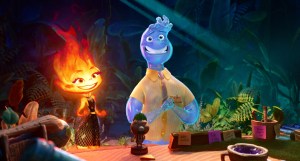 While the core relationships are poignant and winning, the world building and metaphorical allegories feel half-finished and a tad confusing. The movie also goes surprisingly soft exploring its miscegenation metaphor of two elements being forbidden to mix romantically. This universe has four communities of living elements, though air is represented as clouds and those are, literally, water vapor, and the xenophobia and discrimination that the fire people endure feels like a direct parallel to a disadvantaged minority group. However, this isn’t explored in any satisfying depth. We’re told that fire people aren’t really wanted in the city, and the city isn’t really built for them, which is typified by a rail line that splashes water discharge. There’s a lot more that could have gone into this including a more elaborate examination of the harm of red-lining and restricting the economic mobility of one group for bigoted reasons (I know, I can already hear people scolding me for even asking for such socio-political commentary in a family film). However, this metaphor gets a little murky when you take into account the literal danger that living fire exudes. Yes, you can drown, and you can get crushed under earth, but these creatures aren’t walking incendiary devices. This doesn’t translate directly to people, and thus applying class metaphors to actual races can be circumspect. Ember’s worry is that she’ll explode if she gets too angry, and this causes literal physical destruction around her. You can say it’s meant to represent when hurt, angry people lash out that they can inadvertently harm others, but not everyone can incinerate a block because they lose their temper. This kind of undercuts the lesson on misplaced fear.
Also, so much of the external story consists of bad public planning and everyone’s lackadaisical attitude toward fixing this infrastructure miscue. Again, if the larger point was a society that is actively hostile to the fire people, then the ignorant city planning that actively harms a disenfranchised group of people makes sense, but without that larger underlying conflict, it all seems so strangely forgotten. Much of this conflict is on the structure of a wall against a coming buildup of water, something possibly deadly to the fire community, so you would think this community would be a lot more concerned about this looming conflict. You might think that others would organize to provide better safeguards or maybe they would get the city’s attention. That this threat goes unreported and is played at such low stakes makes it all feel forced and manufactured. If the characters don’t seem to think it’s a big deal, then who are we to worry as well? And I can hear some of you trying to branch this out into, say, a metaphor for larger problems that go ignored, like climate change or societal inequalities, but that’s giving Elemental too much credit.
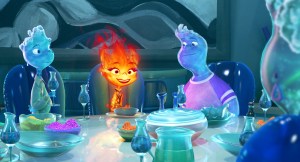 Elemental reminds me of 2020’s Onward, coincidentally one of the last movies I saw in theaters before the pandemic shutdown. I was worried that the core story looked weak but it was actually the world-building that was a bit hazy and under-developed and the emotional core was strong and authentic. It’s the same with Elemental, and while I can quibble about its dropped potential and misshapen world, it has a strong foundation that matters more. The relationships between Wade and Ember and Ember and her family are what makes the movie work and ultimately what made me smile and tear up. It’s an emotional nourishment that makes the movie feel satisfying and worthwhile no matter the lingering questions for this bizarre world. It’s also one of Pixar’s best looking movies, fully deserving of being seen on a large screen for added impact. Elemental has the right DNA for a charming and enjoyable family film for everyone.
Nate’s Grade: B
Share this:

The Little Mermaid (2023)

With every new Disney live-action remake, and we’re not slowing down any time soon folks, I feel like I need to stipulate two reservations I have, so, dear reader, here is my boilerplate. First, I believe that simply because a film is animated does not mean it is missing something or somehow inferior to a live-action movie. Animation is a showcase of imagination and ingenuity and visual decadence, and often the live-action interpretations of this only serve to dilute and downgrade the quality of those presentations. I can’t believe the recently announced live-action Moana will add anything more magical or visually beautiful than the 2016 animated original. Second, the closer these original animated movies are to the present, the less likely that Disney will be to change things up. The core audience will be demanding fidelity to the source material, and thus we usually just get an inferior version of the same story with minimal alterations. Occasionally, Disney can really surprise with some of these live-action remakes; I adored Pete’s Dragon, was charmed by Cinderella, and will defend Tim Burton’s unfairly maligned Dumbo.
Now we reach The Little Mermaid, whose 1989 release began the much-heralded resurgence of Disney animation through the 1990s. I re-watched the original a couple years ago and found it still quite ebullient and compelling, but I was shocked at how short it was (only 80 minutes long) and how brisk much of its third act felt. With a few more old-fashioned wrinkles to iron out like gender roles and the prominence of securing a man, I felt there was actual room where a modern remake could actually improve upon the original. Having seen the live-action Little Mermaid, I can say that it falls into a middle zone where it can’t quite escape the shadow of its predecessor but it exhibits plenty of its own winning qualities to cheer audiences and fans of the original.

Ariel (Halle Bailey, not to be confused with Halle Berry) is a teenage mermaid and the youngest daughter of King Triton (Javier Bardem), the ruler of the seas. She longs to be part of the surface world, the world of man, and she’s willing to sacrifice her voice to her malevolent Aunt Ursula (Melissa McCarthy) for a pair of legs. She has three days to secure true love’s kiss, likely from Prince Eric (Jonah Hauer-King), but she can’t recall what she needs to do as part of Ursula’s spell. Her friends Sebastian (Daveed Diggs) the crab, Scuttle (Awkwafina) the gannet, and Flounder (Jacob Temblay) the fish must help protect and guide the new Ariel-with-legs.
Let’s start with the positive attributes that separate this Little Mermaid, and chief among them is the fantastic lead performance from Bailey (one half of the singing sisters Chloe x Halle). This is a star-making turn from this young woman who completely makes the role her own. She has a natural grace, curiosity, and charm to her Ariel, and when she gets her chance to belt the big musical numbers, she delivers a stirring rendition. I got tingles during different parts of “Part of Your World.” A good half of the movie takes place after her Faustian bargain, so Bailey is acting without her voice and she still is able to communicate so much through her physical performance as well as her facial expressions. The filmmakers decide to give Ariel several new songs through the guise of internal monologues where she can express all that she is feeling and thinking during her fish-out-of-water adjustments. I think it’s a smart move and while none of these new songs are particularly memorable, giving Bailey more opportunity to flex her own voice, both literally and thematically to express her character’s perspective, is a good creative choice.

I also was pleased that much of the added time, which amounts to almost a full hour of material, is devoted to fleshing out Eric and the development of the romance with Ariel. Rather than simply being a handsome himbo, this Eric is an adopted son of his island nation, and he feels more at home aboard a ship than in any royal ceremony. There’s a direct parallel with Ariel and Eric rejecting their predetermined roles under the pressure of royal expectations. This Eric even gets his own version of a “Part of Your World” ditty about dreaming for something more, especially after his chance encounter with a mermaid set his world afire. It’s not a particularly great song, as none of the new additions are on par with the Oscar-winning originals, and some of the lyrics made my wife physically cringe next to me in the theater (“Strange as a dream/ Real as the sea/ If you can hear me now/ Come set me free”). There is added time where the romance feels much more organic as we witness Ariel and Eric get to know one another and watch one another come alive and share their interests. The added curse of Ariel forgetting her end goal of true love’s kiss is an intelligent way to make the romantic feelings between them feel more believable and less the byproduct of her urgency and the manipulation of her friends. The added rom-com moments give more credence to their romance and it better reflects on both members.
McCarthy (Thunder Force) acquits herself very well as the villainous sea witch. She puts her own spin on Pat Carrol’s famous vocal performance from the original, making her Ursula the seething also-ran waiting on the sidelines and nursing old grudges. The added back-story makes Ursula Ariel’s aunt now, which adds an extra degree of menace to their transactional bargain. I was also reminded how little Ursula is in this movie until it counts, so to justify her continuing presence, we have a few check-ins where she basically monologues her thoughts on the action. It feels like padding but I didn’t mind because I got to spend more time with McCarthy.
And now, dear reader, let’s go through some of the adaptation changes that aren’t quite as charming or beneficial. The colorful realm of the sea feels rather limited in this rendition. The vastness of the ocean and its mermaid kingdom feels strangely contained, and that’s a result of the reality of filming on a large empty set as well as the cost of extensive special effects. This is another case where the beauty and imagination of animation proves incomparable. The differing versions of “Under the Sea” really magnify this. Along those lines, making Ariel’s aquatic friends photo realistic robs them of the personality and expression they exuded in the animated movie, and it also drags them into an uncomfortable uncanny valley. Stop robbing characters of expression for the sake of added biological “realism.” It’s a bad trade. Stop it, Disney. Watching a photo realistic Flounder flop around on dry land while he tries to cheer Ariel on with his expressionless might-as-well-be-dead fish eye is not as whimsical as it should be. The original voice of Sebastian, Samuel E. Wright, has a small cameo as a fisherman, and it’s nice to hear his familiar voice again, especially knowing the actor sadly passed away in May 2021.

I’ve already discussed the new songs by Lin-Manuel Miranda being mostly agreeable but unremarkable, but there is one new track that stands out for all the wrong reasons. Being a Miranda musical, it’s not unexpected for the inclusion of a new hip-hop-infused song, especially with his Tony-winning Hamilton co-star in the movie. What is surprising is that Daveed Diggs doesn’t get the bulk of the new rap song but instead it’s Awkwafina, and her voice at these levels of gravely intensity feels like an aural assault. I was wincing throughout the song “Scuttlebutt” and kept wondering why Diggs wasn’t the star considering he handled the most linguistically complex flows in Hamilton. I even enjoy Awkwafina as a vocal artist but this song is painful to endure.
The 2023 live-action Little Mermaid has enough positive additions that fans of the 1989 original will likely enjoy while still checking the boxes of their own nostalgia requirements. Bailey is sensational and the added time for the romance to be more organic and believable, with some extra fleshing out supporting characters like the Queen and Grimsby also allowing the world to feel more textured and less archetypal. The visuals aren’t as murky as I feared but the magical world of this hidden undersea realm definitely feels lacking. The pacing is a bit sluggish too, as we don’t even get our deal with Ursula until an hour into the movie, and the added songs fail to compete with the classics even with the artistic prowess of Miranda. I don’t know if it needed to be this long, and I certainly don’t care for the photo realism approach, but I was smiling throughout the movie and found it charming. Consider this mid-tier Disney live-action scale, a remake with enough of its own to swim with the weight of expectations.
Nate’s Grade: B
Share this:

Ghosted (2023)
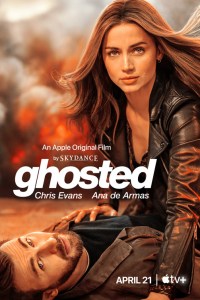
Have you ever watched a movie that felt like it was created by soulless robots? That was the overwhelming feeling I had with Ghosted, a supposed “romantic” “comedy” and spy thriller debuting on Apple Plus with big stars and a big budget and lacking anything that feels recognizably human. 2023 has been a year of exciting and precarious technological advances, and the emergence of A.I.-assisted chat and performative generators, from art to stories, is a Pandora’s Box that will not go away, especially for an industry looking to cut corners wherever possible to save a buck. Super producer Joe Russo has bleakly predicted it’s only a matter of time before studios lean into A.I. programs to help them write bankable screenplays. When that dark day arrives, if we haven’t already crossed that Rubicon, I imagine those A.I. ghostwritten scripts will feel a lot like Ghosted, a movie that feels like it was constructed from imperfect observers.
It all begins when boy meets girl at a farmer’s market. Cole (Chris Evans) refuses to sell a potted plant to Sadie (Ana de Armas) because her job keeps her away for up to months at a time. He cannot, in good conscience, sell this woman a plant he knows will be neglected. From there, they spend a whirlwind first date getting to know one another in and out of the bedroom. Then Sadie never returns Cole’s messages and calls again. He frets that he’s yet another modern dating victim of being ghosted when strange men kidnap him and ask him scary questions about things he has no clue about. He’s rescued from this interrogation by none other than a gun-toting Sadie. She reveals she’s really a secret C.I.A. agent and somehow her enemies have mistaken Cole for “The Tax Man,” a dangerous and mysterious assassin that’s actually Sadie. Now they’re on the run and Cole has to learn the ropes of spy business or else, and maybe he can get a second date while he’s at it.

The premise alone is a workable high-concept we’ve seen comedy variations of before, from Charade to Knight and Day to The Spy Who Dumped Me (remember that movie, anyone?). It’s the perspective of the novice being plunged into the chaotic and overwhelming world of spy-craft and having to rapidly adjust to a world they thought was just the stuff of movies and beach reads. It’s the kind of story that pokes fun at spy movies while embracing them as well, and it posits what would happen if one of us normies ever accidentally found ourselves in this high-stakes world. Where Ghosted doesn’t work is that the characters are both awful versions of the Novice and the Expert. There’s a slight amusement watching Evans plays out of his depth in action contexts, running counter to a decade of Marvel heroics, but this is short-lived. He eventually begins to be a capable partner for Sadie as she learns to trust another, which is the most expected and basic character arc for each of these people. However, Sadie is also boring, and even when the truth about her profession is revealed, it doesn’t make her that much more interesting. I was already doubtful when we opened with her talking to her therapist over her car’s phone and this was the first scene. She’s been slotted as Killing Machine with Trust Issues, and he’s been slotted as Too Afraid to Seek His Dreams, and so their conclusions are predictable and bland. There’s even a lack of a technique that Sadie teaches Cole that comes into play at a pivotal moment. That’s the most basic thing and they miss that.
There is also a notable absence of chemistry between the leads. While de Armas and Evans have co-starred in two prior films, they were opposed in 2019’s Knives Out and 2022’s The Grey Man. Actor chemistry is one of those ineffable qualities that you can tell pretty quickly whether it’s evident or lacking, and within minutes of the tortured house plant meet-cute, I sensed a gaping black hole of palpable chemistry. It’s even more obnoxious when MULTIPLE characters in MULTIPLE scenes implore the two to “get a room” because their supposed sexual tension is off the charts. Sure thing, movie.
Another quality that becomes very apparent is how forced everything in Ghosted feels. The romance feels forced but the comedy especially feels forced. The four screenwriters include the writers behind the Deadpool, Zombieland, Ant-Man, Spider-Man, and recent Jumanji movies, so we know these credited writers have a keen understanding of comedy. It makes the results on screen all the more mystifying and disappointing. The jokes generally feel off (“He expected a hottie not Mata Hari,” womp womp), the rhythm and tone feel a little too much, too forced, like the actors are desperately trying to compensate. It comes across like they were instructed to speak at a more fast-paced and clipped rate to attempt to emulate screwball comedy patter, but the material isn’t there to match the hyperactive verbal presentation. The music is also another factor in trying to better compensate. It’s trying to provide a jaunty, breezy energy level that isn’t sustained in the movie by its comedy, action, or romance. The number of needle drop song selections can also be insufferable and dumbfounding. The characters will start a gun fight and then “My Sharona” will crank up or, even more inexplicably, “Uptown Funk.” The relentless fallback of familiar pop and rock ditties intruding over the action doesn’t so much elevate the moment as make you realize just what would be missing without the song. I’m all for the clever use of music to jazz up a scene, but the final action sequence shouldn’t have to rely on Bruno Mars for any nascent fun.

There are a handful of moments and ideas here that could have worked in a better movie. I enjoyed a stretch in the middle where Sadie and Cole are ambushed by one bounty hunter with an absurd name after another, and each is a cameo from a familiar face and each gets dispatched swiftly. The movie also takes pains to make fun of Cole’s smothering qualities, including his snapping a picture of Sadie while she slept in his arms post-coitus and unaware. I wish this line of criticism would pick up more momentum but there’s only so much heat that Cole will take when he still needs to be the handsome and appealing lead. I also liked the idea of a villain, played by Adrien Brody like his copy of the screenplay didn’t have a single joke inside it, who is simply trying not to be revealed to be incompetent. I think there was especially more room to mine with the confusion over which character was the infamous Tax Man. The assumption that it must be a man could have opened up a broader and interesting subplot over sexist gender assumptions, with nobody believing that a g-g-g-girl could be such an accomplished trained killer (alas, the “girls can do it too” message seems to be all the movie offers in response).
Ghosted is not a good action movie, as it’s poorly sourced and edited, it’s not a good comedy, as the jokes are iffy and delivered in such an exaggerated and clunky manner, and it’s not a good romance, with two bland and under-developed genre character cliches portrayed by two actors who have a startling lack of chemistry together. The music is obnoxious and trying to compensate for the flagging energy level and forced comedy, the movie runs too long at almost two hours, and director Dexter Fletcher (Rocketman) has no feel for action or romance. It’s the comedy that made me most depressed, as no character talked like a semblance of a real human being, nor was their fast-paced, quippy dialogue truly zingy and entertaining. t was like watching a desperate person try and prove they are not, in fact desperate, but with every word only proving more and more their desperation. I’m sure some people out there will find this movie passably breezy or charming or at least inoffensive for two hours of inattention. It all felt so forced and inauthentic and tired to me. It’s best to just ghost this film in real life.
Nate’s Grade: C-
Share this:

Empire of Light (2022)
 I was recovering from the flu while watching Empire of Light, which probably hindered my entertainment experience somewhat, but I was astounded at how a movie with this pedigree could be this boring and adrift. It’s directed by Sam Mendes, photographed by Roger Deakins, starring Olivia Colman and Colin Firth, and it’s all about running a movie theater in England in the early 1980s, so you would expect it to be nostalgic catnip for any cinephile. Not so. For the first hour, it feels more like a series of moments that feel pressed under glass, all the air and life removed in the presentation. It doesn’t work as a celebration of art and the power of movies, though it tries at points. It doesn’t work as a character examination because so many of the characters are kept surface-level, shallow, or boring. Colman is our main character and having an unfulfilling affair with her boss (Firth) and then she starts a friendship with a new, younger co-worker that transforms into its own romance. Given that setup, you would think you would care about their burgeoning relationship, but I didn’t (I was more amused at all the places beside an actual bed that people are seen having sex). That’s because this movie feels so poorly paced and passionless. Colman gets her showdown with her bad boss and I thought, “Well, we’re wrapping things up,” and then I discovered that, amazingly, there was still 50 minutes left. “How?!” I shouted at my TV screen. Ah, you see that’s when the movie throws out a mental illness subplot that feels entirely too late and awkwardly handled to count for much else than a delay tactic. I wish Empire of Light had just been one of those adorable British small-town comedies with oddballs running a movie theater in the past, either leaning into it as a workplace comedy or a romantic ode to cinema. It’s a lot of missed potential and middling artistic elements without a clear vision to steer them. There are moments that stand out, especially the racist ones, but it’s a too-long movie missing interesting characters and an accessible and engaging story that exists beyond the (assumed) ephemeral memory of Mendes.
Nate’s Grade: C
Share this:

Purple Hearts (2022)
 When Netflix’s small-scale romantic drama Purple Hearts debuted during the summer of 2022, it over-performed and proved more popular than other much more high-profile Netflix releases at that same time, namely the headline-grabbing, and very bad, 365 Days franchise. Purple Hearts styles itself as a would-be Nicholas Sparks novel dripping with sudsy sentimentality and enemies-to-lovers swoon, but it’s really more an indictment of the “both sides” false equivalency befalling our modern political discourse, and in trying to find a safe middle, the movie ends up failing to hold one character accountable at all while forcing the other to completely bend over backwards for a moral and ethical re-education.
Cassie (Sofia Carson) works at a California dive bar and dreams about being a singer. She also suffers from diabetes and cannot afford her life-saving medicine. Luke (Nicholas Galtizine) is an enlisted soldier about to leave for his first tour of duty in Iraq. They can’t stand each other and yet both agree to enter into a fraudulent relationship and get married for the military benefits. Then Luke comes home early to recover from an injury, and he and his phony wife have to play pretend to keep their benefits and keep Luke out of the cross-hairs of being dishonorably discharged. Can these two crazy kids with opposing political views actually fall in love for real?
 The title isn’t just a reference to the military award given to the wounded, it’s also an indication of the movie’s attempted ideology, that this red conservative boy and this blue city gal can come together and find harmony. For the first hour, this idea is drilled into the viewer’s head, that these two are an example of the polarization of modern American politics and neither is willing to cede an inch. Except that’s not true at all, especially as the movie plays out. The premise almost sounds like a comedic farce that probably would have been more entertaining. This isn’t a story about two people butting heads and then finding common ground and learning the error of misconception. Let me give you some examples, dear reader, how Purple Hearts is not a “meet in the middle” romance and more of an unhealthy erasure of a vocal woman’s ideals.
Each person has an impetus for getting into this sham marriage. Cassie cannot afford her insulin with no health care. Luke has little money and owes an old friend/drug dealer he’s trying to leave behind. First off, these scenarios are not equal. Cassie’s is an indictment on our broken health-care system that pushes so many to the margins of desperation. It’s also an indictment on the price-gouging of insulin, which according to the Mayo Clinic costs ten times more in the United States than “any other developed nation,” and on unchecked corporate greed. Cassie’s dilemma speaks to the vulnerable underclass being ignored. Now take Luke, who vaguely owes some money for vague reasons to his former dealer. It’s a reminder of Luke’s past as an addict. However, this threatening dealer is the only reminder of his past addiction; Luke doesn’t struggle with temptation or relapsing, even after he gets seriously injured in the line of duty. His struggles are not on the same level as Cassie, and maybe that’s because the military has saved Luke. His own father was ready to disown his rebellious boy but when Cassie informs dear angry dad about his son’s enlistment, he softens and invites her inside his home to speak. By this standard, it’s even more curious why Luke is still in debt to his former friend. He’s already gone through his basic training, he’s already heading overseas, so surely he would already have some benefits of being in the military and possibly pay off his dealer (I looked up boot camp pay and it varies but it’s also pretty minimal). Also, his problem is a one-time payment away from resolve whereas hers is a lifetime of need. I’m admittedly coming at this from an outsider, but one of these people seems to have problems that are social ails, and currently dealing with a medical crisis, and the other is past his crisis and would likely be well suited to resolve his scenario.
 Now let’s speak about what each of them gives up through this relationship. They take turns trading insults, Luke calling her a “snowflake” and denigrating her mother being an “illegal,” while Cassie insults Luke for being “blindly obedient,” which is kind of expected in the military. After they are sham married and go out with Luke’s squad, one of his peers makes a toast about going over to Iraq and “hunt me some Arabs.” Cassie looks appalled but says nothing. This friend of Luke’s then pointedly asks if Cassie has a problem with him, and she very reasonably says she has a problem with his racism and conflating all Arabs as one monolithic group to target, and this guy sneers and mocks her about using pronouns. After a couple more heated misogynistic comments, Luke intervenes… by asking Cassie to sit down and shut up. Excuse me? She was uncomfortable from an outburst of racism, was mocked for this, while also bearing the insult the idea of simply empathy with pronouns, and then she’s the problem? This scene is indicative of the movie’s entire approach to the political divide. It serves up easy points by playing upon stereotypes of how liberals are perceived (Cassie didn’t even know the U.S. was still in Iraq), and its lazy insults against liberals are even weaker and more strained (pronouns… really?). It all lays the foundation for what is Cassie’s transformation, for her to realize the error of her ways, and accept Luke on his own terms. Except this admission is never given to her as well. He doesn’t accept her until she starts to adopt his way of thinking, and writes songs about the brave sacrifices of those serving, a perspective I guess she never could have come to on her ignorant own.
As I was watching Purple Hearts, I kept thinking how disposable the entire first hour was, which sets up our couple, their warring viewpoints, and their marriage of convenience. It’s at the hour mark where the real movie begins, with Luke coming home injured and forcing the couple to see one another in a new light. I thought about how the movie could have opened with Cassie getting a phone call about her husband and his injury, then meeting him at the hospital and the great ironic turn that could have registered as we find out for the first time that this happy union is only transactional. This is where the drama really starts, and the proceeding hour is just back-story that could have been supplied throughout in small scenes or dialogue. The crux of the movie is how these characters are meant to change the more time they spend with one another. The first hour is about them meeting and then Luke going overseas into combat. It’s easy to keep up a ruse when the other person is half a world away. When he returns, that’s where the real challenge begins, and that’s where I feel the movie should have begun. I’m also a bit shocked how unimportant Luke’s injury is in the grand scheme of things. He recuperates fairly fast and it shockingly doesn’t force him to reconsider himself through the new physical challenge. It’s as if the injury is merely a plot device to excuse him from active combat. It’s quite disappointing that being physically disabled doesn’t allow Luke needed personal reflection, rethinking his prioritization on his strength and value as a warrior, the version of himself he remodeled to escape a life of addiction. The final hour needed to be expanded for better character development, and both sides of this romance needed introspection for it to be rewarding.
 The other miss of the movie is with the absent chemistry of its leads. Carson is best known as the “other girl” from the Disney Channel tween Descendants franchise, and she ably sings throughout the movie, which feels positioned as her re-introduction to older audiences and perhaps a platform for her own songwriting. The songs that Cassie finds viral success are genuinely… fine. They all sound a bit like the same, though even when the song plays as a ballad, Carson is jumping around the stage, kicking her legs, and swinging her arms in wild whirlwinds like it’s a rocker. The tonal dissonance is unintentionally funny. Galitzine (Cinderella) really gets the short end. I’ve seen him sing convincingly, be charming, and in Purple Hearts he’s just six feet of condescension. His character is an angry glare as a person. Even when he’s re-learning to use his legs, the character doesn’t come across as humbled, only more irritated by the inconvenience. These two never develop a palpable spark, so given the insufficient characterization and lack of romantic grounding, the disinterest is instead palpable.
If you’re an easy sucker for pretty people falling in love under sunset-dabbled skies and set to gentle music, I’m sure Purple Hearts will work its would-be charms. I found the characters to be annoying, the structure to be lopsided and in need of jettisoning the first half, and the overall treatment of an outspoken woman calling out racism and misogyny as a problem needing fixing as disappointing and unfair. There are so many plot elements here that could have made this a more compelling drama, like Luke’s past with drug addiction, surely something that could have been a dangerous return with his recovery from injury necessitating pain killers. It’s a movie reportedly about sacrifice but the way I saw it only one character undergoes change to satisfy their romantic partner, and in turn the audience. Purple Hearts is a misguided romance that never goes beyond its thin stereotypes and one-sided demands.
Nate’s Grade: C-


 nathanzoebl
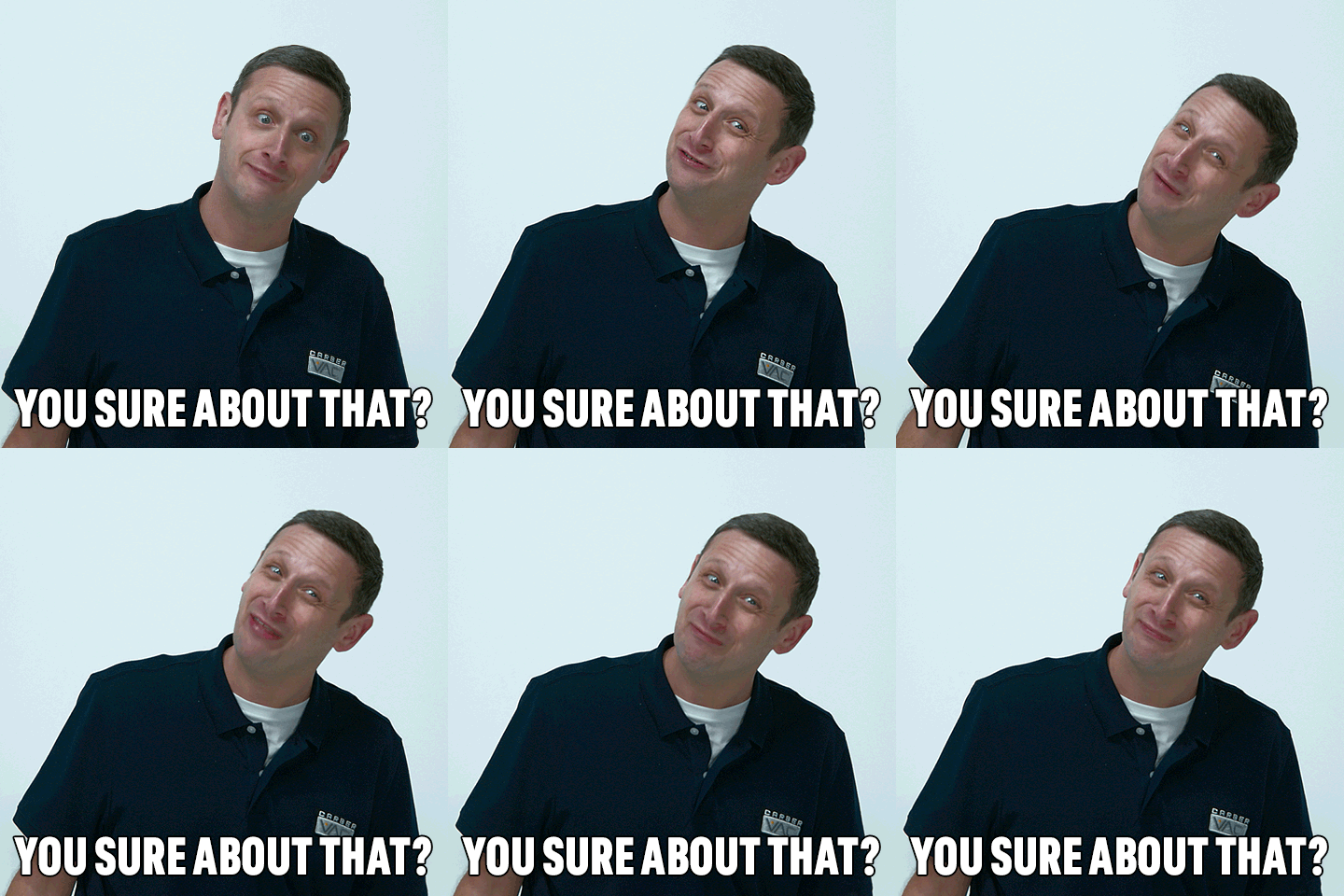
You must be logged in to post a comment.