Blog Archives
The Brothers Bloom (2009)
 Con movies work thanks to P.T. Barnum’s belief that the audience wants to be fooled. We all enjoy being conned to some degree. The excitement of con movies is being outsmarted and figuring out how it was accomplished. The Brothers Bloom, by writer/director Rian Johnson, one of the more exciting new filmmakers in Hollywood, is a con artist caper that understands the rules of the game and then aspires to transcend the game. Whether or not it succeeds depends on how much whimsy you can stomach in a two-hour duration.
Stephen (Mark Ruffalo) and Bloom (Adrien Brody) are a pair of con artist brothers. Stephen has been drawing up elaborate schemes ever since childhood, and he always uses his brother as the face of the operations. The brothers have a third member to their team, the mysterious and mute Bang Bang (Rinko Kikuchi), who, we’re told, just appeared out of thin air one day and they expect she’ll leave in the same style. Bloom is tired of playing characters and roles and wants out, but his big bro comes back with one last con in the works. Penelope Stamp (Rachel Weisz) is rich, peculiar, and lonely, ripe for the taking. Bloom snares her with the exciting prospect of being apart of an adventure. There’s a globetrotting plot to profit from selling a book to some shady characters (Robbie Coltrane, Maximilian Schell), and it’s just what Penelope needs to feel alive and leave the confines of her large cage-like home. Naturally, Bloom falls for the “mark” and feels conflicted, but was this part of Stephen’s plan all along? Is he setting up some form of a happy ending for his little brother? Is Penelope in on the con? Who’s conning whom?
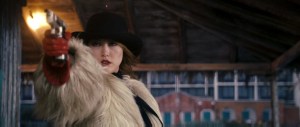 The Brothers Bloom is steeped in whimsy and at times runs dangerously close to falling into the inescapable gravitational pull of “cutsey.” Some have compared the film’s quirky, precocious style to Wes Anderson, but the movie reminds me more of the style of Barry Sonnenfeld, a filmmaker who made outsized whimsy seem like everyday reality; Anderson’s movies seem to exist in their own impeccably handcrafted worlds. I loved the opening 10-minute prologue which explores the childhood history of Stephen and Bloom, examining their first con on local rich kids. It’s quick-witted, snappy, and even has Ricky Jay provide narration, reminiscent of Magnolia or the David Mamet con movies. The Brothers Bloom has a sunny disposition that doesn’t come across as smug. Stylistically, the movie never crosses the line into feeling overly mannered. The Brothers Bloom exists in some unknown time period. The cars are modern, the clothes are from the 1930s (everyone wears a bowler hat with such flourish), and the sets look like they’re from the 1960s. There is no dependence on technology, just good old-fashioned brains and charm.
And yet this is more than an exercise in style. Just as he did with the adroit, neo-noir movie Brick, Johnson takes a genre and subverts its expectations. The Brothers Bloom treats cons more as storytelling, and it positions the film and its characters in an interesting new light. Bloom yearns for an “unwritten life” because all he’s known have been roles in his older brother’s games and cons, and the poor sap doesn’t even know if he has an identity beyond fabrication. Stephen has also begun to blur the lines between reality and his cons, and his life’s ambition is to stage the perfect con where “everybody gets what they want.” Get that? The Brothers Bloom aims for deception that gives everyone, including the deceived, a happy ending. It almost sounds like a charitable goal. Johnson has injected the con artist genre with some pathos and self-reflection. Too many con artist movies are only good for one viewing; once you know the particulars of the con, do you feel invested in watching it play out again? Johnson puts some melancholy into the mix and it gives the film more weight than being the sum of its many quirky parts.
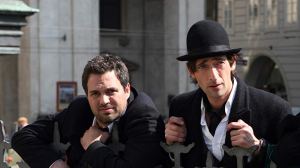 The acting across the board is superb. Ruffalo is his typically low-key yet engaging self, and he seems sincere even when you know he isn’t. His love and concern for his little brother is touching. His schemes are all for his brother to get out of his shell and experience some level of happiness. Brody embraces the weariness of his character. He is confused and tired and feels like he cannot trust human connections; he’s paranoid that all roads lead back to some machination from his brother. His affection for Penelope is like an awakening for his character, and yet he cannot fully give into it because is it genuine? This incredible level of uncertainty with every aspect of life casts a heavy toll, and Brody convinces you of that toll. Kikuchi (Babel) makes great use of physical comedy and has a lot of fun with her mysterious character. She’s mute for practically the entire film yet manages to communicate plenty. But it is Weisz (The Fountain) that steals the movie and steals your heart. Her screwy eccentric is deeply lonely but radiates a ditzy glow. She fully embraces the prospects of adventure and bounces in glee. This woman is powerfully adorable.
There are a handful of missteps in the narrative. The movie likely lasts twenty minutes longer than it needs to, with false endings and even a false third act. Audiences are used to con movies revealing the larger scope by the end after a bevy of last-minute twists. This is not the case with Bloom. The movie gets more muddled and introduces new conflict that isn’t ever really resolved. Audiences expect clarity by the end of the third act, not confusion. I feel like I’m missing something with the duplicitous Diamond Dog character (Schell), and maybe that’s the point; perhaps I’m supposed to be in the dark about his connection to the brothers Bloom. I won’t get into spoilers, but I was expecting more reveals at the end of the movie, perhaps Stephen showing one last final box, and the movie gives you nothing. I suppose the purpose is to play against con movie conventions and the surprise is that there is no real surprise by the end, no “I was in on it” or “It was all part of the plan” a-ha moments of ironic revelation. That’s nice but it doesn’t always make a movie more satisfying. The ending would be more moving if the audience didn’t already feel spent by the time they have to process something more emotional.
Johnson’s follow-up to his immensely entertaining debut is a solid winner, though it leaves you hanging and wanting at the end. The movie is quirky and heavy on the whimsy, and yet it also squeezes in some pathos. Yet the movie falls short of its ambitions and the talent of Johnson. The Brothers Bloom will seem enchanting to some and insufferable to others; it defies expectations and genre conventions, and sometimes would be better off adhering to them. It’s an amusing caper comedy but it could have been something even more special. It just needed a little less narrative sleight-of-hand.
Nate’s Grade: B+
Share this:

Harry Potter and the Prisoner of Azkaban (2004)
 The first two film adaptations were huge hits, but were derided by some as being too loyal to the books that it stifled the creativity. Now, Harry Potter and the Prisoner of Azkaban is out and its the first film to deviate from the books. How will Potter nation take the news?
Harry Potter (Daniel Radcliffe) is entering his third year at Hogwart’s School of Witchcraft and Wizardry. Harry is also getting older, getting angrier, and learning more and more about his parents. Hes on alert that the murderer, Sirius Black (played the fabulous Gary Oldman), has escaped from Azkaban prison and is out to get Harry. Black had a hand in the deaths of Harrys parents, and now it seems hes looking to finish what he started as a follower of Lord Voldemort. Harry relies on his friends, Ron (Rupert Grint), Hermione (Emma Watson), and a kindly new Defense Against the Dark Arts teacher named Lupin (David Thewlis) to conquer his fears, his burgeoning hormones, and to face Black when the time comes.
The best decision the Harry Potter producers made for this chapter of the series was in getting a new director. Alfonso Cuaron finally infuses the Potter series with a sense of visual life. Instead of Chris Columbus’ stubborn admiration of his fake opulent world, Cuaron keeps things fluid with a constantly roving camera and long takes. For the first time in the series, you can argue that this Harry Potter film looks and feels like its own actual movie. Gone is Columbus annoying penchant for displaying everything in close-ups. The film also benefits from some new realistic exteriors and dressed-down attire, ditching the school uniforms. Theres also a new cinematographer, so instead of Columbus dull amber glow, the series takes a gratifying turn toward the menacing, with an emphasis on dreary blacks and silvers.
 The best improvement of all, however, was in getting away from the apparent slavish loyalty to the books. The third book is the longest of the three but the third film is the shortest; 15 minutes shorter than Sorcerer’s Stone, and 25 minutes shorter than Chamber of Secrets. Thank God. At the rate they were going I thought the next book, Goblet of Fire (700-some pages), was going to be like 9 hours.
So, under Cuaron’s guidance, Prisoner of Azkaban eschews the unnecessary plot elements and details fans will grumble over but moviegoers couldnt care less over (Quidditch?). Cuaron’s film may be heavy with exposition, but it never talks down to its audience. The result is a movie trying to be a movie and not trying to cram in as many details of the world as possible so fans wont have their feathers ruffled.
The young actors of Hogwarts have definitely been struck by puberty, and it has done their acting a world of good. Radcliffe will never be an exceptional actor but here he presents new and interesting dimensions to Harry demonstrating his arrogance and tempestuous anger. Tom Felton, who plays the snarky blonde-haired Draco Malfoy, appears to be maturing into a ganglier Macaulay Culkin. The one actor that truly seems to have a bright future, though, is Emma Watson. You cannot help but love her whenever she’s on screen and she seems to be developing into a fine actress.
The most notable addition to the adult staff in the film is Michael Gambon, replacing the late Richard Harris as Hogwarts headmaster, Dumbledore. Gambon turns the character from a kind-hearted grandfather type to more of an aging hippie but it works. Emma Thomson also appears as some sort of psychic professor, teaching students to read tea leaves; however, her entire role seems superfluous unless it impacts future installments (I have not read a single book). Once again, Alan Rickman rules all and needs to get more time in these movies. I don’t know how, but it needs to happen. Thewlis is the most welcomed addition in his pivotal role as Professor Lupin and delivers some of the more dramatic scenes of the film with radiance and ease. He creates a lovely father-son relationship with Harry that supplies Azkaban with a nice sense of compassion. Oldman is similarly great but unfortunately he shows up so late into the film that he seems terribly underused. There is a scene late into the film, where Thewlis, Oldman, Rickman, and the great character actor Timothy Spall share a scene. I never thought it would be a children’s fantasy series that would finally unite all these talented British stage actors but I’m thankful for it nonetheless.
 Prisoner of Azkaban is the darkest tale yet, and Harry Potter works best when things get scary. The nightmarish element design creates a wonderful sense of dread, and Cuaron deftly handles his young characters dealing with rage and death and, scariest of all, budding hormones. Theres even a sly nod to Cuaron’s steamy coming-of-age film, Y Tu Mama Tambien (it involves a three-way hug between our trio of kids).
he effects of the film are beautiful and greatly add to the entertainment value of the film. The Dementors, cloaked flying guards of Azkaban prison, are terrifying to look at, and their leitmotif of chilling the air when they are near makes for some great visuals and ominous moments. I got actual goosebumps the first time they arrived on-screen, and then when I saw this film a second time, fully knowing the story, my skin still crawled when they arrived. Perhaps the greatest addition to Harry Potter‘s special effects bestiary is the Hippogriff, which resembles a combination between an eagle and a horse. It is a gorgeous creation and worlds better looking than the three-headed dog from the original film. It also provides one of the more breath-taking moments of the film, when Harry goes soaring across a lake on the back of the Hippogriff.
Having said all this, yes Prisoner of Azkaban is the most exciting and visually alluring film of the series, also its darkest, but I couldn’t help feeling disappointed with the central storyline. Most people will love it, especially fans of the books, but after walking out of the theater I could not help but wonder if the film had a climax at all? It really kind of didn’t. There was no sense of real story momentum and the middle had some definite moments of drag. The last act of Prisoner of Azkaban is exactly like Back to the Future Part 2: time-travel, correcting the future, not running into your past selves. This is not a good comparison. So while the characters are getting more interesting as they get older, this plot doesn’t really hold up very well. It almost feels like a preface of whatever events will come in the fourth film.
Prisoner of Azkaban is an interesting watch. I am told it deviates the most from the book and it manages to generate a considerably darker and scarier atmosphere than its predecessors. For my money, any changes are good, as films are about ADAPTATION and not copying, so dispensing with subplots and details is A-Ok with me. But how will the die-hards react? Im sure youll hear plenty of grumbling all over, but Cuaron has injected needed life into this series and presented an idea of what it can grow to be. So, while I think Prisoner of Azkaban has a superior visual sense, pacing, and adaptation; I also feel the story may be the weakest we have been told. I can only imagine what the outcry will be among the fan base when Goblet of Fire is released November 2005 as one film.
Nate’s Grade: B+
Share this:

Harry Potter and the Chamber of Secrets (2002)
 So is Harry Potter and the Chamber of Secrets better than the first film? Well, mostly yes. The story of Harry Potter is a long and complicated one, full of numerous funny names as well. Harry (Daniel Radcliffe) is still living with his abusive relatives and barred in his room. Hes warned by Doddy, a self-abusive CGI house elf, not to return to Hogwarts School of Magic because he will be in grave danger. Fat lot of luck this does. Before you can say Jar Jar Binks, Harry’s timid friend Ron Weasley (Rupert Grint) and his flying love bug rescue Harry. They meet up with old friend Hermione Granger (Emma Watson) and begin their second year of magical education. But danger surfaces as students with Muggle (a non-magically inclined family member) blood are turning into petrified statues. Lots of other stuff is crammed in (like broomstick rugby, Nancy Drew-like detection, and spiders oh my!) but lets all be honest here, its not like a plot synopsis is going to push you into seeing this movie.
 Much of the acting responsibilities falls on the shoulders of our three young leads, and all I can say is what a world of good puberty has done them all. Radcliffe, stiff and overly subdued in the first film, has grown a deeper voice. He seems to have settled into the part nicely. Grint, playing a noble coward, goes from squeal to grimace in 3.5 seconds. Watson has a winning smile and bounces with enthusiasm but sadly sits the last half of the film out.
Some notable additions to the Harry Potter family include Kenneth Branagh as the narcissistic new professor of the Defense Against the Dark Arts. Can anyone do ham better than Branagh? I dont think so. Jason Isaacs is malevolently delicious as the aristocratic father of Harrys school rival, Draco Malfoy. You could start shivering from the icy glare this man casts.
Chamber of Secrets is better than the earlier Sorcerer’s Stone in many ways. The story has less exposition and contains darker elements that suit the story surprisingly well. The special effects are vastly improved from the first film. The child acting, as previously mentioned, is much better.
Despite lacking prolonged setup, Chamber of Secrets clocks in around 2 hours and 40 minutes — 9 minutes longer than the first! You could watch your life go by sitting through a Potter movie marathon. This might seem like an eternity to small children if they weren’t so overly obsessed with the book series.
 So remember when I said Chamber of Secrets was “mostly” better than the first film? Well that “mostly” is because the amazing adult cast is hardly seen. Gentle giant Robbie Coltrane and Maggie Smith are mere background noise to the story. Headmaster Dumbledore (played by the late Richard Harris) has a weathered feel. What Chamber of Secrets needs are more scenes with the brilliant Alan Rickman, as moody professor Severus Snape. Rickman (Dogma) is perfect and a thrill to watch. I got a fever and only more Rickman can cure it.
Chris Columbus (Home Alone) is a director with no remarkable visual flair or distinct vision. Everything that is occurring is so faithful to the book that it has no individual flavor or distance. It’s directing with your hands tied. It should be Rowling’s name for the director’s credit because she’s the one with the vision being translated.
Harry Potter is a worldwide phenomenon that is already breaking box-office records and parents’ bank accounts. Chamber of Secrets plays toward audience expectations, but all of the components involved seem to be settling in their roles. Chances are whatever you felt about the first film youll relive during the second.
Nate’s Grade: B
Share this:

Harry Potter and the Sorcerer’s Stone (2001)
 If you don’t know about Harry Potter at this point you must be living under a stone, perhaps a Sorcerer’s stone. The little tyke with glasses and a lightning scar has become a sensation across the seas and of course a big budget movie was merely just a matter of time. The imagination of author J.K. Rowling is bustling with a complex world that has given her acclaim from children and parents all over, not to mention made her filthy rich. The movie is a meticulously faithful adaptation but this is both its strength and its weakness.
The story of Harry Potter is a long and complicated one, full of numerous funny names as well. Harry (Daniel Radcliffe) is an orphan living with his nasty aunt (Fiona Shaw) and uncle (Riachard Griffiths) who force Harry to live under the stairs. Harry is informed one night by a gigantic and bearded figure named Hagrid (Robbie Coltrane) that both Harry’s parents were magically inclined and he is to gather his own education at Hogwarts School of Magic. On his way there, after picking up supplies in a special place I have forgotten totally the name of, Harry meets and befriends the aloof Ron Weasley (Rupert Grint) and the Type-A studious Hermione Granger (Emma Watson). Once there Harry picks up a rival in Draco Malfoy, a cold glare from Professor Snape (Alan Rickman), a good scare from a poor CGI three headed guard dog, and a mastery in the art of broomstick flying. The school sessions are a barrage of characters and minute plot points that readers will just be grinning that have been included.Through later revelations it is divulged that Harry’s parents were killed by the powerful wizard Lord Voldermort. It seems that old Voldy for whatever reason decided not to kill Harry. Thus because of this Harry has worldwide fame as the boy who lived against Voldermort. It seems as well that this evil wizard is trying to achieve immortality by using the advantages of the hidden Sorcerer’s stone. It’s up to Harry and his friends to stop this from happening.
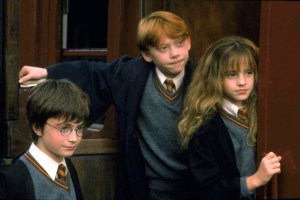 Chris Columbus (Home Alone, Mrs. Doubtfire) wrestled this franchise away from such directorial heavyweights like Spielberg, and it’s clear to see why he was selected. Rowling ordered the movie adaptation to be completely faithful to her book, and Columbus is a director with no remarkable visual flair or distinct vision. Everything that is occurring is so faithful to the book that it has no individual flavor or distance. It’s directing with your hands tied, which is fine for most people. With this project he seems like he is basically a go-between with Rowling and the studio suits. Basically it should be Rowling’s name for the director’s credit because she’s the one with the vision being translated.
Large portions of this film need to carried by the acting of several of its young stars and it’s quite a 120 million dollar weight. For the most part the child actors in Harry Potter deliver. Emma Watson is the standout as Hermione, with her extra energy and enthusiasm in every step and every smile simply winning over the audience in spades. The only real detraction acting wise in the entire film is, unfortunately, the star. Daniel Radcliffe plays Harry in a very stiff manor and spends most of the film looking overly subdued. After you experience more time with the other characters in the film one realizes how frightfully dull the character of Harry Potter really is. Any of the characters would be more exciting to watch than Harry. As characters go, he’s about as interesting or entertaining as stereo instructions.
Harry Potter contains an all-star all British cast for the fanciful faculty of Hogwarts. Everyone seems so meticulously cast that they were born to play these roles. Richard Harris becomes a gentle grandfatherly figure as the headmaster. Robbie Coltrane is a large and lovable figure that the audience can rely on again and again. Richard Griffiths is so over-the-top in a very entertaining light. Alan Rickman owns every scene he is in with such a snarling and full-of-life presence. He is perfect, as is most of the adult casting.
 The most exciting moment of the film occurs during a match of Quidditch, which is basically like rugby in the sky. Two teams on broomsticks whiz and zoom around one another in a fierce aerial competition. At this moment Columbus can declare himself the true director. The entire sequence is done that it perks the viewer’s imagination and also provides great moments of excitement. Seeing the scene itself was a testament to the wizardry of special effects.
The length of Harry Potter and the Sorcerer’s Stone clocks in around two hours and thirty minutes, which might seem like an eternity to small children if they weren’t so overly obsessed with the book series. The film is structured more like a novel than a screenplay (again with the induced restrictions), so instead of a usual three-act system it has moments that drag and moments that seem to go on endlessly (like the final near obstacle course the three kids must go through). The entire first hour or more is set-up explaining all of the characters and the world they inhabit, then they just sneak in a mention to the Sorcerer’s stone toward the end and introduce our titular story line. Hopefully, with the set-up out of the way now, the next movie will be a tad shorter.
Harry Potter is a worldwide phenomenon that is already breaking box-office records and parents’ bank accounts. The first four books have been optioned by Warner Bros. so expect to see an armada of kids dressed up in Halloween costumes around Thanksgiving for the next few years. Harry Potter is a fairly light-hearted but entertaining venture that I wouldn’t mind revisiting and reacquainting every now and then like an old friend.
Nate’s Grade: B
Share this:

The World is Not Enough (1999)
 James Bond is a symbol in our popular society. He represents charm, bravery, male chauvinism, and the essence of cool. So why is this dying image seeming more like a dinosaur than a hero? The World Is Not Enough, the latest installment into the longest running franchise in movie history, exhibits more of commercial feeling than an actual movie. This Thanksgiving fixin’ is overly stuffed with useless gadgets, double entendres, messy explosions, outlandish cartoon escapes, and even wooden performances. But it all doesn’t matter because it’s a James Bond movie and we know what we’re getting and we want it! But why does this helping seem less filling than those of the past?
The Bond films of recent are seeming to take a cue from the Batman flicks by thinking two are better than one. Does anyone remember fondly the days when one Pussy Galore was enough for the world? With TWINE we get double stacked with Bond girls, and this has to be the weakest crop of exotic babes yet. Sophie Marceau comes off as an arrogant whiny drama-queen twirling her pretty fingers in that bear rug Brosnan credits as a chest. She spends virtually the entire running time preening around wrapped up in a bed sheet or underneath it. Connect the dots to Denise Richards who is a nuclear scientist in her day time but a cover girl in her free time. How convenient that the finale takes place underwater and her with only a T-shirt. Is MGM this desperate for the money of teenage males?
The most depressing aspect of the Bond films of late are the hysterically preposterous and cheesy villains. In TWINE we get a scary Robert Carlyle who has a bullet lodged in his brain and allows him to withstand all pain. Great, but all he does in the flick is hold a hot rock and punch his hand through a table. If you’re going to give a villain an eccentric trait you have to play to that trait to give the dubious baddie some semblance of an advantage in a dire situation. The possibilities could have been great for Robbie but he’s utterly wasted and so is the idea.
Usually in a standard Bond flick there is at least that one “Wow” scene where you gasp as your breath is taken. that one stunt or sequence that mystifies you with excitement. There was never a “Wow” moment with TWINE but the action held its own and kept from succumbing into tedium.
TWINE may not be the best Bond, but it sure as hell is better than Tomorrow Never Dies. Its finale may be anti-climactic and cramp, but the action in this outing is regularly up to speed. It may not have the best actresses… but… but they look pretty when wet. all in all James Bond is a satisfying figure to have grace the screen every few years to revisit the same escapist domain of earlier follies. Let’s just pray they tinker with the system before we get another Tomorrow Never Dies, or worse, another Timothy Dalton. Stay with us Pierce Brosnan; the world needs you.
Nate’s Grade: C+


 nathanzoebl
You must be logged in to post a comment.