Blog Archives
Changeling (2008)
 This is one crackerjack of a story. The true-life tale of a mother, Christine Collins (Angelina Jolie), who loses her son, only to have the LAPD give her a different boy is easily gripping. The pace is a bit elegiac but the movie never gets boring, partly because Christine is beset by a multitude of adversity by the corrupt members of the 1920s LAPD who want the case to go away. Changeling can seem to fall prey to outrage cinema, and the audience is clearly going to demand some justice after watching Christine undergo a torture chamber of abuse. And justice is what we get. The last 45 minutes of this movie is protracted courtroom sequences where the antagonists get stomped upon with righteous fury. It just keeps going on and on, as if to compensate for the massive grievances Christine endures. Writer J. Michael Stracynzski (Babylon 5) makes the drama stick close to the facts of the case, which is admirable but it also makes Changeling anchored to reality when there is nothing, repeat nothing, subtle in this movie. It’s hardcore melodrama all the way through, but I didn’t mind one bit. Jolie’s frantic performance suits the melodramatic material. She leaves it all on the floor, as they say in sports. Clint Eastwood doesn’t seem to be too enraptured by the material, routinely slipping into his understated direction that seems at odds with such a juicy story. Changeling feels like a tremendously fascinating story that isn’t necessarily presented in the best fashion. Still, this is fine stuff.
Nate’s Grade: B+
Share this:

Then She Found Me (2008)
 Actress Helen Hunt’s directorial debut is an altogether pleasant film experience without achieving anything memorable or truly accomplished. It’s a simple story of a 40-something grade school teacher (Hunt) torn between her man-boy husband (Matthew Broderick) and a student’s hot father (Colin Firth, who seems to be a middle-aged woman’s dream come true). The extra plotline where Hunt discovers the identity of her biological mother (Bette Midler) never truly seems to coalesce with the romantic foibles. Then She Found Me has a noticeably wry tone, like that of a world-weary adult that’s been-there-done-that. That specific and welcomed tone helps keep the viewer alert and mostly satisfied from beginning to end. It isn’t a warm or sappy movie despite some sitcom-level plot complications. The acting is fairly amusing, though somewhat one-note (the foursome of actors rarely break from the one-sentence descriptions of their characters). The most shocking aspect of the flick is how weathered and gaunt Hunt looks, which is a refreshing and realistic turn for the actress. Hunt is competent behind the camera but doesn’t prove much else when it comes to directorial skills. Then She Found Me is a mildly affecting movie that passes the time well. Stick around to catch acclaimed author Salman Rushdie as Hunt’s OB-GYN.
Nate’s Grade: B
Share this:

Baby Mama (2008)
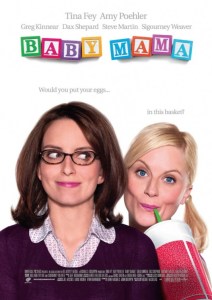 2008 is becoming a year dominated by Tina Fey. She won three Emmys for her Best Comedy TV series 30 Rock, including writing and acting, and her dead-on portrayal of vice presidential candidate Sarah Palin has branded the public perception of this political figure. Baby Mama is a mildly entertaining comedy that works because of the finely honed chemistry between Fey and her former Saturday Night Live co-star, Amy Poehler. The movie is at its best when these two women can play off one another. The banter isn’t laugh-out-loud funny but provokes plenty of smiles and chuckles. The movie goes in an unforeseen direction in the third act that attempts to raise the stakes through drama, but it feels like a disappointing direction for what is essentially a female buddy comedy. The jokes flow at a steady pace and the movie has a great supporting cast of big names that know how to leave their mark, like Steve Martin as a daffy New Age CEO and Sigourney Weaver as a amazingly fertile boss.
Nate’s Grade: B
Share this:

Sex and the City (2008)
 A lady told me that the Sex and the City movie is like “the Super Bowl for women,” and I couldn’t agree more, especially with the way box office receipts are already shaping up. The smash TV show seemed to become its own brand, launching designer duds and trinkets into the mainstream for single women. I willingly saw the Sex and the City movie on opening night, and I must say it’s an interesting experience to watch the film with a packed house of estrogen. The woman next to me was on a roller coaster ride of gasps and tears, at once passing out tissue to others that she had planned ahead to bring. I was never much of a fan of the show. I found the humor to be pretty lazy and the characters to be somewhat annoying after so many episodes; truth be told, I think I can only watch three before having to walk away. I open this review detailing my biases but with that said, four years after the TV show’s finale, the Sex and the City movie feels like a deflated after party.
Carrie Bradshaw (Sarah Jessica Parker) is planning her life with her beau, Mr. Big (Chris Noth). They find a swanky Fifth Avenue apartment and he buys it for her, then she feels jitters about what might happen if they break up and she’s homeless. Naturally, this causes them to get engaged. Of course something goes wrong before the “I do’s” and Carrie must pick up the pieces of her life.
She has her three friends to reach out to. Career girl Miranda (Cynthia Nixon) is living with her husband Steve (David Eigenberg) and their son. She and Steve have had quite a dry spell when it comes to sex, and one day he strays and cheats on her. She feels violated and she immediately moves out. She won’t listen to Steve’s apologies. Charlotte (Kristin Davis) is happy with her husband and adopted Asian daughter. That’s really about it for her. Samantha (Kim Cattrall) is living out in L.A. managing her boyfriend, the hot actor Smith (Jason Lewis). She feels isolated and misses New York City. She also feels somewhat like a cat without her claws, as her sexy neighbor presents quite the temptation.
 Writer/director Michael Patrick King seems to have condensed an entire season into a movie. It feels like eight episodes packed together but with little central momentum to provide some form of cohesion. There’s no larger scope, not meat to this story, but King feels like he has a checklist of female “events”. So we get weddings, canceled weddings, fashion shoots, pregnancies, and lots and lots of shopping. Sex and the City ends up transforming into hard-core consumerist, female wish fulfillment pornography. The film is heavy with subplots and many of them feel like retreads that the TV show would have already covered and recovered after six seasons. The movie feels overly melodramatic and it isn’t much fun. Carrie spends most of the film moping and heartbroken; she spends a Mexican vacation intended to be her honeymoon in bed. Samantha has to spoon-feed her in order to get her to finally eat something. For some this will come across as moving and heartwarming, but for me it came across as pathetic. King’s idea of comedy doesn’t help. The jokes are pun-heavy and corny, and most sound like they should be followed by someone saying, “Badum dum dum, yeah.” When a film has to resort to a dog humping things over and over you know it has issues.
The movie medium is not the ideal place for these ladies. In half hour doses they come across better, but when blown up to a gargantuan 145-minute length, they become self-absorbed and vapid stereotypes. I didn’t like any of the characters. Perhaps you will. The characters come across as whiny, insecure, and pretty myopic. Miranda holds onto her self-righteous vigor about refusing to forgive her insanely ingratiating husband’s one-time affair yet she holds onto the guilt that her spur-of-the-moment comment doomed Carrie’s wedding. She doesn’t tell her friend about what she said, encouraged by Charlotte to button up out of kindness. In turn, Carrie doesn’t tell Miranda what a mistake it was to make a clean break from Steve after he cheated once. Carrie does this out of kindness to their friendship. They are prolonging each other’s misery. And later Samantha returns with an extra 15 pounds in tow thanks to her constant eating to douse her impulses to cheat. The gals react with such shocked expressions it becomes uncomfortably mean.
 Jennifer Hudson shows up after the hour mark to become Carrie’s new assistant, and she serves as a saintly reminder of how optimistic and buoyant love can be. The character is a total waste and seems tacked on to a story desperately searching for fertile narrative ground. Apparently with oodles of free time Carrie needs someone to check her e-mail for her. I don’t understand why any one of the girls couldn’t have filled this role; it would draw the characters closer together and make the movie shorter. In fact, Charlotte is given shamefully little to do in the film. Her biggest concern is how perfect her life is. Her 4-year-old child (she’s overly meek and barely speaks a word, they might want to have that looked into) is nothing but a prop. She appears in scenes of the girls talking, or shopping, or talking about shopping, but rarely if ever do we see Charlotte dealing with motherhood. Her character’s biggest moment onscreen is crapping her pants. Yes, you read that right.
The rampant consumerism is depressing, especially at such a bloated running time. I’m not going to charge the film with setting back feminism or anything but why do the main characters have to be so shallow, brand-conscious, and live to splurge? The emphasis on buy, buy, buy to make yourself feel good is a rather sad and empty message. I get that the TV show and the movie are supposed to tap into a woman’s fantasy, and the film really panders to Carrie’s princess indulgences and demands. So of course we’re going to get several montages of fashion and shopping and gads of product placement overkill. Seriously, the Sex and the City folk must be pocketing some major dough from all the fawning recommendations they make over brand names (History fact: Louis Vuitton died in 1892). But here’s the thing — the clothes don’t even look good! The difference between designer fashion and complete clownish garbs is practically nonexistent. The outfits these women wear are horrendously garish and bizarrely impractical even for high-end New York career women (high heels on NYC streets?). I’m stunned by the idea that the fashion that these characters wear is deemed glamorous.
 The movie didn’t have to be this clunky. The men are all relegated to the sidelines for giant portions of the film, only to show up and act penitent or selfish. The film’s conclusion, where Carrie and Mr. Big reconcile, looks like it might take its own advice and “write its own rules” but then it ends blandly predictable. Sex and the City could have explored the interesting dynamic of four women well into their 40s and how they navigate the waters of relationships and carnal cravings. Samantha herself turns 50 during the course of the movie and, let’s face it, she has probably gone through or is about to experience menopause. Samantha was always the most promiscuous character, so wouldn’t that be an interesting conflict and feel a bit more realistic? Then again, realism isn’t exactly what Sex and the City is about. If it were there would be no way that Carrie’s terrible, platitude-riddled writing would spawn three best-selling books.
Fans of the Sex and the City TV show will likely enjoy the big screen version of their favorite gal pals. After six seasons, I suppose a 2 hour 25-minute movie won’t feel long enough for the diehards with their cosmos at hand. I am admittedly not a fan of the show, and the movie comes across as long, draggy, aggressively shallow and a tad disingenuous. The actors mug hard, which looks bad when it’s blown up to fit a movie screen. The jokes are pretty stale and the plot spirals into too many subplots. I don’t really want to spend another 145 minutes with these women, especially if this is how they’re aging and maturing. Don’t say I didn’t warn you.
Nate’s Grade: C
Share this:

Knocked Up (2007)
 Judd Apatow scores again. The man has a long history of creating memorable and heartwarming character-based comedy, and Knocked Up is another winner. This man creates thoroughly human and engaging stories that focus on our own foibles and triumphs. Apatow wrote and directed yet another poignant, clever, and uproarious comedy that has so much more below the surface and becomes universally appealing.
Alison (Katherine Heigl) is out on the town celebrating her promotion at the E! Entertainment Channel. She’s going to go from behind the camera to in front of the camera. It’s at this Los Angeles club where she meets Ben Stone (Seth Rogen), a doughy Jewish slob of a man content to drift through life penniless and high. Their night of partying leads to a drunken one-night stand. Eight weeks later Alison is going through extreme nausea and can’t figure out what kind of flu bug she has, that is, until she remembers her one night out. She locates Ben and informs him that she is pregnant and, yes, he is the father. The two decide to try and make it work, forging a relationship as they plan on becoming parents. Alison’s sister Debbie (Leslie Mann) and her husband Pete (Paul Rudd) and their two kids are a potential glimpse into the future. Pete and Ben hit it off real well, to the point that Alison feels like her mate might not be the one for her even if his DNA is growing inside.
 Naturally, this is a comedy where sex is at its very inception. The humor is ribald and playfully profane. I believe one of the greatest compliments you can give a comedy is when you cannot single out a single set piece or moment as an instant standout. Knocked Up is packed with many wildly funny scenes but it also has killer one-liners from start to finish and sharp pop-culture references (Ben on an exercise bike: “Matthew Fox? From Lost? You know what’s interesting about that guy? Absolutely nothing.”). Ben credits the flick Munich for the ability to get Jews laid. Ben watches the 2003 version of Cheaper by the Dozen with horror, saying that 12 kids is no laughing matter. The roommates are plotting a flesh-friendly website that notes the time and location of celebrity nudity in films. This commercial venture plays right into the frat house lifestyle for this band of stoners that bet their friend not to shave his beard for a year for free rent.
Knocked Up is bawdy and hilarious, sure, but it’s also far more realistic and a lot more emotionally involving than any romantic comedy Hollywood has offered in years. Apatow seems to have mined his personal parental experiences for a lot of hard-earned truths. The film is most natural when it showcases the male perspective of prolonged adolescence and an unplanned pregnancy, but Knocked Up also has a mature and thoughtful view on marriage and feminism. We see the array of personal challenges a woman would go through but the movie still manage to slip in humor amidst the uncertainty. There’s a montage looking for the right gynecologist. The gauntlet of sexual positions is explored while pregnant, with Ben afraid that his child’s first impression will be daddy’s manhood constantly poking it. When Alison and Debbie go shopping for pregnancy tests we see them fill their cart with every kind of tests, and then test after test comes back positive. “Hey this one has a smiley face,” says Debbie, before realizing, “Oh, that’s not a good thing.” Debbie then tests the reliability of the tests herself and for a brief moment panics when she thinks she may be pregnant for a third time. She then calms down and says, sarcasm-free, “Whoa, that would have sucked.” The inclusion of Debbie and Pete offers a whole other relationship viewpoint, something that Alison and Ben can learn from. She’s paranoid and blunt, and he’s apathetic and passive-aggressive, and Alison is terrified that she and Ben are doomed to a similar fate. The insights into marriage and secrecy are realistic and give the film so much more meat to its bones. This isn’t just a movie about what to do with an unplanned pregnancy; it’s fully about male-female dynamics and what it takes to make a family work.
 In the end, you really care about these characters because Knocked Up is a raunch-fest that has a sweet gooey center of sentiment. Ben is pushed into adulthood by this unexpected development and, as they say, puts away childish things after a lot of trial and error. There’s an undercurrent of emotional vexation under most of the comedy, like when Pete confesses that he doesn’t know if he can accept love, and Ben cannot pity this because he sees his love being rejected. Alison doesn’t quite have as big of an arc, but she never gets callously cast to the side and forgotten. She too has a lot of growing up to do very quickly, and when both characters welcome their newborn into this world it’s rather moving and exciting to experience it alongside them. Ben’s confesses to his child that not putting a condom on was the best decision he ever made. In any other movie this ending conversation might seem trite or hokey, but Apatow has paid so close attention to his characters that the emotional payoff is earned and rewarding.
Another hallmark of an Apatow production is how perfect the cast seems with one another. There’s a real camaraderie with the actors and it produces natural onscreen chemistry and amusing improvisation. Rogen and Rudd, teaming again after 40-Year Old Virgin, can riff off one another for a whole movie and I would gladly pay to watch. I loved when the two boys go to Vegas, take mushrooms, see Cirque Solei, and then freak out in their hotel room (“There are five different kinds of chairs in this room”). I was laughing so hard I had tears in my eyes, and I’m sure the crux of this moment was born from the freestyle exchange between the actors. Ben’s roommates have a believable kinship to them as a collection of amicable oddballs and stoners. Mann and Heigl also seem believable as sisters, much more so than would Anne Hathaway, who was originally cast as Alison but left due to creative differences (I guess the difference was she didn’t wish to be apart of a good movie). The Knocked Up cast work together like a truly wonderful team that appreciates the material and each other.
Rogen is destined for stardom after this movie. He can make anything funny with exceptional comic timing and line delivery that never feels forced. Hearing his unique giggle at the end of jokes, you can sense that this sweet and amiable guy would crack himself up and for good reason. Rogen was great in 40-Year Old Virgin and is even better in a bigger dose. Heigl gets to play more familiar notes, from stressing that work will discover her little bun in the oven to the expected birthing scream session. She has a good rapport with Rogen and brings a lot of warmth to her role. Rudd is so effortlessly charming and easy going. Mann plays a perfect bitch, but she also has a nice scene where she explodes at the realization that her days of youth are finally behind her. Special mention must go out to Kristen Wiig. She steals every scene she’s in as an E! Channel employee that makes plenty off-the-cuff passive insults against Alison during two staffer meetings.
 I’ve read online that several leftist bloggers are angry and flabbergasted that Alison does not get an abortion. They argue Ben is a fat and unappealing slob, she’s an attractive career woman, and not having an abortion in this situation is, as one put it, “stupid.” Excuse me, but this may be the first mainstream comedy that actually discusses the prospects of an abortion (or as one character deems it, a “smashortion,” as not to offend the delicate sensibilities of his roommate). I also take umbrage to anyone saying 1) choosing not to have an abortion is a bad decision, and 2) that these critics would be so daft to miss the point that if Alison had an abortion there would be NO MOVIE.
Knocked Up is a very funny and very wonderful sex comedy for adults, but it also happens to be an endearing and heartfelt romance. The cast is excellent, the comedy rarely misses a beat, and Apatow is a instant classic hitmaker. Just like The 40-Year Old Virgin, Apatow has explored a deeply personal topic for all the comedy and pathos he could wring from the material. Knocked Up is nothing short of a knockout. I hope you’re happy with your decision Anne Hathaway. I know I am.
Nate’s Grade: A
Share this:

The Forgotten (2004)
 Fair warning: This screed contains huge spoilers about the movie as I rip it apart. The press release for The Forgotten says, “What if you were told that every moment you experienced and every memory you held dear never happened?” And now, upon having seen The Forgotten, I say, “Oh, if only.”
Telly (Julianne Moore) is still grieving the loss of her nine-year-old son who died in a plane crash 14 months ago. She’s seeing a psychiatrist (Gary Sinise) and slowly coming to terms with her loss. One day she discovers all remnants of her son missing. His clothes, baseball glove, even his appearance in pictures has vanished. She accuses her husband (Anthony Edwards) of stealing them, but then is shocked when her hubby and doc both tell her that Telly never had a son. She’s been delusional for years since a miscarriage and has created an imaginary son. Telly refuses to accept the possibility that she’s nuts, and finds initial resistance and then acceptance from another parent (Dominic West) who also remembers a daughter that died in the same plane crash. Together they set off to learn the truth, all the while being hunted down by the NSA for some mysterious reason.
 The Forgotten shares a very dubious honor. Only twice in my life have I been strongly tempted to walk out on a movie, and that was while watching Lost in Space and The Thin Red Line. Six years later, The Forgotten became the third. It got so bad during the second half that I was fashioning my moveable armrest into a crude headboard for me to sleep upon. I was that bored. I can explain the reasons for my boredom very easily: terrible plot structure.
The Forgotten opens with Telly grieving over the loss of her son, and Moore is so good at grief that she can hook an audience as soon as her face crinkles into sadness. Around the 20-minute mark, Telly is told that she never had a son and has been delusional the whole time. Now, stop right there. That’s a great premise. If the makers of The Forgotten had stretched this part of the movie to about 90 minutes, put some thought and skill toward it, then we could have had something fascinating and heartfelt. Instead, you’re given the easily expected and the very boring.
At the 20-minute mark, Telly is told she has no child and she’s crazy. At around the 30-minute mark, none of this matters. The movie doesn’t even allow an opportunity for Telly to even doubt for a sheer second about her wild hunch that everyone in her life, including The New York Times, being apart of some global conspiracy to hide the fact she had a child. And of course, because she?s our heroine and this is Hollywood, her incredibly outlandish theories will be proven right. I understand that, but to reveal her theory’s accuracy only TEN MINUTES later is ridiculous. The Forgotten wastes no time proving Telly’s wild ranting as being correct. It’s as if The Forgotten feels that its audience is cultivated from the dumbest common denominator.
At the 40-minute mark the “A-word” is used, and before the 60-minutes mark, the audience knows everything. The last hour of the film is so obvious; no, it’s beyond obvious. It’s super obvious. It can’t even be obvious because The Forgotten has told you EVERYTHING. You’re not waiting around for predictability to play its way out, because you’ve been told everything. All that’s left is to sit and watch dull chase scenes (a book editor outrun NSA trained agents? Please).
There will be some heavy spoilers in my discussion of the film’s plot. I’m posting fair warning now, but doubt they’ll be too surprising given the ads on TV for The Forgotten (who else would you think was responsible?).
I have no idea what the makers of The Forgotten were thinking. They blow all their secrets in the first half and then mill around for another hour. It’d be like if The Sixth Sense revealed Haley Joel Osment sees ghosts and Bruce Willis is dead in the first hour, and then for another hour they sit uncomfortably and ask about the weather. Anyone think that movie would have worked the same? This is why I was so bored. I could have fallen asleep and accurately predicted everything that would happen in the second hour. There didn’t even need to be a second half to this film. It was all irritatingly explained to us in the first hour. Once the mystery’s gone, the only thing the audience has to keep its faltering attention are the questions of whether Telly can win back her son, and who will be vacuumed out of the universe next. That’s not much to justify another tension-free, revelation-free hour of awful movie.
The ending is also steeped in lunacy. So apparently all-powerful aliens love to play experiments on us and basically control our whole lives. Peachy. Telly is apart of an experiment, and the creepy, slim alien tells her that she’s the anomaly. All the other test subjects have forgotten, but not her, and the little green men want to know why. What’s even more peculiar is that this specimen of a supposedly advanced race is mad at Telly for gunking up the project, and he’s (its?) going to beat her until she forgets and the project is finished. But the alien just said she was the lone anomaly. By definition the project worked if everyone else succeeded. I’m no advanced race and I figured that out. Guess I’m smarter than the screenwriter of The Forgotten.
Once again, humans miraculously triumph over supposedly all-powerful alien species. I realize an audience wants to see our heroes succeed at the end and conquer evil, but is it even plausible when this evil can alter everyone’s existence at a moment’s notice? In the end, Telly gets her son back and her life is fulfilled. The makers of The Forgotten expect you to take this for a happy, victorious ending. Don’t. Sure, Telly has her kid back, but what’s to stop these all-powerful aliens from doing it again. For that matter, since she was the anomaly, wouldn’t they continue to perform experiments on her to see what makes her tick?
 What makes The Forgotten even more irksome is that it’s a blatant rip-off of Alex Proyas’ visionary 1998 sci-fi noir, Dark City. The plot of Dark City is about all-powerful aliens that experiment with human beings. They plant different memories into their heads, allow their human test subjects to live multiple identities, to see what makes us work. A reluctant doctor helps the aliens but is really rooting for the one test subject that seems beyond their power. The aliens are baffled about this anomaly. This is practically the entire plot for The Forgotten; trade Shell Beach for Quest Air, lose all the style, thrills, imagination, and pacing of Dark City, and what you’re left with is The Forgotten.
It’s not enough that The Forgotten is possibly the most ineptly plotted movie ever, or that the trailer and commercials gave away too much (I knew the ending before stepping into the theater), the ails of The Forgotten are exacerbated by the fact that it’s a shallow, homely, incompetent rip-off of Dark City.
I do not fault Moore. She is one of the finest working actresses today and will elevate anything she is in to some degree. She’s stranded by the material. The only performance I even took any note of was the surprise appearance of Lee Tergesen. He’s shown equally impressive comedic chops (USA’s Weird Science) as dramatic chops (He was the closest thing to a hero on HBO’s Oz). It’s always fun to see personally beloved character actors, even if it is in an abomination like The Forgotten.
Director Joseph Ruben (Money Train, The Good Son) finds astonishing ways to make The Forgotten even worse. He overplays his hand early, like having many overhead shots cued with weird, aerial noises. There’s also an ominous and extremely mobile cloud formation that spells out the antagonists. The second half is filled with pointless chase scenes, and Ruben can’t manage to make any part of them exciting. He does have one interesting jump moment while Telly is riding in a car, but I already saw it this year in the superior Bourne Supremacy.
The Forgotten may end up being the worst film of 2004, and with a year dotted by the likes of Hellboy, Van Helsing, Catwoman, and National Lampoon’s Gold Diggers, that may be all I need to say. I suppose someone out there may find something redeemable about The Forgotten (if they haven’t already seen Dark City), but the film’s tepid pacing, mind-numbingly foolish plot structure, and mounting illogical doom the poor audience to two hours of head-smacking boredom. This is a first-class Hollywood train wreck. It doesn’t work as a drama about grief, it doesn’t work as a psychological thriller, and it really doesn’t work as a half-baked X-Files episode. The Forgotten is a really great title, because in a few weeks it’ll be exactly that.
Nate’s Grade: F
Share this:

Kill Bill Vol. 2 (2004)
 When last we left The Bride (Uma Thurman), she had reawakened from years of coma, traveled to Japan to acquire the finest sword ever created, and crossed off two names from her list of those marked for death in the name of bittersweet vengeance. O-Ren Ishii (Lucy Lui) and Vernita Green (Vivica A. Fox) fell under the hand of The Bride in Kill Bill, Vol. 1. Now, the only members left of the Deadly Viper Assassination Squad (DiVAS), the group our heroine was once a part of, are the one-eyed Elle Driver (Daryl Hannah), Budd (Michael Madsen), and the titular ringleader, Bill (David Carradine).
Kill Bill, Vol. 2 takes a very sharp tonal shift from the previous film. Kill Bill, Vol. 1 was a head-spinning orgy of blood and stylized carnage, and it could be argued that its actual plot was wafer-thin. But it seems with Kill Bill, Vol. 2 that Tarantino had answered every critical concern about the first film before they were even brought to his attention as the two films were shot and cut in one grand effort. This film has a much more genial sense of pacing and numerous moments of drawn-out monologues, a far cry from the breakneck pace and terse dialogue of its forerunner. Fans of the relentless hack-and-slash of Kill Bill, Vol. 1 may be disappointed that this film lacks the chopped limbs, geysers of blood, and senseless, yet immeasurably thrilling, slaughter. In fact, whereas the body count for a lone sequence of Kill Bill, Vol. 1 may be in the fifties, Kill Bill, Vol. 2 has three total murders. It is the quieter, more adult half of this revenge opus. Kill Bill, Vol. 1 was an homage to chop-socky grindhouse Japanese films. Kill Bill, Vol. 2 is Tarantinos homage to spaghetti Westerns and their languid pacing and showdowns.
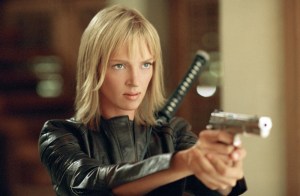 The acting is superior to what you would expect from a revenge movie.
Thurman has always been as good as her director, and under the hands of a master like Tarantino she excels. In Kill Bill, Vol. 1 she was a hurricane of rage and an unstoppable warrior. Here we see the human being inside the warrior’s armor, and she performs with amazing assurance and a ragged, raw delivery. When she’s crying on the floor, face and body red and strained, aching, you believe everything this woman does and is capable of doing.
Carradine, with his gaunt features and face like leather, gives the standout performance of the film. Whereas Bill was an unseen menace in Kill Bill, Vol. 1, with the final installment he becomes fully realized as both a figure of terror but also one of great tenderness. He has a lengthy speech about Superman, masks, and the mythology of comic books that is spellbinding. Madsen gives a fine performance steeped with surprising pathos. He’s the only former DiVAS member who feels remorse for his actions at the Two Pines Wedding Chapel that triggered The Bride’s rampage. A large subplot displays Budd’s current life slumming it as a bouncer at a sleazy strip club and getting verbally berated by people he could easily kill. You come away with the idea that its Budds version of penance.Madsen mixes his remorse with sadistic grit, like when he gives The Bride a choice between a flashlight or a can of mace, and this is before he buries her alive.
Hannah seems to relish every moment as the one-eyed right hand to Bill. There’s a scene where a character is suffering from venomous snakebites thanks to her and she sits down and reads a list of Discovery Channel-esque information she looked up on the Internet about the snake and painstakingly copied onto a notepad. She performs with such gleeful insincerity that it is hard not to start to like her for being so good at being so bad.
 Perhaps the person that steals the movie though is Gordon Lui, who plays the cruel master Pai Mei that teaches Thurman all her moves. He has eyebrows like cotton balls and a long, whispery beard he loves to flick around. Its a shame that this hilarious character is not in the film longer. Kill Bill, Vol. 2 also boasts one of the greatest child performances I have ever seen. The actress that plays the daughter of Bill and The Bride has such a natural quality to her acting that it is amazing she isn’t coming up with her lines, reactions, and movements on the spot.
So does a longer, slower, talkier concluding half mean that Kill Bill, Vol. 2 plays it too safe or loses any of its steam? Hell no. Tarantino fills in all the rough spots and unanswered questions from the first film, and the result is drawing the audience further into the story.
We open the film with another perspective of the events that took place at the Two Pines Wedding Chapel that left a wedding party dead, and a bloodied, pregnant Bride shot in the head. We also discover how The Bride became the deadly warrior she is, why she chose to leave the business of hired killing, why Bill reacted in the extreme manner he did, and we even learn to our delight how Elle Driver lost her eye. The result of knowing the full story are characters, which in Kill Bill, Vol. 1 were more archetypal than living and breathing, that have become fully fleshed out, rounded, and incredibly complex figures full of remorse and vulnerability. The Bride and Bill transcend their descriptions as adversaries, and their relationship becomes more intensely complicated when mommy returns home to find her daughter still alive.
Despite all this fancy talk about character building, Kill Bill, Vol. 2 does not disappoint in action and thrills. A fight between The Bride and Elle inside a cramped trailer may be the most brutal, bone-crushing fight sequence I have ever seen between two women. Every strike that connects breaks something, be it furniture or bones. The final showdown between Bill and The Bride is a fitting and satisfying end for both warriors.
Tarantino’s concluding half of this story long in gestation is a highly entertaining, stylish, thrilling, engrossing, eye-plucking good time. There is so much to talk about. This is the first film since, perhaps, Gladiator that I have seen at the full-price theaters three times. In total, I have seen the Kill Bill saga five times in theaters, and I find something new and rewarding every time. Tarantino has given the masses a masterpiece and everyone should take the opportunity to see it.
Nate’s Grade: A
Share this:

Thirteen (2003)
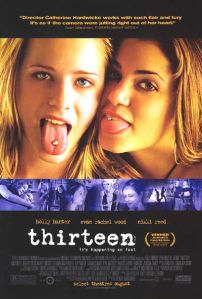 No one said being a 13-year-old was easy. Tracy (Evan Rachel Wood, a dead ringer for a young Jennifer Garner) is a straight-A student living with her mother Melanie (Holly Hunter, nominated for an Oscar). Her family fights to get by with Melanies at-home hair salon. People, usually accompanied by wee kids, stroll in and out of their house like it was a bed and breakfast. Melanie’s previous boyfriend Brady (Jeremy Sisto) has sobered up and settled back into her life, despite Tracy’s wishes.
Evie (Nikki Reed, who co-wrote the film with the director) is that cool girl at Portola Middle School. Tracy desperately wishes to join Evies inner sanctum of friends, enough that shell steal the pocketbook of a stranger to impress Evie. Tracy is taken under Evies wing and learns how to flirt, dress, dance, kiss, and terrify her mother. Melanies concern is a slow simmer, but she cant ignore all the signs of what is happening momma’s little girl. The girls revel in bared midriffs, body piercing, and gallons of shiny make-up. Evie lives with her guardian Brooke (Deborah Kara Unger), herself a sad woman ravaged by booze and pills. When she tells Melanie that Brooke beats her, the maternal instincts overpower her concern. She invites Evie to stay with her family. Evie even calls Melanie mom. More disintegration of Tracy follows.
 Thirteen does exhibit a rare maturity in the displaying of teenage emotions, namely the pull to belong. It also pays incisive attention to our consumer society marketing teen sexuality and the implicit effects. Thirteen creates a more realistic teenager by showing the vulnerability that’s inherent in growing up.
Wood gives a strong performance as her character descends from goodie-good to teen vamp. Her square jaw and lanky frame are physically perfect at displaying a natural young awkwardness. She looks like a teenager I’d see on my block, not what Hollywood is trying to tell me. Wood gets a tad drunk on her characters emotions, like a scene where she tries to scare her mother by lurching forward and cooing, “No bra. No panties.”
Hunter’s depiction of Tracy’s mother is out to lunch about her daughter. This makes the character seem earnest yet stupidly naïve, and after the 200th request of we need to talk is met once again with a closed door, the audience begins to think that Melanie has some deep-seated issues herself.
The direction by first timer Catherine Harwicke starts off as annoying with self-gratifying camerawork. The handheld camera swoops in and out attempting to establish a fluid realism. She also utilizes muted or exaggerated colors to express Tracys highs and lows. What started as self-congratulatory direction actually warmed me over, and I began to take notice of how lovingly Hardwicke stuffs her frame and utilizes lighting. It seems like she could have a career ahead of her as a director.
Though the acting is strong and the direction grows on you, Thirteen never really rises above its ilk of cautionary tale. It’s your basic story set-up of good girl meets bad influence, gets bad, distances family and old friends, experiences highs and then crashing lows, usually capped off with some kind of lesson learned. This is Thirteen in a nutshell. Tracys change from good girl to pubescent trash occurs at an unbelievably fast speed.
 You could make an argument that the film is trying to be daring and shocking, but this whole ”what’s wrong with kids today” routine has been done better in lesser films, like Larry Clark’s Kids. Even though Clark has a fixation for lingering on nubile bodies, his film portrays wayward teenagers and their hedonistic behavior without the constraints of trying to frame sympathetic characters. Thirteen hedges its resources; it cant be fully shocking if it keeps trying to make us like the characters, thus giving glimpses of remorse and doubt. In today’s world, I dont think its shocking anymore to see 13-year-olds engaged in drugs and sex, especially after witnessing kids killing kids in the brilliant City of God earlier last year.
Thirteen is a noble effort but fails in any attempt in functioning as preemptive wake-up call. The acting is quite capable (Wood appears to be headed for junior star status) but the film is ultimately unimpressive. Perhaps the only way to be shocked by this movie is if you’re a negligent parent with a disposable income. It would be worth a rental, but there’s nothing overpowering enough in the film to justify full movie ticket price. While I was watching Thirteen I kept recalling a piece of dialogue the grandfather in Fargo said: You let him go to McDonalds at this hour? They do more than drink milkshakes, I guarantee you that. In the end the message of Thirteen is simply this: one bad apple can spoil the bunch.
Nate’s Grade: C+
Share this:

The Deep End (2001)
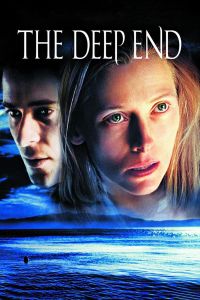 In the vast wasteland the summer has become of mediocrity and sub-mediocrity, go to your local art house. There you may very well see The Deep End, a dramatic thriller that burrows itself into the audience’s mind. The film is an absolute breath of fresh air in the stagnant summer finally winding down.
Tilda Swinton plays a normal mother living on the banks of Lake Tahoe. Her days usually consist of trying to ship her kids to school on time and handle the duties of the home in the long stretches her Naval officer husband is gone. She’s juggling responsibilities and chores when her first strike of maternal protection occurs. Her 17 year-old son is, to her great surprise, in a relationship with a sleazy man in his 30s. She discovered this when her son got into a serious car accident while this paramour was traveling with. The scene of the crash is replayed in flashbacks for Swinton as a motivational jump-start for her protection and love.
She tells the man she doesn’t want him seeing her son any longer, but of course he refuses to desist… unless the price is right. This revelation sends her son to a late night confrontation at home that ends in the accidental death of the sleaze. Mom sees her son rush back into the house in the middle of the night and decides to go out and investigate. On her stroll to her horror she finds the dead body of her son’s lover. From that moment on something in her clicks and she clumsily tries to hide the body and any evidence that could incriminate her own brood.
Just when she believes her headaches are over a dark and handsome stranger (Goran Visnjic) visits her one day. He has within his possession a videotape of her son having explicit sex with the dead lover. He threatens to turn the tape into the police and thus destroy the peace Swinton has created. The video can be hers, but she must pay him and his unseen partner the sum of $50,000.
 Tilda Swinton is best known as the gender-swapping title figure in Orlando based upon Virginia’s Woolfe’s story. The Scottish actress has a wonderfully pallid face and soulful eyes that express every moment the determination and fear she wrestles with. Swinton gives a remarkable performance of pure emotion. She is a mother determined to protect her son and family at every cost, no matter the means. She is constantly in over her head but refuses to relent. Swinton’s portrayal is a woman running on maternal instinct and she herself is the very gravity that makes The Deep End as great as it is.
Goran Visnjic currently plays a Croatian doc on E.R. but has a provocative presence in this flick. He’s got the smoldering good looks and his character opens up more and more as the tale progresses to strip away pretensions layer by layer.
The Deep End is directed, written, and produced by David Siegel and Scott McGehee, with only one other film to their credit all the way back in 1993. They inject their story with great moments of character and suspense but also have a terrific visual eye to create mood. The cinematography is lush and hypnotic with certain moments of exquisite beauty. Even the music adds to the feeling of the film unlike so many other accompanying scores. Every component of ‘The Deep End’ is just clicking.
The Deep End is a luminously tight thriller with remarkable performances. They story has a few implausible moments but outweighs them with heapings of great dramatic depth. Swinton better be one of the first choice on everyone’s lips when the name of Oscar rolls about, because I doubt I’ll see a performance more elegant and wonderful as hers this year.
Nate’s Grade: A
Share this:

Erin Brockovich (2000)
 Julia Roberts is the female equivalent of John Travolta in last year’s A Civil Action — little guy/gal taking on the big/evil corporations that pollute our water. This is hands down what is likely her best performance of her long career. It’s a one-sided take and displays the title character’s ruthless tactics and intimidation in order to reach whatever goal she wishes to strive for. The story though, isn’t much for most to work with as it is essentially sap and predictability: the hero will win, justice will prevail, the bad guys who were alluding in the beginning will be punished… etc. etc. Julia’s “woman in a man’s world” business gruff will either prove sadistically humorous or simply wickedly mean-spirited to each viewer. You’ll either love this character or hate this character but either way it will keep you watching.
Nate’s Grade: B


 nathanzoebl
You must be logged in to post a comment.