Blog Archives
For a Good Time, Call (2012)
 Given the success of the female-centric mega hit Bridesmaids, it was only a matter of time before we got a slew of girls-behaving-naughty R-rated sex comedies. Enter the phone sex comedy For a Good Time, Call, which has the distinction of being co-written by Seth Rogen’s real-life wife, Lauren Miller, who also stars in the film. It advertises a good time and mostly delivers, though you might not think as much about the movie in the cold light of day.
Lauren (Miller) has just been dumped by her self-involved boyfriend and fired from her job. She’s looking for a new place to live when a mutual friend sets her up with a huge New York City apartment. The catch: her roommate is Katie (Ari Graynor), an acquaintance from college she has despised ever since a very horrifying party foul of seismic proportions. Katie’s going to lose her posh home unless she gets a roommate, so the women reach a mutual understanding. Then one day, listening to Katie’s hyperactive sexual noises, Lauren discovers how her roommate really pays the bills. She’s been running a phone sex line and getting guys off for $3.99 a minute. Lauren decides to get involved in the business end, and before long the ladies have become a professional outlet and roll in their riches. Invigorated, Lauren starts experimenting herself, letting her freak flag fly, and before long she’s also getting in on the calls.
 Graynor is no stranger to stealing a movie, as she did perfectly in the sweetly unassuming 2008 teen romance, Nick and Norah’s Infinite Playlist. This girl has had the markings of a star for years and finally she’s found the vehicle to showcase her comedic vivaciousness. To say Graynor makes this movie is an understatement to her talents. Graynor is this movie’s pulse, its lifeblood, its font of energy, its wickedness, its exuberance, its very soul. This woman is amazing. She can take a simple line and with an effortless dose of comedic verve, it can become a gut-buster. I could watch twelve movies in a row with Graynor playing at this level of exciting excellence. The part is pretty familiar, the dirty girl who has problem with a filter, but Graynor makes the most of every opportunity. I loved her adorable theatricality, like a foxy, younger, brassy Bette Midler (God, did I ever think I’d string those words together?). I loved her enthusiastic hip shake, wearing large body stockings, while singing, “I’m ready to beat date rape!” Naturally, Katie gets all the best lines but her interplay with Lauren also works well. When the movie focuses on Lauren, and by extension the unremarkable performance by Miller, you start to feel things slag. Lauren is passive becoming active, but really even by the end she can still be cited as boring. Katie is active, hungry, brash, charming, and wonderfully portrayed by Graynor, and when she dominates, you’ll ask for more.
Except for the lively theatrics from Graynor, the movie can often feel hung up on generic sitcom plot devices and character generalities. The premise itself is perfectly fine, but the movie seems to exist in some randy fantasy world. We still have a main character in the world of publishing that will obviously be offered the Big Job at an inopportune personal time (as movies have shown, every human being on the planet either works in publishing, advertising, or theater). And then there’s the Bad Boyfriend, who breaks up with our heroine in the opening moments of the movie because they are “boring” together. Any guesses whether he shows up late as well, begging her back? I’d probably be more forgiving of these contrived plot turns if the movie did more to present Lauren and Katie as real characters. As written, they are pigeonholed into opposites (prude/wild woman) and rarely do we learn more about them. Lauren loosens up, Katie gains some self-respect, and they girls becomes BFFs. That development I found rather unconvincing, probably because there was little development. All of a sudden Lauren has an interest in joining the business, and one montage later, the girls have buried the hatchet. It feels like everything changed overnight. The attempts to ladle in some forced sweetness feels, in some regards, more crass than the sex jokes. I’ll credit the movie for keeping me amused while watching, but upon further reflection, the girls and their relationship feels rather slapdash and rote.
The comedy itself gets too easily complacent with all those naughty words bandied about. Oh sure there’s plenty of effective jokes about sexually frank conversations, and the inherently awkward nature of phone sex mechanics, but For A Good Time, Call seems too easily satisfied. I wish that Miller and co-writer Katie Anne Naylor had pushed their comedic setups further, had taken a few more left turns rather than settling for the familiar sex gag. Here’s an example: Lauren’s prissy parents make an unexpected visit and the girls have to hide their business particulars. That’s a fine starting point, but where else does it go? The comic tension is too easily resolved instead of escalated. Then, surprise, the parents make a SECOND unexpected visit. This time the sex decorations are prominently displayed. We’re waiting for some good comedic tension, some squirming, but again, it’s over before the good stuff can even get going (am I right, ladies?). The Justin Long (Going the Distance) flamboyantly gay friend is never as funny as the movie thinks he is. There’s a scene where Lauren is interrupted while masturbating, but we only realize after the fact when the joke is already over. Why introduce such a scenario if you were just going to settle for a weak “smelly finger” joke? Perhaps I would find the material funnier if I was a woman, relating more to the female dynamic on screen, but do you see how condescending that line of thinking gets? I unabashedly adored Bridesmaids (my #3 film of that year). I don’t think anyone needs to grade a comedy on a curve for any reason, especially if they think they’re trying to be polite.
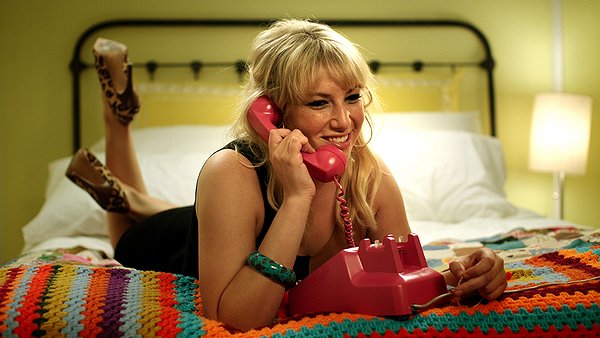 I’m not going to make more or less of its sexual politics than what is presented. I think there is genuine merit when women take ownership of their sexuality. Why should women feel judged for wanting equality when bedroom activities and impulses are concerned? Whatever helps people build a healthy self-image should be championed, as long as it’s between consenting adults. Watching Katie and Lauren personally grow based upon their unique entrepreneurship is welcomed. However, I can’t help but shake my feelings that there is something lurking, some deeper sub current that is not worth celebrating because the movie seems to play into male fantasy. Even though I adored Graynor, I think it would have served the film better if the more sexually-liberated character, the pro when it comes to working the phones, was actually a less attractive woman, perhaps a mousy gal you’d never expect such lurid behavior from. I think that would offer more comedic potential as well. I think this would also puncture some of the airbrushed fantasy of the film’s cheescake world of a phone sex line.
I have my complaints but I was laughing fairly regularly and enjoyed the experience, so if you’re just looking for a good time at the movies you can consider For A Good Time, Call. Watching Graynor sink her teeth into her role and go full gusto is a rowdy pleasure, and it’s easy to see that this woman is a star. The smutty jokes are fun and offer plenty of ribald laughs, but I always felt like the movie was too complacent, too settled, and curiously clumsy when it came to comic payoffs. The film is pretty flatly directed by Jamie Travis. The characters are pretty thin, and the plot feels ripped from a flimsy TV sitcom, but I laughed aplenty and found the movie difficult to dislike. It’s not the most nuanced sex comedy, or the most ribald, but For a Good Time, Call delivers enough big jokes and Graynor is too sensational to miss.
Nate’s Grade: B
Share this:

The Door in the Floor (2004)
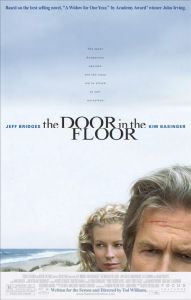 John Irving is one of the most accomplished and popular fiction writers of our times. His pulpy, unconventional, and compassionate novels have translated into many films with varying degrees of quality (World According to Garp, good; Cider House Rules, okay; Simon Birch, dreadful). The Door in the Floor is an adaptation of his novel, A Widow for One Year, but it only adapts the first third of the novel. This time around will the absence of quantity directly shape the quality of an Irving adaptation?
The plot for The Door in the Floor almost sounds like something you’d see late at night on Cinemax. Eddie (Jon Foster) is a teenager learning what it takes to be a writer. He becomes an assistant to Ted Cole (Jeff Bridges), a giant in the world of childrens literature but a playboy at home. Eddie spends the summer at Ted’s quaint cottage and is instantly smitten with Ted’s estranged wife, Marion (Kim Basinger). Theirs has been a loveless marriage ever since a tragic accident killed their two sons. Both are handling the grief in their own ways. Ted has become bitter and takes his anger out on his manipulation of other women, notably a neighbor (Mimi Rogers) who poses nude for his paintings. Marion has become insular and turns into a stone whenever the accident is mentioned.
 Eddie tires of his glorified chauffeuring duties for Ted and his mistress. He spends his lonely days fantasizing about Marion, including masturbating to the image of her clothes. When Marion accidentally stumbles into this embarrassing situation, she not only calmly apologizes but lays out additional pairs of clothing for Eddie to get his kink. This opens the door for Eddie to engage his fantasy, and embark on a deflowering tryst with Marion. Ted’s reaction isn’t one of anger or resentment but more of a job well done. It is around this time when we realize that Eddie looks remarkably like her two lost sons.
The film’s best moments are not the colorless, tepid tryst between Eddie and Marion, or the broader comic moments with Teds assault on tact; oh no, the best moments are when anyone onscreen shares time with Ruth (Elle Fanning), Ted and Marion’s precocious 4-year-old daughter. She’s a tad demanding, like insisting to know where every picture of her family remains, but comes across as adorable without stepping over into cloying. Her interaction with Bridges is wonderful, her wide-eyed questioning is sweet, and her acting is much more authentic than her sister, the more seasoned Dakota Fanning (Man on Fire). Hopefully the Fanning family has learned some dos and donts from the Culkin family.
Bridges performance is amazing. He bares more than just his backside in this film. The role of Ted is very meaty, and Bridges is the perfect actor to sink his teeth right into it. Bridges is alarmingly coy, blending a disarmingly comic roly-poly ability, as well as a brooding, stinging anger barely masked by ego and affability. I cannot imagine anyone else stepping into Ted’s shoes and delivering a better performance. Bridges’ tortured and droll work may be Oscar material.
 Basinger’s performance is equally amazing. Amazingly bad, that is. Her character is supposed to be shattered by the loss of her sons, but Basinger plays the role so heavily intoxicated by grief that Marion becomes nothing more than a walking ghost. She’s so zombie-like for the entire film, that her performance could be rivaled by a coma patient. For some reason unbeknownst to me, ever since winning a Best Supporting Actress Oscar in 1997, Basinger has yet to follow with a really good performance.
The Door in the Floor is Jon Foster’s real big break as a young actor. His previous roles amount to little, including Kevin Costner’s son in 13 Days and the vitally integral Gas Station Cashier in Terminator 3. Some awkwardness is apparent in his rise to larger material, but Fosters apprehension serves his character best, like a dinner scene between him and Marion where he tells a bad joke to break the ice. Foster’s performance is a bit bland, but that’s because his character is more of a transparent adolescent fantasy.
Poor Mimi Rogers, a.k.a. Mrs. Tom Cruise Number One. She’s a capable actress, and a fine-looking woman, but she’s been given such a small one-note character that it seems almost exploitative that such a well-known actress spends the majority of her time with her robe around her ankles. A late scene involving her violent hysteria at being dumped by Ted and it is meant to be comic but it seems more like a fizzy tantrum. All this and she gets the dubious notoriety of having a drawing of the most sensitive part of her anatomy projected in glorious widescreen.
By now an audience is more or less used to Irvings mix of slapstick and grief, of pathos and situational humor. The Door in the Floor follows this tried-and-true recipe and provides a healthy amount of entertainment for an audience. It can effectively make an audience laugh and supply knots in their throat at separate turns; however, in the harsh light of day, if you strip away at The Door in the Floor you’ll find that most every character is self-involved, curt, closed off, and just plain unlikable. Ted is a jerk. Marion is a zombie, and not so great a mother. Eddie is bland. The only real character worthy of empathy is Ruth.
 Now, movies dont necessarily all have to have likable characters, and in fact some of the most interesting and memorable characters are unlikable, but for a family melodrama its important to feel for their grief instead of feeling their grief. If you cant feel for the characters then youre just watching without any baited interest. Many films can make you feel bad by watching someone on hard times, but it’s a true accomplishment if you feel the character’s personal pains (and somehow the films of Lars von Trier accomplish both). Theres little investment beyond the surface level of amusement. So, The Door in the Floor is amusing,but it struggles to be anything beyond because of the limitations of its characters. For some, a movie that provides surface-level amusement from polished actors is good enough, and in some instances Id agree.
Director Tod Williams (The Adventures of Sebastian Cole) also served as the adapter of Irvings dense work. Williams knows a thing or two about family melodrama and the denial of guilt, and he keeps the pacing brisk and the laughs at an even pace. Williams’ best decisions are on the small visual notes he hangs on, like a stunning, visually alluring final image. The story is a bit uneven in tone, thanks to Irving’s eccentric source, but Williams saves his narrative whammy for the very end, and Bridges brilliantly delivers the backstory we’ve been holding our breath for.
The Door in the Floor is a solid, if surface-level enterprise in the exploration of guilt and mourning in a family setting. Bridges gives an amazing and memorable performance that helps make you forget about the rest of the films somewhat lackluster acting. Fans of Irving’s works will likely be taken back in pleasure, and fans of adult melodrama will not likely walk out disappointed. The Door in the Floor has glimpses of something more but settles for being a well-acted, nondescript affair.
Nate’s Grade: B-


 nathanzoebl
You must be logged in to post a comment.