Blog Archives
Sword of Trust (2019)
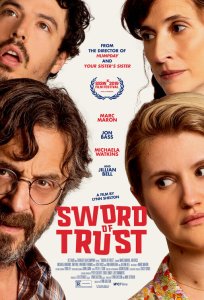 Writer/director Lynn Shelton is a filmmaker that has a habit of flying under the radar with her wonderful entries in the fly-on-the-wall hipster mumblecore sub-genre of indie dramas. The hilariously awkward Humpday punctuated insecure masculinity and was on my Top Ten list for 2009, and 2012’s Your Sister’s Sister was another laser-like focus on characters trying to deal with a lifetime of relationship secrets coming out. Both of those movies have been remade as French films too, with Humpday becoming 2012’s Do Not Disturb and Your Sister’s Sister becoming 2015’s Half Sister, Full Love (which sounds more like a porn title to my ears). Sword of Trust is one part mumblecore drama, one part screwball comedy, and a bit of a lovely, shambly mess.
Mel (Marc Maron) owns and operates a pawn shop in a small Alabama town. He’s used to losers and lowlifes and junkies coming through and giving their sad stories. Enter Cynthia (Jullian Bell) and Mary (Michaela Watkins), a gay couple looking to make the most of a strange inheritance. Cynthia’s grandfather gave her a Union sword and a story that says this sword is proof that the South did not lose the Civil War after all… somehow. The trio, along with Mel’s dimwitted shop employee Nathaniel (John Bass), hatch a scheme to try and con an underground Confederate memorabilia group for all its worth.
 The real draw of Sword of Trust is the low-key comic sensibilities of the cast. As I wrote previously in my review for Your Sister’s Sister: “There’s a tremendous naturalistic ease the film exudes, with the actors so familiar with one another that they truly feel like family. When I have well developed characters, and actors who seem so knowledgeable of their character’s tics and flaws and secrets and smallest details, I could honestly listen to them talk for hours.” Sword of Trust (written by Shelton and Michael Patrick O’Brien) probably ranks a distant third in the three Shelton-directed movies I’ve seen, but her skills and care are still evident in characterization and empathy.
Maron has matured into an impressive dramatic actor thanks to Netflix’s wonderful wrestling series GLOW. He has a natural sad sack aura to him, as well as a brittle fuse that’s in danger of being set off at any moment. The character of Mel seems tailor-made for him, and I wouldn’t put it past Shelton that it was (she directed several episodes of GLOW as well as Maron’s 2017 comedy special). He’s the biggest mystery of the movie and we get hints early on in a disarmingly dramatic moment when his ex-girlfriend Deidre (Shelton herself) tries getting collateral so she can secure a job. She professes that he knows “she’s good for it,” and that this time will be different, and the way the two of them seem to circle a larger conversation, one filled with hurt and heartache, is a masterful example in writing subtlety and subtext. We’ll have their personal connections revealed later in the movie, but this scene serves as a tantalizing clue that there’s more to this movie than a group of oddballs in a pawn shop. It’s the first stab at drama and it’s quite effective, and Shelton can be one hell of an actress too. She leaves an impression as a character you want to get back to, and sadly the movie keeps her at a distance as we learn more.
 The rest of the movie doesn’t quite tap into this vein (more on that below) but the agreeable camaraderie of the characters is a major selling point. Mumblecore movies are typically character-driven and small observational movies that lean on broken people navigating their way through the world, pushing forward onto greater emotional growth by the closing credits. If you’re not a fan of these kinds of movies, then Sword of Trust might still prove appealing based upon the broader comedy elements and the wackiness that can come at a moment’s notice, like when a man at gunpoint instructs each hostage to dance in a different bizarre style. Otherwise, Sword of Trust is a movie that ambles along on its own gentle wavelengths, buoyed by the performances and interactions of its core cast. There’s an uneasy alliance between the foursome. Primarily this is with Maron and Bell’s characters, the two most significant players. Bell (22 Jump Street) is enjoyably sunny and awkward as a woman trying to make the best of a bad inheritance. It’s the most dramatic and restrained I’ve ever seen Bell, best known for loud-mouthed, course comic supporting roles. Watkins (Casual) is more a force to push her girlfriend into further action, and Bass (Baywatch) is kept as the goofball meant for easy ridicule as a symbol of preferential ignorance. He’s never more than a quick punchline, especially as he tries explaining his scientifically strained flat Earth beliefs.
They’re an enjoyable group and watching them bicker, jostle for leverage, and ultimately work as a team for common cause it sweetly entertaining. Everyone is trying to make the best of an unexpected situation, with each playing their part to try and capitalize on this strange money-making scheme. A lengthy conversation in the back of a truck bounces from character to character, each revealing further layers they feel comfortable now sharing. It’s the kind of enjoyable character beats that the mumblecore genre is known for, crafting relatable, interesting, flawed characters and watching them play off one another. There’s also plenty of comedy because of how the characters are drawn, like when Mel insists that an attacker stole his own screwdriver to use as a threatening weapon. This small comedic beat grows and grows as it almost consumes Mel so that even when that harried situation clears up he has to know whether or not it really was his own screwdriver. That’s a sly comedy beat connected to character. Shetlon’s film has an improvised feel but honed to a script that provides a necessary degree of discipline.
 Despite the amiability of the cast and the comedic potential of the premise, Sword of Trust doesn’t really rise above being a pleasant if minor hang-out picture. I feel like if it was ultimately about the characters then we needed a few more scenes where they can grow, be challenged, or simply share their conflicts and histories. If it’s going to be more a wacky send-up of willfully ignorant conspiracy theorists and anti-intellectuals, then I feel like the final act needed more complications and examination. Shelton’s movie settles into a middle ground trying to have the wacky sitcom shenanigans and the heartfelt, modest mumblecore character beats. It doesn’t feel like either side is fully utilized and explored to its best version. I enjoyed the characters and found the movie getting better as they opened up, especially Maron’s curmudgeonly lead with a guarded past. I also laughed some big laughs at the wacky hijinks of a dysfunctional gang working together to con a group of Confederate revisionists. There are moments that point toward the more studio-friendly, concept-driven version of this movie, like when the gang creates a cover story of them being romantic couples. In Shelton’s film this is a momentary gag and then it’s left behind, also because it occurs so late into the movie. You can see where the escalation of misunderstandings and trouble could make the film a broader comedy. You can also see the avenues where the characters eschew the broad comedy for more intimate, revealing conversations. The resulting film is enjoyable and solid, but I think it would have been better if it had chosen its preferred tone.
Sword of Trust (my fingers keep wanting to type Sword of Truth) is definitely a lesser but still enjoyable film for Shelton and her ensemble. It’s stuck in a pleasant but diverting hangout zone when it could have been more observational or broader and wackier. I was hoping for more of a send-up of the fringes who cling to rumors and disbelief in the face of overwhelming evidence to the contrary, whether it’s that the South legitimately lost the war or that the Earth is indeed round. Sword of Trust benefits from a group of actors who can smartly handle improv scenarios while still keeping things true to character. It’s an enjoyable 90 minutes just hanging out with these people, even if the film feels like it’s losing some of its momentum as it veers into its third act. While not as polished, there’s still enough to enjoy and recommend with Shelton’s latest, and she’s a storyteller that deserves an adoring audience.
Nate’s Grade: B
Share this:

Your Sister’s Sister (2012)
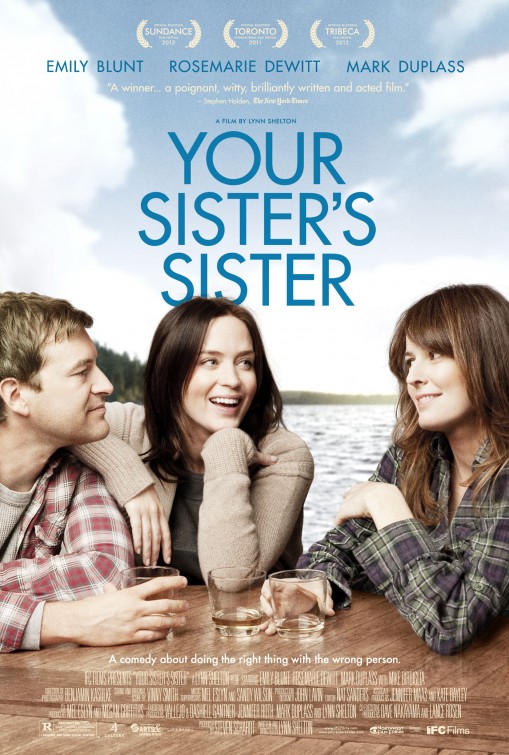 Lynn Shelton is quickly becoming one of my favorite indie film artists. Her writing and directorial offerings are somewhat relegated to the fly-on-the-wall hipster “mumblecore” category, but what separates Shelton is her narrative momentum, her laser-like focus with character, and her sense that a movie needs to build to something significant. With 2009’s Humpday, it was two dudes who might have sex as a test of their masculinity (you really need to see the movie for the full context). With Your Sister’s Sister, it’s the full ramifications of a bunch of delicious relationship secrets getting out there. Everyone in the film has something to hide and something to lose, and watching it all play out with humor and sweetness and honesty that is rare in movies.
Jack (Mark Duplass) is still coming to terms with the death of his older brother. His best friend, Iris (Emily Blunt), who was his brother’s girlfriend at the time of his passing, offers a suggestion. She arranges some alone time for the guy to clear his head. He bikes out to her family cabin but is surprised to find a guest already there, Hannah (Rosemarie DeWitt), Iris’ older sister. Hannah and Jack break the ice by bonding over their personal loss: his brother and her ending a seven-year relationship with her girlfriend. Over a long night of drinking, the two decide to impulsively have sex. The next morning is even more awkward when Iris shows up at the cabin, planning to finally reveal her own feelings for Jack. What follows may be one of the few character-based sitcom plots I’ve witnessed.
 Much like Shelton’s previous movie, the greatest strength of the film is how beautifully naturalistic it all feels while still telling an engaging story. The film has a relaxed vibe that washes over you, allowing you to immerse yourself in what feels like a real group of friends. There’s a tremendous naturalistic ease the film exudes, with the actors so familiar with one another that they truly feel like family. When I have well developed characters, and actors who seem so knowledgeable of their character’s tics and flaws and secrets and smallest details, I could honestly listen to them talk for hours. I don’t want to mistakenly give the impression that this movie is a dull yakfest where the participants are in love with the sound of their own exceptional voices. Each scene in this movie advances the plot further, twisting the screws, complicating matters, and brimming with delightful awkwardness and tension. With 2009’s Humpday, I wrote: “What I really appreciated about Humpday is that every moment feels genuine and every scene has a point. I was amazed that Shelton and her small unit of actors had made it so that every conversation had purpose; there is so little fat to this screenplay. Each scene reveals something new about a character or pushes the narrative forward toward its uncomfortable climax, and each moment never breaks the reality of the story.” And the same can be said for Your Sister’s Sister as well.
While the premise is a bit of a sitcom novelty with some farcical developments thrown in, the depth of the characters and the fantastic acting help to make sure that Your Sister’s Sister is nothing but graceful and beguiling. And the escalating conflicts, personal revelations and complicated feelings, always find a way to come across as organic to the story. That’s another amazing part of the film, that even with all the sexual hijinks that it still manages to feel grounded and surprisingly relatable. These are interesting, complicated, flawed, and spectacular characters, and watching them interact, profess their love through small actions and big declarations, seeing their heartfelt camaraderie, and watch them navigate their troubled lives to find some semblance of a happy ending is a joy to watch. This is a potent little movie, fully realized, poignant, funny, and genuine.
The film was shot over the course of 12 days and Shelton has said that much of the dialogue was improvised, working off her outline. Improvisation is a dangerous tact when dealing with a dialogue-driven film, such as this one. Just because it’s coming off the top of your head doesn’t mean it’s going to sound good. Not everyone is gifted with the ability to improv dialogue that is true to character, revealing, advances the story, as well as just being entertaining. Luckily, Your Sister’s Sister is the exception.
If Your Sister’s Sister does have a weakness, it’s the third act that seems to stall out without giving us much in development before tidying the broken relationships up again. The film’s comedic structure could feel, in lesser hands, like a generic sitcom. It is to Shelton and her actors’ credit that the twists and turns still manage to feel as believable as possible. The third act hits when all the secrets come out, pushing the characters away. Rather than (minor spoilers) ramping things up, we merely endure an extended wordless sequence of images of Jack biking around and the sisters burying the hatchet. Then it’s time for our big happy romantic declaration that tidies everything up, and we’re done. While satisfying on an emotional level given our empathy for the trio, the third act does seem very thin for an otherwise lean and well-structured story. It feels like perhaps Shelton only had enough plot for two acts.
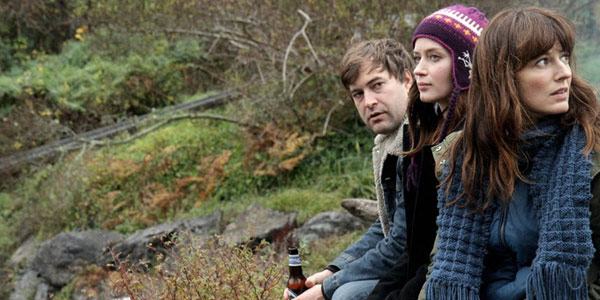 The main trio is a rather engaging ensemble that convincingly plays a besotted group of friends and family. Duplass (Safety Not Guaranteed) has gotten considerably more attention since starring in Shelton’s last movie; the man and his schlubby, smirky charm are ubiquitous. He has a way of being edgy without pushy and nonplussed and flummoxed without going overboard. Duplass has a natural fit for comedy but the man can really excel with the meatier drama bits as well, displaying the painful yearning of a man caught between his desire and the need to move on. He’s a winning and likeable presence that can still be endearing even when he’s flailing around or making others uncomfortable.
DeWitt (The Watch) was a late addition to the cast, replacing Rachel Weisv (The Bourne Legacy) when scheduling conflicts got the best of her. She deserves extra kudos for how good she is considering the miniscule prep time she had compared with her costars. DeWitt is amusing in how cagey and sardonic she can be, and her chemistry with Blunt (Looper) is outstanding. I greatly enjoyed the subtle nuances between them, the way their body language and gestures added extra layers to their relationship, the familiar communication and sisterly code, and just the smallest details that felt well thought out. The relationships in Your Sister’s Sister feel sweetly genuine, and with the benefit of great actors, it lays the groundwork for characters we care about.
Three people sharing time in a cabin might not seem like an exciting setup for a movie, unless, of course, there’s some supernatural presence murdering them in grisly fashion. However, when you lock away three great actors who know their characters inside out, a smart script that allows them the space to develop but pushes the movie forward scene-by-scene, and direction that feels seamless with the storytelling, then you have something special, and that something special is Your Sister’s Sister. While I think Shelton’s previous film had more at play concerning male relationships and sexual politics, this one, with a more straightforward, farcical plotline, is still plenty entertaining and with strong character work (the ending does leave one very large question unanswered). This is charming, sweet, unassuming little indie film that will provide a solid dose of smiles and laughs.
Nate’s Grade: B+
Share this:

Humpday (2009)
 There’s a definite squeamishness out there when it comes to the idea of men expressing intimacy. Brokeback Mountain proved even liberal Hollywood wasn’t ready to anoint a movie about two gay dudes secretly getting it on. There will be large portions of people that will refuse to give a movie like Humpday a chance simply because of its premise: two guys plotting to have sex. It’s not a dirty movie by any means, nor does it get graphic with details or conversations. But the movie exactingly explores the uncomfortable relationships men have with expressions of romance. Humpday is also extremely funny in that pained, awkward sensibility, and I challenge the squeamish to give this charming indie a shot at love. If it makes it any easier for people to take (SPOILER ALERT) they don’t actually go through with it.
Ben (Mark Duplass) is living a comfortable existence with his wife, Anna (Alycia Delmore). Then one day his old friend from college, Andrew (Joshua Leonard), unexpectedly visits. Andrew has lived a Kerouac-like existence on the road as an aspiring artist. The two guys catch up on old times and Andrew invites Ben over to a party. He ditches his wife, and her pork chops, for the party, which turns out to be hosted by a group of free-love artists. The alcohol-fueled conversation lands on Humpfest, the annual amateur pornography festival held in Seattle. Ben and Andrew come up with their own entry idea: two straight guys that will have sex. “That’s beyond gay,” somebody says. Both men refuse to back down. Ben books a hotel room. The only thing he has to do now is tell his wife about Andrew’s “art project.”
 Humpday explodes male sexual insecurities better than any film since 1997?s Chasing Amy. Each man refuses to back out of having gay sex because they don’t want to be seen as less masculine. It’s masculinity brinksmanship, willing to go all the way to prove superior heterosexuality through a homosexual act, and it?s nothing short of brilliant. Neither Ben nor Andrew wants to “puss out” on their big moment. But neither of them really wants to go through with it either, which leads toward tremendous amounts of awkward comedy. Writer/director Lynn Shelton has fashioned a scenario that is hilarious but also subtlety heartfelt; many films deal with the bromance of heterosexual love, but Shelton pushes it to the limit. These two guys do care about each other, and you can see their camaraderie as they recount old stories and open up to one another, and in the end they might be willing to go to the extremes for their friendship, whatever the consequences may be.
Both Ben and Andrew have deep-seated insecurities about their personal lives; Andrew wants to live a free-spirited artistic lifestyle but is really too scared to fully commit, and too “square” for abandoning all sexual inhibitions like some of his casual artsy pals; Ben has a house, a job, a wife, and feels defensive about his life choices, particularly the idea that he’s settled down and giving up. Both men are also insecure by sexually adept women, so it may be natural that they seek the company of each other for solace and mutual understanding. The final act, where the two friends meet in a hotel room for their big night, is a slice of awkward comedy heaven. They haven’t worked out any logistics, locations, warm-ups, anything, and watching them verbally hatch a game plan is hilarious and oddly touching in equal doses. They really don’t know what they’re doing and why they’re there.
The actors have a naturalistic feel because, as I’ve found, the dialogue was almost entirely improvised. They shot in chronological order so to build from conversation to conversation, and you can feel the character dynamics strengthen and deepen. Duplass (The Puffy Chair) has a great, wide fake smile that hides a lot of anger and dissatisfaction. He’s sort of a schlubby everyman that we can empathize with even as he moves forward with his participation in the “art film.” Leonard (The Blair Witch Project), and his scraggly beard, effectively conveys a man weary about where his rugged life has led him. He is also hiding behind a guise, the guise of being a nonconformist that chooses to have no earthly ties, but bit-by-bit you see that Andrew is tired of disposable human connections. Leonard and Duplass feel like life-long friends. Then there’s Delmore, who really is the wary, incredulous voice of the audience. She too comes across as realistic under the circumstances, and her reaction when she discovers the true purpose of the “art project” is volatile, yes, but also surprisingly reflective. The three leads never feel like actors; the illusion that these are real people is never broken even given the peculiar circumstances of the premise.
 What I really appreciated about Humpday is that every moment feels genuine and every scene has a point. I was amazed that Shelton and her small unit of actors had made it so that every conversation had purpose; there is so little fat to this screenplay. Each scene reveals something new about a character or pushes the narrative forward toward its uncomfortable climax, and each moment never breaks the reality of the story. Given these characters and the amiable direction they follow, Humpday is believable. I suppose it might be easy to dismiss it as another entry in the fly-on-the-wall “mumblecore” film series gaining traction in independent cinema, but Humpday is really more an observational character study that examines male relationships and the sexual politics of being a “man’s man” in today’s world of sexual liberation. There is a nuanced perspective on human sexuality here that I may be erroneously crediting to Shelton simply because she is a woman. It helps to have a more mature, open-minded perspective about the complexities of human behavior for this story to succeed, and I think a female presence behind the camera affords that luxury. There is commentary below the surface; however, Humpday can be entirely enjoyed as a surface-level comedy of an awkward heterosexual showdown.
I find it interesting that the original theatrical poster only featured the two shirtless guys eyeing each other, and with a pink background no less. The DVD cover has inserted Anna between the two guys and gone with the more boy-friendly blue background cover. I think this tiny detail is another reflection of just how uncomfortable the subject matter is for many people. Humpday is an insightful, perceptive little character study that feels real and honest, while at the same time the movie doesn’t allow sexual politics to become the headline. The movie remembers to be funny, often, and any discomfort is worth it.
Nate’s Grade: A


 nathanzoebl
You must be logged in to post a comment.