Blog Archives
Friendship (2025)
 If you’re a fan of Tim Robinson’s brand of weird, cringe-inducing comedy that can accelerate in intensity or abrasiveness at a moment’s notice, then Friendship may indeed be the comedy of the year for you. I’ve never watched Robinson’s popular Netflix sketch comedy series, so consider me a novice to the man’s style of locked-in irony and chagrin. To say I “enjoyed” Friendship would be inaccurate. It exists on a comedy plane where I can mentally step back, assess the particulars, and often the sheer commitment to the bit, and think, “This is schematically funny.” Do I actually laugh out loud? Rarely. It’s a comedy that might be easier to admire for its jaunts into sudden weirdness and discomfort then it is to say you love the movie. Robinson plays a boring middle-aged man starting a new adult friendship with his new neighbor, played by Paul Rudd. It’s a comedy of errors as Rudd wises up to how weird and potentially unstable his newest friend can be, and he decides to end their brief friendship. Imagine taking a broad studio bromance like I Love You, Man, also starring Rudd, and mixing it through the perspective of Big Fan, the obsessive loner drama. There are a few amusing sidesteps, like when Robinson’s wife (Kate Mara) literally gets lost in the town’s system of sewers, or when he tries licking a psychedelic toad only to hallucinate a trip to Subway and feeling cheated from a better trip. The actors are all on the same wavelength, committed to selling the jokes by pretending no such jokes exist in this universe. I laughed occasionally but mostly shrugged my shoulders, hoping it would hit a new gear that never came.
Nate’s Grade: C+
Share this:

The Martian (2015)
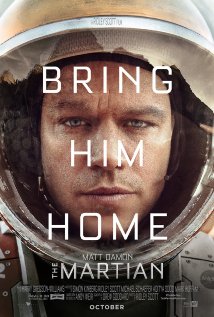 Based upon Andy Weir’s nuts-and-bolts scientific “what if” tale, The Martian is the movie equivalent of Apollo 13 crossed with Cast Away. Just far less personable volleyballs. But there are potatoes. Space potatoes.
After a powerful storm on Mars forces NASA’s crew to flee, astronaut Mark Watney (Matt Damon) is presumed dead and left behind. He wakes up hours later, shrapnel in his gut, and retreats back to the Mars mission base. He has to survive close to two years before he has any hope of being rescued on the hostile world. Before that, he has to establish some kind of communication with NASA, and even before that he has to somehow grow food in the arid Martian soil. Back at home, NASA is debating their limited options to bring back Watney and whether or not they should tell his crewmates that he survived.
In conversations with my friend and critical colleague Ben Bailey, he said that The Martian was the opposite of Gravity, a film he subsequently loathed, because it was smart people making smart decisions. There is an inherent enjoyment watching intelligent people tackle and persevere over daunting challenges, and this sets up The Martian for lots of payoffs and satisfaction. We see both sides of the problem and it provides even more opportunities for challenges and payoffs. Naturally the stuff on Mars is more compelling because of its extreme dangers and isolation, but the Earth scenes are also enjoyable as the NASA determines the soonest they might reach their lost astronaut. Just like the similarly themed Apollo 13, there are challenges to be overcome and the solutions are not without risk themselves. I enjoyed how the screenplay kept throwing out new obstacles; just when you think you can breath for a while the status quo is upset again. The slew of new obstacles doesn’t feel contrived either but rather realistic setbacks. It’s a wonderful storytelling structure that constantly keeps things moving forward and ramps up the urgency. As a result, we don’t ever feel safe right until the climax, and even then you’re still sweating it out because of all the complications and adjustments.
 It’s revitalizing to watch a movie that treats science with a sense of reverence. Mark Watney endures in the most hostile of environments through his ingenious use of the resources he has because of his understanding of science and math. Just as MacGyver proved there was something satisfying about watching a guy make a bomb out of a toilet paper tube, some chewing gum, and a bobby pin, it’s entirely enjoyable watching Watney think his way out of problems, and this starts early on. Watney’s first problem after he regains consciousness is to remove an embedded piece of shrapnel in his gut. The scene plays in a methodical fashion without any obtrusive edits, allowing the full task to settle in with the audience. The man has to perform surgery on himself and dig inside himself, and if he doesn’t get this done soon, sepsis might set in (no doctors without borders here). From there, the situation only gets more serious as Watney’s food supply, even when generously rationed, will only last a fraction of the time it would take NASA to send a rescue team. He has to grow food on an alien planet. That itself could be its own movie, a glossy crossover special from the SyFy Channel and the Home and Garden network. This is a survival story that doesn’t rely upon coincidence or some sort of divine intervention but on the understanding and admiration of science and its possibilities. Though America’s favorite astrophysicist Neil deGrasse Tyson says that in this movie universe, all the science decisions are being made by science professionals rather than, you know, politicians who adamantly open ignorant statements with, “I’m not a scientist.”
Another aspect I wasn’t quite expecting but took hold of me is how uplifting The Martian turns out to be. It’s a celebration of human endeavor and particularly cooperation, as the United States reaches out to other nations for assistance. Watching the determined souls risk their lives to retrieve one fallen man is the kind of thing that represents the best in us. Sure, there’s something to be said about the fact that it’s one prized American life that countries are spending billions of not trillions of dollars to rescue and perhaps that money would be better spent helping more lives on Earth. There’s also the curious fact that the world has spent a ton of money rescuing Matt Damon in movies. From Saving Private Ryan, to Interstellar, and now The Martian, we seem to value Damon above all else.
This isn’t exactly a one-man show with half of the running time flashing back to Earth but Damon’s star quality and acting chops makes it so you don’t mind being marooned with this man. Watney’s recorded messages are a slick way to deal with the internal thinking of its protagonist while giving the character more opportunities to charm thanks to a rich sense of gallows-level humor. At no point is Mark Watney flippant about his unique predicament but his sense of humor goes a long way to further engender the audience’s good will. He’s not moping and having existential crises; he’s getting to work, and it’s through the problem solving that we get to know this character, his ingenuity, his personality, his fears, and his distaste for disco music. Damon steers clear from playing the character too large and bearing his soul as the metaphorical representative for all of humanity and its place in the cosmos. He’s just one guy who happens to be lost millions of miles from his home planet, and he’s making the best of it.
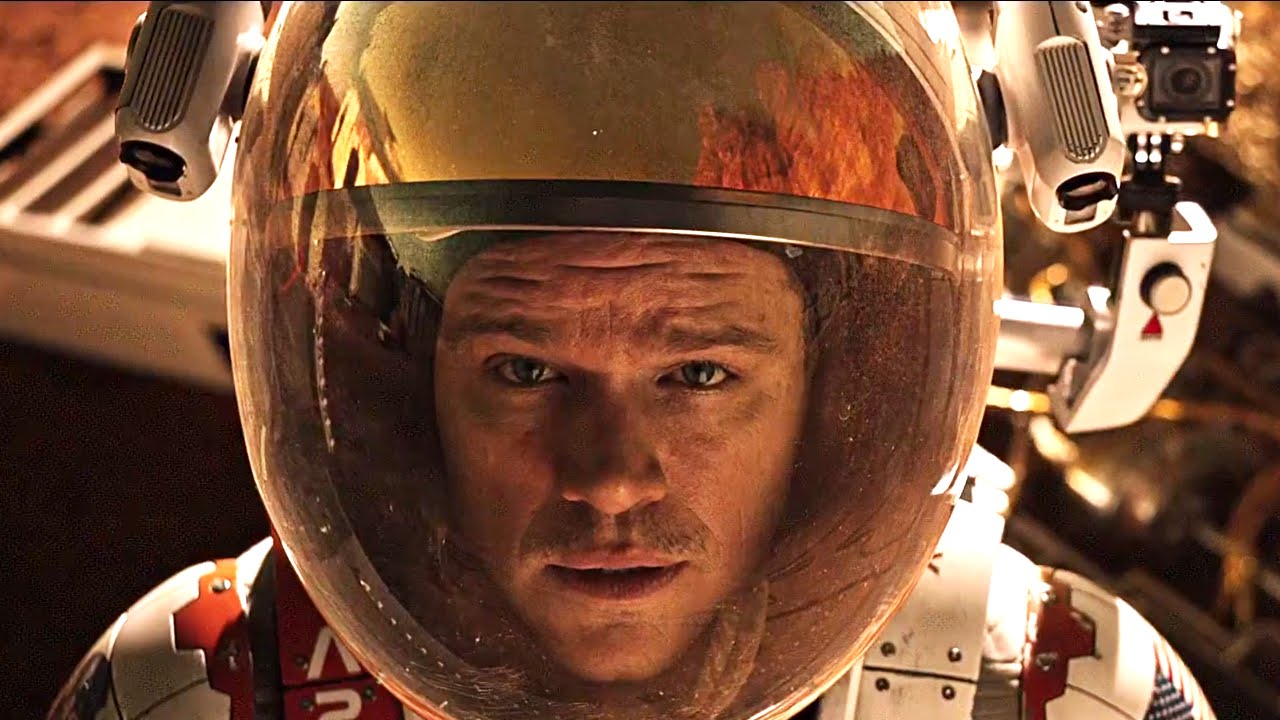 Being a Ridley Scott film, naturally the film is downright impeccable from a technical standpoint. The photography is great, communicating the frightening and awe-inspiring scope of the alien topography, especially when compared to maps for scale. The visuals find ways to further help communicate Watney’s dilemma and diminished resources. Scott’s visual sensibilities are so naturally attuned to developing tension. I was holding my breath at times from the suspense of certain sequences even though I long assumed that Watney would make it back home safe and sound. A scene with a desperate need for duct tape was a real nail-biter. There isn’t a bad performance among the star-studded cast of actors who must have been grateful for even a tiny morsel of screen time. I have no idea what Kirsten Wiig really does in this movie as the NASA PR person besides fold her arms in rooms, but hey, she’s there, along with Donald Glover as a socially awkward physicist. Jessica Chastain (Zero Dark Thirty) gets to pour over the regret of leaving a friend behind, Jeff Daniels gets to once more practice his skill of being an authoritarian blowhard he honed from The Newsroom, and I even was able to tolerate Kate Mara (Fantastic Four), so that’s something.
The Martian is a natural crowd-pleaser. It’s engineered from the start to engage an audience with its survival thrills, present a series of increasing payoffs with new challenges and solutions, and by the end of our journey we’re treated to a rousing finish that carries a poignancy and sense of inspiration about the best in all of us, what can be accomplished through grit and cooperation and sacrifice. It’s a movie that let’s the science of survival be the ultimate star, with Damon serving as a handsome host to guide us through the marvels of the universe and duct tape. When dealing with the vastness of space and the vulnerability of human life, it’s easy to feel insignificant in comparison, but that’s where the human will to endure and to work together comes in and reconfirms the possibilities of the collective inhabitants of this giant blue orb. The Martian is a sci-fi thriller, a potent human drama, and one of the best times you can have at the movies.
Nate’s Grade: A-
Share this:

Fantastic Four (2015)
 Few movies have had such a prominent stink of negativity attached to them as Fox’s Fantastic Four reboot, a movie that is already being considered amongst the worst superhero movies of all time. Director Josh Trank (Chronicle) was given the freedom to go darker, emphasize more science fiction, and select a cast of respected actors rather than bankable names. Then came rumors of aloof and secluded behavior on set from Trank. Then came rumors that Fox and producer/co-writer Simon Kinberg (X-Men: Days of Future Past) effectively shuttered Trank from his own movie, reshooting 40-minutes of a 90-minute film to salvage the wayward production (get ready for plenty of stuff in trailers not to be in the finished film). Not quite the room-clearing disaster of rampant speculation, the new Fantastic Four is a superhero movie that never really gets started and has constant battles with tone, characterization, and plot. It seems like the real villains of the movie are the Fox executives who signed off on the “gritty, gloomy” rendition and then interfered when they got too scared, managing to undercut the original vision, muddy an already messy film, and make things even worse. The behind-the-scenes drama is easily more interesting than anything that happens in this movie.
Reed Richards (Miles Teller) is a science genius recruited by Dr. Storm (Reg E. Cathey). Reed invented a makeshift teleporting device as a young child with the help of his friend, Ben Grimm (Jamie Bell). At Dr. Storm’s lab, Reed works with Storm’s children, Sue (Kate Mara) and Johnny (Michael B. Jordan), and a morose computer programmer, Victor Von Doom (Tony Kebbell). The group transports to another dimension but is attacked by a strange green energy cloud. Victor is left behind. The surviving foursome exhibits unique abilities. Reed can stretch his body. Sue can turn invisible and create force fields. Johnny can fly and set his body on fire. Poor Ben is a hulking rock monster. Reed promises to find a way to reverse what happened to them, but the re-emergence of Dr. Doom puts the fate of the entire world at risk.
 It should be of little surprise that Fantastic Four feels like two different movies awkwardly and inarticulately smashed together. For the first hour, the movie follows the path of our heroes and their contraction of their powers. Rather than the gee-whiz fun of getting superpowers, the characters view themselves as freaks, their bodies turned against them, and their colleagues deeply afraid of them. It’s a far moodier antidote to the vicarious thrills of gaining special abilities. There are some effective sequences that channel David Cronenberg’s The Fly and Scanners, and it’s these brief moments where you feel Trank’s vision connect the most. Doom walking down a hallway and making heads explode, in a PG-13 way, is horrifying and cool. The problem for Trank, and the movie as a whole, is that this first hour still isn’t a very good movie. It takes far too long for these characters to get blasted by green space goo and become supers. The setup is so protracted and needless. Did we need to see how these characters came together? Did we need to see their childhoods? It’s not essential to see the team come together when we can already start from that point. In a sense, it reminded me of how needless I felt Pixar’s Monsters University was; did we need to see how these colleagues became friends? Despite this action-free opening half, the screenplay could have fleshed out the four main characters to justify the added time, but it’s hard for the movie to justify much.
These are some of the most boring and underdeveloped characters in recent comic book lore. If these versions of the Fantastic Four existed in the 1960s, they wouldn’t have made it to issue number two. Reed is smart. Sue is smart too but also standoffish (and adopted). Johnny likes fast cars. Ben is tough and loyal. Victor is a pessimist who called dibs on flirting with Sue. That is really about it, folks. Ben disappears for most of the film, called in to make the trans-dimensional jump because Reed feels like Ben deserves to be there since he helped create an early prototype with Reed. Actually, let’s talk about that scene. It’s a high school science fair yet the only other displays we see are clearly for much younger children, and yet Dr. Storm is visiting an all-ages school science fair to groom talent? That seems weird. Why does Dr. Storm not make the same offer to Ben, who helped Reed design and build his early teleporting machine? Regardless, Reed leaves his childhood pal behind with Ben’s abusive family. That’s because he’s a good friend. Then, once the horrible transformations occur and Ben gets the worst of it, Reed runs out on him again. Sure it’s in the pursuit of finding a cure, but who’s to say he couldn’t do that in the already constructed government super science lab? Sue doesn’t even go on the first trans-dimensional voyage; it’s just a boy’s club. Sue spends more time in this movie staring at computer screens and looking intently than any action. It’s probably for the best, though, because the scenes of her flying around in a bubble made me think of Glinda the Good Witch. I’m not a Kate Mara fan. I’ve found the majority of her performances to be stilted, but even I can admit she’s given nothing to do here but move her eyes from the left to the right and inform Miles Teller about Portishead, a band that’s only 20-plus years old. It’s sad but the most interesting part of Johnny is that a black actor, a point that caused certain more irritable fans to foam at the mouth at the adaptation, is playing him. If these super heroes aren’t going to be super until halfway through the movie, they better be interesting characters. They are not even close.
 It’s with the return of Dr. Doom that the Fantastic Four makes its inept transition into the second movie, the one reshot by the producers and the studio. In an implausibly fast amount of time we’re given our villain of the movie and he sets off to open a black hole to destroy Earth because… we’re self-destructive? So humanity is self-destructive so Doom is going to destroy humanity? I would also like to know exactly how Doom survived for over a year in the alternate dimension when it clearly looks like there is nothing of substance for miles, unless green goop is edible. Did he just lose the need to go to the bathroom? Doom’s powers are rather nebulous, which makes it even less interesting when the Fantastic Four decides to, get this, work together to beat the bad guy. For a movie that hasn’t had one action sequence until its final act, now our characters must band together to stop Doom and his giant flashing blue light black hole thingy. The special effects are pretty undistinguished and hard to read at times. I’d also like to remark how hideously this other dimension looks. It’s all rocky crags and dark clouds; it’s like a less successful timeshare for the residents of Mordor. It doesn’t quite look like the paradise that Doom describes it as (the brochure lied to us!). This jumbled conclusion feels so ham-fisted and rushed, a villain and a typical world-destroying fate that must be thwarted at the last minute. Things just sort of happen rather than storylines finding payoffs, and then it’s all sort of over and the resolution echoes the very end of Avengers: Age of Ultron, even with the credits cutting off the vocal iteration of the title heroes. It’s so transparently different in tone, sloppy in development and execution, and so quickly introduced and resolved, that the whole conclusion comes across as forcibly laughable.
At the end of watching the dire Fantastic Four reboot, I felt more sympathy for Josh Trank. He still deserves blame for helping to conceive and develop such a misshapen story and squander his actors. After three duds and whatever you want to call the 1994 Roger Corman adaptation, it feels like maybe this franchise is just cursed. Maybe these characters are too dated and their powers are too silly. Then again we know that these characters can work in the format of a movie because a good Fantastic Four movie already exists, and it’s called The Incredibles. It doesn’t seem like anyone is going to come away completely clean from this misfire and financial flop, especially now that Trank and executives are engaging in a P.R. blame game. Fox was hoping for a rekindled franchise. Now they may be hoping to work out a deal for Marvel to buy back the rights to the characters. I would have been interested to see the full vision of what Trank was going for, especially since the one scene that feels most adamant is the best sequence in an admittedly mediocre superhero film. At least the movie would feel cohesive. It probably wouldn’t be good but at least it would be committed to trying something different. Instead, the movie tries to be different from the superhero blockbusters populating the landscape and then, at the last minute, tries to follow their lead and become one of them, becoming its own misshapen and poorly developed blob. It’s not the worst superhero movie in history (that honor still has to belong to the atomic bomb of taste, Batman & Robin), but even achieving sustained mediocrity is too much to expect.
Nate’s Grade: C-
Share this:

127 Hours (2010)
 So would you give your right arm for a good movie? 127 Hours is the true-life tale of a man trapped between a rock and a hard place. Hiking in dusty canyons, James Franco gets his arm pinned under a rock. And that’s about it from the plot standpoint. That’s because everything is leading up to the grisly inevitability that he will be forced to cut his own arm off for survival. And director Danny Boyle (Slumdog Millionaire) does not let you off the hook. You will see every gruesome second of a man hacking away his own arm, slicing nerve-by-nerve, crushing bones, etc. It’s not the uplifting experience that Boyle and the producers mistakenly believe. The film’s true success is that it still manages to be entertaining and exciting, despite having a central character unable to move more than inches. It’s fascinating to watch Franco use the tools at his disposal to survive for five days before, well, you know. Boyle does a terrific job of making an intimate almost claustrophobic plot feel much more open. Nobody probably could have done this movie better than Boyle, taking his kinetic trademark style and allowing us to enter the mind of Franco’s fallen hiker. 127 Hours isn’t so much an inspirational tale as it is a morbid curiosity that entertains in spurts. But all the visual tricks in the world can’t get people to want to pay to see a man cut off his own arm.
Nate’s Grade: B


 nathanzoebl
You must be logged in to post a comment.