Blog Archives
Don Jon (2013)
 Joseph Gordon-Levitt, one of the most talented and, yeah I’ll say it, dreamy young actors working today is proving to be more than a pretty face. Don Jon is his assured writing and directing debut, and it shows that every man has one more reason to feel insecure compared to Gordon-Levitt. The titular Jon (Gordon-Levitt) is a New Jersey lothario who sleeps with lots of women but the real thing just can’t measure up to his porn. The schism between reality and sexual fantasy is too much. Jon tries to reform his porn-addiction ways when he meets a hot lady (Scarlett Johansson) but old habits are hard to break, especially when he has to wait before sleeping with a woman. The narrative isn’t terribly deep or that developed but remains entertaining throughout, buoyed by feisty performances and stylish direction. The editing, sound design choices, and smooth camerawork made me feel like I was watching a promising Scorsese student. I found Don Jon to be a far more successful look at sex addiction than the recent sex addict drama, Thanks for Sharing. The parallel between porn and Hollywood rom-coms, both an inflated fantasy of relationships, doesn’t really stick, and Jon’s family is a bunch of loud Italian stereotypes, but the lead guy is a self-possessed lunkhead anyway, so it makes sense for his family to follow suit. Don Jon is funny, sexy, and an enjoyable diversion at the movies. What it really does, though, is provide the first notch in what may prove to be an exciting directorial career for its star.
Nate’s Grade: B
Share this:

What Maisie Knew (2013)
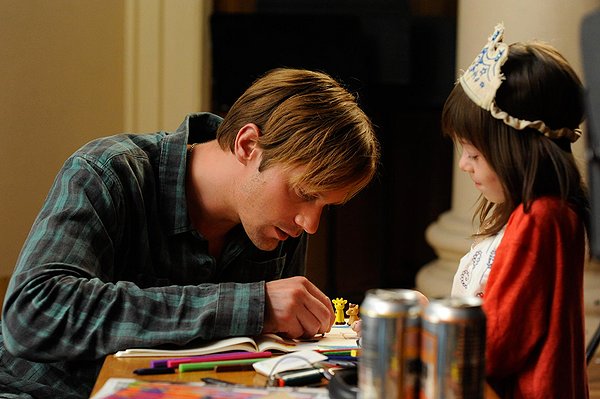
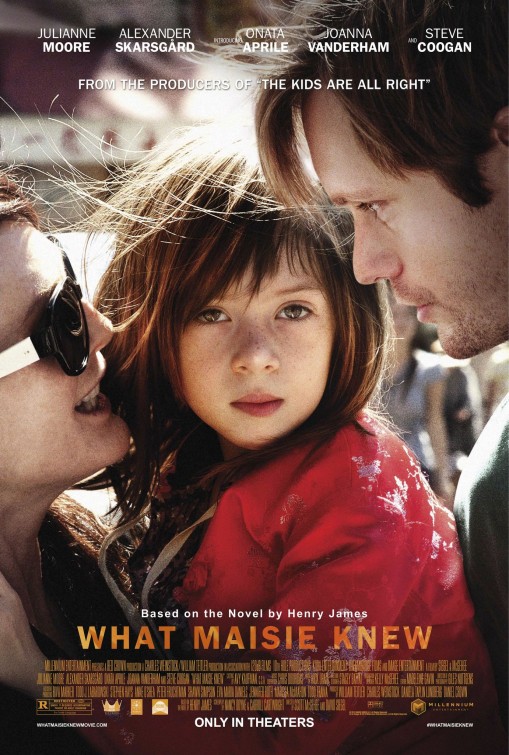 Did you know that What Maisie Knew is based on a novel by Henry James that was published in 1897? I sure didn’t, but then again my knowledge of Mr. James is somewhat limited. James’ tale of negligent parents passing off their daughter back and forth was controversial when the novel was first published. Updated to modern-day New York City, seven-year-old Maisie (Onata Aprile) is the pawn in her parents’ contentious divorce. Her father, Beale (Steve Coogan) is an art dealer who is constantly on his phone and making out-of-country trips. Her mother, Susanna (Julianne Moore), is an aging lead singer for a 90s alt rock band who also likes to party. Beale remarries Margo (Joanna Vanderham), a young woman who previously served as Maisie’s nanny. Not to be outdone, Susanna remarries Lincoln (Alexander Skarsgard), an affable bartender who’s somewhat clueless around kids. Everyone is trying to navigate the tricky new relationships and what they think is best for Maisie, though Lincoln and Margo seem to be the only ones who actually care.
 When it comes to divorce dramas, the easy way is to go big, to ramp up the emotions of such an emotionally distraught experience, and to tip into the overwrought territory of melodrama. I can already imagine the animated shouting fests and crying fests. Then there’s the impulse to go the bitterness route, like 2005’s The Squid and the Whale, where the movie takes a cue from its feuding parents and infuses the film with a dark, overpowering sense of acrimony. I credit directors Scott McGehee and David Siegel (The Deep End, Bee Season) for making arguably one of the most subdued movies about divorce I’ve ever seen. It’s certainly not flippant in the slightest, treating the subject, and mainly the toxic effect on Maisie, with sincerity and good taste. But as far as overblown shouting matches, they’re kept to a minimum and mostly comprise the first fifteen minutes of the movie, establishing the inevitable divorce of Susanna and Beale. The movie ignores the sensational and focuses on the ordinary, little moments of complete believability that serve to build, like brick by brick, the overall reality of the story. You’ll watch the film and think to yourself that, even with parents with completely outlandishly rich professions, that everything in this movie could realistically happen. Weird to think that James wrote his tale over 100 years ago and yet how relatable his conflicts still are to this day. However, because of this subdued, naturalistic approach, What Maisie Knew can’t quite find a proper ending. The one presented seems a tad too pat and tidy for this movie. It almost approaches a“happy ending,” though not quite. Still, knowing how thick-skulled both Susanna and Beale are, it’s hard to think that they will ever come to their senses and do what’s in the best interest of Maisie.
This can be an uncomfortable movie to watch because Maisie’s mom and dad are so destructively neglectful and self-involved. There’s a perverse rubbernecking draw to seeing the antics of truly awful parenting. You’ll find yourself getting very mad at how terrible these people are at being human beings. Susanna and Beale interrogate their daughter for ammo they can use against the other, twisting and manipulating the kid that we wonder if either truly cares about. Dad’s always full of excuses and mom’s looking to flee from responsibility at a moment’s notice, dumping her daughter on her latest boyfriend. You’ll find yourself easily sympathizing with Lincoln and Margo, the two people who love Maisie most and would make the best parents for her. I began rooting that they just abduct Maisie and start a new life as a family in a different country. The unchecked narcissism of both Susanna and Beale could serve as a clinical study. It’s a wonder that Maisie seems like a bright, playful, and relatively normal kid. For now.
Another aspect of McGehee and Siegel’s joint direction that I really enjoyed was how the movie takes on the perspective of little Maisie; she is our eyes and ears, and often the camera framing will instinctively mirror her own point of view, cutting off adults. It’s an interesting visual approach but it also further tethers us to this girl, forcing us to think even deeper about Maisie’s perspective, and how she’s interpreting the angry words. I suppose there is a valid argument to be had that a seven-year-old child is going to be a rather limited perspective on such a contentious conflict. There’s also the nature of Maisie. She’s a relatively quiet child, given to poking her head around corners and staring with those big glassy eyes of hers. Given the fact that she’s a child, and processing a painful life experience, don’t expect her to divulge too much about her thoughts and feelings. She’s an opaque presence and I realize that that can get frustrating for some. She’s not the kind of kid that’s going to burst into tantrums. This girl is internalizing all the pain and confusion. Having a passive prism for your movie might be akin to telling a love story from the point of view of a potted fern. Literally anchoring the camerawork to Maisie (I don’t want to oversell this as if it’s a stylistic gimmick) forces us to constantly think of every action through its impact upon Maisie. It’s not exactly a coming of age or loss of innocence tale but more a combination of the two.
 If you’re going to have a child be the star of your movie, you better choose wisely. I’ve found that as I grow older I have less tolerance for poor child actors. Perhaps it’s my inner Scrooge. Good thing that little Aprile (Yellow) is so effortlessly heartbreaking as she tries to find her way amidst her changing home life. One day she has a mom and dad, then she’s splitting time, then her daddy has a new mommy, who happens to be her old nanny, and then mommy has a new husband as well (Susanna admits she got remarried simply to improve her court standing). Aprile nicely underplays her character’s innate vulnerability while still reminding you of her youth. She’ll get scared and ask to go home, crying alone in her bed, and your heart will ache. I cannot say whether the strength of Aprile’s performance lies more with her legitimate skills as an actress, good direction, or the general reticence of the character, and thus the lesser demands for a child.
Moore (The Kids Are All Right) and Coogan (The Trip) give surprisingly textured performances, at least more so than the opening fifteen minutes would have you believe. They can both be monstrous and callously indifferent to their daughter’s well being, but as the movie concludes, each one of them has a small moment where they realize the damage they are inflicting upon their child, how poor a parent they have been (Susanna even lashes out at Lincoln’s encouragement to Maisie as “undermining her as a parent”). It’s much more than I was anticipating and both actors do good work at being unlikable without going overboard. Fans of TV’s True Blood might just swoon a little harder thanks to Skarsgard’s good-natured, humble, and mildly affecting performance as a man who becomes profoundly attached to Maisie. He may not know what he’s doing but isn’t that parenting as a whole? Skarsgard and the charming Vanderham make a great onscreen pair and their genuine affection for Maisie provide the most uplifting moments.
When it comes to parenting, there are no magic instructions to insure a responsible, loving, thoughtful, and independent human being. It’s a leap of blind faith. However, it’s much easier to predict the events that can screw up an impressionable child (do not misconstrue this as my declaration that children of divorce are, at heart, broken somehow). The thought of collateral damage is fresh in our minds as we track little Maisie trying to survive the reach of her terrible parents. The terse arguments can be painful but even more painful is the overall negligence of her rich and mostly absent, self-involved parents. What Maisie Knew isn’t a downer of a movie and its subject matter is given proper seriousness and reflection. You’ll likely cringe at points, may even grumble under your breath, but in the end it ends on a hopeful note, the possibility that Maisie, under the right guidance, could turn out to be the bright kid we see glimpses of at her school. There’s something quite moving about the resiliency of a child. This is, of course, just one interpretation of the movie, but What Maisie Knew is an emotionally engaging, subdued, sincere, and poignant film that trades on naturalistic waves of human interaction rather than cartoonish bluster, all the while forgoing cheap sentimentality or unpleasant bitterness. For the performances, the deft handling of sensitive material, and the quality direction, give What Maisie Knew a chance when able.
Nate’s Grade: B+
Share this:

Crazy, Stupid, Love (2011)
 Crazy, Stupid, Love was sold as being a smart, urbane romantic comedy for adults, and this is accurate to some degree. It’s certainly worlds better than anything Katherine Heigl has been inflicting upon the public. At the same time, this film exists entirely within that familiar universe known as Movie World. It polishes old genre clichés, but in the end they’re still clichés. The movie follows playboy Jacob (Ryan Gosling) coaching Cal (Steve Carell), a divorced dad, on how to get back his mojo and seduce women in a modern world. Along the way, Jacob falls for the cute Hannah (Emma Stone), Cal’s teenage son (Jonah Bobo) is hopelessly in love with his 17-year-old babysitter (America’s Next Top Model contestant Analeigh Tipton), and the babysitter is secretly crushing on Cal. There are passing moments of awkward but recognizable reality, especially the free-falling nature of divorce, but they are eventually smothered by the gloss of rom-com schitck. Because this exists in Movie World, every character, including a one-night stand (Marissa Tomei), will pop back up because every character is related to everyone else in this tiny fishbowl. That also means that contrivances and misunderstandings will culminate in a comic clash. Oh, and don’t forget the grand public pronouncements of love. This is the only movie I can ever recall where the dissemination of child pornography is treated like a payoff or as something to cheer (naked babysitter pics are passed along). Huh? Crazy, Stupid, Love is a fitfully entertaining movie but don’t let the pretensions of maturity fool you, this is strict rom-com stuff.
Nate’s Grade: B
Share this:

Chloe (2010)
 Director Atom Egoyan, working simply as a director, brings some serious heat to this somewhat lurid and Euro trashy art house potboiler. Egoyan gives the movie a credibility that it might otherwise lack. It starts promisingly enough with a doctor (Julianne Moore) convinced that her husband (Liam Neeson) is cheating on her with his younger students. So to prove her suspicions, she hires a sexy call girl to seduce her husband. Chloe (Amanda Seyfried) agrees to help, but nobody seems to fully understand the magnitude of the consequences as Chloe inserts herself more into the family. For a solid hour, the movie offers some tantalizing drama about infidelity, doubt, and the nature of attraction. Then the movie shifts focus after a few tawdry, but effectively steamy, sex scenes. Sadly, the movie abandons the smaller-scale drama for lame thriller shenanigans. Chloe becomes a spurned lover pushed to the edge, like a third rate Fatal Attraction. At that point, Chloe just completely unravels into an unremarkable late-night Cinemax thriller. Even the gratuitous nudity feels tacky, and as a red-blooded heterosexual male, that’s a statement that makes me depressed.
Nate’s Grade: C+
Share this:

A Single Man (2009)
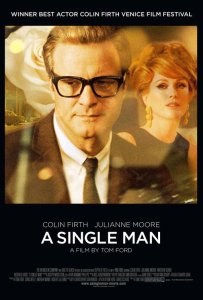 Tom Ford is a rare human being. He seems to be good at everything. The prominent fashion designer has never been averse to risk. He left work in America to toil for Gucci, a faltering European luxury brand. He became the creative director from 1994-2004, eventually leaving to form his own company. And after decades of success in the world of fashion, Ford decided to make the jump into movies. From fashion mogul to film director, nobody else has done it, let alone done it with such acclaim right out of the gate. A Single Man has been met with rich praise and Ford has been touted as a natural filmmaker. Perhaps Ford’s odyssey into moving pictures will inspire others to drop their needle and thread and pick up a camera instead. Who wants to see a Project Runway/Project Greenlight crossover?
In the early 1960s, George Falconer (Colin Firth) is a 50-year-old English professor still recovering from the loss of his love. Jim (Matthew Goode) and George had been together for over 16 years, that is, until Jim died in a car accident one rainy night. George has never fully recovered since that awful night. He doesn’t intend to waste any more time waiting for a reunion; at the end of the day, he will kill himself. He lays out his suit, empties his safety deposit box, and writes letters to his remaining friends and family. This will be George Falconer’s last day in Los Angeles, but perhaps in the meantime he’ll discover more reasons to give life another chance.
 Ford comes from the world of high fashion and here he proves that he should be taken seriously as a filmmaker. He has a sumptuous eye for visuals. A Single Man looks great in every scene. The costumes and period details are impeccable and may even give the historical consultants from Mad Men some due pause. The cinematography by Eduard Grau can become irritating because the colors go from drab to vibrant, reflecting the main character’s changing moods (lifted spirits = brighter colors!). At first it’s a neat visual gimmick but as it persists it becomes a crude blinking light, inelegantly summing up what the movie feels it cannot communicate. At times it just feels like piling on. I don’t need the color to drain from the screen to understand that George is sad.
Ford’s adaptation skills, on the other hand, could use some more polish. He and David Scearce spent years adapting the 1964 novel by Christopher Isherwood. They even added the whole suicide angle, which becomes their narrative crutch. There is a refreshingly funny sequence where George tries to act out his suicide position and goes from the shower to his bed, finally deciding upon shooting himself inside a zipped sleeping bag to cover the ensuing mess. This little five-minute stretch is like an oasis of humor in the super serious desert that is the rest of the film. The second half of the film is dominated by a will-he-or-won’t-he flirtation with a good-looking lithe college student (Nicholas Hoult, the boy all grown up from About a Boy). The kid shows definite interest. The romantic angle syncs up with George’s lost love and proves to be a welcomed distraction to George’s dejection. However, their connection is extremely thin, with Hoult making flirty eyes and inquisitively tilting his head for an hour. The romantic story exists as a means of making sure the narrative can mend George’s broken heart.
The story meanders for too long with a few revealing flashbacks, but honestly how hard is it to wring pathos from a suicidal man? How hard is it to write a middle-aged man taking stock of his life, getting his affairs in order, and saying his fuzzy goodbyes to people who don?t realize the significance. Everything gains magnitude under that prism; every pause, every inhalation, every wistful glance becomes riddled with deeper subtextual meaning, or so we are lead to believe. Every moment can unlock a new memory or secret, like when he sniffs a stranger’s dog and recalls his former beloved pet he shared with Jim. Under this guide, it is hard to tell whether the movie is doing any actual dramatic lifting. So much is supposed to be interpreted in the blankness, which the audience is entrusted to craft meaning to the character’s nostalgic pit stops. “Oh, he must be taking in the scent of the ocean one last time,” or, “Oh, he must be thinking about… something. But he’s gotta definitely be thinking about something. Something deep.” Can you see how this might get tedious after a while?
 A Single Man could have afforded more peaks into George’s background and less of Julianne Moore. She plays an old boozy Brit friend of his from back in the day. Her moments onscreen, while limited, are a chore to get through because Moore just consumes her characters sadness. She gets drunk on the one emotion she’s been hired to play. She’s certainly not embarrassing herself like in 2006’s Freedomland, but this isn’t a performance for her illustrious highlight reel. I don’t care if she does get nominated for a supporting actress Oscar, as seems all but certain; I expect more from Moore.
Firth is the whole movie so it’s a relief that he turns in the performance of his career. He gives a complex portrayal that doesn’t nicely fit into the typical Firth cinematic creature: priggish, clever, dry, ultimately a good guy. Here you can practically see the gears in his head processing the last moments of life. The extent he can convey with his eyes or simply the corners of his mouth are exquisite. He provides so much of what the narrative does not. He’s a sad creature mired in one long day of existential grief, but I need more from this character than what Ford affords.
George Falconer gives a dandy speech about the fear of the minority, almost outing himself to his college class, but for a flick about an older gay male passing through life to be an invisible member of society, Ford adopts a “don’t ask, don’t tell” approach to narrative. He buttons up his characters emotions. Understatement is lovely when there’s enough to work with. That’s the issue with A Single Man. Ford hasn’t given himself enough to work with, instead forcing the audience to make up the work by inserting meaning into every furtive brow and pained expression. This is a meditation on a life in passing, told through a series of small vignettes. I need more than a melancholy man listening to the clock strike seconds off his soon-to-be-ended life. If I wanted to watch that movie I’d check out the latest Gus van Sant art house masturbations.
Nate’s Grade: B-
Share this:

Next (2007)
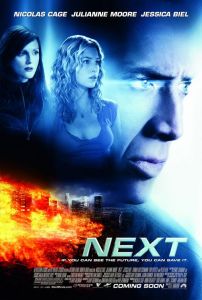 Nicolas Cage, channeling Tom Hanks’ greasy mullet in The Da Vinci Code, can see his own future but only two minutes ahead. Based on a Phillip K. Dick something or other (does it really matter at this point?), this half-baked sci-fi thriller keeps shooting itself in the foot by retreating back in time to reveal, over and over, that what was just shown was merely Cage seeing his future. Now it’s do-over time, hooray. This tricky concept is given little thought and Next hews close to tired thriller clichés and formulaic trappings. There’s the hot girl dragged into the fray (Jessica Biel, pretty but pointless), the shady government agents that need Cage’s help but don’t fully trust him, and the nondescript bad guys with a hidden nuke. Next had potential for disposable escapist entertainment, but man do they blow it big time. For a 90-minute film, there’s way too much setup and not nearly enough payoff. There’s about a grand total of two action sequences for the entire film, neither very good, and then the movie utterly collapses as half of it folds in on itself as one of Cage’s visions. In the blink of an eye, half of the movie we watch is erased; it’s a freakin’ cheat, especially when the movie slouches to a close right after. This easily forgettable sci-fi bobble is another nail in Cage’s coffin as a reliable actor.
Nate’s Grade: C-
Share this:

Children of Men (2006)
 Alfonso Cuaron is a master filmmaker and a gifted storyteller. He excels at telling entertaining stories whether they be about kids or adults. His Harry Potter film is still the most watchable and imaginative, and his earlier children’s movie, 1995’s A Little Princess, has enough power to still get me misty. Even when Cuaron sets his sights on a sex comedy (Y Tu Mama Tambien) he can’t help but turn it into an affecting art movie. This man just knows how to tell a good story. Children of Men, a bleak science fiction thriller, is just the latest example of how effortless Cuaron makes it all blissfully appear.
In the year 2027, and the world is on the brink of annihilation. It’s not plague or rampant warfare that are the obvious culprits. The reason for mankind’s end is something more natural and depressing — women have stopped being able to make babies. England seems to be the lone country with some fraction of stability. Illegal immigrants are rounded up and housed in refugee camps for deportation. Cages full of crying and pleading foreigners are on many street corners. In a world of danger and hopelessness, always count on the kindness of xenophobia.
Theo (Clive Owen) is a bureaucrat that combats the future with cynicism. He can barely escape getting blown up for his morning coffee. Theo used to be an activist and married to Julian (Julianne Moore), the current leader of the Fishies, deemed a terrorist group by those in power. She finds him and asks for one last favor. Her people need transit papers to get Kee (Claire-Hope Ashitey), a refugee, and Miriam (Pam Ferris), a former mid-wife, to safety. Then Theo discovers the importance of his assistance. Kee is eight months pregnant. The government would never admit that that the first baby in 18 years belongs to a refugee, and political groups would like to use Kee and her baby as a rallying point for an uprising. But first Theo must get her out of harm’s way.
 The idea of a world of infertile women is fascinating and full of big questions. This dystopian future must confront its own mortality in a very real way. Theo asks a friend hoarding classic art why he bothers. There will be no one alive in 100 years to even see them. Miriam says strange and heartbreaking things happen to a world that forgets the sound of children’s voices. Plenty of heady discussion is generated from a premise that affects every person on the planet. Why can’t women have babies? No explanation is given and none would seem credible. A religious faction believes this is the punishment of a vengeful God. People forget what babies even look like and what is commonly done for their care. The film also has a stark and timely portrait about the treatment of illegal immigrants. Children of Men is an intellectually stimulating movie that never rubs your nose in it. It trusts the intellect of the audience enough to leave many unanswered questions left to chew over and debate long after the movie ends.
The answers Children of Men finds seem reasonable and appropriate. Home suicide products exist for people that want to take back some control over their life, or at the least, are sick of waiting for the even more inevitable. It also seems entirely likely that this future world would turn the youngest living person (“Baby Diego” at 18-years-old) into a celebrity worthy of incredible mourning upon his untimely demise. These coping elements feel dead-on and only enhance the realistic tone of the film.
The film is a beguiling think piece but it also succeeds magnificently as a straightforward thriller. The majority of the second half is built around chase scenes and navigating to perilous outposts of safety that eventual crumble. Cuaron has a dizzying sense of believability as he puts together his world, and his roving camera feels like an embedded reporter on the front lines of chaos. The gorgeous cinematography and realistic set design contribute to the visceral sensation Cuaron sets alive with his visuals. There are long stretches where the camera continues rolling for nine minutes uninterrupted. I was left spellbound and felt trapped in this world just like the people onscreen. I was also wondering how much planning it took to coordinate and choreograph these long takes.
There are two very memorable scenes to quicken the pulse and both of them involve Cuaron’s mobile unblinking camera. The first involves a car chase perhaps unlike any I’ve ever seen before. Theo is leading an escape at dawn and robs the other cars of their keys. However, his own escape car refuses to start and the bad guys take notice. The sequence seems to last forever as Theo is forced to literally roll the car down a hill to outrun his pursuers who continually catch up with him. The second sequence follows Theo making his way through a refuge camp in the midst of a violent uprising being put down by heavily armored government troops. We watch every excruciating second of his survival as he navigates past gunfire, tanks outside a hotel, and then climbs through the different levels of the hotel being bombarded until we see, at a distance, where Theo’s trek all began. Exhilarating might just be the best word to describe Children of Men.
 But nothing feels cheap or too sentimental in this world. This is a harsh and dark world where anything can happen, so the audience is left in constant peril worrying about the fates of every person onscreen. Like Casablanca, it strips away idealized notions of bravery and duty and just shows humanity for what it is and what it can be. That is gutsy but then that’s Cuaron as a filmmaker.
Speaking of Casablanca, Owen seems like a modern-day Bogart in this role. He’s ruggedly good looking but also a sly charmer. I’ve stated before my undying man-crush on Owen and Children of Men has only added to it. Owen has a remarkable way of playing detached but still noble and conflicted. He has the best slow burn in movies. The moments of wonder for him become our moments of wonder and worry. The rest of the actors appear in limited functions but provide good work. Michael Caine practically steals the movie as a crude yet philosophical hippie.
This is science fiction at its best. Children of Men is stark and realistic and truly immersive; you really feel like a member of this tumultuous future. It works simultaneously as a thought-provoking what-if scenario and as an exciting thriller. Simply put, this is a highly engrossing movie that separates itself from the pack. Cuaron has created a disquieting and entertaining sci-fi think piece that succeeds on its numerous merits. I knew half way into the movie that the newly minted wife, Mrs. Me, was only going to want a baby more from what we were watching. At least she now has a new argument: “It’s for the good of humanity.”
Nate’s Grade: A
Share this:

Freedomland (2006)
 There’s one thing I’m going to remember about Freedomland more than anything — seeing this movie cost me about $300. Allow me to explain. Upon returning home from seeing this terrible film, I received an e-mail from a friend alerting me that a secret code had been floating around the Internet. This code was to be used at Amazon.com, and when punched in at the check-out, your order would be free as long as it totaled over 80 dollars. Just as I was about to check out with over $300 of goods the window closed and the code was no longer working. If I had not seen Freedomland then I would have gotten this news earlier and would have been able to obtain my booty. Alas, I did see Freedomland, a drama that attempts to shed light on racial woes. Movie mogul Joe Roth, the head of Revolutions Studios, doesn’t direct movies fairly often and when he does they’re not great (America’s Sweethearts, Christmas with the Kranks). I knew exactly what I was getting into when I entered the theater; I just didn’t know it was going to cost me $300.
In 1999 New Jersey , Brenda (Julianne Moore) walked dazed and bloodies through an urban neighborhood to a hospital. She tells detective Lorenzo Council (Samuel L. Jackson) that she was the victim of a car jacking while she was traveling through an urban area. She says a black man threw her from her car and drove off. Brenda’s four-year-old son Cody is still in the car. This sets the neighboring communities abuzz. Brenda’s hot-headed cop brother (Ron Eldard) is ready to turn the black projects and high rises upside down, unafraid of whom he may harass. The black community is in an uproar over the treatment, succinctly pointing out that many black children go missing but the news vans and police cars only come out when the missing happens to be white (for further proof, look to the still ongoing coverage of Natalee Halloway). Karen (Edie Falco) runs a team of mothers who volunteer nationwide to help find missing children. Lorenzo has his own doubts about Brenda and the details of her story.
 Plain and simple, Freedomland just does not have enough story to justify its existence. It goes nowhere and practically drifts to its long-awaited conclusion. You’ll see the light at the end of the tunnel around the halfway mark, and then Freedomland limps to its foreseeable ending, devoid of any twists and turns that aren’t telegraphed a mile away. It got so pathetic that I was actually hoping, against all odds, there’d be some gonzo M. Night Shyamalan-esque twist at the very end to jar me out of my complacency. No such luck. The marketing folks of Freedomland seemed to advertise a twist ending, which is hard to believe since everything plays out exactly like you?d first suspect. Moore’s overacting hysteria makes the audience doubt her from the start; plus the fact that Brenda’s like, “Oh yeah, I almost forgot, my SON is in the hijacked car.”
This is a movie so mishandled by Roth that every moment feels false, and when it doesn’t feel false it feels trite and awkward. Take a moment when Lorenzo takes Brenda to an empty urban high-rise. He?s got her pinned in a corner, very literally, and is pressing to know if she killed her kid. The framing of the scene would almost suggest something quasi-romantic, with Lorenzo leaning very closely into Brenda and his arm against the wall beside her. At the very least, it?s really intrusive. And then at the end of Brenda’s “he was all I got” monologue the two actors seem to just stare at each other, like they’re mentally waiting to hear the word “Cut.” The weird framing and the editing make the scene feel amateurish.
But Roth doesn’t stop there. Freedomland itself is a gigantic mislead, and the old abandoned building has about five minutes of total screen time. It’s not enough to even qualify as a red herring, let alone justify it as a movie title. Apparently, this building has been rotting in the woods for decades, and yet Lorenzo lets a large volunteer search party just trounce around inside. I’m pretty sure any policeman worth their salt would need to get a team to make sure the building was structurally sound before letting civilians snoop around in a potential crime scene. That’s not enough stupidity. Later while the people are exploring the Freedomland building, Karen says the floorboards may give way at any moment, and then she leaves Brenda by herself with said unreliable floorboards. Do these people even understand what they’re doing?
Freedomland seems so message-hungry and preoccupied with making some Big Statement that it forgets to be entertaining. Roth is clueless how to juggle all his plot elements, letting the racial tensions turn both sides into offensive stereotypes. The white cops have short fuses and have no hesitation to assault innocent black people (they’d be suspended and then reviewed). The black community in Freedomland, while seeming to have nothing better to do than assemble and shout at the police, stir up their community ills whenever the plot deems it necessary. Some black people are seen setting the community’s own property on fire, swept up in the rising air of a riot. Rafik, a youth given a lot of foreshadowing, instigates the riot and an entire wall of angry black faces proceeds, never mind that this brash decision results in many innocent people being beaten. The movie seems to say that all blacks are victims or instigators. Freedomland is so earnest to be earnest that it misses the mark when it comes to all the details. How else to explain why the film is inexplicably set in 1999. Someone didn’t tell the film’s costume designer, because Rafik is wearing a “G-Unit” shirt, a rap group that didn’t come into light until after 50 Cent’s commercial rise in 2003.
 Perhaps the film’s ending is Roth?s biggest misfire. Lorenzo visits Cody?s shallow grave, now festooned with flowers and personal messages. He reads one that says, basically, “Cody’s death made us all look beyond our differences and realize what we have in common, the ability to feel sad.” What? Is Roth actually justifying the death of a child and subsequent racial fallout as being medicine for society’s ills? This seems ridiculous to me, especially after sitting through two hours of a movie where no one came together, unless you’re talking about the human connection of fist-to-face.
The acting in Freedomland is so unrestrained and shows another of Roth?s directorial weaknesses. Moore, always so reliable a performer, goes out of her mind and gives what should be the worst performance of her career. She’s so over the top, so Looney tunes, so wildly out of control with no bearing, she’s practically bouncing off the walls; it’s kind of embarrassing to watch. Her hysterical theatrics provide several moments of unintentional laughter, particularly a moment where Lorenzo is interrogating her and she just blurts out, “I love you.” Freedomland does her no service by handing her some dreadful dialogue and drawn out monologues. I think it may be time for Moore to star in something a little happier instead of more movies where she’s predominantly crying or grieving. And is it me, or does it seem like Moore has a habit of losing her kids in movies (maybe she should start tethering them to her waist)? Note to Julianne Moore: just because you get to cry and scream doesn’t mean you should take the role. Did you actually read the script to Freedomland?
Jackson, left directionless with an underdeveloped character, reverts to his standard operating procedure when it comes to authority figures … namely staring and yelling. Lorenzo has some character traits (asthma, a son in prison) that are either dropped or have no payoff or insight toward his character. He?s a cop in the middle of it all, and yet Freedomland feels like just having Jackson as an actor should cover the characterization part. At this point, Jackson can do these roles in his sleep.
Falco, far more subdued than everyone else in a very yell-heavy movie, leaves the biggest impression and gives the movie life when she’s onscreen. Falco’s character is what Freedomland should have been based around, not Moore’s shrieking loon of a mother. Falco has the film’s only great moment, effortlessly shifting a story about her own loss and need for closure back to Brenda. The patience and control Falco has in that scene only reminds me how much I need The Sopranos back on the air.
Freedomland is so starved to say something grandiose about racial tensions that it neglects being entertaining. When the movie is entertaining, it’s mainly because of the wild, embarrassing overacting and the nonsensical human behavior. At its worst, Freedomland is offensive to cops and blacks and moviegoers in general with working grey matter, at its best Freedomland is a muddled, incompetently directed movie that drifts unchallenged toward its expected and welcomed end. Roth should leave directing to people that have a better feel for taking control of actors, material, and editing. For those that said the racially-charged Crash lacked tact, I invite them to take a trip to Freedomland. It’s trite, it’s dull, it’s funny when it’s not meant to be, and it’s one of the worst films of 2006.
Nate’s Grade: D+
Share this:

The Forgotten (2004)
 Fair warning: This screed contains huge spoilers about the movie as I rip it apart. The press release for The Forgotten says, “What if you were told that every moment you experienced and every memory you held dear never happened?” And now, upon having seen The Forgotten, I say, “Oh, if only.”
Telly (Julianne Moore) is still grieving the loss of her nine-year-old son who died in a plane crash 14 months ago. She’s seeing a psychiatrist (Gary Sinise) and slowly coming to terms with her loss. One day she discovers all remnants of her son missing. His clothes, baseball glove, even his appearance in pictures has vanished. She accuses her husband (Anthony Edwards) of stealing them, but then is shocked when her hubby and doc both tell her that Telly never had a son. She’s been delusional for years since a miscarriage and has created an imaginary son. Telly refuses to accept the possibility that she’s nuts, and finds initial resistance and then acceptance from another parent (Dominic West) who also remembers a daughter that died in the same plane crash. Together they set off to learn the truth, all the while being hunted down by the NSA for some mysterious reason.
 The Forgotten shares a very dubious honor. Only twice in my life have I been strongly tempted to walk out on a movie, and that was while watching Lost in Space and The Thin Red Line. Six years later, The Forgotten became the third. It got so bad during the second half that I was fashioning my moveable armrest into a crude headboard for me to sleep upon. I was that bored. I can explain the reasons for my boredom very easily: terrible plot structure.
The Forgotten opens with Telly grieving over the loss of her son, and Moore is so good at grief that she can hook an audience as soon as her face crinkles into sadness. Around the 20-minute mark, Telly is told that she never had a son and has been delusional the whole time. Now, stop right there. That’s a great premise. If the makers of The Forgotten had stretched this part of the movie to about 90 minutes, put some thought and skill toward it, then we could have had something fascinating and heartfelt. Instead, you’re given the easily expected and the very boring.
At the 20-minute mark, Telly is told she has no child and she’s crazy. At around the 30-minute mark, none of this matters. The movie doesn’t even allow an opportunity for Telly to even doubt for a sheer second about her wild hunch that everyone in her life, including The New York Times, being apart of some global conspiracy to hide the fact she had a child. And of course, because she?s our heroine and this is Hollywood, her incredibly outlandish theories will be proven right. I understand that, but to reveal her theory’s accuracy only TEN MINUTES later is ridiculous. The Forgotten wastes no time proving Telly’s wild ranting as being correct. It’s as if The Forgotten feels that its audience is cultivated from the dumbest common denominator.
At the 40-minute mark the “A-word” is used, and before the 60-minutes mark, the audience knows everything. The last hour of the film is so obvious; no, it’s beyond obvious. It’s super obvious. It can’t even be obvious because The Forgotten has told you EVERYTHING. You’re not waiting around for predictability to play its way out, because you’ve been told everything. All that’s left is to sit and watch dull chase scenes (a book editor outrun NSA trained agents? Please).
There will be some heavy spoilers in my discussion of the film’s plot. I’m posting fair warning now, but doubt they’ll be too surprising given the ads on TV for The Forgotten (who else would you think was responsible?).
I have no idea what the makers of The Forgotten were thinking. They blow all their secrets in the first half and then mill around for another hour. It’d be like if The Sixth Sense revealed Haley Joel Osment sees ghosts and Bruce Willis is dead in the first hour, and then for another hour they sit uncomfortably and ask about the weather. Anyone think that movie would have worked the same? This is why I was so bored. I could have fallen asleep and accurately predicted everything that would happen in the second hour. There didn’t even need to be a second half to this film. It was all irritatingly explained to us in the first hour. Once the mystery’s gone, the only thing the audience has to keep its faltering attention are the questions of whether Telly can win back her son, and who will be vacuumed out of the universe next. That’s not much to justify another tension-free, revelation-free hour of awful movie.
The ending is also steeped in lunacy. So apparently all-powerful aliens love to play experiments on us and basically control our whole lives. Peachy. Telly is apart of an experiment, and the creepy, slim alien tells her that she’s the anomaly. All the other test subjects have forgotten, but not her, and the little green men want to know why. What’s even more peculiar is that this specimen of a supposedly advanced race is mad at Telly for gunking up the project, and he’s (its?) going to beat her until she forgets and the project is finished. But the alien just said she was the lone anomaly. By definition the project worked if everyone else succeeded. I’m no advanced race and I figured that out. Guess I’m smarter than the screenwriter of The Forgotten.
Once again, humans miraculously triumph over supposedly all-powerful alien species. I realize an audience wants to see our heroes succeed at the end and conquer evil, but is it even plausible when this evil can alter everyone’s existence at a moment’s notice? In the end, Telly gets her son back and her life is fulfilled. The makers of The Forgotten expect you to take this for a happy, victorious ending. Don’t. Sure, Telly has her kid back, but what’s to stop these all-powerful aliens from doing it again. For that matter, since she was the anomaly, wouldn’t they continue to perform experiments on her to see what makes her tick?
 What makes The Forgotten even more irksome is that it’s a blatant rip-off of Alex Proyas’ visionary 1998 sci-fi noir, Dark City. The plot of Dark City is about all-powerful aliens that experiment with human beings. They plant different memories into their heads, allow their human test subjects to live multiple identities, to see what makes us work. A reluctant doctor helps the aliens but is really rooting for the one test subject that seems beyond their power. The aliens are baffled about this anomaly. This is practically the entire plot for The Forgotten; trade Shell Beach for Quest Air, lose all the style, thrills, imagination, and pacing of Dark City, and what you’re left with is The Forgotten.
It’s not enough that The Forgotten is possibly the most ineptly plotted movie ever, or that the trailer and commercials gave away too much (I knew the ending before stepping into the theater), the ails of The Forgotten are exacerbated by the fact that it’s a shallow, homely, incompetent rip-off of Dark City.
I do not fault Moore. She is one of the finest working actresses today and will elevate anything she is in to some degree. She’s stranded by the material. The only performance I even took any note of was the surprise appearance of Lee Tergesen. He’s shown equally impressive comedic chops (USA’s Weird Science) as dramatic chops (He was the closest thing to a hero on HBO’s Oz). It’s always fun to see personally beloved character actors, even if it is in an abomination like The Forgotten.
Director Joseph Ruben (Money Train, The Good Son) finds astonishing ways to make The Forgotten even worse. He overplays his hand early, like having many overhead shots cued with weird, aerial noises. There’s also an ominous and extremely mobile cloud formation that spells out the antagonists. The second half is filled with pointless chase scenes, and Ruben can’t manage to make any part of them exciting. He does have one interesting jump moment while Telly is riding in a car, but I already saw it this year in the superior Bourne Supremacy.
The Forgotten may end up being the worst film of 2004, and with a year dotted by the likes of Hellboy, Van Helsing, Catwoman, and National Lampoon’s Gold Diggers, that may be all I need to say. I suppose someone out there may find something redeemable about The Forgotten (if they haven’t already seen Dark City), but the film’s tepid pacing, mind-numbingly foolish plot structure, and mounting illogical doom the poor audience to two hours of head-smacking boredom. This is a first-class Hollywood train wreck. It doesn’t work as a drama about grief, it doesn’t work as a psychological thriller, and it really doesn’t work as a half-baked X-Files episode. The Forgotten is a really great title, because in a few weeks it’ll be exactly that.
Nate’s Grade: F
Share this:

The Hours (2002)
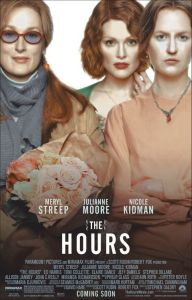 Okay, after watching the Golden Globes award show and seeing The Hours crowned with the highest prize, and hearing incessantly about Nicole Kidman’s fake prosthetic nose in the movie, it was time to venture into that darkened theater and see how good the awards-friendly The Hours was. Little did I fully realize what I was getting myself into.
Nicole Kidman plays Virginia Woolf, who is in the midst of writing her novel Mrs. Dalloway, where she proposes to display a womans entire life through the events of a single day. Julianne Moore plays Laura Brown, a housewife in 1951 having difficulty adjusting to a domestic life that she feels ill equipped for. Meryl Streep plays Clarissa Vaughan, a gay copy-editor in 2001 planning a party for a poet and former lover (an emaciated Ed Harris), who is suffering from the late stages of AIDS. These three storylines will be juggled as the film progresses, with each womans life deeply changing before the end of the day.
The Hours is a meandering mess where the jigsaw pieces can be easily identified. The attempt at a resolution for an ending, tying the three storylines together, is handled very clumsily. The film spins on and on that you start to believe the title may be more appropriate than intended. What this movie needed was a rappin kangaroo, post haste! The film is wrought with victimization and screams ”Give me an award already!” Before you know it youre being bludgeoned to death with what is profoundly the most over serious Lifetime network movie ever assembled. And there’s nothing fundamentally wrong with Lifetime movies but The Hours does not share the sensibilities of its TV brethren.
 Kidman, nose and all, gives a strong performance displaying the torture and frailty of a writer trapped within her own mind but too often relies on wistful staring or icy glares. Moore is effectively demoralized but cannot resonate with such a shallow character. Streep is the least effective of the three and fizzles among an over-stuffed assembly of characters.
The supporting cast is unjustly left for dead. The characters are seen as parody (Toni Collette as Moore’s un-liberated homemaker neighbor), extraneous (Claire Danes as Streep’s daughter, Allison Janney as Streep’s lover, Jeff Daniels as Harris ex-lover, you know what, almost anyone in the Streep storyline), one-note (the workmanlike John C. Reilly who plays yet another doting and demystified husband) or merely obnoxious (Moore’s brat child that refuses to separate from her). It appears The Hours is the three lead actress game, and everyone else is not invited to play along.
Stephen Daldry’s direction shows surprising stability and instinct after his art-house pandering Billy Elliot showed little. The technical aspects of The Hours are quite competent, especially the sharp editing and musical score, which just points out further how slickly hollow and manufactured the film is.
The Hours is an over-glossed, morose film that is too self-important for its own good. It sucks the life out of everything. And for all its doom and gloom and tsunami of tears, the only insightful thing The Hours is trying to pass off onto the public is that women are more depressed than you think.
Nate’s Grade: C


 nathanzoebl
You must be logged in to post a comment.