Blog Archives
The Hunger Games: Catching Fire (2013)
 It’s been a year and a half since The Hunger Games broke box-office expectations, gifting Lionsgate studio with a formidable franchise. Based upon Suzanne Collins’ series of young adult novels, the first film was an agreeable adaptation that was occasionally hobbled by poor direction, rushed plotting, and budget limitations. Catching Fire, the second film, improves upon the established groundwork in almost everyway with the chief drawback being a terminal sense of dystopian déjà vu.
In the months after the events of the 74th Hunger Games, the two victors from District 12, Katniss Everdeen (Jennifer Lawrence) and Peeta Mellark (Josh Hutcherson), are traveling across the other districts of Panem as part of their victory tour. What better way to endear yourself than visiting other districts to remind people that their children are dead and you survived? On the tour, there is growing unrest throughout, and the people have turned Katniss as their symbol of defiance against the tyrannical Capitol. President Snow (Donald Sutherland) threatens Katniss to control her media image, to convince the people that she’s madly in love with Peeta and not a fledgling revolutionary. In order to check the power of the victors, Snow introduces a rule change for the 75th games, the Quarter Quell. This year the participants will be culled entirely from previous past victors, meaning that Katniss and Peeta will be plunged back into the deadly games and this time their competition aren’t children.
 What a difference a director with a sense of cinematic visual command can make. Early into pre-production, the original director Gary Ross (Seabiscuit, Pleasantville) decided to bow out for sequels, and so Francis Lawrence (Constantine, I Am Legend) was hired, and goodness does the movie benefit from this change at the helm. Lawrence has a much stronger visual authority, having cut his teeth in commercials and music videos (remember those, kids?) before feature films. The man couldn’t frame a lousy shot if he tried. With a stronger visual lens, the world of the Hunger Games is able to stretch, given a proper budget, and the visual grandeur unfolds around you, especially the largess of the Capitol. The movie doesn’t feel like they had to cut corners with their budget or special effects, and part of that is credited to the skill of Lawrence. And with this new visual stylist comes the demise of shaky cam. Dance and celebrate that Ross’ misapplied docu-drama approach has been abandoned; this time, when there is onscreen action, you can comprehend what is happening. I read the book years ago but even I was feeling twists of tension, notably the start of the Quarter Quell. The action isn’t terribly developed but it’s sufficient, though again the kill-or-be-killed extremity kept to PG-13 safety is starting to chafe. My only visual complaint is that much of the action within the games takes place at dawn/dusk and thus low-light environments. It feels like someone threw on a muddy filter, though perhaps this was just my theater’s light bulb-saving projection setting.
Now that the world of Panem is established, Catching Fire does a nice job of showing the various social conflicts coming to a head, bubbling into uprising. The pre-games victory tour opens up the world, allowing us into other districts and viewing the different strife befalling them. It’s jolting to watch the public defiance met with summary executions and yet the people will not be stopped. Now the class conflicts of the haves and have-nots get pushed to their breaking point. There’s a great contrast provided with a Capitol party so lavish, with food so sumptuous and plenty that the Capitol denizens have cocktails on hand to induce vomiting. That way you can continue eating (historical fact: vomitorium is actually not what you think but instead a passage below a tier of seats for easy exit, like in modern stadiums). The themes and the points aren’t subtle, that’s for sure, but they are effective and intriguing. Katniss, who only wanted to survive, has been thrust as the face of revolt, and now she has to walk a delicate line to again save her loved ones. The fascist politics and media manipulation hinted at in the first film are given more examination, providing a richer narrative. What works in the first Hunger Games is generally expanded upon and what faults the first film had have been, generally, nipped and tucked. There’s nothing as eye-rollingly awful as Peeta’s human rock sculpture camouflage. The burgeoning love story elements again are abbreviated the harshest, but when the world is coming apart, you have to spend more time on revolution than love triangles.
The film also benefits from a slew of new characters that have strong personalities. We’re introduced to other formers winners of Hunger Games past, and they make the most with their limited exposure. Joanna Mason (Jena Malone) is an axe-wielding woman given to speaking her mind with devil-may-care attitude. Her first scene in the film involves her stripping naked in an elevator with Peeta and Katniss. Malone (Sucker Punch) really has fun with the blithe approach of the character and manages to come across as comical while still being a credible badass. She’s a terrific character and you’ll be seeing more of her in the sequels to come. The other famous victor is Finnick (Sam Claflin) who bathes in the celebrity limelight, luxuriating in his media image as a suave playboy. Except there’s more under the surface and you’ll be given peaks throughout the film. I’m not as sold on Claflin (Snow White and the Huntsman) as I am on Malone; he’s got the requisite chiseled physique, but I don’t feel the charismatic pull the character demands. Also, when I close my eyes and listen to him speak I hear James Franco, and I don’t know what to make of that. Then there’s the new head game maker, Plutarch Heavensbee (Philip Seymour Hoffman), who is presented as an enigma. He leans on President Snow to spare Katniss rather than turning her into a martyr for the cause. However his alternatives are sinister and media savvy. Hoffman is one of our best working actors today but he seems to sleepwalk through the role, perhaps because he’s meant to be vague. However it’s played, it’s hard to get a read on Plutarch until the very end.
Strong as ever, Lawrence (Silver Linings Playbook) is the rock of this franchise. The Oscar-winning actress has been on a tear as of late and her acting and overall presence elevates the material. They struck gold when they hired her. There’s more fire to her and more devastation, as she’s going through the PTSD, plagued by nightmares. She’s haunted by the horror she’s escaped but also by the continuation of the threat from Snow, the ongoing charade that she will have to keep up for the rest of her life. There is no time out of the spotlight as a victor let alone a national celebrity like Katniss. Lawrence can convey so much wordlessly and she can convincingly play the different dimensions of her wounded warrior.
 Many of the criticisms one can hurl at Catching Fire are the same from Collins’ book. There is a repetitive plot structure, where the games themselves feel like too much of a retread. It feels forced to serve up what worked the first time. The problem with throwing Katniss and crew back into the Hunger Games is that all the real consequential action is taking place outside of them. We’ve been watching the stirrings of revolt all movie, watching the cracks take shape, and then the movie returns to its deadly TV competition when the audience just wants to leave to see if the revolution will be televised. Breaking free of Katniss’ first-person perspective from the book allows the filmmakers to add scenes fleshing out the world and the characters, with some nicely malevolent conversations between Snow and Plutarch. But that also means we don’t have to be locked into watching Katniss’ every move (I know this sounds like sacrilege). It’s not like the creatively torturous games are boring, but it’s hard to ignore an increasing sense of been-there-done-that. When there are so many larger, wider-reaching consequences happening outside throughout the various districts, you can’t help but feel a bit antsy. Another reason the film doesn’t break free from the games repeat is that it purposely keeps Katniss, and in turn the audience, in the dark about the larger outside machinations. The collective ignorance has a purpose but it also makes the plot frustrating.
Really, Catching Fire is more a setup for the series greater conflict rather than a complete film/story. Things are unraveling in the country of Panem, but if you want resolution you’ll have to wait until 2014 for the next movie, or more likely 2015 for its concluding half. What Catching Fire does is tease out the plot change and then transition to it, but only in the final minute. As my pal and colleague Ben Bailey notes, it ends in similar fashion to 2003’s Matrix Reloaded, and you’re left on a cliffhanger that doesn’t seem like a natural resting point for the story. Again, these critiques can be waged at the book as well as the film is a fairly close adaptation that will satisfy the die-hard fans.
From here on out, the Hunger Games movies are going to get more interesting. With two remaining films to cover the ground in one book, it should allow for greater development of characters, conflicts, dramatic themes, social commentary, or just larger kickass action sequences now that we’re in a larger arena, so to speak. Under the screenwriting expertise of Danny Strong (HBO’s Recount and Game Change) I’m anticipating a more politically astute and intellectual dystopian drama. Francis Lawrence has brought visual dynamism and stability to the franchise, just in time for when things are poised to get really interesting. As a film, Catching Fire is a step above the previous entry, ironing out some of the shortcomings and presenting more subtext when it comes to its social unrest. It introduces a bevy of intriguing new characters, escalates tensions throughout the realm, and promises greater suffering and strife ahead. However, the repetitive plot structure of throwing Katniss back into the games for an hour eats away at time that could be better spent watching the revolution ferment. It’s still a reliably entertaining film with a sharper visual gloss, so fans should go home happy and audiences should be suitably thrilled. The alterations from Collins’ book are all for the better. Catching Fire will slay the box-office with little trouble but I’m most thankful that we’ll be leaving the games behind for good.
Nate’s Grade: B
Share this:

House at the End of the Street (2012)
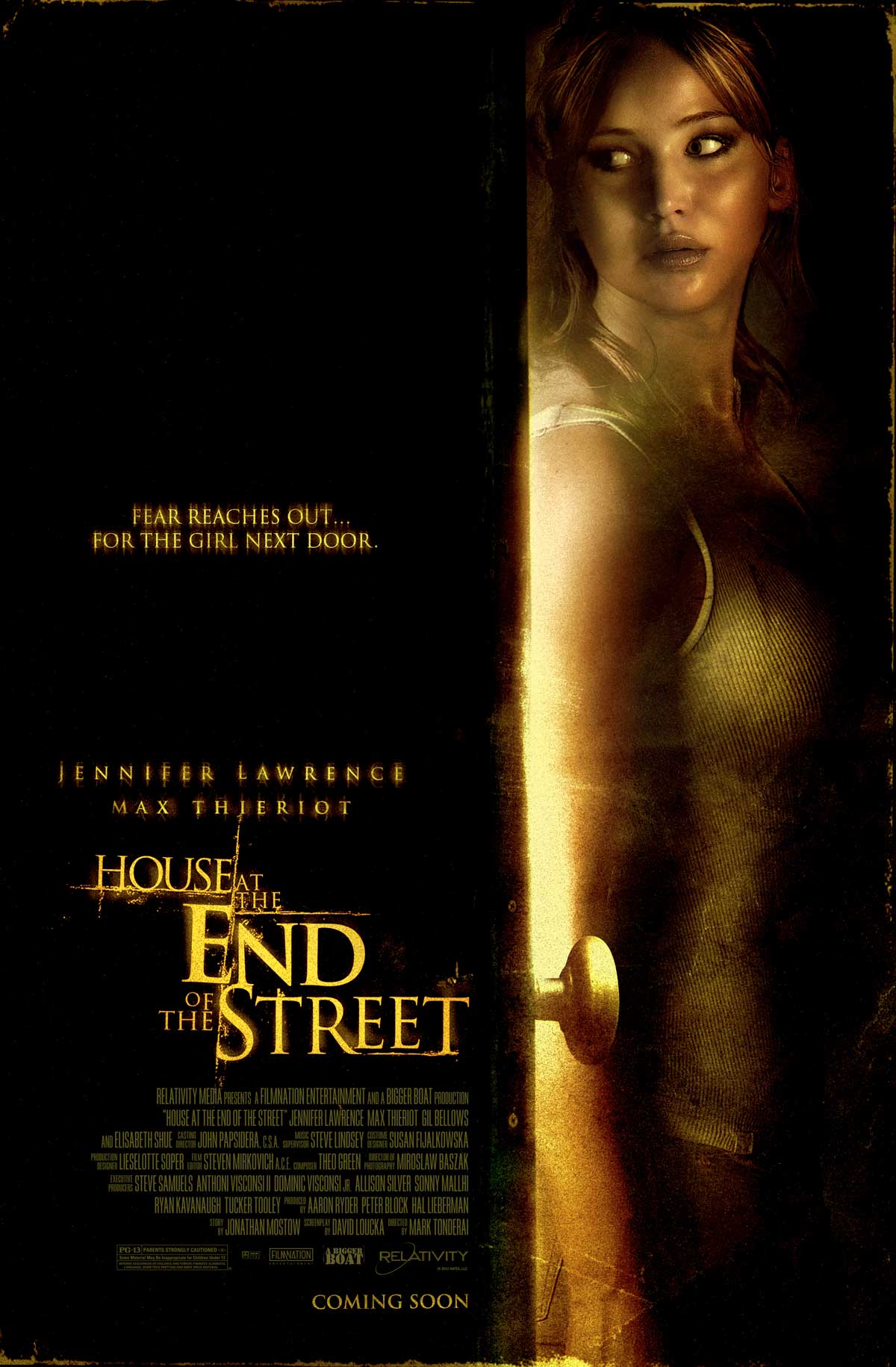 As readers will attest, I am a fan of actress Jennifer Lawrence. Some of my pals might say limiting the word to “fan” is being too modest on my part, but I don’t want to alarm anyone. I think she’s a terrifically talented actress and her Best Actress Oscar was well deserved for a film I unabashedly adore. With all of this being said, good actors can still make really bad movies, and that’s what we have with the stillborn horror flick, House at the End of the Street, referred to by marketing by the Twitter-friendly acronym HATES. That seemed like a tip-off, didn’t it? The problem is that for a good hour this movie is more of a drama than a horror movie, and everyone in town seems to be jerks to this guy in town whose sister murdered his family. Apparently him still residing in town lowers their property values… for some reason. I think it wants to be a psychological thriller, but even giving it that much credit assumes there’s some degree of competent execution. It’s not scary, the twists should be easily telegraphed to anyone with a modicum of sense, and Lawrence’s presence is just downright questionable. Why did she agree to do this? What about this clunky script, with its obvious padding to its “shocking” revelation, appealed to this woman? I suppose with her fast ascent to the top of Hollywood, Lawrence now has the clout to never again star in something as drecky as this would-be thriller. Then again, if she does, it’ll be by choice. Or a fat paycheck.
Nate’s Grade: C-
Share this:

Silver Linings Playbook (2012)
 I am in love. It’s been days since I watched Silver Linings Playbook and I’m still under its spell. It’s a movie that gave me such rapturous emotional peaks, a deeply satisfying crowd-pleaser that doesn’t just nail the big moments, it crushes them. This is a movie that works so well with just about every facet of storytelling, from acting to writing to directing, that you’re liable to be in awe as I was.
Pat (Bradley Cooper), a high school history teacher, came home one day to find his wife in the shower with another man. He admittedly lost it, beating the man bloody, and has been remanded to a state psych ward for the past eight months. It’s determined that Pat is an undiagnosed bipolar case, and the court orders him to stay on his meds and stay 500 feet away from his now ex-wife, Nikki. Having lost his home, Pat is living with his parents (Robert De Niro and Jackie Weaver), both of whom don’t know how to help their troubled son. Pat is convinced he can win back his wife. He starts conditioning by running, wearing a garbage bag to better sweat off the pounds, and meets Tiffany (Jennifer Lawrence). She’s been fighting through depression after coping from the sudden death of her police officer husband. She agrees to help Pat get in contact with his ex, passing a letter, but at a price. He must compete with her in a dancing competition. They spend hours practicing their routine, getting to know one another, and stabilizing one another, providing a foundation for healing and success.
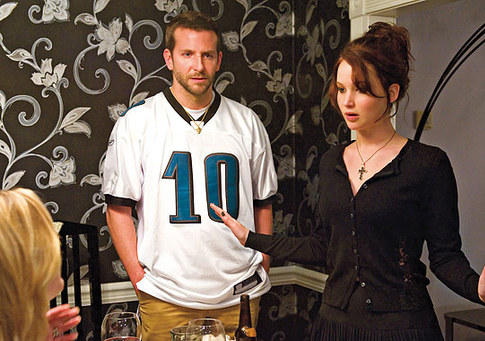 The story itself isn’t anything groundbreaking; you could glibly label it as the “bipolar rom-com” and it does adhere to that structure for the second half. But this is David O. Russell we’re talking about, the man behind 2010’s The Fighter, yes, but also offbeat dysfunctional family comedies like Spanking the Monkey and Flirting with Disaster. The man has a way of working within the framework of conventions and finding the rough edges, to make stories at once familiar and excitingly new. Is there anything groundbreaking with Silver Linings Playbook? It’s your boy-meets-girl formula at heart, but the execution is so extremely sure-footed, so exceptionally handled, that the movie leaves you buzzy and beaming. Once it ended, I wanted to run around, shouting from the rooftops for people to run out and see this movie. You want others to share in something so special and affecting. I felt a similar passion after seeing the unconventional romance Safety Not Guaranteed, and I’d advise any fans of Safety to certainly check out Silver. Being a rousing, crowd-pleasing sort of movie is not necessarily a yoke to weigh down its artistic integrity. As if enjoyment and creative accomplishment are opposing forces. I freely admit that Silver Linings Playbook is a masterful movie that knows what it takes to get an audience cheering, and I was thrilled to be part of that cheering throng. Here is a movie that just makes you feel good, and when was the last movie you saw that made you feel glowing with happiness?
This in an emotionally rich film; I was so happy after my screening that it felt like a high I didn’t want to come down from. To engineer a reaction that enhanced, that enlightened, that potent, well I must sing the praises of Russell and his actors. I bought into the love story and family drama big time. The payoffs are meaty and numerous, and I often found the film to be sincerely moving. There’s a great satisfaction in watching two oddballs find their special someone’s, and when the characters are this interesting, this human, and so well portrayed, it makes every stop along the journey that much more engaging and emotionally triumphant. It’s got an ending that pulls it all together in spectacular fashion, giving us exactly what we want while feeling earned and on its own eccentric terms. This is a deeply felt and compassionate film, one with as much uplift as acerbic rebellion. You feel like these people really do love one another. Silver Linings Playbook has memorized the playbook on how to win over an audience, but it always comes down to the same Xs and Os: strong characters, a compelling story, and people we genuinely care about, and that includes distaff supporting characters too.
 The characters are so interesting and beautifully flawed, and the actors are so in tune with one another, delivering bar-raising performances that take the movie into another realm of enjoyment. When actors are given plum roles about people with mental illnesses or disabilities, it must be very enticing to overindulge in tics and self-conscious mannerisms. That doesn’t happen with Silver Linings Playbook. Beyond an uptick in tempo, the actors portray their parts as characters rather than ailments. If anything, the acting in this movie is practically restrained given the circumstances. What’s more, Silver Linings Playbook is a fine example of what can happen when the cast works in tandem, challenging one another to up their game. It’s like every actor felt revived from all the talent on display. Russell knows how to push his actors like few other directors, and while this has lead to notorious Internet videos of his actors losing their cool, it’s also given way to raw performances that burn in your memory. Russell gets his actors to bring their A-game and then some. The Fighter got three Oscar nods for acting and I wouldn’t be surprised if Silver Linings Playbook gets three as well (I think Lawrence and De Niro are locks).
Cooper (The Hangover) has always had a certain smirking, leering quality about him, a guy used to portraying louts with charisma. I have never seen him tackle anything nearly as challenging as what he does with Pat. He’s unpredictably combustible, ready to explode at any moment, but also empathetic, trying to do better. Pat isn’t meant to be seen as a loveable loser. This guy has serious problems he’s working through. Cooper is simply incredible, showcasing skills and nuance you didn’t know the man had, radiating with an intense outpouring of spontaneous energy that doesn’t ever feel forced. Cooper is not bouncing off the walls here as some wild-eyed loony, playing upon codified ideas of what a bipolar person behaves like. He’s a deeply complicated guy, processing challenging and contradicting feelings in a brain that doesn’t necessarily follow the rules. He has so many impulses leading him in different directions. Pat is obsessed with his goal of impressing his wife, so much that he seems blind to the tangible connection he’s formed with Tiffany, and we yearn that he realizes the catch in front of him. I was won over completely by Cooper’s committed, attentive, anxious, and lively performance.
Readers will know that I harbor a serious crush when it comes to the talented actress, Lawrence (The Hunger Games). I was expecting her to be great in this movie, as this is pretty much my default setting with the actress at this point. I was not expecting what she delivered, a performance that is so enthralling, so astonishing, that you’ll be left stupefied that a woman at only the young age of 22 could be this phenomenally gifted. Lawrence had several scenes that just left me speechless. Lawrence is in elite territory now as far as I’m concerned. Her command of the character is just about impeccable, and you perk up every moment she’s onscreen. She’s a damaged woman recovering from her own powerful grief, but she’s so many things at any one moment. She can be lusty, provocative, angry, sullen, commanding, vulnerable, and hurtful. There are scenes where she will bounce around a plethora of emotional states, but each one gradually shifts to the other, making the transformation genuine and another layer to the character. If she were just some crazy girl we wouldn’t care if she eventually got her happy ending with Pat. With Lawrence’s talents, and Russell’s sharp writing, Tiffany becomes a figure worth fighting for, a bruised romantic that finds her rare kindred spirit who accepts and appreciates her messiness.
The supporting cast from top to bottom may not be at the same level as Cooper and Lawrence, but their output is also impressive. De Niro (Limitless) hasn’t been this good in ages, delivering a few monologues that will hit you square in the gut. Weaver (The Five-Year Engagement) is something of an enabler for the family, but she also gets her moments to shine and reassert her strength and dignity. Chris Tucker (in his first non-Rush Hour movie since 1997) is the least Chris Tucker I’ve ever seen him. He’s downplayed his motor mouth tendencies completely, and he’s a wonderful presence as he ducks in and out. He even teaches Tiffany how to “black up” her dance, a fact that most heterosexual males in the audience will be thankful for this time of year.
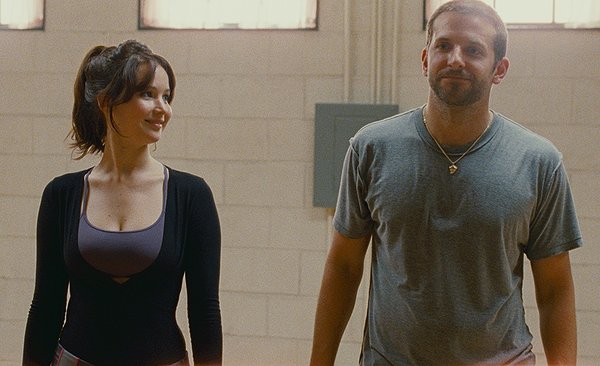 Russell deserves serious credit for portraying mental illness in a manner that doesn’t dance around the seriousness of the condition. Statistically one in three people suffer from a mental illness at some point in their life, and I’ll even admit that post-divorce, I too fell amongst those ranks (I’m a statistic!). In the case of Pat, He’s not just some unfeeling jerk who says inappropriate things or has problems reading social cues. He’s a guy going through serious personal struggles, same with Tiffany. These are not jokes. They are not send-ups of mental illness; they are people. At no point does the humanity of these characters get lost. We will laugh at their inappropriate comments, sure, but we are never laughing at them from some cushy sanctuary of superiority. I also think Russell examines an interesting, more socially-acceptable form of mass mental illness, namely the OCD-nature associated with sports superstitions. Smart and capable people can get caught up in the allure of superstitions, and when it concerns sports in general, groupthink overpowers. I consider myself a sports fan as well (I’m a double statistic!) and fully accept the ridiculous nature of fandom, but I thought it was a clever move for Russell to hold the mirror up to our own cracked community and its irrational behavior. And as any Philadelphia sports fan will acknowledge, they take fandom to a whole other level.
At this point, I don’t know what more I can write about this movie without coming across as a complete, frothing madman. Football, mental illness, ballroom dancing! I’m smitten big time with Silver Linings Playbook. I’m completely in the tank for this film. Future viewings (already planning one soon) will probably highlight certain minute flaws I’ve failed to notice the first go-round. And even if those flaws become more apparent (yes the final dance is something of a contrived climax) I simply do not care. The movie’s many virtues far exceed any shortcomings that could potentially arise. It plays to some familiar rom-com elements but it goes about its business with its own funky charm. The acting, writing, and directing are all on such a heightened level of excellence, it’s amazing just to watch all the parts work together so masterfully. I wasn’t just won over by this movie; I’ve become its disciple. I preach the gospel of Silver Linings Playbook. Here is a rapturous feel-good movie that doesn’t feel like it’s pandering or dulling its edge even after it takes some conventional turns. Cooper is terrific, Lawrence is astounding, and together they form the couple you cheer for. Silver Linings Playbook is everything you’d want in a stellar movie. I can’t wait to watch it again and get caught up in its wondrous spell once more. It took a long ten months but The Grey has finally been knocked off the perch. Silver Linings Playbook is nothing short of the best film I’ve seen this year.
Nate’s Grade: A
Share this:

Like Crazy (2011)
 The prevailing thought I kept having while watching the twee indie romance (?) Like Crazy was that this is like silly. I spend fifteen minutes with the young happy couple, Jacob (Anton Yelchin) and Anna (Felicity Jones), and then there’s already trouble. Rather than have to wait two and a half months to see one another again (a.k.a. eternity), Anna decides to overstay her visa because it’s not like that would be taken seriously in a post-9/11 world. Naturally, there are repercussions and Anna is banned from reentering the U.S., effectively putting a hitch in her romance. It’s such a short-sighted, impulsive, boneheaded decision, and it’s one that completely made me lose all sympathy for a couple that couldn’t bother to be apart for a mere two and a half months. Jacob and Anna try and hold it together but the constant starting and stopping, as well as the comforts of people closer, provide major roadblocks. I’m not a hardhearted person; I’m a sucker for a good romance. Many of my favorite movies of the past few years have strong romantic elements (Eternal Sunshine, Once, Moulin Rouge, WALL-E), but I felt next to nothing for this whiny, pitiful couple. First off, they’re only together for fifteen minutes before being ripped apart, which doesn’t exactly allow me enough time to emotionally engage. And then there’s the fact that these “crazy kids” have absolutely no passion between them, no spark, no nothing that would compel them to be together against all odds. You don’t feel anything approaching romance. And to top it off, Jacob has a perfectly lovely, charming, and available alternative played by the lovely and charming Jennifer Lawrence (The Hunger Games). She even makes this doofus breakfast in bed. This movie felt like an entire montage of small moments that never accumulated into anything believable or compelling. I’ll take Lawrence and breakfast in bed and be grateful.
Nate’s Grade: C
Share this:

The Hunger Games (2012)
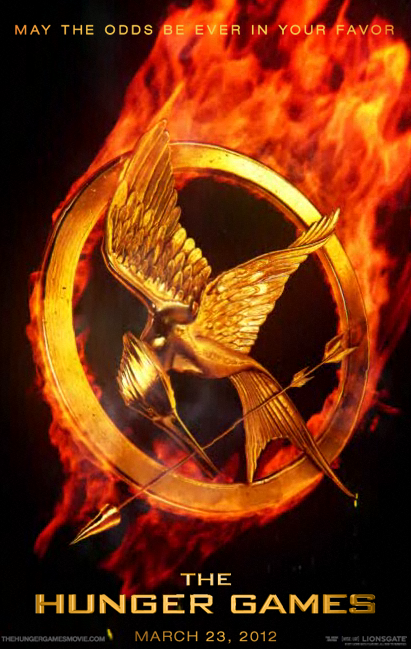 Suzanne Collins’ smash novel The Hunger Games isn’t your normal young adult reading material. Dystopian future, corrupt government, oppressive forces, twisted media culture, and then there’s the whole inhumane concept of children murdering each other for sport. The book trilogy has been consumed by millions of readers, young and old, and inspired rabid devotion reminiscent of other successful publishing franchises like Twilight and Harry Potter. Yes, Battle Royale fans, the premise is not original, but Collins’ book could just as well cite inspiration from The Most Dangerous Game, Lord of the Flies, The Running Man, or even an Outer Limits episode known as “Fun and Games.” Producers are hoping those legions of fans will turn up in droves and start a new lucrative film franchise. Reliably squishy filmmaker Gary Ross (Seabiscuit) was tapped to shepherd the book to the big screen. The Hunger Games movie doesn’t commit any major blunders to screw up a good story, which is good enough for many.
Set in a distant future, the ashes of North America have given way to the country of Panem. It is lead by a Capitol government and ringed by 12 mostly poor districts. Every year the Capitol commemorates the failed revolution of the districts by holding the nation’s favorite televised sport, the Hunger Games. Each district holds a reaping, which randomly draws one boy and one girl aged 12-18 years. These lucky chosen children, known as tributes, are then whisked to the Capitol where they will be placed into an arena and fight to the death. 24 tributes go in and there can be only one winner. In the outlying District 12, day-to-day life is a struggle, and Katniss Everdeen (Jennifer Lawrence) is burdened with providing for her family. She hunts illegally to provide food for her family and to trade for goods that they need. She’s excellent with a bow and arrow. Her hunting partner, Gale (Liam Hemsworth), suggests that they could run away. “We’d never make it more than five miles,” Katniss reasons. The two of them have too many responsibilities to ignore. Then Reaping Day comes, and Katniss’ 12-year-old younger sister Prim (Willow Shields) is chosen as the female tribute. Katniss volunteers to take her place, saving her sister, but throwing herself into a sport where the odds will not be in her favor. Joining Katniss as the male tribute is Peeta Melark (Josh Hutcherson), the baker’s son who has some history with Katniss.
 The tributes are paired with mentors, the oblivious Effie Trinket (Elizabeth Banks) and former District 12 Hunger Games winner Haymitch Abernathy (Woody Harrelson) whose helpfulness is tempered by the fact that he’s drunk often. He advises his newest tributes that they must make the audience like them to earn sponsors, people willing to pay big money to supply the tributes necessary supplies in the middle of the game. The Capitol is full of lush excess, the people donned in cartoonish and colorful garb. Katniss is dolled up and paraded around. She showcases her skills to the Game makers, who will give each tribute a rating that bettors will use. She’s interviewed by TV host Caesar Flickerman (Stanley Tucci) to make an impression. While with Caesar, Peeta reveals that there is a girl he’s had a crush on back home for the longest time – Katniss. The star-crossed lover angle hooks the audience and immediately transforms the dynamic of the games. Katniss is upset, but Haymitch rationalizes that Peeta’s confession has made them more marketable.
Then the dreaded day arrives and the 24 tributes are gathered up, injected with tracking devices, and launched into the outdoor arena to fight to the death. Katniss’ biggest threats will be the tributes from District 1, Glimmer (Leven Rambin) and Marvel (Jack Quaid), and District 2, Clove (Isabelle Fuhman) and Cato (Alexander Lutig). These tributes have trained their whole lives in the deadly arts so that they could volunteer to enter the games, hence why they are dubbed the Career tributes. And they usually win. Once the games begin, Katniss must survive the Careers, whatever surprises the Game makers have, the elements, and win over the affections of the TV audience. Let the games begin.
Firstly, fans can breathe a sigh of relief because The Hunger Games movie is a mostly successful venture brought to visual life. The legions of Collins’ fans celebrating the movie of their beloved book will mostly be satisfied. Collins’ story is still a good story no matter the medium. It establishes its alternative world and the stakes quickly and then it’s off to the killing fields. This is dark and disturbing stuff, far darker than even the darkest days of Harry Potter, and fans will be relived that the movie does not go soft. It’s not the exploitation-vehicle that Battle Royale was. This is trying to tell a story and not revel in the geysers of teenage bloodshed. This is a movie that satirizes reality TV and media culture as much class warfare. Katniss is primed and prepped to manufacture an impressionable image to TV audiences. It’s all about calculation, image control, and the manipulations of the media and audience to produce a star. Here’s a world where the 1% literally celebrate and toast the deaths of the 99%. Here’s a world that takes it cues from the Romans concerning spectator sports. I do wish the movie had channeled more of the book’s accusatory tone against the Capitol citizens, the silent majority complicit in villainy. And of course it was Collins’ point that we, too, the audience could be accountable in our own YA bloodlust.
 This is a story that grabs you and rarely lets go, centered on a heroine that is refreshingly a strong female role model for girls. Bella Swan has nothing on Katniss Everdeen. Here is a heroine that is proactive, resourceful, resolute, compassionate, and she doesn’t need a man to complete her. Sorry Ms. Swan, but Katniss has a lot more important things on her mind than getting a boyfriend. She’s got to provide for her impoverished family and shoulder plenty of responsibility, and that’s before she’s plucked into a death sport. In short, Bella Swan sucks. Katniss Everdeen rules 4-ever.
Since the book was written in first person, we were inside Katniss’ head the whole time. There are disadvantages of leaving that POV, namely that Katniss’ survival skills and cunning can be brushed over. She’s not just fighting the other tributes, she’s trying to think how best to play certain moments, how to appeal to the viewers at home. During the games, the movie jumps back and forth between the action and what I’d like to call Mission Control from Hell, the game makers HQ. This is a smart move that provides a greater antagonistic sense with the book’s unseen game makers. The exposition, mostly handled by Tucci as color commentary throughout the games, is presented in a way that doesn’t feel clunky. I also enjoyed the two sit-downs we get with President Snow (Donald Sutherland), the autocratic ruler of the Capitol, who sees early on the danger of Katniss. He explains that the games are meant to give hope to the poor citizens. “Hope is the only thing more powerful than fear. A little hope is good. A lot of hope is not,” he explains while pruning flowers. It’s nice to have a villain who understands the calculations needed for a proper oppression. It’s also nice to see Sutherland sink his teeth into a role that will only get more enjoyably evil as the films progress. I felt that the tracker jacker sequence, the interviews with Caesar, and the time in the caves were the best-adapted sequences.
Lawrence (X-Men: First Class) is a star, pure and simple. She was the perfect choice to play Katniss Everdeen. The Oscar-nominated young actress brings great steely determination and grit to the Girl on Fire. Katniss isn’t supposed to be a teenage warrior (that would be the Careers), even though she is thrust into that role. She doesn’t celebrate killing. This is not fun for her. Lawrence can play an array of emotions silently, deftly, like her hoarse, wild panic at Prim being chosen, her shell-shocked disorientation at going into the games, her quiet fury at her irresponsible mother and others like the game makers, her budding warmth for Peeta while he rubs a salve over her facial cut. Pages of description can be consolidated in just one pensive, conflicted expression on Lawrence’s lovely face. Lawrence is the heart of the movie and a tremendous presence to ground our sympathy and emotions.
Katniss is a dangerous competitor but she’s also vulnerable. She’s emotionally guarded and thrust into a situation where she has to “pretend” to be in love. Now the romance angle, and the self-awareness on Katniss’ part to give a good show, was a far bigger storyline in the book. In the book, she begins by playing a part and by the end doesn’t know if her feelings are false or genuine. It’s strange that in the movie their this-is-love kiss, meant to make the audience swoon on Katniss’ part, is followed up with nothing but hugs. Maybe the filmmakers thought a romantic angle was in poor taste given the kill-or-be-killed scenario, except that the romance angle is what keeps Katniss and Peeta alive. Want to know the best way to irk a Hunger Games fan? Start comparing the complicated romantic triangle of Peeta and Gale to dismissive terms like Team Jacob and Team Edward.
 The supporting cast performs ably, some better than others. Hutcherson (The Kids Are All Right) is given the most material to work with. He’s a nice kid, strong, but worried about his humanity, and the filmmakers never portray him as anything close to a badass or a helpless baby. Hutcherson shines in the moments where he comes clean with his emotions, like admitting that he has no chance of winning (his mom thinks so too). Peeta’s much easier at charm than bravado, and Hutcherson is a charming guy. I think Banks (Zack and Miri Make a Porno) actually gives the best performance, short of our lead heroine, as the maniacally bent Effie Trinket. Half the performance is the garish outfits, wigs, and makeup, but Banks nails the affluent insensitivity and ignorance of her character. Her forced enthusiasm is good for a few laughs. Harrelson (Zombieland) gives hints about the demons behind his character, a man who has to watch a pair of children under his tutelage die every year as his “prize” for winning. He’s a colorful character in a movie filled with colorful characters, but his sauced sarcasm can sting. Tucci (Easy A) hams it up with great pleasure as the smarmy, inauthentic, over-the-top TV host, Caesar Flickerman. They dolled up actor Toby Jones (Tinker, Tailor, Soldier, Spy) in a bouffant wig and sit him beside Caesar for commentary, but, and I literally counted, he has three lines where he speaks onscreen. Still, I love his oily voice as the games’ announcer.
The movie distills just about everything from the book, plot-wise, so the fans will be sure to see just about every plot event that they’ve developed a mental checklist for. However, this narrative approach, an attempt to satiate the fans that bristle when the movies of their favorite books deviate too much from the source material, blunts the impact of the material. I was astounded at how overwhelmingly rushed and hurried the movie is, spending little time on those variety of plot events, rarely allowing the movie enough room to breathe. With this brisk and brusque pacing, it stops the movie’s vitality. The context and history of important items and people feel clipped, becoming just set decoration. Ross has not done an adequate job of making his movie universe feel richly realized. The significance of the mockingjay, a symbol of perseverance under the oppression of the Capitol, is left unexplained. It just becomes a dinky pin that makes Katniss think about home. The ghoulish mutts have been turned into just a bunch of vicious dogs that eerily resemble the dog demons from Ghostbusters (actually, I’m relieved the mutts were toned down). The contrasts between the impoverished outer districts and the lavish Capitol denizens are nicely showcased thanks to luxurious and weird art direction and costume design; these people took fashion advice from Marie Antoinette and maybe their political outlooks as well (“Let them eat cake… or death”). There are also some passing moments of dark satire as far as the Capitol’s overall stance with the games, and their blasé attitude about the value of human life, though the movie could have and should have pushed harder with its class warfare.
The Hunger Games reminded me of the first two Harry Potter films where the producers crammed in all the plot points they felt fans wanted to see rather than just, you know, adapting it into a good movie. If they wanted to keep everything from the book, plot wise, then they should have followed their convictions and produced a three-hour movie. Imagine The Godfather being cut down to two hours and twenty minutes. Imagine rushing through all that drama. Now I’m not in any way comparing The Hunger Games to The Godfather in terms of quality, but movies need sufficient time to establish their worlds and develop characters. They need time to breathe. The fact that a 142-minute long movie doesn’t have time to breathe is plain inexcusable.
 The characterization, beyond Katniss and Peeta, is extremely limited, and so when he deaths do occur the impact is minimal; only one tribute’s death is given time for mourning, and even this character’s death is limited due to superficial characterization and about two minutes of screen time. I’m not saying that every one of these 24 tributes needs a detailed back-story, but they’ve got to have some personality to them and the movie has to devote some time to develop that; good writing can tell a lot with little. Otherwise they just become somewhat recognizable faces and not characters. Cinna (Lenny Kravitz), Katniss’ stylist for the pre-game publicity in the Capitol, is reduced to being a bland companion. Let me single out the villains, our group of Career tributes. The movies have a long tradition of villains who aren’t given much characterization but are given personality. I need my bad guys to be given an opportunity to make an impression, and no, weapon distinction is not enough. With The Hunger Games, the bad guys just become a series of sneering faces, and these kids (Ludig, Rambin, Quaid, Fuhman) have got some good sneer faces. True, the movie’s entire twisted premise lays enough overwrought tragedy to the entire setup, turning children into killers, and President Snow is the ultimate villain, but the movie should be agonizing, terrifying, devastating, upsetting, and not merely inferential and rushed. I want to feel the deaths. Instead, the movie can’t even be bothered to briefly show the faces of the dead kids during the game’s daily death montage. There are all sorts of kids who were hired to be tributes from districts and I question if they ever got a second onscreen.
I also feel that Ross is, at times, completely wrong for this material. The man behind Pleasantville and Seabiscuit is not the first name you’d think of to tackle a dystopian sci-fi survival thriller built upon the premise of dead children. I almost wish they had hired Paul Verhoeven (Robocop, Starship Troopers), an artist well versed in sci-fi spectacle and subversion. Ross’ misguided visual approach, borrowing a page from the Bourne franchise, can make it hard to enjoy the film. During the opening segment in District 12, as well as the games themselves, Ross will attempt to up the visceral ante with his bobbing handheld camera. Now I’m not one of the people who loudly decry the use of “shaky cam” during action sequences, but before the second minute was over, I turned to my friend and said, “I already hate the shaky cam.” There’s a difference between handheld camerawork, which has some jostle to it, and a deliberately inauthentic docu-drama approach that makes exaggerated and distracting camera bobbling. There are long segments of this movie that is nothing but shaky close-ups cut together. There’s a climactic battle atop a metal structure that is completely incomprehensible to follow. It’s all just a blur of flashes save for two wide shots to thankfully attempt to orient the viewer. When an audience can’t follow the action, it not only kills tension but it also kills investment. The docu-drama visual approach is completely wrong for this movie. When was the last time you saw a dystopian sci-fi movie that had a docu-drama aesthetic? Try never.
 Likewise, to achieve the all-important PG-13 rating, Ross sanitizes the blood sport, utilizing lots of implied violence. The jangly aesthetic works for the duration of the race to the Cornucopia to start the games, as tributes turn a fight over supplies into a bloodbath, communicating the chaotic frenzy. I’m not clamoring for explicit carnage to get its message across, but just seeing children as far-off lifeless heaps is a disservice to the power of the story. Also, I don’t feel like Ross properly takes full advantage of the visual medium. Instead of being told, twice, about mines that will explode if any tribute steps off their platform before the conclusion of the countdown, let’s see it. Since half of these kids are about to become faceless corpses anyway, why can’t one of them lose their balance, fall out of the ring, and blow up? And then we cut to a nearby tribute dusted with pieces of dirt and blood, trying to keep their cool and failing. It would have kicked up the tension and shown the immediate danger that awaits. I don’t want the one-minute countdown to cut around the globe, seeing the different districts watching TV. I want that entire minute spent in the arena, hearing every second counted down, seeing every face of the tributes sick with anxiety and unease, gritting themselves for combat. I want to feel the same sense of doom that they do, not cut around the globe and then have the audio drop out. That’s a sorry way to start the games, even with a PG-13 mandate.
There are heavy expectations for The Hunger Games on all fronts, from studio execs to the millions of eager fans. I consider myself one of their legion. I voraciously read through the trilogy, getting hooked early, and have even helped teach the book as part of an American Literature curriculum. It’s a thrill to watch reluctant readers get excited about the book. The Hunger Games succeeds mostly as the pilot to an exciting film franchise. But having seen the Hunger Games movie twice in 14 hours, and being a huge fan of the book, here are my chief criticisms: the movie is far too rushed, speeding over so many plot points and characters, never getting time to breathe; nascent characterization for supporting characters; the context of so many things is missing; shaky cam overuse to the point of incomprehensible action sequences; dodgy CGI; not taking full advantage of visual medium; intensity a bit muted; and finally, a forgettable score. But, hey, good movie. It just frustrates me because it could have been a great movie, a searing, powerful, provocative, thrilling movie. Good movie will be good enough, especially when it makes more money opening weekend than the citizens of District 12 will ever see in their lifetimes. When you got a fan base as large as this series, the odds will usually be in your favor.
Nate’s Grade: B
Share this:

X-Men: First Class (2011)
 Marvel’s X-Men franchise had some serious damage it needed to undo. The once mighty superhero series had been harmed by that age-old foe – bad sequels. The collective stink from 2006’s X-Men: The Last Stand and the 2009 Wolverine debacle, the franchise had lost some serious luster. While the recovery was not nearly as deep and cataclysmic as what the Batman franchise had to deal with in the wake of 1997’s Batman and Robin, a film that flirted with salting the earth, the X-Men needed some kind of facelift. Enter director Matthew Vaughn (Kick-Ass, Stardust), the man who was going to save the series back in 2006 when original director Bryan Singer flew away to direct a different man in tights. Vaughn was originally tapped to direct Last Stand but he dropped out and was replaced by the hack Brett Ratner (Rush Hour). Thus began the slide toward mediocrity. Now Vaughn is back to tidy up unfinished business, taking the series back to its historical roots in the 1960s. It seems that a trip back in time was just what was needed to make the X-Men fresh.
Back in 1944, Erik Lehnsherr is a prisoner in a Polish concentration camp when Dr. Schmidt (Kevin Bacon) discovers the young boy’s great potential. When enraged, Erik can control anything metallic. In upstate New York at the same time, young Charles Xavier discovers a young shape shifter named Raven. She’s blue from head to toe and afraid. They’re delighted to find one another, fearing they were the only ones “different” in the world, children of the “atomic age.” All three of these people are headed for a collision course. In 1963, Charles (James McAvoy) has become an Oxford professor, Raven (Jennifer Lawrence) has followed him to England, and Erik (Michael Fassbender) has been systematically hunting down the Nazis responsible for his pain and suffering. Dr. Schmidt has now become Sebastian Shaw, a younger-looking playboy with the intent to push the Soviets and Americans to nuclear war. Shaw has his own team of mutant henchmen, including telepath Emma Frost (January Jones, proving once again that she can really only ever be good as Betty Drapier) who walks around in white lingerie the whole movie. Together with CIA agent Moira MacTaggert (Rose Byrne), Charles and Erik assemble their own team of young mutants to thwart Shaw.
Similar to 2009’s Star Trek, this film provides the opportunity to reboot a franchise by going back in time. It transports the series back to the beginning of the friendship between Charles and Erik, and spends the next 130 minutes filling in the rationale for the “why” of their varying personal philosophies. By dialing back, we’re able to play around with 40 years of back-story and histories. While we know the end results, that these two giants will become enemies, that Charles will lose the ability to walk, and that Raven/Mystique will eventually side with Erik, that doesn’t mean there isn’t pleasure to be had in watching the journey. There are all sorts of self-aware in-jokes for fans and a few nifty cameos that left me howling with glee. The script, credited to Vaughn, his writing partner Jane Goldman (Kick-Ass), and four others, smartly moves the film forward; no scene seems at a waste. Even better, the film strikes a tone that manages to take its real-world implications seriously (nuclear brinksmanship, Holocaust, and fighting for equality and acceptance) without diminishing its popcorn thrills.
As a summer movie, X-Men: First Class has enough razzle-dazzle to compliment its intelligent social pontification. Vaughn and his screenwriters have composed action sequences that neatly incorporate the mutant abilities of its subjects while building the tension and smartly utilizing the contours of geography. I hate action sequences that don’t play to the potential of location and subject. An evil teleporter (Jason Flemyng) finds a fiendishly clever way to dispatch 20 CIA agents. Magneto efficiently takes out former Nazis residing in Argentina in one chilling sequence (“I’m Frankenstein’s monster,” he tells one man). Shaw makes for an actual formidable opponent for our fledgling heroes. The personal connection he has with Erik, on top of Bacon’s devilish glimmer of villainy, makes Shaw a strong antagonist that the audience can rally against. Vaughn has a splendid reveal with Shaw. Back when he was a Nazi doctor, he asks young Erik to move a coin with his abilities. The shots consist entirely from one side of his office, showcasing it to be a bookish study. Then when Shaw calls the Nazi guards to bring in Erik’s mother for a little more direct incentive, the camera flips position. We see the opposite side of the room, a medical station on the other side of large glass panels. Inside is a torturous display of medical cutlery. It’s a fantastic reveal that kicks up the tension while adding to the terrifying character of Shaw. The action highpoint, a mutant vs. mutant battle amidst the Soviet and American naval fleets, provides plenty of parallel action to follow that keeps the movie alive and kicking.
The film mixes a frothy, James Bond-esque spy thriller feel in production design and whatever-goes plot savvy, but then recomposes real life events as mutant enhanced. Alert the history textbooks, because the Nazi scientists experimented on mutant children and that mutants averted World War III. Some will chafe at the alternative history approach, but I find it to be more interesting, suspenseful, and a natural fit with the overall Cold War paranoia feel of the setting. Melding the X-Men into history makes for a more intellectually stimulating adventure, tipping its hat at various historical revisions that payoff as small rewards for a well-informed audience. I’m not saying that the movie is like Noam Chomsky’s take on X-Men by any means, but it’s certainly the most heady film in the series since the departure of Bryan Singer (he serves as producer on this flick). Indeed, this is a rather talky X-Men adventure with plenty of philosophical debates and speeches. But then it’s got naked women in blue too. But you see, it’s not just naked women in blue, it’s that a naked woman in blue can become a political statement – man!
And it’s on that note I’d like to say a few words. Mutants have always been a central metaphor for the oppressed, be they Jews, African-Americans, homosexuals, whatever minority group you’d like to slot in. That’s been one of the secrets to the continued success of Marvel’s flagship series – anybody can identify with the fear of being judged, feared, and despised because of who you are. That’s why the character of Raven/Mystique, short of Magneto, is the most fascinating character in the movie. Her true form, scaly and blue, is what keeps her feeling like an outcast. She doesn’t have an invisible power like her surrogate big brother, Charles. She constantly disguises herself in order to fit in, albeit her disguise is the alluring natural figure of Jennifer Lawrence (Winter’s Bone). “Mutant and proud,” she says in disdain when she stares at her bluish reflection in the mirror. It is through Erik hat she begins to believe in this mantra, gaining pride that “blue is beautiful” and she need not even wear clothes to cover who she is up. Raven/Mystique is the figure torn between the two philosophies argued by Charles and Erik. She is the central figure that has to struggle with reality vs. idealism. It’s also a little funny that a movie piggybacking the civil rights movement of the 60s (mutant rights!) also trades in the casual misogyny of the 1960s (women in lingerie as outfits, regularly practiced sexism). I suppose some of this is intentional. I guess the women’s movement will be saved for a sequel.
While the retro setting ties in nicely with the series’ core metaphor about being different/disenfranchised, the dichotomy of ideas presented by Charles and Erik are not given equal measure. That’s because, quite frankly, Erik is a much more powerfully interesting character and more sympathetic than a rich kid who can read people’s minds. Charles Xavier and Magneto have always represented a comic book version of Martin Luther King Jr. and Malcolm X when it came to the ideas of integration, equality, and representation. Charles believes that mutants should assimilate and that humanity will accept in time; peaceful and hidden. Magneto, on the other hand, takes a more militant stance and feels that mutants need not hide who they are out of fear or shame, that they are the dominant species and should not be threatened by the weaker Homo sapiens. But where X-Men: First Class runs into some trouble is that the ideological deck is completely stacked in Magneto’s favor. He’s the one who suffered through concentration camps, Nazi experimentation; he’s seen the worst of what mankind of capable of. He’s a tormented man seeking vengeance, which is character motivation that is easy for an audience to fall behind. Then, even after the mutants save mankind’s bacon during the Cuban Missile Crisis (the first person who tells me this is a spoiler gets a history book thrown at them), they still get treated as the enemy. Almost everything that plays out onscreen aligns with Magneto’s ideology, which makes it hard not to be on Team Magneto as the movie draws to a close. I suppose the film utilizes our knowledge of future events to counterbalance Magneto’s pessimistic world philosophy.
The other issue that lends more credibility to Magneto than perhaps the filmmakers were hoping for is the fact that he’s the most interesting character in the movie, easily. The X-kids are a pretty bland bunch of boys and gals. This is the first class the filmmakers chose? Did they have recruiting violations at the school? Havok (Lucas Till), a goy who can shoot energy beams, Banshee (Caleb Landry Jones), a guy who can scream loudly and fly, somehow, Angel (Zoe Kravitz), a gal with fairy wings and an acid tongue, and then Darwin (Edi Gathegi), a guy who… adapts? Darwin’s power is so obtuse to explain, it’s no wonder he doesn’t last long in service to his country (it’s a bit tacky that when one character says “slavery” the edits have to cut back to the one black mutant for a reaction shot). Each one of these teenagers has a different reaction to their powers. Some are ashamed, some are afraid, others proud or apathetic. But they are all singularly uninteresting. Once they establish their power, they become less a character and just another piece on a game board to be positioned. And Lenny Kravitz’s kid in fairy wings? Plus she spits little fireballs? I’m sorry but that should have been the first thing removed from rewrites. This crew makes it sure that we empathize even more with Magneto as he refines his powers to reach his personal vengeance, which is the film’s pre-designed payoff. We’re not really looking for the team to band together, which they inevitably do, but we’re awaiting that splash of vengeance. And when it does come, it’s satisfying, stylish, and dramatically fitting (“At the count of three, I’m going to move the coin.”). The fact that the movie still has like 15 minutes of material afterward is almost inconsequential.
Vaughn certainly delivers the spectacle, it’s the actors that produce the real fireworks. This is a vehicle for McAvoy (Atonement, Wanted) and Fassbender (Ingloruious Basterds, Jane Eyre), and both men provide admirable gravitas. McAvoy’s role offers a more jocular performance, showing Charles to be a bit of a lady’s man in his younger years, harnessing his telepathic powers to bed him some beauties. Then again, as I’ve been told from my female friends, looking like McAvoy will certainly also help matters. But this is Fassbender’s show. He has a chilly intensity to him, rather than just being cold and indifferent like January Jones. His performance captivates you from the start, and his slow-burning hatred consumes the man. It’s a dramatically rich performance given the material. After being discriminated against for being a Jew, than a mutant, he has to sell that his character, haunted and rage-filled, would ironically follow the same social Darwinism that his Nazi tormentors evoked. And Fassbender sells every bit of an iconic Marvel villain coming into his destiny. However, his Irish accent slips out in the film’s final reel, and I’m really curious why the studio couldn’t have shelled a few bucks to fix that with ADR. Rushed for time, or revealing that Magneto has unheard of Irish lineage?
Going back in time manages to open up all sorts of possibilities for the X-Men franchise. There could be a whole slew of sequels that play around with the rich, complex back stories of the X-Men without having to serve the aging stars of the original trilogy. Vaughn keeps the proceedings amazingly fluid, stylish without being overtaken by visual artifice, and the swinging 60s provides a groovy backdrop. The action delivers when needed, the smart script doesn’t downplay the clash of ideas to go along with the clash of fists, and the special effects are relatively up to snuff as summer escapism goes. The movie is not without its misses, including a cadre of lackluster junior mutants. But Vaughn has re-energized a flagging franchise and given hope for a future (past?). In the pantheon of X movies, I’d place X-Men: First Class as an equal to X2, the best in the series. It may not be at the head of the class, but this superhero flick earns is stripes with a solid effort and strong potential.
Nate’s Grade: A


 nathanzoebl
You must be logged in to post a comment.