Blog Archives
The Little Mermaid (2023)

With every new Disney live-action remake, and we’re not slowing down any time soon folks, I feel like I need to stipulate two reservations I have, so, dear reader, here is my boilerplate. First, I believe that simply because a film is animated does not mean it is missing something or somehow inferior to a live-action movie. Animation is a showcase of imagination and ingenuity and visual decadence, and often the live-action interpretations of this only serve to dilute and downgrade the quality of those presentations. I can’t believe the recently announced live-action Moana will add anything more magical or visually beautiful than the 2016 animated original. Second, the closer these original animated movies are to the present, the less likely that Disney will be to change things up. The core audience will be demanding fidelity to the source material, and thus we usually just get an inferior version of the same story with minimal alterations. Occasionally, Disney can really surprise with some of these live-action remakes; I adored Pete’s Dragon, was charmed by Cinderella, and will defend Tim Burton’s unfairly maligned Dumbo.
Now we reach The Little Mermaid, whose 1989 release began the much-heralded resurgence of Disney animation through the 1990s. I re-watched the original a couple years ago and found it still quite ebullient and compelling, but I was shocked at how short it was (only 80 minutes long) and how brisk much of its third act felt. With a few more old-fashioned wrinkles to iron out like gender roles and the prominence of securing a man, I felt there was actual room where a modern remake could actually improve upon the original. Having seen the live-action Little Mermaid, I can say that it falls into a middle zone where it can’t quite escape the shadow of its predecessor but it exhibits plenty of its own winning qualities to cheer audiences and fans of the original.

Ariel (Halle Bailey, not to be confused with Halle Berry) is a teenage mermaid and the youngest daughter of King Triton (Javier Bardem), the ruler of the seas. She longs to be part of the surface world, the world of man, and she’s willing to sacrifice her voice to her malevolent Aunt Ursula (Melissa McCarthy) for a pair of legs. She has three days to secure true love’s kiss, likely from Prince Eric (Jonah Hauer-King), but she can’t recall what she needs to do as part of Ursula’s spell. Her friends Sebastian (Daveed Diggs) the crab, Scuttle (Awkwafina) the gannet, and Flounder (Jacob Temblay) the fish must help protect and guide the new Ariel-with-legs.
Let’s start with the positive attributes that separate this Little Mermaid, and chief among them is the fantastic lead performance from Bailey (one half of the singing sisters Chloe x Halle). This is a star-making turn from this young woman who completely makes the role her own. She has a natural grace, curiosity, and charm to her Ariel, and when she gets her chance to belt the big musical numbers, she delivers a stirring rendition. I got tingles during different parts of “Part of Your World.” A good half of the movie takes place after her Faustian bargain, so Bailey is acting without her voice and she still is able to communicate so much through her physical performance as well as her facial expressions. The filmmakers decide to give Ariel several new songs through the guise of internal monologues where she can express all that she is feeling and thinking during her fish-out-of-water adjustments. I think it’s a smart move and while none of these new songs are particularly memorable, giving Bailey more opportunity to flex her own voice, both literally and thematically to express her character’s perspective, is a good creative choice.

I also was pleased that much of the added time, which amounts to almost a full hour of material, is devoted to fleshing out Eric and the development of the romance with Ariel. Rather than simply being a handsome himbo, this Eric is an adopted son of his island nation, and he feels more at home aboard a ship than in any royal ceremony. There’s a direct parallel with Ariel and Eric rejecting their predetermined roles under the pressure of royal expectations. This Eric even gets his own version of a “Part of Your World” ditty about dreaming for something more, especially after his chance encounter with a mermaid set his world afire. It’s not a particularly great song, as none of the new additions are on par with the Oscar-winning originals, and some of the lyrics made my wife physically cringe next to me in the theater (“Strange as a dream/ Real as the sea/ If you can hear me now/ Come set me free”). There is added time where the romance feels much more organic as we witness Ariel and Eric get to know one another and watch one another come alive and share their interests. The added curse of Ariel forgetting her end goal of true love’s kiss is an intelligent way to make the romantic feelings between them feel more believable and less the byproduct of her urgency and the manipulation of her friends. The added rom-com moments give more credence to their romance and it better reflects on both members.
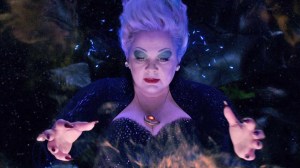
McCarthy (Thunder Force) acquits herself very well as the villainous sea witch. She puts her own spin on Pat Carrol’s famous vocal performance from the original, making her Ursula the seething also-ran waiting on the sidelines and nursing old grudges. The added back-story makes Ursula Ariel’s aunt now, which adds an extra degree of menace to their transactional bargain. I was also reminded how little Ursula is in this movie until it counts, so to justify her continuing presence, we have a few check-ins where she basically monologues her thoughts on the action. It feels like padding but I didn’t mind because I got to spend more time with McCarthy.
And now, dear reader, let’s go through some of the adaptation changes that aren’t quite as charming or beneficial. The colorful realm of the sea feels rather limited in this rendition. The vastness of the ocean and its mermaid kingdom feels strangely contained, and that’s a result of the reality of filming on a large empty set as well as the cost of extensive special effects. This is another case where the beauty and imagination of animation proves incomparable. The differing versions of “Under the Sea” really magnify this. Along those lines, making Ariel’s aquatic friends photo realistic robs them of the personality and expression they exuded in the animated movie, and it also drags them into an uncomfortable uncanny valley. Stop robbing characters of expression for the sake of added biological “realism.” It’s a bad trade. Stop it, Disney. Watching a photo realistic Flounder flop around on dry land while he tries to cheer Ariel on with his expressionless might-as-well-be-dead fish eye is not as whimsical as it should be. The original voice of Sebastian, Samuel E. Wright, has a small cameo as a fisherman, and it’s nice to hear his familiar voice again, especially knowing the actor sadly passed away in May 2021.
I’ve already discussed the new songs by Lin-Manuel Miranda being mostly agreeable but unremarkable, but there is one new track that stands out for all the wrong reasons. Being a Miranda musical, it’s not unexpected for the inclusion of a new hip-hop-infused song, especially with his Tony-winning Hamilton co-star in the movie. What is surprising is that Daveed Diggs doesn’t get the bulk of the new rap song but instead it’s Awkwafina, and her voice at these levels of gravely intensity feels like an aural assault. I was wincing throughout the song “Scuttlebutt” and kept wondering why Diggs wasn’t the star considering he handled the most linguistically complex flows in Hamilton. I even enjoy Awkwafina as a vocal artist but this song is painful to endure.
The 2023 live-action Little Mermaid has enough positive additions that fans of the 1989 original will likely enjoy while still checking the boxes of their own nostalgia requirements. Bailey is sensational and the added time for the romance to be more organic and believable, with some extra fleshing out supporting characters like the Queen and Grimsby also allowing the world to feel more textured and less archetypal. The visuals aren’t as murky as I feared but the magical world of this hidden undersea realm definitely feels lacking. The pacing is a bit sluggish too, as we don’t even get our deal with Ursula until an hour into the movie, and the added songs fail to compete with the classics even with the artistic prowess of Miranda. I don’t know if it needed to be this long, and I certainly don’t care for the photo realism approach, but I was smiling throughout the movie and found it charming. Consider this mid-tier Disney live-action scale, a remake with enough of its own to swim with the weight of expectations.
Nate’s Grade: B
Share this:

Luca (2021)
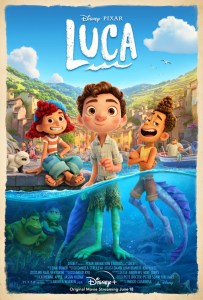 Pixar’s second straight direct-to-Disney-plus outing, Luca, is a decidedly lesser movie from the creative powerhouse. It’s more in keeping with the low stakes and minimal characterization of something like the Cars franchise or Monster’s University. It has its gentle charms and important themes about acceptance, accessibility, and identity, but Luca feels a bit too shallow and lacking in magic. Two sea monster boys want to feel the thrill and freedom of living on land, and it just so happens they transform into looking like humans as long as they don’t get wet. They must learn the ways of blending in, keep their secret, and win the local triathlon to achieve their dream of owning a Vespa scooter. Yes, ostensibly it’s about two kids, and a third once they become friends with a rambunctious redheaded girl in town, wanting to win a race to get a scooter, and you can see the larger theme about friendship and self-acceptance in the name of intolerance, but the movie feels like Ponyo meets The Little Mermaid with the setting of Call Me By Your Name (with maybe some of its coming-of-age queer coding?). The movie barely gets to 84 minutes long, pre-credits, and even that feels very lackadaisical and padded, stretching a thin storyline with minimal development. The animation is expectantly gorgeous and colorful, the lovely daubs of light are so soothing to watch, though I didn’t care for the Gravity Falls-style character designs. The stakes are low and personal but I didn’t really care about the broad characters. There are some fun farcical hijinks trying to hide their monster selves from being seen, and the conclusion has a sweet message without being overtly sentimental, but Luca is little more than a fitfully amusing yet slight seaside vacation for your hungry eyes.
Nate’s Grade: B-
Share this:

Good Boys (2019)
 The summer of 2019 has been a barren wasteland for comedies. That’s not to say there haven’t been funny movies released, but this summer has been a disappointment for any real success stories in the ha-ha department. Good Boys is the last best chance the summer has for a breakout comedy. It’s produced by Seth Rogen, it’s written and directed by writers from The Office, and the concept of a ribald sex comedy from the point of view of adolescents who don’t know anything about sex is a promising start. I might need to revise that last sentence.
Sixth grade is a whole different world, at least according to the pint-sized stars of the movie, affectionately nick-named “The Beanbag Boys.” Max (Jacob Tremblay) is eager to tell his crush Brixlee how he feels and is given an epic opportunity when he’s invited by the “cool kids” to their party. Oh, and it’s a kissing party. Max is afraid of ruining his chances by being a bad kisser and generally giving away his inexperience. His two good friends are here to help but also dealing with their own problems. Lucas’ (Keith L. Williams) parents are getting divorced and he’s trying to put on a brave face about his fear of change. Thor (Brady Noon) is debating between embracing his passion for singing and theater or abandoning it to avoid being bullied. The three friends venture out on a wild day of adventures to make sure Max gets the girl.
 Before viewing, I was worried that Good Boys was going to basically be one joke on repeat, namely the kids saying something inappropriate and that being the joke. To the film’s credit, the dialogue exchanges and comic set pieces are not built around lazy shock value. There are some easy jokes to be had for sure, especially the kids misunderstanding sex toys as weapons and regular toys, but the movie doesn’t rest on these as its only source of funny. The kids curse freely but I found their salty language more endearing than shock value, and that’s how the film treats it as well. The joke isn’t that you wouldn’t expect children to speak this way, it’s more on their general naivete and urgency to be seen as their vision of what it means to be an adult. Much of the comedy comes from the kids looking to rush ahead without the personal wherewithal and maturity to understand what it means to exactly be a grownup.
Because of this storytelling approach, Good Boys can feel like a high school comedy transplanted into a middle school setting. The kids are stressed about a big party with their reputations and chance at popularity on the line. They can finally make their move and score big with their crush. It’s amusing to watch and recognize certain high school movies archetypes retrofitted into 12-year-olds filling the roles. However, there’s also a predicated distance with this approach. It’s a view of childhood not quite ready for the adult world but it’s also told through the ironic lens of adulthood, where the audience can smile knowingly. It works in so much as a framing of the characters in a “oh, boys, if you only knew” manner that delivers more smiles and chuckles than it does side-splitting laughter. It’s a funny movie, sure, but it’s not hysterical.
 The best part of the movie for me was the fun camaraderie between the three boys. They feel very naturally like awkward friends ready to be embarrassed from one another at any moment but then call for their help the next. We have the Superbad dynamic of the timid nerdy kid, the awkward lovesick kid, and the outspoken loudmouth. Obviously given their ages, some of these characteristics are toned down (the boys are more horrified by sex and porn than aroused) but the types are still identifiable. The kids feel and act like kids and each of them works within their character lane and stays true to that. Their frantic worry and problem-solving was a consistent source of entertainment. I was surprised how far the film adds for a resolution, bringing in a bittersweet post-script that feels like it might have been pulled from a more grounded version (fear not, it still ends on a sex joke). You do get a strong sense of what this friendship means to the kids, even as they confront the question of whether or not their friendship is built to growing apart. By the end of the movie, I felt enough attachment to the three kids and happy that they were finding their way even if that meant the prospect of change.
Structurally, Good Boys is too episodic and missing a clearer sense of direction. It can feel listless at times, drifting from one comic set piece that emerges to the next. Initially the driving force is learning how to kiss properly for the kissing party, but they quickly abandon the resource of the Internet absurdly early. The majority of the movie tracks the boys trying to get back a captured drone from two older teen girls they had been spying on. It can feel like the movie is stalling and doesn’t know what to do with its time. Sometimes it’s less noticeable when it finds an off ramp into something funny. The movie never gets too crazy save for a trip to a frat house that goes into stylized violence. Other times it feels like the story and scenarios were thrown together without the needed connective tissue to better justify why things are happening. It’s like the movie is shrugging about establishing cause-effect and doesn’t care about hiding it.
Good Boys is a cute summer comedy with a sweet heart and an attempt at a dirty mind. It’s not built for more than a relatively fun 90-minute trifle; perfectly enjoyable as a single serving but not anything you’ll feel the need to come back to. It can feel a little too laid back in its plot, tone, and comedy scenarios. It’s not enough to ruin the relative good times but it keeps Good Boys as only a minor success.
Nate’s Grade: B-
Share this:

Room (2015)
 It’s hard to think of a more emotionally grueling and uplifting movie this year than Room. It drops you right into a scary world and, thanks to its carefully balanced tone, the film eschews sensationalism and gets at the beating heart of its survival story, namely the love and protection of a mother for her son. It is an emotionally powerful story that hits the big moments, the small moments, and everything in between. It left me analyzing it and rethinking it for hours, the repercussions still reverberating through me.
Ma (Brie Larson) has been held in a single soundproof room for seven years, the captive of an older man who is termed “Old Nick” (Sean Bridgers). Complicating matters is that Ma has a five-year-old son Jack (Jacob Tremblay) born into this captivity. It is the only world he’s known. To spare him the full horror of their circumstances, Ma has created an elaborate world for him that only exists in Room. After his fifth birthday, Ma tries speaking honestly to her son, lifting the veil of kind fabrications. Together they will scheme to escape their one-room world, but it comes with tremendous cost.
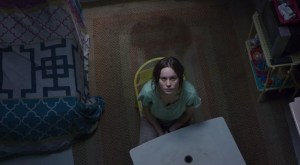 It would be easy to fall onto the more unseemly elements of this harrowing story and linger on just how bad things are and the horrifying lengths that Ma has to go through to survive. Director Lenny Abrahamson (Frank) doesn’t have to wallow in depravity to get its point across. There’s a sensitivity that manages to temper some of the abuse in a manner that won’t make you run out of the room screaming. When Old Nick enters the room for his special time with Ma, we don’t need explicit detail to understand what is happening and what Ma is shielding Jack from by demanding he stay in the closet. The reality of their captivity is enough without underlining the worst of the worst for the lowest common denominator. The emotional weight of everything is clear without having to be bludgeoned. The implications are always just peaking around the corners from the safer version of reality Ma has proposed to protect her child. As the audience, we can see the cracks, we can see her front, and we can see the effort and the toll it’s taking on Ma. The stakes are clear as well, and so when Ma is instructing Jack and preparing him on their joint escape plan, you’ll start to feel waves of anxiety travel through your body. I was shaking with suspense that something could go wrong but also because Ma and Jack are such vulnerable characters that rely upon one another completely. I knew what was going to happen in broad strokes but I was still on the edge of my seat and that’s because the movie made me deeply care about the characters and their plight. The escape scene was on par with some of the better suspense sequences in the equally brilliant Sicario.
It’s not really a spoiler to say that Ma and Jack do get out of their one-room prison because the second half of the film deals with the ongoing consequences and challenges of adjustment. We’d like to think that we can be plugged into our old lives after spending time away, but that’s just not how things work, let alone for people who have experienced substantial psychological and physical trauma. Ma is struggling to readjust to her old life under the care of her mother, Nancy (Joan Allen). She looks through old high school pictures and you can tell she laments “what could have been” and even bears some resentment for her old friends who got to live the lives she should have had. Just because she’s free doesn’t mean she’s better. Her father Robert (William H. Macy), since divorced from Ma’s mother, can’t even look at Jack because of the pain it causes; Jack is a child of rape, but Ma demands he be acknowledged as her flesh-and-blood, and even that can be too much too soon for Robert. He’s more about seeking justice through the courts and as a result stays on the peripheral of the story for most of the movie. There is no exact time table for PTSD and Ma goes through highs and lows, none lower than when pressed with the question of why she held onto Jack after he was born. Would he not have had a better life in someone else’s care, assuming Old Nick would have abandoned him rather than kill his own blood? It’s a hard question and it stings.
For an obviously punishing story about the worst of humanity, I am not kidding when I say Room is an uplifting film. The darkness is easy to identify and Old Nick is a fearsome and all too real antagonist, one who could roam our very streets in anonymity. However, what stays with me several days after watching Room is not the suffering but the resiliency of spirit, the knack human beings have to persevere amid the worst. Ma’s recovery is rockier but more understandable for us to trace and relate with. Hers is an experience where she can finally begin to focus on something other than her child’s safety and deliverance, namely her own well-being. For Jack, there is no playbook. He’s spent his entire life inside a small room and never seen the outside world. His sense of understanding has been extremely limited and yet his sense of exploration is alive. Jack slowly and surely builds trusting relationships with Ma’s relatives, engaging in other activities, and acclimating to his new surroundings, reforming his sense of the world. It’s ultimately Jack who is able to make the greatest breakthrough to his mother, and it’s this moment of sacrifice and love that unleashed the last torrent of my tears. Previously I had cried two times over the horrors and Ma’s love as her strength, and it was this final moment, this sharing of his “Strong,” that let loose the happy tears.
It should go without saying but Larson gives an exceptionally powerful performance. After 2013’s stupendous Short Term 12, I knew this actress was destined for great things, especially the way she can zero in on a character and inhabit them fully. With Ma (she’s never given any other name) Larson is able to convey a multitude of emotions, many of which she has to hide from her son out of loving deference. He can’t know just how scared and exhausted she is, though these emotions do take over at time. Larson is tremendous as she exhumes maternal might as she does everything in her power to save the two of them. Early on, she’s the character we empathize with the most because she’s had her world taken from her and hoping to return. She’s so resourceful, from the way she’s able to answer her son’s questions about the world, to the way she’s able to practice and drill their escape plan to a child with no concept of “outside,” this is a powerful woman driven by the instinct to endure. When Larson’s façade breaks down with Jack, that’s when the movie started stabbing me like daggers. In the second half, her character has a long road to go to recovery, if that’s even an appropriate word, and Larson gives sensitive and empathetic consideration to every exhausted development. She is easily going to be the one to beat this year for the Best Actress Oscar.
 Paired with Larson is the remarkably natural child actor Jacob Tremblay, and his performance is worthy of awards consideration itself. At first his worldview is precocious because of how unique it is, which makes him more a figure of fascination than tragedy. He’s bright and active with the world around him, turning household items into useful toys and emotional attachments. The film uses parts of his narration to give better insight into just how he’s processing the world he knows versus the world as it exists. These bouts of narration never come across as cloying. As the movie continues, he learns more about how his preconceptions of the world are wrong, but he’s more intrigued than frightened. During the escape plan, when Jack gets to see the outside world for the first time, it’s a transcendent emotional moment. His guarded behavior around others is necessary as Jack builds positive associations with men who are not Old Nick. Tremblay is utterly magnificent; there is no hint of artifice to his performance, which is especially rewarding considering his is a role that could have been suffocated with eccentricities and tics. You feel like you’re watching a child grow before you through supportive nurturing.
Within the first twenty minutes of watching Room I already knew this was one of the best films of 2015. It just connects so vividly and succinctly, effortlessly powerful and yet skillfully avoiding sensationalism and exploitation while telling an entertaining survival story that still resonates with emotional truth. The performances from mother and son are outstanding and Larson and Tremblay form a heroic duo that take hold of your heart. It doesn’t mitigate the darkness or the cruel realities of its premise but Room also doesn’t dwell in the darkness, castigating its characters as hapless victims forever broken from their incalculable suffering. They are resourceful and resilient and while their trauma will not be forgotten it is not the one defining moment of their burgeoning lives. It may sound maudlin but it is the power of love that resonates the longest with Room. That love at first is about protecting the innocent, and then it transforms into healing and acceptance. I hope everybody gets a chance to see Room, a remarkable film with two remarkable performances and plenty to say about the humanizing benefit of love.
Nate’s Grade: A


 nathanzoebl
You must be logged in to post a comment.