Blog Archives
Mandy (2018)
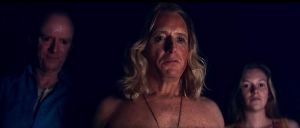
 Mandy is a gonzo, psychotropic mood piece that will infuriate some, test others, and delight a select audience that responds enthusiastically to atmospheric indulgences. Set in the 1980s, because of course it’s the 80s, a logger (Nicolas Cage) and his titluar girlfriend Mandy (Andrea Riseborough) have a bad run-in with a small cult. Their leader, Jeremiah Sand (Linus Roache), declares that the god of the universe told him he is entitled to everything, and he picks Mandy. Bad things transpire and Cage is left for dead. He sets off on a quest for vengeance against the cult and a fetish-clad biker gang they employ as muscle, and in the process he might be going insane.
So what kind of movie is Mandy? There really isn’t a plot here so much as an immersive experience of fever dream imagery with a loving yet detached nod to its cultural influences from the 1980s, heavy metal music videos, Heavy Metal magazines, heavy metal album covers (sensing a trend?). There is the bare bones of a plot here, a revenge formula, but it’s really more about the moments and the feelings that writer/director Panos Cosmatos (Beyond the Black Rainbow) is trying to communicate through the screen. He’s another disciple of the Terrence Malick/Nicolas Winding Refn School of Filmmaking, ditching the story details for a visually immersive and hallucinatory sensory experience. The problem with these kinds of movies is that you either check into that wavelength or you don’t. I know that sounds like an oversimplification, as all movies either engage or disengage, but because the story and characters are so minimalist, the opportunities to click with the material rely entirely upon the moody atmosphere and creative execution.
 Mandy is overwhelmingly a campy revenge thriller that celebrates the unique Cage-ness of Nicolas Cage’s more unhinged, bizarre performances. This is a movie that asks Cage to go the full Cage, and that can be a beautiful thing. There’s a knowing campiness to the whole exercise that doesn’t feel condescending. It’s not making fun of the onscreen antics so much as it is celebrating the artful absurdity. This is the kind of movie where there’s a chainsaw-on-chainsaw duel and it’s awesome. This is the kind of movie where every patch of woods has a blast of fog to make it feel like a dark fairy tale. It’s the kind of movie where the practical gore effects are stomach churning and memorable. It’s the kind of movie where Cage lights his cigarette from the fire of a decapitated head. It’s a movie where Cage goes on a journey where he transcends into the mythic. He is no mere mortal by the end; he is the mythic figure of vengeance. The man doesn’t just find his foes to foil; he has to first construct his own metallic scythe straight out of a fantasy adventure. Cage is fully aligned with the bizarre and eerie primal nature of the film. His crazed intensity is matched perfectly with the overwrought atmosphere and villains. There are moments where his bug-eyed stare or maniacal laughter will give you chills. He has one sequence that’s petty much non-stop screaming on a toilet as he tries to process shocking grief. It’s a performance that asks Cage to be unrestrained and tightly coiled at parts, relying more on physicality and intense looks than dialogue. For fans of the ironic and sublimely weird Nicolas Cage, Mandy should be a deranged delight to hoot and holler.
However, there’s really no entry point for a viewer if they do not celebrate the campy, gonzo, detached atmospherics of the film. Walking out of Mandy, I told my friends that it needed 20 percent more plot and 20 percent less movie. There’s no reason this movie needs to be over to hours long, especially with its threadbare plot. It takes far too long to get going, with the cult attacking Cage and his girlfriend at the one-hour mark. The second half has improved pacing but still takes its sweet time too. Cosmatos seems to favor a dreamy sense of pacing, so instead of, say, ten seconds of watching Cage’s pained reaction, we’ll get 30 seconds. The self-indulgence has a way of making the artful intent redundant. Did we need those extra 20 seconds to really feel the full artistry? Or, perhaps, could Cosmatos have used all the extra time saved from collectively trimming the excess moments and diversions to better develop the characters and story? The other problem with diverting the majority of the attention to atmospherics is that the eventual comeuppance of the cult lacks a full sense of satisfaction. If we don’t get to really know the cult members then we won’t feel the rush of catharsis when they are dispatched. I talked about this very topic with my review for Peppermint, another revenge thriller with inherent structural problems that mitigated audience payoffs. The revenge formula is a simple thing and engineered to deliver payoffs. Here are two September releases that fumble that formula, although Mandy places less importance upon it. Most of these cult members are given a look, at best, which makes them interchangeable and disposable. Jeremiah Sand is an intriguing, hilarious, pathetic creature, and so the final showdown proves satisfying and somewhat revelatory, as his ego-driven bluster transitions quickly to pleading and bargaining and abject fear. It’s a fitfully climactic moment but did we need two hours to get here? There’s a better 90-minute movie trapped inside here, subsumed and suffocated by Cosmatos’ love affair with his influences and indulgences.
 This is also sadly the last score from composer Johann Johannsson, who passed away in February of this year. He was an eclectic creative voice whose musical abilities were diverse. He could create a thundering score that felt like an incoming army, like with Sicario, or a soaring melody that could lift your spirits, like his Oscar-winning score for Theory of Everything. With Mandy, Johannsson relies upon those 80s metal influences and produces a sonic landscape fitting for Cosmatos. The score is kept at a rumble that accentuates the nightmarish qualities of the visuals. To the end, Johannsson sought unconventional methods to give voice to his movies.
Mandy is a crazy, dreamy, moody movie heavy on brooding atmosphere and light on story and characters. If you can hop on its wavelength, Mandy will prove to be a gonzo good time. If you can’t, it’s going to be overly reverential to its cultural influences and laboriously long. I fall somewhere in the middle. I’m not a fan of most Refn movies because I feel like they fall into the trap of emphasizing pretty yet hollow imagery. The ideas don’t tend to go as deep as the filmmakers think they do, and I grow restless for more. Mandy needed more time spent giving greater shape to its world and narrative. This criticism may sound unfair given the nature of the film (do you ask for the details of a dream?) but I feel dismissing its lack of substance is a step too far. Mandy is essentially a dream with hazy plotting, vivid imagery, and intense feelings, but it can wash away upon waking. I left my theater torn over the movie, wanting to celebrate its artistic vision and weirdness while also wishing there was more weirdness and more of a vision.
Nate’s Grade: B-
Share this:

Searching (2018)
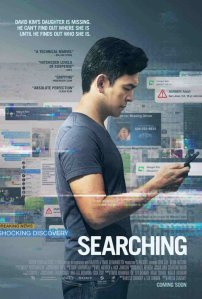 Searching is a clever, crafty found footage mystery told from the point of view of a computer screen. Unlike many found footage entries, writer/director Aneesh Chaganty has put considerable thought into the mechanics of his storytelling gimmick. The opening sequence even reminded me of Up as far as how deft it was with the economy of storytelling while providing an affecting emotional blow. In the opening, we watch a little girl grow up as computer technology and websites also advance documenting her life, culminating in her mother getting cancer and passing away, communicated via a “Mom’s Coming Home” date removed from a calendar. It was so well done I actually felt like I just might summon some tears for the passing of this woman. Right away I realized I was in for something special. Flash forward and the teen daughter goes missing and her stressed-out father (John Cho) dives into the investigation firsthand by looking through her online history and realizing how little he may have known his not-so-little girl. The movie illustrates nicely how easy it is to hide your real self online and how easy it is for others to find you and your digital impressions. Every time Cho is visiting a website, whether it’s Venmo or Instagram or Facebook or a webcam, there’s a solid reason for it and the movie has a satisfying step-by-step progression. The mystery has plenty of unexpected twists and turns and it’s anchored by a harried and distraught Cho (Star Trek Beyond), who does not look like he’s in his mid 40s at all (Kal Penn has also aged well, which makes me only want a cross-generational Harold and Kumar sequel more). The only knock on Searching is that there really isn’t a pressing need to see it on the big screen. After all, you’re watching a computer screen and typing for much of the movie. It will play just as well, if not better, on your home television or whatever smaller screen is at your discretion.
Nate’s Grade: B+
Share this:

First Reformed (2018)/ You Were Never Really Here (2018)
 Both First Reformed and You Were Never Really Here use sly genre subversion to act as commentary on what kinds of movies the audience associates with these kind of haunted men, their arcs, and the nature of violence. Subverting audience expectations is in and of itself not necessarily a better option. You can have unexpected things happen but the narrative that happens after needs to be compelling, and if possible, unavoidable in hindsight (Game of Thrones is good at this). By the same notion, the finale of Breaking Bad was pretty easy to anticipate but that’s because of how well written the storytelling trajectory was pointing to its natural end. I can tell a tense father-son reconciliation story and then if I end it with a meteor wiping out the Earth all of a sudden, well that’s unexpected but that doesn’t make it better storytelling. What helps elevate both movies is that the subversions are thematically related to the relationship between violence and vengeance, absolution and atonement, and the audience and our desires with these films.
In First Reformed, Reverend Toller (Ethan Hawke, enthralling) is the caretaker of a small upstate New York church where the weekly attendance can be counted on one hand. The church, First Reformed, is nearing the commemoration of its two hundred-fiftieth anniversary that will be celebrated by local dignitaries and the governor. Reverend Jeffers (Cedric the Entertainer, surprisingly adept in drama) is the pastor for the mega church that seems to have everything that First Reformed lacks. Jeffers wants to help out Toller but the humble man of the cloth refuses. Rev. Toller is pushed out of his comfort zone by the husband of a pregnant woman (Amanda Seyfried) who challenges him on man’s stewardship of the environment. The husband worries about bringing a child into this world and contributing the larger problem of climate change. This interaction gets Rev. Toller to think about his own culpability and sets him on a path of righteous justice.
 Writer/director Paul Schrader is famous for his stories about violent men confronting the wickedness of the world around them. From Taxi Driver to Raging Bull to Hardcore, Schrader has a penchant for documenting the self-destructive recourse of flawed men who feel removed or constrained by a society they feel is out of step with morality. What better canvas then for Schrader than a middle-aged pastor at a small, reclusive church? Rev. Toller is so humble he doesn’t own more than a few sticks of furniture in his home, the adjoining parsonage to the church. He’s friendly but often choosing to keep to himself, forgoing comforts and perceived handouts from the people around him. A woman his own age keeps trying to connect with him, their romantic coupling in the past a platform for her to continue hoping he’ll come around to her. She’s a perfectly nice woman, a choir headmistress for the mega church down the road, but she reminds Toller of his weakness and maybe even something worse. The aforementioned mega church basically keeps Toller’s small parish afloat as a charity (First Reformed is nicknamed the “gift shop church” for its historical notoriety). Rev. Jeffers is concerned about his fellow man of the cloth and the toll his solitude and seclusion is taking on him. It’s like he’s trying to atone for something, taking on a very Christ-like path of penitence. It’s around here that the character is activated into a higher calling in conflict with the church.
I’ll explain what I was expecting given the premise and presence of Schrader. I was expecting a movie much in keeping with A History of Violence, where a small-town man is thrust back into a past life of violence by outside forces and he has to confront how far this “new him” has come from the sins of “old him.” I was expecting Toller to become more violent and radicalized, pitting others in his cross-hairs for retribution. That’s not really First Reformed at all. First off, it’s the slowest of slow burns. You better be prepared to luxuriate in the day-to-day details of Rev. Toller’s simple life, from unclogging toilets to visiting with parishioners in their homes and having long philosophical conversations with them about faith and man’s role in the ecosystem. That conversation specifically teeters toward ten minutes and serves as the end of Act One, and I think if you’re still invested by then, you’ll be along for the rest of the film. However, it’s not going to be an easily accessible movie. This conversation stirs something deeper inside Toller, dissatisfaction with the church and how it coddles with big business, the chief polluters of God’s kingdom. Toller becomes a late-in-life environmental activist who questions the stewardship of the church body. This sets him on a path that seems destined for bloody violence. He’s going to go out in a fury of righteousness. We’re expecting a big bang by the end, especially given Schrader’s history of these kinds of stories with these kinds of men. But that doesn’t happen.
 I’ll try and avoid spoilers but discussion over the thematic relevance of the end of First Reformed will unavoidably suggest to the reader some significant plot developments, so please feel free to read this paragraph or skip to the next one. The second half of the movie is setting you up for a very specific ending, one where Toller strikes back against forces he feels are detrimental to the well being of the church. It’s setting you up for a climactic showdown with powerful forces that feel unaccountable for their actions. I was ready for a final rush of violence to serve as the crescendo to Schrader’s slow burn. This is where the movie swerves away from audience expectations. We’re prepared for a meaningful death but instead Schrader’s ending, in retrospect, makes us question why we should have desired such a violent and vengeful finale. Why should this character be a martyr for our bloodlust against the powerful? Ultimately, Schrader’s movie ends on a romantic, optimistic note of personal salvation after setting you up for a dark story with a predetermined, self-destructive end. The abruptness of the ending may inspire some titters, but when you look back at the film, it makes complete sense and calls into question why we would wish for blood and violence over human connection and forgiveness. Schrader is saying that you wanted the wrong kind of movie.
First Reformed takes the modest aims of its protagonist to heart when it comes to the presentation of its story. Schrader films the entire movie in the old-fashioned 4:3 aspect ratio, the square box of old pre-high definition televisions. It’s an aspect ratio that keeps everything centered for the audience and on display. I think there was exactly four camera movements in the entire movie; almost the entirely of the 113 minutes is from a stationary, documentary-styled camera. It’s a very specific visual style that limits the visual information and dynamism but manages to personalize the main character even more. It’s his movie and his journey of self, so the visual representation is also restrained. There’s really one flash of upsetting violence in the whole movie, as if to remind the audience how a violent death is not something to be celebrated. For an R-rated Paul Schrader movie, it’s far more reserved, subtle, and thoughtful. It left me thinking about Rev. Toller and his messianic mission and our desire for a big bloody finish. The idea of a selfless death directed toward violent retribution is inherently self-involved. It’s not death that provides meaning but life, it’s not how we end but what we do with the days beforehand.
 You Were Never Really Here is built as a hitman thriller based on Jonathan Ames’ novel. Joe (Joaquin Phoenix) is a hired gun who specializes in rescuing young women. He’s hired to find the missing adolescent daughter of a senatorial candidate. He investigates the underbelly of sex trafficking to save this little girl, but larger forces are at play and will make Joe suffer gravely for interfering with their wanton exploitation.
The average audience for You Were Never Really Here has been steadily fed a diet of these kinds of movies, from the artful (Luc Besson’s The Professional), to the pulpy (The Long Kiss Goodnight), to any number of hollow, nihilistic video game-styled murder fantasies (Hitman, a thousand straight-to-DVD movies). We’re expecting men of action who are ruthlessly efficient and clever when it comes to their killing. We’re expecting stylish merchants of death who leave behind a heavy body count with swagger. That’s not what brilliant Scottish writer/director Lynne Ramsay (We Need to Talk About Kevin) has in mind at all. She takes the iconography of the hitman thriller and turns it into an expectation-smashing existential character study, but not just of its disturbed main character but also for the audience and our relationship to these movies. We expect remorseless killing machines that turn death into splashy and cool tableaus. These movies aren’t so much key on mediation and reflection, beyond the standard “reap what you sow” adage.
Much of the violence is kept off screen or purposely denied to the audience. I’m trying to remember if we even see Joe kill anyone on screen. The infiltration of the sex trafficking organization hops between fixed security angles, edited together in a dissonant manner, where the last shot doesn’t fully line up for a smooth edit, leaving a half second. The effect is one that’s knowingly alienating and challenging. When Joe does unleash his violent skills, it’s rarely given a showcase for entertainment. This is a movie that doesn’t celebrate its violence. There’s a moment where Joe lies on the ground beside a mortally wounded bad guy. They exchange a few cordial words, he procures some vital information, but then Joe stays with the man and the two sing a song together. It sounds bizarre when written out but it’s a moment that really stuck with me. After everything, these two men can find a small sliver of humanity between them to share. Even the final confrontation, the big climactic set piece of any other movie, ends with a shoulder shrug, as if Ramsay is saying to the audience, “Why would seeing all that be cathartic?”
 For Ramsay, the focus of the movie is on the man committing the acts of violence rather than how stylish and cool and cinematic those acts of violence can be. This is the one area where I feel a longer running time could have better helped her goal. I think Ramsay might be the best filmmaker we have for triptych narratives. 2011’s We Need to Talk About Kevin is a startling and insightful movie that opens up the guilt of a woman whose son grew up very badly, jumping around time periods, using a repetition of images to provide visual stings and associations. You Were Never Really Here does similar labor, establishing our strong silent protagonist through glimpses of a troubled past, from a childhood with an abusive father and a mother he would have to save, to incidents during military service and police investigations that reminded Joe about the depravity of others, in particular the ability to exploit and dehumanize women as disposable property. Ramsay offers discorded images and brief flashes and asks the audience to put together the pieces to better understand Joe as a man propelled and haunted by his bloody past. However, at a slim 89 minutes, the audience could have used more time and opportunity to better develop and analyze this central character. The pieces are tantalizing but I wanted more, and as a result I found Joe to be an interesting start to a character that was in need of more time and attention to transcend the boundaries of his archetype. I needed a little more from him and his world.
There are several moments that quickly come to my memory, sticking with me because of the level of artistic arrangement or implication. Because Ramsay wants to take the Hollywood hitman revenge thriller and deconstruct it and provoke her audience and its desires for violence, there isn’t much of a plot to this movie. I could literally spoil the whole thing with the following sentence: a man of violence is hired to find a missing girl, finds her, loses her, and finds her again at great personal expense. The movie is more of a poignant and intriguing exercise in our relationship to these kinds of stories. There are moments of beauty in the movie that took my breath away, like when Joe lowers a wrapped body into the depths of a lake, and with the shafts of light, the curls of hair, the small visual details, it felt like watching a living baroque painting. There are also several bizarre moments that stand out, like when Joe fantasizes about blowing his brains out at a diner while the patrons, and the blood-soaked waitress, go about their day. It’s these little flourishes that make the movie stand above other hitman movie deconstruction exercises like George Clooney’s overly solemn The American. It’s not all tragedy and inescapable dread. Amidst Joe’s tortured past and troubled future, there’s a necessary sense of hope. You don’t know what will happen next but you’re not resigned to retrograde nihilism.
 Both First Reformed and You Were Never Really Here are slow burn indie character studies that ask their audience to question the movies they’ve been set up for. Schrader and Ramsay are deft storytellers who pair their visual gifts to the psyches of their damaged, haunted, and self-destructive middle-aged men. Hawke is phenomenal as Rev. Toller and Phoenix is suitably unsettled from a life of confronting predatory violence. Both movies have also stayed with me, though First Reformed I find to be the better developed, better executed, better acted of the two films. It’s enough of a comeback for Schrader, whose last film I remember seeing was the laughably bad Lindsay Lohan “erotic thriller” The Canyons. These are two movies that aren’t exactly the most accessible. Both challenge the audience to analyze the personal relationships with genre storytelling. If you have patience and an open mind, both First Reformed and You Were Never Really Here provide thoughtful and methodical examinations on genre, violence, and the visceral appeal of empty bloodshed.
Nate’s Grades:
First Reformed: A-
You Were Never Really Here: B
Share this:

Beautifully Broken (2018)
 Written by a staggering six credited writers, the faith-based movie Beautifully Broken is a well-meaning dramatic exercise that hopefully opens some hearts and minds to the refugee experience. Its message, for the most part, is worthy and empathetic. Reportedly based on a true story, we follow three families: 1) a Rwandan family that escapes the 1994 genocide, is trapped in the bureaucracy of the refugee system, and whose husband tries to make a new life in Tennessee for his family, 2) A Rwandan man who helped the previous family and has been imprisoned ever since, denied watching his own daughter grow into a teenager, 3) a wealthy Tennessee family struggles to cope with their rebellious teenage daughter, ignorant to the rape that changed her life. Can you guess which of these three storylines just isn’t as interesting as the others and yet is the one we inexplicably get the most time with? If you guessed “rich white people,” collect your prize. Beautifully Broken feels like an entire season of soap operas crammed into 108 minutes. The drama is so pitched but also strangely abbreviated, quick to resolution a few scenes later. It reminded me of those “previously on” clip packages before TV episodes. The characters are lacking recognizable dimension. They feel entirely too much like parts, meant to be happy, sad, and grateful, but rarely human. It makes for a dramatic feature that feels very inauthentic even when dealing with heavy issues like genocide, imprisonment, and sexual violence. Weirdly, the movie cannot even bring itself to utter the word “rape.” The film also feels written by people with a very selective sense of teenagers; some of the signs that the teen is on a wayward path that alarms mom and dad include her listening to rock music, locking her room for privacy, and, worst of all, not having an interest in horseback riding any longer. There’s a laughable subplot involving a bad boyfriend that seems like the most preposterous court case I’ve ever seen on film. Beautifully Broken examines the healing power of forgiveness and connection in a way that asks for compassion and understanding the immigrant experience. It even closes with a plea to sponsor a refugee to the U.S. Rarely do movies peak with their end credits. It just so happens that Beautifully Broken, a well-meaning but tedious tale, is that movie.
Nate’s Grade: C
Share this:

Eighth Grade (2018)
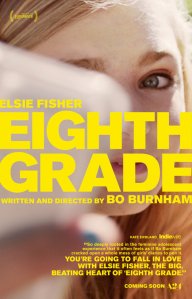 Disarmingly and impressively empathetic, writer/director Bo Burnham’s Eighth Grade is brimming with heart and authenticity in every frame. It’s a simple story of Kayla (the wonderful Elsie Fisher) who is weeks away from completing her middle school years and entering the summer before high school. She’s terribly introverted and awkward, only able to find her voice when recording her YouTube pep talk videos. Because of the protagonist’s shy nature, Burnham smartly uses the YouTube videos often as voice over to offer better insight into the kind of person Kayla would like to present herself, sometimes contrasting with the real-life version struggling to find her place and sense of self. This is an observant film that rings with authenticity with the trials and tribulations of modern teenagers in the information age, where small screens are an escape, a crutch, but also a gateway to self-discovery. Fisher is a terrific lead, perfectly capturing the understated sense of a real average teenager (acne included). Because of the introverted and ordinary nature of her, it does take a while to fully embrace her as a character. This is the one real aspect that holds back Burnham’s film. You’ll feel for Kayla, oh you’ll feel a lot of things, but it isn’t until later that you’ll engage with her. Like its heroine, this is a powerfully awkward movie with several cringe-inducing moments both comic and scary. It’s hard to watch at times but it feels completely relatable even with the new-fangled gadgets of the kids these days. I’m just glad I didn’t grow up in the age of ever-present recording devices. It’s a generous movie without an excess of quirk. In fact the movie is pretty restrained with its vision of teenage uncertainty. I did enjoy the synth wave leitmotif that would pound whenever Kayla caught sight of the boy she was crushing on, communicating the beating of her heart in a cool, modern style. The climax involves a heart-to-heart with Kayla’s dad (Josh Hamilton), a man struggling to navigate the changes in his daughter and respect her privacy and curiosity. It brought tears to my eyes and, in my opinion, wipes the floor with the much-ballyhooed paternal advice from Call Me By Your Name. Burnham acquits himself nicely as a director. His choices are determined by his story, and he draws out completely natural performances from his troupe of talented actors. I never would have thought this would be the kind of story a comic drenched in irony would tackle. Eighth Grade is a sincere, deeply heartfelt, and awkward movie about an awkward time most of us would like to skip. Don’t skip Eighth Grade.
Nate’s Grade: B+
Share this:

American Animals (2018)
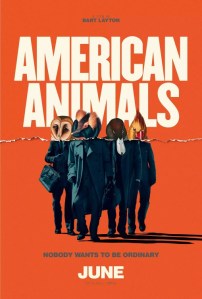 This review is weeks late after having sat down and watched American Animals, and it’s stuck with me in a powerful way. It’s a movie that pulls back the disparity between crime in the movies, so stylized and slick and carefree, and crime in real life, often traumatic, dehumanizing, and with lifelong complications for both victim and perpetrator. It’s a movie that examines a youthful sense of ennui that their lives are missing out on something extraordinary, and a step too far over a very clear moral line thanks to a fantasy given shape by escapist movies and other media. It’s also a slippery I, Tonya-style look at memory and contradiction but this time from the real-life people involved. It’s an entertaining dark comedy, an unexpected true-crime caper, and most resonating of all, a nerve-wracking thriller that left me morally queasy and unwell, but in a good way. In short, American Animals is one of the best films I have seen so far in 2018.
In 2004, at a small Kentucky liberal arts university, four young men are planning their own version of the “perfect crime.” The school has a rare books section including an original copy of Darwin’s Origin of Species and a large and valuable edition of John James Audobon’s The Birds of America. The books are appraised at $12 million dollars. Spencer (Barry Keoghan), an art student, teams up with Warren (Evan Peters), Erik (Jared Abrahamson), and Chas (Blake Jenner) to plot a daring heist. The men feel like their lives are missing something exciting and a heist is just the ticket. They just have to break in, steal the books, and subdue a librarian (Ann Dowd). Easy stuff, right?
 For the first half of the movie, American Animals plays out like a dark comedy. I had no prior knowledge that we were going to get the real-life subjects appearing as themselves in interviews cut throughout the film (their family members are still actors though). The film even plays around with this narrative hook for a few laughs, making quick cuts for punchlines and trying to square conflicting accounts, like having one scene alternate between two locations in dispute of its telling. It also helps set one of the major themes going forward in a nimble fashion, namely the difference between the reality of events and the whimsical, fantasy movie version of what an excursion into crime would be like. Having been bred on cinema’s glorified depictions of heists, the guys come to assume that a heist is sexy and fun and something that doesn’t end up hurting anyone. There’s a charming quality to the fact that Spencer uses his art skills to create models of the rare books room. There’s a laughable ingenuity to the fact that they’re planning on holding the heist in the middle of their class exams, since who would suspect students during that important time? There’s a bemused naiveté about the power of their disguises when they dress as a shuffling group of old men in powdered faces. We’re set up for a funny story about bumbling students falling all over themselves at attempted criminal shenanigans.
I was expecting a relatively light movie just from the plot particulars. It’s a heist film and the goal is to steal a bunch of books. It seemed small-scale in scope and anodyne. What trouble could a group of students get into attempting to steal books? Writer/director Bart Layton (The Imposter) seems to know this, lulling the audience into a false sense of security. He even teases the movie version of what the heist might be like, with our characters suavely stepping into their parts with practiced precision, all while music reminiscent of the Ocean’s Eleven franchise hums in the background. This is the cool-movie version, the version the characters have fantasized over in their minds, and the version that the audience is more attuned to expect. What we actually get is something very different. The heist itself plays out in excruciating detail and it runs counter to their planning. The reality of subduing the librarian is upsetting. It’s supposed to be so simple, after all, but the reality is anything but. The characters almost avoid this whole scenario, aborting their heist only to return back to it the next day. You feel the anguish of how close they were to turning away at several steps, the moments this ordeal could have been avoided, and yet fate barrels onward, energized by a misplaced sense of purpose. American Animals doesn’t let you or its characters off the hook either. I was fidgeting and sweating nervously throughout the heist and its subsequent fallout. Again, this is all about a bunch of stolen books, and I was beside myself with anxiety.
 It’s only afterwards and looking back that you realize how masterfully Layton has built up his scenes and the necessary information to make you squirm. With every heist, the particulars of the setting, the challenges and tight window need to be established, and once that occurs, we’re hoping for unexpected complications. But in order for those unexpected consequences to really hit hard, we have to be trained with what Plan A was going to be, and American Animals does this superbly. People have their designated roles and areas they refuse to partake in, like Eric makes it clearly known he will not be responsible for subduing the librarian in any way. Of course, you can expect what will eventually happen, pushing his character to an even more uncomfortable place. I was very appreciative that there’s an extended resolution after the heist, where the guys try to unload the books to a seller, and the further complications. You really feel the screws being tightened and the overwhelming feeling of dread. It’s another confirmation for me that I’m just not cut out for a life of crime. The day-to-day anxiety is just too much.
I left this movie feeling a strange mixture of jubilation and sadness, still reeling from the expertly developed and executed moral tension. The technical skills are just as strong, each working in succinct harmonious sequence to bring about Layton’s vision to startling effect. The editing is extremely tightly constructed. The smooth cinematography by Ole Bratt Birkeland frames the tension and comedy expertly, and the ominous music by Anne Nikitin kept me on the edge of my seat. It’s almost like a full-blown David Fincher film by the end. The acting is another strong point, with each actor initially relegated into a stock role (“The Muscle,” “The Wheelman,” etc.) we’ve come to associate with these kinds of movies. The film nicely pushes the characters beyond a casual, cursory understanding, blurring the lines of who they are as they blur lines of their own. A surprise standout is Blake Jenner (unrelated to the Kardashians/Jenner clan) who joins the team the latest, seems like a stereotypical rich jock lunkhead, but when he breaks down and articulates why the team is as screwed as they are, his clarity can catch you off guard. He’s the first to realize they’ve trashed their lives and are doomed and for nothing. Also deserving of praise is the always-wonderful Ann Dowd (The Handmaid’s Tale); your heart hurts for this poor woman who is confused, scared, and undeserving of her harrowing ordeal.
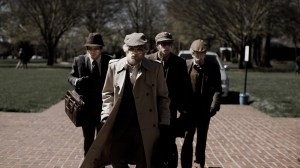 American Animals hasn’t been able to leave my thoughts for weeks, which is usually the sign of a pretty good movie. It upset me. It rattled me. It entertained me. Most of all, it made me think, about the lines people cross in the name of missing out on some vague sense of grand experience, of the differences between the reality of crime and our appealing fantasy versions of crime, and why those stories appeal to us in general. I kept thinking about the pain these four men had caused themselves and others and their regrets. I kept thinking about how smartly Layton utilizes documentary storytelling techniques to enhance his film as well as better examine the disconnect of reality-versus-movies. It’s a movie that could have been told as a documentary but excels best as a hybrid of the two, one that challenges our conception. I’m shocked it wasn’t credited to a book or news article as its source material, meaning Layton compiled all of this impressively on his own. This is a movie that got under my skin, that made me uncomfortable, but also thrilled me and entertained me from its first minute until its very last. I highly advise looking for American Animals once it becomes readily available.
Nate’s Grade: A
Share this:

Gotti (2018)
 The John Gotti biopic has become somewhat notorious because of its 0% rating on Rotten Tomatoes, not that this is the first film to hit that dubious mark. It is bad, though not quite 0% bad. The biggest crime of this movie is that it at no point solidifies a reason why we should find John Gotti interesting. As played by John Travolta, he’s a ruthless leader who beat so many prosecutors that he was nicknamed the “Teflon Don.” He’s also really really boring, spouting stereotypical bromides about the importance of family, never giving an inch, never turning on your family (both capital F and lowercase f). It’s a cock-eyed worldview I’d expect, however, at the very end of the movie, the movie itself adopts this cock-eyed justifications, presenting the federal government as the real villains and inserting interview footage of real people eulogizing Gotti, saying he made their streets clean and cared about his community and was, essentially, a hero. It’s amazingly misguided, like director Kevin Connolly (“E” fro HBO’s Entourage) has suffered Stockholm syndrome from his lunk-headed, murderous criminals. That same sense of misjudgment is never more adamant than in the musical score by pop star Pitbull. Read that again. There’s a sequence where Gotti goes out on furlough and is escorted to kill an associate, and the musical score is jaunty and uptempo. There were several moments where the score just took my breath away, so tonally disjointed was this mostly modern-day musical score. The movie is structured as an ongoing series of interviews between Gotti Sr. (Travolta) and his adult son, with choice flashbacks interspersed. We don’t even get a rise-and-fall sort of formula. It never provides sufficient evidence why Gotti was interesting at all and worth a big screen biopic. The dialogue feels like it was written with all exclamation points. Nothing is subtle or left to the imagination here, and that extends into the scenery-chewing acting as well from a bunch of unmemorable stock roles. There is also a 1996 TV movie about John Gotti starring Armand Assante. Sight unseen, it must almost assuredly be the better movie and more worth two hours of your precious time.
Nate’s Grade: D+
Share this:

Won’t You Be My Neighbor? (2018)
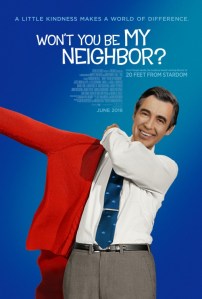 Given the uncertainty, cruelty, and division of recent news headlines, in many ways the documentary Won’t You Be My Neighbor? is the kind of movie we need right now, a film that reminds the significance of vulnerability, empathy, and simple kindness. It’s also, in certain ways, a pretty shallow documentary afraid to go too far with its subject matter. From the Oscar-winning director of 20 Feet From Stardom, this is another movie giving the spotlight to a reserved soul deserving of praise, and it hits you square in the feels. It’s hard not to have your heart warmed by the footage of Fred Rogers, he of the long-running and inspiring Mr. Rogers’ Neighborhood, impacting children and adults, seeing those smiling faces light up with pride and joy. There’s a woman at a commencement that thanks him for essentially providing her preschool education for her when her parents could not afford one. Rogers was not afraid to broach serious subjects, devoting episodes of his children’s series to divorce, death, assassination, and racial integration. It’s a neighborhood with a lot more daring messages than you might have recalled as a child. However, there are opportunities to push beyond the Mr. Rogers’ image (though he very much was what you saw) and the film shies away from going too far. The actor who played Officer Clemons was gay, but Rogers said if he came out he would have to regrettably kick him off the show because it would be too controversial. There’s a moment where the talking head interviews talk about Rogers transforming into his King Friday alter ego, but it’s over so quickly it seems odd even being mentioned. After the horror of 9/11, Rogers was brought out of retirement to speak, but he wondered if he still had any ability to really reach an audience in trauma any longer. I would have liked to have delved into these questions more, but that would detract, I suppose from the overall feel-good, glowing, crowd-pleasing and admittedly heart-warming portrayal.
Nate’s Grade: B
Share this:

Pure O (2018)
 Ideally, every scene in a feature film should have a purpose, whether it’s pushing the overall story forward, informing us about characters and their interior lives, setting up plot points or jokes, or establishing the atmosphere and way of life examined on screen. This is even more necessary with shorts simply from the truncated run time. I was asked to review the short film Pure O, produced by several hard-working, creative types in the Ohio film community. Confession: I know several of the people in front of and behind the camera with this project. I will hold as much of my personal bias back and judge the film on its artistic merits but I thought that should be mentioned upfront.
Pure O follows Purity Oglander (Stella Singer), the lead singer and guitarist for a grunge band on the verge. She also suffers from a mental condition called Pure OCD (sounds almost like a misguided Calvin Klein cologne), which is an intrusion of harmful thoughts and visions. These thoughts don’t necessarily translate into action but the worry for the recipient is that they might. Purity must navigate her mental illness, the stigma attached to mental illness circa the 90s, and work up the courage to get the help she needs.
 It feels like the narrative terrain Pure O mines is our protagonist’s question over who she really is and if she’s ready to embrace change. She’s a local musician who we’re told, via long successions of handy answering machine voice over exposition, has a band “O” on the cusp of its big break. Even titles appear onscreen to tell us this is her “last day of obscurity.” This is a prime conflict as it can push a character outside of their comfort zone and transition from an old life into an uncertain new one. The problem is that this is kept much more as a backdrop of potential conflict; it’s background seasoning. I’m also curious how different her band’s big break is going to be if they’re playing on low-rent, Wayne’s World-style public access television talk shows (“The Mr. Dick Show”). The fact that she blows off this rinky-dink performance and her label is ready to drop the band makes me think that they might not have been so close to that last day of obscurity after all. It’s also not like Purity is returning to her old stomping grounds and reflecting on its influence before she’s whisked to a new level of fame and fortune. She’s still home and presumably with the same people as before.
The larger intended focus of acceptance is with her mental illness. That’s an interesting starting point for conflict and an opportunity to visualize some pretty alarming imagery. I was confused whether Purity was just now getting these intruding thoughts. It felt like she had to have had these thoughts before, but her reactions to them seemed so sudden and new, the question over what is going on rather than the recognition that these dark impulses have returned. I think the stronger narrative would have been the acknowledgement that she’s already been struggling to live with these thoughts. That doesn’t mean they are normalized but that it’s not some sudden mental break. I don’t know if there’s any rhyme or reason for what triggers these outbreaks, but we’re treated to two instances or her envisioning brutal assaults and murdering innocents. It’s intended to be a shock to the system, and it delivers mostly, but the overall film tone hampers that.
 If I had to single out one element that holds Pure O back from its stated intentions of writer/director W.M. Weikart (Insidious Whispers), that would be its mishmash of tones. There are some pretty significant tonal divergences here with the incursion of psychological horror, but really it’s more the depiction of its everyday world as something akin to a wacky network sitcom. The supporting characters add little to the larger story. They seem to be serving as auditions for a crazy roommate sitcom. There’s the Dickish Dude (Dan Nye), the Soft-Spoken Brainiac (Ann Trinh), Oblivious Girl (Lauren Paulis), Annoying Self-Involved Sister (Sara Morse), Concerned But Out-of-Touch Dad (Carl G. Herrick), and then there’s the even smaller supporting characters of Sardonic Goth Waitress (Kira L. Wilson), Pathetic Local Host (Joe Kidd), and Lisa (Iabou Windimere), a roommate who paints varying degrees of the same circle. Does that sound like the kind of cast of characters for an examination on the crippling effects of mental illness? It feels like an overdose of quirk that doesn’t materialize into something greater or related to Purity. The visit with Purity’s friends amounts to reminding her of the stigma of mental illness, but this same point is served in the next scene with the family lunch when her sister makes the same points. If these characters are meant to reflect our heroine’s journey to some road of acceptance, it’s hard to take that evolution seriously because it’s hard to take them seriously. The sentimental conclusion with Purity getting the help she needs, with the support of her immediate family, feels like another example of a clashing tone keeping the film from gelling properly.
The problem for me is that Pure O didn’t quite earn that hopeful, well-traveled ending. The characters were amusing in their brief encounters but didn’t feel like they contributed to the overall larger story. They felt like holdovers from a larger universe of stories making a “special guest appearance.” They felt less like people. That would be fine except I believe we’re meant to feel that sting of hope by the end, that Purity’s family is supporting her accessing therapy. It works, but the ensuing 18 minutes feels cluttered as far as the path taken to get to this conclusion. I think the friends could have been cut entirely especially if the aim is to make Purity feel more like an outcast floating by. It doesn’t feel like all the stops along the way accomplished the goal of moving toward self-acceptance. I’m hard-pressed to really think why she gets the help she needs except for an outpouring of support via answering machine exposition dump. But even those are in response to her near catatonic walk-off from the TV gig, a response that doesn’t seem to earn the outpouring of concern. She does get a phone call from Betty Bosey (Danielle Vettraino), the girl everyone else mocks for being crazy, so perhaps that’s intended as a reminder of self-care.
 There are many merits to Pure O. The acting is fairly good throughout and Stella Singer (Choices) is an excellent choice as a lead. She has great moments. Her character is very passive for the majority of the short film, either being talked to or keeping the intruding voices/thoughts at bay, which causes her to feel like a passenger too often. Singer has such a striking, expressive face (seriously, she looks so different with her hair up versus down) that I wanted her to have more opportunities to stretch her acting muscles. It may be fresh in my mind, but she reminded me of Lola Kirke (Gemini). This is a professional looking and edited short film. Even the opening concert scene impressed me with how it was able to tie together an effective looking stage experience. The 90s aesthetic feels very gamely committed, none more so than in wardrobe where each character almost feels entirely defined by a color or extreme look. The strict adherence to stylized costuming does a smart job of telling you about the characters in visual ways, already cuing you without wasting precious time. The sound design is excellent, with the collage of negative voices crashing against her brain like the oncoming surf. The line, “It all went to hell after Karen Carpenter pierced her clit,” is a wonderful non-sequitur that took my breath away. The strange humor of a low-budget public access TV talk show was amusingly absurdist, complete with talking pine tree sidekick and break dancing robot. It’s the kind of show that seems destined for a dedicated YouTube life. My favorite genuine moment is the small conversation Purity has with Betty Bossy before she checks into her therapist’s office. It’s slow and develops Betty’s character effectively in small strokes, discussing her life decisions and corrections. It was the moment in Pure O where the characters onscreen felt like living, breathing people and done with a degree of subtlety. The fact that everyone else mocks Betty is just another indication of their general flippancy.
 Pure O is a well-intentioned short film with fine attributes, both in technical matters and with its troupe of actors, notably the compelling lead heroine, Stella Singer. The variety of supporting characters will keep you watching since it’s something new every few minutes; however, the glut of characters also detracts from the drive of the story and its aim toward Purity learning to accept her mental illness. The inconsistent tone also poses as a distraction from the narrative goals, making the serious stuff feel less serious and the comic asides feel like they’ve been retrofitted from another project. This marriage of tone could have worked, but this calibration doesn’t quite get there. I do think people can get entertainment from Pure O (after all, the time investment is pretty accessible). It feels like a glimpse of a larger story, one worth developing into a tighter, character-driven plot with less wacky side diversions. Still, congratulations to the many talented people who pooled their efforts and brought a short film into life. Pure O is an intriguing yet flawed start to a character and a world worth further exploration. But if this is all we get, at least there was a break dancing robot to go with my Karen Carpenter pierced clitoris aside.
Nate’s Grade: C+
Share this:

Gemini (2018)
 Dear reader, I want you to know upfront that I’m writing this review for one major purpose, and that is to complain about its ending. Had this movie ended differently, I probably would have simply postponed writing about it. Then writer/director Aaron Katz (Land Ho!) went with his ending, and now we need to talk about Gemini, a neo-noir set in the world of movie stars, paparazzi, and sycophantic hangers-on in the city of angels.
The beginning thirty minutes do a fine job of establishing a world and perspective. We follow the day-to-day of Jill (Lola Kirke), a personal assistant to a popular actress, Heather Anderson (Zoe Kravitz). She deals with pushy directors, invasive press, and boundary-blurring fan interactions. She’s Heather’s support and one of her best friends. Katz does a very effective job of establishing Jill’s world of responsibilities as well as her confusing sense of where she fits in this equation. Is she more hired-help or BFF? Heather backs out of a movie and talks about starting her own production company, with Jill and her developing projects that appeal to them. That night, Heather is fearful that someone has been following her and asks for a gun. Jill gives her one, loading the bullets. The next day, Jill comes back to Heather’s palatial home and finds her dead on the floor and the growing realization that she is the number one suspect (her fingerprints are on the gun).
 That’s the first third of the movie and it works well. Katz’s screenplay slowly builds, organically establishing the complicated world of Jill and her general sense of being an outsider wherever she goes. Once the murder takes place, Gemini becomes more recognizable with its film noir elements, as Jill adopts a disguise and investigates a series of suspects that could have killed the starlet, including the director she spurned and an old boyfriend who has trouble letting go. This is also where Katz introduces a new threat in the presence of Detective Edward Ahn (John Cho). He’s a calm, empathetic man but he always seems to know more than he lets on, asking probing questions that Jill doesn’t feel comfortable answering. Each new trip to a suspect presents a different mood and aim. Jill’s visit with the director becomes a humorous sit-down where the guy theorizes who is guilty if it were a movie, finally concluding it would probably be Jill as a twist. Jill infiltrates the ex-boyfriend’s hotel room and has to avoid detection and it is an efficient small-scale suspense sequence. All the while the detective appears to be circling something.
The are several merits of Katz’s film that are worth mentioning. The acting is generally good all around, especially from Kirke (Gone Girl, Amazon’s Mozart in the Jungle). She’s a natural screen presence while still radiating a sense of relatability. There’s a lot going on behind those saucer-eyes of hers and I wish the movie served her better by the end. Kravtiz (Rough Night) and Cho (Star Trek Beyond) are both unpredictable in different ways, making the audience glean extra subtleties from their guarded performances. The sleek cinematography by Andrew Reed (Cold Weather) deals in cool teals and purples, creating a hazy, 1980s-esque atmosphere without becoming annoying omnipresent like in a Nicolas Refn film. It’s style without being eaten alive by it (Neon Demon broadside?). The musical score by Keegan DeWitt (Hearts Beat Loud) is suitably moody, working in typical noir elements like brass instruments with a modern ambient sensibility. Under Katz’s direction, the movie has fun with introducing classic noir tropes and giving them a twist, as well as diverting from them, like our heroine being an ordinary outsider.
And now comes the part where I must discuss the ending to Gemini and, in doing so, will spoil the movie significantly. If you’d like to continue reading and understand the bulk of my grievance, please proceed ahead with spoilers. This has served as your warning, dear reader.
 As the film is nearing its end, it looks like Heather’s secret bisexual fling is being presented as the most likely candidate. The two of them were caught smooching by a late-night paparazzi and this could present some career problems. Jill sneaks away from the supposed lion’s den and heads out to a cabin in the California woods, the spot the fling was talking to. She enters the cabin and finds… Heather there alive and well. You see the dead body in Heather’s home was not her but the super eager fan they had encountered earlier, a look-alike made more obscured with parts of her brain missing. Apparently Heather killed her because she was stalking her and she feared for her life, or so she says. She hid out and waited for everything to die down. Jill is understandably very angry especially since she became the prime suspect. Heather is sorry but not that sorry. Do the crime scene investigators not take fingerprints? Blood samples? I’m uncertain of the timeline of Gemini but this fake-out could only last a couple days, charitably. It creates suspicion that there’s more than Heather is willingly admitting.
This sets up an exclusive interview with a big journalist, the first point in re-branding Heather after the news came out, and trying to push the narrative in the direction they want. Then all of a sudden Detective Ahn shows up at the taping and asks if he can watch as a favor. Jill considers this, confirming the case is closed, and allows it. All right, it’s at this point where all the major players are together in a crucible of secrets. Something good is going to happen, because why else bring these characters together in this moment? And then as the interview begins and Katz’s camera slowly pans over to the L.A. skyline and slowly zooms in, and this is where I started yelling at my screen. This is not an ending. This is five minutes away from an ending. The comeuppance of a starlet thinking she can get away with anything and put upon her vulnerable and faithful assistant is all set. The instincts of our wily detective will be proven right. Jill will have become a stronger character, able to suss out the truth and cut off a destructive force. Justice will be had, the truth will come out, and it will feel like a natural climax of the entire 90-minute movie. And then none of that happens. Nothing happens. It’s all setup and then the L.A. skyline (end spoilers).
Gemini is a frustrating movie with good acting, a dash of style, and some potently moody moments to tickle a neo-noir enthusiast. Until the ending. I was flabbergasted. Katz delivered a cop-out of an ending, and subsequently makes his overall film one that I don’t even think I can recommend, even to neo-noir acolytes. Gemini, I wrote this review because of your ending and I’m still waiting on one. I’ll be here if you need me.
Nate’s Grade: C


 nathanzoebl
You must be logged in to post a comment.